Vignettes by Luke, Mary Catelli and ‘Nother Mike and Book Promo

Book Promo

*Note these are books sent to us by readers/frequenters of this blog.  Our bringing them to your attention does not imply that we’ve read them and/or endorse them, unless we specifically say so.  As with all such purchases, we recommend you download a sample and make sure it’s to your taste.  If you wish to send us books for next week’s promo, please email to bookpimping at outlook dot com. If you feel a need to re-promo the same book do so no more than once every six months. One book per author per week. Amazon links only.-SAH*

FROM MONALISA FOSTER:  Ravages of Honor.

51c9f1ejmgl

Riveting characters in a gripping tale of interstellar intrigue, love, and impossible choices.

With one act of defiance, Syteria holds the fate of two empires in her hands, but she does not know it.
A stranger in a strange land, she must survive, adapt, thrive.
Only then can she free herself. Only then can her sacrifice and rebellion bear fruit.
An epic story about the price of honor, power, and freedom.

FROM MARY CATELLI:  Queen Shulamith’s Ball.

41qqf9yb2tl

A ball, a ball, Queen Shulamith would hold a ball. . . .

In the magical city that all kingdoms can reach, and none can conquer, filled with kings and queens, intrigues and wonders, that the reclusive queen would stage a ball was a marvel among marvels.

It will mean much to many: a young woman newly arrived in the city; a woman and a bear who dance on the street; two small orphans sent to the house of their great-great-grandfather; soldiers staging an invasion; and a queen securing her position.

KEVIN TRAINOR, JR:  The Anti-Dog Tank And Other Stories.

41b9p3zt7fl

Five stories about life in the America of the future: during a new Civil War, societal collapse, and a different kind of alien invasion.

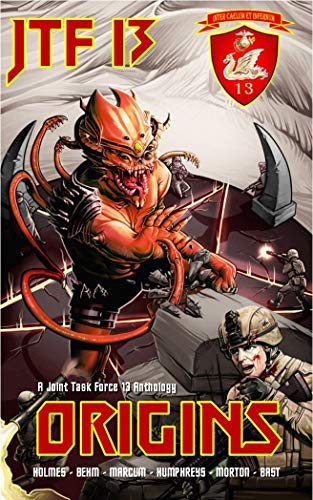
FROM J. F. HOLMES AND OTHERS:  ORIGINS: A Joint Task Force 13 Anthology (JTF 13 Book 1).

51fptkdvljl

The debut book of the hot new military science fiction series, Joint Task Force 13.

There is a thin wall between our world and that of the Fae and, during times of war, it is easily stepped through. The passions and emotions stirred by violence and combat bleed over, and the supernatural often awake from long slumber to meddle in mortal affairs. Then also, there are the humans who purposely force that wall down seeking glory and power.
Either way, there have always been those among us who have been willing to meet the supernatural threat with cold steel, burning hearts and grim determination. In modern America, they are the men and women of Joint Task Force 13, those who have proven they have the metal to confront soul blasting otherness on the battlefield. This unit, this organization, though, has been intertwined with our country since its birth. The name changes, but they are always there, ready to answer the call. Unknown, seeking no glory, asking no reward. They hold the line …
… BETWEEN HEAVEN AND HELL

Marines, soldiers, sailors and airmen take on the forces of the Supernatural, defending America’s military from the things that come from a deeper darkness than the night. Six tales from the past and present as they meet the supernatural with hot lead and cold steel, in the debut of the new series, JOINT TASK FORCE 13.

FROM JERRY BOYD:  Whammo Ranch (Bob and Nikki Book 2).

51kai8wbh6l

A saucer comes in damaged, with sick people aboard. A deadly plague threatens Earth. Can Bob and his crew save the day? Will Bob’s good nature cost him his life?
Julie’s boss wants to retire. Can she handle running the restaurant? Can Bob find her the help she needs?
Dee has come down with a terrible case of pedestrianism. Can Bob and the boys find the cure? Will she drive again?


Vignettes by Luke, Mary Catelli and ‘Nother Mike.

So what’s a vignette? You might know them as flash fiction, or even just sketches. We will provide a prompt each Sunday that you can use directly (including it in your work) or just as an inspiration. You, in turn, will write about 50 words (yes, we are going for short shorts! Not even a Drabble 100 words, just half that!). Then post it! For an additional challenge, you can aim to make it exactly 50 words, if you like.

We recommend that if you have an original vignette, you post that as a new reply. If you are commenting on someone’s vignette, then post that as a reply to the vignette. Comments — this is writing practice, so comments should be aimed at helping someone be a better writer, not at crushing them. And since these are likely to be drafts, don’t jump up and down too hard on typos and grammar.

If you have questions, feel free to ask.

Your writing prompt this week is: burly


Comfort

grapes-4290308_1920

Fall was always my favorite season.  I suspect partly because of poetic affectations of my adolescent self, partly because in Portugal, in the North, if you grow up in a house with neither heating nor air conditioning, it is the most comfortable season, (spring, too, but spring has more mosquitos,) and partly because my birthday was in fall. When a half dozen box of colored pencils is a luxury and you’re a little kid who likes to draw, your birthday assumes magical qualities. Also in Portugal fall is PRETTY.  There’s a long slow cooling from around mid September to mid to late November.

The leaves turn, the air smells like it’s giving out the memory of summer: every little bit of long evenings in the shade, ever laughing walk on the beach, every harvest festival comes out in the smells of fall, as the leaves turn gold with the memories, the grapes paint (the term for going from green to either purple or golden-translucent) and are harvested.

In Portugal, when and where I grew up, Fall is the season of festivals and reminiscence.  Family gets together for the grape harvest, usually.  I mean, maybe this was an artifact of my growing up at a time when there weren’t people desperate enough to hire on for three days of brutal, back breaking work with small householders for what they could pay, which was mostly food while harvesting and maybe some wine afterwards.

We had grapes over… five? separate locations.  (It’s hazy.)  You know how in Colorado you can sell land and retain mining (or water) rights?  In Portugal you can sell land and retain “vining” rights, which means they can’t cut down your vineyard, you’re responsible for taking care of it, and you get to harvest it in fall.

I don’t know how much of that was the case with our remote locations, and how much we were harvesting the grapes from relatives who were leasing the house, or were leaving abroad, or whatever. I just have the dim memory of walking around with baskets of grapes on my head. Eventually, by the time I remember clearly, in my teens, we only harvested grandma’s yard.

Oh, yeah.  Every Portuguese yard — it still seems so weird to me that backyards here aren’t like that.  Well, there, too, now, though my brother might have them. I don’t remember — has grapevines growing around the edge of it and trained up, to form perhaps a five/six foot canopy all around, with a bigger canopy over the patio.  My childhood was spent playing under the grapevines, so as to be in the shade.

When I was an exchange student in Ohio I used to cut through backyards on my way from school and there was a lady who grew grapes of the same variety we grew in the North of Portugal.  In summer, the smell would bring tears to my eyes.

Anyway, grape harvest was very important from a small age, because it was the one time I could feel grown up.  You see, grapes had grown over the chicken coops and the storage buildings, all of which had either uncertain roofs or spaces too narrow for a full grown person.  So I’d be helped up there, and given the task of picking those grapes.

It was a family event because everyone who could including people with jobs and kids in high school (at the time a privilege and an expense) took two-three days off and got together for the grape picking.  And afterwards there was a big meal.  And for about 3 days you had sweet wine sent home with you (pre-fermentation wine.)

Then there was the colder, slightly darker festival of all saints eve.  No, it was nothing like Day of the Dead. You need Spanish drama and Aztec fascination with death for that.  In the North of Portugal it was quiet, decorous and sad.  You go to the cemetery and light candles on the graves.  And you go home and eat roast chestnuts and drink red wine, and talk.

We weren’t big farmers, (or farmers at all. Grandad was a carpenter, dad an engineer) so the pig killing and other harvest rituals QUITE evaded us.  Later as a college student I’d get invited to friends’ houses for those sometimes.  Mostly for the “big meal and talk” part.

And then there was my birthday.  No Thanksgiving, of course, though it might be mentioned at church.

After that winter came, which was mostly slow, boring drizzle, though sometimes very cold.  I’m fairly sure this isn’t true, but other than liking the city lighting up for the holidays, my recollections of winter are of burrowing under a blanket in my room and reading by lamplight.

School… Well, I grew up in revolutionary times.  I know one year it started in January.  Most of the time it started in October and 90% of the time was going around end of November. It was also a great nuisance, but that’s something else.

Anyway, it is perhaps silly that I live (on purpose, yes) in a state of unpredictable Fall.  Some years, like this one, it’s kind of mooch. We had a big frost that killed the still-green trees, so they never got to the lovely golden color. Some years, the snow comes early, at the end of September, and that’s it.  Some years we do have that lovely, slow, golden fall.

I never know if I’ll wear short sleeves or three layers of clothes at Thanksgiving.

One thing is known: due to my eczema/auto-immune in general responding to even miniscule amounts of carbs, not to mention the pre-diabetes which seems to be coming in for a landing, I can’t eat any of the Fall comfort food I grew up with.

Why are Fall favorites all carb-loaded?  I don’t know.  I suspect to put some weight on our bones before winter.  I grew up with roasted chestnuts, flour thickened soups, stews with potatoes…

And the thing is, even though the brain knows better, I crave carbs in fall. Different carbs (except for the chestnuts, which I sometimes buy to roast as a big treat.  I want casseroles with noodles; I want shepherd’s pie; I want Chinese fried rice.

And because my family motto should be “I contrive” I do kind of manage it. Sort of.

There is a slow-carb pasta, Carb Nada. I can’t have it very often. It’s still too high. But I use it for casserole-like things, smothered in cheese.  Last time I made it I only had a little bit, as it was actually “too rich” for me.

There is this, and it’s pretty good, but it’s not pasta. It works best with oriental dishes.

The rice is really not rice at all.  The best success I’ve had with rice — particularly for oriental rice — is riced cauliflower.  Oh, the rice of the not pasta is better than riced cauliflower for ONE thing: rice pudding.  You have to boil the living daylights out of it, then rinse it till all the slightly fishy taste is gone, but between it and xantham gum for those that tolerate it, you can make a pretty good facsimile of rice pudding, which is another of my fall comfort things.

The cauliflower rice can make such a good imitation rice that I often forget I’m not eating rice. You just have to remember not to boil it.  For instance, for oriental rice, I just start by frying it, treating it as “already cooked rice.”

Potatoes are of course a big problem.  At least when it comes to fries.  But I’ve found that cauliflower is one of those “Is there anything it can’t do” substances.  Well boiled, mashed with butter, cream cheese, cream salt and pepper, it makes pretty good not just mashed potatoes for eating on their own, but also for shepherd pies.

I’ve also recently found that boiled, mashed, then “refried” with appropriate spices it can be pretty good “refried beans” for burritos.

There are recipes for low carb cinnamon rolls, and waffles and even low carb scones, though I usually just use a regular recipe and carbquick.

I contrive. Even if right now my state is inflicting on us what looks more like winter with the occasional fall day, I still have my comforts.  And even if they are different comforts from my childhood, they’re still comfortable anyway.

And recently I’ve gone back to drawing, which is perhaps another return to childhood.

Now if the weather in your state cooperates, go for a walk in a gold-painted wood, and come back to sit by a warm fire. You’ll feel better for it.


Teaching Offense

woman-1006100_1920

Sometimes I think 99% of the trouble with current society is the state of education, and the way we arrange to have people teach kids who have never experienced any real trouble or problem what to be offended at.

In historical terms, we live incredibly safe lives in the US.  In historical terms, women live incredibly safe, incredibly equal lives.

And yet women here talk about the patriarchy, and are never done with how much they are being oppressed and kept down.

Dates are rape, bad sex is rape, being looked at by a guy you don’t like is rape, being told you’re less than perfect is the equivalent of rape, and for that matter being forced to smile is “emotional labor” and unfair.

where does all this come from?

Well… it’s taught. And it’s taught in the most absurd and ridiculous way.

This became clear to me the other day.  This young woman wrote an hillarious review of Blazing Saddles on Medium.  It’s since been removed, but the internet remembers.

And what caught me was this:  “<One of the main women in this movie, Lil Van Schtupp (Madeline Kahn), is portrayed as stupid and talks with a lisp. In one scene she uses the classic “let me go slip into something more comfortable” quote that we’ve talked about in class. Objectifying and sexualizing women are two key themes throughout this movie.

Note the “We’ve talked about in class.”

By the time I I came around the phrase “let me slip into something more comfortable” was played for laughs.  If you heard it in a movie — and btw it could come from a man or woman — the character would come back wearing a spacesuit, or alternately naked.

But I watched classical movies.  “Let me slip into something more comfortable” was not sexist.  It was a way of signaling that the characters were having sex, most of the time, in a prudish era where they didn’t feel the need to let it all hang out on screen.

Why the “slip into something more comfortable?”  Because women — and men too — tended to dress more formally in public.  And at any rate, the clothes were made of different fabrics, and simply weren’t that comfortable.

I remember watching a movie set in the fifties where the description of a suspect included “he’s not wearing a hat.”  A little earlier and it would have worked for a female suspect, as being unusual.  and even when I was a kid (though that might have been Portugal, not the time) women didn’t leave the house without being dressed up.  This involved a dress or skirt or skirt suit, and at least a “half heel”, i.e. the highest heels I wear at 56.

None of this was comfortable. It was the equivalent, nowadays, of dressing for a prom, or to attend a wedding or formal dinner.

What’s the first thing you do when you get home?  You get more comfortable.

I don’t know if people still wear night clothes at home in the evening, or if I’m simply in a pocket of the culture where that doesn’t happen. I know it used to happen in the US in the early eighties. Go visit someone early in the evening, and they’re in nightclothes and robes.  Or earlier than that, do you remember housedresses?  My mom practically lived in one when she was home. It was a wrap-around thing that tied.

The point is, usually only intimate friends and family saw you outside of your formal clothes.  “Slipping into something more comfortable” showed that the relationship was no longer just friends, or casual.

Sure, it could be used to show a woman was “dangerous”.  What in hell, precisely is that sexist about?  Some women were sexual predators, just like some men were. It’s called being human.

But no, they teach to these duckies that it’s objectification and sexism.

It’s like the thing with the aprons, that science fiction writers older than I think mean that Heinlein was a sexist, because he has women wearing aprons.  Instead of “Everyone who worked with staining liquids and fire wore aprons. Because clothes were insanely expensive, that’s why.”  We stopped wearing aprons in the measure that a pack of t-shirts at walmart is $10. Nothing to do with sexism.

I do happen to know what sexism is. I grew up in Portugal in the sixties and seventies.  The culture is still relatively sexist — it’s Latin, it bears the imprints of the Moorish invasion and occupation — though mind you nothing on other cultures in the third world.

I remember being in classrooms and hearing teachers ask boys how they could bear it that I had the highest grade in a test, or being called up to the blackboard in a class where I was the only girl, and once I proved I understood the concept, having the teacher say “I see everyone understands.” I have actually been told I was “pretty smart for a woman.”

I’ve also been grabbed in the playground, and had drunkards rub against me on buses.  I say this not to say that all men are bad. They aren’t. But you can’t stop bad apples, and the culture as a whole assumed women were… not inferior, except perhaps intellectually, but certainly creatures that needed looking after, as though they were children.

If you went out alone after dark, they knew what to think of you.  And while they were wrong — I had two classes after dark in college, one in high school (English) — they weren’t wrong about women needing more protection. I always made sure there was either a group of us, or someone came to pick me up.

Because I knew I was weak, and had been in enough tight situations that I knew if a man was determined he could overpower me.  Yeah, I usually had a knife on me. But guns were rare and it was hard to get a license.

Ask me how furious it makes me to hear these children talk about how protecting yourself is evil because the man will just seek another victim.  Is it similarly evil to lock your door? A potential robber might just attack your neighbor.

Should we all make ourselves willing victims to spare others?  We are, then, decided in encouraging criminals.

And then learning by rote what is “Sexist” or “Demeaning.”  Dear Lord, have they lost their minds?

It is a measure of how safe and protected these girls are, that they learn these things by rote and are never curious.  They never wonder WHY those things are considered sexist (in the case quoted, they aren’t. There’s an historical context and a reason for the scene and it has nothing to do with objectifying women.) they just learn to vomit it back on the test, and it gets good grades, therefore it must be true.

If you’re not aware of what they’re teaching your kids in the “college education” you’re paying for, you’re a fool.  If you don’t read their text books and explode the myths and tell the kids what the context is? You’re cooperating with the destruction of Western society in a sea of mentally scrambled myth.

If you took your kids to watch Pocahontas and didn’t tell them the colonists in North America did NOT come to find gold (they were more interested in agriculture, though they went a little mad over the planting of tobacco for a while, but that was later.)  you’re remiss.  Heck, even the Spaniards didn’t come in search of gold (yes, El Dorado, but that was a different myth.) They came for the propagation of the faith, and to find a shorter route to India, where they expected to find not gold but spices, a vital commodity in a world without refrigeration.

Did they plunder gold?  Yeah, sure.  But that was later. That was not their motivation.  (And yes, there’s a lot of nonsense written by Catholic priests in the Americas around that time.  They were, they thought, excoriating the world, and never thought that the future would take them literally.) And there’s other stuff there, involving wars and defeated and rules of plunder.

There is context that is never explained.  Like the buying “Manhattan for beads” is never explained, in the sense that beads were currency for those people, and frankly they were fairly expensive for those buying it, too.

None of this is explained. Instead, young people are taught a litany of things they can recite as reasons for offense or trauma, like some kind of Freudian rosary.

The problem with our children is that instead of education we send them to places where they try to raise their self esteem by telling them they’re simultaneously victims and oppressors, but the world can be made perfect by their admitting their privilege and fighting “oppressors.”

The problem with our children is that they’re not being educated in any sense of the word, are not being told the truth about the past or the present, let alone the future, and are taught farrago and nonsense as if it were gospel.

And it has to stop.

Because it’s not just funny movies we’re losing. They want statues of heroes (Jefferson!) destroyed, because they think this will save the world.  They want to forget the past and in its place have memorized lists of good and bad things, that have no actual relation to reality.

Because that’s what they were taught.

Stuff that has no contact with reality.

And the problem there?  Reality always wins.


Incoming: The Chicxulub Impactor, Part 2 ― Evidence By Stephanie Osborn

Incoming: The Chicxulub Impactor, Part 2 ― Evidence

By Stephanie Osborn

http://www.stephanie-osborn.com

Why would anyone even think about an asteroid impact? Let alone killing the dinos?

Well, it turns out that there’s really quite a bit of evidence to indicate exactly that.

Remember that series of arcs that Glen Penfield and Antonio Camargo-Zanoguera found in the gravity and magnetic analysis on and around the Yucatan Peninsula? Well, it’s definitely there, and it forms at least one complete and nigh-perfect circle. SO circular that it almost doesn’t look natural. So circular that that was one of the facts in opposition to the possibility that it was a volcanic structure. It’s right on the Yucatan coast, half-onshore and half-offshore. The circle’s center is a scant couple of miles offshore from a little barrier-island town called Chicxulub Puerto.

More, that same onshore semicircle is fairly filled with cenotes―vertical sinkholes down into what are usually water-filled caves. But the cenotes occur ONLY ALONG or OUTSIDE the semicircle; there are only a scant handful within it. There is also a broken outer semicircle of cenotes which parallels the main semicircle. All of these structures are likely to be due to the shock wave passage from impact.

As for the boundary layer clay, ONLY the clay shows high abundances of iridium; it is scarcely found above or below the boundary. And it’s fairly uniform in its abundances around the planet.

In addition, within the anomaly ring are found vast quantities of material showing evidence of a sudden shock, high temperatures, high pressures, or all of the above. These materials include:

    • Volcanic breccias―broken rock fragments cemented together by melted rock.
    • Shock-metamorphic material―material distorted and chemically changed by the high temperatures and pressures generated by the shock wave.
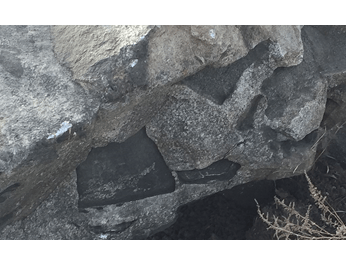
volcanic breccias
Suevite, a type of impact breccia welded by melt. Note the largest fragments are 9” across. Photographer unknown; source Wikipedia.


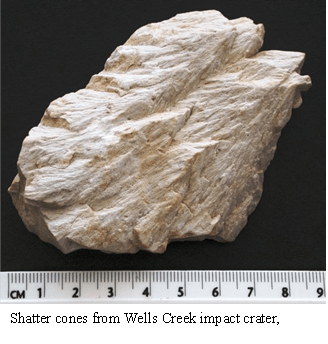
  • Shatter cones―three-dimensional, branched, fan-shaped fractures in rock caused by high pressure.
    shatter


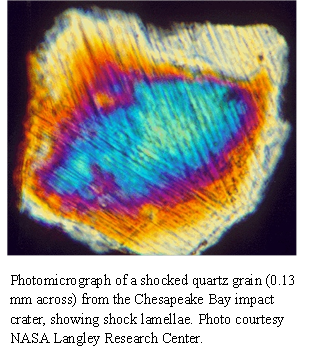
  • Shocked quartz―quartz whose crystalline structure has been deformed as a result of extreme pressure.
    shocked quartz
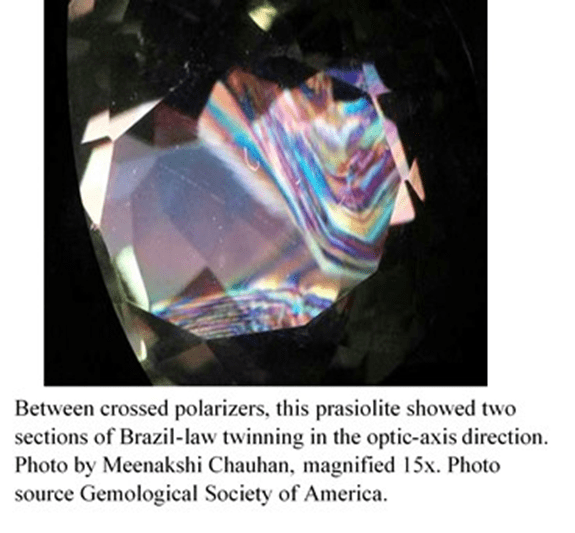
  • Brazil twinning―“Conjoined-twin” quartz crystals, where two crystals share part of the crystalline lattice.
    beazil
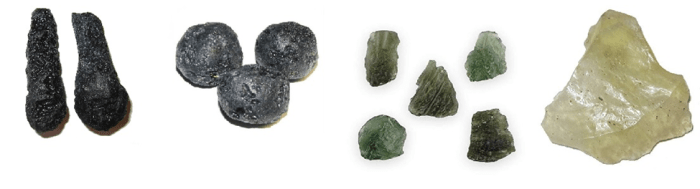
  • Tektites―impact glass, a kind of obsidian produced by the melting of the impactor and crater material, and then ejected. It rapidly cools in atmosphere, forming glass particles, usually in aerodynamic shapes such as teardrops.
    tektites
  • Osmium―like the iridium, the osmium isotopic ratios in the clay layer have cosmic abundances.
  • High concentrations of soot at the boundary layer.

All this was found roughly in the first decade after the Alvarez paper.

BUT WAIT! THERE’S MORE! as the commercials say.

Also found in the boundary layer:

  • Shocked zircon crystals, deficient in lead (likely from being vaporized in the impact.
  • High concentrations of tiny diamonds.
  • C60, aka Buckminsterfullerene, was mixed in with the soot at several sites.

Meanwhile, in the core samples from the crater, scientists have found:

  • Pink granite, of a type normally found deep in the crust.

What they did NOT find in the core samples:

  • Gypsum. Since it’s a sulfate mineral, it was probably vaporized and ejected into the atmosphere.

So when you start to analyze all the clues, it boils down to several descriptors. Whatever happened, happened suddenly, generated extremely high temperatures and pressures, and carried cosmic isotopic abundances of elements that otherwise tend to be rare on Earth.

And that all points to an impact.

Next up: the impactor.

~~~

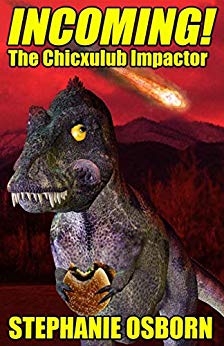
For more details, check out INCOMING! The Chicxulub Impactor by Stephanie Osborn on Kindle and Nook.

51hlcct1zel._sy346_


https://www.barnesandnoble.com/w/incoming-the-chicxulub-impactor-stephanie-osborn/1133840127?ean=2940160786032

AND CHECK OUT STEPHANIE’S FICTION TOO!

Tourist Trap (Division One Book 11) NOW AVAILABLE FOR PRE-ORDER

51zsu8e4ltl

After months of “playing target,” the heads of the Alpha Line special forces department, Alpha One—Agents Echo and Omega—finally take a very special vacation on Tiniken, the “Eden planet,” for some much-needed R&R. The pair kick back, relax, and play tourist, exploring this lovely alien world together.

But when they unwittingly cross paths with a Cortian slave ring and the Cortians recognize Echo as “Cortian Enemy Number One,” he becomes their next target, and “Eden” displays a seamier side. Can Omega and the rest of Alpha Line find Echo before he is sold as a slave… or worse?

Beware Moving Cheese

rat-152162

Somewhere, possibly here in the comments, someone referred to Alvin Toffler’s Future Shock as “we failed to die of future shock.”

I read the book when I was fourteen and last re-read it in my late twenties.  We’ve all passed a lot of water since then.  So I’m not going to claim I have a perfect recollection, but I don’t even remember his predicting social disintegration.  Just that some people would get profoundly uncomfortable and maybe be unable to cope with societal change.

I also do know it’s popular, particularly on the right to make fun of or talk about the book being discredited.

I neither know nor care if some of his examples were wrong, or if he had the wrong reasons to reach his conclusion.  But I’ll go bail for the principle that he expostulated: that as change accelerates any number of people become unable to cope with it.

In fact, I’ll plump down for a principle he didn’t propound: given a sufficiently fast change in how we live, what works and how things are done — every day things that affect the daily lives of every day people — a large enough number of people are unable to cope and retreat into strange fantasies and run around like demented idiots.  Or sit down and do nothing at all.

Look, he didn’t use this as an example, (unless my memory is worse than I think) but he could have: before the 20th century, the time that “how things are done” in every day life mostly involved a culture getting overpowered/destroyed by another culture, usually through losing a war.  And when that happened, even though it normally happened over some years, the wheels just came off.  As in late-stage soviet empire, the men became drunkards, the women became whores, and no one had babies.  (Oh, wait, if you make drunkards into drug addicts that takes care of most of Europe these days.)

Vae Victis seems to apply to a culture that is overpowered and forced to change so fast that something internal breaks.  You see it throughout history.

We’ll leave aside for the moment that we’re attempting to do this to ourselves via SJW invasion of the culture snatchers: devaluing everything that works in our culture and changing “who things our done” every day.  That honestly might be a symptom, an attempt to cope.

We’ll just go into how fast things change these days.

Look, just in the way things are done, on the “every day I do this” thirty years ago everyone who was anyone was tethered to a pager.  Now pagers are limited to very few professions and usually only at work. (Doctors, some chemists, probably — though I don’t know that — some construction sites.) If they don’t want you distracted by a cell phone, they’ll give you a pager.

Twenty years ago, being hip and with it, Dan and I had our weekends in strange cities down to a routine.  Find phone books, determine places to visit. Print mapquest from hotel. So easy, so convenient.  Stop laughing.

Nowadays we’re dinosaurs because we still use a GPS (being somewhat deaf, most cell phone GPSs are too quiet for me.)

Organizers, brilliantly spoofed by Terry Pratchett, came and went so fast my kids had no idea what he was talking about.

But what you have to remember is that what affects the texture of every day life also affects professions, ways to make money, ways to make a career, ways to establish yourself in the world.

Consider the man who was perfecting a new medium on which to imprint/sell songs, when everyone decided to just use digital files via the internet.

For that matter, one of the places I worked at they were working on developing entirely artificial (not derived from wood pulp) and cheap paper.  Thirty years ago it was a massive project.  Now… well… I don’t know.

The thought that originated this post was political.  But before that I’d been noddling with a few friends the idea of something called “Laid off Middle Aged Man Syndrome.”  Man because women usually don’t define themselves by their profession. Though now and here some do, and I should know because I realized I lost a year to the Syndrome, and have only recently — since realizing it — started fighting back.

I’m sure you’ve seen it, as I have.  Someone gets laid off, and even though they had gotten to the point that they hated their job, and they have abilities that allow them to make money, even if they had sort of kind of seen it coming, suddenly they seem incapable to cope.  You could say it’s depression, except most of the time it’s not.  It’s more like confusion, disorganization and inability to stick to anything, interspersed with several long periods of staring at the wall.

You might have seen people go through the same when their marriage breaks unexpectedly.

Some people in that situation do fall and can’t get up again. It’s easy to happen. You get so tired of not being able to pull up, you let yourself go.  You go under for the third time.

It’s puzzling because many times it’s patently obvious it’s not grief at the loss of the job, or the marriage, or whatever. And trying to treat it as though it were, trying to tell the person — or yourself. Trust me, I KNOW — to just let go, and that you lost no great thing, or to stop repining, will do exactly nothing, because that’s not the cause. So trying to treat that is kind of sideways and besides the point.

Sure, applying boot to bottom and forcing yourself to do some of these other projects (just write already!) works, to an extent, but only to the extent that antibiotics work on a virus.  They don’t, but they might prevent secondary infections.

Took me a while, and frankly examining people who weren’t me (as most people insist on not being, inexplicably) to understand what was at work was neither grief nor depression.

Instead it was a sort of uber- confusion.  We could call it future shock, but it’s more “loss of future shock.”

It’s not that these people have no future.  Often they are highly talented/trained professionals and even if their profession vanishes, they have other things they can do.

It’s that the future they subconsciously expected has been yanked away.  And that’s a shock.

Look, we humans are weird critters. Yes, I know we all live in the present. But we don’t. Without memories and anticipation/planning, most people are utterly lost.

Rapid technological and social change yanks that way.  Your profession or your family changing very quickly leaves you quite literally in shock.

And if you don’t identify what’s going on, you’re not going to react rationally to the change.  It stands to reason. If you can’t fully accept it and process it, it leaves you standing there going “What now?” Only all this is taking place at a subconscious level so you get the additional fun of not having any clue why your get up and go got up and went.

The funny thing is that this doesn’t affect only individuals.  It is the only explanation I’ve found for the utter insanity that is current publishing.  Publisher’s Weekly — variations on whistling past the graveyard — keeps telling them ebooks will go away really soon and engaging in lies, damn lies and statistics to prove it.  They can’t possibly believe it. They can’t. i know some of these people. Also they don’t really act as if they believe it. But they also don’t act as if they disbelieve it. That last would involve starting to cozy up to the more successful indie authors and presses and going “how do you do it?”

Instead, they’re in the fetal position, curled up under the table, with their hands over their ears.  Possibly rocking.

Why?

Well, because the future the entire industry expected, and what they saw coming is gone.  It’s never coming back. And what’s here is so completely different, they’re shocked.  Dazed, bewildered.

Victor Davis Hanson wrote on the next-level Trump derangement syndrome, which to be honest is much worse than Reagan derangement syndrome and Bush derangement syndrome (the last transforming someone who self identifies as a Christian Socialist into Bushhitler, so Trump derangement syndrome is a doozie.)

And while reading it suddenly everything fell into place, from how completely insane the “resistance” that resists nothing, and whom no one is trying to suppress is, to the people on the right (Pierre Delecto, we hardly knew you and I’m no longer sure that 2012 wasn’t the best possible outcome in the best of all possible worlds) who have lost their minds and think that one of the outright communists campaigning for the democrats is preferable to Trump, to the house trying to impeach a president for reasons to be discovered later, as soon as they find a good enough fishing hole, to–

Suddenly I realized all these people are suffering from a collective version of laid off middle aged man syndrome.

See, most of these people are my age or older. And when I was a kid we all knew what the future was: it was some form of central government. We were just fighting over how intrusive it would be.

Nixon, children, thought that wage and price controls were reasonable.

Sure, Reagan came along and upended all that nonsense.  Or most of it.

But the thing is our intelligentsia, our … culture manufacturers never believe it.  It was a fluke. It only worked because of luck, or exceptional agricultural years or it was the result of Jimmy Carter’s exceptionally hard work, or…

And they suppressed it, anyway. The prosperous 80s became the decade of greed. And sure, we could ditch all the socialism stuff, but then we were just greedy and soulless, and man, it was a good thing Gorbachev ended the cold war, or we’d have blown sky high.  (And no, I’m not joking. They convinced themselves of that.)

None of the presidents till Obama challenged that. George Bush (either) was truly indistinguishable from Clinton in most ways when it came to economics.

Obama challenged it because he was a true believer in the narrative that the intelligentsia had created to discredit Reagan.

He believed ALL THIS. He really, really, really believed all this.   He said he wanted to be the anti-Reagan. And he almost managed it, even if resurrecting the Soviet Union was really hard.  Jimmy Carter finally got his second (and third) term which all the left had been telling everyone would have been utopia.

And it stank. It stank on ice.  Their losing control of the media didn’t help, but I’m not even sure the media could ever have hid the stink. Even the WSJ jumped in on the Summer of Recovery canard, but it quickly became a joke on the street.

Then people elected Trump. Who did all the things the intelligentsia had been telling itself for decades don’t work, all the things that contradict their lovely theories.

And … they’re working.

They’re in shock. Someone moved their cheese. The future they envisioned is gone.  It might never come back (if we’re lucky.)

… and so they’re losing their minds.

Don’t let their insanity scare you or convince you they’re winning.  Sure, they’re doing a lot of things. That’s because they feel they must do something.  The fact that it’s all irrational is not lost on them and it’s driving them crazier.

Don’t you lose your head. Be not afraid.  Build under, build over, build around, because some things will eventually collapse.  But this is not the beginning of the end. This isn’t — even — the end of the beginning.

This is the day the Lord has made and it is glorious in His sight.

Book Marketing and a Contest – by Frank J. Fleming!

61rudpy1cyl._sl500_

Book Marketing and a Contest – by Frank J. Fleming!

Hi,

It’s me, Frank J. Fleming, novelist, IMAO founder and sometimes blogger, and writer for the Babylon Bee. I’m very famous and you’ve heard of me. My hilarious new novel Hellbender is now out on audiobook, so I thought I’d talk about the most important part of writing: marketing.

It doesn’t matter how good a writer you are, no one is going to read you if you can’t market your book. In fact, if you’re really, really good at marketing, you don’t even need to be good at writing. Really, I’d just forget about good writing — go ahead and
pound at the keyboard like a chimp to fill up a book — and then concentrate on marketing. Once you have a reader’s money, who cares if they like the book? It’s too late; you’re gone.

So here are some of my favorite marketing strategies:

Word of Mouth

One of the most common methods of marketing is word of mouth. Now you’re probably wondering, why the mouth? Well, it’s the best thing at forming words. Word of nose? No one is going to understand that. Word of ear? That doesn’t even make sense. Word of butt? That will actually hurt sales. So when you have words being said about your book, you want them — and I can’t stress this enough — coming out of a mouth.

Pestering

This is one of my most common strategies. All you do is keep telling people over and over, “Hey, you should buy my new book!” until they absolutely hate you and want you to stop. But the only way you’re going to stop is if they buy your book. Though they might
also attack you. That’s another option. Usually, they’ll settle on just buying your book, but as a warning, you are going to get roughed up a bit with this strategy.

Lying

This is a pretty tried and true method you can adapt to any situation. For instance, I tried to get someone to buy Hellbender and he was like, “Wait. Is that a science fiction comedy? I only read true crime books.”

So I said, “That’s what it is. True crime. Maybe the truest crime ever. And extra crimey.”

And then when he bought it and flipped through it and was like, “This looks like it was written by a chimp pouding at a keyboard!” I was all, “No refunds!”

Lying is great. You can also use it to make whatever you’re selling sound better than it is, though I don’t need that for Hellbender, since it has already won five Nobel prizes in literature and is in the Guinness Book of World Records for being the greatest novel
ever.

Kidnap Pets

I know. You’re probably rolling your eyes at this old-fashioned technique. In this age of targeted ads and A/B testing, why would you use anything as low-tech as pet kidnapping? But if you read any marketing book, the very first thing it will say is “People
love their pets and will buy almost anything to keep them from being harmed.” That’s why kidnapping people’s pets and threatening not to give them back unless they buy your book works even in our futuristic age of Facebook, jet packs, and digital watches.

Contests

Despite all your marketing, people will still just want to get things for free. Grr. I despise consumers; all I want is their money and they constantly don’t want to give it to me.

Still, you can use people’s desire to get things for free to help market your book by having a contest. You lure people in with their wanting free stuff but most won’t win the contest, and now they’ll want your book but will have to pay money for it. It’s the most
evil of traps.

Anyway, here’s a contest! I’ll give out five copies of the Hellbender audiobook to the five people who put the best marketing ideas in the comments. So come up with a great marketing idea — one that will help me sell at least a million copies [or I bet make him laugh himself silly!-SAH] — and put it in the comments, and a free copy of Hellbender could be yours.

But if you don’t win, you can just buy it and pretend you won. It will make you feel better.


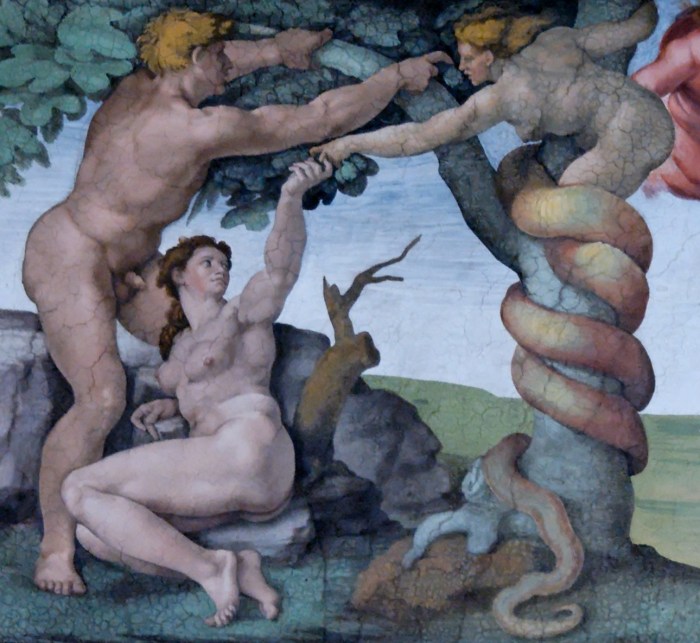
Selling Out Paradise

Adam_and_Eve,_Sistine_Chape croppedl

If the modern age were written in biblical style, what would the serpent whisper to women, gays, minorities and most of all, our children.

How about “This paradise isn’t as good as it should be?”

I woke up late, mostly because it was a busy weekend and I went to bed late (and no writing or covers done, which means I need to do double today.  Ah well.) And while I was stumbling around the kitchen in a state of lack of caffeine (it’s sad) Dan was in the family room, exercising and (as one does — even me — while exercising) watching some random movie.  Where a kid was prattling on and on about how we need to change the world, because the world needs changing.

This is one of those aphorisms that those of us who grew up in the shadow of the boomers heard our entire life.  “You’re going to grow up to change the world.”  “We all should change the world” “the world needs to change.”  Or in the language of teenagers at all times and everywhere, throwing fits at their parents, “Why did you bring me into this messed up world?”

Perhaps it’s a sign I’m getting older — and people should most surely get off my lawn — or perhaps it was the utter lack of caffeine, but I stopped in the middle of the kitchen thinking “Why?” “Why is the world so bad?” “And in what way should we change it?” “Or does it matter? Should we just generically change it, like one can change ones haircolor to candyfloss pink, because it’s not our natural color?”

Look, the way the left — supposedly the children of materialistic Marxism — rage at the world, (and more and more the flesh, and the creatively interpreted devil) you’d think they’re an heresy not of main stream Christianity but of gnosticism.  (Oh, wait, I’ve watched (accidentally) some of their supernatural stylings.  Um.) This world is an evil evil place and salvation comes from changing it.  Which in practicality, on purpose or not translates to “we have to destroy the world in order to save it.”

Yeah, I can hear the read till offended contingent now “You only think the world is perfect, because you’re racissss sexisssss homophobic, and you have privilege and–”  Can it.  Also stay quiet while the adults talk.

No one is saying the world is perfect. Of course the world isn’t.  It is a material place, inhabited by material beings.  Your body isn’t perfect, either. It is a commonplace to say we’re all dying. It’s not exactly true. Some of us are still growing.  But yeah, the minute you stop growing, your body starts breaking down.  Does that sound like perfect to you?  Also we’re built on the frame of great apes, who come with their own impulses, ideas and issues which often interfere with what our rational selves want to do.  For instance take this weekend (and last.)  I was going to finish editing a short novel and write three short stories.  Instead there were issues with household and real life things. Net words produced, zero.  And no, my rational self is not happy about it.  The ape isn’t either.  She’s not had a nice walk in two days and she didn’t do anything fun, and she’s cranky.

So? Multiply that by however many of us you think there are.  I’m pegging it at 6 billion and likely less, but the UN has been adding up imaginary people based on the imaginary counts of countries that can’t be trusted to tell you where their borders are, so who knows?

Whichever way, there’s a lot of us.  And we all have issues with ourselves, which leads to issues with each other, which leads…

The world isn’t perfect.  No one said it was.

That said 90% of the people who want to “change the world” want to do so by telling everyone else what to do. Ignoring that they themselves are also not perfect, and more likely than not are appallingly ignorant of the real world out there.

When people — rightly — said the spectacle of Greta Thunberg apostrophizing adult in public was ridiculous, the older left rose up to say at least she was fighting for change.

So she was.  Well, she was scolding for change.  But one must ask: Why is the change she was championing a good thing?

Don’t warble back about “we’re going extinct.” or “Great extinction” or “we only have twelve years.”  Not only is that complete nonsense, even according to the UN who are masters of raising fear in order to gain power (in fact it is their only talent.) but it is patent nonsense.  If this were undisputed and provable truth, if the data weren’t stupidly massaged, if the Earth hadn’t been way warmer (without our interference) in the past, if we could agree on what is causing (was causing. We’re in a pause or maybe heading down. Like the population numbers it’s hard to tell because some people LIKE fear. It gives them power) warming, and it were obvious (and no lefties, it’s not because we don’t get big words. Some of us were raised on big words.) there would have been a scientist explaining to the UN what needed to be done and why, instead of a middle school girl with cognitive issues pointing her finger and asking how they dared.

Instead pause and think about what Greta really was advocating — which I’m sure the older boomers saying “quite right” have never done — to stop this runaway global warming and extinction she’s been told is coming.

I’m sure the benign elderly boomers saying “She is bringing change” in tones like “What beautiful cheeks this child has” think it’s all about the west living a vegan lifestyle (let’s talk about how bad for the environment that would be, since real veganism will kill real humans. Growing what’s needed and processing it for a healthy diet is far worse than meat. Never mind.) wearing “natural” clothing, recycling, not driving more than you have to, and “living in harmony with nature.”

Somewhere in the back of their minds when they hear Greta Thunberg what is playing is “This is the dawning of the age of Aquarius.”

While if in fact what Greta Thunberg was demanding to stop the catastrophe she imagines is bearing down on us was the death of maybe 5 1/2 of those billions. Why? Well, because you can’t stop carbon emissions and travel (do you have any idea how interconnected our world is?) without stopping food production, distribution, processing.  What you get is the four horsemen: War, famine, pestilence and assuredly Death in the end.

More importantly, the west getting “low water” washers (we’re going to talk about it in the future. Their next eruption of crazy is about water.  I’ve started to see articles about “living in a post water US”.   As someone who had to teach the water cycle to teachers before, I’m here to tell you these arrant idiots think the water is used once and disappears. Also, apparently it’s going to stop raining. Also if there were a real crisis, they apparently miss we have very advanced filtration tech, for ocean water if needed. Argh.) or stopping using straws, or stopping having children (which most of the west is doing anyway) is not going to cause the change Greta demands.  To do that India and China would have to stop their industrialization cold, and most of them would have to die.  In fact, the remnants of humanity would have to go back to living in the stone age.

To stop the fears of a kid who was told the world is a terrible place and about to end.

Or, you know, we could tell her the truth. The truth is that we live in a world that — however many — supports the most people it’s ever supported, in the most comfort these uppity great apes have ever enjoyed.  Even in the third world, life is markedly better than it was fifty or a hundred years ago.

This doesn’t mean that the world is perfect. It doesn’t mean no child goes to be hungry (Venezuela. I’m sure lots of children go to bed hungry in Venezuela.  In the US?  Oh, there might be a couple hundred in a country of three hundred million.  No, the childhood hunger survey is not indicative of anything except insanity. But even in a country as rich as comfortable as the US there are horrible parents, abused children, etc. You can’t stop that. Great Apes.)

In the first world, where little Greta grew up,we are ridiculously, amazingly wealthy.  Kings of the past would look at us in envy. We eat well… more than we need. Most of us have closets stuffed with warm and comfortable clothes.  Those in true need are spoiled for choice of charities distributing winter clothing right now.  Those tight on money — some writers don’t get paid regularly, you know? Free lancer and all. (because I’m still uncaffeinated it occurs to me that free-lancer’s meaning is not far from the denotation if not the connotation of ronin. I now want a headband to wear while writing that says ronin writer.)  — can shop thrift stores (and trust me, half the stuff I buy is new, because stores dump last year’s unsold stock for a deduction. Heck, since I lost some weight (need to lose more, yes) I can buy expensive brand closing either new or perhaps worn once.)

Actually we’re a pretty good case study because though we’ve made pretty good money most of our lives (with some truly disgustingly low points) we have weird priorities.  So we tend to buy our clothes, furniture and often tech (unless needed for work) and always cars downstream at second, third or fourth (one of those cars!) hand, while blowing our money on books, courses education and yes often houses (but that’s an investment which usually — couple of exceptions — pays off.)  And living downstream of the cutting edge of society, we’ve, except for those disgusting exceptions of a couple years here and there, not lived badly at all.  Way better than anyone around me while I was growing up, in fact. So far up, in fact, that my grandmother would be speechless.  She was often overcome by houses with running hot and water and said “what luxury” at things that we find downmarket now. And that ladies and gentlemen is living mostly on second hand stuff.

Our time can afford people who aren’t particularly outstanding in their careers (though I like to think both of us are good) a life that would make kings in the 19th century cry and stomp in envy.

But we’ve ruined Greta’s dreams and her childhood and apparently those of a lot of their cohort, by not killing the more populous areas of the third world that are just now industrializing.

It never seems to occur to these world changers that if someone had changed the world to their ideal before they were born, they’d likely never have been born.  Or they’d have died of something (hospitals require energy. And transport. And innovation. All of which require modern tech) when they were infants. Or if they were lucky enough to be born and alive now, they’d likely be handicapped by issues borne of those diseases and malnutrition.

The Green New Deal (I automatically type it in Green Nude Heel and then have to wonder what is wrong with the words. I need caffeine) is a ticket to exactly that kind of medieval horror-show world.

Already we’re letting the “world changers” aka rebels without a clue play havoc with our infrastructure and energy supply to the point that they’re trying to drive us there on the installment plan.

And all why?

King of the past looking at the lives of commoners now would say “Surely that’s paradise.”

Ah, but is the paradise paradisical enough? Was Greta Thunberg’s childhood exactly as cossetted and pampered as she can imagine? Are we living in harmony with nature and is everyone perfectly happy in the perfectly amazing Earth which hands us everything we need with Rousseaunian promptness?  Is love free? Is food organic? Does our hair flow in the breeze?

Eat this apple, and it will be the dawning of the Age of Aquarius.  Which like a hippie commune will be dirty, verminous and an ecological disaster.  But hey, at least you’ll have changed the world, right?

Changing the world is easy. In fact, you can’t stop from doing it.  However you live, the world is going to be changed by your being here.  Yes, even if you go to a mountain fastness and become a hermit. You’ll either require helicopter rescue and cost us millions, or some idiot will write books about your life to inspire other idiots to do the same to “save the Earth.”

So, instead of thinking of changing the world by telling others how to live, think on how to change the world by how YOU live, and what you dedicate your (yes, all too short) life to.

The world didn’t get where it is by people doing nothing. If that were the case, yes, we’d still be living in Greta’s paradise and being chased around by tigers, whenever we fell from our tree. (But not saber tooth tigers. Their extinction has nothing to do with us, and it would have happened anyway.)

Does childhood poverty appall you? Well, you’re spoiled for choice.  Get out there and work at easier to grow, better and more abundant crops (yes, GMO. Suck it. We’ve been genetically modifying plants and animals since there’s been agriculture, and maybe before.) Invent industrial processes that are easier and less polluting.  Work at computer apps that make it easier to shop with less waste. Heck, create more efficient engines. Oh, and work at coming up with cures for diseases, since a lot of poverty, childhood and not, comes from disease.

Is your talent more people than science? Work at removing the boot from people’s necks, both the governmental boot and that of culture.  Countries where the individual can’t benefit from his/her toil are mired in perpetual poverty.  It doesn’t matter if the stuff you create goes to your ne’er do well politicians or your ne’er do well relatives.  And it doesn’t matter how good it would be if everyone shared.  In practicality, common property is distributed poverty.  It also kills innovation and the ability to save.  That “capital” that Marx hated? That’s the surplus you save/invest for the bad years.  Marx didn’t know that because he was, in point of fact, a useless grifter.

And if like me your talent is just the ability to entertain people and (as a stretch goal) make them think?  Well, that helps too.  Or at least it’s an honorable way of making a living.

Heck, even those who clean houses for a living (and if you think that’s low-skilled you’ve never done it well) are changing the world for the better. Clean houses are healthier.  And it frees other people to do things who might free other people to do things which in the end might lead to someone having the leisure and resources to create… something really big.  An interstellar drive. A virtually free form of energy that even the greens can’t object to.  Wheat that grows on practically nothing.  Who knows?  Such miracles have happened in the past.

Want to change the world? You will. But make sure you’re changing it by building, creating, doing.  Not by sitting around stomping your feet and demanding everyone do as you say.

Because on the other side of that vision that makes Extinction Rebellion stop commuters on their way to work lies the wilderness, and no way back to paradise.


Vignettes by Luke, Mary Catelli and ‘Nother Mike and Book Promo

Book Promo

*Note these are books sent to us by readers/frequenters of this blog.  Our bringing them to your attention does not imply that we’ve read them and/or endorse them, unless we specifically say so.  As with all such purchases, we recommend you download a sample and make sure it’s to your taste.  If you wish to send us books for next week’s promo, please email to bookpimping at outlook dot com. If you feel a need to re-promo the same book do so no more than once every six months. One book per author per week. Amazon links only.-SAH*


FROM MARY CATELLI:  Sorcery and Kings.

51br086q4yl

Tales of wonder and magic.

A fire master must find a magical starter of fires.

A mysterious queen holds a ball in a city filled with magic.

Magic of roses and gold are needed to fight a dreadful war.

An oath keeps a ghost captive.

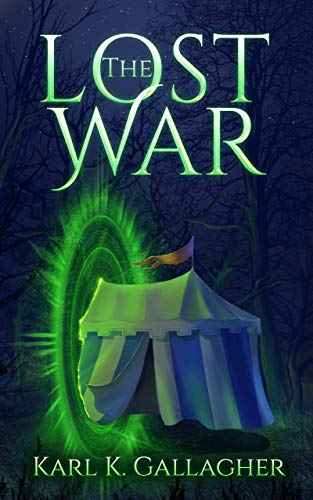
FROM KARL K. GALLAGHER:  The Lost War.

4165jtigqml

It was supposed to be a weekend of costumed fun. Instead these medieval historical reenactors are flung into a wilderness by magic they don’t understand. They must struggle to survive and deal with monsters who consider them prey . . . or worse.
***
“Karl Gallagher’s first production, the Torchship Trilogy, was good enough so that I read and reread it. He has now turned his hand from science fiction to fantasy.”
– Professor David D. Friedman, Professor, Santa Clara University, author of The Machinery of Freedom and Salamander
– Also known as Duke Cariadoc of the Bow, KSCA, OL, OP, founder of the Pennsic War.

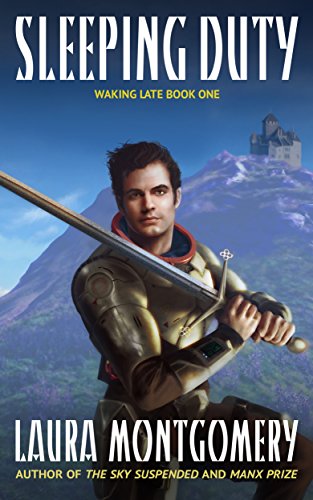
ON SALE FROM LAURA MONTGOMERY:  Sleeping Duty (Waking Late Book 1).

51zv03x0apl

Gilead Tan and Andrea Fielding survived their stint in the military, got married, signed up to emigrate to a terraformed colony world, and went into cold sleep for the journey from Earth. While they slept, the starship went through the wrong fold in space and settled for a different world, a wild world.

Three centuries after the founding of a colony on the uncharted planet, Gilead awakens to find humanity slipped back to medieval tech and a feudal structure.

Worse, the king who wants Gilead awake won’t let Gilead awaken his wife.

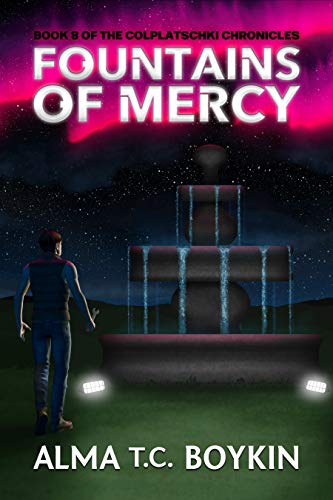
FROM ALMA T. C. BOYKIN:   Fountains of Mercy: Book 8 of the Colplatschki Chronicle.

41rudvapc4l

Fires dance in the sky, and the great machines fail.

Colonial Plantation LTD can’t decide what to do with Solana, also called ColPlat XI. Should it be a nature preserve, a living museum of pre-industrial techniques, or a standard colony? As the bureaucrats wrangle, a solar storm disrupts technology and reveals deep rifts between the colonists and their administrators.

Susanna “Basil” Peilov clawed her way out of the slums and wants nothing to do with the Company. Peter Babenburg just wants to build his water system and stay out of trouble. When the sky-fires come, Basil, Peter, and their families and friends stand between the colony and chaos. Company administrators assure everyone that replacement parts and assistance is coming, will come. Without those supply ships from the stars, everything falls apart and the colony will die. All that people can do is wait and hope for rescue.

The administrators never planned on facing a group of engineers, a crazy farmer and his wives, and colonists determined to protect their home. Hope comes from some unlikely places, and courage takes eccentric shapes.

Vignettes by Luke, Mary Catelli and ‘Nother Mike.

So what’s a vignette? You might know them as flash fiction, or even just sketches. We will provide a prompt each Sunday that you can use directly (including it in your work) or just as an inspiration. You, in turn, will write about 50 words (yes, we are going for short shorts! Not even a Drabble 100 words, just half that!). Then post it! For an additional challenge, you can aim to make it exactly 50 words, if you like.

We recommend that if you have an original vignette, you post that as a new reply. If you are commenting on someone’s vignette, then post that as a reply to the vignette. Comments — this is writing practice, so comments should be aimed at helping someone be a better writer, not at crushing them. And since these are likely to be drafts, don’t jump up and down too hard on typos and grammar.

If you have questions, feel free to ask.

Your writing prompt this week is: melodic


Morning in Goldport

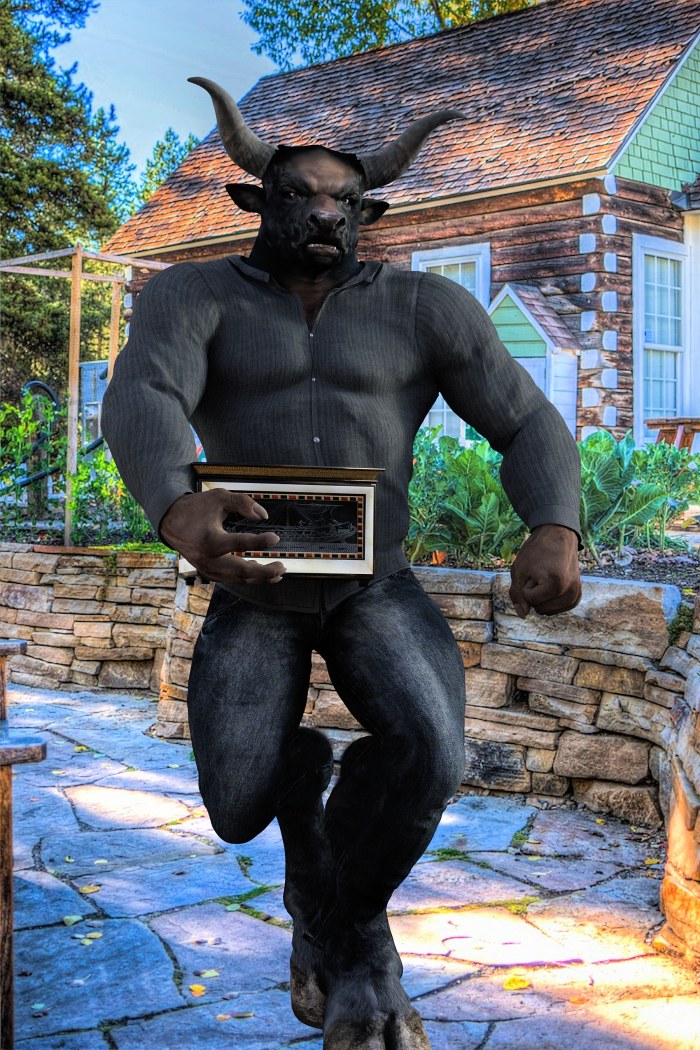
It’s a cold, clear fall morning in Goldport Colorado, when Orvan Ox parks his delivery truck — Minos Delivers, aka “What can Moo do for you?” — and walks out carrying a mysterious box.
What is in that ornate box? Who is he delivering to? How will it be received?
(yes, this does mean I don’t feel like writing a post today.  Not even food post.  Have fun.)

orvan

The Crystal Ball of Hong Kong – by Bill Reader

hongkongcrystal

The Crystal Ball of Hong Kong by Bill Reader


While I don’t think that we should invade Hong Kong—not being a fan of land-wars in Asia, especially ones involving nuclear powers—I can certainly understand wanting to. Hong Kongers initially rose up in response to an “extradition” bill which would have given China legal cover for the political oppression it has always badly wanted to enforce on the city.

And they have had plenty of reasons to stay exercised, given that China has essentially instituted martial law, overseen by one of their handpicked anointed, no less, in violation of the—let’s call it what it is—doomed-from-day-one “One-Country-Two-Systems” agreement. Predictable as a sunset though this was, their position is quintessentially Western—that the will of the people ought to be able to restrain the excesses of government, and laws apply even to the most powerful.

China, meanwhile, takes the traditional communist view that “the people” are to be listened to in direct proportion to their usefulness to Marxist utopia-building, and pair it with the wholly compatible egomaniacal tyrant view that laws exist mainly to let powerful people herd the proles more effectively.

Review the situation dispassionately and each of China’s responses—some would say blunders— in handling it belies their imprisonment within this mindset, to such a degree that they can’t even practice deceit effectively. I’m otherwise at a loss to explain their silly play at “suspending”—but not removing—the “extradition” bill, unless alternatively, they assumed the collective IQ in the entire city of Hong Kong was about that of a block of lukewarm cheddar.
And, one is minded to ask, my, isn’t all of this very— familiar?

The Democrat leadership in the US is currently waxing totalitarian.

Almost worse than their proposals is their attitude, however. First they demand trillions of dollars of spending, the dissolution of various constitutional rights they find inconvenient to their goals, and the fundamental restructuring of society such that government touches and controls everything and everyone. That’s a polite summary, mind you.

They will then call you vicious names, and use mob tactics to attack you if you oppose them—be it doxxing, be it physical attacks like those just recently witnessed by antifa on people leaving a Trump rally, etc.

Democrats in government think nothing of orchestrating coup attempt after coup attempt, always with a familiar cast of characters— government drones whose names never came within 50 miles of a ballot, usually with hyper-partisan Democratic credentials, collaborating with hundreds of Millennial journalists whose entire life can be summarized as an upbringing steeping in propaganda, followed by a job writing propaganda.

And in case being bullied on the internet and the street, and usurped in the halls of government were for some reason not enough, tech companies take it upon themselves to try to socially engineer and censor conservatives independently. All this, and then their thought-leaders have the unmitigated gall to try to demoralize us with an “exhaustion” narrative. (Why, yes, as a matter of fact, it is wearying to the bone to have many of America’s major institutions reveal themselves as dens of partisanship run by people whose moral compasses point due South at all times. I can’t think of a worse reason to capitulate, but it’s noted.)

If you think that it’s mere hypocrisy driving all this— the fact that Biden’s (or for that matter Hillary’s) corruption gets a pass; that most members of Antifa get to commit felony assault without repercussions; that government drones commit unpardonable crimes and their maximum punishment is retirement to a life of being a paid guest or even a host at a Democrat-lead network; and that any norm can broken, any law, written or socially understood, can be violated, and provided it’s a Democrat doing it, the collective media and justice response will be a shrug— if you have been taking this as a mere partisan double-standard, allow me to humbly disagree.

What China reminds us is that totalitarians, full-fledged and embryonic, use one elegantly consistent standard—whatever advances their cause, that thing is legal and just. All other things are bad. It is only a “double standard” from the perspective of people who view laws as mattering, or institutions and norms as anything other than a tool of whatever group they individually favor, which may change moment-to-moment. I put it to you that everything about the modern Democrats indicates they are on the same single-standard as a China. Arguably, a double standard would be an improvement.

In the circumstances, Hong Kong is hard for a Western freedom-lover to view dispassionately.

China is standing as living proof that totalitarian super-states are not just things that Democrats eulogize in chorus on their debate stages, but real and monstrous creatures dominating more people than we can possibly imagine.

Hong Kong is standing as living proof that free people can, despite overwhelming odds, despite the certainty of consequences and the paucity of hope, stand against these monsters. Moreover they represent the idea that moments come where taking such a stand is necessary. Eric “nuke ’em” Swalwell and Robert Francis “Buybacks” O’Rourke, and the rest of their compatriots would strongly prefer you not associate their policies with any of the places they’ve actually been implemented, prefer you believe the march of “progressive” policies unto the death of the host (as has been seen in all of those places) is inevitable, and prefer you agree that there is never any line that can be crossed that necessitates rolling back said policies by methods not explicitly sanctioned by the people making those policies.

We look to Hong Kong because we fear we could become Hong Kong—formerly and nominally free people bearing the full brunt of attack from slaves and pawns of an out-of-control totalitarian empire, whose benefits are always just around the corner but whose abuses, infringements of real human rights, expansive corruption and dead-eyed-inhumanity are always right here and now. We look to Hong Kong as an example of when and why free people can and must say “enough”, regardless of consequences and regardless of outcome.

Yes, regardless of outcome. Because freedom is either a philosophy you are willing to fight for when all other meaningful options except fighting are gone, or it is a very temporary gift given to you by people who better understood it. It encapsulates the idea that simply being someone else’s slave is not a sufficiently worthwhile existence to merit enduring it simply because it is easier. For if that were not the case, why bother?

I say this each and every post, and I say it in earnest—we aren’t there yet. It’s not a fig-leaf. The rough music hasn’t started. Everything I’ve read suggests, you’ll know it if it does. But I really hope it doesn’t. However, don’t confuse our long continuity of inherited freedoms with the idea that it can’t. Increasingly, the DNC’s leadership wakes up every morning looking to take our unique and working system, and supplant it with a much more common and dysfunctional one. Watch the Democratic debates and take them at their word. If you think that China can’t happen here, think again.

But if it does, I pray that Hong Kong can happen here, too.