A Fundamental Misunderstanding of Supply and Demand

checkout-2800436_1920

Seriously guys, what are we teaching kids these days? More importantly what are they learning?

Because I can’t even (though I Odd pretty well) I’m going to link the post at Mad Genius Club.

And if you don’t want to follow the link, it pertains to this silly git:

Screenshot_2019-11-06 Sci-Fi Fantasy Author Fonda Lee Criticizes Barnes Noble Stocking J R R Tolkien Robert Jordan Books 'W[...]

Sigh.  We won’t get into the idiocy of traditional publishing and their artificial restrictions on market, but still…

This poor woman has everything backward in her head.  It makes it very difficult for me to believe that she can create any kind of sane or believable world. Why? Because she doesn’t understand the laws of supply and demand, which means she doesn’t understand reality.

It is clear that she comes from an academic background, since she thinks that shelves are allotted by order of “importance.”

This is a problem for me as a reader often because I run into a lot of writers like her.  It’s less important in things like romance, though even there it can’t get weird, like when some authors assume that the best thing possible in the Regency would be being a duke AND a doctor. (Head>desk, repeat.) This is because they misunderstand the relative wealth and importance of earning a living in the professions.

But there are a ton of books in mystery that hit the wall. Those that require understanding of how the world worked.  So the economics these writers write are what you expect from exquisitely maleducated people.  They learned sociology and various grievance studies.  So you know, factories are bad places where people are forced to work in terrible conditions — for the 21st century. None of these darlings has the slightest idea what actual conditions were like at farms in the Regency, say — and do not even get health care or counseling, and are probably totally deprived of free ice cream.

I have now walled mysteries, some romances and a few fantasies, because they assume people who build and run factories are “evil exploiters” and villains.  (As opposed to you know  not building anything and letting the peasants starve.)

I’ve walled even more of them when the villain becomes “reformed” and just gives his whole fortune away to people who probably drink it away within a week and, presumably, dies in a gutter shortly thereafter.

In science fiction and fantasy this is even more painful. You’ll have entire worlds getting paid for things, without it making any sense, since there is no galactic agreement on money, no universally agreed upon standard, nothing that makes whatever they hand you worth anything.  We have entire worlds paid for things that make no sense to transport inter-world with the money existent at that time.  You have “exploited” groups, that you can’t figure out why anyone would exploit or what sense it makes.

Then there is the soc jus in these worlds, which often consists of upending historic injustices by creating worse injustices and, oh, yeah, incidentally making it impossible for the economics to function and starving everyone in the world. If you’re going to do that call it Planet Venezuela already, okay?

And don’t get me started on the economics of worlds with magic, where monetizing magic is somehow either wrong or no one ever thought of doing it (because everyone in that world is born mentally impaired.)

Anyway, why am I so iffy about reading a book by an author who made the post above?

She might swing words like there’s no tomorrow. She might be an imaginative creator of characters. She might love puppies, be kind to kiddies and adore helping the poor. She might also know a lot about all sorts of things.

But she’s missing the one and important fact of life on Earth: everything, from plants to animals has to make a living. And everyone’s life is limited.  And when you come to individuals with sentience? We know it too.  We know our time and life, our energy and ability to survive are limited.

Therefore we pay for that which we need or want. And we don’t pay for or buy that which we don’t need or don’t want.

Sure, there are things we would love if we could just know they exist — but the problem with the book not even being on the shelves is the idiocy that paper book sellers have come to. They mishandled the market till it’s now extremely limited — but mostly? What sells is what people want to buy.

So why does Barnes and Noble “give” space to dead guys?  They don’t. They sell it.  Dead guys pay their way by, in turn, selling a bunch to the public.  Barnes and Noble is in enough financial trouble through NOT doing that for a number of years, that it desperately needs that “dead guy money.”

And why is there only one copy of this author’s book? Well, because B & N and traditional publishers still use push? Must be because they don’t think her book will sell and her publishers targeted her for going down hard.  This is bolstered by the fact that she won the World Fantasy Award, an award that for … 20? years since I broke in has been known to have NEGATIVE impact on sales.

It’s all about making a living. It’s all about supply and demand.  Yes, in our field we have to create demand for our books, and it starts with knowing we exist. That is something that traditional publishers don’t help with.  And something that is still hard in indie.

Which is part of the reason classics routinely outsell current authors.

But it is not the only reason. Nor is whining, crying and beating your heels on the ground about it the way to change that.

The dead great shall always be with us. You want to outsell them: write a lot and write well.  Or find another job.

Economics in the end — regardless of what prizes you get for being a good little girl, or how much your professors praised you — is cold equations. Cold equations ALL THE WAY DOWN.

Is it fair? No. Well…. Not fair in the sense that it doesn’t matter how good you are if people don’t know you exist.  But it is fair in the sense that if you write well and a lot and figure out how to advertise you’ll be rewarded.

But fairness has got nothing to do with it. It is the way of the world.

Dead guys outsell you?  Well… judging from the two you mention, they are people whose company is worth it.

So, instead of complaining, learn about supply and demand.  And work to supply something people demand.

What if I Told You?

knight-2565957_1920(1)

I’ve found that just like in the old Soviet Union, we know more or less what the future will bring (at least a lot of us are beginning to be very afraid we know what the future will bring, while our adversaries are sure they know. And also wrong. And pushing us towards a precipice*.) It’s the past that keeps changing.

Now, this was not a surprise to me, so much as it must have been to Americans born and raised who were paying attention at the time (seemingly a minority, but what do I know, since we were in the power of the MSM back then) but I’ve watched the past change many times in this country.  It wasn’t as much a surprise, because I’d watched it change in Portugal too, as good years of sane-ish economic policy became in retrospect “good agricultural climate years” or complete messes of leftist governments became “Competent” and “unimpeachable” in the rear-view mirror.

Leftists in the rear-view mirror look more centrist than they really are.  And everyone to the right of Lenin is evil and corrupt.  I’ll say it again, in case you missed it the first few times: of all the events in my life that I was present at and which were reported in the press, not a single one matched, and the slant was sadly and stupidly predictable.

But even that did not prepare me for the suddenness in which the prosperous 80s (following on the f*cked up 70s) became “the decade of greed.”  Or how Clinton’s grasping and corrupt administration was whitewashed in retrospect.

And the thing is, there is always an agenda, always a plan.  The left will pull the strings of their media puppets — always — with intent to lead people somewhere.  The stampeding is that of a band of primitive men surrounding the mammoth.  The mammoth is much bigger but never realizes it, because there are these scary sounds all around. Any minute, he could break free, trample a couple of the annoying gits, and get home free, but he doesn’t.  He allows himself to be driven to the precipice.*

Thing is, if you look at what the left is stomping and yapping about, you know where they want to lead you and what their ultimate plan is.

Deriding the 80s as the decade of greed allowed for shaming corporations into cooperating with the Clinton crime syndicate. It allowed for people knuckling under tax increases. It allowed for a patina of “virtue” needed to hide Clinton’s zipper eruptions.

You could sort of see it coming, if you paid attention.

This is particularly obvious with the culture.

Sure, some of their moves are obvious to anyone who can read print written seven feet high and in letters of fire, right?

Their distortion of history so that everything America ever did is wrong and evil-bad is designed to make our own kids hate their own country and imagine themselves as “citizens of the world” which is to say citizens of nowhere.

Which in turn allows for wide open borders which bring in the population of 3rd world serfs the statists count on to keep them in power forever.

For the last ten years I’ve been disquieted and disturbed by the persistent myth of: Our ancestors were far more cleanly, happy and prosperous than we think.  Yep. Your foot-in-the-mud ancestor didn’t suffer under the lash of his feudal overlord.  Oh, no. He had hot running water, regular baths, religious holidays off and–

Spits.  And the girls sang as they wove garlands on Mayday, I suppose.

Most of these myths are arrant nonsense.  Some are arrant nonsense on stilts with a dash of oikophobia thrown in.

I’ve mentioned here that I went to the Viking exhibit at the museum some years back, and it was all about how free and egalitarian the Vikings were, male and female.  Which I suppose was true, if you miss the large component of slavery. And the fact that they raided foreign shores for slaves and loot. And that almost every skilled artisan was a slave. And–

Then there is the continuous “The Vikings were much cleaner than the Christians and women preferred them.”

First let’s cut the crap. We have zero clue if women preferred them. When the raiders come to town, they don’t stop to ask thee fleeing women to sign “affirmative consent” forms.

Second, yeah, I’m sure in some Viking villages they were cleaner.  We do have have reason to suspect some areas had functioning saunas.  But then some of the areas raided had functioning Roman baths still extant.

I’m sure for some times and places, that was true.  I’m also absolutely sure that for most times and places the Vikings were about as clean as everyone else, which is to say not very, due to the lack of easy-accessible soap (yes, it existed. In certain times and places. NOT everywhere and not of a kind you’d want to use on your skin) of easily accessible acceptable-temperature water, and/or of warm enough places to bathe in.

No, medieval people weren’t as utterly filthy as it’s imagined (though there were some, I’m sure) but I’m also utterly sure, having experienced this in a temperate climate, that washing in winter would be limited, careful, and therefore maybe not as thorough as we imagine.  Or to put it another way, when the Victorians went on about catching a chill, they weren’t just blowing smoke, guys.  People didn’t willingly strip down and dip in lukewarm water int he dead of winter and when clothes would take forever to dry, unless they had other clothes, and facilities for getting warm right after.

In other words, Vikings and the rest of the Middle Ages were, from our POV a little wiffy.  As were most places until the late 20th century.

So why the cleanly and perfumed Vikings (Particularly since the records of the time don’t support this view, except in very few, highly publicized circumstances?)

Oh, that’s the “don’t go imagining Christians were better” wing of the oikophobe chorus.  They will tell us Christians were filthy.  The pagans, on the other hand, were cleanly and perfumed.

Weirdly the one people we know were cleaner than Christians, also more literate and prone to less domestic violence never come in for praise in these comparisons.  I suspect being part of the foundational build of the West, the Jews aren’t considered “wonderfully other” enough. Or given some of the recent bs on the left and the people they embrace, perhaps it’s a hate thing.

BTW that Christians being filthy is bullshit.  Later on, in defense of “but medieval people weren’t that filthy” they’ll bring in the injunction to change your underwear daily.  Which is more than a little confusing when you researched the heck out of “underwear use” in various places in the renaissance and know most women at least wore none.  Eventually you find out the injunction to change underwear was in monasteries.  Monk’s orders in fact, also had various guidelines on cleanliness which, for their time, were amazingly enlightened.  Even if, yes, by our standards, they were all a bit wiffy.

The same applies to a ton of other things.  These revisionists tell us they ate better than we think, oh, and by the way, except for infant mortality they lived as long as we do.

All this is insanity on stilts.

Those of us who didn’t grow up in the first world (second and a half at best!) know d*mn well how people lived in the 20th century, with nominal indoor plumbing, but without a lot of changes of clothing, washers and dryers, heated houses, etc.  (The trains from the mountains, where it was colder, in winter, smelled like a mix of VERY unwashed bodies and wood smoke.  You never forget that smell.) The particular etc. I have in mind in this case is the lack of refrigeration.

Look Portugal is fertile enough that a careful planner can feed a family on less than an acre of land (particularly the area I come from, apparently one of the oldest inhabited in Europe and whose name in Indo European translated as wet and fertile valley.)  I’m sure the food available to us in the 20th century when you could buy improved seeds, etc. was way better than the one available to people in the middle ages.

But … yeah, no. We didn’t eat like people do now. Not even close.  For one, meat was fairly scarce.  We mostly ate fish (thanks to the coasts!) and vegetables.  Oh, and we were relatively lucky. A lot of people got almost no protein.  The most common lunch among the people was the “isca” that is a bit of fried flour which might or might not have a couple of shreds of codfish in it.  The very poor ate a lot of vegetable soup.

And again this was in the 20th century.  In winter vegetables more or less vanished and the only fruit available were the wrinkled, flour-like apples.

Christmas treats were dried fruit, not cookies.  It tells you all you need to know. (Yes, it was healthy too except for the scarce protein for most people, but no one said the way we eat is particularly healthy.)

I’m not complaining, but I know that we ate massively better than my parents did in the mid 20th century.  And they ate better than their parents. So, kindly, do not tell me some serf on a medieval estate got his choice of however many flavors of ice-cream.

Sure the very rich ate well, if sometimes oddly.  But the average person, not so much.

And as for living as long?  Yeah, no.

I still remember vividly — as do many our age — when 60 was old, 70 VERY old.

Yes, I’m concerned for my parents in their late eighties. And that’s, as my dad puts it “after 80, that’s old”.  But it would surprise no one is they lived another 10 years.  Because a lot of people do now.  And now one makes a big deal of people who turn 100.  (Even though 114 seems to be, a little inexplicably, our hard drop-off limit.)

And besides we KNOW.  Shakespeare at 58 — two years older than I’m now — was “very old.”

So kindly take your “people lived about as long,” fold it all in corners and put it where the sun don’t shine, even if people in the arctic in winter will be a little puzzled by it.

So, why is the past changing in that curious way?  What are we being stampeded towards?

Ah.  Well, see Occasional Cortex’s magnum opus: the Green New Deal (Temptation to write The Green Nude Heel intensifies.)

If you believe your ancestors who were serfs to their “betters” and tended a plot of land by “natural” means (read ox and man power) lived about as well and were about as fulfilled, wouldn’t you say “okay, maybe.”

The problem being of course, that none of that is true.  The Green Nude Heel (eh) would in fact put us on the verge of what was it Obama called it “A precipice* of achievement.”  I’d even call it a precipice* of prosperity.  A veritable Venezuelization, in fact, like… oh, what happens to all the democrat controlled areas from cities — hello, Detroit! — to states — I’d say California should chime in, but it’s hard to make smoke signals with candles.

What the Democrats and their associated media and education industrial complex are signaling so hard with their changes to their past is that what they have in store for our future is about as good as the Middle Ages… if we’re lucky.  And if we’re not lucky we deserve it, because our ancestors were filthy Christians, and generally evil.

The thing is you see that if you refuse to let them change the past, and you make sure the kids know we know that’s bullshit, you’ve gone a long way to reclaim the future.

Reclaiming the language helps too.  For instance *contrary to what Obama seemed to believe means, in fact, a great drop.  Mind you, maybe he knew what it meant and just experienced a need to be truthful, for one moment, who knows.

However, I’d very much like for people to stop imitating his misuse.

Keep in mind when someone is lying to you about the past they’re trying to stampede you.  They’re trying to stampede you because they don’t have the ability to force you.

If you end up going over the precipice, it’s because you listened to them.

And that would be tragically stupid.

Shutting Off Feedback or How We Got Into This Fine Mess

brain-4521223_1920

One of the things I loved about biology was the concept of feedback.  If you get too much inventivium in your blood system, your science fictioning gland shuts down so you don’t get too far from reality.  (What, you don’t have those? Really?)

Anyway I don’t love feedback in electronics.  In the bad old days (yes, kids, pre-history) when we had a house phone (landline) with a mobile receiver, and Dan and I were one on each receiver, if we got too close it started to whine.  You know, you’re discussing a party invitation and you want to see the other’s face to find out if he’s saying “We’ll try but” because he doesn’t want to go, or whether “we’ll try, but”  and suddenly the phone is screaming in your ear.

I suppose it had a useful side, because I suspect you got other interference when too close, but it was annoying.

Well, now I think about it, most feedback is annoying.

Economics is full of it — as are other economic systems — and humans find it so annoying they have devised various means of shutting it down, and then become puzzled and do crazy stuff when the system goes out of control.

Take price controls. They deliberately shut down feedback.  The idea is “people need to eat and the essentials should be cheap.” We went tons of rounds on this in the seventies in Portugal. It was FUN — not — and responsible for empty grocery shelves and problems getting the essentials.  Because when cooking oil was dirty cheap by price control, everyone who had ridden this pony before (with bread, with toilet paper, with…) would buy everything in the grocery shelves. Meanwhile, because it was impossible for merchants to make a profit on the thing, they didn’t stock it. Which was okay, because the factories that made it couldn’t afford to at that price, so they stopped. And all the way down the line.

This is because what the idiot politicians were shutting down was the feedback. Prices are many things — and sometimes annoying when you really want a good pair of noise-cancelling headphones but your bank account is crying, to use a totally random example — but MOSTLY? They’re information.  They’re feedback.

Because, yes, people work for profit, and profit — things that Warren and Sanders will never get — is not dirty, it’s what people live on, when prices go up — meaning there’s more demand than supply — people go “hey, you can make a profit in this” and start making more, until the supply and demand match, and you can’t make as much money, so people wander off to do other stuff.

You shut down the signal, and things go insane.  You keep it shut down long enough while handing down lists of things that the government wants you to make, and vast famines sweep the land but you have a surplus of size 35 shoes for the left foot only. Because the directive handed the factory made that the easiest thing to do.

But it is not just in economics (though eh, everything is a branch of economics, as my reading in my 30s informed me. Which means that’s probably when I started going insane) that humans love shutting down feedback.

The truth is we don’t like reality very much, and are more or less perpetually at war with it.

We have this image of how things should be, and because we imagine it so clearly we think it’s a moral imperative.

Which brings us to how we got into a fine mess, in publishing, in universities, in… everything affected by the long march.

The long march looks cunning, and it was. And for some people it was a conscious plan. But here’s the thing, it’s also a process that goes automatically when a large enough group of humans in a nation or a field share an image of what’s “ideal”.  In other words, in theocracies, the shut down of feedback from reality, and the ramping up of bringing in other true believers is standard, and intensifies as it goes.

This is not a thing of the left, btw. Every human institution, given the power to do it, shuts off feedback they don’t like.

This is why large corporations who can do so buy monopolistic status from governments (in various ways) and then stop heeding reality and go insane.  Which is why large and powerful enough corporations become indistinguishable from totalitarian states.  And also why, no matter how much influence they have on government, they eventually crumble and fall apart.

It’s also why publishing came up with “ordering by computer” and “ordering to the net” which allowed the houses to determine who stayed in and who got kicked out, all the while claiming they were being responsible and following the “numbers” — except that the numbers were vitiated by factors in their control — like the original laydown. Or how much push a book got. Or how willing they were to reprint. And none of this was taken in account in the “ordering to the net” thing, which ultimately reinforced the publishers’ ideas of what should sell. IOW it was a lie, but it was a lie that accorded with their idea of the perfect reality. Which is why it didn’t work. None of this worked.

And the problem is that as gatekeepers they were inclined to pick things that reinforced their biases — not even just political, their lifestyle biases, and age biases. One of the biggest arguments I had with a publisher was for having Dyce not follow her crazy parents’ dreams, because the boomer publisher identified with her parents, so… — and disliked feedback that told them this stuff didn’t sell.  So they came up with a way to make the stuff they disliked (and they bought some, though not a ton, and yes, usually tried to pick not so good stuff) sell even worse. That way they could “prove” that the stuff they liked was the stuff the “few smart people who still read” liked. And most people were “too dumb to read” thereby explaining the cratering print runs.

They’re still doing this, btw. In their circles, the fact that indie exposed their lies and that genres they declared dead, like the cozy or mil sf or clean romances are doing amazingly well is obscured by “games with statistics.”  They routinely say “ebooks don’t sell” meaning their own (well, duh, priced not to sell) and therefore trad pub is in control again.

It’s as big a fantasy as the USSR leading the world in steel production and it ends the same way: in massive destruction of wealth, lives, and good will.

But the market will go on, and find a path.

The thing is that once you shut off feed back, the insanity is self-feeding.  And if you’re invested in it, you can’t admit it.

Also that once you shut off feed back pushing your favorite view becomes THE thing. Hence not just publishing going hard left, but the universities following, and the utter crazy of corporations (I’m looking at you Gillette) rolling left to die is all part of “there are no other standards, everyone agrees with us. We must preach the truth(y) word from on high, because we’re doing good in the world, and it shows how good we are” missionary effort of a religion without an afterlife and with no concept of forgiveness.  Oh, and no contact with reality.

Sooner or later, feedback wins.

You see, it’s there to give you signals that things are going to be in serious trouble and soon. If you shut it off, it doesn’t stop happening. You just can’t hear it.

If you shut off the feedback signaling that the pressure is too high, all you’re doing is ensuring things blow up.

Build under, build around.  Because sure as the sun rises in the morning, there she blows.

Our job is to ensure when the lefty dream society goes sky high, it doesn’t take Western Civ with it.

Vignettes by Luke, Mary Catelli and ‘Nother Mike and Book Promo

Book Promo

*Note these are books sent to us by readers/frequenters of this blog.  Our bringing them to your attention does not imply that we’ve read them and/or endorse them, unless we specifically say so.  As with all such purchases, we recommend you download a sample and make sure it’s to your taste.  If you wish to send us books for next week’s promo, please email to bookpimping at outlook dot com. If you feel a need to re-promo the same book do so no more than once every six months. One book per author per week. Amazon links only.-SAH*

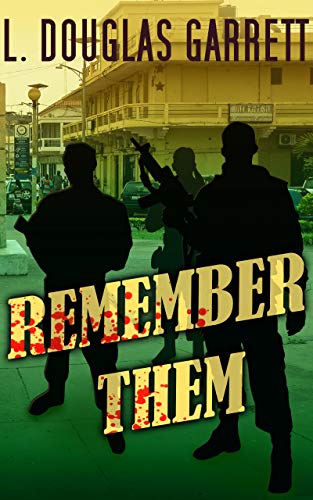
FROM L DOUGLAS GARRETT:  Remember Them (Remember The Trade Book 2).

51xi4ngwnkl

The man who became his cover identity is back in action! He had to become someone new in time to be sent on a mission he was ideal for: taking in a team to ferret out a secret Cuban plot in West Africa. But has the identity of David Cox really been put to rest?

Remember Them brings the details and dirty work of covert missions to the forefront, an espionage thriller where clandestine violence and disposable identities combine. You know all about the Cold War spies in Europe. This was 1984, West Africa, and The Trade. It was a dangerous place, rife with mercenaries, coups, and a dozen little wars. But there was even more happening behind the scenes.

“The Dogs of War summed up 1960’s mercenaries in Africa. Now, add in spies and welcome to the 80’s.”

BY MEL DUNAY:   Slaying a Tyrant (Ancestors of Jaiya Book 1).

41khe18q7ql

Journey to the country of Jaiya, in a world not quite like ours. Here the humans wield magical powers and fight against an Empire which seeks to enslave them, but they share their world with insect people and trollfolk, and stranger things lurk in the shadows…

Vanti would be happy to spend her life in dance and choreography, but her family chooses her as their champion in a deadly gladiators’ tournament. To save her country from enslavement, she must defeat King Obiar the Conqueror and his magical powers. But will the brooding trainer named Gurion be her guide in the battle to come…or a dangerously handsome distraction?

Note: Tyrant is meant as a standalone with a “happily ever after” ending. However, the heroes in the later books in this series are descended from Vanti and Gurion, who are also the ancestors of some of the characters in the original Jaiya series. The romance is on the sweet side, but there is some violence due to the villains’ actions and the tournament in which the main characters fight.

FROM MARY CATELLI:  The Firemaster and the Flames.

41aurspeubl

Jan well knows that it is an honor to serve the king as a firemaster.

Even when it means leaving the lands where firemasters are known and common, and traveling to where they are feared and hated, bringing with her the foundling she is raising, to fight a strange manifestation of fire.

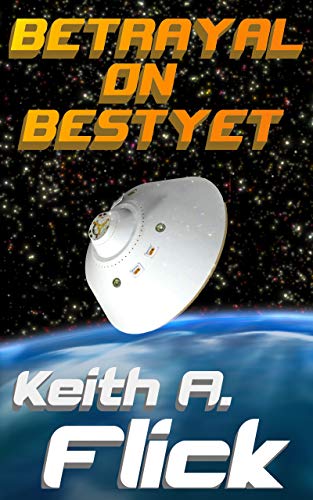
FROM KEITH FLICK:  Betrayal on BestYet (The Universe of Little Ships Book 1)

51tl2b1nkspl

Alfred Young had it all. A scion of one of the founding families of BestYet, he had just successfully finished his first interstellar voyage. He was happy to come home to his planet, family and fiancee. What he wasn’t expecting was an attempt to frame him for one of the biggest robberies in history. A heist big enough to destroy his family’s company and plunge his planet into a recession. He thought he’d be safe once he reached home, he wasn’t expecting Betrayal on BestYet.
With his mind damaged he just wants to sit on the sidelines and heal but his family and planet need him. Knowing he was sane would be nice too, but after all, who really gets to have that?

FROM HENRY VOGEL:  The Lost Planet.

51klvh1tgil

The Progenitors—ancient, powerful rulers of an empire spanning a thousand suns—vanished before mankind discovered the Americas, leaving the Elders to rule as Regents of the empire. Three thousand years later, the Regency set their sights on the Terran Republic.

When the vast Regency fleet attacks, the fate of humanity falls on a pair of young shoulders. Elise, a scholar’s daughter who has never been on her own. Glen, the slave of an alien master, who doesn’t know how to be human.

Against the vast empire, Glen and Elise have nothing to oppose the aliens but their wits, a spaceship, and a handful of allies—an ethereally beautiful alien artist, her equally handsome brother, and a quadruped mob boss protecting her teenage daughter.

Together, they must steal a sacred text out from under the Regency’s very noses, rescue Elise’s father, and hope he can solve the mystery of the Progenitors’ whereabouts. If he can, they must pray humanity’s salvation can be found on…

The Lost Planet.

Vignettes by Luke, Mary Catelli and ‘Nother Mike.

So what’s a vignette? You might know them as flash fiction, or even just sketches. We will provide a prompt each Sunday that you can use directly (including it in your work) or just as an inspiration. You, in turn, will write about 50 words (yes, we are going for short shorts! Not even a Drabble 100 words, just half that!). Then post it! For an additional challenge, you can aim to make it exactly 50 words, if you like.

We recommend that if you have an original vignette, you post that as a new reply. If you are commenting on someone’s vignette, then post that as a reply to the vignette. Comments — this is writing practice, so comments should be aimed at helping someone be a better writer, not at crushing them. And since these are likely to be drafts, don’t jump up and down too hard on typos and grammar.

If you have questions, feel free to ask.

Your writing prompt this week is: didactic

Taking the Day off

lamp-4009995_1920

Taking the day off. Well, kind of. I intend to be writing, just not blog posts.

I’ve spent a lot of time recently reading back where I come from in genre and style.  For me that’s space opera.

It’s weird to say, but in the years of writing to market, or at least writing to publishing houses (you didn’t sell directly to people) it’s easy to forget why you start doing this thing, and what you want to do… what the lamp burning inside your soul is, and what feeds it, versus what just keeps it sort of burning.

I’m starting to have some clarity.  I get the impression this is a road, though.

Meanwhile I write, building a rope of words back to sanity and health.  Keep me in your prayers, your thoughts.

This writing things is not as safe as it looks. Not inside.

NANO NANO and odds and ends

books-4518650_1920

Sorry this is so late.  The Odds and Ends first:

Mom’s term for Odds and ends was useless things.  When you couldn’t find a screw or a bolt or some specialized part you knew you’d left somewhere you looked in the box of the useless things. Digression over.

Frank Flemming has ordered me to put out an urgent request.  Would two gentlemen who commented on his blog: Paul who suggested that he carve Hellbender ont he moon with nukes, and Steven Stolarz either ping me (or him) on facebook or send me an email to my two initials, last name at the thermically enhanced email? You’ll hear something to your benefit.

Second, on the late, an apology because Deep Pink is also now very late.  I — as usual — thought I was being lazy, but it’s “virus, the continuation.”  I slept 10 hours last night, and I REALLY think I’m better.  Why do I keep getting sick… well, I always have low resistance to “strange” viruses, i.e. those that aren’t around much, hence the epic case of con crud I used to get.

For some reason this is the year my fans and friends visit, so it’s been… interesting.  Sometime this month we go to a workshop too.  I hope I’m well before we go.

Now, this is November and therefore Nano. (NaN0WriMo)

The first time I Nanoed (eh) I wrote Darkship Thieves.  Since then I’ve nanoed sometimes not finishing the book, sometimes writing two novels.

I never participate in the forums, just keep count for myself.

This year is a little difficult, because of a week-long conference, but also because I have six short stories due, a couple overdue already.

But I’m going to try.

I’d like to invite/suggest anyone else who is likewise nanoing share excerpts, word count and challenges on our November Sunday posts.  On other posts, too, if you wish, just put NANO at the beginning of the comment.

And now I’m going to shower and do a quick cleaning, so writing can happen.

Incoming: The Chicxulub Impactor, Part 3 ― The Impactor & Effects By Stephanie Osborn

Incoming: The Chicxulub Impactor, Part 3 ― The Impactor & Effects

By Stephanie Osborn

http://www.stephanie-osborn.com

The Impactor

Based on the evidence at the impact site, there are quite a few things that can be fairly readily extrapolated about the impactor.

  • Impactor’s estimated velocity: 12.6-73km/s (4,500-26,000km/hr or 2,800-16,300mph)
  • Impactor’s estimated diameter: 9-11km (~5.5-6.8mi) up to 81km (50mi)
  • Impactor’s estimated mass: 0x1015-4.6×10¹⁷kg  (2.2×10¹⁵-1.0×10¹⁸lb)

The generally held view is that the impactor was an asteroid about 10km (6mi) in diameter, traveling at 16-32 km/sec (10-20 miles/sec, or 36,000-72,000mph).

the impact

The Impact

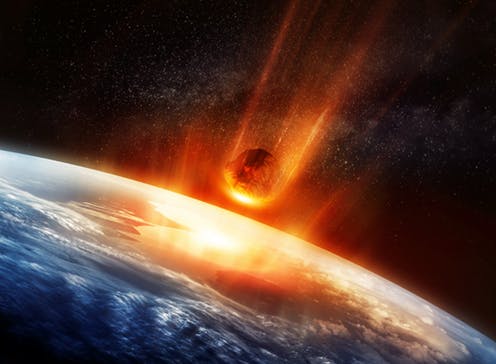
So the impactor comes screaming in at anywhere from 2,800 to as high as 16,000 miles an hour, doesn’t even notice the top, oh, 290 miles of atmosphere, and that last 10 miles of air doesn’t even slow it down. Nor does the relatively shallow water in which it impacts, which, 65 million years ago, covered the entire site.

When the impactor contacted Earth’s surface, it still didn’t slow down, at least not initially. Instead, it punched several miles into the rock. The sudden impact vaporized the impactor as well as substantial quantities of ocean basin and underlying bedrock. Additional quantities of Earth’s crust were liquified and sent into exoatmospheric, suborbital trajectories, only to fall back down, far far away from where it started. Some was probably ejected from its home planet entirely. And the remaining bedrock of the entire region was shattered like fragile glass.

Ground Zero

  • Original crater depth: several miles (exact depth not yet determined; possibly as deep as 25-30mi, per Gulick, et al.)
  • Original crater diameter: 185km (115mi); some estimate 300km (186mi)
  • Temperatures at ground zero: >>10,000ºF, possibly as much as 18,000ºF (~10,000ºC)
  • Yield/KE of impact: at least 1.1×10⁸-1.6×10⁸MT or over 100,000GT

By comparison, the biggest nuke ever detonated on Earth, Tsar Bomba, was 50MT. The Chicxulub impact was, at these numbers, 2 million times as powerful as Tsar Bomba.

tsarbomba

The Thermal Blast

If you were close enough to see the impact, it would have been the last thing you ever saw. All life within 1,000km (625mi) would have been incinerated in under 10 seconds.

The Atmospheric Shock Wave

  • Local winds: 900-1000 km/hr (560-625mph)
  • Air blast damage radius: 900-1800km (560-1120mi)
  • Sound of impact: at least 105+ decibels
    mega

The Megatsunami

    • Megatsunami height range estimates: 50-305m (~165-1,000ft) [Note that these estimates depend on a given researcher’s initial conditions, therefore the estimates vary widely.]
    • Estimated inland reach: >100km (62mi)
      seiche


The Seismic Seiche

A seiche is a localized tsunami-like wave akin to a “bathtub slosh.” It is usually generated by the local arrival of one or more earthquake waves.

Extrapolating from the 2011 quake in Tohoku, Japan (mag~9.2), which generated a 1.5m (~5ft) seiche, we can estimate that the seismic waves from the Chicxulub impact generated seiches of 10-100m (33-330ft).

Released Greenhouse Gases

Estimated released greenhouse gases:

      • Carbon dioxide, CO2: ~10 trillion tons (10,000,000,000,000 tons)
      • Carbon monoxide, CO: ~100 billion tons (100,000,000,000 tons)
      • Methane, CH4: ~100 billion tons (100,000,000,000 tons)

And methane is flammable, in itself.

The Aftermath

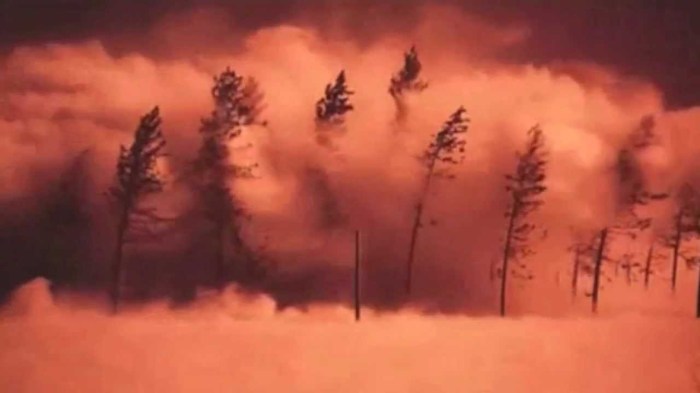
Core drilling on the peak ring of the crater showed that the topmost layer of debris laid down in the aftermath contained a significant amount of organic material, topped by bits of charcoal; evidently there were significant fires ignited worldwide, and the first days after the cataclysm may well have been a firestorm in many, if not most, places.

After the fires died down, Earth would have entered a “nuclear” winter for at least a year and possibly up to several decades after the impact, thanks to all of the particulate material (dust, soot, smaller ejecta) which was injected into the stratosphere, that then blocked the sunlight. Researchers estimate global temperatures decreased by 2-3ºC (3.5-5.5ºF); some areas dropped as much as 8ºC (14.5ºF). Photosynthesis largely ceased worldwide; plants began to die. As a consequence, herbivores began to starve; subsequently, predators began to starve. The last to die would, presumably, have been the scavengers, though based on the information coming out of the Tanis/Hell Creek dig, no one lasted long enough for there to be a lot of scavenging.

But ash is particulate, and eventually the ash will precipitate out of the atmosphere.

Some of this stratospheric material was in the form of sulfur and nitrogen compounds; as it gradually settled and fell out of the atmosphere, it formed acid rain.

Then the released greenhouse gases took over, and the low temperatures started to soar. This may have lasted for as long as 200,000 years after the K-T boundary.

It gets worse.

Some scientists speculate that such large impacts may generate magma plumes on the antipodal (opposite) side of Earth in the long term. This is generally not considered probable by mainstream researchers. It must be admitted, however,, that the shock waves would indeed converge on the opposite side of the planet; whether it created additional problems or not would likely depend upon the magnitude/amplitude of the shock waves, and whether the timing was such that they interfered constructively or destructively. In any case, the shock waves probably set off existing volcanoes, in a kind of planetary paroxysm.

It is flagrant, screaming understatement to say that the aftermath would not have been pleasant for any survivors.

Next up: What, where, and how hard?

~~~

For more details, check out INCOMING! The Chicxulub Impactor by Stephanie Osborn on Kindle and Nook.


51hlcct1zel._sy346_-1

https://www.barnesandnoble.com/w/incoming-the-chicxulub-impactor-stephanie-osborn/1133840127?ean=2940160786032

And check out Stephanie’s fiction!

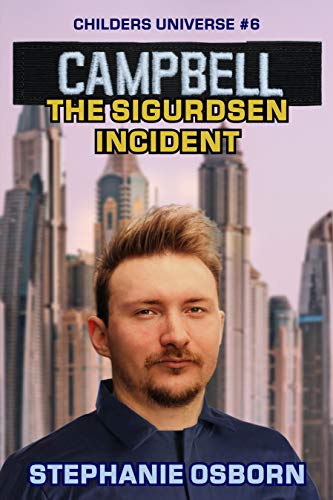
CAMPBELL: The Sigurdsen Incident (Childers Universe Book 6)

41z4pd3lzcl-1

IS SOMEONE TRYING TO KILL MARY RAO?

Captain Mary Rao, Jablonka’s planetary tactical officer, seems to be under the gun from all angles, but neither the Sigurdsen Base military police nor the counter-intelligence investigations personnel believes that it’s anything more than a confluence of accidents.

Lieutenant William Campbell of the CSF Intelligence Division believes differently. What he doesn’t know is who or why.

And if he can’t figure it out soon, he could die with her.

How To Fly

feather-3010848_1920

Shortly after I got married, I ended up babysitting my nephew who was then two and a half or so.  It went okay, until I decided to show him a Dumbo cartoon.

He really, really, really liked the elephant flying. And when the elephant landed, he started screaming and crying “Elephant fly. Elephant fly.”

He was pretty disappointed when I couldn’t make the elephant fly.

What I was talking about: when your imagined future is suddenly yanked away, by changes in your industry, or illness, or a move is much like what my little nephew experienced.  Oh, except we know it won’t work.

So we scream “Elephant fly! Elephant fly!” but we know it won’t happen.

One of you asked “how you get around it.”

Well…

I’m still working through it.

Part of the problem is that I don’t have the type of mind that works with visualizations or affirmations.  As mentioned in another post, I am naturally a person of very little faith.  So if I sit here trying to imagine a future for myself, I just giggle. Or make up reasons for it never happening and end up pretty depressed.

I mean, if I’m going to sit around imagining a future, I prefer the one in which I win the lottery and clear 100 million dollars, and buy dream houses in three cities, and…  And that is fun because I know it’s never going to happen, not because it gives me some sort of map for my future.  (I mean, we remember to buy a ticket maybe twice a year.  With luck. And mostly just to buy that chance to dream for a couple days.)

I found out recently I’m already doing whatever the hot new “being really present” thing is in psychology.  I have through half a century of living with myself learned to redirect bad thoughts, stop panic attacks, etc.  That’s not the problem.

The problem is that I swear we’re like mice with an imprint of a labyrinth at some sub-thoughts level.  Even when we know the cheese is no longer there, we keep aiming the way we were going.  And the older you get, the harder it is to redirect. Because it’s not conscious. It’s how you stand, it’s what you eat, it’s how you occupy your time.

Sure, maybe transcendental meditation would work.  Or hanging by my feet from a helicopter, or something.  Look, I already have problems doing the praying I’m SUPPOSED to do.

But clearly standing in front of the TV screaming “Elephant fly!” ain’t gonna work.

And btw, for me at least, the Dumbo trick of holding a feather and believing you can is also not going to work.

I am of that unfortunate cast of mind that if I were the little engine that could … I wouldn’t be. I would be the little engine who asked really unfortunate questions. In the elephant flying case?  “Why is he flying? How can he fly? Have you seen his wing to body ratio?  What planet is this?”  And thus, my own situation.

So believing I really can is not in the cards either.

So what is left?

I don’t know.  Right now I’m locked in single combat with “establish a damn schedule already!” slightly hampered by the fact that my family has decided this is crazy year with comings and goings and needing me at weird places and weird times.

But to me, I think the path to another future goes through day to day.  First change habits.  Then establish routine. Work on getting healthy to avoid constant interruptions in work. Etc.

Let the macro stuff fall where it will. Worry about putting a foot in front of the other every day.  Climbing that cliff an inch at a time. Even when your nails bleed.

Incremental. Small. Just routine.

…. And maybe at the end of it I’ll find if the elephant really flies.

And maybe it will, soaring improbably into the blue on stubby wings.

It could happen.  Which is better than things that couldn’t.

And I sure as heck am going to give it a try.


The Hope of Immortality

memorial-candles-2686150_1920

This is not a post about All Saints or what in Portugal gets called “Dia dos Fieis” — day of the faithful — when everyone, of any belief or none seemingly, makes a bee line for the cemetery and lights candles and cleans graves and talks about those who lie there, who left, long gone.

My first memories of it were of going to the children’s cemetery to put candles on the grave of the cousin, my age, whom I don’t remember at all, who died at 3 in what appears (according to databases) to have been a small pox epidemic.  She was the strong one of the two of us.  I don’t remember but for years, before I caught a reference to what she died of, I thought she’d died because I refused to share my bread with her, at tea at my maternal grandparents.

Anyway, perhaps the way I’ve been feeling lately tracks back to the fact that time is approaching, and like things trained in from very early, my mind turns to those who have died and whom I miss.

Lately too there seems to be a spate of deaths among friends and friends of friends.  And one of our pets is edging that way and I’m daily weighing the decision.

Greebo too is showing is age, so it might not be long…

I’m old enough that I appreciate being alive.  Even through the daily aches and pains.  Perhaps I got to this point earlier because I never expected to live very long.

Recently death has been rounding near, becoming familiar, shadowing me on lonely morning walks, pausing for a reminiscence when the day is foggy.

I feel as if it’s a strangely dressed man, on a city street, trying to get to the point that it can touch me, that I won’t fight back.

I’m fifty six and fast approaching the point at which I have as many loved ones and friends on the other side as on this.

One expects, of course, to lose grandparents, and I probably shouldn’t complain, or not too hard.  But I do miss Grandma.  This time of year, particularly, I miss her bustling around the kitchen, cleaning up the yard.  And I’d give years of life for one more chance to open the gate that no longer exists and take the path around the side yard, around grandad’s workshop, and into the always open kitchen door, to have tea with her one more time.  I’d tell her about her great grandsons, both of which at times remind me so much of her, and how things turned out for me.  And how much I miss her.

I’m sure she knows all of this, mind you.  Not only because someone like grandma couldn’t simply disappear, but because I have reason to believe she visited me once, at a critical point, some years after her death. I might have talked about it before. I don’t intend to do so now. I’ll simply say that yes, it could be an hallucination (I was near death at that moment) and maybe it was, but in my mind and heart I KNOW what I experienced.

But I’d like to sit and have tea — with lemon — and talk it over, just once more.

Then there is our friend Alan, gone for years now.  His death hurt more, because to an extent it took part of our youth with him.

I never thought of thirty something year olds (much less 50) as young, but we met Alan when we were all thirty.  Alan and his wife were, for years, our best friends in the worlds, our kids brought up as cousins. Holidays and celebrations were at one house or the other, and we had down to habit who cooked what so there was no need to coordinate.  And we went to cheap dollar movies together, broke into publication together, laughed and talked and shared most of everything for fifteen years.

He was diagnosed with cancer the year older son finished his freshman year.  We were visiting him at his summer internship when we got the call and I thought “I’m not ready to let go.”

I still wasn’t ready five years later.  But I had to let go, anyway.  And around this time of year, I miss him and he’s much on my mind.  The other day husband said “As Alan would say” and we both laughed.

He told us when we met again, he’d take us out for ice-cream because there are no carbs in heaven.  That was my last talk with him. I plan to hold him to it.

This week, I had word of the death of a guy who MIGHT have been my first fan, who did everything he could to promote me through my first three? four years with Baen.  Some of you will remember John Wagner from the bar.

He was very ill and was looking after his handicapped daughter, and at some point he stopped talking to me, apparently because he feared burdening me.

But I remember the conversations we had, and the silliness in the bar, and the long talks we had on AIM which were far more serious.

I know in the last few years he’s been hurting, physically, mentally, emotionally, and that his death was probably a release.  But I can’t but lament his passing and say I hope there is another time we can meet.

There are others.  I still miss Jerry, still find it weird I can’t simply email him to discuss something.

There was a fan, Ray Carter, I met briefly online, while my life was going insane, and who in a month became a close friend… and then died but will never be forgotten.

Then there are pets.  No, it’s not a different order.  Well, it is, but some of them have kept me sane and loved more than humans. I don’t know how else to explain it.

We’ve now lost five.  And it gets harder every time.  And Euclid-cat is going that way.  We had to confine him (in a three floor cat condo, but confined, nonethless because… well, our living room has half-carpet, and half-killzeed floor, and the rest of the house was getting the same way.  He simply doesn’t remember, or doesn’t care.

But he’s a cat who loves pets and contact. We used to call him a pet slut, because he’d do anything to be petted.

He took his confinement okay for a long time.  But this week has been hard.  He cries constantly and begs me for pets, and I can’t do that AND work.  I take him out and love him for an hour or two at night, but he wants more, and it’s worrying me.  I don’t want him unhappy. On the other than, he’s not in unbearable pain, which is our decision point.  And perhaps in a way I’m balking the decision because losing Miranda hurt so much.

Meanwhile Greebo, who is a cat, yes, but is MY dog, always at my heels, the guardian of my writing time, has been diagnosed with hypothyroidism.  This is not a death sentence. We will treat.  But it means our time together has drawn down to one-to-three years, from previous experience.  And he’s one of the cats who, like Pixie of blessed memory, or Miranda, or before them Petronius the Arbiter are so close to my heart, they’ll take most of it when they go (not that I didn’t love the other cats. Some are just closer.)

This all came to mind when I read Dave’s farewell to his dog.

And this brought another thing much on my mind, because I have aging parents, and my brother and the cousin who was raised with us aren’t exactly spring chickens anymore:  distance is a kind of death.

This came to mind because when I first “met” Dave Freer on line, Wednesday and Pugsley (her brother) were just puppies.  I was regaled with tales of their exploits and sort of knew them through him.

Like John Wagner, for a long time Dave Freer was someone I only knew online.  And yet, I grew to love him as a brother. I’ve met him now twice, and would like to see him again in the flesh before one of us leaves.

Thing is… we’re both getting older, the distance and travel is almost insurmountable, both physically and monetarily.

Just as with my parents, every time I see them, might be the last.  Distance curtails your remaining time.  Makes people almost like the dead in your memory.  And makes your time with them very short, very precious.

I am not naturally — which will shock everyone who reads the soon-to-be-out short novel Deep Pink — a person of faith.  I’m one of those who find it hard to believe without seeing.

But I want very much to believe in a life after this, where distance and time have no hold over our loved ones.  And where we’ll all get together once more and forever.  Where I can tease John Wagner about the drool and the pink. (You had to be in the Baen bar at the time to get it!)  Where I can talk to Jerry about whatever interesting thought just crossed my mind.  Where Dan and I will go for ice cream with Alan.  And where, perhaps — if I’m very good — I can go for a walk on the beach with Dave and Wednesday.

Someday.

I’m not in a great hurry for it.  I’m not allowing that odd skeletal fellow to get too close, just yet.  But I can see how, someday, his approach might be welcome or at least not fought against, because he knows the way to where all my friends are.

And I must believe that land exists, that place where they all are and where we’ll have time — a long time — to be friends, together.

Because no sane creator would make something as complex as love (agape, not eros, in this case) only to have it vanish forever at the whims of time and health and capricious fate.

It must continue, somewhere.  Because it’s real, whatever else it is.

Somewhere the candle light and the tears must become golden light, by an endless ocean where there will be no more crying.

Fraying

tug-of-war-1013740_1920

Have you ever been in a tug of war? One with a fraying rope?  Probably not.  I suspect most tugs of war in the US would be supervised contexts, either at school or in other circumstances.

But I’ve had tugs of war with rotting rope.  It looks fine, and suddenly it parts. And both sides fall. Hard. Sometimes there are injuries.

I wonder how many people out there are oblivious to the fact that we’re in a cold civil war.

I’d known it for over a decade, back when I was reading at Classical Values and saw the situation framed in that way.

But it became clearest to me over Sad Puppies.

Look, I’m not an infant. or a child. I knew the establishment in science fiction was hard left. I knew it well enough to keep my mouth shut till I couldn’t anymore.

I even knew there was a style of science fiction being pushed hard. “Literary.”  And I know what Literary means these days.

Well, it means what it does every age, right?  The prestige writing, the type the contemporary critics value is that which displays the marks of an excellent education and hews to that which professors of literature (or the gentry, mutatis, mutandis) say books/plays/poetry should do.

At one time, while reading about Shakespeare, I found the way that critics at the time thought plays should be written. For instance, critics of the time thought it was low and bad to have deaths happen on stage. Instead, there should be messengers who tell us the death happened, in the upper class way, off stage.

I laughed till I swallowed my tongue, because I have a degree in literature (and languages. The two went together.) One of the great play writers in Portugal, a luminary that I’ve heard floated as a possible “he was Shakespeare” whose play we studied had so many messengers announcing deaths that it was amazing they didn’t trip on each other on the approach.  He’s considered great because he did everything the right way, the way the critics said he should. Of course he is not known in every country and there aren’t towns named after his characters.

Shakespeare, that commoner who just had people die (with buckets of blood) on the stage? He does.

Does that mean that I think that I can identify future Shakespeares?  I wish. Because then I’d know exactly what I should write to be that big.

But I do know that there can be disagreement in tastes. And I know, as anyone should who has studied the history of any art that any “school” any “this is the good thing” can run itself off its legs.  Which arguably our notion of “literary” has.  Which is why each year books sell less. Which is why books that win awards and are taught as the next great thing are entirely forgettable while the old stuff sells.

So I thought that it was time for a turnover.  Nothing political, right?  And that is because I’m a great big, fat idiot.

Through more than fifty years of seeing slander perpetrated against anyone who disagreed with the establishment, particularly when the establishment was the result of the long march, I thought — like an idiot — that of course they would attack our taste, our intelligence, our writing. I never thought they’d go political. Much less that they’d accuse us of motives that made absolutely no sense whatsoever.  Which of course they did, in the international press.  (And btw US slander laws suck.)

And then it all became political.  And the shock — and honestly a shock that broke something in me, because you don’t expect that.  You just don’t — was that people who knew me, people I’d considered friends, people I’d have trusted, people who weren’t political, believed the slander.  I lost friends over it. But more importantly, I lost trust in humanity as a whole.

Because people I knew chose to believe that I’d had some kind of bizarre racist/sexist/homophobic aims, rather than that I simply disagreed with them about what makes good literature and what should be promoted and get attention.

Sure, I knew a lot of these people disagreed with me politically. But I knew that didn’t make them bad people. And I thought they understood — despite the demonization of generic libertarians/conservatives/whatever — that I was not any of those things.  Oh, yeah, and not stupid, either.

But they didn’t.

You see, we are social apes.  And there is the problem. The serpent in the garden might as well have whispered “belonging.”

Which brings us to why I was shattered and why they needed to defend by bringing in the worst “sins” problem, and for that matter why people I liked and respected believed them: because not believing them meant being cast out. It meant not belonging.  Because people they trusted and respected at least as myself, and possibly more, said these things.  why not believe them? It was the sensible thing to do.

Someone the other day said that Sad Puppies was te beginning of the turn.  She was wrong.  There are many many turns in the road, and none of them are actually dispositive.

What they are is symptoms that … consensus reality was fraying.

Which is a good thing, because the way we were going, given the long march, was the primrose path to hell.  Since all the news and entertainment and everything including education were hell bent in stampeding us into communism, we’d have ended up there. We were already halfway there in all but law.

But —

But it frays the thing that connects us together.  The consensus reality. The rope in the tug of war, if you prefer.

I’ve watched otherwise sane people — people I used to believe were sane — believe the most outrageous things.  Yeah, and say the most outrageous things, in this year of our 3 of the Falling Masks.

I understand it.  A lot of them are good people.  But continuing to belong to the circles they belong requires them to believe certain things.

And it’s not conscious.  None of it is conscious.  It’s all trust in other people. Trust in the group.  And frankly not having any idea that anyone could believe differently, because we all run in our own social circles. The trusted circles. And we trust them. That’s the whole point.

But the rest of us, outside those circles, those of us who thought we were alone and found out we weren’t, those who have been slandered in the press (and there’s a lot of us and growing) have our own circles.  And we’re bunching up.  And we’re hearing hells bells ring.

And the people going with the establishment don’t see it. They just don’t. They think they still have full control. They think they can regain it by stampeding it. They just want to belong. They want their circles to accept them and think they’re smart.

We’re pulling the rope, two ends.

But the rope is frayed. And if it breaks, both sides will go tail over tea-kettle.

While time remains, while we wait for Archduke Ferdinand to get shot — or hell, for Gavrilo Princip to go off and get a sandwich, because when the powder is packed this tight any spark will set it off — we must — MUST — fight with words.  We must break those circles. We must break that certainty.

We must fight back with ideas and thoughts and words.

Or we’ll fight physically.  And the rope will break. And the republic will fall.  And with it the last best hope of mankind.

The fight might be hopeless, but what else are you going to do? We have to do the best we can.

Before the rope breaks.