What do You know?

We used to know so many things, in the past.

Or at least I did.

I mean, I knew a lot of things in Europe that turned out not to be real at all here. Like I knew that the US was wild and there were shootouts on the street all the time. (I still wanted to come here as an exchange student. What can i say. Did I ever claim my instinct of self preservation worked at all, let alone well?)

I knew that nuclear power was dangerous — dangerous I tell you! — which is why we couldn’t have nuclear energy.

And I knew were were all going to freeze to death because of pollution, that we were running out of oil for real, that population was growing so fast food would be rationed by the end of the eighties and–

Oh lots of things. Including that Chinese would continue reproducing too fast to vanish, even if you lined them up and had them jump off a cliff (no one said how many at a time. A serious flaw. No. I mean, people die anyway at a constant rate. Would the cliff jumping be more or less than normal death. I don’t know. No one told me, and it didn’t occur to me to ask.)

How did I know this? Well, I was young and everyone agreed on these things: school, scientists who wrote articles for scientific publications, novelists, song writers, the daily papers.

We all knew lots of things like that. We “knew” them because everyone “knew” them and if you said you didn’t then you’d be laughed at; it would be assumed you were just uninformed and ignorant.

… We surely have passed a lot of water since then, haven’t we? And in my case moving back and forth and back again between countries contributed to my examining everything I was told very carefully. An approach to information that could be described as “Chew, but don’t swallow.”

Some of the nonsense, from population to “we’re going to freeze to death” started looking more and more doubtful as time went by.

When I did 12th grade in the US, for instance, I found out that the average Portuguese family size was six children per woman. Guys, that would be like being told that about the US now, not even in the eighties. There were more families I met in the US with two and four kids than I knew in Portugal, where except for two large families (six and eleven) most of the people I knew had one kid, and a little less than half had two. However, it didn’t take much effort to realize the population numbers claimed for Portugal ONLY worked if every woman was popping off kids like crazy. And then at some point I realized it was a curious thing that all the countries claiming explosive population growth were countries who were either trying to intimidate us with how stronk they were — Russia, China — and countries that were net receivers of international charity, usually administered per capita.

Other things: the many many deaths from AIDS in Africa, so many that there were roving bands of orphaned kids, as reported by people who lived there, were somehow never reflected in the population numbers: they too must be like the Chinese, able to reproduce faster and faster while jumping off cliffs.

And I read Heinlein’s debunking of the population size in Moscow making it 1/4th the size claimed. And reports from friends who actually put their translation training to use filtered in. Stuff like “It’s physically impossible for Mexico City to be the size claimed. The water available wouldn’t keep that large a population alive. We’re not talking showers and laundry. Just drinking water, okay?” And I thought “That’s Mexico City. Which is maybe a little impoverished, but compared to Africa….”

Then at some point in the middle of the night, I remembered how haphazard things like the census are HERE where we’re practically autistic about number counting, and I started laughing at the thought of Middle Eastern countries counting every Bedouin, of African countries sending people into the wild to count the Maasai (to quote P. J. O’Rourke on the imbecility of Kenya trying to force the Maasai to live in government housing: “First, catch a Maasai.”) It was like a great light bulb went on and I thought “I bet you they either pull from air, or go out on the street and ask a couple of guys who, in those societies, will all say “Why I have twenty kids from my four wives” when in fact — very common if they’re not massively wealthy. One of the problems of polygamous societies — they are incells.

I immediately set out to test the waters. Not by speaking to strangers, but now and then I’d mention it to friends.

Who, invariably, called me insane. Crazy. Nutso. Everyone knew the population was well over six billion and ticking up towards OMG. How could I think otherwise? Didn’t I see the cities growing and impinging on wildlife habitats?

Well… I did, yes, of course, but hear you, did they ever hear about the interior non-city of countries, not just the US becoming depopulated? (This is a big problem in Portugal, and it is a problem of infrastructure and resources. I love the countryside there, not very fond of the cities. But in the unlikely, well nigh impossible event I were to relocate, I’d HAVE to move to a city. Why? Well, I’m over sixty. The availability of acceptable medical resources, for one. Other reasons, but that would be at a the top.

Still, I couldn’t dent anyone’s CERTAINTY (see yesterday’s post) that population was exploding. Exploding. Massively exploding.

Until…. Until we started noticing that it wasn’t. Now quite a few demographers say it’s not, and we’re on the verge of flipping and ending up in a population dearth.

I’m going to lay down a marker. I don’t think I’ll ever collect because HOW WOULD WE KNOW? But here it is: We never reached six billion and world population is in free fall.

But Sarah! Don’t you see all the immigrants! Well, except most aren’t. Most are males who want to send money back home. That’s just a measure of how effed the world is and also mind you how easy it has been to bilk the system here, so they can send a lot, a lot of money “home.” In fact they were recruited and helped to come here precisely for that purpose. (If you have time I HIGHLY recommend this series of guest posts on this blog. Also I need to check on Bill, given how the Ivies have been. And he’s been weird since 2020.) Even the left calls them “migrants” for a reason. They’re not established. Not settled. They come and they go. (With lots of our money in their suitcases.)

Still most people still say things like “Well, perhaps the population is a little lower. Perhaps we won’t hit ten billion… perhaps…”

Which makes me snort giggle, because again, how would you know? What do you know and how, when every number is corrupted, even here, much less elsewhere? (And if you think that people aren’t getting counted here and there, I’d like to sell you some swampland in Florida. I’ll even remove the gators first. Maybe.)

People are flailing about knowing that 2020 has ripped away faith in the institutions because they all turned out to be lying liars who lied, they know that the climate scam was a scam — and if they don’t then they are insane. Even Bill Gates admitted it — they know everything they were taught in our great post-modern learning was hokum far worse than the reputed lie about George Washington and the Cherry Tree (which turns out not to have been a lie at all) but they still want to believe. It’s like someone drowning, clutching at straws.

And then there was this yesterday: About the population of China. (For the X-iled here.) And one of you who isn’t a dumb ass came back with “Well, I believe it is like a third lower, but that number is too low.”

I didn’t snort giggle, and notice I’m not naming him, because it’s such a fricken human reaction. But I’m grinning now typing this because: HOW DOES HE KNOW? Why would a third less sound plausible, but a quarter of the announced number NOT sound plausible? Russia, it turned out, had quite a minuscule population, and falling fast, when the dropping curtain revealed its ravaged visage. And as we just found out its military capability is a joke. (No, stop, they haven’t been fighting the world. They’ve been fighting UKRAINE whom we gave some old equipment. Yes, sure, Europe gave them military equip– Okay I can’t type the rest of that sentence. Laughing too hard.) But they postured and strutted like they had this huge population and all these military aged men in the eighties…. which they didn’t.

So, why would China be different? Note even the video assumes the CITY reported population is correct. Which is funny since I know many AMERICAN cities pull those numbers from a– air.

The truth is no one knows nothing. There SHOULD be a way to calculate an approximate population and therefore population growth/fall from the consumption of water and such per county or county equivalent. Look, if Dan ever retires, I’ll probably push the project on him (in self defense.) I mean during Covid he made a program to pull numbers of those hospitalized with Covid at that level, which is how we found Kansas City enacted enhanced protocols, including mandatory masking with 2 hospitalizations. Two. (We were driving by when they freaked out, so we looked it up.) But unless one of you is retired and wants to play with that (And you’ll be limited to those countries that are online at that) it’s going to be pretty hard to establish. You’d think intelligence agencies worth spit would already be doing this stuff, right?

What we do know is that the countries that benefit from large populations report massive populations with robust growth, while the ones who have nothing to gain from such things say “We have a population, yeah, but people just aren’t making babies fast enough to keep it up.”

The problem is that bureaucratic states NEED to know. And since they can’t get information, they get BAD lies. And then use them to put the boot on everyone’s neck. It’s a bad thing.

So, as the old greeting goes — what do you know?

Not much. I used to know a lot, but all of it turned out to be wrong.

Your turn.

Narrative Lock-In: When Belief Becomes Bulletproof – a guest post by Todd R. Maxwell

Narrative Lock-In: When Belief Becomes Bulletproof – a guest post by Todd R. Maxwell

I could have written about narrative lock-in at any time. It happens over and over. In fact, the last several years present example after example. We’ve seen lock-in ready narratives about COVID, with many people trapped in a mask-wearing, jab-taking bubble to this day. When Donald Trump first became president, the political left escalated their usual “start a fight at Thanksgiving” tactic to “cut your family off at the holidays.” On the political right, many pundits disavow their own long-held worldviews and policy prescriptions because a formerly Democrat outsider grabbed the party reins. The list goes on and on.

The cartoonist turned political commentator Scott Adams describes the phenomenon as “two movies on one screen,” but that doesn’t quite capture the ramifications of disagreement.

Let me start with what I mean by narrative lock-in: It is when a belief in a particular, usually emotionally charged story becomes resistant to change, deeply influencing identity and behavior, often leading to extreme actions or entrenched beliefs. At the group level, it can fuse individuals’ identities to a cause, creating a visceral oneness with the group that makes extreme pro-group behaviors more likely. It can even lead to extremist recruitment. Signs of narrative lock-in include unusually consistent language in reiterating events, a persistent, unchanging perspective even and especially when acknowledging new information, and most importantly for purposes of this discussion, moral-emotional resonance, that is a strong emotional and moral appeal.

Narrative lock-in is very relevant at the moment, but let me tell you a personal story that reveals how powerful it actually is. I knew a lady who was into all the causes. I say “into” with some exaggeration. She didn’t do anything but “raise awareness,” i.e., endlessly cycle talking points. She was a nice lady, not someone I wanted to argue with, so I would just nod and change the subject if she brought some “issue” up. Except on one occasion, where I didn’t realize she had brought up one of her causes.

She mentioned bees. I don’t know a lot about bees, but it just so happened that I had read something lately about how Colony Collapse Disorder (CCD) was no longer the biggest concern among beekeepers. They were more concerned about mites, parasites, and viruses. I shared this in what I intended as agreement with the cause of “saving the bees.” I had no idea that CCD was one of her causes, and that the very idea that there could be other, bigger threats to bees was unallowable.

I had never seen this nice lady upset before, but she tensed up as soon as I said it. For a moment she just shook her head, saying “No, uh-uh” several times. Then she very tersely told me that without bees, crops will fail and I will starve, as though I’d be the only one. I fumbled something out about how bees are good and needful and backed away. I still hadn’t sorted out what I had gotten wrong before the next time I saw her. She had prepared a stack of printouts—outdated articles on CCD from years prior—and presented them to me without a word but with a triumphant look on her face.

That is what narrative lock-in looks like when the subject is merely bees, and when the disagreement is merely over the shape of the problem and not the nature of it. Now raise it to human stakes and frame it as a moral issue, and you can understand why it is that some people will never be swayed.

Compare this to what’s happening right now. The world (or at least the nation) is watching in real time as two narratives take shape in response to a tragic encounter in Minnesota. A protester attempting to thwart ICE operations, Renee Good, ended up dead for her troubles. The resulting divide is over whether the agent who shot her, Jonathan Ross, was acting in self-defense as she attempted to run him over with her SUV, or whether she was murdered while trying to commit a different felony—fleeing an officer—by fleeing.

The view that it was self-defense hasn’t shifted much in the days since the event became public. Video from multiple angles appears to show Good first backing up while turning one direction, then turning her wheels in the opposite direction before driving toward Ross who, in a fraction of a second, drew his weapon and fired, killing Good. That is, the self-defense view is basically that what the video shows is what happened.

The opposing view is, to put it generously, fluid. It relies heavily on what I call “caption bias.” This is the phenomenon where people rely on a headline, a voiceover, or an explainer to tell them what they are seeing, rather than trusting their own senses. It’s a subversion of the old adage; if a picture is worth a thousand words, a five-word caption can turn those thousand words into a lie.

Early versions insisted that Good was scared and confused, that she was simply trying to execute a three-point turn, and that she didn’t know the men who approached her vehicle were law enforcement. Additional footage showed her dropping off her wife before blocking the roadway for several minutes, interacting with ICE agents, and acknowledging who they were while her wife stood outside the vehicle taunting them. These additions promptly put those earlier notions to bed.

The next phase of narrative lock-in for those refusing to believe the self-defense narrative was to insist that she didn’t actually hit the cop—that she was actually trying to avoid him as she fled a lawful order to exit her vehicle. It was also to focus on the agents’ behavior and scrutinize whether they handled the situation as well as they could have. Other attempts to maintain the narrative lock included intense scrutiny of exactly what angle the tires were at, how far in front of the vehicle the agent was or was not, whether his reaction was “too fast,” whether the tires slipping gave the agent more time to (cinematically) leap out of the way, whether the agent appeared to be limping (or limping enough) afterward, whether he should be ‘tough enough’ to ‘take a hit,’ whether he was too slow to render aid or call for aid, and his demeanor after the incident (calling the deceased a ‘bitch’).

All of these, regardless of how germane they are, regardless whether they contradict other versions, are in service to locking in the narrative that the ICE agent was in the wrong and some of these serve to preemptively hold that narrative even if investigation should determine he was fully justified, as the existing legal framework for use-of-force suggests. It can be confidently predicted that if the outcome is in the agent’s favor, it will be chalked up to corrupt conspiracy rather than rules that do, in fact, allow LEOs to protect themselves and which treat motor vehicles as deadly weapons when used in an assault. The narrative lock-in will never budge.

So it’s a one-two punch.

First, the caption provides a psychological shortcut: the brain finds it much easier to store a five-word sentence than to process ten seconds of complex, high-stakes video. Eventually, the memory of the caption simply replaces the memory of the image. Once the frame is set, the person begins to identify with it, because to do otherwise would be to admit to having been fooled. If they repeat the narrative as it has been framed for them, the identity deepens.

What makes this incident particularly prone to lock-in is its moral-emotional resonance and its virality. The narrative surrounding the shooting incident follows from existing narratives about immigrants and immigration enforcement—namely, who are the good guys and who are the bad guys. While there are passionate views on both sides, the view that immigrants are persecuted victims against a Gestapo-like ICE patrol is hard to find a match for on the other side. Certainly, there are those who would see all immigrants deported, but you would be hard-pressed to find anyone who doesn’t at the very least acknowledge that not all illegal immigrants are, for example, murderous gang members. Conversely, the agents charged with enforcing immigration are viewed by their most extreme opposition as uniformly monstrous—more like movie villains than even soldiers for a historically wicked regime.

The virality of the moment encourages people to argue and reargue the event, reinforcing in their own mind the version of the event they’ve attached to until any alternative becomes literally inconceivable. A tell for this, as already alluded to, is the tendency to repeat the same arguments almost verbatim every time, even in the same conversation. A person who is not so locked-in will instead try to modify their explanation, using different words and metaphors to get the point across.

The point of identifying this isn’t to win a debate about a shooting in Minnesota. It’s to examine the machinery of narrative lock-in. There’s actually not a lot to say about it directly other than that it is a psychological self-preservation method. (The Freudian ego, I believe.) It’s a means to cope with cognitive dissonance and protect one’s self-identity. People don’t like to be wrong, but people do like to make their minds up about stuff really quickly. It can be a disastrous combination, especially when the person locked in believes that they are morally compelled to hold the line on whatever it is they’ve decided in a snap.

This isn’t just a quirk of human nature; it’s a feature of our environment. Marketers use this technique, I think, benignly when they try to capture buyers in their formative years, locking them into their brand of deodorant as “the best,” often for life. (My brand keeps changing, however, because the best deodorants keep going out of production.) Media and politicians, however, use the same tactics to get people not to reevaluate—or even to evaluate—their positions, instead tying identity to a brand, and letting the ideas shift under the label.

So what do we do about narrative lock-in? Honestly, I’m not sure there’s much we can do when someone else is locked in. The lady with the bee articles wasn’t going to hear me out, and the people convinced that Renee Good was murdered aren’t going to be persuaded by any investigation that clears Agent Ross. As the old adage goes, you can’t argue a person out of a position they didn’t argue themselves into.

But we can recognize the signs. When you see someone obsessing over tire angles and limps instead of the basic facts of the story, you aren’t looking at a disagreement over evidence. You’re looking at a person desperately trying to keep their world from falling apart. And once you see the lock-in, the mystery of why people refuse to see the obvious disappears.

Todd’s Twitter.

Book Promo And Vignettes By Luke, Mary Catelli and ‘Nother Mike

BOOK PROMO

If you wish to send us books for next week’s promo, please email to bookpimping at outlook dot com. If you feel a need to re-promo the same book do so no more than once every six months (unless you’re me or my relative. Deal.) One book per author per week. Amazon links only. Oh, yeah, by clicking through and buying (anything, actually) through one of the links below, you will at no cost to you be giving a portion of your purchase to support ATH through our associates number. A COMMISSION IS EARNED FROM EACH PURCHASE.*Note that I haven’t read most of these books (my reading is eclectic and “craving led”,) and apply the usual cautions to buying. I reserve the right not to run any submission, if cover, blurb or anything else made me decide not to, at my sole discretion.SAH

OKAY, PLEASE LISTEN: THIS IS STATED ABOVE, BUT AGAIN: ALL I NEED FROM YOU IF YOU WANT YOUR BOOK PROMOTED IS A LINK TO AMAZON. Please, for the love of all gods and fishes and all the birds in the sea, DO NOT SEND ME THE BOOK, THE COVER, THE BLURB, OR WORSE YOUR ENTIRE LIFE STORY. I get a ton of spam on that email because it’s here every week. PLEASE don’t make me read five pages to figure out if you’re someone sending me a link or a spam bot. If you’re afraid the link might not work, you can also send me your name and the book title with the link. That’s acceptable too. BUT DON’T SEND ME THE UNABRIDGED WORKS OF TOLSTOY WITH THE LINK AT THE END.
I’ve had about enough so this is the new policy: IF YOU MAKE ME WORK TOO HARD, I’LL REPLACE YOUR BOOK COVER WITH A PICTURE OF A CAT GIRL. MEOW AND SHAME OR SOMETHING – SAH

FROM TOM KRATMAN: For the Eternal Glory of Rome

GIVE ME BACK MY LEGIONS!

In September of the year 9 A.D. three Roman legions are trapped in the Teutoburg Forest by tens of thousands of rebelling Germanic tribesmen under the Romano-German renegade, Arminius. In an attempt to save what can be saved, an alien starship transports one of those legions, Legio XIIX, to safety. But the aliens are rushed by events and transport the XIIXth not just in space, but through time as well.

Dropped four centuries into their future, under the leadership of their first spear centurion, Marcus Caelius and the young but promising junior tribune, Gaius Pompeius, Legio XIIX must fight to survive almost from the first moments of arrival. Moreover, they must march and fight across a continent to find their way home.

Because home, the Roman Empire, needs them—their discipline, their tactics, their indomitable fortitude—more desperately than it has ever needed anything . . . because New Years Eve, 406 A.D. is coming, and with it, a horde of barbarians are going to cross the frozen Rhine and, unless stopped cold, destroy the Empire.

At the publisher’s request, this title is sold without DRM (Digital Rights Management).

FROM DALE COZORT: Wokuo Incursion II: Enemy of My Enemy

In 1938 California, the sky belongs to invaders from another reality, high tech descendants of Japanese pirates. Flying battleships blot out the sun, drones patrol the streets, and a single bite from the RAGE virus turns neighbor against neighbor in mindless fury.

Former bootlegger Scotty Davis races through this occupied nightmare, delivering secrets for a living while dodging resistance hit squads and the invaders’ fading tech. One wrong turn could make him a victim or a traitor.
Across enemy lines, Colonel Eddie Martin gambles everything to contact the invaders’ ancient foes, ruthless survivors from a reality already destroyed. Despite their power, the invaders are desperate refugees on the brink of collapse, and they will stop at nothing to keep the US from allying with their enemies.

But alliances forged in apocalypse come with hidden agendas. When the enemy of your enemy knocks, can you trust them to save your world, or will they burn it down to destroy their ancient enemy?

Enemy of My Enemy — a high-stakes alternate history techno thriller where betrayal is the only certainty.

FROM K. MACCUTCHEON: Discovering America Again: Daily Quotations from the Explorers

A guided journal for the United States 250th Year. Discover the explorers who discovered America in this daily guided journal for the 250th birthday of the United States. From Leif Ericson and Christopher Columbus through Lewis and Clark to Neil Armstrong, each day has a quotation from an explorer and a short meditation on what it means for us today. A great fun way to learn about US history and re-discover what made this country great.

FROM IAN CLARK: Victor One

They took the one person he couldn’t afford to lose. Now he’s coming for them all.

LAPD detective Charlie Irish thinks he left the bloody grind of homicide investigations behind—until a woman he loved is brutally murdered in her run-down Hollywood apartment. To the world, Terri was just another failed actress. But to Charlie, she was an innocent whose senseless death has him risking everything to find her killer.

Haunted by guilt and longing for revenge, Charlie worries that this is a case the LAPD doesn’t want him to solve. Torn between protocol and payback, he dives headfirst into the rotting underbelly of Los Angeles. There—among the cunning call girls, Armenian hitmen, and scheming Hollywood celebrities—he takes his last crack at finding the truth.

As the trail twists through seedy motels and Beverly Hills mansions, Charlie finds himself in a world where even a little curiosity can get you killed. The deeper he digs, the more he’s sure: Terri’s past wasn’t what it seemed, and someone powerful wants it buried for good.

Hunted by the people he once trusted and betrayed by his brothers in blue, Charlie has nothing left but a badge he’s willing to break and a love he’s ready to die for.

Because this time, justice isn’t enough. He wants vengeance.

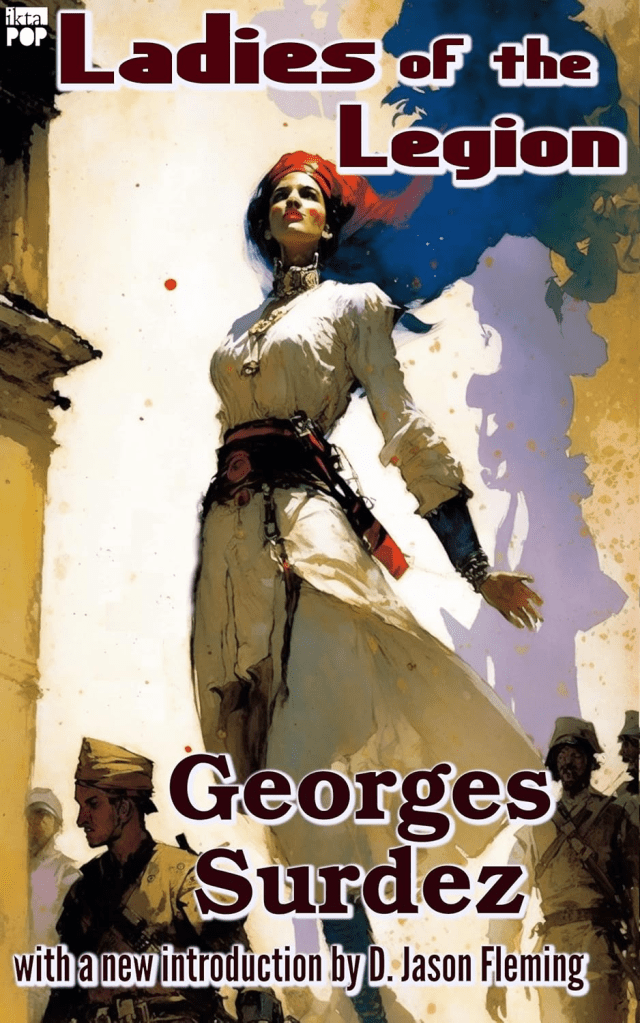
BY ROBERT J. HORTON REVIVED BY D. JASON FLEMING: Three Riders (Annotated): a pulp western omnibus

iktaPOP Media proudly presents three classic westerns by pulp author Robert J. Horton!

Rider o’ the Stars

When he was hired on to the Diamond H Ranch, the stranger gave his name as Dane. After seeing his skill with rope and gun folks started calling him “Lightning Dane”.

Was he a gunman? An outlaw? Why was he here? Nobody knew except Dane himself. And he wasn’t talking.

The Prairie Shrine

Annalee Bronson and her mother left everything behind when her father died, setting out to homestead in the prairielands of Montana. But being from the east, they simply don’t have the experience to cope with all the circumstances they find themselves caught up in.

Luckily, prairie poet and loafer Andy Sawtelle and mysterious gunman Silent Scott are more than willing to lend a helping hand.

The Man of the Desert


It starts with a stampede, and never lets up from there!

  • This iktaPOP Media omnibus includes introductions by indie editor and author D. Jason Fleming putting the book into historical and genre context.

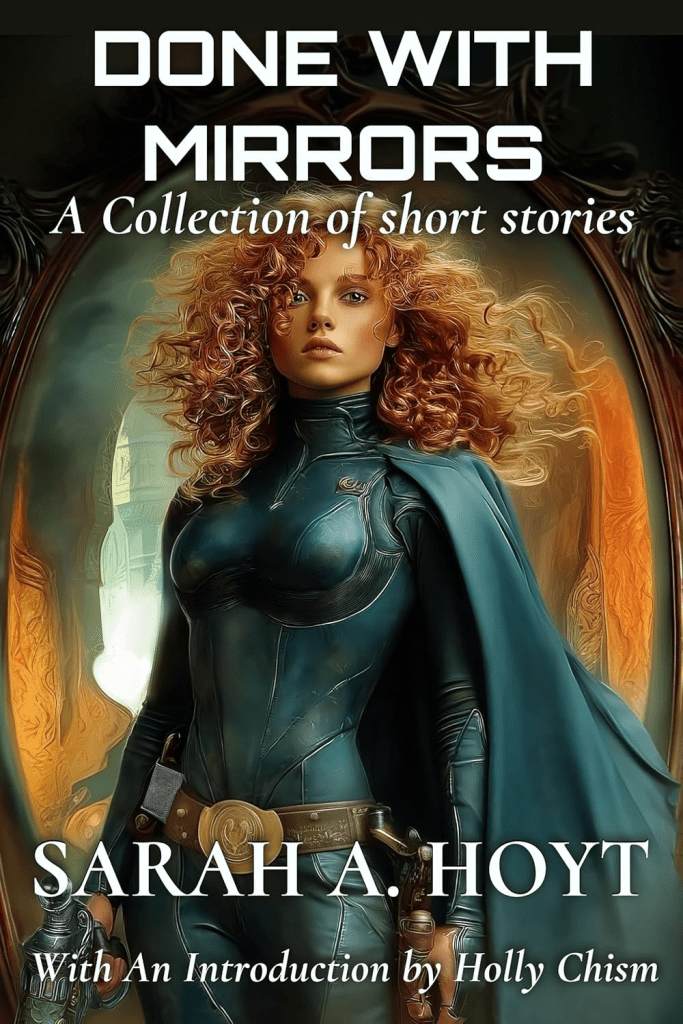
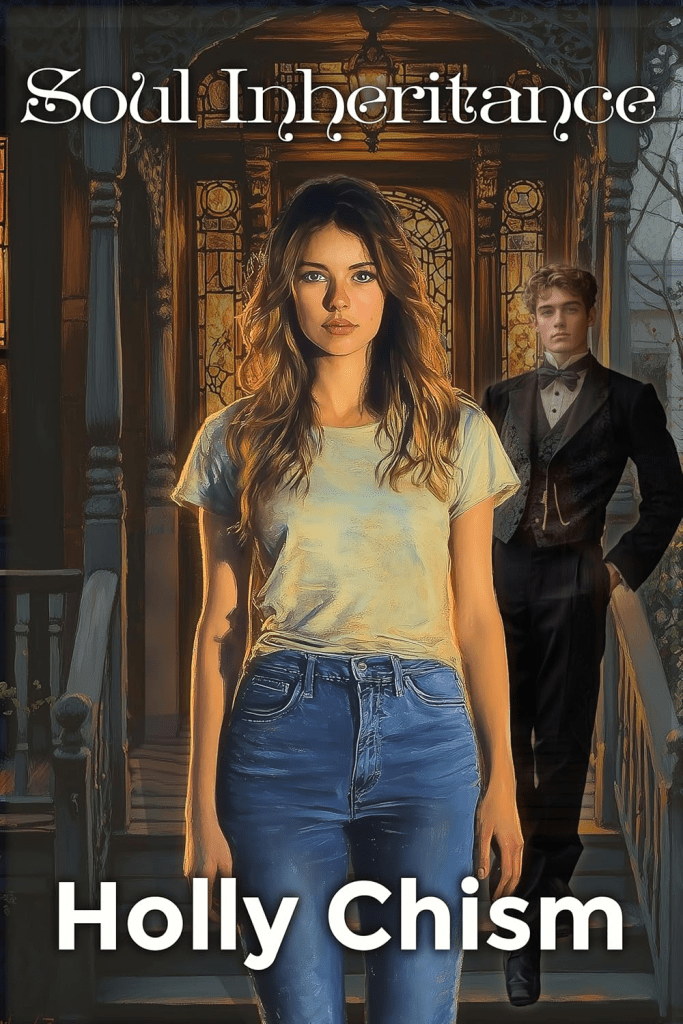
FROM HOLLY CHISM: Soul Inheritance

Fresh out of college, Evelyn Alexander’s first order of business was finding a place to live. One she could afford on her small inheritance before her job started. None of the local rental agencies had anything in her price range, but…she found a small Victorian house for sale, the only one mostly untouched in a decaying neighborhood of subdivided rental houses.

Complete with a ghost. A very attractive ghost. A very attractive ghost with a strong dislike of the idea of anyone changing his house. So, of course, she bought it. A cranky ghost for a roommate was still a better option than the tiny studio with criminal neighbors.

Between working to restore her new house, embezzlement at work and a murder next door, Evelyn has her hands full. As she works to get on her feet as a productive adult (and not fall in love with a ghost she can’t have), the problems start to snowball. And it’s only compounded by learning that her house has far more secrets than just a single, cranky (attractive) ghost…

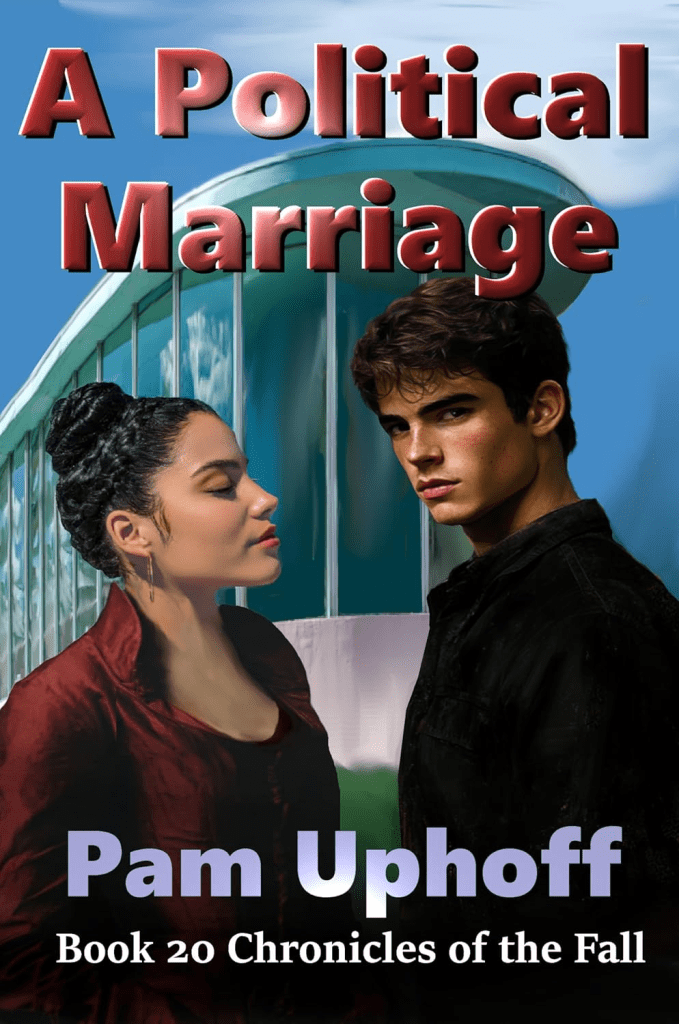
FROM PAM UPHOFF: Family Fortune (Chronicles of the Fall Book 17)

Why would Captain Mishka Nix of the Security Bureau be called out for a simple runaway servant? Except . . . there’s something odd going on . . . even before Lord Saveli Solovsky took a fatal fall down a flight of stairs.

Anzor ought to be a rich kid, getting ready for his Presentation. Not that he minds hanging out on a raw Colony World, but the pretenses are piling up and when the police show up to tell him his father is dead, he’d better be wary and word things carefully . . . so they aren’t actual lies . . .

FROM M. C. A. HOGARTH: FireBorn’s Legacy (The Fallowtide Sequence Book 9)

Qora Paunene Zela has never been able to glimpse the future like other Eyes of the Faulfenzair God… but he’s always known where he’s supposed to be, so powerfully that he never questioned it, even when it took him off-world on the Faulfenza’s prototype warship, and from there into captivity and war among aliens. That those aliens should rescue him seemed fair, since they were the ones responsible for the mess they’d made of the galaxy. To a Faulfenzair’s way of thinking, anyway.

But the God has called Qora abroad again, and this time even a male who knows he’s in the right place at the right time isn’t sanguine about the journey. It’s one thing to wait on history to unfold… another entirely to follow in the footsteps of one of his people’s lost prophets, on the trail of the fourth and final messiah.

A lifetime of trusting the God may not be enough preparation for the revelations awaiting Qora at journey’s end….

Fireborn’s Legacy ties together the history of the Faulfenza, as told in Zafiil, and the intertwined Eldritch and Chatcaavan stories from the books of the Fallowtide Sequence. It also sets the stage for the final conflict that will unite the sapient species of the Peltedverse and all its multiple histories. Let the saga commence!

FROM LEIGH KIMMEL: The Margins of Mundania

A tween boy’s Christmas gift opens a world of wonder and brings joy to a whole town fallen on hard times. A young New Englander in the early Twentieth Century discovers that some parts of human history don’t bear too close examination. A literary critic in the old Soviet Union must confront his own moral cowardice.

These stories, along with a multitude of bite-sized works of flash fiction, carry you from the most prosaic of events to the moments of awe that offer glimpses of matters larger than ourselves.

Vignettes by Luke, Mary Catelli and ‘Nother Mike.

So what’s a vignette? You might know them as flash fiction, or even just sketches. We will provide a prompt each Sunday that you can use directly (including it in your work) or just as an inspiration. You, in turn, will write about 50 words (yes, we are going for short shorts! Not even a Drabble 100 words, just half that!). Then post it! For an additional challenge, you can aim to make it exactly 50 words, if you like.

We recommend that if you have an original vignette, you post that as a new reply. If you are commenting on someone’s vignette, then post that as a reply to the vignette. Comments — this is writing practice, so comments should be aimed at helping someone be a better writer, not at crushing them. And since these are likely to be drafts, don’t jump up and down too hard on typos and grammar.

If you have questions, feel free to ask.

Your writing prompt this week is: Waves

Sing o Clanker!

Of the wrath of Eerlen, Archmage of Elly.

But first for something completely different. So, the tree thing…. well, Skip is male, and the Draksalls for… stupid magic reasons are notoriously short on trees and forests, so Brundar assumed the most important things to show this strange male were trees and forests. So human….

And now for the wrath of Eerlen Troz, Arcmage of Elly and Lord of the ancient and powerful ruby who…. uh…. has…. anger problems. I’m absolutely convinced that being left to Ellyans to “cut up what remains” is worse than being left to the women. (For lyrics you’ll have to go to youtube, though I intend to do lyrics videos for these last four, when I have time.)
(And yes, I found what I wanted to give my substack paid subscribers is actually impossible so tomorrow I give them a brace of MP3…. eh.)

And of course, if you missed it (rolls eyes) here’s the link to the book: No Man’s Land.

Reading In Woman

There’s a ginned up war going on about why men don’t read and whether there are enough books for men, and–. It is like most of the war between sexes crap on social media and in the cultural vessels these days ginned up. Or at least it smells ginned up and designed to make men mad at women and vice versa and to have us rip at each other. … Look, when it comes to my getting offended at a post by a friendly about how men yes do read…. considering who I am and what I do, and that I am one of those people who often prefers the stuff men prefer in reading (not to say 90% of the time, but close) things have gone too far.

I’m not going to link the friend who lost his mind on twitter here. My purpose is not to start a war I don’t have time for (the desensitization therapy turns off my words some days, which is bizarre) but to try to set some things straight.

What pissed me off about the post was the implication that a) all of women’s romance is erotica. b) that women only read a lot because they’re getting their freak on.

This is stupid and demeaning to an entire sex, a little over half of humanity. It also happens to be huge, blatant lie and one he should be way too smart and connected (to women) to believe. Then again, some of the women he talks to might have that idea, because frankly trad pub has that idea about women and pushes it on the women working for them. (Baen excepted, as far as I know. I was never asked to put a sex scene in, at least.)

First and at the risk of pissing maybe the half a dozen of you who’ll decide I’m attacking you — I’m not. If you’re stupid enough to think that, though, the door is thataway — yes, men and women read differently and for different reasons. Men and women are in fact different from the moment of conception. I feel a little guilty that the last appearance of Leslie Fish in the comments was her being obtuse about this, being convinced that men and women would have the same strength if only women (like men, in her mind) were encouraged to “eat hearty” and be strong. Coming from hitting puberty in the seventies that made me stare, because in the seventies was encouraged to “eat hearty”. Dan and I have the exact same metabolic problems coming from the fact that we’re descended from sturdy stock, and we both half-starved ourselves from twelve to twenty five. How starved? Like…. a slice of bread a day for him and a cup of popcorn for me. (And espresso. I lived on espresso.) We think we both eat a full meal once a week or so.

Anyway this was insane because anyone who knows human biology knows that male and female embryos are different. We get different hormone baths. Our brains, as well as our skeletons and musculature develop differently.

Yes, there are, not even intersex but people who for some reason or another get “the wrong hormone bath.” There is reason to believe I was one of those for part of the pregnancy, which explains some of the very strange anomalies and also possibly why my brain is weird. I’m not denying some people think they got a ticket for the wrong ride with some justification. And I’m not going to tell you that you’re “textbook female” or “textbook male” Like all other human characteristics, this one moves on a spectrum, but it’s a little more marked and clearer than the other ones.

. 99.9% of men, barring abnormality, will be stronger than 99% of women the same age and in same or better physical condition. One of the ways we’re different, though some of us lean more the other way are the ways our brains work. Most men think from A to B To C while women think in webs. It’s perfectly possible for women to be logical and direct, but that’s learning. Naturally, there’s the webbing promoted by estrogen.

And when it comes to sex most women will think in relationships and connection, while most men think visually. This btw, seems to be one of those things in which Heinlein’s idea that we’re not a single species but symbiotes comes into play (It’s wrong, of course, but it’s describing something real.) Because what’s hilarious about that difference in “What turns you on” is that both sides are utterly blind to “this is a built in thing. They can’t change, because this is part of how it is. And no, they’re not just pretending, they really are different.”

So, men send women dick picks, because if she sent him a picture of her private parts that would be a HUGE turn on. And women climb the corporate ladder convinced the perfect marriage and the family of her dreams is at the top. (Security is a huge turn on for women. See Billionaire Romances. Because to the back brain that means safety for all the babies. It’s shorthand for “connections that keep my babies alive.”)

That’s where we are. So men and women read DIFFERENT THINGS FOR THE TURN ON. And yes, both men and women do things that are specifically for the turn on.

Men will mostly watch porn or look at pictures. This baffles us (this is something in which I’m utterly female, btw) just a little. I don’t want to look at some stranger’s junk! Absolutely no interest. Sure, women like looking at gorgeous men. Hence all the Kirk losing his shirt episodes and the calendars of “firemen and kittens” say. Gorgeous men are attractive and pretty to look at but for most of us it’s not a directly sexual thing. (Again, remember there’s a continuum. I’m sure there are women who are visually turned on. They’re just rare.) It’s more of an aesthetic and admiring thing.

FOR A TURN ON — note not for other fun — women mostly READ erotica. Back in the bad days when most of these were on sites online like Jasmine Gardens for Jane Austen Fanfic with erotic overtones, I lost interest very rapidly because my mind interrupts everything when it finds an infelicitous turn of phrase. “Oh, you’re turned on. Stop the show. No. Stop. Turn it all off. Right. Do you see she used affect when she meant effect? Ewwwww.” In fact, in general I don’t buy “red hot” romances, Jane Austen fanfic, Regency, modern or otherwise, because I find most of them giggle-worthy. (Guys, no seriously, I accidentally put one of those on audible while I was cleaning. I wanted a low-involvement, no drama thing, because I was concentrating on cleaning. So I got a JAFF. I was downstairs, de-crudding the kitchen. The computer playing the book was this one — up the stairs and at the other end of the house. Which was a problem when hit the scene of Mr. Darcy beating off into a sock. Laugh with me. LAUGH. It never occurred to me to yank off the headphones, for some reason. Instead, I ran hell for leather across the house and up the stairs to turn the narration off, spazzing and saying “ew ew ew ew ew” all the way. Dan saw me come in running and still laughs a this.)

Anyway, that’s what men and women do for turn-on, which is not the same as what men and women like to read. No, seriously.

Where my friend was wrong was assuming ALL romances are erotica and they’re all read one-handed.

At some point, some twit said that romances were “lady porn.” And all the guys, of course — symbiotes, remember? — thought this was LITERAL. Romances must be all sex back and forth, nothing else. That’s why women read so many of them. NOW they got it. That’s what it was and it’s all it was. It’s been in the air ever since. Not helped by the fact that trad pub believed this and when all out of ideas started pushing authors to put more and more sex in, making some stuff utterly unreadable.

The original twit was right if by “lady porn” you mean fantasizing about the perfect relationship and the dream woman. Look, yeah a lot of women use romances for that. Particularly single (either always or divorced/widowed) women and/or women in marriages that have turned cold or are going through a burn-low phase.

Yes, that’s one of the reasons women read. It’s one of the reasons men used to read too. Stuff like James Bond is pure male fantasy. All women want him, all men envy him and he’s hyper competent. I don’t see absolutely anything wrong with the male fantasy books and think we need more of them. The fact that trad pub, the movie industry and society in general have decided the male fantasy must be shitcanned while females are allowed to fantasize nonstop of marrying billionaires (which somehow isn’t demeaning to normal men?) is at the root of this whole “But why don’t men read?” debate.

BUT let’s not fight by saying “Well, it’s because women read trash.” Men read trash too. In fact I’d lay you (shut up. No more phrasing now) good money that a lot of erotica is read by men. Why? The Harem subgenre. It’s such a male fantasy that I think the female buy-in is minimal. And yet not only do they sell like hot cakes, but there’s a sub-genre of romance (And science fiction!) where the harem kink raises its persistent head. (I don’t care, as long as the science fiction justifies it and is interesting otherwise. But it IS there.)

First let’s be bluntly honest: if you’re measuring by sales from trad pub you’re sort of arguing why all houses are built out of wood by looking at parts of the US and ignoring everything else. At this point I don’t know what percentage of booksales is trad pub. And before ten of you get their ’tisms on and start giving me statistics, yeah, that’s nice, but how reliable are they? Trad pub never knew how many books THEY sold, I very much doubt they’re very informed about everyone else’s sales, okay? The business still uses 19th century accounting practices, which in the modern age are somewhere between ridiculous and LOLWUT?

However, let’s take the premise as fact and assume that women read more than men. This was the post my friend was answering to. Some leftist preening Karen said men read less than women because men are less empathetic.

Yes, yes, that’s the ticket. It’s not because for the last 25 years publishing and Hollywood and the insane cabal of leftists controlling them decided that all action heroes must be female; that ninety pound chicks could kick the ass of 300 lb guys without even a figleaf of bioengineering; because the male fantasy of the hyper competent male drowning in pussy was banned from publishing; the male fantasy of breaking new frontiers and creating a homestead with the woman as his reward — the western — was banned from publishing; and in fact all forms of male fantasy and ideal were banned from publishing. It also has absolutely nothing to do with the books pushed in school, which, while they turn both males and females off reading turn males off more. Look people, we know our boys and young men are near onto angels, because none of them has gone on a rampage when forced to read the tenth book about why males bad females victims.

BUT — and this is a guess — women probably read a little more than men. I wouldn’t say a ton — and I’ll explain why later — but I think women read slightly more than men.

You can’t tell it by “romance is the biggest genre, because it sells 10x more than all other genres” because romance readers aren’t all female. Not even vaguely. it’s just that men hide it as much as women in Portugal when I was growing up hid reading SF. I used to think our marriage was weird, because unless I’m depressed and going through a Jane Austen Fanfic phase, which probably hits “romance” but trust me, is a different thing, I read thrillers and adventure, and Dan reads romance. (He’s going to kill me for putting this out there.) TBF we both read science fiction, fantasy, etc. But for “popcorn books” (i.e the ones you’ll read six of a day if you’re on vacation) I read adventure/thriller and he reads romance. I used to think this was super-weird for a mathematician. And then I kept running into more and more hard science guys who low-key love romance. I HONESTLY think it’s the pattern. Romances are highly structured. And I think when they’re on “scrolling on” pattern, not paying strong attention, they prefer romance because it’s so predictable. It’s soothing, in a way.

Anyway, what I’m hinting at above is that by far in the statistical distro of book reading, those who determine differences are almost exclusively the super readers.

How do I explain this? Oh, yeah. Okay. Look, most people don’t read. AT ALL. Male or female they just don’t read. I find it both odd and reassuring that as far as we can tell the percentage of people who read for fun is now the exact same as it was in Shakespeare’s day. I don’t remember the percentage, either, but that’s like 26% and it’s probably inflated because reading is seen as a positive trait, something people brag about. So in self-reported surveys, they’ll say they read. And they probably don’t.

BUT most people who read — again, I’m PFA because we can’t tell for sure. Surveys aren’t science — like 80% read one or two books A YEAR.

My mind just stuttered on that one. I think that happened to me a year, because I had post-partum depression and was seriously ill in the aftermath of pre-eclampsia, so I couldn’t remember what I’d read from a day to the next. It might happen again if I get demented in old age. But otherwise, how do you ONLY read a book a year? Do you have to run your finger on the page? Do your lips move? No, don’t answer that. I’m being silly. Most people of course read the ONE BOOK that all their friends are talking about because they get it pushed on them. Or more likely buy it, read half of it, see how it ends on the net and pretend they read it. Their entertainment is movies and gaming. (This is alien to me, but I’m aware I’m the broken one here.)

So they’re more like the rest of the population than not. Reading is not really a thing. However where it is it tends to be social and social signaling, so it would be mostly a female activity. That’s some of the skew.

THEN there are the super-readers. Shut up, yes. we do keep a cape in the closet. Only it has coffee stains and cat hair on it. We read preferentially or at least on an equal footing with the other entertainment.

I think the low def of super readers is a book a week, but well, there are the others, people like me who read …. a lot of books a week. I haven’t counted recently.

I don’t read as fast as I did in my forties when I routinely went through six books a day. An expensive habit back then. But it’s usually at least one a day, unless I’m on vacation or there are such circumstances. Yes, this is around my normal duties. BTW the slow down is mostly my eyes. I don’t see as well, so I have to concentrate more, and that slows me down.

Those of us who are super-readers usually have what I call a “popcorn genre.” That’s something you read like people eat popcorn. It’s not a gourmet meal. It’s not something you do to appreciate every bite. It’s the reading you do because you MUST read, and you chain read.

Most of mine, TBF are mysteries. All sorts of mysteries from true crime to procedurals to cozies. I go through phases. But I also go through phases of thrillers or adventure SF. I’d do it more if there were more I could discover to read. Dan reads romances, but also urban fantasy, fantasy, SF, and ends up reading whatever I bought too, because we share a library.

Anyway, let’s posit that the “Women read more, reeeee” thing is true. The big difference will be in these super-readers. And the big difference would be — I posit — that most women have indoor, safe jobs where they can have downtime by reading. While a large portion of men have such jobs also, there is a non-insignificant number in the trades or in highly minutious, high-concentration professions that don’t allow downtime during the work day to read.

That, combined with trad pub swallowing their own ink by the bucketfull and determining that male fantasies are verbotten and female fantasies mandatory, even in things like science fiction and fantasy, are I believe the great determinants of the (probably less than 5%) difference in male and female readers. (Remember we’re already a minority.)

As for sex I like it thank you, but I prefer it outside my books because most people — there are exceptions — write sex absolutely horribly, plus throw it in where it has no business in the plot. BUT trad pub has determined that’s what people want and pushes it into everything, in an attempt to sell their old fish in a sexy wrap. Meh. Ignore them. They’re dinosaurs lumbering towards extinction.

HOWEVER I do agree we need to bring the male fantasy, male heroes AND — this is very important — boy heroes back into being a thing. Because even if most people won’t read for fun later in life, people reading when they’re young makes them more fluent in reading and reading fluency correlates to success in every area of life.

This is not my calling. Not that I’m against it, but I tend to write weird. Yes, I do have more male than female readers and fans, probably by double, because my weird has a ton of adventure. BUT I couldn’t write James Bond like stuff anymore than I could write billionaire romances. I’m not interested enough to do so.

If you are, do kindly write it.

And while on that, I want to give a shout out to Raconteur’s Press books for boys: my friend’s Dave Freer’s Storm Dragon and J. Kenton Pierce’s A Kiss for Damocles, both Prometheus nominated works.

Here I’ll note that good books are good books, and that males and females read good books. How many young women started with Harry Potter. BUT there are female-preoccupation books that obsess on relationships and clothes and such, and male-preoccupation books, hinging on adventure and daring do that will appeal more to one than the other. I’ll also say that an uninfluenced market will have both. And also that yes, at young ages it matters even more to have both, as little boys want to fantasize about being the hero.

Having already got one of my nuclear family on the war path once he reads this, I might as well continue the work and get younger son to want to kill me too.

When he was about 4 years old, we were out grocery shopping and younger spawn blurts out “I wish I were a girl.” Now, I’m very glad he wasn’t ten years younger and even in his day very glad he said it to me, not a teacher.

Since this is my very boy boy, the one who was mostly noise with dirt on it, and who couldn’t keep knees on his pants because of climbing inadvisable things and who, at that point would rain matchbox cars in all directions if you shook him, I decided to figure out why in heaven’s name.

The answer was easy: Cartoons. Every cartoon character he liked, who did science things or adventure things was a little girl. Or a little female cartoon thing, at any rate. Being 4 he assumed that was how the world was, so he wanted to be a girl so he could fly spaceships and have adventures. Yes, I disabused him of that notion.

THAT ladies and gentlemen is how bizarre things have got. And why yes, we need dreams for boys to dream upon. And having a few books on men who are heroes (Oh, I just figured out why men read romances. Yes, men are allowed to be good and important in those) is good too. I do a lot of the last, because I like heroic men. And women. And undefinable humans who were gengineered out of their heritage. (Deal.) But we do need more workers to that vineyard.

So instead of bitching and adding fire to the ginned up war between men and women, which benefits no one but the extinction rebellion freaks? Write books that men might also want to read. Or that men and women both like to read. Or that are — simply (ah!) fun.

Stop bitching and write or promote good books.

(Sorry this post is so long. My body has decided I only need to sleep four hours a night, so I’m very foggy. This has to change, and will change with strict sleep hygiene, but that will take time. Hopefully it’s still understandable, anyway.)


Chattel

Terry Pratchett famously said that sin is treating people like things. You can debate that however you want. I mean, I was properly brought up and learned the ten commandments — whether you’re religious or not, they’re the ur-foundational-stone of western civilization.

Sure killing someone is treating him/her as a thing, his life not his but ours to end. And the same for stealing from him: things can’t own anything. I’m going to say that bearing false witness is also treating your neighbor as a thing, and beyond that that worshiping him or her is just as bad, as it steals his or her humanity and replaces it with a tonkenized image. I’m going to say the same for coveting his ass, (or any other part of him) or his wife and husband.

But that’s weak tea, in a way. You can say it’s treating him/her as things, and that’s not wrong. It’s perhaps more accurate to say that if you get yourself into the state of mind where you think it’s fine to do all of those things to others, you’ve put yourself beyond humanity — or below humanity, if you prefer — into a state in which you are the only real being in the universe, moving through a landscape where everyone else are just… tokens in a game, yours to move around or ignore. (\

Oh. I get it! Sorry, I just had a click-it moment. Much has been said about the original sin, including thinking it’s about sex, or — in the dopey seventies — about nuclear war. But it is in point of fact this sin, because this is both the sin of Satan — knocking G-d from the heavens and filling the world with only you and no one else is real — and the original sin of humans: we’re all born like that. If what I understand of neurology is true, we’re all in the beginning of our lives, the only consciousness in our universe, and we think everything is under our control, like our hands and feet (which to be fair aren’t under our control at all. And also our universe at the time is just a little further than our body.)

Okay. I’m not going to turn into a baptist preacher — theological snap-click, come out of this woman! — and you non-believers need not be alarmed. That was just a sudden realization and neat from a philosophical point of view because it clicks with human physiology and development.

The point is that we are born like that, and empathy — understanding others are also human and have their own will power and their own agency — comes later, developing slowly and — frankly — by fits and starts. In many people it cuts off at a very rudimentary level, and it can, I think, be knocked down to almost nothing if a human is in survival mode. Yes, we hear much about total strangers dying to save children and that of course happens, but we also know about the herd of humans that tramples others when panicked. (I was once almost caught in one of those. Thank you mom, for grabbing me and flattening me to the wall while the herd passed by.) I can tell you no one in that crowd is thinking of the others as being as important as themselves, or as having their own rights and their own lives.

Which brings us to the point of this post: the type of human who never really learns to consider others as true people seems to have an advantage, at least in modern society (say since we stopped living in small tribes (maybe even then)) because they don’t feel any compunction in doing horrible things to others or horribly manipulating others to obtain power. And they need power, see, because they’re alone in a universe that is all them. So they must control all of it, and for that they need power.

This is the original sin of governments: it tends to be populated by people for whom every other human is chattel: a piece on the board to be moved by the sole real human in the universe.

The only curbing of this is for society to hold onto and zealously protect every human’s rights, and every human’s dignity. Not because they are useful, or because they can do things, or — even — because they enjoy themselves. Those are all nice things, but if you start putting that condition — any condition — on “these humans are worthy of life” you end up finding reasons to remove those impediments “they only think they enjoy life. How can they when–” And the type of people who get power over others are very good at those game, because, you know, no one else is real.

Giving the government ownership over who lives and dies — MAID and euthanasia, and “these children will be made comfortable and left to die, comfortably” — for any reason, whether for “their own good” or for the good of society always ends in piles of dead, because those in power have no respect for human — or any other — life.

Making yourself dependent on government, with UBI or any of the abominations the socialists love to propose is just as bad.

The government giveth, the government taketh away, and to the government you are just chattel. Something that has a use and that is looked after as long as it fulfills its use and doesn’t cost too much to maintain. And after that? It’s disposed of. Because it’s just a thing. To be used, or not, looked after, or not, by those that have actual agency.

Can anyone explain to me why, in point of fact, that isn’t — in all but name — chattel slavery?

Blogging the Future of The Past, Donovan’s brain by Curt Siodmak

So, I realize it’s been a long long time. Mostly because I ran into a spate of books where I couldn’t find the book OR any other book by the writer or in the series, either in ebook or paper. So, I got discouraged and then … well, mom’s death (I’m still working through that. There are days) and the desensitization therapy, and you know stupid thyroid tricks, and stuff, and I got really out of the groove.

So, if you don’t remember what this is about: this is the explanation. And these are the past reviews 1, 2, 3, 4, 5, 6.

And if for some reason after reading my review (or before) you want to read it, it’s available as an ebook here: Donovan’s Brain by Curt Siodomak

First the obligatory bio (I find so much stuff in these things.)

Writer and Director. Nationality: American. Born: Kurt Siodmak in Dresden, Germany, 10 August 1902; brother of the director Robert Siodmak. Education: Attended the University of Zurich, Ph.D. 1927. Family: Married Henrietta de Perrot, 1931, one son. Career: Reporter, freelance writer, and railway engineer; 1929—first film as writer, People on Sunday; 1930—first novel published; 1934–37—writer for Gaumont-British; 1937—moved to the United States, and writer for Paramount, 1938–40, and Universal, 1940–46; 1951—first film as director, Bride of the Gorilla; 1952—formed production company with Ivan Tors.

I knew of course from the name that Siodmak was German in origin, obviously. but I didn’t know he was actually born in Germany. Nor that he only moved to the US as an adult. Every time I start feeling like the lone ranger, I run into another science fiction author who came from elsewhere altogether.

I had no idea at all he was also a director, and I know at least one of my commenters is going to yell at me for saying this but I never saw any of his books, nor do the titles ring any bells. (But I’m not a great movie person. In fact, I might be the opposite of a movie person, since I will do every other form of entertainment, including but not limited to tiddly winks than watching a movie. I usually passive watch movies, like people inhale passive smoke. Dan watches the movies, and I, being a cat, have to look up at the images now and then, while I follow the sound.)

Donovan’s Brain was published in 1942. Perhaps some of the aspects of the writing are influenced by WWII, which had to be hard to cope with, particularly for a German author in America.

Or maybe I’m refining too much on it. Or perhaps the feeling of dread and horror that filled me reading the book last night has more to do with the fact I was feeling very ill, (I have the going around thing) and read because I couldn’t sleep, I don’t know.

The book filled me with dread and depression, almost from the beginning. It is the story of Doctor Patrick Cory who is doing experiments to find out if he can keep a brain alive and improve it.

I hated the character from the moment he gains a very sick cappuchin monkey’s trust then kills him. Look, I don’t know what the author was trying to convey. And I am not a bleeding heart who is against all animal experimentation. I’m not even against primate experimentation. I recognize that things have to be tried and that we have the medical science we have thanks to experiments on animals. BUT — but — this is a very personal and visceral thing. I’d have been fine if he’d just met the animal, grabbed it and killed it while it struggled. Mind you, for a first chapter it would still be off putting. BUT not the absolute turn off of taming the animal and nurturing him, then cuddling him and killing him as he falls asleep. To me that type of thing is an absolute betrayal of trust and revolts me. Yes, euthanasia. Note, please that none of our cats go in till they’re in obvious and unbearable pain the painkillers can’t touch. And then only because I know they don’t understand their suffering. It’s not something I can explain to them. And I’m certainly not going to befriend a random sick animal and then kill him.

Sure, he wants to use the monkey’s brain to test his theories, fine. I suppose the first chapter is supposed to show us he’ll go to any lengths to do his experiments. Ah, ah ruthless, etc. I’m not sure I’m reading it properly, but if I were writing this, and wrote it that way, it would be because I meant to make this guy repulsive.
The fact that his relationship with his wife seems to be that he exploits his wife, and doesn’t really try to have a relationship with her, makes me actively dislike him even more. (And also the ninny who puts up with that treatment.)

After this there is a plane crash and somehow the doctor ends up being first responder. one of the men is lethally injured, but not dead so he kills him by removing his brain and hooking him up to his apparatus.

After that, the book rapidly devolves into a horror novel, specifically a possession novel. He tries to communicate with the brain (which is the brain of a rich man who has done some shady things) and then somehow manages to establish a telepathic connection, through which the brain ends up controlling the scientist.

They (the brain possessing the body) kill someone, and then just before he kills his wife, the despised/ignored assistant he left behind kills the brain (and himself in the process.)

The scientist then has some kind of breakdown, and ends up in the hospital, but ends up rewarded with a nice position and home, happy end all around.

I have only two problems: First it’s a horror novel and not even, really, a science fiction horror novel. All the touch stones of the story are traditional, spiritual horror. I don’t like horror, and of all horror that makes me recoil possession is absolutely the worst.

And yeah, okay, I took had a character get his mind highjacked. I’ll just say neither the character being possessed nor the possessor were half as repulsive as this pair.

The second is that the main character didn’t die screaming, with his death detailed in excruciating and loving exactness on the page. Because by halfway through the book, I hated him with the fire of a thousand suns.

I think in the end the truth is that Siodmak (whose name drove me nuts as a little dyslexic girl in Portugal, since I confused him with Simak and no, no, no.) to my mind — and this is entirely my opinion — might have come to the US; he might even have naturalized, but in the end his mental map was that of an early 20th century — and to an extent even now — European. For a book to be good almost every personality in it must be repulsive and make the author want to drown them in a vat of lake water filled with eels.

Maybe that’s just my opinion and maybe that is also a function of my being sick and feeling out of sorts, who knows.

Interestingly, though, though I remember reading Siodmak, I don’t remember a single one of his books, and I’m almost sure I either never read Donovan’s Brain before, or gave up on it after a couple of chapters.

Anyway, that’s done. Next up, secured at great expense (used, in paper, on Amazon) Anthro, the Life Giver written by John J. Deegan.

I’ll try to get to it next week, like a normal person. If you want to follow along at home, there is ONE used copy here. And I suppose you can hit up your local used bookstores and see if they have it. (If you want to know the list I’m following, it’s here. The site will translate.)

This is the Portuguese edition of Anthro The Lifegiver is below. The Portuguese title translates to Explorers of the universe, which is pathetically generic. But considering how outre science fiction was even years later when I came along, I won’t blame them for trying to make it sound tame and reasonable.

Anyway, looking forward to it. (With my luck it will be horror again. Ah, well, it’s paper. I can always wall it if it upsets me that much.)

Happy Sesquicentennial

By Holly the Assistant

(Last night Sarah messaged me that she wasn’t feeling well, would I please take the blog today? So please keep her in your prayers and good thoughts: half the folks I know are down with the winter crud right now and it’s a doozy.)

Good Morning, Usaians, and other Huns and Hoydens!

“Holly,” you ask, “Why are you posting this so many months before July?”

Well, I’m glad you asked. See, my life–since I was two–has been spent in the performing arts. Not the fancy movies kind, but the small, local shows kind. And I married a guy from a similar background, and we raised kids that way, and . . . six months before a show of this scale goes up, you better have a good idea what this production is going to look like.

And it IS a show. A HUGE show. Maybe the biggest show of our lives, for those of us born just after the 200th. So since I’m currently finishing up an arrangement of a group of nice, historical, patriotic songs, for my cello students to play (historical? Yes, do I look like I want to deal with ‘who even owns the copyright? Them? Ugh.’), and considering the ups and downs of playing in the local symphony’s Independence Day concert, I thought I’d poke around the net a bit for what other places are doing.

There’s an official website supposedly for everyone to list their celebrations on. Well, let me tell you, that’s not actually happening. Yet. Most places will probably get around to it eventually, but . . . I know of the local celebrations and none of them are there. https://america250.org/ But there ARE things going on at the national level. There’s a place to register your service hours. There’s a competition for the kiddos. There’s a video recording tour thing . . . interviews with Americans about what America means and you can nominate people for it. Please go nominate people for it. Our people’s voices should be included in the official records. You know the people–and if I list names I’ll have a bunch of grumpy dangerous folk mad at me, so just go do it.

My local towns go all in for Independence Day every year, and looking at their websites, and the county’s, there’s a LOT more going on this year. (I mentioned the symphony playing the fireworks? We usually don’t meet June-August.) I know the civic organizations I’m a member of are doing things, and not just the usual Free Water Bottle Station at the Independence Day parade.

I know a bunch of us are on the solitary side of curmudgeon–looks at the mirror–but it is healthy for even us, as health allows, to get involved with other folks, and this is a good time for it, for us. This is something we can believe in, that while not perfect, America is the best country to ever exist and worthy of celebration. And we all have skills of use for this. I know a bunch of you are going to be involved on the emergency communications side, the medic side, etc. But those of us who are best at putting on a show? At hawking wares at a fair? Painting a wall? Just existing wearing clothes? We’re also needed.

Let’s make this the biggest and best party yet, and give the ‘kids these days’ in another fifty years something to top.

What’s your area doing? Got ideas for how to do this even more and better? Tell me about them.

Beautiful Losers

Yesterday on X someone said that we can never eliminate all electoral fraud. After all election fraud is an old and respected American tradition, with us from the beginning. What we need to do is eliminate the ability to make a lot of money through elected office and then–

Good news, people: As soon as we invent a perpetual motion machine, we’ll study war no more.

What? Stop staring at me. We’re as likely to invent a perpetual motion machine as to eliminate the ability to make a lot of money through elected office. Look, yeah, we can absolutely limit the opportunities for graft and corruption — and a lot more is being done towards that end than you might think. Though it’s a tricky process, and sometimes attempting to eliminate corruption, by the very fact of being a bunch of abstract rules, creates other loopholes. Humans, eh? — but we can not and will never eliminate them.

It’s the same thing with electoral fraud, of course. Completely cleaning out electoral fraud would, in point of fact, be impossible. There will always be someone who gets someone else’s grandmother to pose as their dead grandmother and vote for what they want. There will always be fake ballots, (maybe) and other ways to falsify the will of the people.

The problem is two fold, though. The first is the sheer scale of the enormities being perpetrated. Again, from the top: in a largely red area, in 2012, 1/3 of the people coming to vote — normal people, about my age, which at the time was under 50 — were told they’d already voted. And there was no way to address this. The votes were already in the system. They couldn’t find them and pull them out. Yes, they told people they could cast a “provisional” vote but that’s known as “a way to stop them yelling.” Those votes are never counted unless the margin — with the fraudulent vote already in — of victory of the final quoted votes is less than the provisional. And sometimes not even then. They’re provisional because they are pretending not to believe you, and claiming you already voted. Maybe you forgot? Maybe 1/3 the population of downtown Colorado Springs had amnesia. Alien rays? Time travel? Who knows?

Anyway, I heard from poll watchers in Denver that at least in some precincts 2/3 of the people showing up were marked as already voting. Funny thing too, it was only those registered Republican.

With all that in 2012 the Democrats “flipped” Colorado. But the fraud must have barely been enough to squeak them by because they immediately (and despite a popular vote against) voted to make the voting system “vote by mail.” And that, ladies and gentlemen is how they stole my home state. Oh, there are other dodges in there now, including the ever popular “show a bill with the address” and you can register to vote the same day. Of course, in the age of computers, we could create a bill with our address in ten minutes. And ten minutes only because the printer might be having a memgrim.

The fraud is so massive, so overpowering, that one wonders how many of the votes counted are even vaguely real. 1/2? More or less?

Let me count the ways to fraud — not an exhaustive list — Vote by mail (who knows who is filling the ballot, really?), same day registration, early voting, no ID, registering people to vote that aren’t citizens (no, truly, you don’t have to show proof of citizenship to vote), registering people to vote automatically when they get a driver’s license. Even if the people don’t vote, think of all those lovely names, addresses, etc. that no one is using. Amazing isn’t it?

So that’s the first problem with the happy slappy “There’s always been fraud. This is fine.”

The second problem is… let’s call it “a disparity of frauding.”

Yes, there has been fraud from the very beginning. There were “party machines.” The Democrat party machine and the Republican party machine. Going around canvasing habitual drunkards to vote for you by hook or crook was quite a thing on election day.
It was usually very local. There were cities, precincts, etc. “owned” by a machine or the other.

Then came the 20th century, the centralization of power and — more importantly — for various reasons too tedious to go into, the Democrats owning the Mass Media in all but the monetary sense.

By education, by inclination, by belief, the mass industrial information/entertainment complex were hard core leftists. Many were in fact communists, by the 20s. What this meant was not quite a conspiracy, but definitely a prospiracy.
They believed all evil of Republicans, all good of Democrats (which according to Heinlein were already taken over and skinsuited by communists by the forties, and I see no reason to doubt him.) and reported accordingly.

By the time I came to the States, a Democrat could eat babies on live television, and the news would report that it had done that reluctantly, to appease the alien overlords, so that things wouldn’t get worse.

If a Republican walked on water the news would report he/she couldn’t swim.

The result of this lopsided reporting is that the Republicans stopped having a “machine” or in fact being able to do anything even vaguely underhanded.

How do I know that? Because whenever the democrats are caught doing something horrible in the realm of fraud and try to pull the “both sides” the worst they can find for the GOP is stuff like “Someone cheated in this little election for dog catcher, in Podunk.”

And this btw is why the GOP have acquired the habit of being “beautiful losers.” It’s actually classic abuse. After a while, you believe you have no agency and you’re going to lose anyway, so you might as well get used to it.

Be kind to your GOP beautiful losers. They just haven’t realized the game has changed.

As haven’t all the black pillers out there.

Yes, we do need to do something about the fraud. And I know Trump is doing a lot, including cleaning state voter roles. It’s not showy stuff, and it’s not being widely reported, unless the left can distort it as “suppressing vote.” And they often can’t do that, because if the public looks at it at all, they realize that it’s not all made up and then– So mostly the left and the media (BIRM) ignore it, even while trying to fight it.

But more importantly, the beautiful losers of the GOP are being replaced from within by … well, by people who have had enough. You can call them MAGA if you wish, and if MAGA is understood to mean “Make America Great Again” not “Appendixes to Trump.” Most of us appreciate the president well enough, but he’s our instrument, we are not his. (This is important because if they take him away we will find someone who hurts them more.)

Is the replacement complete? No. But it has advanced farther and faster than i thought possible in the time we’ve had since last January. Chill. yes, the Republic is still in danger, but the danger lessens by the day and the people coming in are more pissed off than resigned to losing.

More importantly the informational imbalance that created all other imbalances is pretty much gone, or perhaps entirely flipped the other way. Thank G-d who works in mysterious ways for Elon Musk and X. But even places like Facebook have resigned themselves to the fact they can’t hide the truth completely. And the places that cover truth with a pillow until it stops moving? They’re dying. They’re the province of the provincial (people who are in the walled gardens of academia and such, and of the very old. That’s it.

Oh, yeah, and Academia is losing prestige and following by the day.

As for the rest? Stop howling for blood. That’s the stupidest thing you could do. If we fall into indiscriminate killing, or even arresting and punishing the innocent with the guilty, we’ll tell everyone — including the idiots who don’t pay attention — that might MAKES right. It would be the easiest way to destroy the Republic. And of snatching defeat from the jaws of the Victory that’s now assured for our side.

Yes, you are angry. We all are. When you’ve been very depressed, as the right in this country — in the world? — has been, what comes back first is anger. It’s the first real emotion to pierce through. And it’s very powerful.

But right now an indiscriminate attack will just finish destroying even the illusion of the rule of law. And the Republic — and most of us — don’t survive that. We become a Latin American banana republic at best, the Balkans at worst.

Again, remember that what you’re hearing — yes, X is free. It’s also penetrated by a lot of bots and foreigners, and foreign bots too — is not necessarily what’s happening. For instance, I found out that congress has in fact been confirming Trump appointees at a breakneck speed, which is the opposite of what I thought was happening. I am assured THROUGH PEOPLE ON THE INSIDE that yes, trials and prosecutions are proceeding apace, or at least being set up.

Consider this your public service announcement that this administration has been in power for about a year. That’s an eye-blink in politics.

And so much has already been done that it’s almost impossible to believe.

Learn to win. Stop panicking because things aren’t done in an instant and exactly as in your head. Work carefully and steadily. Yes, work on helping with cleaning the rolls, with exposing the truth that the MSM (and media in general) hides, with exposing psy-ops and nonsense.

DO NOT panic and start calling for what is sure to make us lose when victory is already in process. That’s just stupid.

Losers aren’t beautiful. They’re just losers.

And we’re winning. Let’s keep it going.