Halfway to Success by Thomas Kendall

Halfway to Success by Thomas Kendall

               I think what’s dead clear at this point is that half the takes about the Starship launch indicate that people don’t know what Starship is for, or how the program around it within SpaceX operates. In 2021, Everyday Astronaut did a tour of Starbase guided by Elon Musk, and interviewed him the whole time. Even if you’re not a fan of Musk, the whole interview should be required listening for people who are serious about understanding Starship. The second part especially is the juiciest in terms of understanding some key points that I will condense down here. The below quotes by Musk are pull-quotes from the video. I have in some cases used ellipses to condense down some beating around the bush, and used bold to emphasize what I feel are critical statements, but you are welcome to hear the un-retouched statements and form your own opinions.

               First, Starship is designed to be a rapid prototyping program that throws things at the wall as quickly as possible. Musk sees it as explicitly a program designed around aggressive iteration to the exclusion of all else, describing it as the “polar opposite” of Dragon. He says:

“We have just a fundamentally different optimization for Starship versus say the polar extreme would be Dragon. Like Dragon there can be no failures ever, everything’s gotta be tested, to, you know, six ways to Sunday. (…) That’s like extreme conservatism. Then Falcon is a little less conservative, it is possible for us to have say a failure of the booster on landing, that’s not the end of the world. And then for Starship … is like the polar opposite of Dragon. We’re iterating rapidly to create the first ever fully reusable rocket… Orbital rocket. And fully and rapidly reusable, reusable in a way that is like an aircraft.” (5:34)

               Rapid prototyping is not a new concept and Musk did not invent it. While it is unusual to see something the size of Starship run through rapid prototyping, it’s a mainstay of engineering, and practical work of all kinds. Even people who follow makers and engineering YouTubers should be familiar with the process (But if you aren’t, watch any video by Stuff Made Here, Collin Furze, or even I Did A Thing. Or for that matter, CodeBullet, for the equivalent in coding. Or NileRed, for the equivalent in chemistry. This is a common process, commonly employed by people trying to do difficult things that don’t come with an instruction book. It is also a fundamentally scientific and empirical process. Empirical translates roughly as “guess and check while paying attention”.)

               Second, Musk knows that this will result in ships not coming back, and he is perfectly comfortable with that:

“But this is also a case where we’re intentionally iterating the design rapidly. And basically ships and boosters will either be amazing lawn ornaments which then have to be stored, and they look awesome, but you know, we don’t want 12 of them. It’s gonna look bizarre and where would we put them? So, since we’re making rapid iterations with each, almost with, basically every single ship and booster has had significant iterations. But you either want it to blow up or… The early ones… You want them to blow up or you’re going to have to find a place to store them. So we actually want to push the envelope. And frankly if you don’t push the envelope you cannot achieve the goal of a fully and rapidly reusable rocket. It’s not possible. You have to go close to the edge on margins.” (22:16)

               This goes to the question of whether the launch was a success. While I have somewhat more muted opinions than LaughingWolf (which I will get to in a minute, and explain why I think what I think) I think this article is an excellent and informed one. One point made in the article is that Starship is testing to destruction, and they are getting good data in the process. I concur, and I think Musk’s critiques of the shuttle program are extremely poignant to the discussion of the value in testing to destruction.:

Musk: “Space shuttle had almost no room for iteration because there were people on board, so you couldn’t be blowing up shuttles.”

Interviewer: “Well and they did very, very little iteration.”

Musk:”Very little. In fact a lack of iteration was the problem. Because they, a lot of the issues they were aware of, but people were too afraid to make change.”

Interviewer: “Cause the design froze.”

Musk: “Yeah ’cause (…) There was a risk reward asymmetry. So big punishment for… If you make a change and something goes wrong, big punishment. If you make a change and it goes right, small reward. So the issues with the “o” ring and then with the insulation coming off and hitting the wing were… They had seen this before. They were known issues. But it… Because it had worked before they were like ‘well, it worked before’. Eh. Russian roulette works before. So. ‘Look, I’ve pulled the trigger so many times and… There must be no bullets in this gun’. Anyway, it’s hard to iterate though when people are on every mission. You can’t just be blowing stuff up ’cause you’re gonna kill people. Starship does not have anyone on board so we can blow things up. It’s really helpful.” (7:05)

               Musk’s answer to the risk and difficulty inherent in making this rocket work is different from NASA’s. It is not to build in layers and layers of safety protocols. That was how Dragon was built, but Starship is a very different creature. Their plan is to fly the ship until they are familiar with every way it fails and have designed around it. This mindset is explained in more detail by Musk in a short conversation about launch escape and the lack thereof:

“Launch escape I think is… You basically just need to fly a lot and have a lot of redundancy. So if you lose an engine on the booster, it doesn’t matter, basically. If you lose multiple engines it shouldn’t matter. And you should be able to lose an engine on the ship and everything is okay. (…[substantial amount of technical discussion of launch escape] … ) you can’t have an escape system on the Moon or on Mars. You can’t have something pop off and then have chutes drop… there’s no atmosphere. And then Mars has a very low density atmosphere so it’ll just hit the ground supersonic. You know, it’s not going to save you. So the ship has to be safe enough for people without an escape system, because otherwise you can’t go to the moon, you can’t go to Mars. So it’s kinda pointless to do it on Earth. Just fly it a lot.” (8:51)

               To summarize all of the above—Starship is a program meant to rapidly prototype and iterate rockets. They are operating the rockets with thinner margin for error and as a result they consider rockets failing, and in particular, exploding, to be a necessary part of this work. In a sense they even consider it desirable, because the purpose of the testing is in large part specifically to determine how the rockets fail, since they are deploying them in circumstances where escape simply will not be an option and figuring out how to engineer around the ways they commonly fail is the only way to make them safe enough for use.

               There is an interesting and related side digression here I think is worth mentioning. The rocket that exploded doesn’t appear to be the most recent version. According to the wiki maintained by the SpaceX superfans who spend their lives staring at Starbase, the stack that blew up consisted of Ship 24 and Booster 7. For simplicity’s sake (and because I find it funny), let’s dub the now-vaporized test ship 24/7 for short (Which reverses the nomenclature actual SpaceX fans use. Then again, given its definitely-not-intentional launch date, and fate, I would accept “420 Blazin’ ” as an alternative name. Incidentally, and apropos nothing, the first ship ever stacked by SpaceX—and fueled, but not launched— was reportedly Ship 4 on Booster 20 according to the same wiki).

               The presumptive successor to Ship 24, Ship 25, is built. In fact it looks like it has been sitting on the test site since January. Technically even Ship 26 has been built (though it looks so different that there is still speculation on what it’s actually meant for. Starship has many planned variants.).

               Booster 7 was also a few iterations back. SpaceX is currently working on building Booster 10. For complicated reasons Booster 8 was scrapped before completion, so Booster 7’s successor is the already-constructed Booster 9, which is, even from external inspection, heavily redesigned from Booster 7. Also— semi-famously in some internet circles, there is at least one substantial and poignant difference between the Boosters—Booster 9 uses an electric servo to direct its engines, while Booster 7 was the last to be produced with hydraulics. Why is that relevant? Because there is speculation that a small explosion seen on the side of Booster 7 during thrust was the hydraulic system.

               It is possible that the use of the older hardware is intentional, to try to suss out any fixable problems with the ship and booster waiting in the wings before deploying what would theoretically be the 25/9 rocket (Which I would like to vote, if it ever get stacked, be referred to as “Odds Squared”.).

               In light of that possibility it’s worth noting that Musk describes SpaceX as intentionally running old hardware on missions where they might be expended:

               “For Falcon Nine and even like the block 5… So called block 5, which is more like version 7 really… But we don’t even wanna use the early block 5s. So, like even those are a pain in the ass and we would prefer to retire them. So like when we have like a mission that requires an expendable booster we’ll put an early block 5. Because the early block 5s are not as good as the later block 5s, and they’re more of a pain in the ass to get ready for flight.”(28:34)

               And as a digression within this digression, Everyday Astronaut—who you might have guessed follows SpaceX closely— speculated during the livestream of the rocket launch that the prototyping and variation extends down to individual engines. Which is to say, it was his opinion that even the individual engines on the booster may have differed from one another, just based on how SpaceX operates. Of course, that is pure speculation, but especially if you view launches as an opportunity to investigate a variety of failure modes rapidly, would make a strange kind of sense, and allow you to gather much more data, albeit at the cost of increasing the risk to the overall launch. It would also recontextualize the engine failures on 24/7 if the engines had subtle variations.

               So now that we have this context, the obvious question is—why do I have a more muted take than LaughingWolf? Well, while I agree that SpaceX did say on the day of the flight that it was a victory if the thing launched rather than blew up, Musk had also previously addressed the question in detail during the above interview. And, yes, this was remote from yesterday’s orbital test flight, but on the other hand, this was also a less guarded moment where he seemed to be just saying what he honestly thought, before he was under media and investor pressure to manage expectations as aggressively. In response to a question on the goals for the first orbital launch, he said:

               “I mean our goal with the first one is, for the first orbital launch, our goal is to make it to orbit without blowing up. That’s our goal. And frankly if we even get the… If the booster even does it’s job and something goes wrong with the ship I would count that as good progress. Like basically, actually, to be totally frank, if it takes off without blowing up the stand, stage zero, which is much harder to replace than the booster, that would be a victory. Please do not blow up on the stand. That’s the number one concern.” (16:20)

               Musk enumerated three additional goals there and the launch only achieved one of them, sort of. The booster did seem to do its job, depending on how you define its job. It seems to have “only” gotten about 24.2 miles, or about 1/4 the way even to low Earth Orbit. You could probably infer as much from the fact that it was visible on camera the whole time if faintly. But that’s still a decent chunk of the way. It’s not clear why the ship went tumbling or to what extent the booster was malfunctioning to cause that. SpaceX’s stream of the event live didn’t really report any problems until the attempted separation for the boostback. The rocket was described as nominal to that point. It’s possible that boostback was supposed to start that early in flight, and that’s why the ship flipped. If it wasn’t—which seems equally plausible to me, but then I’m not a rocket scientist— perhaps the maneuver was intentionally initiated to try to get some data on the process even though they didn’t get to the desired altitude. If either of those is the case, the separation mechanism seems to have failed. It may also be that the ship was just tumbling. Starship looked visibly angled seconds after launch. The engines out on the Booster seem like obvious potential culprits.

               But perhaps the most unfortunate of all these is that the launch site appears to have been seriously damaged. The launch tower looks intact, but it seems like in retrospect perhaps Stage Zero should have been more comprehensively considered the launch site in general rather than just the tower. Starship dug an enormous crater underneath itself. Retrospectively it seems obvious it would do this. The Falcon Heavy, which has six fewer engines and a lot less power overall, is seen in videos of its test flight being launched from Kennedy Space Center over trenches meant to divert flame and soaked in water. It’s not clear at the time of this writing why Starship launched off a flat, dry surface. Maybe SpaceX wanted to see if it was viable? They certainly have their answer! Some joke that they let the rocket demonstrate how big its minimum flame trench would be. This is an admittedly effective but kind of messy way of doing that. Whatever the reason, I would imagine— given the long term goal is to make the rocket rapidly re-useable, that maybe the biggest thing getting reworked after the launch is, strangely, the launch site, which at this point looks decidedly one-use.

               Some people are speculating the flying concrete chunks contributed to the engine outs and even to the failure of stage separation. While I’ll hold off on saying absolutely that that’s not the case until the final report is issued, to me it doesn’t seem very plausible. I just don’t think concrete chunks would be able to overcome the headwinds generated by 17 million pounds of thrust in order to strike the engines, no matter how they ricocheted. As for the failure of stage separation, well, forgive me for stating the obvious, but that’s way up at the top of the rocket. How exactly would that work?

               Lest I come off as too much of a negative Nancy, allow me to point out that a lot went right with the flight. It didn’t accomplish the things that Musk has described wanting it to in the past, and it only got through a limited number of mission milestones. But… they were big milestones. The biggest and most powerful rocket in history cleared the pad without exploding, in its first launch test as a full stack. It pushed through Max-Q relatively intact. It was also fairly stable (if canted) even with a few engines out, including being able to—presumably as a result of its onboard electrical igniter—relight an engine that went out in flight (it’s worth noting that Falcons have also had engine-outs on missions that were ultimately successful, and of course engine-out capability was specifically discussed as something the rockets should have by Musk above). And the biggest positive of all, SpaceX now has a ton of new data on what the rocket looks like when launched that it didn’t have before. And for a company that plans to fly the rocket until they know every way it’s prone to breaking, well, they now know several more ways it can break. And there’s a good chance those ways will be truly novel. Musk noted in part 1 of the interview:

               “If you look at like the various reasons why we blew up Starship and you looked at the risk list, none of the reasons they blew up were on the risk list. Maybe you could argue one of them, maybe, was on somebody’s risk list, but it wasn’t brought up beforehand, put it that way.” (32:58)

               I think we have good reason from the track record of the company to hope this test provided the necessary information to build bigger and better things. People forget that there was a time in the recent past that landing and refurbishing boosters was a pipe dream, and SpaceX blew up a lot of rockets learning how to do it, to the derision of the same idiots now perversely semi-celebrating the explosion of Starship and telling people this proves we should just stay on Earth. Now SpaceX is using re-useable rockets to beat all comers at launch costs. He who laughs last…

               In the final estimation, my own take on the Starship launch is that, honestly, it wasn’t a success, not on the day of the launch—but it could become a success. If SpaceX learns the things they need to from the 4/20 launch to either get closer to orbit in the next launch, or at least to discover a new and exciting failure mode, then the launch will indeed have been a success. As it stands today it is a potent seed for success. I hope we get to see it bloom. I hope that Musk isn’t being too optimistic—or overcome by bravado—in wanting another launch in a few months.

               But after all of the above, don’t be surprised if it blows up too. That’s what test flights are for.

               I will leave you with a final quote from Musk, from part 3 of the interview, because I think understanding what drives him may be the biggest reason to bet on SpaceX over other private aerospace companies.:

               “I think if we operate with extreme urgency, then we have a chance of making life multi-planetary. Still just a chance, not for sure. If we don’t act with extreme urgency, that chance is probably zero.” (13:11)

TEST TEST TEST

Puppet Masters, by Robert A. Heinlein is one of my favorite novels.

Yes, I know. “It was just a metaphor for communism.” This is usually said with a superior air, as though the idea of communism as brain bugs that control the unwilling is such a ridiculous thing. Fine. You be superior. Me, meanwhile, am looking at the brain infestation of Soviet communism still wrecking the world after the Soviet Union was relegated to the midden of history, and I reserve the right to laugh at you for being an idiot.

Or “It was just a gimmick story, about a space invasion.” Sure. And most of Shakespeare is just gimmick stories, often told.

You can pose and strut as much as you think adequate to salve your intellectual pride, but I’m going to be here giving you raspberries. When you’ve produced anything half as good as Puppet Masters, and particularly anything that applies as a “make you think” story in so many dimensions, you can critique some aspects of it. Until then you will abide in patience.

Me? I’ve never written anything half as good. And I like it anyway. I don’t care if it’s a metaphor for communism as a brain virus, because I’m simple enough to think communism IS a brain virus. (No? Convince me.) And it has caused me not just to think over, but to become informed about “how things work” which in turn made me a better writer and a better citizen.

So–

It started with that opening, when I was…. somewhere under 18. I’m still a sucker for secret entrances, and passwords to see the hidden/access the unspoken. I know this shocks you, right? At least if you haven’t read my books.

That’s all that grabbed me, to begin with. And then….

And then things came long, like the idea that if you could get in under the procedures and rules, you were safe, even if you were an enemy in the nest. The constitutional Republic has that weakness. If you appear to follow the rules, you can get in and destroy from the inside, and the rules don’t allow the good guys to get rid of you.

(As we have proof daily.)

But the thing that sticks with me and keeps coming back again and again is the corruption of information.

You see, in the novel — it’s okay to have spoilers for a more than fifty years old novel, right? — humans controlled by the alien brain bugs pass on corrupt information. So, for a long time most of the nation doesn’t even know that the invasion has happened, much less fighting it.

And this insidious corruption of information costs lives.

It preserves the idea that nothing is wrong, at the expense of losing the fight. The reality is so huge and scary people won’t believe it, unless confronted with it, face to face.

And here we are. Because most of the US — the world, really — media is infected with the brain bug of communism from their education (A lot of them unknowingly. A lot stupidly. For a while now it’s been fashionable to say something like “Of course, I’m not a communist, but Marxist analysis is just so useful for….” This is kind of saying that alien brain bugs are so useful for all sorts of things, even though they don’t in any way belong to or apply to humanity.)

So all our information is “filtered” through this complete lack of reality and truth. Which means what is true is distorted, but most of it just ain’t true.

Which gets us to “test, test, test.”

It is important to remember various things, one of them being Occam’s Razor. Sure, Covid-19 really might be the first bug where a)natural immunity doesn’t work b) masks miraculously protect from tiny viruses c) the virus can hang suspended mid air, outside, ready to infect you when you walk by hours later. d) locking up the entire population will cause the virus to stop being infective and just go home to sulk or something.

It might. Or you know, Occam’s razor: it’s all a big government/media propaganda operation centered around a bad flu. Looking at the case studies and casualties, starting with Diamond Princess seemed to support this simplest hypothesis, too.

Or you know, it’s entirely possible that suddenly in the dead of night after the count stopped, all votes found were for Brandon. It’s possible. It’s just highly unlikely. More likely is that the count was stopped and in the dead of night the brain bugs Marxists with the dead-alive candidate were frauded in. The fact this has happened all over the world and that the “victors” felt the need to be inaugurated behind barriers seemed to confirm this most likely hypothesis.

Another thing to remember in this day and age is that very seldom can they hide all sources of information. Some rando will have seen and blogged something.

So, you know, BLM riots might be perfectly spontaneous, but isn’t it weird that pallets of bricks “suitable for throwing” just show up?

And isn’t it weird that Antifa has to be bused from town to town, almost like there aren’t enough of them?

And on and on and on.

The thing to remember is that your sources of information are corrupt. And that whatever the mass-industrial-complex — aka the mind-control bugs — want you to believe is probably not true.

If you eliminate that, what remains, however unlikely, must be the truth.

I think these days the difference between conspiracy theory and proven truth is two weeks. Sometimes less.

If you reject the smug people telling you things like “Oh, that’s just a metaphor for communism” as if no one ever should be afraid of cuddly, fluffy commies, you’ll be ahead of the game. These people also tell you a load of nonsense, like that you’re just racist, or you just don’t want women to achieve, or that civilized habits are “White supremacy” or– If you ignore their supercilious air of unearned superiority and examine the arguments, you’ll find they have none. Just hectoring and posturing. Bah. I don’t have to listen to that. And I can turn it right around and laugh at them for being fools.

So, go forth. Laugh at the smug superiority of idiots. Test, test, test. And continue fighting the illusions of the Puppet Masters.

They hate humanity. They want to destroy us.

Unfortunately for them, we don’t destroy easy. And we’ve had just about enough.

Be not afraid.

Illusions

The last century hasn’t actually brought about great “scientific” improvements in governance or the condition of man. It has brought about better production and better commerce, which was enough to stop the periodic famines which plagued our ancestors.

Famines and scarcity subsist only where pernicious central governments stomp on human liberty and individual freedom. And they need to stomp pretty hard. We haven’t managed it. But there are rumors out of China and Venezuela. And of course Russia managed it, just as they did the near-starvation of “never quite enough.”

However, all those advances in material culture didn’t bring about similar advances in centralizing government and “sculpting” the new man.

Humans remain human. And the more centralized, over a larger area, that government is, the more inefficient it is. Even — fortunately — at creating misery. Government that requires certain results gets certain results reported. Even if they have nothing to do with reality.

Sure, the Soviets didn’t have nearly our nuclear arsenal. But the people at the top there MIGHT very well have thought they did, at least after a while. Because the underlings had to report it was done. or else.

All of you repeating the nonsense about boiled frogs, and how their sloooooowwww plan has worked perfectly are just buying into the same juvenile, retarded lie. NONE of their plans ever worked perfectly. Their history is littered with five year plans that worked only in someone’s imagination.

So why would their plans work better in a far away place they never fully understood? With a people who are notoriously averse to obeying?

Of course they didn’t. They don’t. You can convince yourself they have, particularly if you listen to the left and ignore all the times they got stomped on, got smacked, got their cookies taken away.

Look, their plans at changing THE PEOPLE and the people’s beliefs worked so well that despite their total control of federal democracy, two presidents that broke the script, almost 40 years apart, were enough to wreck all their illusions and control. Reagan and Trump, amid a train of uniparty parrots were enough to destroy the left’s certainties and “control.”

This is because their control was always — and still is — largely not real. It’s an illusion created by the mass-industrial communications complex. Here as in Russia, they don’t control ANYTHING but the narrative. The narrative is how they keep telling you to give it all up, because, look, their plan worked perfectly, and now your children are theirs and mwahahahaha.

In true fact, they’ve broken their teeth on America. They’ve managed — with propaganda — to take over the sectors that are less in contact with reality: academia, the arts, the rarefied heights of corporations. (Those aren’t really business. They’re to business what MBAs are to running a lemonade stand. Having worked for corporations, the large ones have more in common with massive, inefficient states than with commerce of any kind.)

The rest of us? We have not surrendered our guns or our minds. Yes, the propaganda machine keeps pushing those who have, but that’s the only thing the centralized state was ever good at: propaganda.

But if their plans were working perfectly, “Let’s go Brandon” would not have gone viral. That one proved not only that the majority of people aren’t with the left, but also that the majority of people see the media manipulation. More importantly, do you remember what the “Let’s go Brandon” was all about? Right. There were spontaneous flash mobs forming everywhere screaming “F*ck Joe Biden.” I’d known about them for months. They were forming everywhere, including in New York City. That one was just one that was caught on camera. (Because of course, the media never showed those.)

If their plans were working perfectly, each of their “let’s ban guns’ would be having an effect.

If their plans were working perfectly, their attempts at grooming people’s kids would be ignored or applauded.

If their plans were working perfectly, they wouldn’t have needed federal agents in twitter, to make sure the narrative didn’t break. They wouldn’t need armies of Chinese and Russian commenters in blogs, trying to paint the idea America is what it isn’t. (They’re very distinctive too. Russians will never understand we’re not as racist or anti-semitic as they are. Their idea of America is just Russia, but with more territory. Their view of us and what they think they’re playing to is as obvious as their screwed up syntax. As for the Chinese, they just tend to be repetitive and extol the virtues of China. Much big, so strong.)

If their plans were working — I remind you they’ve been at this for A HUNDRED YEARS — twitter as it appeared to be would be the real America. The real Britain. Etc. But it’s not.

If you think any of those are aberrations, you’re falling for the narrative: for what the media pushes and showcases.

This isn’t going their way. They have the levers of visible power. They have the big megaphones. They have the narrative.

We have…. everything else. And the more they push things that will outright kill us, like idiot fuel bans, the less their “levers” will work, because people have a self-preservation instinct. People will want to stay alive, and will do it by any means possible. Which means, largely, ignoring the “official power.”

Those who will wail and say “but that destroys law and order” aren’t precisely wrong. but they aren’t precisely right either. Americans have a very strong instinctive grasp on “legitimate authority” and seem to bounce back to it when the illegitimate one is disassembled.

They aren’t winning. They’re dangerous as heck, don’t get me wrong, because they keep insanely grabbing things and making them not work, both to try to save themselves and frankly to punish us for not loving them.

It will hurt. But they’re losing.

The image you should have of them is not of the careful planner in the shadows — they ain’t that. Look at their luminaries — but of the falling monster, grabbing at chunks of the building to prevent his fall, and inevitably breaking things.

It’s going to hurt. It might even take decades of pain. I don’t think so, because America is not that patient.

But their control is breaking.

If it weren’t they wouldn’t need ever increasing levels of fraud just to keep control of the bureaucracy and the “obvious” power.

The problem is they keep thinking they’re masterminds. Their self conceit is staggering. But in everything else? They’re petty small people, each of them obsessed with his tiny fiefdom, and willing to knife their best friend in the back to keep it.

In fact, they are the current incarnation of a very old evil. An evil we keep defeating. An evil that America stomped on very decisively just with its founding.

They’ve grabbed hold of us again — spits on the graves of Wilson and FDR — now and then. But we always punt them. Because they’re not natural here. They might not be natural anywhere in the West.

They’re a disease. And we have an immune system. Even in the rest of the world, they’re in increasing trouble — though you’ll never know it from mass media — because they don’t work. They never have. All they have is the narrative. And the more distant the narrative is from reality, the more obvious the break is.

Be not afraid. Don’t fall for the narrative. The way to defeat them is not to try to follow them into their house of lies.

The way to defeat them is to ignore them, and build what works.

Build over, build under, build around.

Be not afraid.

Ghosts

Sometimes it’s hard to remember that I was born less than twenty years after the end of World War II. It hit me as an anvil the other day that when I was bumming around Europe with an Eurorail pass in the early eighties, the people I ran into had been children in World War II. Like my dad, who, back then, was in his late 40s. Or even adults, for the older people.

Those guys in the back of the bar in Germany, saying nasty things about the American tourists? It’s entirely likely they’d fought in the German armies.

It didn’t feel that way. You see, World War II was long ago. Done and dusted. It had happened in the world of old movies, where everything was in black and white. And World War I, of which my grandparents had vivid memories (as children)? Well, that was… that was at least as far away as the French revolution. As old as a belief in the divine rights of kings. Done and dusted. Sleeping with the ancestors. No more affecting my life — perhaps less — than the edicts of Roman emperors or that Portuguese king who planted pines to slow erosion.

But it’s not that way. Of course not.

We’re all born into a world of ghosts, and raised with things no one ever says, because — well, it’s not even because we don’t want to. It’s more that it’s so obvious to us, who have been around a long time — it never occurs to us to mention it.

My parents mentioned being little and having government people come around to glue a film on the windows. In case of bombing, so it wouldn’t cause more death and destruction. (Yes, Portugal was neutral. Which was actually a really bad place to be when you’re a small and poor country. As was pointed out when I was little “well, if Portugal weren’t neutral, Spain would have invaded. The end. Unless it went in on Spain’s side and then England would have bombed it. The end.” So Portugal sent food to both sides, starved its people and apparently played brinksmanship games.) Mom talked of going hungry, and how expensive food was. Dad… well, his family always grew the food they needed, but there wasn’t much extra for anything.


But that’s what I heard of. And dad had books of military history and a lot on World War II. But I never realized it was that close, that it was not just living memory but “vigorous adult” memory. Until a few years ago.

I bet you my kids feel the same about the Cold War. They have no concept of growing up knowing at any minute the bombs would fly, and destroy all life on earth, and send the survivors to the stone age. (That this was never plausible or the truth, but another Soviet propaganda operation is something else.)

I was talking to someone slightly older than I about everyone being scared of nuclear war, and us sitting here, going “first time?”

But there’s more to it than that, of course. That thing I said above? “That was never likely?”

It was never likely. We know nukes don’t have the sort of range and effect we were told they had. We know nuclear winter was a crock dreamed up by people who wanted the west to voluntarily disarm.

At the risk of sounding insane, the entire 20th century is sounding more and more like the empires doing these plays to keep the crowd quiescent so they could continue ruling, centrally and very badly.

I hate to sound like the mid century communists — who were saying this for other reasons — but what did WWI actually accomplish? Well, getting rid of young men of a bellicose disposition. WWII also, to an extent. Also, allow governments to grasp more power than they ever dreamed of. Both wars gave centralized governments more power. In the US it pretty much shredded the constitution.

And the cold war? I didn’t even know this till I went through the Cosmosphere, which considering how much I read is amazing, but the soviets had nothing. THEY HAD NOTHING. In the fifties and sixties, when Heinlein was worried about nuclear war, in the seventies, when we were sure we were falling behind, what they had was mostly very long metal tubes, which they drove around the country to give the impression that they had missiles.

What do they have now? I don’t know. Do you? But one thing I know for sure: it’s in their best interest to pretend to have more than they have, and to have it in good shape. And as is, they’re not being incredibly convincing.

And why did our intelligence believe it? Well, now. Of course, more threat from the enemy meant more funding for our intelligence services. It meant more power to them and their masters. Why blow the illusion.

And that is part of it. I was talking to a friend today and he said pretty much everything is broken. All our institutions, all our professions, all our interactions. They’re all broken.

Now to some extent all human society is always broken. We’re not like unto gods, acting perfectly. Of course we’re not.

But it’s also that the more centralized something is, the less it works. And anything that tries to control a large area is just screwing up by the numbers. And any agency, any government body that gets paid to find threats, will find threats. If they have to create them themselves.

What I said above, about the 20th century being a play to keep the masses quiescent. Sure. but it wasn’t a centrally coordinated conspiracy.

It was more that when the idea that governments should be centralized, that EVERYTHING was more efficient centralized and standardized, had taken control, what followed was inevitable. Because once you create bodies to pretend to control everything, they will. They will also try to increase their control. And if it kills people, so be it. It’s for law and order or something.

This nonsense started with the industrial revolution and the idea if centralized production of widgets was better, then governing humans like widgets was just the ticket.

Only it doesn’t work. It’s never worked. It kept failing, and every time it failed, it grabbed more power to hide the failure.

Wars between powers? Well, they do help keep the population quiet don’t they? Not to mention getting rid of young men, that troublesome demographic. And also allows the central government to squelch dissent. You wouldn’t want to aid the enemy, would you?

Round and round it goes, growing and growing, and less and less capable of doing anything properly every time.

Till now.

Now most centralized governments competencies are two: killing their own people and stealing money. (Not saying that some people don’t try to do good work, and that some isolated institutions/professions/disciplines don’t work. A lot of us are still trying to do good work while engulfed by morass. And a lot even work for government, which keeps grabbing more and more areas, anyway. What I’m saying is that it’s not only not the best way to do things, but it’s actively counterproductive.)

But there are so many people whose livelihood depends on the big centralized institutions and industries. And they’re fighting tooth and nail to survive; to have the institution survive.

Only… Only there’s so far you can run before everything is not just broken, but visibly so.

And we’re there.

The system is broken and can’t function.

What comes next, no one knows. Nor what the crash will look like, except there’s a good chance it will be first very slow, then very fast.

But all we can do is be aware of what the situation really is: not the destruction of some ideal system, but at worst the destruction of the patches to “centralize everything” applied during the long wars of the twentieth century.

Systems that never worked that well, but could pretend they did.

It’s up to us to build better. We’ll never build perfect. But let’s try to make what comes next scaled to the individual and local.

At least when we fail it will be small crashes.

Shoulder to the wheel. Let’s make what comes next better.

Rare, Collectible Tuesday Book Promo and Vignettes by Luke, Mary Catelli and ‘Nother Mike be the First In Your Neighborhood to Have One.

*I swear I did a promo post. Took me two hours. Then…. Well, then I went to make the house safe for Kittinity. Imagine my surprise when I found out the post had no content. WordPress Delenda est. And once more into the promo, my friends – SAH*

Book Promo

If you wish to send us books for next week’s promo, please email to bookpimping at outlook dot com. If you feel a need to re-promo the same book do so no more than once every six months (unless you’re me or my relative. Deal.) One book per author per week. Amazon links only. Oh, yeah, by clicking through and buying (anything, actually) through one of the links below, you will at no cost to you be giving a portion of your purchase to support ATH through our associates number. A COMMISSION IS EARNED FROM EACH PURCHASE.*Note that I haven’t read most of these books (my reading is eclectic and “craving led”,) and apply the usual cautions to buying. – SAH

FROM MAX BRAND, REVIVED BY D. JASON FLEMING: Jim Curry’s Test (Annotated): The classic pulp western

Jim Curry was a loafer, but never did anybody any harm. Until his gun accidentally went off, and killed the most beloved old-timer in the area. It was an accident, but the sheriff isn’t overly sympathetic, and when Curry breaks the sheriff’s jaw escaping, the townsfolk decide that due process just won’t do…

    This iktaPOP Media edition includes a new introduction giving genre and historical context to the novel.

FROM JL CURTIS WITH STORIES BY MONALISA FOSTER, CEDAR SANDERSON, TOM ROGNEBY, DOROTHY GRANT, AND OTHER MISCREANTS WHO SOMETIMES HANG OUT HERE: Twisted Tropes

Things are never what they seem, and on the other side of this cover, what you know isn’t so!

Plunge into eight tales of that will feel familiar, only to careen through more twists than a country road at night, and stranger turns: From noir private eyes, to Fae battles, to the cookies of the dark side, you’ll find a surprise in every story!

FROM HOLLY CHISM: The Last Pendragon (Legends Book 1)

“The last thing I expected when I went to grieve in the mountains was to get chased by werewolves, kidnapped by a dragon, or meet a legend. But that was exactly what happened.”–Sara Hawke

Sara Hawke, a highly-educated former PhD candidate in Linguistics, is plunged into a situation that strains her skepticism: first she meets a pack of werewolves while camping on the night of the full moon, then she’s rescued by a man the werewolves seemed to fear. Her rescuer then decides that she’ll be good company until he decides to let her go. Then he tells her that she has the potential to be a sorceress, and offers to teach her.

Along the way, she learns that legends aren’t always what they’re cracked up to be, and are occasionally more than they seem…

FROM C. V. WALTER, CEDAR SANDERSON, JL CURTIS, BRENNEN HANKINS, BART KEMPER AND OTHER REPROBATES: Steam-Powered Postcards

Can you tell a story in exactly 50 words? The Three Moms of the Apocalypse went to Louisiana’s World Steampunk Exposition and Makers Faire in Lafayette, LA and issued a challenge.

Tell us a story that could fit on the back of a postcard. Use 50 words, no more, no less. We’ll provide the postcards.

The response to this challenge was huge!

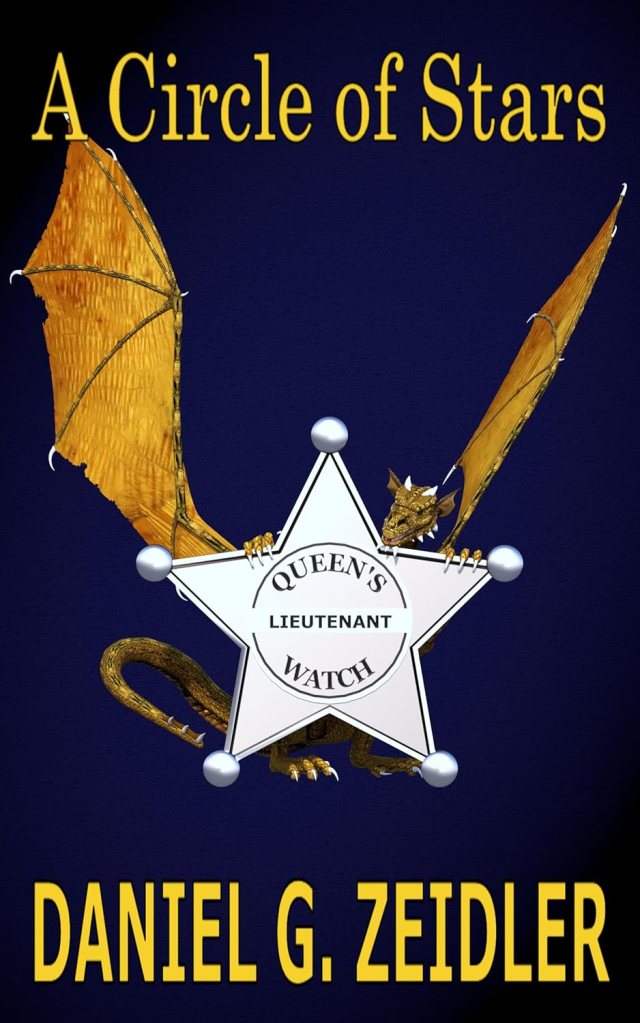
FROM MARY CATELLI: The Other Princess

The Other Princess by [Mary Catelli]

This time, they invited the last fairy to the christening.

Elise, uncursed at her christening, received strange gifts about castles and roses. With such good fortune, what more does she need? She grows up forever in the shadow of her lovely, cursed, tragic cousin.

Even when the curse falls, and Princess Isabelle lies in enchanted sleep, life must go on for Princess Elise. Despite the curse, the kingdom can not sleep itself, and neither can she.

FROM A. PALMER: Troubled Poems for Difficult People

This is a book of troubled poems
For difficult people.
The first of those people is me
I write them to myself
I write them about myself
But I don’t write them for myself.
If reading them helps, I am grateful.

“Troubled Poems for Difficult People” is a body of just under a hundred poems about philosophy, pain, and humility before God from a Christian perspective. It concludes with “Book of Weekdays,” intended as a meditation on mornings and evenings for each day of the week.

BY EDMOND HAMILTON, REVIVED BY D. JASON FLEMING: The Complete Interstellar Patrol (Annotated): A pulp space opera omnibus.

In 1928, Edmond Hamilton published Crashing Suns in Weird Tales magazine, at approximately the same time that E.E. Smith’s Skylark of Space was published in Amazing Stories, giving both men the distinction of creating the genre of space opera. Hamilton, however, was the first to create a series, writing further stories in his Interstellar Patrol Series in 1929 and 1930, then writing a final one in 1934.

Here in one volume is every Interstellar Patrol story Hamilton published, including the novel Outside the Universe. What the stories lack in characterization and scientific plausibility, they more than make up for in enthusiasm, spectacle, and sheer breakneck pacing.

    This iktaPOP Media omnibus includes new introductions that give the stories genre and historical context.

FROM KAREN MYERS: To Carry the Horn – A Virginian in Elfland (The Hounds of Annwn Book 1

AN ENTIRE KINGDOM BUILT AROUND A SUPERNATURAL NEED FOR JUSTICE, ENFORCED BY THE WILD HUNT AND THE HOUNDS OF HELL.

What would you do if you blundered into a strange world, where all around you was the familiar landscape of the Blue Ridge Mountains of Virginia, but the inhabitants were the long-lived fae, and you the only human?

FROM LEIGH KIMMEL: The Day the War Struck Home

Astronaut Peter Caudell comes home to find his daughter struggling with a school assignment. She’s to write an essay for Memorial Day, and her teacher suggested astronauts — but she wants to write about combat heroes, not REMF’s. So Peter suggests the NASA Massacre and relates his own part in those events.

It’s the summer of 1994, and the Energy Wars are raging in the Middle East. On the home front it’s the Summer of Fear, a season of continual terrorist attacks. All eyes are upon Kennedy Space Center, where a Space Shuttle is launching for a critical on-orbit repair of a spy satellite. When it goes up without a hitch, everyone breathes a sigh of relief.

However, the intelligence proves incomplete — the actual target is Johnson Space Center. Suddenly Peter is in the fight of his life, as the presence of multiple police agencies further complicates the fight to stop the terrorists from slaughtering the astronaut corps.

It’s a story of courage, patriotism and self-sacrifice that proves a much greater lesson than the teacher imagined.

A short story of the Grissom timeline.

Originally published in Liberty Island Magazine as an Honorable Mention for the Memorial Day contest. This version includes a bonus essay on the genesis of the Energy Wars.

FROM EDWARD P. MOSER: THE OLD TOWN HORROR: Murder and Theft in America’s Most Historic Locale

A genteel Border South town not far from the nation’s capital is shaken by a series of vicious slayings at historic sites. These include a Civil War cemetery for escaped slaves; a burial mound of Confederate soldiers; a church associated with George Washington; and a museum on the Antebellum Era. At the same time, violent break-ins take place at venerable banks and townhomes connected with the lives of Washington, Robert E. Lee, and civil rights figures. The small city is already in the thrall of a frightening pandemic, disputes over the removal of historic statues, and nation-wide turmoil on alleged police misconduct.
Meantime, violent or offbeat characters enter the life of the town: an escaped jihadi terrorist; a neo-Nazi bomber; Woke demonstrators; a power-hungry FBI official; and a beguiling teacher obsessed with the afterlife. Fears multiply about killers on the loose. Law enforcement is baffled, until a relentless local historian and his intrepid, alluring lady friend start to uncover the horrifying truth behind the shocking crimes. They have grave encounters with a menagerie of villains who threaten to ignite a second Civil War. Leading to a showdown at a gruesome site symbolic of the town’s troubled history, and tumultuous present.

FROM RON CORRIVEAU: The Agent’s Daughter (Agent Series Book 1

Melina has been preparing for a future career as a spy.

She just doesn’t know it.

Legendary spy Evan Roberts always knew that his fifteen-year-old daughter
Melina also possessed the absolute lack of fear required of an agent.
Without telling her his real profession or his intention, he began to guide her
toward an eventual career as a spy. However, Melina’s world is shattered
after her mom is involved in an accident that leaves her mysteriously unhurt
but unresponsive. Her father’s plans on hold, Melina settles into life at a
suburban high school, immersing herself in a world of schoolwork, her
friends and a budding romance with Alex, the cute new guy in her class.

When Melina and her father uncover shocking new information about her
mother’s accident, Melina is pulled deep into her father’s shadowy world.
With Alex desperately trying to find her and only hours to go before it will
be too late to save her mother, Melina and her father work together using
their combined skills to find a way to reach her.

Vignettes by Luke, Mary Catelli and ‘Nother Mike.

So what’s a vignette? You might know them as flash fiction, or even just sketches. We will provide a prompt each Sunday that you can use directly (including it in your work) or just as an inspiration. You, in turn, will write about 50 words (yes, we are going for short shorts! Not even a Drabble 100 words, just half that!). Then post it! For an additional challenge, you can aim to make it exactly 50 words, if you like.

We recommend that if you have an original vignette, you post that as a new reply. If you are commenting on someone’s vignette, then post that as a reply to the vignette. Comments — this is writing practice, so comments should be aimed at helping someone be a better writer, not at crushing them. And since these are likely to be drafts, don’t jump up and down too hard on typos and grammar.

If you have questions, feel free to ask.

Your writing prompt this week is: BOILING

We’re Home

We’re safe, kittens are safe, everyone is well.

We just let late, then had stuff to do when we got home.

I probably won’t post at instapundit till tomorrow, because I’m falling asleep on my face.

But I didn’t want you guys to worry.

Gathering of TX friends was FUN, but I’m glad to be home. Peopling is hard. However, I do feel better.

Promo post tomorrow, so many kittens

Okay, there’s only three of them. Helen and Pol, which we’re going to keep, and one for Marshall, little Harmony who look like one of those q-tips that’s starting to unravel and looks fuzzy.

This is Sweet Helen. We couldn’t get Pol to linger with us, though he played with Dan and let him tickle the little fuzzy belly.

Harmony was also really active, and didn’t linger, but I got a picture. She was determined to keep Cedar’s Toast stuck in a little Amazon box, so every time toast tried to pop up, she got smacked into cowering in the box again, which is very funny.

Here she was plotting how to steal the chicken treat from Helen. Um… she’s not bad but she’s very mischievous. She’s still a good and sweet kitten.

What surprised me was how tiny they were. I kind of expected them to be bigger from the pictures, but they’re not.

Anyway, since I’m in unreliable internet mode, I really cannot do the promo today. I’ll do it tomorrow, probably midday or something when I get home. We’ll be leaving very very early with kittens in the back. (Pray for us.)

Anyway, they were very cheering. We’ll see how the old sour pusses back home take to them. I expect Havey to be excited and adopt them, but Valeria might try to eat them, so we’ll see. (Again pray for us.)

See you tomorrow.

Saying Goodbye

Years ago, when these things were notional and far in the future, my father in law asked me to give his eulogy. He’d just read a memorial I’d written for my grandmother, because I’d never got to say goodbye to her, and I can only grieve — or do most things to be honest, being fairly useless by nature — in writing. And he thought he’d like to be remembered like that.

He was then younger than I’m now, probably by ten years or so.

Time does go by very fast.

I met my in-laws when they served as my liaison to the local AFS (exchange student program, now called something else) chapter. I used to go to their house, because my future mother in law (though neither of us knew it) let me play with ceramics and paint. And besides, I used to hang out in case Dan came from college. I could never figure out when he’d drop by, but if I stayed long enough, MIL would ask him to drive me home. (Yes, it was like that, though it took us four years to figure it out, because we were 18 which is a sort of disability of its own. Like a certain kind of teen romance trope, we argued a lot.)

Dan’s dad was a very gentle man, but with an imaginative streak. If you got him to talk about technology or what the future might hold in computers, or strange, far out theories of the world, his eyes lit up, and he could talk forever.

When I got engaged to Dan, it was a relief to finally call his father “Dad” because well…. he was. Sort of a distilled essence of dad.

We didn’t see him too often in the next years. We moved a lot, and finally moved across the country to Colorado, where they only visited three times.

But when I heard he had died, things came to mind.

Whenever he visited us, he spent his time organizing and cleaning our house. I’m by nature clean (bleach is a SACRAMENT) but not organized. He also used to help me wash up after dinner.

I remember him in our kitchen, in Columbia, South Carolina, teaching me to sing “They’re coming to take me away.” Trust me on this, he voluntarily exposed himself to my singing. Greater love has no man. We were so loud that Dan came to see what in heck we were doing (Which gives you a measure of my singing) and ended up joining in.

Later, when we visited, I came out of the guest bathroom at their home, after putting a beauty product on that briefly (very briefly) turned my face green. I actually startled him enough he sort of screamed (I didn’t know he was out there) and then teased me about being secretly an alien the rest of the visit.

When Dan went on work to France and dropped me on his parents for two weeks (I couldn’t drive, and we didn’t have an extra car anyway, and staying alone for two weeks in a city where I didn’t yet know anyone wasn’t even safe, let alone pleasant) we stayed up late into the night — of all things — designing these ideal houses with all sorts of ways to go off the grid. We’d stay up till late in the night, until my mother in law came and chased us upstairs.

When he visited us in Colorado, he went to a parade of homes with us, and I found out that he and Dan have exactly the same sense of humor. Some of the decorating choices, not to mention floor plans loaned themselves to entire impromptu skits about weird families.

When we bought our house he reserved the front bedroom which we used as a TV room as “That’s my room when I need to stay with someone.” Well, it didn’t happen that way. When he needed it, he didn’t want to move that far from his friends and his church.

After that life got complicated, and yes, we feel guilty how little we visited. I think the last time we spent time up in Ohio was when my brother in law died. We went up for the memorial, but also for that first very difficult Christmas, and my father in law got to spend time with his grandsons.

He liked that we’d given Marshall his middle name, and was flattered when Marshall started to go by it. He was very proud of his youngest grandson.

The last time I saw him was at my mother in law’s memorial. He spent the entire service holding my hand. He told me that for so many years I’d just been a voice in the phone, and it was good to know I really existed.

Afterwards we visited with him for some hours, and I petted the little mini poodles he loved.

We meant to go up again. We did. But the last two years have been fraught, between moving and health issues.

Dan did go up, but we couldn’t manage the money/time combination.

His passing hit me very hard. There are a lot of unspoken stories, a lot of things we could have air-dreamed about. And just time to sit and pet a fuzzy while being silent together. Time ran away from us. In retrospect, it seems so fast, even though I know it wasn’t.

I’m sorry dad, that we didn’t spend more time together. I will miss your gentle humor and your kindness.

Perhaps we’ll meet again in eternity, with time and better understanding, and a fuzzy or two for company.

Goodbye dad. Until we meet again.

Busy Day

Away from Keyboard, en route to a friend meetup.

Will be bringing back kittens for us and younger son.

About to run out of connectivity zone. Might or might not update tonight. Will try to but there’s this dinner thing.

While you’re at it, Sunny comments here as Holly, and she’s… um…. she could use some financial help, honestly.

Yes, we have donated, though anonymized. Will probably donate again, once dust settles and I know how much I have in hand.

Helping with health insurance deductible for unforeseen issues

Anyway, don’t worry about us. I slept horribly, and I’m sort of punch drunk, but husband will be driving. And I’m almost over the virus. The death in the family was expected, and a release, but for some reason still walloped me like a hundred ton weight.

Not sure if it’s good or bad we are set to see friends this weekend. Fortunately they have a broad tolerance for “Weirder than normal.”

Take care of yourselves, and hug your loved ones. More posting tomorrow, if it all goes well.