Saturday Morning Writer Update Post

Good morning, and I’m sorry I never did a real post yesterday.  You see, my eye doctor still is (and will continue to be, as he is a friend and helped me research Kit’s eyes for Darkship Thieves — eliciting a delighted cackle when I realized they look like cat eyes — and is in fact a geek who can explain anything vision-related to me) in Colorado Springs, so I went in with Dan on his way to work.

Being on that side of the state reminded me there were certain things I simply haven’t found where to buy in Denver yet (mostly groceries, and yes, we’re investigating some places.  But I cook like the 1920s, from scratch and there are ingredients/implements that are hard to find.)  So we ended up on an extended shopping trip, and then when we got home I had to finish the spring cleaning I had started when I got sick.

Okay, the good news is that my eyes are slowly returning to normal, so it’s less thingy in the brainy and more extreme tiredness from unaccustomed vigorous cleaning.  How vigorous?  Well, I moved furniture, and climbed ladders to clean light fixtures.  So.  Like that.

Bad news?  Not many.  I find myself in need of guest posts, and as I said before, I think I think you guys sent me some that I lost.  For perspective here, for a week or two my hotmail was eating everything sent to it and for a couple of months SELECTIVELY eating some things sent to it.  Which means things I saw fleetingly then disappeared.  Yes, this has been — mostly — fixed.

So, why do I want guest posts?  Because I took a week off from everything but the blog, and I find that I’m still “blog tired.”  Not burned out precisely, but coming up with a topic is hard (haaaaaaard) and I suspect if I don’t take a break, I am going to burn out.

Besides, we’re moving all our websites, which means I’m redesigning them all, and that will take the hour or so a day I give to the blog.  So, if any of you have a desperate hankering to see your name in lights at ATH, please send me your stuff.  And if you don’t hear back, poke me, as it might have never arrived.  Ideally and if you guys don’t mind, I’d like to take a week where I cue the posts ahead of time, and then check back now and then but am not here full time.

Meanwhile, what I want to do is write.  As in fiction.  For five years I was getting increasingly more hypothyroidal, until the writing stopped completely (almost) a couple of years ago, and any writing was an insane amount of effort.  Now that the thyroid is more or less balanced again, and indie is a thing, I’d like to make up for lost time.

So far I’m running at half of my goals for the year, with 1/2 the books I meant to finish finished.

I just signed the contracts for MHI Guardian (yes, Julie’s long-awaited book) in Larry’s world and co-written with Larry. That means the mornings will be devoted to Guardian for the next couple of months.  Why only the mornings?  Because this is a true collaboration, and its being in Larry’s word with one of his main characters I want him to be able to jump in at any time, after reading it and going “Wait, where did that come from.  That doesn’t work at all.  Let’s go back to chapter x and–”

This means in the afternoon I’ll be working for me.  Now some of these are for Baen.  I need to do Darkship Defiance, Hacking the Storm (Fuse’s book.  Yes, yes, you’ll get it when you read Darkship Revenge), and Bowl of Red, the fourth in the Shifter’s series.

BUT some of it will have to be for indie, partly because indie makes more money, and there are several things I want to do to this house which will take money.  Also, frankly, because though I trust Baen to survive while most other genre publishers vanish (with an earth shattering kaboom) it is very hard for me, given my personality, to put my future in someone else’s hands, their business decisions and their decisions re: my work.  It gives me the same heebeejeebies as flying, because I’m not in control.  (Yeah, okay, but it’s the way that I am and as grandma used to say “we don’t make ourselves.”)

The “problem” is that I have a full slate for the year, about as full as I’ve ever had for trad publishing.  (My record was six books delivered.)

Of course things have changed.  The year I did that, we still had both boys, under the age of 15, in the house, and I was homeschooling the genius, which … never mind.  Let’s just say he ate three curricula in three months (they wee supposed to last a year) and then we designed our own which included graduate level work on William Shakespeare.  And to keep an eye on him, I was learning Greek and Latin alongside him.

Right now we’re settling into semi-demi-empty nest.  We have a son technically living with us, but he has his own basement apartment, so we only see him when he runs out of coffee and steals mine.  Or when he wishes to talk.  It’s rather different.  The possibility exists, at least, that I can write as many books for indie as are due at Baen, maybe more.

To facilitate this, it would help if some of the work — coff — was already done.  A conversation in one of FB’s private groups reminded me I do in fact have a lot of half written books which my then agent didn’t know “how to market.”  So I spent part of the day before yesterday going over those.

The good news, despite the dismal output the last five years, is that I have actually gotten better at this writing thing.  The bad news is that those books will need a good “drubbing” clean up before seeing the light of day.  The better news is that I expect to get out, fairly soon: Witch’s Daughter; Rogue Magic; The Musketeer’s Confessor; Royal Blood; A Well Inlaid Death (Dyce Dare) and perhaps Lord of Shadows (Persephone’s story set in present day.)

I haven’t forgotten any of the other things, including Dragons (very much haven’t forgotten that.) or the YA way overdue at Wordfire.  I’m just listing above the things half-written and therefore needing less time to get to market.  Say, the next three four months.

The waiting bench for other writing is deep and includes the fictionalized biographies of all of Henry VIII’s queens, (I know, but they sell), the orphan kitten mysteries, and a sort of Agatha Christie pastiche.  There is also Dead City which is a classic mystery crossed with a UF with its base in Christian mythos and theology which is rather rare for fantasy (without being in any way what could be called “Christian” as a genre.  Most of the roots are in Medieval legends about purgatory and hell.)  That’s way at the back, at a slow simmer but I have some notes on worldbuilding.

There is also, for my sins, a mil sf trilogy which has no series name yet, but goes Madrasta’s Children, Taking Heaven, Valhalla is for Heroes.  Who knows when I’ll get to it?  Barring the ability to go away for a month and slam it out, probably not for a couple of years.

So… bear with me?

If I can take a week off from the blog, I promise to return to it fully refreshed, too.

Anyway, that’s where we are right now.  Somewhere in there there will be a ten day trip to Portugal.  We’re going to Liberty con as usual.  There will PROBABLY be other trips, though I can’t swear to those yet.  Some of them might even be for fun.

Lately I’ve come to miss Oregon in fall, with its continuous rain (it reminds me of my childhood, as that’s pretty close to the climate I grew up with) but whether I can convince Dan to take a week or so up there is something else.  (Probably not.)  If we do, it will be a writing vacation, anyway.

So, that’s the state of the writer, for this snowy Spring Saturday.  I shall now go have some more coffee and go finish an overdue (natch) short story.

The SOS for blog posts is real, but if I don’t get it, I’ll do some blasts from the past.  And it’s only a week, honest, and then I’ll be back.  If you guys think that will be okay.  It’s been… (counts)… 8? years since I took a vacation from the blog, so it’s not like I’m doing this every week.

Okay, now I go work.  I was hoping to take today off and go to the museum, but I don’t think we want to drive in this.  So I’ll work, and take the day off after it thaws.

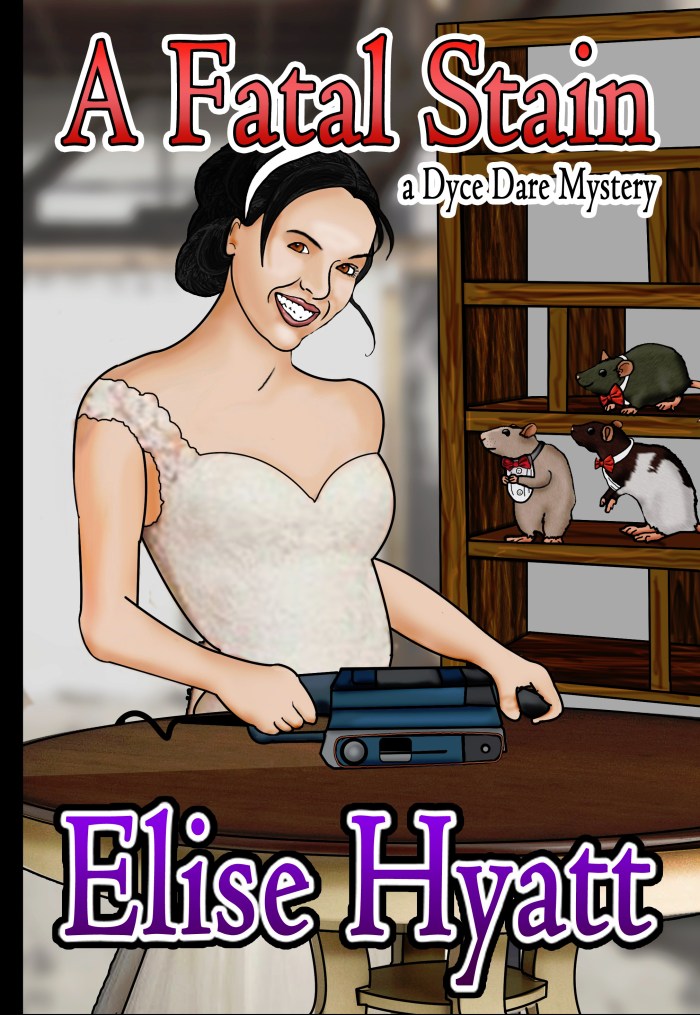
Oh, yeah.  I knew I was forgetting something.  This is now out:
A_Fatal_Stain

Also, because I was born dumb and keep forgetting things: I will be sending out all the stuff I promised to people who won various raffles here. (Except I lost the posters of the dragonette, so wait until I clean my art area.)

Also, I now have copies of Darkship Revenge, I still have an audiobook of Through Fire to give away, and I have posters of the cover of Darkship Revenge. If you throw your hat in the ring, I’ll put it all in a bowl and have Greebo pick a name.

I am actually alive

But we’re under winter storm watch, so we had to run a bunch of complicated errands to make sure, in the unlikely event we’re snowed in tomorrow, we’re okay.

Last shop run just done.

Meanwhile, my eyes are okay.  Well, I’m still seeing double supposedly, but so much less that my eyes automatically compensate.

So, there it is.


Eye Doctor Appointment Today

Will blog later.

We’re going to make sure the double vision has gone away.  Because frankly, no one wants to see ya’ll’s comments TWICE.  It would drive me mad, maaaaaaad, like the necronomicon.  (WordPress thinks that should be micro-economics.  Sounds plausible!)

Hugs and kisses.  I’ll be back later.

We’re Living In The Future

Okay, so it doesn’t look a think like we expected, does it?

I mean, I keep doing a double take every time I write the year, because d*mn it all, if it’s the 21st century, I want my moon colonies.  I want my flying cars.  I want–

It’s easy to get confused and decide that you are in fact living in the world exactly as it was when your parents were little.  Oh, sure, we have some more conveniences, but it’s really hard to think that the texture… the fabric of our lives has changed markedly.

Part of this I think is that the future of flying cars and moon colonies was pretty actively resisted by the enemies of the future TM.  You know them.  They’re the idiots who run around with their heads on fire saying we need to learn to take care of the Earth before we move to any other planet.  This is a de-facto negating condition on getting humanity’s genetic eggs out of Earth’s basket, because holy hell, how do you even?  We’re never “going to take care of the Earth” perfectly.  Look, the Earth is massive, whatever these little kids in adult bodies think.  They’re probably overestimating our effect on it as is.  I very much doubt we have nearly the effects they think we do.  It’s all hubris and a lack of imagination for the real size and the real magnitude of processes involved.

And that’s to start with.

After that comes the “if there is an oil spill somewhere in the whole world, we’re not ‘taking care of the earth'”  and if there is a strip mine anywhere we’re not ready to go to another world.  And–

At the end of this lies totalitarian control of everyone in the world, because, really, how else can you guarantee that a little country in the middle of Africa isn’t doing something unsound, but world government and on top of that big-brother spying on everyone and everything?

In other words, the people who would control your every move and thought don’t want you to escape to another world.  I know you’re shocked.

As for flying cars, yeah, there are all sorts of reasons they’re impractical.  The really funny thing is that they are startlingly similar to the reasons Heinlein gave, back in his socialist days why everyone owning a car would be impractical.  The crashes!  Most people aren’t smart enough/responsible enough to drive!  It would be mayhem!

So–  That future got handily cut off by the people who really would like you to check in with them before you take a step past the end of the street where it just might be dark.

Which brings us to the fact that you can’t block the future.  You can’t.  It’s like the economy.  You can’t actually stop the economy or make it obey your every whim.  The economy is the aggregate of everyone’s wants, and what they’re willing to do to get them fulfilled.  You can no more control that kind of chaotic system than you can control the weather.  If you put in price controls, you get the black market.  If you institute minimum wage, you get illegal immigration.  If you put in punitive taxes, you get everyone working under the table.  It never ends, because human needs and wants never end, and you can’t control them, no matter how much you try.

In the same way, you can’t stop the future, not even if your ideal society existed circa 1930.  You can’t force people back into the past.

Well, correction, you can.  North Korea is virtually medieval.  And Cuba is the place time forgot.  But to do it you need totalitarian control, and, frankly, a much smaller place than the US.  This is important, because as I knew as a little kid, and we’ve had confirmed, time and again, the future comes from the US.

And it did.  Enter the digital revolution.  I mean, who really wanted to control a few nerds messing around in their garages, with their computers?  Why a lot of them worked for the government, so it must be safe.

I first encountered the internet as a dream.  Someone else’s dream.  I was reading Friday, the part where she spends days searching through some sort of net for the correlation between economics and the height of skirts.

Having the sort of mind that can spend days correlating trivial data will suddenly I wake up with a massive vision of something that links them all, I envied that “net” she searched.  I wanted it.

Mind you, when I became aware of being jealous of it, I was no stranger to computers.  It was 92 and we were connected to … something.  Our library had an electronic interface, where you could order a book, with your library card number, and they would mail it to you, right to your house, without your having to leave the house at all.

To the budding writer with a very small child and only one car in the family, this was manna from heaven.  And a blessing of the digital age.

My thirty year old self would die at the thought that I can look up anything I want to, at any moment, with a few key strokes.  Oh, and I don’t need to worry about phone charges for connecting.

Heck, when I moved to Colorado Springs, in 93, we even had sort of an acquaintance with the net, though Dan refused to let me get aol or any of those things, because they were for the technologically unwashed. (Eh).  But we knew a few domains and I was on a couple of bulletin boards.  It was kind of like amateur radio with a computer, really.

Meanwhile, in real life, I was so starved for entertainment and so broke, that I went every day to troll the “free book” repositories outside used bookstores and developed a strange acquaintance with gothic romance.  Also, having read their sf/f dry, I started making inroads into my library’s history.  Any history, really.  When desperate, I read biology text books.

We didn’t have television and we didn’t have much money.  Entertainment was hard to come by.

My thirty four year old self would envy my ability to read thousands of books at a whim, a lot of them for free.  She’d have killed for access to the books on Guttenberg, honestly.

But wait, there’s more.  When our older son turned thirteen, we found we had birthed a member of the Big Foot tribe.  I.e. he started wearing (depending on cut of shoe) either size 15 or up to a 17.  There was only one store in our area who carried shoes that size, and only one style of shoe: rather dorky tennis shoes.  Every six months, we made the trip to Denver (back then an hour and a half away, and looked for the one pair of shoes in the one store.)  Now I can buy him shoes in every style with a few clicks on the net.

And you’re saying “we get it.  It’s more convenient, it’s easier.  It’s still not the future.  It’s not like all of our lives have changed.

Oh, of course not.  I get up in the morning, to an alarm I set on my cell phone.  I have a cell phone, by the way, a number you can reach me at day and night, even when I travel out of state or overseas.  Anyway, I get up to an alarm I set on my cell phone.  Before I get out of bed, I check what the weather is going to be like, on the same cell phone, so I can know what clothes to wear (yeah, Colorado.)

Then I sit down and write a weblog, which is read — looks at stats — by about four thousand people all over the world seconds after I write it.

During the day I’ll check in with friends all over the world, get instant feedback on my writing.  If I need to, I can get instant feedback or a question answered by my publisher.

If I’m not sure what I want to cook for dinner, or I have exotic ingredients, I will look up a recipe, and there’s almost always something.

If I want to write a story set in a time period I’m not familiar with, I can become enough of an expert for a short story in about an afternoon.

More importantly, it changed where I live and where I want to live.  I hate driving (partly because my idiotic astigmatism) so for years I wanted to live near the center of town, where I could do most of the business of everyday life with either walking or a short drive.  More importantly, I wanted to be near bookstores and libraries, because I’m choosy and I had to browse a lot to find something I wanted to read.

Now I mostly read on my kindle, downloaded from the internet.  And yeah, walking in the suburbs is boring, but I can download an audio book to my MP3 and that keeps me happy while I walk.

Still nothing?  Still every day life?

When something changes how you earn money, how you shop and where you life, there is a revolution underway.

And no, it’s not just me.  I am perhaps an extreme case, given my profession, but you know it’s not just me.

Weirdly, some of this has led to people concentrating downtown, particularly young people.  Part of this is the horrible economy — bigger cities produce more jobs, due to size — but part is cultural and entertainment opportunities.

But we’re in early days yet.  In terms of where this simple trick (one simple trick) of being able to work, shop, and entertain yourself at a distance goes, we’re in the days of the navigators crossing the sea in little walnut-shell like boats.  The mass population moves, new products, and transformation of our universe are all in the future still.

And I’ll be the one pushing for us to push this further, and to use this future to get to the future we want.

Because I STILL want moon colonies.

But all the same, we’re living in the future.  And it’s a good thing, even if no one has noticed.

Flexible

People here said — and I believe them to an extent, though I wish we had people in power who could think of non-statist solutions.  (Yes, I’m going to wish for the moon next) — that the economic recovery is neither instant nor sudden.  And yep, we all remember the problems in 1981, or at least those of us who are either old enough or have read up on it.

And they might be right, and the economy might recover, yet.  At least, I’m almost sure it will recover superficially and to a point, particularly if we remove the giant, inflated tick of Obamacare from its neck.

The problem is this: there are too many unknown unknowns on the way to prosperity or long lasting economic stability.

Let’s remember economics is just the term for a million small exchanges and a few big ones.  It’s — cough — what we call what we choose to do together.

The problem is that real economics — not the stuff the government thinks it can control.  It can’t really, you know, it can only impair or twist — are affected by all sorts of technological and international situations.

Some of the known unknowns I can foresee are stuff like:

The ability to work from home is eventually going to equalize compensation between high-pay/high-costs regions (like, say, all of the US by comparison to the rest of the wold) and low-pay/low cost regions.  How do high-cost regions live on low pay?

The ability to work from home/live anywhere will rearrange all our cities, our cultural institutions, our public institutions.

The ability for anyone to report the news will rearrange not just our perception of what is happening, but things like public relations, product recommendation and, well, everything pertaining to commerce.

Each of these, and about a dozen other things I can’t think of this early in the morning, have complications, ramifications, etc. which will all affect the economy in ways we can’t foresee.

Which is why the only way to survive the upcoming mess is to stay flexible.

How do you stay flexible?

Well, part of it is imagining things ahead of their happening.  Yesterday I was reading about airplane crashes (mostly because I’m a masochist) and one of the things they said is that most people find the chance of an air-crash so remote that they literally can’t imagine it, so they will sit, strapped in, in their crashed plane, until it blows up.  They said we have maybe 90 seconds to leave the plane, and most people don’t even try.

I think — no, I know — it is the same when an economy is changing too fast to be anticipated easily.

How do I know this?  I find I’m far less flexible in adapting to the changing publishing situation than my friends who were never traditionally published.  And my friends who were more successful than I in the old system and are now trying indie, have even more trouble adapting.

Why?  Because we were embedded in what we thought was a stable situation, and then things changed, unimaginably.

It’s the same thing with the rest of you and society at large.  Things are changing way too fast, and therefore we must be ready to jump before someone says frog.

I know that in Portugal when the economy fell apart, people made great fortunes from things you wouldn’t consider.  You know, like selling bread from the back of a van while all bakers were on strike.

So–

1- Stay flexible.  Don’t say “nothing will ever happen to my situation.”  Imagine what could happen.

2- Don’t scare yourself.  The best case scenario and worst case scenario are rarely the most likely.  Also, you know, in those scenarios there’s usually nothing you can do.

3- Consider what you could do if not only your job, but all jobs like yours vanished/became very rare tomorrow.  (Journalists are facing this now.)  What could you do for money, with the skills you have.  (And don’t assume the society goes back to the 19th century!)

4 – Run scenarios in your mind, including the very unlikely. Those might never happen, but it keeps your mind flexible.

5- Most importantly, keep learning.  Learn how to do new things; learn new information; if all you can do is walk, walk a different way every morning.

6- Stay flexible.  Be ready to adapt.  The prize might not be to the smartest or to the swiftest, but it almost always is to those who best adapt.  Make sure you’re one of those.

Walls, Liberty and Trust – A blast from the past from October 2015

*VERY important note.  I know I have four or five blog posts you’ve sent me.  I also can’t find them.  My email situation right now is less than ideal.  So, if you’ve sent me something and I haven’t run it yet, please re-send.*

Walls, Liberty and Trust – A blast from the past from October 2015

When I was a kid in the village, I could tell what the oldest walls around fields or houses were.

You see, in the sixties the new, nice houses being built, would have very short walls.  Maybe four feet.  Walls more for decoration than for anything else.

This didn’t mean there was no theft, of course.  I mean, the smart woman brought in the wash from the line at night, and henhouses and rabbit hutches had as good a locking mechanism as a house’s.  Sometimes someone got over the little walls and took all your just-grown lemons, or whatever else.  That wasn’t unusual.  BUT no one would get over the walls and kill you and your entire family in your sleep, and the stories I heard from my grandmother about second-story men who engaged in home invasion were just that — stories that were safely in the past (to be fair, I think most of them were from her mother’s or grandmother’s time) and not at all scary, because they could never happen to us.

But the REALLY old houses in the village, the ones that probably dated back to the eighteenth century, not only had eight foot walls around them, but the walls were topped with bits of broken bottles so anyone trying to scale them would hurt himself badly.

More interestingly, the old fields (the village had clearly expanded greatly in the nineteenth and early twentieth century, mostly with migrants from the mountains, like my grandmother’s family) which again, I’d estimate had been farmed since about the eighteenth century, not only had the eight or ten foot tall walls topped with broken glass, but also gates at least as high and — importantly — faced with smooth sheets of metal in the front, so you couldn’t get a foothold to climb.

This makes sense in retrospect.  In that time it made sense only in light of grandma’s stories of bandits, but I’ve now read a lot about the Napoleonic wars.  I didn’t realize how devastating they’d been to people in Portugal.  Oh, sure, you heard stories like the boat bridge, which sank under the weight of people escaping Napoleon, and that’s one thing — the kind of tales that exist here about the civil war, say.

But then I read some memoirs of the peninsular war from British soldiers, and hey, well…  Stuff like all the cows in the country (even work oxen) being eaten, or stuff like the troops scouring entire regions for anything edible.  It appears neither the French nor the British were well provisioned as we think of it in the 21st century.  To an extent troops were expected to live off the land.  But Portugal was very close to the bone, and …  well, I now know why the broken bottles on top of very tall walls.  I suspect it was the only thing protecting one’s vineyards or fruit trees, very often.  It also explained why most of those were along the old Roman roads, still in use when I was a kid (of course.)  Because further in, in fields amid woods or whatever, there would often be no walls at all, or just bits of broken, knee-high wall (and sometimes just boundary stones written in Latin).  Apparently further in where invaders or counter invaders (sometimes I understand it was hard to tell the difference for peasants on the ground) didn’t reach, or were afraid to go lest they be ambushed, the local trust amid families that had been there forever, (and most of those family were old local families, at the time) kept the walls low.

Then came the nineteenth century, more prosperous, but still not great, and amid civil war and revolution and counter revolution, the walls were a little lower, and the gates might be wrought iron, and you could climb them.  But still, to get to grandma’s back patio where the door was open all day, you had to go past two gates, one of which had a lock (though I never saw it locked.)  And even though the big kitchen window gave out on the side patio, past a set of gates, grandma would put a big board into the frame at night, to block off anyone who might break the window and try to get in.

By the time my parents built their house in sixty eight, it had four foot tall walls and gates the same height, more of a symbolic barrier than a real one.  Of course all the windows had roll-down shutters of the kind here associated with store fronts.

Then the security measures started increasing.  First there was a gate between the garage and the house, locking, and keeping away anyone who might think to surprise us in the back patio.  (Which happened a couple of times before that, and could have got ugly if dad hadn’t been able to stop any intruder.)

And then… well, every time I go back, the walls have climbed a bit more, and are now slick marble-panels on the outside, and the gates are smooth and locking.  I’m half afraid next time I go back there will be broken glass (or more aesthetic spikes) atop the walls.  The last time there were bars in the windows, behind the shutters.

I honestly don’t know if crime is that bad, or if it’s a matter of my parents getting older and less able to defend themselves, plus living in a neighborhood where more people are older and less alert, so the neighbors hearing a disturbance won’t save you.  And also, of course, such neighborhoods attract bad elements as they tend to be easy prey.

But I do know that when I first came to the states it utterly blew my mind that people had decorations in their front yard, with not even a symbolic gate to protect them and NO ONE STOLE THEM.

In Portugal someone would steal these things even if they had no use at all for them.  By leaving them outside, you’re inviting someone to take them.

This morning we bought pumpkins (at last) to carve, and noted the vast bins of pumpkins outside the store, the trust it implies in people taking them inside to pay.

Someone here said something about Arab countries being full of people who want freedom/the blessings of liberty.

I believe them.  Portugal is too.  Many people will express disgust with the Shenanigans of governance, with corrupt authorities, with the general anything goes atmosphere, and will make comments about how much better it would be if–

But what you have to understand is that these people don’t know anything more about America than a cat knows of a king.  They will admire the results of American can-do and entrepreneurship, then commiserate with me when unemployment leaves us without health insurance, and tell me how much better they have it because the government takes care of them; they will talk about how it would be great to have honest policemen, but will expect to get out of a minor fine with a minor bribe; they will decry nepotism but be quite happy when their godfather gets them a job or a good deal on something.

In Arab countries (and in some regions in Portugal) this would extend to things like “there ought to be a law keeping these shameless women from going around in short skirts/short sleeves/etc.”

It’s easy to want liberty in the abstract, but in societies where individual rights, including the individual right to property are not a gut-level belief, it’s almost impossible to implement it.  You need to have citizens who have a minimum of trust among themselves, who view others’ property as sacred, who view others’ rights as inviolable to be able to have people truly govern themselves, without its rapidly devolving to the stuff of nightmares.

As our kids have been taught for the last forty years that the collective is more important, that those willing to hold on to their property or the fruits of their labors are greedy, and that (as Bernie supporters keep saying) one must care for “the people’ in great unwashed collective form, we are at risk of losing the ability to have that mutual trust and respect which is essential to self governance, too.

Cultures change very slowly, and it seems more so when it’s in the direction of liberty and trust.

One of the great flaws in classical SF was the assumption that the whole world could become a sort of extended America without those prerequisites.

It was a beautiful dream, but it’s not how things work.

And when the west welcomes large groups of immigrants who don’t understand the rule of law or the meaning of civic trust, it becomes very hard to keep self-government going.

It is essential immigrants assimilate or leave.  Oh, not in things like food and modes of dress.  That is not important.  But the assimilation of the principles of trust and individual rights?  That is essential.

Teach your children well, and explain to those who would be like us what it actually entails.

Words And Meanings

When I was young, like most people here, I was completely confused by certain words, which I’d only encountered in reading and didn’t quite know how to pronounce.  I understand my pronunciation of Whale in Portuguese kept the family in stitches for years, and the funny thing is I no longer remember which pronunciation is the funny one and which the correct one.

More importantly, sometimes I assigned COMPLETELY wrong meanings to words.  I sometimes find that I’ve done that in English too, but more rarely.

You see, sure we owned a dictionary, but when I was eight and devouring all the books I or my friends could get our hands on, stopping to look in the dictionary was a waste of time. (I once had an entire “boyfriend/girlfriend” relationship for a whole two years because his parents were well to do and bought him whatever books he asked for.  As opposed to my family, where I could read whatever I could dig up (why the potato cellar, mom?  Weird place to hide dad’s old books.  I don’t care if you thought they weren’t aesthetically pleasing)  and got new books (often wildly inappropriate ones, and really, people, there is other science fiction than Verne, okay?) from relatives for my birthday (but not Christmas.  That was clothing and money.) Yep, I know what that makes me.  Don’t judge me, we were in fourth grade and the most onerous thing required of me as a girlfriend was to hold hands.)

So I inferred words from surrounding words, tone, story, whatever.

Which is why I came to think that “native” and “aboriginal” were words for “Savage”  and “barbaric”. This probably came from the fact that at the time I was going through a Tarzan and other books of similar vintage phase.  It wasn’t until I was reading an anthropological book and found aboriginal used in a context that couldn’t mean “savage” or barbaric that I realized I must have got hold of the wrong end of the stick and went to the dictionary, where I found that aboriginal meant originating in that place, and not “savage” or “barbaric.”  Native had the same meaning.

So, what is this all about?  Well, recently I went through great anguish of mind while writing a book set in the 19th century and involving Amerindians.  Should I use Indians? Or Natives?  Both were accurate usage for the time, but surely, periodically, they’d default to “Indian” since that was the common usage.

Of course these days “Indian” is considered pejorative because it’s the name given by Europeans who mistook the inhabitants of the Americas for inhabitants of quite another region of the world.

I get that.  I don’t get replacing it with “Native Americans.”  Yes, I know that the legends of a lot of tribes say that they were created here, but holy heck, are we going to go on that testimony now?  Then we should refer to Christians as Edenintes, because that’s where they believe they were created, right?  No?  Then what makes a religion true and the other false, from the outside?  Oh, yeah, because one is exotic and stuff.

In fact, from a scientific point of view we have more than enough proof that the people’s Europeans found in the Americas didn’t evolve there, weren’t created there, and weren’t the first ones there.  I.e. they displaced other people.

So, does that make them “Indians?”  Well, no.  That is an obvious misnomer.  That said, it was still the word used through most of the eighteenth and nineteenth centuries.  It is also still the word used in Portugal.  (My nickname from dad was “Indian” meaning an Amerindian (I think that is still the anthropological word.)   Other fathers called their daughters “princess”, my dad called me “Indian.”  Is it any wonder I love the man?)

So “native American” is a misnomer too.  BUT the more important thing is lots of peoples are misnamed in a lot of languages. Alemao is the Portuguese word for German.  As I understand it, the Alemani were only one of the German tribes.  And then there’s Pennsylvania Dutch.  They aren’t Dutch, of course.  It’s a mispronunciation of Deutsch and not understanding they meant “German.”

Of course Amerindian is wrong too, just an attempt to make it more specific than “Indian.”

And then of course there is the insanity of naming a tribal people spread over a continent the same things.  People are Cheyenne or Cherokee, Dakota or Aztec and they’re as different among them as Portuguese, German or French.

So, yeah, the name is wrong.  And “native American” is wrong, and IMNSHO we should just call people by their tribes or “people” name.  That’s me, though.  And in an historical context, I still chose to use “Indian” because it’s what the characters would use.

However, in a more sane perspective, why replace Indian with the politically correct “Native American” which is not only still as inaccurate, but also insulting in that it forces several tribes that have nothing to do with each other under the same umbrella.

This is the same insanity of most “political correct” naming.  It is still incorrect, and over time it acquires the same meaning as the word it replaces.  There’s no point at all replacing a negative word with a positive word because over time it acquires the same meaning.  We clever monkeys are really good at inferring meaning from use and ignoring the actual meaning of the words, just as I inferred “savage” and “barbaric” from aboriginal and native, because I was reading books of people who believed the two were equivalent.

How long did it take for “Special” to mean “short bus special” (and let me tell you aggregating “gifted” into “special” doesn’t help, nor does substituting “Special” with “exceptional.”  I’m theoretically the mother of a “twice exceptional” child, though I suspect he’s only “once exceptional” now, as he outgrew most of the sensory issues, while retaining the intelligence.  Calling him that back in middle school didn’t prevent the school from fearing him, distrusting him, and attributing to stubbornness issues that came from the sensory problems.)

Of course, it is easier to change “Indian” into “Native American” and congratulate yourself on your own tolerance and open mindedness than to ascertain what tribe you’re speaking about and use that name.  It is easier to designate people “special” or “exceptional” than to account for their abilities or disabilities and accommodating those, while treating them as people.

It is easier to submerge the individual in a group and then pretend everyone in that group are widgets, no matter how wrong this is.

And it is wrong.  And what was a bad, pejorative meaning will attach to the new word.  And nothing will be solved.

But hey, those who think they are superior and more understanding than the rest of us and who believe changing the word changes the thing can declare victory and move on.

Even if nothing changed.

Vignettes by Luke, ‘Nother Mike and Mary Catelli & A Very Short Promo by Free Range Oyster

  Vignettes by Luke, ‘Nother Mike and Mary Catelli

So what’s a vignette? You might know them as flash fiction, or even just sketches. We will provide a prompt each Sunday that you can use directly (including it in your work) or just as an inspiration. You, in turn, will write about 50 words (yes, we are going for short shorts! Not even a Drabble 100 words, just half that!). Then post it!  For an additional challenge, you can aim to make it exactly 50 words, if you like.

We recommend that if you have an original vignette, you post that as a new reply. If you are commenting on someone’s vignette, then post that as a reply to the vignette. Comments — this is writing practice, so comments should be aimed at helping someone be a better writer, not at crushing them. And since these are likely to be drafts, don’t jump up and down too hard on typos and grammar.

If you have questions, feel free to ask.

Your writing prompt this week is:
push

A Very Short Promo by Free Range Oyster

Marina Fontaine

The Product

The Product will change your life. It will give you joy and confidence, make you more aware of the world around you. You will find new friends. You might even fall in love.

Few people know its name. Fewer still dare say it. It is, after all, illegal. Users are jailed. Dealers meet an ugly death. Yet the temptation is irresistible.

Kevin is a dealer. And he is about to get caught.

On sale this weekend

So, the Economy

Is anyone else starting to get the unwelcome feeling we’re headed for “summer of recovery” 9?

Maybe it’s just my sample — and that would be worrisome, because my sample consists mostly of not only highly educated but highly capable people — but it seems like every other week a friend is being laid off, or friends who haven’t had a raised in 10 years, still aren’t getting a raise, or–

Yet the press, whom I thought would turn on a dime once Obama was out of office, is still saying that the economy is better than ever.

Who am I to believe?  Them? Or my lying eyes?

I grant you that it’s almost impossible for the economy to right itself while hampered by the load of cement, called Obama Care, that FINALLY managed to stop the great American engine.

We’d absorbed a lot of other Leftist hits, but a program that vacuums money from both public and private pockets at ever increasing rate is too big a hit to just shrug off.

And I grant you, given the hits we’ve absorbed, there is still an amazing amount of life and productivity in America.

And please, please, understand what I’m talking about is NOT a sudden crash.  If sudden crashes, running around the hills with an AK or eating the neighbors were the likely thing, it would already have happened, in Europe.  What I fear is more the fate of Europe, the slow descent into senescence and dependency, without ever identifying the cause of the ill.

You see, our government has become like a tick.  It puts out just enough anesthetic, that people don’t realize it’s attached and sucking the life blood out of civilization.

And yeah, I’d feel much better at the thought that once they beat us into the ground, the leeches with bureaucratic, do-nothing jobs will suffer the most.  But when you all go down together, there is no consolation.

Right now, my only hope is that we do to them what we did when they thought they’d successfully taken over journalism and we ambushed them with blogs.

I don’t know how you do that to an entire economy, except I know the capable, the smart, the flexible thinkers need to hit the ground running, and keep running.

Think of something you can start and run that they’ll never see coming; something that does whatever job it is faster and better.

Go out and create and build and work.  You’re our only hope.


Weird Day

UPDATE: turns out I was wrong and double vision is side to side not up down (it just made me notice the up down again.)  It’s probably the result of severe inner ear infection still being treated.  Will do follow up in a week.)  I TOLD you not to worry.

Long story, but I woke up with double vision up and down.  Okay, I have that normally, part of the thingy in the brainy, but this was way worse than “normal” and my prescription feels “off.”

This means reading or writing is a problem unless I close an eye.  It might have something to do with the sinus/ear thing still going on, who knows?  I have an appointment in a couple of hours, so this is just the post to tell you not to worry.

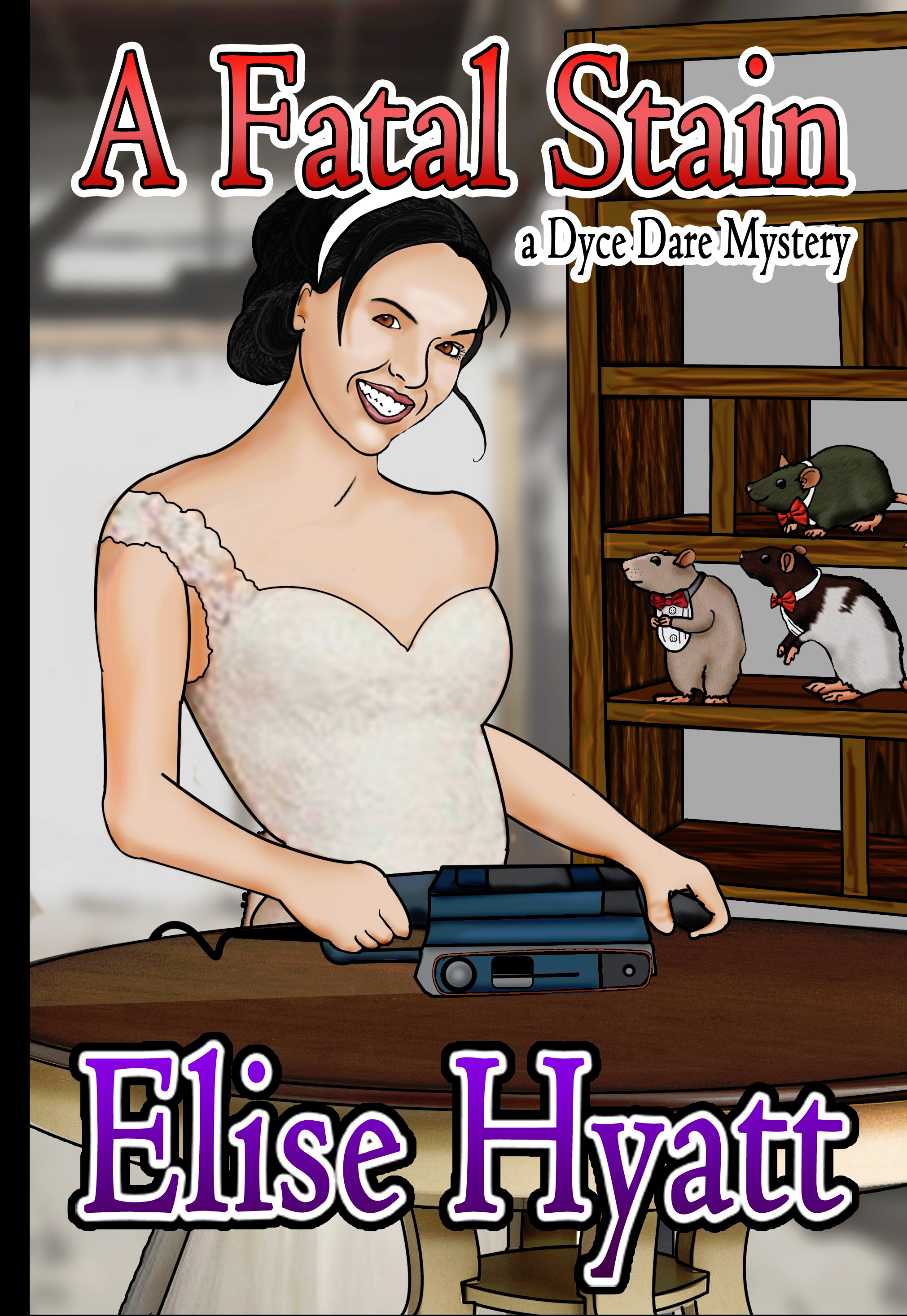
I’m planning to bring out A Fatal Stain, the third Dyce Dare Mystery on Thursday, unless act of Amazon delays it.  I have a great cover by Jack Wylder:

a_fatal_stain.jpg

Also, support wrong-think authors, get free books.

ALSO, my friend Kevin J. Anderson is trying something new and different. Go give his page a look.

I promise a real post tomorrow, when hopefully this double vision thing will have resolved.  And I’m sure it’s just the sinus infection, or the antibiotic or something, honestly.