This Is Not An Analogy by B. Durbin

This Is Not An Analogy by B. Durbin
Just north of Bodega Bay is a series of cliffside cabins along a vertiginous stretch of Highway 1. These cabins are more cliffside as the years go along, and maintenance on this stretch of road includes occasional replacement or movement as the ocean claims its own.
About a quarter-mile from one of those cabins is a little spur of land called Duncan’s Head. My friend Neva, whose extended family owned that cabin, told me that it’s also called Death Rock, because just off the end of it is a very deep undercut, and anyone who gets swept off the point gets pulled under.
They have dynamited a trench across that point and put up barbed wire, and people still occasionally climb out there, get swept off, and drowned, because that’s humanity for you.
Duncan’s Head is angled south-southwest, and protects a little cove and beach that has a public access trail with steps and a handrail leading down to it. Beaches in Northern California aren’t the sand expanses you think of as “beaches”; they are, if they’re even sand instead of rocks, often very cold, windy, and with dangerous water. In my senior year of high school, I was out there one day with my friend Neva, taking a break from doing maintenance on the cabin. It was a sunny and fairly warm day, but we quickly got bored with playing at the water’s edge.
We started taunting the ocean.
I mean that quite literally; Neva and I were standing just out of reach of the waves, occasionally running backwards as one got higher, but pretty much staying dry and only letting the occasional rush of icy water wash over our feet. And all the time we were shouting at the ocean, saying variants of “Is that the best you can do?”
Apparently it wasn’t.
Duncan’s Head was off to our right, clearly in our field of view. I saw the water go down. In that small eternity as I saw the water rise up again, I could tell just how big the coming wave was. I managed to get one word out: “Run.”
We turned and ran, knowing that the backwards dodging that we had been doing was not nearly enough. Now, the cove was not quite semicircular. If you think of the point and cove as a capital J, there was another little jog of cove off the short end. In that little mini cove was a picnicking family, complete with blanket and all. We ran near them, shouting that they were about to be soaked, and they likewise got out of the way.
The wave didn’t completely inundate the beach but covered a good third to a half of what had been dry before. The picnickers didn’t lose anything other than a few empty food containers, because they had been finishing up, and their pet rabbit had been exploring up the cliff hill several feet above the wave line. (Pet… rabbit. Who brings their pet rabbit to the beach?) Neva and I were fine, though on a bit of an adrenaline high.
But that image has stayed with me for over twenty years. Water goes down; water comes up. Time enough to turn and run; time enough to go through dozens of scenarios in your mind.
Barely time enough to escape if the catastrophe is minor.
Not all memories are life lessons, and not all life lessons are learned at the time. I didn’t learn from that experience so much as have previous lessons proven true. I leave you with three comments:
1. Never turn your back on the ocean.
2. Know the correct action to take ahead of time if you can; it improves reaction time.
3. If you taunt the vast uncaring deep, don’t be surprised at the consequences.
(Sarah Speaking: It can be a metaphor, too. – SAH)
———
Shameless author promo: Hey, I wrote a book!

So You Want to Launch a Rocket? The FAA is Here for You by Laura Montgomery

rocketbureaucrat


So You Want to Launch a Rocket?  The FAA is Here for You

by

Laura Montgomery

I was a space lawyer for the Federal Aviation Administration.  I worked in the Chief Counsel’s office and supported the Office of Commercial Space Transportation (AST).  Now I’ve got my own firm, still practice space law, and blog about space law at GroundBasedSpaceMatters.com.

A number of years ago a whole passel of school kids showed up for A Day At The FAA.  One lucky little girl, maybe a fifth grader, got assigned to me.  We chatted in my office for a while.  I explained how the FAA licenses and regulates commercial space launch and reentry, and the operation of launch and reentry sites (aka “spaceports”).  I explained how any U.S. citizen launching anywhere in the world needs a launch license from the FAA (which explains why Michael Flynn’s Firestar has to be alternate future history, although I didn’t get into that since I figured she hadn’t read it yet).  I may even have mentioned how a person who launches without a license can get heavily fined, with the fines being adjusted for inflation every four years at that time.  I talked about launch safety, and how cool it is that in the United States you achieve safety by exploding the rocket. This kid asked a few questions, so I knew we were communicating.  She seemed to be taking it in, but you never know.

Then we went downstairs.   I had a meeting in AST and she sat in on that.  Then I took her to meet some of the engineers I worked with, where they were toiling away at their desks.  AST’s space is pretty fun for a kid.  It’s full of posters of launch vehicles, air-launched rockets, carrier aircraft that look like science fiction, boring carrier aircraft that don’t, sea-launched rockets, more rockets, and a line drawing of a Celtic spaceport  (yes, it did look like crop circles, why do you ask?).  One of the engineers pointed my young guest to a poster of two kids bending over a toy Estes model rocket.  The two kids looked happy.  “What,” asked the engineer of my visitor, “are these two doing wrong?”  (The kids were leaning over the rocket.  That’s bad.)

Wide-eyed, she looked up at him and swallowed nervously, but said very clearly, “They don’t have a license.”

Four grown men just about fell out of their chairs laughing.  I was filled with pride, of course, and they quickly explained the safety issue, that she’d been hanging out with me too long, that launching rockets was lots more fun than the boring, paper-work obsessed lawyer had made it sound, and that they were totally impressed with her.  The kid was happy.

The point is, you do need federal permission to launch a rocket from the United States.  And, if you are a U.S. citizen or other entity you need FAA approval to launch anywhere in the world.  The Commercial Space Launch Act says so. You also need permission to reenter a reentry vehicle or operate a spaceport.  The one thing my protégé had wrong, however, is that you don’t need a license—or even an experimental permit—to launch a toy rocket or even a somewhat large-ish amateur rocket.

So, if you want to launch a rocket, first, go do all your rocket science.  That’s the easy part.  Now, open the Code of Federal Regulations.  Congress passed the first version of the Commercial Space Launch Act in 1984, but the FAA’s regulation’s implementing that very broadly worded law may be found in Title 14, chapter III of the CFR.  (I share these acronyms not to be annoying, but so you will recognize them as you pursue your research, because lots of other people use them.)  The regulations get very detailed, and are full of design and test requirements for the flight termination system you will need to destroy your rocket in case it goes off course.  You need a flight termination system if you are launching a large expendable launch vehicle (ELV), the kind that jettisons its component stages in the ocean on its way to orbit, but if you are flying people on board the FAA may try to be more flexible.  (The Shuttle used to have a flight termination system).  You will also have to launch far enough away from other people that you meet the FAA’s risk criteria.  If you have a really big rocket this likely means you should launch over the ocean.  We took the risk criteria from the Air Force, which called them the “expected casualty” numbers.  I meekly suggested calling it something else but got overruled.

Anyway, back to your license application.  Make sure you have filled it out completely enough for the FAA to get started working on it.  If you do, the clock starts ticking on the FAA, which has 180 days to complete a review where it makes sure you are capable of satisfying the regulations.  If you provide only a semi-finished application, the FAA can stop the clock.  You will be annoyed but will get to complain how the government is slowing you down.

Then there’s the National Environmental Policy Act, which requires environmental impact statements and environmental assessments for major federal actions, which includes licensing. If you launch from an existing spaceport you won’t have to do too much work for an environmental review.  If you go from a new place of your own, you might be out there counting desert tortoises before you can launch to establish an environmental baseline.  You have been warned.

You need a payload review.  If your payload isn’t licensed by the FCC or NOAA, the FAA gets to look at it for whether there are any national security or foreign policy concerns.   (The latter is something I’ve been writing and testifying about a lot, but you’re the launch operator with plenty of other things to worry about, so I won’t go into that today.)

Do you want to put people on your rocket?  There are legal requirements for that, too. There are three types of people you might take to space or on a suborbital jaunt:  space flight participants, crew, and government astronauts. The FAA isn’t allowed to regulate how you design or operate your rocket to protect the people on board until 2023, unless there has been a death, serious injury, or a close call.  Because the crew are part of the flight safety system, the FAA determined it could have regulations in place to protect the crew.  That those requirements might also protect space flight participants is purely a coincidence.   However, just because the FAA can’t tell you what to do to protect the space flight participants doesn’t mean you are out of its clutches.  You have to provide the crew and space flight participants, but not the government astronauts because they already know how dangerous this is, informed consent in writing.  You have to tell them the safety record of your vehicle and others like it, that the government has not certified it as safe, and that they could be hurt or die.

Once you get your license, you have to buy insurance or show the FAA that you have enough money to cover the damage you may cause to third parties or U.S. government property.  Also, you have to sign waivers of claims with the government, all your customers (each person who has put an object on your vehicle as a payload), crew, space flight participants, and your contractors and subcontractors.  Everyone, to put it in largely accurate terms, has to agree not to sue everyone else.

At this point, your eyes may be glazing over.  You might think to yourself that you will incorporate as a foreign entity and go launch somewhere else like they did in Firestar, and get away from all of this.  Not so fast.  Firestar was alternate future history, and the people who administer the dread ITAR, the International Traffic in Arms Regulations, will want to take a look at you if you try to provide your launch technology to a foreign entity, which is what you have become if you incorporate in another country.

When you decide that’s too hard, the FAA will be there for you.  Welcome back.

Vignettes by Luke, ‘Nother Mike and Mary Catelli & Hurray for Promo Sunday by Freerange Oyster

Vignettes by Luke, ‘Nother Mike and Mary Catelli

So what’s a vignette? You might know them as flash fiction, or even just sketches. We will provide a prompt each Sunday that you can use directly (including it in your work) or just as an inspiration. You, in turn, will write about 50 words (yes, we are going for short shorts! Not even a Drabble 100 words, just half that!). Then post it!  For an additional challenge, you can aim to make it exactly 50 words, if you like.

We recommend that if you have an original vignette, you post that as a new reply. If you are commenting on someone’s vignette, then post that as a reply to the vignette. Comments — this is writing practice, so comments should be aimed at helping someone be a better writer, not at crushing them. And since these are likely to be drafts, don’t jump up and down too hard on typos and grammar.

If you have questions, feel free to ask.

Your writing prompt this week is:
wait

Hurray for Promo Sunday by Freerange Oyster

Cedar Sanderson

Tanager’s Fledglings

The Tanager Book 1

When the starship’s captain died midway through a run with a cargo of exotic animals, the owner gave first mate Jem one chance, and one choice. The chance: if he successfully runs the trade route solo, he’ll become the new captain. If he fails, he’ll lose the only home he’s ever known.

And the choice? He’s now raising an old earth animal called a basset hound. Between station officials, housebreaking, pirates, and drool, Jem’s got his hands full!

J. M. Anjewierden

The Long Black

The Black Chronicles Book 1

Morgan always assumed that if she could survive growing up in the mines of Planet Hillman – feared for its brutal conditions and gravity twice that of Earth – she could survive anything.

That was before she became a starship mechanic. Now she has to contend with hostile bosses, faulty equipment, and even taking care of her friend’s little girl. Once pirates show up, it’s a wonder she can get any work done at all.

Hans G. Schantz

The Hidden Truth

They subverted science, rewrote history, and corrupted society. Now he knows. And he’ll prove it, if they don’t kill him first.

Read the amazing new science fiction techno-thriller about the conspiracy corrupting the world and the young man who rallies his friends and family to fight back.

J.L. Curtis

Into the Green

Rimworld

After a chance encounter with Dragoons and Traders turns a routine planet exploration into a rout that kills his team and his career, Lieutenant Ethan Fargo, medically retired, wants nothing more than to hole up in the backwater Rimworld he’d explored and enjoy a quiet retirement far from people or problems.

Unfortunately, he’s about to find out that he’s not as retired as he wants to be, and that his new home system comes with dangers, politics, and Dragoon sightings of its own. What promised to be a boring retirement will turn out to be anything but.

Henry Vogel

The Fugitive Snare

Matt & Michelle Book 3

Psi Corps wants Matt, the most powerful psychic in generations. He slipped through their fingers twice and escaped beyond the borders of the Terran Federation. But mere laws won’t stop Psi Corps from coming after Matt.

Psi Corps wants Michelle, Matt’s wife and the key to controlling him. Trained as a bodyguard since birth, Michelle is the only reason Matt is still free. But no bodyguard can stop the full might of the most powerful government in known space.

When a surprise attack almost catches them, Matt and Michelle realize they have nowhere to hide. They must take the fight to Psi Corps. To live free they must find Psi Corps’ weakness and exploit it. They must be David to Psi Corps’ Goliath. They must slay the giant or serve it.

Slayer or slavery—there are no other options.

Karen Myers

Monsters, And More

There’s a Sword for That

MONSTERS – Xenoarchaeologist Vartan has promised his young daughter Liza one of the many enigmatic lamedh objects that litter the site of a vanished alien civilization.

No one can figure out what they’re good for, but Liza finds a use for one.

ADAPTABILITY – The Webster Marble Deluxe Woodsman, Model 820-E, has been offline for quite some time. Quite some time indeed.

Good thing Webster has a manual to consult, and a great many special functions.

The Visitor, And More

There’s a Sword for That

THE VISITOR – Felockati is anchored to his permanent location underwater and misses the days of roaming his ocean world freely.

But something new drops out of the sky and widens his horizons – all the way to the stars.

YOUR EVERY WISH – Stealing the alien ambassador’s dagger is a sure thing for Pete – just what he needs to pay off his debts.

Until he starts talking to it. There has to be a way to get something for himself out of the deal. Has to be.

J.M. Ney-Grimm

The Tally Master

A Lodestone Tale

Seven years ago, reeling from a curse in the wake of battle, Gael sought sanctuary and found it in a most perilous place.

The citadel of a troll warlord – haunt of the desperate and violent – proves a harsh refuge for a civilized mage. But Gael wields power enough to create an oasis of order amidst the chaos.

Now master of the metals that flow to the citadel’s weapon forges, Gael rules his tally room unchallenged, until he discovers a theft within its vaults.

Gael loves the quiet certainty of black ink tally marks on smooth parchment, but his search for the thief leads to a maze of unexpected answers, putting his hard-won sanctuary – and his life – at risk.

Set in the Bronze Age of J.M. Ney-Grimm’s North-lands, The Tally Master brings mystery and secrets to epic fantasy in a suspenseful tale of betrayal and redemption.

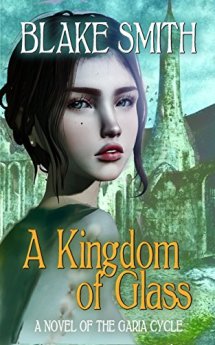
Blake Smith

A Kingdom of Glass

Garia Cycle, Book 1

51if-3-vp9l

Zara hasn’t seen her family in eleven years, but she doesn’t mind. They sent her to live in a neighboring kingdom when she was small, and she’s adopted her foster parents in their place. She lives the life of an aristocratic Garian girl- riding her horse, shooting her bow, exploring the castle with her friends- and she has nothing to wish for.
Until she’s summoned home, to a prospective marriage she doesn’t want, family she doesn’t remember, and a poisonous royal court that threatens everything she’s ever known. The East Morlans are nothing like Garia, and Zara struggles to find her place among the scheming Morlander aristocrats. Along the way, she makes new friends, meets enemies, and falls in love. But secrets abound in the glittering palace, and Zara must discover who she can trust as she fights for her life and freedom in a fragile, beautiful, kingdom of glass.

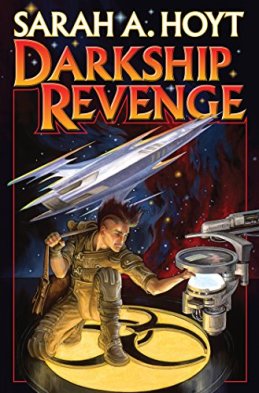
Sarah A. Hoyt

Darkship Revenge

51x643uifpl

The popular Darkship series returns!

After winning the civil war in Eden, Athena returns to her calling, collecting powerpods with her husband Kit. Now weeks away from Earth, she goes into labor. To make matters worse, a strange ship attacks Athena and Kit’s Cathouse and kidnaps Athena’s husband. That ship is called Je Reviens. It’s a named steeped in history—and not the good kind of history.

Hot on Kit’s trail, Athena discovers that you shouldn’t name a ship Je Reviens unless you intend it to return. The genetically modified Mules are back, and they have a plan to prevent themselves from being exiled ever again. And if the Mules win, the best thing humanity can hope for is slavery.

The worst is death.

While a bio-engineered plague wreaks havoc on the forces of liberty, Athena must risk herself, her husband, and her child for the survival of humanity.

The Mules may be about to find out what revenge truly is: one angry mother.

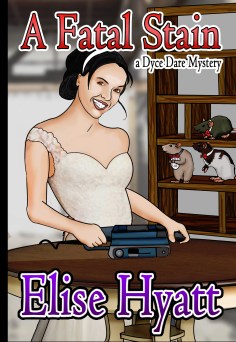
Elise Hyatt

A Fatal Stain

Daring Finds Book 3

A_Fatal_Stain

When Dyce Dare buys a table to refinish, the last thing she expects is to find a human blood stain under the amateurish finish. Whose blood is it? What happened to the person who bled on the table?
Helped and hindered by her fiance, Cas Wolfe, her friend Ben, her son E and an imaginary llama named Ccelly, Dyce must find the killer and the victim, before the killer finds her.

What You Need To Know About Search And Seizure but Were Afraid to Ask by Amie Gibbons

What You Need To Know About Search And Seizure but Were Afraid to Ask by Amie Gibbons

*There are some things every American should know.  Your rights when it comes to search and seizure definitely make the list, especially considering cases that have been making lawyers flinch all over the country, like the FBI Apple debacle.  Knowing your rights may not protect you from the government violating them, but it could, and at the very least, you’ll know when to take it to court.*

(As always, this isn’t to be taken as any kind of legal advice, just some very simplified basics for the lay person, and a little bit of ranting lawyer.)

We’ve all seen Law and Order, right?  Well, they don’t always get stuff right but they are usually pretty on about cops having to dance around the system to get to look through your shit.  And it’s this big pain and always seems like the 4th amendment and the getting a warrant thing is there to get in the cops’ way, right?

If there is one of my legal posts I want you to remember, it’s this one.  Because the 4th amendment isn’t there to get in the cops’ way or to be a stupid bureaucratic hoop to jump through.

The 4th amendment and the warrant are there to protect your rights.

We’ll start from the top, the 4th Amendment:

“The right of the people to be secure in their persons, houses, papers, and effects, against unreasonable searches and seizures, shall not be violated; and no Warrants shall issue but upon probable cause, supported by Oath or affirmation, and particularly describing the place to be searched, and the persons or things to be seized.”

I can not even begin to describe the massive amounts of legal scholarship there is on this issue, the many thousands of cases picking at every little point possible to argue, and the millions of hours lawyers and law students have debated issues around this amendment.  So this will be a bare bones outline of the topic, and there are many others on my blog that delve deeper.

When analyzing the 4th amendment, we have 4 basic steps we go through (4 for 4, the OCD in me loves that symmetry).

  1. To invoke the 4th amendment, what do you need first?

That’s right, government conduct.  The Constitution only protects you from the government violating your rights.  Your boyfriend breaking in and reading your diary is not a Constitutional issue. And someone shooting and killing you to keep you from raping them doesn’t violate your sixth amendment right to a fair and speedy trial (Do not get me started on that retard in the Puffington Post who said this!)

And here’s the first point we debate in every criminal procedure class, what counts as government conduct?  Then we get into issue of somebody stealing stuff from someone’s house and giving it to the cops.  Does that count as government involvement?  Well, (every lawyer’s favorite answer) it depends.  Basically it comes down to specific case law in your jurisdiction and whether the judge believes in the end that the person acted alone or under a request from the police.

  1. Is there a reasonable expectation of privacy on your part?  If the following suggests yes, move to step 3.

This first asks, was it your place that was violated?  Your house, car, apartment, private jet, body.  Was it yours?  If not, if it was something like a friend’s place, were you crashing there?  This gets messy but in TN at least, if you were an overnight guest at somebody’s place, you have some reasonable expectation of privacy.  As in, the cops come knocking on the door and ask to search, you can say no.

And the next question is, did you hold whatever it was out to the public?  Was it in the garbage, an open field out back, or sitting on the porch?  Or was it something like a smell or the color of the car?  If it’s held out to the public, as in anyone not a cop could see without trespassing (basically, but again, this gets a hell of a lot more complicated), then the cops didn’t violate the 4th amendment by observing it.

  1. Did the police have a valid search warrant?

They can search through your stuff with a search warrant.  That’s what the warrant is there for.  But, to be valid, it must i) be based upon probable cause (reasonable grounds to believe a legitimate item for seizure is located in a particular place) and ii) describe with particularity the person and places to be searched.  Again, it’s a lot more involved (especially in debating what counts for probably cause) but this is the basic idea.  So if they didn’t have a valid warrant, you go onto step 4.

  1. And this is the big kahuna step, it’s the one you see pop up in court and on TV most often.  There wasn’t a warrant, there was a violation of a reasonable expectation of privacy by the government, and the government is trying to keep the evidence in by arguing an exception.

And there are exceptions to the search and seizure requires a warrant rule?  Yep.  And you know why?  Because the 4th amendment does not actually require a warrant!  Nope, go and read it again.  It has two parts.  Search and seizure can’t be unreasonable.  There’s a Supreme Court case that says it’s unreasonable without a warrant unless there’s one of the exceptions.

As for what the exceptions are?  Those are different posts because it’s waaaaaay too involved and this one’s already pretty long.  Let’s just say, there’s a lot of them and a lot of ways to argue you are or are not in one.  This is where Prosecutors and Criminal Defense Attorneys earn their paychecks.

The 4th amendment, it’s the big one.

And why is that?  Why is it such a big deal?  Because if the court finds that the evidence was found in violation of the 4th amendment, the evidence gets tossed out.  Again, there’s exceptions, like if they can show they would’ve inevitably discovered the same evidence, but usually, violating rights loses cops the evidence.  It’s called the exclusionary rule.

And I HATE this rule!

There’s a long rant that goes with it, but the short version is: Since the rule only takes out the evidence in a trial, it punishes the system (and not the cops who did the violating in the first place) by letting the criminal go free, but provides NO remedy whenever it’s an innocent citizen whose rights were violated because that citizen is not on trial.  There was no evidence to find and to therefore keep out of a trial.

The idea is that cops will be afraid if they find something that it will then be tossed out, and therefore they don’t violate anybody’s rights.  We wouldn’t have so many freaking cases on this if it were true, but hey.

Moral of the story?  The law isn’t perfect, neither are cops, and if you want your rights protected you’ve got to know what they are.  You have the right to tell a cop asking you if he can search you or your place no.  If he then searches anyway, well, you might have something to hide that you can later try to get tossed out or you might have a cause to sue.  But that’s another post too.

(If you like a little law in your fiction, check out my latest novel about silly psychic Ariana Ryder, Psycho (and Psychic) Games.)


The Marvel Lament – by The Phantom

The Marvel Lament – by The Phantom

I used to be a comic book nerd. Back in the mists of time, in the 1980’s, I would take myself down to Unknown Worlds on Danforth Avenue in Toronto’s Greek Town, and buy everything that was new that week. Mostly Marvel Comics, but also DC if it was a comic or a series I was following.

I was a comic freak. I knew all the characters, all the plot lines, everything. It was why I went to work. So I could have money to buy comics.I loved them. I used to buy comics when it was a choice of comics or food, and eat oatmeal for a few days.

When I moved to New York State, I was very happy, because that meant the cover price was a lot less, and I could buy MORE COMICS!!! Woo hoo! One of the first things I did was locate a proper comic book store, and catch up on the new stuff I missed when I was moving.

But then, around 1993-94, something happened. It started being a lot less fun. The stories were preachier. The characters meaner, more destructive. At first it was only one or two, so I stopped buying those titles. But then more titles followed suit, and before long I wasn’t buying anything.

That situation did not change for me. Occasionally if I am in the USA at a Barnes & Noble, I will look at whatever they have on the shelves, but I never buy them. They’re mean, and they’re boring. Both at once.

A couple of weeks ago there was an uproar over this article quoting Marvel Comic’s Vice President of Sales, David Gabriel:

Now the million-dollar question.  Why did those tastes change?
I don’t know if that’s a question for me.  I think that’s a better question for retailers who are seeing all publishers.  What we heard was that people didn’t want any more diversity.  They didn’t want female characters out there.  That’s what we heard, whether we believe that or not.  I don’t know that that’s really true, but that’s what we saw in sales.

We saw the sales of any character that was diverse, any character that was new, our female characters, anything that was not a core Marvel character, people were turning their nose up against.  That was difficult for us because we had a lot of fresh, new, exciting ideas that we were trying to get out and nothing new really worked.

That sounded a lot to me like David Gabriel blaming the customer base for a sudden loss of interest in Diversity, as if nerd racism was taking over after Donald Trump won the election.

SJWs were very quick to raise all kinds of Hell over that pronouncement. I found this one the funniest, wherein Charles Pulliam-Moore explains that because Black Panther and Ms. Marvel got nominated for Hugo Awards, David Gabriel is super duper el-wrongo.

These nominations come just days after Marvel’s Vice President of Sales, David Gabriel, went out of his way to blame Marvel’s lagging sales on comics—like Black Panther and Ms. Marvel—starring people of color and women. Suffice it to say that the optics of this whole thing don’t reflect well on the publisher, but the Hugo nominations send a telling message to Marvel about just how the public actually feels about its “diverse books.”

‘Nuff said about that, right?

It would be easy to declare victory at this point and move on, but I’ve found over the years that nothing is ever simple. That brings us to this Brian Hibbs article here, which looks at things from a comic shop perspective.

So, right now Marvel comics is in a little spot of trouble. In February 2017 Marvel’s best-selling ongoing superhero title barely passed 60k on the Diamond chart estimates. They ran three “event” style crossovers – “IvX”, which sold fewer copies than that, and “Clone Conspiracy” and “Monsters Unleashed”, neither of which cracked 50k. In fact, in what probably has to be a first for Marvel comics, other than “Amazing Spider-Man”, they don’t have any ongoing superhero titles selling over 50k in February.

He’s got a different logic to explain what’s going on from a customer perspective, which makes a lot more sense than “nerd racism.”

I’ve been selling comics long enough to remember the “Marvel Zombie” – the guys who were buying Marvel’s entire output (and loving it). Even at the height of the “Sandman” salad days for my main store, when we were a significant prototype of “the Vertigo store”, we had always had scores of “Zombies” shopping here (and we loved them for it!), but the tribe has been hunted to extinction by Marvel’s own sales practices. First the “Marvel Zombie” started to fracture into families – becoming “Avengers Zombies” or “X-Men Zombies” – then it descended further down into character-driven purchasing as they expanded your line, not just by title count, but also by frequency-of-release as well as by overall-cost-to-collect. It isn’t merely that there are never fewer than six “Avengers”-titled books going on at a single time (February 2017 brought “Avengers”, “Avengers point one”, “Great Lake Avengers”, “Occupy Avengers”, “Uncanny Avengers” and “US Avengers”, sheesh – the best-seller was about 40k copies, yuck!) – but that Marvel prices each of them at $4 (minimum), and tries to publish as many titles as it possibly can at 16-18 times a year.

Here’s what that looks like for a store owner:

One personal stat that I always try to get across is that at my main store, most mainstream superhero style books, because of mismanagement of the brands by the publishers, have dropped down to “preorders plus 1-2 rack copies”.Generally speaking, this yields sell-ins that are sub-20 copies for most titles, and a truly depressing number of books are sub-5.

It should be lost on no one that Brian Hibbs is describing ME, the Marvel Zombie. The guy that buys all the titles. I used to buy ten comics a week, forty comics a month. At today’s prices that’s $40 a week, $160 a month. But ten comics a week was the whole Marvel Universe, and some of DC too. Now you’d be lucky if that was all of X-Men.

This is what that looks like for sales in February. There’s over 100 titles. A Marvel Zombie is paying out over $400 a month to collect the Marvel Universe. No wonder they’re all gone, right?

None of which addresses the thing that made me quit in 1994: the stories. They’re -boring-. The principal comment about Hugo-nominated comic Black Panther in the comments sections of these blog posts is that it is boring. I wouldn’t know, I’ve been extremely disinclined to read it and find out. Furthermore, as a Sad Puppy Adjacent guy, I can’t help but notice that Marvel has spent the last ten to fifteen years heaping disrespect and ruination on their own characters. SJWs are trying to pretend the “diversity” titles are selling, but according to people who read the numbers, that is not the case. Never the less, the destruction of characters continues.

That trend culminated in this year’s “Captain America, agent of Hydra”. i09 had a roundup of the title.  That’s what happens when you off-shore art, when you pay peanuts to writers and artists, when your management never leaves the island of Manhattan, and politics is more important than entertainment value.

They haven’t changed course since the early 1990’s, when they lost me and a whole bunch more. The comments by the VP of Sales David Gabriel indicate they have no intention of changing anything fundamental under the present management. They’re going to keep beating up the customers until they get in line and buy what they are served.

That’ll work, right?

The Phantom

Is there really a right to self-defense? by Amanda S. Green

Is there really a right to self-defense? by Amanda S. Green

I thought I’d seen it all when it comes to the anti-gun movement. There are those who interpret the Second Amendment as meaning that only the government can have arms because of the use of “militia”. There are those who grudgingly admit we have a right to own guns but they want to limit the kinds of guns and the ammunition we can buy (not only the type of ammo but the quantity). There are those who say the Second Amendment is outdated and needs to be repealed because we should all just love one another or some such thing. Nothing new in any of those arguments and you can go onto any aspect of social media and find folks who will enthusiastically advocate for either side of those arguments.

What I’d not seen until the other day was the argument that the Second Amendment doesn’t allow us to protect ourselves with a firearm.

Yep, you read that right. According to Justin Curmi in The Blog on HuffPo, “the main issue is on the right to self-defend with a firearm.”

Thank about that for a second. I warn you, it gets better.

“The main problem with the notion of self-defense is it imposes on justice, for everyone has the right for a fair trial.”

So, before he even gets into the issue of firearms, he has declared that there is a problem with self-defense because it imposes justice and that is wrong because everyone has the right to a fair trial. I don’t know about Curmi, but I believe a person has the right not to give up her life when in a situation where a reasonable person would believe the only reasonable action is to defend themselves.

It would appear Curmi believes we don’t have the right to defend ourselves or others because it might deny the guy trying to harm us the right to a fair trial. But let’s read on. Maybe he’s fooling us and is going to start talking sense soon.

“Therefore, using a firearm to defend oneself is not legal because if the attacker is killed, he or she is devoid of his or her rights.”

Or maybe not. Surely he can’t be saying we have to give up our lives, or the lives of our loved ones, in order to insure the person trying to harm us gets a fair trial. Maybe he thinks we all need to live in private cells, with no contact with the outside world except through the internet. Either that or he has never known a victim of violent crime or been one himself. I can imagine no other reasonable explanation for why a grown man – or woman or cabbage – would think it reasonable not to be able to protect oneself from danger.

“In addition, one’s mental capacity is a major factor in deciding whether a man or woman has the right to have a firearm. There are two reasons for ensuring mental capacity. First, one of the Five Aims is to ensure domestic tranquility and there can be no tranquility if one does not have the capacity. Second, if one’s brain is distorting his or her reality, they do not have the proper reasoning and deduction skills to use a firearm.”

Oh, how many ways is this statement wrong? First of all, I assume Curmi is referring to the Five Aims of Socialization. Of course, if you do a simple Google search, you’ll find all sorts of different responses to what those are and whether there are three or four or five or who knows how many. The fact he can’t be bothered to give the concrete “aims” or a link to them means either he is lazy or he doesn’t want to risk his readers actually looking up what he’s referring to and coming back to tell him he’s full of it.

Then there’s his comment that “there can be no tranquility if one does not have the capacity.” That’s one of those statements that drive me absolutely bonkers. The capacity for what? For making rational decisions? The capacity to consider the possible consequences of their actions? Or maybe the capacity to keep their emotions in check? Who knows and he sure isn’t going to tell us because the answer wouldn’t fit the narrative.

Then there’s the whole question of what he means by “domestic tranquility”. Is he talking about peace in the home or something on a grander scale?

And, for the most important question of all  — why does this only apply to the person defending himself? You’ll note that Curmi makes no mention about how wrong it is for the perp to be doing whatever it is that forces the Average Joe or Jane to defend themselves. Funny about that, isn’t it? Everything centers on the victim – THE VICTIM – and how he doesn’t have the right to defend himself. Sorry, but that just ain’t gonna fly.

As for the last sentence of the above-quoted paragraph, that argument could be used to prohibit people from using just about anything. If your brain is distorting reality, you don’t have the “proper reasoning and deduction skills’ to operate a motor vehicle, use sharp instruments or any number of other things. Heck, if your brain is distorting reality, should you be allowed in a kitchen where there might be a gas stove, dangerous chemicals as well as sharp implements?

I know. Maybe we should just tell the attacker we are about to defend ourselves from that we need a time out to call our psychiatrist to get a certificate proving we were in a non-altered reality state before we get our gun and use it to protect ourselves. Yeah, like that’s going to happen.

“Therefore, if we ponder and meditate on the recent events in news about guns, it would be obvious that the current state is incorrect. A gun for civilians is a weapon for a revolution and not for ordinary use.”

Wait, what? We’ve gone from it is illegal to use a firearm for self-defense to “a gun for civilians is a weapon for revolution and not for ordinary use”? My, my, my, Curmi not only moved the goal posts, he changed fields.

And showed what he really meant with all his proclamations about how the use of a firearm for self-defense was a violation of the perp’s rights. He wants to take away our guns. Still, he’s moved the goal posts once. Let’s see if he stays on this path or not.

“The belief that a gun is a useful tool to protect one is counterintuitive because guns get into the hands of people who use them for horrible reasons.”

So, let’s punish those who obtain their weapons legally, those who are careful about their training and the care of their weapons because if we ban guns no one will have them.

Riiiight. ‘

Has this guy been living under a rock. Heroin is illegal and it is still easily available on the streets. Or, better yet, look at Prohibition. That really stopped the production and sale of alcohol. Not.

Wow, I will give him credit for making one accurate statement. It is difficult to hit a target in a stressful situation if you haven’t been trained on the proper use of your gun. Of course, he goes on to none-too-subtly allude to the belief that no one who doesn’t train like a cop can do so. After all, you can’t let the Average Joe or Jane have a firearm. They might find themselves in the situation where they need to use and, in doing so, deprive some poor perp of his “right” to kill them – oops, of his right to a fair trial.

There’s more but I will leave you with just one last note. At the end of his post, Curmi finally gave enough that I could figure out what his Five Aims were. It seems he’s written another post about how we ought to revise the Constitution and lists his own five aims:

Does is promote Justice?
Does it ensure domestic Tranquility?
Does it ensure the common defence?
Does it promote the general Welfare?
Does it secure the Blessings of our Liberty and Posterity?

So let’s go back to the issue of whether it should be illegal to use a weapon to defend oneself. What do you think? Do you think banning guns, or simply outlawing their use for self-defense meets any of Curmi’s so-called Five Aims? Me? No way. Allowing someone to harm me or my family does not promote Justice nor ensure domestic Tranquility. It doesn’t ensure the common Defence or promote the general Welfare. What it does is allow for crime to run rampant because the criminals will know their intended victims can do nothing to stop them without risking jail or worse.

I don’t know about you but I will do whatever it takes to keep my family safe in any situation and I guaran-damn-tee you, my actions would meet the “what would a reasonable person do in this situation” test.

AMANDA S. GREEN NORMALLY BLOGS AT NOCTURNAL LIVES.

YOU CAN FIND HER BOOKS AT AMAZON.

Lost and Found – by Sarah A. Hoyt

*This story is a prequel of sorts to Darkship Revenge (and Hacking the Storm.)
It is not proofread.  Yeah, I know.  The free ice cream doesn’t have ALL the toppings.  Sorry.  I meant to do this earlier, but it turns out Advair ALSO turns off the writing.  Which means I’m going to have to find another asthma solution, or see if I can do with the small emergency inhaler.  So it’s last minute, and this is unproof-read.  I’ll put up a proofread version in ebook format for download later, if ya’ll want it.  And if it’s not cabbage. – SAH*

NOTE: I WILL PUT GUEST POSTS UP STARTING THURSDAY. (FOR A WEEK.  I’M TAKING A BLOG VACATION.) I’D LIKE TO GIVE THE STORY SOME TIME TO BE SEEN.  I AM ALSO ECHOING IT AT MAD GENIUS CLUB, BECAUSE I WAS TOLD TO.

Lost and Found

Sarah A. Hoyt

I had a minute.  Maybe less.  He lay on the bed, his eyes closed, various tubes entering and exiting his body.  Machines surrounded him, beeping, burping and making all sorts of noises.

I knew what each of those noises meant.  If I looked closely, I’d know what each of those tubes were doing too.  I’d cared for countless patients just out of the regen machine.

But this wasn’t any patient.  This was Fuse.  He’d been my friend. My lover.  And while the machines were fixing what was wrong with him, I knew what came after; what the plans for him were.

Even in his weakened state; even before his mind came back and he remembered who he was, his father, the Good Man of the Seacity of Albion, had placed armed guards by the door and two more, inside the door, holding high-powered burners.

There was just one of me.  I had no weapons.  I had a minute.  Maybe less.  But I had no idea how to free a very ill man with his mind in ruins.  Yet I must do it, or he would die.

******

There is a saying, come to us from the ancients, perhaps as far back as the twentieth century – not that I’m sure anything survived that long, past wars, revolutions, famines, the Turmoils, and the many times rulers found it convenient to make sure every record of the past was lost – or at least my professor said it might be that old, back when I studied ancient literature: If you love something, let it go.  If it comes back to you, it’s yours.  If it doesn’t, it never was.

No wonder the ancients fell.  No, I’m quite serious.  They forgot the very act of letting go might tell the something you don’t value it.  Worse, most of the “things” you can let go aren’t able to look after themselves.

Fuse, aka the Patrician Ajith Mainard Rex Mason, the only son of the Good Man of Albion had been competent, sociable, able to look after himself and more.

Until he wasn’t.  Which is when he was wrenched away from me.  Only to come back damaged and in danger for his life.

Like most things in Albion, it all started at the order of the Good Man, in this case filtered down to an order by my superior, Doctor Belmont.  He was an older man, old enough to be my father, who seemed nonetheless completely up to date – then some – on the newest techniques of regen and medicine.

After a hard day of work at the Good Man’s secret labs – and yes, the reasons for both the secret and the latest techniques made sense.  When a Good Man died there was often turmoil and war, and I liked safety and stability as much as the next person – he’d come to my desk, tapped me on the shoulder and said, “Addie, there’s something I’d like you to do for me, if you have the evening free.”

It wasn’t that kind of tap on the shoulder and it wasn’t that kind of request.  Doctor Belmont had never shown any inclination to treat me as anything other than a daughter, maybe. He did have a tendency to pass boring or time consuming work to me, though.  Which I guessed was fair, since I was twenty five, just out of medical school, for which I’d been recommended by my professors after finishing normal medtech training.  I’d spent twelve years being trained for this, but I didn’t have practice, as it were.  Doctor Belmont did.  And besides, he was older and had a family and children, while I lived alone and had no social life.

I’d turned away from the research I was doing, on new gene splicing techniques, a way to heal the ravages of old age and illness, and looked up at Doctor Belmont.  He looked somewhat embarrassed, “It’s a party,” he said.

“You want me to go to a party with your family?” I asked, confused.

He grinned sheepishly.  “No, instead of me, so I can–  Well, it’s my anniversary.  Of course the Good Man’s orders come first, but it’s my thirtieth anniversary, and this is a simple enough job.”

“A job?  At a party?”

This time the grin was less sheepish and more rueful.  “The Good Man wants someone to certify that his son, Ajith, is in good enough health.”

“Good enough health for what?”

“Just good health.”

“Shouldn’t he come in and see us, then?”

“Yes, but he refuses to.  Has a phobia of doctors, his father says.  So, would you do it?  Go to a party at the Good Man’s mansion and certify that the heir is in good health?”

I thought quickly.  There were things I could smuggle.  There were those med readers in bracelets, for the exceptionally hypochondriac.  I happened to have one a teacher had given me years ago.  If I pressed it against the heir, it should give me a read on him.

It’s not that I disliked parties, mind, but a party at this level was going to be a right pain.  I sighed.  It was still work.  And I got paid more than I’d ever dreamed of.  “Yah.  All right.”

******

I’m not a hellion.  Didn’t have much time to be one, in my youth, what with first training as a medtech, and then getting pushed to higher study and actually learning the theory and science behind the techniques for years.

But in my brief time with Fuse, I’d learned a bit about what to do when everything was against you.  Even though he was in front of me, on that stupid medical bed, unconscious; even though for years now he hadn’t been himself, I could hear his voice in my head, clear as a bell, “When in an impossible situation, do something crazy.  An explosion is always good.”

Nothing on hand would cause an explosion.  No.  I revise that.  Most things on hand would cause an explosion, given enough time and knowledge.  Were I Fuse, I would be able to blow this entire room to kingdom come with one of the medical machines, two drops of water and a stick of chewing gum, or equally unlikely equipment.

But I wasn’t Fuse, and all I had was myself.  So an explosion was right out.  But I could cause something akin to an explosion.  Distract the guards.  Grab their weapons.  And then play it by ear.

I pretended to look at the readings in the nearest machine, made a noise of annoyance, as though I’d just remembered something.  The guards remained uninterested.  I opened the med supply cabinet.  Because this was important – very important – they had every drug known to me, and some I wasn’t sure about.  Just in case they were required, of course.

I pocketed three injectors of Morpheus into my lab coat.  Better than burners those were.  One shot and you’d sleep for hours.

And then I found what I was looking for.

******

First time I saw Fuse in person, he was frowning at me.  It wasn’t exactly an hostile frown, more the type of look a man gives to a puzzle he’s not sure of being able to solve.

He was big, but what I believe is called “rawboned.”  Though he looked like he could take things – to include most people – apart with his bare hands, his bones seemed to show through in cheekbones and shoulders, wrists, and his large, blunt-looking hands.

He was not conventionally handsome. Though he was wearing some sort of new-silk suit, jacket elaborately cut, pants that followed his legs in a way that could only be achieved by a highly trained tailor, there was nothing pretty or dainty or high-class about him.  From his, impeccably cut but unruly, dark hair, to his heavy brows, if I hadn’t known who he was; if I hadn’t seen him in the news more than once, I’d have thought he was a body guard, or some kind of heavy muscle hired for the occasion.

At least I’d have assumed that till I looked at his eyes, which were lively, curious, and intent.  He caught me looking and smiled back, a confident smile.  Of course, what wouldn’t he have to smile about?  He was the only son of one of the fifty men who, between them, ruled over the Earth and disposed of all of its wealth.  He probably hadn’t heard the word “no”, ever, in his whole life.

But I was here to certify him healthy.  Not that there could be any doubt of this man’s health, but I suppose his aged father was worried.  Not that in my few encounters with the Good Man I’d found him the worrying kind.  Or the caring kind.  Or the human kind.  But that was probably my prejudice and the fact I didn’t know the Good Man very well.  I could feel his eyes on me now, from where he watched his son – and presumably me – from a sort of dais at the end of the room, from which he presided over the hundred and some people in attendance.

So I smiled back at the heir to the Good Man.  He tilted his head sideways, and the frown of puzzlement accentuated.

Then he was at my side, suddenly.  “You’re not one of the normal people at these things.”

“Things?”

“My father’s parties.  Deadly dull, aren’t they?”

It wasn’t my place to criticize the Good Man, and the heir was staying unnervingly just out of reach, so I inclined my head and didn’t say anything.

“Who are you?”

“Adelaide Hawkins,” I said.  And added, not sure it was a good idea, but needing it as a sort of shield, before those very observant eyes.  “Doctor Adelaide Hawkins.”

He rolled his eyes and smiled.  “Ah, one of my father’s endless body-keepers.  You work for Doctor Belmont?”

I nodded.

“Well, you’re far better looking than him,” he said.  “I approve.  Do you dance?”

I did, sort of, having been taught all the necessary social graces in the boarding school for promising young people to which I’d been sent while still a toddler.  I’d even danced: at school functions, at formal parties at the lab.

Dancing with Fuse was a different experience.  I’d later find out he couldn’t actually read minds.  But in his dancing, it was as though he could.  Held close to him, I was still able to dance, but his body and mine seemed to guess each other, as though he were aware of each of my minimal movements, my smallest gestures.  Which of course, he was.  It was part of how he was designed, and probably not even conscious.  Though I didn’t know that at the time.

I got a read on the med bracelet during the dance.  I’d planned to leave immediately after I got it.  But that big, surprisingly calloused hand got hold of mine, when the dance was done, and his deep, slightly scratchy voice whispered in my ear, “Hey, can I show you something?”

Good girls with enough brains to be doctors were taught early and often not to listen to the blandishments of men with power and position, particularly one who had a reputation as the love-them-and-leave-them sort, a reputation even I – who rarely paid attention to social gossip – was aware of.

But he seemed less like a vile seducer, and more like a little boy who wanted me to show you his rock collection.  Against my best judgement, I said yes.

******

Rummaging in the medical supply cabinet, in this hospital room set up in the Good Man’s mansion, I found the injector I was looking for.  It wasn’t what I wanted, as such.  Given my choice, I’d have used something more gentle.  But there wasn’t anything more gentle, and I didn’t have the days something like that would take to work.  I had… probably thirty seconds.  Maybe less.

Feeling as though a clock were counting down in my head, I grabbed the red injector.  It was the sort of thing we used to bring patients back from comas.  It didn’t always work, but when it worked, it was fast.  A little rough but fast.  Sometimes patients took a while to get their bearings and remember who they were.  But they were awake and moving.  In this case, I might have to settle for that.

Walking towards the bed, I was so afraid the guards would notice, that my heart beat drowned out the beeps of the machinery.

Before I used the injector, and despite the press of time, I couldn’t resist.  Fuse’s face did not look like it had when I’d first met him.  One of the sides was slack, in the way that denotes brain damage.  There were scars crisscrossing face and scalp.  I traced a scar from his scalp to his chin.  It would get taken care of, of course, and it didn’t matter provided his mind came back.

If it was given a chance to.

I put the injector to his neck, hidden in the palm of my hand, away from the guards, and pushed to activate it.

Fuse’s eyes flew open.  He sat up screaming.

I couldn’t have hoped for better.

******

“These are illegal,” said, stupidly, when Ajith Mason took me via a bewildering set of passageways and rooms to an outer room, where he removed a broom from a closet.

Brooms are antigrav wands, thus called as a joke on the mythical witch’s transport.  They can be anywhere from two feet long and two palms in diameter, with absolutely no features, to what was called in slang “loads.”  Loads were brooms about five feet long, with saddle and oxygen masks and other fittings that made for a very comfortable ride.  This one was a… loaded Load, a broom outfitted for two people.  Ajith Mason had removed it from a closet and set it on the marble tiles, then turned back to rummage in the closet for something else.

As he turned around, holding a coat, he grinned, and the corner of his eyes crinkled in mischievous amusement.  “Very,” he said.  Then handed me the coat.  “I’m sorry.  It will be very big, but you’re really not dressed for broom riding.”

No, a backless dress could not be considered ideal for broom riding.  Not that I’d ever gone broom riding, though I’d seen it a lot in sensis and read novels where people did broom ride.  Usually, the characters who broom rode were desperate, or criminals, or something, not the heir to a domain that included one of the largest and most productive Seacities, several algae farms and processing plants and vast territories in North America.

“These pants will help also,” he said, pulling padded leather pants from the closet.  “Here, tuck your dress in.  I’ll help.”

Look, I’m really not a complete idiot.  And I’d read enough fiction and even true crime accounts to know what happened when young wastrel took innocent to an isolated place on a forbidden form of conveyance.  Only it wasn’t like that. No.  It really wasn’t like that.  There was no menace, and certainly no lecherous feeling from Ajith.  It was back to the little boy who wanted to show me his rock collection.  The best way to convey me there was on a broom, so we were going on a broom, and he was almost endearingly blind to how this would look from the outside.

He did help me tuck in the dress, and he found me ridiculously large boots that could go over my dainty evening shoes.  Then he dressed himself.

Moments later we were aloft, with me held in front, between his arms, as though he were afraid I would fall, or perhaps throw myself down.  He reached past me to control the broom.

Sea and sky were dark velvet studded with shining diamonds.

******

Fuse’s scream brought the two guards towards us. No way it wouldn’t happen.  It was merely human.  Then ran towards me, and I was ready, with the two Morpheus injectors, one on each neck, fast.

One of them must be tough as nails.  Before he collapsed, he had time to try to grab at my shoulder, but then his hand went lax, and he fell to the floor in a heap, next to his comrade.  I grabbed their burners.  Waste not, want not.  I stepped to the door and barred it, pulling a supply cabinet in front of it, and only then did I turn towards Fuse on the bed.

The truth is, I was afraid what I would meet in those once so bright eyes.  But what I met was the same intent frown he’d given me the first night we’d met.  His mouth worked, as if trying to find a memory to put with what his eyes told him.  “Angie?” he said. Then shook his head, and said, “No.  Addie.”

“Yes, love,” I said, in a whisper.  The guards had gone down without a sound, but Fuse had screamed.  And that could send the guards running towards us.  I waited, my heart thudding so hard in my chest I was sure everyone else could hear it.

“Love?” he said.  Then “Love…”  He frowned and touched his lips, as though trying to find the memory of all the lost kisses.  Or maybe his lips just felt funny.  “What? What?  What… Where?”

He’d been captured in a special mission by his father’s guards, but there was no time to explain that.  “You’re in your father’s mansion.”

It was the wrong thing to say.  I’d planned on turning off the machines, before he removed sensors, but it was too late for that.  He was pulling leads off his body, there were shrieks from the machines.  From outside came the sound of running, and frantic knocking on the door.

“Listen,” I said, grabbing Fuse’s arm, not sure he could even understand.  “Listen.  There is only one way we get you out of here alive.”

******

“Fireworks?” I said, in some puzzlement.  Though my concentration of study was health sciences, my hobby had always been ancient history.  I read it and watched sensis and sometimes lived part time in the past.  I suppose it compensated for having no life in the present.  I’d read about fireworks, but never actually seen it.

Ajith Mason laughed, delighted at surprising me.  “I like explosions,” he said.  “But there’s so few socially acceptable types of explosions.  I once blew up a hole in my father’s pleasure gardens.  I was five.  I used household chemicals.  After that, I learned … to use my talent in other ways.  I–  Never mind.  My broomer’s lair…  Uh.  I probably should not have told you there was such a thing.”

Given the way he piloted a broom, I’d already guessed there was such a thing.  I shrugged.  “So you blow up things for the broomer’s lair?”  Seemed odd.  Did he engage in full out war?

He laughed.  “We made a lair out of a bubble in the dimatough base of a seacity.  And we had to enlarge it.”  He shrugged.  “It was great fun. Controlled explosions.  But … but there’s other stuff.  I did rockets for a while, for fun, also controlled explosions.  Then I read about fireworks and I learned to create them.

We were in a small island, not too far from the Seacity, but far enough that our activities here should cause no alarm.  It was a natural island, probably ten acres or so in size, mostly beach, with a little summit crowned with thin dirt over rock, and a few wind-swept stunted trees.

Ajith had a small cabin there, the sort of thing you buy pre-built and can fly in pieces in a flier.

“Which is exactly what I did, piece by piece, without telling my father,” he said.  “And stop calling me Ajith.  Only Father calls me that.  The servants call me Patrician Mason.  My friends call me Fuse.”

“I can’t imagine why,” I said, wryly, and he turned back from what he was doing, picking and choosing through a pile of things in a cabinet: cylindrical things, mostly to give me another of his crinkle-eye smiles.

He took an armful of the cylindrical objects out, and set the, some distance away from the cabin, then came back, grabbed a blanket he set in front of the cabin door, and told me to sit and stay, as if I were a pup.

He, himself, ran down the beach to where he’d set things up, then ran back, his face flushed, to put his arm around me as we sat on the blanket.  Moments later, there was a boom, and a flower of light in all colors of the rainbow bloomed in the sky, reflected in the sea.  “Fireworks,” he said.

And indeed there were.

******

“You’re going to have to hold me hostage,” I told him.

Fuse was sitting on the side of the bed, naked as the day he’d been born.  The scars couldn’t distract from his powerful, muscular body, and I thought with a pang that I’d not given any thought to getting him dressed, damn it.  The problem with doing this sort of planning without Fuse, was that he was the one who did the planning for all our escapades before.

While the guards pounded on the door, I started undressing the largest guard.  Thank all divinities, he was wearing an all-piece thing, and not dimatough armor.  Dimatough armor, I’d heard, took several people to remove.

This was a matter of pulling a long fastener open, then wrestling it off the man.  Fuse tried to pull my arm.  “Angie? Annie? Addie?”

“Yes love.”

“I have to get out.  My father wants to kill me.”

“I know, love.”  The whole undressing the guard thing had taken a couple of minutes.  The door was buckling, and, from the sound, someone had brought something bigger, like a large piece of furniture, to push into the door, propelled by several large men.  Then would be here in no time.

“Just hold me hostage, all right?” I said.  I pushed a burner into his hand.  “Hold this to my head.”

He looked confused.  I was giving a burner to a man who would sometimes in the last ten years have had trouble remembering his own name.  And who would probably now be worse, due to the nanocite treatments just starting.  The brain is a delicate instrument, I had reason to know.  It was easier to break than to put together, easier to confuse than to assemble into coherent shape.

******

Fuse and I had been seeing each other for months, friendship proceeding by slow steps and then transmuting to love.

I not only had said nothing at the lab – I was required to be of “good moral character” to work as one of the Good Man’s doctors, after all – but we’d both kept it as silent as possible.

It never occurred to me that it might turn into marriage, and I’m not even sure why.  After all few Good Men married daughters of other Good Men.  All told the Good Men must use some form of sex control in their children, because there were very few daughters.  So they married their own subjects.  But the people they married were usually the daughters of merchants and other rich families, not doctors who had been removed from their families at two for being smart enough to enroll in special schools, and whose parents were common laborers.

I wasn’t the kind that made a Patrician by marriage.  Which was just as well, because I was starting to suspect that Fuse was a very unlikely Patrician himself.  I’d found out he hated parties as much as I did, and he read almost as much, and had as unlikely a turn for history.

Often, on weekends, in his cabin, we spent all day reading.  But at night there were always fireworks.

Still, it surprised me when I caught hints that he was due in at our facility for some kind of procedure.

Look, it was rare enough for us to have patients in.  They needed to be pretty essential to the Good Man, and sick with something that no one else could figure to rate our facility.  But Fuse wasn’t sick.  I’d bet my life on that.  I knew exactly how healthy he was.

I asked Doctor Belmont, “Patrician Mason needs surgery?”

Doctor Belmont looked scared, for just a second.  It was so quick, I probably shouldn’t have seen it.  “Yes.  It’s a congenital issue.  We’re changing it, before his father dies.  He’s pretty ill, you know, and Patrician Mason must be ready to inherit.”

Where do our fears come from?  And our certainties?  Maybe it was because I’d been working on the genetics of Good Man Mason and finding all sorts of abnormalities that betrayed his not being – as “everyone knew” – “the most genetically pure and natural of humans” but in fact highly engineered and with seeming stops to reproduction and cloning, just like the ones that were said to be set on Mules before the turmoils.  Maybe it was the expression on Doctor Belmont’s face.  Maybe it was something else.

I just know I was suddenly absolutely sure that if Fuse came in for this procedure he’d not leave the facility alive.  Or at least not alive and himself.  There would be something done to him; something to change his rebellious nature perhaps.  Something that would make him not-Fuse.

I had to tell him.

******

As the door cracked and splintered, I grabbed the rope ladder from my pocket.  It was the only thing I’d been able to bring with me, because it was so small, rolled into a tiny ball.  “Hold me hostage till you get to the window,” I said, praying he’d understand.  “Then go, fast, fast.  I drive a red Gryphon 3000.  I have already set the gencode so you can open it.”  I risked a look at his eyes, and they seemed attuned to me, fully conscious.  He nodded.

Then he put the burner to my head as the door cracked open and guards came in.  “Stop or I shoot,” he said.  But that wasn’t even to protect himself.  It was to protect me. I hadn’t had time to explain, but I had to make it look like I wasn’t compliant.

The guards didn’t stop, and were on me in no time.  But Fuse had already left down the rope ladder, fast, fast, and when I could extricate myself, because the guards were screaming into comlinks, he was running through the parking lot, a blur almost too fast for the eye to see.

Thank heavens whoever created the mules who became the Good Men gave them extraordinary speed of movement.

******

“They are the Mules,” Fuse said.  He had taken my warning to heart, mostly because he hadn’t known of any procedure he had to go through, large or small.  So we’d used my credentials to break into my workplace late at night.

It turned out another of those unexplained abilities that Fuse had was a facility with computers.  He’d managed to defeat several levels of security and access secret files.  “Addie, they are the Mules. From the twenty first, before the Turmoils.  The ones that were built as supermen and became the Bio Lords.”

“They can’t be,” I said, looking over his shoulder at a treasure trove of archaic writing.  “They’d be 300? 400? Years old?”  The uncertainty came from how bad records had got during the turmoils, and how many had been lost.

“They are,” Fuse said.  “They are.  No, hold on.  You see, they have heirs to pretend that succession takes place, but we’re really just “clones” of our fathers, and our “mothers” are window dressing.  When time comes for us to “inherit” our brain is removed from our heads, and our father’s brain transplanted in.

It had taken a long time for me to believe it.  It was too monstrous.  If I hadn’t been a history buff I might not have believed it.  But there was too much in the documents Fuse found that was obviously corroborated by other sources that this too, as unbelievable as it was, must be true.

It was almost dawn when Fuse said, “All right.  We must run away Addie.  But before we do, I must warn my broomer’s lair.”

To my blank look, he said, “I have to, darling.  Many of them are also so called children of Good Men.”

He kissed me hard, and left on his broom, leaving me to clean up and pretend we’d never broken into the system.

I didn’t see him again until he was brought in, as a patient for regen and brain rehabilitation, in his so called father’s Mansion.

By then Doctor Belmont was near retirement, and he had to trust me.  He had no reason not to.  He didn’t know that the night Fuse’s intrusion into the clinic’s system had been detected and Fuse had been followed by his father’s guards while trying to warn his broomer lair I had been his accomplice.  He didn’t know that when Fuse got severely injured flying through an old cargo-unloading machine, and become, functionally, a six year old in a scarred adult body, it had broken my heart.

He didn’t know I knew why Fuse must now be publicly healed and rehabilitated so he could inherit.  His father was suffering from a particularly aggressive, incurable cancer.  And the heir he’d created after Fuse’s accident was less than ten years old.

Which meant that he must make Fuse a plausible heir.

And I must save Fuse.

******

I didn’t see Fuse take my flyer, and for the longest time, while counselors and guards questioned me and made no sense of my “hysterical” answers, I didn’t even know if he’d understood what I told him, or if he tried to run off on foot.

I knew that he hadn’t been caught, because they kept asking me where he might have gone.

My home or the cabin is where I’d hoped he’d gone.  More likely the cabin, since his father didn’t know about it.

But afterwards, after I’d got a report my flyer had crashed and burned, but there were no human remains aboard, I’d checked the cabin and it was deserted and unused.

And I didn’t know if Fuse would ever remember me, or come back to me.  I hoped, but I couldn’t know.  The brain is such a tricky thing.  And the heart is even more so.  Perhaps as he slowly healed, he’d find another love.  Perhaps the parts of his memory that contained our firelit nights were gone forever.

But I’d saved him.  And I’d set him free.

If you love something set it free and watch it fly.  Even if it flies away forever.

Happiness was knowing that somewhere Fuse was forging his own destiny, alive and soon to be well.

And wherever he was, I loved him.

************
If you like this free story, please pass the link on, post it and share it with your friends.

This story is set in the universe of Darkship Thieves and is a prequel to:
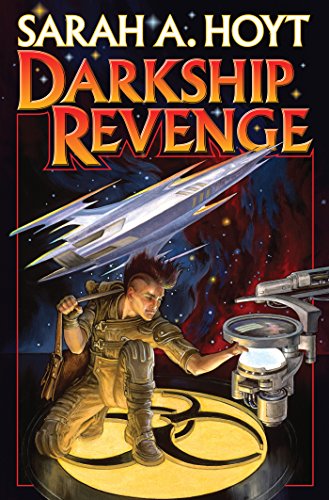
51x643uifpl

buy

Growing Worlds

I guess vacation starts on Wednesday as far as the blog is concerned.  I’ve been writing and completely ignoring the date, so I just realized tomorrow is the drop date for Darkship Revenge.

And in case you forgot this great cover, here it is:

51x643uifpl

And yes, the cover is a buying link, since even with my title of the World’s Worst Promoter Ever, I’m not that bad ;)

So, what can I tell you about Darkship Revenge?  The minor answers are the one you’ve been waiting for since the end of Darkship Renegades.  Yes, the book opens with Athena having a child.  And honestly, guys, like most of us who thought we’d be disasters at it, she’s not a bad mother.  Yes, she does use her kid as a decoy and once as a sort of shield (in the sense she thinks people are less likely to shoot a mother) but not as a weapon.  Our Athena is coming on.

However, when you write many books with the same voice, sooner or later you realize this is not about the character.  The first one, sure.  And for fans of Athena, yes, she is still very much present and her voice… well, she is still Athena.

But after a while, the books, even in a character’s first person voice, become ensemble casts.

The first surprise that is no surprise is that the Je Reviens… did. When you name something “I return” you sort of have to expect that.  And I did.

What I didn’t expect is the circumstances of its return, and who is aboard the Je Reviens.  You know (and I know) I always seemed to assume the best of the Bio-Lords/Mules went away on the Je Reviens and left the dangerous ones, the maimed, the difficult behind.

Well, let’s say (pictures scene from Independence Day when Area 51 is mentioned) “that is not PRECISELY true.”

The manner of their return leaves the Earth in dire straits, and if it hasn’t destroyed Eden, has come close.  Which is why Kit and Thena and an expedition of their friends will fight for Eden in the next book “Darkship Defiance.”

This book introduces a lot of juveniles.  I never set out to write a “generational saga” but this seems now inevitable.  Someone I didn’t want to die, dies.  That seems to be becoming a thing.

Which brings us to…

This book is also Fuse’s book.  He is still somewhat impaired, but healing fast through the book (an interesting trick to write, btw.)  Because the only reason for the existence of the “heirs” of the Mules, on Earth is to present the appearance there’s no cloning (life extension is achieved in other way on Eden and on board of the Je Reviens — more on that later) the “Heir” must look ready to inherit.  Fuse, obviously, wasn’t, and his father has created a new heir.  Unfortunately for his father he has some illness as yet unspecified that will not allow him to live long enough to wait for his new “heir” to grow up.  It is therefore necessary that Fuse, with all his dangerous knowledge, be rehabilitated.  Publicly.

He’s captured and put in a hospital and injected with various things that act slowly but surely (as well as I presume given an initial regen.)  Yes, I know how he escaped the hospital.  It’s tied in with his OWN story.  But he escaped while still far from well.  Let’s say he was pushed.  Only the slow acting nanocites continue working.  He’s also been given a series of messages (which we don’t know about in this book) in the form of sensis, where he relives parts of his past.

Anyway, he runs into Athena, and as he “grows” through the novel he’s both comic relief and (to quote Kate) rather heartbreaking.

His own novel will be Hacking the Storm, the third of the Earth Revolution, which is up next on the work table at least for my afternoon work.

So, you ask, how come the original Mules are still aboard the Je Reviens? After all the Mules on Earth age and die.

Yeah.  What happens with the inheritance of Good Men on Earth is the result of bad law and unintended consequences.  It is, in fact, the reason I started writing the first book, lo, those many years ago (remember Dolly?  That was when.  Older son was, I think, 5.  He’s now 25 and in medschool.  WHERE did the time go?  Darkship Thieves just took 13 years to be bought.  This is something that people won’t understand in another couple of years, thanks to Indie, but it was a fact of life of traditional publishing.  I.e. there was no other resort, if no one bought your book.  I wonder how many books moldered in drawers and were eventually thrown away, books we would have, perhaps, liked to read?)

There was, then, talk of outlawing cloning, and I thought “you can’t outlaw something like that; you can just make it go underground and vicious.”

There was also talk of creating children who are just clones, for a brain/parts transplant.  And I thought “but if cloning is not illegal, science will go on, and eventually it will be possible to cone PARTS of people for transplant and life extension.  However, if it’s illegal, they’ll have to have children, and raise them as their heirs, and keep it secret.”

Of course, the Mules turned Good Men outlawed cloning for two reasons: to calm the populace, and to pretend their true nature from being found out.  Thena is still in the process of having her nose rubbed into “law is for the little people.” She doesn’t like it.

In Eden the process of life extension is to replace aged parts with purpose-grown parts, not whole bodies.  I will be honest and say I’m not yet sure how they did it in the Je Reviens, but I have a funny feeling in my gut.  They’re NOT good people.

I don’t know what else to say about the book, save that I think it’s the best I’ve written to date (this might change.)  Also, that it opens entire new panoramas for the directions in which the Darkship world will grow in the future.

I intended to do a reading, but I’ve been using Advair for the asthma, and my voice keeps going away.  (To be fair I always had issues with laryngitis for any number of reasons.  Anyway, right now I can’t do a reading.

I have posters of the cover.  Should you want one, signed (by the author, not the artist) please put your name in the hat in comments.  I HAVE to do a post-office run tomorrow, no matter how much I hate to ;)

If you have read the book, in e-arc and enjoyed it, it would be greatly appreciated if you can leave a review on the first day.  For whatever crazy reason, it seems to help Amazon rankings!

I will, needless to say, answer questions in comments.  Of course, the answer might be “Pfui.  Read the book.” Or not.  We’ll see, right?

Vignettes by Luke, ‘Nother Mike and Mary Catelli & Books, I’ve Read A Few (and Shameless Promo) by Sarah

Vignettes by Luke, ‘Nother Mike and Mary Catelli

So what’s a vignette? You might know them as flash fiction, or even just sketches. We will provide a prompt each Sunday that you can use directly (including it in your work) or just as an inspiration. You, in turn, will write about 50 words (yes, we are going for short shorts! Not even a Drabble 100 words, just half that!). Then post it! For an additional challenge, you can aim to make it exactly 50 words, if you like.

We recommend that if you have an original vignette, you post that as a new reply. If you are commenting on someone’s vignette, then post that as a reply to the vignette. Comments — this is writing practice, so comments should be aimed at helping someone be a better writer, not at crushing them. And since these are likely to be drafts, don’t jump up and down too hard on typos and grammar.

If you have questions, feel free to ask.

Your writing prompt this week is:

dull

Books, I’ve Read A Few (and Shameless Promo) by Sarah

Right then.  Hopefully not dull, but we’ll get the predictable out of the way.  Buy my book, okay?  It’s lighter than air and sillier than a rat in a tuxedo, but it won’t disappoint you.  (Hopefully.)  As for rats in tuxedos, just read the sample.  (Bats eyelashes.)

A_Fatal_Stain

The cover, by the magnificent Jack Wilder, is a link to the book.  Which reminds me I need to pay Jack, since I intend to have him do the cover for the next one, A Well Inlaid Death coming sometime towards the end of May.  (Hopefully.  Unless something untoward happens to my health again.  Don’t let something untoward happen, okay?)  That is the book in which Dyce finally gets married, acquires a dog, and makes a grisly discovery in her newly-acquired basement.

Now, since we don’t have a promo post (I think the Oyster didn’t get any books to promo!  Come on, you slackers, write up) I thought I’d list some books I’ve enjoyed recently.  Keep in mind they’re all mysteries and range from the extremely interesting to “popcorn.”  Most are, in fact, popcorn, but since I’ve been running 6 books a day give or take (no, not WHILE writing, goofy people.  While eating, cleaning the kitchen and such things where one can’t actually write.  At least not till one gets better at dictating. Right now, as is to be expected of a libertarian, I suck as a dictator) and these are the ones I remember from the last couple of months, well, they can’t be all bad, right?

The first one is a book I’ve been waiting for for about a year, because I fell in love with this series while I was recovering from surgery two years ago.  If you haven’t tried them start at the beginning.  If you loved Terry Pratchett’s Mac Nac Feegle, you’ll love the Scottish Border in the time of good queen Bess.  I like them so much I’ve been avoiding the author’s political posts like poison.  (To be fair, I think she’s avoiding mine too.)  No, she’s not one of us, but Good Heavens, can she write.
I feel a little uncomfortable when she writes about Elizabethan London, because it’s so different from mine, but I’ll be honest, my Porto is different from everyone else’s too (and now largely gone since I have a gravitational field towards low dives) and my Denver is very different from any sane person’s.  So that’s all right.  It’s still a lot of fun.

61qugwvfkvl-_sy346_

It’s late August, 1592.

Sir Robert Carey, cousin to Queen Elizabeth from the wrong side of Henry VIII’s blanket, remains at his post on the Borders at Carlisle. He has at last been confirmed by his monarch as Deputy Warden, is still deeply in love with Lady Elizabeth Widdrington while despising her elderly, abusive husband (will the man never die?). And he remains estranged from his dour but lethal henchman, Henry Dodd, Land-Sergeant of Gilsland, who is currently serving as one of the sergeants of the Carlisle Castle guard. Dodd can’t forgive Carey for taking the high road at the conclusion of the incident at Dick of Dryhope’s tower, when Sir Robert called out the Carlisle garrison, but “honourably and skillfully avoided the bloody-pitched battle” that seemed inevitable. Dodd is old-school and would have preferred to exterminate as many under Wee Colin Elliott, and also Grahams, as he could. Not for him, but for peace to the Debatable Land.

Sir Robert Cecil, Privy Councillor to the Queen, warns of a new challenge: the King of Spain’s “intentions in Scotland.” Will Cecil be sending a pursuivant to the Borders to suss out, and possibly interrupt, whatever plots are in progress against England?

Now it’s Autumn. We meet Marguerite, an over-sexed and unhappy wife. Father Crichton, a Jesuit, formerly of Spain. A man who says his name is Jonathan Hepburn but, curiously, thinks in Deutsch. Marguerite’s elderly husband Sir David, a Groom of King James’ VI’s Bedchamber, a jealous man. Various disloyal Scottish Earls. Janet Dodd, wife to Henry, who learns an interesting thing from Mrs. Hogg, the midwife. Hughie Tyndale, a would-be-assassin. Mr. John Napier, a philosopher and mathematician with a revolutionary theory of how the solar system works. Mr. Simon Anricks, a toothdrawer (and philosopher, too) bearing a secret letter from England, who becomes delighted with Mr. Napier. Queen Anne (of Denmark), not yet a mother. And King James, not your usual monarch, plus his court, sycophants, and (former) lover Lord Spynie, who is still plotting revenge. So many spheres of influence or disruption in play.

Events come to a head at the King’s court in Edinburgh where a great Disputation on the differences between the Ptolemaic and the Copernican systems, and a demonstration of the planets will be staged, a clash of spheres mirroring the same at the human level.  buy

*******

The next one is at a completely different level.  I have a gut feeling the author got her history from watching Downton Abbey, and got some things upside down and sideways.  For instance she seems to think being called by your last name meant you were a servant.  Despite the dents on my wall and desk, I read all six books though.  Popcorn, but interesting. (Probably the most annoying thing is that the author thinks using “jolly” is a neat trick to British-it-up.  Everyone uses it, and in the most unlikely circumstances, to the point I had to make up my mind to ignore it, or track the author down and drown her in a vat of ink.  But if you can ignore that, you’re okay.)

51sqvlps7bl-_sy346_

The first book in the Rose Simpson mysteries.
When Sir William and Lady Withers invite friends and family to a weekend house party at their country home, Ashgrove House, they are faced with the arrival of both invited and uninvited guests, the consequence of which is murder. Set in 1930, “Murder at Ashgrove House” is full of intrigue, clues and red herrings, with nearly everyone having a motive for wishing the victim dead. This is a classic country house murder mystery set during the golden age of crime and will appeal to fans of Agatha Christie and Downton Abbey.

The second book in the Rose Simpson Mysteries series, “Murder at Dareswick Hall”, is now available on Kindle and will shortly be available in paperback. buy

********

This is again more serious, and in fact, though I read it months ago, it remains with me.  I CARE about these characters.

61truxo0a2l

Oxford, Spring 1353. When young bookseller Nicholas Elyot discovers the body of student William Farringdon floating in the river Cherwell, it looks like a drowning. Soon, however, Nicholas finds evidence of murder. Who could have wanted to kill this promising student? As Nicholas and his scholar friend Jordain try to unravel what lies behind William’s death, they learn that he was innocently caught up in a criminal plot. When their investigations begin to involve town, university, and abbey, Nicholas takes a risky gamble – and puts his family in terrible danger. buy

***********

Popcorn again, and you really must ignore some historical nonsense.  Not major, just enough to make you roll your eyes and sigh a bit. But maybe all historicals make people sigh a bit.  It just depends how much ;)

51hwri7pbgl

A mansion, a title and marriage to a wealthy Lord – Lady Eveline Cartwright has it all. Unfortunately, it’s not enough to prevent her being bludgeoned to death one night in the study of Merisham Lodge, the family’s country estate in Derbyshire.

Suspicion quickly falls on her ne’er-do-well son, Peter, but not everyone in the household is convinced of his guilt. Head kitchen maid Joan Hart and lady’s maid, Verity Hunter, know that when it comes to a crime, all is not always as it seems.

With suspicions and motives thick on the ground, Joan and Verity must use all the wit and courage they possess to expose a deadly murderer who will stop at nothing to achieve their aim…

Murder at Merisham Lodge is the first in a new series of historical mysteries, Miss Hart and Miss Hunter Investigate, set in the 1930s. The author, Celina Grace, is the creator of the bestselling The Kate Redman Mysteries and The Asharton Manor Mysteries, as well as several standalone thrillers. buy

*********
This book should have annoyed heck out of me.  In many ways, its … tricks are the ones I despise in mysteries.  But this isn’t a mystery, it’s PULP.  Pulpy, pulp, glorious pulp.  Let your mind go back to childhood and the thrilling adventures against larger than life villains, and you too will enjoy this! Oh, the writer or whoever wrote the description is off his/her rocker. There is NO resemblance to Christie whatsoever. There is a resemblance to Patricia Wentworth’s Maud Simpson’s cycle, but it’s so over the top it’s not as tiresome as THAT got. (Also the author seems to believe there was prohibition in England. (rolls eyes.) Rocker, clean out of.

51h0-qtei1l-_sy346_

ike your mysteries cozy and set during the Golden Age of Crime? This is the first book in the Posie Parker mysteries, although this novel can be enjoyed as a stand-alone story in its own right. Set in London in 1921, ‘Murder Offstage’ is full of intrigue and red herrings. This is a classic murder mystery which will appeal to fans of Agatha Christie and Downton Abbey.

When Posie Parker’s childhood friend is robbed of a priceless jewel and becomes a suspect in a cold-blooded murder case, budding detective Posie vows she will clear his name. Aided by her seriously gorgeous assistant Len, Posie soon realizes things are not quite as they seem, and the darkly-glamorous world of London’s theatre and glittering nightclubs prove far more dangerous than she ever could have imagined.

Just who exactly is the dangerous Lucky Lucy Gibson? And who is it she has killed in the lobby of the Ritz Hotel? And more importantly, what on earth has happened to Mr Minks, the much-loved office cat?  buy

******************

This is a good bitter-sweet series which portrays with virtuosity growing up in a family touched by mental illness.

51pg9rqgqgl-_sy346_

Her best friend is a smart-mouthed genius girl named Drew Levinson. But Drew is gone. Nowhere to be found. Everybody insists Drew ran away. But Raleigh suspects something worse.

Armed with one rock hammer, an encyclopedic knowledge of city criminal codes, and a stubborn streak wide as the Chesapeake Bay, Raleigh searches for clues.

  • Did Drew secretly meet somebody?
  • Did her loony parents finally push her over the edge?
  • Or is Raleigh’s hunch dead-on: Drew didn’t choose to leave….

The first book in the best-selling Raleigh Harmon mystery series, Stone and Spark introduces the girl who will grow up to become a forensic geologist and FBI agent—provided she survives her high school years. buy

****************

So, Sarah, when will you recommend Science fiction and fantasy to us?
Ah, when I’m writing mystery.  Seems to be how it works.  For now, well, some of those almost FEEL like sf/f.  Chisholm’s for sure, since it’s a different world after all.

Now go have fun, I have a story to finish.