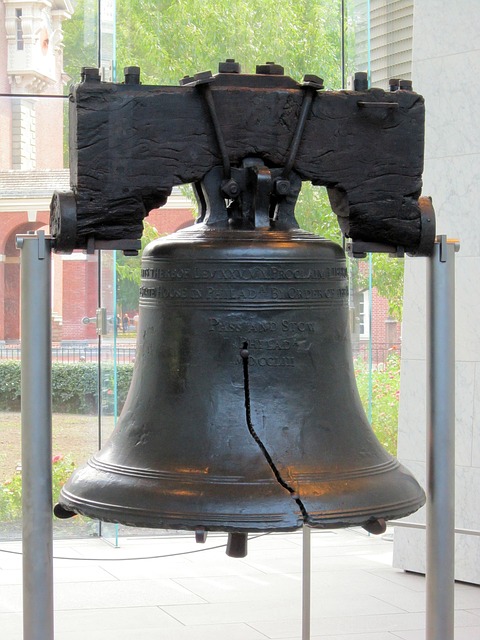
To quote Leonard Cohen, “Ring the bells that still can ring. Forget your perfect offering.”
Sure. Trump could be better. For one he could not have fallen for the Covidiocy and enabled the the hell that was 2020. Of course, we don’t know to what extent that was possible, because we didn’t get the same information.
On the other hand, his information was probably — okay, certainly — corrupted, judging by his hires and even his nominees for the SOCUS whom we were all assured were of the highest constitutional pedigree. And I’m sure he was too…
Be that as it may, the other side wishes to deliver us bound to our foes. They stole our election and corrupted our institutions by dint of Chinese fraud and Chinese bribes and Chinese use of kompromat.
The Chinese are the same as they ever were: the most racist people on Earth, viewing themselves really as the ONLY people, the Middle Kingdom at the center of the world, whose birthright it is to enslave the rest of the world.
The left, on the other hand, wants them to win, because they think China, the place that is doing Nazi Germany one better in genocide and crimes against minorities, and destruction of its own environment, is the vindication of their communist dream, and will make things perfect, besides giving these losers and terminal weirdos an opportunity for revenge over the rest of us. Revenge for what? Well, for not bowing down to our leftist “elites” and ULTIMATELY for daring have functional lives and be happy.
I don’t expect anything to happen in DC, other than one big final rally for people to take with them to the dark years ahead. Our system has been corrupt and traitors sit in every position of power.
For the retarded and you poor Europeans reading this: Yes, there was fraud. There was massive fraud. In fact, the Zombie and the Whore (such wonderful candidates your side gets!) had planned fraud so EXTENSIVE and everywhere (including TX, yes.) that they felt no need to CAMPAIGN. They could hide in the basement, because they had no need of any votes.
Only Trump surprised them, by getting more votes than expected, and they frauded in open view of everyone.
Proof? Well, there is extensive proof everywhere, including the fact that they got 90% Biden votes in when mysterious pipes broke that didn’t wet anything, and the observers were sent home. We have video in fact.
So, why isn’t this vindicated in court? Because the courts have refused every case, including the SOCUS refusing a case they’re constitutionally forced to take. Because apparently TX has to take the “pseudent” that other states frauded into being. No recourse. No “standing.”
And here we are. If there were no fraud, the left would have joined the right in demanding that courts take the case, so this thing called “discovery” would take place and the claims of fraud would be proven wrong. Instead, they’ve been sweeping the evidence under the rug, refusing to report it, and counting on people to believe in the bullshit snow job.
Some will. Too many.
I don’t think that’s the end. You see, I’ve seen the countries where communism succeeded in taking a hold. And even in Venezuela, they weren’t one tenth as spoiled as we are. No, seriously. Like every Latin American country they had a considerable underclass who lived in dire need, and for whom the communists were only a small step down, combined with a feeling of revenge on those who were formerly better off. (An illusory feeling. Those have long since run off.)
America is not like that. The only envious class are the college graduates in bullshit studies, and the races who were told the man is hiding the stash. And both of those live way better than … well, anyone else on Earth.
The thing is, see, once they’ve taken the government by corruption and they know they have, they know they don’t need to pretend anymore. So, you know, it will be like the day of judgement, when the secret of every heart will be laid bare. They’re going to drive full speed into communism. They have actually proposed the retarded bill for South African style land redistribution to “African Americans” which is a level of retarded that goes with A-men and A-Women. They apparently have no idea that black people are not a MAJORITY in America as they were in South Africa or mostly rural, as they were in South Africa (or of course that even there it was a florid disaster.) I have no idea why they think mostly urban black people in the US will want to have farms. Or where they’re going to find black people to take all the productive land of America. Or–
The only thing I know is that the answers to all of these will be a combination of illusion and mental deficiency. I fully expect them to do what was done in Mozambique and round up black medical school students and physics majors and force them to go farm. Because they’re following a playbook and f*ck real people.
And there will be a lot more idiocy. More idiocy than even you or I can anticipate. Even with all we’ve read. Because these people are next-level stupid and cult-level detached from reality. And because the only way communist/socialist societies survive is by despoiling and parasiting free societies. Only the US cannot — CANNOT — parasite other countries. There are none rich or big enough to keep us in the style we’d condescend to. The left thinks China will support them, but China can barely support itself and is enslaving vast swaths of Africa to keep its population at a “barely surviving” level.
Prepare, prepare, prepare! And if possible, get to where you’ll be safe, away from urban centers. And pray for me, please. I’m stuck here for another year. Getting our investment out of this place would be nice, and getting out of here with family, cats and computers intact is essential. Yes, we’ve scouted out a landing place. No. I’m not telling anyone where it will be, not even the state.
For two or three years we’re going to eat the bread the devil baked. All of us. There will be incidents, and minor rebellion events, but I don’t expect we can get this boot off our necks until they OBVIOUSLY fraud 2022 and have reduced the living conditions and safety of most people to things we never imagined in America.
But here’s the thing, Americans are spoiled. No, I’m serious. We’re spoiled to an almost supernatural level for humans. We don’t expect our government to not give a d*mn about things like clean water being available. We don’t expect our government to allow foreigners to destroy vast swaths of our land with strip mining (wait for it. I bet you.) We don’t expect to be taxed at insane levels, and the money sent abroad. We don’t expect to be treated like peasants.
We had a taste of it in 2020 and we’re ANGRY as heck, except for a few bleating sheep. Not angry enough to do anything drastic, but oh, angry. Very angry.
The fun part of this, friends, is that without the Covidiocy and the year from hell, the commies could have pulled off their coup, and kept their boot on our necks for ten, fifteen years, till we were broken, and so tired we couldn’t fight back.
But they’re starting out with us pissed, tired, and the feeling that the people at the top are acting like insane tyrants.
It won’t last long. But I do expect two or three years.
Which is why if I could I’d be in DC tomorrow. It will be dangerous at all, but it would be a feeling of not being alone to take into the very dark years ahead.
So, there is something we can do. We can ring the bells that still can ring. As the liberty bell was once heard, its sound reverberating through the centuries to us, we shall sound the horns of Jericho.
The objective is for people coast to coast, regardless of their location at Noon ET on Wednesday, to blow their car horn in support of President Trump and the rally taking place in Washington DC. Let the sound of our patriotic message carry with the same intensity as the Horns of Jericho.
There’s a graphic you can copy and share at the link. I’m not putting the graphic in because FB is less likely to censor content buried in a blog post, in words.
BUT I beg you to do this. And I beg you to share the event as far and wide as you can, in all your blogs, in all the social media, everywhere large and small.
Let us sound the horns, loud and clear enough that they will reverberate through the dark years ahead and bring us to the other side of them in freedom, when the walls of totalitarianism will come tumbling down.
Let’s roll.














 According To Hoyt