For The Sake Of Women

What is now, unbelievably, 15 years, maybe 20 years ago, I had reached my limit with science fiction and fantasy I could find on shelves. Oh, not my favorites, which included most Baen authors as well as people like Terry Pratchett were fine, but you have to understand I read very fast. (I still read fast, but thanks to two concussions and resultant eye issues, not that fast.)

I couldn’t even tell you why I was tired of it, though if you’d asked I’d have told you I was tired of “women with a sword.” I remember five or ten years before that going on a rant at a panel at a con about how all these women who grabbed a sword and set out to save the world were sissies. What they needed was to have an hyperactive, smart two year old boy and try to keep him alive through the happy suicidal years, and then they’d learn the limits of their abilities. (As you can imagine this got me very shocked looks and might have started the rumors I was “not one of us, deary.”) But I hadn’t vocalized my issues beyond that.

The next time I abandoned a whole genre, except for those few favorites I kept, many of them re-reads, was mystery. I had bought more and more over the years, and to be honest had a long backlog of it to fall into as until then it hadn’t been my preferential reading. But eventually it caught up to me there also. Every woman was some sort of heroic fighter against a terrible and oppressive league of men. (Most men, tbf, could not find their own way to their sock drawer much less form a league against women. In fact, men not having a concept of “solidarity among men” is what allowed feminism to become institutionalized. They might mouth “bros before hos” but in real life it’s the not-ho every single time. And it should be, as we’ll get to later.) It was unendurable, and so I fell into the one field sort of left.

Surely in romance they couldn’t have the woman go out with a sword to save the world every other day and twice and Sunday. And the men were love interests so they had to be admirable, right?

People, I sure picked the wrong time to stop sniffing glue start reading romances. The contemporaries were all about…. well, sex. Had to be because the men were fairly despicable. The women too, to be fair. It was as though the women writing them were vaguely embarrassed to be attracted to men (five years earlier I’d been rejected by a romance house because my female character was too heterosexual, after all!) and therefore must continuously try to prove they were better than the love interest. Which left the love interest as the bumbling dad of commercials, but with a tight bod and amazing bed skills.

Look, I’m not a prude. I’m just no biblio-sexual. Reading other people’s exploits is interesting when they’re looking for the Roc’s egg or trying to find who murdered the guardian of the egg, but not so much when they’re putting tab a in slot b and moaning about it. I get bored and flip through for the next bit of non-bed action. It made some of these books very short. Pamphlets, really.

So I fell into regencies, which were slightly better except…. not really, because unfortunately I know history. There is no way on the Green Hills of Earth that every woman under the rule of the Prince Regent was a feminist, aggressively rescuing soiled doves (who are all, all very noble and done ill by. (I’ve read historical accounts, biographies and surveys. They were in habits and behavior the same population as our homeless. Yes, there were hapless innocents. They were few and far between.)) caring for the downtrodden and afflicted and teaching other women not to be oppressed.

There were in fact feminists of that era. You’d be shocked how different from our feminists they were. Or rather they’d be, as all of them without exception had their characters read The Vindications of The Rights of Woman by Mary Wollstonecraft and then treat it as if this book made the women into modern day feminism. (The problem is not that the kids don’t write well. The problem is that they either don’t read or can’t process what they read.) Mind you, it’s full of nonsense and weird assumptions about women, but they’re wholly different from the weirdness we now deal with.

So if you’re guessing I eventually got pitchforked out of romance, you’ll be right and wrong. I got pitchforked out of contemporary romance and into “regencies of the seventies” is the best way to put it. There is a vast group of women (or there was) centered on used bookstores. I ran a sort of tab for these. I’d go in and buy 40 old romances for $20. Read them and take them back in at the end of the week, trading them for twenty. When I got to ten, I’d use money to bring it to 40 again.

And then Indie happened in sufficient force that if I go through one of my depressive phases I can read regencies end to end. But more frequently I read Jane Austen fanfic. Oh, it has the same issues as contemporary regencies, in a way, but it’s more just lip service: “Lizzy hated embroidery and loved learning about her father’s job managing the estate.” Cool story, bro. Now show me her getting together with Mr. Darcy. … Nine out of ten times they do, and the genuflection towards the altar of feminism causes no more than an under-the-breath huff.

I mean there are other things that drive me insane and again “For the love of heaven, people, if you’re going to read historical, read a book about the time period (There are now a few specifically about Jane Austen’s time that give you manners and modes and are simply written. They even have pictures.) Yes, I know you watched the movie of Pride and Prejudice and think you know everything about it. (At least watch the A & E mini-series. No, seriously. Not only didn’t Lizzy go traipsing barefoot in the muck of the farmyard — they were a manor family, not tenant farmers, people! — but no one in that book EVER said “We are all fools in love.” In fact that’s so anti-Jane-Austen she’d probably beat you across the face and head with an inkpot for putting that in her story. And you’re deserve it.) I’ve had my fill and beyond of exploding carriages, people — in the regency, people! — writing letters on parchment or vellum and in one notable occasion papyrus, and… this is very pervasive lately, Mr. Darcy going on vacation and living in a little cottage with no servants or help of any kind, cooking and cleaning for himself. (Tell me you know nothing of what housekeeping used to entail without telling me you know nothing of what housekeeping used to entail.)

But when I’m non-depressed, I also found all sorts of interesting things to read that aren’t romance. We live in a much better age. (Though my latest non-Austen binge was in fact Lynn Austin. Eh. But I’m very ecumenical when it comes to genres. My favorite genre is “written in English and it interests me.”)

However, this last week a friend who was reading regencies stumbled onto the “And of course she hates embroidery and needle work, loves estate management and horse racing.” She had a worthy mini-rant. And I bobbed my head along with it, because I know the music and the words. But it was her “It’s all so tiring” that hit me.

That is exactly as I experience this sort of thing “It’s all so tiring.”

And then thinking about it I realized what is tiring and what makes me huff and want to reach through the kindle screen and hit the author on the face with a very dead fish (very dead. Practically lyophilized.)

It’s the extreme effort of trying to hold a world that makes no sense — either in historical or modern sense — in my head at all times to make the story work. Look, I know I’m supposed to suspend disbelief. But must it be with an hemp rope, by the neck, till dead?

Modern… well, guys, you’ve been out in the world. You know not every man is a bumbling fool. And you know that not every woman — perhaps not any woman — can go from 19 year old temp receptionist to managing his billionaire empire better than he does. (Some women are amazing, yes. So are some men. But humans in general are not that precocious and the entire idea of being able to do things you never had occasion to do without learning is outright pernicious.)

Regency/historical… Hits head on desk, because it hurts less.

Guys, I didn’t grow up in the regency, but when I was a kid we didn’t have TV (we had radio, and if you can imagine a family clustering around the radio at night doing various things and listening, you’re exactly right. I just realized I treat TV and movies exactly like this (to my husband’s confusion) with only occasional looks up when something is unclear.) And books were expensive. Even when you came from a family of bibliophiles that had stashed books everywhere including the various outbuildings of a small farm (of sorts) eventually you ran out of them or at least ran out of books that interested you in any way shape or form. (Turns out nineteenth century books about medicine are fascinating in a morbid sort of way but not for sustained reading.)

So what did most women do in the evening? Sew. What did most men do? Oh, not in my family where they were all thumbs, but usually whittle or do some kind of manual work similar to that. Sometimes read. Or … racks brain…. oh, yeah, organize their stamp collections or other collections, repair a radio, clean a gun. That sort of thing.

Women mostly sewed for a reason. And 90% of the sewing they did was mending. You see clothes were expensive too. After my mom — to supplement our pathetic income — bought a knitting machine (from her savings. Look, there’s a reason sometimes dinner was stale bread fried in tallow. Not complaining. We didn’t starve) and took the course to use it — people would bring her old sweaters to unravel, redye and re-knit into a “new” sweater. THAT expensive. Most of us, even people living in relative poverty can’t imagine how the middle class of a small, unimportant country of the mid 20th century lived. And — here’s the thing — we were in no way poor by historical standards. Nowhere close to it. (Incidentally, that’s why women wore aprons. It had nothing to do with oppression. A lot of men wore aprons too, particularly those who worked with their hands. And those who didn’t wear aprons usually had a really old, horrible-looking version of their every day clothes that they wore while doing the inevitable dirty chore. (Except my maternal grandfather who once emptied the septic tank in his Sunday suit. The fact that I was told that story multiple times 30 years later tells you how unusual that was. I also wonder what — probably stupid because he was a genius and so… — point he was trying to make and/or how mad he was at grandma.)

There was a Portuguese comic I read when I was little which made a joke you’ll only understand if you know that “role” in Portuguese is “paper”. The joke was the little girl learning about women in history and saying “Ahah, the problem is that women don’t have a role in history. They have a cloth.”

That was supposed to be cutting and feminist, (the stupid has been with us a LONG time) but seriously cloth: producing it, fashioning it, etc. has been a big job throughout the centuries. And because it can be picked up and put down and combined to advantage with watching kids or minding the cooking or whatever, it mostly fell to women. (Not always. Sailors and shepherds famously knit. And I imagine on long voyages sailors mended their clothes.) The point is that clothes are the tech that allowed humans to live out of the climate they were designed for, and that processing the fabric for clothes is mostly for various reasons of convenience a feminine task.

And, like the male tasks of the time and now up to and including yes “managing estates” or fixing tools or going out and slaying the mammoth in whatever form, the job isn’t wildly interesting or amazing or mind-expanding.

Most jobs aren’t. The stories that try to sell you on finding your life’s satisfaction in a career might as well be selling you that your life’s purpose is to weave endless lengths of cloth and mending your husband’s socks. They’re just jobs. That’s all.

Now…. embroidery…. Unless it was your job, which it never is because the women in these books are always upper class, embroidery was something you did in the precious time you managed to carve out of your chores, which, yes, even for the upper class included mending and also writing endless letters because women kept society connected.

Embroidery allowed you to express yourself, to create something beautiful and something people would admire. Mind you, Regency ladies did a lot of other things under that heading, including painting tables (why did they need so many tables, anyway), playing music and dancing and drawing and other such pursuits. BUT embroidery was also useful as in you could wear it, or your child could wear it, and it made every day a little better.

From my experience — though due to family dynamics I didn’t do this till I was married — embroidering was something smart women did. And the smarter the woman the more complex and innovative the stitches and the design. It was much admired and any woman in the village could point you at the best embroiderer in the village. (Mostly because a favorite activity of unmarried women was showing each other our stash, aka the hope chest. (No, not me. I distracted them with hand written novels. But again, this was not because I was smarter but because of weird family dynamics.)

Could a regency lady despise embroidery and want to manage an estate instead? Well, some number of them managed estates because they were the only manager either through accident of birth or weird turn in life. But would they prefer it? And would it be, as ALL these writers assume far superior and indicative of a greater intelligence? Pardon me while I make a very rude sound.

Managing an estate, like leading men in battle was simply a matter of necessity of time and position. And wasn’t what women in our time imagine, either.

Yes, throughout history queens led armies in battle. So, famously, did Joan of Arc. But mostly their role was to be inspiration and a sort of banner. Any real generalling (totally a word) they did was conveyed through underlings who were inevitably men.

In the same way, women in the regency who managed estates usually just kept a close eye on the books, and had detailed instructions for their stewards. They might ride around and see what needed to be done too. What they almost certainly except perhaps in very rare occasions didn’t do was go out in the fields, in the muck, and personally command tenant farmers and servants on what to do. They would if wealthy enough to have them, instruct gardeners and maybe do a little gentle weeding and such. And possibly if not wealthy keep their own herb and flower garden though even then the servant of all work would do the digging, etc.

The thing that these writers misunderstand is that this was not because women were “kept out” of these highly desirable tasks. It is because in a time when most tasks done outside required strength and stamina more typical of men, women took the other set of tasks that needed doing. And mind you the other set of tasks ALSO needed doing.

Managing a manor house was not piddly work. They lacked most of the things we have, and among them they lacked all the chemical cleaners we have. This means even if you had a ton of servants you needed to stay on them through things like routine cleaning which was more or less constant. Otherwise it wouldn’t get done and your family would catch the never-get-wells. Also linens needed to be mended and replaced on the regular. Menus made. Parties planned and, under “maintaining social connections” letters written. I remember grandma — and mind you, much longer after, when calling was a thing for close-by relatives and friends — had an entire day blocked out just for keeping up with her correspondence.

Was it possible for a woman to want to manage a manor house, instead? Well. I suppose anything is possible. Though she’d better have someone to do the tasks that normally fell to her.

But what it begs the question is WHY? Why were male tasks preferable to or supposedly indicative of higher intelligence?

Why in the name of all that is holy SHOULD the highest aspiration of a woman be to become a man?

And that’s what’s so tiring about it all. At the back of all this rah rah rah “Women can do everything” is the dripping, whispered poison of “But you shouldn’t though. You should do what men do, because that’s what’s amazeballs and super-satisfying.”

And you have to read this while looking at the men around you who, honestly, aren’t any more satisfied than you and your friends are and who certainly don’t think their every day jobs are some sort of holy vocation. Just what they do for a paycheck. Like most women.

It’s like reading about aliens that no one acknowledges are aliens.

Which is the problem with this entire “Feminism” project as being exerted in this year of our Lord of 2025. As a group we’re supposed to be amazing and special and forever fighting back against the oppressive restraints men impose on us.

And because that’s our group mission we can’t, of course, ever fully win. We must forever be fighting. Which is why women are always fighting to “Break into” science fiction, even though by the time I came in it was already female dominated, now almost 30 years ago.

We’re somehow not supposed to want to do anything feminine, but we should be displacing every male in his job.

And then they wonder why women in the civilized world manage to be more unhappy than were life is brutish and short.

Look, the problem is not trying to “liberate” women. The problem there is in the PLURAL “women.”

There is the woman here and there (most often there, and you know exactly WHERE) who needs liberating. There are a lot of men in the same boat at that.

There are people everywhere suffering horrible oppression by other people. And then there is the sheer oppression of this material world that doesn’t yield to your dreams.

But it’s mostly a matter of individual circumstances and individual choices and individual — yes — oppression. I’m mostly descended from women who couldn’t be oppressed and if you tried you’d regret it. Which means we more or less did as we pleased despite an authentically chauvinistic and patriarchal overculture. None of us had a marked interest in horse racing, though most of us ran our own business which I suppose is the equivalent of running a manor, while raising kids and keeping house. This was possible because increasingly through time we could afford housekeeping aids. (In mom’s case a succession of teenage mother’s helpers who worked in exchange for new clothes.) And none of us was so stupid as to tell our husbands they couldn’t help with the accounting and other boring tasks, like tax liability estimation. (Which at this point is a second job for my poor husband.)

And mostly it was really tiring, not particularly indicative of high intelligence (though perhaps of drive) and just what we did to keep body and soul together.

Because I work in words and in a highly abstract product I’m not any smarter than the ancestresses whose businesses were in large-scale resale, or commercial art, or clothes making/design/creation. We each did what we could do at the time to supplement family income and make a better life for our kids and grandkids. (Okay, I’ll confess to being broken so writing is all I could do.)

There isn’t a set of jobs — male — that means success and satisfaction and a set of people — women — who are automatically downtrodden and mistreated.

In the past — and even today — everyone is mistreated by life and reality. And there is no eternal satisfaction in any task, though some of us work at our dream jobs and even have moments when it’s all worth it.

We need to — NEED TO — stop treating people as homogeneous groups. Particularly groups based on physical characteristics that have absolutely nothing to do with individual circumstances, needs and abilities.

We need to stop telling women, all women, across the wide world, that they’re uniquely oppressed and need to “heroically” seize… the other sex’s roles.

We need to stop this in educations and entertainment and life.

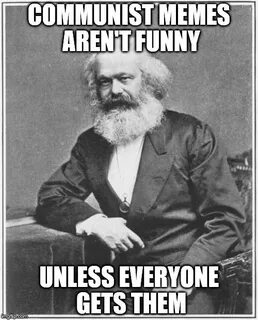
Men and women aren’t Marxist classes. They’re different forms of the species, and have a lot of complementary strengths and a lot of reasons to come together and work together towards the future. (No, we’re not doing phrasing anymore. It’s 2025. When we do phrasing, it’s with intent and malice.)

For the sake of women, for the sake of men and — truly, desperately — for the sake of children, let’s stop lying to each other and the young.

Let’s stop trying to hold up an insane, fractured illusion and live in the real world.

There is a future to build and the stars to conquer. Petty bitterness is not generative. Of life, interest or children.

And besides it’s such a complete lie.

Let’s live in the light of truth, instead.
Book Promo And Vignettes By Luke, Mary Catelli and ‘Nother Mike

Book Promo

If you wish to send us books for next week’s promo, please email to bookpimping at outlook dot com. If you feel a need to re-promo the same book do so no more than once every six months (unless you’re me or my relative. Deal.) One book per author per week. Amazon links only. Oh, yeah, by clicking through and buying (anything, actually) through one of the links below, you will at no cost to you be giving a portion of your purchase to support ATH through our associates number. A COMMISSION IS EARNED FROM EACH PURCHASE.*Note that I haven’t read most of these books (my reading is eclectic and “craving led”,) and apply the usual cautions to buying. I reserve the right not to run any submission, if cover, blurb or anything else made me decide not to, at my sole discretion.– SAH

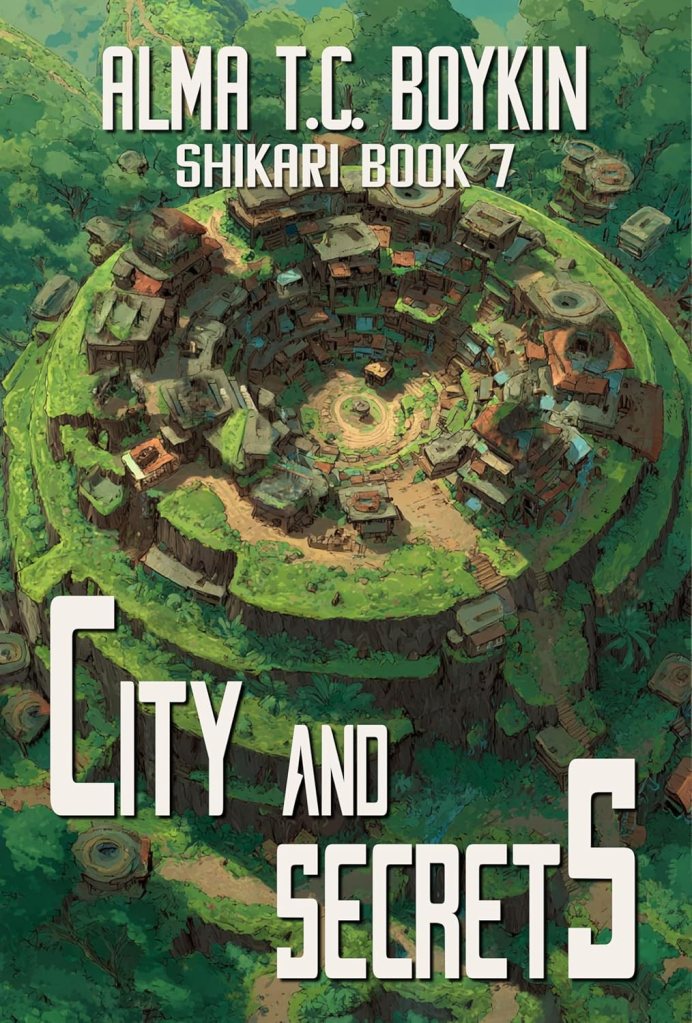
FROM ALMA T. C. BOYKIN: City and Secrets: Shikari Book 7

Lost cities, ancient secrets, and rumors of treachery …

Auriga “Rigi” Bernardi-Prananda finds society—and trespassing wildlife—a trial. When Lieutenant Colonel Tomás Prananda suggests going to the wilderness on the tropics of the north coast in order to investigate a ruined city, she quickly agrees. After all, Shikhari’s native fauna only kill. They do not indulge in slander, gossip, and intrigue.

A storm sweeps the sea onto the land, and a military storm sweeps the Prananda family into greater danger. Failed energy shields and jammed communications are only the first hints of trouble. Soon, Rigi finds herself trying to support her family—both human and native Staré—as Tomás awaits trial for dereliction of duty. Yet the neglected duty was never his.

As predators native and human stalk closer, Rigi finds herself playing the Great Game once more. Could a slingball tournament and tail wrestler lead to the real culprit? It will take all of Rigi’s training, faith, and determination to meet the challenge.

Secrets and cities, storms and shadows, are no match for a determined mother and wife. The female of the species may well prove more deadly than the male!

FROM JOHN C. WRIGHT: Starquest: Scourge of the Spaceways

Athos, now Captain of a cutthroat pirate band, slays devil priests and burns slavers’ palaces! How long before the menace of Ahab, King of Pirates, lays him low?
Ansteel, exiled from life as a legionnaire, approaches the jeweled world where his destiny awaits. Will he hold to the Empire of his birth, or enter a strange, new life?
Nightshadow has lost a useful agent, but Napoleon has lost a lovely girl! What faceless force corrupts even men of sterling honesty in the senate?
Has Lyra lost all hope? Will her foster father be never found? Will her dead world be forgotten?
Where is Arcadia?

DIRE DEATH AND DARK DEEDS TO BE SEEN
IN OUR NEXT EXCITING INSTALLMENT:

STARQUEST: SCOURGE OF THE SPACEWAYS

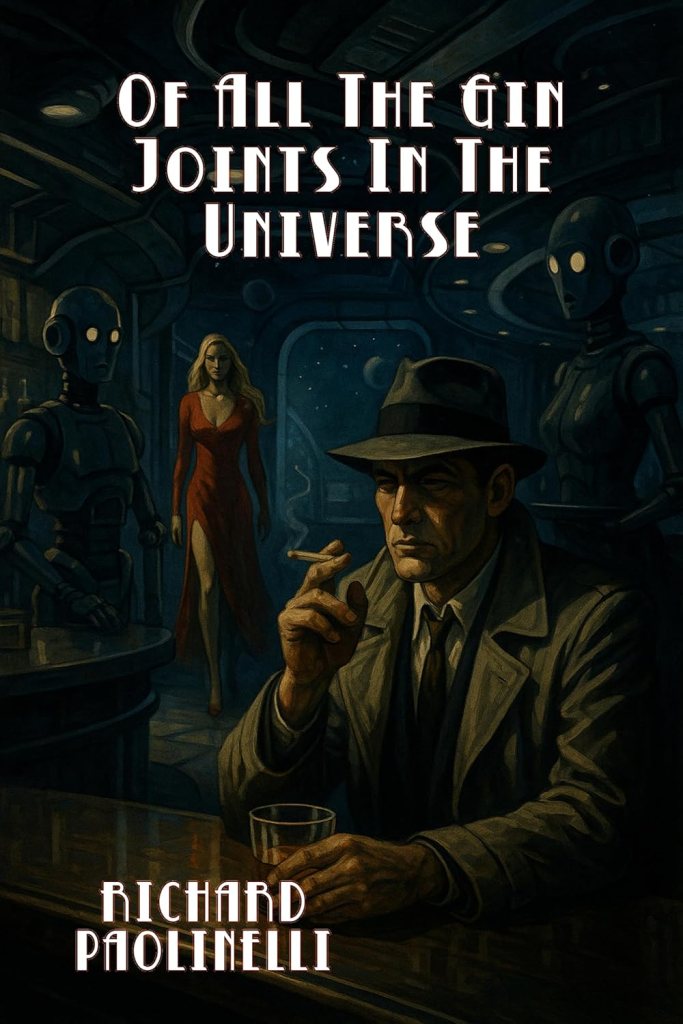
FROM RICHARD PAOLINELLI: Of All The Gin Joints In The Universe

One detective. Two suspects. A conspiracy big enough to kill them all.

In the 25th Century, Galactic Justice upholds the law across the Milky Way.

They use the HALO to extract confessions from the guilty. For the most heinous of crimes, the guilty are erased and a new personality is uploaded in their place.

Samuel Archer Spade is a private detective on Space Station 1964 on the far edge of the galaxy. He’s a former GalJus Inspector whose conscious couldn’t square with using the HALO.
Spade is at his usual spot, his unofficial office on Norma, when a knockout blonde in a red dress, walks into The Galaxy’s Edge, the station’s bar. She’s on the run from an unwanted admirer.

But when the man arrives on the station, he’s looking to hire Spade himself. He’s claiming she has stolen something from him, As Spade tries to sort out who is telling the truth, GalJus arrives looking for both of his clients for a murder committed on another planet.

Trying to find the truth will lead Spade to discover a dark secret. Some elements within GalJus are using the HALO to frame innocent people. Even worse, they’re programming people to commit murder.

That’s a secret GalJus is willing to kill for and both Sam, and his clients, are right at the top of their list.

FROM JAMES Y. BARTLETT: The Song of Asaph: A Musical Mystery Featuring Johann Sebastian Bach (The Bach Musical Mystery series Book 3)

An ancient song composed by King David’s chief musician Asaph, discovered by the Teutonic Crusaders to the Holy Land, returned to Germany, then divided into four fragments and hidden to prevent the fearsome powers of God unleashed if the Song is ever played …
This is the legend pursued by the 15-year-old Johann Sebastian Bach and his schoolmate Georg Erdmann in 1700 as they walk the 250 miles from their small town of Ohrdruf to the northern city of Lüneburg to join the St. Michael’s School choir. Piecing together the song one fragment at a time, the boys find themselves pursued by the relentless Black Monk, Absalom, who is desperate to protect the Song’s powerful secrets. The Song of Asaph is a page-turning, musical thriller that will appeal to readers of all ages.

FROM DALE COZORT: Wokuo Incursion

Invasion from an alternate timeline?
It’s December 1937 in a world exactly like ours except that it is about to veer wildly into alternate history. It’s less than two years before World War II broke out historically in Europe. War has already come to much of Asia, with Japan invading China. An isolationist US fears it will be drawn into that conflict, especially after the Japanese sink the US gunboat Panay. Just when President Franklin Roosevelt thinks he has that crisis under control, he faces a bigger issue. High tech descendants of the Wokuo, Japanese pirates and smugglers who should have vanished over three hundred years ago, flood into the Pacific coast off California.

The Wokuo are both refugees and invaders, fleeing from war in an alternate reality where they survived and grew strong, while looking for new conquests to replace their lost empire. They set their sights on California. President Roosevelt sends disgraced former Colonel Martin to California to organize resistance to the invaders, but the Colonel has his own issues, buried deep in his brain and waiting to cause disaster.

FROM RANDY BROWN: The Drop: Season One

Twelve people. Randomly dropped on an unexplored alien planet in the ultimate test of survival. Some will live, some will not. First one to the flag wins.

Embark on a survival contest like no other in the galaxy, where twelve contestants are thrust into the ultimate challenge on the uncharted planet Alpha. As they navigate treacherous terrains, from icy wastelands to arid deserts to thick jungles, and face unknown creatures, their every move is streamed to billions on Earth. With high stakes, unexpected dangers, and the constant threat of elimination, this gripping tale of adventure and human resilience will keep you on the edge of your seat. Will someone conquer the wilds of Alpha and claim victory, or will the planet’s mysteries prove too formidable? Dive into the suspense and discover who will rise to the top in this thrilling saga.

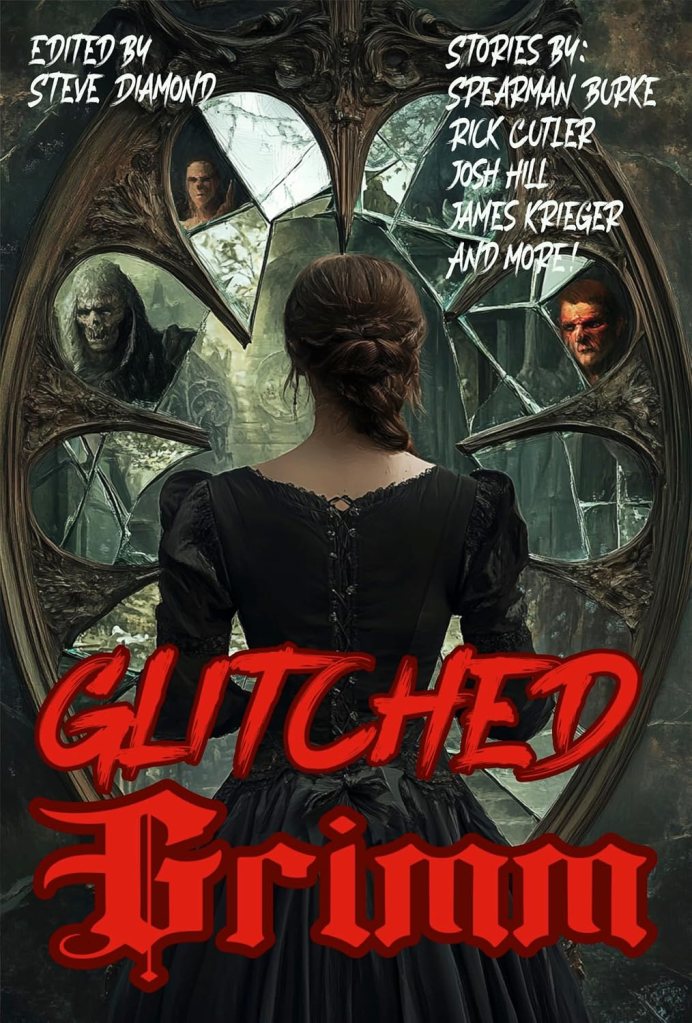
EDITED BY STEPHEN DIAMOND: Glitched Grimm: Twisted Fairy Tales with Terror (Raconteur Press Anthologies Book 62)

I’ve always been fascinated with fairy tales. No, not the sanitized versions with singing raccoons or whatever. I mean the cautionary tales. The ones where the point of the story is to warn. Don’t trust strangers. Elves and fairies want to eat you. Witches don’t sing showtunes just because they are “misunderstood.” Monsters are monsters. If they are sexy, it’s for the purpose of killing you easier.

And so we come to the point of this anthology.

The idea of taking fairy tales back to their dark roots—to the horror and dread in them—was one of the premier goals of the stories presented beyond this introduction. Twisting them in dark and imaginative ways. Another of my goals was to have a few stories that would make the reader chuckle as things go horrifically bad for the characters. Horror and humor are often found skipping arm-in-arm over the river and through the woods together, after all.

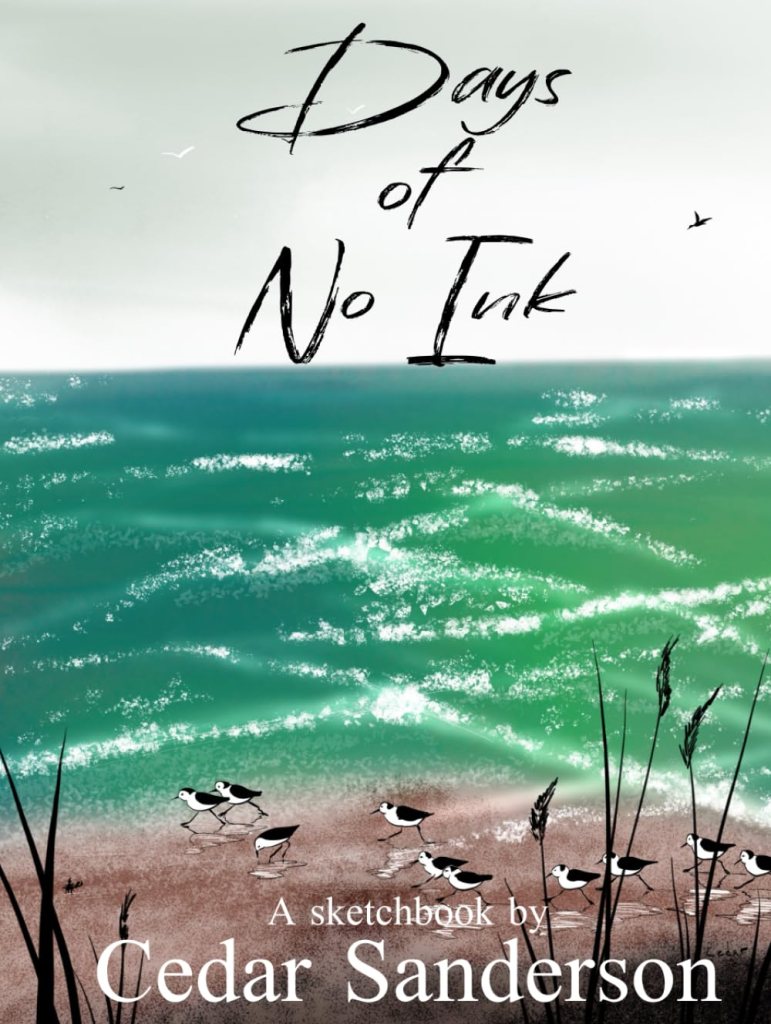
https://amzn.to/4pUNAJVFROM CEDAR SANDERSON: Days of No Ink: A Sketchbook

Every year I make art every day during the month of October. This book contains five years of selected art from those months, along with the prompts which guided my hands. Watch me grow, and hear me tell you that you can do this, with any kind of art you choose.

Black and white. No pen. No ink. Five years of artworks to amuse, spark a story, and hopefully inspire you, too, to take the prompt challenge with me. Come along and see what you can do!

BY HENRY KUTTNER, REVIVED BY D. JASON FLEMING: Elak of Atlantis (Annotated): The complete classic sword & sorcery tales

Join Elak on perilous quests across the ancient world! These four classic sword-and-sorcery tales by the masterful Henry Kuttner take us to realms of wonder and terror.

Across the mystical landscapes of lost Atlantis, Elak faces down ferocious monsters, cunning foes, and alien magical arts. With his unmatched skill with a sword and unyielding will to survive, Elak battles to protect the innocent and vanquish evil in this action-packed collection.

With their unique blend of swashbuckling adventure, fantastical world-building, and Lovecraftian horror, Kuttner’s Elak tales have captivated fans of fantasy and science fiction for generations.

  • This iktaPOP Media edition includes a new introduction giving the stories genre and historical context.

FROM MARY CATELLI: Writing And Reflections: Essays on the writing process from world-building to words

Reflections on the many and far-flung fields that writing can touch upon, from original inspiration to the final work.

Wizards. Metaphysics. Verbs. Fairy tales in all their varied glory. Royalty. Time, how to measure it and how to talk about it. Elves. Piracy. The end of empires. The sword and the sorcery and how they might work together, or not. Past perfect voice. Blue curtains. And more.

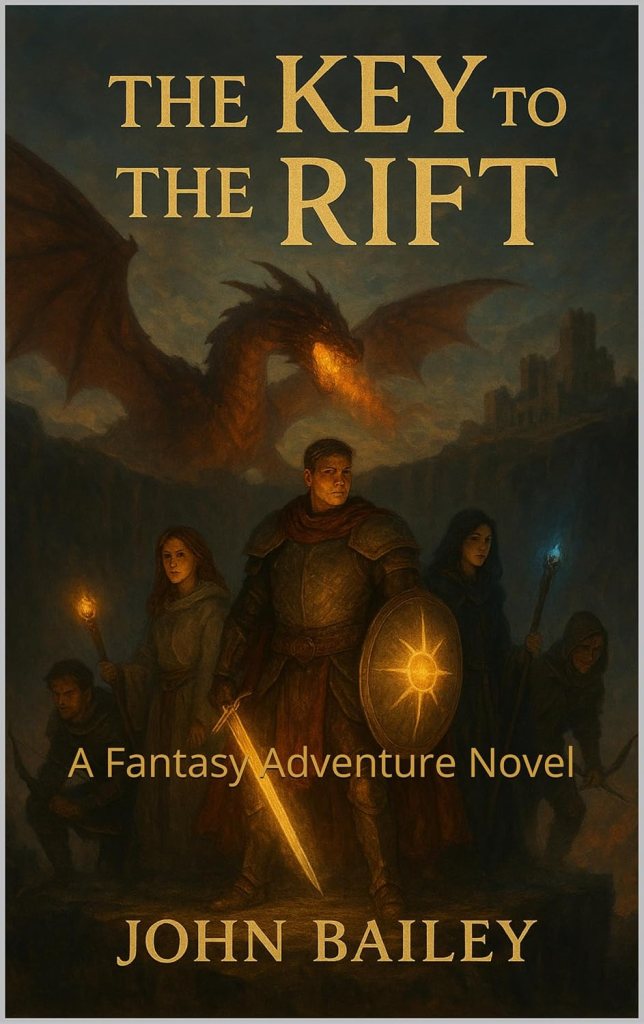
FROM JOHN BAILEY: The Key to the Rift: A Fantasy Adventure Novel (The Fantasy Books)

The Rift is more than a wound upon the earth—it is a gateway to ruin.

When an aged and cursed traveler delivers a dying warning, Paladin Eldric and his companions are thrust into a perilous quest. The barbarian hordes march toward the kingdom, seeking relics of ancient power—an unbreakable shield, a staff of sorcery, and a sword forged in light. Hidden deep within the ruins of a fallen palace and guarded by a red dragon, these relics are the last hope for the realm’s survival.

Eldric, Mira, Toren, Liora, and Garrick must risk everything to claim the relics before the barbarians arrive. But the Rift holds shadows older than memory, and even victory comes at a terrible cost.

Heroism, sacrifice, and cunning will decide their fate—yet the dragon’s fire is not so easily quenched, and the storm of war is only beginning.

The Key to the Rift is a fast-paced, classic-inspired fantasy adventure filled with danger, ancient magic, and the courage of unlikely heroes.

COMING OUT ON THE 7TH FROM SARAH A. HOYT: This volume completes the saga: No Man’s Land: Volume 3 (Chronicles of Lost Elly)

No Man’s Land

Sufficiently advanced science is indistinguishable from magic.
On a lost colony world, mad geneticists thought they could eliminate inequality by making everyone hermaphrodite. They were wrong. Catastrophically wrong.
Now technology indistinguishable from magic courses through the veins of the inhabitants, making their barbaric civilization survivable—and Publius Cornelius Scipio Africanus Kayel Hayden, Viscount Webson, Envoy of the Star Empire—Skip to his friends— has just crash-landed through a time-space rift into the middle of it all.
Dodging assassins and plummeting from high windows was just the beginning. With a desperate king and an archmagician as his only allies, Scipio must outrun death itself while battling beasts, traitors, and infiltrators bent on finishing what the founders started: total destruction.
Two worlds. One chance. No time to lose.


Volume 3
Skip’s idea of crisis management?
Stress baking. While he’s kneading away his anxiety, Eerlen Troz is fighting for his life—and his unborn child’s—in an ancient and familiar battle.
When saving Eerlen’s life requires forging an unexpected blood brotherhood, it creates something neither person anticipated: a memory bond between two worlds.
Through shared consciousness, they uncover a conspiracy that threatens not just Elly, but the entire Star Empire.
The plot runs deeper than anyone imagined. Lives, fortunes, and freedom itself hang in the balance. But exposing the truth means surviving long enough to tell it—and their enemies have other plans. Two minds. One mission. A galaxy-spanning conspiracy that someone will kill to protect.
When the fate of worlds rests on an unlikely brotherhood forged in blood and baked goods.

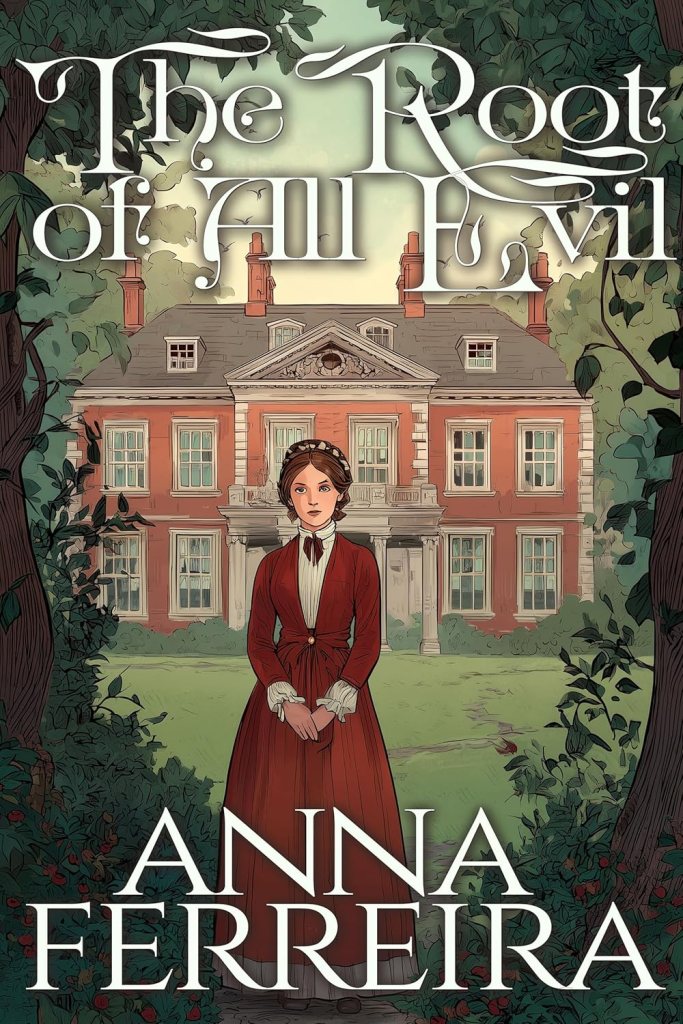
FROM ANNA FERREIRA: The Root of All Evil

When murder comes to Stockton, it brings long-buried secrets in its wake…

Kate Bereton leads a busy but unexciting life as the clergyman’s only daughter in a small Dorsetshire village. She’s grateful for the break in routine heralded by the arrival of her stepmother’s latest guests, but when Kate discovers a dead body in the parsonage one morning, she finds herself in much more danger than she could have ever anticipated. Terrified and desperate, she turns to the local magistrate for help. Mr. Reddington is eager to aid his dear friend Miss Bereton, but can they discover the murderer before it’s too late, and the secrets of the past are forgotten forever?

With a dash of romance and a generous helping of mystery, The Root of All Evil is a charming whodunit that will delight fans of Jane Austen and Agatha Christie alike.

FROM HOLLY CHISM: The Schrödinger Paradox

To save the future, sometimes you have to reach to the past to change it. And in the face of extinction, you do what you must, regardless of who stands in the way.


Cataclysm

Unlucky jerk Tom Beadle was on watch at NASA when the collision alert sounded: a new asteroid, bigger than the dino-killer, headed for Earth. Big problem, but that’s why we have NASA, right? Except, after decades of budget cuts, NASA has no way to shove it off course. That job has to be contracted out. Will the private sector company his best friend from college works at succeed where the government option failed? Might be best to have a backup plan, just in case…

Heisenberg’s Point of Observation

Thomas Sutton was not your average fourteen year old, not even in an Ark City. Born in one of the three refuges of the last remnants of life on earth, deep underground, he knows his history. A century after an asteroid shattered and struck the earth, they have been trapped below by volcanic eruptions, toxic gasses, and radioactive dust. But what if he could…change things? What if he could reach the past, to prevent the asteroid’s impact?

Entanglement

Tom Beadle only volunteered for NASA’s neighborhood watch program when his department said it would maybe help him get tenure.None of them counted on the Neighborhood Watch becoming a mortifying political liability when a malfunctioning probe accidently reveals an asteroid hiding behind the larger outer planets, setting off impact alarms– and politicians looking for blame. When their answer is to defund the Watch program and fire all involved, Tom’s only chance to save the earth is to lie through his teeth and try to deflect the asteroid under cover of harvesting rare not-of-this-earth elements. And even that may not work.

FROM C. CHANCY: The Words of the Night (Colors of Another Sky Book 1)

It’s 1618. Do you know where your historian is?

Retirement wasn’t supposed to have dragons….

Historian Jason Finn crossed the planet to escape the Black Dog of depression – and almost got there. Over the mountains of Korea, a monster out of nightmares tore his plane from the sky… and into another world.

Hunting down ravenous shapeshifting pirates, Night Magistrate Lee Cheong found survivors from elsewhere. Survivors who say pirates are not the only threat. Over twenty years ago Hanyang burned in dragon flames… and that monster still lives.

Now the young magistrate must lead demon-hunters on a desperate chase, aided by a bandit sharpshooter, a seafolk medic, a Heavenly cultivator on the run for her life… and a time-lost historian.

Jason’s willing to help, but he’s cursed, fighting to survive, and struggling to understand a land of magic and monsters. All the while doing his best to keep a teenage girl alive.

Upside? Jason’s definitely not depressed….

FROM LEIGH KIMMEL: Perfect Darkness

When Pavlik becomes obsessed with the idea of seeing perfect darkness, it becomes a distraction from the pod’s duty as asteroid miners. Little does he know that danger lies in opening one’s mind to the things that lurk in perfect darkness. Things that endanger his pod-brothers, even all of Briar’s Children.

Vignettes by Luke, Mary Catelli and ‘Nother Mike.

So what’s a vignette? You might know them as flash fiction, or even just sketches. We will provide a prompt each Sunday that you can use directly (including it in your work) or just as an inspiration. You, in turn, will write about 50 words (yes, we are going for short shorts! Not even a Drabble 100 words, just half that!). Then post it! For an additional challenge, you can aim to make it exactly 50 words, if you like.

We recommend that if you have an original vignette, you post that as a new reply. If you are commenting on someone’s vignette, then post that as a reply to the vignette. Comments — this is writing practice, so comments should be aimed at helping someone be a better writer, not at crushing them. And since these are likely to be drafts, don’t jump up and down too hard on typos and grammar.

If you have questions, feel free to ask.

Your writing prompt this week is: DIVISION

Your Nightly Clanker Songs

I really don’t mean to make a nightly thing of this, but since it’s two days in a row, well….

After the week I’ve had it should surprise no one that I’m singing the blues (Right?)

This next one, Strains of Earth, you’ve heard before, but the video was so bad it BOTHERED me.

I mean, one thing is rendered guys singing, but these rendered guys looked like prats, and I kept wanting to non-metaphorically render them, which is very mean… But there it is. So I did the current video which is more fun.

ALSO for reasons inscrutable (Or perhaps crustable if you’re completely insane) the other video had a comment from some guy who, in the tone of someone uncovering a great conspiracy, appeared to think I PERSONALLY was about to foist an Interplanetary Diplomatic corps upon him. (Look at my schrodinger ships, ye mighty and despair.)

So this one has an explanation of the IDS and the schrodinger worlds in the text. Yes, I AM aware no one will ever read it but indulge me, at least it’s there.

Anyway, that’s your nightly dose of singing clankers. And now I should go write chapters and NOT the ghost story that’s trying to attack me.

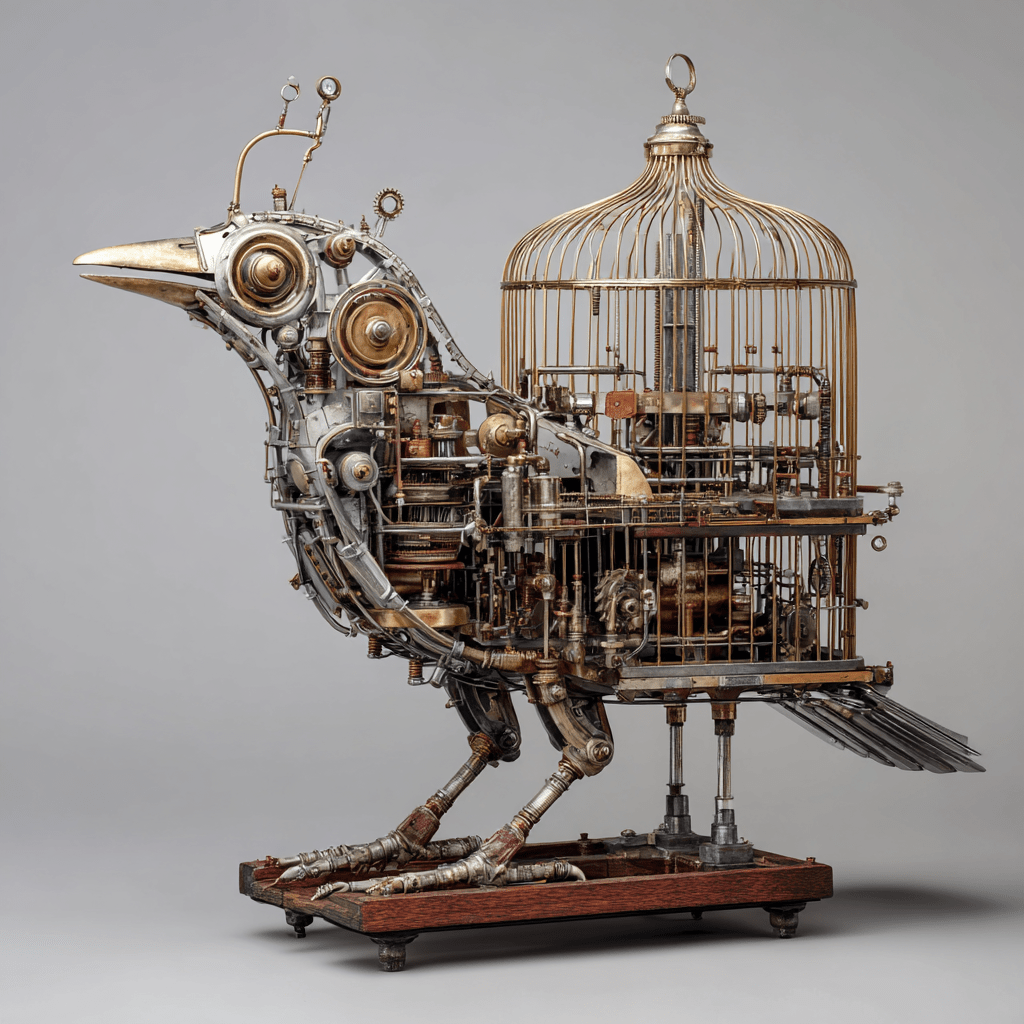
Ask Not Why the Caged Clanker Still Sings

What do I mean sings? Well, I can animate it, but unfortunately not attach sounds….

However, these videos do have songs.

This first one, for those who read the e-arcs or who are waiting for Volume 3 of No Man’s Land, this Erradian Lullaby features prominently in a very emotional scene in it. Therefore I thought it should be shown off.

The next one doesn’t appear in the book, and obviously it’s not an ERRADIAN song (though arranged differently it could be.) I was just thinking of the magicians in their blue cloaks. They march off while the battle shield is still down to try to help the wounded and fix the shields, with the cloaks both a help, because other magicians can find them, and a major liability because people try to kill them.

And it’s been two rough days and I have a headache, so I went ahead and did the song and video.

Don’t Drink Their Ink

Lately I keep hearing things like “England is lost” and “Europe is lost” and–

Keeping in mind that they were never like us — NEVER — and that their system will always be closer to socialism, because it started from monarchy and it’s easy to convert from “subject” to “the happy citizen of Brutopia.”

I actually can’t watch their news when I visit because my head breaks, and then I start screaming at the TV, and then Dan has to grab my arm so I don’t throw shoes through the screen. It’s the little things “The government has decided more slots for pre-school are needed throughout the country. These are the numbers they’ll be building.” I THINK that was Holland. Might have been Spain. Or “the grand pubbah” (I don’t remember the designation) “of housing is ordering the construction of more housing units.”

It’s not real socialism, because they still have food, but I keep running into “Bro, do you even free market?”

But given that they’ve always been like that and got worse over the twentieth century, they’re not as bad as the news portrays.

Look, we keep buying what the news say. And OUR news, which you can’t hate enough, are still way way way more accurate than European news. Because among other things, Europeans believe that the state has the right to control the news. (Remember the French gigolo who commented here ten years or so back? When we told him the government did NOT control our news, he kept telling us “Then who does?” “How can they have news if no one tells them what to say?” Or words to that effect. They really, really, really think that makes some sort of sense.)

And part of the problem is that they assume OUR news too are controlled to paint a rosy picture, so they keep trying to “unspin” our news, which means what they get has… not resemblance to the US in ANY vague way. If you wonder why they think we’re Nazis.

The problem is, we also have no idea what is actually going on over there, because 90% of what we get is their elites planned narrative. Which might not even have a waving acquaintance with the truth.

So, for here, for instance, during Covid(iocy) a lot on our side were traumatized by “They did all this sh*t and people LET THEM.” But… granularly, on the ground, it wasn’t even close to universal compliance. Heck, it wasn’t close to mostly compliance.

Colorado was locked pretty tight, wasn’t it? Well, in the big cities it was, but as we drove out to my MIL’s funeral, we kept going by BILLBOARDS by the road side saying “Our town is completely open, no masks. Please come and shop.” And most restaurants and diners on the way ignored the mask stuff. The hotels we stayed in had signs that said everyone must wear masks, but no one did, really. Etc. etc. And this is in one of the most compliant states.

The other states? Yeah no. And I hear from friends that even in places like Iowa compliance was “by city.” And heck, even in CO, as bad as it was, someone got arrested for walking his fish. Yes, only in Polisland would a policeman think he should arrest someone for that, but OTOH think of the magnificent bastard who heard you could be out if walking your pet, then filled up a ziploc with water, got his goldfish out of his bowl….

But you didn’t hear about these things except under “see how draconian they are!” Only they were only draconian in a case in ten, and the rest of the people were pushing, pushing, pushing all the time.

Don’t forget that. Remember all the cashiers with the mask UNDER their nose? Who would pull the (untied) mask up so you could lip read? They were heroes too, and no, it wasn’t stupidity (I started doing it, when forced to wear masks at the doctor or whatever, because otherwise I had asthma attacks.)

Sure, it was horrible, and they managed to enforce the horrible just enough to tank the economy and steal the election, but our compliance was so so to not at all.

Well, the rest of the world is kind of like that, without the covidiocy. It’s just their priorities aren’t ours, so they don’t automatically foam at the mouth at “The secretary of affairs between middle aged married people will decide who your affair partner is this week.” (I made that up. Probably.) BUT they have their own trigger points.

The British really aren’t happy with the elites attempt to lock up their ability to take the piss out of politicians and tell the truth as they see fit. And no one in Europe is happy with the invasion. Remember the French yellow jackets?

If you get the image of a quiet European populace just going along with everything, remember they’re more like Colorado in the Covidiocy. They have just enough control and compliance to screw things a lot, but it’s nowhere near universal. And there is a point where even the European switch will flip.

The rest of the world is more unfathomable, because frankly we can’t understand them without it breaking our minds. It’s like the mating rituals of the people of Proxima Centauri: If you knew them, it would only disgust you.

However, about the press and its associated mass-entertainment industries: drinking leftist ink poured out in these mediums is how people end up believing nonsense like “fifty percent of the US population is black” let alone all the other bilge routinely poured out like “All blacks are natural communists.”

Look, don’t drink their ink. You know precisely where it’s been. It will only drive you insane.

Instead ALWAYS test everything they say. Always, always, always.

No, not everyone is going along with the invasion of Europe. Because never in the history of ever has EVERYONE gone alone with ANYTHING, including “you must eat to live.”

How big is the resistance? Well, you can tell by how they keep escalating threats and penalties. you remember what they did here, during the Covid lockdowns, right? They kept trying to enforce more and more, because more and more people were walking right up to the light and putting a toe across.

Western civilization isn’t lost. Benighted as it always was (don’t push me now) Europe isn’t lost.

And we? We are certainly not lost.

Let the left guzzle their ink by the bucket full. All it will do is make them crazier, and surely we’re approaching a singularity on that any minute.

Meanwhile, come along and roll up your sleeves. We have work to do. The future ain’t gonna build itself.

And the future always comes from America.

This is not a post

I’m sorry, guys, I had a post started, but my brain has been hijacked by dealing with the unbelievable stupid of foreign bureaucracy.

In the aftermath of dealing with mom’s estate the Portuguese government has decided that I HAVE to be a dual citizen, even though I’m no way a dual citizen.

To wit, I followed the procedure at my naturalization ceremony, of mailing back my passport with a letter renouncing citizenship. I don’t know of any other procedure to do this.

Also so far as I know the US does NOT recognize dual citizenship except for minor children, though we turn a blind eye to it.

To make it perfectly clear: I haven’t had a Portuguese passport in 37 years. My marriage is not even registered in Portugal, nor did I bother to notify them of my name change. My kids were never registered in Portugal and therefore not dual citizens. All my entries into Portugal since 1988 have been on my AMERICAN passport. I couldn’t be more of a non-Portuguese citizen if I had never set foot in the place.

However for inscrutable reasons, possibly having to do with idiocy and taxes, they very badly want to claim this.

I’m very, very close to leading a Hun raiding party to hit them with dictionaries till they get over their illusions. And only because I’m informed a private citizen cannot declare war on a country.

At this point, I want a document saying “I was never Portuguese. You took advantage of my being an infant to falsely imprison me for 25 years.” But they’d probably refuse to get THAT too.

I’m going to try a notarized letter politely (AH!) informing them I renounced the citizenship. (Should I also include some sand I shook from my sandals?)

If it weren’t for the fact that I’d like to see dad once more, and therefore don’t want to be persona-non-grataed before the end of October, I’d turn Heinlein’s picture to the wall, roll up my sleeves and tell them exactly what I think in this post.

Since I can’t, I’ll try the… polite way.

Post tomorrow.

This, That And The Other

I spent the day going over the copyedits for No Man’s Land 3 which shouldn’t be so incredibly tiring.

This is by way of being, basically a state of the writer post. I still haven’t managed to do any real writing since mom died, and…. well…. sometimes I even come up blank on blogs. (See today.)

So I thought I’d share with you another of the …. snippets from Elly.

For those who haven’t read No Man’s Land (if you’re waiting for the omnibus, it will be electronic only and probably only in December, just on having time to do it… This year has turned super-interesting) it is a lost colony of bioengineered hermaphrodites. I chose to use masculine pronouns, mostly because the breed has no breasts, and using “she” immediately brings up a woman’s figure. Also, to be honest, using “she” seems to call for some kind of feminism, which this isn’t, really.

Anyway, this story takes place between book one and two (not volume one and two, but No Man’s Land and Orphans of the Stars.)

The characters are Selbur Deharn, who is technically (but not really) a Brinarian nomad and who had a child by the king. Since the child is Brundar Mahar’s sireling, he’s technically the heir to the throne, so they make the poor critter move to the royal palace, where he’s like a fish out of water.

Another — er — fish out of water is Nikre Lyto, who is Brinarian born and the adopted child of the former king and (still current) archmagician and legally crossibling of the king. Who is also a bit of a fish out of water in the palace, and also extremely shy.

To add another layer to this, Nikre is the most powerful person in the Brotherhood of Magicians (it’s not real magic, but… bear with me.) And Selbur is the head of eighth circle, a circle known for illusions and mind manipulation, but also the lowest power in the brotherhood. (The circle assignment is a “bend” of the power as well as amount. It also involves personality.) 8th circles “snakes” are generally looked down upon/distrusted by all the other magicians.

The Archmouse. Yes, there are fish in his hair…. You’ll figure it out.

Oh, and this is about as “sexy” as the book gets. Actually, there’s more sexy talk in this than in the book. (And it ain’t much.)

Jewels

Nikre Lyto:

I don’t remember when Selbur – Eerlen insisted that since he was now related to the royal family we should all call him by his first name – started to come and sit by the koi pond while I sat there and Missa played by the low wall to the pond.

There was no danger to the child, not even when he leaned over to look at the colorful fish.  Years before my birth some magician had set a safety spell over the pond. You could dip your finger or your feet in the water, but you couldn’t actually dive in.  Unless you were an adult and fully conscious.  Since the water was at most two feet deep, there was no way a conscious adult could die in it.

I’d loved the koi pond my entire life in the palace, and little Missa, now almost two years old, seemed to love it just as much.  It was a vast, tiled pond surrounded by an ornamental low wall, inset in an ocean of well kept lawn, surrounded by shrubs and a wall.

You could get access to it from the family quarters of the royal palace via a long staircase down, or via portal if you were related to the royal family or had been granted access. There was no other way in.

Missa and I were part of the family, if strangely and on the edge, and had spent many hours in this green, shaded oasis, he and I, as I pointed him at the bright spotted koi which were my favorites, some of which I had named when I was not much older than he.  I liked Missa. He was a bright child, with a taking personality, but unlike his sire, my crossibling, Brundar, King of Elly, he was also restful.  He would laugh and run and play, but he could also sit for hours quietly watching the fish, while his nursemaid watched, and I sat on the low bench and sewed or read in peace.

I didn’t pay attention when his birth parent started coming along, and sitting on the long stone bench, at the other end from where I sat.  It took me even longer to see what he was doing.

I’d thought he was sewing. He had a neat, round, about-knee height work basket, of the sort people carried their sewing around in.  It seemed to have a lot of other little baskets inside, which was also normal for sewing baskets. And I’d never looked.

It struck me all of a sudden that sewing of the sort that required a basket was a strange occupation for a nomad, much less a Brinarian nomad.  And I’d seen something glinting between his fingers. So I turned to look.

He was twisting silver wire with a very small pair of pliers. No. The wire was so thin as to be almost thread, and he was weaving it into a band, using a small pair of pliers.  I think the words “What in the Maker’s—” were out of my mouth before I thought them. Though I stopped myself before finishing it.

Selbur looked up and grinned. He has a face like a cat’s. Um…. That sounds strange. No, he doesn’t have whiskers or muzzle or even vertical-slit eyes.  He just has an impish face, with eyes a little too large, and a tendency to look as though you amuse him greatly, no matter what you’re doing.  Which is an improvement over when he was first forced – coerced? – into living in the palace.  As the parent of the only descendant – sireling – of the king of Elly, he couldn’t be allowed to roam Brinar on his own with his child and a bed roll. Not these days with mercenaries of various worlds passionately interested in us. So he’d had a choice of living in the palace or utterly relinquishing custody of his child, little Amissar Deharn. He’d chosen to keep Missa, but spent his first six months in the palace glowering at every one from the king to the servants.

I didn’t realize till that moment that his expression had changed recently. He didn’t precisely look contented, but he looked at peace and faintly amused at everything.

There was nothing faint in his amusement at me.  “Bracelets,” he said. “And necklaces.”  He held up the woven strip of silver wire, with a crystal entangled in it.

I frowned at it, then cleared my throat. I knew – none better – that it took time to get used to being part of the royal family and to the immense hereditary wealth of the Mahars.  Also, to be fair, I’d never had much interest in jewelry, though I had a few good pieces that my sire, the last king of Elly, had given me. But still…  “You don’t have to make your own!” I said. “I mean, I know you won’t ask, but I can hint at Brund you’d like some baubles and I’m sure he’ll give you a choice from the not-bound-to-the-line jewelry box.”

He laughed at me. Delightedly and openly. And no, there was no denying he was laughing at me, though he did it in a way that wasn’t mean, just amused, as though I were being very odd.  “No, silly,” he said. “Not for me. And Brund has already demanded I pick jewels from what appears to be a vast chamber in the basement. Because he thinks I dress too plainly for my connection with him. Apparently Brinarian nomads are supposed to be better dressed. I threatened to pick toe rings.”

I blinked at him. Toe rings was a Brinarian thing. Displayed on bare or sandal-wearing feet, at festivals, they meant the wearer was not picky about whom he’d take as lovers.  Selbur blushed as I blinked. “Not that I meant it,” he said. “But it got him to stop.” He shook the strip of woven silver wire at me.  “These are not for me. I sell them.”

My blinking intensified. It’s a bad habit when I’m trying to understand what I see. “You sell jewelry?”

He nodded. “At festivals and gatherings. And parties.”

I understood he didn’t mean gatherings and parties in the palace, but those he’d be asked to as an eighth circle.

In case you’re an outer worlder and I need to explain eighth circle. They’re weavers of illusions.  Which means at parties and gatherings, they’ll recreate or create stories about past figures, or invented ones.  You know, Amissar Mahar leading the slaves out of Draksah. Or Irt and Eefahan’s romance. Or—

That sort of thing, vividly, happening before your eyes.  Eighth circles get hired to create such shows, and usually paid handsomely, but selling jewelry seemed a weird endeavor.

As I continued staring Selbur huffed.  He dove into his basket and brought out a leather strap, the simplest of necklaces, with a crystal on a woven silver cage hanging from it.  “Here,” he said. “Hold it. I … made this one for you.” He blushed, as he said it, but scooted close anyway, and handed me the thing.

I was both shocked, and somewhat puzzled. I had jewelry. I rarely wore it, but surely he’d seen me wear it when I was required to be at public functions.

And I couldn’t understand why he’d have made something for me. But he had, and he was trying, so I slipped the leather loop over my head, and let the crystal hang at my chest. “It’s very pretty,” I said.  “Thank you.” It was pretty, the seemingly random silver threads letting the crystal shine through.

He smiled and shook his head. “Yes. But—” He sighed. “Put your hand around the jewel and let it open.”
“What?”

“Just…  Put your hand around it. Hold it.”

I obeyed.

Suddenly and inexplicably, I was submerged in water.  Okay, it was visual only, and a sense of coolness. I could still breathe fine.  Around me, colorful koi swam, weaving near me as though I were a particularly interesting reef.  My hair moved as though in wind, and they “swam” through it.

It was… once I realized what was happening, both delightful and restful. As I thought this, a bright yellow koi swam towards me and nibbled gently at the tip of my nose. I dropped the jewel, and turned to Selbur, as the illusion dissipated.  “That was you!” I said. “The yellow koi.”

He laughed delightedly. “Yes. That was me, inserted in the illusion.”

“You make illusion crystals?” I asked.

“Most eighth circles do. Only it’s expensive, food wise. It takes a lot of energy for us low-circle.  Normally I could make one or two a week. I thought since I was living in the palace and have unlimited food, now I’m no longer nursing, I could do two or three a day. And I’ve been trying for more elaborate settings.”  He picked up the silver strip, and brought the two ends together, then handed it to me.  “Would you fuse the ends for me?”

I gave the thing a burst of energy, neatly fusing the ends together. “How do you do that normally?” I asked. It’s not that eighth circles couldn’t expend that energy, but it would probably cause him to sleep for two days.

He grinned at me, looking exactly like the yellow koi, even if not. “I get a high circle to do it for me. Thank you.” He took the circle back. “Usually my sire, to be fair. He’s only sixth circle, but high enough. But Brund will do it without thinking. And I once got Eerlen to do ten in a row, before he realized what he was doing.”

I grinned at him. “You’re used to getting your way with a smile…” I said.

“Yes. The last months have been a lesson to me that there are things I can’t get my way on, smile or tantrum.”

He looked so wistful, I tried to distract him, “What are the other crystals?”

He shrugged, “Song performances, or quiet forest glades, or gardens. I do one for children that has butterflies flying around. It can keep toddlers amused for hours.”

“Do they sell well? I’d think—” I stopped. I’d been about to tell him that surely nomads had enough of quiet forest glades and butterflies they didn’t need to buy them. But I realized he probably didn’t sell to nomads, not at gatherings, but to crafters and merchants in cities.

However he curled his lip and his face looked sullen as it hadn’t in months. “Those!” he said. “I don’t do those.”

I had absolutely no idea what I’d said wrong, or why he looked like that and then he said, “Yes, erotic illusions sell much better, at least at large gatherings and to nomads, but I can’t do them. And I wouldn’t even if I could.”

He looked so angry, I tried to appease, “I didn’t mean—”

“First,” he said, still angrily, “The illusion either comes from our own experience or from–  We can take from people’s memories, but I don’t do that without permission, and not—Not that kind of memory.”

“I didn’t mean you should do that,” I protested. “I was thinking something silly about nomads and forest glades.”

He stopped. “Oh.”

“But now that you started, I’d like to know your reasons. Because I suspect if illusion gems are a way that your circle makes money, that is the most likely way to do it, and I’d like your reasons.”

He hesitated. He opened his mouth, closed it. Opened it again, then sighed. “Well, I can’t do erotic illusions because I simply don’t have the experience on my own. I mean… twice with Brundar, but how do you think Eerlen would take to my selling the experience of sex with his sireling, the king of Elly?”

“Not well?”

“Which is a funny way to say ‘he’d cut you to ribbons.’ Though Brund himself might laugh, I’ll note. But also, second, my experience with Brund is not what people pay for.” He looked up, blushed. “Look, I know it sounds stupid. You’d think that nomads would pay for any sex illusion. Particularly Erradian nomads. I understand it gets lonely in the ice and snow. But most people who buy erotic illusions buy for the…. Exotic. I have heard the talk among those of my circle. To have the experiences people buy, you need to go out, find perfect specimens and do… well, fairly strange things with them.” He was blushing very dark. “I am not…  I will not do that. I don’t … I don’t trust easily. I’d hate to be that intimate with a stranger, much less to ask him to do… things…”

I was less experienced than he, but I had heard about “things” and also read some in the old palace diaries and memoirs. “I don’t blame you,” I said.

He inclined his head, “And also even if I could have or steal the experiences, I’m only an eighth circle, and I can’t put protections on those, so only adults can use them.” He looked up and his gaze met mine. “My parent had four of them. I knew they did something, because he’d put one on at night, and he acted funny, in his hammock.  So one day, when I was eight and he was hunting and I was minding the littles, I tried one of them—” He looked down and was silent a long while. “It was horrible. I threw it into the river. And later—” He shrugged. “Call it why I’ve only had two experiences and with Brund whom I was friends with. Still am. I couldn’t–  There were people who tried—I talked about it with my sire, when next my parent dropped me at the farm to … well, because it was cheaper than feeding me, and my next oldest sibling was old enough to watch the children.  And he explained everything to me, and also that what I’d experienced wasn’t normal. But it still left scars.”

I felt incredibly sad. For Selbur. For his sire. His parent… Well, his parent was known to the brotherhood as trouble. He didn’t have power, himself, but he tended to get involved with magicians. And predatory and insane were not misapplied to him.
I’m not, as a rule, easy with words and feelings. I wanted to cheer him up, to tell him it would be all right. But I couldn’t reach through time to console little Selbur, and my gathering him in my arms and holding him might be taken amiss.  So I said, “You said you can make jewels with other people’s experiences.” As he turned, as though to protest, I said, “Not that. I mean, what kind of experiences? Do people commission them?”

He looked divided. Then nodded. “Swearings,” he said. “And watching their children play. And sometimes a really good hunt or something.  They ask, and they remember the moment intensely and I capture it into an illusion in a crystal. Those are more expensive, because, you know, they’re one person, tailored.”

I nodded. “Selbur? You do realize as parent of the heir, or even, should Brundar have another child, one of the heirs in potentia, you’re entitled to a stipen—”

He was shaking his head. “No. I don’t take money or gifts because I had a child. My parent was always bleeding my sire dry, and telling him I’d starve to death if he didn’t support all of us, my parent and I and my siblings lavishly. All because my sire can’t have children and I’m his only descendant. And he’s vulnerable. I won’t do that to Brund. Missa happened, and I’m glad, and I love my child, but he’s not a money-tap. I am a magician, even if I must seem like a small-power to you. I can support myself. And if the magic fails, I spent enough time on my sire’s farm, I can hire as a farmhand.”
He was glowery again. I liked him better when he was mischievous. I reached out a hand and touched his wrist. “I didn’t mean to offend you, Selbur Deharn.”

He looked up my arm, to my face, then shrugged, and the storm calmed. “No, you probably didn’t. I’m sorry.” He reached into his basket, and brought out a spool of silver thread. “I just… Most high circles or non-magicians who first find that I can and do make these jewels for sale assume—”

“I wouldn’t,” I said. And it was true. Most people would assume things about Selbur because of his parent, but even Eerlen had come around to realizing Selbur was nothing like his parent, and that he wouldn’t – so to put it – wear toe rings, though he might threaten Brund with doing just that. “I’ve come to know you. I wouldn’t assume that of you. Not that it’s… If people want to make those jewels, and if people want to buy them, it’s their problem, but I didn’t think you were the type to do either. And I know you’re absurd about wanting to pay your own way.”

He slanted his eyes at me. “It takes one to know one.”

I laughed. “Yes, Lord Deharn. I do spell stasis boxes and portals for money. But don’t assume I’m as noble as you. I do live in the palace for free, and eat at the family table most nights. I donate most of my earnings to the King’s Children.” Which is the orphanage that gathers unwanted babies into a farm owned by the Mahars.

He nodded. “I heard. Everyone knows.”

There was a long silence, while he worked at the silver to start another bracelet. Then he set it aside, and sighed.  “You know when I said I don’t take other people’s experiences without permission?”

“Yes?”

“Well, sometimes people are quiet and are relieving things so vividly that an eighth circle can’t help but live them.” He was quiet a long time. “If you’ll not challenge me to a duel. It wasn’t done out of evil…”

I was thoroughly alarmed, “I beg your pardon?” I raked my memory for some off color experience I could have been reliving. I liked this area for a reason, and yes, there were things I relived, but they weren’t that.

“You won’t challenge me?”

“No, but what…?”

He sighed. “I meant to give you this, but not yet.  Like the koi, I made this for you.”  He dove into his basket and brought out a rosy crystal, rough hewn. It didn’t have a setting, yet. I reached out and took it in my palm. He nodded at me. I closed my hand.

In the illusion, a portal opened in the middle of the garden, and through it stepped my sire, alive and well, and looking huge. I realized I was seeing him through my very young child eyes, probably no more than six. And that Brundar was there with me, aged maybe two.

Myrrir Mahar was tall, and broad shouldered, blond and blue eyed, and in my memory-illusion, wore a fine knee-length linen tunic, and his blue magician cloak. Which probably meant he’d been on a healing call, as a third circle healer magician, I now realized.

He looked tired as he stepped through the portal, but grinned wide as he saw me and Brund, and chuckled at us. “Ah, my two trouble makers,” he said. And stooping, he gathered each of us into one arm, kissing first Brund’s forehead, with “My warrior.” And then mine, with, “And my Archmouse.” He hugged us close, asking, “What have you done today besides bothering the fish?”

He was warm and solid, and I could hear his heart beat. He smelled of herbs and firelight, and it made me feel utterly loved, utterly safe.

I took a breath, two.  I opened my palm, realizing my face was wet with tears.

“I’m sorry,” Selbur was saying. “I’m sorry. It was such a strong memory, and I thought you might like it. I didn’t realize—”

“It is a strong memory,” I said.  My voice wobbled. “And I like it. I think Brund might like its twin. Maybe for harvest feast? From me? I’ll pay you.”

Selbur, who had gotten up and looked like a forest creature about to bolt, asked, “You’re not angry?”

I laughed through my tears, patting my sleeves for a handkerchief. “I’m very not angry. Thank you, Selbur Deharn.”

He took his handkerchief from his sleeve, but instead of handing it to me, took two steps close, and mopped my face, gently. “You’re very welcome Nikre Lyto.”

It is entirely attributable to insanity that I chose to capture his hand then. And inexplicable that he did not pull away.

After a while, I pulled back and he pulled away. He talked to Missa’s nurse, then walked away.

When he was not at dinner, I thought I shouldn’t have held his hand. What was I thinking? We weren’t even friends, much less … anything else. Besides, which, I shouldn’t even aspire to anything else, regardless of what my idiot mind and heart conjured.

What they conjured was the feel of Selbur’s hand, surprisingly calloused, and an image of his toes, adorned with tiny silver rings. Not that he had any cause to wear toe rings, but the image stayed with me. For all the good it did me. He wasn’t in the garden the next day, and I told myself that I had overstepped badly, and was lucky he’d not decided he needed to cover it in blood. He was a nomad, after all.

Eerlen had taught me to duel – fortunately, as I’d had to do it twice in my life – but I didn’t think I could strike out at Selbur. Even if I didn’t like him – and I did – he was Missa’s parent. I couldn’t orphan Missa. Who came to get me from my bench that afternoon, and led me to the koi pond, to point at fish and demand I tell him their names and stories. He couldn’t yet talk, but he was insistent in pointing at each of the fish until I told him the name and what I thought was the origin of the fish, and who his offspring looked to be.

When he was tired, he pulled me by the hand to the bench, clambered on my lap and fell asleep there, thereby ignoring his nursemaid. Who just smiled.

Unable to work, I was almost asleep, myself, when I heard Selbur’s voice, in front of me. “I see you have been sweet-talking my line-child, Archmouse!”

Anyone else, and I’d have protested the pet name my sire had given me, and which only my sire had ever used for me. But there was a gentle arching smile in Selbur’s face as he said it, a teasing challenge in his eyes that made the name entirely appropriate on his lips.

I rumbled, my voice sleep-thickened, “More like he’s been sweet-talking me.”

Selbur dropped by my side. He was wearing, I noted, a fresh linen tunic, ankle length, and practical work boots. His hair was taken up and pinned in a messy bun. If he were an upper circle, I’d assume he’d been called away on an emergency. He leaned over and caressed Missa’s dark hair. The child moved in his sleep.  “That is a feat,” he said. “For someone who can’t speak a word.”

“He points and grunts very eloquently.”

Selbur laughed. “Does he ever. Normally it means “I too like that food on your plate.”

“In this case,” I said, adjusting the child’s position on my lap. “It was a request to tell him stories of the koi.”

“I should make him a jewel like yours. Will help him sleep. He does love those fish.” He raised an eyebrow at me. “Perhaps it’s something about growing up in the palace?”

I shrugged. “In my case, I think it was because I missed the fish.”

He looked puzzled.

“I came from a fisher village. I mean, you know I’m not Eerlen’s and Myrrir’s natural offspring.”

“I know the story,” he said, and looked away into the middle distance. “Among my many not favorite things of living in the palace is how everyone gossips.”

I laughed. “No. But …  fisher children and certainly I, since I was often unsupervised, play in shallow pools, where there’s often tiny fish. Here–  Well, the koi were fish, and they were bright and colorful, and interesting. Eerlen used to bring me to see them.” I paused. “I didn’t speak for a few months after they brought me here, and Eerlen did anything that seemed to make me happy.”

“Couldn’t you speak?” he asked, curiously.

I shrugged. “I don’t know. It’s all clouded in my mind.  I think I could? But … I’d been feral for a year. I understood language. I understood Myrrir telling me I was his sireling now. But I don’t know if I understood I could talk to people.”

He tilted his head looking at me, but didn’t say anything.  Instead, he took off a bag I hadn’t realized he was carrying on his shoulder. It was a small, leather satchell.  At that moment, I heard steps behind us, and turning back saw Missa’s nurse walking towards us, carrying a tray.

“I asked him to get us tea,” Selbur said.  “And some of the raised bread from the kitchens.” He moved away from me, and the nurse set the tray between us, then bent back to retrieve Missa from my lap.  I must have hesitated, because Selbur said, “Let him take my little troublemaker. He’ll sleep better in his bed and be in a better mood at dinner with his royal sire.”

I let the nurse take Missa. Not that Missa ever misbehaved at dinner. Well, not by being angry or loud. He did get in a mood, though, where he would hop from one lap to the other and disrupt everyone’s dinner. Unfortunately unlike Kitten, Eerlen’s child, or Irid, Lendir’s child, Missa’s presence at the very public dinner table was needed to reassure people there was an heir, even if not a child of Brund’s body.

Selbur brought cheese out of his bag and set it on the tray. Several small wedges. I raised my eyebrows at him, and he smiled at me, “I brought you cheese, Archmouse. You’re too skinny. No one will want to tumble you if you don’t put some weight on.”

I made a skeptical sound, as he poured tea into one of the two clay cups next to me, and another in front of him.  He added a tablespoon of honey to mine, having somehow known my preferences. 

“How would you know no one wants to tumble me?” I asked, taking up the cup.

He gave me a delighted cackle at my rising to the bait. “Gossip, remember? Gossip is many have wanted, none have succeeded. Both here.” He made a gesture encompassing the palace. “And in the brotherhood.”

“People have strange ideas of what is interesting gossip,” I said.

“Archmouse, you’re the Archmagician’s body child, the sireling of a king.” He gave me an up down look so obviously evaluating that I almost dropped my cup. “And don’t appear to have an extra head, be missing a limb, or have a tendency to smell bad. What is shocking is that no one has knocked you on the head and tumbled you before you realized what’s happening.”

“I have protective spells.”

“I wonder if that is the truth or a joke.”

“A joke,” I said. “My true defense is that Eerlen taught me to duel. And Myrrir taught me sword play.”

“Mmm. Your family’s fascination with bladed weapons is either admirable or insane.”

“I suspect yes,” I said. He’d cut the cheese into little slices, with his ankle knife, and I took a small piece not bothering with the bread. It was…. Extraordinary. Strong, but buttery and rich. I’d only tasted something like this…  I swallowed.  “Calenir? You brought me Calenir cheese?”

He waggled eyebrows at me. “Better than knocking you on the head, yes?”

When I didn’t dignify that with an answer, he smiled. “My sire is Calenir of Calenir. Didn’t you know?”

I shook my head. “I think… around Missa’s birth, a servant said you were at the farm, but I thought… Calenir of Calenir?” I must explain what that meant and why I was staggered. To begin with, I knew that Selbur wasn’t pure Brinarian, though that was the place he identified as his home. And his parent was a Brinarian nomad. Selbur was too tall, lighter skinned than even I – and I was light for a Brinarian – and had blue eyes, even if they were so dark you only noted the blue when the light caught them. Also his features weren’t quite Brinarian, though don’t ask me to explain that. They just weren’t. They were too delicate, too fine. I had heard that his sire was Lirridarian, which explained the features. Lirridarians are as tall as Erradians, and as blond, but the resemblance stops there. The joke is that if there were enough Lirridarians at a gathering, no one else would be picked up. As a breed–  Well, we suspected they’d been refined by the Draksalls for being pretty and having facial features that most resembled the Draksall female features.

But Lirridarians and even dairy farmers are one thing. There were many, many dairy farms in Lirridar, but there was only one Calenir.

Calenir was a line name. At some point, a couple hundred years back, the first Calenir had started breeding his cows and perfecting his cheese process in the deep, wind-swept sea-caves near his farm. The farm had grown and was now a network of farms. His clan had grown along with it, and the central line which owned most of the farms and hired most of the clan, had become ridiculously prosperous. One of the few farmers – crafters, I guess if you consider cheese and butter making were crafts – whose wealth rivaled that of the lords of the land. Their products sold for double what other cheese, milk, cream and butter sold.

They deserved it, too. Brundar sent for their milk, cheese and cream, though not for all of the palace needs.

The Mahars owned two Lirridarian farms, themselves, so it would be wasteful to get all from Calenir. But for special occasions, and guilty pleasures, that’s where we sent for dairy.

Why the line child of a Brinarian nomad would be sired by the wealthiest dairy famer in Lirridar was a mystery.  But the bigger mystery was why that child would choose to be a nomad?

Selbur took another slice of cheese, and stretched his feet in front of him, looking towards the koi pond.  “I’m his only, you see?”

“His only sireling?”

“His only descendant of any kind.”

The mystery deepened. “But then why…?”

I presume he hopes you’ll give him your second chil–” I cleared my throat and said, “Pardon me. Your sire’s line decisions are not mine to question.”

He laughed, but it wasn’t a happy laughter. “Yes. He does hope I’ll have a second child and give him Calinar as a line name. Because I refuse to take his name for myself and little Missa. He would prefer to adopt me as his line child.”

“But you… owe it to your parent…?”

He hunched a shoulder. I said, “I beg your pardon. Truly none of my business.”

“I owe nothing to my parent,” Selbur said. His voice was slightly hoarse. “Without my sire, I’d not even be alive. I understood he left me with my sire at days old. My sire hired people to feed me. I lived with him till I was five, when my parent came to get me, because he had two younger children, and thought I was old enough to watch them while he hunted and while we did a nomad route. He was right. I was old enough. I stayed with him until I was twelve, when he thought—” He paused. “People were starting to notice me. Not that I wished to be noticed. But it took attention from him. And my next older sibling, Terid, was old enough to watch the littles. So he dropped me at my sire’s farm.” He paused. “Then when I was sixteen, he demanded I become a nomad, or he would duel my sire for kidnapping me.”

I was speechless. “I’d heard of Verit Deharn, but—”

“You didn’t know the extent of it?” Selbur’s voice was hard.

“I didn’t realize he’d treat his own child that way. I’m glad you had your sire.”

Selbur sighed. “So am I, but the thing is, I can’t promise my parent won’t try to kill my sire, if I let my sire adopt me. My sire says he wouldn’t mind. He miscarried, when he was very young, in a way that made it impossible for him to conceive again.  And healers say he’s unlikely to produce sirelings.” He gave me a brittle grin. “I’m unlikely.”

“Miraculous, I’d say,” I said. “But surely your sire can afford security and stay safe? Your parent is not supernatural.”

“Madness is its own power,” Selbur said. “But yes, my sire says that too. That he doesn’t care what my parent threatens, he can stay safe. But…”

“But–?”

“He doesn’t deserve that sort of hassle, Archmouse. He doesn’t deserve to be hunted and live with a threat on his life.”

“I think,” I said, eating a slice of cheese. “You have rats in your head, sireling of Calenir of Calenir. I can’t imagine you’d prefer nomad life to living at Calenir.”

“I don’t.  Not that it’s–  It’s where I was, you know? These few days? My sire still works hands on, on the farms. And it’s calving season. He asked me to come help. I know—I grew up…  They call me young Calenir.”

“Well, young Calenir. I’d take his name and give it to little Missa.”

Selbur sighed. “For the longest time I didn’t even wish to have children, because they might—They might be like my parent. Missa was an accident. But I don’t think he’ll belike that.”

“That… I understand,” I said.

“Oh, is that why they’d have to knock you on the head, Archmouse. Terrified of bearing a wild Erradian nomad?’

I shook my head. “No. My sire.”

The eyebrows climbed. “Myrrir Mahar, king of Elly, my child’s grandsire? The person you still miss so intensely I could read the impressions without trying?”

I shook my head. “My birth sire. The one who seeded me.”

“Oh, the one who tried to kill you? And might have killed your parent?”

I shook my head. “No, my real body sire, not my parent’s sworn.”

Selbur gave me a troubled look.

“Selbur, you’re an eighth circle, not a small power. You’re head of eighth circle. You can read the pattern under the adoption pattern.”

He frowned at me, and I realized while he could he needed to make an effort and he’d honestly never tried. I thought that it was gossip in the brotherhood, but I guessed fear of Eerlen, and possibly Brundar, had kept them quiet.

I saw Selbur’s eyes unfocus as he looked at my pattern. I saw his lips purse.  I saw his jaw drop. I waited for the startled leap away from me, for something to reestablish distance. I picked up my cup of tea and sipped, ready to pretend to be unaffected.

He didn’t leap away.  Instead, he closed his mouth with a whistle.  “Does—” he said, then shook his head. “Who knows?”

“Everyone, I assume. At least everyone in the inner circles. I’m surprised it’s not gossiped about.”

He shook his head. “Never. How? I—I mean, he wasn’t—”

“My parent was sworn, and his swearing wasn’t broken, so it wasn’t consensual.” I sighed. “When I figured it out, when I was apprenticed as archmagician and saw the pattern that looked like mine, under the adoption, I was … curious. I found the village I came from…  I could trace the patterns Eerlen had opened, from my memory, you see. And—”

“And?”

“They knew. My parent was sixteen. I think his sworn, the same age, was not very good from beginning. My parent was on the beach, mending the nets, alone, after everyone had gone home for the night.”

Selbur sighed. “Drahy liked them young. And Brinarians are small. I mean, it was before my time, but there are stories…”

“Yes,” I said, drily. “It certainly explains why I have an archmagician pattern, from a village without even a single small power… So, my parent caught. But he hadn’t called rape. No one knows why. He had no power, so he couldn’t realize he’d caught early. Perhaps he was scared his sworn would be upset? As I said, I don’t think it was a very good relationship. So he—” He shrugged. “Didn’t cry rape. Not even after it was obvious he had caught. Not even when I was born. If he’d cried rape and left me on the beach for the tide to take, no one would say anything. But he didn’t.

“I don’t think my parent’s sworn killed him, except by not helping him at all, and not letting him have more of the food while he was nursing. The whole village said he was very thin and weak at the end of the year of nursing. Then he got sick and died. My legal sire couldn’t expose me by then. But he could try to kill me if it looked like an accident. He tried harder after he swore again.” I was quiet a while.  He was very close, separated only by the tray. “Eerlen never told me. He never asked me if I’d seen my own pattern.” I sighed “But I don’t rightly blame my legal sire. And I am not sure I wish to pass the legacy on.”

Selbur’s hand grasped my shoulder and squeezed hard.  “Speaking of rats, Archmouse, you’re badly infested. We are all descended from rapists. Maybe not as close, but all of us are. And that is something none of the gossip says about you. Unattainable, yes. Rapist, no.”

“Yes, but—”

He took a slice of cheese, brought it to my lips, popped it in. I had no choice but to chew.

“Archmouse,” he said, very seriously. “Someone is going to keep feeding you cheese until you’re so confused you let him drag you off and tumble you.”

“Someone,” I said, in a grumble. “Thinks very highly of his cheese.”

He laughed. “Well, it’s Calenir, you know? I use the best for my seduction attempts.”

“Does that always work?”

“I don’t know. It’s the first time I’m trying it. But I think with persistence, it might.”

As much as I wanted to hold on to my fears, my isolation, my sense of owing both to the parent I didn’t remember, as I looked at Selbur’s little cat face, the challenge in his eyes, I started to suspect he might just be right.

Why So Slow?

Where are the arrests? Where are the arrests? Where are the arrests?

Weirdly — ah! — the same accounts pushing that are also the ones who want us to “shoot back” or of course like the charmer yesterday to just go ahead and shoot all elected representatives. (Yeah, because they and not the bureaucracy are the “real” problem. Seriously? Also way to attract good people to government. what the heck is wrong with people’s minds, actually?)

Look, I know we saw the frauding of 2020 in person, in real time. I know we had our faces rubbed in “we can make you do things, and you can’t hit back.”

I understand being angry, and I understand how great that anger feels. And I UNDERSTAND how much you want to hit out and put all the smug smiling bastages in the pokey.

Something you should always remember about someone pushing your emotional buttons to get you to do what your emotions are telling you to do anyway, is that this is how they manipulate you. Because it works.

The other thing you should do is ask yourself “who would win if we did that?”

Look, Comey and Schiff and…. I get why you’d want their malfeasance exposed and them locked up. I DO.

But that’s not the way to do it. Not going forward.

The left did this stuff and largely got away with it, because they have the power of propaganda. They still own a substantial part of the information industrial complex. It’s not working as well as it used to, but it’s working better than our non-existent one.

So they can do things like make BLM a thing and George Fentanyl a poor victim by repeated propaganda. (The lockdown helped with that.) BUT we can’t do that. We can get word out to the extremely online, and some trickles out to normies, but not that much.

Don’t believe me? Go and ask some of your not-online co-workers who Comey and Schiff even are. Much less Eric Swalwell. Much less his online name of Fang Fang Bang Bang.

Also understand in our hierarchy of needs what we NEED is for the left’s malfeasance to be EXPOSED in the light of day. It doesn’t matter if we actually get them in jail or punished, but it is vital that what they did gets exposed for all to see, that they get discredited and reviled.

Yes, you want them punished. Well, I do too. But in the long run, for the principles of history, that’s not as important as their being THOROUGHLY exposed and discredited, and everything bad and illegal they’ve done laid bare.

If I had to choose only one, I’d choose the second.

Because the first, given their still superior hold on the machinery of propaganda, would make them martyrs for the cause, and give the left — and the foreign opinion, which shouldn’t matter but still does as far as the world is complex — the “certainty” that Trump is a dictator and evil. (No, they didn’t hear about Biden’s abuses.)

While the second makes it impossible for them to do it again.

So, do I know what the Trump administration is doing? No. I also don’t know how much deep state landmines they’re contending with, but I can guarantee to you 100% that the answer is “A lot, a lot”. BUT what I hope they’re doing is exposing the evil, the crimes and the corruption, and not moving legally till they have everything tied up.

Even our founding fathers, before moving onto their just cause had a “decent opinion for the opinions of mankind.”

We too need to have that. Because it would be stupid to paint ourselves as the real threat while struggling to save the nation.

OF COURSE you’re allowed to hope we get both AND. I too want it all exposed and the evil bastages in jail.

But I’m willing to give those doing the work elbow room to do the work. Because the alternative is worse than their doing nothing. And exposes us to worse than Biden.

So, sit back. Take a deep breath. And remember revenge is best served COLD.

The Face Of War

Hold to the 48 hour rule, on the events this weekend. We don’t know precisely why there were two very strange shootings, both by US Marines. And of course, times we live in, I’m suspicious. You’re suspicious.

Ladies and gentlemen, when Powerline blog, one of the most milksop blogs on the right sounds like wild eyed conspiracy theorists, everyone is suspicious.

Mostly, though, the shootings were weird. As in, it would be hard to divine why those victims were picked, and what in heaven’s name anyone would do that for: anyone, left, right or polka dotted. This by itself is a beat of a feat in an age when the left has tried to — and largely managed — make EVERYTHING political, up to and including the color of your skin (often erroneously) and who you sleep with.

Even given that, the atrocities this weekend beg the question of: What sense does it make?

I want you to consider — other than possible activation by mysterious behind the scenes forces, to change the national conversation, and note I’m not laughing at this, which means “ten years ago Sarah” is staring at me in horror from the back of my mind — that 2020 broke people. It broke people BADLY. I see it in my own family. I see it in my circles. And I see it in myself.

Mind you, a lot of us broke in the sense of “I’m now full blown introvert, and will just glare at people if you take me out, and spit like a cat if I’m forced to be around strangers for a full day.” But other people broke in other ways. And I doubt very much there are any of you out there, who don’t know what I’m talking about. In fact doing impromptu, small mental health adjustments has become a thing in everyone’s friendship circles.

Terms I used for my own mental health management (keeping in mind that I’m a raging depressive) have escaped and are now in the wild, seemingly everywhere “out of spoons.” “Reality testing” and of course “kicking the black dog.”

There are reasons this happened. The lockdown itself was quite literally mind-breaking for many of us. We thought, you see, we had some amount of control over our own lives and that we could prevent catastrophic nonsense like a whole-country lockdown (close enough) from being enacted. We thought/felt “it can’t happen here.” The lockdown stripped that illusion, and unfortunately that was a load bearing illusion, at the bottom of our certainty we could deal with life.

Then it was followed by a train of horrors (which were the real reason for the lockdowns, of course. Starting with the stolen election (any lefty reading this and taking offense can put it where the sun don’t shine. You have to be mathematically illiterate to think those numbers and that spike made sense. Your ignorance and illusion are not our fault) and then the Biden administration heading the plane of the economy straight at the ground and taking off all safety restraints, including borders. (A country without borders is not a country. Culture is not that easily acquired by crossing a border, particularly when you come in bearing the flags of your country of origin. What it was was war with a mass of people being used as weapons.) And then pissing down our necks and telling us it was raining, while even those of us who no longer have kids in the house, and who are doing relatively well were feeling pinched.

Then there is the fact that those of us on the right, religious, whatever form of dissent from the crazy cakes left felt under pressure in various ways, including being afraid of being debanked and/or having our instruments of monetization online taken away at the drop of a hat. Heck, even putting fiction books up on Amazon became a matter of “beat the harassment gauntlet.” (Like when I had to prove I’m myself and wrote my own books (Note not even the pseudonymous ones) including writing a contract with myself. Which they then rejected because the signatures were both the same. (Well, dur.))

And then there were the deaths. Dear Lord, the deaths. Some of this is perhaps because those of us who were “the kids” looked down upon by the boomers are now at a time when it’s not unusual (even if, unlike in the village when I was growing up) to have someone just up and die. Or get some horrendous, galloping cancer. And of course, all of us had boomer friends and/or siblings, not that much older than us.

But there seems to also be a link between the Covid vaccines and cancer. I thought, even five years ago, my friends who kept talking about that were being nuts. I thought the vaccine would be ineffective and disastrous for someone with my bizarre immune system, but I didn’t think it was carcinogenic. I’m now at the point of cautiously saying “Well, perhaps.” And also, of course, there were all the delayed checkups, the postponed routine health stuff so many of us STILL HAVEN’T GOT BACK TO. (We haven’t had a proper full exam that we used to do annually since 2020. Because we’re trying to catch up on all the rest of life.) And the fact that many people who are now working from home are single and live alone, which means less chance of catching “You’re looking odd.”

Oh, maybe it’s been just my experience, but it seems like every other week I lose a friend, a family member, a childhood ducttape relative. To the point I’m now afraid of reaching out to someone I haven’t heard from in a few months.

All of this to say that people who have lost a lot of people, and who have slipped their moorings in real life/community can crack in weird an unexpected ways.

So, yeah, maybe people are being activated. Or maybe they’re just cracking wide and becoming bizarre and lethal in ways that are unfathomable from the outside. And yes, this would seem to apply to the leftwing shooters, including Kirk’s assassin. Yes, we know why he did it, he pretty much told us by engraving the bullet casings (honestly, the decline in literacy from, say, the unabomber, is palpable. I mean, murderous nutcases used to write pages and pages, not goofy one liners.) not to mention his texts to his light o’love. But let’s face it, outside the airless chamber of leftwing insanity, it didn’t make any sense either. Because labeling Kirk an “extremist” should be enough to have you put in a straight jacket. “There’s this “extremist” who insists on politely debating the other side” is not a thing. Not in any sane reality.

That a lot of the people cracking are trans is not a surprise, either, because regardless of the fact that the left makes a concerted effort to convince them we want to kill them (this is bizarre) there is the fact that you don’t get to that point, particularly as a young person, rightly or wrongly, without some fairly traumatic stuff leading you there. So you’ll already be particularly vulnerable. And then transing, let’s face it, will carve a huge slice out of your family and friends support. So you’ll be ripe for cracking wide, and your support net will be gone.

And… It could be that’s all that’s going on with the violent events of the last month. In which case, it’s going to get worse. Much, much worse, because the number of people still holding together with spit and bailing wire that will lose it at one more incident/one more event/one more death is high.

On the other hand, yes, we do know the left is cheering on the violence — sorry, for the lone lefty reading this. Yes, it’s your side. No one on the right cheers when lefties are murdered. I confess to having received the news of some deaths with pleasure, but they were mostly foreign and horrific. The one that comes to mind is Yasser Arafat — and in their groups trying to dare each other to do the unspeakable.

Which means that a lot of the left-violence that can be identified as such is part “they cracked” and part “yes, it’s intentional.” Though of course, the cracking matters because it’s the most vulnerable actually going murderous. (Kind of like Hamass strapping suicide vests to disabled kids.)

But guys, the point I want to make, and please, if you listen to anything I say, listen to THIS: This is what civil war would be like. A very mild form of what civil war would be like, in these United States in 2025.

For the last few weeks, on Twitter I’ve been smacking bots, trolls and people who believe the bots and trolls saying “How long are we going to let them shoot us down before we shoot back?”

And I tell them over and over “you might think you want civil war. You don’t want civil war.”

And they shout back we’re already in a civil war. We’re just not shooting back.

Because in their heads, somehow, there’s “sides” and “one side” is shooting at the other.

Let’s grant that Charlie Kirk was broadly on our side and that his assassin was very much on the left’s side, sure. Let’s also grant that the left has wound up people against, say, Catholics (Anyone remember “rosary extremists?”) for the last five years. Still, what sense does it make to slaughter a bunch of kids at mass? Or to shoot up a religious school? In “political” terms. even with the left making everything political?

Note, I’m not disputing those were terroristic acts by the left. What they weren’t is strictly speaking acts of war. (Excepting killing CK which was done to silence him. But even there the targeting is weird, because there are people on our side that should be more annoying to them. Heck there are a few that are more annoying to me, even if I’d never hurt them.)

I’m also in no way approving of or condoning all of these terroristic acts. Or excusing them.

What I’m saying is “as acts of war, they make no sense.”

Which is the problem of a civil war amid a population where the sides are not just distributed but emulsified, so that one side is penetrated by the other, often by stealth and in silence because the penalty for uncloaking has been cancelling and character assassination for over fifty years. (Meaning our side is distributed among them, btw, not so much the other way around. Yeah, lots of teachers and health professionals being lefty loons, but mind you, we by and large knew who they were.) Oh, and one side — the left — controls the propaganda war and claims vast swaths of people, completely disregarding their actual thoughts and opinions.

I’ve said for decades that the right has lousy targeting, because I’m often regarded as the enemy because I’m tan (depending how whether I’ve been living inside for months), have an accent, and dress like a hippie (or like someone who can’t be arsed to go to the hairdresser, much less wear makeup.) And I have friends who also tend to be miss-assigned for various such ridiculous reasons.

But now I know the left is equally blinkered as to choosing the enemy. Because, frankly, yeah, killing religious-school-children is always wrong. Hell, I believe killing children is always wrong. BUT I also read the messages left in the Catholic school memorial, and they were notable for “let’s get rid of all guns” etc. The left still thinks of the Catholic church of the early twentieth century, not the “penetrated by leftism and liberation theology” Catholic church that often had me going two hours away for mass where I didn’t get CNN repackaged as a sermon.

The thing is, for the type of civil war this would be — kindly remove from your head the idea of two ranks of fighters, and territory falling this way and that. That’s not what the nation looks like, and that’s not what it would look like — this is exactly the type of thing you’d see.

You might be able to tell “which side” the killer thinks he’s on, but you might not be able to tell by the victims he picks, because that might only make sense in his very fractured mental map.

So when you say “they’re shooting at us” — define us — and “we should shoot back” — define at whom.

Even if you go by “those who did us harm” during the lockdowns, and decide, say, to kill all health professionals who told you you should have the vax: do you know how many of them were told they had to do it or lose their license, and be left with life-crippling debt? Do you have any idea? (I’m going to guess off the top of my head at least half. My doctor at the time, in tele health appointments, kept looking like she’d taken up day drinking and refused to mention the vax which I’m sure hurt her career.)

And if you decide to cull the teachers teaching bad stuff, again, do you know how many of those are our people, embedded with the enemy and just trying to stay hidden, so they can at least make a small difference? Because unless you know these people personally, how would you know? From a game of telephone of “someone said they said?” (Remember the left thinks Charlie Kirk called for dragging gays to death. Because soundbites, highly edited with no context can say whatever you want them to.)

Self-defense is always right, but self-defense means defending yourself against someone attacking you right now, not deciding that your neighbor who is flying a weird flag is “part of them” and therefore I should take him out. (And the flag turns out to be a one-off, custom for his book club which meets at the house.)

The truth — and if you look at histories of civil wars throughout the centuries, it was always like this to an extent, even in civil wars that had territories and armies — is that most such violence will end up being directed at whatever pisses off the shooter and make absolutely no sense outside their own heads.

In the American revolution, there were a lot of people killed and homesteads burned to the ground because someone THOUGHT they might be loyalists/revolutionaries. The civil war was even worse that way.

And in our time, given the multitude of characteristics the left has claimed as “on their side” and the number of people who are completely submerged on the left while being very much on our side, either for professional, personal or even heroic reasons, my guess is that each side would mostly hit their own, or random bystanders.

Now, if you want to live in a country where wearing jeans, say, will cause you to be shot down in cold blood, or attending church is an exercise in courage, or simply BEING slightly tan is reason to be wary, then yeah, maybe you want a civil war.

But if you don’t like any of those scenarios? Maybe consider that the people telling us we have to resort to violence and “shoot back now” are not our friends, or frankly friends of the republic.

At a time when we’re winning, inch by inch, legally (look, there’s a post on that tomorrow. On why we can’t have half assed indictments or arrests because they’re not in our best interests, but progress is being made, slowly) and when we’re dismantling a lot of their finances, the people who think violence is necessary are almost all on the left. Or those who want to incite you to give the left what they want.

Be not afraid, but be not a fool.

And keep your clothes and weapons where you can find them in the dark.