Book Promo
If you wish to send us books for next week’s promo, please email to bookpimping at outlook dot com. If you feel a need to re-promo the same book do so no more than once every six months (unless you’re me or my relative. Deal.) One book per author per week. Amazon links only. Oh, yeah, by clicking through and buying (anything, actually) through one of the links below, you will at no cost to you be giving a portion of your purchase to support ATH through our associates number. A COMMISSION IS EARNED FROM EACH PURCHASE.*Note that I haven’t read most of these books (my reading is eclectic and “craving led”,) and apply the usual cautions to buying. I reserve the right not to run any submission, if cover, blurb or anything else made me decide not to, at my sole discretion.– SAH
FROM TALEENA SINCLAIR: Everything Beautiful In Its Time

Everything Beautiful In Its Time
A Collection of Poetry
In Everything Beautiful In Its Time, the ancient rhythms of nature interweave with timeless spiritual wisdom to create a contemplative journey through both calendar and conscience. This collection moves from the observable world—spring’s capricious winds, summer’s dappled light, autumn’s memory-harvest, winter’s patient stillness—into deeper territories of the heart where biblical wisdom meets personal experience.
Drawing inspiration from Ecclesiastes’ meditation these poems explore the appointed times of human experience: birth and death, planting and harvest, mourning and dancing, silence and speech. Through intimate narratives of family, marriage, and faith, the collection traces how divine purpose unfolds in particular moments—a child’s escape from garden labor, the forgiveness cycle walked along Pacific Northwest cliffs, the gamble of loving deeply.
Rich with sensory detail and anchored in place, these poems speak to anyone seeking meaning in both the sweetness and sorrow that come to every table life spreads before us.
FROM TOM ROGNEBY: Battle Buddy

An old friend came to visit when Anna least expected him. On a rainy day, a cup of coffee and conversation leads to what she needs most.
Pilgrims are washed ashore on a small island, interrupting their journey to change history.
Space Marines fight a battle to secure a derelict space station.
All this and more, from sword and sorcery to space shootouts to ghost stories.
BY GEORGE WASHINGTON OGDEN, REVIVED BY D. JASON FLEMING: The Trail Rider (Annotated): The classic pulp western

In the heart of Kansas, Texas Hartwell arrives seeking a fresh start, only to be drawn into a web of deceit and danger. Hired as a trail rider, Hartwell’s life takes a dark turn when he is framed for introducing infected cattle onto the range. As accusations fly and tensions rise, Hartwell must fight to clear his name while navigating a landscape rife with betrayal and unexpected alliances.
Amidst the chaos, Hartwell finds solace in his love for Sallie McCoy, the dedicated schoolteacher who sees the truth in his eyes. Yet, his path is complicated by Fannie Goodnight, a woman caught in the crosshairs of the cattle rustlers, who harbors a secret affection for him. Uncle Boley, the loyal bootmaker, stands steadfast by Hartwell’s side, offering unwavering support in the face of adversity.
Hartwell must confront his enemies, unmask the traitors, reclaim his honor and protect those he loves.
Join Texas Hartwell on a journey of redemption and resilience, where the line between friend and foe is blurred, and the true measure of a man is tested.
- This iktaPOP Media edition includes a new introduction giving the novel historic and genre context.
FROM NATHAN C. BRINDLE: The Lion and the Darkness (Timelines Book 4)
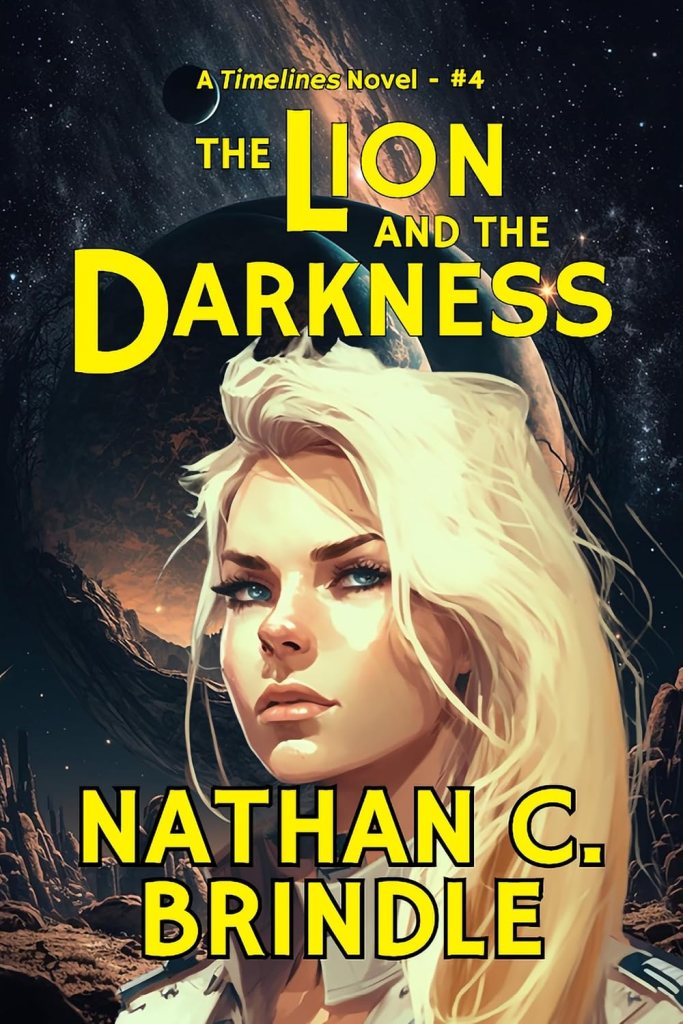
The Long-Awaited Sequel to The Lion in Paradise
At long last, Ariela Rivers Wolff begins her mission to the Simulated Worlds.
As the Martyr of Sardristra, she finds herself in the position of a Joan of Arc, burned at the stake for preaching a sermon of love to a very violent race of . . . blue, four-legged, four-armed, sort-of-horse analogs. Five hundred years later in their history, she finds a totally-reversed welcome as “Saint Ardreyelya” in the country in which she first appeared. Will she be able to prevent the rest of the world from destroying “her” people before she can convert them, too?
As the Goddess of Mahoukai, she finds herself the deity of a world religion in a world governed by magic. And like all worlds with magic, inevitably there is a Demon Lord. She’ll have to deal with that Demon Lord before the world of Mahoukai can be realized into the True Universe . . . but in the event, the Demon Lord is an infiltrated agent of the very enemies she is sworn to fight in the real world. Can The Lion of God take on a Darkness, single-handed? If not, it may spell doom for the inhabitants of Mahoukai – and for herself.
FROM BLAKE SMITH: The Hartington Inheritance (The Hartington Series Book 1)
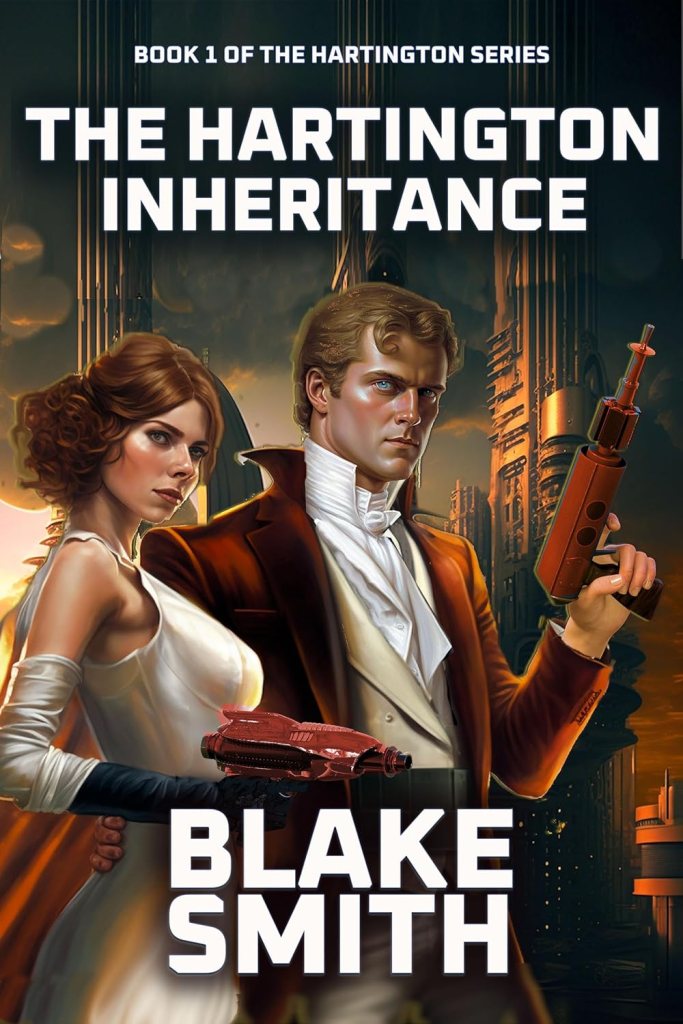
Almira Hartington was heir to the largest fortune in the galaxy, amassed by her father during his time as a director of the Andromeda Company. But when Sir Josiah commits suicide, Almira discovers that she and her siblings are penniless. All three of them must learn to work if they wish to eat, and are quickly scattered to the far reaches of the universe. Almira stubbornly remains on-planet, determined to remain respectable despite the sneers of her former friends.
Sir Percy Wallingham pities the new Lady Hartington. But the lady’s family will take care of her, surely? It’s only after he encounters Almira in her new circumstances that he realizes the extent of her troubles and is determined to help her if he can. He doesn’t know that a scandal is brewing around Sir Josiah’s death and Almira’s exile from society. But it could cost him his life, and the lady he has come to love.
FROM HOLLY CHISM: Light Up the Night
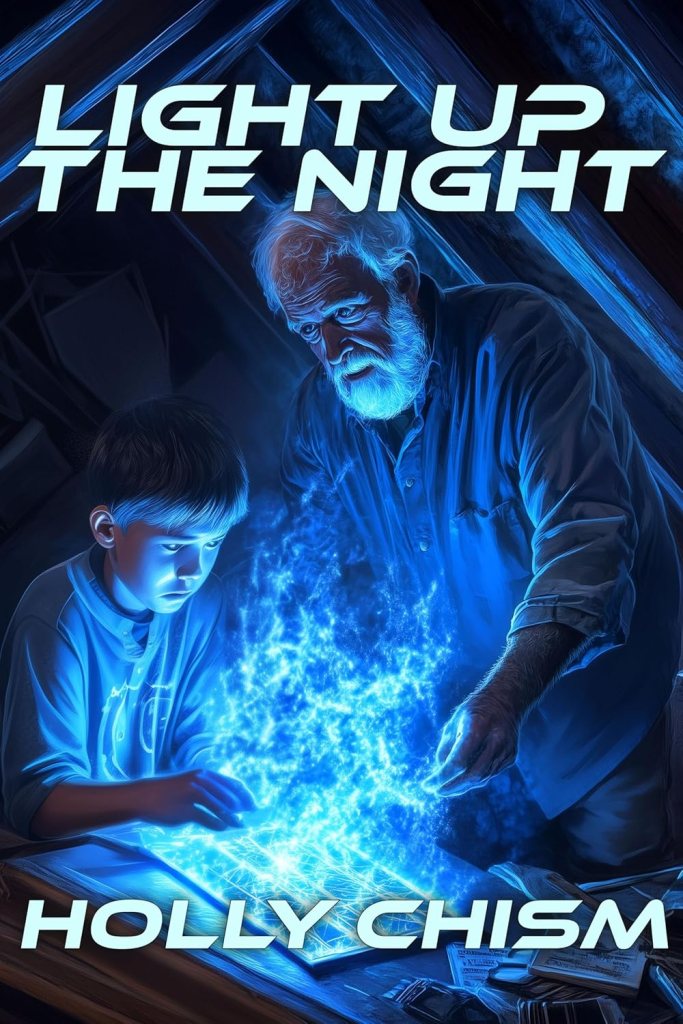
Dane Crockford is tired. Tired of the green energy crapping out and leaving his wife Rose gasping for breath when their air conditioning dies, tired of trying to hide his use of his own solar panels from the nationalized electrical company, and tired of worrying about his daughter and son-in-law, trapped in an abusive indenture program to pay off their student loans. He’s not the only one, either. Everyone in his home town is in a similar situation, many of them with their children doing dangerous jobs without pay to offset crippling student debt. So when his grandson Toby accidentally discovers an energy generation method that isn’t wholly owned by the federal government, he jumps on the possibility of building something that works, in spite of and around the federal monopoly.
But what the monopoly doesn’t realize is that their grip on Dane, and on his home town, is far less secure than they think. When they disconnect his house from the power grid, they have nothing to hold over him, to force him to work for small rebates on his monthly bill. The utility has unleashed the power of a cranky old man with a rare skill, and they’ve got no idea that they’ve tossed the pebble that starts an avalanche.
FROM CAROLINE FURLONG: The Guardian Cycle, Vol.1: In Dreams and Other Stories

A man whose debts must be paid by vengeance. A woman desperate to save her husband. A grieving father finding a young enemy soldier on his veritable doorstep…
These fantasy and soft sci-fi stories wonder whether or not heroes need families. Are we not told that families slow the hero down? Is it not typically implied that they get in the way of the adventure? Are they a burden, or truly the greatest strength from which the hero and those he loves can draw?
Six tales in this collection center on family, faith, and self-sacrificing love as men and women fight for the ones whom they hold most dear. Whether the enemy is inner turmoil, a nightmare, or a demon really does not matter. If the threat seeks to harm a member of the family, it is going to pay dearly.
FROM M. C. A. HOGARTH: Live, Love, Level

In a world where virtual reality gaming lets players shape their own stories, Nick desperately wants to join the beta test for Omen Galaxica’s revolutionary AI update. There’s just one catch – he needs a partner who’s never played before. Enter his mother Amanda, currently on bedrest during a difficult pregnancy. Together, they must rebuild the destroyed village of Donner’s Beck while defending it from a notorious griefer intent on wreaking havoc. But as virtual and real worlds blur, both Nick and Amanda discover that games aren’t just about escape… they’re about connection, growth, and finding your place in a rapidly changing world.
A heartwarming tale of family, friendship, and finding meaning in unexpected places, perfect for:
- Gen X, millennials, and Gen Z (and boomers who know)
- parents and teens and people in-between
- gamers and people who love but are baffled by people who game
- dragon, AI, and pizza enthusiasts
FROM C. CHANCY: Seeds of Blood

Welcome to Intrepid. Where Halloween brings tourists, turning leaves – and demons.
Over two decades of bloody murder, Steven Savonarola carved a sorcerous Demongate into the heart of his own hometown. With less than two weeks to disarm it before Halloween, Detective Church and the IPD are running out of time.
Lucky for them, they have an edge: Myrrh, a hell-raider with over a thousand years’ experience shattering dark magic, and Aidan, a half-demon fire mage with a very personal grudge against evil.
The plan is simple: Find the tainted sites. Purify them. Try not to die.
They’ll need all the help they can get. Steven may be gone, but shadows in the mountains are determined to see the Demongate open – even if they have to slaughter half the city to do it. And when it comes to killing shadows, even hell-raiders don’t know everything.
If they’re going to make it to All Saint’s Day, they’re going to need hot lead, cold mead, and a weapon that’s out of this world.
And a little praying wouldn’t hurt….
Welcome to Intrepid. It’s a hell of a Halloween.
FROM JAY MAYNARD: Reflections in Crystal (The Crystal Therapy Chronicles Book 1)
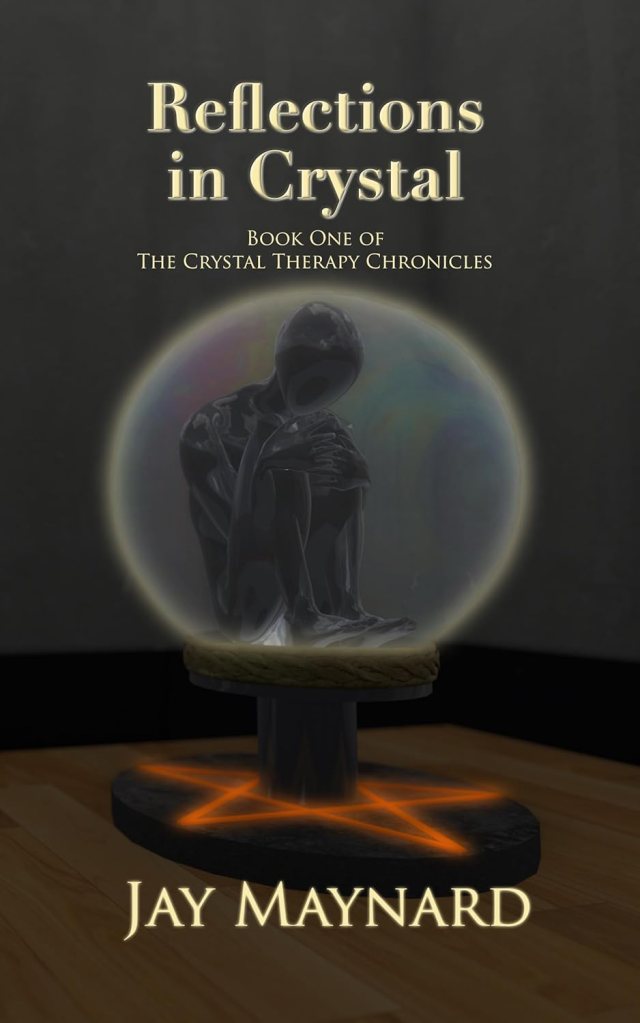
Magic fixes people the world cannot touch.
Alex Sullivan isn’t crazy — just angry. Angry enough to get arrested. Angry enough to be given a strange choice: prison, or an experimental magical program at a private facility in rural Missouri.
They claim to fix broken people not with medicine or therapy, but with silence, service, and a skintight suit of latex.
Inside the suit, Alex is cut off from the world — unable to speak, eat, or even cry in the ordinary way. Inside the crystal, time flows differently. There, guided by someone who seems to know him better than he knows himself, Alex must face his deepest wounds… and either heal, or shatter.
But this is no simple treatment. Alex finds himself on a journey into a hidden world where redemption is earned, the broken are made whole, and some choose never to leave the suit again.
Previously published as Foundational Laminate.
“One of the rare novels I hope becomes reality—a hard look at how to turn the antisocial into good neighbors.”
— Karl K. Gallagher, author of The Fall of the Censor and Torchship
FROM KAREN MYERS: King of the May – A Virginian in Elfland (The Hounds of Annwn Book 3)

Book 3 of The Hounds of Annwn.
MORE VALUABLE AS A WEAPON THAN A KINGMAKER, HE MUST MAKE HIS OWN CHOICES TO SECURE THE FUTURE.
George Talbot Traherne, the human huntsman for the Wild Hunt, had hoped to settle into a quiet life with his new family, but it was not to be. Gwyn ap Nudd, Prince of Annwn, has plans to secure his domain in the new world from the overbearing interference of his father Lludd, the King of Britain.
The security of George’s family is bound to that of his overlord, and he vows to help. But when he and his companions stand against Lludd and his allies at court, disaster overturns all their plans and even threatens the Hounds of Annwn themselves.
George and his patron, the antlered god Cernunnos, must survive a subtle attack that undermines them both. Other gods and gods-to-be have taken an interest, but the fae are divided in their allegiances and fear the threat of deadly new powers in their unchanging lives.
George and his companions must save themselves if they are to persuade their potential allies to help. But how can they do so, attacked on so many fronts at once? Will he put his family into greater jeopardy by trying to defend them?
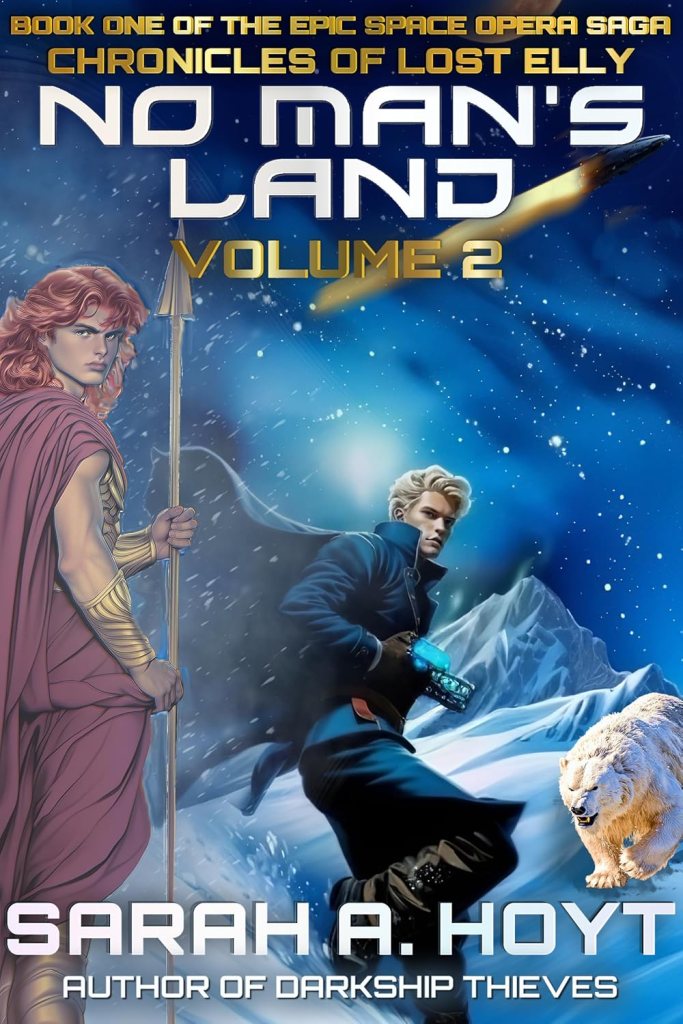
FROM SARAH A. HOYT (VOLUME 2 NOW OUT, VOLUME 3 OUT TUESDAY AFTER NEXT): No Man’s Land

No Man’s Land
Sufficiently advanced science is indistinguishable from magic.
On a lost colony world, mad geneticists thought they could eliminate inequality by making everyone hermaphrodite. They were wrong. Catastrophically wrong.
Now technology indistinguishable from magic courses through the veins of the inhabitants, making their barbaric civilization survivable—and Publius Cornelius Scipio Africanus Kayel Hayden, Viscount Webson, Envoy of the Star Empire—Skip to his friends— has just crash-landed through a time-space rift into the middle of it all.
Dodging assassins and plummeting from high windows was just the beginning. With a desperate king and an archmagician as his only allies, Scipio must outrun death itself while battling beasts, traitors, and infiltrators bent on finishing what the founders started: total destruction.
Two worlds. One chance. No time to lose.Volume 2
Skip thought he’d figured out the rules of survival on Elly.
He was wrong.
Now his potential allies from the Star Empire are turning up dead, one by one. Spies and saboteurs have infiltrated every level of Ellyan society, and Skip is running out of people he can trust.
As he races to save the king and archmagician—his only remaining allies—disturbing secrets about Elly’s culture emerge alongside buried truths about his own family’s past. One moment he’s explaining the bewildering concept of binary gender to confused Ellyans, the next he’s making impossible choices that could strand him on this world forever.
His last gambit is reckless. The odds of success are slim. And failure means losing everything—his mission, his allies, his only way home.
But some fights are worth the risk, even when the deck is stacked against you.
Sometimes the most dangerous enemy is the one you never see coming.
Vignettes by Luke, Mary Catelli and ‘Nother Mike.
So what’s a vignette? You might know them as flash fiction, or even just sketches. We will provide a prompt each Sunday that you can use directly (including it in your work) or just as an inspiration. You, in turn, will write about 50 words (yes, we are going for short shorts! Not even a Drabble 100 words, just half that!). Then post it! For an additional challenge, you can aim to make it exactly 50 words, if you like.
We recommend that if you have an original vignette, you post that as a new reply. If you are commenting on someone’s vignette, then post that as a reply to the vignette. Comments — this is writing practice, so comments should be aimed at helping someone be a better writer, not at crushing them. And since these are likely to be drafts, don’t jump up and down too hard on typos and grammar.
If you have questions, feel free to ask.
Your writing prompt this week is: STUPENDOUS