I am a novelist with work published in science fiction, fantasy, mystery and historical "novelized biography". I've won the Prometheus award and the Dragon award. I also write under the names Elise Hyatt and Sarah D'Almeida. http://sarahahoyt.com/
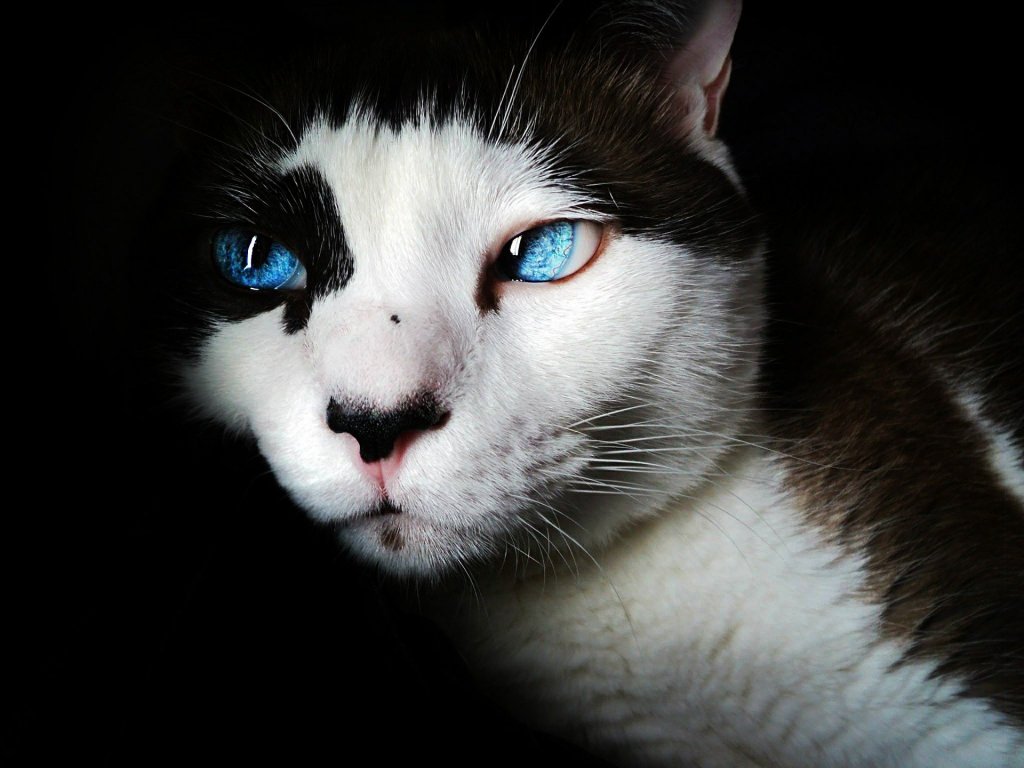
This is not my cat. My cat is snoring.This is my cat. His name is Havey and he snores.
I’m sitting on the other half of the sofa, and a very weird thing happened.
You see, I usually blog from the family room. No (sane) reason, really, except that this is the social-media computer, and the blog is somewhat social. Also, I often do this at night, while husband is watching tv.
I didn’t yesterday, because I felt…. odd. Not sick and I suspect anyway it’s allergies, since it came on after time outside (and I haven’t seen anyone outside the family for a while, so who would I catch sick from?) but my throat was itchy and I was semi out of it.
No problem, I’ll do it tomorrow.
So– Today I sat down and wrote MGC and opened this page, and then HAD to sleep. I don’t know if any of you have experienced this, but it is very weird. It’s like you really can’t fight it. When I worked in an office, I’d often go to the bathroom, just so I could close my eyes. Because you will sleep. Your choice is where. This is usually maybe 15 minutes.
Today it was two hours. And I’m still not fully awake.
Why? I don’t know. The logical hypothesis is that I’m getting sick again. I don’t have time for this.
Blog fundraiser goes up the day after tomorrow, and I have things to organize and set and be ready for. (Runs around with hair on fire.)
So, I’m going to blame it on the cat, who snores and emits sleepy-ons.
Honestly, it’s probably worry about the fundraiser. Mostly worry it will fail big, since you guys came through with the big rescue seven months ago.
This is not a rescue. It’s a “Let’s see if the blog can fund.” I wouldn’t do it, but I can a) use the blog funding as seed money to get the fiction off the ice pad (Sometimes it feels like I’m running on ice) partly by hiring someone to manage the image and the publicity (No. I know him. And you guys will LIKE him.) and someone to run the side stuff on the business. And someone to collate and get the collections ready.
If it overfunds, it’s money to pay for audio book readers.
So… I’m basically fundraising for operating capital for the business, which I THINK is justified? Well, I suppose getting paid for the work I put in is justified too. (Right? Maybe? The way I’m justifying it to myself is that it’s not fair to deprive of my family of the fruits of my labor. I’m not right in the head, okay?)
Anyway, now I’m somewhat awake, and kind of functioning, but not really, so I couldn’t think of anything to blog about except to complain that I fell asleep and hope I’m not falling sick, and then publicly run around in a panic over all the stuff I need to do the next two days. Did I say I’m weird? You knew I was right?
Okay. Now I’m going to finish the two short stories (one for the collection that’s part of the rewards for the fundraiser) and go make a list of the “gifts” for donating (part of this is that it’s ridiculous to consider them a “price” which of course it isn’t. It’s just a thank you for donating. I mean, up to twenty it’s a printable certificate (in eform but suitable for printing) that says “I was carped at according to hoyt” that is not a big enough thing to COST $20. But this is not a store. It’s a fundraiser. (And you guys collect carp!)
So, anyway….
<Lurches up.
I’m going to take the meds (the daily ones) and go work. Keep your fingers crossed I don’t fall sick.
*Isn’t this more interesting than “this is not a post?”*
There are parts of the recent shouting on abortion that have made me profoundly uncomfortable.
No, not those, I expect lunacy and hatred of humans from the left, so it doesn’t touch me, even remotely. I mean, I think I sprained an eye from rolling them, but…
The disturbing things are coming from people politically aligned with me, and I’m not sure my qualms can or should be reflected in policy (because I don’t think that is possible without its becoming a tyranny and a “stay in your place” straight jacket.) But I think it should be thought about and perhaps reflected in the culture war, in how we raise our kids, in how we think of being human and particularly of being one of those weird humans who can make other humans and nurture them inside our own bodies, and who were designed by nature to do so.
I first want to point out that I find the XKCD comic about being lost in Plato’s cave extremely funny. (I don’t want to link it, given the way the author has gone, and the tenor of this post.) So much so, I have it on my fridge. And the reason for that is that I often legitimately forget I have a body. I know that sounds super-weird, but I swear it’s true. It’s part of the reason I’m one of those introverts who needs to go out and see strangers on the regular. Otherwise it becomes all too easy to float through life thinking of my body not as part of me, but as some weird vehicle that moves me around.
This is why I sometimes forget what sex I am. (No joke, I’ve said on a panel of all females “Everyone here is female but me.” No, I didn’t mean I was male, just that I was thinking outside my body or sex again. But it caused some complete puzzlement in the audience.) Or that I HAVE a sex. I forget to eat. I forget to take medicine. I forget I’m sick/neglect care needed. It’s not that I hate myself, I just forget the body is part of me.
I realize this is an extreme case, and I also want to point out it’s not constant in me, and it’s worse when I’m concentrating on doing something else that involves my mind only, like having arguments on intellectual points.
But to some extent, because I live some much in my head, I’m always a little uncomfortable with my body (It would be easier if it didn’t try to kill me on the regular) to the point that “normal” things like being pregnant or nursing were uncomfortable, and felt weird. I’ve run into women who say they love being pregnant, and all I can do is gape at them in wonder.
Before you shout, I’m aware this is not a healthy way to be, and is in fact just a wee bit nuts.
Which is my problem, precisely. Because as a society, when arguing on policy that impacts women — like the overturn of Roe v Wade — we have become a lot like me, treating the body as an inconvenience, something that shouldn’t matter, or something that isn’t an integral part of who we are.
Because that is all, and absolutely a lie. Because our bodies influence us, in health and illness far more than we wish to believe. The thinking meat is MEAT. We are creatures of flesh and blood, who think. We are not thoughts, trapped in the flesh and blood.
And if you ignore the needs and impulses of the flesh and blood, you’ll either lose your mind or your body.
And if you ignore them as a society, you end up with a lot of unhappy, confused, angry people, who can’t figure out what’s made them so unhappy.
On the whole subject of abortion, a friend said — and I don’t intellectually disagree — that we can’t force women to carry babies, because that’s evil. And that we can’t curtail women’s sex drive, or demand they curtail it, because that too is evil. Oh, and that all birth control fails eventually (which isn’t wrong, btw. Reproductive systems are far, far more complicated than we like to believe. Which I’ll revisit again, btw.)
But something at the back of my head piped up and bitched when she said that. It wasn’t a happy something, and it was an admission against interest, since I mostly believe we should make people as free as possible (my protest on abortion is that it involves two people, and the defenseless one gets killed, but that’s something else) and since I legitimately think nature is something to conquer. But what piped up in my mind was “But is that fighting against reality?”
This was brought into full bloom last night, on a facebook thread of Brad Torgersen’s, in which a guy came in guns blazing and said we needed abortion to be safe, convenient and as available as possible so women wouldn’t be “second class citizens.” Because if women are going to be fully equal, we need to eliminate the downsides of being a woman.
At which point the bitching at the back of my mind became a scream “But women are women. You can’t eliminate the downside of being a woman, without eliminating being a woman.”
This same guy, btw, tried to put me in my place by coming back with something about how society had failed women for millennia, which made me doubt he had a brain between his ears, because seriously? “Society” (which one? The caveman band? The hunters’ party? The various monarchies? WHICH “Society”?) failed everyone for millennia. Most people were oppressed and stepped on, because life was hard and freedom for the individual wasn’t a thing.
But my point here is the definition of a woman until society went howling mad (and we might be looking at the reason society went howling mad) is a person who can bear live young. Yes, we have vulvas, and sex is lots of fun, but our drive for sex is different than males. We tend to attach to one male and the reason we become interested in males is that they give signs of being good providers, usually at a subconscious level. (Yes, there are exceptions, there are exceptions to everything human, but for the vast majority of women this is it.) It’s part of the reason women are attracted to rich and successful men more than to cute ones. Because we’re looking for fathers for potential children.
It’s also why we bleed every 28 or so days for most of our adult lives. It’s why there is a load of emotion and reaction that comes with that cycle.
I keep coming across, particularly from the left with “If men could have children.” Well, if men could have children, they wouldn’t be men. And our entire society would be so different (most hermaphroditic species are very violent, and hermaphrodite humans… well, yes, I am rewriting that first book. Eh. So I’ve thought about it.) that there is no connection.
Because we are not brains, or minds, in a vacuum. We’re creatures of flesh and blood. And contra the “there’s no difference” crowd, you need only have a rudimentary knowledge of biology to know your brain, your tissues, everything were formed differently according to your sex. I don’t remember and am not in the mood to go look it up, but you start differentiating at a ridiculously early gestational point, for sure before two weeks. After that the hormone baths in utero are different, and your development is markedly different.
No, you don’t know what it’s like to be the other sex. No one does. Yes, we’re way more different than our superficial outward appearance would indicate. The longer I live the more aware I become that perhaps Heinlein was right about us really being different species who are merely symbiotic.
So when making women “not second class citizens” requires making them as free from concerns about getting pregnant as men…. are we in actual fact at war with the very fact that there are women; that women are unique and have different capabilities and different downfalls?
I mean to me “not second class citizens” means the right to vote and engage in trade. It doesn’t mean making them “the same” because that’s Procrustes bed.
Whether you consider getting pregnant a liability or a magic power, it is still an integral part of being a woman.
And yet, as a society we’ve been devoted to making women into men-manque for as long as I’ve been alive. Perhaps it’s the after shocks of chemical birth control. Or perhaps it’s the unique insanity of the mega-states of the 20th century, who have always preferred to deal with widgets.
As a society and for almost a century, we’ve regarded having children as an impairment, for both men and women, frankly. You’re supposed to have a “career” (most people have jobs, not careers, so that’s also mildly insane) and devote everything to it. You are a unit of tax-payment, not a living human being who, like most humans, probably want to have children and eventually fat and sassy grandchildren.
This has affected men, yes, because frankly in their natural state, they autonomous, sentient sperm-delivery devices, whom only culture can mold into true men, who care about their wife and children. It has given them an adversarial relationship with women, made them into sort of grown up boys, who just want to “score” and keep count.
But it is outright starting to eliminate women as women. Someone on a blog I can’t remember was lamenting the fact that “liberation” seems to entail the elimination of the female form of professional designations. I suppose “Police-woman” was always a bit silly since a police officer is a police officer is a police officer, though I imagine that women do it slightly differently there too, but never mind. And the same for Mail-woman. Though I will note those fragments encode more information which is usually a value add for those rare occasions where it’s relevant. But we’ve eliminated “authoress” which is– More on that later. And we’ve eliminated “Actress” which is bloody stupid, because in that case your body is what you perform with. If you’re female you perform as female, in female roles, and it’s a different craft.
Yes, I do understand the reason for it. And I question it. The reason for it is that whole “second class” thing. “I am an Author, not an author with special begs of being female.”
Um… okay, then, but why is the male form the real one? Why isn’t everyone called an “authoress” (I detest the term, btw. I actually prefer writer to either Author or Authoress)? There have been female writers time out of mind, and many of them were superb. Why isn’t the “real” term the female one? Why do we have to “be the real thing” by assuming the male term. PARTICULARLY for actresses. Because at one point women were barred from the profession for real and legitimately. And now they’re subsumed, and have to be “real” by using the male term.
And of course, we all know men who “transition” are beating women at everything from sports to beauty competitions, and the left is all for it. When, at least in sports, the reason they’re beating women is because they have masculine strength, masculine muscles, and were formed to be bigger and stronger.
And then there’s the push…. Oh, you know very well what it is. And it’s an abomination.
I raised kids in the last thirty years. If I’d raised girls, I’d probably be wearing orange and in a maximum security prison.
The double dose of “you can do anything you want, but only if it is what we think you should want.” and “You’re all powerful and infinitely fragile” would have me happening to the school before they were out of elementary.
And I’m not joking that when younger son was in an engineering club, all the publications they were sent were for WOMEN engineers. Even though most of the membership/people with an interest were male.
Before that even, I was sneered at and looked down upon because I stayed at home for most of the time after I was married and all the time, pretty much, after I had kids. Yes, I was writing. But it turns out a lot of women my generation used that (or art, or crafts) as a cover for just wanting to be housewives and mothers. (Both honorable occupations, if you perform them honorably. And both of them can make your husband way more successful if you do them right. And if you’re a unit and divorce wouldn’t even be considered, his success is yours. Yes, I know the level of trust that requires is uncommon now.) So at gatherings talking to strangers, when the “What do you do?” came out and I said I was trying to get published, I got the sneer and “That’s just your cover for being a housewife.” And yes, the sneer was obvious. And I always wondered “It’s not true, but if that were, why would it be looked down upon?”
In the same way I’ve seen women being sneered at for wanting to be nurses, or for taking up other, traditional female pursuits.
It seems to be worth it as a woman you have to pretend to be a male.
The push is on constantly. You’re sneered at for writing or reading romance, because it’s a thing women do. (Yes, men do it too, but the crossover on that is minuscule.) And now a lot of movies, including those billed as romantic comedy are consciously eliminating the Happily Ever After. Instead the woman decides to go off and have a career, or “learn to love myself.”
And I come back again to: Why can’t women be women? Why is it that performing the most basic and distinctive function of being female is considered being a second class citizen? Why are we all supposed to act like men?
(And I ask this as a tomboy. There’s nothing admirable in that. It’s just who I am. And yet, it gets me more praise than I ever get for having two kids and raising them.)
To clarify, no, I don’t think women who are infertile or simply never got married and had kids (or have no wish to) are “lesser women.” These things happen. Heck, it almost happened to me.
I’m just saying that evolution has formed us to have kids. It’s what our bodies were designed for. To an extent it’s what our minds were selected for, too. It gives us some superpowers, like the ability to multitask, or to think in deep-connection ways. (We connect disparate things and figure out their relationships more than guys do. Men are more linear thinkers. Women had to deal with social links in the tribe, (so someone would watch their kids) and they had to deal with co-relations between foraged edibles, and– We just tend to think in a lot more interconnected ways.) We also tend to be more interested in people, and better at language.
Yes, some of us still want to be engineers. The only point of “diversity” that works, we do bring something new to “engineering” because of the way we think. (And we still should pass the basic abilities of male engineers.) And some of us are more damaged on figuring out the social. It’s all a spectrum. But most women gravitate towards social/connected/indoor/safe professions. Why would we force them to be otherwise? Allow them, sure. Force them? No.
In the same way, most women truly, really, do not want to sleep around as much as men. Yeah, okay, some do. But it’s not biologically inherent in us. We are not sperm delivery systems on legs.
Arguably civilization came about because women didn’t want to put out all the time and for everyone. If Ogg wanted Morga to put out, he had to make sure he was a good hunter, and could make the spears to make himself so. And no sleeping around with everyone, all the time, because he had to provide for Morga and their kids. In return, he had the assurance that Morga also wasn’t sleeping around, and their kids were THEIRS.
If women sleep around as much as men, the entire world becomes a giant gay-bathhouse. And kids are an inconvenience, or a “punishment.” Stop me when this sounds familiar.
There are legitimate reasons to allow abortion — mostly because you pays down your dust, you takes your winnings, and that one is its own punishment — though no legitimate reason to allow it past viability that I can think of. (There is no legitimate reason to allow Roe v. Wade to stand, because it was horrendous law, but that’s something else.)
But keeping women from being “second class citizens” is not one of those. Not in an age with a plethora of safe and effective contraceptives. Sure, those fail. But abortions fail too. (Waves in “otherwise I wouldn’t be here.”) What’s more, abortions are major medical interventions, against a process that your body is designed to do, which means they’re dangerous as heck, and have a strong chance of complications. And we’re not telling kids that.
In fact the push for abortion on demand whenever, and the cultural imperative of considering children and impairment and being pregnant/giving birth a terrible thing is making women second class citizens. It’s saying “If you actually get pregnant, it’s destroying your goals of being a perfect male who happens not to have a penis. And you should abort it, so you can be free to be your true self. Which is of course male.”
THAT is appalling.
And I don’t need to be a biologist to tell you it ends badly.
Rumors of America’s demise have been grossly exaggerated. We have only just begun.
And we’re such a new thing upon the world, a credal nation, based on the idea the government owes the people something, and not the other way around, that we’re going to stumble and do stupid things.
Of course we are. Millennia of experience of human societies argue against what we aim to become: a nation of free individuals.
The monkey brain itself argues against it. But then the monkey brain is fine with communism, so it can step right off, into the dark of night with the sound of helicopters in the distance.
We will stumble. It could be argued the entire 20th century’s experimentation with centralization was a stumble. It was a prolonged and bad one. Recovering from it will be very hard.
My dad had rheumatic fever at seven, and wasn’t able to walk till he was eight, at which point he had to relearn to walk, like a baby.
It’s going to be like that, with all the challenges posed by changing technology. With innovation and rapidly changing every day capacity in our way. We’re going to have to relearn to walk as a nation of free individuals.
You can tell why the left are locked in the positions they are by their reactions. They can’t imagine the future but as a repetition of the past. So they think unless we stumble ever “forward” on their path, ever more centralized, ever more authoritarian, we’re going to “go back” to an agrarian slavery-bound society.
This makes no sense to anyone who understands there is change — real change, not dictated change — and that humans evolve and adapt to meet changed technological landscapes.
This also explains their fear of “climate change” because if the world isn’t exactly as they know it, forever, it’s all doom and death noooooowwwwwww.
They talk of extinction in 12 years, a timeline that makes no sense for geological processes, because they fear their psychological extinction, the end of who they are and what they believe, and to them that’s death.
It also explains why they often come across like adolescents. “Nooooooo. I don’t want to do that. That would chaaaaaaange me.” Instead they retreat ever further back into childhood while demanding safe spaces and coloring books and that no one say anything “mean.”
But…. look, growth is pain.
I’m one of those people cursed with a good memory for my own psychological development. (Unfortunately these days more concrete memories including what happened where at pivotal points of my life vanish. Aging sucks.) I remember sitting in the dark many times, realizing I’d have to change to meet changed circumstances and feeling like I was coming apart, and dying.
In a way I was. Life is a series of little deaths (the young man who sniggered in the corner can think shame on himself) in which we change a little every day, and then look back and go “I was that? I thought that? How even?”
But there are moments when we have to do it suddenly, because, mostly through our actions, things changed markedly. Like when you get married. Or the first time you hold your own infant child, for whom you’re responsible till they’re self sufficient (runs screaming into the night) or when you move. Or when you change jobs. Or when your job changes on you.
Each of this entails a little death (raises eyebrow in a quelling manner) and a little rebirth.
Our nation is like that too, and because we’re very new, a brand new creature among the nations, we will stumble and do stupid things. After all, we don’t have any models LIKE us, so we emulate the old horrors, because of course we do.
And sometimes things will get very bad. I suspect we have a spell coming up, because I suspect the idiots will think it’s just fine to cheat again in November. And I can feel it getting really, really ugly. But perhaps it’s needed, to show what will not be accepted. This is the line you don’t cross. We the people are not amused….
But as long as some of us remember the Constitution and the concept of America, we will come back.
You see, by the people we attract, by the concept of our birth, by everything we do and are, we are not a tame hothouse flower.
We’re a weed. And nothing can stop us. Which is why so many abroad hate us. They know our ideas, our concepts are coming for them.
We have only just begun. Yeah, the 20th century was bad, and as its ways die, it feels like we’re coming apart. But that’s what a sudden need to grow up feels like.
Here, light your torch of freedom from mine.
The future is that way. And we’re going there, becoming more free, more innovative, more infectious along the way.
No more central dictates. No more power concentrated on feeble, crazed hands. No more top-down “innovation.”
The future happens in freedom. It happens individual by individual, as we die to the past and rebuild more adaptable, faster, more niche, more varied, more knowledgeably (because no one knows your business better than you.)
That’s where America set out to go 200 years ago, and that’s where we’re going.
If you wish to send us books for next week’s promo,please email to bookpimping at outlook dot com. If you feel a need to re-promo the same book do so no more than once every six months(unless you’re me or my relative. Deal.) One book per author per week. Amazon links only. Oh, yeah, by clicking through and buying (anything, actually) through one of the links below, you will at no cost to you be giving a portion of your purchase to support ATH through our associates number. A COMMISSION IS EARNED FROM EACH PURCHASE. That helps defray my time cost of about 2 hours a day on the blog, time probably better spent on fiction.
*Note that I haven’t read most of these books (my reading is eclectic and “craving” led, and apply the usual cautions to buying.– SAH*
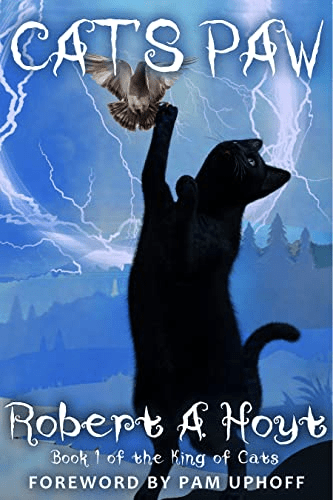
What if the doom of the universe or its salvation didn’t depend on humans? What if cats were far more than we imagine? What if— But enough of this: At the end of the universe there is a Mountain. Every thousand years, a bird flies to strop its beak on that mountain. When the mountain is worn to nothing the universe ends. The mountain is down to a few grains of sand. The only hope of survival for the entire universe rests in the grubby paws of an alcoholic alley cat, a fluffy cat with not much brainand a bookish cat who thinks Guinevere is a male hero’s name. The universe might have run out of luck. Or not.
(Yes, he really wrote it when he was thirteen. It’s been newly edited, and there’s a foreword by Pam Uphoff) Also now available in pb and hard cover. Soon to come, a collection of Robert’s short stories. We’re working on it.
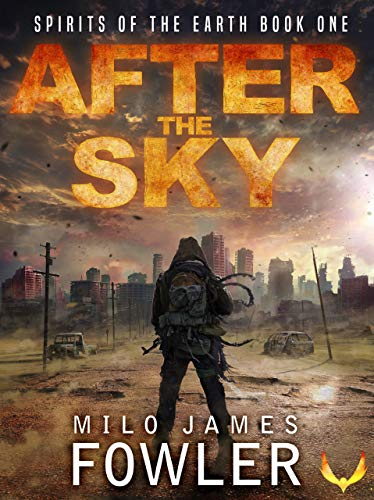
The world isn’t how they left it. When the bunker airlocks release them after twenty years in hibernation, the survivors find a silent, barren world outside. But they are not alone. There is a presence here, alive in the dust—spirits of the earth, benevolent and malicious as they interact with the human remnant.
Milton is haunted by a violent past he’s unable to escape, despite the superhuman speed the spirits give him.
Not interested in bearing the next generation, Daiyna is determined to destroy the flesh-eating mutants lurking in the dark, pierced by her night-vision.
Luther is a man of conviction who believes the Creator has offered humankind a second chance, yet he’s uncertain they deserve it—and he’s perplexed by the talons that flex out of his fingers.
Willard is a brilliant engineer-turned-soldier who refuses to leave his bunker, afraid of becoming infected and willing to destroy any obstacle in his way.
As their lives collide, the mysteries of this strange new world start unraveling, culminating in the ultimate life-or-death decision one survivor will make for them all.
Don’t miss this Post Apocalyptic Adventure with a Paranormal Fantasy twist! It’s perfect for fans of Stephen King, T.W. Piperbrook, and The Walking Dead.
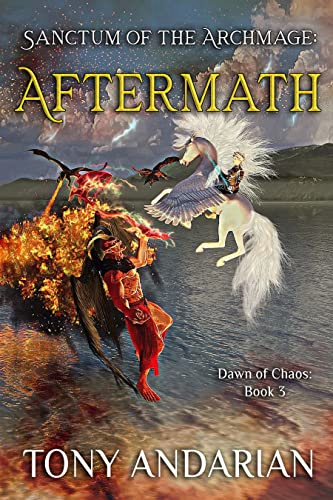
The Eastern Continent reels in the aftermath of the demon invasion. Zomoran’s armies sweep over the land. Orion and Diana struggle to find a way to fulfill their oath under the new order as a determined resistance forms in the capital city. Great and small, the valiant of Carlissa commit themselves to a holy war against the Horde.
And no one believes that the princess and her grandfather, the Archmage, could possibly have survived the Massacre of Lannamon. But could they?
Note: An earlier version of several chapters from this book appeared as part of the novel Dawn of Chaos, published briefly on Amazon in 2017. That book has now been re-written and expanded into a series of six novella-length installments.
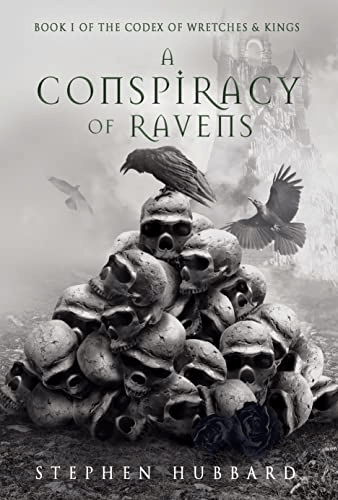
“A grim tableau of conspiracy, murder, and magic. Hubbard paints in shades of gray, but always seems to know which are the darker ones.” —Christopher Ruocchio, author of The Sun Eater series Once and an age —
The precipice of war is never more than the width of a blade away. Now, when the legendary assassin known as the Black Rose has slaughtered Baron Dartris Gorsha and all who made up his house, then fled with the nobleman’s young daughter, three nations that knew tenuous peace prepare for the brutality of prolonged conflict.
Yet a new and mysterious danger has emerged. The Shrike arrives to offer mercy and vengeance in equal measure to all those with a role to play, bringing cryptic messages from his unnamed master. Underlying his threats is one simple command: Retrieve the daughter of Gorsha.
Three Ravens of Danot — Celnor, Derrigan, and Martyn — are called upon to protect the child, and they seek answers to troubling questions and motivations. Manipulated by their queen, feeling as no more than pawns in the history unfolding around them, they conspire to bring about what they believe is a necessary change to the balance of power.
The secrets of their own shadowed pasts serve to pull at their union, threatening to unmake their pact, and leading them to ask one simple question: Are there roads too entrenched in darkness to allow for redemption?
In a time of growing doom and dread, when long lost magic begins to find a new foothold, Wretches and Kings alike maneuver and scheme as the Codex is inscribed with the fell deeds and heroic sacrifice compelled by a conspiracy of Ravens.
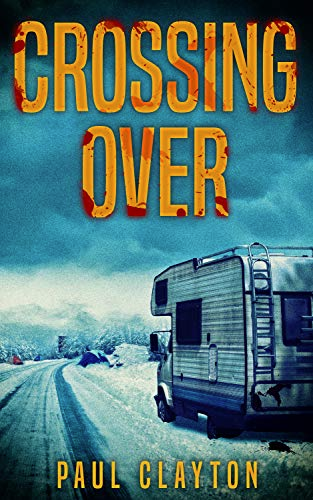
REVIEW by Donna Gielow McFarland for Readers’ Favorite. Crossing Over by Paul Clayton tells the story of an American family trying to survive the beginnings of the second civil war. Set some time in the not-too-distant future, the existence of two simultaneous presidents has split the country along ideological lines. The protests are becoming violent, sections of the country have formed their own militias, along with the militias of the two warring parties. In the midst of shortages of food and other necessities, gangs and thugs are terrorizing formerly safe neighborhoods. Realizing that it is no longer safe to remain in their home, Mike McNerney decides to pack the camper and flee to Canada with his wife, Marie, and disabled teenage daughter, Elly. Unfortunately, everyone else has the same idea.Once I started reading, I could not put down this well-written and compelling short novel. Clayton’s premise is chillingly realistic. The book does not focus on the politics, but instead focuses on regular Americans who not long before led totally normal lives, and who are quickly turned into refugees as they try to escape the crime and violence taking over the country. The scene at the Canadian border was highly believable, as was the deterioration of Mike and Marie’s relationship as it crumbled under the stress of their ordeal. Complicating matters is the need to protect their beautiful daughter Elly, who is naïve enough to wander off with any stranger. Crossing Over should stand as a warning to anyone inclined to think that violence is the answer to political disagreement, as it paints a picture of how America could slide into chaos far too easily. There is some mature subject matter and language. Recommended for readers who are brave enough to read it.
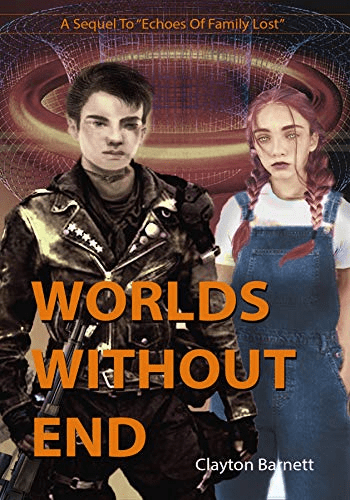
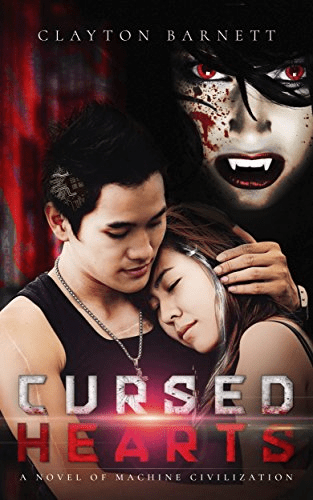
Their minds modified by the Machines, the Hartmann siblings see worlds differently than others do. Gary looks to a future where his A.I. girlfriend, Henge, can live with him. Faustina looks to her friend Tracy, whom she calls a goddess, whose soul has been lost in the internet for a decade, for a new kind of life. A half-generation on in post-Breakup America, they, along with their family and friends in the city-state of Knoxville, try to make their way forward. Social and technological unknowns may hinder them, but beyond those, the worlds they seek are threatened by a madman’s nuclear fire and a politician’s intrigue.[Picking up ten years after the breathless conclusion of “Echoes of Family Lost,” this new novel of Machine Civilization follows the relationship of human Gary Hartmann and his machine fiancée Henge. While centered around, them the book is broken into two parts: the desire of a human to leave our world and pass completely into the ‘net and the desire of an AI to cross in the opposite direction.]
Malta. Alchemists, Saints and Heroes have all made their way to this place, defended its walls, and added to its ranks of ghosts and lore.
Besieged, battered, and bombed, this archipelago has seen every tide of war, turmoil, and more than a few bits of piracy. It’s also been the land of courage, resilience, and grace under fire.
Ten authors have set out to bring you tales of the ghosts of Malta past, present, and future. Open the pages and meet the ancient guardians, ghost cats and inter dimensional spies that will be your guide…
So what’s a vignette? You might know them as flash fiction, or even just sketches. We will provide a prompt each Sunday that you can use directly (including it in your work) or just as an inspiration. You, in turn, will write about 50 words (yes, we are going for short shorts! Not even a Drabble 100 words, just half that!). Then post it! For an additional challenge, you can aim to make it exactly 50 words, if you like.
We recommend that if you have an original vignette, you post that as a new reply. If you are commenting on someone’s vignette, then post that as a reply to the vignette. Comments — this is writing practice, so comments should be aimed at helping someone be a better writer, not at crushing them. And since these are likely to be drafts, don’t jump up and down too hard on typos and grammar.
Yesterday, with a loud thud, one of the major pegs in the house that FDR built came crashing down.
Yeah, I know. Abortion was not federalized under his watch, but it was federalized as everything else, in response to his habit of making everything federal. And creating an over-powerful and centralized federal system.
What both sides are ignoring in the fall of Roe versus Wade is that it’s not pro-or-anti abortion deciding the matter: It’s weather or not it makes any sense for that kind of divisive, profoundly difficult issue to be decided from on high, by as small a number of people as possible.
And, more importantly, the fact that it’s not American, it’s not CONSTITUTIONAL to make this a federal issue.
Taking down Roe v Wade did not — as it’s being bandied about by the insane left and their handmaidens in the press — make abortion “illegal”. It devolved the question to the states. Where solutions can be found, worked out and fumble fingered, and the results seen and considered, without its being nation-wide or mandatory the same everywhere. It gives a difficult matter the benefit of being decided by as many people as possible.
The truth is there was never a right to kill in the constitution. (Which is what abortion amounts to, sorry.) Except in self defense (which yes does take care of health of mother.) Now because abortion is not a straight-up murder for various and complex reasons (including difficulty of proof) and because it involves a lot of other things, it’s not clear and it gets morally and particularly emotionally complex. Which means–
Which means it’s better hammered out in the states, until an answer emerges. Or remaining divided if no answer emerges.
Let’s not forget one of the ways of making abortion rare (if not safe) is to make it inconvenient, which a trip to another state certainly achieves.
I have said, in the past, that I considered the Portuguese system better, in that it was illegal but easily procured through channels of acquaintance. It was rare because it was expensive, and safe because it involved a risk for the medical professional, should it be discovered (by the woman bleeding out, say.)
Some of you have mentioned that — as the Covidiocy proved — the American health establishment is more rule bound, partly because licensing has them by the b*lls. (And that too is something else that is part of over arching centralized structure, ridiculous in a country the size of ours. Yes, the license is through the states, but the AMA has untold power. As do similar organizations. And it’s time for those pegs of an overcentralized system to start shaking, too.) And you are right. Which is why the distributed state by state structure might achieve the same, at least for those not in a full-abortion state.
Even there, there might be advances in safety. I understand that Roe v. Wade distorted a state’s ability to regulate the safety and licensing of abortion clinics, thereby permitting the advent of horrors like Kermit Gosnell.
I will state right here, openly, that my only reason to hope for it to be fully illegal — knowing that it can’t be stopped, because it never is, and that there would be people who died by trying to perform abortions by strange means — would be to stop the loathsome trade in baby parts which amounts to cannibalism or perhaps black magic. But perhaps removing the federal regulation is enough to regulate and law-fare those perverse practitioners out of existence. One can at the very least hope. Because frankly the fact we are dealing in baby parts and slurry of human is something so horrifying it can’t be thought about for any time without horror and nausea. It is the sort of thing that, if anything, cries to the heavens for vengeance.
There has been — though I’m not fully knowledgeable to expound on it — a distortion in our practice of medicine, our lives, our health care, from this top down, oppressive, centralized decision with no basis in the constitution.
Which brings us to “the edifice that FDR built.” Having recently read Forgotten Man, I am very aware of how the drive for centralization and standardization was a primary push by FDR.
Some of it, perhaps, was useful. Certainly the standardization of certain tool sizes, and even furniture sizes is useful, but it would have come about anyway, through commerce, without a need for regulation.
At any rate, the “house that FDR built” are all the centralized extra-constitutional regulations, the myriad life-strangling rules, measurements, federal regulations, and federal decrees affecting all of our daily lives and proceeding, sometimes, from nothing more official than the pen of a single man.
That entire edifice was built for the mass-manufacturing, mass-communication era, (and wasn’t wonderful even then) and as such it’s creaking and cracking, and straining and falling apart under the impact of distributed manufacturing and communication.
To people — all of us — raised in the house that FDR built, or around it, or influenced by it (as all of the world is by America) it feels like the entire world or the entire American system is coming apart.
But it is not the American system. Except for very few, carefully specified powers, the Federal Government is designed to be a distant, authority of last resort, not the constant overseer of our days.
It is time to let difficult problems be solved by the states, or even cities. It’s time to let the laboratories of democracy flourish, until a “best solution” is discovered and emulated. Or not. And various answers are given to the same problem.
Now let’s get rid of every single other extra-constitutional rule and regulation. And abolish the department of education!
FDR built a crooked house. And it shall not stand.
At this point, it is almost anti-climatic to do a Liberty Con AAR, since it started a week ago today, and I’ve been home for half the week.
I’ll just say that having come home to a power line downed by a tree threw a bit of a spanner in the works, not to mention making crossing our yard verah interesting.
That’s taken care of, and I’m working again, so there is no excuse not to do an AAR.
I’ll start by saying the day we were to leave, my husband woke me up with the words “I think we’ll have to cancel.”
Here among friends, I’ll have to admit that part of me had been looking for an excuse to cancel for at least two weeks. No, not because I didn’t want to go, but because being an introvert and being away from cons for two weeks, going to a “biggish con” seemed almost unbearable. However, when he said that — besides feeling really guilty — I knew we couldn’t cancel. We couldn’t cancel, because there were people who — if not booking on purpose to meet me — had booked with that in mind.
But our air-conditioning had failed, and we couldn’t leave the cats to bake. They can’t open a window, after all. Lack of opposable thumbs. We considered boarding them, but that meant leaving Dan’s piano exposed to warping temperatures. Um…..
After much futzing around, we got it going halfway through the day, which meant getting to the con barely in time for my first panel, at 1 pm on Saturday.
Still not sure our fix would hold, we left a local friend in charge of checking (I owe him so many low-carb cookies) and took off.
The drive was unexceptionable, except for being through some very very beautiful country I’d never crossed and we got there as my panel was starting. Dan dropped me up front, and I ran in, while son went to the registration table to get my tag and little name thing for the table. He was also on that panel, which somehow got mucked between my concept and the panel person, so it wasn’t “Barbarella, teaching my mom to write comics in the 21st century” but just “Barbarella”. Also my need for a projector somehow got lost, probably my fault, as I was dealing with floor installers most of the last few months, and a little more brainless than usual. So, Marshall wasn’t on the list, but he was supposed to be.
We made do without the projector, but here I must break for proud mommy thing: Marshall who is the most introverted of the family, did wonderfully. (I have started introducing him to being in public/public personas, because at long last, very reluctantly, he’s started admitting he writes. He has always written. He wrote a play that followed the hero’s journey at THREE (It was a chameleon in search of a magic leaf. Don’t ask) and enacted it with puppets, but he’s so contrarian he didn’t want to join the family business. However, he still wrote. Now he’s writing a novel with me, and maybe I can get him to publish his sf mysteries too.) Anyway, I had doubts about how he would do at public appearances, but he was very good.
I was surprised the room was full that early, and more surprised by scattered clapping as I came skidding in at a half-run. I met a bunch of you there, particularly Herb and Ian.
Anyway, this was Friday and Dan and I realized we were busy the rest of the con, and if we wanted to go to the Acropolis — the best Greek restaurant anywhere we’ve been — it was our only chance. So we went out for a quiet dinner. As it turned out, the waiter was a fan, and had mistaken the date of the con, which is why he wasn’t there.
Afterwards we came to the memorial late (Seriously, guys, Chattanooga has GROWN and the traffic is horrendous.)
There was a miscalculation there. I didn’t realize for a bunch of introverts talking about feelings is painful. So we put the names of the honored dead up, and then chitchated about noting. I think we mortally offended people looking in.
If I had a suggestion, it would be that during opening or closing ceremonies, the names of the honored dead that year (people related to the con or people in our community) be read and a minute of silence observed. That would make it more proper, and easier on us who have trouble with feelings in general.
Anyway, after that I don’t remember the order of panels super-well. I remember the panel for the Give me Liberty Anthology, because it was next door to an Indian wedding. The music was so loud we could barely ear ourselves THINKING much less talking.
Any implication that the author was dancing through that panel is calumny. She’s not that type of writer! Any implication she involved Chris Kennedy in her malfeasance is even viler calumny. He’s not that kind of editor! (To be fair, he’d been there for 3 panels straight and was going a little nuts at the music.) Any further implication that Larry Correia was also dancing is further calumny. He’s not that type of mega bestseller! (He came up with the best theory, which is that the music was revenge on Larry and myself, because of what our ancestors did to Goa. I’ll buy it.)
Anyway, none of that happened, though if it had happened it would be tons of fun.
There were …. other panels. And there was a Hoyt reading which….
So I said I was proud of my kid, right? Yeah. Except this is the one that’s exactly like me, from the top of his little horns, to the bottom of his little hoofkins, which he don’t have.
In describing the book we’re writing together, he gave the impression…. Well, Herb asked if it was for adults only. I vehemently denied it, waving my hands and saying it’s not that type of book, I’m not that type of writer. To which my son OF COURSE responded by saying “So, we’ll start with the stripper scene.” There is no stripper scene. I’m not that kind of writer!
And so it went, with him reading in a weird British accent I had trouble understanding. In his defense, he trained himself out of a speech impediment at 11, by learning to speak in a posh British accent. He defaults to it when nervous.
Anyway, I read from Bowl of Red, which is ALSO NOT THAT KIND OF BOOK. And I’m not that kind of writer.
Then we closed with a comics panel where — heaven helps us — I might have been the only one doing the traditional thing in comics. I posted my thoughts on that panel here: How many miles to Babylon?
Anyway, Dan cut out his last panel on editing, because we had to leave. The guys wanted to stay till Monday, but I had a bad feeling we needed to get back home. I was right as we had downed power line shortly after getting back. And see our strong objections to baking cats.
Hopefully next year — supposing everything else holds. Yeah, I know — we’ll be able to stay a day before and a day after, because the recovery was monstrous, particularly from introvert-shock after that many people for three days.
Anyway, the weird thing about this con was how little time I had with friends. I was happy to see the Correias again and to meet Hinkley, who is older son’s secret sister (Seriously, they look more like siblings than they do like their real siblings. Curiously older son was also first published at thirteen. Something in the design, maybe?) I was both surprised and happy to see Kevin J. Anderson who used to live just down the road from us, and who, now with shaved head, looks rakish and piratical. Also glad to see all my LC friends, including Uncle Lar, who didn’t recognize me.
Oleg Volk took pictures of me, and there will be a new profile pic, by and by. (It was sudden and unexpected, so no make up and I look a bit iffy, but hey.)
And now I’m going to figure out why the dryer is trying to break itself on the sheets, and do some quick house cleaning (like two hours) before I sit down to finish the Malta Story, because I don’t want Law Dog to kill me.
Oh, yeah, I almost forgot the most fun part of the con: I assaulted Law Dog TWICE, by hugging him. TBF the second time I didn’t see him, until he stood in front of me and demanded to be assaulted. But let it not be said I let a redhead go unassaulted. As grandma would say “I’m married and old, but not dead or blind.” Or to put it another way: I’m not that kind of writer.
Darkship Thieves was supposed to go up for pre-order this weekend, but between my editor and I we had some version control issues, so it’s adjourned till next week.
From Pixabay, and it occurs to me it would make a great cover for a steampunk antho
Humans have ideas of what the future holds that were either formed very young, or formed young and through an accretion of stories, news, entertainment.
This can be either a personal future — or why I’m going slightly insane at turning 60 this year, because that’s grandma age. Also because, honestly, I have no clue where the last ten years went. And it wasn’t a matter of having fun — where we have an idea what people are like at various ages.
Or it can be societal.
I keep getting the feeling that part of what’s bizarre and insane about the last two years is that I fee like the people who were propagandized that the future was overpopulated and very poor due to exhaustion of natural resources are trying to create that future, even though neither of the conditions are true, because that’s the future in their heads, the future they’ve prepared for all along.
Yes, sure, there are other things at work. There is the Marxist cult, an inculcated hatred of humans, the desire to be special and elite in a sea of peasants who are forced to live in medieval conditions, and the general spite and malice of not particularly bright people who climbed the greased pole by ideology and, oh, yeah, spite and malice.
But over it all there ‘s that story at the back of their heads, the story they must make come through, because its what the future is.
We all have a story at the back of our heads of what the future will be like. Thank the Lord for Heinlein, it is not all fatalistic and destructive, but even Heinlein–
Let us face it, anyone from the age of eighty and younger grew up with the idea of infallible, increasingly centralized governments that could order anything and everything for good and ill.
The fact that those of us who are on the right have been awake since the fall of communism, and know the horrors it perpetrates, doesn’t mean we don’t believe in “infallible government.”
Partially, mind you, because our history of communist and totalitarian regimes is flawed and incorporates an incredible amount of the communists’ own propaganda. Sometimes via dissidents, telling us what they planned for us. And what they planned for us accords with things you can interpret as happening, kind of, sort of, if you squint.
But the fact is that centralized governments are always, forever, and everywhere inefficient. If they appear to have had a plan work perfectly, it is only because they are projecting what worked, and hiding what did. FDR wasn’t a heck of a lot more successful than Obama, it was the projection of his success via the media that caused people to fall in line over time. And World War II and war powers/measures didn’t help. (which is why our idiots long for a good war, and war powers.)
But now the wall of the media is fractured. And we can see what goes on behind the scenes.
So when you say things like that they’re going to ban cash….
Cooeee. They and what super power? Cash reappears/appears even when the cash being used becomes valueless. Mostly because people need to trade to eat. And it’s really hard to carry a cow in your pocket.
In Portugal, for a while, money was as good as valueless (well before my birth. Might have been before my dad’s. I’m not sure.) which is why there’s still a tradition of giving gold pound coins to kids at their birth and to newly weds at their weddings.
Because if they ban cash, it just means we use other cash. Old cash, foreign cash, precious metal coins. Precious metals by weight.
How are they going to ban cash?
Throughout the breadth and depth of the US, they’re gong to police every transaction, search everyone’s pockets? How?
And here’s the thing, just like the black market (and our subsidies) kept the USSR from starving, they can’t ban cash; they can’t “cancel” every deplorable; they can’t do any of that without they, themselves starving.
In fact, just with their war on oil, attempting to make “green energy” materialize out of their dreams, is going to hurt them badly. Sure, it will hurt us too. but we’re bracing for it, they’re not. Also, they’re more vulnerable than they thing.
What it’s not going to do is make the science for perfect, eternal renewable energy appear out of thin air.
The enemy gets a vote. It doesn’t get a veto. They don’t have magical powers. There is nothing that makes their plans come true perfectly, out of their dreams.
That they believe it, it’s excusable. They’ve grown up with the idea the more centralized the government, the more powerful.
We grew up with the same, of course, but we’re not as trusting, are we? We’ve seen behind the lies and the curtain.
And we’re their enemies. And we get a vote.
So does reality, which is also their enemy.
Stop assuming that whatever they want to do will work flawlessly. I’m going to bet you money it’s not even working in China. It’s just that we’re very far away and most of what we get is filtered through what the regime lets out. And at that, their culture has been molded over centuries to be way more compliant than ours.
Do not give magical powers to the enemy. The most flawless of their plans will still be shaky and unevenly implemented.
And the more elaborate, and far-reaching the plan the more flawed the implementation.
Be not afraid. Keep looking for the flaws.
They’re the most profitable points to push and bring the entire “flawless” lie down.
Sometimes we need mental health days. In my case, right because I have no mind yet, after peopling intensively for three days.
But …. But it got me thinking.
We all need respite, and ways to decompress.
Sometimes things are so big and looming so dark, and it’s impossible to see past them, but we still need a place to go mentally.
Mostly, to no one’s surprise, I like to day dream.
If things are worrisome, say in the money way, yeah, sometimes I buy a lottery ticket. this is not so I can win and solve my problems — well, the most I’ve ever won was $600, okay? — but so I have the right to dream about all the things I’ll do with the money. If I buy it early and delay checking the numbers, that can be a whole week of daydreams and feeling secretly rich.
However of course there are other worries, and money doesn’t solve everything, because often money is not the problem. Even a lot of money can’t buy us a restoration of the Republic. (Though I cheer Elon Musk on in his attempt.)
So what do you do then? Well…. I read. And write.
Going into a reality where the good guys win, where freedom is restored and where the future is better than the past is a good way to escape and restore your balance.
…. which I guess is my way of announcing I’m working on the reissue of Darkship Thieves, and there will be a hardcover edition, yes.
I’m also still recovering from peopling.
So, there will be an AAR on Liberty Con tomorrow. And for today, I’m going to work on publishing and editing, and maybe finally finish the Malta story.
The state of the writer is one of confusion. Other than that, I’m okay. Mostly.
We had actually planned to get up at nine and go off to go to a museum. At nine thirty we unpeeled an eyelid and went, uh…. no.
I finally had coffee about an hour ago, and am lurching into furniture.
At the … instigation/bullying of various of you and my family (My very own, personal family. How unkind.) I am finally going to do an annual fundraiser for the blog.
To put this in perspective, it is something that the late Jerry Pournelle told me to do. He said I should be making enough off the blog to live, given the hits and audience enthusiasm. Needless to say, though the button is there, I’m not.
Now, I feel a little embarrassed doing a fundraiser since I did the go fund me in November and you all came through like heroes, which saved my financial skin. (Without it, we’d have gone under, and I’m incredibly grateful.)
However, after discussion it was decided the best time for a fundraiser around here is the first two weeks of July. I.e. around the 4th of July, give or take.
I’m not absolutely sure how to do this. This won’t be a “save me, I’m in distress.” This is “I spend hours a day on this blog and try to post more or less every day, and if you fund it, I’ll be able to do some stuff, like maybe hire a copyeditor and maybe hire people to do special/interesting posts now and then.” It will also, because the blog flies under the same company/banner, allow us to hire people to edit anthologies, etc.
I was thinking of shooting for 50k, mostly because that’s what Jerry suggested way back. I think it’s ridiculously high, but we’ll see?
Now, I have no clue what service to use to keep track of/collect the donations. NOT gofundme. So I’m going to throw that to the hive mind.
And then I have no clue what to use for prizes. The one thing I’ve shown absolutely is that I have trouble getting to the post office. (It’s an hour away, and it’s a pain in the behind. So I keep putting it off for MONTHS.)
Things in play: pictures/covers of books (my books, not those through Baen, because copyright) as screen savers and maybe a calendar. A short collection of essays or short stories. For higher prizes (and it would need to be higher) maybe t-shirts (I’ll have to come up with them and put them on zazzle. Yes, yes, #teamheadsonpikes.)
So, ideas for those, that I don’t have to mail directly (but can send from amazon or zazzle) or bookfunnel, are also welcome.
Anyway… If you help me (and tell me if I’m completely crazy to even do this) I’ll be very grateful.
Right now, I’m going to go to lunch with a friend who missed the con.
Liberty Con NEVER ENDS.
And then I’m probably going to crawl under the bed and sleep. Though, who knows? Son might wake up and want to go to the museum, in which case, he might drag us along.
Stay sane, stay well, and remember the writer is in a state of confusion.
If you wish to send us books for next week’s promo,please email to bookpimping at outlook dot com. If you feel a need to re-promo the same book do so no more than once every six months(unless you’re me or my relative. Deal.) One book per author per week. Amazon links only. Oh, yeah, by clicking through and buying (anything, actually) through one of the links below, you will at no cost to you be giving a portion of your purchase to support ATH through our associates number. A COMMISSION IS EARNED FROM EACH PURCHASE. That helps defray my time cost of about 2 hours a day on the blog, time probably better spent on fiction.
*Note that I haven’t read most of these books (my reading is eclectic and “craving” led, and apply the usual cautions to buying.– SAH*
FROM SARAH A. HOYT, THE END OF THIS SERIES: Barbarella #10
This is it – the big battle you’ve been waiting for! Barbarella and the Brotherhood have launched a covert strike on Quryx, home of the Lady. Of course, they’re walking into a trap, and brute force is no match for a crazed tyrant with an army of thousands! But where strategy fails, the truth behind the Lady’s actions may prevail…though at what cost? After all, what is an ending but a new beginning? Sci-fi meets the human condition on a battlefield like no other in this explosive final chapter!
She thought she just needed the latest and best of automated houses to be happy. She’s about to find out that a technology that can give you everything you want, can take away everything you need. An amusing short story of technological over-reach. THIS WORK IS A SHORT STORY.
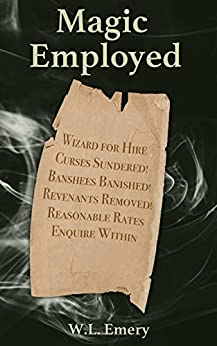
He’s back! The itinerant wizard with the sesquipedalian vocabulary is back in another anthology of short stories. Accompanied by his traveling companion Mirrabelle, Otheldo encounters mermaids, a violent demon from another dimension, and an evil wizard who has enslaved an entire tribe of fiendishly powerful ape-men. The good news is that he’s employed.
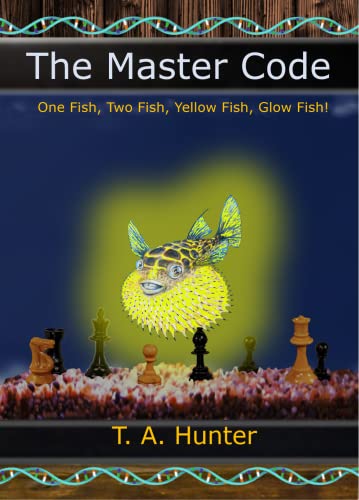
A near-future murder-mystery-drama morphs over 10 days into an action-packed sci-fi conspiracy-thriller ending with a bang as a Southern rural river community is suddenly overwhelmed by a series of accidents and deaths. Are all these events somehow tied to a dam break, the murder of an old riverman, and a fish? Can Sheriff Coleman of Charles County solve this puzzling case with the reluctant help of Jason Dickson, an autistic convicted computer hacker who is now an engineering student? What discovery is so great they risk their lives, and everyone they love, to reveal to the world? Can you decipher the Master Code with Jason too?
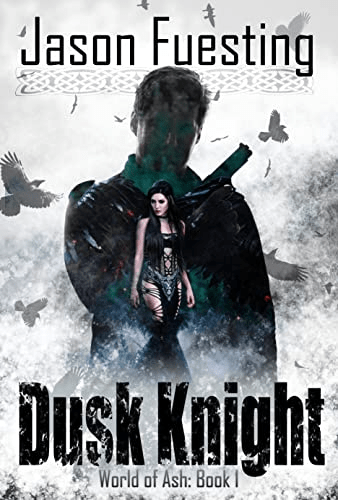
Staff Sergeant Thomas Edwards was intimately familiar with the first two before incoming fire ended his career. A tactical retreat to the family cabin drops him head first into the third when he awakes in the blackened, twilight wasteland that used to be Faerie. Beset by nightmarish survivors of the Nevernever’s apocalypse, Thomas’ explosive finale earns him an option besides death. All he has to do is make a deal with fae.
Even with San Diego occupied by the Mexican Army, Katarina Sosabowski pursues her MBA at UCSD, and is happy to welcome and put up her visiting step-cousin from Japan, Christopher Dennou, for a night so he can complete his enrollment the following day. But a minor earthquake brings a major surprise: Chris’s younger sister, Maya, murders their mother and escapes Neuroi Institute, the research facility that created them. While Chris and ‘Cat’ grow closer to one another, Maya inexorably crosses an ocean and half a continent to take back her brother, killing anyone who gets in her way.
Her home world and most of its people have been captured by alien invaders. All too many of the cadets and personnel she served with have been killed in the defense of their planet. The Century Planetary Militia’s starships and fighters thrown away by Admiral Drien to cover his cowardly retreat.
All that is left is a meager inheritance for the survivors: a handful of ships, off-world accounts, and refugees willing to give all they have to save their homeworld. Multiple factions of survivors compete to control those resources. Some, like Jiden’s grandmother, want to build up a force to liberate their planet. Others, like Admiral Drien, want to gain the support of a stronger power and let others do the bleeding to save Century.
Jiden, as before, is in the middle of it all. She will have to manage meager resources while she trains up new recruits to save Century. Because whether they can acquire more resources or not, the Centurions are going to save their people. Jiden knows that in the end: all the wealth and power of Century doesn’t matter; the true inheritance of Century is the willingness to shed blood to save it.
Some say monsters aren’t real. Others say the only monsters are those people who aren’t fully human: the witches and shapeshifters, elves and dwarves, and all the others who one day stepped out of the realm of fairy tales and into “real life”. Morgan Walsh knows the truth. Monsters come in all shapes and sizes, and some of the worst are human.
She didn’t start out life as Morgan Walsh. Once upon a time, her name was Adriana Grace Hensen. Everything, including her name, changed the day she turned thirteen. That day she learned several lessons she’d never forget. The first was that monsters were real. The second was that her parents were two of the worst “monsters” alive. The third was that those you trust the most can and will turn on you.
Morgan’s parents betrayed her because she wasn’t “human”. Now she’s back with one goal in mind: vengeance.
Never, ever conspire against a Fire Elemental, especially one with other “talents” as well. When you do, you’d best be prepared to get burned.
Alain de Kerauille wants to be a knight more than anything in the world, to win as many jousting tournaments as he can, become wealthy and famous, and gain the hand of the fair lady Emma. As a squire in a noble household, he’s well on his way to success, and when he’s chosen to joust in a celebratory tournament, all of his dreams seem within his grasp. Until his rivalry with a fellow squire reaches the boiling point, threatening to destroy everything Alain has worked for and send his future crashing down around him.
Vignettes by Luke, Mary Catelli and ‘Nother Mike.
So what’s a vignette? You might know them as flash fiction, or even just sketches. We will provide a prompt each Sunday that you can use directly (including it in your work) or just as an inspiration. You, in turn, will write about 50 words (yes, we are going for short shorts! Not even a Drabble 100 words, just half that!). Then post it! For an additional challenge, you can aim to make it exactly 50 words, if you like.
We recommend that if you have an original vignette, you post that as a new reply. If you are commenting on someone’s vignette, then post that as a reply to the vignette. Comments — this is writing practice, so comments should be aimed at helping someone be a better writer, not at crushing them. And since these are likely to be drafts, don’t jump up and down too hard on typos and grammar.