Witchfinder, Free Novel, Chapter 62

*Sorry, it’s short.*
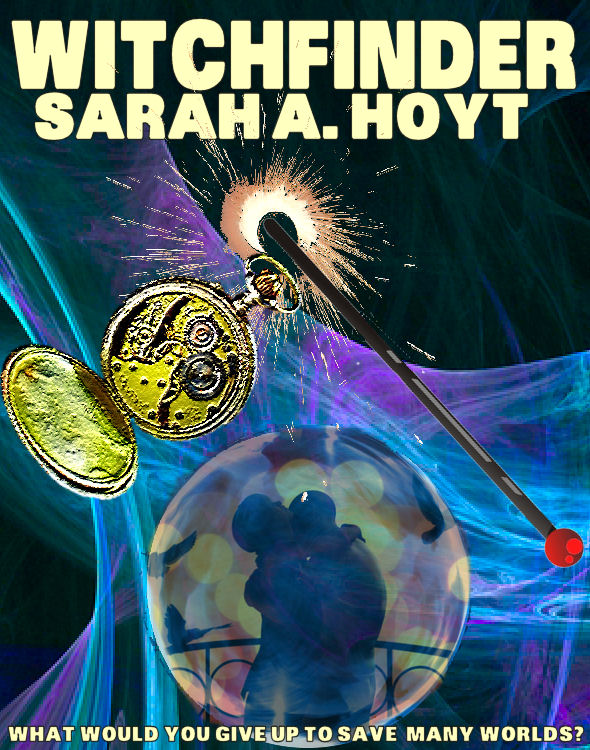
*This is the Fantasy novel I’m posting here for free, one chapter every Friday.   If your conscience troubles you getting something for free, do hit the donate button on the right side.  Anyone donating more than $6 will get a non-drm electronic copy of Witchfinder in its final version, when it’s published.
There is a compilation of previous chapters here  all in one big lump, which makes it easier to read and I will compile each new chapter there, a week after I post.  When the novel is completed and about to be edited the compilation page will probably be deleted.

Oh, this is in pre-arc format, meaning you’ll find the occasional spelling mistake and sentence that makes no sense.  It’s not exactly first draft, but it’s not at the level I’d send to a publisher, yet. *

The Tree, The Dragon, The Drunkard


There was a moment that Seraphim saw the creature clearly – a beautiful and stark naked young woman with chestnut hair and… well, the odd thing was that while she was alive and looked like a lovely, vital young woman, all of her was chestnut colored, and if one looked closely there was a hint of wood grain about her skin.

Seraphim, feeling as though an odd numbness were creeping up his arm from his palm, had no idea what he was seeing.  The woman looked around, frantic.  Put her hand to her chest and said, turning beautiful moss green eyes first to one, then to the other all around the company of the room, “The Forest,” she said.  “I must have…”

An odd sound echoed, like fabric ripping, and in the middle of the floor, just in front of Seraphim, the boards heaved up, nails flying.  One struck the guard who was holding Seraphim on the face, making an ugly cut.  The man let go of Seraphim, and started stepping back, as though he were not quite aware of doing it, till presently he’d backed up to near Honoria, as though looking for protection.

Honoria’s face was a study in shock, her mouth wide open.  Seraphim couldn’t understand why her hair was whipping as if in an unseen wind, until he realized the magic unleashed from the thick, dark, ropes, had submerged the room.  There was so much magic there, they were all in magic, like a fish in water, magic crackling and fizzling on their skins, magic making them stupid with the shock.

He knew that the spell that had held the various illusions together, down to the final illusion of Honoria being the princess would be unraveling too, now the sacrifice had been taken from the center of the weaving.

The sacrifice… As though pulling the magic up into it, the woman had …  Seraphim would like to say she had made an oak tree grow in the middle of the floor, only surely that was impossible, even with very great magic unleashed.  And yet in the middle of the royal nursery, pushing aside the cradle, overturning the finely wrought rocking chair, upending the chests of clothing, an oak tree grew, here, far from forest, far from soil, far from brook, it grew and greened, loaded down with acorns.

The woman – nymph – sighed and eased into the tree, like a person easing into a soft bed.  She backed into it and made a little “ahh” of relief.  You could still see her, sticking out of the tree trunk, and she still looked human, glancing around with wide-open eyes.  She looked at Seraphim and said, “You are not him,” and then.  “Good for you that you are not him.  Where is he?  My despoiler?”

Seraphim had the sense of her reaching back, searching through the world for…  He had a very bad feeling it would be for Sydell.  It shouldn’t be possible, and it wouldn’t be possible, not to a normal, human magician.  But if this was a nymph – a dryad?—then she would treat the human world as humans treated fairyland: a not-quite solid overlay on reality, to be rifled through at will for what it might contain.

And then…

There was the sound as though and explosion, and two men fell into the room.  The odd thing is that though they both fell from about halfway in the air, and both landed awkwardly, when they landed they didn’t seem to notice they’d dropped or that they were in a different place.  Rather, they each rolled, and stood, and turned to the other again, ready to fight.

This was when Seraphim recognized Sydell and Marlon.  His shock was not that, but that Marlon was losing and badly.  There were multiple slashes on his arms and his shirt was so torn and bloody it was impossible to tell where he’d been hit or how many times.

The reason for this became obvious almost immediately.  Although both of them held knives, Sydell was protecting himself with a magical shield while Marlon … appeared to have no magic at all.  There was no aura of magic around his head.  How could he have lost all his magic?

The puzzlement lasted only a second.  After all, it did not matter where his magic had gone or why.  All that mattered is that this was a very unequal duel.  Seraphim didn’t have magic to match Sydell’s, but he had magic.  He threw a shield around Marlon, just as Sydell’s knife would have found his heart.

Both men suddenly noticed him.  “You,” Sydell screamed, and ran at Seraphim, his knife ready.

And Seraphim, unarmed, seized on the only thing he had – the shard of the cage that had confined the dryad, which was even now in his hand, even as the splinters of it were making his palm throb like hell’s fire.

He struck out with it, blindly, while using his other arm to deflect Sydell’s blow.

His hand with the shard cut at Sydell’s cheek, making oddly black blood bubble up and pour out.

A roar echoed.  A feeling of scorch.

Before them in the middle of the room, steps from the tree, stood a vast red dragon with Sydell’s expression in his irate eyes.

And Honoria, for reasons known only to her, was pounding on the dragon’s wing with both closed fists.

Just when Seraphim thought things couldn’t get madder, they did.

Another dragon broke through the plate glass window announcing “I found you at last!” in words that were like roaring fire.

And Marlon looked Seraphim in the eye and screamed, “I gave him my magic.  Your brother.  Darwater, I fear he’s in a battle for his life.  I can feel his struggle, through my fealty to him, and I fear he’s losing.”

I Woke Up With A Near Migraine

So, as you can see, chapters will be late.  I am however hoping to post them today.  The funny thing is that I’m not even VAGUELY blocked.  I know exactly where the book is going now.  But Thursdays I seem to write bombastic posts and Fridays I seem to be out of sorts.  I wonder why.
Post you publication stuff in comments here.  I know I lost some last week, sorry.  I’ll try to do THAT post tomorrow morning.

Childish Things.

One of the more embarrassing moments of my childhood was when I approached a cousin’s wedding singer and asked why the group couldn’t play children’s songs.  I remember the look of shock on the man’s face very vividly.

Mind you, I was about five at the time, and the only child at that wedding, and I was bored, bored, bored.  Songs about lost loves and who’d done whom wrong did nothing for me.  It was so far outside my experience as to be… well… Martian.

If you think this is a post about the hyper-sexualization of society and childhood, you’re wrong.  Past societies were actually a lot more sexualized than ours, and childhood is largely a Victorian invention because that’s when society was finally affluent enough not to make five year olds start a trade.  Oh, and children would be exposed to sex and lovemaking from an early age too.

One of the funniest conceits is that people before the twentieth century (women particularly) knew nothing about sex until they were married.  Since I’ve met this in – some – contemporary literature, I can safely say these women were very good at lying (in fact, a lot of the literature has that sort of wink and nod feel to it.)

People before the twentieth century lived much closer to nature than … almost anyone, including farmers do now.  What I mean is, livestock and even wild animals were more like… your facebook friends nowadays.  And nature might be red in tooth and claw.  It is also horny.  At all times.  And it cares nothing what you see.

Also, while there were “children’s songs” before then, almost all of them had sexual double entendres, undertones or symbolism.

What I’d like to talk about is the infantilization of adulthood.

Look, yes, I know.  Teeny boppers put make up on, and I’ve seen middle school girls dressed like hookers, and, yes, yes, they’re talking all big and bad… as they always were.

In a normal, grown-up society, children imitate adults.  My reaction to the songs was so weird because I didn’t want to be an adult.  (Though I’d probably have had more fun if I had other kids around.)  Most kids do.  Most kids fantasize about being adults.  That’s what toy cars and wedding dresses for Halloween are all about.

What went wrong was that about the late sixties early seventies, society had a surplus of older juveniles and the powers that were decided – foolishly it turns out – that it was always going to be like that, forever, so they started catering to the youth.  Suddenly, the “hip” thing was to be a juvenile, act like a juvenile and value what a juvenile values.

Now those numbers are altered.  Society is weighting Senescence more.  So the young imitate their elders.  The problem is their elders don’t act like adults, they act like a frozen-in-time idealization of the juvenile.  They vote like it too.

I’m perfectly all right with “a safety net” though I’m still at a loss as to why it can’t be provided out of private charity.  Private charity has ALWAYS come through, while public “charity” always devolves to some form of oppression.  And besides, the only money government has is extracted under the threat of force (No?  Fine, pass a law that there are no fines and no arrests for failing to pay taxes and we’ll see how many do out of this great land.  I’m willing to bet high on less than 100.)  Is it valid to extract money, under the threat of force to give to someone else?  Why?  How can a faceless entity know that the one it’s taking from doesn’t need it, or that the other one needs it more?  Say I made 100k last year, this year I’m unemployed, but I still owe taxes for last year.  Say someone else makes no money, but eats every night with a wealthy relative and owns his/her house outright.  Which do you take from?  To whom do you give? Show your work.)  If this is moral, why aren’t muggings moral?  Show your work.

But a safety net isn’t what we have.  No.  Seriously.  Contrast our condition with that of most of mankind throughout most of history.  No one was safe from famine, and even aristocrats might go hungry now and then.  Yes, I DO hear a lot about the hungry in the US.  Pray tell, how many people have died in the most recent famine?  None, you say?  But they don’t eat all they want you say?

Sir, that’s not a famine.  That’s an appetite.  And before someone jumps down my throat, yes, I know what having insufficient food is.  In US terms, or perhaps a little worse, and for reasons divorced from my middle class upbringing, I went hungry that way for two years.  As a young newlywed, with zero budgeting hability, I managed to get to the point we survived on an egg, a handful of flour and some very old mushrooms for two days.

We didn’t die.  That’s not famine.

We should absolutely have programs that prevent famine.  I’m against people dying of hunger, and if private organizations prove insufficient (make sure they do, first) then by all means help.  Same for nudity and homelessness (not caused by mental illness.)

But the problem is that our safety net now is set at “accept no discomfort.”

So we have a society of adults who know – even if they don’t resort to it – that daddy-government will ensure they’re fed, clad, housed.

We have a society of adults that aren’t adults.  Like the spoiled children of noblemen of old, they have time to devote to things that are the adult equivalent of playing: sex, dressing up, taking offense at petty things.  And because discomfort is unthinkable, excuses are thought up for acts of thoughtlessness, carelessness and selfishness.

Children are being raised by people that bring them into the world, but don’t think they have any obligations to them.  They’re being raised by people whose sole sacred imperative is “have fun.”

The problem is that our children are trying to imitate adults that don’t exist.

This will end in tears.  And there will be no adult around to dry them and tell you to suck it up and be a big girl/boy now.


Climax and the Cigarette Moment

The Cigarette Moment

Yesterday I went trolling for blog post ideas.  I’m more or less on the brink of not having any, or, as one of our group members put it, when we were doing a short story a week, “Every Saturday I get up and stare into the abyss.”

This is worse when there are things going on in my life/life in general that require my attention.  I probably won’t be giving anyone great news if I say that I don’t blog about my private life in detail, even when I seem to.  It used to be, when the kids were much younger that I deliberately obfuscated anything having to do with them, because I was afraid the younger one would get kidnapped.  (The older on?  From about the time Robert was five, I pity the fool who’d try to grab him against his will.  Dangerous under any conditions comes to mind.  Took me a little longer to get the younger one up to snuff.)

Now, let me start by dismissing fatal illness or divorce or any of the big nasties.  There’s nothing like that going on in my life.  It’s mostly “Stuff that needs to get done” in the administrative sense which, because G-d has a sense of humor, all hit in the last couple of months, and also my awareness (since precious little has been done about it) that this house needs to be readied for sale partly for our financial survival, partly because we’re likely to move (though it’s now at least two years.)

It’s just some days I feel as though I’m being pulled in five different directions, I’m exhausted by noon, and I’ve yet to do any writing.

Which brings us to the going trolling for blog ideas – on my facebook conference – and getting a request to write about ends.  What makes a satisfying end?  All books end, of course, but how many do you close and walk away feeling “curiously unsatisfied?”

First of all, I intuited the importance of ends in fourth grade.  When writing school essays, I was aware that if I started well and finished with a bang, the teacher would forgive any number of noodling in the middle.

So – this works for essays – I borrowed from poetry and started with some big evocative image, which I would then bring the essay around to again, in the end.  Say the visual was Atlantis sinking, in the end I’d bring it again, to the waves closing over the land mass, as if it had never been.  Even if the metaphor were being used for… things people would rather ignore, or someone’s feelings, it worked.

Second, unfortunately it turns out that novels aren’t essays.  You need more than a cute image to open and close, and if you lose the plot in the middle, people are likely to tell.  Unless you’re writing for the sort of refined sphere from which the books came that we had to study in Modern Literature.  But then again, if you come from there it’s also perfectly all right to chop your novel to pieces and put them together in random fashion.  I’m not sure what a satisfying end is in that case, but it’s probably a Nobel prize of literature.

For the rest of us… for the rest of us it still needs to work.

Third, what makes the ending satisfying is what comes before – be it the beginning of the essay or, in a novel, the slow build of theme and problem in the middle.  In other words, what makes an ending satisfying is when the people you’ve been rooting for win and the right sobs you wanted dead die.  This might seem simplistic.  “But what if there’s no one whom you want to win?  No one you want to lose?”  Well, then it’s possible you’re writing grey goo.  Look, weirdly, people don’t read to experience what they experience in daily life.  The difference in fiction is that it makes sense and we know whom to root for.  This is, btw, the difference between Marlowe and Shakespeare.  Marlowe was far more realistic, and in a way, probably “better” in the sense that he tried to make it harder to root for someone.  (Oooh, so sharp he cut himself, right?) But Shakespeare, by clearly signaling who to root for, grounded people in the story and left the way open to concentrate on the really important stuff, like “real” characters and making everything else seem vitally important.  In other words, he used the “whom to root for” as scaffolding and upon it built the “slice of humanity” important stuff.  Because humans like things to make sense, that gave him a huge advantage.

So – give us someone to root for, and build upon it, so we really want the problem resolved the way we want it.

Four, of course, that is not all.  The minimalists, who can never be sufficiently reviled and who, for choice, should be hoisted on a stake – minimalist.  Made of clear glass.  It would make them so happy.  All function, no form – for years wrote how-to books telling you that when the action is over the novel is over.  This led to books where the couple finally got sort of together, and the minute it became clear she would say yes, the book… ended.

This is somehow very frustrating to human instincts.  Campbell talks about the return from the journey and seeing the hero again in his normal environment.  Heed the man.  He knows of which he speaks.  The other is a fable for grown up children who attend graduate school and want to be hip and speshul.

Or, as my husband explained to me when I briefly succumbed to the siren song of minimalism, “It’s like you just had incredible sex and as the last tremors pass, your lover kicks you out of bed and gives you cab money.  Most humans prefer cuddling and if they smoke maybe a cigarette.”  (He started critiquing my books’ “cigarette moment.” – i.e. the reward for what you just put the reader through.)


Five – sometimes ends don’t come naturally.  Oh, right.  Yes, when you start the book, you sort of know how it will end… by and large.  “They end up together” “the colony thrives”  “he gets shot in the fracas’ – whatever.  BUT once you’ve gone 300 pages, that end might no longer feel “right.”  Or it might feel too strong or not strong enough.  Or there’s some minor character who wasn’t even in the original idea whose end needs to be tied up.  (I can see this post will unleash no end of puns.  Go on then.  I’m not afraid of you.)

Just finish it anyhow, then work on the end in revision.  And run it by your beta readers, who will tell you if you got it just right.

Lately I’ve been plagued by double climaxes (what?  You complain about this? – Shuddup, you.  I’m talking in writing, of course) which means that I find the book is having its big to-do battle before it should, and still leaving things untied.  It’s very annoying, but it’s part of increasing complexity.  (Witchfinder is headed that way, btw.)

After struggling with one of the ends, it finally hit me this is perfectly all right, provided the second climax is bigger than the first.  (Shut up you.)

Anyway – so, to have a good end to a story, make sure you have a strong plot, build upon it by letting us know who to root for, and in the end spare not the cigarette moment.

Oh, yeah, and for the record, strong imagery at the beginning and end still works – provided everything works in between.

So, finishing a book is easy… provided you know how to write it.  And yeah, guys, I’m still working at it.

Which is why this ending is kind of lame.  Deal with it.  Anyone got a cigarette?  I need cab money.


Covers and Other Indie Publishing discoveries

So recently my life has been plagued by Phil, Prince of Heck, Lord of Insufficient Light – for those not of my generation, that’s a Dilbert reference.  Nothing too bad going on, but I seem to get my early mornings piled with what could generously be called “Cr*p that has to be dealt with, and since I’m the antithesis of a morning person, it throws my entire day and this blog off.

Yes, I should blog at night, but by that time I’m usually tired and peevish, and you don’t want me peevish.

This too shall pass.  It’s just a short phase, and I hope you’ll bear with me.

Meanwhile, I thought I’d make this post about odds and ends, because there are some things I need to deal with that aren’t QUITE up to a full post.

Mostly these are things I’ve found through indie publishing.

First – publishers were right on one thing: it’s not how close the cover matches your book, it’s how attractive the cover is that sells it.  Right now, what I’ve found is that my consistent sellers have an attractive human figure on them.  (Because of the availability of such figures, these tend to be female.)  I suspect if I were better at cover design I could make an abstract background and a title very attractive.  But I’m learning this as I go, and I can’t find books on how to do it.  (If anyone has books on how to do it, list them in comments, please.)

Second – YOU MUST link your other works inside books, particularly inside those books you’re giving away.  I found that, say, my first ten short stories are “walled off” from the rest.  I.e. the rest sells very well, but I only get sporadic sales on those.  So I went back and looked.  Because I put the first (published, not written) up the same day, I didn’t link them to each other.  So, SF and mystery sort of exist by themselves and there’s no incentive to click on the others.  I don’t know if ebook readers are lazy or if – like me – they just tend to go with convenience, and convenience means links.  BUT you can run promotions till you’re blue in the face.  If you don’t have those links in the stories, you ain’t gonna sell them.

Third – some people are stupid.  While I was correcting some of the lack of links (and covers.  It’s stuff I’m doing as I find the time) I found that my Marlowe mysteries had really low stars.  Being a wussy I asked a friend to read the reviews for me.  One of them was because they like the musketeers better.  That’s fine.  I’m not sure it justifies a two star review, though.  HOWEVER the other was one star because it’s a short story.  IT SAYS IT’S A SHORT STORY ON THE DESCRIPTION.  So…  I’m also, as I have time, moving “short story” to the first line of the description.  Interestingly this was form when the story was 99c and the person complained about paying 99c for a short story.  Dean W. Smith says low prices encourage low reviews.  We’ll see if he’s right.

Fourth – not only am I getting more money from the higher priced stories, but they’re selling more.  A confession, though, I’m leaving my collections at 4.99 which still makes each short 99c.  I do this because I don’t mind if they cannibalize shorts sales.  I still get more than if I sold each short at 99c, and people get to feel good about “saving” money.  Win win.  (And I need to slam some more five-packs up.  Weirdly, though, the individual stories still sell best.  Go figure.


Other notes – like a total dork I forgot to mention that the short story up for free today IS a short in its description.  Now can’t fix it till it’s off promo.  But now you know ;)

So, here’s the link again:  Wait Until The War Is Over.

And my readers, as usual, have been doing stuff –

Martin L. Shoemaker is in this antho:  The Glass Parachute.

Craig Allen has a free story:  Goodbye Sunshine.

Pam Uphoff  has: Comet Fall.

I know there were others, but I didn’t post this for so long I’ve now lost them.  Put them again in the comments, and I’ll update!

And now, I’m going to go for a walk, then work.


You Don’t Have to Be Crazy To Work Here

So, how does one become a writer?  The long-delayed post today – because I had a routine doctor’s checkup – gave me time to come back and look at your comments, and we can all agree that a degree in creative writing is about as useful as a meringue hammer.  At least I hope we all agree, because I’m sure of this.

In fact, what little I took in terms of creative writing in school probably hindered my writing commercial fiction.  It’s sort of looking at things the wrong way.  Your Creative Writing professor might have been ecstatic at the bit of symbolism in which you dress a character all in white to symbolize purity, but the reader is probably not even going to register it consciously, and if your character all-in-white proceeds to do nothing much that’s interesting, then well… The reader won’t be happy.

Mostly what the reader wants is to experience emotions.  If along with it you can backload some stuff to make the reader think, and if your reader is a thinking sort of person, bonus.  But mostly the reader wants to experience something and “emotions” is the common denominator, atop of which you add the peculiar “cookies” of each genre.  So, say, for romance, you have to have … romantic stuff and tension between the couple; for SF (depending on subgenre) cool stuff like robots and space exploration; for fantasy everything from LOTR plus some; for urban fantasy shifters and vamps and hot chics (or cute guys) fighting them.  However if all those things don’t contribute to the emotional experience, you got nothing.

While from the critics end… well… they’re looking for symbolism and meaning and wondrous stuff like allusions to other books… yeah.  And most college courses teach you to be critics not writers.

So – you can’t learn it in college.  What makes a writer a writer?

Well, you don’t have to be crazy to work here, but it helps.

Most of us started out telling ourselves stories.  Or we told younger siblings stories.  (I only had cats younger than I, and they were notoriously averse to standing still while I told them stories.)  Or, when we were older, we told our peers stories (guilty!)

I wrote my first “novel” at six.  It was ten handwritten pages and Enid Blyton Famous Five Fanfic.  (Hey, one does what one can.)

By highschool I was writing 20k word “novels” of very, very bad Clifford Simak pastiche.

And that’s part of what makes you a writer.  Like the artists of old who copied the works of the masters, almost all of us started out by writing things in imitation of those authors whose work had moved us the most.

At some point we realize it’s not quite ours, and we start experimenting.  For me that was my twenties, which generated a never end of REALLY BAD experiments, including some that can never be buried DEEP enough.  In fact, my kids are under notice if they find and publish any of them, I’ll come back and haunt them into the next century.

But in the middle of the experiments, my taste, formed by an awful lot of reading, picked this and that that worked, and that other thing that sparkled, and…  And I started to get a clue.

In my early thirties I had the revelation that I was writing for a reader.  Yeah, I know.  I’m slow that way.  Now, I had no idea who “my reader” was or how he functioned, but I had an idea that I would write for the reader I’d like to attract.

And then it became sort of like playing chess on both sides, and things started to work.  That mind set is absolutely necessary to know when you’re too slow, when you’re too fast, when you’ve skipped something essential…

So – it’s hard to acquire, though at this point it’s second nature.  (Posting at austen.com and getting comments as I wrote really helped that sense of what the readers were getting or not.)

And there it is.  You become a writer by:

1-      Copying the masters.

2-      Learning to go beyond copy

3-      Reading an awful lot

4-      Learning to write for readers.

Sounds easy, right?  Right.  And you’re wondering where the part comes where you suffer for your art, aren’t you?

Trust me, there’s suffering enough in there.  Like most simple plans, the difficulty is in the execution.

Now – go work.

So you want to go indie?

I’m writing this because one of the people who invited me for a blog tour asked how to do it and I thought I never really corralled all the information on one page, including links to stuff you’ll need, and if I was going to write something that comprehensive I’d make it a blog post.

First I’ll give a general view on why I went indie and why I think it could be right for people.

We’ll start with the definition of terms: indie is either micro/small/medium but recent and “doesn’t own a paper books division” house OR doing it yourself which can be technically self-published or not.

So why should you do that over traditional?

Well, I’m not saying you should.  Not all of you.  If you have contacts at a publishing house; if you have the type of profile that might interest them (yes, YOU not your book – a profile that interest them at least in my experience is defined as young [you are or look under 35], and with something “piquant” about you, ie what they call a “platform” only since they have zero clue about what a platform means, they apply it to BOTH having a very well attended blog [this one might be on the EDGE of qualifying] or to having an “interesting” personal life story or interesting characteristics.  In both of the later cases, to give you the facts bluntly, what they mean is “politically correct.); if you live close enough to New York City to attend the various meet and greets or cons they attend and make personal contact; if you are patient enough and don’t mind the inevitable groveling in front of people who might or might not deserve it, you should go traditional.  Just read your contract carefully and have an IP lawyer look at it before you sign.  Another exception is if you’re writing Baen sort of stuff AND have time to wait (Baen can be slow) you should try there first.  However even if you WANT Baen, going indie might be the best way to go there.  (Look at Larry Correia.)  When you come in and say “I sold 5k books on my own, Baen will jump you to the head of the line.

Wait!  Isn’t there a stigma associated with going indie?  Doesn’t it mean no one will ever publish you again?  There can be.  There are certain indie houses that have a bad reputation and/or whose writers are known to suck.  So… before you submit to a house it’s a good idea to read some of their stuff.  If you find it horrible, then they’re not giving you any advantage.

My caveat on going indie with a small press is this: the new micro/small epresses are very volatile.  I am involved with one – NRP – and because our manpower is reduced and mostly part time, you can very easily have ALL of us from slush readers to webpage techs sidelined for months.  If you decide to try one or more small presses, try them with only a portion of your output and not the most important part, at least to begin with.

Right now, frankly, the best route to both a lucrative career in indie and to traditional publishing is to self publish – though not technically self-publish – a book and have it do well.  Your chances of this are especially high if you’re someone who’s been writing and underbedding books for the last ten years.  (Underbedding totally is a word!)

If you do well enough you’ll be offered a contract, and if you’re doing massively well, they’ll offer you a million dollar contract.  (And then you’ll have to watch them like a hawk, talk to an IP lawyer, and make some very tough calls.)

So, you’ve decided to self-publish.  Why do I keep calling it not-technically?

Remember when I had to raise my prices because the customer perception had become that 99c to 2.99 was trash, since that’s where beginning indies congregate?  (And I find that annoying, since I think 99c to 2.99 is just right for a “snack” to make you perk up in this economy.  BUT I’m er… frugal.)

Well, there is a similar perception with publishing.  For the public, if your book doesn’t have a publisher, then they look askance at it.  There is a certain justification, since that’s what the bottom-grade, just-beginning indies turn to do.

So, first you form a company.  It doesn’t need to be anything very fancy.  A DBA will do – you’ll need to look at your state, to find out what you need to do for that.  Some states have you register with the secretary of state.  In others, all you need is a bank account in that name.

But please don’t call them “books by me” or “my name books.”  If your name is Smith and you call it Smith Press you just lost all the customers who are trying to eliminate self-pub.

Call it something you find good or representative of your work.  Mine is Goldport Press, after the imaginary Colorado town where I set a lot of books.  My husband’s (which he hasn’t done much with yet) is Mankind ink press.  My son’s is Tilted Fedora Enterprises.  I think Pam’s is Iron Ax press – Right? – I know Stephanie’s is Chromosphere.  Just go for it.

Okay, now that’s out of the way.  Where do you put your books up?

Right now my stuff is at Barnes and noble, smashwords and Amazon.  I need to put it in Kobo in my copious spare time.  Of the three it’s at, Amazon is the best payer month to month, but Smashwords is starting to catch up (takes about 6 months, I hear, because of the affiliates paying.)  Barnes and Noble wouldn’t be worth my time, except that it’s easy to put stuff up in it, so why not.  Also I hear some people whose biggest payday is Barnes and Noble.  No, I have no idea what I’m doing wrong.  Probably tags.  (More on that later.)

There might be a call to put stuff up first on Amazon and under their prime program for the first three months.  (I normally do it.)

Okay, so now you want to put stuff up.  Right.  First, make an account for your press with all the services you intend to use.  If your book is even VAGUELY romance, use allromance.com as well.  I hear their payday is also very high.

How to do it…  there are several books floating around with stuff like “How to format your book for the kindle.”  Also, if you know or have a friend who knows how to code html, you have everything you need, because what all services take – except Smashwords, who takes Word files – is html code.

The way I was taught to do it, which I now call “the brute force method” is to save the word file as a filtered html file, then take the two files resulting, zip them together and use that.

My early published stories will need to be fixed, and some of them look rough or the program resurrected the original font it was written in – courier, years ago – all spidery and odd.  Or other codes were activated.

What I do now is clean it up in word (using see codes,) get rid of the space between paragraphs which is my code bête noir, then bring it up in sigil and save it in ebook format, which I can then upload.  After I upload it I download the preview, because sometimes Sigil lies and there are things I didn’t see.

Amanda Green did a quick workshop on how to do it over at Mad Genius Club.  It think it’s nine posts.  Search on the title.

Of course, before you do this, you should have your book proofread.  You can spend hundreds or thousands of dollars doing this – I’m sure the people who do this for a living among my readers will chime up in the comments –but you don’t have to.  Proofreading yourself is kind of like being your own lawyer.  If you proofread yourself you have a fool for a proofreader.  BUT surely you have someone who normally proofread for you before you submitted to publishers.  In my case, it was usually my husband, who is detail oriented.

If you don’t have anyone, then talk to someone else self-publishing and trade books.  Unless you prefer to pay.  There are people who’ll do it very reasonably.

You’re also going to need a cover – and again you can pay thousands of dollars.  It might even be justified (rarely) to do so.  Say your series started traditional published with a certain look, and you want to continue it.

However, remember that people will be looking at a thumbnail.  It’s bigger in kindle fire, but it’s still not huge.  So…

You can find images all over on line.  My favorite source is dreamstime at least for short stories, because I can find DRAWN covers for like 2 or 3 dollars.  Yes, other people might have the same cover, but how likely is it they’ll use it for the same type of story at the same time?

There’s also everystockphoto and a few other free sites.  Be sure to read all the rights you get VERY carefully.  In fact, go ahead and read The Copyright Handbook to make sure you’re within the law.

A good source for sources is here.  Also, I wrote on covers here.

For novels I plan to enslave my son and to bargain with Travis Lee Clark, depending on what type it is (Robert does well with the more cartoonish ones.  Oh, and stop cringing, I’ll PAY him.  He has college textbooks to pay for, poor kid.)  I just haven’t brought novels out indie, yet.

Oh, yeah, your book will need a copyright disclaimer at the front (go and look at some published book for the template.)  And for ISBNS and other confusions (or I’ll be here forever) go and read Dean Wesley Smith’s New World Of Publishing and Think Like A Publisher.

When you put the book up, they’ll want you to “tag” it – that is add tags that help people find it.  I’m lousy at this, and the best I can do is bug Amanda to do a post on it.  I’m taking a workshop on it online with Dean Wesley Smith next month (if I remembered to book, which is not guaranteed.)  Tag is where you put things like “crime” “pre 1900” but there’s apparently a way to game it.  I just don’t get it.

Other than tags, the best way to sell your book that I’ve found is this:  Have more than one book.  At the end of one book, put the beginning of the other – ten pages or so —  and a link to buy it from wherever they bought this one.  (This means you have to change it in the file from Amazon to Kobo to B & N, etc, before you put it up.  It’s easy.)  Then when you first put the book up, do it in the Prime program at Amazon – that means you can’t have it anywhere else while it’s active, so you don’t want to KEEP it there – for the three months required.  Bring two books out.  Take the first free for a week.  Bring the third out.  Take the second free for a week.  Bring the fourth out – if you’re doing it once a month, the first will have rolled off and you can now put it in other distributors.

Pricing – I’d start at 2.99 then price according to length and reading experience.  I try not to have anything over 10k words for under 3.99 because people have threatened to come to my house and beat me.  Novels will  probably start at 4.99.  This doesn’t prevent taking a book on sale (and put that on the description) for a month or so, when another in the series comes out.  I hear that works well.

If you caught the drift on “series” – yeah. series or even just multiple books sell better.  Fortunately smaller works do well in electronic.  What that means is that if you’ve got a 100k novel that can be logically broken into two, you’d do better with it that way.  (Darkship Thieves can logically be broken into three, for instance.  Of course, it’s traditional, so it doesn’t matter.)  And even short stories can be series.

I have a colleague who says she’s also done well with Project Wonderful ads.

I haven’t tried those, really, not for indie.  So…

You put something up, haven’t taken it free and no one has bought it, yet.  Well, takes time for people to discover it.  Stop worrying about it, and start putting stuff up.  Particularly if you joggle it by taking it free now and then, it will sell.

But… when will you get rich?

Well… you might.  Or you might not.  What I can promise is that the more ebooks you have up, the more you make.  Right now my income from all sources is pegged at about $100 a month, but then all I have are short stories, and I’m very bad about putting stuff up (which is on the slate for this afternoon.)

What seems to be true is that at least with novels, income continues.  So even if all you’re making per month, with ten novels there, is $500, you’ll be doing that for a very long time.  Think about it: under the bed they make you nothing.

And as with publishing, there’s a chance lightening will hit.  (When I find how to can it, I’ll share.)

And now, go work and let me get caffeine in me (I wish I could get it IV) and I’ll go work too.

Good luck.

An Unscheduled Break

Those of you who are following Witchfinder will have to forgive me.  I will try to catch up sometime this week, but it’s possible I’ll have to skip.

Yesterday my body decided I needed an unscheduled break.  I’d like to point out I’m not actually ill.  Yesterday I felt like I might be coming down with something, but that seems to be mostly gone.

So, what is it?  I don’t know.  Could be nerves.  But yesterday my goals were as follows: write chapter, clean house, publish short stories, so I can put one for free, since Waiting For Juliette rolled out.

I think I checked two pages of the novella Whom The Gods Love.  That was it.  Oh, and I cleaned the kitchen.  It was like the smallest task took FOREVER.

I have no explanation for this.

So today I was trying to get to that chapter, but I have all the things that do NEED to be done and done today looming over me.

If you’ll forgive me, I’ll skip a week and resume next week.

Meanwhile — if you have something you wish to promote, please post in the comments here, there will be promo-post tomorrow.