New Year Book Promo and Vignettes by by Luke, Mary Catelli and ‘Nother Mike

*So I forgot New Year’s was Sunday. And Amazon finally stopped futzing with Through Fire and it went through. So, today we have book promo. Tomorrow the conclusion of my deep dive into what we’re facing, which honestly probably will amount to “Brace” but hey. Anyway, new year new books. – SAH*

Book promo

If you wish to send us books for next week’s promo, please email to bookpimping at outlook dot com. If you feel a need to re-promo the same book do so no more than once every six months (unless you’re me or my relative. Deal.) One book per author per week. Amazon links only. Oh, yeah, by clicking through and buying (anything, actually) through one of the links below, you will at no cost to you be giving a portion of your purchase to support ATH through our associates number. A COMMISSION IS EARNED FROM EACH PURCHASE.*Note that I haven’t read most of these books (my reading is eclectic and “craving led”,) and apply the usual cautions to buying. – SAH

FROM SARAH A. HOYT — NOW WITH HARDCOVER OPTION: Through Fire

Zen Sienna is a woman from another world and does not want to become the wife of a ruler of Earth. But she also doesn’t know how to escape the man’s courtship.

Which is just as well, because when a revolution happens, she turns out to have the skills to stay just one step ahead of the corrupt revolutionaries and the insane government to keep herself and those she comes to love alive and lead them to triumph.

Follow Zen in a harrowing adventure where a stranger in a strange land proves herself the most qualified to survive.

FROM C.V.WALTER CONTAINING ONE OF SARAH A. HOYT’S BEST AND WEIRDEST SHORT STORIES: Saints of Malta

Malta. An island full of history and mystery. Conquered, invaded and defended through every age, it’s a place that inspires the very best and the very worst humanity has to offer.

Join these authors as they explore Magic and Mayhem, Saints and Demons, who battle over the island of Malta.

FROM PAUL CLAYTON: Escape From the Future and Other Stories
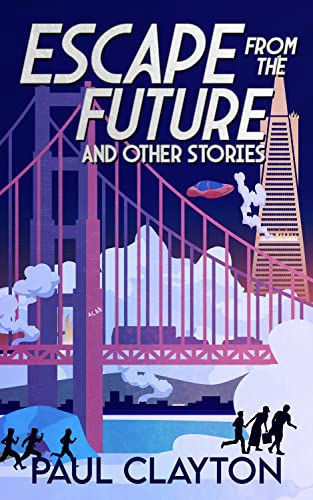
What if you had access to a time machine and could go back to visit a deceased love… one more time. Would you?

In 1962, Bobby Newman’s Grandpa, a basement inventor, loses his wife to cancer, then begins to lose his mind to grief. While tuning up his not-yet-perfected time machine for one last visit with his wife, he ends up going the wrong way… into the dystopian future of 2025. Inexplicably, he sends the machine back.

FROM LARS WALKER: King of Rogaland

It’s 1022 AD. In Norway, the balance of power is poised between two mighty men – King Olaf, full of new ideas about central government, and Erling Skjalgsson, defender of the old democracy. Two worlds are watching as they contend – the familiar world we live in, and the unseen world around us, full of witches and elves and the dead who walk in the night.

Erling is fighting for survival, and for the future of the land. The steps he must take aren’t always gentle ones. At his side is his Irish priest, Father Ailill, concerned that Erling might gain the world and lose his soul. Concerned, also, about Erling’s nephew Asbjorn, a proud young man inclined to cut corners with the law.

And to one side, they have an interesting guest in the household, a cheerful young nobleman from Scotland called Macbeth…

FROM TONY ANDARIAN: Dawn of Chaos: (Sanctum of the Archmage, Volume One)

It wasn’t demons, death, and slavery to the Dark that truly frightened her. It was the woman she would have to become to fight them.

A new constitution prepares Carlissa for an era of enlightenment. The old order fades, and a promise of freedom stirs the air. In the space of one terrifying day, that promise is shattered in a bloodbath of fire and magic.Thousands of years ago, an epic battle was fought between good and evil. The demon lords had opened a door to the realms of hell itself, and their horde threatened to overrun the earth. But the Kalarans, led by the hero Calindra, destroyed their hellgate and drove them from the world.

The Great War has long since been lost to myth and legend. The Church struggles for relevance as the people forget their covenant with the gods. A renaissance of freedom and learning stirs the air in the modern age of Carlissa, led by the royal family, and the wisdom of the Archmage.

All of that comes to an end when a dome of shimmering magic appears in the capital city.

The people fight desperately to survive the chaos that follows, and wonder bitterly why the gods seem to have abandoned them. Their only hope lies with the magic of the Archmage — and his, with a young princess who never wanted to rule. She must find the strength to set aside her bard’s calling and take up a battle against impossible odds, or surrender her land and people to the Black Magus and his demons.

FROM J. BRUNO: The Amazing Flight of Aaron William Hawk Vol. 1: Into the Vast Nothing.

A young boy, a ginormous kite, and a blustery mountaintop—What could go wrong?

Ever since he could sit upright, young Aaron Hawk shared a deep passion for flying with his father. That is, until his father’s tragic death. Making Aaron forget all the things that were close to his heart. But in an effort to revive his dreams, Aaron builds a huge kite, and in a daring quest for adventure, he rides it across the skies. However, his harrowing ride ends when he crashes to earth, deep in the woods. He finds himself tangled in the wreckage of his glider, but fortunately, mostly unharmed. An elderly aviator comes to his aid, and later reveals a fantastic story of an island where one can learn to fly like a bird, and gives the boy a magical compass. And so begins Aaron’s journey. Follow along on this wondrous quest as Aaron discovers what it takes to face his fears, take hold of his spirit, and chase his dreams. But how much will Aaron risk to follow his heart and find the mystical island?

FROM MARY JO THOMPSON: Glass Prison
All she knew was that after the explosion, her sister was gone. And for all they knew, VISP and LIMIT, two opposing organizations tracking the girls, these kids were at the center of the most destructive attack on the power grid in modern history. An event that plunged the world into chaos and darkness. For years she had been contained unconscious. Now she’s waking. And she’s not alone.

FROM CHRISTOPHER WOERNER: 202211 Take Thanks

This booklet is an edited collection of the pamphlets published throughout the month of November. It covers the ever-worsening times we live in nowadays because our rulers demand it. As always, it covers current events with some observations of leftism and tyranny, with a bit of pop culture here-and-there.

We need a resistance movement more than ever. That’s basically what I’ve been aiming for in all the books so-far and it’s not going to stop until I do and so does everyone else.

FROM PAM UPHOFF: Code Name Igor

Lord Axel Ivan Vinogradov Is a Mentalist with the Fast Reaction Teams that protect the small population of the Sanctioned Research World of Siberia Max from acquisitive Cross dimensional Worlds.

As the Three Part Alliance crumbles, Axel–code name Igor–finds himself overstretched between his duty, and his family. Especially after he is accused of murdering his corrupt and very much not-loved uncle.

Vignettes by Luke, Mary Catelli and ‘Nother Mike.

So what’s a vignette? You might know them as flash fiction, or even just sketches. We will provide a prompt each Sunday that you can use directly (including it in your work) or just as an inspiration. You, in turn, will write about 50 words (yes, we are going for short shorts! Not even a Drabble 100 words, just half that!). Then post it! For an additional challenge, you can aim to make it exactly 50 words, if you like.

We recommend that if you have an original vignette, you post that as a new reply. If you are commenting on someone’s vignette, then post that as a reply to the vignette. Comments — this is writing practice, so comments should be aimed at helping someone be a better writer, not at crushing them. And since these are likely to be drafts, don’t jump up and down too hard on typos and grammar.

If you have questions, feel free to ask.

Your writing prompt this week is: UNTIDY

Green Shoots — Riding the Catastrophic Wave of Change, part VI

Before I begin the post proper, an argh and an explanation on why I call this a catastrophic wave of change (As opposed to say the changes mid nineteenth to mid twentieth century.

The ARGH: Amazon on the last day of the year has invented a new and heretofore unheard of brand of stupid. Last night I uploaded all of Through Fire, ebook and paper. Normally they gag on paper. When it’s a rights thing, they gag on all of them. Today? Today they published the paper without a burp, but are holding fast on demanding I prove I’ve the right to publish myself to publish the ebook. Of ALL the stupid possible. Head>desk.

An explanation on why this wave of change is completely catastrophic. And I wouldn’t, btw, say it’s smaller than say beginning of twentieth century of 1950. It’s just less spectacular. It’s a wave of change hitting details of every day life.

Because the wave of the late nineteenth to first half of twentieth was spectacular. It was also the completion of a wave started somewhere circa the 1500s: a wave towards mass/specialized production; centralization; expertise; urbanization.

Yes, the cresting of the wave took us to what we consider “normal 20th century” but the push had been going that way for a long time. And while the end of it bore spectacular fruits in science and engineering, it had already gone sour in politics. The centralization had already reached the level where it wasn’t meeting market demand and was breaking more things than it helped, even as it completed.

The wave we’re going through really only started sometime in the eighties/nineties, and might have started first with politics because it had already gone sour. But it was reinforced by computing; e-commerce; an internet bursting with knowledge of all kinds.

And…. And it’s going the other way from the mass-industrialization wave: to personalization; to individuation; to non-site specific, and therefore — for the first time in history — anti-urbanization.

And before you say “But it’s just little stuff.” Yeah, it really is. It’s little stuff that affects every day life. What we know. What we think. What we do and how we do it.

If you think it’s not astonishing that I can talk to my friend and co-worker (well, same profession) across the world free of charge and not metered — also instantly — you aren’t my age. If you think it’s not astonishing that I can look up how to repair my specific brand of vacuum and do it in minutes, you weren’t born in the twentieth century.

But it’s more than that. For someone like me who always wanted to KNOW? There is graduate level education on history, on writing, on…. everything on line, and most of it is free.

This is untethering the “rule of experts” and frankly untying our institutions. It’s part of the reason we’ve gone Full Tilt Boogie clown world with the shoes on. The institutions can’t add anything sane, so they’re specializing in full-frontal crazy.

But…… But the wave goes on. People put things online teaching other people to do things. Right now I could take a month and become the world’s foremost expert in something in a few days. I could learn animation and start making short movies in two or three years (which I don’t have. Ah, to be twenty again!)

And parents are teaching their own kids. One of a couple (usually the woman) is going home to do that. And young people, starting with millenials (well, really with my generation, but we had fewer resources) really want to know “the right way to cook steak” or “the right way to iron a shirt.” They’re trying to re discover every day skills lost to the great wave of industrialization and specialization.

And people are moving out of the cities (granted, leaving them to be occupied by ferals, but that’s a political thing.) People are writing and doing art and writing music and making crafts, and teh Amazon stupid notwithstanding selling directly to a starving public. I also hear of doctors who let you pay in cash (we haven’t found one yet) and it’s cheaper. And there are probably a hundred other people doing workarounds for the non-functional systems.

Now, I know I’m not seeing all the “Green shots.” But if you look around in your own area, you’ll find them. The centralization and specialization movement was great for humanity and for the technology of its own time. Some things will always be cheaper and easier done on a grand scale. But not all. And it’s time to start walking a lot of it back. Which is happening.

Tomorrow — yes, I know I inverted the order of promised posts. Deal — and appropriately for New Years, we’ll be talking about to do to prepare yourself for the future.

Because it’s coming at us fast, and while a lot of it is unknowable, and some will feel like pulling the rug from under your feet (all of 2020) there are things you can do to prepare and ways to remain flexible.

Be not afraid. The future is deep and long and the wave is going our way for once!

You’ve Got To Have Faith! — Riding the catastrophic wave of change part V

So we’ve been talking about how everything is broken. Yes, I know I haven’t gone into everything, but that’s easily explainable: first, I don’t have the rest of my life to do this series of articles; second, I don’t have visibility into a lot of areas (while I have visibility into a lot of them because I have a wide circle, and I like listening to people talking about what they do.)

Now, to a certain extent everything has always been broken. I mean, we’re humans. Humans are…. not perfect. yes, I know, I was surprised (and annoyed) too when I found out. For the longest time I thought it was just me.

But — unless this is a mirage caused by the fact that we’re not living then — it seems that not all times were as broken as ours.

We can see it from “real signs” too — for one, in most times the technological and therefore the social change waves were smaller or further apart. So there was time for stabilizing in between. For another we know that things were more stable from the fact that at times in the past (though not all times) the population grew.

Population growth requires both real world stability that allows for marriages and for kids to survive infancy, and confidence in the future that has people actually want to have kids. (Yes, contraception in the past was nowhere near as efficient, but people managed, thank you so much.)

Also, judging from “things accomplished” at various times in history things were more stable than now.

Now we are in one of those in-between states, or at it goes in internet parlance, the time in history before the map goes angry and full of arrows. Which tends to coincide with really fast — i.e. catastrophic — technological change, funnily enough.

People in general seem to like and be designed for stable times with slow improvement. When things change very fast, be they for good or ill, the culture can’t adapt fast enough.

This ends up causing a mismatch between demand and supply. In either direction.

Now I think as a libertarian (ish) at this point I’m supposed to don my ceremonial dance outfit, and shake my rattles, and intone solemnly “the invisible hand will provide” while the rest of you roll your eyes. But bear with me a little.

Let me illustrate the technological change, and the mismatch in the field I know best: books.

Although publishing has been embuggered (totally a word. Also not a swear word. There was a case in Oz that ruled it wasn’t) for a long time, maybe since the time monks copying manuscripts by hand and drawing snails on them was the biggest production effort, they got particularly embuggered as to production and distribution as a result of WWII and the agreement that sellers could send back whatever they didn’t sell, which led to the onus for whether a book sold or not to be all on the publisher, not shared between publisher and distributor, which already led to some interesting side excursions. In fact, over time, it led to a concentration of publishing in very few, large houses, because smaller ones couldn’t take the hit of large, unexpected returns.

You can tell the field started running aground then, because advances stopped keeping pace with cost of living, and reading for amusement fell steadily since then.

Yes, you can blame radio, or movies, or TV, or gaming. Why shouldn’t you? Publishing did. But the fact is, given compelling enough reading material those shouldn’t have had an impact as the total leisure time per capita increased over that time period, and also a lot of other forms of entertainment — associations and clubs, neighborhood ties, etc — decreased over the same time, leaving more time for reading.

When something falls steadily like that, as a class, there’s a fundamental mismatch between producer and consumer.

However, it took until the advent of computers for the distribution time to get truly stupid. Because humans can be dumb, but for really weaponized stupidity they need computer help.

Because the producers — publishers — took the main risk in books, you can’t blame them for trying to have more control over the distribution. But it took a chain bookstore — Borders — going weaponized stupid to drive the whole thing over the edge over the course of a decade and change.

You see, Borders realized that they could keep track of what sold via computer, and had the brilliant idea of “ordering to the net.” Say they had a hundred books in stock, and 80 sold. Next book by the same author order only 80. Then fifty sold. Order only 50 of the third.

This both saved the bookstore a ton of space, and allowed it to take incentives from the publisher for stocking more of the books the publisher wanted to push, which in turn led to rapid expansion of the chain. and its being copied by other chains.

There was only one small problem with the reasoning: First, no book ever sells a hundred percent. For one, there’s always theft. So, you were left in the best of cases, with a reductive spiral that ended in zero over a decade or so. Second, if you had only one or two books on the shelves, the chances of selling any of them were close to zero, no matter if the book was brilliant. Most people would never see them. And this led to the deaths of careers (or at least change of name for authors) within one or two books.

This in turn made the real producers — writers — into “lottery tickets.” Unless you were one of the few the publisher chose to push, your chances of selling enough to sell another one were essentially zero. But the publisher kept getting more midlisters and burning through them in the hopes one of them would be a freak multimillion dollar ticket. Which didn’t happen because the stores were no longer set up to do that. (For the stores to do that, you needed a system in which the staff could discover a book and start handselling it to customers. Impossible, when what’s on the shelves is dictated by the tri-state area manager which was another effect of the efficiencies of computer management.)

Trust me, because most of my career was consumed in this: the system sucked for everyone. Publishers might have thought it didn’t suck for them, but in fact, printruns were falling straight down. A meh print run when I started out was around 10k, (which is what my first book sold within a year.) Nowadays a 2k print run will make the publisher give you another chance. That’s how bad it was.

Meanwhile, writers were breaking. Most of them only had one or two books to prove themselves, and by the time people found their long-out-of-print books, they had disappeared. Writers don’t do well with this. The best of us vibrate like tuning forks. Meaning even when we try to be super-realistic and hard working, we still work largely by “this idea that won’t let go.” Not knowing if you’ll ever sell any other book makes you suggest books that are likely to be sold, and not spend three years chasing the wild idea.

More writers gave up. More writers became bitter. The ones that survived through multiple name and genre changes just burned out slower. And the offerings became more blah.

Meanwhile publishers who never had any real idea what the public wanted just started buying to impress other publishers or their college teachers. And the distributors kept consulting the computers like they were oracles. AND and this is really important: the reading public had nothing to read. I know, because I’m one of those people who are broken, and who mostly READS for entertainment. I ran from genre to genre looking for something I COULD read (as Dan described in his post yesterday, for himself.) For a long time I took refuge in popular history, before that too went sour. I stopped going to new bookstores. I was really grumpy about it.

There might be some hope on the horizon for Barnes and Noble, though, you know, believe it when I see it and all that. (And they’re still impaired by concentrating on paper bricks, no longer the efficient way to distribute story. Until they figure out how to integrate stores with the sale of ebooks, they will be vulnerable.)

Anyway, everything was broken and getting worse and worse.

And then the winged hussars arrived. Okay, it was Beezosbub riding on Amazon. And yes, Amazon has its own issues, is following the path of a monopolistic distributor, and we desperately need alternatives, BUT for a while at least (I’m questioning their algorithms right now) they fixed the mismatch between distributor and consumer for books.

Which fixed one issue while breaking everything else around it, because all of a sudden even the pretense of working was taking from the system. That kind of breaking is actually needed before things can re-organize.

Note the only reason the early kindle with the green screen, or the early indie ebooks with their weird formatting and often sounding like the author had just heard of the genre for the first time yesterday (I have in mind the author who spent a hundred pages explaining robots in a science fiction book. No, really.) made inroads enough to keep improving and get followers is that the break between supply and demand in story was so bad that anything was an improvement. Anything at all, no matter how bad.

I’d also maintain we’re in the middle of the same thing with politics. It had been ticking along, stable, but selling to a smaller and smaller percentage of the population, until most people really had no use for it. (And partly it was because of the means of communication that held up the narrative needed for centralized politics losing their monopoly on information distribution.) What the purveyors of governance want to give us, and what we want are widely apart. Hence that dreaded “populism” emergence.

And let us face it, the only way that Trump could ever have won was under the same conditions that the ugly green kindles survived. Right now, what we’re seeing is the equivalent of the publishers back then pricing ebooks higher than hardcovers to “prove” ebooks aren’t wanted. That’s what electoral fraud is. That’s what the shenanigans with controlling social media are. And like with ebooks, it’s all whistling past the graveyard. Because with that wide a mismatch between supply and demand you can’t paper it over. And you can no longer control the landing, either. But the established parties, like B & N won’t do the logical thing until nothing else is possible.

We’re in the middle of the same thing with education. Hence the “professionals” screaming that parents shouldn’t have a say in the education of their children.

And we’re in the middle of the same thing with employment, where it seems impossible to get an actual job, unless you’re female and have a politically-inclined degree, in which case you’ll find a job in the regulation apparatus that is making everything more broken.

Dons snazzy libertarian sacred robes in red white and blue: When you see these signs, rejoice, for it is a sign that the invisible hand is… er…. at hand.

Okay, here’s the thing. You’re listening to someone who has immense trouble with invisible anything. My actual religious faith is more a matter of convincing myself I have faith than actually having faith.

So, yeah, I’m really leery about the invisible hand. I’m also really leery of stuff like “trust the process.” I’m always mildly baffled and put out when both of those work.

BUT think about it: Economics is a science. No, it’s not a hard, hard science to an extent. Not if you try to drill down to the ultimate individual level. That’s because it involves human behavior. And in the individual level, humans are as predictable as … well…. as avatars of chaos.

That doesn’t mean that economics isn’t a science. Just like quantum physics, though, it’s limited as to what it can predict.

What it predicts fairly well is what happens at the intersection of supply and demand. And large enough demand will find a way to be met. Fast or slow. Peacefully or not.

The corollary to “everything is broken” is that there are forces already working to fix it. Now, in the way of such things, most of those will of course fail. And some of the ones that survive will also become part of the broken (looks at social media and paypal.)

But while demand continues, the forces working to bridge it towards being supplied will continue. And eventually a path will be found. Causing more disruption around it, as it starts.

(This btw is why regulations cannot control the market, only distort it.)

Think of it as a river insufficiently dammed up, while the pressure builds. When it breaks, it’s going to cause a lot of destruction before it finds its natural bed.

But in the end the river will flow, and demand will be met.

Our best hope as individuals is not to go under and not to drown.

Next up: the signs of the invisible hand at work already.

And hopefully new years day some advice, so this will lean heavily on comments, as mine is the same it’s always been, except for the added “keep at it, and don’t lose heart.”

Anyway. More tomorrow.

Romance Is In The Air by Dan Hoyt

*Yes, I will continue my series. Tomorrow. But when Dan handed me this (right after I posted yesterday, of course) I realized I’d have to run it.- SAH*

Romance Is In The Air by Dan Hoyt

Amazon Unlimited has me figured out. Yesterday I got an email notification of my 2022 progress:

  • 51 Books
  • 1963 Hours
  • 35,682 Pages
  • 18 Authors
  • Top Genre: Romance

Most people who know me well aren’t surprised by that last bullet point. After the Sad Puppy kickers completely twisted the movement – which for the supporters was ALWAYS about recognizing well-written enjoyable fiction recommended by readers, rather than message fiction recommended by gatekeepers – my beloved SF/F field became over-saturated with books that just didn’t hold my interest. For a while, my primary reading moved to cozy mysteries and Regency romances, both of which were blissfully devoid of twenty-something authors lacking the strength of character to perform a two-minute fact-checking Google search before overlaying today’s mores onto yesterday’s reality. Somewhere along the way, cozies started preaching, too, and although I read the occasional thriller or mainstream novel, I leaned more into romances.

I read a lot of historical and contemporary romances over the past few years, and I can tell you one thing – the term “tsunami of crap” came from the romance genre, 100%.

My lovely wife, Sarah, does her research – sometimes to a degree that I wasn’t sure she’d actually have positive income from the property. Most of time, my fears were unfounded, and the novel was received well enough to warrant the research time and expense. Plain Jane is a great example of that, paying royalties for a good decade or more after its publication.

One other historical romance author that does her research is Julia Quinn. The Bridgerton books are head-and-shoulders above the “tsunami of crap” and well worth the read. [I confess that I really wanted to hate the Netflix series – not because of its unapologetic twisting of history, but that it didn’t represent itself as an alternate history from the beginning (only after several episodes), when the books clearly were not alternate, but well-researched, history – but I ended up enjoying the series, despite its occasional pulpit moments.]

But most historical romance authors only do the barest research, and often it’s based more on what other romance authors wrote or fantasized about, rather than actual history.

Which brought me to the occasional contemporary romance. It took me a while to learn the code words – “sweet” vs “spicy” being the most important for me, because I already know … well, let’s just say, today is our 37th wedding anniversary, and I’m pretty clear on the mechanics at this point. I’m more interested in the emotional development. Sadly, contemporaries can be pretty preachy, too, but frankly less adroit in the hands of inferior writers, which makes them as easy to discard mid-novel as pretty much any F/SF award-winner in the last decade.

Lately, I’ve been binging on the works of a contemporary author whose writing is head-and-shoulders above that aforementioned crap tsunami. I’m not fond of first-person present-tense, but she makes it work. She has quirky characters that remind me a lot of some of Sarah’s characters (like the Dyce books), believable real-world settings, daring topics, and even the occasional Keystone-cop-style physical gag to lighten the mood. I’ve caught out a few technological timeline problems (like Instagram before it was actually released) and other anomalies, but they’re few and far between. Overall, she has a well-grounded, rich world of organically-connected series that go beyond the “seven brides for seven brothers” trope or a “cowboy billionaire family” or whatever, and spans more than a decade, sometimes with a single storyline. When a new standalone novel in one series pops up using a character introduced in a different series, I see where there was a hint seeded for that character in the other series, even if it was published 5 years earlier. In other words, some thought was given to the entirety of the author’s novels (a la Heinlein).

Given that the author, Meghan Quinn, is represented as a lesbian mother, it’s not surprising that most of her novels have gay or lesbian side characters, but they’re believable, not just straw stereotypes, preaching on a soapbox. [Shameless plug for Sarah’s A Few Good Men, another believable gay couple, and main characters, to boot!] Since we have quite a few gay and lesbian friends, both single and couples, and none of them proselytize about their preferences, the characters’ circles are truly authentic.

So, why, you might ask, did I choose to tell you all of this today, on a random Wednesday?

Remember I said it was our 37th anniversary? The novel I’m reading right now, Untying the Knot, is an example of one of those daring topics I mentioned, with the heroine starting out the novel by serving her husband with divorce papers. [No, Sarah and I are not getting divorced; bear with me here.]

Not what you expect from a romance, right? Isn’t it supposed to be happily-ever-after? The characters didn’t communicate (typical of romances) and fell back on a dangerous trap: “if you don’t know what’s wrong, I can’t tell you.” Hint: yes, you can. None of us are mind-readers, and sometimes we miss important cues. It doesn’t mean you’ve grown apart irrevocably, just that you’ve strayed a bit and need to find your pathway again. Another hint: if you see your partner drifting out of hearing range, you might consider saying something about it sooner than later.

Minor spoiler alert here. Don’t read any more if you can’t handle it.

There’s a flashback scene mid-way through the book where we see the first time the heroine takes the hero home to meet her parents, and it’s brutal the way her mother treats her. I’ve seen this kind of behavior firsthand and secondhand too many times for it not to affect me when a parent has nothing good or kind to say about his or her child, and always assumes the worst. It’s bad enough to think such things about your offspring, but to voice them to strangers is unforgivable.

It was one of those scenes that hurt, physically, to read.

But reading it made me thankful that Sarah and I found each other. A little over thirty-eight years ago, as I was about to walk out the door to go to work, I got an unexpected overseas phone call. Two hours later, I knew that my life was going to change; I knew I’d been incomplete until then, and I was certain of the inevitability of our future together. [This was baffling to virtually everyone that knew me, nearly all of whom tried to talk me out of proposing – which I did just four months later.] Why? Because Sarah got me, and I got her. We talked about anything – fears, deep and dark secrets, desires, everything big or small.

I thought I’d been in love before, but this was different, and I knew it was the same for her. I could hear it in her voice. For the first time, I recognized a new life pathway had just opened up, and it was for both of us. I understood deep down that this new pathway could be brighter and better than the pathway I had anticipated for myself alone; all I had to do was open my heart and believe Sarah saw as much value in me as I did in her; that she’d see the wonderful possibilities in a future together.

I never doubted she would, and when a natural time came for those three words, “I love you,” I didn’t hesitate or second-guess myself. And we’ve grown together since then, in ways I could never have imagined, but always together.

Sure, there were hard times, and times when we argued fiercely, but eventually one of us reminded the other that we promised to have each other’s backs, even if it felt like it was us against the world, and that we don’t have to endure the hard times alone.

Sarah, Happy Anniversary. I love you more each year, and I’m glad we have each other. Always.

Ladders, Ramps and Holes – Riding the Catastrophic Change Wave, part IV

I come not to complain about employment problems, but to try to figure out why “everything is broken.”

Most of us worked sh*tty jobs coming out of college, or while in college, or just starting out if we didn’t go to college. This is part of the American work experience. It’s like living in the stupidly cr*ppy student apartments or starting homes. (I actually lucked out on those, which I suspect is compensated for by older son’s first apartment, where what should be a corner cabinet in the kitchen was just a space filled with dirt. We didn’t dig in the dirt. For obvious reasons. This was also the apartment where the doorbell rang if you flushed the toilet.) It’s a bragging point for older adults, including parents and grandparents. “Oh, lord, remember that apartment where if you touched the stove the smoke alarm went off?”

And the truth is, because of the culture, most people are really proud of their “I ate frogs” period. It’s America, not other places, mind you.

Yes, you do get snowflakes complaining that they have to work at all, but if you go back, you’ll see the same going back for decades. The snowflakes they shall always be with us.

But the nature of jobs itself has changed, which the culture itself hasn’t adapted to. This is normal. The culture lags reality by two or three generations. That’s why we’re still seeing movies and books where the “grandparents” (objectively about my age or a little older) disapprove of women working. In fact, by the seventies pretty much no one under forty disapproved of women working. By the nineties, when I could stay home to mind my infant and try to break into writing, I was looked at askance for NOT having a job outside the home. Also in the nineties, I shocked a younger woman when she found out I had a post-graduate degree, because SURELY no woman smart enough to have a degree would be a stay at home mom. (Even if I was trying to break into writing.)

So, culture lags reality. In the late eighties, when Dan was talking to a company near his parents, my MIL advised me if they were serious (they were, though we turned down the offer for various reasons) they’d want to meet me and have a dinner with me and the other spouses of people in the department. This was apropos of the fact I had brought no “good clothes” up, only jeans and t-shirts. Dan and his father worked at similar levels. Apparently 20 or 30 years earlier companies vetted spouses? Anyway, the whole concept was completely bizarre and I accepted that was her experience, but I didn’t even know what to make of it.

By the eighties we heard tales of corporations that “looked after you.” You were hired for whatever frog-eating position was available, and then there was a ladder. As long as you were decent, honest, and a hard worker you’d be promoted.

I’ll be honest, I have no idea if that was ever true. In Portugal it kind of was, but Portugal runs on Roman models, and it’s all patronage and vassalage, all personal.

If it was true, I suspect what changed it was the huge elephant of the boomer generation moving through the snake of the system. Because there would be a glut of employees, so it was a buyers market for employers and they would need to offer less and could be more demanding. (The laws of the market apply to everything, yes. More than you’d think. A glut in supply means the demand gets more finicky.)

I know our experience of the job market is you found something, and then if you ever wanted a raise or a change in status, you went looking. And then again. And for a while there in the nineties, when Dan worked for a large corporation, there were annual layoffs and you never knew who would be cut. So we’d spend a month holding our breath as the ax fell and fell and fell again.

The good side of that kind of job market was that while it was almost impossible to advance within a corporation (unless you had certain markers that had nothing to do with your competence) it was fairly easy to get a job just off the bat by applying. Oh, you still had to send out hundreds of resumes, but you’d likely get something.

This changed after the great crash of 01-03. Suddenly the only way to find a job is to know someone. Same as in Portugal, in fact. I’m not sure why, but I’d guess something about unemployment or laws relating to that has changed, so people are less willing to take a chance on a wild card. It’s usually what causes these dramatic shifts.

At the same time, we started seeing bachelors being required for the most trivial of work. We’ve all seen advertisements for managing a coffee shop: must have bachelors.

Now, we know perfectly well where that comes from. I mean, I have read essays from college freshmen that I would have been ashamed to turn in in first grade. But the thing to understand is that it’s not the kids fault. To get to the point of people being so completely unable to express themselves in writing, a LOT of effort has gone in to PREVENTING people from learning. This is yet another finger pointing at our broken education system.

And part of the problem here is if you get someone non stem with a bachelors, they’re not likely much better at expressing themselves in writing.

Also even if they are better, they have no way to let it be known. The fact that jobs are deathly afraid of giving competence tests for fear of lawsuits is causing this nonsense, and making it almost impossible to get a job, because employers can’t trust anyone to be competent, even with credentials.

Meanwhile those who are employed are working their behinds off. The best way to signal that you can do a job, is that you are already doing a job. And then everyone wants you. Almost everyone I know who isn’t a free-lancer — I know a lot of free-lancers — and who is a mind-worker has two or three jobs and another gig on the side, because they were given an offer they couldn’t refuse.

All this while the “”Scrabbling bottom” who are mostly young and without connections are … scrabbling. Usually in retail and food service. Where they are treated as having already failed, if they’re there, and are given ridiculous job hours, etc. And then called lazy if they quit that and…. go home to tend to their kids or whatever. Oh, and if they get promoted, they usually take sniping from above and below. Because retail is a crab bucket, as is writing, and other places where there are a lot of eager widgets for a smaller number of positions.

“But there aren’t enough people applying!” you’ll say. And that’s true, probably. Maybe. Absent HR monkey games. But again, culture takes a long time to change. And this was formed when there was a vast pool scrabbling to get in.

It is clear and obvious that whatever is going on in our work force, is not conducive to getting the best people hired, or even to getting the work done once you’ve been hired.

I’ve floated several ideas of why this is, including, of course HR games and our broken education and event he fact that our workforce is tipping increasingly female, except in a few select professions. (And that means that the social mode of female applies and females — at least those who haven’t been taught to act male in work — have their own social games, which interfere with modern workplaces (though they are amazingly well suited to serraglios or the harems of proto-hominids. Go figure. Possibly workplaces resemble more the friendly competition of the hunt.))

Over all of this is government and litigation nonsense. Certain people must be hired, due to characteristics that have absolutely nothing to do with their performance of the job. And the DIE (die, die die!) nonsense is just a codifying of that. I will say, yes, there are women and people of various shades who are as or more competent than the palest of the pale. I flatter myself I’m one of those. And this is why no good is served by hiring for “has vagina” or “can tan” because that only encourages the random hiring of people with those characteristics, not those who are as — or more — competent. Anyone with an ounce of competence at their job should despite the DIE nonsense. It is a poison pill to the work marketplace.

How do we change from that? I’m not sure. It’s only clear that we have to change. And again, the left’s crazy rush to cram even more of the “doesn’t work” down our throat will only accelerate the change. Because it will accelerate the crash. Right now almost all the workplaces I have visibility in to barely work, except for the heroic work of one or two out of a 100 or so employees. The exceptions are small companies, and tightly knit groups, where things still more or less work. (And I suspect those companies, like those individuals in the bigger companies, are pulling disproportionate weight.) Add more of the dross and staffing of “widgets that look like this” and a collapse will happen, which will hasten a rebuild.

What the rebuild looks like, I have absolutely no idea.

I will only say that no, I don’t hold it against anyone, young or old, caught in this mess who decides to “lie flat”. My own experience of a broken marketplace for labor, with traditional publishing — it was broken when I came in, and it kept breaking more. There was no ladder up. There was no ramp. It was a sinkhole, and I kept myself from sinking for twenty some years by sheer, stubborn will power and refusal to die — is that it breaks you after a while. You take too many kicks in the teeth, and you can’t get up. You get the football taken away at the last minute one too many times, and you just can’t motivate yourself to run for it once more.

But as much as I don’t hold it against people, work is a necessity to live or even “merely” to survive. Most of the problems we’re having come from the fact that young people aren’t getting their foot on the ladder. Can’t even see a ladder. And are burning out caught in the sinkhole, while the cost of getting into the sinkhole gets higher in education and time.

Again, I want to point out I’ve experienced this in publishing where by the time I came along breaking in could take a decade, but once in you were treated as a lottery ticket to be disposed of if you didn’t bring a disproportionate pay off. It’s a matter of supply-glut.

And yet, we hear employers are hurting for employees. But the way the market is behaving is “we have a glut.” Could be hangover from the boomers. Could be. Or it could be something else and I can’t guess what.

The problem with corrupted statistics at every level is that it gives a high confidence we know what’s going on, while we lack even minimal understanding into what’s actually going on.

At this point it feels like we’re on our way to losing vast portions of two generations to “failure to launch” which affects everything from marriage to…. well, another generation. And whatever the officials are seeing must be dire as they’re now insisting we need the open border so we don’t run out of people. Think about it. All while the market behaves like it has too many people-widgets applying for jobs.

Can I tell you what to do to fix it? No. I can tell you to get as many abilities and as much knowledge as you can, and keep pushing. I suspect there’s a big…. crash (an earth-shattering kaboom?) ahead, and we’ll need everything we have to rebuild.

But lacking a crystal ball I can’t even tell you the shape of it. Just to keep pushing. Yes, I know it’s hard. The times that (to quote grandma) my heart broke, so I fashioned my gut into a new heart and kept going are more than the fingers of one hand. I know. My hair didn’t get white all by itself.

However, I do know we’re going to need a lot of capable people in the future. Not just for us, but for civilization. Keep trying.

So It’s Off To Work — Riding the catastrophic Change Wave Part III

In case you thought that my rant at the educational system was the worst you’d see about what faces the new generations — and frankly has been going on since I was a young kid, but it’s worsened significantly — you were kind of wrong.

The working situation is completely broken as well. Not just for kids, but for them it must seem bizarre.

Recently at one of my groups, someone asked if anyone had ever had a job where they weren’t either cheated on money or time…. The silence was deafening, except for one whose main work experience was abroad.

So–

Work is broken too. Not just at the lowest “entry” levels, but all the way up. We’ll get into how and some ideas into why, both cultural and economic. BUT the main thing we’re going to examine here over the next few posts is “Why are people not working?” or rather “What’s with all the help wanted signs since the covidiocy?”

I know, yes, the standard, routine answer on the right. It starts at “They are paid for not working” and if you hear that in the voice of an old man yelling at clouds, you’d be absolutely right. Partly because it’s the easiest and most stupid of answers. (These two are often combined.)

My friend Tom Knighton over at Tilting at Windmills has done an article on the ridiculous levels of welfare benefits in some states, and he’s not precisely wrong. Though what you should take from that is not “Wow, people choose to be on welfare rather than work” but rather marvel at the number of people who will break themselves in two in sh*tty jobs rather than go on welfare.

As I said, one of the most heartwarming things in 2016 is that Trump was running on bringing back jobs so people could work, while Hilary was running on “We’ll pay you to say home and exist and people voted for Trump in overwhelming enough numbers to overcome pre-planned fraud.

I’m not saying the welfare state isn’t crazy, or that the temptations not to work and just be paid for existing aren’t there.

No. My point is WHAT HAS CHANGED SINCE THE COVIDIOCY?

And if you’re going to yell at the clouds that “Well, they were giving money for staying home” you’re not particularly well informed on the particulars. Yes, a ton of money was handed out, a lot of it, of course, embezzled or otherwise misdirected, because well, it’s a government project.

BUT individually people didn’t even get enough to keep them comfortably through the lockdowns, much less all the way to now. Yeah, people have benefited from “Student loan payment suspension” but the only ones who could take that and not work were probably already not working.

Trust me on this, I know a lot of people in service industries, who were locked out of work, and who were scrambling — often finding other (sometimes better) jobs — during lockdown, because it didn’t cover even partial expenses.

And not all states froze rents, etc. But the “Worker dearth” is nation wide.

So, what is going on?

Well, part of it is something none of us can understand. Yes, we have talked about want ads for show only because they hope to hire foreigners.

But why would restaurants and grocery stores have signs saying help wanted, and you drop off an application and never hear from them again?

No one seems to know. Mind you, going in and dropping off an application gets you better results than applying via website or chain-website, and that might be HR or simply “bot” issues. But even dropping in an application, and even for the older set, around my age, who no, are not going in drunk or dressed weirdly (I’m anticipating the easy excuse, see) the rate of response is nowhere near what you would expect from all the visible “We need help right now” signs.

Oh, and before you mention people who work retail or food service a few days then quit without collecting a pay check: I have bad news for you. That was going on when I worked retail in 86/87. Sometimes people worked two weeks, then never showed up to collect a pay check. I never understood it, and still don’t. Even if the amounts at the time were ridiculously low (I think I made something like $80 a week, on a good week with lots of hours) it was money I’d earned, and if it were me, I’d go back for the paycheck. But hey.

And I have no idea. I can’t explain it. It has occurred to me that since business is also down (the recession, but also the fact that probably a bunch of people learned to cook in lockdown) this is an excuse to limit the number of tables and/or days one is open and therefore save some money. “Downsize without appearing to” in other words. I don’t know. But it’s possible. At least for restaurants. No clue as to stores.

The other part is that I think — and there have been articles hinting at it, mostly from the irate “erasing gains” perspective, then they go suddenly quiet — a lot of women have quit work to go home. Particularly mothers, tired of the school nonsense. (And that’s another thing, as there seem to be more people homeschooling than official figures account for. Which considering that schools get paid per capita. Well…)

But the thing to remember is that many young or newly wed women work in the service industry, particularly retail, so I’d expect that sector to be hardest hit by female defection. Which seems to be true, at least apparently.

I don’t know if other young-female fields are equally affected, because I have no insight into administrative and clerical jobs of various kinds.

Though I’d expect a lot of people in offices to have decided they’re not going back to in-person work, too, and have either found other jobs or simply figured out how to consolidate to a single salary per family. Not to mention, and there were any number, the young singles who moved back in with mom and dad, because of the lockdown, and who now are reconsidering their life path/training for other jobs. I know any number in that situation as well. And that affects both males and females.

The thing is that there has been a wild dislocation caused by the lockdowns. The left thought it would accelerate some sort of “paid for existing” thing in which people would just love to be locked and fed through a straw for the rest of their lives.

Because they really don’t understand humans, to the point we sometimes wonder if they’ve ever met any.

Instead, they have precipitated several situations they find distasteful: parents deciding to raise their own kids; various workers deciding they prefer working from home/moving away from the big cities; women deciding that they are paying for working fairly menial jobs and would rather not, and “female advancement” be shafted. Etc.

In fact, people took the lockdowns and the fall out and used it for greater liberty and personal choices, which as usual has baffled our would-be rulers.

But there seems to be something else going on, and for that we’re going to have to dive into what the heck is going on with working life, and why everything is broken there too.

We’ll do that tomorrow and the next couple of days (I’ll probably do something different on New Years, because.)

For now “Are there too few workers or too few jobs?” seems to be best answered with “yes” and it’s not all a mismatch either.

More tomorrow.

The After Christmas Book Promo and Vignettes by by Luke, Mary Catelli and ‘Nother Mike

Here at According To Hoyt we like to Book Promo All The Time. We’re savage that way. I just had to wake the internet hamsters because they got a wee bit soused on port wine last night. They’re bad like that.

Book promo

If you wish to send us books for next week’s promo, please email to bookpimping at outlook dot com. If you feel a need to re-promo the same book do so no more than once every six months (unless you’re me or my relative. Deal.) One book per author per week. Amazon links only. Oh, yeah, by clicking through and buying (anything, actually) through one of the links below, you will at no cost to you be giving a portion of your purchase to support ATH through our associates number. A COMMISSION IS EARNED FROM EACH PURCHASE.*Note that I haven’t read most of these books (my reading is eclectic and “craving led”,) and apply the usual cautions to buying. – SAH

FROM ALIDA LEACROFT BUT REALLY DAVE FREER: Georgina

I’VE READ THIS BOOK AND IT’S AMAZING. IT’S LIKE FINDING A LOST AGATHA CHRISTIE, WITH A BIT OF HEYER! GET IT. YOU WON’T BE SORRY.

April, 1836: Her missionary parents dead, Georgina Ross comes back to an unfamiliar England that she had left as a child. Alone and impoverished, she seeks shelter with her estranged grandfather, on his estate in rural Hampshire… Except it is not a peaceful refuge. She finds someone has attempted to murder her grandfather. He has suffered a head injury which has affected his memory, and left him unable to identify his attacker. Georgina becomes entangled with not only arson and robbery, but also the second son of the local squire, and a debonair, fashionable cousin she never knew she had. Struggling through uncertainty and present danger, Georgina must find her way, and her love.

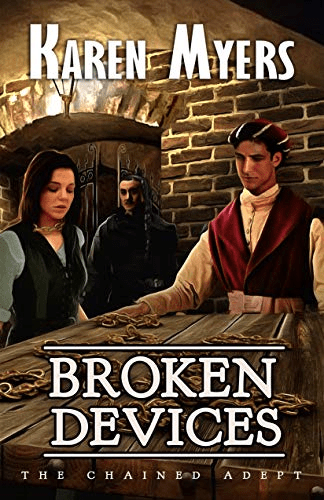
FROM KAREN MYERS*: Broken Devices: A Lost Wizard’s Tale (The Chained Adept Book 3)

Book 3 of The Chained Adept

CHAINS WITHOUT WIZARDS AND A RISING COUNT OF THE DEAD.

The largest city in the world has just discovered its missing wizards. It seems the Kigali empire has ignited a panic that threatens internal ruin and the only chained wizard it knows that’s still alive is Penrys.

The living wizards and the dead are not her people, not unless she makes them so. All they have in common is a heavy chain and a dead past — the lives that were stolen from them are beyond recall.

What remains are unanswered questions about who made them this way. And why. And what Penrys plans to do to find out.

*WHOSE NAME I’VE BEEN MISSPELLING FOR 10 YEARS. I’M SORRY. I’M DYSLEXIC. YOU SHOULD HAVE SAID SOMETHING!

FROM MICHAEL WENBERG: The Morning Star

Fisherman Nick Savitch pops in to see his friends the nuns at a monastery on an island in remote Alaska, only to find them all dead … except for a mysterious ageless woman with striking green eyes and a young girl willing to go to any lengths to protect her. It turns out some of the scariest folks on earth are after the woman also known as the Morning Star, and their chase takes them from islands in the Gulf of Alaska to the heavily guarded confines of a Moscow hospital. This story has got all the historical intrigue of The DaVinci Code (without the deep detours into church history) and all the fast-paced action of a Jack Reacher story–only with richer, more interesting characters.

FROM JP MAC: How to Run a Marathon in 13 Years: How Hard Would You Fight for Your Dreams?

“. . . a real, raw, beautiful journey . . . . “— Coach Kate Martini Freeman, ultramarathoner, Ironman finisher, co-founder of Coyote Runners Training Group Injured while training for a marathon, distance runner JP Mac learns his knee is wrecked. He’s finished for good. Or is he? Discovering a revolutionary new method of running, Mac attempts to reinvent his form. But over time, fate unleashes a series of cruel challenges.Knee surgery is followed by shoulder surgery. Mac is diagnosed with cancer. A new form of cancer strikes next. Massive weight gain balloons him above 270 pounds. Mac plunges into a Marianas Trench of depression. He battles self-destructive urges. But the hope of running another marathon will not fade nor “go gentle into that good night.”Part training log, part diary, this award-winning, non-fiction memoir relates Mac’s incredible journey from washed-up marathoner to reborn runner. If you’ve ever been injured in a sport, this astonishing story is for you. If you’ve ever watched a dream slip away, this breath-taking tale is for you. Learn the amazing power of perseverance and mental toughness. Buy this book and discover the wonders that await when you allow your reach to exceed your grasp.

FROM CHRISTOPHER WOERNER: 202211 Take Thanks

This booklet is an edited collection of the pamphlets published throughout the month of November. It covers the ever-worsening times we live in nowadays because our rulers demand it. As always, it covers current events with some observations of leftism and tyranny, with a bit of pop culture here-and-there.

We need a resistance movement more than ever. That’s basically what I’ve been aiming for in all the books so-far and it’s not going to stop until I do and so does everyone else.

FREE FROM CEDAR SANDERSON: Vulcan’s Kittens (Children of Myth Book 1)

Linnea Vulkane is looking forward to a long, lazy summer on Grandpa Heff’s farm, watching newborn kittens grow up and helping out with chores. That all goes out the window the night Mars, god of war, demands her grandfather abandon her and return to Olympus for the brewing war. Now Old Vulcan is racing around the world and across higher planes with Sehkmet to gather allies, leaving Linn and an old immortal friend to protect the farm and the very special kittens. But even the best wards won’t last forever, and when the farm goes up in flames, she is on the run with a daypack, a strange horse, a sword, and an armful of kittens. Linn needs to grow up fast and master her powers, before the war finds the unlikely refugees…

Vignettes by Luke, Mary Catelli and ‘Nother Mike.

So what’s a vignette? You might know them as flash fiction, or even just sketches. We will provide a prompt each Sunday that you can use directly (including it in your work) or just as an inspiration. You, in turn, will write about 50 words (yes, we are going for short shorts! Not even a Drabble 100 words, just half that!). Then post it! For an additional challenge, you can aim to make it exactly 50 words, if you like.

We recommend that if you have an original vignette, you post that as a new reply. If you are commenting on someone’s vignette, then post that as a reply to the vignette. Comments — this is writing practice, so comments should be aimed at helping someone be a better writer, not at crushing them. And since these are likely to be drafts, don’t jump up and down too hard on typos and grammar.

If you have questions, feel free to ask.

Your writing prompt this week is: doll

Kids These Days – Riding the Catastrophic Change Wave, Part II

“We had a great civilization going, and we’d have made it, if only it weren’t for those darn kids.” Or perhaps you prefer “we are in a time of declining decliney decline, and nothing can save us from declining till we crash.” Or perhaps “Kids these days don’t want to work. In my day–“

I hope you’re happy repeating USSR agit prop, because that’s what all of those were at their origin. To be fair they fit in very well with the idea of the heroic parents who walked uphill both ways to school, in snow up to their knees, and whose children are pampered little flowers who ride the school bus. And both are what’s known as “prevalent and ineradicable bullsh#t”

However, if you haven’t caught on yet, the idea that our civilization was declining, that we were in decadence “like the Roman empire” and that children were corrupt hedonists were indeed propagated by the USSR. As was the sixties “rebellion” and the idea of a righteous generation who, of course, believed all the communist bullshit. The boomers, as depicted in the media, and as we know them in the humanities are indeed “kids these days” destroying civilization into their 70s and now complaining about the younger kids, as they tantrum their way to the grave. On the good side, they didn’t get their way on their own, it took pervasive and unified propaganda, of a type that’s now hard to deploy on younger generations without the mass industrial means of communicating.

The people who swallow the MSM hook line and sinker are now mostly older than I, not “kids these days.”

But… They have it too easy!

Define too easy. Go ahead, do it. Because what you’re seeing is where your challenges were mitigated for them, not where they have new challenges you never even thought of.

Take for instance me. Yeah, my dad walked five miles to school each way, rain or shine. I had it easy, as I mostly rode the train or the bus.

But my dad, though he grew up under a socialist regime too (we both did. I just got hit by both, national and international socialism, and the instability in between) had a certain amount of stability and of knowing what to expect.

My challenge? Curriculum could and did change sometimes three times a year. School might or might not convene. A teacher might teach us what was on the curriculum, or he might have us paint a revolutionary mural…. None of which helped with the fact that in 9th grade a placing exam happened, which I had to answer whether or not I’d ever been taught.

Not only didn’t my parents see that challenge, but they would both berate me for not knowing things they knew at my age — not only had no one taught it, but I’d been kept busy NOT learning. Honestly, without Summer vacation, I’d be illiterate — and tell me how easy I had it and why was I complaining.

This gives me great empathy with “kids these days.”

Yes, they grew up with more “material goods” and greater ease than most of us did. Not all of them, mind you, but the average. But the question is: does that really make their lives easier?

I noticed early on, and remember my kids are in and heading for their thirties at speed, that the kids were being kept busy with busywork. And graded mostly on busywork. You could have straight As, but you didn’t turn in the worksheet, or you colored the flowers on it the wrong color (in 10th grade) and you’d fail.

They weren’t being TAUGHT anything, but they were being kept very busy with make work. And my countering it, often ran into the stone wall of “but we don’t have time” — because they were scheduled after school, too.

And it got appreciably worse in the same school system three to four years later, when younger son hit it. For one, all the halfway decent teachers had quit or been run up the ladder to administrator.

Look, I come from a place where my ancestors lived for a very long time. There are things we know about the family line. “Will eat History for breakfast and ask for more.” “Usually good at math, but might transpose digits.” and “Will learn languages, whether naturally good at them or not.”

So when my kids couldn’t — not wouldn’t. COULDN’T — learn French I became concerned. And did a deep dive into their class.

They weren’t being taught. That’s the easy part. The difficult part is that they were being kept so busy NOT learning that they couldn’t learn even accidentally.

They were given French teen magazines and told to cut pictures, and make collages. They were taught to sing French songs. What they were never given was the basics with which to decode those things into language- learning experiences.

“But that’s because it was easy on them.” Well, actually no. It was easy on the teacher. I mean, she could have fun and be the kids “friend”. Unlike my favorite languages teacher who gave us vocabulary sheets every day and tested and corrected every night.

The kids, meanwhile, felt like failures because they weren’t learning. And everyone told them how easy and fun this should be. They thought it was their personal failure.

Let this fit in as a micro cosmos for “Children these days.”

Our kids are stressed — you’d be shocked to know how many, particularly girls, are on psychiatric drugs by prescription — and unhappy, and running in place, all the while being told how easy they have it, and “pull up your socks, young thing.”

Kids aren’t raised only by the schools. They’re raised by a culture. As broken as ours is — and it is. They are the generation being raised by the generation that was raised by the boomers, who were raised by the lost children of world war II — it retains that “Grandpappy lived in a wood cabin, in the snow, and he made good. So, look at all I have, I should do better!”

Only…. it’s almost impossible. It starts in the schools. And btw, of course, I’m sure there’s exceptions, but let me break in here to say both boys and girls are being broken in peculiar and different ways. And are being denied what they most need, while being told it’s all THEIR personal fault.

My kids were 12 or so when I realized in every class the boys were falling behind. There’s a reason for this. Boys were being asked to do the impossible for them.

You see, boys and girls mature at different speeds. In general, boys of 12 have no sense of time or scheduling. Girls do.

By 12 the “button counting” had got to “Must deliver work on this day, in this way, without being reminded.” Now both kids are ADD (AF) but still. They were being asked to do things they couldn’t do. They sort of managed, because they were more afraid of me than … well, anyone. BUT it left marks in anxiety, depression and self-loathing.

Meanwhile the girls were excelling in school, partly because at this point the process is pretty much designed for the average female.

Remember men and women are different, at the nervous system level. We were shaped by evolution. Men are good at short-burst, difficult, competitive tasks. Women are good at indoor, repetitive tasks involving a lot of boredom and conforming to senseless standards. Which is what schooling has devolved to. Mostly because almost every teacher is a woman, but also because it minimizes work for teachers. The fact that it also renders politically-correct results, in that the boys give up and all award-winning students are female, is just icing on the cake.

So, girls are being told they’re so smart, and they can have it all, and why would they throw themselves away on a family and children. Note, this was already true in my day. In the 80s I was shunned at every social occasion because I stayed home and tried to write. It was just an excuse to be a housewife, and my being such meant I was both stupid and lazy.

This is the pressure the girls are under. They are taught to deny perfectly normal instinctive longings in favor of “having a career.”

And of course, mostly people don’t have a career. They have — at best — a job.

Now, at least most girls are leaving schools and colleges with credentials and usually have an easier time than boys finding jobs. The problem comes after, because their “ladies A” schooling didn’t in fact prepare them to do the JOB. Which is why when they go into the workplace, the “real” job must be social justice, or something like. Because they can’t actually do the job.

And then there’s the boys and men in their parents’ basement. Or working at making a game. Or whatever. Why? Because most young men with degrees or not (And graduating requires more than it did of you, trust me. Doesn’t mean they learn more, but they have to jump through some insane hoops) are having a heck of a time finding work.

We’ll go into this later, but a lot of those “now hiring” signs seem to be something else, because people can’t actually get hired. And at a corporate level, they prefer to hire foreigners on work visas. Chances are high your hospital is being taken over by China-trained physicians, for instance. Which will end in tears, because the training is not the same. But there we are. In the same way, they’ve started showing up even in engineering jobs where clearance is needed.

Why? Well, they’re cheaper. And also since the schools aren’t producing enough people with the right credentials to take the jobs, the leviathan of our government is making it easy to import what looks like from the credential side the same type of thing.

BUT to every family, the kid who is unemployed or under employed; the girl who has a job but is increasingly more neurotic and unhappy; the family that breaks apart; the kids that never are born is a private tragedy. Each family feels a deep sense of shame and failure over these.

I only know because I know several of them, at a lot of socio-economic levels, and across the spectrum of many many ways to fail.

The liberals have an easier time of this. They can say it’s systemic this or that, or that their kids is some special form of disabled and therefore just can’t do this.

BUT the conservative families eat themselves alive. Because they tried. They tried so hard. And they have standards to which they held their kids and —

It took me till the middle of last year to go “You know, if it’s one kid here and there it’s a personal failure. If it’s everywhere, all at once, and most people in this age range are failing…. it’s the system that’s broken.”

This was particularly funny because I’ve seen this before. As a writer, I came into a field where they’d publish your book, on a smallish print run and put it in the book store. IF IT FAILED TO BECOME A BESTSELLER OVERNIGHT IT WAS BECAUSE YOU WERE A BAD WRITER. And of course, most books failed to become bestsellers, given they had no publicity and people didn’t even find them till they were out of print. But each writer was assured it was his or her fault, and lived with the shame of failure, and tried to do better while being paid less.

This kind of abusive system destroys people. And it’s everywhere right now, but it’s particularly in education. They’re preparing and training kids to a world that doesn’t exist, and then blaming them when they fail in the real world.

Now, yes, most kids try, and probably about half find some kind of job and start clawing their way upward. But most of them are extremely under paid (the boys) or extremely pushed (the girls) and finding no time to marry and have kids, or even to plan to purchase/own a house.

They’re flailing and drowning, and throwing them anvils while saying “In my day we knew how to swim” is not helping anything.

Education as set up is eating the seed corn to keep education majors happy. This can’t go on.

Fortunately there’s indications it won’t. The covidiocy sent people home to teach their kids.

Is it too little too late?

Might be. Might not. The future is a very long time. Right now I’m just saying what’s broken. Because half the fight is knowing you (or your kids) aren’t alone.

Only when we internalize that, can we start fixing things.

Everything Is Broken Riding the Catastrophic Change Wave, Part I

Everything Is Broken – Riding the Catastrophic Change Wave, Part I

This is going to one of those posts that’s Multi- Part because it’s actually impossible to even delineate everything that is wrong with our economy and cultural situation in one post, without defaulting to simple answers.

In our situation, simple answers are mostly stupid. At best they explain a percentage of what’s wrong, but very often they don’t even explain that.

In my defense, this started with something that cost me most of the morning yesterday, and pushed publishing the short story to the last minute.

It started in the Huns discord group, with someone saying that people don’t want to work anymore because they are staying home and being paid for it.

This is completely wrong, particularly if viewed as “what’s happened since 2020.” The Covid payments were always limited, and the people they “helped” were a small number. It actually and for real explains nothing.

Yes, there might be a person or two in the three hundred million who is not working and is getting paid for staying home on the sofa. And we wish them and their trust funds good luck.

But it doesn’t explain all the restaurants with signs saying “Help wanted” while at the same time people, including some here, are desperately looking for work and finding none. It doesn’t explain, further up the skilled ladder, the scamalia (totally a word) of bosses who think they purchased slaves, and are paying workers minimal amounts for maximal output, while increasing the workers’ discomfort, it doesn’t explain … well…. much of anything.

So, let me lay out what we’re looking at under “everything is broken.”

  • Our education system is broken. We are increasingly known for schools that don’t work. This is survivable when those schools are primary or even secondary and the rest picks up the slack, but we’re now in a situation where let’s face it our colleges also don’t work
    While it’s still possible to get an excellent education and graduate in a timely manner, no, it’s not millenials being lazy. Schools try to maximize the time it will take for anyone to graduate, and push as much irrelevant stuff into it as possible. Even people with prestigious degrees admit — if you get them in private — that they learned most of what they needed for their job once they went to work, and that they were not in fact taught much of anything.
  • Our distribution is broken. This is the bastard child of “just in time” by “let’s maximize our profits by contracting all production overseas, sometimes to literal slave-states.” All of it coated in “Fossil fuels bad.” Until Flu powder is developed, there is in fact no way to transport production without using fossil fuels.
  • Our production is broken. Look, yeah, sometimes things can be done cheaper/more efficiently overseas, but you pay for it in other ways, including being tied up in cultures that just don’t work and not being able to trust what you get. You also pay for it in a vast number of purposeless population. Only socialists would think it makes any sense, to pay people for existing. In fact, it robs life of interest. Man was born to strive, and woman doubly so.
    Thing is, with tech now, we probably can bring most of that production home and do better. In the nineties I toured a plastic goods factory. This is the sort of thing that in China would employ 100 hard working slave-laborers. In the US it was run by a guy who turned it on, and kept an eye on the machines.
    Now, that was the nineties. I bet it’s more so now.
  • Our commerce and service industry is broken. Yeah, yeah, yeah, the customer is always right. And that’s great, except that you also need to protect your employees from abuse, and strike a happy medium (she won’t be happy after you strike her.) You also need to be sure the schedule and work makes SOME sort of sense, and remembering your employees are humans helps.
  • Our thinking jobs are broken. Most of them seem to be run on the same model as trad pub which implies that their biggest way of retaining employees is to browbeat them and keep them so stressed they don’t look for work.

Now into all this throw the lockdowns, which unleashed a wave of change from change in locations to change in how work is done, the likes of which has not been seen in this great land since the migration Westward. And that our “governing” classes are mentally damaged morons trying to run this according to the always idiotic philosophy of a guy who died at the edge of mass industrialization.

They’re not seeing what’s happening, much less what needs to be done.

And most people are just looking for ‘those darn kids’ type of explanations.

Meanwhile the pieces are starting to reassemble in profoundly interesting ways. And it’s time to look at what’s happening, how and why.

The picture is too chaotic for a single explanation, but if you understand the trends, you’ll be better able to survive and thrive.

Be not afraid. Come deep dive with me.