You Are Not Alone

This weekend I was in NYC, at the Calliope Writers’ workshop.  The Calliope Writers’ workshop, supported by the Talliesin Nexus and Liberty Island is a writers’ workshop.

If you’re saying “what, another one?” well… yes.  But it is much more too.

For the writers’ workshop part, I would encourage any of you, even those already making a living from writing, who WISH to make a greater living and who are “liberty minded” to apply and see if you get in.  The catch there is that it’s very … exclusive.  I was going to say “demanding.”  In 18 years of teaching, judging contests, etc, it was the first time I was confronted with writers who were thoroughly professional and whom I was supposed to advise.

Was I able to help them improve?  I think so.  Mind you, one can even help one’s peers, because the blind spots are always different; that is the point of writers’ groups, after all.  But there were other things I could give them insight into.  When you’ve been 20 years in the field, you’ve been 20 years in the field.  Not only have you managed your career and seen it rise and fall, but you’ve seen freinds establish careers and come and go.  Which brings us to things like “You’re not actually writing fantasy, you’re writing alternate history” or… other things.  You can help less experienced authors focus and go where they need to be.  Hopefully.

But what floored me and to an extent confused me (besides being exhausted, yesterday) and will take me months to potentially process is this: I cam out of it with a changed perspective on the field, on my career, on the future.

One of the speakers, I don’t remember who — because I didn’t take notes, just soaked it in — said this was the beginning of creating connections and structures of mutual help for libertarians and conservatives.  (More libertarian than conservative, but none of them crazy, that I could see.)  The left has always had their structures of help, their prestigious workshops, their sympathetic agents and publishers.  And before the other side sneers “always” — yes, always, since the beginning of popular mass publishing, give or take.  Certainly all my life and I’m more than half a century old (barely) so for our purposes and for purposes of the entertainment, news, industrial complex “always” — so that they can speak power to truth and continue yelling that they’re oppressed, even as they stomp hard on any dissent.

We who disagree need parallel structures.

And they’re right.  And this workshop more than anything I’ve taken part in has convinced me we have a chance.  I’m not a betting woman.  If it weren’t for other considerations, like love of country and love of liberty, I wouldn’t have thrown my lot in with this lot publicly, years ago, not when I thought we’d less than 10% chance of taking back the culture (or at least achieving parity) in my lifetime.

I didn’t think so, at least until this weekend.  Yes, yes, guys, in the long run we win they lose.  The technology is going our way, and besides, they are like elves.  They can imitate and exploit, but not really create.  The “Mind killing” (their term) necessary to accept the shibboleths of the left leaves them unable to create even if they are creative and intelligent people (and many of them are.)  They are so scared anything they say will get them thrown out of the cult it turns all their work into pap. Grey goo, if you wish.  Which is why the new and exciting way of evaluating works as “Does this advance progressivism” was born.  But that’s a digression.

I just thought it would take too long, and there would be a dark period of sorts before creators and builders could take over.  And I also knew this might entail death to Western civ as such, because the left is a suicidal cult that destroys the culture from within, leaving us wide open to the incursions of the real barbarians.

The real barbarians can’t hold us.  No, trust me.  They can’t.  But I thought in fact that we were at best sowing the seeds of victory in a real war our children and grandchildren would have to fight, both culturally and possibly physically.

Now I believe — or perhaps I gut-feel — we have a shot.  Not a huge shot, particularly not the way the overculture (and politics) have entered their final suicidal form.  But a shot of sorts.

There will still be a very bad period. We’ve bought ourselves that with our silence and acquiescence back in the bad old days when they had the megaphone and we were afraid to be considered stupid or worse.  But I might see the other end of this before I die.

But if what kept us quiet before was the isolation, the utter isolation and thinking we were the only ones seeing the holes in ideology and news stories, if now we can communicate and organize, WHY didn’t I have hope until this weekend, not at a gut level?

One of the first answers is, I think, “Humans are social animals.”  I knew almost all the mentors, and had brushed against some of the students on line.  BUT that’s one thing.  To be in a room with sixty people and be able to speak, be able to ARGUE without fear? That brings something home.

We’re all of us, despite this tenuous connection online, far too alone. Even for those employed in other fields, keeping your head down is the only alternative to being unemployed, because the shibboleths of the enemy hold the field, and it’s permissible to call those who disagree with you all sorts of names and impugn your character, and attack your livelihood.  And we don’t realize how that takes that sense of being an outcast into our very souls.

I’ve spoken before of Lloyd Biggle Jr’s The Still Small Voice of trumpets.  Without spoilering (you should read it) when an artist displeased the king for any reason or no reason at all, their arm was cut off and they were sent away to the “camps of amputees.”  The culture was such it couldn’t stand ugliness and worshiped beauty.  And their musical instruments were… harps.  Once your arm was off, you were done.  You were isolated.  Your very “deformity” made you invisible.  Until someone invented trumpets.  Then the worship of beauty forgave the deformity.

In many ways we who are to the right of Lenin in publishing have been like that.  We were told we had “bad numbers” or simply never bought again and people were left to assume we had bad numbers.  And we disappeared.  Our only existence was as “invisible” has beens.  Our voices had no place in national dialogue.  And even as publishing runs headed for the cellar, the “king” told us it was other reasons: games, videos at home, all sorts of reasons.  Anything but the fact that science fiction and fantasy had become purulent patronizing pap.

But ah, we do have the internet.  We have indie publishing.  And now that we’ve crawled out of the basement (or left the camp of the untouchables our cloaks floating behind us, our trumpets sounding) to ground zero, other people think it is worth to establish a beach head.  A counterculture insurgency.  And they’re willing to spend time and money on changing the culture, so that in twenty years politics too will be different.

And being there, at the center of it, you could feel the currents and the energy.

We might win, or we might lose.  But life, Liberty and this constitutional Republic we inherited are worth fighting for.

I’ve got my trumpet.  I came back with endless sheet music.  Things that must be written and other things.  Things I must to do facilitate connections and ease paths as mine could not be eased.  Because now it’s different and we have a chance.

Sound the trumpets. We declare the revolution.


The Steve Jobs Myth – D. Jason Fleming

The Steve Jobs Myth – D. Jason Fleming

Steve Jobs is often held up as something of a modern hero. The man was undeniably a genius. And he did a lot of good in his quest to “change the world”.

However, he also had two problems, and one of them might do nearly as much damage to the world as he did good.

The first problem was that his genius caused people to excuse his a-hole tendencies, and he exploited that to the fullest. (He also had a massive charismatic effect on people which he used ruthlessly, the so-called “Jobs Reality Distortion Field”.)

The second problem follows from the first: People everywhere are always looking for The Easy Answer. Jobs presents two paths to worldwide fame and riches: Be a genius, or be an a-hole.

Guess which one is easier. Take as many guesses as you need. I’ll wait.

Why, yes, you’re right.

Witness, as merely the most recent and most egregious example, Miss Elizabeth Holmes.

This Vanity Fair article (archived version)lays out, in fascinating detail, how Holmes followed the Jobs “Be a jerk to everybody, all the time, and as opaque as possible” playbook virtually line by line, except that her company, Theranos, wasn’t founded on genius. It was founded on the illusion of genius. An illusion made easier to maintain by the precedent that Steve Jobs set.

She started the company as a 19-year-old college dropout, and rode her constructed legend to making it a $9 billion empire, before the curtain was pulled back and it all collapsed around her.

Holmes wore black turtlenecks every day, “a homogeneity that she had borrowed from her idol, the late Steve Jobs.”

Holmes had learned a lot from Jobs. Like Apple, Theranos was secretive, even internally. Just as Jobs had famously insisted at 1 Infinite Loop, 10 minutes away, that departments were generally siloed, Holmes largely forbade her employees from communicating with one another about what they were working on — a culture that resulted in a rare form of executive omniscience. At Theranos, Holmes was founder, C.E.O., and chairwoman. There wasn’t a decision — from the number of American flags framed in the company’s hallway (they are ubiquitous) to the compensation of each new hire — that didn’t cross her desk.

And like Jobs, crucially, Holmes also paid indefatigable attention to her company’s story, its “narrative.” Theranos was not simply endeavoring to make a product that sold off the shelves and lined investors’ pockets; rather, it was attempting something far more poignant. In interviews, Holmes reiterated that Theranos’s proprietary technology could take a pinprick’s worth of blood, extracted from the tip of a finger, instead of intravenously, and test for hundreds of diseases — a remarkable innovation that was going to save millions of lives and, in a phrase she often repeated, “change the world.”

That “change the world” riff is directly from Jobs, and if you’ve read Walter Isaacson’s bio, you know that he used it to seduce a lot of people into doing his bidding.

And the rest of it shows that she studied Jobs very carefully. And learned how to manipulate people, individually and en masse, by selling them a vision. Like any good sociopath, she learned the form in great detail, and eschewed the substance. (No, I’m not saying she is a sociopath. Only that she apparently operated like one. The whole thing was a confidence game, one way or another.)

And I’m afraid that Jobs’s malicious influence is much larger than just Miss Holmes and Theranos.

Have you noticed how programs and apps and websites have taken to “improving” by taking away functions you liked and used every day?

Now, everybody thinks they know what you want better than you do. With the extra added side benefit of “molding” your actions to conform to what they think is preferable.

Again, Jobs was very, very good at actually determining what people really wanted, versus what they held onto simply because it was familiar. He killed the floppy disk drive. He veered away from power-on buttons. He got lots of changes through that seemed huge at the time, but in hindsight are natural.

And because of his precedent, in addition to (at least) fifty-plus years of marketing “wisdom” that treats customers as mindless sheep, everybody now treats you, the user, as a “moist robot” who does not think, but merely needs the proper stimulus to behave the way they want you to.

Steve Jobs was the outlyingest outlier there is: He was a jerk, but he actually was a genius, and he actually did want to change the world, and he actually was very good at figuring out what people would want before they even knew they wanted it.

The foundation on which the Cult of Jobs was built was, wonder of wonders, actually pretty solid.

I would bet that not one single emulator of his has the same solid basis on which to stand. They all learned how to imitate him, to give the impression of integrity as it is currently misunderstood, thanks in part to Jobs’s antics. But I would be surprised if any copied his substance. Because genius cannot be faked. Only the appearance of it can.

I Probably Will Have a Guest Post Later

Dark Fate will probably not happen today.  Maybe tomorrow.

As some of you know, I spent the weekend in NYC at Calliope Workshop, a function supported by the Talliesin Nexus and Liberty Island.

I meant to write my impressions today, but the more I turn it in my head the more I’m sure my world — myself, my career, my perceptions of my career and my hopes for our field — got turned upside down (not in a bad way) yesterday.  I just can’t pin down WHY I feel that way, and until I can explain it, I can’t write about it.

My apologies to the fans in NYC, I didn’t process very well that the reception was open to anyone.  If I had, I’d have told you.  Yes, being on Friday night a lot of you wouldn’t have been able to come, but OTOH some would.

Very sorry on that.  If it happens again and I’m invited again (both of which seemed to be intimated, but by then I was very tired, so I won’t put my hands in the fire on that) I will be sure to let you know.

Right now I think I’m going to take a nap.

How We’ve Come So Far So Fast

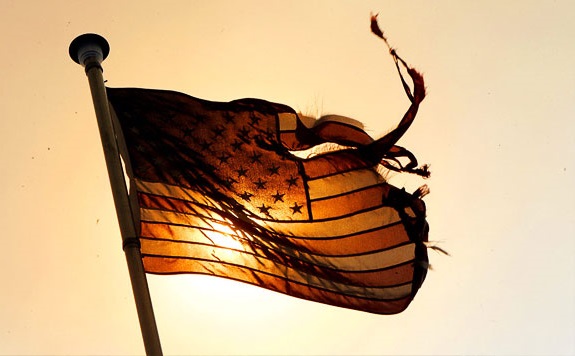
tattered-american-flag

Over the last few months, every gathering, every cultural clash, in the crannies of science fiction culture so hidden that only we, the crazy people, care about them, or in national culture, I keep hearing “but then wasn’t like now.  Now it’s all crazy” or “Now things are so polarized” or “Now–”

Um…

Okay.  Part of the reason things are now so polarized is that before dissenting voices were isolated.  You couldn’t speak up, because there was no network of alternative news.  Say, Benghazi, for instance (yes, we still remember it on the anniversary) in the old days we’d never have known anything but that government officials had gone on all the stations and sworn that it was because of an anti-islam video.  Who is crazy enough to doubt that, when all the authorities say the same?  They should know, right?  And if we doubted that we’d say nothing, because who wants people to think they’re crazy.

So there was consensus.  A manufactured, uneasy consensus.  A consensus that the new technology started shattering.

The shattering would have happened, anyway.  But for many of us the shattering started on 9/11.  Perhaps particularly for my generation, then at the pinnacle of responsible adulthood, many of us with small children.  We grew up in an era of uniform news.  We grew up in an era of assuming that history came with an arrow, and that arrow pointed left.

I think 9/11 was the first time I realized most of the voices on the left were as friggin’ loony as a college campus.  (And that’s saying a lot.)

I think the rubble hadn’t settled before prominent I-always-thought-you-were-sane leftists started telling us it was all our fault, that we had oppressed them poor browns peoplez until they had no choice but hitting us.

And how these people thought this “oppression” took place passed by the center of their misapprehension of free minds and free markets, which they thought were “oppressive.”

If you listened carefully you could hear beneath those the foreshadowing of the present call for safe rooms and the insistence freedom was slavery.

I don’t think I was the only who stepped back and went “Wait, these people are supposed to be sane!” and then started analyzing everything they said, and discovering unpleasant things like that my generation many of us, (like the president — not me.  I’m the youngest child, my parents are older ) had this strange idea that wars stopped when the US stopped fighting and that this was a good thing, because of course there were no consequences to stopping fighting.  The other side wouldn’t take it as unconditional surrender.

What came home to roost in American consciousness watching the reactions to 9/11 was the realization that a lot of people in positions of power and influence were barking mad and had the historical understanding of a weevil. (With apologies to weevils.)  They seemed to have derived all their knowledge of history from the protest songs of the sixties and supermarket tabloids.

Fifteen years later, we face an election between typhus and smallpox, and we can’t walk into any cultural arena without starting to scream at each other.

I’m here to tell you these are the good news. No, I am serious.  Consider how barking mad the aristos have gone.  Imagine they had NO opposition.Imagine that the media and the culture were still a big megaphone and a bunch of voiceless people.  Imagine how much further from reality they’d have gone by now.

The fight isn’t easy.  Not nearly enough of us woke up to make it so.  But that we are fighting at all, those are the good news, even if some people woke up yesterday and decided that either typhus or smallpox was whom we needed for president.

That part shall pass.  Like kidney stones, it might pass bloodily and with a great deal of pain, leaving damage behind.  But it too shall pass.

The bad part is that unresolved in our national psyche is the wound in NY, now covered with a “memorial. tower” of sorts (no, I don’t agree.  We should have rebuilt the twin towers, and we should have done them higher, stronger, less likely to suffer from an attack, because engineered against it.  Yes, we can.  And if you’re a liberal and are going to tell me that that would be an insult to the world — why?  The united Arab Emirates keep building higher and higher.  Do we consider it an insult?  No?  Then why do they care if we have a pony?) remains open.  Half of America wants to cringe and apologize, because they thing everything that goes wrong in the world is America’s fault.  It’s a magnificent sort of hubris, if you think about it, that denies the underdeveloped countries they claim to care about full agency or autonomous culture.  It denies people-of-tan agency and autonomous ability to decide.  It is in fact, closely examined, exactly the opposite of what the left claims to believe.  And it would be funny if it weren’t so horribly sad.

The bad part is the people who had their lives cut short, Americans and guests who died because our elites were so out of touch with reality that they did things like erect a secrecy wall between the FBI and the CIA, because the sixties radicals couldn’t imagine those services might do anything but “conspire” against them.

The bad part is our aristos still being convinced that calling terrorism by other names (Work place violence was catchy.  As was Man made disaster.  May G-d have mercy on our souls) will make it go away.

Things are going to get weirder — in a Ripley’s believe it or not way — till this is resolved.  Not just in government, but in the culture and on the streets.

This morning finds me in NYC (Yeah, I know, I should have told you earlier, but look, this trip we REALLY could not have met with you.  I’m booked every minute of the day.  We managed a hurried lunch with one of those friends-who-are-family before the workshop started, and we haven’t yet managed to see the blood family (my husband’s) even in passing, though he spent most of yesterday on text trying to coordinate it. If there’s a next time.  If it’s in NYC.  If they invite me. If we’re better off financially (as we’ll be if I am actually working, now we’re done moving and the thyroid is being balanced) perhaps we can afford to come a few days earlier or stay a few days later, because I WOULD like to meet some of you and go to lunch or have a Huns dinner.  I promise even if there is no workshop I’ll try to have enough money for us to come up for a week.

But not this year.  This year is so bad we’re flying back on 9/11.  And you guys know I don’t engage in bravado with you. Yeah, I shouldn’t be afraid.  Yeah, I am afraid.  Because our airport kabuki fails to reassure.

However, rest assured, today I’ll make no memorial trip (no time.)  And I’m not close enough to any landmarks that anything short of an atom bomb will get me.

It’s still weird being in NYC on 9/11.   And this keeps running through my head:

A glooming peace this morning with it brings.
The sun, for sorrow, will not show his head.
Go hence, to have more talk of these sad things.
Some shall be pardoned, and some punishèd.
On September 11, 2001, did you go crazy, or did you report (for duty, for work) on that day they wounded New York?


Mine Eyes Have Seen A Promo Post – Free Range Oyster

Mine Eyes Have Seen A Promo Post – Free Range Oyster


JL Curtis

The Grey Man: Partners

Texas Deputy Sheriff John Cronin and his granddaughter Jesse Miller have out-stubborned, out-fought, and out-lived every challenge life’s thrown at them so far… But there are times when a little help is needed.

Slowly recovering from being stabbed, John Cronin gets a tip from inside the very cartel that’s hunted him, that plans are afoot to smuggle terrorists and missiles across the border. Meanwhile, Jesse and her husband Gunny Sgt. Miller are losing the battle with an administration and a military bureaucracy determined downsize the military by whatever means possible, and tie their hands regardless of the damage and danger to its own.

The agencies responsible don’t want to act if Cronin won’t give up his confidential informant, but when word comes that the missiles and terrorists are landing, it’s time to put a team together and handle things the old fashioned way…

Pam Uphoff

Directorate School

The Directorate Book 1

Ebsa wants to explore the Multiverse, and the place to start is The University of the Empire’s School of Directorate Studies. All he has to do is survive a tough curriculum while dealing with snobs, bullies, and murder.

A Tale of Three Interns

The Directorate Book 2

Ebsa, Paer, and Ra’d are back! After their disastrous first year, they expected their summer internship would be the dirtiest, most boring job the counselors could find. They hadn’t expected to be assisting a study of dinosaurs. Score! If, that is, they can keep a stuck up collection of impractical scientists safe.

Anthology

Visions V: Milky Way

The vast Milky Way Galaxy may allow the seeds of our future to be widely distributed, past the danger of a final extinction. Visions V: Milky Way brings together a collection of fascinating and entertaining stories by award-winning science fiction authors.

Includes Leigh Kimmel’s The Long Shadow of a Dead God.

David L Burkhead

The Hordes of Chanakra

Knights of Aerioch

Pulled into an alternate world mired in the middle ages, Kreg finds allies in Kaila, a rough swordmistress, and her wizardly father. He’s also found their foes – an unending horde pouring forth from the small nation next door.

Now, he’s in a race against time to find the true source, before everything he cares about ends in fire and death!

Kyra Halland

Chosen of Azara

A Novel of Estelend

Juzeva, a princess of Savaru vowed to the service of the magical Source Azara, sacrifices everything to try to stop a war and finds herself caught in a web of evil and deceit.

Sevry, the last king of the war-ravaged land of Savaru, is tasked by Source Azara with finding the secret that disappeared with Juzeva, the secret that can bring Savaru back to life.

Lucie, a sheltered young noblewoman, is unaware of her true heritage and the power she has to restore a lost land, until the legendary king of a long-lost mythical land steps into her life and sweeps her away to adventure, danger, and a love that will change her life and the lost land of Savaru forever.

Epic romantic fantasy for adults and older teens.

Laura Montgomery

Sleeping Duty

Waking Late Book 1

Gilead Tan and Andrea Fielding survived their stint in the military, got married, signed up to emigrate to a terraformed colony world, and went into cold sleep for the journey from Earth. While they slept, the starship got lost and settled for a different world, a wild world. Three centuries after the founding of a colony on the uncharted planet, Gilead awakens to find humanity slipped back to medieval tech and a feudal structure. Worse, the king who wants Gilead awake won’t let Gilead awaken his wife.

On sale now.

Out of the Dell

Waking Late Book 2

On the planet Nwwwlf, in the lost colony of First Landing, the original settlers carved out one sylvan valley, a lone outpost where humans flourish. But their bright hopes and best intentions devolved over centuries into a rude replica of medieval feudalism.

Gilead Tan, who had been held captive for centuries in his sleeping cell, survived treachery and pain to free a small group of sleepers. But he and his friends now face the perils of life outside First Landing’s sanctuary—without their powered armor, their tools and technology, or anything else they need save for a few chickens.

Gilead must establish a safehold for his crew, but the alien environment does not welcome them and petty bickering threatens their meager resources. He hopes that a trace of smoke – spotted above a distant ridge – beckons them to a better place.

It doesn’t.

J.M. Ney-Grimm

Serpent’s Foe

In the legendary duat – the mystical passage where the sun god Ra travels from west to east in the night, so that he rises again in the dawning – a lioness of ancient Egypt lies caged.

Once she stalked the duat by Ra’s side, carrying his light in her eyes and battling the monsters that assailed them.

Now, tormented by confusion and her own fury, she longs to regain the unique powers which – inexplicably – elude her in captivity.

Even her own name slides out of her thoughts, while the how and why of her capture escape her memory entirely.

More than she realizes rides upon reclaiming her freedom and defeating her unknown captor.

In this mythic tale of pride and revelation, a fight beyond death delivers one last chance at redemption.

51ubaxshlxl-_sy346_

The Musketeer’s Seamstress – FREE

Aramis emerges from the water closet to find his lover, a duchess, murdered on her bed. The room is locked, and Aramis is the only one who could have entered it. He’s sure he didn’t do it, but no one else believes him. Even Monsieur de Treville, Captain of Musketeers, doubts Aramis’s word. Aramis must leave Paris and go on the run, entrusting the solving of the murder, and the defense of his honor, his freedom and his very life to Athos, Porthos and D’Artagnan. Can “one for all” carry the day when every powerful person in France believes Aramis a murderer and when powerful interests would gladly frame Aramis for it?

Free I THINK till tomorrow – SAH

ON SALE FOR A LIMITED TIME:
51gsghpfbal

From Elizabethan England to the Far Future, discover who really was Shakespeare and why Marlowe was called The Muses Darling. Discover the horrifying secret that Leonardo DaVinci found beneath a cave in his home village. In the far future, find a new way to keep Traveling, Traveling. Use cold sleep to find your love again, and join the (high tech) Magical Legion.
Seventeen short stories from Prometheus Award Winning Author, Sarah A. Hoyt. This edition features an Introduction by Dave Freer and a Bonus Short Story “With Unconfined Wings.”
Collection contains:Introduction
Titan
Traveling, Traveling
The Muses’ Darling
Stock Management
While Horse And Hero Fell
Something Worse Hereafter
Touch
For Whose Dear Sake
Wings
The Play And The thing
Sugarbush Soul
Never Look Back
What She Left Behind
But World Enough
(Also published as Sacrifice)
Super Lamb Banana
Ganymede
Waiting for Juliette
Bonus Content: With Unconfined Wings
This edition contains an introduction by Dave Freer and a bonus short story: With Unconfined Wings.

On Sale for 99c


Also on sale for 99c

51-u8cvzxkl

Death of a Musketeer:

When D’Artagnan, Athos, Porthos and Aramis discover the corpse of a beautiful woman who looks like the Queen of France, they vow to see that justice is done. They do not know that their investigation will widen from murder to intrigue to conspiracy, bring them the renewed enmity of Cardinal Richelieu and shake their fate in humanity. Through duels and doubts, they pursue the truth, even when their search brings them to the sphere of King Louis XIII himself and makes them confront secrets best forgotten

Now 99c for a limited time only.

Planning It All Out

I’m away from home at an undisclosed location (which will become disclosed in an AAR, but because of the nature of this trip I don’t have time to meet with any fans, and I don’t want to offend anyone.  Maybe another time) and as we boarded the plane yesterday I thought how impossible this type of trip — including the stuff in the airport like concession stands — would be to plan out, if you were some kind of a central planner.

We flew across the country whisked from a plane to another plane (with the second flight rebooked as the first was very late, before we even landed.)  At the end of it, there was a hotel room waiting.  We were rarely left at loose ends.

And I thought “Man this would be a b*tch to plan from the top down.” I mean, two months ago, I didn’t even know I’d be taking this trip.  Anyone planning for an “average load of passengers” wouldn’t have counted on me, yet there was a place for me when I needed it, for, you know, cold hard cash.

I have traveled in different conditions.  I’ve traveled through countries where airports are more or less run by the state.  You’ll know this, as there is only a water fountain in the entire friggin’ airport, you have to pay for bathrooms, and if there is one concessionary, it charges $20 for a bottle of water.  (Who, me?  I’m just a little bitter about having to cross some aiport in Germany with two young toddlers and no water or bathroom.)

But I haven’t traveled in conditions like what P. J. O’Rourke describes in the old soviet union, of the trans-Siberian express.  There since it was all planned from the top down, they couldn’t care less how people actually traveled, provided they could tick it off on the list as done, so there was only one bathroom and the way the trains were designed meant the floor was awash with piss and vomit.

Our current education system — yes, mine too — or maybe something in our minds leads us to believe that if everything were planned out, surely it would be more efficient.  We want there to be some super intelligence in charge of it all, making it all perfect.

Instead, the most complex things are accomplished by what has been called “the invisible hand of the market” where you want to sell something and find someone who offers it for sale, and if that fails, you start something that sells it.

I’m explaining it all very badly, and it seems impossible that the market CAN provide the most out of the way things.  Periodically I have a need of something (usually a kitchen implement) and I think “I wonder if there’s a way to juliene these vegetables faster) and look on Amazon and voila, there is a vegetable peeler Julienne thing.

Not only is the market pretty good at providing (mostly because we humans are pretty standard and if I want it someone else wants it and there is someone who thought of making money from it) but as the ability to sell at a distance and buy across the borders gets better, it becomes more efficient at providing for things that only a few people want.  Because all over the world, even those of us of odd tastes are a lot.  Enough for someone to get rich.

At one time, there might have been that Julienne peeler somewhere, but someone like me, in (then) small town Colorado wouldn’t have been able to find it.  But now I can connect even with people making stuff intended mostly for chefs and such.

Planning that kind of exchange across the world would be insane.  How would anyone know that I’d need it because — due to the low carb thing — I make fake pasta out of zuchinni a lot and chopping up zuchinni gets tedious?

No one knows, but it’s there, and I (and other odkins like me) can buy it.

So much for the efficiencies of a planned economy.

Which brings us to the book business.

You know and I now how the book publishers (except one) eventually seemed to get to a place where we just couldn’t find anything to read, even in a crowded bookstore?

Yeah, the problem is that various other trends (mergers, bookstore mergers and megastores overtaking the little local stores) overtook publishing and made them think it was not just more efficient but necessary to switch from a “pull” model to a “push” model.  I.e. instead of trying to figure out what the public wanted, they thought they could sell anything to the public, given enough push and promotion.  Instead of doing surveys or finding out what the public (or the super-readers who account for most of their business) actually wanted to read, given the power (they thought) of making people read whatever they put out, they thought they could publish whatever they wanted.

As ever in a planned system, (talk to people from the USSR sometime) this turned from producing what was needed (i.e. what readers wanted) to what would make the planner look good.  In the old USSR that meant producing 5000 baby shoes for the left foot because the bill would show 5k shoes made.  In the old publishing system it meant producing books your peers and bosses thought well of.  And given the ideological (too strong a word for it.  While they are Marxists, they’re not intellectual Marxists, but reflexive ones.  They think everyone has to make these noises about the oppressed, and injustice, to be “a good person”) trend of people mostly educated in our best universities, there was a lot signaling that they were “smart” and “with it” by buying increasingly more hectoring books about more “societal problems.”  Add in the fact most of their ultimate bosses are in Europe and view the US through the lens of Hollywood as a benighted land that needs to be preached to, and shake in the periodic crazes because, say, a mystery about shoes and sluts sold, and suddenly everyone wants their own shoe and slut book out, and you’ll realize how we got in the mess we got in. Even those of us who love to read started calling trips to the bookstore “Going to be disappointed by Barnes and Noble.”

And then ebooks happened.  And indie.

Now the question is: can traditional publishing switch from a push to a pull model, fast enough to save themselves?  Can they realize that their mass-production and mass-marketing business is not only no longer working, but counterproductive in modern times?  Can they order surveys and studies? (While they still have the money?)

The prognosis is not healthy.  Not only does it seem almost impossible for systems to switch from command and control to market (the Eastern nations are making stop and go attempts.  China just went to a different type of control) but most publishers seem to be unaware they need to TRY.  They lull themselves to sleep with fairytales about print coming back and ebooks being flat (hint, it’s a market distortion caused by traditional publishing’s unrealistic pricing of ebooks.  Even I don’t buy their ebooks.) They sing themselves to sleep with lullabies of a bookstore return.

And meanwhile they step nearer and nearer the abyss, while continuing techniques for book buying/publishing/selling that would have been fine 20 years ago but not now.

Part of it is being insulated by their own apparatus, and editors who are the ones who have most contact with the public, being approached only by people who want to sell to them: just as it was 20 years ago.

They won’t notice that the midlist they tried to get rid of is now leaving them: mostly because most of the midlist leaves before approaching them.  It just goes indie and flourishes there.  They won’t notice the numbers are falling, of if they do there’s excuses to hand, the same they used these last 20 years “People just aren’t reading anymore” is at the center of those.  It’s dead wrong, but it sounds good.  They’ll just think people really stopped reading now.

And that’s the worst part of a planned economy.  It allows the planners to fool themselves and think they’re doing the best that can be done.

And meanwhile the market passes them by, its miracles invisible and unobserved and its efficiency unnoticed.

Let us be glad that more and more the technology does allow the market to bypass the planning.  And that we can find the stuff we want to read and publish the stuff we want to write.

Yes, it’s scary, but this too shall pass.

And the free marketeers will still be here.  Long after the planners are gone.


Solar, Space, and Geomagnetic Weather, Part IV By Stephanie Osborn

Solar, Space, and Geomagnetic Weather, Part IV

By Stephanie Osborn

http://www.stephanie-osborn.com

“Interstellar Woman of Mystery”

Rocket Scientist and Novelist


“So what the heck are CMEs? I mean, what causes them? In detail this time, please!” you ask. (Or maybe you don’t. But chances are, SOMEONE reading this IS asking it.)

Okay.

Coronal Mass Ejections are gigantic explosions that occur, usually in the vicinity of particularly active sunspot groups (though not always). We’re still discovering what they are, how they occur, and why they do what they do. It seems to get into some complicated electromagnetic physics and something called “magnetic reconnection.”

magnetic-reconnection


Think about it like this. Suppose you have two bar magnets, lying near each other but, say, perpendicular to each other. Each has its own magnetic field, with field lines that go out from one pole and arc around to the other pole (remember our discussion of iron filings a couple weeks ago?), but now we’ve got them close enough that those magnetic fields interact. If you’ve ever played with magnets, you know that, if you hold those two suckers just right, you can make one “float” in mid-air, and even make it spin and gyrate. There’s a lotta expensive, executive-desktop toys based on this. Like this one:

https://www.youtube.com/watch?v=jd6Ltuz-rL4

The concept behind the toys is mostly “like repels,” but it gets a little more complex when the toys are MOVING. That means the magnets are moving relative to each other, and the magnetic field interaction gets way more complex to model.

Now suppose — just suppose — a field line broke away from its parent magnet and attached the opposite end to the other magnet? Now suppose a whole SEGMENT of field lines did that. Those bar magnets would start dancing a whirligig, and the magnetic field would go crazy.

Now suppose that the bar magnets are swirling plasma gases, and the field lines are running through more swirling plasma.

THAT is magnetic reconnection. The end result is that a whole bunch of energy gets transferred from the field into kinetic energy. This heats up the plasma AND accelerates it, and, at least on the surface of a star like our Sun, a titanic explosion is the result. A great big blob of plasma goes flying out into space, and that blob is a “coronal mass ejection,” because a big mass of the corona just got ejected from the Sun. (Imaginative name, huh?)

What does magnetic reconnection look like? It looks exactly like this:
https://upload.wikimedia.org/wikipedia/commons/transcoded/e/e7/SDO_Observes_a_Reconnection_Event.ogg/SDO_Observes_a_Reconnection_Event.ogg.480p.webm


So you can think of the reconnection event as being like a titanic nuclear bomb, and the CME is the mushroom cloud moving up…and out, into interplanetary space. (How big a bomb? Well, solar flares vary in size and power. But NASA solar scientists estimate they’re “the equivalent of millions of 100-megaton hydrogen bombs exploding at the same time.” Keep in mind that the biggest nuke ever detonated on Earth was Tsar Bomba, at only 50 megatons.)

The vast majority of them aren’t THAT big, and aren’t even Earth-directed. The chances of one smacking Earth aren’t that great. But because there are a lot of them, especially at Solar Max, it happens fairly often. Sometimes it’s just the edge of the expanding bubble, but sometimes it whacks Earth upside the head. And when they come in, they’re coming fast.

bluelightbulb


earthelectrified

Putting it in motion:

https://media.giphy.com/media/fVUjn7ZQDj5MQ/giphy.gif

And here’s the beginning of a CME, up close and personal, replayed several times to enhance different features of the event.

https://www.youtube.com/watch?v=icitZubDmFI

Moreover, most of the time as the magnetic field re-forms underneath the developing CME, it can actually accelerate the plasma of the CME out, away from the photosphere and into the solar system.

The WSA-Enlil model is often used to help “track” CMEs as they move through the solar system. It also give you a very good idea of how these things DO move in interplanetary space. Here’s what that would look like.

https://www.youtube.com/watch?v=5ghMaiH1sEg

So what are the general parameters of a CME? Depends on where in the solar cycle you are. If you’re near Solar Minimum, they occur about one every 5 days or so. If you’re around Solar Max, expect one every 6 or 7 hours.

How big are they? If you’re talking volume, that’s gonna depend on how far out from the Sun they are, and how well the interplanetary medium is allowing them to hold together. Note, in the Enlil model, how the thing spreads out as it moves outward.

If you’re talking how massive, well, on average they’re about 3,520,000,000 lb (1,600,000,000,000 kg). That’s over three and a half billion pounds of plasma. On average, their speed is about 304 mi/s or 1.1 million mph (490km/s). IF, however, one follows close on the heels of another, so that the first one has swept most of the interplanetary medium out of the way (decreasing drag), the speed can increase to 2,000 mi/s or 7.2 million mph (3,200 km/s). And with the Sun 93 million miles away, that means a really fast CME can reach Earth in just under 13 hours.

~Stephanie Osborn

http://www.stephanie-osborn.com

Comet Tales blog/Osborn Cosmic Weather Report: http://stephanie-osborn.blogspot.com/


Beauty As Keen As The Flash of Blades -By Christopher M. Chupik

Beauty As Keen As The Flash of Blades -By Christopher M. Chupik

(This one was a real challenge to write. It would have all been in vain if not for the help of Deuce Richardson, Keith West and Morgan Holmes. A shout-out is also due to Jennifer Jodell, for her thesis Mediating Moore: Uncertain Origins and Indeterminate Identities in the Work of C. L. Moore. While her analysis takes a more feminist approach to the subject than I would, I still recommend it as as well-researched piece about an author often shrouded mystery and misinformation. http://openscholarship.wustl.edu/cgi/viewcontent.cgi?article=1783&context=etd)

This article was brought to my attention a while back:

http://bookriot.com/2016/05/02/100-must-read-sci-fi-fantasy-novels-by-female-authors/

They managed to get Kameron Hurley, Ann Leckie and N. K. Jemisin on the list, yet somehow they failed to mention Leigh Brackett, Andre Norton, or, the subject of today’s column, C. L. Moore. Sadly, this isn’t the first or only example, only the latest. The grand old dames of SF are being pushed aside, and that’s not only wrong, it’s rude. So let’s take a look at another one of those women that other women don’t see (to borrow Keith West’s paraphrase).

Catherine Lucille Moore (1911-1987) was frequently ill as a child and spent a great deal of her time reading. She later said she was: “reared on a diet of Greek mythology, Oz books and Edgar Rice Burroughs.” Another author who she admired was Abraham Merritt, writer of such works as The Ship of Ishtar and Dwellers in the Mirage.

Moore sold her first story “Shambleau” to Weird Tales in 1933 for $100. It was published under her initials and it frequently claimed that C. L. Moore did this to disguise her sex. However, I have learned recently that this is not true. In an interview in Chacol 1 in 1976, Moore states that she used her initials because she didn’t want to be fired from her job as a secretary for having a second source of income. She later wrote a letter to Weird Tales using her full name. Not that her gender was known to everybody. Henry Kuttner, her future husband, met her by sending her a fan letter addressed to “Mr. C. L. Moore”. Moore replied with a letter signed with her full name.

In an interview for Contemporary Authors in 1980, Moore, speaking about her writing process, said: “Nothing I have ever written was given the slightest deliberation. It was there in the typewriter and it came out, a total bypassing of the brain.”

Much of her fame rests on a pair of series characters, Northwest Smith and Jirel of Joiry. Northwest Smith is one of the prototypical space adventurers, a hard-boiled hero transplanted to outer space. Take this description from the opening of the story “Yvala”:

“Northwest Smith leaned against a pile of hemp-wrapped bales from the Martian drylands and stared with expressionless eyes, paler than pale steel, over the confusion of the Lakkdarol spaceport before him. In the clear Martian day, the tatters of his leather spaceman’s garb were pitilessly plain, the ray-burns and rents of a hundred casual brawls. It was evident at a glance that Smith had fallen on evil days. One might have guessed by the shabbiness of his clothing that his pockets were empty, the charge in his ray-gun low.”

“Shambleau”, first of Smith’s adventures, is a take on the legends of the Gorgon and the Siren. When Smith rescues a mysterious and alluring young woman from a murderous mob, he nearly becomes the victim of her inhuman hungers.

“There was no hair upon her face — neither brows nor lashes, and he would have sworn that the tight scarlet turban bound around her head covered baldness. She had three fingers and a thumb, and her feet had four digits apiece too, and all sixteen of them were tipped with round claws that sheathed back into the flesh like a cat’s. She ran her tongue over her lips — a thin, pink, flat tongue as feline as her eyes — and spoke with difficulty. He felt that throat and tongue had never been shaped for human speech.”

While her Northwest Smith stories may have taken place on other planets, they were far more Fantasy than SF. In the pre-Tolkien field, Fantasy as we currently understand it was rare. Full-fledged Secondary Worlds were even rarer. When we had Fantasy it tended to be set in historical times (Clark Ashton Smith’s Averoigne, or James Branch Cabell’s Poictesme), imaginary prehistoric realms (Atlantis, the Hyborian Age) or other planets, as Brackett did. Thus, you had interplanetary tales appearing in Weird Tales alongside Horror by H. P. Lovecraft and early Sword and Sorcery by Robert E. Howard.

“Shambleau” opens with an introduction that sets the Science-Fantasy mood:

“Man has conquered Space before. You may be sure of that. Somewhere beyond the Egyptians, in that dimness out of which come echoes of half-mythical names — Atlantis, Mu — somewhere back of history’s first beginnings when mankind, like us today, built cities of steel to house its star-roving ships and knew the names of the planets in their own native tongues — heard Venus’s people call their wet world “Sha-ardol” in that soft, sweet slurring speech and mimicked Mars’s guttural “Lakkdiz” from the harsh tongue of Mars’s dryland dwellers. You may be sure of that.”

  1. P. Lovecraft said of “Shambleau”: “[Shambleau] begins magnificently, on just the right note of terror and with black intimations of the unknown … it has real atmosphere and tension — rare things among the pulp tradition of brisk, cheerful, staccato prose and lifeless stock characters and images.”

Here is a recording of Moore herself, reading “Shambleau”:

Her other famous series character is Jirel of Joiry, a French warrior-woman of the Dark Ages. Jirel is introduced thus:

“Guillaume scarce heard her. He was still staring, as most men stared when they first set eyes on Jirel of Joiry. She was tall as most men, and savage as the wildest of them, and the fall of Joiry bitter enough to break her heart as she stood snarling curses up at her tall conqueror. The face above the mail might not have been fair in a woman’s head-dress, but in the steel setting of her armor it had a biting, sword-edge beauty as keen as the flash of blades. The red hair was short upon her high, defiant head, and the yellow blaze of her eyes held fury as a crucible holds fire.”

There were other swordswomen of the Pulps: Robert E. Howard’s Red Sonya of Rogatino (who later become Marvel’s Red Sonja of the Chainmail Bikini) and Valeria from the Conan story “Red Nails” being prominent examples. Over in the Hero Pulps, we have Patricia Savage, cousin of Doc Savage, and Nita Van Sloan, the Spider’s gun-wielding partner in love and crime-fighting. A. Merritt’s Lur the Wolf-Witch, from his novel Dwellers in the Mirage, is a likely literary predecessor.

Jirel is no invincible Amazon, though. In fact, when we first meet her, she’s been defeated and is seeking revenge. Her search takes her into an otherworldly realm where she seeks supernatural power to wreak her revenge, a power that comes at a great cost.

Her stories were fan-favorites, and three — “Shambleau”, “Scarlet Dream” and “Black Thirst — were chosen as the best stories of their issues. She even wrote the crossover story “Quest of the Starstone” in which Jirel and Smith would meet.

After their marriage in 1940, Kuttner and Moore became a writing team, much as Leigh Brackett and Edmond Hamilton did only to an even greater degree, writing under shared pseudonyms like “Lewis Padgett”, “C. H. Liddell” and “Lawrence O’Donnell”. They were a positive influence on each other, both writers growing immensely from their partnership with one another. Together they wrote a large number of stories, novellas and novels and their work regularly appeared in the pages of Astounding.

From that period comes her best novel: Judgment Night. We once again have Science-Fantasy, with an empire where they have spaceships and fight with ray-guns, but also ride horses, wield “fire swords” and avoid forbidden forests where living gods dwell.

Juille, her protagonist, is another one of Moore’s fierce female characters, a beautiful-yet-morally-conflicted Space Princess, the scion of a galactic dynasty fighting to suppress the rebellion that threatens to topple her family from power. The scope of the novel manages to be both sweeping and intimate all at once. Here, Juille destroys the man-made environments of an artificial pleasure world:

“There was something truly godlike about such destruction as she was wreaking. This was more than human havoc. As she went striding and destroying from room to room she left ruin in her wake that could not have been paralleled since God first created the galaxy out of similar chaos. All the ingredients of creation were here, tossed together in utter confusion. And if her race was doomed, if it never ruled the stars again, then she was creating here in miniature all the havoc her race would leave behind it when it fell. World by tiny world she returned them to the original anarchy from which God had assembled them, but there would be no gods to come after her and build them up again.”

Judgment Night also features a “romance” so tense and dangerous that love scenes are as suspenseful as battles.

And here we reach one of the intriguing elements of her work. Moore’s stories are replete with sexual overtones. The titular Black God of Jirel’s first story is described: “It was a semi-human figure, crouching forward with outthrust head, sexless and strange. Its’ one central eye was closed as if in rapture, and its mouth was pursed for a kiss.” The same story makes clear that Jirel herself is no blushing virgin. “Oh, God knows I’m not innocent of the ways of light loving,” she admits to a priest. The Northwest Smith story “Scarlet Dream” contains some of the most disturbingly sexual imagery you could get away with in 1934, with people suckling obscene fluids from spigots. I don’t think I need to draw you a picture.

No, seriously, I’m not drawing you a picture.

She spoke of writing from her unconscious, and that is perhaps the element that gives her work such lasting power.

If her series stories have a flaw, it is that they tend towards formula. Northwest Smith encounters some supernatural temptation (usually in the form of a woman) which he must overcome. Jirel is taken to some otherworldly setting where she faces supernatural temptations which she must overcome, etc. It is a testament to her power as a writer that, like L’Amour and Burroughs, that she transcends the limitations of formula and creates something that still has the power to thrill, even after all these decades.

There’s a wealth of wonder for the modern reader to discover in Moore’s work. Most of her work is now available in e-book format. For those looking for dead-tree editions for Jirel and Northwest Smith stories, I highly recommend tracking down the Black God’s Kiss and Northwest of Earth collections published by the sadly-defunct Planet Stories line from Paizo.

Those who say they want to honor the contributions of women to the genre should remember that they are not the first to walk upon those distant worlds. Man has conquered Space before. And so has Woman.

You may be sure of that.

Profoundly Unserious

I have perhaps told the story here before of the Fullbright professor who got the unenviable task of teaching my American lit class in the third year of college.  My degree being languages, and the curriculum being more rigid than at any American college, (i.e. we all took the same classes and I rubbed elbows only with people with the same (or similar) major and minor), we were all twenty-something year old women, about 25 of us.

Other than a brief issue when we could not, for love or money, decipher his pronouncing of “Poem”  (It sounded like poym) and he thought we had never heard of poetry and was baffled, the class proceeded with no issues.  Most of us had taken American Lit at high school level, so this was territory, just a little deeper and taught by a real American (TM).

Until in the middle of a lecture he said something like “When any writer sets out to do x, he–”  And stopped, growing pale, and started apologizing profusely.

Apparently looking on that sea of female faces, he thought he was about to be crucified.  When we got it through his head that we were not offended, he said “Oh, wow.  American women would be.  I’d have to say he or she.” We, students of linguistics, pointed out that “he” is the appropriate pronoun for indeterminate gender in ANY INDO EUROPEAN LANGUAGE.

His answer was something like, “yeah, but–”

Yesterday I was reading a book for an upcoming project, called Lewis and Clark and the Indians.  It is a research book, written in the sixties, which tries to bring the native tribes they encountered more to the forefront.  I was/am very interested, because in this alternate history I need greater native magic/native personalities than in our world.

This morning I woke up starting at the cover and thinking “you could not get that published as a new book now.  Because the word ‘indians’ would be enough to set off choirs of howling on how biggoted you were.

I myself prefer Amerindian, the word used in our anthropology class in college.

Yes, I do understand the point that the inhabitants of the Americas were not “indians” and that the name was a mistake Columbus made due half to wishful thinking.  But look here, you think they are the only people in the world thus misnamed?  It seems like being named something else by a tribe that has a bigger megaphone is the destiny of humans.  In Portugal Germans are called “Alemoes” which is after the Alemani, who were only one tribe of the Germans.  Oh, and in English (which straddles the world) they’re Germans, when for their own name they prefer Deutsch.  To add insult to injury, their little displaced religious tribe here gets called “Dutch” because no one understood Deutsch was German.  Take Portugal, (please) it takes its entire name from Portus Calem, warm harbor, i.e. the harbor off the city of Porto.  Such name covers Gallicians in the North, Lusitans in the South and heaven knows what in between.  It’s not the “right and fair name.”  It’s just a name, used by the culture that became dominant in that region.

There is in fact not a single name of a race or nationality that doesn’t suffer from this.  And also, while “Indians” was an ethnographically ignorant name, there was NO name for all the tribes in the continent.  They were Iroquois and Cheyenne, Aztecs and Pawnee.  There was no name, because they didn’t consider themselves a single people.

And the name “Native American” is as ethnographically ignorant as “Indians.”As far as we can determine, waves of colonists have displaced each other on this continent since there have been humans in the world, and while some Native tribes might have blood from the original hominins (if any) evolved on this continent, it would be a vanishing small amount, and calling yourself “Native” because of that is sort of the equivalent of calling yourself “Neanderthal” because you have 2% of genes of that vanished species (or in this group 3 to 6%.  Heaven knows why.)

Yes, sure, the legends of these people claim they were created here.  Why this is given more credence than other people’s claims of being descended from a clay man and a clay woman is beyond me, except the inherent racism of treating anyone with the ability to tan as a child whose naive opinions cannot be disputed because it would hurt his/her feelings.

This post will doubtless cause the usual flurry of accusations of racism, because I dare prefer an outmoded word and mock the “politically correct” chosen word.

Which brings us to the profound unseriousness of “politically correct” discourse.

Our professor’s fear he would be called sexist because he used “he” to signify of indeterminate gender is a point in fact.  While teaching in Portugal, he was always a gentleman (I suppose that’s sexist, because lady is, or something.  Pfui) to all the women he taught.  Unlike to some of the local teachers, no rumors of groping or patronizing attached to him. He treated us as adults and scholars, which we in fact were, but which we often were not treated as.

But that one word was supposed to turn him into a raging racist.  Habits of mind, you say? Language erasing the existence of women, you way?  Take a powder.  If you grow up thinking of “he” unless applied in the particular as a genderless word, you don’t think it erases women, anymore than the now preferred (and grammatically grating “they” erases the individual.)  You might as well say that, as habits of mind go, “he” being used as gender indeterminate erases the idea of male.  It makes about as much sense.  Possibly more.

Again, I repeat, this is the default in all indo-European cultures (I don’t know other languages so I can’t say) and yet those cultures in present era and recent era for that matter accord much higher status to females than most other cultures around the world.  Which leads me to tell you that the presumption of evil from rolling “indeterminate gender” under “he” is a priori wrong.  In fact, you could say — if you were an ethnographer from another culture — that the indeterminate “he” diminishes the masculinity of Western men and allows the sub-par female autonomy to flourish.

But the discussion never happens, because there is no discussion, or dissecting of the actual language.  There is a lot of privileged college educated women who want to feel they’re doing something for all women without doing something serious, like lending aid to women escaping female circumcision, taking in girl babies abandoned throughout the world, or even lending aid at an abused women’s shelter.

Screaming at the use of “he” to mean “he/she” is easier, and gets you not only as much recognition, but the ability to shout down anyone you don’t want to hear no matter how important their points.

So it goes with race too.  As far as I can tell that book I’m reading is very sympathetic to the “Indians” making them more human and their tribal culture far more fleshed out than the accounts of the expedition (bound by the prejudices of its time) did. But it uses “Indian” and in the title, at that, so half the people who preen themselves in fighting the injustice of centuries would take off after it as biased and never read it, or absorb the knowledge contained in it.

Then there’s the myriad names for “Black person living in the US.”  Negro was the polite word when I was growing up, and “Black” must not be used because it was derogatory.  Then Negro became derogatory and we were supposed to use “African American” a detestable term that robs them forever of full American integration and identity.  These people might not have had ancestors in Africa for as long as my husband hasn’t had ancestors in Europe (mid-1600s) but they are called African-American as I am called Portuguese-American because I came here as an adult.  In other words, they’re treated forever as if they just disembarked and their nationality were something to be earned by each of them.  To add insult to injury, it is obvious in the “enlightened” minds of the left African-American means black, pure and simple.  Hence the fact that people like Peter Grant, born and raised in Africa, aren’t African Americans.  Hence the fact that these idiots on stilts roam the world calling Frenchmen (or Portuguese, or Italians) of darker skin “African Americans.”

My black friends call themselves black, and that’s fine with me.  I don’t see why that’s any different than “white” or inherently more offensive.  Neither is accurate, of course, but both are culturally rooted and there is no stigma attached to one or the other.

However we’ve reached the sad point in our culture that no matter how pure your intent, how intellectual your discourse, use the wrong word and you’ll get jumped and called names, just like my professor was afraid of being.

This is not only nonsense, which excludes by the way a majority of non-college educated and ESL people who come from cultures not similarly tainted by linguistic nonsense, but pernicious nonsense.

Using the “correct word” for the week has not fed a single mouth, helped a single woman, raised a single baby.  It has done nothing but supposedly change our thinking.  That it doesn’t do that, is proved by things like French African American applied to a person of dark skin who has never been to America.  The same old categories are there under the new name, and if they were bad before, they’re just as bad now.

All it does is give a bunch of — mostly female — over-educated twits the ability to congratulate themselves on their great concern and care for the downtrodden.  And also give them the ability to play “society ladies.”

That is their archetype, even to those who are male. They are the arbiters of fashion and good taste, prepared to shout down any parvenu who presumes to make himself heard in the councils of the well-heeled.

This blacklisting of words is a profoundly unserious trend of mind that destroys real thought and world wide debate.

It is, on the other hand, a highly effective way of keeping the discussion only to those who will kowtow and conform to the current fashion and never question the power of the grand poobahs.

This like all such systems, in its unseriousness and mendacity has the seeds of its own destruction.  It can’t adapt, it can’t reason, and it certainly can’t survive outside very affluent times.

The future demands serious people.  The Lords and Ladies of Vocabulary alteration need not apply.

Dark Fate 5

*FIRST AND VERY IMPORTANTLY, THIS IS NOT CANON.  THIS IS COMPLETELY UNSANCTIONED (okay, not completely.  Larry said I could do this for you guys without his ripping my head off) MHI FANFIC.
Good, now that we got that out of the way, why am I doing this?  Both Grant and Fado Negro (Portuguese Monster Hunters) have minuscule parts in Guardian, the MHI book I’m collaborating with Larry Correia on.  However, obviously the Portugal of Monster Hunter is not the real Portugal (Really, no arcane creatures come stumbling out of the undergrowth there.  If there were arcane creatures, the country would be chock-a-block in them, when you take in account the continuous human occupation since… well, forever.)  And this story gives me more of an opportunity to firm the worldbuilding.  (Yes, it would be MUCH easier to do this with a notebook and noting things down, but that’s not how my mind works, d*mn it.)
Okay, that’s the rational excuse.  The real reason is that d*mn Grant Jefferson won’t leave me alone.  (Always had a thing for men from Patrician New England families.  Ask my husband.)  So I’m torturing him.  Also Guardian won’t come out until I do this more or less at same time (I’ll be sending first chapter of that to Larry soon.)
Will this ever be a book?  Don’t know.  First Guardian will get delivered.  Then, this being finished, I throw it at Larry.  And then it’s his SOLE DECISION. (Which means, don’t you monkeys hassle him.)  It’s his world and his character.  I’m just grateful he lets me play in it in Guardian and here for your amusement.*

First chapter is here.

Second Chapter is here

Third Chapter is here (edited because I was out of it last Monday.)

Fourth Chapter is here

V

I normally try to keep military discipline, or as close as I can get in my interactions with my superiors, particularly agent Franks.  My granny always said if you’re going to do something it’s worth doing it well, and I always wanted to be the best at everything.

Look, I’m no starry eyed hero.  I’ve seen them come into MHI training, back when I was with them, and you know what starry eyed heroes do?  They either lose heart or they die in horrible ways and often both.  Monster Hunter, while worth doing, should be done rationally, with careful assessment of resources and of the problems one doesn’t need to tackle. And always looking out for number one. The last thing my mother told me when I was seven or eight, and she married that Italian Count and stopped doing visitations was “Darling, obligations are all very well, but you have to look out for number one.” Which I tried to do.

Okay, so that’s why I’m not with MHI.  And that’s why I use really formal manners in my interactions with supervisors and others with power over me.

But this time, Franks’ voice on the other side shocked me so much that all I said was “Uh.”

He didn’t yell.  Look, I’ve heard him yell, and I wasn’t sure the international cell network could take it.  It would probably fry on contact.  Instead, he said, in the most disconcerting way, as though he were in the middle of a conversation, and I’d just arrived late to it, “So I covered up your folly and saved your ass, but don’t go off half-cocked like this again.”

“Uh?  Agent Franks?”

“I mean this little unscheduled trip of yours.  At any other time it would have got you fired, but the minute I realized where you were and got ready to go retrieve you,” the microsecond before the next work, I had time to think of what Franks retrieving me meant.  It probably did not mean “in one piece.” “I got this fax asking us to send a task force to Portugal, ASAP to help their organization, oh, yeah, Dark Fate.  Stupid name.  But at any rate, I told them I’d sent you.”

This was the longest speech I’d ever even imagined Franks making, and I stared at the phone a while before saying “I see.”  I didn’t see at all. “I’m a task force now?”

He grunted.

“And why did they ask for help, precisely? And why us?”

“They helped us out in Maryland ten years ago.  And anyway, all the other organizations in Europe are busy with Julie Schakleford’s matter.  Also, because of Dark Fate’s peculiar organizational principles, they have… ah… territorial issues with a lot of other organizations.”

Again, Franks was talking far too much, and if it all didn’t have the flat, weirdly inhuman tone he normally spoke in, unless he was telling you how he’d kill you, I was starting to wonder if I’d got a Fake Franks.

But more importantly, he wasn’t saying much that I really needed to know.

“Peculiar organizational principles?”

“Never mind.  You’ll find out.”

And then he gave me directions to get to the headquarters of this Dark Fate thing.

I walked out of the room, past freshly shampooed carpet where there was not a hint of the lamia’s blood.  Apparently the carpets were made to be really good at not absorbing blood.  I filed it under “little known facts about Europe a tourist might never find out.” and took the stairs down.  Look, if you’ve ever been stuck in an elevator with a blood fiend, like it happened to me back at Harvard, you kind of don’t like elevators. You might take them, sure, but after an encounter with yet another monster in this building, I felt my acquired elevator phobia come back.  From this day forward, I’d take no elevators again.  Not if I could help it.

The elevator phobia was only one way that the blood fiend had changed my life.  It had also changed my career from law to monster hunting. Oh, yeah, and caused me to wear a health-tag on a chain around your neck that says “In case of death, chop off my head.  No, I really mean it, damn it. Look, let’s say it’s my religion.” The print is kind of small, but it was important.  I’d been bit in that elevator and when I died, no matter when, I’d come back as a vampire.

It occurred to me I was in a foreign country, where their monster hunting system was utterly opaque to me, and I might not have someone ready to do what needed to be done when the time came.  I shuddered.  Well.  I’d find this Dark Fate.

I more or less ran down the stairs, past the lobby.  The clerk I’d seen earlier was helping someone with their bags.  He looked pale, and his eyes slid away from me, but he said nothing.  I wondered what they used to keep casual witnesses in line in Portugal.

I was down on the street, before I realized I should have called a taxi.  But you know what, I wasn’t in the mood to brave the clerks and what they might or might not know again.  The directions Franks had given me — he said not to trust the GPS as it was notoriously inaccurate — looked like two or three miles.  I could walk that.

It was true I could walk that, but not easily, not in a town that was all ups and downs.  It started reminding me of San Francisco.  They even have trolley cars.  I considered a trolley car briefly, then realized it was part of an organized tour.  And while the city had buses, it seemed they labeled them according to some arcane system.  I didn’t recognize any of the street names on the front of the bus.

On the way, I read and deleted Franks’ texts.  A couple asked where the hell I was, but most of them just said “Grrrrr.”  I am not even joking.

I walked down into what looked like the center of town: a beautiful, huge plaza surrounded entirely by granite buildings with a certain art deco flavor.  On the bottom floor of one of those buildings was a MacDonald’s with marble tables, marble floor, marble counters, gilded everything and a golden eagle up front. It took me a moment of staring to a) realize it really was a MacDonald’s, and b) hear my stomach grumble.

Yeah, it was a tourist trap, and yeah, I normally don’t dine on fast food, but I hadn’t eaten since the admittedly pretty good food on the plane — they try harder for first class — and I was starving.  I walked off, with a burger and a coke, past the fountain with the statue of the girl sitting on it, and turned sharply right into what looked like a little alleyway.  Okay, revise that.  Most of their old streets looked like alleyways to us.  This one was larger, and might have taken two cars, side by side or passing each other, but though there were some cars seemingly parked at random on it, the pavement was white and black stone mosaic, in a pattern that looked vaguely Roman, so I guessed it was SUPPOSED to be a pedestrian street.

Immediately after I turned, there was the doorway of something that looked like maybe a little deli.  Except that it also said it sold lottery tickets, and there were souvenirs for sale all over its shop window: things engraved with Porto and Portugal, and little dolls in costumes I doubted anyone had worn since the eighteenth century.

I walked in.  There was a deli counter to my left, a refrigerated foods case to my right.  After the counter there were three men shining client’s shoes.  I walked past all that to the door at the back, marked Private.

A waiter showed up in front of me.  “Sir?”

He spoke English.  Something I’d noticed while walking was that the touts for various touristy shops along the way were skilled at judging someone’s nationality and called out in many languages.  Mind you, that didn’t mean they understood English.  Which was all very well, since I didn’t understand Portuguese, but I’d memorized the phrase Franks gave me.  “Maia e o lidador.”  I said, in what was probably an atrocious accent.

The man’s eyes widened.  He was very small, only came to about my shoulder, and had only a few hairs on his head, and that kind of tanned, dry skin people get who spend a lot of time outside.  He stared up at me, crossed himself, then nodded.

Opening the door marked private, he got in there, and held it so I got in. On the wall, as Franks had said, facing a non-descript desk covered in bills and paperwork, was an ornate floor to ceiling mirror.  The man locked the door behind us, then went over to the desk, opened the top drawer and reached way in.  Franks had said you’d feel the button on the top.

Then he went to a bookshelf on the corner, and carefully removed the third book from the left on the bottom shelf.  Then he flicked the light switch on and off four times, very fast.

The mirror slid aside.  He jabbered something at me, crossed himself again, and waited while I walked through before sliding the mirror shut behind me.  I had to fight an impulse not to try to open it on this side following Franks’ directions, just to make sure they worked.  Of course they worked.  I was here at their request.  I was the task force.

I found myself in a tight, wood-floored hallway.  It smelled of age, decay and floor wax.

An elevator was right in front of me.  There were no stairs and no doors besides the elevator’s.