Orvan Taurus’s Gift Guide For the Holidays

*Yes, I know it’s past Christmas, but I know what Huns are like.  Half of you — okay, half of me — are still giving gifts and will be till January.Besides, I loved this post.-SAH”

Orvan Taurus’s Gift Guide For the Holidays

The ACME Delivery Guide to Holiday Gift Giving

‘Tis the season to promote good cheer. It is said that it is better to give than to receive, but as someone of significant fame once wrote, “Aye, there’s the rub.” The problem is just what to give. Some people are fairly
easy to figure out, for example Speaker to Lab Animals is unlikely to be displeased with a bottle of singe malt scotch. But then there are those diffi.. er, hard to shop for folks.

While I cannot solve all your problems (if I could, you could, ox simple  beast, er, creature suited to simple problems) I can offer a few examples  that might prove enlightening, or failing that perhaps at least  entertaining. Looking at a selection of authors, there are some  possibilities.

Rick Boatwright: Mr. Boatwright has written of 1632 Amateur Radio and the  use of ‘older’ modern technology in a world where our obsolete is their futuristic, or even fantasy. And the name Boatwright does suggest something at least vaguely nautical, thus a classic ‘boat anchor’ of a radio: A Johnson Viking Valiant. Note: You are not likely to encounter one of these in “New In Box” condition. Expect rust.

Sabrina Chase: Only a submarine will do, not an elephant, nor a mule. Yes, only a submarine will do. And this is not a sandwich, neither. Suggest avoiding the nuclear option in order to keep operating complexity minimal. What submarines have to do with solar physics, I have no idea.

Perhaps transport to a neutrino observatory?

Rick Cook: Mr. Cook the Wizardry series writes, where magic threaded code AND RPN AND meets. Thus a telescope and KIM-1 seem most apt. Take care that you do not attract the attention of gremlins.

David Drake: Mr. Drake, of Hammer’s Slammers ought to get his very own hammer. Not your run of the mill hardware store hammer, no. He ought to have an iridium hammer.

David Friedman: From iridium back to iron(y). Yes, related to that Friedman, so… a “FREE LUNCH” sign – in ancient Norse.

Eric Flint: Mr. Flint who writes the 1632-verse and modeled Grantville after Mannington ought to have the ideal research facility – a residencein Mannington, WV complete with library of all books known to have been in that community as of 1999, or perhaps early 2000. If that is beyond your budget (possible after acquiring that submarine) then the modest complete collection of Eugene V. Debs writings and speeches should do, though youmight wish to quietly check to see if he already has that.

John Ringo: A tank, of course. Though it might be for the best to avoid any equipped with an Artificial Intelligence as the state of the art is still quite primitive. Other equipage is up to you, but in general the guide here is “more.” Also, avoid models that have been nicknamed for cigarette lighters and the like.

Vernor Vinge: Perhaps his very own, personal black hole. Well, it is a  kind of singularity. Careful with this one, it cannot be over-emphasized that this gift requires very special handling.

Finally, Elliot Ness, of Mobster Hunter fame… wait. Sorry, glitch in the timestream. Finally, Larry Correia, of Monster Hunter fame is tough one.

While a “minotaur” hide jacket might seem apt, I am rather loath to recommend that considering the sourcing requirements, so perhaps the classic Very Big Gun is the best choice here. There is no excess, so go all the way, and get him the .88 Magnum. Sure, there’s that line from Johnny Dangerously but remember that means it can shoot through other insanely large, tough things, too.
And of course, all authors (and most everyone else) could use a genuine  time-bomb. No, not some mere explosive device with a clock operated fuse,> but something that upon detonation would release vast quantities of time. So far, such a device has proven most elusive even in theoretical design.

If you find a way to split the chronon, you might be on to something.

The World Set Apart

I’m getting a slow start this day, as yesterday I cooked all the things.  One weird compensation of getting older is that i can pull off three course meals with everything done on time and properly.  Well… the lamb was a bit overdone because I underestimated the time it took to cook.  I was using an unfamiliar (brand new when we moved here) countertop oven.  Better next year.

The day after Christmas — or New Years or any other big celebration  (like landmark birthdays) for which you prepare for years — always seems a little sad.  You see, you’re coming down for a “special” world to the ordinary one.

That tree that looked magical sparkly is now just a dead piece of greenery with some baubles.

It’s a good thing my allergy to pine (I get migraines every day while one is indoors) constrains us to an artificial tree.  I used to get very upset to see the branch (there were no Christmas tree lots in the village, and dad refused to kill a tree for Christmas, so he’d shimmy up and cut a 3 to 4 foot branch.)  which had been decorated and made so much of suddenly consigned to the compost tree.  Since I anthropomorphized most things as far back as I can remember, I used to imagine its bewilderment at being suddenly trash.  I have a vague idea I wrote a story about it, but maybe I just read one.  It’s not an unusual piece.

Our tree just gets packed in its box and put in the basement (not today, I have a book to finish, but probably Wednesday/Thursday, the day after the book sails into my publisher’s office.  It occurred to me today while cleaning the kitchen (Dan did a few loads of dishes yesterday, but I put the last load in this morning.  Now I’m soaking the burnt roasters in dishsoap, hot water and a dryer sheet — did you know it removes all the burn after a couple of hours.  It’s like magic.  I love it — for scrubbing later.)that this is sort of time capsule and an act of faith.  The time capsule is not as pronounced now, as we saved the bubble wrap from moving for the ornaments, so it’s not newspapers and rough drafts of my manuscripts.  It used to be opening the ornaments next year was a trip “I was working on this?  Really?  Oh, and look, remember that thing where they had a duck race?”

The act of faith remains, though.  Every time we wrap things up and put them away, we’re saying “I trust that next year we’ll be well enough and have a home, and be able to put up the tree.”  It’s failed once or twice, when I was too ill, or Dan and I were too busy, (you have NO idea) or we were moving.  And it will one day fail completely, as it does for everyone (I hope the boys keep the unusual and collectible glass ornaments.  The indifferent “balls” many of them starting to show 30 years of age, can be donated.  Actually we might do that when the kids move out or I should say “have independent households” since both have more or less moved out, but still come back for stuff.  They should be in their own lives, and possibly out of state in two years, and I told Dan we’ll get a little five foot tree for just the special ornaments, and donate the rest.  And we’ll go to Christmas dinner at Pete’s and spend the day doing laid back stuff we enjoy.  (Hey, it’s a dream.  It’s not what I “Sense”.  Even though I have clue zero where they’ll come from (other than the adopted ones, who are already here) I suspect Christmas’ will only become busier with children and inlaws and grandchildren, ending up in what my grandmother had until she was eighty and didn’t have enough energy to deal with it, with about 40 people around three tables.  And that too will be okay. But the fact is we can’t guess, and each putting away of the seasonal stuff is “I believe there will be a next year.  And I’ll be here to deal with this.” Eventually it will fail, but 2016 and the thingy in the brainy and unexpected collapses nowithstanding, I’m hoping it’s not this year.

The thing with “the day after” — a holiday, a wedding, a special time for a family — is that you’ve moved from a space set apart to the normal world again.

I’ve watched my wiccan friends do rituals, and carve out “a sacred space” with words an ritual.  In a way annual things, rituals, prescribed actions, are ways to cut a space out of the normal world, to set us apart.  Humans are creatures like that.  We need the everyday and the mundane.  That’s where we live.  But we need the special, the set apart, the cut away, that which reminds us that not only of bread lives man (but of grandma’s Christmas doughnuts, which I made yesterday.  Eh.)  We need the special, because when the world gets slow and dreary like cold molasses — as it does for all of us at some point and for some time — we need to remember the special world, the special time, and allow it to give meaning to everything we do.

Which reminds me of the other thing I do.  Writing is, in a way, all in the special world.  And done right, it too, it also gives us something to get us through the dreary work-a-day world.  Oh, sure, the characters go through fire and blood, but in the end, it is a grand thing and full of meaning, and it pulls us through our world that is often not meaningful at all.

Which reminds me I have a book to finish.  And you too need to get to your every day pursuits.  But I’m grateful for you, and your visits here.  You too are all part of my special world.


Sorry, Sorry, Sorry

We’ve just finished dinner.  For various logistic reasons, it took a long time to get everything cooked and ready, so I didn’t sit down at the computer the whole time.

So, now it’s too late for vignettes.  I’ll do them sometime this week.

And I’m so sorry.

Christmas Eve Promo by Free Range Oyster

christmas-hannukah-2016

Christmas Eve Promo by Free Range Oyster

Happy Holidays, Huns and Hoydens of Hoyt’s Horde! I’ve only had a couple of submissions this week, but if you regulars and lurkers would like to drop a little self-promotion in the comments (books only, please) for last minute gifts or folks spending gift money or Amazon gift cards this weekend, that’s fine. Just make sure that it isn’t an affiliate link or that it’s Our Beloved Hostess’ affiliate if you’re URL savvy. As always, future promo post entries can (and should!) be sent to my email. Above all, joy and blessings on you all, my friends.

Jason Dyck, AKA The Free Range Oyster

John Van Stry

Loose Ends

The Hammer Commission Book 3

Being on loan to the FBI has its advantages, and for the first time in far too long, Mark is taking a few weeks off with his family. But he’s barely gotten started when he finds his brother unwittingly entangled in a mess that can be traced directly back to an attempt on Mark’s life some months ago.

An attempt that left something unexpected behind.

And now that one loose end has started to fray into many and Mark must hurry to tie them all up, before unscrupulous drug dealers, power hungry witches, and even unwitting competitors of his brother’s biotech company, unleash a power that could destroy hundreds, if not thousands of innocent lives.

Alma Boykin

A Carpathian Campaign

The Powers Book 1

The Habsburg Empire, 1913: where ancient creatures, the Powers, and rulers human and otherwise guide nations and lands. A world where Vienna still has walls, and where István Eszterházy is certain that he knows exactly what the future holds.

And War is not part of the future.

And then a Serbian assassin murders Archduke Franz Ferdinand, and the impossible explodes into life.

Note: Although set in the same universe as The Cat Among Dragons series, the Powers alternate history books stand alone.

The Gods Defense

Amie Gibbons

The Gods Defense

In a world where the gods and magic have returned, enforcing justice just got a lot more hazardous!

Cassandra Berry is a prosecutor with a problem; the Defendant in her latest case is claiming Dionysus made him do it, and if he wins, defendants across the country will be pulling this excuse in every case. In order to get the god to answer a subpoena, she asks Apollo for help.

But divine favors always come with strings attached…

51kiixbwvzl

Divided

Yesterday, I was talking to some friends about how these days if you’re not explicit in your politics, in your books, people go reading tea leaves to determine which side you’re on.

The results can be absolutely hilarious, particularly when you WERE being politically explicit, or so you thought, but your point was apparently too subtle for the reader.  Remember the guy who thought A Few Good Men was about straight guy bashing?  And who refused to believe it when I told him that didn’t even stand up to mere reading?  Yeah, I do too.

That is the dark side of this new tendency.  Do you have a woman who (for reasons explained in the text, mind, not just because) is a kick ass warrior?  Well, then you must be a brain dead feminist.

Did you happen to write a fantasy which rather conventionally uses the link between land and king?  Well, then, EVERYONE KNOWS you’re a closet statist no matter how many lumps you’ve taken in the cause of liberty.

This is a problem for me and others like me, sometimes.  Being what I call “gateway writers”, ie. the gateway-in-the-head opens and novel pours out, you aren’t entirely in control of all the elements in your book.  The thing has a life of its own.  It goes by itself.  the sticking points can be such stupid things as names — I couldn’t write Draw One In the Dark AT ALL until I gave up and called Kyrie Kyrie.  I mean, I tried Chris, I tried Kailie, I tried everything under the sun, but I couldn’t write it till she was Kyrie — or something like the character’s orientation, or even some point of world building, like little anti gravity wands called brooms.

Other details are more flexible.  And sometimes, while writing the book, you realize the chapter in the middle is blank.  It needs to be there, you know what it needs to accomplish, but it’s bloody blank, unlike the other ones which are being dictated to you word per word.  So you have to reconstruct it from first principles, but that’s okay because you did learn first principles and the writing craft (right?) because the gateway goes by itself, but it doesn’t mean it does everything for you.  Heck, if you’re inexperienced, the first books it pours out are often devoid of plot, and you need to know the craft to see what it just dropped in your lap and clean it up/insert plot so it’s interesting to someone else who doesn’t know every eructation of your mind is pure gold (the fools.)

But it’s not just gateway writers, not fully in control of details who get bitten by the new “read the tea leaves, find the writers’ politics and proceed accordingly.”  There are also near-apolitical people, like my husband.  He’s not apolitical, mind you.  Not anymore.  The last eight years have got him wound up and definitely on the right.  Not that he was ever on the left, understand.  He just hasn’t spent a lot of time in his life thinking about political principles, political organization or the various plays in the game of political inside baseball.  He grew up believing our system of government granted you that right to ignore things, and not have your freedom stolen from you in an instant.  Yes, it was wrong, but it was the way he was brought up.

Most people are like that, I think.  We’re the ones who are broken, who have been bitten once too many and are now vigilant, every minute, and don’t trust ANYONE in power or authority. (More on that later.)

Because my husband believed mostly in being left alone, his voting decisions usually came up against the left, but the thing is he didn’t think of politics at all between elections and it was only when a re-election approached that he started looking at what the guy elected had done.

I suspect there’s more of him than of me, when it comes to politics.  I also suspect that many of them, not just him, are newly engaged and worried, and realizing they have to fight to keep what they have, because the left is behaving like we’re occupied territory and trying to strip us of Western civilization in favor of multi-culti Marxism which doesn’t work: doesn’t work socially doesn’t work economically, just plain doesn’t work.

This is, btw, part of the reason the left has gone so fricking unhinged.  They pitched the best standard bearer of their camp, someone steeped in their values and skilled at selling it to the masses against their PICKED OPPONENT, a reality TV star whose blurtings (if not his appointments, thank heavens) were often a caricature of what leftists think the right believes (and therefore inherently repulsive to the left, the right, and to a vast portion of upright, breathing human beings, or perhaps apes.)  And she still lost.

At some level (most of us weren’t really quiet about it) they have to know what put Trump over the top wasn’t the true believers, but the nose holders.  The people who were voting not for Trump but against Hillary.  And since she’d made no secret of being the carrier of the leftist project, the attempts at progressive utopia, that means Trump’s election was the masses standing in front of the liberal project going “Hit the road Jack, and don’t you come back no more.”

They know this, I think, even if they wouldn’t admit it under ministrations to include thumbscrews and iron maiden.  And that’s what is driving them insane, because they are a cult who believe in the tenets of Marxism as the OBVIOUS be all and end all definition of good.

What just happened is the majority of the country (except California, and pal, their process is so screwy we don’t even know how many of those voters could legally vote, exist, or even are still alive) saying “No, we don’t want your nirvana.  And we’re going to pull down the temple, too.”

You’d be unhinged, too.

Which brings us to people who aren’t particularly aware of politics writing fiction.  It’s very easy to stumble on something.  Say your world has a planned economy, because it’s easier to write.  Boom, the right will decide you’re straight up communist and revile you and throw the book against the wall.

Say that your enemy (true story bro.  Coming up) the big bad engaged in committing genocide in your world is a polygamous, misogynistic society whose names sound vaguely middle-eastern.  The left will decide you’re the world’s worst person (not, me, I’m only half of the world’s worst person) who’s clearly Islamophobic and want to tear hijabs from teenagers in the subway.  And they will character assassinate you, talk trash about you at parties and generally make your possibilities of  a traditional career nil, unless you want to join me and the other reprobates at Baen.  (Which in my case would make no difference at all, of course.)

This is for largely apolitical books.

And this is the thing that is bad about being this divided.

Now for the good thing: we’re this divided because half the country isn’t powerless, and isn’t sitting down and taking it meekly anymore.

What?  You weren’t aware we were doing it before?

You see, in the bad old days of gatekeepers, the way to bet, to have a career in any literary field, was to be as far left as you could stand.

That meant if you were a communist, you were welcome to spout as loudly and crazily as you wanted.  Our field, in fact, is full of more or less open communists in its ranks and historical roles, but our field are pikers compared to mystery.

If you were a conventional democrat, there was nothing wrong with dropping three or four paragraphs of right-wing-bashing in the middle of your book, because everyone knew anyone who voted for the right couldn’t read and were too busy screwing their siblings, anyway. (The occasion wasn’t even slightly unique when I walled a book I’d been enjoying — for a definition of enjoying that encompasses mysteries read once and never thought of again — because she had three pages of apropos-nothing Reagan bashing, explaining how he was crazy and was going to get us in a nuclear war.  The fact I was reading this under the Clinton administration didn’t improve matters.) It was probably good for your career.

But if you were anywhere to the right of that, from “I actually kind of like democrats, but I think their economics are crazy” to where I stand, screaming “No kings, no queens, no lords, no ladies; we won’t be fooled again” then you were stunningly out of luck.  You had to keep your mouth shut tighter than a bear trap in mid-winter.

And because the left was convinced (another reason they’re stunned) that there was no opposition, that everyone agreed with them and that all they had to do now was mop up the objections to the DETAILS of their program, as well as get people used to taking moral direction from the government, the line that was “safe” moved.

When I first started publishing, it was becoming so that you knew unless you were or were willing to pretend to be vocal left, you were watched ALL THE TIME.  If they weren’t sure what political color you were, they read the tea leaves minutiously.  I have several friends who are genuinely apolitical, and from where I stand mild-left, and who were as effectively blocked from any real promo and support as I was.  Because the gatekeepers weren’t sure, and since their definition of good literature is “literature that serves our political goals” these people were never good enough.

(BTW, as a political movement, yeah, I know, you guys are statists, but a word of warning: if you make the penalty for SPEAKING against you stuff like losing any chance of a career; being destroyed socially; being marginalized from polite discourse, particularly if you do that for minor deviations from the orthodoxy, you aren’t actually eliminating opposition.  You are simply eliminating the warning signs that it exists, and the ability to guess how large it is.  You are, in fact, similar to a householder who disables his alarm system and rips out the sensors from doors and windows, in the firm belief he’s thereby eliminated thieves.  Just a word to the wise.)

And then it moved to a more stringent standard, where the LEFT and the gatekeepers were reading the tea leaves.  What? The writer had one throw away line about corrupt rulers?  The rumor mill would start.  “This is a right winger.  Man the ramparts.  Kill the witch.”  Only it was more whispers at parties and meals, about how this wasn’t “one of the good people” and then in the game of telephone, further down, the normal “crimes” being accrued, by rumor, to the hapless critter “why my dear, I heard she’s guilty of -ism”, “He prefers his parsnips unbuttered, which means he’s an -ist.”

Since those can now be deduced from the fact that you don’t show any signs of them, this wasn’t exactly hard.

Things stood more or less there, when Indie came in and there was the possibility of making a living in Indie and I stepped out of the crazy train and said “I’ll work indie and Baen only, and say what I like, and own my own soul, and besides, these are my middle fingers.”

Which brings us to the GOOD side of tea leaf reading, as tiresome as I find it at times: it’s both sides doing it now.

This is good, just like boycotts, with which I disagree on principle, are now bi-partisan.

This is important, because for a long time there was a distinct reward to heads of a company, or employees of a company, or really anyone, virtue-signaling by spouting lefty stuff.  What did you have to lose?  The right would still read you/buy your products/ admire you, even as you bashed them and acted uber-left.  Otoh the slightest sign of deviationist non-left thought, and the left boycotted you, slandered you, mau-maued you and shut you down. So your career/company/whatever could be destroyed by saying anything to the right of Lenin, but spouting leftist tripe at worst made no difference, and at best enriched you.

Which is how we got to the current state of every powerful institution dissing the country and system they live in, the one that created them, and enshrining a system that never worked, and which filled mass graves besides.

So, the fact the right is acquiring fangs, the fact that there are now, for big companies and institutions, equal rewards and punishment for saying anything political at all; the fact that they have to weigh “but the left will love me” with “but clearly the left is not a majority” is a GOOD thing.  It’s the beginning of fighting back.

Mind you, most of the institutions haven’t figured it out yet.  The dime hasn’t dropped.  It’s starting to, but right now the result is mostly sheer confusion.  It will drop though.  They’re being spanked with an ax every time they think the ancien regime is still extant, and that type of lesson eventually takes hold.

Which in the long run favors apolitical behavior from institutions and large companies.  And this is good.  And in the arts, maybe it will foster “publishers whose politics we know” instead of a straight up left united front pretending to be neutral.

All these are good.

It’s just on the way there, people like me whose writing is a more or less autonomous being, and goes by itself, are going to offend both sides.  Because in a complex world building, if you go reading tea-leaves, you’ll always find something that’s not COMPLETELY in tune with this week’s message.

Meh.  I don’t care.  My politics are fairly open, and most sane people will look at those instead.  The ones that insist that despite what I know I meant I meant something completely different are just snowflakes.  Left or right, snowflakes have to flake.

I’m not worried about divisiveness because in the end divisiveness is the sign of a healthy society.

It’s when society speaks with a unified voice that you have to wonder who is suppressing whose speech and who is being punished for speaking.  (Something to keep in mind when dealing with unified voices from abroad.)

Liberty is fractious and loud, shouty and undisciplined.  It’s what makes it Liberty.  And it’s a glorious thing.

Cultural Concentration – Alma Boykin

*Apologies to Alma for getting this up so late.  I’m not functioning overly well in the real world today, because my mind is in the novel.
On the good side I got to write the line every reader of A Few Good Men craved.  “Nat shrugged.  “I am medicated,” he said.”  Unfortunately, I regret to inform you it’s not anti-psychotics. – SAH*

Cultural Concentration – Alma Boykin


At what point do people stop assimilating or at least adopting the surface characteristics of the society around them and start re-creating their old world in their new one? It’s a question science fiction and fantasy tangle with from time to time, although the short answer at the moment seems to be “conquer and recreate” rather than “build parallel.” C. J. Cherryh’s “Foreigner” series might be an exception, but that is one among many on the shelves at Ye Regional Chain Bookstore. A goodly number of works I’ve read the blurbs for, or skimmed recently, posit that the newcomers come in, kick tail, and do whatever they can to erase the former culture. This may be because they don’t like the magic use of the older culture, or perhaps because the older culture was corrupt and evil and practiced infant sacrifice, or because it is just what they do, Borg-like. I suspect it comes from people who are most familiar with the Roman Empire or the US and the American Indians, and use those models of conquest without really digging into the history and pre-history. And “plucky band of survivors carefully preserving ancient magic” makes for a great story. I’ve used it myself in that steampunk thing I need to rework and publish.

When I started the current WIP series, I wanted to try something different. What if the colonial power comes for economic reasons, or pure curiosity that leads to economic reasons, and develops a parallel system that mimics their homeworld as closely as the local conditions allow, working with or around the native species and ecosystem? And what if the native sapients are not really in a position to contest the colonial powers, and perhaps, in fact, their leaders quietly decide that having these new guys around might be a good idea, for Reasons Found in Volume [number]? Where do you go for a model, or is there one?

OK, I see the back grinning and passing notes. Yes, you, middle of the row, the wallaby. What were the odds? Thank you. And the paper says seventy percent chance that she’s found something to steal. Sorry, it was a hundred percent chance, because I am the world’s second-laziest writer. *

Not the Roman Empire, although if you scratch the surface, you’ll find a lot more variation within the Empire than popular wisdom includes. I’m mining the British Empire, especially before it became an official empire. If you go back to the 1600s-1820s in South Asia, you see a lot of adaptation and borderline going native, marrying native women, having children with native women, dressing for the climate, eating local foods, and if not blending in, then absorbing a whole lot of South Asia. It was not until the 1820s, and especially after the British government took over from the British East India Company that Brits began recreating Britain in Bengal, Bombay, Barrakpore, and everywhere else they went, right down to clothing, menus, and precedence. And then they out-did Britain, keeping traditions and patterns that faded away in the home islands.

Part of this was the manners of the times that developed in Britain during the Victorian era, and in the rest of Europe as well. France was busy exporting French culture and superiority, and Germany started spreading German-ism (well, OK, Germany after 1880. But the Prussians were always a bit odd that way). Europeans had surpassed the rest of the world in terms of organization and technology for the first time ever, and had the tools to conquer and manage everyone else, more or less. Why? If you look at the literature of the time you see a number of theories. Ethnic superiority? Cold climate leading to more energy? The special blessings of the Deity and a mission from said Deity to improve the world? Sheer blind luck? No, skip that one. Eating more meat? For whatever reason, Europeans and especially Brits and their odd American cousins were spreading all over the world and doing their best to show everyone else how they would run things if they were in charge. And taking charge if given half a chance, or no chance at all. Whatever it was that allowed the British to take over South Asia, it needed to be preserved, especially when you have a minimum 1000:1 ratio of ruled to rulers. And so the Brits became über-British.

I’ve been reading a great deal about women in the Raj, and about food ways. Food? Yes, because that is one of the places where the Britishness came to the fore, although it did shift over time. In the beginning (British East India Company days through 1820s-30s) the men seem to have ate their weight in food daily and to have drunk enough alcohol to drown half the fish in the sea. Once “civilization” came into the picture, and enough English women, that shifted to breakfast, a snack, dinner, tiffin, supper, and less alcohol unless it was regimental Mess Night or someone decided to go on a spree. The meals remained large, even in the hot season, and people dressed for meals no matter if it were 100 degrees or not. They were British and were going to look and act British, even if the servants were Indian and the main dishes were curries and spiced roasted meats and pork rarely graced the table, let alone beef (unless they were in a Muslim area and formed a multi-family beef club).

Visiting cards remained critical, as did signing the guest book. A new arrival took his or her cards around to various houses, calling on the residents. He might not even get to the door, instead leaving the card in a special box on the gate for just that thing. But one left a card, or else people talked. And without a card, one could not be invited to social functions, and without social functions, one was doomed, either professionally, or to being locked out of society and enduring even more solitude than people otherwise endured. Because no one could socialize with natives, it was not done. That and breaking caste or causing religious pollution was so likely that no one wanted to risk it. Native Christians were considered suspect, and only Parsees and Brits really socialized much, and that in the 20th Century. Were there exceptions? Yes, and children could and did play across caste and creed, and the natives tolerated and encouraged them. According to the first volume of M. M. Kaye’s autobiography, children existed outside the norms until they reached ages 10-12 or so.

And no one thought anything of this separation and this preservation of Britain and British ways until well into the 20th century. In order to rule, so the thought of the time went, Brits had to remain separate and aloof, incorruptible, but with the proper retinue of servants and staff (because of caste limits on what different people could or could not do). Appearances had to be maintained, for the good of the Empire. After all, no one wanted a repeat of 1857-59, the Great Mutiny/Sepoy Mutiny/Sepoy Rebellion/First War of Independence (depending on who is writing and when.)

What if you shift it around and you have an alien species instead of Indians? What if the caste system is not based on religion but something genetic? What if the natives have no problem with humans coming and moving in? How are the humans going to respond and what will they do, especially if you are at the far end of the empire and by a quirk of FTL technology, it is easier and cheaper to move mass than it is to send data back to Home for instructions and advice?

You get Shikhari, the Staré, and Miss Auriga Bernardi driving a rented wombow cart to go marketing as her father supervises the unloading and loading of interstellar transports. And she really wishes the wombow had just a hint more life in him. He’s phlegmatic enough to make a stone statue act lively in comparison.


*The laziest writer has not started writing yet. It takes too much effort.

Much Ado About Paper Books

*This post is in its entirety a copy of a post just published at Mad Genius Club (under another title.)  I don’t normally do this, but it’s such a long post, took me so much time (and I need to shower and write the paying stuff) and besides I think it will spark different discussion here, among mostly readers than there among mostly writers.  Feel free to comment on both blogs, if you wish, the discussion will take different paths.  I am shocked at how long this ran, but I think it needed to be said, and also available to refer to later, for good or ill.*

One of the puzzling things about the writing business, right now, is that “nobody knows anything” (or in proper vernacular “we don’t know nothing.”

So I am continuously puzzled watching indie authors who are doing better by an order of magnitude than any traditional writer I know succumbing to the lure of a traditional contract.  I’m not disapproving, mind you — who the hell am I to be disapproving of other people’s business decisions? If I had my time again, I doubt I’d have made most of the ones I made.  I’d still want to write for Baen, but that’s about it — I’m just jaw-dropped shocked.  Because they’ll be giving up 90% of their income or so.  But perhaps they want the respectability.  And perhaps they think it will give them further reach.

Is the reach thing true?  For now.  For a time. More on this later.

Is the respectability that important?  Sure, if you want to have some sort of job as a “real writer” such places are starting to choose indies, but not really.  Some conferences too (though we’re not absolutely sure, in this new era how much attendance of conventions contribute to sales, with the remarkable exception of hard copy books [more on that later.]) expect you to flash your “real writer” credentials in the form of  contract.  I even understand it from the social point of view, where when you’re at a party and people ask what you do, the question after you answer “writer” is “so have anything published?” (Or maybe that’s just to me, because of the accent.)  Mind you, you can answer “Sure” and  list your books and not say “indie” but I also know that when I say “Sure, x books with Berkley, x with Bantam and x with Baen” people’s attitude changes completely.  And I can see that when people suspect you’re indie they say “So you published yourself” and dismiss it.  I know that’s a stupid reason to give up 90% of your income, but humans are social animals and I can see “not being embarrassed at parties” making a difference.  I can even see the velveteen writer thing, wanting to be a “real” writer in your own eyes, the wy you envisioned it.

The thing is, that though people sometimes mention reach, most of what they actually mention as a reason is not sane.  They mention “excellent editorial developmental oversight.”  I.e. the publisher will assign someone to help you develop your book or take it to the next level.  I don’t know if this happens to some writers.  It doesn’t happen to ANY writers I know.  I’ve heard stories of it in the 40s and 50s of the last century, but whether that was true or memorex, who knows?  They mention publicity.  Uh… most of the publicity I’ve got, I’ve designed and paid for myself, and I suck like a dyson at it.  If the houses offered anything (other than an ad in locus, which I’ve sometimes got, but like conventions the question is how much it helps) I wouldn’t do it. Baen puts me in the Baen slide show, most of the time, and that’s the most any publisher has ever  done in terms of publicity. I’m grateful, and I’m not discounting it.  Part of the reason I’d still go with Baen “if I had my time again” (I’d go with Baen and put in a drawer for indie anything Baen didn’t want, so when indie hit, I’d be able to put a lot of stuff up that first year.  What? like you don’t plan for being able to send your mind back to your younger body.) is because they have a rabid and dedicated fanbase, and those slide shows help with word of mouth.

But other traditional houses?  I wouldn’t consider it!  Only most of the people doing this have never worked with the other houses, or studied the stories of successful indie who went trad.  That’s fine.  Their career, not mine.  Their decision, their results.

Is this because I think traditional publishing will go away?  No.  I do think however that the current houses are going to mutate. They have to, if they want to survive.

Now, I’ve never been a publishing executive, but I’ve been close enough to have an idea how traditional houses operate, how small/agile new houses operate (I saw the running of two really close up and personal and heaven have mercy on my soul, part of the plan for 2017 is to embark in starting/running a new one. [It’s complicated, but for accounting reasons, I need somewhere to send collaborations, to publish anthologies and to provide a haven to some of my friends [Kate, cough] who inexplicably don’t want to do it themselves.  If we’re going to do that, we’re publishing other friends who don’t want to do it themselves, and we’re hiring someone to deal with it day in day out so I still have time to write. Do NOT send me manuscripts because at this stage they’ll be circular filed.  We have enough for the first year, and after that our manager will set up some process to review — maybe — cold submissions.]

Here’s the thing, the publishing houses, as they currently exist, are the lumbering giants created by the merge-mania of the eighties.  They run several lines over several genres, hire mostly humanities graduates who might or might not have any interest in the line they’re overseeing, and more often than not belong to media conglomerates, for which they are a tiny and relatively unprofitable arm.

It wasn’t always like this.  Publishing enterprises in the — ah — good old days were often small businesses, run by people fanatically devoted to the genre/subgenre they published, and passionately interested in their version of good sf/mystery/whatever.  These enterprises ran at a tight margin and paid book-reps to hit the road, as traveling salesmen, putting books into small bookstores and gas stations and yes corner convenience stores.

All of this is as dead as the dodo, and it was the change in distribution that caused the change in publishing.

When the mega bookstores came in, and, with their discounts and glitzy fronts swept the mom and pop bookstores out of the business, small publishers were out of luck.  You didn’t even need book reps, really, though you still had them.  Their job was now to wine and dine the regional manager of B & N or Borders, or what have you, who in turn chose to place the books the publisher was “pushing” (not all of them) into every branch of the store int he tri-state area.

And this is ultimately what burned the mega stores, because h*ll, the market is different in the same state, say between Denver and the Springs, let alone between Denver and Columbus Kansas.

To make it worse, the agglomeration and conglomeration of the business made it that the people in charge really didn’t read what they were pushing. Push or non push was decided in a business meeting at the publisher’s headquarters.  The rep didn’t read it, and the store’s tri-state manager was an MBA graduate who might never have read a book in his life and who, last year, might have been managing shoe stores, and next year might manage grocery stores.

This worked for a time, both because book addicts are book addicts, and because there was nowhere else to turn for our fix.  The “push” worked too, because if there are a hundred of the book, you’ll stop and pay attention, where you might not if there are two.

But such a model could only work with excellent choices, geared at the fandom of the particular genre, and that was not what we were getting.  It was more the “new new” thing that some NYC office decided to pursue.

And so, as a reader (I wasn’t even published when the decline became obvious) I (and my friends) started referring to bookstore trips, looking for new material, as “I’m going to go and get disappointed by Barnes and Noble, or Borders, or whatever.”  And here we’re talking of people who had a hard and fast trip to the book store a week penciled into their social calendar.

It might have dragged on.  Almost certainly would, see addicts and fix.  But disruptive technology happened. Kindle came on.  And though a few hard and fast (older — more on that) readers are still stuck on their paperbooks, I actually prefer my paperwhite, because of lighting and ability to read next to a sleeping spouse, as well as portability of an entire library in my purse.  Most people seem to.

And here I go into how I have visibility into at least two new-publishers (we should call them agile-publishers) and countless indies.  For every one who says they sell a lot of paper books (and there are reasons usually for those) most people sell a hundred ebooks to one paper book.

You read that right.  A hundred to one.

Which brings us to bookstores.  Barnes and Noble still survives — barely — but I had to go there last month, to buy a gift for a friend (because I’m a derp and was having massive asthma attacks, so I forgot to order.)  They still have books, at first blush.  On second approach you realize a good 50 percent are book-shaped objects.

I’m not dumping on the adult coloring-book craze.  Some of my hobbies are weirder.  BUT I’m telling you that those aren’t books that will help traditional publishers of FICTION.  They’re just books in which traditional doesn’t face competition from Indie.  Yet.

Most of the other books were non fiction (that’s not new) i.e. what celeb x says about how you should run your life, manuals for this or that computing platform, or (and I confess for research I still use paper books) history books, quote books, that sort of thing.  Oh, and a whole lot of lifestyle gifts  “Night lights for the discerning night reader” and “Mugs to impress your colleagues at work” type of stuff.

Mind you distributing to B & N even in their present state is still an advantage of traditional (hence the more later) but how long it will be, I don’t know.  No one knows, at this point, if B & N will survive, or if the pivoting of their business away from fiction books will leave any room for fiction books on their shelves.

Also from grumblings I heard, while trad publishing is still making money in fiction, that part of the business is being subsidized by non fic and “lifestyle and hobby books.”

Which brings us to the part of this post (ah, you though we were almost done, you fools) where I put on my futurist hat.

Remember that making predictions is hard, particularly about the future. However, yesterday I had some news that made me think “All is proceeding as I have foreseen.”

Before we get to that I’ll give anecdata which might or might not be in any way significant, but it’s the sort of thing I do to keep an eye on what is happening in various fields, books included.

Because I am a cheapskate (Everyone say “Noooooo”.  Thank you.  I feel better.) I often shop through craigslist.  I knew vcr tapes were on the way out when people were giving away the cabinets and shelves designed for them.  And I suspect a lot of people are giving up on dedicated TVs (we already have, but we are a techy household) and having large computer screens fulfill the need (which btw, must play havoc with Nielsens because you really watch whenever) because everyone is outright giving away “entertainment cabinets” made for the huge tvs of the 90s.

Which brings us to bookshelves.  I have been a bookshelf hunter for years (now I intend to build up another wall in the library, after I deliver the next three books, and donate/get rid of mine, too) and now, in the last five years for the first time, they’re showing up free or very cheap and in batch lots.  And I hear of more and more people going “electronic” and getting rid of paper books, which, let us face it, for all their sentimental associations, are cumbersome dust traps that make you need twice the house space.

Also, when we moved out of the last house, we put up a batch of 1k books for sale on amazon, and then the bottom fell out, after about a month or two, and I just donated something like 7 k books.

Judging by my own buyer behavior, I only buy 1c used books, and only for things I either can’t get or are insanely expensive in e (I’m not buying a mystery for $14 in ebook.  No.  Won’t be happening.  I’ll buy some of my sf favorites in both paper and e but it hurts like hell.)

And here we hit on the problem traditional houses are having.  They’re not geared for ebooks.  Ebooks offer them no advantage over indie.  (In fact I wish to hell they’d get competent ebook people.  I just bought an e “boxed set” of Miss Marple mysteries, and when I have time I’m going to ask a friend to remove the DRM.  Oh, not so I can give it away, but so that I can put it on my computer and reformat it.  This is a 7 (I think) book collection that has NO WAY to navigate between books.  There’s a table of contents within each book, but not for the boxed set in general.  Also, the indents are about half an inch, which looks bizarre on the kindle, and there are ENTIRE SECTIONS doublespaced.)  They don’t know how to publicize/promote books, beyond the obligatory page on a genre trade magazine, and maybe some talk from their editors in blogs.  They only know how to push books to the super-bookstores and those don’t matter with indie.  I saw them once put an ad for a book they were pushing in a times square billboard.  This was early days of kindle competition.  It doesn’t seem to have done them much good, particularly since the book was a fantasy niche.  I sometimes hear of that book and author, and I judge they’re both about the level I’m at.

They are simply NOT equipped to make the switch from “big push to big stores” to “market ebooks.”  And part of the problem, of course, is that none of us is too sure how to market ebooks.  (I seem to have had some success with DST marketing on comics vaguely related to the book.  I need to look into that again.  The years since 2011 have been too fraught to do anything like that again, but things are calming down.)

Most of what markets ebooks seems to be word of mouth, which intersects badly with the annual-and-done model of big publishers, who at least are no longer taking books out of print on the anniversary of their publication, but also aren’t giving those books any help, while holding onto them.

Compared to the new agile-model long-tail publishers (most of them medium size, not large, sort of like the old publishers, pre mega-mergers.  Or sort of like Baen, though Baen is mixed on this, since it’s larger than these agile-publishers) the traditionals have hellofalot of sunken costs: buildings in NYC, dedicated editors/proof readers/book reps/cover designers who must be paid every month, whether or not the book makes money.  The model I’m seeing emerge from the agile publishers is more a 50/50 (or sometimes 75/25 (with the house taking the greater part and justifiable, depending on what the writer negotiates and how much of the burden the publisher is shouldering, for promo, etc.) with fees for proofreaders, cover artists, finders fees for readers, etc. coming out (as a percentage, say 5% for a proofreader, 10% for a structural editor, etc) of the book’s earnings.

Since there is no advance in most cases, this reduces the house’s sunken costs to pretty much zero.  Which makes them better, faster, leaner, and more able to survive bets on books that just don’t sell.  (This is something that can’t be helped. Even if there were decent customer surveys — there aren’t — it’s impossible to figure out what will catch fire.  See the “nobody knows nothing” in this new ebook thing.)

Meanwhile, these emergent, agile businesses, in the end, provide the same respectability and further reach to indie writers.  Maybe not as much, but they’re changing, and these are the people that traditionals need to compete with.

Dave Freer, in this site, has many times told them “abandon the office in NYC.  Give up the raft of employees that do almost nothing for the books.  Stop with your concentration on promoting bestsellers who would sell anyway.”

They probably won’t do that.  They probably won’t do what I suggest below, too, though I’ve seen some movement in that direction.

Yesterday I heard that Ace, who was an almost-exclusively paperback publisher has now gone all-hardcover.  And I muttered “quite right” except at their decision to shed writers they don’t think “fancy enough” (my wording, not theirs) for hardcover.

Because those are the writers they should be concentrating on.  The ones with a large following, writing popular books, not “prestigious” ones.

From what I’ve seen, both from agile publishers, and from my own experience as a reader and a writer, paper books are becoming, instead of a vehicle for the story, a sort of promotional product, crossed with a souvenir/collectible.

Most of your paper books will sell from events where you meet your fans.  Most of them will be signed.  Even people divesting from paperbooks (even us!) keep signed copies of books they REALLY like.  Because it’s something they can touch and admire and which sometimes reminds them of meeting the author.

So  going hardcover is a brilliant idea, as is (as Baen who is smarter than the average bear is doing) bringing out numbered, signed leatherbound editions of your most popular authors and books.  That cashes right in to the “collectible” market.

The next step to this, which I suspect that traditional publishers will not see their way to doing, would be booths at all the massive conventions (comicon, or more closely related to the book’s content, say gun shows for Larry Correia, or space conferences for me (scientists LIKE pulp.)  Have your author flown to those, have them meet the readers.  Sell books.  Sell more books (and ebooks) by word of mouth, as people talk about how great it was to meet Big Bestseller, how fun he/she is, and how great his/her books are.

So, are there other venues for traditional publishers, where they would have the advantage (being able to fund a booth, which is pricey, at major events?) over indies.

Sure.

I don’t know how many of you are familiar with the concept of a packager.  In SF/F (and mystery) for many years the late Marty Greenberg was the packager par excellence, and I worked for him for years, off and on, as a writer.  Some years, he was the one who kept the lights on in my house, and certainly the one who kept my then fast-growing sons in shoes.

A packager is someone who comes up with an idea, sells it to major publisher, finds writers to work it, and takes a relatively small cut for his effort.

A lot of Marty’s sales were anthologies (and I miss getting a phone call saying “Sarah, we have a hole in an antho, can you write a short story on fairyland, say about 11k words by this afternoon?”

But there were others.  If a bestseller got critically ill or ran away with his office boy and a  suitcase of turkey feathers, and they needed the book yesterday, people who could imitate styles would get a phone call saying “Can you write this?” and then get very well paid indeed both for the work and for keeping their mouth shut forever.

Sometimes the houses took their own hand at a sort of packaging, too.  I wrote Plain Jane under the house name Laurien Gardner, for what was then for me the biggest advance I’d ever got and — my agent fought like hell for this — a 2% royalty.  That book has now made me double the advance on that paltry royalty share, which means it’s probably a cash cow for the house.

Houses can and perhaps should do that.  Take young and eager writers, and chain them to the house name mills. Have them write in either fantastically successful series, (how successful? Well, Weber might work.  I don’t know if anything below would) or really appealing concepts, or perennials, like say Henry VIII’s wives.

The more inventive houses could hire an actor to play the author at their booth.  Or they could delegate a junior staff member to write the author’s blog, within guidelines.  (NO politics, but you can talk about your dog, Little Tail.)

Another way to do it is shared worlds, either owned or contracted to the publisher.  This is a risky thing.  Sure some shared worlds (163x) do very well, (but it was also started way back, and the original concept-holder kept tight hold on the concept and who gets to play in it) but as Kindle World’s attests, it’s hit or miss, and depends (as all books do) on whether it catches the reading public’s fancy AS A CONCEPT enough to support books by very different authors.  In the sense that each author uses his/her name, it’s fairer to the author, but it is also a big issue in terms of name recognition.  This becomes not “I love that new series by Laurien Gardner” but “I kind of liked what so and so did with x world.”  Honestly, if I were a publisher going that route I’d acquire the rights to some of the more popular gaming or anime series, because you have a proven “I like this world” concept there.

[Addendum I meant to put in: it would also be wise for publishers to start an ebook-only side, and some like Harlequin have.  This could not just be the “farm team” to identify authors who could fly with a little push, but also a way to test “shared worlds” and “packaged concepts” cheaply.  OTOH since having a paper edition is now the mark of “real book” it might be that this would be counterproductive and cause these books to be ignored.  I don’t know.  I just know if I were a traditional publisher, I’d try it.]

The middle option is frankly awful for writers, as they would be laboring in other peoples’ vineyards, with no right of reversal, no name recognition and maybe no royalties.  BUT OTOH if they pay enough up front, it’s a living and new writers could sharpen their skills that way.  Maybe.  (Those who don’t wish to go indie.)

Will the houses do any or all of these?  Yes, I suspect so.  In the long run.  Those that survive.  Because they’re larger organizations, it’s going to take them a while to turn the boat around, but some of them will do it and will thrive.  And some other houses will join in that model.

What I don’t think they’ll ever be again is the primary market for writers of fiction to sell to.  No.  That primary market is and will continue to be the general public, directly.  And that’s an option that opens up new vistas of income and perhaps even of fan-building.

So strap down, it’s going to be a wild ride.  But those of us willing to try new things should be better off in the end.

Sunday Vignettes! [On Tuesday]- by Luke, Mary Catelli and ‘Nother Mike Promo Post For Tuesday by Free Range Oyster

*Yes, we’re being rebels here at ATH again.  The Sunday promo on Tuesday, imagine that.  The thing is that when I got this I’d already put up a post, because the internet hamsters were exceptionally slow.  But it wouldn’t be fair to the people who sent in promo to just ignore it.  And while we’re at it, we’ll do vignettes too, I think I have a post around here somewhere.  Sorry about the disorganization, a bit is native, but the rest is 2016 trying to go out with bang. Oh, yeah, Sword and blood is on sale for 99c I THINK till tomorrow, when Witchfinder goes on sale.- SAH*

Sunday Vignettes! [On Tuesday]- by Luke, Mary Catelli (whose name gives this dyslexic fits.  I mean, really, which letters do I double?  AHHHHH), and ‘Nother Mike

So what’s a vignette? You might know them as flash fiction, or even just sketches. We will provide a prompt each Sunday that you can use directly (including it in your work) or just as an inspiration. You, in turn, will write about 50 words (yes, we are going for short shorts! Not even a Drabble 100 words, just half that!). Then post it!  For an additional challenge, you can aim to make it exactly 50 words, if you like.

We recommend that if you have an original vignette, you post that as a new reply. If you are commenting on someone’s vignette, then post that as a reply to the vignette. Comments — this is writing practice, so comments should be aimed at helping someone be a better writer, not at crushing them. And since these are likely to be drafts, don’t jump up and down too hard on typos and grammar.

If you have questions, feel free to ask.

Your writing prompt this week is — jeesh, random word generators have foresight and a nasty sense of humor.

Your writing prompt this week is:
fainting

Promo Post For Tuesday by Free Range Oyster

[Insert witty and informative text here] As always, future promo post entries can (and should!) be sent to my email. Happy reading!

Jason Dyck, AKA The Free Range Oyster

Help Hawker, Word Polisher, and Clandestine Fashionisto

Peter Grant

Stoke The Flames Higher

The Maxwell Saga Book 5

Two planets, torn apart by the same fanatics – and Lancastrian forces are caught in the middle!

Major Brooks Shelby must keep the peace, on a world where radical terrorists want submission or death. Lieutenant-Commander Steve Maxwell must trace the source of their fighters and funding, deal with diplomats, and fend off a nosy journalist.

The marines are up against smuggled explosives and suicidal martyrs, while a suborned bureaucracy stymies the investigation. Brooks and Steve must find a way to stop their enemies at all costs, before the fanatics unleash their own version of Armageddon!

Leigh Kimmel

She Dreams Day and Night

Nancy White they called her, a good, solid name for a troubled girl. But she knew her father had called her by another name, before he disappeared through the gate into another world of strange stars and stranger moons. No matter how hard the staff of Hildred House try to force her to forget, she remembers. And longs to reopen the gate, to rejoin her father on that alien shore where cloud-waves break.

The Wonderful Traveling Medicine Show

Surrounded by a family who were happy with life in their West Virginia mining town, Janeen struggled against the pressure to keep her head down and conform. A dreamer, everyone said, Just like her father. And look what that got him, dead in the Turkish war. But Janeen knew she was meant for a wider world, and one day it came to her in the form of a broken-down steamer and its mysterious owner.

Henry Vogel

The Fugitive Pair

Matt & Michelle Book 2

Matt Connaught wants nothing more than to enjoy life with his new wife, Michelle, and to catch up on lost time with his parents, who were held captive for seven years. As a member of one of the wealthiest families in the Terran Federation, this should be easy.

It’s not.

Because Matt is psychic. If anyone outside of his family discovers his secret, he’ll be taken from his family and forced to serve in Psi Corps. When Federation agents come looking for him, Matt and Michelle have only one choice—to go on the run.

But how can they hope to escape from Psi Corps, when the Corps has the full might of the Terran Federation behind it?

The Scout Trilogy: Three Planetary Romances

Return to a future…

Of bold galactic explorers and lost space colonies, where beautiful heroines and brave heroes battle treacherous villains with swords and airships.

Return to a future…

Of planetary romance and high adventure, where action moves at the speed of light and danger lurks around every corner.

Return to the future… of The Scout Trilogy!

Here, for the first time in one volume, are the adventures of David Rice, Terran Scout First Class, who crash-landed on the lost world of Aashla, rescued and befriended Princess Callan, heir to the throne of Mordan, and found himself thrown from the space age to the steam age in the blink of an eye. Marooned without hope of rescue on a world of primitive airships, treacherous air pirates, royal court intrigues, and bloodthirsty monsters, David struggles to learn the ways of his adopted home-world, at the same time as he struggles with his growing feelings for Princess Callan and his iron determination to change just one thing: Aashla will not remain lost!

Includes the three novels Scout’s Honor, Scout’s Oath, and Scout’s Duty.

Scout’s Law

After two thousand years of isolation, the lost colony world of Aashla has reestablished contact with the rest of galactic civilization. Princess Callan of Mordan, and her royal consort, Terran Scout David Rice, were the people who made that happen. Now, they lead the mission to ensure that Aashla’s unique culture is not overwhelmed by the galaxy-spanning Terran Federation.

But on a routine inspection tour of Federation scientific outposts, Callan and David are horrified to find an abandoned camp and a mass grave. When an unnatural storm knocks their airship out of the sky, they’re forced to confront their worst nightmare.

Someone has smuggled forbidden galactic technology onto Aashla—and whoever they are, their trail of murder and destruction has only just begun…

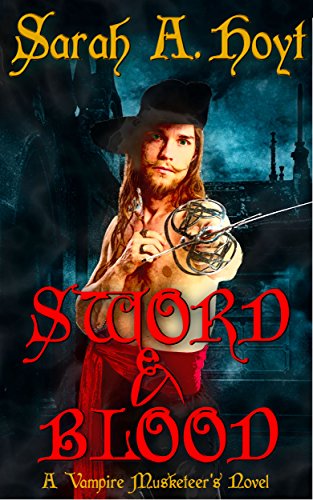
Sword and Blood

519afrlixol

NINETY NINE CENTS FOR ANOTHER 24H

The France of the Musketeers has changed. Decades ago, someone opened a tomb in Eastern Europe, and from that tomb crawled an ancient horror, who in turn woke others of its kind.
Now Paris is beset by vampires, the countryside barren and abandoned. The Cardinal has become a vampire, the church is banned, the king too cowed to fight.
Until now, the three Musketeers, Athos, Porthos and Aramis have stood as a bulwark against the encroaching evil, their swords defending the innocent and helpless.
But last night, in a blood mass, Athos was turned into a Vampire. And a young vampire orphan has just arrived from Gascony: Monsieur D’Artagnan.
Things are about to get… complicated.
This book was originally published under the pen name Sarah Marques.

What To Do About Extremist Speech by 60 Guilders

What To Do About Extremist Speech  by 60 Guilders

The question of what to do about extremist speech—or speech deemed extremist, which are two rather different things—is one that frequently bedevils people. The basic responses are threefold: Refute, suppress, or ignore. Each has its merits in certain situations—yes, even suppression, although its value is limited to dealing with speech that actively incites people to criminality.

This is relevant due to one of the interesting consequences of the recent election, which is the local furor surrounding a speech by Richard Spencer at Texas A&M University.

Now, for those of you unfamiliar with the fever swamps of the Internet, Richard Spencer—well, the polite way to say it is that he makes a certain expatriate’s views on racial issues look like those of our esteemed hostess. No, seriously. If you don’t believe me, try and make it through the first paragraph of this article.

Anyway, a white nationalist alumnus decided to rent a space at the university—as anyone can do, since it is a public facility, paid for by American and Texan tax dollars—and invite this charming fellow to speak. Naturally, when the announcement was made, a firestorm of protest went up from many quarters, and provided some truly excellent examples of how, and how not, to handle dealing with the expression of protected, if odious, speech on public property.

The illiberal left, of course, demanded that Spencer be either explicitly shut down for expressing hate speech or that Texas A&M find some way to use its regulatory power to gig him for violating some obscure clause in the contract signed by the person who made the reservation, lest they somehow be seen as giving approval to the event. The university, thankfully, pointed out that as a public entity it could not do this, despite finding Spencer to be a reprehensible jerk.

Others, less illiberal, decided to protest the event, and the university jumped on board this train rather quickly, by setting up a counter-event in the football stadium, Kyle Field, to display that the persons presently at Texas A&M stand united against Spencer. Personally, this seems like making a mountain out of a molehill, as it gives the man far more attention than he deserves—his particular brand of racialist ideology has relatively few adherents in the United States, and, if responded to correctly, should gain few more. However, the overall reasoning is laudable, if misguided—this guy’s trying to divide us, let’s show him that we believe that being part of Texas A&M is more important to us than being part of a racial group.  (I will note that this is a case of the university reacting to an ideology deemed extreme more than to an actual extreme ideology. There was nowhere near this level of protest when Gloria Steinem, supporter of abortion rights extraordinaire, was invited to speak at an academic conference last year. That is, however, another story.)

Student groups, meanwhile, planned a protest as near to the venue as they could get. Again, see above for the logic—he wants to divide us, let us unite. This was a good thing. A troubling sign, however, was the constant emphasis on the fact that they opposed his rhetoric rather than his ideas. While they probably meant that they opposed both his words and the ideas behind them, the fact is that bad ideas deserve to be opposed no matter how smooth the words are that advocate for them. Failure to recognize this leads to actions of an imprudent and self-destructive nature. However, they at least tried to stay relatively sane.

Unfortunately, as is guaranteed in any sort of public response to an event, someone responded in a way that was utterly counterproductive. This person was a sociology professor, whose biography describes her as a “sociologist, critical race theorist, and lawyer” who “engages the provocative intersections of race and the law.” As could be expected from this self-description, she decided to set up an event called “Challenging the Right to be Racist on Campus: White Institutional Space, the First Amendment, and Thoughts on Racial Equity” which will supposedly discuss the burning question of “the connection between racist expression on college campuses and institutional white supremacy” and whether “free speech [is] equally accessible to everyone or…only free and protected when it reinforces whiteness?”

The answer to this latter question, by the way, is that the former proposition is true and the latter is purely the product of grievancemongers’ fevered imaginations, but the problems with this talk go much deeper than that. Indeed, the main problem isn’t even the fact that the title of the event heavily implies that she wants speech to be suppressed that she doesn’t like. (And at the point where that isn’t the main problem, you’ve got a problem.)

The problem with this event is that it furthers the goals of the person the event is supposedly designed to counter. Spencer is, at his core, a collectivist—and, like all collectivists, seeks to put individuals into neat little boxes based on some clear identifying trait. What Moore, to be charitable, does not understand is that she is doing the exact same thing by singling out “whiteness” (whatever that means) as some kind of crucial trait that determines how people react to what someone else says. Now, arguably Moore is applying the principles of racial collectivism somewhat differently than Spencer is, but when you tell people their race matters, if they start to believe you it’s much easier for men like Spencer to get their hooks into them than if they believed otherwise.

Chief Justice John Roberts said it best in Parents Involved in Community Schools vs. Seattle School District No. 1—“ The way to stop discrimination on the basis of race is to stop discriminating on the basis of race.” It would be a wonderful thing if the people who said they were against racial discrimination would actually check to be sure that their actions would bring about that outcome—instead of furthering the racial divide.

The likelihood of this happening, given how they’ve behaved towards people actually trying to make a world where race doesn’t matter, isn’t high.

Addendum: Nothing of any significance happened during the event, and, as could have been anticipated, protestors outnumbered supporters by dozens to one, at the very least—which sort of turned the whole thing into even more of a virtue-signaling rather than productive event than it was from the get-go. Unfortunately, in yet another moment of counterproductive foolishness, there were several Soviet flags flown by various students, who demonstrated both their historical ignorance and their receptivity to collectivism as long as it mouths the right slogans. Furthermore, in making this a national news story, activists and the MSM gave Spencer more publicity than he could ever hope to buy. How to handle the resurgence of collectivist thought, racial and otherwise, in the United States is an extremely important question. Unfortunately, this incident mostly serves to illustrate how not to handle the problem.

A Scale of the Mind

The current books I’m reading while having meals or waiting for an appointment are a series of medieval mysteries that I’m 90% sure are very badly researched.  There’s just this air of “I’m bsing this part” about them, but it’s not my time period (before the Black Death) and as such I don’t know details, so nothing has jumped up to bite my nose. And the stories are pleasant enough with interesting and human characters.  Oh, yeah, and they’re included in my KULL membership, so even though when I had all the appointments I was reading two a day, they’re free.  (Also they’re nine or ten of them, which is useful when you want to not work very hard at getting into another series.  So, for the indie authors out there, yes, volume matters.)  Before that I read a couple other (indie) series of medieval mysteries.  You see, Amazon recommends one after the other, and since these are my “fill in the blank space” books, I don’t work too hard at finding something else, unless the book I’m reading kicks me out (which is why a couple of other recommended series didn’t last more than three pages.)

Being immersed in medieval mysteries has got me thinking about the scale of polities.  Oh, sure, the electors had something to do with it too, because their function is part of the scale of society and of technology.

In fact, even with electors “to carry the vote of the people” I doubt if a country on the scale of the United States would have been possible a couple of centuries earlier.  It would be unthinkable earlier than that.  The combination of technology and the ability to project force to keep the roads clear of danger were the gating features of previous empires.  And the ability to rule a large empire was implicitly the ability to rule only “in the important things” and let local customs do the rest.

All previous large-scale empires (well, in the sense that it’s a conglomerate of sovereign nations/states, and that we’re supposed to have some sort of central governance though local rule is SUPPOSED to prevail — we won’t go into how it doesn’t —  we could sort of consider the US an empire without an emperor, certain recent presidents nowithstanding.  That the idea of local governance is decaying is also a matter of technology.  When people move around so much during a life time, it’s hard to believe in citizenship of the state and in local rule.  And since you might move to another state tomorrow, you care about how the other states are governed too.)

Look, I’m not a dialectical or any other kind of materialist. Most of the time I believe in a spiritual realm (look, it’s a struggle, okay.  Some of us are born people of very little faith.  But I work at it.  And recently I’ve had reason to realize I’m not as deaf to the spiritual as I tend to think I am.  And no, it’s not any of your business.) But all of the time I believe in the human spirit.  And humans for good and — often — for ill are quire capable of overcoming material impulses and conditions, and make their society something completely different from what you think material conditions dictate.

Even given the ability to project force, etc, the idea of empires before about the 18th century should be bonkers.

You see, not only is the past another country, but that country is very small, and restricted to the travel time of human feet and those domesticated animals we can get to pull carts and carry a rider.  And yet with that technology and the ability to sail, our species created nations that encircled the globe, and a trade network that spanned it.  Because we’re clever monkeys and restless ones.

But the technology does influence the scale of life and dreams of most people.  I keep being stopped, in these medieval mysteries, when distances are mentioned.  Fifty miles as a trip that would take maybe a week on foot, and three days or so on horseback.  (And I think they might be optimistic, when talking of the state of roads in medieval Europe.)  A peddlar who works two or three villages might be traveling maybe 20 miles in a week.  The village ten miles over is another world, necessitating a peasant on foot almost the whole daylight of a day to get there, and that at a brisk pace, not suitable for women and children.  Two villages over is another world, where a man who say left a wife in your village can present himself as a bachelor, start a whole new life, and never be revealed.

It shouldn’t surprise me, because I grew up with the fossilized remains of such a type of scale.  My grandfather came from maybe five miles down the road.  Can’t have been much more than that, because when I was five, he’d have me put on my best hat, and we’d walk, hand in hand, for the feast days of his native village.  (Mostly to hear the band perform. Grandad liked band music.)  Then walk back at the end of the day.  Heck, might only be two miles.  I never measured.  BUT in local parlance it was talked of as another world, with their own strange customs, their bizarre ideas, and very definitely a different “tribe.”

In the same way, when my uncle who came from a little farther afield, started courting my aunt, the local boys gave him a couple of friendly beatings, to try to discourage him from poaching “one of our girls”.  The sense of a different place entirely was there.

But I grew up between worlds.  In my dad’s day there were coal trains, but the tickets were too expensive for frivolous travel.  Most of their distances and social associations were measured on shanks’ pony spans.  “How far can you walk in a day?”  There were buses too, and those were cheaper, though, which is why dad poached mom from half an hour away (by trolley) and my uncle “poached” my aunt from about the same distance away.

In my brother’s day (just a little before mine) the cost of bus fare was reasonable and besides students had a pass for the bus, which made it very reasonable, so his courting my sister in law who lived (in a better area of the region) about where mom came from was unremarkable.  In fact, he had friends he hung out with who came from much further regions.

And in my day, with pass, it was very rare for me to stay in the village for the whole day after about 11 or so, when I went to Preparatory (for highschool, think of it as early middle school) school in fifth grade.  Even though I lived in, and had my roots in a rather small place, I spent most of my days in the second largest city in the country.  I knew the coffee shops, the delis, the places to buy paper or books, all of it in the big city.

My grandmother, in contrast, born and raised in the same village, had been to town a handful of times in her lifetime.  She knew where to shop and how to maneuver the necessities of life in the village, but when you took her to the city she behaved like she was in a foreign land.  Because at her time, and given the transportation and communication abilities of the time, it was a foreign land, and also one she had no necessity to go to.

I don’t live in Portugal right now, so this part is speculative.  When I was growing up, Porto (objectively I think 10 kilometers away as the crow flies, but really much farther away in terms of winding roads) was easy to reach (about 20 minutes by train.  An hour or so by bus) but to cross the country to Lisbon or Algarve, in the Southern-most coast, was a chore.  The first few times we drove there took the whole day, and was exhausting too, as most of the trip was at 30 miles per hour on winding mountain roads.  You stopped at roadside fountains to refill your bottles.  You carried food, because there might not be any type of restaurant.  It was an “endeavor.”  (My dad tended to make short work of these by driving over night, so most of my recollection of cross country trips in my youth was of sleeping in the back seat while dad drove.)

However around when Robert was born, so about 20 some years ago, they put in a highway system.  It is now maybe all of three hours (or less, if traffic is good) to Lisbon.  I would not at all be surprised if when mom is looking for something particularly outre, say imported food, or a specific type of fabric, she makes dad drive her to Lisbon and back in one day, something UNIMAGINABLE even thirty years ago.

My thought processes thus tend to be mixed up on the matter of scale.  I am at the same time someone who grew up with an almost medieval scale of things, including local governance, someone for whom travel by train was easy and cheap, which means I had an early 20th century mental scale and idea of travel — how long it took to get somewhere often depended on train connections and layovers, more than distance — and a woman who has lived in the US for almost 35 years, and who, therefore, tends to think of 100 miles as “no big, we can drive there in an hour and change.”  Sure, not something you want to do every day (though we did last week, for doctors’ appointments) but also not something that will daunt us if there’s something we want to do, say a doctor or, when we lived in the Springs, a trip to Pete’s Kitchen (in Denver) or to a museum.  Sure, we try to group the things we need to do in the other city (doctors’ appointments were a chance to visit with younger son or go to Jade Dragon, for instance) for convenience’s sake, but whether we’re in Denver or the Springs, it wouldn’t be the first time that on a beautiful summer night, we’re sitting around and go “Hey, you know what would be fun?” then proceed to go to the other city.

Perhaps because of this, I am aware of how that scale, the ease of “travel and communication” shapes how we think of ourselves and how we govern ourselves.

Take the electors.  Yesterday at National Review (!) I found a columnist boliviating on how he believed in electors voting their conscience.  [Facepalm.]  This would be a lovely idea if we had chosen electors for their conscience and their probity and our trust in their intelligence.  If I got to vote for Bob the elector over Joe the elector, if the campaign was all about Bob or Joe’s probity and intelligence and knowing history, this would be great.  Because then I would trust Bob or Joe’s conscience.  And it would be a representative system.

But electors are merely a fossilized system, from when the country was much more difficult to traverse or communicate across (not this is not the same as saying that we should abolish the electoral college.  It is more saying that at this point “electoral votes” from various states need not be carried by a PHYSICAL person.  Their existence is necessary, to save us from being ruled by the corruptocrats of California.  BUT physical, animated, human “carriers” of those electoral votes are a relic from a time when tech was very different.)  They are picked merely to “carry” the will of the people.  Yes, I know they have some latitude, something particularly necessary when life was far more uncertain.  Say a president-elect died before assuming power, the electors could make the necessary adjustments, while respecting the will of the people of the states who sent them.

This is to say that the electors, while in theory able to change their vote are not, and should not be, able to circumvent the will of the voters in the states that deputized them.  To do so would make our elections moot and also p*ss off a bunch of very well armed people, something the weasels currently trying to subvert the election should remember, lest this all end in blood.

However, that digression aside, a lot of what is plaguing us, including the growth in power and reach of the Federal government are part of how technology has changed since the founding.  As in, in their time it was more plausible that each person would be born, live and die in the same state.  Therefore, citizenship in a state made perfect sense.  (Heck, in many cases, citizenship in a town made perfect sense.)  And you really didn’t have much say in how other states governed themselves, because what business was it of yours?  You were not likely to go there, much less live there.

Yes, Americans were always more mobile than, say, people in Europe, but there were still natural limitations on communication and travel.

The automobile and the telephone changed that, and we saw the natural and consequent growth of centralized government over an area that most Europeans still can’t conceptualize.  The same forces drove Europe into a “union” with centralized government.

But things have changed, haven’t they?

We now have near instant communication, across the globe.  And while I hate traveling by plane, we do that, across the country, at least three times a year for some reason or another.  And we do it across the sea usually every three years (not the last five years, which have been difficult on ALL fronts, mostly because of my health, which is also an influence — alas — on our finances.)  And we’re stay-at-home boring people, by any definition.

I can even see why early twentieth century writers through that this type of travel and communication would lead to one-world government.  I can.

But that doesn’t seem to be the way we’re going.  You see, sure, the facility of travel and more mobility, and better communications, push us into taking a far greater interest in other countries business.

At the same time this communication (and maybe some day the travel!) are more individualistic and atomized. The difference in communications right now, in relation to the early 20th century is like the difference between the US where individuals travel in their own cars and Europe where, until recently, they traveled in buses and trains, at others’ convenience and in a communal sort of way.

Even when I was young, communicating across the world depended on the post office of at least two countries.  It depended too on the press, for the large scale sort of communication.  It depended on what governments had negotiated for communication.

This is how we end up with Europeans thinking the US is a military regime, or Americans thinking every European lives in a quaint little kingdom with a castle at the center.

You can’t maintain those illusions (unless you really work at them) when some of your writing — or gaming, or reading, or music — buddies are across the glove in a completely different land.

Communication is now atomized and personal.  Sure, we’ve lost the sense of community (bah, the people who lament that never lived in a real small community, and think it’s all flowers and butterflies) but we gained the ability to go nosing about where we want to when we want to, at least with our minds.  (I spent sometime yesterday looking up plague pits in Portugal — it’s tangential to DSR and finding out that as far as anyone knows either there aren’t any or no one ever looked.  I grew up with mass graves enough, but those were from the Napoleonic war or the civil war.)

And I suspect travel too will get easier and more individual in the next fifty years or so.

So, what do these developments mean?

Blamed if I know! As I said, it was perfectly logical and made perfect sense for writers of the early 20th century to think developments like ours would lead to one world government.  It is logical for our crazy progressives to think that the world should vote in US elections.

But logical isn’t always how things happen.  Logically, being born a very small, premature baby in a village where medical technology was … oh, 19th century or so, and having caught every illness that crossed the village or even waved from the road, I should have died oh, fifty years ago, or so.

And there are factors that those writers, who, by and large, were people who believed in the “benefits” of a large state and thought the larger the less corrupt, didn’t take in account.  Near instant, individual communications, and the ability of anyone and everyone to grab a megaphone and address the world, means that we know a lot more about individual governments, and individual politicians, and we’ve learned the bigger they are, the more corrupt they are.  We’ve also realized very sharply that the larger the polity, the more they ignore local/regional/ and in Europe even national concerns.

So we have Brexit as an harbinger of things to come, and it might come to fracturing much smaller than that, to the important polity being the neighborhood, where you can stop nonsense in a very immediate way.

It might also very well lead to extra-regional polities: conglomerations of people by interest across many regions or countries, to form a big enough group that can then pressure the governments of the areas where their members live for something or other.  I can’t for instance think of any such thing all writers need, except maybe freedom of expression, but if the need arises in the future (and if my colleagues weren’t mostly of that “logical” persuasion that believes in “scientific” governance (that is to the left of Lenin) I could see such a polity of writers forming.  Or of bloggers.  Or of clothes makers.  Or really… anything.

The fact is, I could argue for one, for the other, or for a combination.  But the more I try to probe the future, the more I get the feeling it’s something we can’t even imagine, any more than a medieval man could imagine life in the US right now.  It’s one of the things we have to get there to see.

I suspect “the singularity” is not an event, but a series of them, and we’ve already gone through several, though perhaps the one looming ahead is biggest of all, given how instant communication and easy travel are changing our life.

Whatever is ahead, it will certainly be interesting times.  And I’m Martian (Heinlein — it’s a joke, son.) to want to be around to see it.

Sure, may you live in interesting times is a curse, but when things are trending towards more freedom and mobility for the individual, some of us would like to be around and at least see the beginning of it.

At least I would.  After all, I can already sort of understand three of the mental scales of human life that have prevailed through the centuries.  I’d very much like to see what these clever and restless monkeys will come up with next.