A Place In The World

violinist-3338499

The main thing Jordan Peterson concerns himself with is making order in a world that has lost it.

This is the reason the opposition to him and calling him things like fascist, was loony.  They started even before he’d come out as opposing some/most of the left’s projects.   Mind you, his political philosophy isn’t even particularly well integrated.  He still falls for leftist lies that “inequality is very bad” eve though a) inequality is natural.  Great apes have hierarchies with different privileges for each, even in the most primitive band.  Well, I don’t agree with privileges for existing, but capitalism — aka the way humans function naturally — does not provide grey and mindless equality, so that’s fine.  b) we don’t have the kind of corrosive inequality that results in someone starving while someone else rolls around in silks and eats nightingale’s tongues which was rather the norm throughout most of history. c) the only way to stop this “inequality” thing is to have the government redistribute, ultimately, poverty.

But it’s normal for Peterson not to have thought this through. Economics is not his jam.  And this is not what he set out to do.  What he set out to do is bring order out of chaos and help people make a place in the world.

Throughout most of human history, and even before that, probably, there was an order to life.  You knew who you were and whom you belonged to.  “Belong” is how the Portuguese say you are related to someone.  “Oh, she belongs to me/I belong to her in some fashion.  My second cousin married her mother.”  Like many things buried in languages it gives a hint to how society functions.  Recently I went through a situation where I very much wanted to break heads on behalf of one of my sons.  In Portugal this would be fine.  You cold be forty, but someone is treating you badly, and mom shows up in this person’s office and goes, “I’m here about my son.”  No one bats an eye.

The US, for reasons of what we are — a pioneer culture that values individualism — leaves adults to solve their own problems.  You don’t “Belong” to your family.  You do/can get help from them out of love and care, but your problems are yours to solve.

I’m not disagreeing with this system here, mind.  It has certain advantages, like not having the entire tribe look over your shoulder and call out hints for everything, from what pet you keep to what kind of house to buy, or how to cook cabbage.  Or–  It was just very hard to hold back the instinctive reach for the cast iron frying pan, is all.

To be fair even English culture started departing from that model around the time of Shakespeare or before.  Which is why individuals had more freedom and autonomy to be and create in it.

Part of the reason the future comes from America, is that each is free to be and create, and not be told “you’re an engineer now?  But none of your people are engineers.”  We’re free to be innovative, break the rules, make the never-seen.

Innovation and freedom are double edged swords.  In a talk Peterson says that the democrats can’t understand why we laughed at “we belong to the government” and that what we don’t understand is that desperate need to belong to anything that caused them to fasten on that, possibly the worst of masters.

It’s not so much that humans want to belong, in the sense of being slaves, and I think if the left understood that they won’t be in charge, but just told how to do, it would cool their anxiety to “belong” to government.

It’s more homey: humans want to have someone to work for, they want to have something that gives rules and shape to their world.

And this explains why the left hated Peterson, even before he was political, and why he drives them to a frenzy such that they feel the need to do daft things, like try to break into the place where he’s going to speak, carrying a garrotte.

The project of the left since the 20th century at least (and honestly, they were only continuing a prior project) has been to remove all those things that give shape to a life.  The hymn to daftness and anomie, “Imagine” makes that very clear: “Nothing to kill or die for.”

The same left that jabbers incoherently about the anomie of capitalism and the lack of structure of consumerism “buying a lot of things to fill a spiritual hole” and other such twaddle, are the people who have made sure there is nothing to live for and that our lives don’t matter.

“Nothing to kill or die for” is the exact same as “nothing to live for.”  And their tragic mistake is not comprehending that.  Partly because they’ve made their destructive philosophy into a quasi-religion, to give themselves something to kill and die for.  Hence the garrotte at Peterson’s lecture, because instinctively they feel their entire reason for existing is threatened.  They just don’t get why they feel that way.

But this is why the Peterson project matters.  Something to kill or die for, is something that matters beyond your life.  Most humans in history had that: the tribe,the faith, the land, the king.  Whatever it was, they had something that mattered to them more than their own lives and their transitory fulfillment.  Enjoying yourself is not happiness.  Happiness consists in having a purpose in life.  Something you live for.

A course on the black plague almost convinced me (almost) that the black plague was the first unmooring of Europe.  But the disconnection to the perhaps too tight bonds of the church, left Europe free to innovate.  It was the second blow of all those young men who died stupidly in world war one, that left Europe adrift.

And then the Soviet agit prop of the sixties and seventies, designed to make the free world ripe for domination finished the work.

So, what do you live for?  I don’t know.  You’re you.  I’m me.

I know what matters to me, and the things I work towards: Securing the blessings of liberty for my descendants; writing stuff that might help with that war; caring for my family; keeping my environment livable and organized; making sense of the timeless demands of Him who is beyond time, and yeah, trying to follow through in my life, because the Eternal Law is beyond human need.

All of those are things to live for, and maybe things to die for in the sense that you use your life in service of something, and die a little.

Kill?  For liberty for me and mine world without end, for sure.  I won’t kill someone for simply deep sixing one of my books (something for which people alive in the world today should be grateful.)

But my life has boundaries and purpose.  I think all of us need boundaries and purpose.  Which, again, is what Peterson is trying to bring to the world.

It is also why some of the happiest people any of us knows are not those who left themselves totally unfettered to pursue some undefined “happiness” but those who gave themselves up for something.  (Who gave their lives up in order to save them you might say.)  Some of those things might be transcendent and everyone will agree are vital, like saving babies, or securing medical help for the third world.  Some we can see why they’re important to people, like art or religious vocations, or saving kittens, or running a store. It might not be for us, but we can see why people are willing to sacrifice all for it. And some might be silly, like making the SCA chapter REALLY good, or making crochet curtains or whatever.  BUT people who give their whole lives to an endeavor that matters to them, those are usually happy.

(It’s tricky when you give your whole life to a project based on envy and malice, like the SJWs.  It gives you purpose but it also corrodes your soul.  Particularly since the project is ultimately “make humans into something else” that will work with the communitarian project”, which is inherently doomed to failure.)

So, choose your purpose well but choose it.  What would you give your whole life to or for?

That way lies the path i the search for happiness.

Book Promo by Sarah and Vignettes by Luke, Mary Catelli and ‘Nother Mike

rules-2330728

Book Promo by Sarah

*Note these are books sent to us by readers/frequenters of this blog.  Our bringing them to your attention does not imply that we’ve read them and/or endorse them, unless we specifically say so.  As with all such purchases, we recommend you download a sample and make sure it’s to your taste.  If you wish to send us books for next week’s promo, please email to bookpimping at outlook dot com.  One book per author per week. Amazon links only.-SAH*

FROM MARGARET BALL:  A Pocketful of Stars.

Thalia Kostis will be the first to tell you it’s not magic, it’s theoretical math when she walks a Möbius strip through walls to her office at the Institute for Applied Topology. CIA Case Officer Bradislav Lensky doesn’t care what it is, as long as she can help track down a smuggling ring and the terrorists in their safe house in Austin. The other magicians nearby don’t agree, and don’t care for new rivals either!

Now Thalia and the rest of her misfit crew are in a race against time, terrorists, common sense, grackles, and their graduate advisor to save the day!

FROM BRUCE BRETTHAUER:  Setosha: The Beating Heart of Empire.

511ceoreogl-_sx326_bo1204203200_

The Colandran Empire struck back with brutal efficiency, occupying one of the three Families planets, and sending death squads after Families commanders, including Corey Andersen. Ambushed and injured, Corey fights back, trying to protect herself, her sib-sisters, and her new neices. But a greater challenge awaits her, the Imperial Main Fleet is nearby, poised to put an end to the Families in a final decisive battle. The Eldest of the Families Navy turns to her to lead the fleet, outnumbered and outgunned, to liberate Setosha and drive the Imperial Fleet away.

Vignettes by Luke, Mary Catelli and ‘Nother Mike

So what’s a vignette? You might know them as flash fiction, or even just sketches. We will provide a prompt each Sunday that you can use directly (including it in your work) or just as an inspiration. You, in turn, will write about 50 words (yes, we are going for short shorts! Not even a Drabble 100 words, just half that!). Then post it! For an additional challenge, you can aim to make it exactly 50 words, if you like.

We recommend that if you have an original vignette, you post that as a new reply. If you are commenting on someone’s vignette, then post that as a reply to the vignette. Comments — this is writing practice, so comments should be aimed at helping someone be a better writer, not at crushing them. And since these are likely to be drafts, don’t jump up and down too hard on typos and grammar.

If you have questions, feel free to ask.

Your writing prompt this week is: wrench

Life Liberty And the Pursuit of Happiness

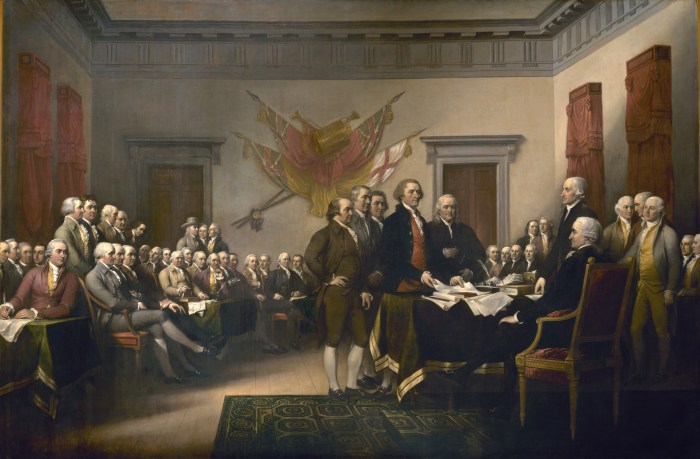
declaration-of-independence-62972

We hold these truths to be self-evident, that all men are created equal, that they are endowed by their Creator with certain unalienable Rights, that among these are Life, Liberty and the pursuit of Happiness. — That to secure these rights, Governments are instituted among Men, deriving their just powers from the consent of the governed, — That whenever any Form of Government becomes destructive of these ends, it is the Right of the People to alter or to abolish it, and to institute new Government, laying its foundation on such principles and organizing its powers in such form, as to them shall seem most likely to effect their Safety and Happiness.

For various reasons having nothing to do with this post, I keep coming back to the phrase “an antidote to sin.”

Well, I don’t know about sin, but if killing vast numbers of your citizens in batch lots, like Nazis and Communists did, or through privation, economic destruction (or economic distortion) and repression as socialists did and do (poor Venezuela is the most extreme example but any government that considers it their business to determine what’s “death with dignity” and values it over life is doing the same, just slower, with softer gloves and more pretty words) isn’t a sin, then the Almighty and I need to have a word or fifty.

And as I was thinking of the sad state of the people of Europe who don’t even realize they are objects, owned by the government, serving at the will of the government, and destroyed just as easily, or that the hand that mollycoddles them can (and often does) snuff them out, I realized our founding documents are a remedy to that particularly horrendous sin.

We can’t, at least if we take them seriously — the left here doesn’t, of course, but enough of us still do.  And yes, Woodrow Wilson and FDR, but they also thought they were above the intents of the founders — fall into the sins of Nazi Germany or the many communist abattoirs of the the 20th century.

If government derives its power from the governed, and if the people you want to destroy are part of the governed — if not, then why are they subjected to your law? — you can’t do it, because you don’t have the right to destroy those from whom your rights come.

Yes, I know, it is normal for tyrants to declare you a foreign invader before they destroy you.  This is done either for racial reasons — Nazis — or ideological reasons — the many who died under Stalin and in this country the amazing number of people who have tried to declare anyone who disagrees with them a foreign agent, either “Fascist” or “Russian.” (Aren’t they the ones who admire Russia?) or Racissssexisssshomophobic and therefore not a real person — but it’s usually done before the batch killing begins.

BUT even then the declaration of independence is an antidote.  You can’t kill people who aren’t your subjects, but the people from whom your power derives.  Not unless you can prove they are not citizens, not of the body.  Yes, sure, governments do that, and we should be aware of that, but it’s at least a hurdle for them to get over, not simply “we’ve determined you’re better off dead.”

Unlike what our leftists believe, you don’t belong to the government.  The government belongs to you.  You’re not a subject nor a slave.  You’re the owner of the joint.

They can think that you’re inconvenient, that your life has no purpose — 22 years ago, doctors tried to convince me to have a procedure that would almost certainly kill me, because I was useless, as a housewife with two small kids, and my life did no good, and I was a burden to my family.  It’s not like I even had a job — or that they’re saving you from a fate worse than death, in having to live with a disability or a health problem, but the evaluation is not THEIRS to make.  They can think whatever they want, but your life is none of their playthings.

We are endowed by [our] Creator with certain unalienable Rights, that among these are Life, Liberty and the pursuit of Happiness.

Not the government’s to give.  Not the government’s to take away.  The government can take a flying leap, and all its supposedly pure-hearted busybodies with it.

A citizen, not a subject.

An antidote to sin.  And killing vast numbers of people, or destroying them, or making it impossible for them to live is a customary sin of government.

But we need to know those words, and understand them, because they ARE the founding documents of THIS land, and against them, the lies of collectivism cannot stand.

Repeat them, learn them, fight for them.

Lest we forget, lest we forget.

Slouching Into Shackles

chains-19176
One of the things I keep trying to explain to my “woke” colleagues, when they stand tall and righteous and put their shoulders back and say that Heinlein was racisthomophobicsexist or that great authors of the past should have been better than to follow the prejudices of their time, is that when you’re immersed in your time, you don’t see the prejudices and the blind spots.

I have a little more insight into how culture shapes what’s possible to think, because I changed my culture as an adult.  While this can be done (obviously) and immigrants should be encouraged to do it, (or go home), the acculturation is never complete.  What happens is that you acquire a sort of cultural double vision.  Depending on how far your acculturation goes, you’ll see the defects in thought or at least the unquestioned assumptions in one of the countries better, but also have a strong feeling of being outside enough to see some flaws in your dominant culture.  In my case, for instance, I see the flaws in Portugal very clearly, like the obsession with speed over diligence or being decisive over being right, but I still see some in the US which is why sometimes I say “what people born and raised here don’t see.”

I have, of course, even more insight, due to being a conservative in the US, in a culture and profession (the arts/publishing) that is not only majority left, but majority extreme left.  For many years, the only way to stay at least plausibly under cover was to see what they were seeing, and what they expected.

But without that, most people are blind to the … ah, unconscious or unthinking parts of their culture.  Heck, even with what I’ve been through, I still tend to accept a lot of things unconsciously, unless I step back and go “Now wait a minute.”

Man is a social ape, and part of being a social ape is the tendency/desire to fit in with the band.  Our choice not to stand out is instinctive and natural.  And cultures as a whole develop blind spots.  It’s just how humans are.  So, for instance, people in Europe can’t imagine how “empty” the US is, because what they see on TV is mostly the big cities, and because what passes for rural fastness in Europe is for us really densely populated.  They also can’t really picture our freedom of the press because their countries retain at least a sense of not making the country look bad in the eyes of foreigners.

Most people in the US, OTOH, a country where the people are supposed to be sovereign, no matter how much that’s broken, can’t imagine governments that don’t give a good goddamn about their people’s survival, comfort or health.  Americans also have a weird blind spot about war and thinking of it as a choice.  (Accident of history, being isolated from the squabbles in Europe, and leader with foresight who fought before the battle came to our shores.)

The biggest flaw that’s been hitting me in the eye recently is how historians in the future will either laugh or cringe, or both, at the left in the US at this time and place.

This is a movement that hates “slavery” so much they are taking down the monuments and erasing the memories of those who lost in the American civil war, even those who had monuments erected to them before or after the war for feats having nothing to do with it, or those that made it explicitly clear they were fighting for their “country” not slavery.  It is a movement that thinks slavery had such long lasting impact that it should earn unending reparations to people who even LOOK like those enslaved from people who look like the enslavers, even in cases when, clearly, neither set had ancestors in the US.  It is a movement that wants to do away with the founding documents of the country they were born in — the same country that has secured liberty and prosperity to the largest number of people in the history of humanity — because it was written by people who owned slaves.

And yet, these same people want the government to provide them with free health care, and if they got their full way, other “positive liberties” (to quote Obama) including free college, free housing, free food, guaranteed income, guaranteed jobs.

But Sarah, you say, there is no contradiction in that.  They just want to have perfect liberty by having all the necessities taken care of, leaving themselves free to express themselves and be the best people they can be.

Um… I could counter all that with statistics of the different achievements of people with guaranteed income — say, trust funds — and those who have to scratch for a living, but the point of this post isn’t even that.

The point of this post is that the moment all your necessities are furnished by someone else, someone else gets to make all the decisions for you.  I mean, if your health is paid for by the taxes of your fellow citizens, and the government aka the nation looks after your every need: should they pay for your health if you insist on smoking or drinking?  Or should those resources be husbanded for people who take better care of themselves? Okay, Sarah, but isn’t there a point to individual responsibility?  Why shouldn’t you be required to take minimal care of yourself, so you get the benefits of the government’s care, which as you say someone else pays for.

Ah, but there’s the rub.  See, ultimately, there’s always something some of us say or do that can be used to justify denying care or giving only palliative care.  For instance, I’m overweight, which seems to be one of the remaining sins in the current lexicon.  Sure, I gained tons of weight over 20 years of untreated hypothyroidism, even though I was starving myself for a long portion of those.  But hey, I allowed myself to be overweight.  So my prognosis is poor.  Why spend money on me, when someone else could have better results?

Hell, even when it comes to my autoimmune.  I’m a poor prospect, so why give me top of the line care?

If the government controlled other things, it would be exactly the same.  Food?  Sure, I break out in eczema all over when I eat a diet rich in carbs.  But hey, flour and rice are cheap, and why should I get a specialized diet, since I’m only a writer who isn’t even a leftist or a supporter of the state, and besides my prospects of survival are poor?

College?  Sure you want to be an economist, but your teachers say you’re cheeky and talk back, and the state doesn’t need that.  What we need right now are pipe fitters.  Here, you can take this six week course.

When the state is paying the bill, the state gets to decide what is better for you.  The European constitution gives you the right to “death with dignity” because death with dignity is much cheaper than expensive treatments with a low chance of survival.  After all this money is for everyone, you know?

And like the NHS, in Britain, they won’t even let you seek treatment outside their tender mercies.  Why should they?  They pay for you.  That means in the end they decide what to spend on you.  They own you.  And if you went outside their system and your kid got cured?  It would look pretty bad for them, wouldn’t it?  Why should they allow you to do that?  And besides, peasant, you have a bad attitude.

And obviously there are lives unworthy of living.  Oh, so you do this kitchen foil art thing, and thousands of people like it.  Sure. But look, this other person started a steel mill, which brings money to the country.  Who do you think is going to get the food and care?

Because here’s the thing, when you’re a subject of the state, and you exist for the use of the country/government, they get to decide if you continue existing, or what degree of comfort you exist in.

And it’s not even a big decision.  Most of the time the decision will be made by a petty bureaucrat and supported by other bureaucrats, right or wrong, because if they doubt their colleague, they endanger their own power.

You’ll go to your death saying not even “if only Stalin knew” but more “If only clerk number 4589 had listened to my case more attentively.”

Those who give you everything have the power to withhold everything.  In a massive bureaucracy, it’s not hard to come up with excuses and justifications as to who must live and who must die.

The only thing sure is that the individual will have no say in it.

Slaves are, after all, not able to look after themselves.  Just not smart enough.  There needs to be a vast and enlightened bureaucracy to do it.  And the bureaucracy has to decide who gets to live and who gets to die, of course, because they know best.

Do you think the “progressives” will ever understand that they’re trying to slouch back into that slavery they condemn so vehemently?

Or do you think they only object to slavery because of skin color?  (In which case they’re fools.  In the long miserable history of human slavery, there have been slaves of every color.  There still are.)

We are all prisoners of our times and our assumptions.

But there are immutable facts of human nature that should be taught, such as “He who pays the piper calls the tune.”

The alternative is for the European Nations who fought against the Nazis to recreate all of the Nazi policies and their dehumanization of humans, under new and more “caring” names.

Everything for the state.  Nothing outside the state.

Not even a right to life.


Social Poison – A Reading of Thomas Sowell’s BRAWL by Amanda S. Green

poison-1481596

A Social Poison – A Reading of Thomas Sowell’s BRAWL by Amanda S. Green

As promised, I’ve returned to Thomas Sowell and the final parts of his excellent essay, Black Rednecks and White Liberals. Whether you believe in a “Redneck culture” or that it is something that came to parts of the South from sections of England, the underlying basis of what Sowell has to say still stands. There is a culture that white liberals have identified in African-American society, held up as being “authentic” and have championed. This action by white liberals is, according to Sowell, a social poison that must be counteracted sooner, rather than later.

Slavery.

A simple word that brings up so many negative connotations and rightly so. No one today wants to think about being owned by another person, being property to be bought and sold at the whim of a master. It is also a dark part of our history. But it is just that, history. At the time, despite our horror at the idea today, slavery was legal. Yet, the aftershocks of it can still be felt. Must of that is because of the so-called good intentions of white liberals. Yet, as Sowell points out, using it as THE causation for today’s problems does more than a simple disservice to our country and, most especially, to the African-American that are part of it.


Many of the prevailing misconceptions of the histories of both blacks and whites in America derive from trying to amalgamate morality and causation, so as to make the moral evil of slavery a causal explanation of contemporary negative social phenomena which have in fact had entirely different historical bases. . . When discussing both blacks and Southern whites, slavery has served as an all-purpose explanation of many social phenomena, ranging from broken families to poor education, lower labor force participation rates, and high rates of crime and violence. . . No matter what the origin of counterproductive behavior, such behavior must be changed if progress is the goal. (BRAWL, p. 56)


Two things in the above quote are important to remember. The first is Sowell’s use of the phrase “trying to amalgamate morality and causation”. If you think about it, that is exactly what we’ve been seeing since the 1960’s. We have been told time and again that slavery, a morally repugnant act, is the basis of racism in this country. The first problem with that is it assume there can only be racism on a white to black basis. Despite arguments to the contrary, racism is more than a white and black issue. It isn’t difficult to see racism across the spectrum. Whites can be racist against African-Americans or against Hispanics or against Asians, etc. But it isn’t limited to white. African-Americans can be racist against whites or Hispanics or Asians just as Hispanics and Asians or any other “race” can be racist against those who don’t look or act like them.

But that doesn’t fit the narrative. If you go onto social media, you can easily find people claiming only whites can be racist because racism comes from positions of power. Yeah, no. The fact white intellectuals have continued to promote this idea is not that difficult to understand if you think about it. Such a belief gives them a social superiority of sorts over those they want to prove aren’t as enlightened or “woke” as they are.

The second point Sowell makes here is that it doesn’t matter what the origin of the “counterproductive behavior”. What matters is changing that behavior if there is to be progress. Yet, do we see white liberals, especially white liberal intellectuals saying this? No, just the opposite, in fact.


[I]f the real agenda is to score points against American society, then blacks can be used as a means to that end. More generally, a pro-black stance by white intellectuals enhances the latter’s moral standing and self-esteem, whether or not the particular manifestation of that stance helps or harms blacks on net balance. (BRAWL, pp. 56-57)


Looking at the above, something else starts to become clear. Some, if not all, of these intellectuals care more about their own standing than about those they claim to help. It helps enhance their “moral standing and self-esteem”. How is that helping those they claim to champion?


Blacks in effect become the mascots of these intellectuals, symbolizing and acting out the latter’s resistance to “society”—or, more accurately, civilization. But, while mascots may be indulged, more fundamentally mascots exist for the sake of those who adopt them, and the actual well-being of the mascot is seldom a high priority. By cheering on counterproductive attitudes, making excuses for self-defeating behavior, and promoting the belief that “racism” accounts for most of blacks’ problems, white intellectuals serve their own psychic, ideological, and political interests. They are the kinds of friends who can do more harm than enemies. (BRAWL, p. 57)


Sowell might be a bit blunt with the above but he’s right, especially if you look long and hard at what has been going on in this nation since the 1960’s. What attitudes and behaviors have the white liberal intellectuals been cheering on? A “ghetto” behavior. They’ve used slavery, broken homes, lack of education, etc., (all of which they then tie back to slavery) to excuse these “counterproductive attitudes”. These same white intellectuals are the ones promoting the idea that racism is behind it all. And yet, what solutions have they offered that would break the cycle of counterproductive behavior? Nothing workable and nothing that would break the counterproductive behavior of the so-called “culture” they are trying to propitiate.


A crucial fact about white liberals must be kept in mind: They are not simply in favor of blacks in general. Their solicitude is poured out for blacks as victims, blacks as welfare mothers, criminals, political activists against the larger society, as well as those blacks who serve as general counter-cultural symbols against the larger society. (BRAWL, p. 57)


Victims. That is the key here. In fact, if you think about it, victimhood is the current preferred state when you listen to so many liberals, be they “intellectuals” or not. We have them promoting the idea of African-Americans as victims because of slavery. It doesn’t matter if the African-American in question came from a Southern slave heritage or not. We have the idea that women are victims because of the patriarchy. We have the belief that anyone not identifying as a heterosexual is a victim because of the fact they are “different”. We are told non-Christians are victims because of much the same. This constant state of victimhood, with the correlating idea that victims MUST be believed until proven wrong, is weakening not only the individual but the country as a whole. It harms the individual because it truly does make a victim of them. They expect to be mistreated, either physically, mentally or emotionally. They don’t learn how to stand on their own but have to have their safe spaces where they can go so they don’t have to be exposed to words or ideas or even just the sight of people who offend them. In other words, they would rather feel than do and they certainly don’t know – or possibly don’t want – to adult.


Intellectuals in the 1960s began promoting the idea that those blacks who exhibited a culture different from the ghetto or black redneck culture were not “really” authentic blacks. . . Rooting black identity in a counterproductive culture not only reduced incentives to move beyond that culture, it cut off those within that culture from other blacks who had advanced beyond it, who might otherwise have been sources of examples, knowledge, and experience that could have been useful to those less fortunate. . . But more successful blacks were increasingly depicted as either irrelevant non-members of the black community or even as traitors to it. In turn, this meant that many blacks who had a wider cultural exposure and greater socioeconomic success felt a need to conform, to some degree or another, to a more narrow ghetto view of the world. . . .(BRAWL, pp. 57-58)


Whether these intellectuals meant to cause problems for the more successful members of the African-American community or not, we’ll never know. I’m sure there were at least some of them who started this with the best of intentions. They simply didn’t think through the cause and effect of their actions. Instead of rewarding effort and hard work, they wound up punishing it. They caused a rift in the community they were supposedly helping. Instead of expanding the world view, as Sowell says, they narrowed it.

History shows us the problems with a narrow world view. It might feel safe and familiar, but it will ultimately lead to trouble. Not only does it often lead to isolationism, it leads to a lack of understanding what goes on around you. Both can and will eventually blow up in your face. The ability to adapt is stifled and that society or culture will stifle. How, then, does that help the African-American – or any other – culture? It doesn’t, not that the white liberal intellectual will ever admit it.

Sowell has some interesting comments and insights in the summation to the article. Here are just a few:


In addition to the negative effect of the redneck culture on the achievements of both blacks and whites, it has also, for generations, provoked adverse reactions to rednecks of either race by others. (BRAWL, p. 60)


I hadn’t really thought about it, but Sowell is right. When most people think about rednecks, no matter what the color of their skin, they think about men who wear “wife-beater” t-shirts, are ill-educated and don’t hold down jobs. They are drinkers and fighters and ne-er-do-wells. The women aren’t much better. These are what “good” parents pray their boys don’t grow up to be and that their daughters don’t fall for. Is it an accurate portrayal? That depends on who you ask because, as we can see from the comments to the earlier installments of this series, not everyone defines a redneck the same way. However, Sowell has a very specific definition and it isn’t one with much to redeem the individual.


There is no reason to rule out, a priori, the possibility that different subgroups of blacks were themselves different in behavior, attitudes, skills, and performances. That has already become apparent when comparing blacks from the Caribbean with blacks from the South, or when comparing blacks from the New England enclaves in the South with blacks from the redneck culture. (BRAWL, p. 60)


To support this, Sowell gives hard evidence of census data, etc. Even with only circumstantial evidence, it should be clear his statement is true. So why do liberal intellectuals, especially white liberal intellectuals, continue to hold onto the belief that all the ills of African-American culture stem from slavery? Obviously, not every member of that culture comes from a slavery background. Yet, to so many, that doesn’t matter. Slavery is the source of all ills and racism is at the root of it.

Nope, but try telling that to those who hold tight to the belief.


Easy recourse to slavery as an explanation of either North-South differences or black-white differences fails empirical tests. . . The counterproductive redneck culture that eroded away over the generations, among both whites and blacks, has been rescued after the 1960s by a “multicultural” ideology that has made this residual survival among ghetto blacks a sacrosanct badge of racial identity, not to be tampered with by teachers or criticized by others, under pain of being labeled “racist.” . . . In short, prevailing explanations provide an alibi for those who lag—and an alibi is for many an enormously valuable asset that they are unlikely to give up easily. (BRAWL, p. 61-62)


An alibi.

I hadn’t thought about it that way before, but Sowell is right. It is an alibi, an excuse. It goes hand-in-hand with the attitude of entitlement we see in too many of this nation, no matter what the color of their skin. Too many have forgotten what made America great, that spirit of facing trials and tribulations, of overcoming dangers and challenges, to forge a new homeland and to excel at what they did. Too many of us want it all handed over on a silver platter, preferably paid for by the government. What they don’t realize is that the government has to pay for it somehow and that somehow is us. It is money out of our pockets.

When I start hearing how we shouldn’t put time limits on how long someone who is able to work but who chooses not to, for whatever reason, I can only shake my head. Why should we, as taxpayers, support someone who can go flip burgers but won’t because they don’t like shift work or because they feel it beneath them. Yes, if a person is infirm and can’t work, they should be helped. If a mother can’t afford daycare and needs to stay home with a young child, exceptions can be made. But we shouldn’t continue to pay for her to do so and to continue to have more children so she can keep on the dole. That sort of government “help” only serves to help someone into a mindset where they don’t want to do for themselves or where they believe they can’t. Neither attitude or belief is productive or conducive to breaking out of the cultural mindset Sowell has been writing about.


Those who provide black rednecks with alibis do no favor to them, to other blacks, or to the larger society in which we all live. . . The liberal vision of blacks’ fate as being almost wholly in the hands of whites is a debilitating message for those blacks who take it seriously, however convenient it may be for those who are receptive to an alibi. . . By making black redneck behavior a sacrosanct part of black cultural identity, white liberals and others who excuse, celebrate, or otherwise perpetuate that lifestyle not only preserve it among that fraction of the black population which has not yet escaped from it, but have contributed to its spread up the social scale to middle class black young people who feel a need to be true to their racial identity, lest they be thought to be “acting white.” It is the spread of a social poison, however much either black or white intellectuals try to pretty it up or try to find some deeper meaning in it. (BRAWL, p. 64)


It is, as Sowell says, a social poison. The antidote is there. We, as a society, must be willing to take it. That is the challenge facing us and it is a difficult one. I’ll admit, I hesitated writing this series of posts. I am one of those “whites” so often told I can’t understand what racism is because of the color of my skin. I can’t understand what people of color go through because I am pale and have red hair. But I not only agree with what Sowell says, I admire him for having the courage to speak out, knowing he would be condemned.

The other day, something happened that banished any lasting concerns I had about writing these posts. I got into a discussion – and that is putting it mildly – with someone about race and racism. The other person, someone who is the typical white liberal intellectual, started lecturing me on how I couldn’t understand or identify with the plight of persons of color. Of course, her definition of a “person of color” excluded everyone who didn’t have their long ago origins on the African continent. When I called her on it, she huffed and puffed and had all sorts of excuses. Then, not unexpectedly, she turned it back on me. I couldn’t understand because of my whiteness.

I’ll admit, I did what I’d wanted to do for a long time with her. I pointed out that my “whiteness” included a great-grandmother who was born on the Trail of Tears. Unlike Elizabeth Warren, I can trace my ancestry back to the Cherokee Nation and have the proof. I can show how my ancestors had their land seized by the government before they were force marched from their homes to the Oklahoma Territory. I may burn in the sun but I have more Native American blood in me than Warren or many others claiming to be Native American or persons of color.

It is past time to call bullshit on much of what these white liberal intellectuals are doing. They are not helping those they claim to champion. They sure as hell are not helping our country. Why do we keep listening to them? Stand up, speak out and tell them to sit down and listen to the adults for awhile.

[For raising the tone of this blog — ATH is culture! — and helping me with the exposing of the roots of the current mess — in her case with more facts! — if you decide to  send the woman a drink–  And her Amazon author page is here –  Also, she has a new book: Light Magic, under her Ellie Ferguson pen name. SAH]



The Rearguard

art-315233

Mind the dying beast.  It’s when it bites the fiercest.

Sometime in 2004, as the left made a great noise all around, and I was afraid Jean Kerry would win, not because I liked George W. Bush much, but because I was afraid what our retreating from Iraq just then would mean, in terms of my sons’ having to go and fight that war again in worse conditions (yes, I know it’s still a possibility not to say probability) a friend told me the left is noisiest and most visible when they feel they’re losing.

If that’s true we’re in for some interesting times, particularly if their blue wave fails to materialize.

There are some things we must establish up front, which might seem counter intuitive to the crowd that hangs out here, but which, nonetheless, are the way the world works.  Ignoring this leads us — often — to having the wrong expectations.

The first thing to establish is that most people don’t give a good goddamn about politics.  No, seriously.  Politics and the agenda of politicians are a level of abstraction most people might not be capable of, at least not without effort.  People mope about the participation levels in the US, forgetting that even in revolutionary times, when really big things were at stake, the level of engagement was maybe tops 10% and active engagement more like 3%.  Most people go along to get along and side with whatever the agenda that is loudest or seems to be winning, without a second thought.

This is why control of the mass media was such a huge asset to the left in this country, because they could give the impression that everyone was left, and that the default position (let alone the virtuous one) was left.  Yes, in some groups and to some extent, the default is still left, but that’s more and more among the very old and the very young.

Contributing to the “very young” part is the indoctrination factories we call schools.  But the left has a problem there too.  First of all, there is the problem that they’re not sure how much of the “default left” is real and how much is a put on show for their benefit.  (Seriously, guys, if it were heartfelt, we’d have had way more than a few thousand students, with all the encouragement not to say push they got from their teachers, echoing the Parkland astroturf.  Instead Camera Hogg and co. became famous because they are a vocal minority and the left has to clutch them for dear life.)  Second, there is the problem that most people move right as they hit the real world.  Or at least they start disliking have taxes taken out, stop muttering about socialist revolution and even sometimes acquire a modicum of knowledge of history and sense.

Note not always.  I had a friend in her forties who, when she saw how much they took from her paycheck in taxes said she should turn communist.  Then I had to explain to her that was the wrong direction.  Yes, she was intelligent and fairly educated, but keep in mind most people REALLY glaze over when they hear of politics.  It’s a level of abstraction too far for them.

However, in general, the direction of change is away from school-indoctrination. The left knows that too.  The cases that don’t shed indoctrination are the ones who got it at home, too, ie. red diaper babies for whom politics is religion.  There are fewer of those every year as most of the left has failed to reproduce.

Further, the left has been in crisis since the fall of the Soviet Union.  Yes, I know, many of you are too young to understand the state of the left before that.  And anyway, in the US they at least felt forced to disguise that the Soviet Union was their beau ideal.  They hadn’t fully forgotten that people knew about Stalin, and tried to keep the mask on.

But academic works — beardo the weirdo went to ground in universities — and literary works, and other things aimed at intellectuals, even those written by ostensible right wingers, all assumed the Soviet Union, while sacrificing personal freedom and creativity, was more productive, more equitable and just gosh-darn more efficient.

The fall of the soviet union for a while left communists roaming around like defrocked priests.  The analogy is apt, since communism — and leftism in general — is what stands in place of religion for many people.

Then the left regrouped.  They had to.  They had to for two reasons: first, their entire identity was tied into being leftist and into denouncing the iniquitous evil of capitalism.  Two, for over a century this has been a damn lucrative racket, providing otherwise mediocre newsmen, social scientists, artists and writers with acclaim and money.  The left regrouped into tribalism and internationalism.  (BTW the two are synonymous.  You can’t get humans not to have a tribe.  If you insist there be no nations in their mental map, they’re going to identify with smaller identity groups.)

The problem they now face is that the dogs just don’t like the food.

You can maintain the fiction that all cultures are alike, until you import a lot of third worlders into the first world and rub the differences all over people’s faces.  And you can keep dividing the population into smaller and smaller tribes, but sooner or later all but the professional hysterics get tired of tallying up pico aggressions.  Even the indoctrinated start making fun of the never ending show of triggering and screaming.

And then you get backlash.  And all over the world they’re getting backlash.

Which won’t make them change their minds.  They can’t.  It would be the same as admitting their lives have been in vain or perhaps in the service of evil.

They retain also a — admittedly, diminishing — power to destroy.  They can’t really push their darlings anymore, but there is a certain amount of mud slinging, after which the mud sticks.  Say things like ‘so and so wants people like me dead’ with no specifics and some people seeing the name of the author or politician will associate it with genocide.

It’s just that even that will stop working after a while.  For an illustration, see Trump, Donald J.

So…. particularly if their massive blue wave fails to materialize in November, we’re in for a lot of screaming, shouting, acting out, and perhaps even acts of violence.

Will it be civil war?

I won’t discount it, but I doubt it.  Look, most people really don’t give a damn about politics, certainly not enough to fight over it.  Also, this is a very large country.  In some places, and at times, things will get very ugly. Being prepared doesn’t hurt, but I wouldn’t go all out unless you live in one of the three or four largest cities.

Will the US break up?

Oh, brother.  People nattering on about this always seem to me to think the US is about the size of Portugal, and not mixed as to politics at all.  Trust me, even in red America, there’s enough blues, and vice versa.  Most families, friends’ groups and companies are a mix.  Without geographical separation, break up is unlikely. Voting is not a good record of red and blue, because the overwhelming majority of people don’t vote.

And then refer to “most people don’t give a damn about politics and will go along to get along.”  As the left loses the loudest megaphones, things will just slowly quiet down and people will adjust their “go along” the other way.

Is there a possibility for things to go very very wrong?  Sure.  there always is.  In every human situation.  But it’s not the PROBABILITY.

The operative image of our civil war is not the American Civil War but the cold war.  We’ve been in a cold civil war for a long time.  We see sudden hot flares, but geographically (and usually time) contained.  Most of it is a seeming peace with a cultural and propaganda war going on ALL THE TIME.

As in the cold war, the left has the propaganda advantage.  This lends them the impression of strength.  But remember propaganda magnifies everything.

We’re in the scariest days of the cold civil war.  The left is losing its hold, and this makes it most dangerous.  They do still have some power, mostly the power to destroy: reputations, economies, companies, fields of endeavor.

They might be Japanese soldiers, still fighting WWII in some little atoll in the Pacific, but that doesn’t mean they won’t bayonet you if you get in their way.

And yet, in the end, we win, they lose.

Be not afraid, and keep at it.  Oh, and mind the wounded beast.  It rarely goes down without biting.

Un-American. There. I Said it- by Vindaloo Diesel

tattered-flag-432580

Un-American. There. I Said it – by Vindaloo Diesel

I try to be a pretty tolerant guy. Tolerant of different views, different lifestyles, different cultures. But one thing I’ve always had a tough time of it with is collectivist ideology. Not the people necessarily, your average person who ascribes to such modes of thought tends to be no different from others in a lot of respects. Now, the people in power, and some of the people on the dole can be a different story. But for the most part, I approach debating and questioning them as I would a child who hasn’t carefully reasoned out his stance. Not because they’re inferior intellects, but rather because, like an intelligent child, they seem to have formed their opinions without all the facts and without carefully following their reasoning through to the end. Not to mention just a touch of the ‘It shouldn’t have to be that way’ mentality, even when it’ll always be that way. Karl Popper, the philosopher best known for his work on the nature of science, addressed this in his opus The Open Society and Its Enemies, in which he showed the basic flaws of Marxist theory, although as he said himself, he was sympathetic to said mode of thought.

I’m not sympathetic to it. I believe it wrongheaded; it violates everything from the basic biological tenets of behavior to the natural processes which created such a wondrous thing as complex social behavior to the innate diversity and uniqueness of every individual. Yes, it is born of good intentions. But if I recall correctly, that’s what the road to hell is paved with.

Of all the wrongheaded claims that collectivists make, the most transparently wrong is that they love America. They don’t. Not in anything more than the superficial way that I love my mustang. Or watching Shakira shake it in Hips Don’t Lie. They ‘love America’ so much that they want to change the very things that define it:

Listening to them prattle on is like watching Amanda Peet try to change everything about Jason Biggs in Saving Silverman. Now, I’ve never been in love, but I’ve been close a couple times. And it strikes me that if you truly love someone, you wouldn’t want to change their core identity. You might fuss about details like their habit of using the couch as a clothes hamper, or the fact that they never want to go see the new guns and glory action movie with you, but you don’t try to change who they are. Yet ever since Franklin Delano Roosevelt (hah, got the first name right this time) tried to redefine the word ‘freedom’ in 1934 that’s exactly what ‘progressives’ have been up to.

What is America, what is it that makes us different from other nations? Our founding philosophy. Now, there have been other populist revolutions and other countries in which oppressive governments were thrown out. From the French Revolution to the November Revolution to the fragmentation of the USSR. But all of these, though catalyzed by the same types of injustice that drove us to enter the Revolutionary War, were underpinned by a very different way of looking at the people. All of these, in some way or another, were collectivist (mainly socialist) efforts, and thus largely about removing one statist government from power in order to implement a different sort of statism, which often enough turned out to be just as oppressive or stifling as the one that preceded it. What makes the American Revolution and the country that followed it so different is that this was a conflict of individualists against statists, about those who saw government as a tool of the people instead of the other way around.

What makes our country America are the ruminations of Thomas Paine in Common Sense. It’s the Federalist papers. It’s the long tradition of classical liberal philosophy. It’s the principled, reasoned, and articulate stance on individualism that no collectivist has ever managed to approach in detail, coherence, or viability. It’s the impassioned speech of Patrick Henry declaring no alternative to freedom but death. It’s George Washington crossing the Potomac and Thomas Jefferson pulling the world’s most famous all-nighter to write the Declaration.

‘Progressives’ have tried to change everything. There is nothing American about ‘People For The American Way’. There is nothing American in their ideology, their speech, or their behavior. Although I guess the flags they fly help to assuage their consciences just a little. But worst of all they try to tell us that rather than remaining true to being a country founded upon Freedom From Government, we should become a country that espouses ‘Freedom’ Through Government. They are not patriots, they do not think like Americans. Now, their heart might be in the right place, and in a couple of instances they might even have a point, but that doesn’t change the fact that what they believe in isn’t the America that men have fought and died from 1776 until today. They want to change every principle that defines our country as they vilify those of us who remain true to its ideals. If that’s love, I don’t want to see what hate looks like.

** Vindaloo Diesel is alternately known on the internet as a meathead, intellectual, geek, or giant troll, which he uses to disguise the fact that he’s actually an amazing guy who helps people he should probably ignore. His friends find equal amount of consternation and amusement in the fact that he’s incapable of dating women who aren’t evil gorgeous blondes who treat him like garbage. When he’s not ranting about life, the universe, and everything; he’s either lifting weights, looking for fights (but they keep running away!), engaging in juvenile humor, or making homoerotic jokes with male friends who may or may not actually be straight (because Gay Roulette is even funnier than Gay Chicken).


As Time Goes By

purple-3054804

When I was a young wise cracker — as opposed to an almost old one — I used to answer friends’ announcements that they were off on some adventure, be it a trip or a new boyfriend, in order to “find myself” with “Have you looked behind the sofa cushions?  When I’m missing myself that’s usually where I am.”

I still don’t believe you need to do stupid things in order to find yourself.  Sure, there is some point at which your inner self says “this far and no further.”  BUT the thing here is, how long would it take you to bump against all those points?  And what if you drove past some that are, in fact, in our society unacceptable or at least undesirable, like, you find a true vocation for petty theft, or rape, or murder? Or what if you never stop trying to find things to define yourself against?

I’m not a child of the sixties, to the extent that I was born in the sixties, and that when 1970 came around I was 8.  But by dint of having an older sibling and quasi sibling, I knew and heard of people who went to find themselves, and never came back.  I.e. the voyage turned into a meander of “just one more thing” that amounts to wasting one’s life in myriad pursuits that lead nowhere.

Sure, I’m a libertarian.  You’re allowed to waste your life in any way you choose, and go to hell on an express train if that’s your chosen destination, so long as you don’t default to public support when the voyage fails.  (In fact, years ago, while listening to the “homeless” in the park I used to cross to go have lunch with the kids on school days, I realized most of them were there because their voyages of self-discovery had never ended. They’d left mom and dad’s home, because rules; they’d walked away from jobs and families because “they were tying me down” and they had drifted into shapeless, formless, totally unproductive lives, made possible by charity public and private.  That I object to, because the government and so called charities are enabling the destruction of people and lives that might otherwise be productive.)  Thing is, I have never met one of those people who was happy.  The happiest outcome of such things is sort of an apathy and just going along because it’s easy, often coupled with inner resentment and seething at people who have more, have done better, or simply have a direction in life.

Mind you, there is a form of finding yourself — i.e. going into a place where you can have quiet and time for reflection, so you realize when coming back to your life, what is needed and what is extraneous — which is not wholly self-indulgent.  To an extent this is what our writing weekends away are.  We clear away everything but the two of us, books and writing, and make time to reconnect and find what is valuable and what is dross, then come back and act accordingly.  My stress and sickness grows in proportion to how these weekends away diminish, which is why I’ve set a goal of going away once per novel completed.  Now to complete novels.  If my body stopped playing up tricks, it would be good about now.

But the other?  The meander to life bumping against limits?  Unproductive at best, destructive at worst.

I think it’s not a coincidence that those endless voyages into the sunset of ego became more normal as parents and society started imposing fewer rules.

Humans don’t do well with no limits and nothing to strive against, and in a society where abundance does not supply the sharp sting of lack or the fear of death, we need to have other things to test ourselves against.

To an extent I was fortunate, and I was happy both my sons also had vocations that will test them, many times in life.  I suspect if my degree had been recognized (as it is now) and i’d been allowed to teach French or German in public school, my life would have been both less fraught but more devoid of purpose.  I doubt without the need to do SOMETHING with my mind, and, often, to provide the needed little extra to get shoes for the kids or trips to the zoo or whatever, I would have stuck to writing as I did, particularly since most of my career has resembled nothing so much as a series of kicks to the teeth.  But I needed to do something, writing was the thing I could do, and so I persisted.

This necessity — if self imposed — to pursue a difficult course gave me the measure of who I was, sometimes in unlovely panoramas of resentment and fear, and sometimes in amazing colors of persistence and hard work.  “Oh, wow, look, I really can write that” is a good way to find limits.

So, what is this all about?

Well, it is quite possibly in a year, give or take a few months, both sons will be out of our purview.  Oh, it’s possible basement son will still be basement son (we don’t know and will leave it to them to figure out) but it also looks likely he’ll be married, which means they can use the independent entrance, and cook their own meals, and we’ll keep our noses out of their affairs financial and domestic.  (To be fair, they wish to find another place, but we would like them to have the advantage of living rent free, at least till he’s earning regular money.)  And remote-location son will probably be graduated and hopefully (looks at sky) please Lord working and minding his own business, as well.  Given that his interest is in aerospace, chances are he won’t be living anywhere near us.

Look, it’s not a sudden change.  We’ve seen this coming for some years.  And the last few years, even when one of them has an emergency that takes all my mind away from writing and other work, and to them, they’ve taken less and less of my time.  We’ve not only come a long way from when they were infants or toddlers into whose faces I had to spoon food, they have come a long way from being early teens and my being the arbiter of their wishes and interests.  “No, you cannot attempt to create life with highly concentrated hydrogen peroxide in the bathroom.”  “Yes, sure, we’ll buy you the remote Greek Language course.”  “No, you cannot have that either.  I know it’s explosive.  What are you trying to do?”

Over the last five to seven years, they’ve become young men in the fullest sense of the word, i.e. adults who mind their own things, unless they come up across something they don’t know how to handle, which is why we have parents.

But they’ve still been on the paycheck and they’ve been dependent on us to an extent. We can’t make plans to decamp for a month, say, because you know something will come up and one of them will need us.  We need to husband our finances extra carefully because tuition and transportation and medical insurance take up most of our free money.  Or to put it another way: I’m making more money than ever, and we’re more tight than ever.

Also meals include basement son, because otherwise he devolves to a diet of hotdogs and swears to us that mustard is a vegetable.  So they must happen with some regularity, and going out can’t be (even if it sometimes is) a whim.

Over the last few years, too, holidays and annual feasts have been changing.  They might not come to us for their birthdays; Christmas and Easter are still ours, but might not be next year, as one of them at least will have other obligations, and honestly we lost younger son from New Years four years ago, and this year we’re losing older son.

This leaves us, not bereft but back to the situation we were in prior to kids.  I’m looking forward to a time when it’s just us, and we don’t need to mind anyone else for meals, or worry whether someone has clean clothes for work, or money for rent.

The world is contracting to couple-sized.

This is not bad, of course, except that humans thrive on traditions and routines.  So I’m trying this time, not like when we had the kid like a chaos bomb implode our routines, to make rational choices for “this is how things will be now” based on who we are now.  (Which needless to say is not who we were at 28.)

Find myself?  Nah.  I know what I want my epitaph to say. Beyond that (I hope) beloved wife mother and grandmother.  I want it say I wrote hundreds of books in sf/f and mystery, and that they’re still popular and selling.  Which means I have a ton of work to do.  Which means I know where I’m aiming.

It’s more finding the pace and the routine at which I can work.  Finding little comforting things to do along the way.  Finding what I need, right now, at this place in my life.

At my age — and frankly experience — I’m not going to experiment with hallucinogenics or outre sex.  But otherwise I’m finding things to bump against, and establishing rules ahead of bumping into some.

Part of it is trying to convince myself not to treat myself like a rented mule.  As Jeff Greason has told me, “it’s important to care for the host” particularly as it’s not as forgiving as it once was. “Husbanding strength to create longer term productivity” is difficult, as I tend to go all or nothing.

But it’s important.  Yes, I’ve looked behind the sofa cushions.  I wasn’t there.  So now I need to deal with myself as I am now, distinctly not 28 anymore, and learn to do what I can to keep my body as well as my mind happy.

For the mind, I think I’m going to brush up on my Latin and Greek.  Set up a regular schedule of lessons, to keep the brain nimble.  For the body…. Exercise is on the menu, and perhaps not eating random things through the day, but actually minding what goes in.

For the heart… For the heart I’ve always known what I wanted to do and what makes the heart sing.  So there must be stories, and a lot more than in the last few years.  Which means working on the other stuff.

Since modern life is so long and has so many stages, there is a good possibility two or more of you are frantically looking behind the sofa cushions to find out the self you lost somewhere along life’s by ways.

Instead of bumping aimlessly against limits, I suggest — note suggest, I’m not the boss of you — you find out what you want to do more than anything and aim for that, then create the rules and routines that allow you to get there.

Bon voyage.


Book Pimping by Sarah and Vignettes by Luke, Mary Catelli and ‘Nother Mike

landscape-2022147

Book Pimping by Sarah and Vignettes by Luke, Mary Catelli and ‘Nother Mike

*Note these are books sent to us by readers/frequenters of this blog.  Our bringing them to your attention does not imply that we’ve read them and/or endorse them, unless we specifically say so.  As with all such purchases, we recommend you download a sample and make sure it’s to your taste.  If you wish to send us books for next week’s promo, please email to bookpimping at outlook dot com.  One book per author per week. Amazon links only.-SAH*

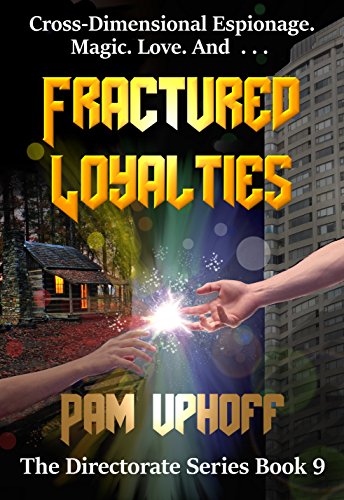
FROM PAM UPHOFF: Fractured Loyalties

51dpb1aycbl

Ra’d knew the main reason he was being assigned to the Embassy World was to get him away from headquarters. But since this was where his girlfriend and her father lived he was far from reluctant.

And if the ministry intel section didn’t want him, he’d just have to be a simple security guard.

But few things are simple for a Warrior of the One.

FROM C. TAYLOR:  Prepare for the STAAR Test in One Weekend: Mathematics, Reading, and Science Test Preparation for Grades 3 – 5 (LOL, but some of you might need it for kids.)

51dzvmjds0l

If you are in Texas, then STAAR Testing is almost here! How do you prepare your child to do well on the STAAR Test? This book has the answer.

The material in this book will dramatically improve your elementary school child’s performance on the STAAR test in a short period of time. It includes easy to follow steps and advice for teaching your child the particular skills of taking the STAAR test, including how to answer griddable questions, use of permitted resource materials, and effective use of the test time. It also includes an exclusive system for improving performance on questions where your child does not know the answer, based on a statistical analysis of the patterns consistently used by the testmakers in previous STAAR tests.

This book covers preparation for the mathematics, reading, and science State of Texas Assessments of Academic Readiness for grades 3 to 5 for the standard (not alternate) paper test without accommodations.

FROM A. C. EXTARIAN AND R. K. MODENA:  Aff’s Diary: Blessed Hope

51pyphhm1hl-_sx307_bo1204203200_

Nestled deep in the forest, all is as it should be in the village of Blessed Hope – and that’s how chief hunter Dari Finbarr likes it. Then one stormy night the embodiment of death for Humans stumbles into their home: a Szari girl. The Szari! A race of powerful beings who sought the extinction of Humankind, and were only stopped by the Tzaro people in a brutal war that is still whispered about in hushed voices. A sole Szari warrior is capable of wiping out entire Human settlements by themselves. The strange, silent Szari is nothing like how the tales describe however; and though it risks his life, Dari is given the task of guarding her until the wise Tzaro are brought to decide her fate. Until then many questions arise, but no answers can be found in the girl’s sad green eyes. Without knowing it, the Humans of Blessed Hope have found themselves on a path that will change the future of all the races on their world…

Vignettes by Luke, Mary Catelli and ‘Nother Mike

So what’s a vignette? You might know them as flash fiction, or even just sketches. We will provide a prompt each Sunday that you can use directly (including it in your work) or just as an inspiration. You, in turn, will write about 50 words (yes, we are going for short shorts! Not even a Drabble 100 words, just half that!). Then post it! For an additional challenge, you can aim to make it exactly 50 words, if you like.

We recommend that if you have an original vignette, you post that as a new reply. If you are commenting on someone’s vignette, then post that as a reply to the vignette. Comments — this is writing practice, so comments should be aimed at helping someone be a better writer, not at crushing them. And since these are likely to be drafts, don’t jump up and down too hard on typos and grammar.

If you have questions, feel free to ask.

Your writing prompt this week is: Ruthless.

I Must Write And My Nose Won’t Work

citypark april 2018

Coming at you this morning from sunny springtime snowbound Colorado, to tell you why the cat ate my homework.  Or at least the sinus infection did.

I really do not willfully set myself up to get these horrible infections and lose time off work.  The problem is that the symptoms of sinus infection (or ear infection, or throat infection) are easy to confuse, at its onset with the symptoms of auto-immune.

Since for the last two months we’ve been going from family issue to family issue (now in a lull and none of it relating to our marriage.  Just relatives and things happening) and on high stress mode, I assumed that the stuffiness, inability to breathe, etc were in fact just autoimmune.  A course of pred knocked back the symptoms enough that my hands stopped having holes in them, but then some fresh hell put eczema all over my arms.

It wasn’t until three days ago I realized I had a fever, and that the symptoms, including the need to sleep ALL the time were much like those of sinus infection.  Yes, I’ve been irrigating, etc, but it was so dry-and-dense that nothing came out.

So, antibiotics acquired.  I was also told to stay on mucinex.  And there hangs a problem, because mucinex makes me extremely dizzy and unable to concentrate.

The dizziness goes away when I stop it, so it’s definitely it, but I’m not sure what to do about it, since I’m fairly sure I need to dissolve the crud in my nose.  But mucinex makes it impossible to work.

Anyway, that’s why the books that were supposed to come out the last two months haven’t.  I’m going to see if I find something else that allows me to breath but also to write.

At any rate it’s a lovely writing weekend.  I’d planned on dragging older son to the zoo today, but I don’t think I’ll be able to convince him it’s a great idea to go out in the snow.

So this is my non-post post.  And now I’m going to have some coffee and attempt to work.