I am a novelist with work published in science fiction, fantasy, mystery and historical "novelized biography". I've won the Prometheus award and the Dragon award. I also write under the names Elise Hyatt and Sarah D'Almeida. http://sarahahoyt.com/
Give a Warm ATH welcome (which does not mean start talking advarks and dragons, guys!) to comedic genius Frank Fleming, who is here to teach us how to write fake news. And you know he knows how to, since he keeps getting fact checked* by Snopes, Facebook, and other organizations which have had their sense of humor ablated at formation (*But not on Occasional Cortex getting her head stuck in a bucket. That’s self-obviously true. She wsa probably looking for her brain.)- SAH
How to Generate Fake News by Frank J. Fleming
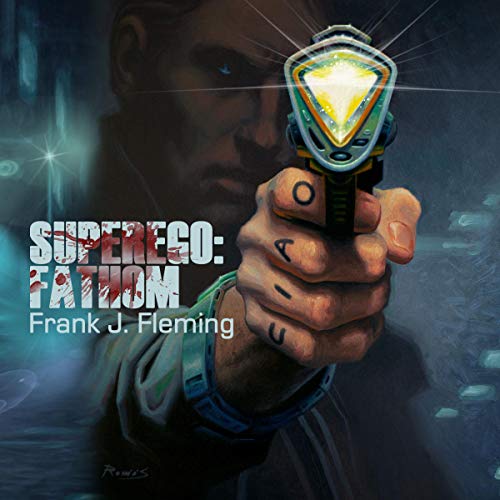
Hi, it’s me, Frank J. Fleming from The Babylon Bee (and writer of novels such as Superego: Fathom, now available on Audible. Since I write for a Christian, conservative satire site and Christians and conservatives don’t know how to be funny, the main point of our satire is to trick people into thinking it’s real, i.e., to make fake news.
Fake news is great! It helps you get traffic for your website or tilt an election at the behest of the Russians who are funding you. But you’re probably wondering: How can I make fake news? Being an expert, I am here to share some tips that will trick everyone.
TIPS FOR MAKING FAKE NEWS
Include real details. One of the important features of fake news is that it sounds real. That means you include details that are true. For instance, let’s say you start an article this way:
President Trump today set fire to a…
People will read that and say to themselves, “The president is Trump! This could be a real story!”
Or if you start a story with:
Today in Washington, D.C., the capital of the United States, escaped llamas...
People will google that and say, “Hey, Washington, D.C., is the capital of the United States. The rest of this story could be true as well!”
But if you get a detail wrong that people know, that could ruin the whole ruse. For example, if you wrote:
Boron, which has a melting point of 2,113 degrees Kelvin…
Someone could say, “Hey, Boron has a melting point of 2,349 degrees Kelvin! What is this guy trying to pull? Maybe the rest of this article about Russians putting a mind-control device in Kamala Harris is wrong as well.”
Write to people’s biases. A key to fake news is to have it be something people would like to be true based on what they already think about certain political figures. Let’s say you’re writing for people who think Alexandria Ocasio-Cortez is stupid. Then you could write some fake news like:
Today, Alexandria Ocasio-Cortez got her head stuck inside a bucket and ran into a wall.
And the people who don’t like Ocasio-Cortez will say to themselves, “That does sound like something she would do, as she is very brain-stupid. This news checks out, and I will not doubt it.”
On the other hand, people who like Ocasio-Cortez will say, “This can’t be true! She is the world’s smartest socialist. Something seems awry with this news. And if it is true, I’m certain Ocasio-Cortez had a very smart reason for putting her head inside a bucket so it would get stuck. I’m going to research this and look for other verification.”
This partisan divide is why it’s hard to trick all the people all the time with fake news. I dream of a day when this nation is less divided and I can constantly fool everyone.
Be sensational but not too sensational. One of the main reasons for fake news is to generate lots of buzz and traffic, and thus it has to be something people will want to share and write angry tweets about. For instance, I could write this:
Today, President Trump bought a bag of Cool Ranch Doritos.
And that’s total fake news. I just made that up. I don’t even know if that’s his favorite flavor of Doritos. But no one is going to share that fake news, because who cares.
But you can go too far in the other direction. Let’s say I wrote fake news like this:
Today, President Trump nuked France.
Now, that’s some sensational news people will want to share. But they’ll also think to themselves, “Hey, that’s pretty big news. Shouldn’t everyone be talking about this and I didn’t just find out about it on some news site I’ve never heard of before?”
So you have to tone it down some. Like:
Today, President Trump nuked Micronesia.
No one even knows where that is. Could be true!
Don’t have the letters “CNN” above your news. That is now a dead giveaway for being fake news. You need to come up with some other made-up news organization name, like “Totally Real News.”
—
Well, those are my tips for making fake news to generate lots of traffic. So go out there and tilt an election or cause chaos. And check out my science fiction novel Superego: Fathom, now on Audible. It’s totally true, and none of it is made up.
Still a man hears what he wants to hear and disregards the rest.
—Simon & Garfunkel, “The Boxer”
Early this March, a man was stabbed.
Pause here for a minute. I want you to think about what came to mind when you saw that phrase, hold it in your mind, because I’m about to change that picture.
Early in March, a man was stabbed in a parking lot by a stranger.
Pause again. What changed about your picture? Does it make a difference to you where this happens, that the person with the knife and the victim didn’t know one another?
Early in March, a security guard was stabbed in the parking lot of the store that was his charge, by a patron of that store.
Each bit of information causes you to revise that picture in your head a little more, doesn’t it? And I’m doling out that information in infuriatingly tiny bits. In a trial—which is what this is scenario is based upon—it’s far slower. You hear testimony after testimony, view evidence that is available to be viewed, and it takes a very long time. This particular case was a super-short one, with the presentation of evidence only taking one full court day.
You have a picture of the security guard in your head, don’t you? Well, I’m about to break it, because the victim of the stabbing survived and was the very first to testify.
And he was a kid.
Mind you, I don’t have a lot of standing to pull on this, because he was in his mid-20s, and I’m not old enough to have a kid in their mid-20s, but he was this tall, lanky guy, without that broadening of chin and chest that so often hits males in their early 20s, with tattoos on his arms and a longer cut of hair. He looked barely out of college age, young enough to be thoroughly embarrassed by the medical photos in evidence, and the security thing was just a job.
He suffered a stab wound slightly to his back, puncturing his left lung and severing a wrap-around abdominal muscle. He also suffered a glancing blow to his arm and reported several more cuts in his jacket (not produced in evidence.)
You’ve got a pretty detailed picture in your head, right? How about this: He received those injuries in a scuffle which included both him and another security guard, and the security guard kicked the knife-wielder a couple of times.
Or this: There was a third security guard, who was armed, who was not involved in the scuffle, but who was following the other two.
And this: The knife-wielder was black, and followed through the parking lot by three security guards who, while not white, were considerably lighter in skin tone than the guy with the knife.
Everybody with the political sense of a gnat is wincing right now.
Was there video? Amazingly, yes, there was, and very clear for being across the parking lot. (On that note, who sees people on the ground in the street and blithely drives by them? Thanks for making it that much harder to determine what went on.) You could see the security guards following, the guy turning back several times, the victim pushing him, and finally Knife Guy turning around and throwing punches. Except—when did he get the knife? The video isn’t that clear, and that’s important, because if he were to get it out on the ground, the defense’s argument of Self Defense takes on new importance.
Do we have the knife? We do—and I’m going to take a bit of a digression here. I’m fairly well acquainted with knives. We have dozens of kitchen knives, a number of utility knives (mostly of the folding sort) and a few daggers for pretty. I also have a couple of sheath knives that I’ve never had reason to use, because what the heck would be the point in an urban environment? And as for camping, the folding knives are sufficient for that.
Knives are a horrible choice for self-defense, and here’s why. 1. They require close quarters. The whole point of self-defense is to get away intact, and the more distance you can get, the better. A gun or pepper spray is better suited to getting someone to keep their distance. 2. A person who is stabbed doesn’t immediately go down—in fact, the security guard in this scenario didn’t immediately know he was stabbed. He saw the knife, so after the guy ran off, he checked himself. (And then he started coughing up blood, but still…) 3. If you take out a knife, someone is going to get cut—and that someone is going to be the weaker one. Knives favor the strong. If someone were to perform a home invasion on me, I would use just about anything, even smashing a nice guitar over their head, before I went for a knife, because the odds are better that I would be the one hurt.
So a guy carrying a sheath knife an inch and a half across the base, several inches long, and with some serrations near the base, that’s going to get my attention.
Back it up. Why were they following him across the parking lot? Well, it seems there was a minor altercation on the other side of the store, where three guards (the armed one on a break) interacted with Knife Guy. According to their testimony, Knife Guy head-butted the victim before walking off. This is not on video; the security cars block the view.
And why did this happen? Well, prior to that, he was following a woman, presumably toward her car. As far as we know, this woman was unknown to Knife Guy, and from an earlier video where you can see their faces, she’s carefully not looking at him. According to testimony, she pointed out that Security was right there, and the security guards told Knife Guy to leave her alone.
There was a lot of discussion with the jury once deliberations took place, and I do find it interesting that the women were more on the Guilty side at the beginning of deliberations. Most women have at least one story of being followed by a guy bigger than them, and all women know the cases where an interaction with a stranger gets a woman killed. At issue wasn’t the fact of Knife Guy doing the stabbing; the issue was whether there was reason to believe it was in self-defense.
We watched the video enough to make me surprised it didn’t show up in my dreams. (At least, it hasn’t yet.) The conclusion we eventually came to is that he had the knife when he turned around and jumped the security guard, and there was no chance for him to have stabbed later. And after a lengthy discussion of the word “immanent”, we came to the verdict of Guilty of assault with a deadly weapon.
Short trial. Only three days, plus a day for jury selection.
So why does this matter? Because it took three days, plus intensive attention and discussion, to figure out the legal meaning of an interaction that took all of twenty seconds—or three minutes, if you go back to Knife Guy exiting the store. And so much of what passes for political discourse these days is based on soundbites, or fractions of video, or single-point perspectives. We think we know what is going on, or at least we act as if we do. Yet twelve people can see and hear the same things and come to different conclusions—but those same twelve people can agree on something if they take the time to talk it out, and to listen to everybody else.
A headline that says “Unarmed Man Stabbed in Parking Lot” is correct. So is “Multiple Security Guards Involved in Altercation With Black Man.” You’re going to be presented with very different points of view in those two articles, and we haven’t used more than a handful of words. Pay attention. Pay close attention. Everyone knows less than they think they do.
Have you ever had a nightmare where something horrible is coming closer and closer, and you can neither move nor react? My dreams often involve standing on the train tracks, as an express train barrels towards me, and I can’t move my feet.
I’ve been living there for the last six months, 24/7.
Though you could say I’ve been living there all my adult life, sure. But that’s one thing, and this is another.
It’s as though I were a time traveler, who came back in time to avert a great disaster, and I can’t do it. No one will believe me.
This is actually not an unusual form of time-travel-thought-experiment. Think about it. You go back in time and manage to get there JUST before 9/11. Oh, let’s be generous. Give it a month.
You know exactly what is going to happen, what the flights are, etc.
What do you do?
Sure, you call a tip line. And maybe, just maybe you can do something. Maybe you can get just the right man. Maybe he even believes you. But the chances of that person having the authority and navigating the labyrinths of competing fiefdoms that are our secret services to stop the event are probably less than 10%.
Even possessed of perfect knowledge, with all the details in your pocket, you probably can’t do it. You probably stand a better chance if you call the towers with a bomb thread and make it credible, so they’re evacuated. But let’s face it, this is not the 70s. Most bomb threats (and there are a lot of them) aren’t credible or significant, and the towers were big properties filled with a lot of companies who would not want to evacuate their offices.
Again, that’s with perfect knowledge, with absolute certainty of everything in play and who the culprits are.
Something that’s not given to us, non-time-travelers. I mean, I look at the amount of fraud that’s possible, the cases caught, and at the non-campaign the democrats are running as well as (according to Rush, at least and I believe him) severely cooked polls and I think “What does this all trend to but they’ve given up on campaigning and are just frauding.” But I don’t know. Nor do I know what Trump is dong to counter it. Weirdly — or maybe not — the flamboyant street-fighter seems to be a persona (enough to make me wonder if he’s an introvert. Because those of us who are extremely introverted but can “work the public” do it by creating a persona, often one that’s completely different from our real selves.) Behind it is a man who does a lot of things behind the scenes. So many and so quietly that even I — who follow these things and have contacts in high and low places — am sometimes startled by something massive he’s done, incrementally and behind the scenes.
And there are …. indications. I didn’t put this in my article yesterday because I haven’t verified it. I’ve been otherwise busy (long story, which I’ll tell another time, but I’m doing a rush editing job that has eaten my life.) But my husband tells me Colorado who went all vote-by-mail years ago has announced it won’t send out absentee ballots unless requested, and will be verifying ID. I’m not sure if this is true, nor how it can be true, since well it would mean the current people in power giving up massive ability to fraud themselves into continuing in power. But I’ve heard other similar stories of the left suddenly backing off vote by mail, and wonder what’s been going on behind the scenes.
But the thing is I don’t know. And even if my worst suspicions are true, what can I do about it? Besides scream in the desert?
And if the election is stolen and it comes to war — war would be a terrible thing to do, but there are worse than things than war. Cuba, or Venezuela, or, because we’re Americans and go big, the unmaking of all civilization, for instance. — what can I do? Sure, be prepared. I am. Though the body is as weak as the spirit is capable. I have no illusions about what a woman my age can do. I also have no illusions about what the rest of us can do cut off from the ability to communicate.
If it drops in the pot, it’s going to be a lot like the Spanish Civil War. Street to street, village to village, suburb to suburb and a lot of personal vendettas and sheer crazy dropping in to make the whole thing random. It will also attract a lot of foreign fighters. Mostly on the other side. Many of which will be stone cold psychopaths. And very capable, with it.
You can’t prepare for that. Not fully. Sure, you can stock up on food, water, ammo and weapons (and if you haven’t done the later by now, I suggest you study chemistry really fast, because none are available.) Other things you can do that you might not have considered: get RIGHT NOW a book on pirate radio stations, and find a friendly electrical engineer to advise you on the parts you need to create one. No, I’m not actually joking.
Also, get the address of a person, who has the address of a person. Postal address. Phone number too, mind you. Organize phone trees, preferably spanning the country, and call each other now, so the traffic won’t be noteworthy and easy to find and block. If you can get a burner pay as you go phone and use that for the phone tree. Have at least one email address not associated with you as you, and organize email lists.
It’s startlingly easy to shut down social media, and most of our phones are compromised. Finding out what’s really happening let alone coordinating anything including protests becomes massively difficult when you’re isolated. And right now you’re incredibly easy to isolate.
DO that. That’s what I found most vital when I lived through this crap before. Have people you can trust and who can help up and down the phone/email/mail tree. And please, know no more than three. They can know other three. And if needed — say you need a place to say in nowhere, Arizona — it can go up and down the tree. But you can only give two names away, and you can send a warning before.
Yes, this is incredibly paranoid, and secret squirrel. It is also “a few things I know” possibly not the most important ones, and not the ones you need.
And that’s the problem. I don’t know what you need. I don’t know how to stop the runway train of crazy Marxism from running over the country.
I can do things. I still need to do an article for PJ on how to secure your vote, for instance, and have been hesitating because some of my instructions contradict Trump, who probably knows better. And I have NO idea why he prefers the other one. Or I do, I’m just not sure it outweighs the downside. And even if I get it perfectly right, what will it reach? At most 100k people. Not enough to make a difference.
That’s what it occurred to me this morning. My problem is scope.
I feel responsible, and solely responsible for stopping socialism/communism from taking over the last greatest hope of mankind.
You see, not only do I have nowhere left to go, but if ah…. government of the people for the people perishes from the Earth, it will not be easy to restore. Partly because so many lies will be told that it will take perhaps thousands of years for people to dare try it again.
I don’t wish that on my children and grandchildren or even other people’s children and grandchildren (what you share with your great grandkids, genetically, might amount to no more than a few DNA fragments. So five generations out, they’re all my kids, or none. Doesn’t matter.) world without end.
And because I feel responsible, I’ve been turning, like a lion in a cage, trying to find a way out, trying to figure out how to save the Republic.
It honestly didn’t occur to me until this morning that my responsibility is MUCH smaller than that. I can save my piece of the republic and fight for freedom in my domain. And that’s ALL I can do. That’s all any of us can do.
Sure, if you have the experience and expertise to do more, you should be doing more, and I neither want to know nor can I help you, but I hope you do it before it comes to blood, and in a way that averts its coming to blood.
But I? I can sound the alarm. That’s all. I don’t know how to fix it, and I’m not responsible for it, and I shouldn’t feel guilty if I can’t.
All I can do is make preparations to rescue me and mine, and help those who are otherwise helpless, and then stand by in case I should be needed.
That’s all. And as upsetting as it is, it is also weirdly freeing. I can move out of what I think is the train path (and no, that doesn’t mean moving out of the US. Again, where would I go?) and try to stay clear of the impact (though my knowledge is not perfect and this might come down to day to day.) It’s all those other people I can’t move out of the path. I can try, but I can’t move their feet. I can only tell them to.
And that makes it less depressing. If it’s not mine to stop, then it’s a disaster, but not something I can be held responsible for. And I can work, and do what I can with no depression.
What I can do might be no more than making my bed, metaphorically speaking, but hey who wants to die with a messy bed? And who knows, if I’m clear headed and prepared maybe there will be one of those chances in a million thrown my way. Because the Author (glares upwards) needs a writers’ group, that’s why.
I don’t know if that helps anyone else. I might be weird. But it helps me greatly. So I thought I’d share.
Note none of this even TOUCHES on the fraud facilitation in COLORADO. Despite records in Colorado showing 180 year old people voting and worse shenanigans. Facilitated, of course, by registration on line and never having to prove you’re eligible to vote or even EXIST. If your country is vote-by-mail only or primarily, look for the same things happening there.
Biden doesn’t have campaign offices most places. That’s because they’re not in fact a political campaign. They’re a fraud machine.
On a personal note, I forgot I lost a cat in 2016, too. Our beloved Miranda, to pretty much the same ailment that took Greebo. (His was just faster) I don’t mind this year rhyming with 2016. I mind that it basically said “hold my beer and watch this.”
Tasty Tasty Pottage – A Blast From The Past from October 1, 2016
I am dry-eyed and awake in what feels like the wee hours in the morning. It is not. For me it is close to eight am and for you guys on the east coast most of the morning has passed. I have a distracting tendency to keep east coast hours, which means going to bed with the chickens and getting up at first light.
Today is that special kind of hell that comes after a day like yesterday, where I manage to torture myself both ways: for not noticing how much she was suffering earlier; and for putting an end to her suffering. I keep second guessing the diagnosis (she always had stomach trouble from a kitten) then remembering she was having issues before the last move, then going back again– don’t worry. It will pass. And it’s no bad thing for me to feel small and stupid and impotent. It helps me appreciate the words of the act of contrition [I have sinned]… in what I’ve done and what I’ve failed to do. Sometimes there are no easy answers, and nothing you can do that doesn’t leave you feeling like you did something awful.
Among my minor awful acts, I spread fear and despondency on facebook. I know. If I were the only one to do so!
But this one truly was stupid and hinged on my bad eyesight as well as anything else. I recently had to change my address so i could vote in the proper precinct. I noticed a line saying “do you want to receive your ballot by email” and was shocked (and so blind, I failed to notice it was grayed out for me) that I looked at it three or four times, and then felt something snap and yelled on FB.
What I failed to notice is the option for email ballots is only available to military personnel.
I still don’t like the risk, but it’s not as though our military people don’t face incredible obstacles to voting in time. They want it by email, they can have it by email.
The amount of fraud possible from that move is very minor compared to the other… ah… temptations to fraud inherent in the system.
Technically, we have a warm body franchise. You are breathing, a citizen of the United states and over 18 years of age, you can vote.
These pitifully easy guidelines, it would seem should be lax enough for everybody. They are not. Over the last almost a quarter century there has been a determined effort to abolish them.
Part of the reason I jumped on FB (even though it was stupid) is that I have been mad at the craziness in our voting for a long time.
Our voting is now wholly an “honor system.” I.e. you can sign up to vote without being required to show either proof of your citizenship, or of your age, even.
When I was a young woman, twenty four years ago, I could see the trouble with “enroll them to vote when you enroll them to drive.” No one else did. I was told I was suspicious, insane and, of course, racist. (Why is it that people who assume BY THEIR VERY ARGUMENT that anyone darker than them is too stupid to figure out how to register to vote if it’s not done automatically, or to vote if they’re required to show the same ID they’d have to show to receive even welfare, or even to register more than a day in advance of the election, are the ones who get to call others racists? Do they lack a mirror or are their minds so limited they don’t see the rueful irony in that accusation?)
And yet there were signposts on the road to hell. You know I have an accent. I happen to know I have one too. I’ve been a citizen since 1988, however I know many women in my circumstances, married to American men, who never change their citizenship. And yet, when I changed my license to Colorado (took me a couple of years after moving as, at the time, I wasn’t driving) I was asked if I wanted to register to vote. I had assumed this might come up and had brought with me my citizenship certificate. It was never asked for. This did not reassure me.
Apparently the goal of it is not to insult me by implying I have an accent, or perhaps that I can tan (since again, the question is apparently “racist” it never having occurred to the cracked heads who make that sort of decision that an accent is not a race, just an origin of having grown up abroad a long time; and also that pale blond people too can have accents, be foreign nationals and therefore not entitled to voting in the US.) You can’t insult me by saying I have an accent. I know I have one. It would be like insulting me by saying I am not six feet tall. Presumably I know that too. As annoying as it gets when cashiers and strangers ask the fateful “Where are you from?” (Just up the road. You?) I do know it’s there and I don’t think assuming I have a higher chance than someone who sounds like they grew up in Texas of being a foreign citizen is a horrible insult. Yeah, in the event, I’m a national and someone with a Texas accent might not be. So? The answer is not to remove the requirement to show proof of citizenship from those who might not sound as citizens, but to make everyone show ID. That we went the other way is incredibly stupid or malicious or yes.
The next sign on the road to hell was when a Japanese journalist, on some kind of exchange program, found that he could register to vote in Colorado DESPITE HAVING PROVED HIS IDENTITY WITH A JAPANESE PASSPORT. He wrote about it in the Gazette.
I knew then we were in trouble, but I didn’t fully understand how BAD that trouble until I was changing my address.
Yes, sure, what I feared was the worst — the ability to receive your ballot by email — was not true. But that would not be a signpost on the road to hell, that would be a sign we were already consumed to ash.
Not only can you now register entirely on line — which since voting in Colorado is NOW entirely by mail completely spares you the need to have… well, a physical body because you have to show no proof of nationality, age, or, well… anything. You just click a box on a page — BUT you can register (says right there) at sixteen. You are, however, sternly enjoined not to vote till you’re eighteen.
Why sixteen, you ask? Who the hell knows? What good does it do to register you to vote (which is all the page does) then tell you you’re not supposed to do it for two years? I suspect this is the mutant child of Motor Voter, because you can register to drive (with parent approval) at 16. And still I must ask, though, since the page has nothing to do with drivers’ licenses and is ONLY FOR VOTER REGISTRATION why register you at sixteen?
I have said before that when I was a poll judge in Colorado I found a great number of people, showing up to vote, were told they early voted or voted by mail, and COMPLETELY forgot about it. Apparently the rate of dementia in Colorado Springs is about 1/3 and affects people of all ages.
There are other charming things, such as recent reports that apparently we have the same enthusiastic post-vital voter participation as Chicago (well, done, Colorado, you’re coming along. I’m sure it’s what every civilized place wants to be: Chicago. Next up, we can make our streets into battlefields.)
Apparently Washington and Colorado are of one mind about the right to vote being a thing to entrust to the honor system, because even though voter fraud is so rarely investigated or persecuted as to make the risk of lying/cheating trivial, EVERYONE is an honest person when it comes to voting.
NO ONE would do this with payments, even government payments, but apparently it’s fine to do it with the right of the people to govern themselves.
At the heart of the fact we have a warm body system is the idea that any restriction of voting rights will adversely impact someone and cause an unequal application of laws. This is why we print ballots in Chinese and Spanish and more exotic languages and never ask, NOT ONCE how people who are so limited in their understanding of the predominant language of the country can participate in its self-governing. (Yeah, I know they can be very well informed through foreign newspapers. And if you haven’t yet realized the joke that is, you have never really read a foreign newspaper for foreigners. They make the bias in ours seem non-existent and also most of the time they’re so bad they’re not even wrong. Just a different universe.) This is why — because some idiots abused them once — you’re not allowed to give literacy tests, or even to have the person “voting” be of sound mind. This is why the vote of people with dementia, a growing demographic, is not debarred.
And this is why, in an excess of making sure that EVERYONE can vote, no matter how strange their circumstances, we have early voting stretching for a month ahead, we have vote by mail and we have register and vote without ever showing you have the right to, or indeed that you exist and are alive.
We have in this process gone well beyond warm-body franchise to imaginary entity franchise. Nothing in fact — except perhaps foolish honesty — can stop me registering and voting for each of the entities that live in my head.
We have also in this way rendered moot the right to a private vote. In states like Colorado which (against the wishes of its people, btw, as expressed by referendum) vote exclusively by mail, there is no right to private voting. Any ballots mailed to a family address are subjected to the whims of a domestic tyrant, and I’ve already heard the usual rumors of people whose mothers or fathers vote for them, requiring only they sign the ballot. Impossible you say? How? How is that impossible in a tyrannical family? And how do you even prove it happened afterwards? I bet you it’s happening, throughout the land.
In Colorado, and in many states throughout this great land, you can vote if you’re too young, you can vote if you’re a foreign national, you can vote if you’re dead and you can vote if you never existed.
Every time someone points out this is ALL on the honor system and all these violations are possible, someone gets huffy and says that there is no proof of fraud.
How would there be proof of fraud? Besides which they don’t mean dead people shown to have voted, or even names like Mickey Mouse or Bugs Bunny who are assiduous voters. Proof of fraud means someone was persecuted and convicted. And how do you even start to do that, when the whole system is designed to obscure the identity of anyone who might choose to do so?
So, you say, better someone not entitled to votes, than someone entitled to vote is turned away.
How do you figure?
Say Bob is entitled to vote and does. Meanwhile, Minny Mouse, Doktor Frankenstein, Michael, here on vacation from Australia, Joe who is a legal resident from South Africa, John who is American but who is not verbal or indeed mentally competent to vote and whose mom voted for him, and Cindy, Trevor, and 30 of their best friends who are all sixteen also turned out to vote. What is Bob’s vote worth when diluted by all of those.
Is it that bad? Can you prove it’s not?
Let’s suppose that everyone are angels unborn, unable to cheat or lie. Let’s suppose that despite incentives, like cheating yourself bread and circuses, no institution was likely to actually use its power to create fake votes.
In a government of the people for the people, the important thing is that it be KNOWN it’s of the people. I.e. you have to make sure you’re not being governed by a tiny minority who (as with fake twitter accounts, say) multiply their numbers by fraud on an industrial level.
In that situation, one fake vote is enough to cast doubt. One OBVIOUSLY exploitable flaw, like being able to register at sixteen, but being told to be a good boy/girl and not vote till eighteen, is enough to cast doubt.
Like Caesar’s wife, the franchise of the American people MUST be above suspicion. Which means in practical fact, that you HAVE to require each would be voter to prove they’re American citizens and over eighteen.
If we don’t do that — as we haven’t — we have not only sold our rights for a mess of pottage, but we’ve sold our rights of redress and righting this. Or do you think officers elected by this corrupt system will let you overthrow it.
I think this is foolish. The left — and come on, if it weren’t mostly the left intending to dilute our right to vote, it wouldn’t be them arguing for ever laxer rules and Motor Voter wouldn’t be Bill Clinton’s baby — has a curious tendency to mistake the wrapping for the present. I think they think if they can capture the FORMS of government that means they captured the country.
As we’ve seen again and again in fields they captured, it doesn’t. It usually leads to what they captured being rendered obsolete and superseded.
I don’t know if that can be done in government, but I bet you in five to ten years, we’ll find out.
We did not trade our rights for a mess of pottage! Because this is not our pottage. We’re not the ones who made the bargain. And we want our rights back.
You probably already know this, but it is kind of important to reiterate it, because you know how things are, but no, it’s not you. It’s them.
And by them in this case you should understand the broad system of “normal life”, of institutions and…. Structures? I’m looking for a word that subsumes everything from your local grocery store, to your local bank, from your church to your local zoo. These are not institutions, right? These are just things that support life. And yep, they’ve all lost the plot. They’re all running around with their pants on their heads making funky rabbit noises.
First a confession: No, none of this is new. But yes, it’s never been this disconnected from reality on this level.
Second another confession: I used to laugh at Heinlein’s theory of “semantic insanity” when it came to the “crazy years” in his future world history. Mostly because I was young and stupid, and thought he was being outre as to meanings.
But no, he was largely right. The divorce of words from their plain and traditional meanings, and the accruing of new meanings, some of which are invented by a particular group who refuses to believe that this has nothing to do with what the word means to the rest of the world can only be described as outright insanity.
If you add to it the bizarre belief (on the left, really) that the rest of the population is communicating in an arcane code, you see how none of this makes any sense and never did.
So, let’s being at the beginning. Back when I was taking linguistics, (yes, we had to chisel the words on rocks with slightly harder rocks, and light the caves with mammoth grease so we could see to chisel, and yes, I’ve slept many times since then, and besides I learned linguistics in Portuguese, so the lingo is probably all wrong. Deal) we were taught denotative* and connotative* meanings. And yes, also that meanings of words change over time (DUH.)
For instance you can say “dog” and denote the animal we’re all familiar with, from Malamute to Poodle. (Though what you actually “see” is the symbol for dog, which can mean all of those, which is why for any aspiring writers out there, it’s better to say chihuahua than “dog.” Mostly because what your readers internalized as dog might be a malamute, and that’s what they see in their heads. Which is going to catch them surprise when the creature yaps and jumps on the character’s lap in the next line.)
On the other hand, when we say “dog” depending on the culture, it can mean anything from treachery or baseness to faithfulness and devotion. “He looked at her with dog like eyes” would therefore mean something completely different if the culture’s experience is a pampered animal, practically part of the family who will die to defend you, even if he’s 5 pounds of yap and claws, or an animal who is almost a wolf, feral, living wild, and spying any chance to grab a morsel from your fireside. (As a rule, cultures with the first view are far more desirable to live in. And not just because food tends to be more abundant, but because it’s more likely good won’t be returned with bad. Don’t believe me? Look at history.) That’s the denotation, the meaning that is understood and caught in the air, as it were. It is by the way mostly instinctive, and comes at you without having to think about it, depending on context.
And yep, meaning changes with time. For instance, Matrona in Portuguese refers not to a married woman of virtue, as the Roman Matron, but to a slovenly and careless housekeeper. It probably changed due to ironic humor. “Oh, she’s a pattern matron,that one. The beds not made and the children all have lice.” If it was used often enough, the kids might not have realized it was ironic.
Or it could have changed because stranded matrons, at the fall of the empire, either enslaved by the conquerors or having lost their slaves, had no clue how to keep house.
More importantly, I only recently realized that the word “Tosco/a” in Portuguese came from the Roman slang/diminutive for Etruscan (same place we get Tuscany.) This is of some interest — though not burning — since if I look at frescos, it’s easy to see I have “etruscan features” (or to be more exact mouth, mostly.) Well, tosco/a means rudimentary or primitive (which makes sense) and as a connotation “insane or goofy” which does not. (I believe it was either acquired by aggregation with tolo which means crazy, or because sometimes people who do crude and hasty work are goofy or crazy.
This is all normal language, and normal meanings.
So…. How do we arrive at semantic insanity?
Well…. by dissociating words from their plain meanings for a group of people or for the whole population.
See some of my examples above: this is not unusual when a population is conquered. The new language of the conquerors, and their meanings for the things happening around them are superimposed on the language of the conquered.
It takes a better person than I to explain that in detail, and at any rate, I never studied that specialized process. In fact, I don’t know if there is a sub-specialty to study that process in meanings, not just sounds. It should exist, mind you, but study of linguistics is one of those things that is treated like a soft science instead of a hard one, and has therefore got infected with …. insanity.
Let’s just say that language — as a rule — changes slowly and organically. It only changes relatively fast when there’s an invasion, and the former language is sternly suppressed.
Even then it’s not likely to be instant or change by decree. It can’t. The brain structures that acquire language do so before full maturation of the brain.
Yes, this is why I still have an accent. Whatever Bette Middler thinks (for given meanings of the word) having an accent after decades of speaking/being fluent in a language is not some sign of intellectual failing (nor even moral failing.) It is simply that the sounds you’re able to make and/or hear are set by the time you’re five. They’re more plastic than we thought, just as the brain structures for shifting what’s your native language seem to be more plastic, at least in certain individuals (Contra Maria Montessori’s belief that you could never learn a language after 3 and have it be your “native” language, I have reason to believe my brain has replaced Portuguese with English. I will give you that changing countries and working in a field that uses language might make me somewhat of an exception. But when afflicted with an issue that was making me “lose” language, I lost all the others including largely Portuguese before English was touched. No, I don’t know if anyone has studied this.) If Dan and I had understood each other at 18 and I’d stayed here instead of going back for college, it’s entirely possible I’d now have lost my accent. OTOH despite the fact that I’ve now spoken English almost exclusively for 1 and 1/3 times the years I spoke Portuguese as my primary language, I still pray and do multiplication tables in Portuguese. (Counting has shifted to English in the last year or so. No idea why.)
So when you have an entire captive culture, you’re not going to change language instantly. For one if the grammatical structures are very different, they will cross-polinate, aggregate, and you end up with some form of patois. The distance from the conquering land and how many conquerors are present will dictate whether their children even speak the same language their parents did, or the patois of the defeated, perhaps with a little more knowledge of the original tongue than the children of the defeated. In three to four generations, it all comes out in the wash, and you have either a new dialect or a new language, depending on how hard it was hit.
I’ve said in the past that the left behaves more like a conquering culture. They are in fact an occupying culture, having taken over the institutions of learning and eradicating the history and culture of the defeated (or in this case infested) culture, in favor of their own. Since this happened around the end of WWII, it is not in any way a new thing.
The newer thing is the destruction of our language. It might also be new in the historical sense, because they’re not proffering a new language: they’re taking the meanings of our language and associating other meanings, often either pejorative, or a result of their paranoia. (It’s hard to be a conqueror when you never conquered anything. You just infiltrated it. And it’s particularly hard when people laugh at you. Which btw, probably explains a lot of the riots and crazy cakes on the streets. They’re sure what they were taught is not only true, but makes them “smarter” than those who believe the unsullied history and facts before the infiltration. They were told/signaled that believing this would bring them recognition and power, not massive student loans and unemployment. And they keep hitting that button and demanding the pellet. And they’re angry.)
If you tell them the words don’t mean what they think they mean they yell at you that the meaning of words change. Which is true, just not the way they say. (And we’re not at home to claims that Shakespeare used “they” in the singular. Shakespeare did a lot of things to make rhythm and rhyme, as do all poets. Taking those as pattern for normal language use will drive you insane. Or even Shanananana and Doobiedoobiedooh.)
But to make things worse, their alteration of the language is not into a new language with set meanings, but into an insane wilderness of shifting meanings, which respond to nothing but internal paranoia.
You see, they are absolutely sure we’re communicating behind their backs. We have to be, because, you know, if we weren’t how could we all doubt them in the exact same way?
Hence the whole concept of “dog whistles.” These deranged, unmedicated paranoiacs driving the concept, believe that we all somehow get together and communicate a code. Anyone with any military or covert experience, or who played as such as kids, know this makes no sense for millions of people.
No, seriously. Getting the six kids I played spy with to remember a code was hard enough.
But they believe we somehow communicate these codes, or learned them at our mother’s knee or something. Even those of us whose mothers speak a different language. Oh, I probably shouldn’t be surprised. These are after all the same people who believe men over history conspired to keep women down and erase women warriors from history. Because, you know, all men meet at ten pm down at the male lodge to coordinate plans.
Part of this is actually an illuminating look into how they work. (And how they got so crazy.)
For instance if I write the sentence “poor people benefit more from being made to work for whatever poverty relief is available than from simply being handed money” they will immediately claim it is racist.
How can it be racist, you ask, when no races are mentioned? Well the cue is in the things they say without realizing they’re massively racist, in which they associate non-white with poor. While that might be true in certain parts of the country, it is certainly not true everywhere. And it isn’t ALWAYS true. The image of the poor in my head is actually the people who lived next to us in the village, had a kid a year and treated them all as stray dogs, thrown into the street to find food. Most of the money going into the house — probably insufficient at any rate — was used for alcohol. So, giving them relief without at least requiring they go clean was probably a fool’s errand. Which, yes, doubtless, informed my beliefs. Though I’ve seen nothing much to counter them when it comes to chronic poverty.
Their race was exactly the same as the rest of the village, though honestly like a lot of the underclass in Portugal they ran to lighter haired/eyed. (Blond I would have said, but trust me, in the limited gene pool it’s a penguin sex thing. “Only they would know the difference.”) Also “poor” was a matter of how they used what they had, since money in the village was almost optional and most people grew their own food in addition to trading services for food or whatever. Or didn’t. My family mostly did. Theirs mostly didn’t.
Anyway, that is my early imprinting of “poor” So when I say something like that I mean “the poor” either in goods or in their use of them but the idiot left hears “other races.”
This was abundantly illustrated by Joe Biden saying “Poor children are just as smart as white children.” And btw, if there’s is a difference in performance across races I believe it is because of this nonsense. It is not good for people to have it assumed that they are being held down against their will, that it is their destiny to be poor and under-perform and that there is no escape.
That bizarre connotation in the left’s head, and the fact they control schooling is 99% of what is holding minorities down. Not systemic racism in the sense the left talks about it, but the left’s systemic racism, infecting their language, their assumptions and the institutions and processes they control.
So in other words, their semantic insanity is creating the thing they claim to be trying to fix.
The covidiocy shouldn’t surprise me in this environment. Not when by the 90s most “how to write books” were infected with “political correctness” (A horrible Maoist concept and aobut as effective as backyard steel furnaces.) and went on about how to avoid “sexism” in your writing, by you know, refusing to use words like mail man or cleaning lady. As if by changing the word it changed the fact that most of those professions tend in fact to be filled by people of those sexes. (More outrageous was the elimination of “actress.” Sorry, but acting is a physical medium and what physical form you have does influence it. Authoress by contrast had dropped out of the language organically, once female writers stopped being a novelty. Using it was either in fun or to tag the speaker as really old fashioned.)
Because the media can use terms that spin people up, without having to EVER explain what they mean by them. It’s really easy to whip up panic with exaggerated language, when people haven’t been taught to ask things like “But what do “new cases”mean, precisely?”
And it’s — if you notice a diminution in traffic recently — what can cause this blog to be denounced as “racist”, “promoting hatred” and “calling for violence,” and shadow banned by internet providers.
This after a week in which race was not mentioned — though one of the usual circle of blogs calling for violence and almost certainly financed by enemies of the US linked one of my articles and a bunch of common internet shit gibbons came over to call me and commenters various racist slurs in the comments. They were not approved, of course. Not even because of the slurs, or because they are almost transparently in the service of our enemies, but because they’re extremely boring, the pattern of the comment being “slur racist or not followed by threat of violence.” — and in which I called for calm and for at least giving the electoral process a chance so we might perhaps AVOID violence.
Also during week in which, on the one personal post, I pointed out that I have trouble hating and can’t really say I hate anyone. In my personal interactions with people, I usually find excuses for them. And with people like politicians and common internet shit gibbons, hating them is like hating a snake for being a snake. They are what they are, and hating them for it is pointless.
Anyway, in the long run the left cannot remake the language or keep control of it. Human language will not change in ways that are contrary to reality. Yes, you can teach kids that “piss” means “banana pudding” but over time the connotation will simply change. What emerges will be a new patois, granted, but it won’t stay what they wish.
This btw explains how “poor” became “disadvantaged” which was supposed to mean it was no fault of their own. But yeah, people don’t buy that. Disadvantaged is now fast acquiring all the denotation of “poor” and will soon mean “shiftless.” Just like vagrant became homeless, and now homeless has all the bad denotations again. Because except for the insane fringes of the left, which have never managed to deprogram from their indoctrination, people tend to believe their lying eyes.
On top of that, the left can’t decide what they want words to mean. Because the heads of the movement are both clinically insane, including paranoiac, and utterly power-hungry, they change words and meanings routinely, and what was okay last week now becomes horrible and a dog whistle.
If conquerors behaved like that, the people would have shrugged and gone back to using their own native language.
So, in the end they cannot win. But yes, they’re going to try. And they’re going to make things very unpleasant for the lot of us while they try. Because you know, it’s impossible to conduct daily life when language is forbidden/violated/made to mean different things.
If there’s one thing worse than being gaslighted, it’s being gaslighted by people who keep changing the story.
So, it’s not you. It’s them.
And they don’t mind utterly destroying every institution. Their semantic insanity extends to not understanding that “natural man” doesn’t mean you can have your soy latte every morning.
It is our very difficult duty to make sure we bring this about and keep civilization despite their efforts. A lot of this starts with circumventing them and ignoring them. This includes laughing at them.
Yes, it is far more difficult when they command so many of the instruments we use for communication. Not because they created them, but because they infected the mechanisms. Which happened because by and large they’re far more social and collectivist. (It figures.)
But hey, if it were easy it wouldn’t need us, right?
If I say that yes, there might very well be violence — there already is violence, but I mean violence might get met with violence — and it might be widespread, though it’s more likely to be “eruptions” i.e. localized and limited in time, am I promoting violence? In whose mind? Except of course the clinically insane?
Looking at the sky and saying “There might be rain later” is only calling for rain if you’re an idiot.
At any rate, we don’t have a good enough umbrella should it turn into a deluge. And there is really no way to build an ark, much less gather two of anything we wish to keep. Should that come, we’re as pocked as the idiots who believe they can all live like noble savages.
So fight semantic insanity. Using words according to their meanings is not “rude.” It’s what we must do to survive as a society.
And as for those who keep trying to change the language by decree, tell them they’re not conquerors, we’re not occupied, and we have not yet begun to fight.
* This post has been edited. Normally I wouldn’t have bothered correcting the text. But in a post on semantics, I SHOULD NOT have reversed denotation and connotation. Unfortunately, the new incarnation of WP no longer lets me do strike through text to indicate correction. ARGH. They’re not even specialized terms. I’ve just been editing a lot, and not sleeping much, and brain glitched. Sorry.
*Note these are books sent to us by readers/frequenters of this blog. Our bringing them to your attention does not imply that we’ve read them and/or endorse them, unless we specifically say so. As with all such purchases, we recommend you download a sample and make sure it’s to your taste. If you wish to send us books for next week’s promo, please email to bookpimping at outlook dot com. If you feel a need to re-promo the same book do so no more than once every six months (unless you’re me or my relative. Deal.) One book per author per week. Amazon links only. Oh, yeah, by clicking through and buying (anything, actually) through one of the links below, you will at no cost to you be giving a portion of your purchase to support ATH through our associates number. I ALSO WISH TO REMIND OUR READERS THAT IF THEY WANT TO TIP THE BLOGGER WITHOUT SPENDING EXTRA MONEY, CLICKING TO AMAZON THROUGH ONE OF THE BOOK LINKS ON THE RIGHT, WILL GIVE US SOME AMOUNT OF MONEY FOR PURCHASES MADE IN THE NEXT 24HOURS, OR UNTIL YOU CLICK ANOTHER ASSOCIATE’S LINK. PLEASE CONSIDER CLICKING THROUGH ONE OF THOSE LINKS BEFORE SEARCHING FOR THAT SHED, BIG SCREEN TV, GAMING COMPUTER OR CONSERVATORY YOU WISH TO BUY. That helps defray my time cost of about 2 hours a day on the blog, time probably better spent on fiction. ;)*
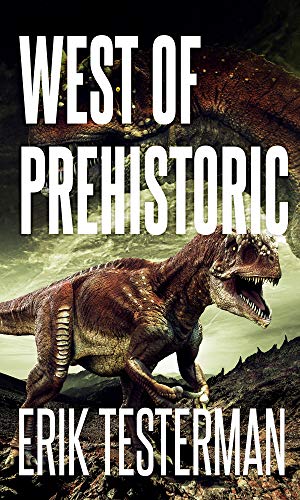
Jedidiah Huckleberry Smith spent his entire life searching for the raider who mutilated him as a child. Finally, giving up on a trail long grown cold, he leaves his outlaw past behind and starts over in a remote town in Wyoming.
One dark night his ranch is attacked by a mysterious and ferocious beast from a world lost to time. Only Jedidiah’s savagery and skills save him.
Now, teaming up with a beautiful but naïve paleontologist, they stand between his adopted town and its destruction by an army of barbaric prehistoric apes and dinosaurs. But Jed’s past has come back to haunt him. The man he searched for is discovered in a position of power, and Jed must choose…
Revenge for his past, or the salvation of strangers.
Either way, bullets will fly, and blood will be spilled.
What a relief it was when the woman, how mysterious she was, offered to stand as godmother for the baby no one could provide for.
Such a relief that only the little girl’s mother thinks to wonder why this woman is so intent on having a baby with the same name as herself. And no one else notices the magic on her sledge.
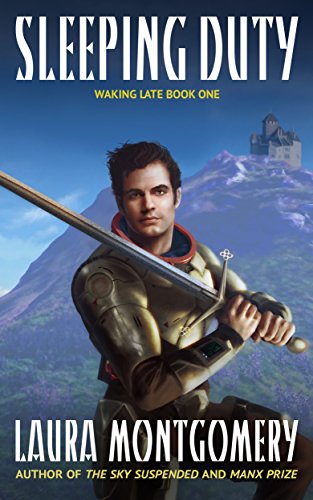
Gilead Tan and Andrea Fielding survived their stint in the military, got married, signed up to emigrate to a terraformed colony world, and went into cold sleep for the journey from Earth. While they slept, the starship went through the wrong fold in space and settled for a different world, a wild world.
Three centuries after the founding of a colony on the uncharted planet, Gilead awakens to find humanity slipped back to medieval tech and a feudal structure.
Worse, the king who wants Gilead awake won’t let Gilead awaken his wife.
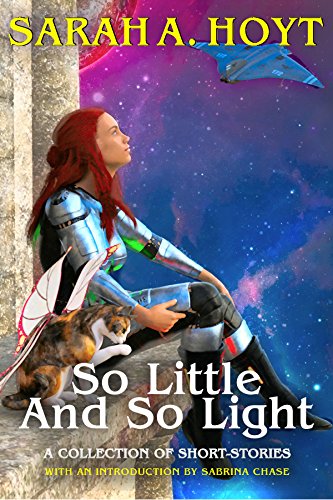
From a parallel world where we have all the dreams of pulp writers, to a future where bioengineering kindles new hates and new heroes, to a different Tudor England, to the intricacies of time wars, this science fiction collection provides a glimpse of things undreamed… some from which we’ll gladly waken, and some we’d very much like to be true. Contains the short stories: Wait Until The War Is Over, Only The Lonely, Lost, Neptune’s Orphans, After the Sabines, The Serpent’s Tail, Spinning Away, The Private Wound, Super Lamb Banana, To Learn To Forget, Things Remembered, The Bombs Bursting in Air, On A Far Distant Shore, So Little And So Light.
Vignettes by Luke, Mary Catelli and ‘Nother Mike.
So what’s a vignette? You might know them as flash fiction, or even just sketches. We will provide a prompt each Sunday that you can use directly (including it in your work) or just as an inspiration. You, in turn, will write about 50 words (yes, we are going for short shorts! Not even a Drabble 100 words, just half that!). Then post it! For an additional challenge, you can aim to make it exactly 50 words, if you like.
We recommend that if you have an original vignette, you post that as a new reply. If you are commenting on someone’s vignette, then post that as a reply to the vignette. Comments — this is writing practice, so comments should be aimed at helping someone be a better writer, not at crushing them. And since these are likely to be drafts, don’t jump up and down too hard on typos and grammar.
*For the previous chapters, please go here. These are posted first draft, as the brain dictates to the fingers which are remarkably stupid. Also there will be inconsistencies because until September or so, the timing on these is wonky, and I’ll forget stuff between posts. Eventually it will be cleaned up and fixed just before page is made secret/taken down and the book is published. At that time I will take lists of typos or volunteers to proof read. For now, it’s written in a hurry, usually an hour before it goes up. And, let me remind you, it’s free – SAH*
Brothers!
Al was relieved that the bedrooms they were escorted to were reasonably clean. After all, you never knew when what Mama called “mere males” set up housing together. Not that she liked agreeing with Mama, of course, but she had had opportunity — before the boys disappeared — to realize they simply didn’t see dust or think of laundry as something that needed to be done. And living here without servants, they were bound to forget household chores, even if they had magic to do them.
But other than smelling a little musty, the room she was escorted to under the eaves of the house was perfectly clean. Someone, or perhaps Papa’s spell had cleaned and repaired the beautiful dress she’d been given at Darkwater house, and it was hanging in front of the wardrobe.
That gave her a momentary pang, since she both appreciated the thought, felt that this was the most beautiful dress she’d ever owned, and was more than a little doubtful that she should undertake the voyage through the magical road, whatever that was, in a dress. Wouldn’t boy’s clothes be more practical? After all, even in getting here, she and Michael seemed to have made a practice of being dropped from heights suddenly, and often upside down.
But she supposed one couldn’t tell one’s brother and father that one had decided to eschew petticoats.
So immersed was she in her thoughts that she — momentarily — forgot to lock the door, a lapse remedied when she heard a blood curdling howl coming from downstairs.
She’d no more turned the heavy key in the sturdy lock, than she heard a heavy clomping of oversized paws — definitely a four-pawed gait — up the stairs, and then the howl was in the hallways outside her door. The walls and ceiling seemed to shake with it.
Al backed till her back was against the door, while she hoped that Michael had been more diligent about locking his door than she had.
The howl was followed by heavy snuffling under the door. And then heavy paws scrabbling at the wood work. Al gave the sturdy-seeming door the weather eye. She stood ready to send another fireball at the wolf’s nose. And spied by the side of her eye a cane leaning against the wall.She’d use that too, if she had to, even if it seemed rather heartless to attack one’s Papa. But really, if he were in wolf form he should expect it, shouldn’t he?
Presently the scrabbling started, and she heard the snuffling further way, from what she thought was Michael’s door. Then scrabbling at that. She listened, tense. If the door went down, then she would rush out and … do what she could. Between the two of them, perhaps they could keep Michael from being devoured.
She had a distant suspicion that Mama would be very upset at her for letting a duke’s son be devoured. Particularly devoured by papa. No matter if Mama had caused Papa to become a werewolf — she didn’t know if that was true, but it sounded within Mama’s possible repertoire of tricks — she would disapprove of his eating the quality. It would quite cut up her plans to climb the social ladder.
When Al found herself laughing at that thought, she realized that she might be hysterical. Fortunately, for her piece of mind, an authoritative voice, sounding much like Papa’s, spoke in some arcane language. The wolf whined.
At length, she heard it descend the stairs, and relaxed muscles she wasn’t aware of clenching. She poured water into the basin on the dresser and washed her face and hands and most of her upper body. Then she took the quite new tooth brush and a tube of patent tooth powder that Papa must have either magicked here, or copied from memory, and brushed her teeth.
She had just bathed before dinner, of course, but the habits that had been ingrained into her as what one did at bed time were not to be gainsaid, even if she knew that rationally her face and hands, arms and neck didn’t need extensive cleaning.
The wardrobe contained, on the left, a neat stack of clean nightshirts. From the size, she guessed William’s, as they were much too long for her, but not overly wide. She solved the length problem by tying a knot near her ankles, pulling up a good deal of the fabric, and making the nightshirt almost a sack.
That was when the knock came at the door, and she tensed. Papa had said not to to open the door to anyone. Could it be there was some magical trap? She heard the wolf howl outside the house, but really, what did she know of this place or how things worked here?
There were new knocks at the door and Geoff’s voice, impatient, “Al, for heaven’s sake, let me in. We need to talk.”
Al frowned so intently her eyes crossed. “Papa said–“
“Well, yes, but you know P-p-papa.”
In fact, she did not. However, rather than argue, she made use of that stock of magical abilities no girl who grew up with mama could have survived without. First, she sent out a magical probe, through the door, and found no spells active anywhere around.
Then, with the expense of a little magic, she called up a true site of the other side, to be regaled with Geoff’s face in deep an frowning concentration, glaring at the door.
And then–
“Ow,” Geoff said. And glared at the door. “Did you magic-probe me, you b-b-b-brat?” There was almost approval and a chuckle in his voice.
Al turned the key and opened the door, and Geoff came in, locking the door after himself. “You never know when he might decide to double down. He warded this floor against himself, and will drive himself out again, with recorded spells, but it doesn’t mean he can’t come up and do much destruction before the spell activates.
“Then it was Papa’s voice!”
“Well, yes.” Geoff looked embarrassed. “He tries to keep himself under control, you know.”
“I would expect nothing less of a Blackley,” Al said, and noted that for reasons inexplicable, Geoff looked embarrassed.
He was fully dressed too. Well, she supposed that made some sense. Why should he have changed, if he intended to speak to her? Sure, when they’d been much younger, he’d come to Al’s room in his nightshirt to read to her, and tell her stories till she slept. But they’d been such…. babies then. She tried to ignore the pang of nostalgia, and noted that Geoff was wearing a very proper outfit, as though dressed to go out.
And that he looked mortally embarrassed. He stood by the door, with his back to it, “Al, why are you running about the countryside in company with a nobleman.”
“Well, you see, I fell into his boat,” she said. And realizing that explained nothing, she told of her adventures.
Geoff frowned. “Papa wanted him to come, but I don’t think you were involved in that request at all.” He paused. His frown grew thunderous. “Al, are you– are you i–i-involved with him? Was there some reason for him to be there when you fell?”
“No,” Al said, and had to prevent herself from saying n-n-no. Really Geoff was much better than he had been, and she’d long since outgrown that trick of imitating his way of speaking, but his disapproval and suspicions made her nervous. “And you need not be scared, because I have taken every possible precaution to avoid his taking my virtue.”
Geoff’s eyes went wide, his cheeks went bright red, and for a while he imitated a goldfish with remarkable success. Finally, looking a little wild, as if he feared an answer, he asked “Precautions???”
“No more than sensible,” Al said, frostily. Did he think she was a baby when it came to magic? Hadn’t probing him shown she wasn’t? “I made sure that my magic is protected, and that he can’t touch it when I activate a spell.”
Geoff went into goldfish mode again, then cleared his throat and seemed to be having some difficulty speaking, “Al,” he said, at last, in a strangled sort of voice. “What do you think stealing your virtue means?”
“I– I presume it means taking my magic. It happens all the time in novels, and though I don’t understand the process precisely, it always seems to mean that the ah– gentleman–” They were in fact, usually scoundrels in novels. “Ends up in control of the lady’s magic. Geoff if you’re going to open and close your mouth like that, I’m going to cast a spell on you and make you into a goldfish.”
He blinked and laughed nervously. “I suppose it would make a change from being a swan, unless they happened at the same time, in which case it would be…. ah…. interesting.” He sighed. “Al, that’s not what it meant.” And then, blushing to his hair roots, he told her what it meant. Or at least what he thought it meant.
“Geoff, you’re either making up odious lies, or you were grossly misinformed.”
“Al, I assure you!” He was red enough that he seemed to glow and rival the candle by her bedside.
“Well! You misunderstood something, and I’m sure I thought better of your understanding, but for your information, Lord Michael hasn’t even tried to kiss me or…. or touch me in any way, much less that. And let me assure you, if he tried that I would–“
“Yes?”
“Probably set his hair on fire with a fireball. Not that Lord Michael would try any of that. He’s not…. He’s not absurd. Other than a tendency to get up on his high horse, which I suppose he drank with his nursemaid’s milk, he’s quite a good sort, sound as a roast.”
For some reason, this wholly failed to reassure Geoff. At least, he didn’t say anything, but she could see from his eyes that he was still worried. “Very well,” he said at last. “But I would feel better if you took two things with you tomorrow morning, and I don’t know if I’ll see you in my human form again, since Papa doubtlessly will want to guide you to the path and give you your instructions.” From an inner pocket of his jacket, he removed a wrapped up bundle of fabric. “Should Lord Michael attempt to…. to lay hands on you, snap this string, and the spell will take care of it. No, don’t argue Al. I’m older than you and I know better.” He also removed a whistle. “And this is should you find yourself in trouble. If you blow it, I’ll know you’re in trouble, and where you are.” It was a small, silver whistle on a chain, which he put over her head. He then looked at her, in embarrassment. “I wish to heaven you wouldn’t go with Darkwater, Al. And that’s the truth. You’re too good a sister to lose.”
And on that, she forgot his boorish behavior and crazed ideas of how men and women related to each other and fell into his arms, hugging him, then kissing his cheek.
This embarrassed him worst of all. He patted her shoulder. “Well, well. You’re a good girl. I’ll go now, and get back to my room before Papa comes back. Mind, lock after me.”
She obeyed him, but sat on her bed for a while thinking, “Brothers!” in some exasperation.
Truth be told she had missed them greatly.
*******
Across the hall Michael was confronted with his own brother problems. He had tensed during the snuffling, ready to go to Al’s rescue, should it become needed. Then he heard Geoff blundering around the hallways.
Truth be told he didn’t think very highly of Geoffrey Blackley’s intelligence. If all his sons were like him, no wonder that Tristan Blackley had sent in for someone wholly unrelated to him. Honestly, the man seemed to have no sense in matrimonial affairs. For him to have produced dumb sons, his first wife must have been a paper skull, and Albinia’s Mama sounded like a dangerous termagant, much too free with witchcraft.
He’d tired of trying to hear what was going on across the hall after Albinia had opened the door — he assumed she’d done some checking, since, as he knew, she was no ninnyhammer — and let her brother in. He heard voices talking, but couldn’t discern the words, and after a while he realized that it was grossly indelicate of him to eavesdrop. Only, of course, in this strange situation, it seemed like self defense.
Grudgingly, he’d changed into a nightshirt. The suit he’d arrived in, perfectly repaired and cleaned — he really would like to know the spells Blackley used — hung in front of the wardrobe, and though the idea of walking magical paths in evening wear was strange, it was also oddly reassuring, since doing it in borrowed clothes was just as strange.
He’d thought he’d stay awake, but no more had he lain his head down than he was asleep.
Asleep and dreaming.
Seraphim was in his study, at Darkwater, which was unlikely, since he’d been in the capital. But in Michael’s dream, he was in his study at Darkwater, and pacing.
This wasn’t the only thing that struck Michael as funny. There was to Seraphim a wild and rumpled look, as though he’d ridden night and day, and put his clothes on every which way.
“Michael,” he yelled. “Where in bloody hell are you?”
It was the first time Michael heard Seraphim swear, too. Much less at himself.
“In a pocket universe, where Tristan Blackley is prisoner.”
“Tristan who?”
Michael explained, and found himself, in dream, between words and images, telling the tale of his adventures.
Though in his dream, Seraphim was in his study, while Michael was in bed in the Blackley house, it seemed to him that Seraphim tried to come through the dream, to come through into Michael’s room. Michael felt himself flinching on the bed, ready for the eruption of his angry brother into the room. But Seraphim seemed to fight an invisible barrier, and made a sound of frustration. “Michael, you are not to walk this path. You are not to expose yourself to the dangers of a challenge path in a made up world for the sake of a stranger. I forbid it.”
“Well, it is too bad you forbid it,” Michael said. Really, Seraphim’s behavior was beyond the pale. His older brother he might be, but he was not his father. “I’ve given my word and you would not wish me foresworn.”
And before Seraphim could answer — if he could answer, considering that his face was purple enough to look like he was dying — the dream shifted.
Now he was in a throne room. It was an odd throne room, built of what seemed to be blown glass, a material too frail to support those tall arches, and those vast ceilings. Stranger still were the courtiers assembled on the edges of the room, because Michael couldn’t see them.
It wasn’t that they were invisible. It was that he couldn’t turn his head to look. He had an impression of sparkle and silks, of feathers and fluttering wings. And he had an idea the wings, butterfly like though they were, were attached to humans. Well. To close to humans.
But he could see the man on the throne. And he knew him very well.
“Gabriel!” he said, in exasperation.
Like Seraphim, Gabriel had curly dark hair and eyes as green as Michael’s. Like Seraphim, Gabriel was Michael’s brother. Well, half brother. Michael had been given to understand that due to his father’s proclivities, there were a lot of half brothers. But Gabriel had been raised with them. And even if, officially, he was Seraphim’s valet, he had always been one of the family.
Becoming king of fairyland, through inheritance on his mother’s side hadn’t changed Gabriel at all. Or at least that was Michael’s first thought. Gabriel wore his hair long and tied back, and though his clothes were now silk and velvet, they were still as dark as they’d been when he was a servant at Darkwater.
But then he realized there was something else, something different. And it wasn’t just the gold crown resting negligently on Gabriel’s dark hair, as he sat on the throne. There was something else, not visible but perceptible, a majesty and a power of magic that overspread the room and which radiated from Gabriel.
And worse, the power and the magic both communicated that here was a man — well, an elf — both anxious and angry.
“Michael, I heard your interview with Seraphim. I am adding my injunction to his. You will not do this thing. You will not risk yourself on a path.”
Michael straightened his back, vaguely aware that he’d knocked his head on the headboard, but without waking. “And to you, your majesty,” he said, deliberately cold, “I say the same I said to Seraphim. I will not be foresworn.”
“You insolent puppy. You made Seraphim miss the birth of his son, and you–“
This is when Michael realized this was a true dream and that his brothers had somehow gotten hold of his sleeping mind.
He made a very rude remark about what both Seraphim and Gabriel could do with their worry, and then he snapped his magic shut, and forced himself to wake up.
He woke up shaking and sweating on his bed, took a deep breath, and wove magic protections over his bed before going back to sleep.
He would not, could not walk the path without a good night’s sleep.
His last conscious thought before falling into deep sleep was “Brothers!”
*The chapter of Witch’s Daughter will be up by early afternoon. Right now I’m doing a flying cleanup of the house. I have a book to edit, a book to finish, way too many articles for PJM, and I have a short story due drop dead this weekend, and a friend’s book to read. But the house needs cleaning, and I found out where Val-cat has been pissing (small victories.) But this has been running through my head, partly in response to discussion here this week (yes, all of this week) and partly– perhaps an answer to prayers. I want to point out that I’m not in the least mystical. Or at least I TRY not to be. Because when you have a mind like mine that can make the dream real, it’s not just for others, it’s for yourself. And it’s too easy to drown in the waters of the forever ocean at the edge of reality. So I try to stay in reality. But there are things even I can’t deny. However, remember I’m not a poet. Not in English. So forgive me if it’s not very good. I just didn’t know how to express it otherwise. – SAH*
To Command
The command comes And I go I fight or stand down At the command
Oh it would be much easier If the command had to be obeyed If marionette-like I danced Without will through the paths Of my my days
(Someday when I meet Him I must ask About this joke of free will Sending us careening On our own While our sight remains Dark)
You can tell me it is time To give up Or you can tell me it’s Now time to attack But I bend my knee To no man To no sharp reason To no hazy philosophy Truth be told I don’t listen to me
The voice I hear is whisper soft But binds me like iron To what is meant to be
It was not always so I bent the muse and arched it For the sake of a story For the sake of some bread But it ate at the light At the thought at the sight At the voice that whispers In the darkness of night
In the darkness of night I walk dream paths The choices of my life The worlds without end Branching from the breaks That will never mend
The loves unloved The children unborn The lands unknown The stories left unsung And some lead to fame And some lead to death And some lead to pain And all to regret
But this path that tread This labyrinth of words Is wished upon me from Beyond all the worlds
Oh, I could refuse I could walk away I could choose reason I could have my own say But in the dark I’d loose The spark that is me The thread of the story That is meant to be
You can say I’m a fool I’ve said it myself You can say it’s all pointless I’ve been known to suspect it But here at the end, where there’s Nothing to see There is just the command And I don’t have to agree
I’ll fight or I’ll rest At the command’s behest
(Who would choose if they knew To be part of this rag tag crew? Who would want to cast their lot With our chances? But the command comes And the pen advances)
And perhaps there’s nothing At the end of the world No hope, no thought No hope, no breath But I’ll move when commanded When commanded I’ll rest.
The worst part of losing someone to death (though losing them to distance, physical or emotional can be close. After all “To part is to die a little.”) is that you keep examining everything you did wrong in relation to that person.
This is particularly awful if it was a bad relationship. Or if it was a bad relationship for a time or after some signal event.
And sure, you often can see where the problem was on the other side, but the whole “none of us are perfect.” And you wonder if you had done something different, if you’d been more open/less open, if your actions and your expectations — particularly while acculturating and all your thoughts set by another culture — could have been better/easier/less….. provoking. And you don’t even know if they were provoking. Because there’s a thing that happens with acculturation, if it’s successful, the you are isn’t exactly the you before, and you don’t see things the same way. So what you remember is seen through a mirror, darkly.
And you realize — well, at least if you’re an adult — that some of the things you did were with ill intent, at least at the back of the mind, because you were hurt and striking back is human, even if you know better.
And then– there’s nothing you can do about it, anymore. There is no remediating the situation anymore.
It’s not death, as I said. My best friend growing up, practically a part of me, not just as close as a sister, but as close as a twin, won’t answer my calls or my letters. And no, I have no idea what I’ve done to cause that.
I suspect politics. But she always knew what mine were, in general. But then in Europe even the right is left by default. But–
Who knows? in the tangle of feelings and labyrinths leading to the past, maybe I did something to deserve it? I don’t remember so, but I was so ill for over a decade, and not exactly compus mentis. I don’t remember a lot of things, either, from when my thyroid was really bad. Which is weird. I guess I was eidetic, until the massive concussion twenty years ago? I didn’t realize it, because I was massively ADHD, so I only paid attention to like 10% of ANYTHING. Which means even if I remembered all of that, I didn’t remember things I couldn’t force myself to be interested in.
BUT I used to remember everything I ever read or watched with any degree of enjoyment, and recently I found that entire seasons of shows I liked (very few, as you know) have disappeared from my mind, along with probably hundreds of books and dozens of experiences.
So, why is our friendship broken? I don’t know.
If my memory is correct, the only reason I can think of is “politics.”
Which it be fair has cost us more friends and caused more rift over the last 20 years than I care to mention.
And if you’re like me it hurts. It always hurts. You wonder “Was it me? Could I have done something differently?”
Your mind exhumes all the occasions when you were an asshole, or merely oblivious. And then you have to wonder if it had been different….
One of the things I’ve been going through, about my career, my family, my friends is examining all those circumstances.
And what I keep coming back to is: “But that’s all I knew back then.”
I’m not going to say I couldn’t have acted differently. Free will is a thing. I’m just going to say I was doing the best I knew how to do at the time, with what I knew and who I was at the time.
Because that’s the other thing. It’s hard to figure out who you were. Recently, reading Kate’s con books, where, yes, my insert is …. somewhat glorified, and made supernatural, but still…. there’s a life, an energy there, that I remember having. And then something happened. Like, I bled out over the last ten years or so. I just ….. it’s like part of me is missing. I remember being me. I’d like to be me again. But it’s going to take time and intentional effort.
And let’s face it, I don’t really want to be me. Not me as I was. Because there are things I know now that I didn’t know then, and mistakes I’ve made–
I’ve forgiven — not just now but a long time ago — those who sinned against me. At least those who were/are close to me. The sowers of chaos in SF/F or politics…. well, there’s not much to forgive. They act according to their nature. I don’t hate them. It would be like hating poisonous snakes. They are what they are. I just fight them. Because it needs to be done.
Forgiving myself is harder. Perhaps it is for everyone. But I try.
And then there’s today, and I know many of you are in unenviable situations in your families, in your circle of friends, or at work. I hear your stories, sometimes, and wonder HOW you have the strength to survive or go on, and cheerfully at that. A lot of you outside, and some of you know who you are, have me in awe of you.
And I? Well, I’m trying really hard to do the best I can, but there is the fact that there’s so much I don’t know. And you never know if you’re doing too much or not enough.
One of my tricks is the whole thing I sometimes talk about here: the day dream of sending your mind back in time and changing something spectacularly stupid you did at that point, that you still regret today? (Not all of those were bad things, just stupid, but yes, any number of them were bad.)
I pretend it happened. I pretend I just sent my mind back from the future. Nothing that happened up till now is really my fault. It was someone else, really close to me, but now I know better.
I’m here, now. And this mess I’ve made was not of my own choosing (hey, maybe this is parallel-world me, not really myself, though close) but it is mine to fix now.
What is the best path today? What can I do? Not repining, not focusing on what I could have done differently “if only” (the saddest words in the English language.” But right here, right now, how do I fix things and make them better? For myself, my career, my country, my family, my friends? What can I do NOW?
And maybe in the end, I’ll end up doing more good than harm.
As for the title, yes, I’m on an Eagles kick. Mostly because I found it is a good rhythm to use the elliptical to, at least compared to most of my favorite music, which tends to be VERY slow going.
So, we are all just prisoners here, of our own devices. And by here, it’s pretty much at any given moment in time.
But if we try, maybe we can drive away from that “Hotel California” (And dear Lord, does that mean something now.) Or at least gain a new perspective on it, and break out of the cycle.
It’s worth a try.
As for relationships broken by death, or politics, and for those we love who are on the other side, be it of the living state or politics, or who knows what? For what I’ve done and what I’ve failed to do, may the good Lord forgive me. And may He turn my poor efforts to the best account this day and going forward.
Okay, I do know that I have a ton of guest blogs, and I could have put one up. I’m also aware that this should have been up long ago. But I woke up dragging, and even the ADD meds aren’t keeping me from getting captured by all sorts of stupid little things, like editing hte image above.
No the image isn’t a cover. I came across it while searching for something completely different and it just got my attention (there’s enough of it (I cropped) to make a wrap around too.
I guess someday if I decide to write a collection of historical tales. Who knows. It kind of deserves to be a cover, I just don’t know for what.
I considered writing another short-short weird fairytale but a friend has threatened me with deathy death if I give anymore of those away. So, I will probably write it (likely not today) and put it in the drawer till I have ten or twenty of them.
I’m just so horribly tired and out of sorts. To be fair, my auto immune is spinning up like something that spins. And also to be fair this is sort of expected, a week into returning to high altitude.
I find myself dreaming of walks by the sea shore which is mostly what I do at the beach, and of a village perched near sea, which I’m sure doesn’t exist in the US, except maybe somewhere in New England and …. well… probably as much at risk as Colorado.
Husband was not at home to a peevish whine of “But I want to go to Brighton!” (some of you will get this.)
So…. I cleaned the kitchen, and set dinner cooking in the slow cooker, and tomorrow’s dinner in the sous vide.
I have a book (Kate Paulk’s) to finish editing, and my book (Other Rhodes) to finish writing. And I just want to crawl back into bed and sleep. Consider this your extended whine for the day :D
Perhaps part of this is me, again, trying to damp down the berserker by making myself very very tired. Or depressed or something. Not sure which.
2020 btw is my fault because I had a careful plan of everything to publish/finish/edit. I’m…. somewhere at the end of January in the plan. I’m sorry. I jinxed everyone I guess.
Right now everything just makes me want to crawl into a dark comfy room and sleep: the state of publishing. The state of the country. The state of my house. (I need to start on the remaining room to floor. I do. I should be emptying it right now.) I don’t know if son caught the edge of this, but he’s ALMOST cleared the library,without being asked. (It was filled with random debris from older’s son moving/choosing stuff he wasn’t taking.)
Which means I could get to my research books, should I want to write a bunch of historical tales. I probably would, too. if I weren’t so tired.
I’m going to have an energy drink and write. Probably very slowly. And I promise a real post tomorrow. You guys deserve better than a whine.
Meanwhile, I keep meaning to post this on insty and forgetting: The state of publishing. You’re smart boys and girls, you can fill in the rest.