Cosine, the Con Report

Well, sort of.

Cosine is always a very odd con for me.  Cons are supposed to happen in other towns, and I can stay at the hotel and usually (okay, I confess, I’m compulsive) get in some writing in between panels.

They’re not supposed to be a few minutes from home, with the panels frantically fitted in amid what we call around here “the weekend firedrill.”  But because we ARE in town, it hardly seems justified to spend time or money at a hotel.  Besides, as Kevin J. Anderson told us, it gets tiring to pack clothes, and the away computer, and all, to go a few minutes.

So, we fitted panels in between editing copy for the back of A Fatal Stain (Yes, children, the third Elise Hyatt mystery WILL come out.) making sure dishes were done, putting loads or laundry in, taking younger kid to robotics club, making a grocery run, etc.

This always lends the Cosine weekends a surreal feeling.  It’s like the parts of my life where I’m an anonymous mom, and the parts of my life where people actually try to talk to me at cons hit each other at high-speed and fall into no particular pattern.

Anyway, the panels were generally good, though I could live a LONG time without the panel I moderated on Friday because I swear I’ve been on the same panel with roughly the same people a dozen times.  It’s the panel about trilogies and how they tend to run long, you know?  It seemed less relevant this year, as we’re more divorced of the “realities of publishing as it was.”  No that most of my colleagues seemed to be aware of that, and I was too low on energy to get into arguments or even disagreements.

In fact, I realized, at the end of Friday, that, while I am outwardly recovered from the massive ear infection, there are lingering effects, one of them being that I get tired very easily.  Unfortunately, as some of you who have had the misfortune of being around me when I’m tired, I have two modes: if I’m home and left to my own devices, I go frighteningly quiet and zombie like; however, if I’m away and feel the need to be “on” I keep talking for the sake of staying awake.

I HOPE I didn’t run over the other panelists too badly, and I don’t think I did, except for the panel I moderated, where I didn’t so much run over them as keep losing the thread of where I was and what I meant to ask.

My most puzzling panel was possibly the last one today about fans who turned pros and pros who were never fans.  Since it dealt with fandom it was a big giant puzzler to me.  I have nothing against fandom, mind you, so it was not like “I was never a fan.”  But fandom in other countries is not the same as here, and I didn’t even know conventions existed until I had sold my first book.  So I felt a little weird and… well… sideways to the panel topic.

But I must be getting to be an old pro, because the point of the cons has long since stopped being panels — either those I’m on, or those I watch.  I enjoyed hanging out with the Lickissi — Rebecca and Alan Lickiss — and with Kevin Anderson and his lovely wife Rebecca Moesta.  (They have a middle reader about space exploration that sounds wonderful, at least from the first two chapters, and which I’ll review here as soon as I get the time/space.)

I also need to review Ric Locke’s book,  Temporary Duty, though the short review is “buy it, you’ll probably like it.”  Of course I have more to say about that.  Have you ever known me to be tongue tied?  And Rebecca Lickiss has sent me her soon-to-be-published space opera to review as well.  So, there’s that in store.  I read it when she wrote it first years ago (like Darkship Thieves it got backburnered because ladies weren’t supposed to write science fiction and besides, space opera NEVER sells.)

You’ll also get — I promise — two chapters of Witchfinder this week, and eventually a nice, long stretch of fanfic.

Meanwhile thank you for not holding it against me (you don’t, right?) that I took an unscheduled break.  Apparently I was more run-down by the illness than I thought and I could barely handle weekend-chores plus con.

My brain is still absent (I suspect on a tropical beach, sipping drinks with umbrellas and looking at tanned young men.  My brain is like that, and it NEVER takes me along on these vacations.)  But it has sent a postcard and said it will be me soon, so there’s hope.

Tomorrow I’m hoping to go to officeish, and then I’ll post something (maybe even coherent) early evening.

[BTW, turns out that the way to this writer’s heart does have weird pathways.  I am in NO WAY requesting gifts of food, because that would be weird, but I was charmed and touched at receiving a dozen of freshly laid eggs from Michelle Ossiander. Thanks, Michelle.  It’s not every fan who brings eggs to an author, but then I’m not every author. :)  We’re looking forward to having them tomorrow.]

And Miles To Go Before I Sleep

First a note: I like to keep my commitments, and I committed to give you guys a chapter of a novel and a bit of fanfic every week.  Lately it’s been falling through the cracks, and I don’t like it.  Yeah, I’ve been sick, and the younger boy had what we call “the plague” which seemed to be somewhere between pneumonia and bronchitis.

The good news is that we’re getting better.  The bad news is that, having been sick for a while, I’m “beat” and have a ton of things to catch up on.

I hate not keeping my commitments, even if they only slip by a day or a couple of days…  BUT–

There’s a con in town, and we had two panels (one each) and tomorrow I have three plus a reading and a signing.  And I think there’s a couple on Sunday.  Witchfinder and (hopefully) fanfic will happen sometime in the middle of that.  Check back or subscribe to the feed.  It will come.  But right now, I’m beat and I’m going to bed.


Guys Still Recovering

From stupid cold.  Spent day trying to fix various things re: Goldport Press.  You’ll get Witchfinder, but not in morning.  Yeah, I know, it’s starting to seem like an habit.  I promise it’s just till I’m on my feet again.

May You Write Interesting Books — Addendum

*As I prepared the series for publication, I realized I had never given you the final installment.  Sorry.  Between the holidays and coming down with the ear infection — it SEEMS to be better at last — I completely dropped it on the floor.*

So, here it is:

First, Open a Vein

One reason that can make your entire book feel “blah” is that the reader never engages with the characters at an emotional “gut” level.

This is a truth that was hard-earned for me and took me a long time to learn – or even think about.  In fact, I only fully came to terms with it in the last five years or so, after I had been published for over five years.

My only excuse for this is that I was in deep denial, and to understand why I was in deep denial, you have to understand that I was raised in a family that disapproved of “giving way to emotion” and of “making a fuss” or – heaven forbid – “making a scene” so strongly that my paternal grandfather’s last words were, reputedly “Don’t make a fuss.”  (He was in his death throes and my grandmother called for help.)

My family disapproves of crying when injured; of being upset when breaking up a long term relationship; of “making a drama” out of anything from losing a pet to losing a beloved relative.  Not that they are unfeeling, mind.  We seem to throw out three poets per generation because the emotion has to come out somewhere.  We also run to a higher than statistically likely number of complaints originating in stress.

Given that background, it is perhaps obvious I wouldn’t know I was supposed to play with people’s emotions.  Books affected me emotionally – of course! – but I treated that as a slightly shameful affliction and often told myself I liked books for other, completely different reasons such as “he does such great descriptions” and/or “his plot is so interesting.”

To the extent that I played with emotions, the ones safe to play with were fright and horror, which is why so many of my short stories have a horrific undertone.

I started suspecting that emotion needed to be there and trying to put some in maybe ten years ago, but I didn’t admit till five years ago that emotion is the main purpose of fiction – you live someone else’s experiences and go through their emotions so you don’t need to experience the events yourself.  More than that, humans crave emotional stimulus, particularly when administered in a “safe” position.  (You don’t have to lose your best friend in war, you can just read about someone who does.)

I think I first realized I needed to make the readers FEEL something when reading Laurell K. Hamilton’s first three books.  I suppose that they’re now better edited, in whatever edition they have, but as they first came out, those books had logic and consistency holes you could drive a mac truck through (This is not a criticism of Hamilton.  As an author, those slips are quite normal, the books were just HORRIBLY edited.)  And yet, I read them one after the other, unable to put them down.  Only part of this was plot which was to an extent predictable.  Part of it was pacing, of course – the woman is the mistress of pacing – BUT most of it was emotion.  The particularly emotions she engaged were fear and horror, but she engaged them very well, and the emotions pulled you through the pacing, whether you wanted it or not.

It wasn’t something I wanted to emulate, though.  I CAN write horror, and I can write fear, but I don’t like it, or rather I don’t like it sustained.  I read very little in which those are the main and carrying emotions.  (I stopped reading Hamilton sometime after 9/11 because I COULDN’T, and I haven’t gone back.  I do read F. Paul Wilson, but his character is engaging beyond fear and horror.)

Since then I have been working on emotions and how to work emotions.  I think I’m getting better, though it is perhaps for my readers to judge and not myself.

I know though that I still flinch from emotional displays by my characters and find myself trying to hide my own emotions as I write.  And, of course, if my emotions aren’t engaged, neither are yours as a reader.

Honestly, I think graphic porno would be easier for me to write than emotions.  However, I’m stubborn and I’ve invested enough in this game that I’m determined to get very good at it.  I’ve been studying the masters again, seeing how they do it.

You know the old saying “Writing is easy, just sit at the keyboard and open a vein” – but of course there is a great resistance to opening your own vein.  I hear that suicides make “practice cuts” before the final one.  In fact, the absence of those often tips the police to the fact that it’s not really a suicide.

Nerving yourself to open the vein of your emotions onto the page can be as daunting, and take as much effort to overcome your reluctance, even if your background culture is not as reserved as mine is.

I don’t know what your peculiar challenges are to letting your emotions show on the page.  I know that most of us have more ingrained resistence to that than to dancing naked down the street.  HOWEVER I do know some tips and craft tricks to at least ease you into “safe” ways to have your characters feel/show emotion, and to play with your characters’ feelings and, therefore with your readers.

I will share those.  After that, you’re on your own.  Only you can tell how sharp the knife must be and how much resistence your emotional skin will offer.

First, find out what your character dreads or fears the most, then make it happen.  Then put yourself in the character’s place and write his or her reactions.  NOT TO DO: Don’t let your character become so crushed he just sits there.  Let the grief and despondence show, but infuse it with anger or a will for revenge or to set things right.  Otherwise, you end up with the Minoan fantasy, where I eventually ran out of walls to drop on my mush of a character.  Sitting there for a few minutes is fine, but eventually he must recover his breath and come out swinging.  HINT: it is a good way to make your character do something stupid that would otherwise be unforgivable, like rush into danger unprepared.  If you carry the reader with the character on a tear of insanity, the reader will forgive it.

Second, to make your reader buy into the emotion, have imagery that evokes the good times.  So, your character’s best friend just died.  I see.  Well, early on in the book seed a memory of how happy they were playing with bottle caps under bar tables as kiddies.  After he gets news the giant alien chickens ate his friend, have him find a bottle cap, which evokes and stands for their whole friendship.  Have him squeeze the bottle cap in his hand so hard his skin gets cut, while trying not to think of those wonderful days, and while the tears sting his eyes.  Then have him go out to make himself a fried alien chicken bucket.  DO NOT: Don’t give us the whole scene over again, and don’t let this be the first time we hear of the bottle caps.  Have it early on, then just give us an evoking image.  His friend’s fingers flicking the bottle cap.  The fact he always lost but never cared.  Stuff like that.  HINT: the scene I gave above is good – unless you grew up where I did, in which case it’s a cliche.  Not the bar, but playing with bottle caps.  every little boy did it, and yeah I did too.  (tomboy, remember?)  TRY not to have a cliched scene.  “We ran to each other along the beach and fell into each other’s arms” doesn’t have the same force as “She always carried an umbrella, even when it wasn’t expected to rain.  And this one time, we stood under a fountain, with the umbrella open, so I could tell her about my true love for her…” etc.  (Yeah, we’ve left the friend and the bottle caps behind.  WHY do you ask?)

Third, emotion, like humor (they’re actually very similar) can be a running thread through the book, whose effect increases with each use.  You know, you start with alien chickens, in a funny book, and by the end, the mere mention of breading will send the reader into whoops.  Same thing.  Say in the whole bottle cap above, at the end you don’t have to do much.  Just have the character spin the bottle cap on the table, while the alien ship burns and thinking “This one is for you, Jim” then flick the cap which flies just as awkwardly as when Jim did it.  DO NOT: lard it on too thickly.  Yes, I know what I said.  But after you establish the real strong emotion, a very little does it.  Just a word or a reference.  HINT: Lard the first mention of the thing you mean to evoke emotion with little touch stones you can return to.

Fourth, do not TELL us what the character feels.  Instead, remember when you felt it and go for the basic physical reactions.  The clenching of muscles, the rapid heart beat or, for grief, the feeling that everything has gone very far away and that there’s a muffling wall between yourself and the world.  Etc.  DO NOT: be afraid of the gross stuff.  Yes, people do sweat when scared, and it smells acid and more unpleasant than normal sweat.  Yes, people do piss themselves when scared or startled.  Don’t dwell lovingly on it, but feel free to mention it.  Yes, people do throw up when grossed out or shocked, or in extreme pain.  Again, don’t dwell on the description of the chunks, but mentioning it might be the way your reader knows what the character feels.  HINT: emotions on the page appear more subdued than in real life.  No matter how explicit you are, your reader gets them second hand.  You need to heighten them a notch for the reader to FEEL it.  Don’t be afraid that the reader will think your characters are hysterical.  They won’t.

And now, go forth and open a vein

Professional Killing

Lately I’ve come to see the need for professional killing.

No, put the phone down.  There are no corpses in my back yard (would be difficult since I don’t have a backyard) or in my crawl space (the cats run there periodically and it would be so unhygienic) and I haven’t been dumping them into construction sites.

I’m, however, perfectly willing to admit that this realization might owe a lot to the fact that I’m a woman nearing fifty.  I mean, hormones are destiny.  And it could get dangerous, if I didn’t have this professional sideline.

A professional sideline as a writer, of course.  Because you see, the people I kill mostly live in my head.  (Mostly because some lived, long ago in other lands.  And I bring them to life on the page, for the purpose of killing them.)

Joking aside, when I started writing, I was in mortal fear of hurting my characters.  When I hurt them, it not only hurt me, but it made me wonder if people would think I’m cruel.  Nearing fifty, I wonder why I cared what people thought.  (This is probably a bad sign.)

The needed killing – there was always some needed killing, even if just the villain – was handled behind the curtain and often reported at two removes.  “He killed himself.  His second cousin told my friend who told–”

In my last book I killed hundreds of people, two major characters and a continuing one (who had never been seen, only referred to, but who came on stage to die a horrible death.)

What makes the difference, other than hormones?  (I am mostly joking about that, though I’ll note, not as hormonal changes, but as an effect of aging that I DO seem to be becoming more myself and less afraid of “what will people think?”)

Two things changed: First, I realized reading fiction was not an intellectual exercise but an emotional experience.  What?  How could I not have known?  Don’t ask.  Perhaps it was the fact that my early fiction reading were stories set in other lands.  I was learning, as well as feeling, and I thought the learning was more important.  Perhaps it was the fact that I was taught not to display emotion, so as I writer I tended to emphasize thought over feeling.
Second: I realized death is part of life.  As much as we hate it, as much as we dread the idea, as much as losing others hurts us, life would be very odd if you eliminated life.  Books feel more real if people die.  (Okay, your fluffy romance is excused, and your fluffy mystery and fantasy, other than for the needed murder in mystery.)  If you track consciously, you’ll realize that not a week goes by without your hearing of a death, either close or far, important or not.  And I think that heightens our interest in life.  (Or I could be insane.)

So, once I realized that some people simply needed to die – in my books – how did I go about killing them?
There are many, many ways to kill people, but below is a brief and incomplete list of ways to make their deaths professional.  (And not just leave them to bleed out, unnoticed, on the hearth rug.)

1- Make it count.
We can’t all kill our main character.  In fact, most of us can’t kill our main character.  Given my penchant for writing first person, it would be odd.  I grant you it can be done.  Connie Willis killed the POV character in Passage – well, the main POV character – halfway through, and the book still works.  BUT not all of us want to go that far.  Many of us, who write series, can’t even kill all important secondary characters with abandon.  Oh, sure, the occasional one fine, but if you make it an habit, you’re going to run out.
So, how do you make the death count?
Have the character matter to your main character or your secondary character.  Have it be someone near and dear.  Or have it be someone the character just met but who matters.
Clifford Simak spends half a page describing a doggy, happy with the world, crossing the street to lie in a patch of sun.  Then he kills him horribly.  I cried.  And I don’t think it was just because I’m an animal lover.

2 – Make the death interesting.
By this I don’t mean you should go to my friend Kate Paulk and ask how to kill people interestingly.  (No, trust me, you don’t want to do that.  She writes Dracula, people!)  While that’s appropriate sometimes for historicals, I don’t mean elaborate or outre means of death are needed.  Most of my people die at blade’s end or shot through the heart (sometimes with lasers.) A few linger on only to die (though I just realized I’m reluctant to do that in future societies.  If you survive the initial hit, you’re likely to live.
No, what I mean is that your death shouldn’t take place in a line and never be referred to again.  Sometimes a line is important, for the “death knell” effect, but your character should feel something, as a reaction.

3 – Kill The Best
This is a variation on #1.  And while it’s always good to remember “Only the good die young” or early in the page count, it also helps to remember “good” can just be a way of saying “important to the main character.”  Kill the person, whether the main character loves them or not, who will twist the main character’s emotions into a pretzel, make them feel guilty, make them get in more trouble.  Remember, the name of the game is to make your main character’s life difficult.

4 – Kill the influential.
Make it matter for the plot.  “If only Georgiana had been here, we wouldn’t have lost that battle, but the dang author killed her on page one,” type of mattering.  That allows you to get the most bang for the death.

5 – This one I’m passing on for the price I’ve got it.  I’ve never tried it.  I think my youngest victim was fourteen.  However, I’m told that you should never, ever, ever, kill a baby or an animal, and that for the US market animals are even worse than babies.  I don’t know.  The only time I minded an animal dying was Pixel in The Cat Who Walks Through Walls, and that’s because Heinlein kills him at the end, and that’s not good.

6 – Numbers count – for a sense of realism, kill more than one character and in differing circumstances.

7 – Don’t overdo it
Like anything you learn to do well, killing can be addictive.  Remember if you kill too much, it dulls the impact of each death.  And if you kill everyone in the end, as many seventies novels did, I shall come to your house and beat you to death with a sock full of butter.  You have been warned.

8- Remember some people just need to die.  It is our job to kill them right.  We’re not murderers, not even virtually.  We’re just easers out of life, or literary mortality facilitators.

Now, happy killing.

What Polite Ladies (And Writers) Don’t Talk About

Some things were drummed into me in childhood.  One of the them is that you don’t talk about money.  You just don’t.   If you mention how well you’re doing, you’re bragging.  If you, instead, mention how poor you are, you’re whining.  There is no winning with money.

And yet, yesterday Francis brought up the fact that one SHOULD discuss money if one is a writer, and he’s probably right.  Lines like, in Sliding Doors “You’ll finish your novel and we’ll be rich” lead the general public to believe this is true.  I have a friend who got five thousand a piece for her first two novels, and when her husband lost his job had to take work with a mega store as a night stocker.  And every time she told someone she’d published a book, she got told “So you’re just working here for research, right?  Because you have that money socked away somewhere.”  Right…

So, let’s start at the beginning.  When I was a wee little writer, knee high to a grasshopper, or at least only 22 and green as grass, I didn’t expect one book to make me rich.  But I’d read autobiographical writings from Heinlein, Simak and other golden age writers (before Heinlein made it big) and I expected book writing to pay roughly a living wage.  The way I saw it, writing a competent book took a year, and so you should at least get entry money, right.  Say 20 thousand or so.

Needless to say, I was wrong.  It is true that when Heinlein was a midlist writer, he got paid per novel about what the average secretary or office worker got, about 5 thousand a year or so.  But, oh, man, have times changed.

In this year of our Lord most writers – at least beginners – are making less than five thousand for a first book.  And a lot of us, established midlisters are making… about the same.  NOT adjusted for inflation.  (This has consequences, like most writers being people who have someone else to support them, which means that most writers have a certain view of life.  But never mind that.)

And until recently we never talked about it.  EVER.  Why?  Because it might influence your next advance.  Though of course, all the insiders of the industry knew so if your advances were pegged at “sucky” that was all you were ever going to get.

Now?  Ask me if I care.  If no one buys the books, they go Indie.  If they lowball me (and anything under ten thousand is lowball) the books go indie.  Over ten years, which is the minimum amount of time before I get the rights back (and nowadays the time seems to be never) there’s at least a very good CHANCE that the books will earn more than ten thousand.  I’m willing to bite it for a decent offer, but less than that?  No.  I’ve found I have trouble writing books that pay less than that.  Worse, I have trouble respecting myself for doing it.

And what, you’ll say, if no one gives you that money and your books don’t sell indie?  Well, before the indie option opened up, I was ready to go take a community college course in cabinet making, or open a Daring Finds style operation doing what my older son calls “flipping furniture” – which I did in my younger days when strapped.  Because, guess what, it pays very little.  About what writing pays.  BUT I sleep at night.

First, let me point out that the myth that a book sells or doesn’t sell because of what’s within the covers is just that, a myth.  Or at least it was, back in the days when you had to depend on your publisher to get you on the shelves.  And you had to depend on your publisher to tell the bookstore to stock you because you were “important talent” or something of the sort.  I’m not going to reprise that.  If you haven’t read it, read my post “He beats me but he’s my publisher.”  If no one knows the book exists you can’t sell it.  End of story.

The important thing – the most important thing – determining how your book would sell was the amount of advance you got.  Because that determined how much effort the publisher put into recouping that money.  And that, in turn had more to do with how “sexy” a “package” you were, which had to do with how well… how you looked, how the publisher perceived you, whether your story was “different” (and by story I mean your bio, not your book.)  Of course, you could also get a great advance by having an agent who really believed in you.  Or… a fluke.  But in most cases it had nothing to do with your book.

For my very first book, I had a C level agent, and I took the first offer – five thousand dollars.  Next two books I had an A level agent (at least he considers himself that) and he told me to take the first offer, at 10 thousand per book because “we could get more money, but I think we’ll sell them more books this way.”

Was he right?  Well, in a way, but I hate to think what he meant by that “we’ll sell them more books.”  If you believe the statements for my first three books, they were all terrible failures. Or at least the house told me they were failures.  And yet, the first book – taken out of print on the anniversary of the MMPB release – sold enough to earn back the advance and pay me royalties of about 1 thousand.  Which by definition means it sold more than they expected it to.  So what sense does it make?  It doesn’t.  Never mind.

For the next two, they supposedly lost money because they never made up the advance.  Thing is the advance is a small part of this.  I’m sure they lost money on paper, yes.  But I’m also sure they’re not a charitable organization and I did sell them more books. (The writer for the movie Liar Liar, talking at the Nebs told us how his statements showed he’d lost the companies millions of dollars with that movie and all others, so that he was afraid his next movie would collapse all of Hollywood.  One wonders if I was at risk of doing that to publishing.)

I don’t remember the exact numbers, but I think each book sold about 6k combined hard cover and MM – according to the statements.  Again, I have no clue how realistic this was, but possibly not too far off, as both were taken out of print to the day a year after they came out.  So, you couldn’t get a hardcover if you liked the mass market.  And if you first found the second in hardcover and wanted to buy the first, your only bet was used, and not many of those.  After I gave away my share of books, I had to buy copies at a considerable markup and often those advertised as “like new” were old library copies.

But here’s the thing.  I’m not going to bother you with numbers and calculations.  Dave Freer has done them several times, and if you want the numbers go to him.  I’m a walking math disaster anyway.  What I’m going to tell you is this: I got about 8% royalty on the hardcover, six on mass market.  If the publisher truly lost money on my books… why did they buy the next one?  Because they liked me?  Pull the other one.  It plays jingle bells.  THAT might hold for one book, but … ten more?  Right…

Right.  They didn’t buy the next FANTASY.  No, the demand was that I write historic mystery under another name.  It turned out to be my maiden name Sarah D’Almeida (well, archaic spelling. But no one would know how to shelve de Almeida.)

So I wrote the musketeer mysteries.  Those sold for seven and a half thousand a piece because “mysteries pay less, and honestly we have more submissions for mysteries than for romance.”  Maybe mysteries do pay less.  I do know that they sell considerably more than science fiction, something my indie short publishing is proving.  But never mind that.  The first book had a laydown of seventeen thousand.  It supposedly got half the printrun returned.  (Yes, I’m putting supposedly before all that.  Most of the statements make no internal sense and it’s hard to tell.  It’s not so much a matter of doubting them as a matter of “huh?”) However, it also sold to book club as an alternate selection.  I don’t remember getting royalties for it, so if I did, it was insignificant.  None of the others paid royalties.  The first one was taken out of print, the subsequent ones should have gone out of print through lack of sales years ago, but they refuse to take them out of print.  They also refuse to REPRINT them (at this point the “in print” is academic) and, oh, yeah, I don’t have the rights back.  At my last enquiry I was told my agent would have to request the reversion, even though I’m no longer agented.  Yes, this is something I have to deal with, I just have had neither time nor patience to go digging out all documentation.  The sales on those are 20 e-copies or so per year, if you believe the statements.  (They might be, who knows?  At this point e-sales are free money.  Do that to 200 books and you’re talking more than chicken feed. So, of course they’d hold on to as many as possible.)

BTW, those books were contracted at four and then three per year.  Yep.  Four and then three.  This on top of work for other houses.  But Sarah, why did you work so much?  Because if I couldn’t make from this what I would make as instructor at the local community college (the most recent work I’ve done) I’d have owed it to myself to get a real job.  And I had hope I could make more from writing.  And my husband believed in me.  So I bit the bullet.

Anyway, look up on Amazon the cover for the original paper copy of Death of A Musketeer and the one for The Musketeer’s Apprentice.  I don’t know how alike they look online, but in paper they are virtually indistinguishable, particularly spine out.  SHOCKINGLY the third didn’t sell very well.  So they offered me six and a half thousand for each of the next three.

For these some marketing genius decided the problem was NOT that they were bringing them out four months apart with no push whatsoever or even that they were making the covers too similar.  No, the problem is that the covers said “the musketeer” – so for fourth and fifth I had to change the title completely.  The style of cover changed too.  I got panicked emails asking me if I had dropped the musketeer series.  Some of them from book sellers which tells you how well these books were signaled in the catalogs.

Oh, yeah, I forgot to mention, when the third book came out, the first was listed as in print, but the house wouldn’t ship it.  I got phone calls from book sellers.  And emails, through my website.  Because they’d reorder the first book and it never came.  For six months.  Then it came.

I could be paranoid about this, but it’s actually a fairly normal snafu for publishing houses and midlist books.  However, it MIGHT just marginally have something to do with the fact that by book three the series was in trouble.

Meanwhile, in the middle of all this, I wrote Plain Jane under a house name.  Strangely, Plain Jane, supposedly, outsold all my “under my own name” books.  I still get royalties.  This despite the suckiest cover in the universe.  (Trust me.  Go look up Plain Jane by Laurien Gardner if you don’t believe me.)  Why?  Again I could come up with conspiracy theories, but who knows?  Maybe it’s the fact I wrote it in three days?

When these two books didn’t increase in laydown, the marketing decision was that this was SOMEHOW due to my writing – of course – or perhaps my name.  I was told to submit a contemporary mystery and that my name should not have Sarah in it and should be “something white bread.” (because Hoyt is wild and exotic!)  (Note how this presupposes by then I had enough distro that people associated my name with books that didn’t sell.  Or something.  For these books I was offered 6.5 thousand a book.)  I wrote two and a year after the second came out, I was offered a contract on the third.  This was five thousand.  “Pressures of the market” and all that.  That book was delivered eight or ten months ago.  I’m told it’s scheduled for October.

At the same time THIS house was saying I had to change my name because no one would buy a book with Sarah Hoyt on it, Jim Baen offered me ten thousand for a fantasy under Sarah Hoyt.  I took it.  I asked him under what name he wanted it.  He didn’t ask me if I was daft but said “your name is fine.”  So I did that.  Yeah, that cover was horrible (if you haven’t seen the hard cover you haven’t lived.)  Yeah, that affected sales.  The cover got changed for the mass market.  They bought Gentleman Takes A Chance, I THINK at 10.5 thousand.  And Darkship Thieves for the same, at the same time.

Bantam bought the British Empire trilogy for ten thousand a piece.

I also sold No Will But His (the Story of Kathryn Howard) for 12.5 thousand.

Then there was this year hiatus which might have been due to my being exhausted.  If you’re saying, “but Sarah, you can and have written forty thousand words, corrected, over a weekend.  Six books a year?  No problem.”

Well, in an ideal world (there I go sounding like the rejections for Science Fiction Age again,) no, not a problem.  Except this is not an ideal world.  My writing happens around other things.  And by other things I don’t mean JUST illness or the year I had to homeschool the younger child.  No, I mean that writing is not just putting words on paper and getting them published.  There’s negotiations, there’s the occasional short story, more and more there are promotions and (at least) blog tours and conventions to attend.  There’s also research, particularly for my historic works.  Then there’s editing and tweaking to suit the editor and figuring HOW to do it without killing the book, when the editor’s “vision” had very little to do with what you wrote, much less what you want to write.  There’s page proofs.  There’s concordances to keep up to date.  I can work an eight hour day and do cold nothing on WRITING.  And if I give THAT the time it deserves and you include things like reading friend’s books for an opinion, mentoring, and some (light) editing, it ends up being a good half of my work time.  Could I cut it down?  Oh, hell yes, but I’d need an assistant, and I simply don’t make enough money for that.  (Though I’ve had contract ones now and then, but I either have to underpay them or give them up.)

In case you’re wondering, I also can’t afford household help.  And I’ve told you what the vacations are.  We think we’re in paradise if we get four days in Denver.  The best vacations I’ve had in recent memory (other than over Christmas which was all points on airline and hotel this year) were the two days at Left Coast Crime in Denver, in ’08, when we got an upgraded room through a fluke, and my husband and I hung out in it and wrote, when I wasn’t at panels; and the wonderful time that Liberty con gave me and my husband when we were special guests (and we got to take the boys too.)

Anyway, there I go whining again.  Never mind.  Again, it’s my choice to write.  I could, instead, have undertaken honest work.  Housecleaning for instance.

So, after oh, five six years of this, I was exhausted, and I simply couldn’t come up with a proposal for more books.  Also Dan put his foot down and told me I WAS taking a break.  When I finally sent a proposal in, they took a while to be bought anyway.

And then I sold the aforementioned third daring finds for 5 thousand, and two books to Baen (Darkship Renegade and Noah’s Boy – which is overdue) for 11.5, (I think) a piece.

I just got my tax form from my former agency.  For 2011 my total income (three books sold for 3k a piece, one delivery payment on the mystery, Japanese rights) from my novels was 7.8 thousand.  If you count non-fiction work, shorts and – THANK G-d – my indie work, I probably made ten thousand.

The good news?  Well, I probably won’t owe taxes.

Because here’s the thing, the years I’ve made “real money” – defined at about a secretarial salary for someone with my age and experience – say between 30 and 50 thousand, (though I was so mad at PG’s blog I think I said I made fifty thousand, I never really got to that number – I just confused what I sold some years with the actual payments.  Not the same thing) – between my self employment taxes (the equivalent of medicare and social security taxes, of which I have to pay both ends), and my agent’s fees and … well… on average I keep thirty percent of what I make.  Which means most years I worked nights, weekends, bought expensive books and had to behave like a professional for around ten thousand a year.

Was it worth it?  Well, I could work in my pajamas.

(If you’re wondering about the 3 thousand a piece novels, that was the price of selling them under a pen name and having no track record in vampire fiction.  I was told the only house that would take them was a medium size press and at the time I viewed it as either selling to them or leaving the books in the drawer forever.  So I sold.  Do I regret it?  I don’t know.  Depends on what I see from them in terms of due diligence and royalties.  They’ve treated me nicely and they’ve done the best they can.  In principle now I resent having gone traditional with them, but that’s not the publisher’s fault, and I have a contract.  Again, they’ve been decent to me, and I’m not even writing off working with them in the future, if they treat me well now.  Just as I’ll continue working for Baen, unless things change drastically – at least for some of my science fiction and fantasy.  Loyalty and gratitude are not suicide [or starvation] pacts, so if I find I can make a lot more indie, I can’t guarantee I won’t take some of the non-directly Thena verse books indie.  Though I suspect most of my indie stuff will be fantasy, mostly urban fantasy, and light mystery.  I have even – heavens – planned some romance. [Don’t worry, it will have fantastic elements])

And if you’re trying to add the money above, what you have to remember is that writers don’t get their advances in a lump sum.  No, we get “signing money” usually a third or half (For Baen it’s half) then delivery and acceptance money (I just got that for Darkship Renegades) and then, if it’s three payments, you get publication payment.  And yes, the mystery money, all of five thousand is three payments.)

So you can see why the young lady over at PG said “no one can make a living from writing” – you can also see why I’m furious.  Yeah, I’ve barely made a living from writing all these years. (To be honest, if I were single and not taxed at my husband’s rate, I probably could have scraped by and it could be defined as “a living”.)  BUT that’s not the point.  The point is that we should aim to, and demand to make a living.  Even I wouldn’t have persisted if I hadn’t had the HOPE of eventually making a living.  And now with indie, I do have that hope.

“So, Sarah, how much does indie pay?”  Well, right now not terribly much.  My indie press, started out making $30 a month with ten short stories out.  Now depending on outlets, I have between twenty and thirty stories/collections out, and this month so far I’ve made about 80 on Amazon.  Other outlets report slower, so I expect I made somewhere between 100 and 200, and I can’t quantify it for probably another three months, when I hope to have other stuff out.

I’m told novels – at least some novels, and no one is ever sure why or which – make a lot more.  I haven’t had a chance to try.

Meanwhile, at Naked Reader I get 50% of raw receipts and for the last quarter I got a couple hundred dollars.  Again, the only novel I have there is A Touch of Night, which might or might not be representative, since it’s Jane Austen Fanfic.  Oh, I have Death Of A Musketeer too, but I haven’t been pushing it at all, since we don’t have the rights back to the other books.  So I think sales on it are almost incidental.  I would like to push it, I’m just trying to clear the other books first.  For one I’d like to rewrite the last one.

And this brings me to where I am.  I THINK I can make a living from indie, better than I’ve ever done from traditional and I think I can do it without killing myself.  But I find myself blocking on my traditional work, because at this point I resent it.  There is, if nothing else, a strong flavor of throwing babies into the volcano.  Because once they’re out of my hands, I have nothing to do with the fate of the traditionally published books.  Maybe, as with Darkship Thieves, gentle breezes will waft them onto verdant slopes.  And maybe they’ll crash straight down and burn.  There’s nothing I can do, and the quality of the writing or even the amount of promotion I do does very little.  (BTW, I almost wrote that as throwing the babies into the Vulcan, but I’ll note there’s a lack of RATIONALITY to the process.)

Right now it’s come down to what I call “playing mind games with myself.”  I can either completely block on both my overdue books AND the indie stuff and write nothing all year OR I can write for contract during the day and for myself weekends and evenings.  I hate to do that, because I owe those books and I’d like them out of the way.  But my mental processes too are not always extremely rational.

Oh, and if you say “perhaps your distinct lack of breakout books comes from being a lousy writer, Sarah” – I’ll concede that’s entirely possible.  But I’d like to point out there’s any number of non-lousy writers stuck where I am/was, and a whole lot of lousy writers gracing the bestseller lists, all through the magic of “publisher push” or lack thereof…  Something that no longer seems to matter with indie publishing, which is why I’m filled with hope.

Now, all I have to do is give up sleeping, and I can put things up (I have a backlog of about 225 stories written, but prep, cover and putting them up DOES take time), write new novels and fulfill my contracts.  Best of all, no fifteen percent percentage out of anything indie or anything I sell now.  So, even though I still pay 55% in taxes, I got a 50% raise!  Even if I never sell more than I did.  More importantly, the indie novels will never go out of print.  Even if they earn very little, they’ll earn SOMETHING.  AND half the bs is cut out of the process – no rewrites that have no purpose or make me grit my teeth.  (Oh, I’ll still have them edited.  I’m fortunate to be friends with the world’s best editor and some excellent copyeditors.  But the “vision” will be mine.)

And that, my friends, is the subject ladies never talk about.

If you’re scratching your head and wondering why I didn’t give up along the way…  Well – see, there was always the hope.  (Curse Pandora’s gift.)  Even though I knew the game was rigged, there was the hope if I made the next book REALLY good I’d sell a decent amount and then I’d get a bigger advance.  And then…  Well… at that it happened in a way.  Darkship Thieves seems to have done slightly better than the rest, and well…  The hope is still there.  Also, when I tried to quit (every other month and three times in the last five years VERY seriously) my husband told me to try just a little longer.  He’d endure the hardships, because he believed in me.  It’s hard to give up when someone thinks you can walk on water.  So I continued.  (Some days I think I used up all my luck in finding my husband and in having our kids.)

And now, you see, unless I’m reading the signs wrong, he just might be right, and I might be able to make not only a living but a good living.

Let us hope so.  And now, I will take my ear infection to bed (In case you wonder why I sound so tired as well as angry.  Yeah, I have antibiotics.)  I’m office-ish-ing tomorrow.  Catch you late afternoon my time.
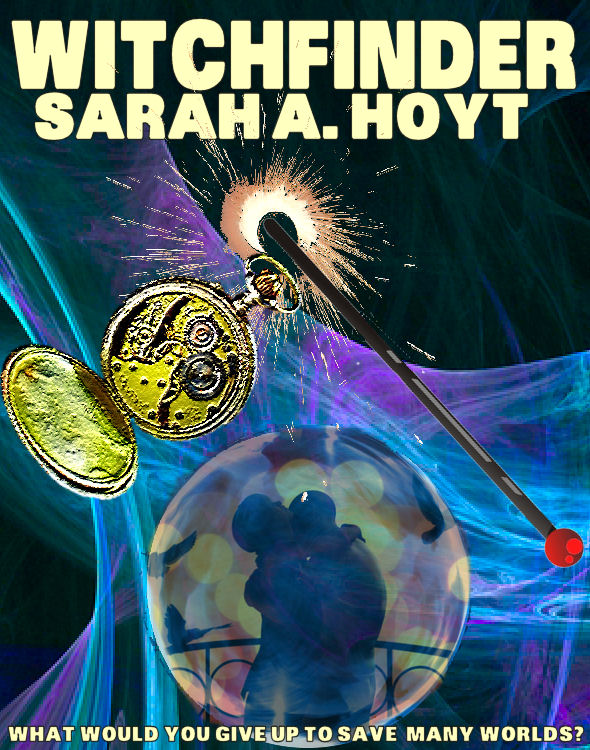
Confessions Of A Dirty Old Pro

I confess that, not having come up through fandom in the US, I was a many-years published writer when I first got called a “dirty old pro.”  Interestingly it was the same year that it seemed to be fashionable to accuse me of selling out and of writing for money… even by other people who wrote for money.

I haven’t thought about it in a long, long time.  But lately there have been a series of events that contributed to rub me the wrong way like a stone in my shoe.  Nothing that would get me to the “argh” level, but a bunch of little things that just annoyed me.  People calling other people “hacks” because they write for a living, say.  Or people claiming that those who write this or that “aren’t real writers.”  And then yesterday, in the Passive Guy’s excellent blog, as they were discussing a writer’s disgust with the current traditional field and prospects of making it (in other words someone who is where I was) some young lady (Oh, I hope to heaven she’s young) opined that we writers would write anyway and that in any case “no one can hope to make a living from writing.”  And I blew up, which is something I REALLY don’t like to do in other people’s blogs.

Kris Rusch has talked about writers “liking” to work for free.  I don’t completely agree with her post, simply because well… yeah, I give things away free here and on Amazon.  I do it for a reason.  Kris is better known than I am.  I figure the short story a week (tab at the top) and Witchfinder might bring in people to read my other books and stories, particularly the indie published ones (Goldport Press) which pay me a lot more than the traditional stuff right now.  And some of you have been kind enough to donate for Witchfinder, which, of course, keeps it going.  Also, I’ve discovered that giving away some things on Amazon increases sales not only of that item but of all others vaguely related.

But these are not so much “giveaways” as loss leaders.  And mark my words, should I find that Witchfinder, when it goes up (probably end of April at the rate the writing is going) sells no better than my other “indie” properties, I won’t give away another novel.  And same for short stories, should they not promote my other short work.  (Which means shouldn’t the sales on that increase.)  (OTOH if Witchfinder sells massively better than the other stuff, I will do a novel chapter a week as long as it works.)

I hear you saying “But don’t you like to write this stuff and see our reaction?”

Well, yes and no.  Yes, I love writing and having instant feedback.  That is why I did the Austen fanfic during one of the darkest times in my career, when I thought I’d NEVER ever ever get published.  But note – I did Austen fanfic, not original stuff.  I did it when I felt like – and wrote maybe 1k words a week, if I was in the mood – I barely proofread (my early stories have so many contradictions, they’re pretzels) and I didn’t ANGST over them.  I posted, I got comments, I painted walls and fixed the house (we were living in a house that we’d bought in need of a lot of fixing) I walked with the kids, I took weekends off.  It was a hobby.  Some people do crochet or embroider (okay, I do both of those too), some people take up ceramic painting.  I satisfied my need to write with minimum effort.  And for no money.

But that lasted maybe six months.  Mind you, I needed those six months (for one I was also recovering from severe illness.)  After that, I decided not to give up and started trying to write for publication again.  That’s a completely different endeavor: I started studying books, again, not just reading them for fun – figuring out techniques and how people did what.  I started working nine to five again… and occasionally till five in the morning, while my family sleeps.  I started having writers/critique meetings again.  I held myself to a production schedule.  And I worked towards being paid, which meant proofreading, consistency reading, professional presentation, etc.

In a year after that, I sold my first short story to see print (I’d sold one before.  Eight times.  Long story.)  And in another year after that I sold my first novel.

Since then, writing has been my job.  And like anyone with a job, I expect to be paid.

Mind you, my expectation is based on the idea that I’m better than the average Joe-schmo, off the street; that the work, study and application I put into this make a difference.

This is not to say, btw, that some of the fan writers, notably on the Austen board aren’t very good.  Sofie Skapski who wrote A Touch Of Night with me, is one such.  BUT the essence of fan writing is that stories will stay unfinished if life intervenes, that you write only when you feel like, and that ultimately you need another job to survive.  (Sofie is a very talented artist.  Any of you who decide to friend her on FB, she often posts pictures of her art.  And I’m very lucky, because she sends me lovely little paintings for xmas.)

Also, as a note, it took me thirteen years of steady application to break into the field.  I will grant you a lot of this was less studying the craft – or at least the reason it took me so long was not so much that I didn’t know the craft (How do I know that?  Because I’ve now sold two of the novels that I wrote in that time, and countless of the shorts, to pro markets, and some are considered my finest work.) but because the field as it was required networking and some effort at proving to the editors that you were a real human being and at worst only mildly eccentric.  But that, like going to a college you have to take courses that have no bearing on your future career, was part of the coming up process, and often much harder on me than (just) writing.

Am I complaining about this?  Complaining about working regular (actually very irregular.  I think if you assemble all my days off, I take maybe ten a year, including holidays.  I’ve been trying to take more recently, simply because it seems to keep me healthy longer.) hours?  Complaining about having to network?  Complaining about studying my craft?

No.  I really am not.  I’m just saying that if I’m not going to get paid for it, I’m going to treat writing as a hobby.

Think about it, your average multipublished author is a highly skilled craftsman/woman.  There are several of these around in other fields too.  I used to live in a mountain town that had tons of potters.  Were they all better than the non-pro potters?

Probably not.  There is such a thing as inspired genius.  In my lifetime I’ve known three or four unpublished people who wrote at pro level.  (One of those my older son at twelve.  He later went on to be a pro. ) But – and I presume the same happens with amateur potters – their production was irregular, and, to be blunt, they wrote what they wanted to and didn’t overthink it.  That meant one book might be brilliant and the next “OMG, what were you thinking?” weird.
Meanwhile the professional potters were constant.  They worked at their craft, they improved, they made enough for the local stores to carry.  After a while, living in town, if you wanted a particularly nice platter to give as a gift, you knew whom to talk to or what store to go to.

And I never, in my whole time in Manitou, heard someone say “Hey, you just got to make pottery.  You don’t expect to make a living at it.”  Or “I’m sorry I charge $120 for a saucer.  I would have made it anyway, even without pay.  You want to give me $5 for it?  Cool!”

Now, like most writers, most of these potters probably made a precarious living.  That still didn’t make them apologize or think their work should be free.

Besides, let’s take that reasoning to other professions where people just feel like they have to do it.  Let’s say, programmers.  Most of the ones I know fool around with computers in their off time.  A lot of them, particularly young ones, are lousily paid.  Do people ever say “Hey, programming is just something you have to do.  You don’t expect to make a living”?  Teaching – I KNOW, I love teaching, which is why I fall into doing it on this blog.  Once upon a time I tried to make teaching my profession and writing my hobby, instead of the way it worked out – do you ever hear anyone say “I just got to teach.  I don’t expect to make a living at it.”  Doctoring… don’t let’s go there, because some people THINK that would be lovely.

This ties in with another discussion going around, which is about copyright.  I’ve stated here that I’m perfectly fine with copyright being, say, life plus 25 years.  I know I have friends – some puzzlingly childless – who want it to be forever and ever.  And then last night in a blog I came across the other side of this, the people who think that it should be granted at most for 15 years, and then the work should be free.  (And it should only be granted if the work “benefits mankind” – which is one of those shave the barber questions.  Who decides?  In one of the worst days of my life, reading Good Omens kept me sane and possibly alive.  Does that mean it benefitted mankind?)

One of the commenters on that blog didn’t get pulverized because I was out of laser-vision-powers.  He said something like “Why do I have to work everyday and a guy writes a song and expects to be paid the rest of his life?”

Do I have to explain that to you people?  Why I expect to be paid for a story ‘for the rest of my life’?  Well, it’s a lot like pharmaceutical companies.

Look, you get paid everyday because someone else is buying your time.  NO ONE BUYS MY TIME.  What that means is that I don’t get rewarded for sitting at the computer and writing.  Instead, I have to sell what I write.  The ratio of sales/non sales has increased.  Well, obviously.  Say, 1998.  I labored all year, and I sold a short story for $60.  Now my income is about 10k per novel (sometimes 12, but the mysteries pay worse.)  What it will be for the indie stuff I don’t know.  With somewhere between 20 and 30 short stories/collections out with Goldport Press (the number varies per outlet) I’m making about $100 or $150 a month.  This is not bad, for drawer-stories and stories I was already paid for, but it’s not, of course, a living.  I’m told novels pay much better than shorts, though, so… as soon as I have time I’m gonna try.  At any rate, the point is that I don’t get paid for everything I write.  At this point in time, I get paid what could be considered sort of “professionalish” rates for 50% of it.  And I don’t know if I’ll ever see another dime from the things that went traditional after the advance (experience suggests no) and who knows how long it will take for the indie stuff to pay off?

Complaining again?  Oh, heck no.  Just explaining it’s not a straightforward exchange of time for money.  Like something that takes a lot of time and money and might or might not pay off – medicine or for that matter pharmaceutical research – writing professional novels could suddenly pay off spectacularly.  I could write a novel that sells so massively that I never need to work again.  (Yes, of course, I still would.)  And of course then my entire backlist, including potboilers would sell and pay off.  And the chances of that happening increase the longer things are in copyright and the more I write.  And the chance of that happening keeps me writing, and kept me writing even when the compensation sucked and the psychological atmosphere in the field was somewhere between a bridge clustered with suicides and a madhouse.

To the extent that my fans appreciate my work (I hope they do) they should be grateful that copyright gives me hope of hitting the big time, sometime.

Why the twenty five years after death then?  Surely by that time I’m no longer producing?

Well, no.  But that doesn’t mean no one is alive who deserves compensation for what I produced.  First, though I’ve said more than once that my kids can make their own money, I don’t know if I’ll predecease my husband.  We’re of an age, and I suppose I could drop dead tomorrow, just short of fifty, and he could live as his family tends to, into his nineties.  He can easily outlive me by 25 years or more.

Look, let’s not get sappy here, but I wouldn’t be writing at all if he hadn’t encouraged me.  I wouldn’t ever have got published if he hadn’t pushed.  When I lost heart, he was my mobile, portable self-confidence unit.  Three years ago he told me “Keep trying.  Give it at least another five years” when I wanted to walk away from it all.  And yeah, he endured years with a wife who didn’t “work”, or at least not get paid for work, while at the same time having to pitch in with house and kids because his wife worked constant “overtime”; years of a lifestyle below what our peers had, because I was pursuing this thing.  We’ve never taken European vacations.  Heck, we’ve never really taken vacations.  Our idea of a rip-roaring good time is two nights at embassy suites in Denver with the boys on the pull-out-sofa and hitting museums and eating one meal a day at a diner.  Real luxury there. (We go to Embassy Suites because if we get up late, we can make do without lunch.)  Give us three nights, and we think we’re in heaven.  (That’s happened twice in the last twenty years.)  For the last twenty years, we’ve bought our clothes in thrift stores, eat 99% of our meals at home, and I cook from scratch because it’s cheaper.  We’ve bought our furniture used and refinished/repurposed it. With the exception of my kindle, we buy our tech downmarket and used.  We buy used cars and drive them until they stop.  All so I could pursue the possibility that my writing would pay off big sometime.  I’m not complaining.  It was my choice.  And Dan’s choice.  BUT we did make sacrifices in pursuit of this chance.  And he made as many as I did.

Should writing pay off the year after I’m dead, he deserves the pay off.  Should it pay off to any extent, even if not big, if it can help his retirement, he earned it.

Life plus twenty five years gives me the chance to do what everyone wants to do, I think – work and provide for my family.  After that, the kids and grandkids can get off their duffs and make their own money.

Now, the other side of this is stuff like when Kevin Anderson put a donate button on his blog, and people told him “I’m not donating because you have more money than I do.”

Do I have more money than you do?  Well, I suppose, than a lot of you.  Not that we’re even close to rolling (or to what people consider a prudent rate of savings) but given the economy I think a lot of you are into negative numbers.  Mind you, part of this is that we scrimp and save madly.  And twice in the last twenty years, the cupboard has been bare (and once Jim Baen came through with a check one month before we would be out of a house.  Which I hope has been taken in account if there’s some sort of judgement in the ever-after).

But while Dan has a job, he will make more than at least some of you.  That’s not the point.  The point is that my work, too, deserves pay.  Yes,  a few of you get my stuff for free when I finish it, but that’s because we’re friends and I know you can’t afford it.

The thing is, when I ask for donations, I’m not asking because I’m poorer than you.  It is not a charity thing (even if a lot goes to the perpetually hard-case cats.)  I’m not asking for money because I make less than you (though in aggregate, if you count the years of flat nothing and the five or so years of less than 1k a year, I probably do make/have made less than a lot of you.  Certainly less than minimum wage.)  I want to get paid because I work for it, and I provide value-added.

Does this mean you should pay me whether you like my stuff or not?  Whether you read it or not?  Oh, please.  No.  I don’t believe things are worth the work you put into them.  That’s Marxist nonsense, not applicable to the real world.

I believe things are worth what an informed purchaser is willing to pay.  So, you should pay me if you read my stuff regularly and derive value/pleasure/instruction from it.  And because writing is my job.  And if I do it well, you’ll want to pay me.  And if I don’t do it well enough to be paid, I’ll have to find another job and give this up.

And why should you pay me?  Because then I keep doing it.  And because you like what I do.  It’s kind of like buying a chicken at the supermarket.  Do you do it because the farmer is poor and needs support?  Or do you fail to do it because the farmer would raise chickens, anyway?

No, you buy the chicken because you need it – or want to have nice lemon chicken for dinner (okay, I make lemon chicken a lot.) – and the farmer produces it because he gets paid.  This works wonderfully because then the farmer will produce more chickens.  And you’ll have a chicken right there when you need it.

Is this a threat to stop blogging if you don’t hit that donate button (on the right side, to the bottom of the blog [grin])?  No.  Well, not while I have time and disposition to blog.  So far I enjoy blogging, and I’m going on the assumption it’s a loss leader, getting my name out there.

Does it mean I’ll do it forever if I never get donations and my book sales bear no relation to blog hits?  Um…  Bluntly, no.  Like creatures who don’t spend their days in front of the keyboard, I need to live.  And if this will not pay, I’ll write another story a week which might pay when it goes up on Amazon or I might even (shudder) get honest work.  Because I have two kids in college and, well, you know what the economy is…

For now, I can afford to blog for free, for your amusement (and hopefully my increased name recognition.)  BUT don’t say “she’d write anyway.  She shouldn’t expect to be paid.”

I’m a writer.  Writing is my job.  I get paid for it.  I work to support my family and provide for my kids’ future and my and my spouse’s old age.  If I also enjoy what I’m doing, that’s a plus, but it’s not a reason to stop paying me.  Or to stop expecting to be paid.

The laborer is worthy of his pay.  Even if all he makes are stories, and even if all he does is lighten your spirits for an hour or so.

Meet Lars Walker

*I “met” Lars Walker on line about 8 years ago, when it seemed that we’d both been sidelined forever by the establishment.  We took different strategies to reviving our career with different results (to be honest my strategy might only have worked for a semi-hysterical compulsive writer with a typing speed fo 220 words a minute.)  But now, as these things go, the field has changed and our strategies are converging.  Kindly welcome Lars Walker who wishes to speak to you about his indie book.*

When I set out to write my latest novel, Troll Valley, I raised my umbrella (metaphorically speaking) in a lightning storm.

I’d made up my mind, putting it bluntly, to write a semiautobiographical novel.

Now before you make a note never to go near Troll Valley ($2.99 on Amazon for the Kindle, Nook available for the same price at lulu.com) let me hasten to add that the main character’s life isn’t actually much like mine at all. For one thing, he (his name is Chris Anderson) was born about 40 years before I was. The facts of his life are different, but he thinks and feels like me.

For instance.

Today I took my snow blower to the shop for repairs. Actually, I’d been trying to take it in for three days. The first day, they were closed. The second day they closed the office one hour before the closing time I’d been given (I got there about three minutes too late and stood mouthing bad words in the cold). Today I planned to leave work a little early, to make sure I got there in plenty of time. Instead I got stuck in an interminable meeting. But I managed to make it in under the wire, and to persuade the friendly service professionals that I was worthy to give them my money.

I’m a fairly petty man, and I let petty things bother me. With each disappointment, I felt a growing conviction that the universe was confounding me, that God was yanking my chain. (If we have a heavy snow before I get the machine back, I may become mad, bad, and dangerous to know).

Now this is always a stupid attitude, but it’s especially stupid in an author. Because we, of all people, know—from experience in constructing plots—that obstacles and setbacks are not given to us to frustrate us, but in order to raise the stakes and make our final resolutions more significant and satisfying.

Chris Anderson’s weakness as a main character in Troll Valley is precisely that he’s like me. He’s not a born fighter. He faces every challenge with the conviction that he’s already lost.

Any author will tell you that that’s a terrible design for a character. Pick up any beginner’s book on writing fiction and you’ll read that you have to create a main character who’s plucky, who never gives up.

This is consistent with the essential nature of Story (which I believe to be a moral exercise). Stories are accounts of people facing adversity, trying to fix it, failing, and trying again and again— in fact making things worse— until a) they overcome and achieve victory, or b) they fail in some significant way.

But what if the obstacle (as in Chris’s case) is the character’s own cowardice? What if the only thing he has to fear is, in fact, fear itself?

I think there’s a story there too.

I think I can create a character who learns to handle problems better than I actually have in my real life.

Here’s a secret. You don’t have to be as good as your characters. Show me an author, I’ll show you a hypocrite. We all know stories of writers of romances whose relationships are like a series of arson fires. We know of adventure writers who rarely leave the house. We even know of science fiction writers who flunked physics.

Faking it is OK.

In fact, faking it is what we do.

That’s why it’s called fiction.

The Cat Ate My Jane Austen Fanfic

Yes, it is a theme these days, but I’ve actually figured out what’s wrong with me.  Somehow, I got a raging ear infection.  I don’t know why but I get these very often — more often than my kids did, when they were babies.  So, I’m sleeping rather a lot more than I normally do and not much writing — or anything — is getting done.

I’ll get antibiotics from doctor Monday morning.  Meanwhile, I shall make with anti-inflammatories.  So pardon me while I snooze.

Free Novel Witchfinder 18

*This is the Fantasy novel I’m posting here for free, one chapter every Friday.   If your conscience troubles you getting something for free, do hit the donate button on the right side and down.  Anyone donating more than $6 will get a non-drm electronic copy of Witchfinder in its final version, when it’s published.
There is a compilation of previous chapters here and I will compile each new chapter there, a week after I post.  When the novel is completed and about to be edited the compilation page will probably be deleted.

Oh, this is in pre-arc format, meaning you’ll find the occasional spelling mistake and sentence that makes no sense.  It’s not exactly first draft, but it’s not at the level I’d send to a publisher, yet.*

For previous chapters, look here:  https://accordingtohoyt.com/witchfinder/

A Strange Land
(Sorry this is so late.  The problem is not so much writing chapters in advance.  It is writing chapters in advance, while I’m trying to answer editorial letter on DSR and finish Noah’s boy and Blood Royale.  Oh, yeah, also put up my back list with Goldport, and make sure the younger kid applies to colleges.  Add the flu on top of that, and it all collapses.  But I’m on top of it.  Practically.  Virtually.  Almost. Anyway, hope you enjoy, will try to make it longer next time.)
It was an alley, Nell realized, as she took a deep breath.  An alley bordered by tall brick buildings, which could be an alley anywhere in Avallon, or – for that matter – in any large city on Earth.  But the structure at the end of the alley was not something she’d ever seen either in Avallon or Earth.  It was purple – bright purple – and it looked like it was made of glass.   It was also roughly egg shaped, with a hole on top and an odd sheen to it.

Her first instinct was to think of it as a dumpster, but if so, these people kept the cleanest dumpsters in any of the worlds she’d visited while out with Antoine.

And on the heels of that, she tried to think of all the worlds she’d visited with Antoine.  And not to think of anything else – anything else – relating to Antoine.  Like, for instance, she truly didn’t want to think of his livid skin, his staring eyes, his … No, she wouldn’t think of it.  Or of what type of horrible spell could make a man walk and talk when he was – when he should be – by all rights dead. Much less what kind of trap this might be.

At any rate, speaking of livid skin and staring eyes, she found that Seraphim too could fit that description.  He was wearing a dressing gown.  A very pretty dressing gown, she thought, though she suspected on Earth most men would be worried about wearing something that bright and silky.  Never mind.  She knew Avalon tastes, and for Avalon tastes, it was a very refined dressing gown indeed.  He was also barefoot.  And he was clutching the loveliest black-cane-with-dragon-head.

This looked completely out of place in what seemed to be a largish city in the middle of the day, but she put that out of her mind, because, really, how did she know what people here wore.  One of the worlds she’d visited with Antoine, before coming to Avalon, had been apparently a nudist colony.  Puzzling, since England in that time was really no warmer than England in any other time.  And in another they seemed to wear vast rolls of shag carpet.  For all she knew, in this world, men dressed for business in ankle length white shirts topped with resplendent silk dressing gowns, and always carried a cane.

What worried her more was the fact that Seraphim looked distinctly unwell.  *No, really, let me think about this.  In the space of a few days, he got wounded, then he got attacked with a mage gun, and almost died, or came so close to it that the ressurection spell had to be used.  And then, not only did Antoine…  Antoine…* She took a deep breath. *Not only did someone attack him again, but he had to perform magic to defend himself.  And to defend me.  And then he was dropped head first into a weird world.  He should look completely chipper and well!*

“Your Grace,” she said.  “Your Grace?”  His eyes were trying to close, and she could hear noise coming from the head of the alley, a long way away.  The kind of noise people would make if they were looking for two oddly dressed people who might be refugees from a mental hospital, and possibly dangerous.

“Seraphim?”  This got her a little more response than *Your Grace* in that his eyes fluttered and he could be seen to visibly make an effort to wake up.  But he sagged against the brick wall and made an odd sound like a sigh.  And from the entrance of the alley came voices in an oddly accented English.

No accent could disguise the fact that someone said, “Is this where the witches went?” nor the tone in which someone else answered that perhaps they should call the police.

So, they were looking for witches, presumably the two of them.  And Nell didn’t think it was to wish them luck and give them a box of chocolates.  If she had to guess this was one of those worlds where witchcraft was forbidden for whatever reason.

She and Antoine hadn’t actually come across many of those.  Possibly because Antoine knew the general lay of the land and what kind of worlds would be best to avoid.  They’d come across worlds like Earth, where magic was disbelieved, ignored or not used, but not too many worlds where it was forbidden, much less under penalty of death.  And when they came across one by accident, Antoine got them out very quickly.  But Nell had heard of them, aplenty, particularly in Avalon literature.

It seemed that the policy that Avalon much not interfere in other worlds, to the point of letting witches and wizards be killed in other worlds, was new.  Or at least literature from a century or so ago talked about lots of rescues and daring do in other worlds.

Seraphim Darkwater sagged further and started sliding down the wall and she realized he had lost consciousness.  At the same time, from the mouth of the alley came a voice saying, “Here, Gnarr, I’m glad you got the authorities.  We’ll now get those witches, right and proper.”

She put out an arm to hold the Duke up and realized that the man was, in fact, very heavy, and that she wasn’t going to be able to carry him.  Hell, she couldn’t even drag him behind the shiny purple thing.  The best she could do was magic them somewhere.  But where?  And what if she got them somewhere worse?

There would be no time to open a magic portal to take them out of this world.  Besides, she had a strong feeling whatever the magic used to bring them here had been designed so they couldn’t return.  She still made a half hearted feel in that direction, but the betweener felt as though shut tight.

In a panic, as voices came closer, she thought she should simply use the coordinates of her room in Avalon and take them to the equivalent location in this world.  From there, she could take them elsewhere.  How much worse could it get?

Blindly, her eyes closed, her arm aching from supporting the Duke, she heard someone say “Come on out and give yourself up and it will go–”

And she thought of the coordinates and pushed.

Magic flared like fire all around her. The purple thing at the back of the alley seemed to explode.  And then she was falling head first into a body of water.

She had time to think *Not again* before she kicked up with her legs and came to the surface for a deep breath, which was when she realized that Seraphim hadn’t surfaced.

Diving back down, she saw the bright dressing gown and dove for it.  Grabbing it by the back, she dragged him to the surface, thanking the buoyancy of the water that allowed her to tow a weight considerably greater than her own.

Even so, and even after she managed to get his head above water and, hopefully breathing, it took all her strength and concentration to drag him to the edge of the water.  Fortunately it was not very far, or she’d never have been able to do it.  Even more fortunately, the river – she didn’t remember when she’d determined it was a river, but she was sure of it by the time she was pulling Seraphim out of the water – had a gradual, soft-sand bank, and she could drag Seraphim up it by stages by sitting on the sand and holding him up and pulling as she shuffled up the beach.  Had the river had steep banks or even rocky ones, the Duke would have drowned.

As it was, when she dragged him all the way out, so only his feet remained in the water, and his body lay stretched on the sand like a great beached whale, she wasn’t so sure he hadn’t drowned.  She was very tired, granted, and he was very wet, and also – she thought – very ill.  He’d been very ill even before falling into the water.  But shouldn’t his chest be moving?

She felt the side of his neck, looking for a pulse, and couldn’t find it.  His lips had a faint blueish tinge.  She put her hand on top of his mouth and couldn’t feel him breathing.  A hand pushed between the folds of his dressing gown felt no hint of a heartbeat.

Her mage sight, brought to bear with much difficulty, seemed to show a faint glow of life and magic around him, but that often subsisted at that level for a few moments after the person had stopped breathing.

*If I had a mirror,* she thought. *I would be able to tell if he was breathing.* Her own laughter startled her, as she thought that if she had the right machines, she would be able to tell if he had brain activity too.

She could use the ressurection spell.  Arguably she should.  But what if he were already dead?  She risked making him like Antoine.

The tear that fell on his already-soaked hair surprised her because she didn’t realize she was crying.  She put up a hasty hand to wipe at her eyes, and in that moment, his eyes fluttered open and he looked at her in shock.  He coughed, once, twice, then blinked.  “Why…”  He cleared his throat.  “Why are you crying?”

“I’m not crying,” she said, hearing the tears in her own voice and not sure why she was crying, unless it was tiredness and relief.  And then she added, as justification.  “You were dead.”

“I was?” he said, surprised.  And blinked again.  “I don’t think I was?  Unless, of course…”  He took a deep breath.  “No.  This is not the result of a resurrection spell.  I’m not a reanimated corpse.”  He took a deep breath.  “No.  I see what it is.  I… I went to your room, and then…”  His eyes widened so far they looked like they were going to split.  “There was a trap,” he said.

“Yes,” she said, soberly.  “That much I’d already realized.”

He dragged himself up to sitting, though he swayed a little with fatigue.  He looked at her as if she were a long way away and he had trouble focusing at that distance.  “I drank an awful lot of that river,” he said.

“I know,” she said.  “I dragged you out as best I could.”

“Thank you,” he said, but his expression remained distant, as if trying to think through a very difficult problem.  “Miss Felix, please tell me that there wasn’t a magic detector at the end of that alley.”

“Magic–”

“Vast purple crystal egg?  Detects magic being performed in the vicinity and imprints the pattern so the authorities can look for it.”

She nodded, dumbly, and his eyes widened more, which shouldn’t have been possible.  Then he said something that sounded like “Muffin” which apparently was a bad swear word, because he immediately looked abashed, “I apologize.  I’m sorry.  I should never– Only…  It’s the world of the priest-kings, see.  The Priest Kings of Okkar.”

“Is that bad?” she asked.  “Do they sacrifice magic users as they do in pyramids?”

“No,” Seraphim said.  “They only execute anyone with magic who isn’t related to the royal family.”