Pimping My Readers

From Gaming Geekster Wesley Morrison:

I Would Like My Bailout in Bacon – Satire, politics, geekery, dogs, and no DRM! 205 pages, available in Kindle and Paperback. $2.99 for Kindle and a currently strangely discounted $11.22 for paperback at Amazon.

http://www.amazon.com/gp/product/B00CNFLP90/?tag=wwwviolentkicom


From Real Life Space Lawyer Laura Montgomery:

A novel of asteroids, crowds, lawyers and a starship. on Kindle, The Sky Suspended. 356 pages and DRM free.

It’s the twenty-second century. Decades in the past, the people of Earth faced extinction by asteroid. After barely escaping the cataclysm, humanity sent out a single starship in response. Now the ship’s return galvanizes the population of Earth. The starship has discovered a new world, Earth-like and beautiful, and a clamor rises to build more ships. But bureaucratic barriers and secrets from a time of crisis threaten the dreams of those who also want to travel to the stars. Two lawyers and a boy from Alaska uncover old rivalries and more when they seek answers to arcane questions others do not want answered.


From Entrepreneur and Right-wing libertarian Thomas Sewell:

Hitchhiking Killer For Hire – Dedicated to Louis L’Amour, this 50 page short story prequel to Sharper Security is available for Kindle and DRM free.

Human smuggling, government corruption, kidnappers and border truckers in the future southwest. If there was no time to summon the Feds, would you turn vigilante and fight corrupt cops? What if the CIA was after you at the same time?


From Christian conservative-libertarian hunter Archer Garrett:

Part 1 of my first book, the Western Front, is perma-free on Amazon. 79 pages for Kindle.

Economic collapse, border chaos, civil unrest, big bad gov’t and maybe a few more headlines that I snatched off Drudge last Tuesday.


From White-Haired Shooter and Sound Architect Ray A. Rayburn:

The Microphone Book: From Mono to Stereo to Surround – A Guide to Microphone Design and Application, 3rd edition, 480 pages, non-fiction available for Kindle and in Paperback.

Ray also contributed to the Handbook For Sound Engineers.

Eargle’s Microphone Book is the only guide you will ever need for the latest in microphone technology, application and technique. This new edition features more on microphone arrays and wireless microphones, new material on digital models; the latest developments in surround; expanded advice on studio set up, recording and mic selection.

Ray A. Rayburn provides detailed analysis of the different types of microphones available and addresses their application through practical examples of actual recording sessions and studio operations.

The book takes you into the studio or concert hall to see how performers are positioned and how the best microphone array is determined. Problem areas such as reflections, studio leakage and isolation are analyzed from practical viewpoints. Creative solutions to stereo sound staging, perspective, and balance are covered in detail. Eargle’s Microphone Book is an invaluable resource for learning the ‘why’ as well as the ‘how’ of choosing and placing a microphone for any situation.


From Semitic linguist and Theology School Academic R.P. Nettelhort:

Somewhere Obscurely, 476 pages, available for Kindle and in Paperback.

Murder. Kidnap. Slavery. Then the real trouble began.

Mohado — vulgar term applied to timeslipped workers. Living as virtual slaves, these desparate workers move back and forth through time at the whims of their employers. This is Aramond Smith O’Reilly’s life. Witness to his mother’s murder, kidnapped, and sold into a life of misery… He will never know where – or when – he will be. After escaping wretched conditions, Aramond purchases a timeship, only to become the very thing he used to dread and fear: a coyote-one of those who transports and delivers the workers to those who would exploit them.

From Cedar Sanderson, Lady in

red:

Memories of the Abyss

Violet is trapped in the prison of her own mind. Her body is dwelling in the insane asylum, but when her friend Walter is killed, she must make a decision to avenge his death, or stay safely locked in her own broken soul. He’d drawn her out of her shell, and she finds she still has honor left… But will anyone believe the crazy woman?

From Celia Hayes, who knows texas:

A collection of essays focusing on aspects of the American frontier, the pioneer experience, various interesting events and people, all edited from eleven years of blog posts by the author at various blogs.

Westering Wagons

The Heart of Texas

This is a collection of essays about Texas history and people, which originally were blog posts on various blogs. It can be read as a companion and extended footnote to my novels about Texas; The Adelsverein Trilogy, Daughter of Texas, Deep in the Heart, and the upcoming release, The Quivera Trail, which will be available in November, 2013.

From Karen Meyers a collection of shorts from The Hounds of Annwn:
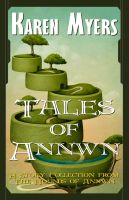
Tales of Annwn

A Story Collection from The Hounds of Annwn

THE CALL: A very young Rhian discovers her beast-sense and rushes to the rescue of an errant hound.

UNDER THE BOUGH: Angharad hasn’t lived with anyone for hundreds of years, but now she is ready to tie the knot with George Talbot Traherne, the human who has entered the fae otherworld to serve as huntsman for the Wild Hunt. As soon as she can make up her mind, anyway.

NIGHT HUNT: George Talbot Traherne goes night hunting for fox in Virginia and thinks about the choices he has made.

CARIAD: Benitoe and Luhedoc are off to fetch horses for the Golden Cockerel Inn in Edgewood. Luhedoc needs to relearn an important lesson about confidence.

THE EMPTY HILLS: George Talbot Traherne shows a bit of the human world to family and friends, hoping to share some of the sense of wonder he discovered when he encountered the fae otherworld.

From ST Gafney:

China Harbor

Sheila Reilly, once a prominent research physicist aboard the Wells Explorer, now an American refugee living in China Harbor after the Millennium War destroyed America, has barely survived the last 5 years. Sheila’s very life may now depend on the secrets she keeps. Even from Yam, the man she loves and who has helped her eke out an existence for the last 2 years.

Discovery of the wreckage of the Wells Explorer sets in motion a chain of events wherein Sheila must come to terms with her past and is given an opportunity by the enigmatic ancient Lin Yi to change history, but perhaps at the price of losing everyone she now loves. Suddenly everyone in China Harbor is looking for her, from General Chen, the conflicted head of the often brutal People’s Guard and the villainous Colonel Kwan, who will stop at nothing to get the power he wants, to one mysterious stranger out of Sheila’s past, who started it all so very long ago. As Sheila races against time to save the past, no one in China Harbor who has touched her life is safe, from an innocent produce vendor to Yam’s young daughter who longs for Sheila to take the place of her dead mother.

Facets

Journey through the crystalline surfaces of short stories, that for the briefest of moments , reflect the light and shadows of what it means to be human. Just beyond the brightness of what we know, lurks the shadows of what we don’t yet know or understand. We pretend we stand on solid ground, turn on the lights, and perform rituals to ignore the horrors that surround us. When in truth, the greatest darkness lies within us all. But also, the greatest brightness. Like crystals we hold both. Turn us one way, and we know just how to kill. Turn us another way, and we know just how to love, a love that transcends both time and death.

What facet will speak to you? Rattle your brain, eat away at your heart? Haunt your dreams, disturb your peace? Make you smile, even laugh? Make you promise to live better? Comfort you just a little, teach you how to build a fire to burn away the night?

Come, take a break and read a story. Short stories for those short spaces of time when a novel is too much. Pull away the curtain, take a peek, and see what is reflected in the facets of your own mind.

From EliZABETH bRUNER:

Flash of Fire

A collection of super short stories (1000 words or less) on the subject of fire. Ranging from the love of a volcano goddess to natural phenomena encountered as humans explore a distant planet, these stories evoke a sense of wonder and awe at the nature and power of fire. Some titles have been previously published as part of a weekly flash fiction project but others are brand new and exclusive to this volume.
Titles include:
Molten Love
Spark
The Silver Fire
The Weeping Flame
Husband in the Flame
Troublemaker

From The redoubtable Mary Catelli, who has a story in this:

Warrior Wisewoman

Norilana Books presents the first volume of an exciting new annual anthology series of science fiction featuring powerful and remarkable women.

Explore the truth of what it means to be female, and discover the wisdom and the strength of a woman in a grand universe without limits. Far-ranging scientific speculation meets action and adventure, grand space opera, thrilling discovery, and intelligent protagonists…

From Cyn Bagley, who is that rare thing, a good poet:

Outside My Window

This chapbook contains twenty poems written in 2013 about a small apartment complex in Carson City, Nevada. The poems are an assortment of haikus, tanka, pantoum, and free verse.

From Lorraine J. Anderson, HalfWay between a fan and a pro:

The River Creek Chronicles:LaKeisha’s Transformation

LaKeisha Andrews thought she and her husband were moving into an ordinary, dull, tiny Michigan town. But, as she learned more, the weirder the town became. Little did she know that her move — and her baby — would prevent the upcoming apocalypse.

Excerpt:

“The town is doomed,” The Oracle intoned. He looked around. “Where’s Hiram?”

“Out of town,” Lazarus said. “Vacation. And you know he’s got that case coming up.”

“Oh,” the Oracle said. “I had forgotten. Anyway,” he continued in a melancholy tone, “the town is doomed.”

Joanne Long looked at the television, flickering in one corner, then went back to her knitting. She looked as neatly pressed as she usually did, not like she had just gotten out of bed. “I think that you’ve been watching too many scary movies, honey.” She settled back into her chair.

“No,” the Oracle said. “Infomercials. That’s when I get my best revelations.”

“And the revelation you got while watching a commercial about knives,” Daniel Summers said, rubbing his eyes, “was that the town is doomed.”

“The town is going to be destroyed in a ball of fire,” the Oracle said. “And a baby will be our salvation.”

from rawle nyanzi:

Alien Frontier

In a farming village on a faraway planet, 15-year-old Norma Teague hunts in the forest for food and helps her parents and brothers run the farm. When the Tanjio military shows up to conduct a draft, Norma considers herself lucky since they did not take girls.

Then she received a magical belt that gave her the power to defeat any armor made of matter.

Now she is a prime candidate for the draft — and her village would have it no other way. Can she defy the will of her fellow villagers and avoid getting sent away to die in a hail of bullets?

from the franchise:

Lingua Franchise — suggested tracks “American Cyborg”, “Storybook Romance”, and “Zombies”.

To the Rescue – suggested tracks “Superhero”, “Post-Apocalyptic Love Song”, “Geek Chic”

The Sound and the Furry– suggested tracks “Vorlon”, “Ender”, “Lojack”

From Blake Powers:

A Different View

A Different View 2

An exploration in image and word of day-to-day life of our troops, along with a reminder that beauty can be found in many places even in the most interesting of times.

This book covers my time with the 1st Battalion of the 4th Marines at Al Qa’im, Iraq at the Syrian border; and, a bit about Landstuhl Hospital in Germany — and something very special that takes place there above and beyond the excellent care given.

This is not a book about combat, rather it focuses on the everyday sights that reflect the majority of the time at war that is routine. It is an attempt to share that not seen on the news, and provide a glimpse into a world few have seen and of which even fewer understand.

My hope is that the reader will pause to think even as I try to make them laugh and cry.

NOTE FROM SARAH: Sorry to be doing this stumbling by stages, but I just got back and apparently over the weekend forgot how to post on WordPress.  Who knew?

UPDATE: I meant to thank Thomas Sewell for collating/doing bio for first six books.  (In case it’s not obvious from my doing this in dribs and drabs, often forgetting cover and originally forgetting to title the post, I’m not functioning.  Long car ride and a rainy day made me stupid.)  I love his style and tried to match — but in future y’all will have to give me a personal web page or SOMETHING to work with ;)

UPDATE — Welcome Instapundit readers and thank you Glenn Reynolds for the link!

Because I’m An Idiot

I meant to put up a Reader Promo post today, but I completely spaced it and didn’t bring the annotated list with me to the undisclosed location (where I still am, till early afternoon.)

So… if you guys put up the links in the comments I’ll do it when I get home.

Next — anyone have any suggestions for which of the Goldport Press stuff I should take free for the Human Wave Garage sale?  I was thinking of putting up Crawling Between Heaven And Earth and maybe Wings.

They Said It Would Never Last

Some of you know that my husband and I have two wedding anniversaries. This is not because we got divorced in between, but because we have a civil and a religious anniversary.

Being, for some unfathomable reason, somewhat disinclined to trust bureaucracies, we decided that we’d get married here and wait for my green card before we went over for the “real wedding.”  That I was — at the time — friends with the American consul to my city (A gentleman from Texas — if I remember correctly — who was a Reagan appointee) and he’d told me if we got married in Portugal and waited for my green card there it could take up to two years for a “bride visa” made it sure that we’d not go that channel.

We were twenty two, had been long distance dating for a year, and at that age the prospect of two more years of wait was daunting and a little impossible.

So I came over and we got married in the courthouse in Rock Hill South Carolina.  Because it wasn’t our “real wedding” I didn’t even buy a dress and was married in a white summer dress with crochet panels that I’d had since the age of fifteen.

I’m fairly sure the judge marrying us — a lady probably the age I’m now — thought it was the most ill advised ceremony she ever performed.  She gave us a long speech about how marriage wasn’t a joke, about how these things shouldn’t be undertaken lightly, about how we should think before we made a mistake.  At the time I would have been offended, except that in this the lady joined the opinion of all our friends and acquaintances, who were convinced we were marrying on a sort of a lark and would be divorced within the year.

Given that both Dan and I have on occasion (more or less constantly) been accused of thinking too much, at the time this general opinion seemed baffling.  Now–

Now the very fact that two people, generally cautious, had decided to get married not having seen each other for four years and never having dated before, looks like the sort of change that prophesies even crazier behavior.  Also, atop my ancient history (shuddup you!) bookcase, there’s a picture of us on our civil ceremony day.

We looked about seventeen.  And we looked so totally unafraid on such an occasion that no one could suspect us of knowing what we were doing.

And yet it lasted.  Why did it last?  Oh, by being as odd as its beginning.  We are, objectively, completely different people than when we got married.  The simple process of marrying outside one’s culture and changing states three times will do so. But we have made a concerted effort — sometimes in difficult circumstances, such as when Dan had a traveling job for two years — to grow together.

It helps that we genuinely enjoy each other’s company and can talk about practically everything…

So to celebrate the fact that this marriage has now lasted 28 years (about twenty seven and a half more than anyone expected) even though this is not our “real” anniversary, we ran away from the kids and are enjoying each other’s company (and doing some writing — yes, I know sick, but doing some uninterrupted writing IS a rare pleasure) at an undisclosed location (no, weirdly it is not the Natural History museum.  they have no rooms to rent, would you believe it?)  Later there will be a trip to the real life alternate of the George.

I will answer comments when I feel like turning on the kindle fire — and autocorrect might make my answers very funny.

Rogue Magic, Free Novel, Chapter 17

For previous chapters, click here

*This is the new free novel I’m posting here a chapter at a time.  This is pre-first-draft, as it comes out.  It is a sequel to Witchfinder which will soon be taken down (once edited) and put for sale on Amazon (And at this point I’m hoping that will happen by the beginning of July at the latest).  Meanwhile, if you donate $6 or more, I’ll get you a copy of Rogue Magic, once finished and edited, in your favored ebook format.  Of course, if you’re already subscribing to the blog at a level at which you get whichever books come out that year, you don’t need to worry. *

NOTICE: For those unsure about copyright law and because there was a particularly weird case, just because I’m making the pre-first draft of my novel available to blog readers, it doesn’t mean that this isn’t copyrighted to me.  Rogue Magic as all the contents of this blog is © Sarah A. Hoyt 2013.  Do not copy, alter, distribute or resell without permission.  Exceptions made for ATTRIBUTED quotes as critique or linking to this blog. Credit for the cover image is © Ateliersommerland | Dreamstime.com

roguemagiccover

Weaving


The Right Honorable Jonathan Blythe, The Earl of Savage,


I was not nearly drunk enough.  That was my first thought, followed quickly by the thought that perhaps I was too drunk.

What had possessed me to, once returned from fairy land, stop at the first tavern to drink?  And what had possessed me not to continue until I lost consciousness in a puddle of my own vomit and – with any luck – drowned.

What had I been thinking to agree to this mad plan?

Not much, of course.  That’s the thing of fairyland.  You don’t really think while you’re in it, particularly not with the King of Elves staring at you and telling you that you’re the only hope for both worlds maybe for all the worlds.

Just thinking about it made my hand itch for a bottle of gin and it was not even because I believed what he’d said.  I wasn’t sure I believed what he said.  I wasn’t sure he believed what he said.  “Curse all elves,’ I said in a low growl and for a moment it seemed to me that there was an elf, lying on the ground of the alley, near the wall ahead, staring at me.  Same slitty-green eyes.  Same suspicious expression.  But as I got near, the eyes jumped, and it hissed and ran.

Cats and elves all the same, I thought, and then apologized mentally to cats.  They were like elves very pretty and very self-serving, but at least they caught mice.  And then I mentally apologized to Gabriel Penn, which tells you how far gone I was, because I reasoned he was probably as decent a fellow as an elf could be, and it was no fault of his own that wasn’t far enough or much at all.

He’d outlined his plan for me.  First I needed to find this emissary from the mythworld.  As he’d explained it to me, to free the women my father had captured I must find the force that had been sent to our world to discover and free them.  And what could papa have done with women of great power and magical prowess?  I’d almost bet he’d not done it alone.  For that it would take fairy power and dragon power, and the late unlamented Lord Sydell.

These women, I told myself, bringing myself forcibly on track… or perhaps not women, but creatures, were kept somewhere, and their magic gave the myth world a chance to reach in and to corrupt all our magic and feed on it.  Papa must have used some containment system that broke when he died.  Or when Sydell died.

I hated this ridiculous idea that novels and even fairytales had that once you’d killed the villain all evil was arighted and there would never be anything to worry about again.  In my experience it was better to tolerate a middling evil than to destroy it.  It was in great part why I’d endured Papa’s low-level, disreputable self-serving lawlessness.  Because to stop it meant to step into his shoes.  Well, and I’d endure it because truth be told, I knew myself to be equally disreputable and lawless and only not so self serving because I never had much interest in either wealth nor power.  Had I been born with a craving for it, I’d doubtless have been poor Papa to the life.

But even when Papa had grown too dangerous to endure, his death had left me tangled in his webs and might have left the world at danger.  Though that part might have been Sydell’s fault.  The more I thought about that the more I was sure that were it not for Sydell papa would have neither the magical force nor the ambition to have contrived such a complex plan.  And that was if he knew about the mythworld, which I would doubt.  No, it would be Sydell, with his dragon-senses, who would know about that world and its maidens of power and contrive to use it.

I took a deep breath.  I didn’t know if it was the liquor making my mind race, or the gibbering fear of the task I’d been given.  And what kind of hero lets himself be given a task by the king of  elves?  I must be out of my mind.
But then again the king of elves, himself, had told me I was no hero, was I?  I was just Jonathan, the irregular, Jonathan who stood outside the norms.  In Eton and at Cambridge it had got me punished often enough – though doubtless nowhere as often as I deserved.

And now it had got me this – Gabriel Penn laying out his plan then extending both hands to me as to a dear friend or a family member – and saying “You will do it, will you not, Jon?  I can count on you, can I not?”

“But your Majesty,” I’d tried, my use of his title perhaps serving to put him on his guard.  “Your Majesty, surely you see that it’s not so easy or so clear?”

He’d laughed.  “Of course it’s not, Jon, or I’d have no need of you.”  His hands felt perfectly normal too, warm and human.  “Look, Jon, if it were something normal, something that people would understand, something that human senses could see was right and just, I’d ask my brother.  I wouldn’t send you behind his back.”

And I’d let myself be talked into it.  I’d let myself be sent back in the black carriage with the fairy horses, all the way to my world, where the coachman had stopped in an alley, and opened the door and bowed to me.

The fact that the coachman, like coachmen in all dread legends ever, seemed to be just a scrap of denser shadow in the night, had not made me feel any more reassured by this.  And the fact that he had bowed to me and said, “Good luck milord,” in a voice that seemed composed of gravel dragging on a river bottom also didn’t reassure me.

Nor did the fact it was night.  I had been supposed to meet with Seraphim at noon, blast it all, and I imagined from the darkness in this alley that I’d come back in the darkest of the night.

Or not.  After all the lantern was still lit over the nearest tavern, and a quick survey within showed me that it was the normal after-dinner rush of locals.  Of course, having gone in to make a survey, I’d consumed my share of blue ruin, to the extent of coin found in my pockets.  I resolved then and there that I would in future do my level best to make sure that I had enough money to drink enough to ensure never wakening, no matter what I meant to do, or who was likely to arrest me, or mock arrest me at my own house.

As it was, I’d drunk just enough to be befuddled, and not nearly enough not to know it.

I pulled from my pocket the stone Gabriel Penn had given me.  Green, it glowed like that cat’s eyes, and he said “It will know where the person you seek is.  Once you find where she’s held, all you have to do is get near her, and this stone will help you find the means to get inside and free her.”

“It is then,” I asked.  “Some king of lock pick?”

Gabriel looked confused.  “No.  Our devices are not that simple.  You’ll know when you have need of it what you can do.”

Which reassured me about as much as the surgeon telling you that once he applied a magical salve your privates would not wither and fall off, or at least he was almost sure of it.  That was a damned Frenchman, off the coast, after this time when Ferdie and I had gone to visit this place that claimed to have real mermaids.

I remembered the problem, which seemed to be magical, and I remembered feeling I could not be in worst straits ever.  But now I wish I was back there, even with the open sores.

On the other hand the salve had worked, despite the surgeon’s dubious comments on it, and perhaps this would too.

My panicked back brain informed me that this was unlikely, and at least the surgeon had not been an elf, but I decided that it was just being difficult.

Then I took a deep breath, pulled the stone out again, and, closing my fingers around it, felt it tremble in my hand.  It is hard to explain, but it felt like being pulled by an eater child towards an object.  I walked where it was pulling.

Did this do anything at all?  Anything that would allow me to free this would-be rescuer of warrior maidens.  “She’s half of one, herself,” Penn had said.  “In fact I think her mother is one of captives.  My brother thinks containing her will contain the magical rot but it is no such thing.  But you know Seraphim.  You’ll never be able to explain to him.  You’ll just have to free her, and then contrive to show him he was wrong.”

Which pitted me, Jonathan Blythe, the despair of his masters and the shame of his house, against Seraphim Ainsling, Duke of Darkwater, one of the premier gentleman magicians of the world, married to the princess royale, and to make things worse, the king’s own witchfinder.

This was not going to end well.

Gray Space

Okay, I confess.  I have a weird side.  It is not so much a side, honestly, as a whole hemisphere.  There are entire continents of weirdness – vast high plains of Oddness, rivers of strangeness, unexplored jungles of bizarreness.

What I mean is, take whatever it is people do of a Saturday night to kind of have fun, and I (and my family) are likely to do something odder.  About the most normal thing we do is get together with friends, but often the talk/meal/whatever with friends is … different.  People who tolerate us, much less like us, tend to be slightly askew, too.

Which brings us to – what brought this on, Sarah?  How strange do you think you are?

Well…

I realized how strange I am when I realized I have a great and odd love of the odd.  As in, if I start browsing on the net, instead of spending my time reading up on some Hollywood cutie’s life (I’m not even likely to know who most of them are) I end up browsing you tube for “squirrel brought up by cat.”  Or “videos of bathing baby elephant.”

It gets worse.  Brace yourself my friends, because the strangeness gets … stranger.

I have an absolutely irresistible interest in the … uh… tinfoil brigade.  I don’t mean in the political sense.  Most of those end up being somewhat pathetic, the excuses of people for why they didn’t, why it couldn’t happen, why—

Even if recent scandals have led me to believe there’s more of conspiracy to history than I’d have credited before, political conspiracy theories are still boring.  They can sound “real” or just “OMG, where did you get that?” but they aren’t FUN.  (Politics are no fun at all.  They’re responsible for the wrinkles on my forehead.  I read the news, and next thing I know I have wrinkles.)

No, the fun stuff comes from overarching theories of how the world really works, you know, behind the veils.

I still remember the time I was trying to find out about continental formations before pangea – I was, I think, researching for time-travel – and found myself reading about the spaceship full of grays orbiting the world.

I should have got out of there in a hurry, but I didn’t.  The only way to find that kind of crazy when I was growing up was to listen to the village drunk who, usually after he was prone by the field on the way to the new village, would give long speeches and disquisitions on what held the universe together.  (In the notable one I remember?  Red Wine.  … yes…)

But now we can stumble on these all dressed up in Sunday go to meeting words, and looking properly respectable, and we don’t have to cringe or think the people will attack us.  Which makes crazy all the more interesting and amusing.

I also haunt cryptozoology sites.

But why Sarah, you say?  Is it a wish to mock and make fun of the poor lunatics?

Well… no.

I’ve always been fascinated by the edge of belief and non belief, the place where crazy turns to genius and vice versa.  It’s possible that, unlike what Pratchett said, there never really was a time where it was universally believed a good stink was the only defense against disease.  And we do know that Columbus didn’t prove that the world was round (rolls eyes) but there have been several counterfactual and unproven ideas throughout history.

More than that, there’s been an inability to know what we don’t know.  If we tried to describe our present living conditions to someone in Shakespeare’s day, it would make us feel as though we are post singularity.  Can you explain the screen as anything other than “magic.”

And there is to things like Egyptian funerary practices, or some strange wordage in archaic language, to the drawings in Mexican temples, to … there are the things that make you think “we were there before.  This civilization thing isn’t new.  It’s probably cyclical.  We build civilizations as beavers build dams, and then we lose them through a well established cycle.”

In those circumstances, it’s impossible to read about things like the three Neanderthals, likely the last in Europe, found in a cave, facing the ocean, as though waiting for rescue.  You can’t help thinking “They hadn’t reproduced, but surely there must be some of their kind elsewhere, right?  And they’d come…”

Now, is this likely.  No.  I mean, I do believe there is strangeness and wonder in our origins, but despite all the linguistic markers pointing to it, it’s unlikely we had a highly advanced technological civilization before.

But dreaming of it and interpreting markers is so much fun.  It’s, in a way, part of the writing process, because then you emerge and you think “but in this world, this could totally be true” or “They would think this wasn’t true, even though it was” or…

And it has led to some fun books in the past.  There was Clifford Simak’s Space Engineers.  And I wanna say Keith Laumer’s in which the main character was R’thur (I think) clearly supposed to have inspired Arthur, and the Earth a penal colony for the insane.  It was a bit human-put-downish, but still fun.

Then there was in Ric Locke’s Temporary Duty the clear implication we’d come from the stars.  I like that.  Yes, most of us know it’s not true (or not likely to be) but it’s so much fun to dream.

Of course, through all this, you have to make sure you know what reality is.  But if you do, there’s no harm in enjoying other’s strange theories.  So long as I don’t start looking up at a full moon for the spaceship orbiting the Earth – or looking suspiciously at Denver ponds, less the lizard man should come out.

On the other hand, while re-reading Methuselah’s Children, I was struck by the discarded plan of sending the Howards up into one of the solar system planets and then closing them off, never traveling to them again.  So as to keep the humans from knowing the much longer lived Howards were still alive and thriving up there.

Supposing, just supposing that colonization really went as we expected, but it was secret.  And some group was given residence in moon tunnel colonies – or in a Mars that’s much better than we thought (hence the robot probes only, they can be directed to barren wastelands) or…

What kind of group would be so dangerous, so full of forbidden knowledge that our own government would so far as to give up on Space and to make NASA an agency to appease Muslims?  Could any group be that dangerous?  What would they be?

And if not, why did we give up on Space?

Um…  It was probably the Grays.


A Window To The Past

What do we want?  Time travel.  When do we want it?  Yesterday.

But until we get it, the past must remain not only another country, but one to which we lack passports. We get tales from it, of course, but the tales we get are frequently distorted and sideways, emphasize something far too much, and ignore the important things altogether.

This is particularly true of tales from our time written about the past.  These are often like the stories told about other lands by people who only heard about other lands without ever having visited.  So you get people who talk about the vegetable lamb, or the world of upside-down people.  Which, if we could only visit, would turn out not to be true.  (But of course we can’t visit because we didn’t, or does that mean that when we do, the past will change, like the future.  I think I’m getting a headache.)

So we have to get first-sources.  The problem with first sources was that nine times out of ten they weren’t writing for the future – not even those who made vague references to “you, my grandchild” – but to the people of their time.  Which means the things they focus on are not the things we really want to or need to know about.  It is as though we’d got a way of looking into the past but were utterly at the mercy of an errant, wandering camera lens.  (Can you imagine that?  Send a probe back to look at the crucifixion, and find yourself following an errant camel-merchant through the Syrian desert, while you scream in frustration.  Send a camera back to Lincoln’s inaugural, and find yourself watching wax flowers being made in a shop somewhere in Virginia.  Hit head on desk.)

Worse problem, though, is that often people don’t realize that primary sources are not in fact talking to them and weren’t rigorously designed to give them a clear view of the past.  So they’ll decide something is really, really, important and must have affected everyone at the time, because, duh, that’s what we read the most about now.  (Of course this fails to take into account that the things preserved were those that for some reason appealed to people of our time. This is how, say, a future historian might decide the most important thing about the nineties was unorthodox use of cigars.)

Most of the stuff I learn about the past, I learn when I’m not trying to learn it.  For instance, I found out about victory gardens – you’d think having read about the US in both wars, having read people’s bios of that time, having taken American history in college, this would have been mentioned sometime, right?  You’d be wrong. – from Disney comics I bought for my kids.  The company was going out of business and offered to sell one each of their print run from the beginning, so I ruined myself on Disney comics, because Marshall was at the point when his desire for story and plot outstripped his ability to read, and I wanted to bridge that gap.

So I found out about Victory Gardens while Mickey Mouse was traipsing around with a gun twice the size of his head (Mickey was way cooler then.  Now he’s rather effete and Minnie seems to be interested in museum galas and the like.)  Then there was the Great Depression.  I’ve read moving accounts and literary descriptions, but nothing brought it home to me so much as the thirties era Mickey Mouse Adventures in which the prize for a big contest is… “a good job.”  And the good job?  Bell hop.  Then there’s the forties? Fifties? Era Donald duck in which he puts uranium buttons on his nephews hats, so he can follow them with a Geiger counter.

Second to Disney books in teaching me stuff about daily life and the things people believed and how they lived are mystery books.

Oh, you can glean stuff about what people believed and what they expected from any book, including science fiction books.  But the problem is that you have to think about it.  Like I can deduce “good” clothes were far more important and expensive in Heinlein’s day, because his women wore aprons.  (Or I could view it as a sign of feminine oppression – but I’m not a bubblehead.)

And you can sort of figure what they expected of the “good” future and how they viewed government power.  BUT it takes effort.

Even in literary novels it takes effort.  I swear they’re all either concerned with the very rich or the very poor, neither of which has much to do with how the middle class lived.  (And neither of which might be accurate, since few writers were very rich or very poor.  They were mostly projecting.)

But mysteries are often concerned with the middle class, and the quotidian lives of the middle class at that.  From Agatha Christie you can learn an awful lot about England between and during the world wars, from ration cards, to how important nylon stockings were, from the difference between real butter and margarine, what was considered attractive, how people (still) lived in country districts, etc.

In the same way my recent tour of Rex Stout has made me aware of stuff like… how government was viewed.  You could have dropped my jaw with a feather when I found that the bureau of price control were the good guys in one book, while a group of industrial producers bent on evading some draconian controls were the “vultures.”

At least we have that.  At least it’s not that bad now.  Yes, I know Stout was “progressive” but that was still beyond and above.

It also makes me aware of stuff like what’s considered “living well” and such.  Eh.  I’ll take my current middle class conditions, thank you so much.

A moment of chortling delight was hearing a NYC location described in much the same way a friend who lives in the city described it just recently.  Apparently some things never change.  (This was a snobbish area.)

I don’t think it would be practical to research for say an historical mystery by reading mysteries of the time (not unless you’re trying to do say a Christie pastiche… which I might yet do.)

And yet the glimpses we can get are fascinating and not things you’d guess from the works about the past.  Two takeaways – P.J. O’Rourke is right.  The future, with some notably disgusting intervals, is usually better than the past.  And the romanticizing of the past can be fun and entertaining (Simak’s, Bradbury’s) but only because we see it through a softening lens.  Up close and personal some of the wrinkles would be horrifying to those of us alive today, even those who remember some of it.

If we’re very lucky, our descendants will say the same of our time.

Of Worlds and World-Views — a Guest Post by Peter Grant

*Peter Grant is the author of Take The Star Road and the just released Ride the Rising Tide both of which made the list for hot new releases.  Not bad for an indie author.  He talks about his writing later this week (Wednesday) at Mad Genius Club, but for now, he’ll talk about … other things*

51Az7BAeyQL._BO2,204,203,200_PIsitb-sticker-arrow-click,TopRight,35,-76_AA278_PIkin4,BottomRight,-69,22_AA300_SH20_OU01_

51TM602UzrL._BO2,204,203,200_PIsitb-sticker-arrow-click,TopRight,35,-76_AA278_PIkin4,BottomRight,-69,22_AA300_SH20_OU01_

Of Worlds and World-Views

 Peter Grant

Sarah’s very good at highlighting differences between cultures and societies, be they Portugal versus the USA, or how populations are counted in Africa, or building fictional settings and universes.  She and I are both immigrants to the USA, and both of us have experienced many things that are literally foreign to most of our readers.  This helps us as science fiction and fantasy authors when we try to build worlds that are new and unfamiliar to our readers.  I’m sure both of us have found our foreign backgrounds useful in that regard.

Almost all authors draw upon local sources for their inspiration.  Sometimes the similarity is blatant, such as Frank Herbert’s Dune series, where the Fremen culture of Arrakis and their jihad clearly draws heavily upon the rise of Islam.  Other fictional worlds and societies are much harder to relate to their earthly counterparts, because their authors have taken great pains to disguise them;  or perhaps they’ve drawn upon elements from multiple cultures and mythologies and combined them.  One of the things I most enjoy when reading science fiction or fantasy is to try to identify the cultures and myths that have influenced its author and/or gone into its creation.  It’s a pleasant – albeit occasionally frustrating – mental exercise.

We have so many variations in societies and cultures on Earth that it’s a much stranger place than most of the worlds we can possibly imagine!  For example, I was born and raised in Africa, and spent many years traveling around the continent.  I’ve been exposed to a wide variety of tribal and ethnic cultures (including low-level initiation into some of the mysteries of the sangoma – a witch-doctor or traditional healer).  Let me give you just three examples of different world-views from my own experience.

– When lightning hits a tree, and it smolders and then bursts into flame, we understand that the transfer of electrical energy has heated the wood to ignition point, resulting in the fire. However, to one rural witch-doctor of my acquaintance (a lady in Malawi who’d completed high school education, including basic physics and chemistry), it was clear that the gods of the trees were at war, and the god of that particular tree had just been zapped.  When I remonstrated with her, pointing out that she’d been to school and must therefore surely understand that such superstition was false, she looked at me pityingly and said something condescending about how blind we Europeans were to spiritual reality!

– When South Africa achieved democratic government in 1994, many areas of society previously dominated by whites were thrown open to other races.  The national sport, which under apartheid had been rugby (a white-dominated sport) instantly became soccer (football), which was far more popular among the black population.  The national team was soon dominated by black players and coaches.  The latter immediately began to use muti (herbal concoctions and supposedly magical ‘medicine’ supplied by witch-doctors) to ensure victory.  When some players objected to finding their uniforms and boots stuffed with muti, the coaches became highly indignant, and most of those who complained found themselves shuffled off the national squad.  Muti was also a factor in the recent World Cup in that country.  (Of course, looking at the NFL and NBA, one does wonder sometimes . . . )

– During a visit to West Africa, I stayed at a remote village for a couple of days.  One morning I noticed a lizard sunning itself on a tree branch close to the guest hut.  I moved slowly over to the tree, ignored by the lizard, which clearly had no fear of humans.  It even let me stroke it gently – at which two men coming towards me broke into loud cries of amazement at the ‘white man’s courage’.  Baffled, I asked them what they meant, only to be told that the lizard was deadly poisonous to the touch, and any black man doing so would certainly die in agony within minutes.  When I looked up the lizard in the local school’s encyclopedia and showed them the entry (which stated unequivocally that the lizard was completely harmless), they shook their heads and said that applied only to white men, who were immune to the lizard’s lethal toxins.  They couldn’t be persuaded that their tribal superstition was completely without foundation.

The same problem can be found in many primitive cultures throughout the world.  No matter how much ‘modern’ education is provided to the members of those cultures, it usually takes generations for cultural presuppositions to be supplanted by informed understanding.  Sometimes it seems as if that will never happen.

Of course, our own First World cultures aren’t immune to such problems.  Consider:

– The germ theory of disease took decades to be widely accepted in the Western world, despite overwhelming scientific and empirical evidence of its truth.  Believe it or not, there are still those who engage in germ theory denialism!

– Despite overwhelming historical, documentary, archaeological and eyewitness evidence, there are many who refuse to believe that the Holocaust ever happened, or who downplay its severity or significance.  Holocaust denial remains a serious problem in neo-Nazi and neo-fascist politics.

– Communism has failed miserably in every single country where it’s been tried.  Nevertheless, there are ‘true believers’ who continue to insist that communism would be the best possible system of government, if only it were properly implemented!  We have more than enough of them right here in the USA, including some of the ideologues that have influenced the current Administration and informed its policies.

(Both Sarah and I have experienced communism – the ultimate expression of left-wing, liberal, progressive politics – at halitosis range.  Our resultant incandescent response when others try to promote such policies leads our respective spouses to try very hard to limit our exposure to them!)

Most First World people of my acquaintance – in Africa, Europe and the USA – regard primitive superstitions as arrant nonsense, without any basis in ‘scientific reality’.  I take malicious delight in pointing out to them that they live in societies and cultures where:

– the daily horoscope is essential reading for many people;

– homeopathy is accepted by millions as a valid form of medical treatment, despite it being categorically and incontrovertibly ridiculous from any normative scientific perspective;  and

– people pointlessly and repeatedly sound their vehicles’ horns in traffic jams, apparently in the belief that by doing so they’ll somehow magically make the vehicles around them start moving again.

So much for scientific reality . . .

How about you, friends?  How have different cultures, mythologies and world views informed and influenced your own development, and continue to affect how you perceive and interact with the world and the people around you?  Have you ever examined them in any depth, or is this something that’s largely unconscious and instinctive for you?  Let us know in Comments.

The Future We Can’t Know

So I was completely out of ideas for posts last week, and I searched out “idea for blog posts” and came up with this place promising to send you 100 ideas a month for some low fee.

The beautiful part about that – think about it – is that someone saw a need for ideas under the great pressure of daily posting and came up with a way to make money out of it.  I was going to say “America, what a country,” and I’m almost absolutely sure that the blog site was American, but it’s also an internet thing.

Someone saw a way of selling something that doesn’t even need to be shipped over the net, pure information.  And there it is.

Of course, in a way this is the beauty of ebooks too, the wonderful improvement over printing and sending books on paper.  It strips the experience of everything but the words.  We used to evaluate a book on a million things (and I think cover is still important, though the sales results I’m seeing make it important only for the extremes – truly awful or truly good, and most of us fall somewhere in between.)  The idea that we can sell ideas – air, nothing, is astonishing to me.

I was brought up in a very concrete type of world.  Mom would stop everything for me, if I was actually doing work she recognized as work.  This always struck me as funny because the “work” she respected was stuff I did for relaxation, like embroider or sew.  For this, she’d bring me better light, ask me if I was quite comfy and leave me alone.  But if I was reading or writing, it was classed as “playing” and “time wasting” (even when it was for school) and she would bug me, ask me questions, demand I help, etc.

It was obvious what she’d been trained to view as work was things you do with your hands and which produce results you can hold.

Which brings me to the one blog post I thought I could do from that list.  It was called “My Children Will Do It Differently.”

I looked at that for a long while, and tried to think what my children will do SIMILARLY.  Okay, they will probably work, and live and eventually die.  And I hope they’ll fall in love and marry and maybe have children.  But if we get more granularity on that, it’s all different.

Take me for instance (you can have this here writer cheeeep.  Well, her books, at any rate.) It’s a little more pronounced in my case, since my parents grew up in what was in Europe a slow recovery after WWII.  I’ve mentioned here before their home for the first 16 years of marriage would fit in my current bedroom.  (Though to be honest, my current bedroom is huge and weird, which is why I made half of it into an office, because who needs a bedroom that large?  I don’t sleep that much.  Of course, it has drawbacks, like the fact that when I type late at night or early morning I wake Dan up.)  In their world, in their culture, the idea of women working, even from home, was weird.  Mom did, but she – I think – always felt a little guilty over it.  (Which was sort of a family tradition on dad’s side, at least.)

I remember being very young – just before starting school — and hearing my parents talk about me.  Remember, because of how small I was when I was born, they expected me to be intellectually impaired. So, they were discussing my future prospects, and I remember mom saying “Well, she’s pretty enough.  If she doesn’t “go” at school, I’ll just teach her to be a housewife.”

In a way, I think, every child is a total surprise to their parents, and it must have been very shocking to mine that I insisted on concerning myself with matters of the mind (and could usually eat the guys’ lunch intellectually) but had to work really hard at house keeping, which didn’t come naturally at all.

But beyond that the world was changing in ways they couldn’t see.  Let’s suppose that, as they expected, I didn’t “go” at school.  It would have taken very little.  Given a less understanding elementary teacher and a father who’d pre-taught me at home, I’d have got discouraged.  I had many of the same issues younger son had (girls just grow out of them a few years sooner) which meant writing was slow and laborious, particularly done with a quill pen. If the teacher had taken my wretched blotched pages as a sign of my ability or lack thereof, I’d have been confined to dunce class forever.  Also, being very sickly helped.  By nature I am rather active, and as a child spent most of my time looking for ways to get into trouble.  If I hadn’t been sick three weeks out of four, and if at the time the right treatment for such things HADN’T been to isolate the patient and restrict them to bed, I’d probably never have made the effort necessary to read, despite clear dyslexia.  (Or difficulty focusing.  It’s hard to tell in memory.)  BUT it was dead boring in bed, the room (my parents’ room) didn’t even have a window and I practically lived there for weeks at a time. Oh, and little friends were not encouraged to visit.  Which meant I had to find ways to amuse myself.  Most of the time these involved lego houses and stories told to myself, but I lived for when my brother read to me, and I found that I could sort of re-read comics he’d read, and after a while, not sure how, I found myself reading – and then of course it was amusement that could be had in bed, and a way to escape it.

Let’s say I’d been a completely healthy kid, and had indulged in being outside, doing things outside, and had never really learned to enjoy reading for fun…  And had therefore found school boring and been a mediocre student.  Even then, the future my parents saw would never have happened.  By the time I was twenty the country had changed so much even working class men expected a woman who would be good at something other than housekeeping.

I often wonder what similar errors I’m making with my kids.  The thing is in times of catastrophic change, and this is one, all you can do is prepare your kids for the world you lived in.  And it’s almost sure my kids won’t live in it.

Heck, take just twenty years ago – when we moved to town – the post office was the center of my life.  If I had money, I was mailing stories/receiving (mostly rejections) responses in the mail.  My normal circuit pushing the pram was bookstore/bookstore/bookstore (used/new/used) and then post office and/or library.  I didn’t buy books every day (though I often took books from the free rack, which had been deemed too tattered/out of date to trade in.)

Of those destinations now, all but one bookstore are gone, and the bookstore has become the much smaller appendix of a toy store and two restaurants.  The library is mostly a day-homeless-shelter and seems to have fewer books every time I go there (and more movies.)

And the post office… the last time I went in (to mail back a contract) I found that most of the people in line were doing bulk mailings.  This accords with what we get in the mail.  Other than the occasional check – perks of the writing life! – mostly we get circulars, printed offers, coupons…

Most of my writing business is now transacted via email.

I have friends halfway around the world to whom I talk more often than to my neighbors.

Even the way in which I married would be different now.  We courted with phone calls and letters – now it would be email, and skype.

I think my kids will do it differently.  The relationships they’ve had have been at least partially long distance.  Let’s face it, it’s much easier for Odds to find each other now.  (I think my mom was wrong, anyway.  Even extending the search area to the entire city, the chances of any man around there wanting me for a wife were minimal.  I usually scared them off quickly enough.  See, I was Odd.  I didn’t act as they expected.)

Other things I can sort of see will be different, too.  Already, half of my shopping, including groceries, is done via Amazon.  I expect this to only grow.  I expect work to be unmoored from a point in space.  I.e, I expect they could live in New Delhi and work in New York City or vice versa.

The tremors this will set of are never ending, from the way people marry – will it be different if you’re both going to work down the hall (or in the same room) from each other your entire marriage?  No?  I mean, Dan and I like working next to each other, but most people don’t seem to – to the way they raise kids – two stay at home parents would be a major difference from the current system – to the way they buy houses (imagine the great price equalization if you don’t have to live in the city to work there) to… everything.

I expect they’ll live in a world I’d barely understand if I got transplanted there tomorrow.

But it will be perfectly fine, if I get there by living day to day.  I hope to still be alive 20 years from now and be able to look back and do a post on “how we do things differently” and “how my children’s lives are different.”

This is why I think that in a time of catastrophic change central planning is risible.  Even more risible than it was before.

And I think that though we might get the rug yanked from under us, the central planners will have it even worse.

In the end creativity and adaptability will take the day.  And the forces of control and rigidity will not stand against them.


UPDATE and A POINT OF ORDER: If you’ve been troll-hammered from this blog for good and sufficient reason, and you come back under another IP, you’ll get banned unread.  I give people a chance to come back — sometimes two or three — after a few months, but not if they just change IPs immediately after, which frankly smells of either paid trolling or mental illness.  If you’re intent on coming back and commenting, let a few months pass. And referring to having called me “Mrs. Hoyt” won’t mollify me, when what you called me was “Hoyt.”  Just in case you guys wondered if you’d seen what you’d seen, that’s what happened.

An Additional Post on This and That

Okay, I wanted to put up some housekeeping, but I didn’t want to make that the entire post.  First, Charlie and I are now doing a sort of “Sarah Promo Post” writ large.  I’d still like to do one here, anyway, but we’re also doing them on PJMedia Lifestyle every Friday.  For examples see here:

Book Plug Friday

Book Plug Friday #2

Send the books you want us to promote to book.plug.friday@gmail.com.  Below are the guidelines:

  • it should include a link to Amazon if at all possible. B&N and iTunes links are okay in addition, but frankly Amazon gives PJ a cut for any purchases you make through our links.
  • Deadline for Friday is Tuesday midnight Mountain Time the same week.  That is, if you want it in this Friday, we need it by this Tuesday midnight Mountain Time.
  • No more than 2 books per author per week, and don’t resubmit a plug for at least a month.
  • Please submit a blurb of 50 words or less with each book.
  • If you’re using a Heinlein character as a pen name, you must include a signed note from Ginny Heinlein.
  • It’s free, don’t complain about the service.
  • The whim of the editors is law, even with respect to the preceding six rules.

Other updates: I’m doing occasional intermittent articles at PJmedia lifestyle.  Feel free to drop by and throw peanuts or something. On Saturday I’m doing a 13 weeks series on organizing your creative life, which several of you could probably apply to writing and stuff.  I’m also doing a ten guilty pleasures (first one up, Pride and Prejudice!) and a series on catastrophic change.

Also, a reader, G. K. Mastergon has asked me to mention the contest their company is holding.  It’s a writing contest.  Go here for details.  I’m not endorsing the contest in any way.  I haven’t looked at it in depth, but if you think it’s worth your while, go look and check it out.

UPDATE: Mark Alger has a post on cover and type.  In the same vein there’s also this which someone suggested should get the artist hired to do Baen covers.  I particularly love the one for Fahrenheit 451, but thinking about it, I think it works because Fahrenheit 451 is a classic.  If it weren’t though, would the cover signal right to you?  I mean, would you see “science fiction” much less “literary science fiction?”  The same with 1984.  Now for classics whose general theme is widely known, these covers are brilliant.

Anything else any of you fish catchers (think about it!) want me to mention?

Guilt & Shame

Last week things seemed to conspire to cause me to write on a particular topic.  First there were a few comments on Mad Genius Club (which, btw, has a different post today and one that might be of some interest (or not)) discussing whether having over-demanding parents actually resulted in over-achieving children.  And then there was the comment here left by someone who thought I needed three thousand words on the subject of something I studied in college in far more depth than she seemed able to grasp.  At the end of it, and almost as a throw away, there was a bit about guilt which implied that guilt was always bad and that, of course, in the future, when we’re all like onto angels, no one feels any guilt at all.

So, let’s take these in turn.  Of course most of us think over-demanding parents are terrible.  I didn’t like them one little bit when I was little, and I don’t think I’ve grown to like them any better, even as I became one.  (Or did I?  The questions is “is it OVER-demanding?”)  Besides, there’s all the stories of stage parents, and what they do to the poor mites caught in the clutches of their overweening ambition.

But let’s start with that last.  Having been caught in the mad whirligig of what I’m assured is a saner version of the entertainment business (Ah!  Like a man running down the street in his underpants is saner than one running down the street in a fish costume, screaming “I’m a carp.”) I can tell you that even if you have genuine talent (whatever in heck that is) and even if you’re working out of your own ambition and not mama’s, it will still destroy you given enough time and indie not emerging.  (I’ve gone slightly mad.  It finally happened…)

What I mean is I don’t think it’s possible for a parent, particularly one who thinks their kids are geniuses in something related to show business, to apply that kind of pressure to a business that rewards in inconsistent and capricious manner, without making the child go completely insane.  I’m not even sure it’s possible for you to apply that kind of pressure to yourself over a few years without going completely and permanently insane.

Also, through years in gifted classes, magnet schools and several other places where the academically interested gathered, I’ve seen enough parents pushing their kids to do things they clearly couldn’t do.  That is bad, and that will break the kid.  As will pushing your kid into something they really have no interest in, no matter how gifted the kid is.  As someone who picked her degree not because of an overwhelming interest, I’m here to tell you it’s very difficult, no matter how “gifted” you are in the matter.  My interest was always in writing fiction, only being in Portugal at the time, I thought I couldn’t possibly live from it – but because it was “safe” since, if there were no jobs for translators/interpreters, it guaranteed a teaching career (and there were always jobs for that.)  I am not actually gifted in languages, but I am gifted in humanities, which means I only needed to study very hard in the language courses, and could “fake” the rest.  It was still hard to make myself do it, because I had no interest in it.

The human mind is a wonderful instrument for avoiding work, and when it doesn’t want to work, it’s very good at thinking up reasons why, including up to – for a book I really didn’t want to write (no, it’s never been published, long story) making me fall asleep whenever I sat at my desk.  Doing that through a whole degree is a pain. I’d never have finished if I hadn’t also been working part time.  Being half-dead in class helped.

So, yeah, pushing your kid into fulfilling your dreams is a bad idea.  And pushing your kid into having perfect As when they don’t have the capacity is a bad idea.

For the longest time, I thought #2 son was going to end up wanting a Classics degree, and I was prepared to tell him to at least take some tech thing on the side, like car repair, so he could make some money while translating from the ancient Greek for fun in the evenings.  As it turned out, he fell in love with the idea of aerospace engineering and that was that.  But the other was possible.

So, pushing beyond the kid’s limits will make your kid a neurotic mess.  So the key is to know what the limits are and push up to them and not further.  This isn’t as hard as you think.  If you’re an engaged parent and don’t have an ego the size of Pluto, you’ll know the signs you’re pushing too far too fast.

However, isn’t it best not to push?  Oh, heck, no.

Look, the other thing humans are really good at is not doing much of anything.  I know that I met just as many “brilliant wastrels” as I did “Overpushed not quite geniuses” in my school career.  You probably did too.  Which one does best as an adult?  It again depends on whether the people being pushed have a vocation and an interest.  And if the parents are stupid enough to push too far and break the kids.

But as for hearing your parents’ voice in your head telling you all your efforts aren’t “good enough” I know a lot of us live with it, and are fairly happy and fulfilled.  If it gives us that little extra edge, that is not always a bad thing.  After all, people who are too contented, do nothing.  And do they enjoy doing nothing?  In my experience, since the human heart is a thing of perverseness, no, they don’t.  They do nothing, and they hate themselves and others and go around complaining about everything and everyone and society too.  They are aware of wasted potential within themselves, they have never acquired habits of work because nothing was ever required of them, and they feel dissatisfied, but don’t know how to fix it.

Which bring us to this idea that the ideal society has neither guilt nor shame.  This is of course the idea of the noble savage turned on its head: in the perfect future, the perfect human has no complexes, no hang ups.  He sleeps with whomever he wants to, does whomever… whatever he wants to, eats whatever he wants to, and always feels in perfect joy and kindness with himself.

Of course, in the real world, savages have more taboos, more guilt and more shame than any more “civilized” human and imagining they don’t is a form of patronizing and often of racism. Just because their taboos and their internal mechanisms aren’t ours, it doesn’t mean they aren’t there.  For instance, if what I read about the Maasai is true, the women might seem care free and promiscuous, but actually their liaisons outside marriage must fit a certain age and social pattern or be very strongly frowned upon and punished.

In the same way, imagining a future where all of us are perfectly from all guilt and shame, is impossible if we still remain human.  We might feel guilt and shame about different things, but if you imagine you’re more free of hangups than your medieval ancestors, let me tell you, you’ve been sold a bill of goods.  Oh, sure, we don’t feel guilt (and certainly no shame) for breaking religious taboos we don’t have – say meat on Friday – but we do feel guilt over things that would puzzle our ancestors: leaving the light on too long.  Eating too much (unless, of course, they were very religious and the ‘too much’ rises to gluttony.) Throwing cans not in the recycle bin, or even littering something that – to judge by people in other countries still – they’d do carelessly and with no remorse.

Shame is simply a mechanism of social cohesion.  You feel you shouldn’t do this or that because “what if anyone knew?”

Sometimes it’s completely stupid or at least opaque to us.  For instance, where I come from, when all the clothes were dried outside, we had a line down in the patio for drying our undies.  Because the rest went on top of the garage, and people might see them, and it was a shame for people to see your undies.  Now, I think it would be more shame for people to think you didn’t wear undies, but that’s just me.  Maybe it was for people to avoid seeing their neighbors’ sprung elastic and parachute-like bras.  Maybe it kept people from dying of embarrassment in public.

But sometimes shame is useful.  Say that of your own you don’t have enough morals not to shop lift.  Say you think the corporations make too much money or whatever.  So you’re ready to bag that candy bar, but you think “what if I’m caught?  I’d die of shame being arrested.” And you don’t.

Shame normally ensures you follow social norms.  Its value is as good as the social norms, but insofar as it lubricates the gears of societal intercourse, it’s a good thing.  If it’s a shame to cover your behind on Friday, then by gum, go around without undies on Friday.  Yes, it’s stupid, but if everyone else is doing it, doing it too will make them happy and who really cares.  (Okay, me.  No one should have to see my behind.)

What about guilt?  Guilt is more serious.  Guilt is between you and your G-d, or if you lack a G-d, between you and your ineradicable beliefs, and in my case, “yes.”

I feel guilty if I injure another person, both because that’s against my religion and because it is against my principle of not hurting people (unless it is necessary to defend myself.)

Now how it’s dealt with is different if it is inadvertently or on purpose.  Inadvertently, my religion says I’m innocent (though I still need to think through the circumstances and avoid doing it again, if possible.)  My civic conscience gives me no such leeway screaming that “you should have known better, dummy” even if I did it inadvertently.

Do I walk around with a sludge of guilt?  Oh, sure I do.  All adult humans do.

Is this a bad thing?

Well, it depends, doesn’t it?  Feeling guilty because I trod on an ant on the sidewalk is probably stupid.  Feeling guilty because I failed to save a kitten born too soon and tossed out, and which I didn’t find is stupid too.  Doesn’t mean I don’t feel that guilty, but it’s dumb.

Feeling guilty because I didn’t do as well as I could for my kids is only good in the sense that I pause before I repeat the mistake.  (Though it might not be repeatable in this life, there’s always the grandkids.)

Feeling guilty if I’d committed murder?  Well, wouldn’t not feeling guilty be much, much worse?

Guilt of the stepping on an ant kind is not, no, going to make me insane.  Even guilt for murder wouldn’t, if I’d committed murder because I HAD to.  Yes, I’d still feel guilty, but it wouldn’t drive me nuts.

The idea that any form of guilt at all is bad and eventually makes you insane is a lie.  We all have guilt, even if it’s guilt over having guilt.

Guilt is the electrical fence around your idea of how life should be lived (whether that idea is originally yours or received.)  When you touch it, or even approach it, you should feel the shock.  Its pain is less than what you’d feel if you went out into the open field and your life lost all goalposts and all moorings.

Shame is a small social kind of the same thing.  It’s the “did I violate a taboo of my society, which will cause people to shun me” whether the taboo is sane or not.  For instance, if I lived in Portugal I’d wash my sidewalks and front porch every week.  Not because I care but because “the neighbors will talk.”  It would cost me 2 hours a week, but it would keep me in good standing.

In a functioning, non toxic society shame keeps people doing things they might not naturally feel inclined to, but which in the end are good for the society itself.  Say, keeping the sidewalks clean.  Or keeping an eye on your kids, so they don’t wander about half naked in the street.  Or staying indoors instead of talking to boys out on the street, which might seem perfectly innocuous to you (We were talking books.  Sigh) but which will give you a reputation and make your eventual marriage harder.

Shame enforces the rules that allow us to live cohesively together.

Guilt enforces the rules – internal or external – without which we start doubting our own humanity.  (Note, I’m not saying those rules are eternal or even universal, but they are what reassures each of us we’re human among humans, and that we’re “good” for a definition of good.)

Now it is true there are people that feel neither guilt nor shame.  Weirdly, they’re not angels. They’re psychopaths.  The smarter ones, who wish to survive, learn to fake the normal feelings of mankind.  The ones who don’t, usually are heinous and remembered throughout history.

Our education system, having forgotten that we’re social animals and neither angels nor islands, seems determined to uproot both guilt and shame.  And a society with neither isn’t a society.  And if it works (it won’t.  People find new sources of guilt and shame.  See “judging” and “not recycling.”) that would be a way the world ended.

UPDATE: different post over at Mad Genius Club.