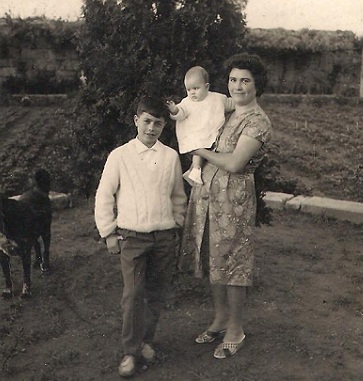
I have lived all my life in a village, Miss Marple says. There’s nothing I don’t know about human wickedness.
That line struck me as played for laughs in most productions, and, of course, in most readings of the story. But I don’t think Agatha Christie meant it that way. I certainly wouldn’t.
You see, I lived all my early life in a village.
First of all let’s disposed of the hazy, romantic idea of villages that inspired Hilary Clinton’s “It takes a village.” This is, if I may say so, a typical city-girl’s idea. They go into a village, and they hear the kids call every woman aunt, and they go away with their heads stuffed of incoherent stuff about the connections and the love and the caring and the collective beauty of villages and folk life.
Villages are – surprise – inhabited by humans, just like everywhere else. There’s good ones, there’s bad ones, and there’s “Oh my heavens, no.”
The difference is, in villages like the one I grew up in, and the one Miss Marple grew up in, (or Agatha Christie’s grandmother on whom Miss Marple was based) is that there were two other factors absent in even most villages today, except maybe in Africa: people had been there for uncounted generations, and people were BORED.
I don’t think any of us can understand the level of boredom I grew up with – not even me, and I vaguely remember it. The reason I read EVERYTHING that came into the house, including instructions for assembling machinery I wasn’t allowed near, my cousin’s “Portuguese romances” (the bullfighter dies. The singer who played him false mourns him forever) and my ten year older brother’s school books was that I was bored out of my gourd. I also religiously followed the almost bewilderingly stupid radio soap operas (everyone did) and after eight, when we had TV, religiously watched 40s American movies, in black and white. Those were a G-d send, as Sunday was the only day the TV station ran all day AND had movies (instead of variety programs, game shows and other local and cheap entertainment.) It meant that I never was tempted to do what other people did for fun on Sunday. Well, not after three or so, when I used to do it with my grandmother. What was that? Sit-at-the-stoop. For me it was literally sit on the stoop (I was little) but the older people brought chairs out, and sat by their front door. The entertainment? See who else was sitting at their door and what they were wearing. And since girls and boys “walked out together” to keep an eye on who was stepping out with whom. And for those who had “foreign” (from another village) family, like my mom, to watch them walk up main street on their way to the trolley car, and to note every aspect of how they were dressed what they did, etc.
Much was deduced and talked about from your expression walking up the village street. One of the first things I was schooled in was “do not frown, never look like you cried” etc. etc. It didn’t matter if the reason you were frowning is that you’d just come up with a cool idea and were working it out, or the reason you had cried was toothache. Next thing you knew you were the subject of a soap opera in which your parents beat you regularly and you were about to run away from home.
Most village gossip was/is bokum. My life was far more interesting in the gossips’ minds. You see, for instance, I was brought up as “honorary sister” to my brother’s closest childhood friends. This meant they were likely to pick me up in Porto, if they saw me walking, and give me a ride home. One of my honorary brothers, having caught on to my dentist schedule (I had extensive work done in 81) would be waiting for me in the coffee shop beneath the dentist every time because I usually had appointments after school and it was getting dark, and he didn’t want me walking alone in the dark. From this the gossips decided he was playing his fiancé false and was going to marry me. Dan? Oh, he’s just from the next village over, though I met him in Germany. (The last place I went to.) Etc, etc, etc, ad nauseum.
However, if you are smart, you can sift through the chaff. Smart women were feared because they knew exactly what you’d been up to. Miss Marple’s feats of reasoning, figuring out a murder from how the vicar’s wife wore a stocking with a hole in it or whatever, aren’t unlikely. I saw my grandmother do that type of thing all the time.
The problem with it is that when you pay attention you discover that in this small bucolic village there was just as much evil and malice as anywhere else. Worse, villages have long memories, and people would expect you to do things because your grandparents had done them. (Is it accurate? Well, it’s mixed. First, there is the expectation. Say, my great grandmother (true) left her husband and kids and ran off with some guy (well, she had good reasons, but never mind.) I understand my great aunts grew up with everyone EXPECTING them to do the same any minute. If you grow up with that there’s only two ways you can go and neither is normal. You either become a plaster saint, or you give in and go “sure, I’ll be the village whore.” (Fortunately this was my maternal great grandmother, and I grew up in a different village.) Second, there’s such thing as raising. If your parents starved your grandparents to death to inherit (not in my family thank heavens. Partly because there wasn’t much to inherit, but yes, a family in the village.) chances are your family life isn’t that warm and wonderful and that the principles you were given were less than stellar. Yes, there might also be a genetic component, but given those two first bits…)
Now this had its good side effects. It’s hard to tell, because, well, how can you? BUT I’m almost sure I had the same sensory issues my younger son suffered from, and so did my brother, and that they were resolved at about the same age (though even there, repetition in doing the tasks helped more than any fancy therapy.) I remember feeling that shirts that didn’t “prick” anyone else were rough. I remember having great trouble writing on a line WELL into my teens. I remember having trouble hearing directionally. I still have trouble with visual focus, which is what scares me about driving (among other things, like a culture that didn’t expect “normal” people to drive, but only the particularly gifted. Those things are hard to get out of the subconscious.) Now, even in the village this wasn’t normal. But as the youngest of a tribe that had gone through village schools (my great aunt on that side was the school mistress when dad was little) there was lore there. “Oh, she’s an Almeida” (I wish. It was actually “oh, she’s a potato seller”) “they’re all weird as children, but they’ll take the national exams in fourth grade beautifully. Don’t push her too much.” So, elementary school I came in when I very well pleased. I did homework when I felt like it. I mostly read – a lot. It worked for me, as it had worked for everyone from dad’s time on. If I’d been subjected to the discipline my kids endured, I suspect I’d have hated learning.
Other advantages, when people like you and/or know your family and know you’re mostly all right fall into that “non standard” mode. Our postman, for instance, started drinking when his wife left him. We would find him passed out in the gutter in the middle of the day. The way people dealt with it was to deliver the letters, take him inside, put him down in a sofa, and give him some tea or broth when he woke up.
He straightened out after six months of this or so, and he kept his job, because the village liked him (or at least he was one of us, and his wife was no better than she should be, and he was a fool to marry her – I’m reporting what the village thought.) So no one reported him to his supervisor in the next village, and everything went on fine.
These disadvantages are weighed down by everyone having known you when you were two. There is a reason for “no one is a prophet in his own home.”
The village I was brought up in no longer exists. It’s been filled with stack-a-prole apartments, and has self-concious “parks and meeting places” (We had the dirt paved plaza where everyone met coming and going because it just happened.) It has “Athletic associations” and “clubs” but it’s really just a suburb of the big city and most people there don’t know each other and their ancestors lived heaven knows where.
BUT if the village still existed, even if I were to become a mega bestseller (say on the Rowling scale) and go back, I’d be greeted with “Don’t you go putting on airs, missy, I am not surprised you make up those scandalous stories. I remember when you told everyone you met a sugar pig in life size around the edge of the field.” (It was a pink pig. Pigs in the village were black or brown. I’d never seen a pink one. They used to sell pink pig sugar candy, though, so I thought he’d come to life. Took a while to figure out there actually was a live pink pig.)
Worse, they’d say “I knew your grandmother and your great grandmother. Your grandmother also made up scandalous falsehoods when she was little. Was a lot of trouble to her mother.”
Impressed? Ah!
And this is why most people ran away from villages as fast as the industrial revolution permitted it, to the mingling pot of the cities, where you can be as anonymous or as chummy as you wish but few people can say “Young lady, I knew your great grandparents and they—”
Do I miss the village, sometimes? Oh sure. Who doesn’t miss their childhood? Though most of all I miss dad and grandma, and walks in the fields, and the cats and the dogs, and sitting really still on top of the terrace on a summer night, and looking up at the starry sky and dreaming.
Note, however, I didn’t choose to raise my kids in a village. There’s something about knowing people are staring at you and making much about everything you do and say that drives you a little insane. Or as my husband, who has heard my stories, says “it takes a village to drive someone around the bend.”
On the other hand, as a petri dish of human behavior, I’d recommend it to any budding writer.
I know a lot of malice. I grew up in a village. The worst villains in my stories come from that (fortunately not most of them my generation, but things grandma’s grandma told her.)
But then I grew up in a village, I know a lot of heroes.
In the states, in Portugal now, in most “advanced societies” heroes are people in stories and movies, people in the news, people who’ve done something big.
I knew a lot of heroes and angels. They didn’t carry swords. They didn’t have hallos. They were people who absorbed immense disaster (a wife who left, a husband who died very young) and went on, working at things they never thought they’d do, or coming home from a full job to clean and cook and be “mother” as well as father to two small children. I knew people who as a matter of course dove into traffic, to pull out a lost child or a lost dog. I knew women who walked in into the middle of a domestic dispute between a neighbor couple, where a knife had just come out, and stood up to the aggressor and said “That’s enough. Think shame on yourself.”
I know a lot about good. I grew up in a village.
Human nature is the same everywhere, but in a village you see it up close and personal, and you know the stories of generations.
It’s impossible to believe in a grey goo world of shades of grey and of people who are all a little tarnished.
In a village you know that people are certainly never like their public image. And that some are unimaginably worse.
But you also know that some are unimaginably better – and stronger, and nicer than you could ever be if you tried.
Growing up in a village gives you the dark and the light tints, as well as the grey. You can’t deceive yourself that good or bad don’t exist, that everything is “sort of good” and “sort of bad.”
Those are city illusions, contracted by people who only know people in books written (mostly) by boring German philosophers.
If you grew up in a village you know real people. You can’t help it. And you know that humans can be unimaginably vile, but also unimaginably good.
And you can’t help but write Human Wave.