Recently I’ve fallen into a series of videos that aren’t in any way intended for me or my age group. They are in fact intended for women in their twenties and thirties and pertain to things like: “Basic skin care if you’re the sort of person who has tried all sorts of complicated regimes and failed at them, either because they’re too complicated or because you’re ADD AF” (That’s not what they call them, but that’s what they amount to.) And also the same for household care.
I vaguely remember grandma doing some some of the things they advise. VERY vaguely as we moved out of her house when my parents built a house of their own when I was six and after that my access to things like her bedtime routines were faulty. My mom, so far as I know, had the same skin care trajectory I have. Which now I think about it, incredibly closely resembles my writing-improvement strategy and a lot of others: Buy the materials needed for a complex skin regime. Completely fail to use them. (Sometimes even once.) Eventually move them to a remote cabinet. Toss them (if you remember to) when you move. It’s an ADD thing.
The thing is that just wiping with rose water or cleaning with cold cream (or both) then applying a moisturizer is doable, particularly since I realized I respond well (who knew?) to tallow-intensive moisturizers. (I’ve heard of people using olive oil or lanolin, too. But I am mildly sensitive to wool, and the olive oil is in the kitchen, which in terms of beauty ritual is in another universe.) is doable. I won’t say I do it every night (AH!) but three out of four ain’t bad.
There’s also channels on how to wash your hair (which led to my husband asking me why I was watching videos of people showering, particularly as they only showed the had.) And channels that advise things like pouring a pot of boiling water into the kitchen sink once a week or so to take care of accumulated gunk in your pipes. All the more useful, I suspect in this age of low-flush everything. Which is not what older pipes were designed for. And channels for how to do hairstyles with long hair that mimic shorter hair, for when you need that. Etc. (Look, I don’t wear long hair by choice. I wear long hair because “I cut my hair when I remember to book to have it cut” works out to about once every five or six years. I once grew my hair long enough to sit on, because I didn’t remember to have it cut. Which is one of those “Tell me you’re ADD without telling me you’re ADD.” moments.)
I know there are also channels on how to cook from scratch. (I don’t need it, though arguably I could start one) and other channels for very basic skills of the sort everyone used to know.
The thing is when I stumble onto these, I find that my own generation wasn’t taught most of them. Which btw the video makers assume we were taught. They say things like “Our parents” — or even “our grandparents” — “failed to pass on these skills which used to be widely known.”
I’m here to tell you that though I’m sixty three, which by any reckoning is “grandmother age” — though we are not, biologically, grandparents — I was never taught any of this. In fact, some of these things I’d lay hands on the fire neither mom nor dad were taught.
As proof that there’s a great under-fund of knowledge that has been substantially lost, I offer not only these you tube channels, which spring up like mushrooms after a rain, all with three bazillion subscribers, but also the fact Jordan Peterson made his name out of proclaiming what used to be bog standard common knowledge, but which hits us as revolutionary because no one has taught us any of it. Other sites, like FlyLady specialize in other portions of that lost knowledge.
BTW all these channels, at least the ones on beauty or household care, posit some great shadowy conspiracy that prevented knowledge from being passed on. The drug companies. Or the cosmetic companies, or whatever.
Bah. Judging from how basic the knowledge and how widespread the loss, no. It wasn’t that. For one because no great shadowy conspiracy has the kind of reach where you get to every household, every place, and issue orders.
What happened was different.
I can almost grasp it when I read the early 20th century sf (yes, resuming soon. Look, my body is STILL trying to find new and exciting ways to die, but I’ve ALMOST defeated this last attempt. ALMOST.)
What happened was the crowning flowering of the industrial and scientific revolution, complete with the smug certainty that we were better than all that came before us, and these habits (a lot of them not clearly explained by those who had them) were now dead letter, superseded by a new law that made everything simpler, shinier and more scientific.
Look, I am perhaps more aware of what happened at the dawn of the 20th century in terms of every day living than the rest of you, because Portugal was further behind the “progress” of the scientific/technological age. And a late adopter of the industrial revolution. (Though I understand some of you from some recondite regions of the rest of the world might have similar experiences.)
So, born in the early sixties, I grew up with things like cooking on wood stoves, and the guzzunder (chamber pot) under the bed, because though we had a modern (ah) bathroom, it was outside and about twenty feet from the kitchen door, and difficult to drag a child (or yourself) to in the dark of night in winter. In Portugal the change was more accelerated than most places, because it was late, and it hit, for me personally, at six when we moved to my parents’ newly built house which is hellishly inconvenient in modern American terms (it lacks central HVAC for one) but was and is solidly “modern” by any other standard. And had two bathrooms and two showers for four people, which was frankly considered an excess of luxury. (And right next to the bedrooms too. How lazy could you be?)
BUT if you’ve made that transition you understand how a lot of things that had been passed on ceased to be passed on. For instance, though my older cousin probably still remembers how to light a Franklin stove, (who can forget the time she got impatient with it and doused wood and starter with lighter fluid, causing a fireball that took out her eyebrows and the front of her hair and led to a passing nickname of “Lightly Toasted Natalia?”) I have no clue, since at six (or honestly, even at sixty, but that’s something else) no one sane should trust me with flammable materials and flame. (Not saying I don’t use them. Just saying no one sane would trust me with them.))
I’m also glad to say I have no clue of the care and maintenance of a guzzunder, though if anyone ever forces me to use of maintain one, I can assure you it will involve dipping it in bleach several times a day. (Which is the chemical equivalent of killing it with fire, or nuking it from orbit.)
On top of that, there were EXPECTATIONS which now can’t help but strike us as deranged. Let me just say that the Jetsons weren’t that far off the life people expected their children to have. Everything was going to be automated, everything was going to be easy. No one needed to know how to do things, because in technological terms, all of us would be liberated from the the drudgery of every day life. We not only would study war no more, we would study cookery no more. It would all be done for us by some sort of mechanism and — waves hands in pseudo-magical passes — SCIENCE. People really, truly, honestly though no one would have to work, and we’d all be fed by “taking some pills.” Sigh. (Now ask me how I laugh at the post-work economy and other nonsense.)
This made sense because in one generation we got vacuums, televisions, electrical or gas stoves, carpet cleaners, floor polishers (as opposed to mom putting extra old socks on me and telling me to dance on the dry wax. No, really.) REFRIGERATORS and other things that liberated a large number of people from daily drudgery. (Oh, yeah, commercial soaps and detergents and for the lucky few washers and washing machines.) WHY wouldn’t the rest be within easy reach and for the next generation?
And a lot of things people in my grandparents generation believed had been upended. The germ theory of disease overtook ancient practices. (Like swathing everything in red, as a remedy against small pox.) The new, scientifically educated progeny laughed at ancient superstition. Sooner or later older people would shut up.
Add to that that both my parents, and probably a bunch of your grandparents, were what Heinlein called “the lost children of WWII” and never mind that Portugal was neutral. He had a definite point to that. There was a break in knowledge between the prior generation and the ones raised during/just after WWII.
Part of that was the break in culture, as I’ve explained. The other part was that the rebuilding work after WWII really seems to have been an all-hands-on-deck endeavor. I know we have the strange idea that after WWII all women went back to not working and being home makers, but that’s fostered by the mass media which gave us the Imaginary Fifties. I know that a lot of my family (women as well as men) worked through that, as did almost everyone I know of. (Excepting the very wealthy. And sometimes they had other forms of jobs.) Now people didn’t dump kids in daycare, by and large. They had either elder relatives who took over, or exchanged care in vast informal groups OR tried to work from home (both mom and grandma worked from home, a tradition I fell solidly into.) But it really was an all hands on deck endeavor.
Was it more so than the time before the World Wars? Well, I don’t know. While I gather that even before the world wars a lot more women worked than is commonly credited, most of them seem to have worked from home. (Most men too) which made transmitting “of course” knowledge to the young easier. Because they were around and doing it/helping with it. I also believe — and I grant you I’ve not made a scientific study of it — that it was more likely you’d grow up to do what your mom and dad did. Or at least there was more of that expectation.
At any rate, there seems to have been an unusual number of children raising themselves; being raised by methods promoted by “scientific upbringing” experts drunk on Freud and Rousseau, and other attempts at creating the perfect generation by generally borking it.
The result is where we are. There’s been a lot of knowledge lost. And AFTER my generation, a lot more, mostly because the schools too drank the Marxist/Freudian/Rouseeaunian and the “This one simple trick” koolaid, giving us things like the “Whole language method” of NOT teaching people to read. (Which takes effort, since exposed to written word a lot of kids learn without being taught.)
The good news is that there is obviously a thirst among the young — chilluns, anyone younger than 40 is young to me — for this knowledge, this basic “how to get along in daily life” Baedecker.
The bad news is that a lot of it is news even to old people like me. And the truth is maybe some of it can and should be discarded, but it’s hard to tell what, since we each have maybe one piece and no knowledge of the whole of the thing.
Normally, I feel, for humanity to go through one of these breaks, it takes a major natural cataclysm or a Chinese Emperor with weird ideas. But we seem to have managed well enough with industrial/technological upheaval AND two world wars.
So, what to do? Well, as I said, all of us have a little knowledge. Some of which we acquired as adults. (Like me and cooking from scratch.) And youtube, for all its faults, it’s a free for all teaching tool. Though there are others, yes.
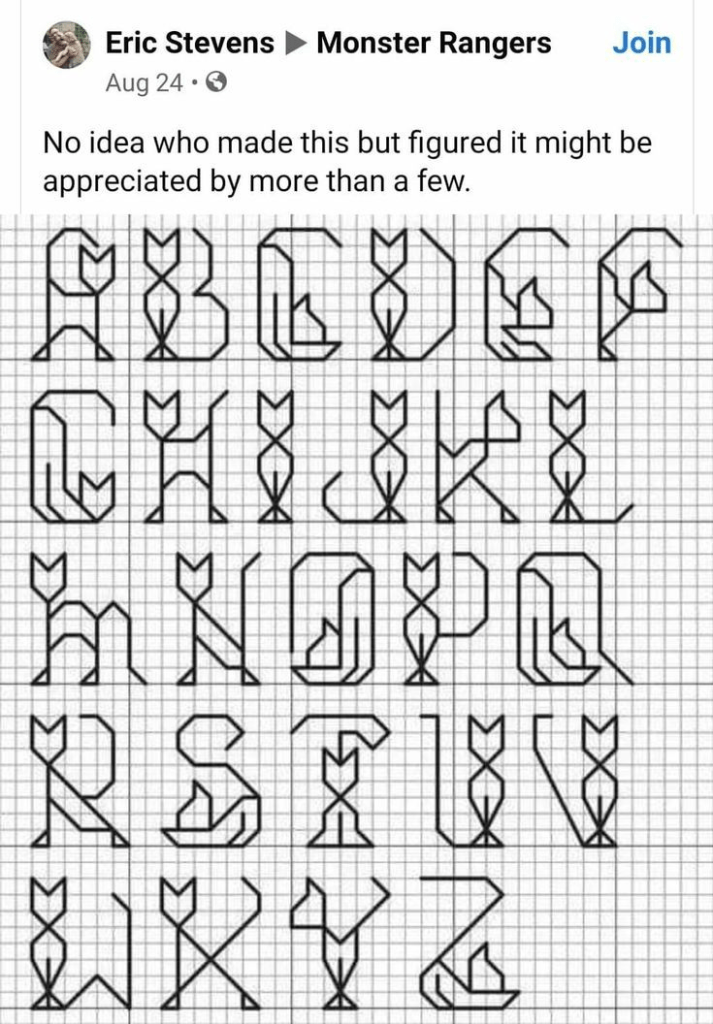
I don’t know what your specialty is. A lot of people are teaching cooking from scratch, so I feel that’s not needed. BUT perhaps an how to construct stories, though there are also a lot of people doing it (BUT it is my specialty) could help. Though honestly, a series of videos teaching PEOPLE TO READ if you can make it short and snappy and fun videos, and assign homework of sorts, could be useful for children and adults. And the same for basic math, etc. But also, I don’t know…. I learned cross stitch at a professional level from crazy people (shush you.) I’m struggling with seeing well enough to do it, and being frustrated because of that. BUT that’s something else. I know kids who’ve learned crochet from youtube. And knitting.
I honestly am trying to get over my body’s increasingly clever attempts at offing itself long enough to plan a series of youtube videos starting at the most elementary “How to write a blah” for values of blah. If I work very hard at the health thing and stay with it, maybe early next year?
So, what is your lost knowledge of the ancients? No, it doesn’t need to be anything arcane or reaching to the nineteenth century. It could be stuff like “How to draw a circle.” (I know three methods) or “how to hang a picture straight” (Bro, I’m begging you. Everything I do tilts fight. Also, stop laughing.) or “How to flea comb a cat.” or “how to tell if your rescued puppy is healthy” or a million other things. First steps. Basic things. And preferably those you’re a genuine expert in. (Don’t get me started on “how to save” or “how to invest” which could very much benefit from basics by someone who isn’t SELLING a system. Dan and I finally managed to learn some of this in our fifties, but getting to minimal knowledge HURT.)
Think how basic Peterson’s — or Mike Rowe’s — knowledge to share was. And how revolutionary to the young people.
Then let’s build under, build over, build around.
Knowledge of the ancients might be mostly lost, but we live in an age of miracles, where passing on and acquiring knowledge is the easiest it’s ever been.
And it’s time to rebuild.







































































 According To Hoyt