Am I a Libertarian?

*First, and OT, the next Clanker Song “Blood On Ice” has dropped. Again, not happy with the video, but I have ideas for improving it. (Likely easier when the antibiotic isn’t trying to kill me, yes?) Anyway, here’s the new song:

Note that it helps immensely if you like and comment on the videos. It tricks the algorithm into showing it to more people. And the comments can be just “I like this” or whatever. If you have no idea what this is all aoubt, the rest of it is here. Now for the real post. -SAH)

Some days ago I got — of all things — in an argument on libertarianism on X.

I said pure libertarianism is a utopian ideal that — because it is utopian — can never be achieved. Someone got very upset at me and told me that someone whose name I don’t know (or if I know, I don’t remember, because my mind is made of taffy right now) said that libertarianism is not utopian. So, I was wrong. Which I have to tell you is the most libertarian argument yet. Because libertarians are people of philosophy and often argue in screamed quotations.

So, am I abjuring libertarianism? Oh, please! I retain a high value for the philosophy. It is important for any number of reasons, but mostly because it stands in direct contradiction to most other philosophies of government. Even if it were completely insane, (it’s not) it would be desperately needed in today’s world.

First, let’s make it absolutely clear that EVERY political position, taken to its ideal is absolutely impossible. Yes, even monarchism at the twitter-monarchists view it, where the King is appointed by G-d and either very good or supposed to be a scourge the people deserve. In fact monarchy with rare intervals ends up like any given family business where the guy who takes over does so by nepotism and not competence: slowly grinding downfall, but taking an entire country along for the ride. And it’s peculiarly brittle around rapid change, be it social or technological.

In the same way I don’t need to outline the failure of communism to anyone. Marxism is a theory built on air, with no connection to real economics. (Any theory that misunderstands distribution as waste has serious issues.) It appeals to minds broken by envy, but anyone else can see what it does it cut off the economic signals of individual consumption from the producers, leaving people to decide what’s needed by fiat from above, from people who — by the nature of it — are misinformed or not informed at all. The result is a rapid devolution into “rule by a king” by any other name. And, stripped of upbringing meant to make them think they owe the people something, the ruler tends to rapidly fall into the “mad king” category. (Looks North-Korea, or for that matter Cuba-ward.) What it doesn’t do is become a utopian stateless society where everyone automagically gets what he/she needs.

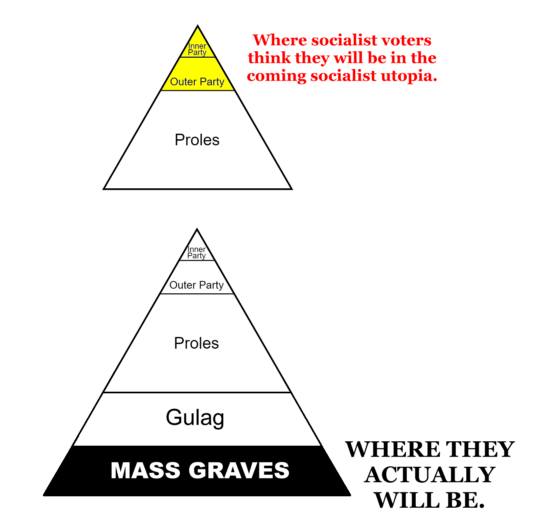
Socialism is Communism on the installment plan, having surrendered the idea that they’ll eventually get to that magical state withering away and instead believing it’s possible to stay suspended in that place where everyone gets what he needs and everyone contributes what she can. Like communism, in its most functional form, it is an oligarchy, nepotistic and brittle in the face of any new technology. For its failure mode, see the sh*tshow of Europe these days. Or the way we were headed two years ago. Eventually the nepo oligarchy becomes an open kakistocracy that can stay in power only by brutal repression. Next verse, same as the first, welcome to the end stage of various dictatorships as the velvet glove comes off and the steel clad boot comes down.

And then there is us. Are we a libertarian country? Meh. Somewhat. It scares the pee out of the rest of the world, to the extent we are, actually.

What we are is the result of founders who had the foresight to say “Government should be as small as possible, and central government smaller than local government, and the individual should have the most power of all.” Did it work? Are humans involved?

As someone pointed out in some comment, we started betraying our own constitution when the ink was barely dry.

And yet– And yet, what remains and our absolute certainty that this is how things are SUPPOSED to work is enough to make us the powerhouse of civilization and prosperity for the world.

But is constitutionalism and an unwavering devotion to minarchism (not the i not o) libertarianism.

I don’t know. Do you?

Part of what we’ve run into is “who defines Libertarianism?” or if you prefer “The individualists are still arguing over it.”

As I first encountered Libertarianism, I’m no longer a libertarian. Why? Open borders. Open borders are absolutely an utopian idea, predicated on the idea that cultures somehow stopped existing, or that people won’t have greater loyalty to their cousins than to complete strangers. For a soft failure, look at the H1B visas and various companies being wholly taken over by foreign ethnic groups for whom nepotism is a POSITIVE value, much more important than competence. For the hard failure, the open borders under autopen and oh, Venezuelan gangs. (Though the Mexican gangs are enough to do for us, honestly.)

I hate to say this, but humans aren’t interchangeable, and even without a welfare state open borders would be dangerous. Because if you dilute the culture to the point that people don’t understand their neighbors social signals, the failure mode isn’t “we fall apart” it’s “multiple warring ethnic and cultural groups.”

What I don’t understand is how I came to forget that in the nineties, when I’d seen it among exchange students, with people clinging to their nationality, the next closest nationality, and vaguely related cultures after that. Except me, because I’m broken or something. BUT all the same. It’s a human thing that makes open borders suicidal.

And I’m not sure about legalized drugs. Look, I’m divided on this. Because the war on drugs has caused enough trouble. BUT on the other hand, there are foreign cartels who view pushing drugs everywhere, including on those too young to know better, as an excellent business opportunity. And a lot of the newest stuff are “take it once and destroy yourself” (Okay, it’s a Russian roulette, but). And also I saw the results of legalization in places like Portugal.

It’s hard to know what part is the drugs, and what part the reaction to the drugs, and what part well, fraud around, under and between all the drug dealing. For instance, how much of the mess in Portugal is just “Portugal.” And how much of the fact that legalizing pot destroyed Colorado is real? How much of it was JUST fraud masquerading under the new influx?

How much, in fact, of the havoc I’ve seen legalization wreak is the drugs, and how much of it is stuff like no enforcing laws against petty theft, camping in public spaces, homelessness, etc. etc. etc.?

I don’t know. Hence “I’m not sure” and not a hard coming-out against it. Because I don’t have all the data and can’t therefore decide. What I’m sure about is that legalization destroys neo-liberal states in which letting drugs eating your mind is proof you’re a victim and need to be given everything.

Other things: still sure you should be able to do whatever you want sexually, provided no force or coercion (or inability to consent) is involved, and you don’t do it on my front lawn and scare my cats.

Still think taxation is theft. (No, hear me out, how about a lottery to finance the few functions that are actually constitutional to the Federal government. Because we don’t need the rampant theft and grift going on at all levels of government. Less money would make it less attractive.)

Still sure “public education” is an oxymoron, and we would be better off with “charity schools.”

I still think the Libertarian Party as an entity is over its skis and has been for a long time. Their last chance at redemption was the election in 16 when they decided to nominate… a democrat.

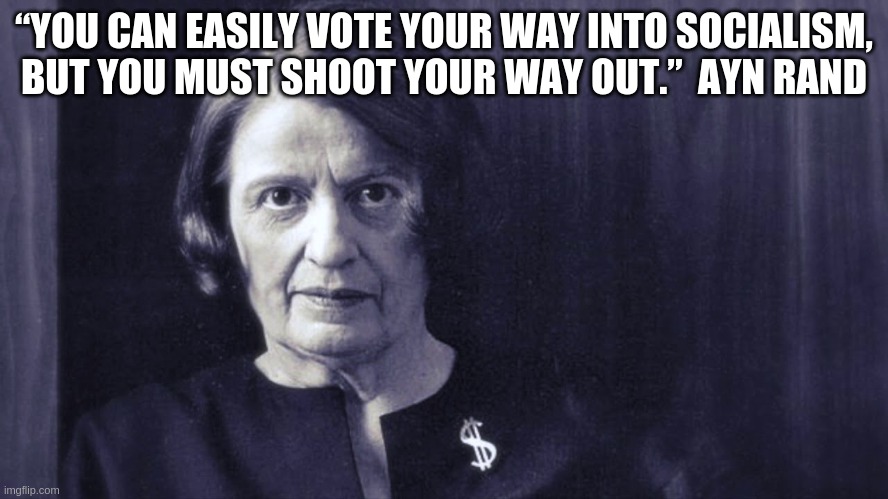
I still think that the socialist libertarians are as L. Neil Smith put it “something smelly clinging to our shoes.” And to prove it, I’m going to quote Ayn Rand, because of course I am.
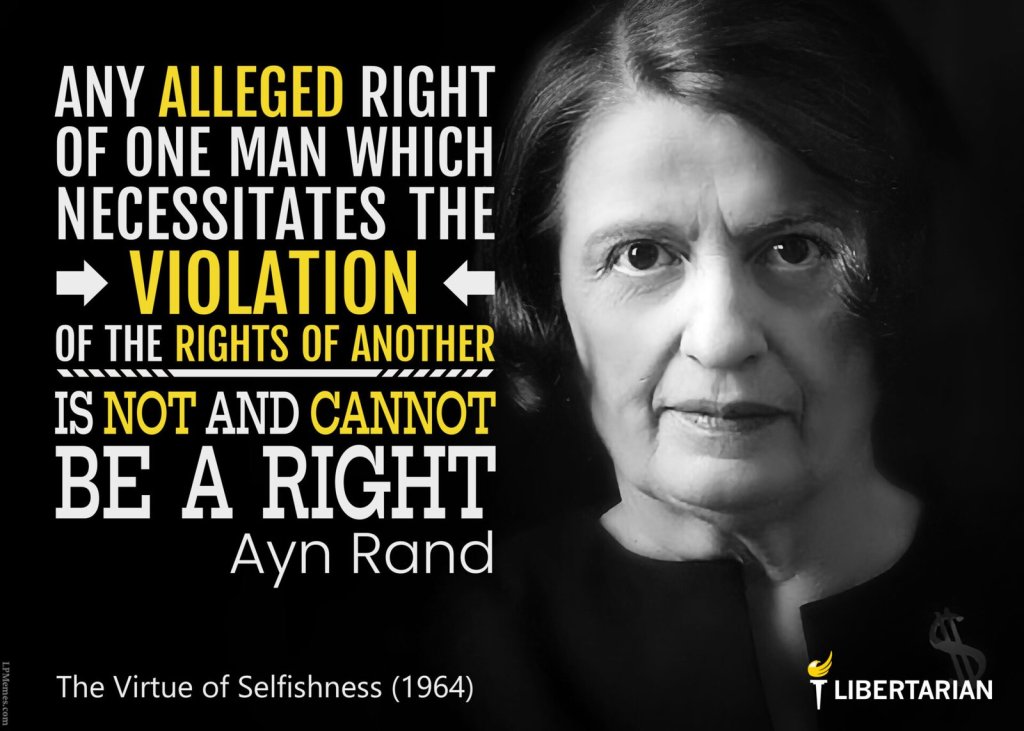
And I guess that makes me a libertarian, since I’m arguing in loud quotations. :D

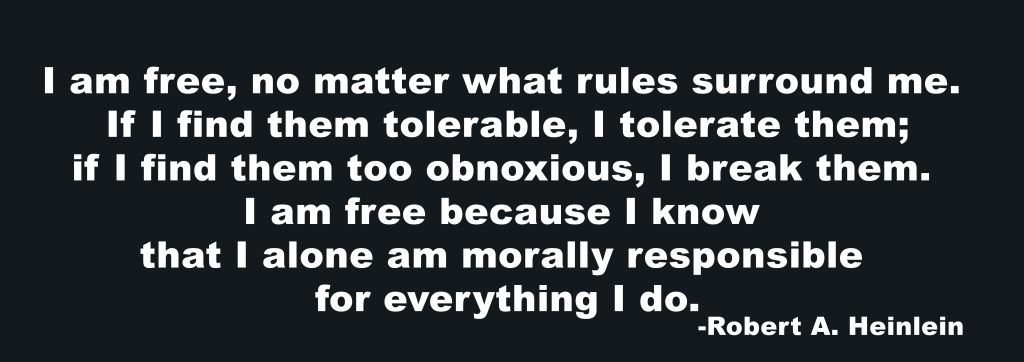
On the serious side, I’m exactly what I’ve always been, the same person who wrote A Few Good Men. I believe in our Constitution. I believe the government should wear it as a girdle cinched tight enough that it can’t escape. I believe in the quotient of individual versus government the individual should now and always have primacy.

To my view that’s libertarian enough, without accruing the utopian and evangelistic view of open borders that requires libertarianism all over the WORLD. The world is not our concern. Let’s start here and make this a shiny city on the hill.

I am in truth an OWL — Older, Wiser Libertarian — who has learned some things sound great in the abstract but are in fact impossible in this our fallen world.

And in the end, I think that’s the greatest value of Libertarian, small government and individualistic philosophy. A grand implementation of it is at its complete best, absent small colonies away from Earth (eh) is utopian and impossible.

But just by existing, by being loud (and sometimes shouty in quotations (eh)), by keeping emphasizing that power always comes from the individual in ultimate instance, we provide much needed leavening to a world that is sure of the opposite, and in which the solution of all problems is assume to be “get a man” (Or these days often woman) “with a bigger stick.”

In that sense, I’m perfectly happy to be lumped in with the liberty lovers, the trouble makers, the goats refusing to be herded, the rebels who refuse to fall into line.

Because we’re the ones who keep humanity from rushing forward, as one…. and fall off the cliff.

Clanker Song

Hey remember I said I wrote nine songs in the brief interval before the infection and antibiotic came back (appointment with specialist on Thursday. Everything crossed.) Well, I’ve been making videos and scheduling them for release, but doing things while I have a fever is … funny.

So this song was published today, and I didn’t remember. For those of you who read No Man’s Land, this is the song for the big Troz gathering in the huge cave.

Against the better (snort, giggle) angels of my nature I have not done a version of the besieged nomad, though my writer’s group has created six or seven verses. Maybe I’ll do it later. It’s funny. Also like Skip on hearing the original challenge-song, I get very embarrassed. For now, have Nursed On Ice. (Oh, yeah, and these jokers take it absolutely seriously. Baby is born, you have a clear icicle to at least touch to his lips. Weird people, Erradians, and that’s considering that Ellyans are already baseline bizarre.)

This video bothers me as I couldn’t get a unified art style. I’m dealing with it.

Coming up, already with videos, hopefully in order but probably not: Blood On Ice, A Night of Years, and Kitten.

And now, may I ask you to please reflect on winding up the slightly obsessive author and causing her to embark on a audio track project for the 900 page long book?

What lessons have we learned from this?

No, no. It’s not to do it again, harder! Face paw. You would think that, wouldn’t you? You’re all reprobates. It’s a good thing you’re cute and I like you.

And for Peter who asked for the order of the songs, here goes:

Space Admiral’s Son.

Seventeen.

New London, New London (is a hell of a town.)

The Prodigal

Royal Escape

Valhalla is for Heroes.

Thanks for the Boats. (Possibly my favorite when I’m in that kind of mood.)

Can I Get You to Look.

Strains of Earth

Betrayal

Defenestration

When Worlds Collide

So Different and Yet the Same

Brothers in Arms

I’ve Got to Bake

Further Notes on Ethnographic Collection

The Beast in the Snow

If I die Tonight

The Stone Speaks

Silence and Stone

A Birth At Midnight.

Morning Breeze and Sea

Looking for Home.

And the Marble Wept.

Nursed on ice

I Have a Post Started

I have a post started on Libertarianism, of all things, and why I still am, mostly (small l) libertarian, even if I’ve moved away from some of the beliefs. (Like open borders.)

But I simply don’t have the energy to finish it today. I (think) I’m better, but it’s still like lifting a heavy boulder. And Marco Rubio isn’t writing posts for me, alas.

Remember today is the last day for the Based Book Sale, books at 99c or less!

I do promise to get back to work asap. Honestly, I suspect what’s beating me at this point is the actual antibiotic. I went through two rounds of this back in 2015 for the same complaint, and I remember being so prostrated I sometimes spent the day dozing. I’m doing better at lower altitude, but still not well.

Thank you for your patience. Normal posting will resume Thursday at latest.

Today We Remember

The above is just a funny. And a way to say “Sorry I was so late getting my behind out of bed.” On the good side, I AM feeling better, so there’s that. And it amused me to put Marco Rubio in charge of you lot, virtually.
Like the poor man hasn’t suffered enough.

Speaking of suffering, of course today is not veterans day, but memorial day. This means we are remembering all those who gave their lives in service of this nation.

Was the nation sometimes in error? Well, have you seen some of the people we elect? Or, at least who occupy the oval office? However, there is virtue in those who died, doing their best for what seemed like the life of the nation.

And while on that, I am not anti-war. I am against recklessly wasting the nation’s sons (and some daughters.) However what is reckless and what is necessary doesn’t often become clear until after the fact. Sometimes a long time after the fact.

Everyone who lives, not just presidents, are prisoners of their own time and their own prejudices. This means sometimes something will look absolutely necessary to fight against, or a certain type of evil might be tolerated that costs many more lives (communism) because everyone believes the alternative (nuclear war) is worse. I have a strong suspicion Russia is and always was a paper tiger even when it was the Soviet Union. I believe that long-marchers in our own institutions made it appear otherwise, to keep the USSR alive. (And that was a boon for the state so many ways.) I also believe those who served and fought during the cold war were still admirable, and those who died should be honored. (I’m not even blaming presidents during that time. Okay, maybe FDR, but I blame him for so many things, that’s just one more. After all, they might get briefed at a certain level, but as the covidiocy taught us, they are also often WRONGLY briefed to manipulate them. So, I hold them harmless and will assume they were trying to protect Americans.)

I do disapprove of what I’ll call altruistic wars. (Somalia, really? Why?) The US is not a charity organization, and spending our sons’ lives in service of goals that have little to nothing to do with us is wanton and evil. Yes, I do realize a lot of (idiot) presidents thought they were winning hearts and minds. It was the same sort of grift that gave us USAid. Do I hold presidents harmless in such boondoggles? Well, no. Yes, a lot of them were brain damaged by Marxism. That’s no excuse. They’re functional adults and should know better.

Still I honor the men who died in such forays. Because theirs was not to know all the circumstances. Their oath was to serve and so they did to the last full measure. For that they deserve our honor and gratitude.

If you’re the praying kind, say a prayer for those who died in the service of the nation. If not take a minute and think of them, anyway. They deserve that much honor.

And let’s all of us keep a close eye on those who have the ability to order our young to war and raise a clamor when they abuse it.

America’s sons are made of too fine a stuff to waste in ridiculous and ill thought out charitable expeditions. But let’s hope also they’ll always be willing to serve. Because a nation whose young won’t defend her with their lives if needed is already dead. She just hasn’t fallen over.


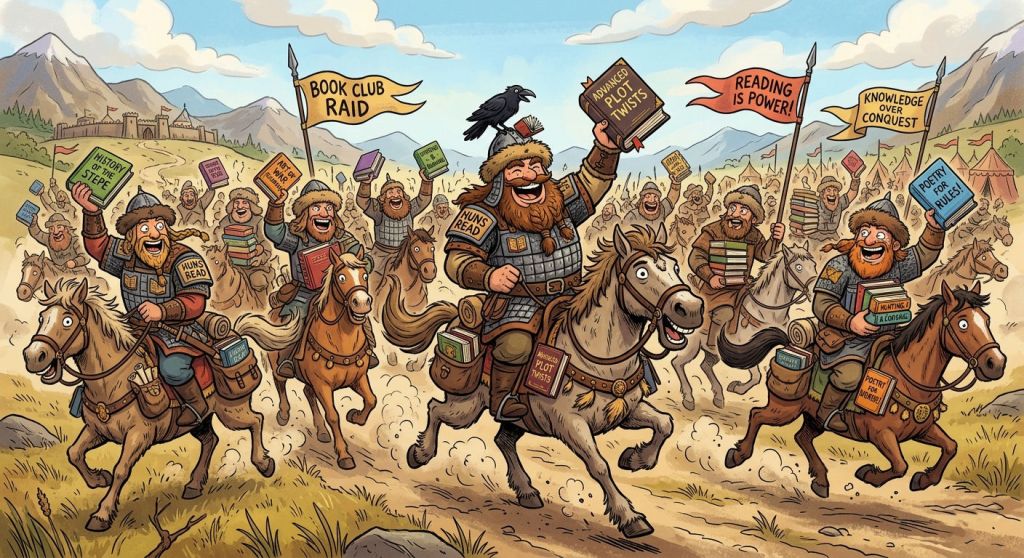
The Based Book Sale, Hun Edition

The Based Book Sale is still going on — two more days — packed full of books for 99c or less.

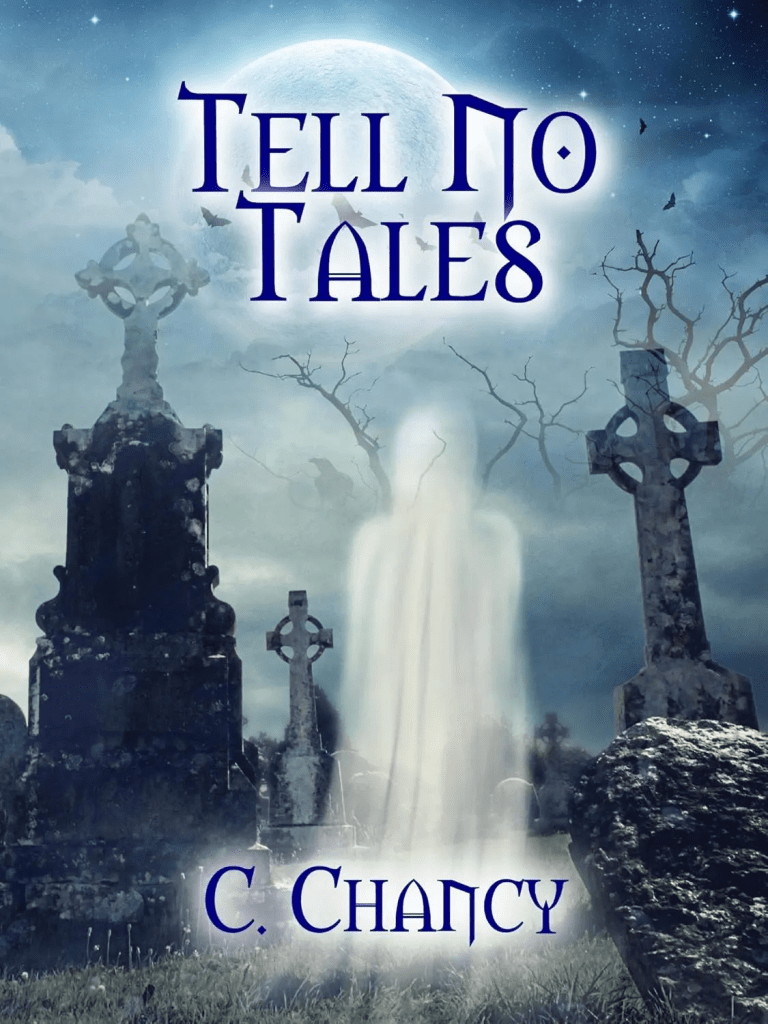
C. CHANCY: Tell No Tales

Some nights it just doesn’t pay to rise from the grave….Corbin wants to uncover the truth behind her death at a demon’s hands. But her memories have been shattered by the grave, and even with footloose Sighted mechanic Devon Fortunato helping her search for answers, a restless ghost is up against the darkest spells and lies of the living. If they can’t unravel who sabotaged the Cunning Folk circle’s spellcast defenses, the child Corbin meant to protect will suffer a fate worse than death. Corbin’s notes hold clues, but the broken circle would rather die than admit the truth….

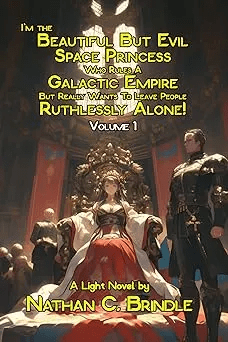
FROM NATHAN C. BRINDLE: I’m The Beautiful But Evil Space Princess Who Rules A Galactic Empire But Really Wants To Leave People Ruthlessly Alone!: Volume 1

Book 1 of 3: I’m The Beautiful But Evil Space Princess Who Rules A Galactic Empire But Really Wants To Leave People Ruthlessly Alone!

Alice is the Imperial Princess Regnant of the Galactic Empire. At 22, she has been thrust into power after her father (the Emperor) and her two older brothers have all died in various ways. Her Imperial Chancellor, Lord Rupert, does everything he can to support her, but has somewhat different ideas about how the Empire should be run than did his late Emperor.

Alice has one major problem: She cannot be crowned Empress Regnant until she marries and produces an heir.

But Alice, being kept busy three days a week by interminable audiences with petitioners, and the rest of the week with what she terms “mostly busy work”, has no real way to meet young men — well, reasonably eligible young men, anyway, and of her own age — with whom she might eventually take up and form a household. And she chafes at the necessity of trying to rule, hands-on, an Empire so huge it cannot be truly ruled by any one person to begin with.

She just wants to leave people alone, as her father and his predecessors did for centuries.

Then, into her life walks the Crown Prince of a planet many, many parsecs away from the Capital Planet…and her life begins to take on a life of its own…

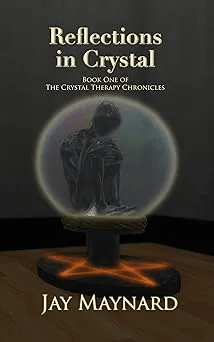
FROM JAY MAYNARD: Reflections in Crystal (The Crystal Therapy Chronicles Book 1)

Magic fixes people the world cannot touch.

Alex Sullivan isn’t crazy — just angry. Angry enough to get arrested. Angry enough to be given a strange choice: prison, or an experimental magical program at a private facility in rural Missouri.

They claim to fix broken people not with medicine or therapy, but with silence, service, and a skintight suit of latex.

Inside the suit, Alex is cut off from the world — unable to speak, eat, or even cry in the ordinary way. Inside the crystal, time flows differently. There, guided by someone who seems to know him better than he knows himself, Alex must face his deepest wounds… and either heal, or shatter.But this is no simple treatment. Alex finds himself on a journey into a hidden world where redemption is earned, the broken are made whole, and some choose never to leave the suit again.

Previously published as Foundational Laminate.

“One of the rare novels I hope becomes reality—a hard look at how to turn the antisocial into good neighbors.”

— Karl K. Gallagher, author of The Fall of the Censor and Torchship

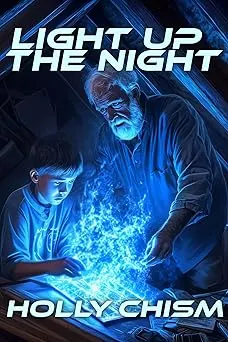
FROM HOLLY CHISM: Light Up The Night.

Dane Crockford is tired. Tired of the green energy crapping out and leaving his wife Rose gasping for breath when their air conditioning dies, tired of trying to hide his use of his own solar panels from the nationalized electrical company, and tired of worrying about his daughter and son-in-law, trapped in an abusive indenture program to pay off their student loans. He’s not the only one, either. Everyone in his home town is in a similar situation, many of them with their children doing dangerous jobs without pay to offset crippling student debt. So when his grandson Toby accidentally discovers an energy generation method that isn’t wholly owned by the federal government, he jumps on the possibility of building something that works, in spite of and around the federal monopoly.

But what the monopoly doesn’t realize is that their grip on Dane, and on his home town, is far less secure than they think. When they disconnect his house from the power grid, they have nothing to hold over him, to force him to work for small rebates on his monthly bill. The utility has unleashed the power of a cranky old man with a rare skill, and they’ve got no idea that they’ve tossed the pebble that starts an avalanche.

“Holly Chism is one of the great, unappreciated authors of our generation. Her work reminds me a lot of Clifford Simak’s.” – Sarah A Hoyt, author of Darkship Thieves

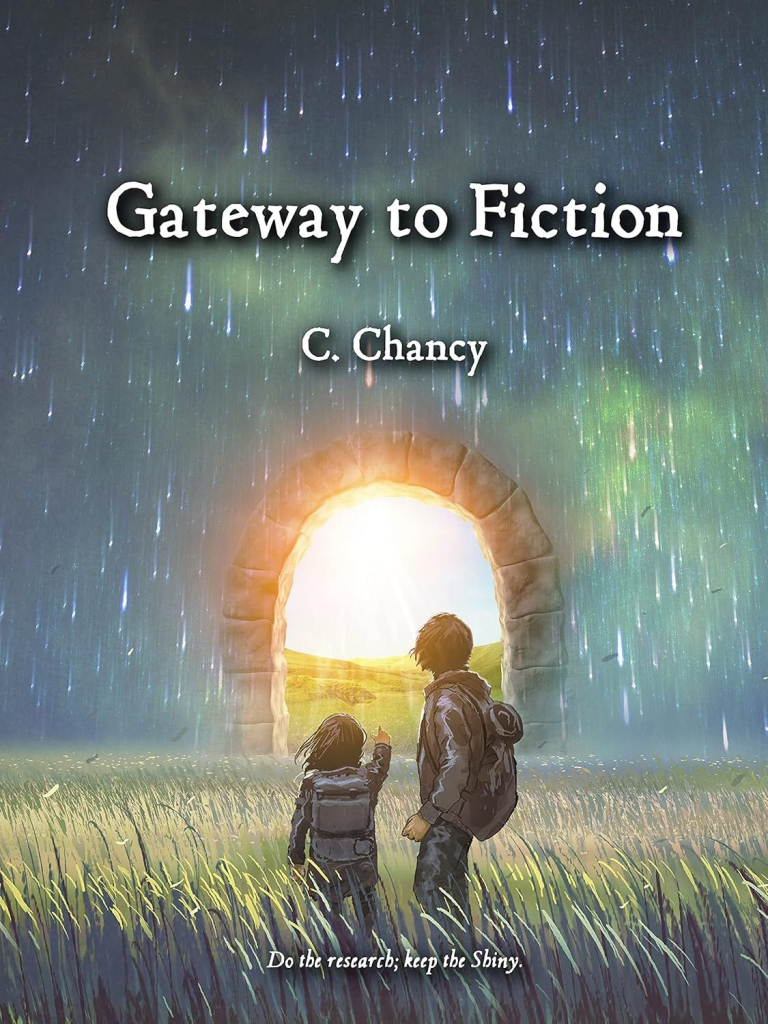
C. CHANCY: Gateway to Fiction

Do the Research, Keep the Shiny! A writer’s guide. Want a good story? Choking on yet another sparkly cinematic production that has all the flash and explosions yet no real people in it? If you want stories done right, sometimes you’ve just got to do it yourself. But how? Roll up your sleeves, we’re going to cover it all. No preaching; no “but thou must follow steps X, Y, Z”. Just, here’s some ideas, and some examples, of how it can work. From getting over that first hump of pen to page, through getting ideas and characters from point A to point B, all the way to how to keep breathing when the whole world’s crumbling in. There are links. There are tropes. And there’s a sober explanation of why fanfic has always mattered. In your mind’s eye there’s a world no one else has seen. Here’s some tools. Worldbuild away!

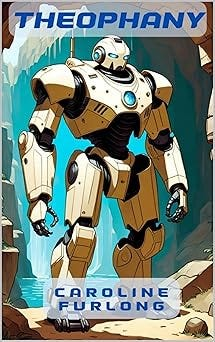
CAROLINE FURLONG: Theophany

Ten years ago the Savients took over Niban, forcing the independent inhabitants into poverty and despair. Bass White saw the careless cruelty of the Savients kill his mother and his father. When a resistance cell is discovered in his city bloc, the Savients seek to make everyone pay.

With his wife Amie, Bass races into the caverns to escape the Savients’ brutal enforcers: the Atrasai. The couple barely make it to the limits of known territory outside their underground city, however, before the Atrasai catch up with them. It would take a miracle to save them…

…or a combat medic robot.

Join Bass and Amie in this sci-fi story of healing, hope, and wonder. After a decade of fear and pain, even a little light can bring out the best in man and machine. But will the best be enough to heal?

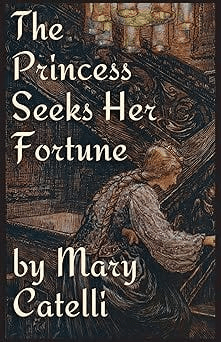
MARY CATELLI: The Princess Seeks Her Fortune.

In a land where ten thousand fairy tales come true, Alissandra knows she is in one when an encounter with a strange woman gives her magical gifts, and another gives her sisters a curse. And she knows that despite the prospects of enchantments, cursed dances, marvelous birds, and work as a scullery maid, it is wise of her to set out, and seek her fortune.

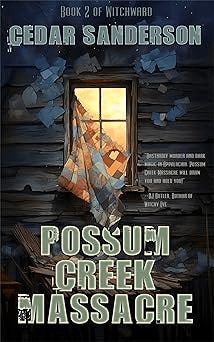
CEDAR SANDERSON: Possum Creek Massacre: A Paranormal Police Procedural (Witchward Book 2)

Detective Amaya Lombard sees the unseen—and pays for it with a chrome hand and a broken past. When a reclusive woman is found murdered in an abandoned Kentucky farmhouse, her body cursed to return to the scene, Amaya is pulled into Possum Creek’s shadows.

Ancient wards hum with rage. A heart has been ritually removed. And a band of young occultists is harvesting magic from the dying. With help from a no-nonsense local deputy who’s getting too close for comfort and an elderly hedge-witch named Merlin, Amaya must unravel a web of blood magic before the curse claims her too.

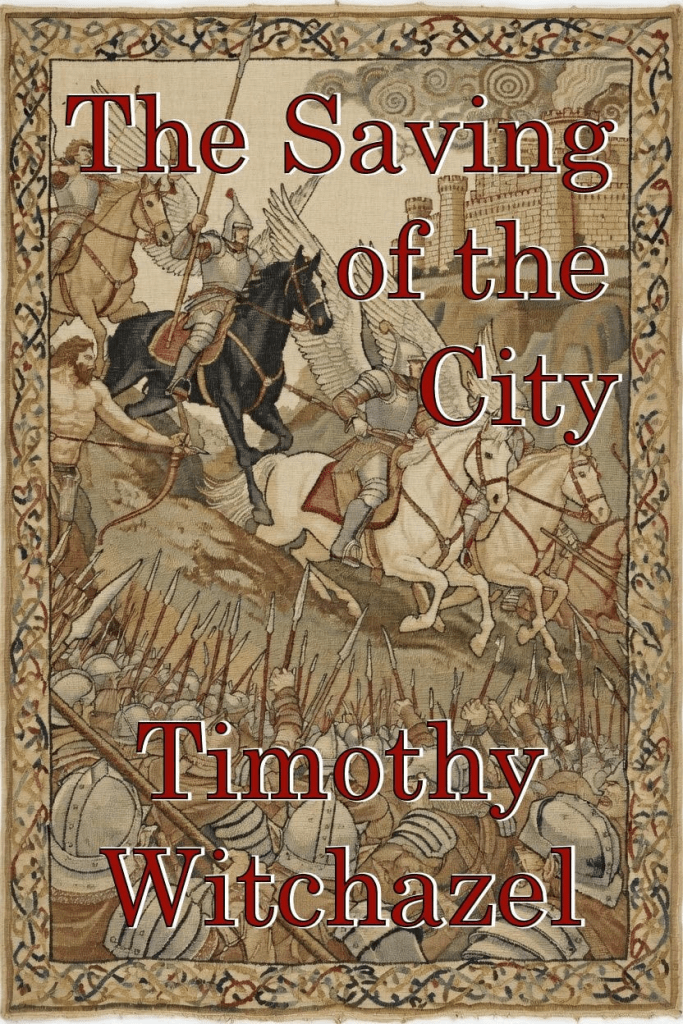
TIMOTHY WITCHAZEL: The Saving of the City: A poem in Alliterative Verse

Sing now the song Of the city besieged
And our salvation unlooked for On the verge of their victory.
The Sultan of the Sandlands Sent forth a sorcerer
A master of magics Mighty and malign
And loosed his legions To lay our walls low.

From author and award winning poet comes a fantasy retelling of the story of the Battle of Vienna in 1683, where Polish winged hussars rode to the rescue of the besieged city and won the day with the largest cavalry charge in history.

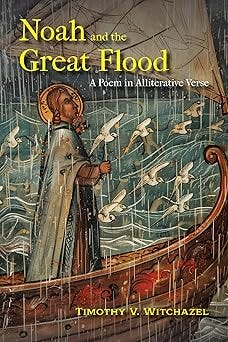
TIMOTHY WITCHAZEL: Noah and the Great Flood: A Poem in Alliterative Verse

From author and poet Timothy V. Witchazel comes a retelling of the story of Noah and the Ark in the alliterative verse, the style of poetry used in Beowulf, Piers Plowman, and other Anglo-Saxon works.

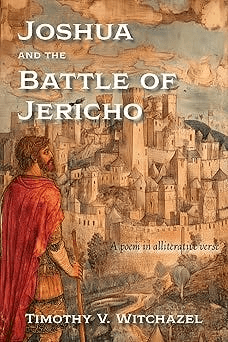
FROM TIMOTHY WITCHAZEL: Joshua and the Battle of Jericho: A Poem in Alliterative Verse

From author and poet Timothy V. Witchazel comes the story of Joshua and the Battle of Jericho in alliterative verse. Tracing the story of the Israelites from the parting of the Red Sea to the fall of the walls of Jericho, the story is retold in the style of Beowulf, Piers Plowman, and other Anglo-Saxon poems.

AND OF COURSE

SARAH A. HOYT: No Man’s Land vol.1, No Man’s Land vol. 2, No Man’s Land vol 3.

Sufficiently advanced science is indistinguishable from magic.

On a lost colony world, mad geneticists thought they could eliminate inequality by making everyone hermaphrodite. They were wrong. Catastrophically wrong.

Now technology indistinguishable from magic courses through the veins of the inhabitants, making their barbaric civilization survivable—and Publius Cornelius Scipio Africanus Kayel Hayden, Viscount Webson, Envoy of the Star Empire—Skip to his friends— has just crash-landed through a time-space rift into the middle of it all.

Dodging assassins and plummeting from high windows was just the beginning. With a desperate king and an archmagician as his only allies, Scipio must outrun death itself while battling beasts, traitors, and infiltrators bent on finishing what the founders started: total destruction.

Two worlds. One chance. No time to lose.

SARAH HOYT: Draw One In The Dark

Deep in the Colorado Rockies, Kyrie Smith has mastered the art of keeping secrets: like how she turns into a panther at will, or how she’s trying to solve a string of shifter murders while serving up the daily special. But she’s not the only one with something to hide.

Take her coworker Tom Ormson—your typical guy next door, if your typical guy could transform into a dragon and might have accidentally killed someone. Then there’s the lion-shifting cop investigating the murders, a guilt-ridden father, and a trio of dragon shifters hunting for something called the Pearl of Heaven.

As if navigating a world of supernatural intrigue wasn’t complicated enough, Tom’s falling for Kyrie, discovering powers that shouldn’t exist, and learning that trust is a two-way street paved with decades of secrets. In Goldport, Colorado, where the coffee’s always hot and the shifters are always watching, solving a murder might be the easiest part of Kyrie’s day.

Welcome to small-town life where everyone has something to hide—and some of those secrets have scales, claws, and a tendency to roar.

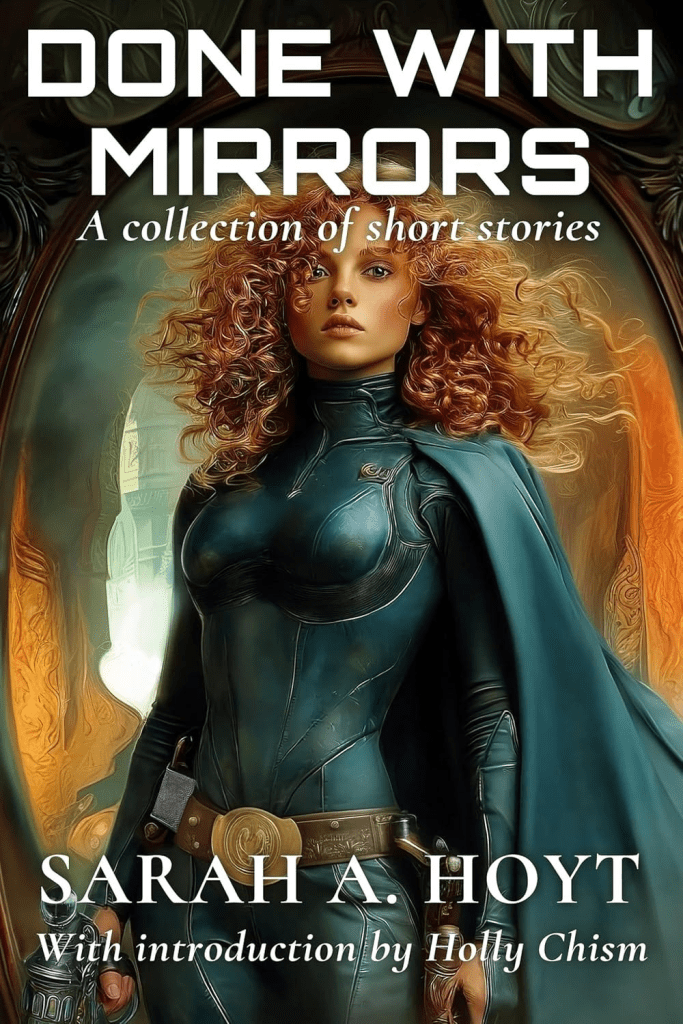
SARAH A. HOYT: Done with Mirrors.

From Prometheus Award winner Sarah A. Hoyt comes a dazzling collection that showcases why her work has appeared in Analog, Asimov’s, and Weird Tales—and why readers can’t get enough.

Magic-soaked noir in 1920s Denver. Mirror-hopping time lords fleeing across infinite universes. Survival in John Ringo’s zombie apocalypse. Murder and mystery in the world of Darkships and Rhodes. Each story in this collection pulls you into a different world—and refuses to let go.

Previously published in acclaimed anthologies from Baen and Chris Kennedy Publishing, these nine tales span Hoyt’s most beloved universes alongside standalone adventures. Whether she’s writing in Ringo’s Black Tide Rising series, exploring her own Darkships and Rhodes worlds, or crafting speculative noir that defies categorization, Hoyt delivers the vivid storytelling and emotional resonance that has earned her a devoted following.

From rain-slicked streets where magic and murder collide to the far reaches of space-time itself, Done With Mirrors demonstrates the genre-hopping brilliance of one of speculative fiction’s most versatile voices.

Nine stories. Nine worlds. One unforgettable collection.

Contains the short stories: Honey Fall; Scrubbing Clean; Last Chance; Great Reckoning in a Small Room; Horse’s Heart; Do No Harm; Dead End Rhodes; Knights of Time; Done with Mirrors.

With an introduction by Holly Chism.

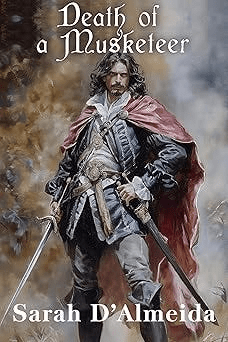
SARAH A. HOYT WRITING AS SARAH D’ALMEIDA: Death of a Musketeer

Book 1 of 5: The Musketeers Mysteries

The musketeers never expected to stumble upon her body—a beautiful woman bearing an uncanny resemblance to Queen Anne of France herself, lying lifeless in the shadows of Paris.

D’Artagnan, Athos, Porthos, and Aramis swear a solemn oath to uncover the truth behind this mysterious death. But their quest for justice quickly spirals into something far more treacherous than they imagined. What begins as a murder investigation soon reveals layers of intrigue and conspiracy reaching into the highest echelons of French society.

As the four friends follow a trail of clues through duels and deceptions, they find themselves squarely in the crosshairs of their old nemesis, Cardinal Richelieu, whose shadowy hand seems to guide events from behind the curtain. Each revelation brings them closer to King Louis XIII himself—and to dark secrets some would kill to protect.

With their loyalties tested and their faith in humanity shaken, the musketeers must decide how far they’re willing to go for truth when the price of discovery might be their very lives. Some mysteries, once unveiled, can never be forgotten.

Promo Post on Wednesday

I could use as an excuse that there is not much point doing it this week, because the Based Book Sale is sucking the oxygen out of the room. Or the money out of your wallets.

But that is not the problem. The kidney infection we thought had been beaten made a return in force and worse. I think we stopped the antibiotics too soon. So two days ago there was a trip to the emergency side of my doctor’s office, and I got a bigger, badder antibiotic. Right now still have infection symptoms (To be fair it’s been two days) but I’m also having symptoms of antibiotic, which is beating my butt from here to next week, and making me dizzy in the bargain.

After I rest some, I might put up a post with all our people in the BBS. (Turns out church and grocery shopping is about the limits of my spoons. I got stuff to start dinner, but I’m sitting down for half an hour first.)

For now off the top of my head, if you search for my number, I have 6 books in it, the most notable being all three volumes of No Man’s Land. Since I have no intention of ever taking it to Kindle Unlimited, but I know some of you are strapped for money (we’re okay, not swimming but okay, weirdly thanks to NML) and thus this is your chance to get all three volumes for $3. Same if you’re not absolutely sure about this brain-child of mine and don’t want to spring the big bucks. This is less than half what one volume will cost you not on sale. Also remember if you want to give it to friends you can buy it now for delivery before Christmas, and they’ll think you’re a big spender.

Other people from our little band on the BBS, off the top of my head: Mary Catelli, C. Chancy, Holly Chism, Nathan Brindle, Caroline Furlong, Timothy Witchazel.

I’m sure there are others. I’m sure I’ve promoted others on the sale on Insty. But both the infection AND the antibiotic make me stupid. I type things like sock up (Sockhop) and worse, and I forget my cats names.

So if you’re on the sale, put it in the comments. I REALLY will try to collect all this into a post this evening, then link it at insty. Remember to copy the link from BBS, if you put a link in the comments.

And now, I’m going to aimlessly surf the net for a while, or maybe nap.

Sick of the Jewish Hate – by Jon LaForce

Sick of the Jewish Hate – by Jon LaForce

I am going to be rather un-Christlike for a moment. I am also not apologizing.

ARE ALL OF YOU DONE HATING ON THE JEWS AND/OR ISRAEL ALREADY? 

*takes a deep breath*

For most of the last… oh let’s say ten years now, it’s slowly ramped up, till I can’t scroll through five facebook posts without seeing somebody going off about “Israel is suborning our government”, “the Jews really run everything in X” (X indicating Hollywood/Movie industry or some other area involving major capital expenditure), “AIPAC owns Trump and the Pentagon,” in a bizarre network of enmeshed conspiracy theories so overlapping I might as well be looking at a Full Stack from IHOP dressed in a syrup made of arsenic, cyanide, and Polonium-210.

And I don’t understand why. Why point the finger at them? What do you gain from it? What has pointing the finger at them, without anything more than supposition, done for your life? Are you happier? Are you wealthier? Did you unlock the secret to immortality?

If your answer to any of the above is “No” or “I have gained nothing,” then why do you persist in this nonsense? Are you no better than a dog returning to their vomit? Are you a mindless animal subject to whatever bestial flights of fancy pass through your skull?

“But Jon, what about AIPAC?”

What about it? It’s no different than the NAACP in that regard, or the NRA, or any other politically motivated organization. Until you figure out how to get the money out of politics for EVERYBODY, we’re stuck with them. Figure out a solution or stop whining, because you have yet to help. 

Things got more agitated after the events of 7 October, 2023. Now, I don’t doubt that IDF personnel have done some dumb crap in the course of that conflict. It’s physically impossible for that not to have happened. However, I am also objective enough to understand why that would happen. 

See, it’s bad enough that Hamas decided to engage in an unprovoked assault. But the prep work for this was massive. And I don’t just mean the initial engagement. I mean the backside, where Hamas fighters were posting snuff videos they filmed during the course of their attacks, to websites specifically set up for this purpose, showing themselves engaged not only in the most vile forms of SA imaginable, but mutilation of still-living victims and corpses, infanticide, geronticide, the works. They openly bragged about their depravity. 

Imagine being the parent who’s safe in that moment, but worried about your daughter at the music festival. Then you get a text message from her. But it’s not the sweet reassurance that she’s safe. It’s a video of her being tortured. The last living memory you have of that precious child you have loved and raised across the last 16, 17 years is her being tortured to death. The last memory of her voice is the sound of her screaming in agony and terror before she’s beheaded on camera. 

Imagine what that does for one’s psyche. 

Now, imagine that writ large across a nation. I’ve known about Hamas’ actions in the days after, for a couple years now, thanks to my own determination to stay educated on armed conflict and it’s evolution. Some days, I wish I didn’t know. I despise any who would enable such behavior, for the sheer evil which it is. I have zero qualms, as a Christian, judging them fit only for Hell and eternal damnation. 

As a sidenote, considering all of the buildup which occurred, how did nobody over in Gaza decide that maybe they should warn their neighbors, to stop this tragedy? How did nobody in Gaza look at Hamas and decide “ya know, I think it’s time to stop the lunatics before people start tossing bombs and artillery” and start eliminating Hamas fighters? From what numbers can be found, roughly 7,000 militant fighters decided to do this. In Gaza at that time, the demographic breakdown allows for 480,313 military aged males between 15 and 64 (not including the militants). Given a sufficient volume of AKs and ammo, nobody associated with Hamas leaves Gaza except in a body bag. Had the Palestinians handled their business on 5 and 6 October, I severely doubt the Israelis would’ve stopped them. And the world could’ve been spared this awful tragedy.

I can understand why the Israeli response has been what it has been. Do I agree with all of it? No. But I don’t need to. Nor do I need to condemn it. Neither of those are my job.

But to try blaming all of the world’s woes on Israel, to try suggesting that somehow a nation smaller than the Greater Los Angeles area, with half the population, is magically running the world via a cabal of yarmulkes and kippahs, is either the height of lunacy, or the world is collectively the biggest collection of bitches in the multi-millenium spanning period of human existence. I’ll let you draw your own conclusions. I already know where I stand. A  whole lot of you need to off your cope trains of believing every single conspiracy theory which comes along so you can feel better about yourself and act so petulantly smug.

Theologically, it still makes no sense to be so angry, bitter, and vindictive against the Jews. I know, somebody wants to run to the comments and say “But Jon, the Jews are responsible for the death of Jesus of Nazareth!”

No kidding. I hadn’t noticed.

“But Jon, you’re Mormon, why do you care about what happens to the Jews?” 

Maybe I like reuben sandwiches. 

Maybe I have friends who are Jews.

Maybe I served in uniform alongside Jews. 

Maybe I remember that our Blessed Savior was Himself a Jew, born in Bethlehem of the house of David out of the tribe of Judah and a descendant of Abraham through Jacob. 

Maybe I remember something more about what it means to be a Christian. 

He prophesied the coming destruction of Jerusalem by the Romans in Matthew 23:37 with the unfortunate epithet: “O Jerusalem, Jerusalem, thou that killest the prophets, and stonest them which are sent unto thee, how often would I have gathered thy children together, even as a hen gathereth her chickens under her wings, and ye would not!”

But just as He spake concerning the destruction and the Diaspora to follow, so also did He declare that in the fulness of time He would He redeem His people of the House of Israel and fulfill the covenant made through Abraham regarding the physical and spiritual salvation of his lineage. Some will argue that doctrinally, only a spiritual gathering exists. I say this is false. Remember that his apostles openly asked him after his resurrection in Acts 1:6-7 “When they therefore were come together, they asked of him, saying, Lord, wilt thou at this time restore again the kingdom to Israel? And he said unto them, It is not for you to know the times or the seasons, which the Father hath put in his own power.”

In plain English: “It will happen, but it is not your place to know that now.” He would go on to explain the necessity of their ministry proclaiming his resurrection and the redemption of all mankind through His infinite and eternal atonement, “unto the uttermost part of the earth.”

Now, in Deuteronomy chapter 28, we get a promise from the Lord to the whole Host of Israel regarding their obedience to His commandments, first with a blessing and then with a curse if they should prove themselves unfaithful. This warning is repeated throughout the Old Testament (1 King 9:7-8, Jeremiah 24:9, and Psalms 44:14). We see the fulfillment of that in these days.

Now, are you ready for something mind-blowing?

Just because Christ said it would happen does not mean you personally need to contribute to the hate or the noise.

Did He call you by name and say “You must hate these people, revile them at every turn, excuse every evil committed against them, and blame them for all the world’s woes?”

Or did He, whom we as Christians claim to be Our Lord and Savior, lay down the expectation that we act with kindness and compassion toward all? 

“And who is my neighbor?”

Ponder those words. And think then upon our Master’s admonition at the conclusion of the parable regarding the Good Samaritan.

“Which now of these three, thinkest thou, was neighbour unto him that fell among the thieves?

And he said, He that shewed mercy on him. Then said Jesus unto him, Go, and do thou likewise.”

Did He command the apostles to raise up an army and avenge His death in blood and fire? Or did He command them to preach the new and everlasting gospel, performing baptism for the remission of sins, confirming the gift of the Holy Ghost upon all who would receive it, encouraging all to become perfect, even as our Father which is in heaven is perfect, “that they might know thee the only true God, and Jesus Christ, whom thou hast sent.” 

What have we been commanded to do? Can we bring about true conversion to Christ through hate and spite? Or must it come from a place of genuine care and true charity?

In the end, whether you do it for political grandstanding reasons, or because you think they’ve got it coming by way of theology, you’re in error. You want to hold specific individuals guilty for their own trespasses? That’s fine. But to try damning and condemning an entire nation for their religion, to try justifying the atrocities committed upon their people, as so many of you have, is every bit wrong. You cannot justify your language or your behavior any longer. 

Be better.

Words of Power

Sorry for being so late — this actually is germane — but I’m still recovering from stupid infection and also not sleeping very well.

Why is this germane? Because words are still not flowing easily — in case you haven’t noticed the blog has been relatively sparse — but I got “poetry” or in this case song lyrics first. This is fascinating to me, at least from a “how my brain works” perspective, since I originally started in writing with poetry, and it’s the family disease, even more so than for normal Portuguese. (I’m totally going to blame the Irish contribution to my DNA.)

Anyway, as you guys know — well, I don’t remember if I wrote it on a post or in comments, so you might not — we had a mini-family-reunion (Because we’re a mini-family) over the weekend, and therefore time to sit at the keyboard was low, but I managed nine songs, seven of which have music and three of which have videos (but not published on youtube yet due to not sleeping much and have to do some house stuff.))

While I was setting one to music I realized there were some words that kick me in the… well, that seem hard wired to the core of my being. Take the line (from the song about the duel at the Troz clan reunion, for those who have read the book) “Instead, he drank his shattered honor/And spent it on his rage.

I used those words advisedly, because “shattered honor” isn’t even an image in my mind. it’s just a kick to a very ancient part of my being that brings up an immediate emotional reaction.

I won’t pretend this is innate. I know exactly what implanted that button in me. To wit, I almost called this post “words my father taught me.” Words like honor and dignity, like ancestral, like ancient, like duty reverberated through my father’s voice like a bell, imbuing them with qualities to which Western Civilization (all human civilization to be fair, but Western for sure and with certain resonance) aspires, and which made it what it is.

Words like that go back. All the way back to the dawn of civilization. They call each of us to things outside ourselves, things that make the individual act and work for things greater than our very short lifespan.

To an extent — understand — they are very strong for me because my father is MADE of them. I don’t know what he would be without those, but judging by myself, nothing good.

Yes the words can be weaponized for evil too. Of course they can. The strongest things in human nature can. But when properly employed, and particularly when combined with the values of Judeo Christianity, they are why men (and some women) will stand between their beloved home and war’s desolation, why a mother will voluntarily starve to death to feed her kids, why men and women will subsume their own desires and needs for those of the people in their keeping and under their care, why a naturally dishonorable person will bear up and act honorable so not as to dishonor those who raised him/her and who taught her/him better.

Properly employed they are the very building blocks of civilized behavior, of what raises us above the appetites we share with dogs (to quote Rex Stout) and the common greed we share with roving nomads who despoil settled communities.

And the words themselves have weight and — as I said — bypass all rational thought to get us to do the right thing in situations when there is not much time to think. As I said, for me, it seems to reach back, ALL THE WAY BACK to the pineal gland, the oldest structure in our brain.

But they are not genetic. Civilization isn’t genetic. It might seem like that, because culture almost acts like it. The things we learned very early, before we consciously could learn anything are almost ineradicable. But they are not. The weight needs to be installed, and it normally is. Through songs and lullabies, through stories told in early childhood, through your father reading you Roman poetry (pfui), through conversations overheard amid adults.

Where that’s missing, where the expedient and the “smartness” of despoiling and tricking others is most admired, civilized culture unravels. And not all the modern appliances, not all the lighting, not all the buildings will save you from ruin and barbarism.

We’re in the fourth generation largely raised by strangers, as women have been told their highest calling is as corporate drones, and men have been convinced their highest call is as tom cats and consumers and only a fool raises his own kids.

Honestly, it’s puzzling — particularly for a time-capsule woman like me — to contemplate how well civilization has held when the words of power have been ridiculed and destroyed.

It’s like for over a hundred years people have been running around chopping at the columns holding up the roof. I’m amazed so much of the roof still stands.
Culture is very difficult to eradicate. Particularly culture that deeply implanted and that old.

But when my generation, the grandparent-age, largely doesn’t remember, the roof starts buckling.

It doesn’t help that the left keeps attacking words, though honestly at this point they’re just silly. They think meritocracy means “group merit” aka head counting of “under-represented minorities.” And of course the utterly despicable Maureen Galindo has tried to claim that Zionists are somehow “anti-Semites.”

But more importantly, we LET them take the words, by not installing them early and often. In our defense few of us had them installed.

It’s time to bring them back. Not by just so stories, no. But by making sure the stories we tell are seen through the lens of civilization. And by raising our own kids (or other people’s kids who need it) and by taking an interest in making sure that civilization goes on.

As always, it won’t be easy, and I’m not pretending it is. But in the long term, if we want civilization to go on we must rescue history, all the way back, and make sure it’s known. And we must make sure those of us with worst impulses have reason to behave in the best way. Because the nature of humans is what it is, and some will always be born despicable. The more of those we raise to be good people the more secure civilization is.

Do, please try, to snatch brands from the fire. Lest the world burn.

COMPLETELY UNAVOIDABLE SELF PROMOTION:

I have a bunch of books on the Based Book Sale. Three of them are NML’s three volumes, which if you buy them now will cost you $3 total. I don’t intend to do this often because, well, it’s expensive (I get about 33c.) But I felt compelled to do it now, so… I’d take advantage of it if I were on the other side of the screen.

No Man’s Land: Volume 1 (Chronicles of Lost Elly)
No Man’s Land: Volume 2 (Chronicles of Lost Elly)
No Man’s Land: Volume 3 (Chronicles of Lost Elly)
Draw One In The Dark (The Shifter Series Book 1)
Death of a Musketeer (The Musketeers Mysteries Book 1)
Done With Mirrors: A Collection of Short Stories (Sarah A. Hoyt’s Short Story Collections)

the Secret Cheat Code by James L. Cambias

High school English teachers get obsessed with fairly minor aspects of literature. One perennial favorite is “Theme,” and this leads to hours of frustration in class as teachers struggle to make a room full of bored students understand — let alone care about — the theme of a story. Moby Dick is about Man versus Nature, or the sin of Pride, or the nature of obsession, or some damned thing like that. The Great Gatsby is about social class, or the nature of identity, or the moral corruption of the 1920s, or maybe about giant eyes watching you.

          The students come away convinced that literature is either filled with hidden secrets they’ll never be smart enough to understand, or that literature is full of plonkingly obvious messages and it’s a bunch of hooey not worth understanding.

          The funny thing is that English teachers — and let me note here that my experience was in a very good school with amply qualified teachers — focus on theme and message but ignore a lot of the mechanics of telling a story. I don’t think any of my English classes talked about dramatic structure, or narrative voice, or how to create a scene. It’s as if we were studying automobile repair and the instructor spent all his time telling us about different kinds of fuel injector systems without really going into why you need fuel in the first place.

          In recent years I’ve taught in a summer program at Smith College, trying to guide a dozen bright high school girls through how to create a science fiction story over the course of two weeks. I think I’m learning as much as they do. In the process I’ve had to rediscover what all those topics that bored me in high school English are really for. And the biggest revelation has been theme.

          Theme isn’t (only) a way for high school teachers to frustrate students by having them try to discover some secret hidden lore in every story. It’s a cheat code for writers.

          Let me explain: the process of writing involves a little physical effort, chiefly moving your fingers around on a keyboard. But it does demand a lot of mental effort. Every word on the page represents a decision. And decisions are hard.

          Seriously! What neurobiologists call “executive function” involves multiple regions of the brain, including much of the prefrontal cortex, the cerebellum, and parts of the midbrain. Lots of cells are active when you make a decision. And when cells are working, be they brain cells or muscles, they burn energy. They generate waste. They get tired. There’s a reason why we make bad decisions when we’re tired. Your brain literally doesn’t work as well.

          For experienced writers, the specific words in a sentence don’t require a huge amount of decision-making — rather the way that the details of driving a car become essentially “muscle memory” for an experienced driver, so that one can drive while having a conversation, or planning a novel. But plenty of decisions remain even for writers who can crank out sentences by reflex: what’s going to happen in a scene, what scenes go in the chapter, and so on. And those decisions take work.

          Themes are a way to streamline your decision-making process by narrowing the scope of things you have to decide about. I’ve always said that “constraints cause creativity” and it’s true. Faced with a blank sheet and infinite possibilities, most people can’t create anything. Give them a set of constraints and then the creative spark ignites. That’s what story prompts are: constraints, so that you can apply your limited executive function ability to a defined task instead of wasting time and effort trying to decide what task to do.

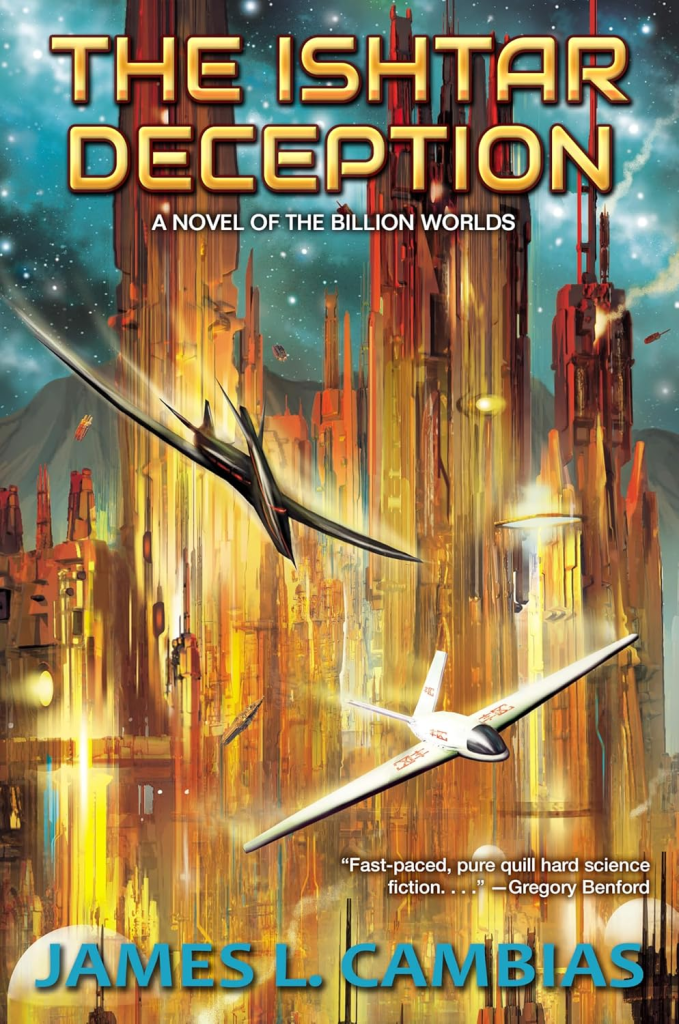
          A theme is a ready-made set of constraints. Let me use my new novel The Ishtar Deception as an example. As the title might suggest, the theme is deception. My main character, Sabbath Okada, is a secret agent sent by the government of Deimos to the megacity of Ishtar on Venus in the year 10,000. The life of a covert operative is naturally full of deception, and having that as my theme made all my story choices very simple: nothing can be as it seems. Every action is a deception of some kind, every relationship a betrayal. Even the betrayals aren’t what they appear to be.

          This actually makes the job a lot easier. In every interaction between characters, I already knew that there was deception going on. That decision was made for me when I picked my title. Following the famous guideline of “who, what, where, when, how, and why,” I had already made many of those choices before any scene began. “Who” was everybody. “What” was lying. I managed to off-load a third of my decision-making effort to my theme!

          Along the way I finally understood the distinction between a theme and a message. A theme is a process, a message is one possible outcome. In my novel there are many deceptions going on, for many different reasons. Some are justified, some are silly, some are deadly. Having deception as my theme meant I could explore the various kinds of deceptions people commit, and the reasons for them. Whereas if I started with a message — “Lying is bad,” perhaps — then all I could do is state it, over and over.

          So don’t be afraid of themes. They weren’t invented by high school English teachers to fill up class time, they were invented by working storytellers as part of the universal tool kit for creating stories. When Homer was trying to figure out what would happen to Odysseus next, he just had to decide “who is going to violate the rules of hospitality in this section, and how?” He knew his theme. Pick a good one for yourself and half your work is done.

James Cambias’s newest novel is The Ishtar Deception, the latest in his “Billion Worlds” series of far-future hard science fiction adventures from Baen Books, due for release June 2 of 2026. You can read his blog at www.jamescambias.com.