























































Born Free
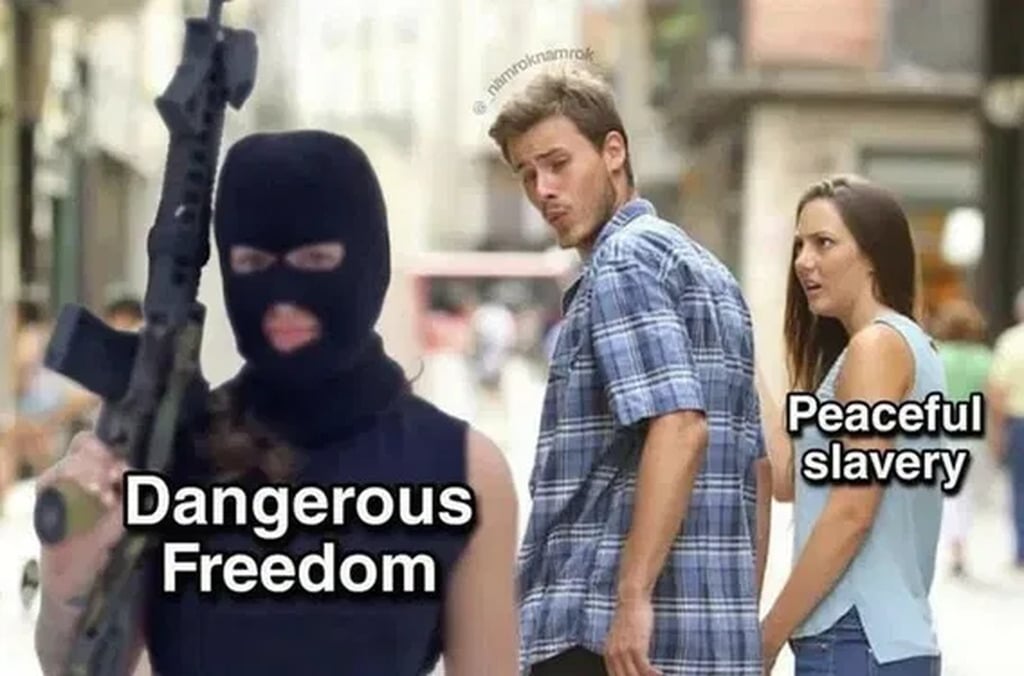
*I started to write a post in response to a “European right” blogger who says that Trump’s attitude is making it hard on the European right. But it devolved into yelling a lot of swear words, so.
1- I know it’s necessary to join the “orange man bad” wave, particularly in Europe, or you’ll get attacked. I’m not impressed. We’re not going to elect another George W. just to please you.
2- Trump is not showing Europe half the hostility Europe has SHOWN US OVERTLY for the last 100 years.
3- Dear Europeans, we don’t think paying your bills and allowing you to suck sweet, sweet socialist tit while dissing us makes us strong and powerful. We don’t LIKE you there in our basement. MOVE OUT. Get a job. Stop lecturing us.
4- You know what the European right could do? Get off the ground, close their legs, shoot the bastages in the face. If you stop responding to the left’s pressure and insults by lying down and giving them everything they want to stop from being “hurt” it will make a much bigger difference than anything any American does.
5 – The European right is slightly more tolerable, because they’re not (as) internationalist. But they’re still natural enemies of the AMERICAN Right. Hence, this blast from the past. Because we’re not the same.
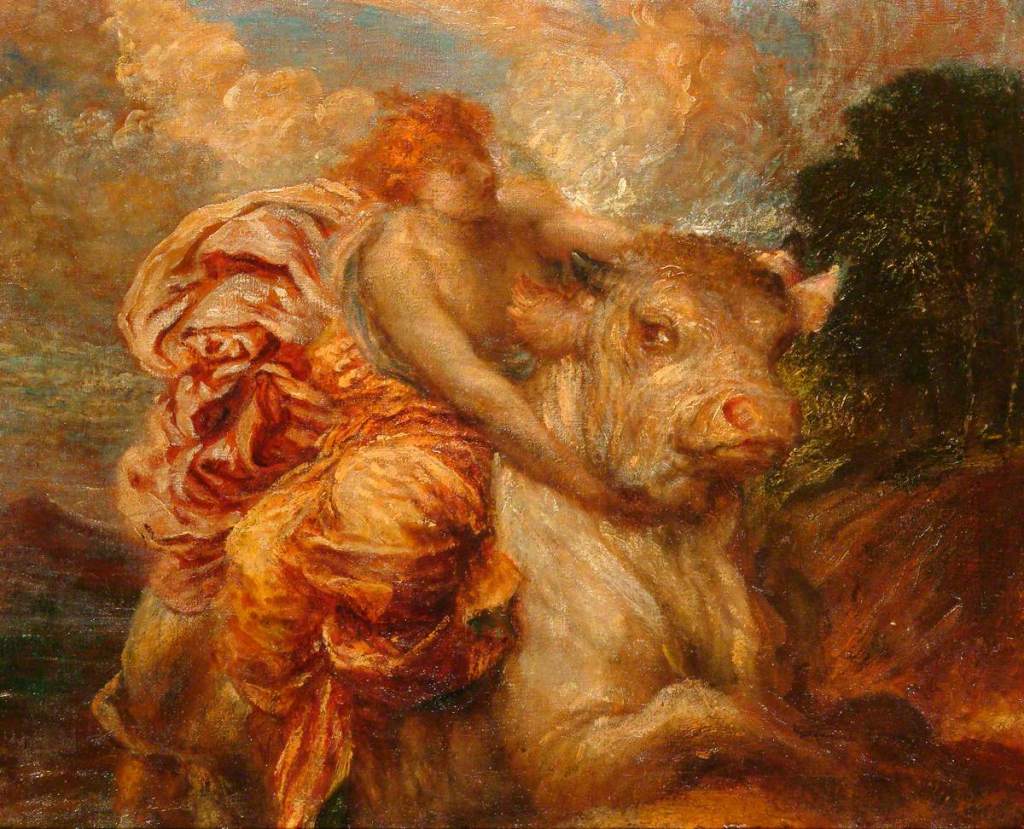
6- Least it be thought I hate Europe. I don’t hate it. I don’t love it. I love some Europeans, but Europe collectively has a tendency to run off with the occasional Bull(shit.) Okay, so do we. Fair is fair. But when their bullshit consists of blaming all their problems on us, I’m going to get seriously salty.)
So, instead of the post I started which I think was very funny, but also couldn’t be read by anyone under the age of 45 due to profanity, I’m repeating the post below – SAH*
Someone asked me to write this a while back, and I’d completely spaced it until he reminded me on Facebook.
But sometimes, particularly when dealing with multinational twitter mobs, I feel like we’re speaking different languages and terms like “right” and “left” wing get wildly misinterpreted, leading to a certain twit(teriac) for instance saying I hated everyone to the left of Jeb Bush (Hate, no. Despise their politics, yes. And I include Jeb Bush and quite a few people nominally to the right of him in that.) while others claimed I was a big Jeb Bush fan because they think that’s what “right wing” means and they’ve self-obviously decided I’m right wing since I hate Marxists.
First, right-left have almost no meaning to where I stand. I define myself in the authoritarian/non authoritarian axis, which is completely separate, and where I’m just a little shy of the “no government nutters” (I can call them that because, you know, they differ far less from me than the “government in your face” weasels, so I can say they’re totally crazy.) Round about where the founding fathers were. Government is a good servant but a bad master, and all that.
Of course, in the American spectrum, uninfected by the European Spectrum, that is indeed what should be called “right wing.”
The problem of course is that the spectrum is NOT uninfected, since we’re in an era of global communications and the meaning of Right Wing in Europe has started to seep in over here, both in leftists minds and in the minds of those who are self-defining as the right.
The other problem is that technically, if you go by the original meaning, the sides should be flipped.
Clear as mud?
Don’t worry, I can confuse it more.
Let’s start with the ever-reliable wikipedia: In France, where the terms originated, the Left has been called “the party of movement” and the Right “the party of order.”[1][2][3][4] The intermediate stance is called centrism and a person with such a position is a moderate.
Let’s first correct the obvious problem. If you’re precisely in the center, the position is called “dunderhead” — and this applies to anything, not just politics. That out of the way, if center is defined by “not following an exact party line” I think most of us would be.
OTOH look at that definition again. “The party of movement” and “the Party of order.”
First of all impossible, since life is movement. This is where I think the left gets their bright idea reality is leftist, except they’re missing the point of where these definitions originated and what “movement” and “order” really mean.
This was of course in revolutionary France. Movement had a very specific meaning — mostly towards Madame Guillotine, obviously — in terms of you wanted to change everything, the hours of the day and the names of the days of the week included. Order, meanwhile was the “not so fast, this structure works.”
So, what that actually means is that left is the side of “let’s change everything” and the right the side of “let’s keep everything as it is.”
If you apply that to the current spectrum in the US (and most of the west) where socialist-like-structures and “leftist” ideas have permeated the political lives of the citizens for far longer than anyone reading this has been alive, the spectrum does a tilt-whirl and suddenly we who are don’t tread on me libertarians and who think the cause of liberty could be justly served by taking everyone from office and putting them in jail become left wingers, in the mold of the ones who shouted “Aristo, aristo, to the lamppost.” (And since I’ve often felt like shouting that, I empathize.)
BUT that is not really a good picture. We know how the French revolution ended. Having dived down that rabbit hole in order to write Through Fire, it became obvious that the French Revolution, the “leftist” movement of our time par excellence, the grandmother of the Russian Revolution and of every other movement that has fed the graveyards of the 20th century was very much a STATIST revolution. If you ask yourself what the difference between the American and the French revolution was, it would be that in the American revolution the people were set free to pursue happiness and equality before the law, while in the French revolution, both happiness and absolute equality were ENFORCED. (If you think happiness wasn’t enforced, read some of the trials of people who declared themselves less than ecstatic in post revolutionary times.)
So, left would be best defined as “movement towards an imaginary utopia in which the government grants all sorts of happiness, equality and other boons.”
And the right?
Ah, there we hit on the crux of the problem. While we’re fairly sure what the left is (and btw, the definition above is why they believe they are the party of the future and they will inevitably win, because in their eschatology any “progress” ends one way, with the government as a sort of smiling goddling dispensing benes to the happy people of Brutopia.) “right” can mean many things.
First let’s dispense with the left-enforced definition of right which ends in Hitler. To quote a public figure “that’s just retarded, sir.” Just because Hitler and Stalin had a big tiff and pulled each other’s hair, it doesn’t mean they weren’t both leftist, socialist bastards. They were just arguing whether socialism — that utopian final stage of the revolution where the state looks after everyone like a mother or a father, depending on your language of origin — should be national or international. And in this case “international” meant “Russian” — or at least it did in the seventies, and I have no reason to think it changed — while national meant “of the genetically related people.”
(For instance when Bernie Sanders announces he’s a socialist but a nationalist then says he’s not a communist, I believe him. The appropriate name for his announced ideology is Fascist.)
That fascination of the fascists with nationalism, btw, explains why the left can’t seem to accept national love/pride (i.e. they’re not NATIONAL socialists) and why so much of Europe thinks patriotism is a precursor to war. Europeans are taught that in school too. I was.
Okay, so that’s disposed of, now … if the right isn’t National Socialism, what is the right?
If I had to hazard a definition that would fit both Europe and the US I’d say the “right wing” meant “a clinging to the essence of what the nation means and to the nation’s original idea”, as it were.
In Europe, of necessity, right wing means a lot of “our people, our land” and really in its ultimate expression “our king.” Right wing parties in Europe are often associated with keeping or reviving ancient traditions, with the country’s state-religion and with the “way things have always been done.” There will almost always be a reflexive xenophobia, for instance, which is not necessarily a bad thing. It is not racist to say “our land, our customs. You want to live here, you conform to us.” (The left’s reflexive oikophobia tends to chew the ground out from what people know they can count on, from language in everyday interactions to things like protection of children and women. It is time the European right learns to say “No, not all cultures are alike.”) If you’re thinking that this is the same as us saying “if you want to live here, speak English and conform to our laws”… not quite. In Europe an immigrant will never be “of the land, the people, the traditions.” You could be Yoless from Pratchett’s Johnny Maxwell, and learn Morris dance, and you’d still not be “quite British.” Assimilation takes generations, and sometimes not even that. Other things come with that definition as freight. The right will still prefer to keep women and men in traditional roles, and they’re often shocked half to death by differing sexual personas.
Now if that description sounds familiar, it is because it is what the left assumes the right here is. And some right wing people, reflexively, will embrace it and claim it. Just because the left hates it.
But by and large, as someone who has cruised right of center blogs in this country for a very long time, no. That’s not what right means in the US.
This is why when the leftists (who true to their origins only understand themselves as in opposition to the European right) come cruising in, they’re always shocked when we don’t rise to the bait of “racist, sexist, homophobic.” They’re always terribly confused a lot of people here in fact are of “non conforming religions” (or none at all) and non-conforming sexual habits, and varying shades of tan. And the only explanation they can find is “self-hating.”
That is because the left (worldwide, really) since the collapse of their model, the Soviet Union, has gone a little loony and fallen down a time-space-funnel, in which they’re fighting “right wing” in Europe (and probably circa the eighteen hundreds, but never mind that) not in the States.
The right in the US is the side that clings to the origins and the founding. This is the side that believes ultimately sovereignty rests in the individual and the government should bow and doff its hat to us. We’re the side that believes that no matter what color, size, sex or whomever you decide to sleep with, you’re still an individual, entitled to equal protection under the law.
We believe in life, liberty and the pursuit of happiness.
Which means in many ways we’re the horror of the European right. If it weren’t for the fact that both “rights” are fighting the much greater evil of the Marxist theology unleashed upon the world (and yes, it is more evil than even the European right) we’d be going at it like two equal weight boxers in a ring.
My dad, who is Europe-right (mom weirdly is MOSTLY American-right. Not fully, because she still thinks morality, etc. should be enforced, but I think that’s a generational thing. And no, I don’t know how she ended up don’t-tread-on-me in Europe. She didn’t even read Heinlein) for instance believes it is not only the government’s right but the government’s duty to look after things like health care. Oh, and if the government periodically shoots the wrong guy, well, that’s the cost of keeping other people safe. He’s not a bad man, understand — but he’s a man of his time and place. He draws the line at communism, not just because it’s evil, but because it’s a stranger to his country and enforced from outside.
We’ve gone the full rounds (one of the few times we’ve yelled at each other) because he can’t understand that I don’t view the government as some thing that should “look after” me, but as something that should do the minimum possible to ensure I have the space to look after myself, and anything more than that is a violation of my rights and a thwarting of my duties as a free human being.
And that’s the difference between our right and their right. I’ve found it easier and far more conducive to familial harmony to pretend there is no difference, and to nod along with their serene belief that “right wing” in America means the same it does there.
Since our left doesn’t see the dividing chasm, they often refer to the “right” as monolithic and what they get in their press (which is to the left of ours) is convenient in obscuring the differences.
No reason to shock mom and dad by letting them know their daughter has become a USAian radical, after all.
BUT the actual meaning is radically different (quite literally RADICALLY different. We are the “radicals” who turned the world upside down by believing authority flows from the individual up, not from the state down.) As I hope it shows above. Though being a word more often defined by opponents and people with the “feels” it has the imprecise quality of a mirage rising from asphalt on a hot day.
One caveat is that the American right wing might never make any sense in Europe. Culture is something that changes very slowly and often doubles back. So I restrain my evangelizing impulses there. They might come to be like us, but it won’t be in my life time.
And the right in Europe only makes upside-down sense in America. It would be impossible to create a right-wing-in-European-terms country out of the US. Our multi-cultural, multi-religious and multi-racial country couldn’t turn into an European traditional country. Not for a few hundred years at least. Which is why all movies that do that are profoundly unconvincing. And why it’s so weird that the left doesn’t see the difference between the two rights.
It is also, unfortunately, why the sf books from the fifties or so, particularly the ones by Heinlein, which show the whole world unified under the American system are such a pipe dream.
It might have seemed logical and even attainable after WWII but as he himself seems to have realized in Tramp Royale, the real world is too diverse and culture and cultural differences too real for that utopia ever to have been possible.
America is a place in the heart*, and as such it can only be won one heart at a time.
*Note for idiots: not denying we also have a territory that should be defended. But being American necessitates believing in the constitution as its ultimate expression.
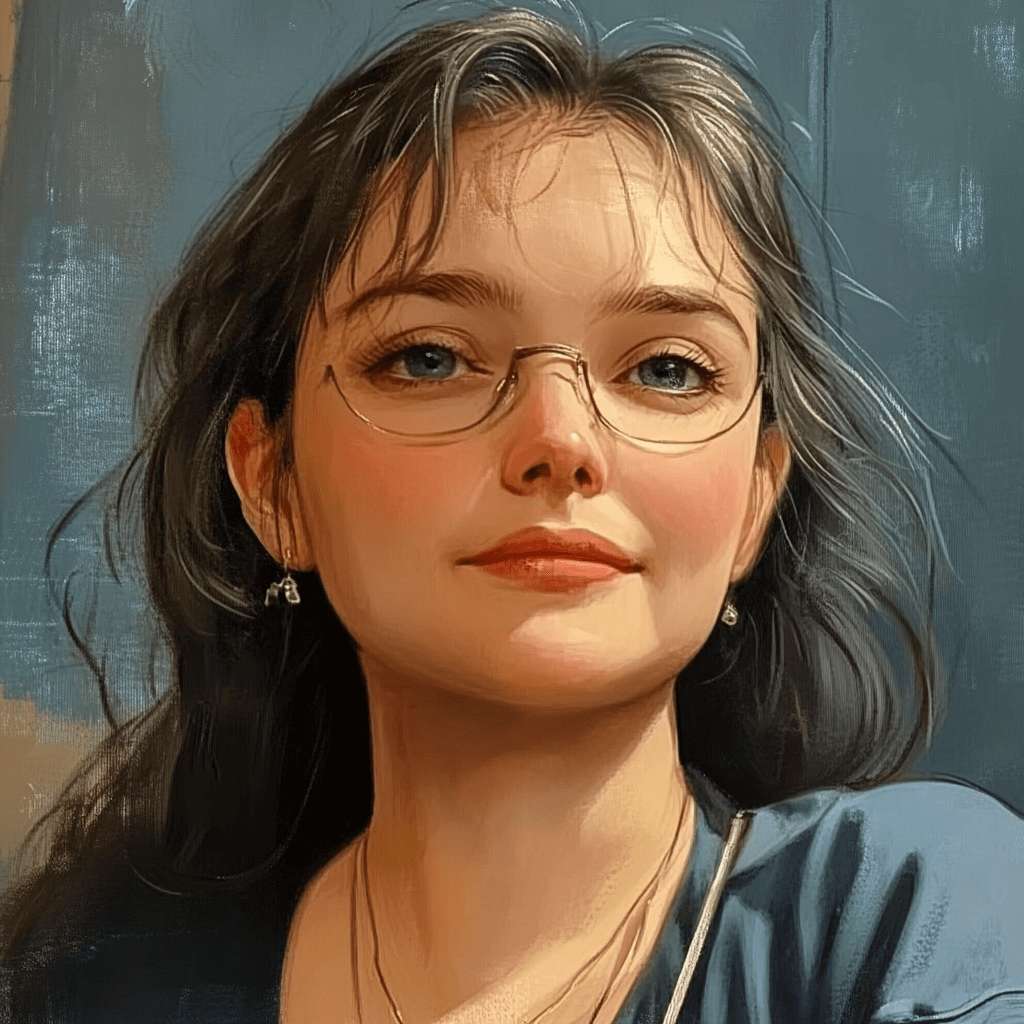
So, I should write a post, but I’m feeling downright peculiar. I think I’m coming down with whatever is going around. It’s that or the thyroid meds suddenly stopped working (Honestly, could be either.)
Normally I’d spend till 2 pm writing a post, but we have guests coming this weekend and the house must be useable. Okay, no way the front room is getting done. That’s where I’m unpacking the library. However it is a goal not to put everything that doesn’t fit the rest of the house in there.
Honestly, just dusting, running the vaccuum and sorting laundry is going to be a chore.
So:
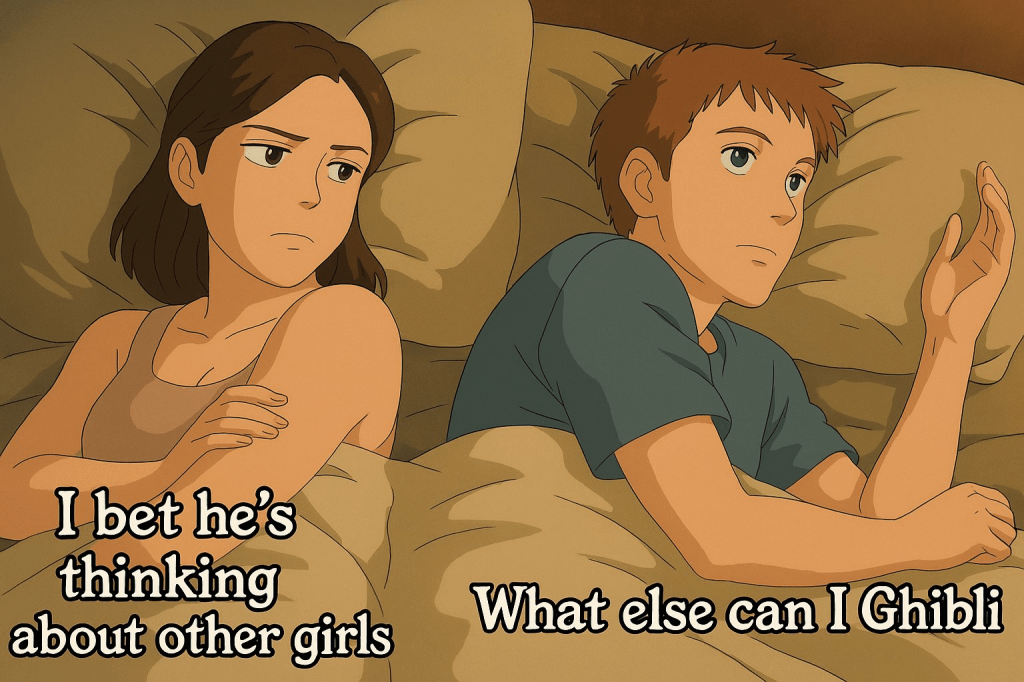
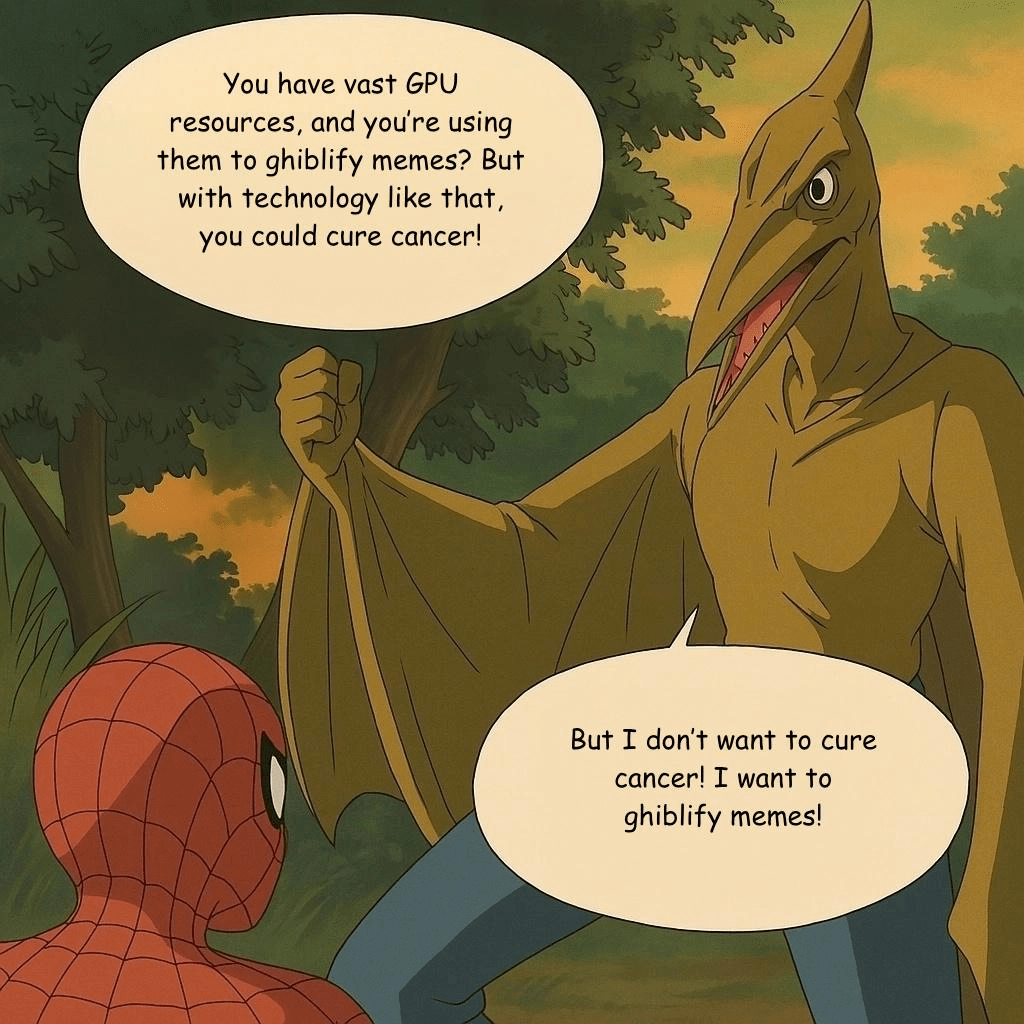
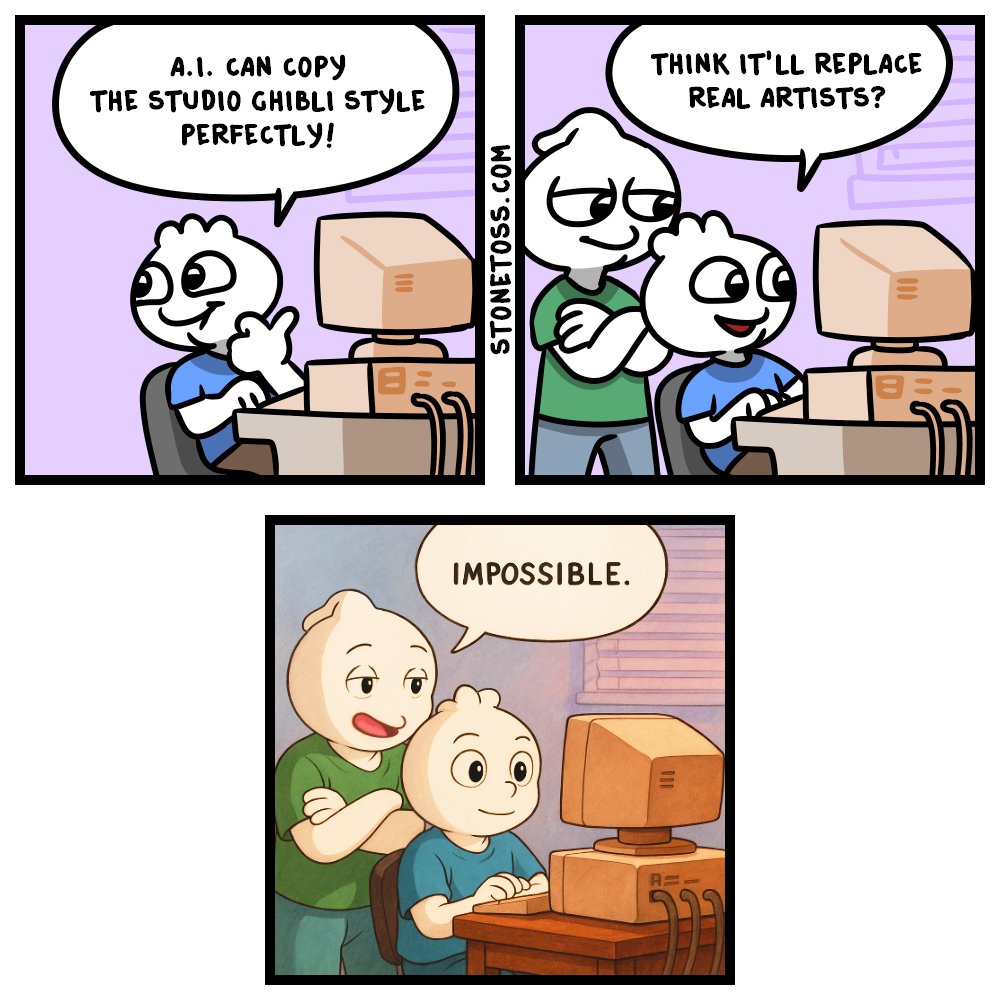
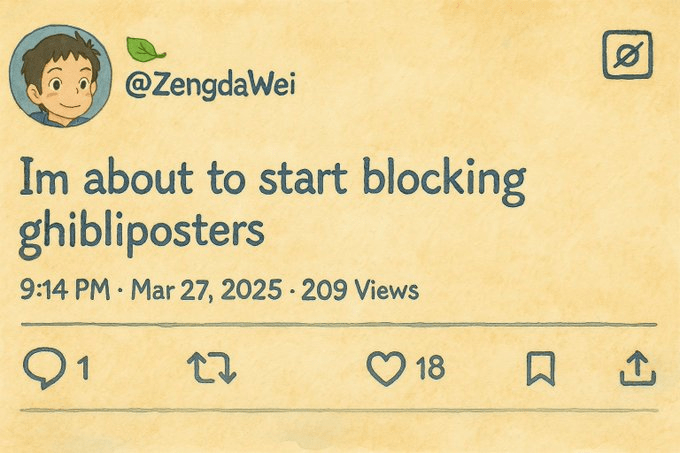
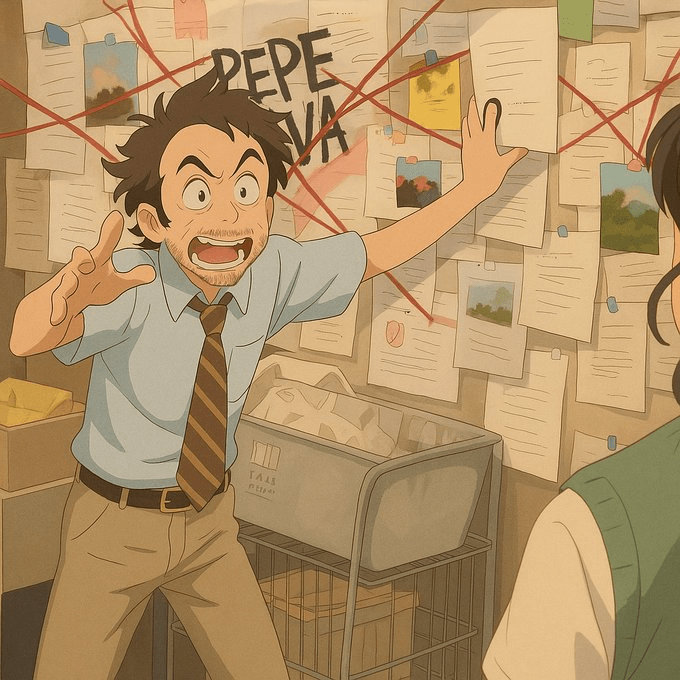
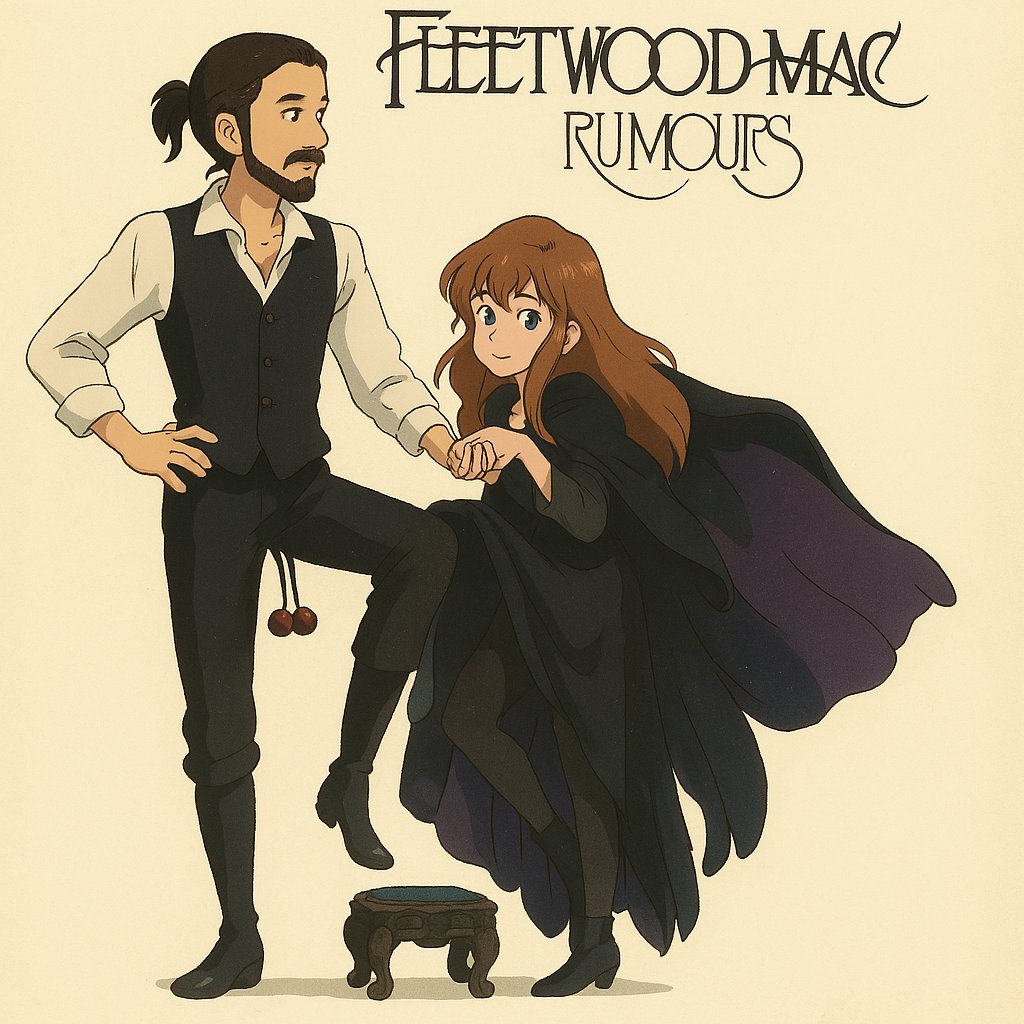
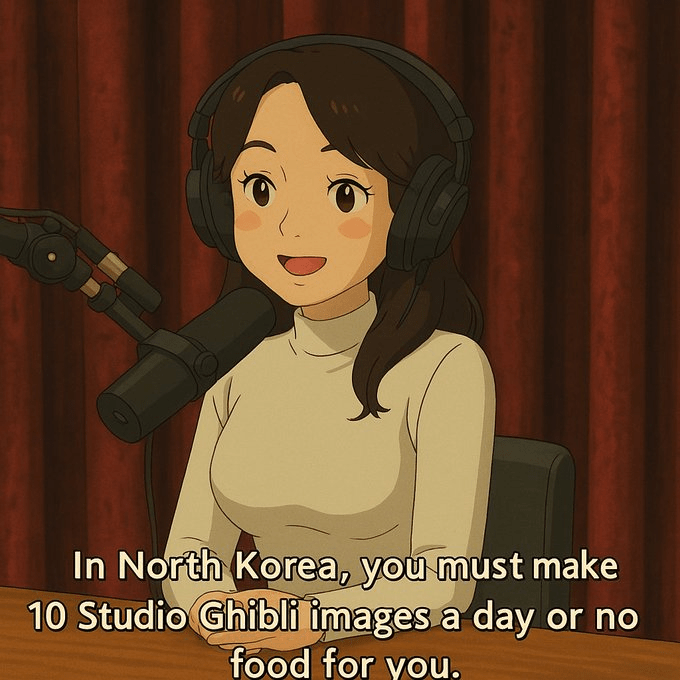
1-why is everyone on line suddenly making pictures in the style of Studio Ghibly?
2-Is it a bastardization of the studio’s art?
3- Why is everyone putting it on memes?
4- Can it be taken too far?
5 – OMG Sarah, why?
1- Well, so far this is our best guess:
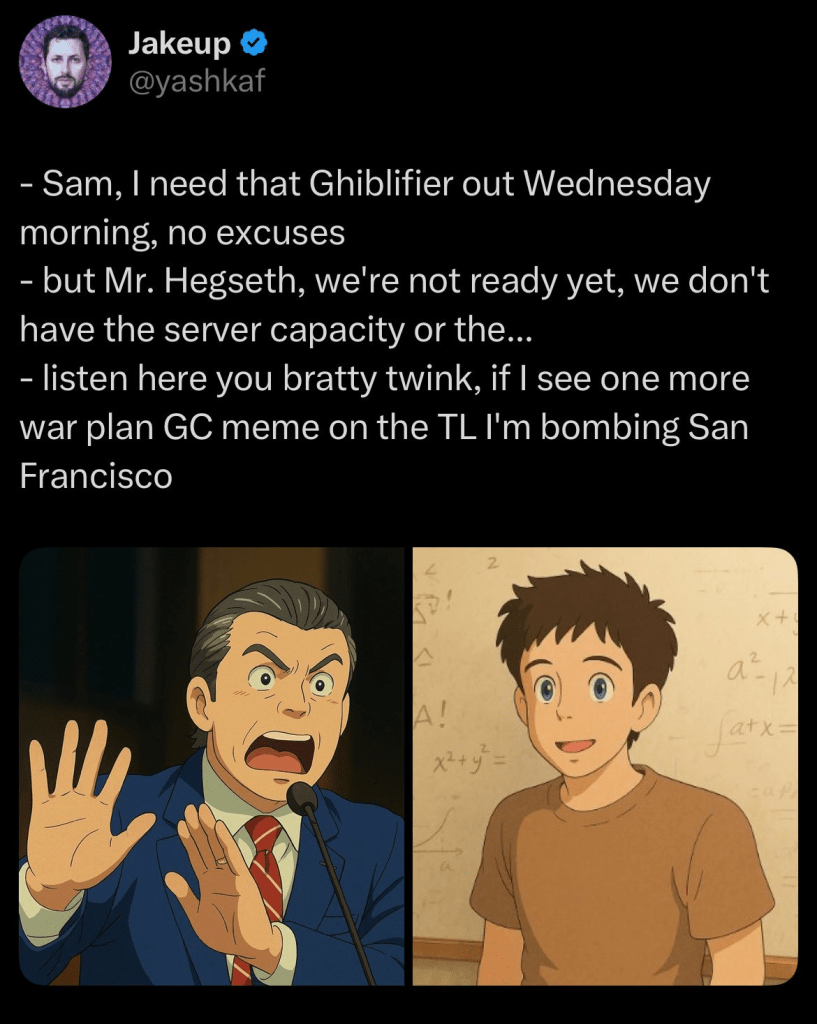
2- Yes. Absolutely. And? Look at it this way, Studio Ghibli is getting more publicity than it’s had in…. well. than it’s ever had. If it’s somewhat smart, it can make money from this.
3- This is my best guess:
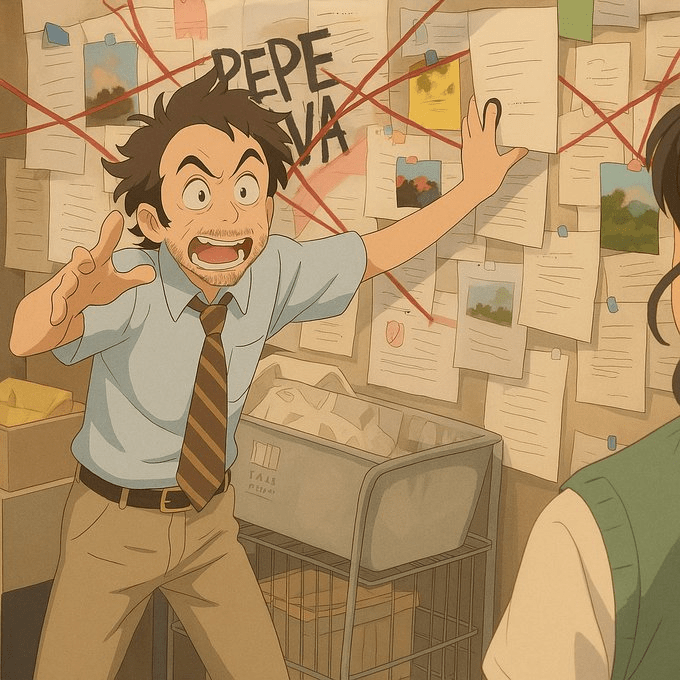
4- oh, Lord, yes.
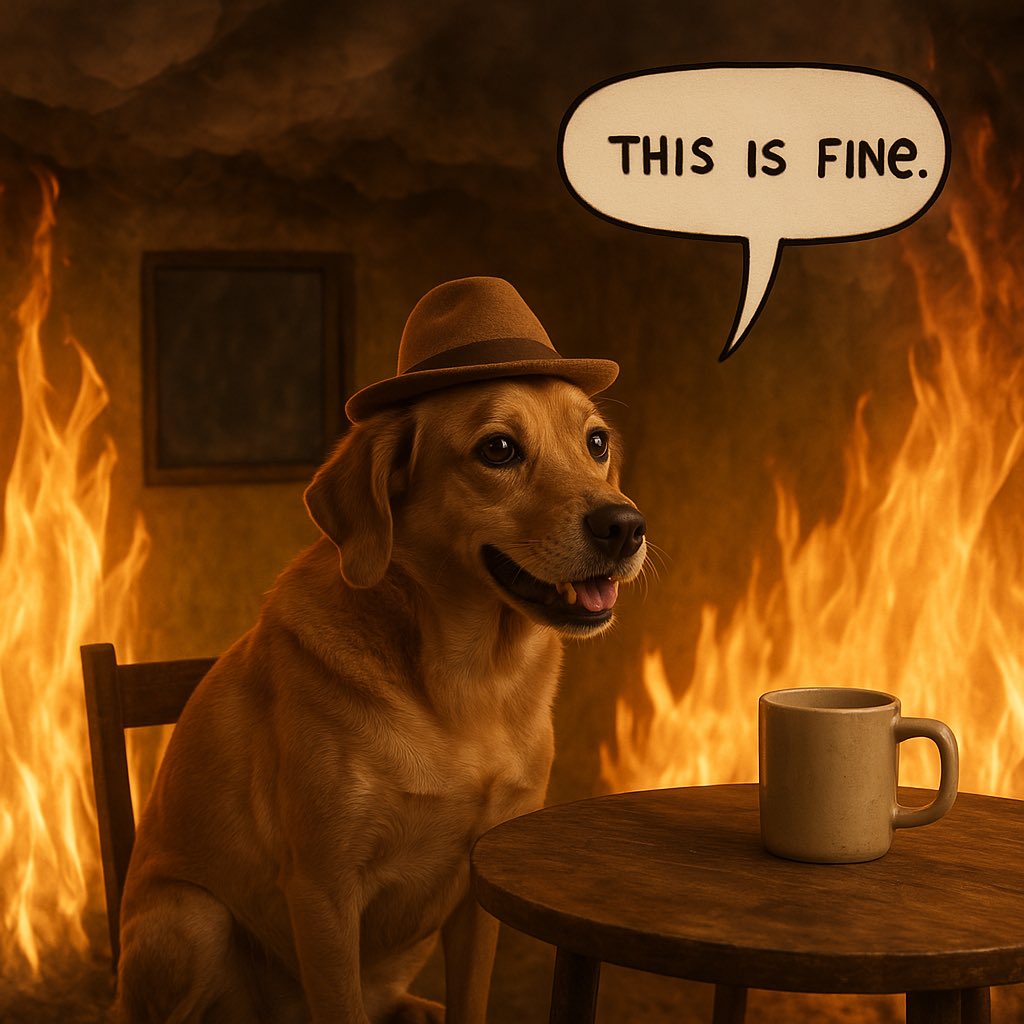
5- Did you see the thing up top? Right now I’m coming down with something bad. I thought I was just very depressed (had some bad and utterly unexpected health news for someone in birth family. No, not parents. They’re in their nineties bad news is not unexpected.) Then yesterday I found myself just watching endless stupid you tube videos about lost civilizations and catastrophes.
I’ll grant you it’s not so bad as when I spent a 2 months last winter watching videos of someone walking through cemeteries and talking about old graves. But then again, I’m hopefully not as ill as I was back then. I hope. Since that almost put me in the hospital and whacked my thyroid. (Which would explain why my hair is falling out again.)
Instead it was an endless array of “why the CIA is suppressing proof of Atlantis.” (I mean for all I know the CIA thinks it is. I mean, they believed that the Soviet Union was unbeatable!)
But once I realized I was doing that, I decided to Ghibli myself. Which, yes, I do realize is restricted in five states and illegal in New Jersey. But there it is…
The results are …. weird. I mean, it strangely does better at this than at doing a pen and ink sketch of me. It only Ghiblis me alone, though. If I try to use one in which I’m with Dan, it either turns him into a bunny or a giant Pikachu. Why? I DON’T KNOW. Studio Ghibli have something against mathematician?
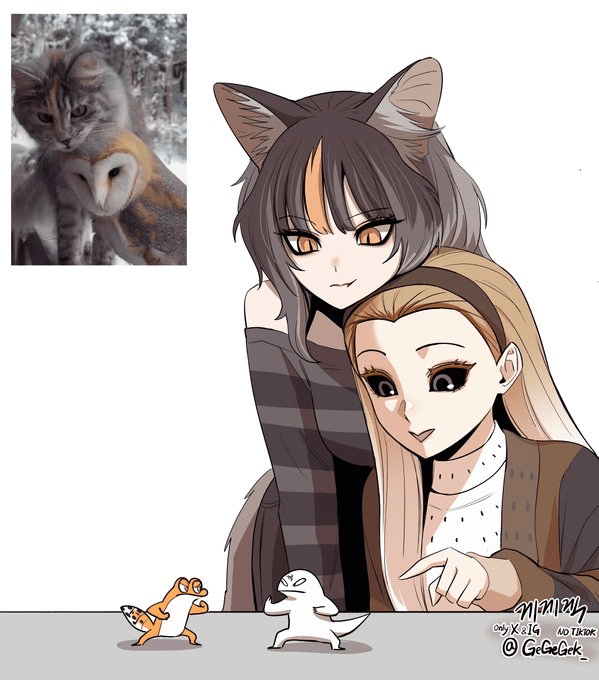
Anyway, here’s what I got other than the picture above:
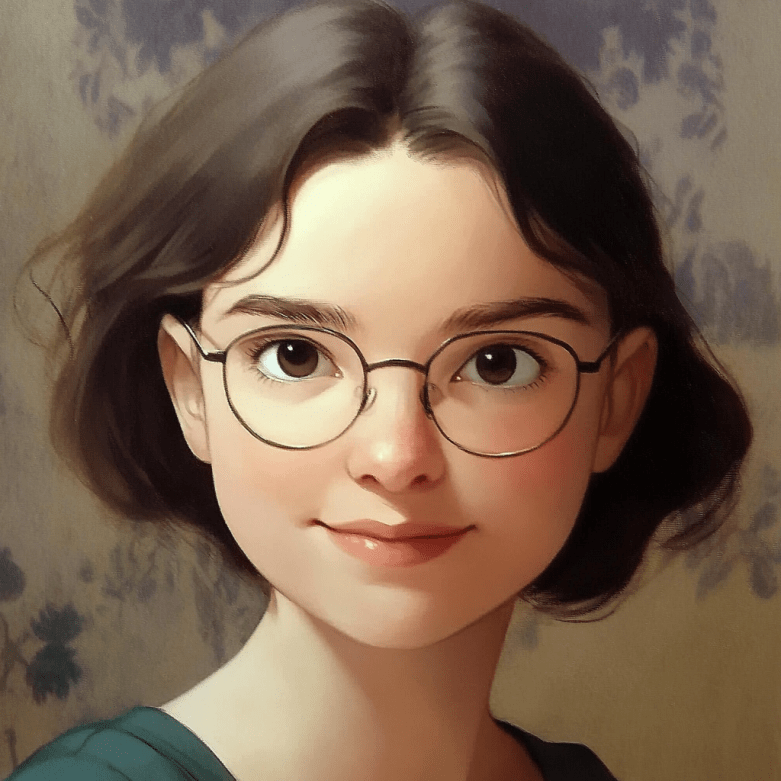
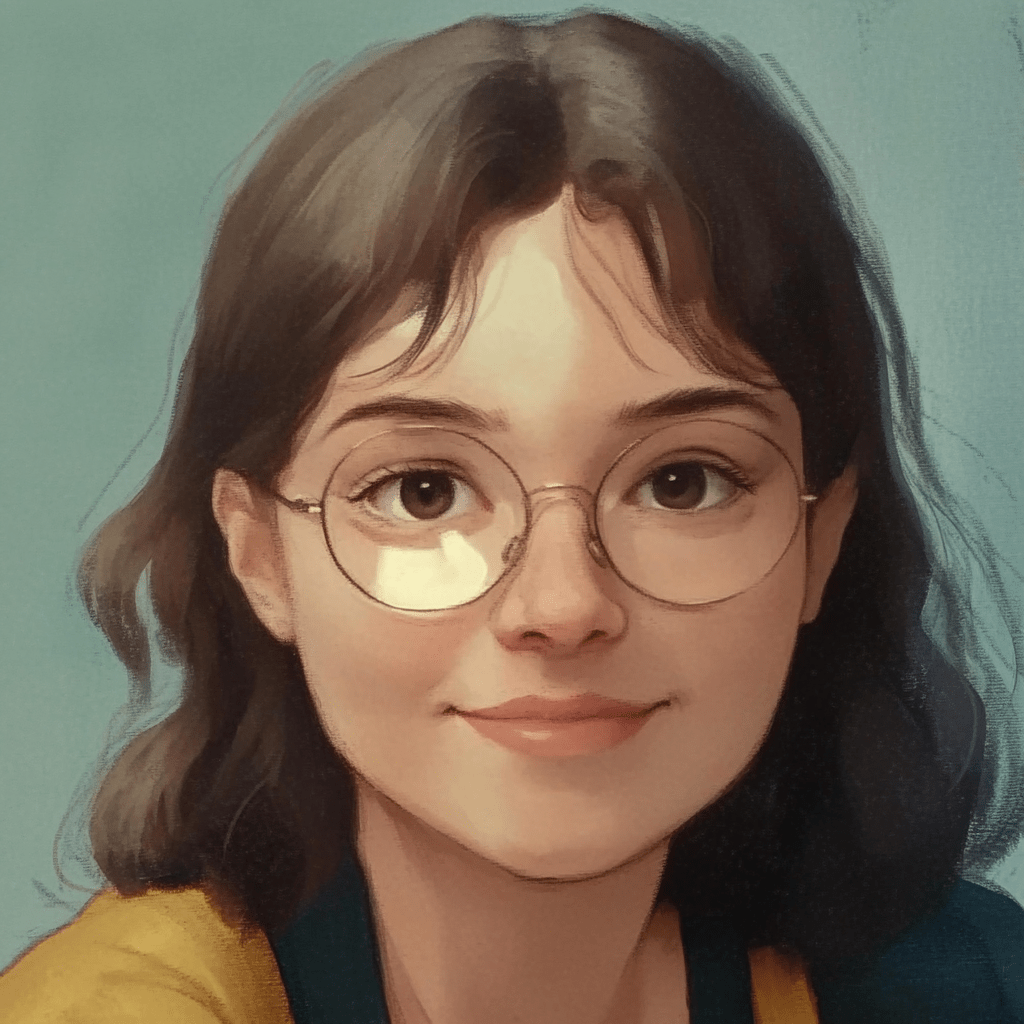

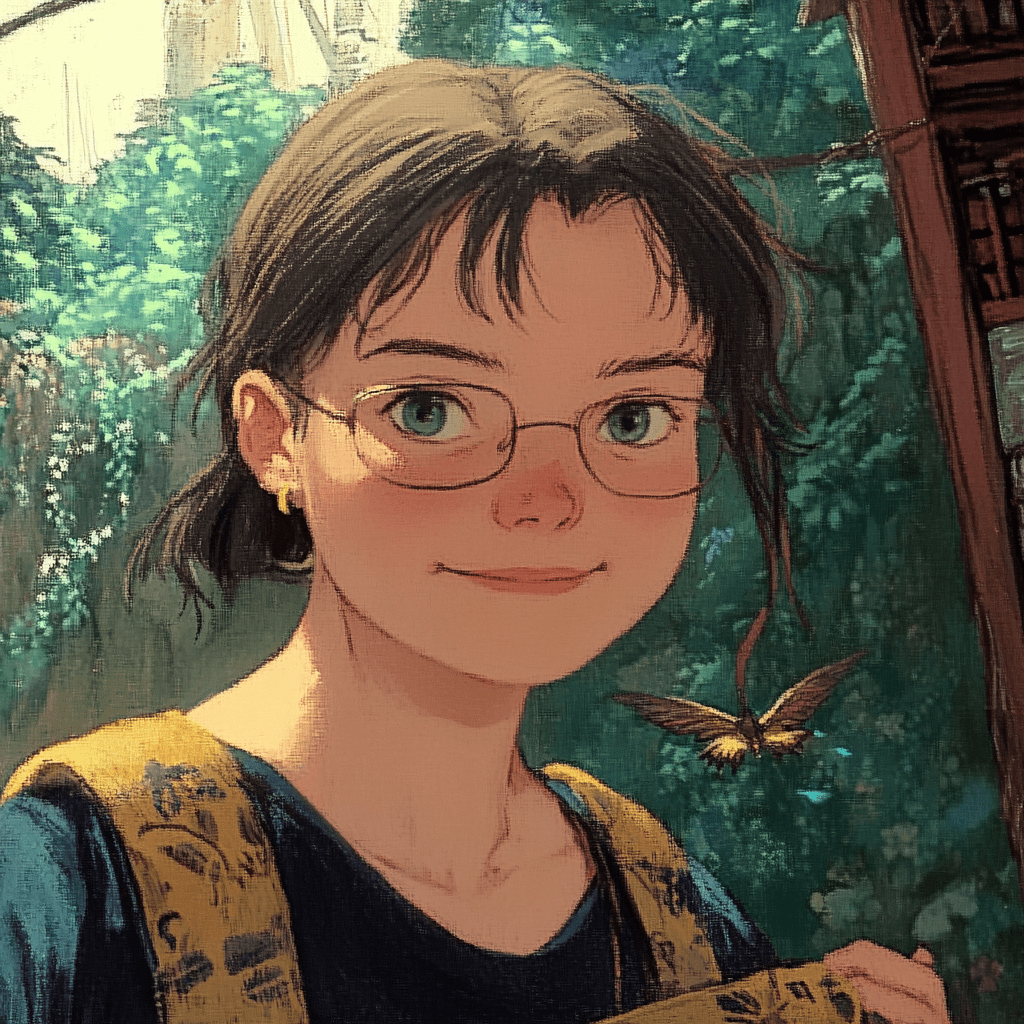
The last might be my favorite. I’m fighting an urge to replace my icon with it on all social media, honestly.
Okay. I’m going to quick-clean the house then take a long nap. Maybe when I wake I’ll feel better.
See you after the Ghiblificallypse.

Yesterday some of you mentioned that any act of rebellion, of truth, of standing up to those who would crush us reverberates and gives courage to others who might otherwise be too timid to rebel.
Rebellion is a contagion. A good one.
I missed Earth hour this year. It was three days ago on the 22nd. I’m terribly sad, because every Earth hour I turn every light in the house on, including those in the closet, which can’t be seen, but I think they might be able to tell from the substation.
My goal is to stand and say “We won’t go quietly into that night. We will not surrender without a fight.” Coff. Independence Day Movie. “We will survive. We will stay alive.”
You might think it’s all in my head, that turning lights on matters. And maybe it is.
First, there’s a whole lot of symbology with light. Second, I came from a place where light was rare, expensive, troublesome.
I’m told that there were no longer oil lamps in use at grandma’s house when I was born, but I remember them. I remember it was my older cousin’s job to clean them and trim them.
Now both of these are possible. After all, I know even in my teens, the electricity went down quite often, due to an extremely inadequate power grid. So even when my parents moved away to their house, when I was six, we always had candles on hand, and I tried to ruin my eyes by reading by candle (or moon) light.
Because of that, because the lamps that existed were small, distant, usually hanging from the ceiling a long way off, because winter days were dark and depressing (the area I grew up in has the same climate as London) I craved light. And was always ridiculously impressed by light.
I remember when i was very little, they used to line the tower of the church with white lights for the local feast. In my mind that was almost miraculous, a sign for the ages. (In retrospect, it was probably paltry and dim.)
I loved light in abundance and in all its forms. Abundant light made a bad day better.
To be fair, even without knowing it was Earth hour, there’s a good chance that every light was on in the house. My kid used to joke you could tell our house from orbit. We could tell it from three blocks away, that’s for sure.
And I remember when the Soviet Union was trying to put down the Solidarity rebellion in Poland, we were asked by our priest to put a candle on every balcony to show our support. And we did. Everywhere in the village, there was a candle burning for Poland.
Did it make a difference? Did the Soviets see lights everywhere (we weren’t the only ones) and realize they were losing public opinion?
I don’t know. I know that seeing other people light candles WE realized that the Soviets were losing public opinion. We weren’t alone. Communism was not winning everywhere.
Communism still isn’t winning. And we must not let it win.
It might seem we’re alone, atomized, lost.
I find it telling they try to get us to turn the lights off when lights are the hallmark of civilization. If you fly over communist areas, they’re all dark. the opposite of civilization. Energy is civilization. And energy is light.
Refuse to be kept in the dark. Turn a light on. Speak up. In the measure of possible, refuse to collaborate with the people who want to destroy light and humanity.
Fiat Lux.
*I did not forget Festus Pragnel and the green man of greypec. It’s been a difficult week for reasons beyond my control. I will hopefully do my post on it tomorrow. Friday at the latest – SAH*
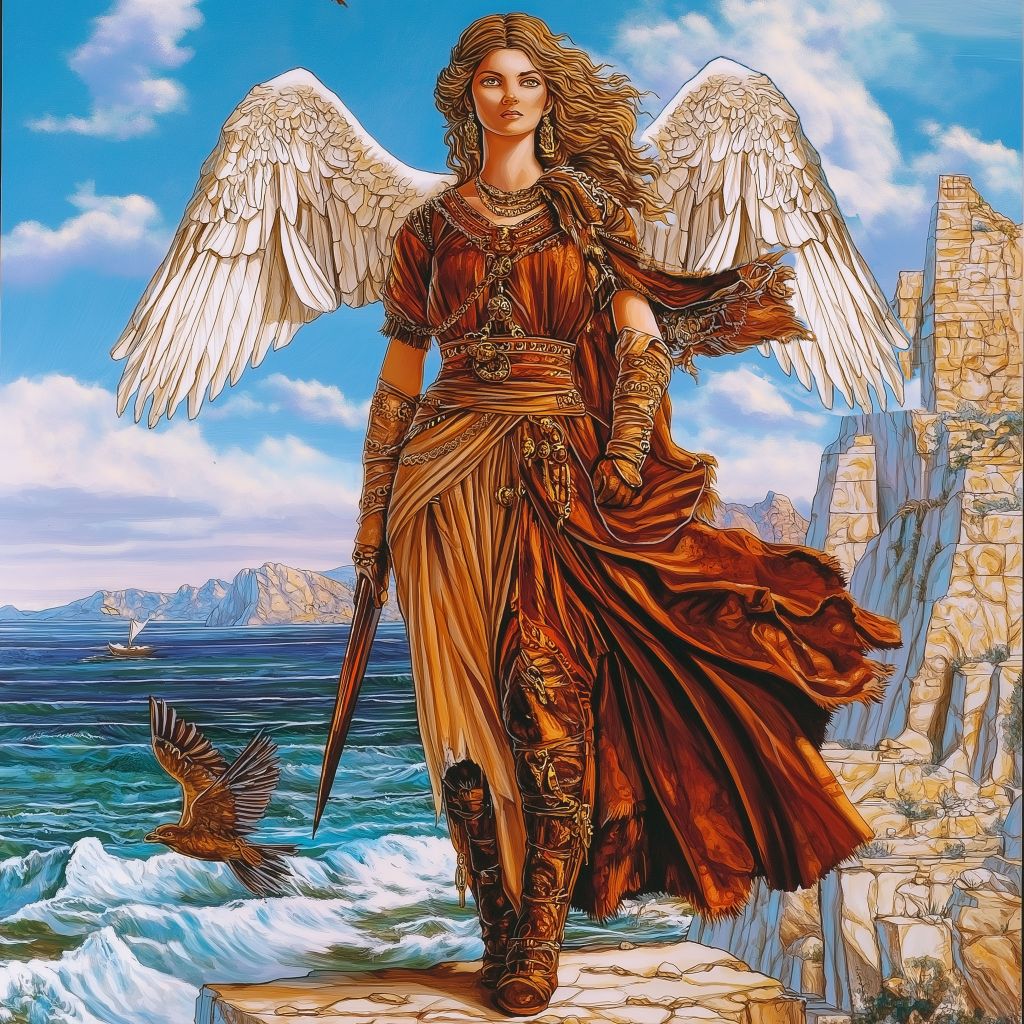
Tell the truth and shame the devil. In this house beset by devils and illusions of the mind, this is more important than ever. And more difficult.
Go read this: How To Believe False Things. (And for the tragically x-less.)
This hit me particularly hard, because this is a young man I met personally and whose number I just recently deleted from my phone with a plethora of others from the Denver science fiction community, because … Well, because I’m many many miles away and I thought too that chances were he was so far on the other side that the chances of his ever wishing to speak to me were none.
I don’t exactly regret it, because the chances of his needing to talk to me are still low, considering how far away I am and how disconnected from the community that was once mine. But if he called, I probably would answer.
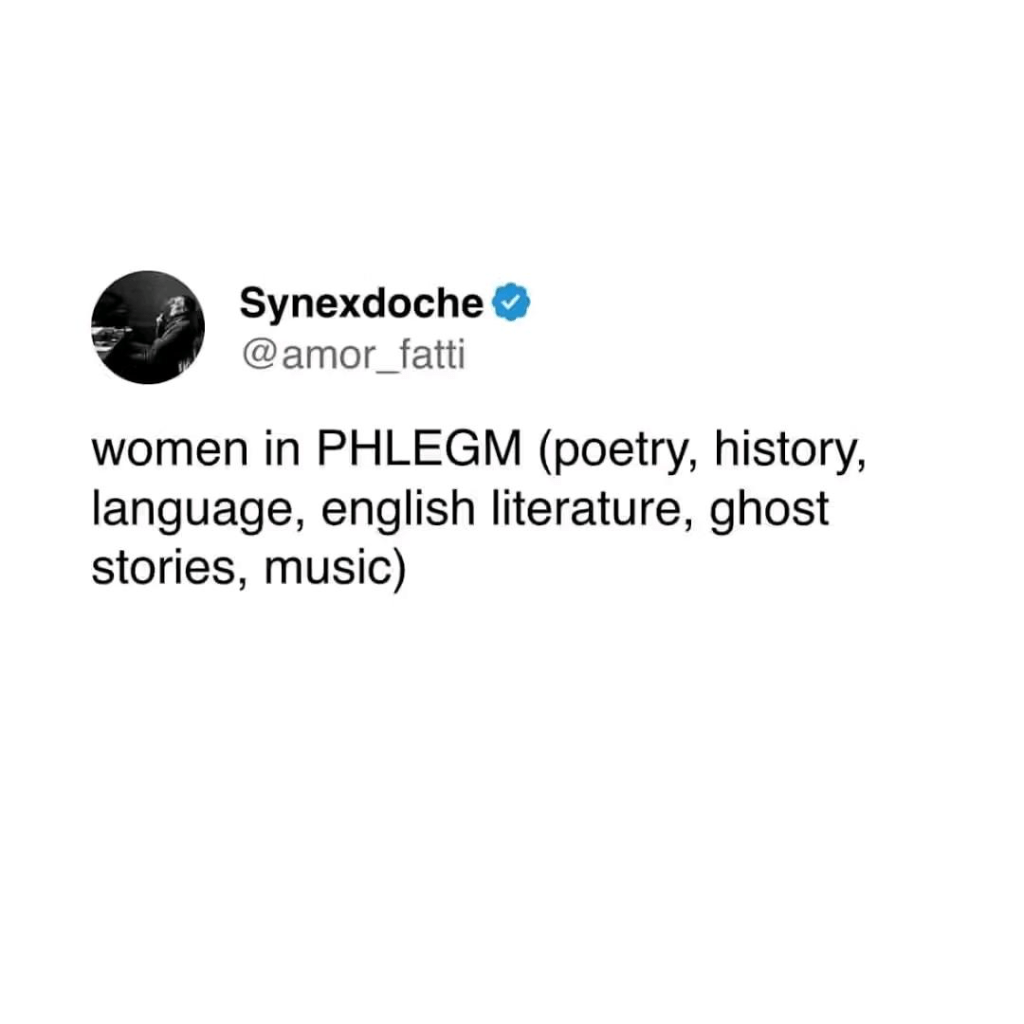
If you read those links, there are people asking him how it’s possible that he didn’t see in sports that men were very different from women, but I understood. I too can watch games and not see the difference. My visual interpretation is not great.
I can see I might not have noticed the difference if I weren’t lucky enough to have grown up with young men, and to have given birth to boys. As it was, I realized early that boys were stronger than I, but even then, perhaps because for a woman I was freakishly strong (until menopause) and unusually … well, determined is the polite term, I didn’t realize until my younger son — then a strippling — was fourteen, out of shape and skinny easily lifted a 100 lb bag of cement that I, in reasonably good shape, couldn’t even budge that I realized the magic sauce of testosterone.
But before that I’d come to realize while humans can — and should — have equal rights under the law, not all humans are born equal. By which I mean not everyone is the same, nor do we all have the same capabilities.
And the reason I knew was in myself. I couldn’t write on the line until I was ten or so, and I couldn’t write legibly till I was fourteen. My hand and eye didn’t work together (besides my having bad, undiagnosed astigmatism.) Things that people I KNEW were far dumber than I could do easily, I couldn’t. On the other hand, I could learn much more easily than they could.
I had illusions for a while. You have to understand, you could tell the kids whose parents left the village to immigrate. When they came back on vacation they looked… glossy. I suspect we all had malnutrition, in a society without refrigeration and where vegetables were suspect enough mostly you ate them after they’d been boiled grey, and that was only part of it. I was lucky, because my family was … not well off, not in the sense we’d use it, but educated, provident and hoarders of books.
So I reasoned that if the other kids in the school, the ones who were struggled, had some help, if they could borrow my books, if I could have them over for food, if– I figured it would make them like me.
It didn’t make them like me. I mean, in some cases, here and there, it made a big difference. In others, it made no difference whatsoever. But it made none of them like me, not in essentials, because well…. because they weren’t me.
But it took, I think, watching my kids grow up to figure out that everyone is inherently different. Sure, they are worthy of the same chance, capable of greatness in their own way, but people don’t even WANT the same things, and it’s stupid and evil to think that everyone should achieve the same results.
Proscustes bed shortens everyone.
Why did it take me that long? Because we all grew up under the Marxist ethos, where we’re encouraged to think if someone doesn’t do as well, it’s unfair, they’re oppressed, someone is rigging the game.
I’m telling you not only is the game rigged from the get go, but every time we try to unrig it we destroy people.
Seriously, if you read the young man’s tweet above, why would someone think that men and women would be equally strong? Why is being like a man the measure of a woman’s greatness?
Women are intrinsically different than men, from the womb. Yes, there is a spectrum. See where I was freakishly strong until menopause. I could actually fight back against most men. But the spectrum doesn’t mean that statistically, as a group, men and women aren’t different. We are.
One thing we know for instance, is that more men are geniuses. And more men are morons. There are women who are geniuses, sure. And women who are morons. But most women cluster in the middle.
Is that the explanation for the glass ceiling, and the lack of women at the top in business and sciences?
It’s part of it. The other part is that men and women want different things, and are driven to different things. yes, a lot of us will end up running mostly in the world of men, but most women prefer occupations that involve people. And most women aren’t willing to spend the hours in service of impersonal business or by-the-numbers-science. Most women prefer to have personal lives. Sure, most men too, but statistically speaking, more women than men are motivated by things other than emotionless pursuit of success.
The “Success” as society views it is male success. The attempt to erase the differences between men and women has pushed a lot of women into paths in which they are seriously unhappy.
Because, listen to me, women are not men. And why should a man’s measure of success be a woman’s? Women can be powerful in their own way — if you think that’s not true, you never met a matriarch, even in a seriously patriarchal society — and they can set their own goals and have their own success.
Believing that everyone is alike just pushes everyone into a path in which only very few are happy. (And more men than women.)
And the same applies to other differences than the differences between the sexes. It applies to other intrinsic differences. This strange measure of success whereby everyone has to be a corporate executive or one of another handful of “scripted” “Successful” roles leaves no-account artists who can’t hold to that, and can’t even want to, scrambling and feeling maimed and inferior. It leaves people whose main motivator is social or pedagogical feeling like they failed.
A lot of the “capitalism” young people rebel against has absolutely nothing to do with the free market. Instead, it has to do with this expectation that we’re all the same, and we all have to succeed the same way and be happy the same way.
… and this is why even if you’re a woman — it’s much, much harder for us to stand up and stand out from the group — it is very important not to lie.
It’s very important to stand up and tell the truth and shame the devil.
Because even if you’re not a believer, you should know the devil is chaos and destruction and enslavement to paths you don’t wish to be on. That’s a devil you should believe in, because he’s all through our society and eating it from the inside.
I won’t lie to you and tell you that when you tell the truth it will be great for you. It won’t.
Trust me. Going by my experience, when you go against the group, the all-pervasive propaganda and indoctrination that is a tissue of lies, you’ll be considered evil, crazy, untrustworthy.
Heck, the most amusing thing is being told I sold out. I don’t know what they think I sold FOR. There is no money on this side.
Sure, I largely survive, but if I’d stayed on the path and told the lies — and yes, I’m quite smart enough to know which to tell and tell them well — I could have done amazingly well. My kids would have no debts, and we’d have been able to afford everything we desired.
But there are values bigger than personal reward. And maybe that’s the way I’m broken.
However, while around me lies are taking society apart, I couldn’t contribute to the lies. I couldn’t stay quiet, even.
Because there are bigger things than personal achievement. And because I had to look at myself in the mirror.
I know some of you can’t — just can’t — stand up and tell the truth.
But do the measure of what you can. Don’t lie unless you absolutely have to. And when you can?
Tell the truth. Tell the truth and shame the devil.
Because the devil of chaos and destruction is eating the future.
And the future needs the truth.
I know enough about agriculture to get some idea, and to be very alarmed by narratives that I see forming up.
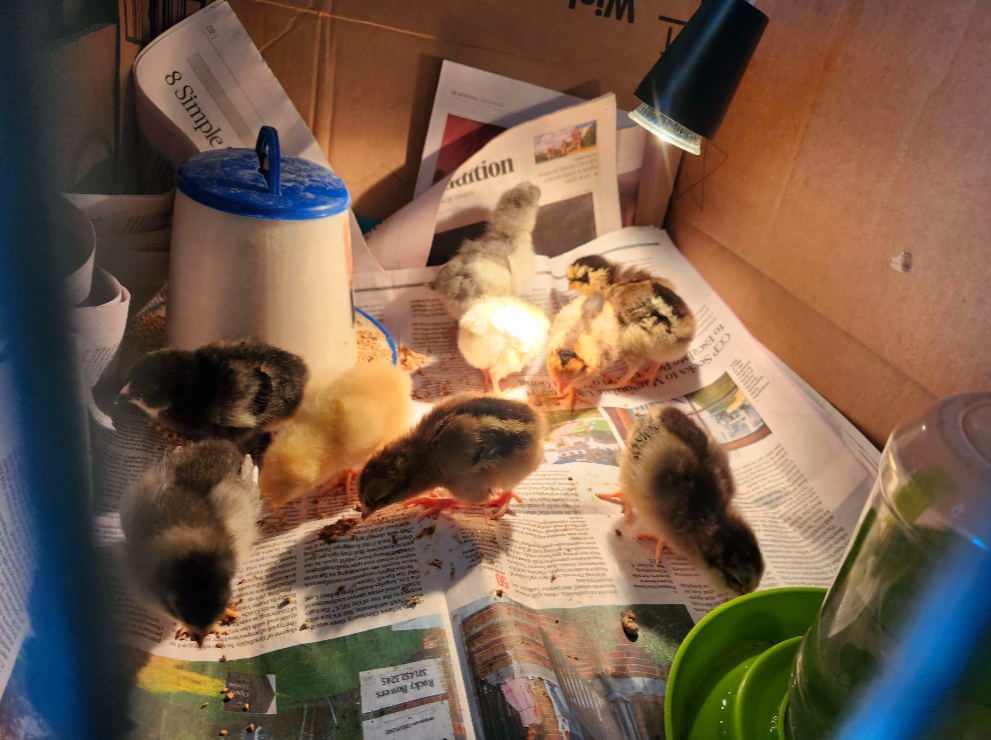
I grew up helping my parents manage a ranch, reading Capital Press https://capitalpress.com/ and Range Magazine https://rangemagazine.com/ for fun, and with my mom being strongly involved in weedboard and less formal support networks for ag ranging from literally some grandma’s part-time hobby up through big money makers, and that makes it so that I notice some things when they’re around me, and so I understand them differently than a lot of… well, town-kids seem to be understanding them as. Since getting out of the Navy, I have dragged our horde of very curious kids through “ranch stuff” in at least a dozen different states, most recently playing “are they actually happy to talk or are they just polite?” for the wonderful lady at the McMurray Hatchery.
For an idea of how farm-geeky my family is, we’re bemusing my husband and sister in law because there rest of us are incredibly excited that I actually went to the McMurray Hatchery https://www.mcmurrayhatchery.com/availableview.html that we’ve been getting chicks and keets from since before I was born. (For fellow geeks: I am still debating testing her tolerance by sending a chick catalog; my daughter was quoting from it on the drive up from Des Moines, and they’re so fluffffffyyyy!)
So it’s been… “interesting,” we’ll go with that… to watch a flood of saviors-of-the-farmers who are under the impression that we get chicken meat from the same individuals we get eggs from, or who think that every single farmer would be fine with mass slaughter of their animals. Because farmers are so very good about following government orders, right? We’re either helpless little hicks that aren’t so sure about them thar city folks, or we’re “enormous agri-buisness” type villains who only pause to remove the cigar from our mouths before laughing at the surge in egg prices triggered by killing off chickens from a minor illness that they would totally just recover from given a week and then they’d never catch the chicken flu again!
…sounds really silly when you lay the assumptions out there in the open, doesn’t it?
It gets even sillier when you find out that my rural Iowa awesome internet bogs down at harvest season, because all the little farmers are part of a “big agribusiness” some-legal-organization which means they own the fancy new tractors which use lots of internet.
Even just going to the Iowa State Fair, there’s the Egg Booth.
You get a hard boiled egg.
Onna stick, of course.
For free, with a bunch of recipes and similar promo material. There’s some seasonings there, too, and it’s usually manned by older guys in Iowa Egg Council shirts, and a bunch of kids in smaller farm shirts running around doing upkeep, or occasionally with stuff branded in one of the co-op logos.
Usually really obviously related, too, because most farms are still what a normal person would call a family farm. They are just legally organized in a different way because the legal system is designed to deal with more city-styled orgs. See also, why so many indy authors are set up as LLCs.
And you know what family farms aren’t super happy to do?
Answer a bunch of naggy surveys for unknown folks to dig through, after it’s been the Cool Kid thing for generations to declare anything that actually functions with animals as some form of abuse.
Such as keeping chickens in cages.
Neveryoumind that every study done, even those aimed at proving that chickens yearn to run free, found that the prey animal known for pecking flock-mates to death in too large of groups, has the lowest stress in a reasonably small cage with lots of food and water, and no sky for chicken-eating-monsters to swoop out of.
This method also means that the pecking order doesn’t result in the chickens being eaten alive by other chickens, and prevents disease spread. So if, say, chicken flu is tracked in on someone’s boot, and infects some chickens– you don’t lose even the entire barn, much less all the barns that shared an outdoor area for cage-free purposes.
This is stuff that was pointed out by farmers before cage free laws were put in place– it has a higher cost, because of the chickens tortured to death by the pecking order, and is more fragile, because you have more chickens exposed to more infection vectors, both wild birds and other chickens. Including when they eat the chickens that are dead of bird flu, which can have a 100% fatality rate without contributing factors. (There are actually quarantine guidelines for dealing with bird flu; the return on investment is usually not very good with chickens. Ducks can be asymptomatic, so they are more often quarantined– unfortunately, this has also resulted in people who decide their hobby-farm birds are “fine,” and they do not quarantine, resulting in massive spreading to birds that do mostly just die.)
Some of the stuff I’ve seen I can see why the writer doesn’t understand what he doesn’t see– he’s looking at reports as if they are from a standard big company that will report every bit and bob that they do. Partly because the people giving that kind of information don’t mention things like “Yeah, we…uh, got a one in six response rate. And about a third of those were the pre-paid survey envelope loaded with fishing weights and a note saying ‘leave me alone’.”
Animal rights activists have been videoing themselves throwing baby chicks into grinders and posting it online, to “prove” how horrible their targets are, since there was an online– there are very few chicken farmers who are going to give you details on where they get chicks and how they’re raised, not without very careful control.
However, there are folks who recognized that outreach is important.
And they will give you information, and answer questions.
That’s why the Iowa Egg Council https://iowaegg.org/, the Cattlemen’s http://www.beef.org/, various state’s Cow Belles https://www.arizonacowbelles.org/about-us/our-history, the guys who did those old “behold, the power of Cheese” videos, plus the individually guided folks like the Peterson Farm Brothers https://petersonfarmbrothers.com/about-us/ and Honest Farming https://tdfhonestfarming.com/ exist.
I’m sure that folks know others– these type of ag-geeks are common, folks who love what they’re doing, and are honestly interested, even when it’s really dirty and hard labor. If folks have an information source they want to brag on, please post it in the comments.
All of these are besides there being state level resources for information– both the state governments themselves, like the Iowa DoA&LS https://iowaagriculture.gov/about and the colleges’ ag extension https://www.extension.iastate.edu/ag/livestock-and-poultry-production , and the various professional councils like the Cattlemen’s and Egg Council I mentioned above. (Happy Cows come from California! https://www.realcaliforniamilk.com/ )
As with all weird surges of Sudden Internet Expert, when something sounds amazing and outrageous– try seeing if perhaps there’s missing information that makes it more rational.
This fall and winter, my kids hatched chicks. The first batch came out about Halloween.
They went to the coop at about 9 weeks, and we are just now getting a couple of eggs from them, which is about right. Roughly six months from hatching to starting to lay.
…a meat chicken would have been going into the freezer at about the time our chicks went outside, 8-12 weeks, with some varieties ready as soon as a month and a half after hatching. That is why the prices of chicken meat aren’t surging at the same speed as the prices of eggs.
This information is really easy to find.
If the folks you’re listening to didn’t find it, then please recognize they haven’t gone investigating, they are just theorizing without data.
If you wish to send us books for next week’s promo, please email to bookpimping at outlook dot com. If you feel a need to re-promo the same book do so no more than once every six months (unless you’re me or my relative. Deal.) One book per author per week. Amazon links only. Oh, yeah, by clicking through and buying (anything, actually) through one of the links below, you will at no cost to you be giving a portion of your purchase to support ATH through our associates number. A COMMISSION IS EARNED FROM EACH PURCHASE.*Note that I haven’t read most of these books (my reading is eclectic and “craving led”,) and apply the usual cautions to buying. I reserve the right not to run any submission, if cover, blurb or anything else made me decide not to, at my sole discretion.– SAH
FROM ALMA T. C. BOYKIN: Threads of Empire: Merchant and Empire Book Ten
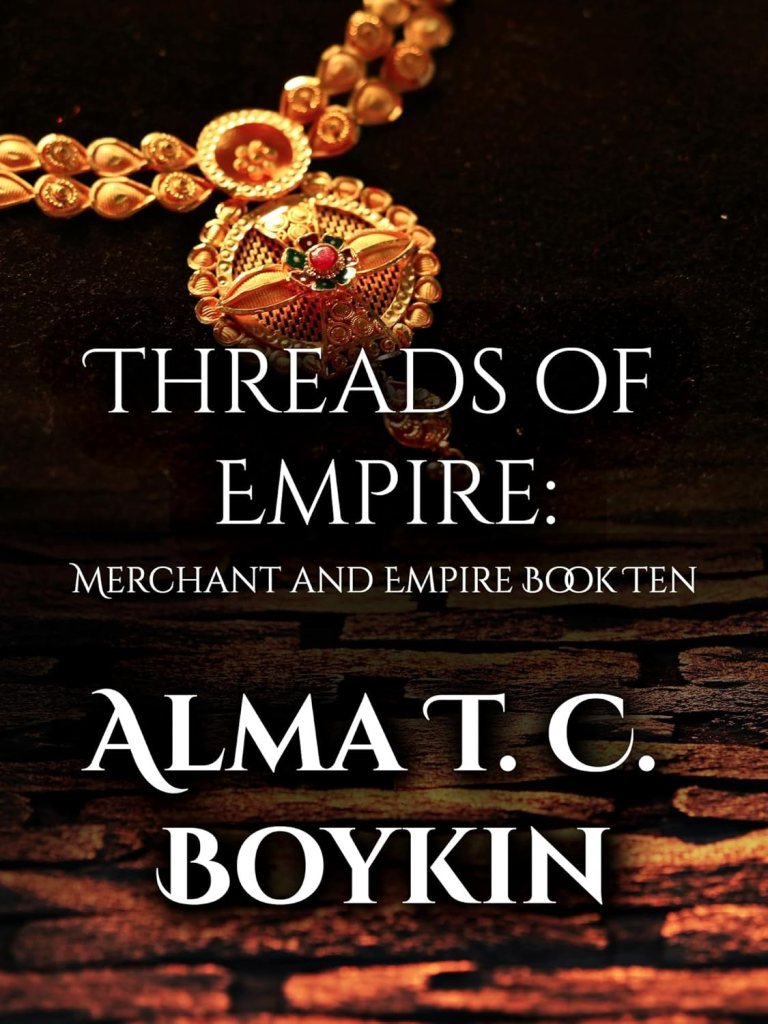
“Return with coin or not at all!”
Dagnija Modrisdatter brought nothing but bad fortune to her family, or so they believed. When a merchant offered to hire her as spinster and weaver, her father sent her off.
Adrians Eckelbert searched for the master weaver who made ornate belts. He found her on a remote land-tongue, and brought her back to Rhonari.
Dagnija discovers a different world, one filled with possibilities she had never dared to even dream of. But she must learn to navigate the shoals of Rhonari, seat of the trade lords of the Northern Empire. Spinning comes easily to her hand. Speaking for herself and balancing trade law and family duty? Far harder.
FROM PAM UPHOFF: In Plain Sight (Chronicles of the Fall)
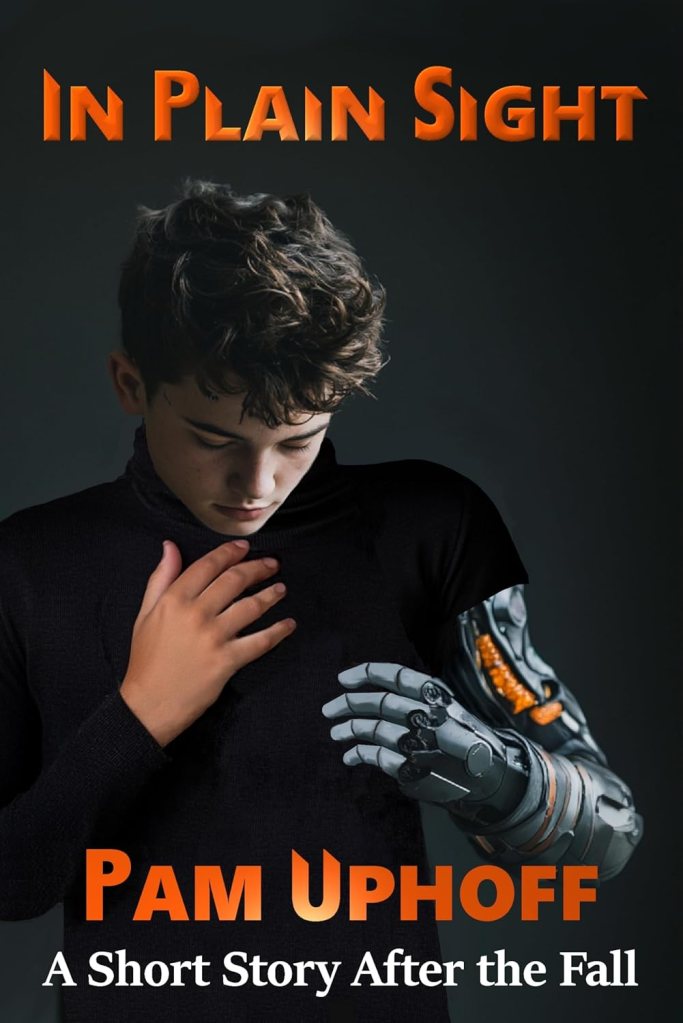
A short story taking place after the Fall
Bryanne Volkov is sixteen and moving from a small town to the capital of the Alliance, as her Grandfather is about to become the head of the entire Volkov Family. And her new home is not much like what she expected . . . the servants, odd, and an Executioner much too interested in the family.
FROM NATHAN BRINDLE: Saving the Spring: A short fantasy (Seasons Book 1)
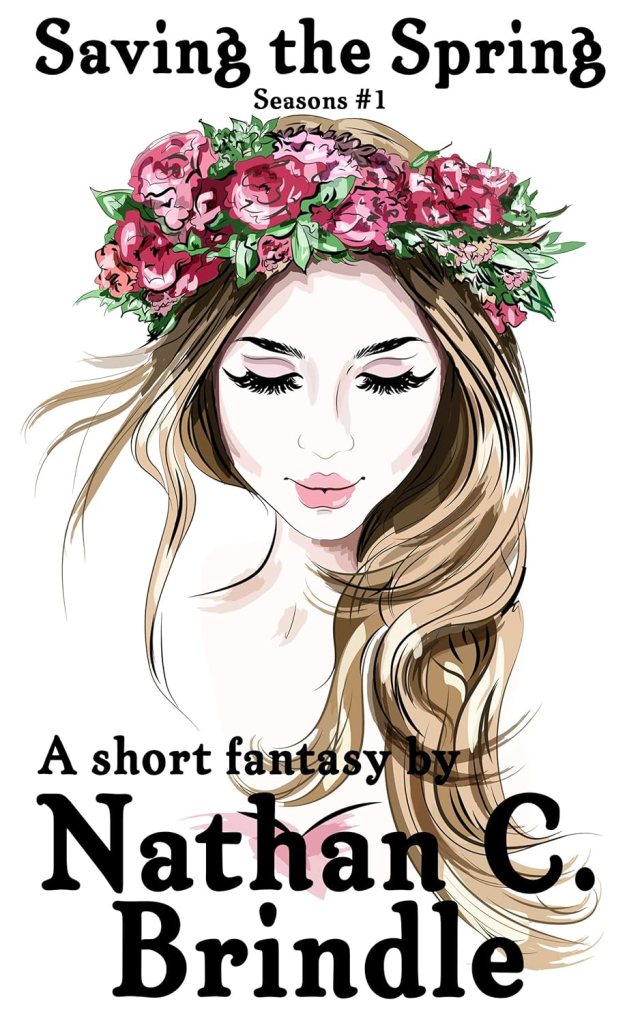
Jack Randall knew immediately something was off when he pulled up to the old roadhouse. Little did he know that crossing paths that night with the establishment’s beautiful bartender and her handsomely-rugged boyfriend/cook would lead to him recalling his former life as a god – or fighting a rematch with the god who had stolen his memories.
FROM MICHAEL MORGAN: Signs Of Venus & Of Mars: Ladies of Los Cristobol Book 2 (Ladies of Los Cristobal)

“A knight has his armor, as do we women. Our battlefields and methods may be different, but both require the appropriate costume.” A month after Ana Lezama de Urinza spoke those words the truce that kept the peace in Los Cristobal lies in ruins, and every hand is turned against every other. Sometimes, a knight’s armor is the only way for a young lady to stay alive.
Romance, magic, and swashbuckling adventure combine in this action-packed sequel to Ladies, Fish, & Gentlemen
FROM TIM SEIBEL: Freedom Voyages Volume 4: Christmastime in Texas: Road Trips throughout the United States

Embark on a captivating adventure with the fourth installment of the Freedom Voyages series! Freedom Voyages Volume 4: Christmastime in Texas is a visual feast brimming with over 400 breathtaking photographs that capture the heart and spirit of America. These pictures showcase the landscapes, cityscapes, and vibrant cultural events that make Texas unique. It’s a visual record of a December road trip through Texas that will leave you in awe.
This 2000-mile road trip commences in the rugged beauty of Colorado’s Front Range, then continues through the otherworldly lava fields of northeastern New Mexico and into North Texas. Along the way, you’ll make captivating stops at the Capulin Volcano, small Texas ranching towns, and Dallas and McKinney’s dazzling Texas-sized Christmas light scenes. From North Texas, the journey continues south through the county seats of East Texas to experience its Christmas celebrations in quintessential towns such as Paris, Sulphur Springs, Longview, Nacogdoches, San Augustine, Jasper, Woodville, and others before concluding with a side trip to see Galveston fully decorated for the yuletide season.
Freedom Voyages is not just a book — it’s a thrilling invitation to embark on an adventure. For those who yearn to experience America’s roadways vicariously through pictures, thoughts, and experiences, these pages are a gateway to your own Freedom Voyage. Get ready to be inspired!
FROM MACKEY CHANDLER: A Reluctant Sovereign (Family Law Book 7)

When North America attacked the space habitats beyond the Moon they had no plan B if they failed. The Earth Claims Commission was already suffering a credibility crisis and North America’s disastrous failure and defeat left them with no muscle. Far flung worlds and stations were abandoned with no banking, no supply, and no news. The explorers who were owed royalties were cut off too. Lee and her father Gordon weren’t about to sit still for that. If you can repossess a ground car, why not a planet? Lee had standing to be sovereign of Providence but wasn’t all that fond of planets. She didn’t want to be bogged down with the day to day drudgery of sovereignty like her friend Heather on the Moon. Was there any reason she couldn’t have her cake and eat it too? None that she could see.
FROM DAN MELSON: Measure Of Adulthood (The Politics of Empire Book 4)
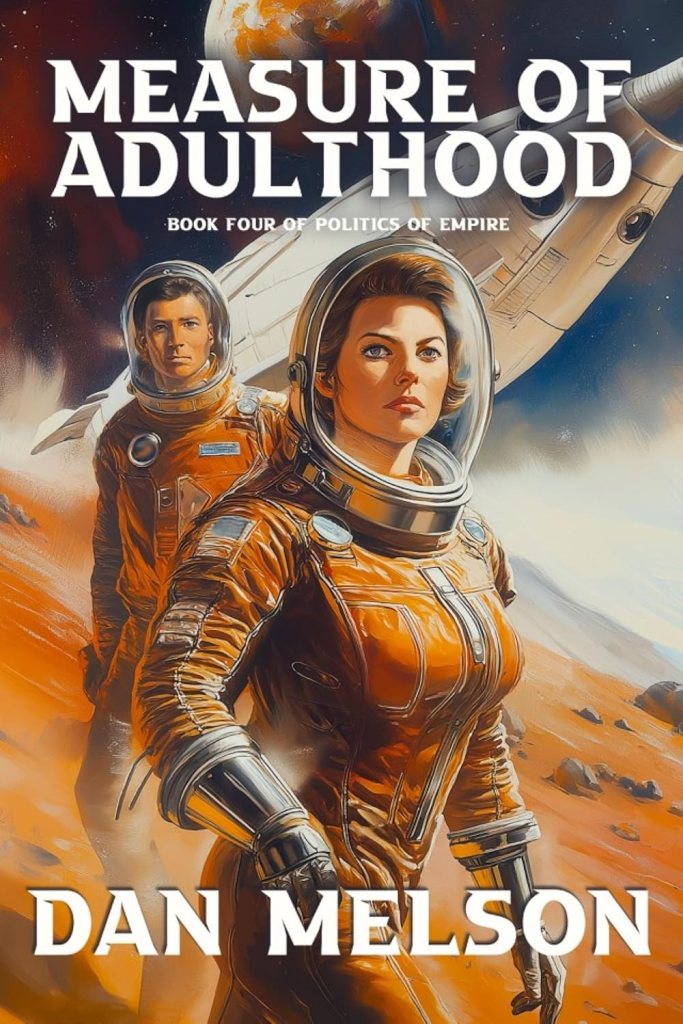
Kusaan del. It means ‘divine finger’
The Empire of Humanity is locked in a war for survival with the Fractal Demons. Years on, the dice are still tumbling. Billions have died and planets have been destroyed. Meanwhile, an old loose end has resurfaced and forced Grace to confront a mistake from her teenage years – her son by a long-dead lover has lost his adulthood, and only Grace can save him from exile.
But the Fractal Demons initiate a new strategy, and are starting to turn the tide in their favor. Grace is unlucky enough to be assigned to deal with one of their first strikes under the new strategy, and she’s unable to prevent several million deaths.
But she’s learned enough to master her problems, both as the new mother of a two hundred year old son, and as one of those defending the masses of the Empire from assault by the demons. She has grown from her origins, and just because she seems to have a knack for attracting trouble doesn’t mean she can’t handle it. When the divine finger points at her, she steps up to deal with it.
FROM HOLLY CHISM: The Schrödinger Paradox: Entanglement
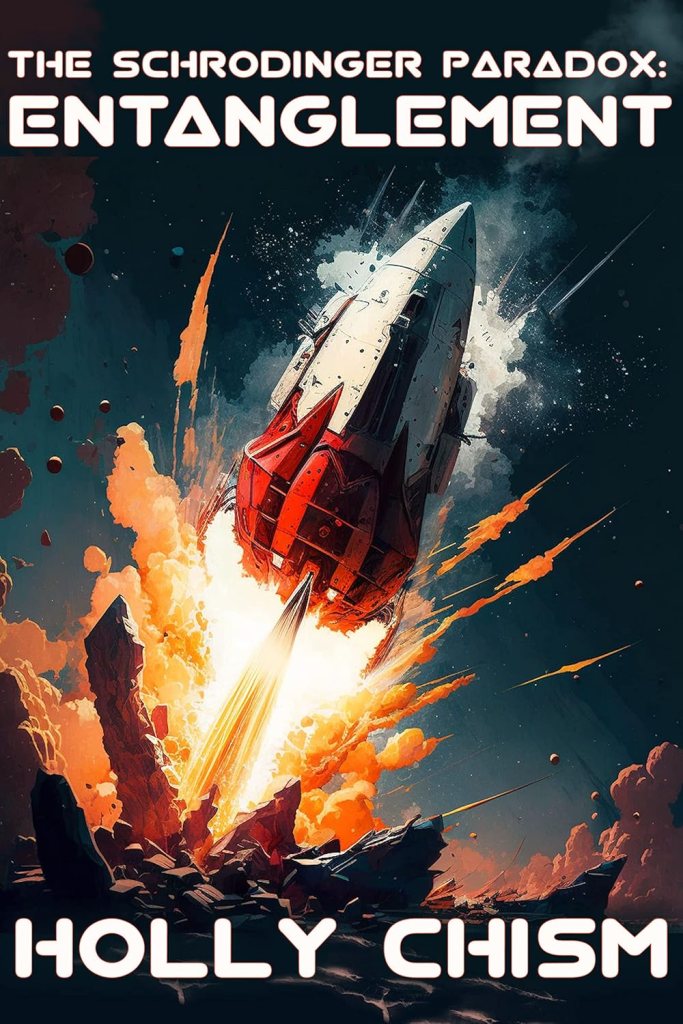
In the face of extinction, you do what you must, regardless of who stands in the way.
Tom Beadle only volunteered for NASA’s neighborhood watch program when his department said it would maybe help him get tenure.None of them counted on the Neighborhood Watch becoming a mortifying political liability when a malfunctioning probe accidently reveals an asteroid hiding behind the larger outer planets, setting off impact alarms– and politicians looking for blame. When their answer is to defund the Watch program and fire all involved, Tom’s only chance to save the earth is to lie through his teeth and try to deflect the asteroid under cover of harvesting rare not-of-this-earth elements. And even that may not work.
FROM BLAKE SMITH: The Hartington Inheritance (The Hartington Series Book 1)
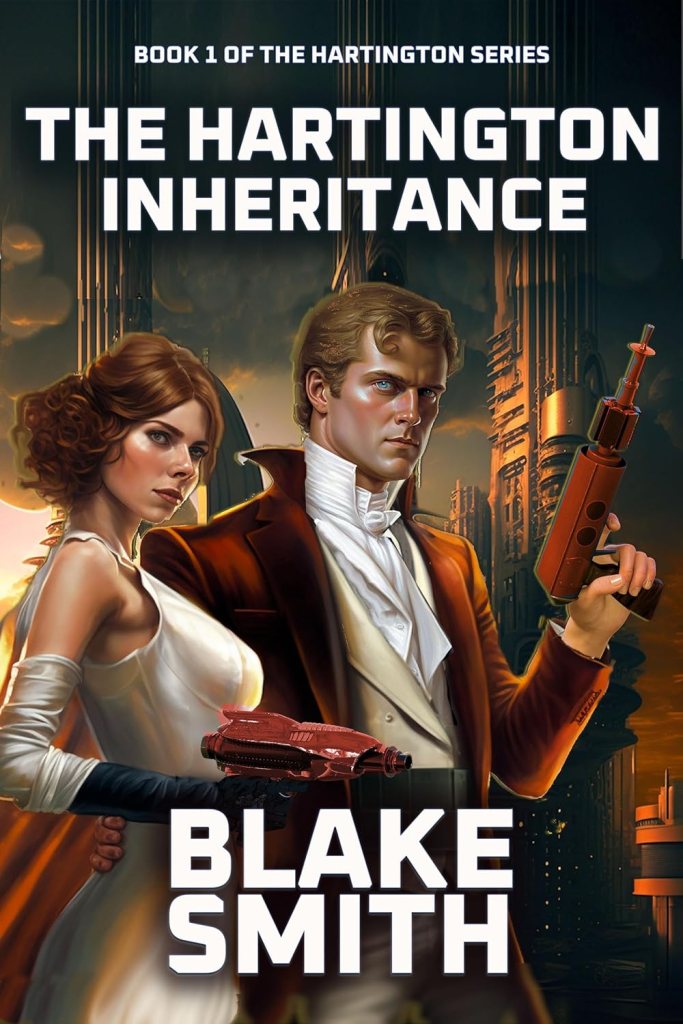
Almira Hartington was heir to the largest fortune in the galaxy, amassed by her father during his time as a director of the Andromeda Company. But when Sir Josiah commits suicide, Almira discovers that she and her siblings are penniless. All three of them must learn to work if they wish to eat, and are quickly scattered to the far reaches of the universe. Almira stubbornly remains on-planet, determined to remain respectable despite the sneers of her former friends.
Sir Percy Wallingham pities the new Lady Hartington. But the lady’s family will take care of her, surely? It’s only after he encounters Almira in her new circumstances that he realizes the extent of her troubles and is determined to help her if he can. He doesn’t know that a scandal is brewing around Sir Josiah’s death and Almira’s exile from society. But it could cost him his life, and the lady he has come to love.
FROM DECLAN FINN: The Neck Romancer (Honeymoon from Hell Book 1)

They’re going to make it to the Church on time. And God help anyone who gets in their way.
Marco Catalano and Amanda Colt have survived vampire legions, unkillable demons, supernatural assassins and a full on army of darkness. With their allies, they have taken down the paranormal Illuminati called simply “The Council.”Now they have to deal with their next threat: marriage.
Can Marco and Amanda survive the preparations for their own wedding? And if they manage that, can they fight their way through their honeymoon?
But the biggest question of all: Who invited the zombies to the ceremony?
FROM LAURA MONTGOMERY: Martha’s Sons Books One and Two Plus a Novelette: A Science Fiction Lost Colony Adventure (Box Set)
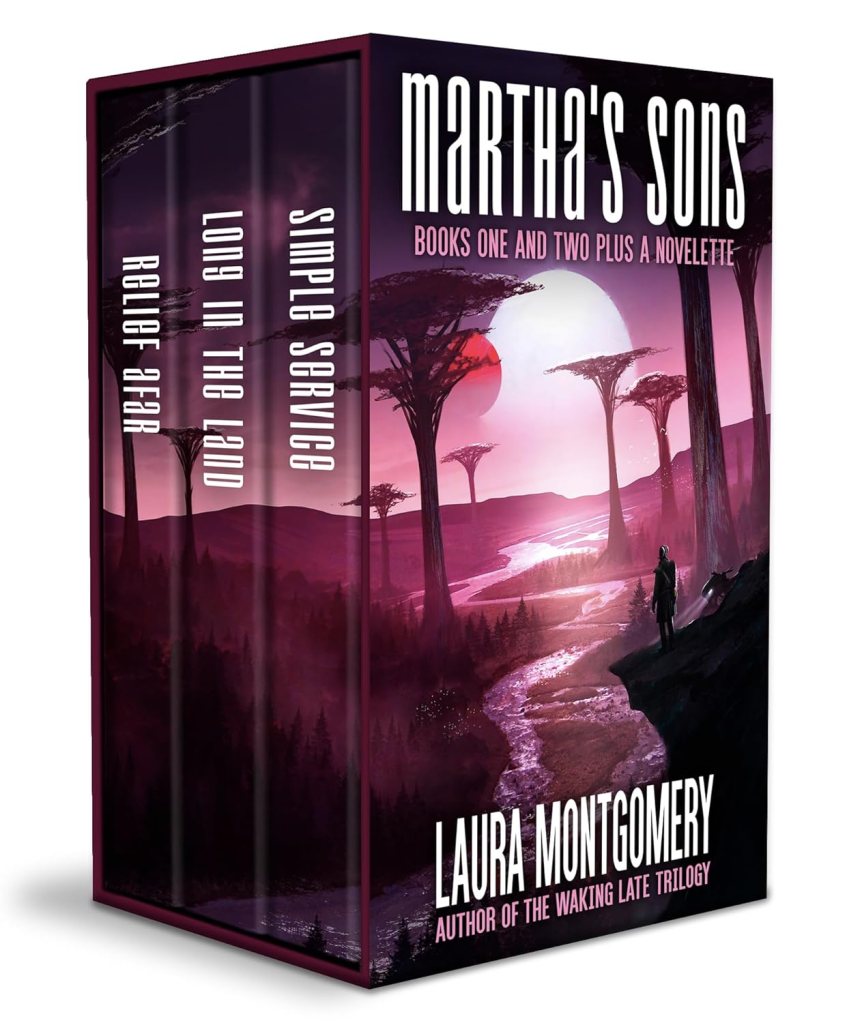
Your parents thought they were emigrating to a terraformed planet. That didn’t happen.
Now you’re second generation on a lost colony world.
You’re one of Martha’s Sons.
Will Peter Dawe’s perilous mission with a brother he despises end in death?A lost starship’s settlers, isolated on an uncharted alien world, manage to terraform a mountain-ringed valley into a rich replica of Earth. Despite their success reproducing the environment they need to survive and thrive, only tenuous forces hold together the human colony on the world of Not What We Were Looking For. The governor’s appropriation of the western settlers’ weapons for the city strains those bonds to breaking point—and then beyond when Peter Dawe’s father sends him to get the weapons back.Twenty-year-old Peter Dawe’s restless nature easily endures the lost colony world’s rigors. His genetic modifications make it even easier. So when Peter retrieves the family weapon, he also brings back a motorbike, a piece of technology no longer available to everyone.
It would be a fine prize to keep to himself. He won it. He earned it. He quickly learns that his brother Simon lies in wait to take what isn’t his. Simon wants more than just the motorbike. He wants Peter’s glory.
But when Peter’s father forces him to take his hated older brother on Peter’s next mission, the pair must not only navigate the city’s perils and politics but learn to work together—when neither thinks the other should be in charge. Their success—and their very lives—depend on it. Or will Peter be proven right that he should have faced this task alone?
This box set contains the first three titles in the immersive Martha’s Sons science fiction adventure series: Simple Service, Long in the Land, and Relief Afar. If you like gripping action, insurmountable odds, and alien worlds, you’ll love Laura Montgomery’s tale of a man determined not to let family ties sabotage mission success.Get the box set to start a new adventure today!
FROM SARAH A. HOYT: Darkship Thieves

Never wanted see the eerie glow of the Powerpods. Never wanted to visit Circum Terra. She never had any interest in finding out the truth about the Darkships.
You always get what you don’t ask for. Which must have been why she woke up in the dark of shipnight, within the greater night of space in her father’s space cruiser, knowing that there was a stranger in her room. In a short time, after taking out the stranger—who turned out to be one of her father’s bodyguards up to no good, she was hurtling away from the ship in a lifeboat to get help.
But what she got instead would be the adventure of a lifetime and perhaps a whole new world—if she managed to survive….
A Prometheus Award Winning Novel, written by a USA Today Bestseller.
So what’s a vignette? You might know them as flash fiction, or even just sketches. We will provide a prompt each Sunday that you can use directly (including it in your work) or just as an inspiration. You, in turn, will write about 50 words (yes, we are going for short shorts! Not even a Drabble 100 words, just half that!). Then post it! For an additional challenge, you can aim to make it exactly 50 words, if you like.
We recommend that if you have an original vignette, you post that as a new reply. If you are commenting on someone’s vignette, then post that as a reply to the vignette. Comments — this is writing practice, so comments should be aimed at helping someone be a better writer, not at crushing them. And since these are likely to be drafts, don’t jump up and down too hard on typos and grammar.
If you have questions, feel free to ask.
Your writing prompt this week is: DIRECTION
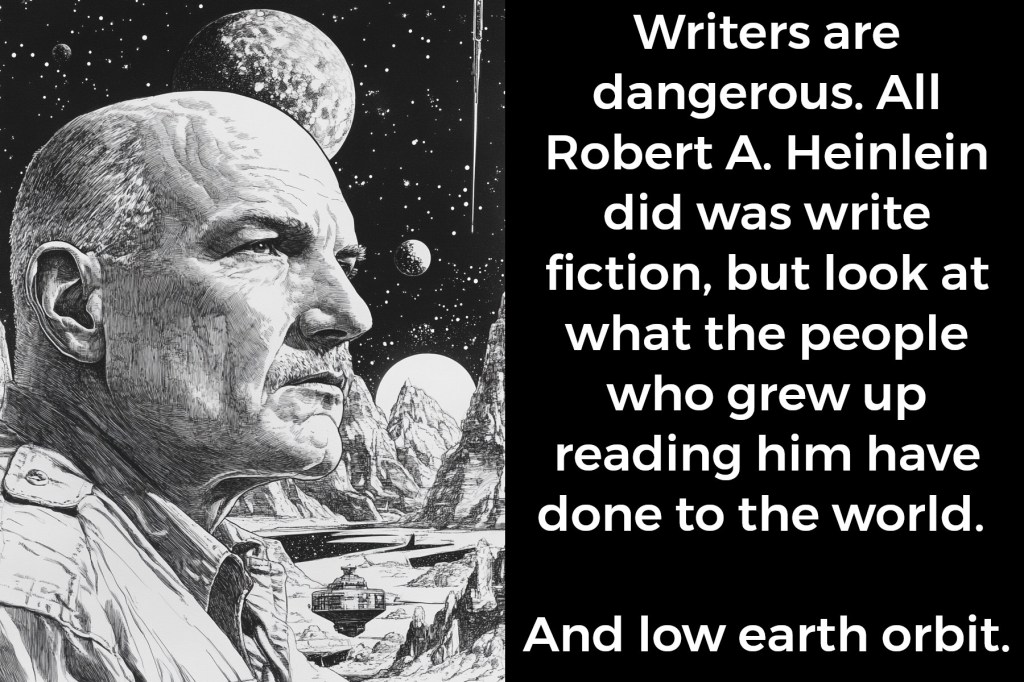
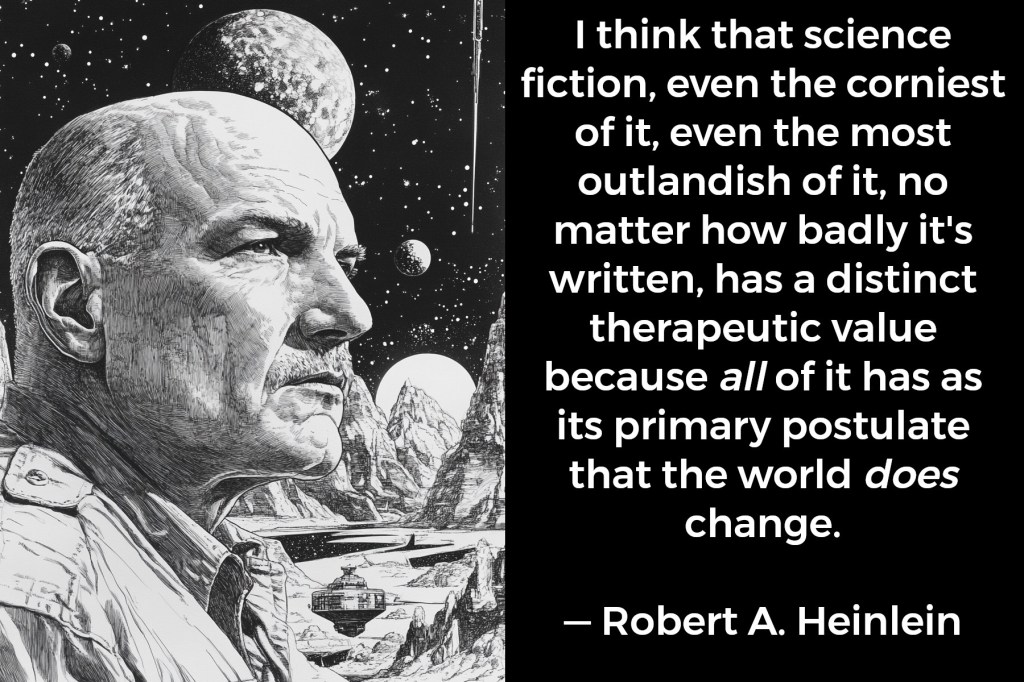

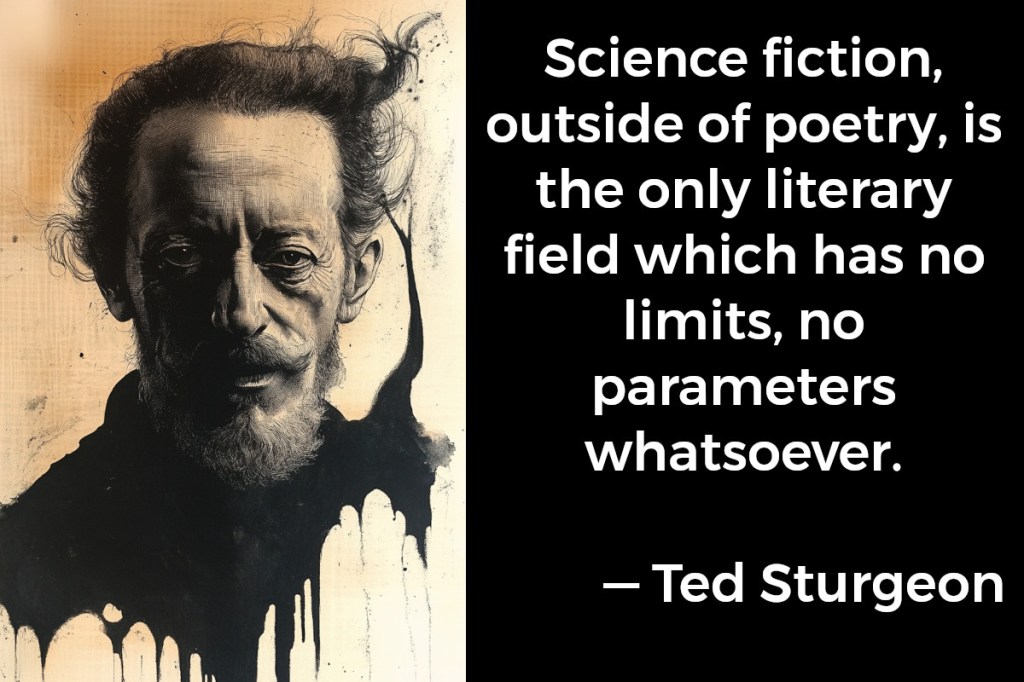
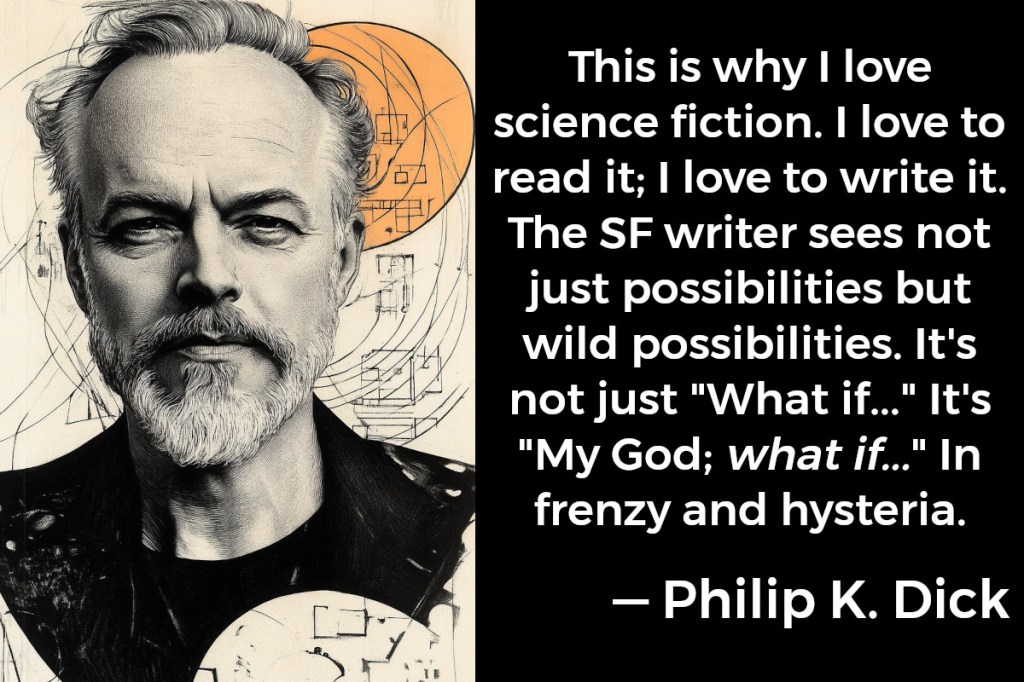

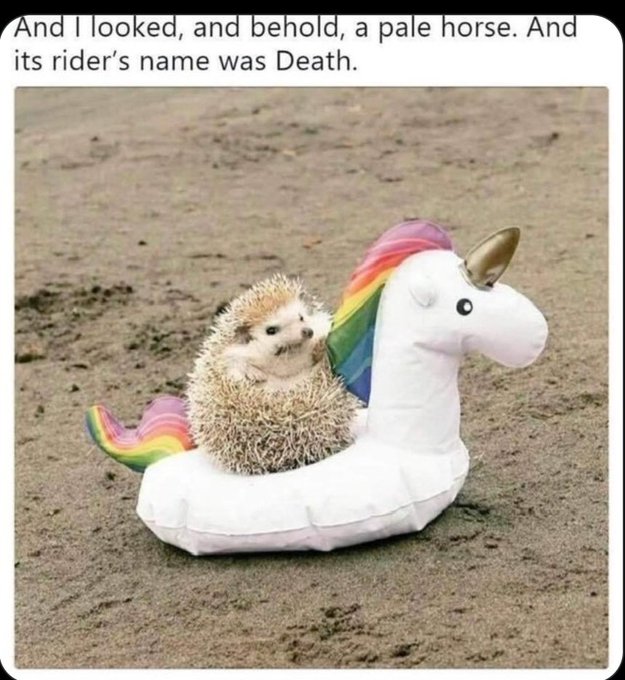







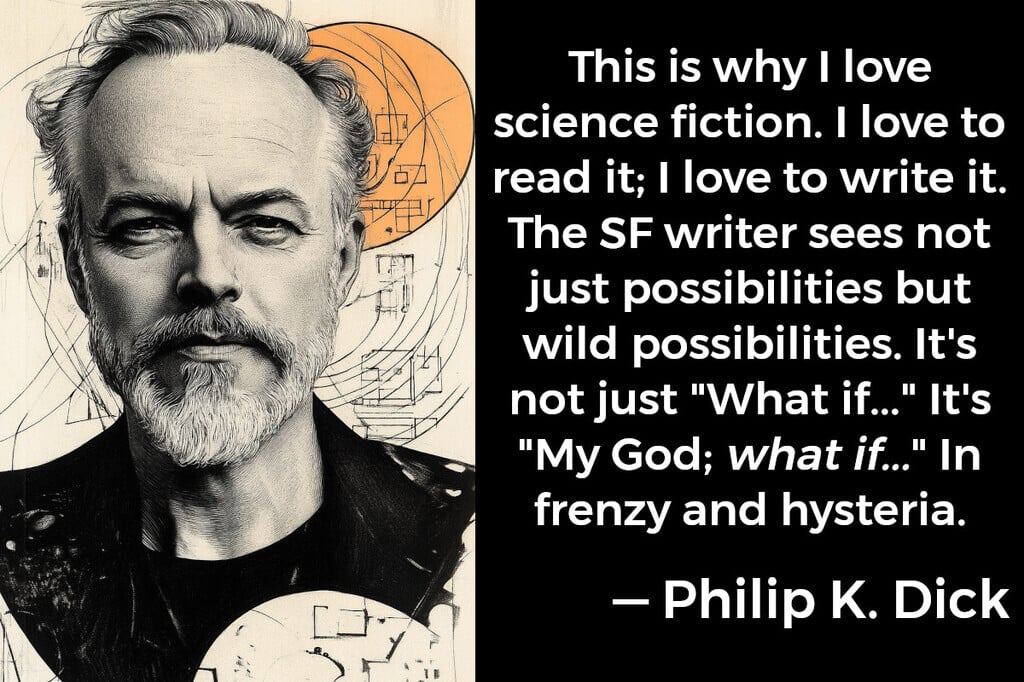
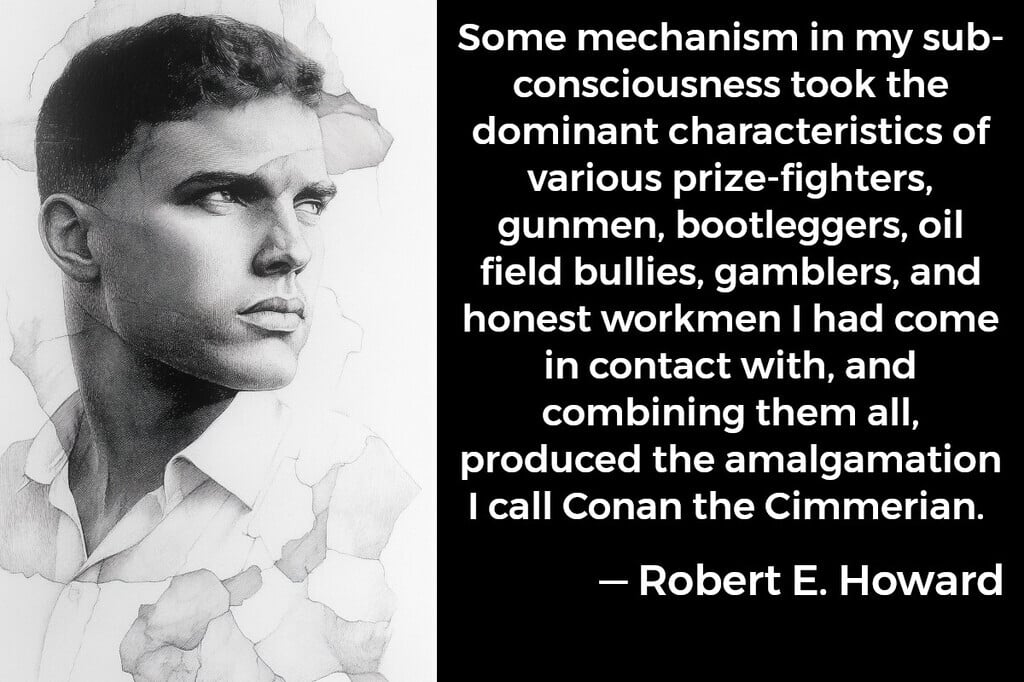




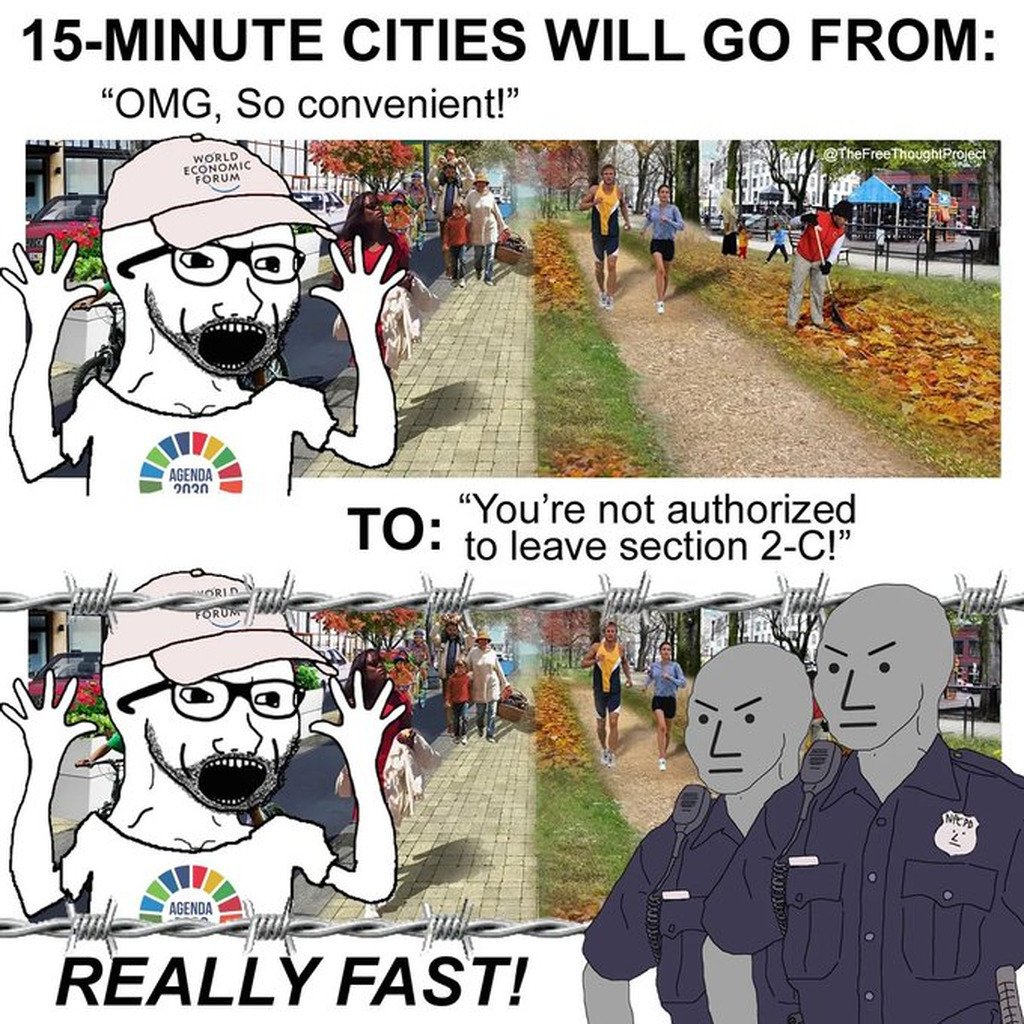


























There’s men, there’s women, there’s writers.
Sure, writers, in general, are women or men, but honestly, if we were free floating brains in jello it would make more sense. What I’m trying to tell you, ladies, germs and small octagonal coasters is that no, you can’t make broad sweeping statements like “women write” or “men write” X, Y or Z. Much less “women read” and “men read” X, Y or most definitely Z.
Oh, you can make broad statements about how female brains work, how male brains work. What you can’t do is extrapolate it to “I don’t read women, because they all write fairy princess unicorn sex with hot monsters.”
Or actually, no. You can absolutely extrapolate that. Because you have the right to life, liberty and the pursuit of happiness, and if it makes you happy to be an arrant idiot, who am to stop you?
Why yes, indeedy, I’ve woken up and chosen violence. If it makes you feel better I’m not writing this in the morning, but late at night on Thursday, so I’m actually falling asleep and chose violence. There. That’s better.
Look, there are certain tendencies in male and female writing, proceeding from our brains being different. This allows to say, broadly, men prefer things and how things work. Women prefer people and people’s relationships.
If you’re working with a broad enough group, you can — therefore — predict that more men will write techno-thrillers where how the McGuffin works is super important; more women will write romances.
This btw has absolutely zero to do with whether either book will have more sex. That depends more on trends in publishing, what the public expects and — if going trad pub — what the publisher demands. Sex is a different thing. Yeah, we can get into sex (the gentleman who giggled in the back row can sit outside with no books for ten minutes) later, but let’s say that saying “This book has tons of sex, therefore it’s for girls” is a non starter.
For years most romances were what we now call “sweet romances” and arguably they sold better than today’s “must have a sex scene four times during the book. Some of the best selling romance writers use the same scene every book, which I found out while I was reading romance (more on that later) and just change the color of the hair, dress, and what the girl tripped for to fit the circumstances, because they don’t care for that part, but the publisher wants it in. Don’t tell me that their readers are passionately interested in those scenes, or they’d protest more.
Anyway, you can generally say “if it’s a people oriented story, it’s more likely written by a woman” “if it’s a “how things work and consequences of how thing works” it’s probably written by a man.” And you’ll be right… Oh, 70% of the time, give or take two or three percent.
I pulled that figure out of the air, but it’s my “feel” from reading a lot.
Now this is somewhat skewed because you don’t actually know the sex of the writer, just what they put on the book spine, and writers are thoroughly unreliable for telling the truth. I mean, we make money from lying. I have it on good authority — know some of them — that some bestselling romance authors, with female names, are actually male. And there are thriller authors out there who use initials or well… just the closest male name.
The really cool thing, particularly if you’re an indie, is that you can be a dog just typing as fast as you can, on the internet no one knows.
Oh, I said romance because that’s the extreme, but cozy mysteries tend to have female names, versus thrillers, which actually tend towards initials.
“But Sarah,” You’ll say. “You can’t deny more women read romance and more men read mil sf or thrillers.”
Okay, you got me there. By self declared preference, I can’t deny that. I can’t deny it because two people I am closely related to and who are not only male but techy and very, very male-brain will be deeply upset if I reveal they like the goopiest romances and the floofiest of floofy cozies, to the point they’ll be talking about these books, and I’m going “You’re just making that up!”
Me? Well, me as a reader started out reading-like-a-boy mostly because I inherited all the books from my dad, brother and cousins, so of course I read “male.” However, note that they interested me more than the romances (blue cover collection. No, seriously) my female cousin had. I did however like A Little Princess, which my brother hated, and I enjoyed Enid Blyton’s boarding school books, which are very feminine, just as much as I enjoyed the adventure ones which yes, pretty much baffled my male family members.
I didn’t however read even Jane Austen till my early twenties, and no other romances till my mid thirties, and then at the behest of a male friend.
I prefer science fiction to fantasy (no, not hard science fiction, but that’s a discussion for later) and my fantasy tends to suffer from science fiction brain, in that I can’t just have “and suddenly everyone had magical powers” but I have to invent a mechanism for them and thread them backwards through history in a way that works. otherwise I don’t believe in them, and when I don’t believe in stuff it doesn’t get written.
(Understand the science fiction referenced here is a quality of the mind, and the quality is “okay, it might take a miracle to have anti-gravity, but if we had anti-gravity it would work via machines and in a way that was understood to someone who created it, not wished out of the blue by magic and therefore unreliable.” Yes, I know there are logic errors. You also know D*MN well the “feel” I’m talking about. I know science fiction when I nail it to the keyboard.)
By the time I read my first “romance, romance” I’d read hundreds of military biographies and military fiction, ranging from historical fiction to science fiction. (I can’t write it. No. The problem is not actually the battles, and I don’t flinch from action. No, my problem is the ranks and the mil-speak. It’s like another language, and I don’t absorb it from reading for some reason. To be fair, I also suck at learning dialects from reading. I can understand them fine, I just can’t write them.
Anyway, I even understand those of you who don’t want to read books with female names on the cover. It’s stupid, but it’s a stupidity I’ve engaged in myself. “If there’s a female name on the cover, there’s going to be stupid feminism inside.”
Now, it actually depends. Most Jane Austen fanfic, for instance, has female names on the cover (no, not all. Two of my favorite authors are male, and one, according to his bio is a marine. You can tell too. Why? Because every military man in the story, no matter how peripheral in the original is a boss and a hero in the story. They’re also all buff and super-sexy. Sigh. No projection going on there. BUT the guy writes characters WELL, and the stories hang together.) and the ratio of decent to suddenly suckerpunches me with OMG what Critical Race Theory or Feminist cant is about 7/3. Though I grant you only ONE male has sucker punched me that way. However he suckerpunched me very very hard, with vast amounts of 21st century psychobabble poured into the middle of a regency. Also considering there’s maybe 5 men I remember seeing, as opposed to 50 or so women, the fact one of those men is a leftist loon means we’re about even.
However science fiction with a female name on the cover? Six times out of ten — if not indie — it’s some woman creating the wonderful, beautiful female society in which all men are virtual slaves and not even sex slaves. Far more likely of course from recent and trad pub.
However men also have a high incidence of crazy in SF. Even fairly sane men will tell me that half of Europe is under water 200 years in the future because climate change.
Mystery in general trends more left than Science Fiction in my opinion because mystery lacked the equivalent of Baen, before indie became a thing.
Anyway, it’s like this, I was chased from science fiction, where I could only find lefty lectures, to mystery, where there were still mostly lefty lectures, to romance, where the older ones were okay, but increasingly, even in Regencies every woman was a suffragette and running a shelter for abused women, to history and biography where… the recent ones also couldn’t be trusted and became increasingly worse.
Then we got indie, and while I still get bitten sometimes, it’s a matter of evaluating, and remembering the names of authors who pissed me off (it’s a problem, as I usually only remember authors I love.)
Have I found differences between male and female? Well, no, not really. Sure, some people write in an excessively feminine way and are actually female. And some men are purveyors of zap zing bang fights and are male. (Some of the males also give me eye-glazing descriptions of the internal mechanisms of machines that never existed. Okay, guys, I know there’s such a thing as selling it as real, but there are also limits.)
I don’t write hard sf not because I’m female, but because right now, at this particular time in my life (this might change) I don’t have the ability/time to do copious amounts of research, and anyway, the stories I want to tell RIGHT NOW can’t fit into hard sf.
This might, and probably will change, once I get through the current batch of work that has been waiting, some of it over 40 years.
I don’t need to tell you there’s a ton of guys that write space opera and soft/adventure SF right?
In the same way, right now, I don’t write “red hot” romance or erotica. Will this change? I want to say probably no, given the things on the docket, but I’ve learned not to taunt the happy/fun muse.
On “But women just write sex with weird fantasy characters,” I want to make a point of order. An important one: I think women do that to escape the imperatives of feminism. Younger women don’t want to openly rebel (that’s another of those brain things. Most women are more group-oriented. Note “most”. Some of us were born with middle fingers aloft) but also don’t want to think about whether they’re as feminist as they should be, etc. Hence, fantasy monster romance, both for writing and reading. (No, I actually don’t get it. Not taunting the happy fun muse. Just confused. No interest in writing this. (The lady who just shouted an idea can wait outside the door for ten minutes, with no books.))
Almost every writing couple — there are a lot of them — I know, they both say all the goopey, romantic, sentimental scenes are the guy’s responsibility.
I believe that. In my 50/50 collab with a male, most of those sentimental “so many feelings” series I get accuse of having written (because vagina) the guy wrote. He will tell you that too.
And that’s the other thing “Women just write about feelings!” While it’s bad to write ABOUT feelings — ideally I should make you FEEL the feelings — this is another thing where you can shout it and stomp feet all you want to. BUT in the end story telling is meant to evoke feelings. If it doesn’t arouse your feelings — not those feelings. Outside the door. No books. Ten minutes — why are you reading it, instead of reading a technical manual? In fact, making you feel the feels and be in the character’s head is what written fiction has that is better than movies.
And guys, at the end of The Moon Is A Harsh Mistress? When Mike doesn’t answer? I cry. No matter how many times I read it. And yeah, RAH was a man.
Sex — I told you I’d get there — there is a a lot more of it in books today, across the board, than in the past. All genres, all sub genres, from writers of either sex or or, you know, both sexes together.
I’m not sure that’s revealed preference of writers or readers. It’s simply because trad pub gyrated to it in a last scramble to sell. Because sex sells. (Less and less every time, but whatevs.) So, therefore, we got used to more sex in every book.
Does it help the book sell? I don’t know. I suspect some books need it as they have very little else. But every book? I doubt it.
Look, not only can people read/access porn in a million other ways, but for males at least — brain wiring thing — pictures are way better than words on a page. For women… it’s complicated. The words on a page work, but they usually want the emotions too.
I’m not anyone’s mother or morality police. But I do tend to get tired of sex that does nothing to advance the plot. I think a lot of indie authors suffer from a belief they’re living in the 1940s and that if they make the book spicy it will stand out. In fact, everyone is making the book spicy and it neither shocks, surprises nor tantalizes practically anyone.
In summation: you can be sure women just write this stuff you surely don’t like. But in fact all you know is that some people with female names on the cover write that, and others don’t.
I’m not your mother. I’m not your teacher. You’re allowed to say whatever stupid things you wish, even if they’re provably false. It’s a great country, isn’t it?
I have no problems with anyone not liking my writing. This is a thing. I’ve bounced off the writing of excellent authors that I know are excellent because people I trust love them. Writing is like dating. I could be a supermodel, but not everyone is going to want to date me.
I do have a problem with people not even trying me, even when they know my politics because “Every woman does x, y, z”. (Oh, and a word to the wise, if you’ve read one of my series, you’ve read that series. There is no earthly resemblance between say, the Shakespeare fantasies and Daring finds cozy mysteries. or Darkship Thieves. Look, I just read and write a lot of different styles, okay?)
I don’t expect to change the minds of anyone who thinks that way, no. If you think that way, it’s your right. But I reserve the right to vent.
Which is what this post has been.
And now I’m almost wholly asleep, and I’m going to bed, violence having been done.

First of all, let’s not accept the current definition of “literature.”
Mostly because it makes no sense. If you dig into “literature” as opposed to “genre” what you get is two non-falsifiable statements: “Literature is bigger/deeper/more important than genre.” and “Literature is what literature professors anoint as literature.”
In both cases, if you try to pursue it, you are met with stompy feet and “because we said so.” Now it’s stompy feet and “because we said so” dressed in a lot of verbiage that means “stompy feet and because we said so.”
Look, not only do I have a degree in literature, and read up a lot of literary criticism (look, it was that or read the miserable books their assigned us.) but I also read a lot of how to write books, a lot of whom are written by precious, precious literary fiction authors and professors, who at some point in the book — often after sharing really good craft tips — go psychotic and start screaming about “genre trash” and how they don’t write that.
One of them, which I finally threw away — one of three books I actually threw away instead of giving away or selling — ten years later, when I couldn’t get over my anger enough to continue reading the book, went on wonderfully till the middle of the book. I can’t remember the title, because I do this to books that really p*ss me off, but it was something like “by hook or crook”. It was about how to write immediate fiction and hook the reader. To the middle of the book, it was really excellent. Stuff like not using “he thought” but just giving us the character’s thoughts, or showing emotion through actions rather than telling us he was happy or sad.
And then in the middle of the book, out of nowhere, the author goes on a snit about how if you aim to write genre this book is not for you, because you don’t need his instruction to write that simplistic, formulaic, etc. etc. etc. “trash.”
Other than reaching through the pages of the book and grabbing the author by the throat and giving him a reading list, there was nothing I could do with my angry. I knew for a fact, however, that he was running on what he’d been told genre was, or perhaps on two or three very OLD and bad novels.
Look, I have a sort of proof of this. In my long careen through college, I kept meeting professors and teachers who would say this. I would approach them after class, very politely, and ask them if I could change their minds. I was even willing to LOAN them the books, etc. After pouting, screaming, or sneering, most of them agreed. (I was young, cute, and very very polite.) I will admit I tailored my point of attack to each professor by their weaknesses. I have yet to meet someone with a poetic bend who won’t fall headlong for bradbury, or someone of a philosophical bend who won’t fall for Phillip K. Dick. Anyway, in every case, regardless of how resistant they were to begin with, I got a science fiction (or mystery. I didn’t read romance till my mid thirties. As in not a single one. Shut up. Sit down. that’s another post called “What women read and write.”) book on the curriculum if not that year the year after. They were in fact sneering at genre fiction that existed only in their heads.
Recently I came across someone sneering that if you need a plot you’re obviously not a grown up, and how literary fiction is “life” — by which they mean “slice of life.” Except of course, this excludes Shakespeare, Dickens, Jane Austen and practically everyone before the 20th century, so again, I think we’re dealing with weaponized ignorance.
Everything fell into place when I realized as a professional writer that “literary fiction” was a genre, with genre rules. The rules, other than some newly created to distinguish them from “genre trash” could be summarized as “reading this makes me sound like an educated person.” (This is interesting, so put a pin in it.) That’s fine, except for its devotes insisting it’s the only valid and important one, and the only one that should be taught.
In the late twentieth century “makes me sound like an educated person” given what higher education had become usually meant “is either Marxist at its inception or is possible to interpret adequately through a Marxist lens.” No, that’s not what it was described as, but it was what it was. I spent countless hours talking about the power relationship between two characters, or how it illuminated the plight of blah blah blah. (Look I can spin the babble on command, but I just ate, and I don’t want to get queasy.)
What it used to be until um…. WWI was “has markers that the writer has read and studied classical myth and other foundational works of Western civilization.”
Both of those amount to “Shows the writer — and by extension the reader — had an expensive education.”
Why it switched between classical culture and Marxism has a lot to do with WWI and disenchantment with Western tradition as well as a particularly active and successful communist agit prop. And the fact that, as a just so story with its own language and easy to superimpose on reality — and more so on literature — theories and power dynamics, Marxism is like catnip for academics.
Ignoring that later part and the utter weirdness of post-modernist-literature, that mostly aims at hysterically claim superiority because they read books without plot, or dialogue, or characters, or whatever the heck the newest innovation is (I actually was forced to read a novel where the novelist had removed the element of “time.” It was acclaimed as super-innovative, but it was two people having a never ending discussion in a car. Sophomore drunken babble as literature. That was a thing. (Drinking helped with reading it too.)) because that’s just posturing with pages, let’s look at the function literature provided before.
Let’s say that whatever “literature” is for, it has nothing to do with ludic reading, and it’s not designed to get you to read for fun. I propose that they should be completely separate classes. English or Language Arts or whatever they call it these days should stick to its knitting and concentrate on literacy 101. Provide a variety of books. Ask people to read and write about the ones they actually enjoyed and help students become familiar enough with reading to read for pleasure. In elementary school this might include providing boys with comics, because being more visual boys tend to love comics. (And let me enjoin mothers of little boys to seek out Don Rosa’s Disney comics. They’re perfect for that awkward stage where the kids need more story than their reading ability allows them to enjoy. Let them free on those, and I guarantee they move on to real reading. (Defined as reading for all purposes one uses reading, from information to pleasure.)) But at this stage, really, except for keeping age-inappropriate stuff (like detailed descriptions of sexual acts out of the hands of pre-pubescent children) teaching reading should be the offering of a smorgasbord, and the teacher should be more of a concierge, with a deep knowledge of what’s available, and the ability to guide the kid to what will work for him or her. (As well as teaching grammar, proper sentence construction, clarity in writing, and the like.)
At around eleven or twelve, a new class should be introduced. I have absolutely no idea what to call it. Calling it Study of Literature confuses it with the “Literary” genre, and in point of fact there is very little — if any — overlap.
The purpose of this class would be the reason to “teach literature”.
Allow me a digression: I didn’t realize I had eidetic or near eidetic memory until I had a head injury that robbed me of it. The reason I didn’t realize it is because I knew what eidetic meant. My brother was eidetic. He could, effortlessly, tell you what had happened on any given day, who had won soccer games on a given weekend three years ago, etc.
What I missed: You don’t remember what you never paid any attention to, and being ADD AF and liable to get distracted by internal story telling, I never heard/paid attention to most of life.
Anyway, I should have realized I was eidetic, because from the moment I started tearing through the family library (by which I mean accumulation of books. They weren’t in any particular room, but everywhere and also in crates in every storage space in the family houses) my brother and I talked entirely in literary allusions.
By which I mean, we could sit at the table and one of us would quote the three musketeers, to which the other would answer with a line from Hercule Poirot, at which point the other would quote the Bible in response.
It all made perfect sense to us, because we had a vast fund of reading the same books, which only got deeper and vaster as we both dropped into science fiction at the same time.
It was however utterly and completely opaque to everyone else. I think my dad caught most of it, except the science fiction, but mom who doesn’t read fiction was completely baffled and annoyed by it. (Which made it more fun. I mean, we were her kids.)
I remember being confused as to why my parents got very embarrassed by our bringing out our act at big family parties or when we had guests. You see, having grown up like that, it never OCCURRED TO ME that other people didn’t understand it. They were adults, so of course they’d read (and memorized, duh) all of it, right?
It wasn’t till I was in high school and made significant friendships outside the house that I realized not everyone read the same things, and most people didn’t memorize every word they read.
Let’s say part of what predisposed me to marry Dan is that despite not having read the exact same things, he’d read things similar enough to catch the allusions and surf through my various references without losing the thread.
Now, that is the reason to teach literature at all, as opposed to “reading” which is not the same thing.
“What?” You say. “So kids can baffle adults at table?”
Um…. No. To provide people with a cultural vocabulary of allusion and situation and character that they can refer to, one that everyone else understands.
To a great extent that has been lost in our society, except for movies or for … um… subgroups within the society. Geeks have their vocabulary and cultural touchstones. Romance and rom com affictionados have theirs. Adventure or thriller movie fans have their own.
That’s fine. I’m not an anti-genre or even anti-other-forms-of-storytelling fanatic. I’m an “And that too” type of person.
However, there is a thing we’re missing, and it keeps coming back to bite us in the ass: A common cultural background, a common referencial archive, a commonality of archetypes that we can access AS A CULTURE and speak from as a culture.
We’re missing our TRIBAL lays, as it were.
Movies that were really big across every portion of society in the past provided a bit of that, say “Frankly, my dear, I don’t give a damn” has a force brought on by the scene in the movie. For that matter so does “come to the dark side.” But as audiences and movie interests have become more fragmented, both by interest and generationally, it stops working. (Watch people lamenting that no one gets “Was it over when the Germans bombed Pearl Harbor?” or other touchstones of previous generations.)
This is where there is a place to study literature — and I suppose at this point, some of the older movies. Like, yes, Gone With The Wind. — because most of the founding stones of our culture were written. (Or declaimed, if you go back long enough.)
Start with Greek Myth. At the very least the Odyssey and the Iliad. In this diminished time, it is allowable to do it in translation, though at the very least Latin should be encouraged. Greek if people have a bend to– Okay fine. Vulgus language, in our case English will do. But I want you to know I’m stompy footing and rolling my eyes, even though I have little Latin and small Greek.
Yes, sure, you can sanitize it for kids under 12. If you must. Though I’m here to tell you that the castration of Saturn did not particularly shock me at 10, because these were obviously not humans.
Sure, you can throw Norse myth in, if you absolutely feel like it, but I’ll point out that if we’re sticking to the “foundations of the West,” that’s not a thing. That’s Johnny came lately and falls under “Oh, Timmy enjoys mythology. Let’s hit him with Norse myth and maybe Egyptian too.”
After that, I’m sorry, but yes, we need the Bible. No, this is in no way establishment of religion, first because I’m not proposing analyzing it from a religious POV (one can say “well, for that, you might want to talk to your parents/minister about that if the kid wants to discuss that part) but as literature, as “how does this story work, and how has it influenced every other story in the West?” And because I don’t propose reading it cover to cover. Genesis, sure. Some of the other more salient stories, including the parables of the New Testament, which are delightfully evocative. (No? Go re-read the Prodigal son.) And a discussion can be had on how attitudes changed over time/etc. Yes, it will offend some parents, but if one keeps drawing the line at “these are the foundational stories of the west” you’ll be fine. It can (and should) be done. Oh, and I’m intransigent in this, the Bible that should be taught is the King James Bible. Why? Because this is literature, and it has the best language.
The Bible will then prepare us for the chansons de geste of which some should at least be introduced, since the invention of romantic love is kind of important. From there, we should go into Shakespeare with both feet. (And recordings of the plays, yes.)
Then the field is more open. I absolutely think one should teach Dumas, because it opens the possibility of discussing the aristocratic society as portrayed, the picaresque form of novel, etc. I’m agnostic on Don Quixote.
A lot of things open from there, including, yes, possibly Jane Austen and yes, unfortunately likely the Brontes. (Sorry. I don’t actually enjoy the Brontes.)
All of it in context and in its own time. Yes, yes, Americans as a unique sub-group of the Western experience SHOULD study Tom Sawyer, Huckleberry Finn and LIKELY Little House on the Prairie.
Before that and as the opening salvo to “We are Americans, begorrah,” we should study the declaration of independence, because that Jefferson fellow sure wrote purty but also because it will help understand Twain and Laura Ingalls Wilder.
Note this is in no way an exhaustive list, and I would leave it open to have other classes, catering to the kids… and er… young adults interests. It should be possible for someone to lose himself utterly in, oh, the writing of the quarttrocento or “south American poetry of the nineteenth century.” That would fall under “the common language culture of this or that interest group,” and might culminate, if you’re me, in a group of one.
But this much would give us a common reference, a common series of touchstones from which we could branch out. The idea is NOT to flaunt your excellent education, but to have something in common with everyone who grew up in this country and is older than x.
It gives you the national set of archetypes; allows for the assimilation of those whose parents were born abroad, and whose religion is more outre so they don’t sit in the pews every Sunday hearing certain stories, and create a foundation for “this is the thing we all know.”
Before anyone screams at me, I don’t object to the teaching of other passages from other holy books, mythologies, national tales, etc. Those are cool. But they shouldn’t be in the required core.
And nothing, absolutely nothing younger than 100 years should be in it, simply because it’s not been digested through the culture, and we don’t know what to take or leave.
None of these books should be presented as “we read this because it’s how all books should be” but as “these are things people repeated, and read, and based things on for centuries. They’re sort of in the DNA of our culture, and are referenced in later story telling. Knowing them will make it easier for you to communicate.” (Yes, I would absolutely throw Uncle Remus in the basics, somewhere before Mark Twain. And yes, I realize I hesitate to put it in because people will scream. But both as historical context and reference, it’s now part of our culture. (Don’t throw me in that briar patch.) Also it’s part of my personal tradition, as a translation of the stories was one of the very first books I read by myself. So racissss, etc. Bite me.)
The truth is that we’re teaching literature all wrong, teaching it as an aspirational “this is how you should write, and this is what is appropriate to read.” What we should teach it as is “This is the common foundation of our culture. Yes, some of it will read super-boring to you because of out-dated language or because you lack the mental furniture. But his is how you acquire a familiarity with the language and appropriate it as your mental furniture.” And “This is why this particular work is important to have read, and this is the context in which it became widely read.” Oh and “this is how people of the time saw it, and why they liked it.”
(Why, yes, I’d love to start a series of videos teaching just this stuff, that way, and it might yet happen, if the health stabilizes. It could happen. I know, I know what it looks like from the outside, but from the inside, despite sudden collapses, it’s improving.)
I still have no idea what it would be called.
But it would forever end the literary/genre wars and the bizarre idea there’s a divide. Genre that survives long enough becomes literature, and in my lifetime, if I live another 10 years, Agatha Christie will be “literature” if she’s not already. (And there is a reason to study her and other mystery writers (and some science fiction) under a cultural history of the 20th century. There are … fossilized opinions and situations that are better at explaining how people thought and felt than any theorizing of historians. But that’s not “literature.”)
And that’s how and why I think “literature” should be taught. Perhaps “foundational documents” would be a better name for it. Or … Tribal Lays. (Imagine what fun teen boys would have with THAT!)
Anyway, this is my opinion and how I’d change the teaching of stories, if I ruled the world. Oh, and my list is in no way exhaustive and I’m not married to it, except for the Greek Myth and the Bible. And the declaration of independence.
 According To Hoyt