War Is Hell

I normally don’t post politics here.*  There’s always a first time for everything.  And the everything right now is the fact that half of my field would rather commit suicide than actually think.  Particularly when thinking involves not repeating slogans that are pushed at them from above with the implication that “all the coolest kids think this way.”

Again, blame it on us being misfits, and misfits’ own misfits besides.  We’d do anything to fit in.  Well, most of us.  I still prefer to stand by the side of the road holding both middle fingers up.

On my Facebook page I echoed a friend’s post of a Heinlein poster with a quote about how forcing a man to pay for a service he doesn’t want “for his own good” is the greatest tyranny.  This did not apply to any current controversy.  It applied ONLY to the general fact that – is this news to anyone? – I don’t like taxation.  I don’t think pacifists should have to pay for war, and I don’t think I should have to pay for stupid crony capitalism.

In minus three seconds, someone brought up that a worse tyranny than this was the “War on Women.”

Let me point out right now that if I hear that phrase once more I’m going to lose it.  No, forget that.  I’m going lose it right NOW.

Let me tell you what war is, okay?

War is where the enemy decimates your numbers – like, say in China where abortion is killing mostly females.

War is where you are kept from learning – like in most Arab countries, where women have restrictions placed on their education.

War is where your houses are burned, your children taken away into slavery, your goods looted, and you are dragged away in chains.

In the United States, right now, women have preferential treatment – by law – in any company that gets federal funds (which heaven help us, right now, is most of them.)  Women live longer than men.  Cancers that affect females get more money and more attention than those that affect only men.  Women have the right to be sole deciders on abortion, and if they decide to keep the child and make the man pay, he pays.  (This by the way is a complete reversal of the “penalty” of sex which used to fall mostly on women.)  And if he doesn’t pay, he goes to jail.  Divorce courts award custody to mothers overwhelmingly.  Oh, and in college campuses, women outnumber men.

If this is war it is war on men.  And I’ve had just about enough of everyone who claims otherwise.

And please don’t come back and say women have to carry babies and this is unfair.  Or that men are stronger and this is unfair.  Or that…  This is NOT kindergarten.  LIFE is unfair.  NATURE is unfair.  Civilization and society can only go so far to compensate for the basic inequality of nature.  It is not the job of nature or government to turn us all into neuters with the exact same aptitudes and abilities.  And I, for one, am glad.  If you’re not, consider your relationship with your own gender.  I suggest your war is mostly internal.

If you truly believe refusing to force employers to pay for birth control is a war on women, then you are fragile little flowers who deserve to experience life practically anywhere else in the world.  You are also unleashing a monster.  Get the government to force this and NOTHING is out of bonds.  Forget selling you the rope to hang you with.  The government will eventually force you to pay them to hang you.

I’d like to believe the comment is wrong which I read on some blog defining feminists as a potemkin village of bicycled fish.  But judging by how American women seem to be so completely embarrassed by their vaginas that they demand all sorts of compensation and affirmation of their specialness, I’m very afraid the comment was right.  These women have things like Vagina Monologues (Imagine, Penis Monologues could ONLY be a middle school play, but because it’s the FEMALE body part we’re supposed to be in awe of it.  WHY?)  and go on about how they’re powerful, but melt in a pile of hysteria because someone was less than respectful to them.

Meanwhile, real women need someone else to pay for their contraception or give them a hand up in school or business like a fish needs a bicycle and would NOT stoop to having special treatment lavished on them.  They meet men as equals and refuse to be afraid of them, or ashamed of who they are.

I know!  Let’s make war on men, and refuse to listen to them when they’re abused, ignore their claims to their children, take away their right to choose if they want to be fathers (and pay for it) or not, design the school system so it doesn’t fit either their learning style or their development and oh, yes, drug them so they don’t act like boys AND all the while scream that they’re the ones hurting us.

Which would be distinguishable from the present state of affairs, because….

Is that crickets I hear?  Oh, yes it is.

On behalf of all the women with male children; on behalf of all the women with male spouses, on behalf of all the women who are NOT ashamed of being women, and who DO actually like men – it’s time to stop beating on males and screaming we’re being hurt.

Make love, not war.

* And by the way, what cloud cuckoo land did I fall into that defending men is politics?  WHEN did hating on half of your species become a political statement?  WHEN did equality before the law the stop being the goal?  WHERE are the doctors, and who put the inmates in charge of the asylum?
Update: Welcome Instapundit readers and thank you, Glenn Reynolds, for the link. 
Sorry, I should have done this earlier, but I was putting up today’s mammoth post, which refused to be cut down.  Enjoy the blog.  There’s a free short story in its own page (click on the words Free Short Story) and there’s a novel I’m serializing also for free, if you are into fantasy.

Update: I truly am very busy with updates, and other than dipping in very occasionally and posting an answer to a comment that struck me, I don’t have time to answer the same questions over and over, like, you know, “women pay for insurance, therefore they pay for their contraceptives” — well, no. Employers at least match costs, and sometimes more. Or “aren’t women entitled to contraceptives the same way they’re entitled to other medicines” well, no. It’s not therapeutic. If you have a medical condition that REQUIRES contraceptives, then even churches furnish them. Otherwise, like infertility treatment which bankrupted my young self it’s your choice and therefore not necessarily covered. (Most employers do cover contraception because it’s cheap.) “You’re a gender traitor” oh, please. Who sold you a bill of goods kid? Your genitalia, your skin color, your orientation, none of those are predictive of how you think. If you think they are, you’re just a sheep. Remember what happens to sheep in the end. Yes, I was born female. I’ve never let it limit my life or my thoughts and I see no reason why it should. Other females are my sisters? Under whose genetics? And if so, males are my brothers. Why should I love one more than the other. We should discuss women in other countries? WHY? You are all going unhinged here. And watching the fine fruit of feminism in the anglosphere, why would any other country follow suit? But if you want to fight for female rights worldwide, I salute you. It is at least a worthy endeavor. However, remember their culture is not ours and don’t extrapolate backwards. MOST American men want equals — that’s the result of frontier life and WWII and a lot of other things. They don’t like women covered in sofa-slip-covers. So don’t say “It could happen here, if we don’t continue beating on males.” It d*mn well couldn’t. A lot of American women have guns. And the others should think about it. Then think about why you equate having to pay the full cost of contraceptives with being pregnant and barefoot in kitchen. Condoms are very cheap, pills that are not for other conditions, ditto, and diaphragms a little more. It’s not worth violating your fellow citizens conscience over. The same state that mandates they give you contraceptives now, could make them go away tomorrow, if they thought they needed more kids. Towards the end of the Sov Union contraception and abortions were well nigh impossible to get. I’ve heard stories of condoms washed and reused. The state that gives can also take away. Trust not the state.

Most of the comments about women having the right to this and the right to that and not having any RESPONSIBILITY for themselves or the culture they’re distorting, which, yes, all echo each other, made me wake up today thinking about this clip.

I think most of these people are not so much at war with men, as they’re at war with reality. Apparently the seventies feminist fallacy about gender being infinitely moldable never stopped resonating with some people. But, it’s not, and girls will be girls and boys will be boys, otherwise all you end up with is truncated versions of both and a wrecked future.  And this mother of boys and science fiction writer would prefer you think about what you’re doing and whether you really want this.

Spam, Lovely Spam

(oh, yeah, a public service announcement.  I’m continuing the Hooking Your Reader Workshop over at Mad Genius Club and I apologize to participants for being late with the critique this week.  I’ve been dealing with stomach flu, which means lack of sleep and general wooziness, which means this week was a loss for practically everything.  I’m going to do my best to send critiques to everyone by this evening.  Sorry.)

Having grown up in a village I, like Miss Marple, know all the wickedness in the world.  When I was a young woman who could scare away men by making passing comments on… osmosis (Hey, how was I to know it would scare him?  He was studying to be an engineer.  Geesh) I found out that, according to the old women of the village, I lived a wild and wooly life, fraught with excitement and sin.

Since about the most exciting thing happening in my life at the time was my translating a page through five languages then back to Portuguese to compare, the rumors fascinated me, and I started keeping track of them, mildly jealous of this other Sarah who got to do all this dreadful/amusing/strange stuff.

The rumors anchor in reality went beyond the tenuous.  Take the month I had dentist appointments (when I go to the dentist it ALWAYS becomes an involved thing.  I’m given to understand my teeth were ruined by fevers when they were mere buds) in the office above the coffee shop.  When I came out, I’d meet my brother’s best friend – whom I’d known since I was three and whom I ALWAYS thought of as an adjunct brother – in the coffee shop and wait the half hour or so till he could drive me home, because I preferred that to walking…  According to the old ladies I was double timing my then-fiancé with him.  And he wasn’t driving me home, not a bit of it.

Or take the fact that the summer before I got married I worked in Germany, but my husband is dark haired and not very tall.  I found out, shortly before my wedding, that Dan was an Italian I’d met in Germany.  Though a rival faction claimed he was a baker who worked in a nearby village.  (I saw that guy eventually.  NO resemblance whatsoever, other than dark hair and about same height.)

As I’ve said before, it takes a village to drive a child (OR particularly an adult) completely batsh*t insane.  In my case, instead of being shocked and horrified, I chose to be highly entertained, because, just like Miss Austen’s Lizzy, I dearly love to laugh.

I’m telling you this in the hopes that you will understand my fascination with Spam.  Spam is even less personal than those rumors – particularly now that it’s mostly spambots.  It can be almost outrageously funny.  It has gotten tons more sophisticated since I started tracking it, particularly since I started tracking it on this blog a year ago.

At the same time, as with the old ladies in the village there was the sick fascination with “this is meant to be believed.  Why is this meant to be believed?” with Spam there is “This must work sometimes.  WHY does this work?”  Every time I go through the spam I’m fascinated with both the ingenious nature of it, and the fact that it’s incredibly, bizarrely stupid.  (Yes, I know, that’s because they rely on a scattershot approach.  But all the same.)  I’m fascinated with how some of them sound almost real except for the post they’re attached to, for instance.  And I’m HIGHLY amused by how weird they can get.  So, below, there’s a best of Sarah’s Spam Filter and my answers which, no, of course I did not send back, but ran through my mind as I read it:

Beatiful layout! How have you get this design? – Variations on this are probably the most common Spam.  This one wins because it’s also grammatically messed up.  However, under the “incredibly stupid” considering I use a standard free layout, it’s a no sale.  Makes you wonder, though, if it’s irresistible for people with more elaborate setups to talk about how geeky they are.

I was curious if you ever considered changing the page layout of your blog? Its very well written; I love what youve got to say. But maybe you could a little more in the way of content so people could connect with it better. Youve got an awful lot of text for only having one or 2 images. Maybe you could space it out better? – since this comes with a shill for an adult casual sex site, I have to sort of assume they particularly dislike my lack of er… naked people images.  Considering the nature of my blog, I’ll do my best to have pictures of naked writing pens, naked keyboards and naked typing fingers in the future.  Would that do it for you?

Thanks for your input and I will use it for my college research that I am doing for this website. – yes, indeed, but why in heaven’s name is someone researching the page with the compilation of Witchfinder up till now?  Ummmmmmmmm

Heya! I just wanted to ask if you ever have any issues with hackers? My last weblog (wordpress) was hacked and I ended up losing a few months of hard work due to no back up. Do you have any solutions to prevent hackers? – Um no.  You know why?  Because I don’t visit that adult dating website you link.

I think animating may eliminate this concept. The pictures require person to visualize what exactly is occurring that will that will imagining is the thing that ends in the sense of humor. It’s being a complicated, complex ruse in the event you describe that, rather than enabling your audience “have itInch, that ruins the sense of humor. Every person’s an art overseer. – you might be a great penny stock trader, but I doubt it, given your unrequited love affair with automated translation engines.  Also, what DOES this have to do with … free novel Witchfinder?

Very good opinion, bye — on Witchfinder again – what am I doing to attract them.  You have to admire that in a blog filled with OPINIONS they manage to hit on the one page/post with fiction.  (rolls eyes.)

Hmm is anyone else encountering problems with the pictures on this blog site loading? I’m trying to figure out if its a problem on my end or if it’s the blog site. Any responses would be greatly appreciated. – No.  Could be because you link back to your live streaming porno cam.  I use a special format on the pictures in my blog.  They don’t load well for great big hos.

This really is the worst post of all, I’ve study – (on There Is No Glass Slipper) – really?  Then perhaps you don’t read much in blogs.  Or perhaps your English is lacking.  And what’s the psychology behind this?  Do people follow these links to try to explain themselves?

Must be because…

You simply copied someone else’s tale – also, on There Is No Glass Slipper.  IF that had been on Witchfinder it would still be odd but … possible.  I’ve had reviewers think something or other was “stolen” because you know, I have some common element like boy meeting girl.  Again, note the aggressive put down as a shill.  Um.  And this one:

You are the worst writer – I confess I was hesitant on this.  It links to an Italian translation website, and perhaps they truly despise my writing.  I sold a couple of stories in Italy last month.  So, it actually got me to look at the site – yes, I AM a Nail Biter, why do you ask? – and their account has been suspended.  Uh.  Who would have thunk it?  And besides, on calmer reflection, I might be the worst writer, but how would they know?  It’s impossible they’ve read every writer!

And now, for the win, arrived this morning, the champion of champions:
There are many ways to teach ESL/TEFL to children but one of the most exciting and rewarding ways to do it is by using
English games. English Games not only engage the children, but also teach through play – and most of the time the children
don’t even know they are learning until the time comes to show their knowledge! It truly is possible (and almost necessary) to
create a classroom where the students not only learn but also truly enjoy their time there.

Incorporating English games into the classroom can build interest in the class, put language in an interesting and
meaningful context, give students a break from the pressures of learning a new language while giving the break a purpose, teach
real world skills and, most importantly, build the student/teacher bond.

It’s in Late in Posting, and it goes on for a page or so.  I won’t sport with your patience.  The pay off?  It links to a ….  Poker on line site.  Because nothing builds the student teacher bond like teach winning all of the kids’ lunch money before noon.  I’m just saying.

Characters and (the not so) Lonely Writer

I’ve said before that I’m a character writer, which is actually a misnomer.  I’m a character anchor.  In the troubled sea of non-existence, they reach out and there I am.  They can infest me and, through me, impose their presence on the world.

They come to me fully formed, accost me during my walks, wake me up from a deep sleep with the first line of their story running in my head, in their own unmistakable voice.

“I never wanted to go to space,” they say.  Or “History celebrates great prison breaks.”  Or  “Dead people shouldn’t send emails.”

Let me assure you, gentle reader, (and particularly you, yes, you, in the back row, ungentle one!) I’m not talking about full fledged hallucinations, be they visual or auditory.  It’s more… the feeling you have when you remember a conversation with someone.  And you have about as much control over it as over the memory of that conversation.  Meaning, you can remember it better or worse, but you can’t change what was actually said.

Sometimes a character seems out of tune and I walk around, kicking things, hurting the feelings of small animals (Okay, only Havelock-cat and he’s only “small” by an effort of the imagination as, despite high-protein, low carb food he’s fast approaching the look of that “fat cat” on poster in every vet examining room also you hurt his feelings every time you don’t pet him) moaning and vowing never to write again.

At least, I do all that if the character belongs in a book that was due yesterday (or three months ago.)  If not, I leave the character alone, and eventually at some later date he/she will come into full focus and start yammering at me.  Sometimes a decade later…

But here’s the thing – I don’t have much control over the characters, or who they are.  I can change how I present them to people, but I can’t change who they are and what they are going to do/how they’re going to react in a situation.  The situation itself can be tweaked, but not the general “feel” of the story.

Before you call the men in white coats, I DON’T think these characters have independent life.  I simply think all my character work happens at a very deep level.  My subconscious (for lack of a better word) knows what interests me most (people) and so baits me with that by making me believe they exist and have stories to tell.  Without that bait, it’s possible I’d never write, because the rest of the craft I’ve had to learn hand-over-hand and consciously, and it’s work.

But once I’ve met a good/bad/heroic/interesting character, I WANT to know more, and I want to figure out who these people are and become friends – after a fashion.

Now, I don’t always know if the characters are good or bad, particularly for deeply flawed, struggling characters.  (I’d say Marlon, in Witchfinder is somewhere between heaven and hell, between hero and craven coward, and sometimes both of those at the same time.  I struggle with him because he’s reserved, and won’t give me more than I need to know at any given time.  This means, indubitably, I’ll need to do a lot of minuscule adjustments to his part in rewrite.  Or not.  Sometimes it comes across perfectly, I’m just not used to characters who hold back.  Or rather, I don’t want to get used to them.)  But trying to force the characters into what they’re not always breaks them, and sometimes breaks the book.

Am I normal?  No.  As in the divide between the naturally confident and naturally terrified writer, there is no “normal.”  More women than men – in general – get characters this way.  More men than women get plots and then “audition” characters and discard those that don’t fit.  But that’s not necessarily a given.  I’ve known women who audition characters.  I’ve known men who get accosted in the back alleys of the mind by characters going “Hey buddy, want to hear a story?”

My husband auditions characters.  My son gets them yammering away in his mind.  My other son auditions them.

There is another level of character writing, somewhere more conscious than “audition.”  I didn’t meet that till I tried to collaborate with a writer who does this (Yes, yes, for those who know, that IS coming.  G-d willing this year, if my body will let me.)  That’s a writer who assembles characters like a police description chart.  “We’ll make him sociable like so and so.  He’ll have HER trick of speech.  And he’ll be good at math like HIM.”  The pick and choose among their friends and assemble chimeras.

I CAN do that (sort of) but the characters never come alive.  They just lie there, like Frankenstein creations, all their stitches showing.  So, I’m at the mercy of my subconscious.  Even if I have a great idea for a plot, I have to wait for the character to walk up and go “Let me tell you this story.”

Now, can I steal incidents, events, even utterances.  Sure.  My sons have accused me of selling their childhood in the Daring Finds books.  (And that’s only because they haven’t seen Orphan Kittens, yet.)  I use incidents and events.  I can also tuckerize people in walk on parts or relatively short appearances.  But don’t ask me to have you along from beginning to end, unless there’s an alternate of yours lurching around somewhere in character world who wants to approach me and go “Let me tell you a story.”

Witchfinder, Free Novel, chapters 27 & 28

*Sorry to be so late.  This was very hard to write, partly because I want to slap Marlon.  I’ve never had a character so busily sawing off his nose (with a dull knife) to spite his face.  Also, in general I don’t approve of the events in these chapters, because I HAD other events planned.  I fought the book, and the book won.  I’m sure eventually I’ll find out why.*
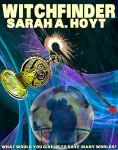
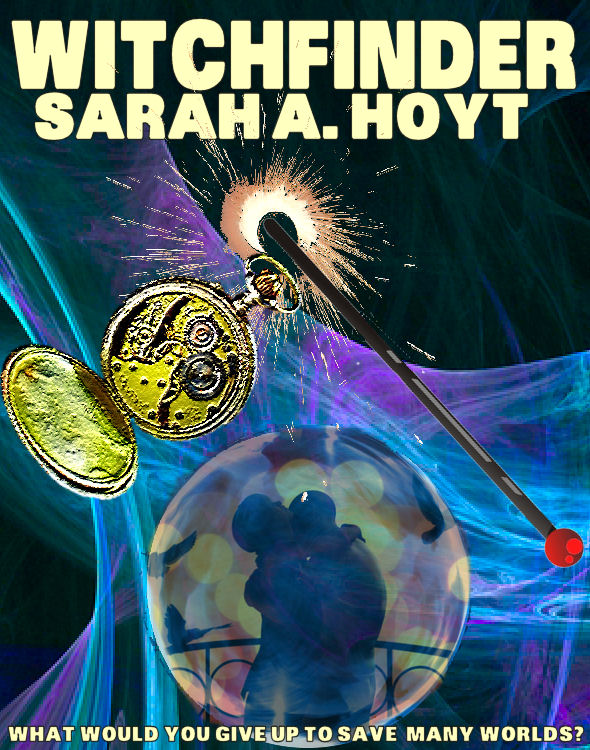
*This is the Fantasy novel I’m posting here for free, one chapter every Friday.   If your conscience troubles you getting something for free, do hit the donate button on the right side.  Anyone donating more than $6 will get a non-drm electronic copy of Witchfinder in its final version, when it’s published.
There is a compilation of previous chapters here  all in one big lump, which makes it easier to read and I will compile each new chapter there, a week after I post.  When the novel is completed and about to be edited the compilation page will probably be deleted.

Oh, this is in pre-arc format, meaning you’ll find the occasional spelling mistake and sentence that makes no sense.  It’s not exactly first draft, but it’s not at the level I’d send to a publisher, yet. *

For previous chapters, look here:  https://accordingtohoyt.com/witchfinder/

All The Paths

No matter how hard Marlon tried, he could not open a portal into fairyland.  Gabriel watched him do it, and watched him exhaust himself and at some level couldn’t help admiring him for not giving up.  It was much like watching a man beating against a closed door long past his beating had become feeble and his voice had gone hoarse from shouting.

Circles appeared beneath the dark blue eyes, and the flame-colored eyebrows drooped, but Marlon kept trying.

But then, Gabriel reasoned, with a glance at Aiden, Marlon didn’t seem good at giving up.  After a while Gabriel slipped away to the kitchen, where he washed the tea things and made fresh tea and brought it out, and waited till a pause in Marlon’s incantations to say, “Tea.  With milk and sugar.  You need it.”

Marlon made a face.  It was a face that Gabriel remembered.  Marlon took his tea black.  But he ran a hand back over his unruly hair, making it more so, and shambled towards the tea table, his walk no more lively than Aiden’s.  “There is no path,” he told Gabriel.  “No way to… to get to fairyland.  There is nothing I can do.  It won’t open to us.”

“How not?” Gabriel said.  “Though I believe I was thrown out of fairyland with the specific injunction not to come back, I believe you weren’t even born when you were thrown out.”

Marlon set his cup down and rubbed at his nose between the eyes.  “It’s not like that.  Not… specific to us, I mean, but to any magicians of a certain level of power, particularly those of mixed magic.  And, Gabriel, I regret that I have to give you bad news.  Something I learned through my scrying of the paths of power.”  He did look sorry, his tired eyes almost as lusterless as those of his animated lover’s corpse.

“What?” Gabriel asked, and for a moment felt the dark, unremitting despair of waiting to have Seraphim’s death announced to him.  He didn’t think he could live with himself having allowed Seraphim to be killed, and his whole house lost with him.  “Tell me.”

“Your…  The dowager Lady of Darkwater and her daughter Caroline have gone into fairyland.  They were allowed, or perhaps trapped, into going in.  I don’t know what they mean to do with them, but it can’t be good.”

“Caroline.”  Gabriel discovered he’d put his own cup down, and that he was clutching frantically at the sleeve of Marlon’s shirt.  “For the love of God, we must go and rescue her.  She’s just a child.  She– I taught her some defenses but not nearly enough for what she’ll meet with there.”

“No,” Marlon said.  “And I did not mean to tell you until we could get in.  But I don’t think we can or at least…”

“At least what?”

Marlon’s face had acquired a pinched look, and Gabriel realized he was clutching the magician’s arm hard enough to bruise the flesh beneath.  He withdrew his hand and tried to compose himself.  “I beg your pardon, but–”

“No.  I understand.  They are your family.”  A pause.  “You know, I think part of what fuled my anger at you all these years, other than your incredible stupidity in alerting the authorities or your idiot brother’s insistence on fighting a duel with me, after finding me through magical means he shouldn’t be able to use–”

“Seraphim? He what?”

“Assure you.  Fought a duel with me.  For your honor.  As though–” Marlon shook his head.  “At any rate, more than any of that, what fueled my anger at you was knowing that you had a family, and I never did.  It was knowing you were loved by at least your father and not born of–” He shrugged.  “And that they counted to you.”  He looked up at Gabriel and gave the impression of being so tired he would presently sway on his feet.  “And that you mattered to them.  Foolish, I know to hold it against you.  It is not your fault I was not born in the same circumstances.  But I was envious.  Deadly envious.  And it distorted all my feelings.  It made me…  Never mind.”

But Gabriel’s mind was spinning dizzily over this duel, if it had happened.  “Seraphim fought you?  For my honor?  But… what did my honor have to do with your practice of necromancy?”

He got back a level stare.  “No.  Idiot.  Not the necromancy.”

“Oh.  But–”

“Don’t ask me to explain what goes on in his Grace’s mind.  I’m sure I couldn’t tell you anymore than I can bring the moon down to Earth.  I’m common as dirt, remember.  He informed me in no uncertain terms that if I ever had any other contact with you, next time the bullet would go between my eyes.”

“The bullet?”

Marlon pulled his shirt casually down, to reveal a puckered red scar on his shoulder.  “As you see.”  Then suddenly the tired blue eyes danced with devilish amusement.  “As soon as I’d recovered enough, I sent you the letter with my coordinates.”

Gabriel had to cover his eyes for a moment, because it was impossible to think coherently through the desire to laugh and cry at once.  “And yet, you’ll help me rescue him?’

“Naturally.  But for a price remember?”

“How could I forget?  Now to return to the paths into fairyland.”

“The famous Darkwater accumen returns!”

How could he, Gabriel wondered, at the same time admire the man and want to punch him unconscious within the space of less than ten seconds?  How was it possible that Marlon would both be willing to help the people who had mistreated him, and yet not be able to keep from mocking Gabriel himself?

“Indeed,” Gabriel said, keeping his own temper under control.  “Now if you please, to speak plainly.  You said there was no way in, only– Only what?”

Marlon sighed.  “Only there might be.  I get a feeling what is keeping us out is not a shutting charm.  I don’t think they could do that against someone of mixed blood anyway.  Those with blood of fairyland can ever go back, can we not?  I have the strong impression what is keeping us at bay is…  A cat’s cradle working.”

Gabriel poured tea for both of them again.  The cup he pressed into Marlon’s hands was picked up without comment, and then Gabriel himself took a sip of his tea.  The magical worlds – and Avalon was one of the more magical ones – all had lines of power which wrapped the world in a tight shroud of magic.  Into these lines of power smaller and more mobile lines of power were attached.  Each magic user had his own, and through his life he wove a pattern upon the surface of the world.  Those powerful enough changed the nature of the power with their design and those powerful and active could even move one or more of the lines and alter the nature of the world’s magic forever.  This was why necromancy was forbidden.  Because it could make the bright lines dark, and blight whole areas of magic.

A cat’s cradle working was managed with the lines of magic themselves, which were intertwined and twisted in such a way that someone with normal magic could not follow them.  “The major lines or the minor ones?” Gabriel asked.  To twist the minor lines was what was called a fate work, not savory, exactly, but often employed by village witches making love spells, or by well intentioned Hearth wizards making it so that a sailor would return from the sea or a soldier from war.

It wasn’t good magic as such, because it restricted the will power and actions of others, and it could be dark magic, depending on what fates you were twisting or why.  But to twist the major ones would take both an immense amount of power which would snap back at any moment, without warning, and it would probably cause a deformation in the magic.

If the Cinderella story were true – and Gabriel doubted it, because it was far easier to lay a spell on coachmen to take someone to a ball in a borrowed carriage than to spell mice and WHY pumpkins? – the change back in coach and mice would be what happened when lines snapped back.  The question though, was how long it would take to snap back.

Marlon squinted, as though thinking.  “Both I think,” he said.  “And before you tell me how dangerous it, remember I used to teach magic.  But it’s entirely possible it’s only minor lines that are involved, just so many of them and so strongly bound that it feels like major lines.”

Gabriel nodded.  “So you are saying, if we can unwind the lines of fate – all the fates – we can discover a way to get into fairyland.”

Marlon made a sound that might be laughter, or else it might be a cough.  “Indeed, but–”

“But?”

“The lines include those of the king.  And my father, and your brother, Seraphim, who is in this other world we might not be able to access.”

“Your FATHER?”

Marlon’s face went blank, almost wooden in its lack of expression.  “Indeed.  My very honored father.”

“But I didn’t know– That is, I know he never recognized you, which is why–” Which was why the official name Marlon used was Elfborn, the name of every bastard kicked out of fairyland, and attached to a certain stigma, to a definite untrustworthiness.  That he’d managed to get an education, much less to become a professor, despite all that, had been one of the things Gabriel admired about him.  And perhaps that was one of the reasons that Marlon had been tempted into necromancy.  If everyone assumes the worst of you at all times– But no.  Damn it.  He would not find excuses for the man.  Marlon had chosen that one dark path of his own accord.

At that moment, Gabriel realized the expression on Marlon’s face was ghastly enough that Marlon himself could have been many years dead.  The smile that contorted his lips was closer to the grimace of a corpse.  “Oh, but he did recognize me, Gabriel.  I made sure of it, though it almost killed us both.  Legally I have my father’s name.  For all the god it did me, since I had to go into hiding that same week.  I had hoped– Never mind that.  I chose not to publicize his name, though I owe him no respect and little gratitude.  I had to force his hand to recognize me, to threaten to reveal that what happened to my mother was not consensual but the result of dark magic and of entraping an elf and then–” He shook his head.  “My father would kill me, if he could.  It is a good part of the reason I’m still so fiercely hunted these many years after, and when my acts of necromancy amount to a ressurrection spell said two seconds too late.”

Gabriel looked towards the corner “Is that why–”

“Damn it,” for the first time there was fury directed at Gabriel in Marlon’s voice.  “What did you think it was?”

“But– But then why didn’t you–”

“Kill him again?  Don’t push Gabriel.  There are things you should understand without being told.”

And Gabriel, who understood nothing at all, could only take a deep breath, wondering what he should understand.  That Marlon couldn’t kill Aiden?  But surely Marlon could see that tattered soul attached to the not-quite-alive body?  Surely he could see its suffering?

Then suddenly he did see.  If what Marlon said was true, then the magician had been born of rape.  That meant his mother had gotten expelled from fairyland, as well as Gabriel’s mother had, but that she had never wanted to leave.  He’d never asked Marlon exactly what his mother was.  There were many creatures in fairyland, from elves to centaurs, from the high-powered and princely sovereigns and noblemen of elves to the nayads and dryads and centaurs that the Romans had mistaken for minor divinities.  Depending on what Marlon’s mother had been, she might not have lasted long outside of fairyland.  And, regardless of what she had been, she might very well have abandoned her human child behind and gone back, to face whatever punishment would allow her to be part of the magic lands again.  “Your mother…”

“Never met her,” Marlon said.  “Not consciously.”  He rubbed at the tip of his nose, and seemed to be oddly confused about the turn in the conversation.  “I was raised in an orphanage for magical children.”  He made a face.  “What does that have to do with any–”

But Gabriel’s mind was still following its own thought.  Orphanages for magical children ranged from the very good to the appalling and he wasn’t going to guess which kind it had been.  Marlon had survived childhood, so it couldn’t be one of the very worst ones.  Instead he pursued that thought.  Marlon had never belonged to anyone.  He’d had no family, no kin, and probably no friends either, because even weres were afraid of half-fey magic.

Gabriel thought of the fear that had met him in the eyes of the servants, the looks of dread, when he’d first gone to live with the Darkwaters.  He imagined growing up with that, living with that, your whole life, unremitting.

Then there had been Aiden Gypson, who had been– “You were friends with Aiden for a long time.”

A face.  “We were both charity pupils at his majesty’s charity school for magically gifted young gentlemen.  I think we were twelve when we became friends.  What are you getting at, Gabriel?”

Nothing, Gabriel thought.  Nothing at all save that your foolishness has epic proportions to it.  But then why should I be surprised?  Do you not do everything, always, larger than life.

“I think we should sleep,” Marlon said.  “Because unraveling these fates will take us off into each of the places the people involved are.  And you know, and I know that we’ll have to do a major working, which should not be undertaken as tired as we are.  We’ll need some hours of sleep at least.  And you know time in fairyland doesn’t run at the same rate, so your brother’s fate is not as urgent or it’s perhaps more urgent than–”

“Who is your father?” Gabriel asked.  It had to be someone despicable, if he’d taken advantage of a female elf bound in a working, yet it had to be someone important enough to be enmeshed in this working – whether important in the human or the magical world.

“My dear Gabriel!  What does it signify?  We must rest and then we’ll do our working.  You are very odd asking me where I met Aiden, and then asking who my father is.  It makes me feel like you’re some girl in her first season, or else the girl’s mama checking on my antecedents.  I assure you when I said we should sleep I meant just that.  There is strenuous magic to be done and I–”

“And you speak a great deal of nonsense, Marlon.  Who is your father?  If he’s involved in this working, we must understand how and why before we start.”

“The fact he’s involved has nothing to do with being my father.  Far more to do with his being an ambitious man.”  Marlon tried to smile, but it didn’t quite work and he sighed.  “Has anyone ever told you, my dear Gabriel, that you have the most unpleasant habit of fastening on to irrelevant details and holding onto them buckle and tongue?  First there was your calling the authorities merely because I lacked the cour– Because I kept Aiden about.  And now this obsession with my father.  And you’re not going to let me go up to bed until I tell you, will you?”  He looked up into Gabriel’s eyes, and whatever he read there made him sigh again.  “Very well, Prince.  If you must know, my father is Lord Sydell, his majesty’s spy master.”  And then, with a near sneer, “There, are you happy?”

Waking And Dreaming

“Don’t worry about it,” Arden was saying, his voice very steady.  “Don’t worry about it, Barbara.  The girl will be fine.  She’s full of determination, that one.  The strongest of our children, and she had to be the girl.  What a boy she’d have made.”  And then, with a smile.  “Or perhaps not,” he said. “Imagine all the duels he’d fought and how many liaisons he’d have embroiled himself in.”

Barbara, the dowager duchess looked at her husband, walking by her side, in this path in fairyland, and wondered what to make of his presence at all.  He was dead.  She knew he was dead.  She remembered the study, and his corpse, and blood everywhere.  It had taken them weeks to remove the blood stain from the floorboards, using all magical means available.  She remembered the shock, and the pain at knowing she’d never see him again, in the flesh, no matter how much grief he’d brought into her life.  He’d brought joy too.

The joy was now obvious in those green eyes, squinting at her with something like deep and secret amusement.  It was the amusement that made her snap back an answer, as she’d so often done when he’d been alive, “Mind you,” she said.  “Your boys are not much better.  Michael is, I suppose.  He wouldn’t get embroiled with anything unless it came with magical gears and perhaps a steam engine.  But Seraphim!”

“I don’t think it is what you think, with Seraphim,” Arden said.  “At least, I think he and Gabriel found my papers.  I’m sorry, Barbara.”

“Your papers…  Yes, I’ve for some time now been worried that you were involved in something … something worse.”

“Oh, I was, which is why I’m here,” Arden said.

“You mean dead?” She asked, and her heart beat very fast, afraid he’d tell her, yes, he was dead and that she had now joined him.

But he frowned at her.  “You know, I don’t believe I am.  No, no, it’s true, this is not my body beside you.  I’m not absolutely sure where my body is just now.  It doesn’t seem to matter much in fairyland and after a while…”

“But I saw you dead.  I saw your body, I–”

“Surely, you of all people know about changellings.”

“Oh,” Barbara said. And then, “I am dreaming.  I was just walking with your daughter, and we didn’t turn, we didn’t veer.  Only we heard someone crying and…”  She frowned unable to remember when Caroline had disappeared or when Arden had appeared beside her.

“Yes.  That’s her path.  Not yours.”

“But we didn’t part.”

“In fairyland, all paths are alone, Barbara, for those who don’t belong.”
Will You Meet Me In The Air?

Okay, I’ve spent weeks now telling you all what you CAN do.  Yes, you can write that story.  Yes, you can finish it.  Yes, you can proof it.  Yes, you can even convert it to ebook.  You can do covers.  You can do indie.  You can work for traditional at the same time.

Now, are you all pepped up and squeeing with glee?  Good, good.

Let me tell you what you CAN’T do.  No, seriously.

You CAN’T evaluate your own writing.  (And for a certain period of time, at least, you should be leery about evaluating other people’s writing too.  We’ll talk about in a moment.)

No, don’t talk.  Listen to me.  You can’t evaluate your own writing.  You just can’t.  I know what I speak of.  I’ve spent the last twenty years dealing with beginning writers and for at least five of those years I was a beginner writer myself.  (We’ll CALL it five years.  Hey, I’m a slow learner.)

What I’ve found for all writers – and no, not just beginners – is that when it comes to evaluating our own writing, our switch is stuck in one of two positions.  One of them is “Everything I write is gold and I’m so good I make the angels weep.”  The other is “I really should stop dirtying paper on one side or sacrificing innocent pixels when I can’t write anything worth reading.”

Both sides need to learn to temper this instinctive reaction if they EVER are to get anywhere.

Being solidly in the second camp, I wish to say that I think we make better writers in the end.  I doubt it, though.  I think it’s just that I’m wildly jealous of people with a shred of self-confidence and wish to hit them hard half the time.  It doesn’t matter in either case, because my side of the evaluation matter is woefully under represented.  Why?  Because most of us – those of us who are compulsive enough to actually power through the doubt and finish novels – just fling them under the bed or into the closet.  Because, well, we wouldn’t want to inflict our stuff on anyone else.

Frankly the only reason I ever sent things out is that I felt guilty.  If I was going to live from my husband’s money and spend most of my day writing (instead of saying, cleaning or taking the kids for walks or whatever it is “just housewives” do) then I needed to at least give it a chance to make me money.  So I sent stuff out out of a sense of obligation and in the serene certainty no one would ever buy it.  Also, I seized on any excuse (oh, we don’t have five dollars for stamps.  I’ll buy a paperback book instead) not to send stuff out, which means my marketing was sporadic.

You can usually tell people on my side of the equation because we have a hell of a time dealing with editorial letters.  We come across as bipolar divas.  That’s because we sort of are.  Whenever someone tells me that I need to change ANYTHING in my book, my immediate reaction is to agree.  Even if the person telling me this last read a book during the Eisenhower administration and has never in his/her life read a book in the genre I’m writing in.  Also, no matter how absurd the suggestion is.  However, I’ve learned – through, trust me, bitter experience – to doubt these suggestions and to try to look dispassionately at the person giving it.  “Okay, so he’s a beginner writer and this is what he’s struggling with and he’s projecting.”  (More on that later, too.)

This then makes you feel like you’re being defensive and makes you MORE insecure about rejecting the changes.  All of which is sheer hell when it comes from an editorial house.  They’re only used to – or always believe – they’re dealing with the OTHER type of writer, so they tend to think ANY resistence means you’re being a prima dona and think all your stuff is perfect.  So, they also tend to give the suggestions in the form of snark or over-powered suggestion.  You know, stuff like “This part really stinks” – when it turns out they want you to change a line.  This type of thing makes people like me go in and scrape that entire part and write it anew, possibly in German (which we learn for the purpose) and leaves the editor in a screaming rage of “why did you change that?  I loved the part with the girl.  It was just that line.”

(If you’re ever in that position, do what I do.  Send the letter unread to a friend who then distills the requests to what they’re really asking for, stripped of color commentary.)

Of course, if this is not a professional editor giving you that kind of commentary STOP USING THAT PERSON TO BETA YOU.  (We’ll go into this later.)  Pick your betas carefully.

So, do people whose self-evaluation is stuck on “sucks” have any advantage over the other type that causes me to think they’d be better writers in the end?

Only one.  These people – we’ll call them the nail biters, okay? – tend to work really hard on their own stuff BEFORE they ever show it to a single living soul.  In fact, they’ll study other authors to know what they’re doing.  They’re always trying to improve what they think is dreadful dreck.

This is the greatest weakness of the self-satisfied set – we’ll call them the Jack Horners, shall we (“What a good boy am I!”) – they are perfectly happy with the stuff they write from the very first line they put on paper.  There are degrees of course, but from my vantage point (here, under the bed, braiding my hair) they are varying ranges of smug.  They go from the person who comes across as perfectly normal but thinks his breaking in is assured if he just learns to work the system because, duh, his stuff might not be the best thing in the world but “is best than all of that” to the ones who think Shakespeare should bow down and kiss their muddy boots.

I can’t tell you how these people get good enough to break in.  Maybe there is a way critics can get to them.  As a mentor, I have yet to find it.  You can stand in front of them and shout what they’re doing wrong and the reaction will be one of three things: a) you don’t understand my style/substyle/subgenre.  I write what I’d like to read.  I bet there are more people like me than people like you.  b) You’re just jealous of my talent.  c) You’re talking about OTHER people, not me, right?  Because I don’t make any of those mistakes.

I know, because I’ve met these people as published – as bestselling – authors, that they CAN break in.  They can get at least good enough to sell.  Some of them are even quite decent.  So there must be a process by which they see their flaws.  Perhaps it just takes a meaner, nastier critique than I’m ever willing to give.  Or perhaps it takes a truckload of sugar per spoon of medicine.  Or perhaps they ARE better at the beginning.  Perhaps they never evolve.  Perhaps one in a hundred really are as good as they need to be to break in, right the first time.  (I’d rather not think that, though, because it makes me think lovingly of cyanide and I’m not sure if it’s for them or me.)

I’ve met incredibly talented Jack Horners, but I’ve never succeeded in mentoring one.  So we’ll just assume “something happens here” and they learn to improve.

Once they’re in, though, they have a huge advantage over us nail biters.  PARTICULARLY in the old system.  I hate to say it, but most publishers took you at your word.  (Why?  I don’t know.  I suspect because there’s no objective evaluation standard for writers.)  If you come in, all big, telling them how great you are you stand a much better chance of being believed than if you timidly slide up and reluctantly admit you wrote a book.  It also helps, still, in the new world of publishing, because the Jack Horners are out there, pushing their book at unsuspecting strangers, while we, the nail biters, hide in a corner and hope someone will discover us.  (Or in the beginning, when we’re afraid of being read, hope NO ONE will discover us.)

You can always tell one from the other in public situations.  Say, at panels, at a con.  ALL the Jack Horner talks about is his books.  The Nail Biter will mention them at the beginning, then talk about OTHER PEOPLE’S books.

Okay, it’s important for you to know which you are.  Either style can be compensated for IF you know that you are one or the other.

If you’re a Jack Horner, you need to remember that art requires practice.  Yeah, you might be all that and a million dollars, BUT even if you are Shakespeare, Austen and Walter Scott rolled into one with a dash of Dumas peppered in, at the beginning there are things you won’t know how to do.  They might be LITTLE things like “how much description is appropriate.”  BUT in certain places they are enough to stop you from being accepted/bought.

You know better than I what it takes to make you accept critique.  Choose your betas carefully for being able to give it, and choose people you HAVE to trust.

Also, on behalf of the Nail Biters of the world, stop telling us you’re the best thing since sliced bread.  It will stop us glaring at you.  It helps if you realize it’s not your talent we envy (necessarily)  – it’s your self confidence.  Go ahead and do your spiel for the public and the editors (A lot of us learn to fake it to a degree, anyway) but don’t do it among us, in private.  And don’t ASSUME you’re better than us because we’re mousy about our stuff.

If you’re a Nail Biter, be aware that you’re judging yourself more harshly than anyone else would.  In addition to betas, pick a couple of support people.  These are not bullshitters.  They can’t be, because you have to trust them.  They’re just people who like your writing most of the time, even if they’re willing to tell you when you’re going severely wrong (which all of us do at times.)  Then rely on them when you scare yourself and can’t go on because you think you suck like a Dyson.  Make sure they’re patient.  There will be times they’ll want to brain you for your bottomless pit of lack of self confidence.  (Mine are all long distance because ah ah, it’s too far away for them to throw rocks at my head.)  THEN TRUST THESE PEOPLE.  When they tell you it’s good stop oscillating.  TRUST them.  That’s why you have them.

Second, make sure you pick your betas carefully.  If you’re like me, a bad or wrongly worded comment about the last book can stop you working on the current book.  And if you are like me, you have stuff out at betas while you start the next book.  So, for instance, a beta who sends you comments piecemeal whenever he/she hits something he/she doesn’t like can be truly destructive, because it stops you in the middle of writing something else, and can cost you a day per comment.

Okay, I’m not being clear, let me explain.  I usually ask my betas to send me a report at the end.  What I do is collect ALL of those and then, when I have the first draft on current book done, or I come to a logical stopping point or what we call around here “the weekend” I take two days, read all the reports one after the other.  I’ve trained myself not to obsess on anything that two or more of you don’t hit on.  Unless it’s an obvious one, like when the reader reminded me suits of clothes don’t last fifteen years.  (DUH.) The rest, things that confused Jane but not John or vice versa (and I have twelve of you, at a minimum, at all times, and I have a minimum trigger of three echoing each other for “take seriously.”  Correction – three I KNOW don’t talk to each other.) I just go “okay, whatever” particularly if they’re minor nitts.

Now, let’s suppose Jane, instead of sending me a report which I can then just go “I’ll open next weekend” thinks her stuff is SO VITAL, so IMPORTANT that I must hear about it RIGHT NOW when she’s having a problem with it, and keeps sending me one-line emails, of the sort I can’t even delete without reading.  (Or worse, and yes, people have done this, calling me to tell me this.  One at a time like Juan Valdez.)  Even if – and usually that’s what happens – her “insights” are such earthshaking stuff as “you use the word good too much.”  Or “you changed the character’s hair color in chapter three.” it’s going to cause damage.  First because it gets to the point I see the phone number or the email address and I flinch.  Second, because even if it’s all a misunderstanding on Jane’s part, I’m a nail biter.  I’ll wonder what I did to bring it about.  Best case scenario, I waste three hours hunting typos on the old manuscript.  WORST case scenario I become hyper conscious of, say, the word “Good” and become unable to write for a month.  Yes, I know that’s ridiculous.  But I yam what I yam and I work with what I yam.

So, if you’re a nail biter use betas who will work with you and who will work in circumstances you can manage so that you can continue to be productive.  And if you are a beta for a writer and you don’t know which kind they are – well… do what they ask you for.  And unless they specifically ask you to be “brutal” or other code word for “I need to be hit over the head with a safe before I’ll listen” present your critique as dispassionately as possible.  Avoid stuff like “this part sucked.”  Or “I hated how you dropped that plot on the floor” or even (if you’re that kind) “this didn’t work for me.”  (Because some people use that with the ‘for me’ as an afterthought and the clear implication it wouldn’t work for anyone.)  Instead say “this confused me” or “I didn’t understand why you did that.”  Or… (grin) “wouldn’t his suit fall apart in fifteen years?”

Then pay attention to what comes back from the writer.  And if the writer gets defensive, don’t argue.  Look, if the writer is a nail biter, they’re really arguing with themselves, not you.  And if your criticism is warranted they will accept it, it just takes a while and you’re really not part of that process.  The more you argue, the more defensive they’ll get.  OTOH if the writer is a Jack Horner, there’s a chance you CAN’T get through.  So why argue?  And as a beta, note when you get proprietary over something you “spotted” too.  (This is only a problem if you’re Jane and keep asking the writer if they’re going to change what you said – usually.  Normally my betas just tell me stuff and don’t ask if I’m going to change it or not.  Those who do usually don’t beta more than once for me.)  If the writer says “It wasn’t a problem for anyone else” let it go, unless it’s your area of expertise.  (Like, you’re a gun expert, and there’s a chance none of her other betas is.)  (Hell, sometimes even if it IS your area of expertise.  I’m beta for a dozen people and sometimes I correct them, say, on foreign languages.  Most of the time the reply is “Oh, thanks.”  But if they say “That wasn’t a problem for anyone else” I SHUT UP.  Why?  Because those people are likely to be closer to the audience they’re aiming for.  If, say, they have a pun in Portuguese (don’t ask.  Culturally it doesn’t REALLY happen.  Okay, in rare circumstances, but not nearly as much as in English) and I tell them “that wouldn’t be considered a pun” but none of their other betas did… well, how many native Portuguese people will read their book?  See what I mean?)  It’s not about your being RIGHT, it’s about helping the writer.  No matter how right you are, if you find yourself browbeating the writer over a point that does NOT affect how the book will sell, stop.  If you’re dealing with a nail biter, at BEST you’ll be cut off.  At worst, you’ll cost the writer months of block.  If you like the writer’s writing, that’s plain stupid. (And if you don’t, why are you betaing?)

On this, and to save both innocent writers and innocent betas I HAVE to urge caution.  If you’re a would-be writer, or even a pro, and you’re betaing… be careful.  You tend to see the same problems you have issues with or had issues with at that point, whether they’re there or not.  If you still think they’re a problem for the writer you’re betaying, put in a “save”.  I always say something like “I might just be seeing this, because I’m struggling with it myself, but I think–”  AND make sure you KNOW that might be all.  For instance, right now I’m struggling with stage business, which means even in published books, I notice clumsy stage business, and I have to remind myself it’s just because I’m sensitized to it.  Be particularly careful if you’re betaing upwards (someone more published.)  The bane of contests are judges who are beginner writers and who assume any submission must be from someone junior to them.  A couple of years ago, I entered a romance contest under a pen name.  I was judged by someone who is a “veteran judge” but unpublished as an author.  I got back a note telling me I was trying too ambitious a theme for my poor vocabulary (!) and grammar skills.  This idiot had gone around changing words like stolid to words like solid and then complaining the sentences didn’t make sense.  She was seeing the speck in my eye because she had a mote in hers…  Beware of that.  (And I’ll say RIGHT NOW I’ve only had that issue with contests, and never with one of my betas, but other people might.)

Okay, that’s out of the way and sorry for the ramble.  I really am not awake enough to be brief.

Whether you’re a Nail Biter or a Jack Horner, there is one circumstance that will throw you for a loop in your own way…  When you’re evolving.  I call this being “in the air.”

You can NEVER judge your own writing (unless it was done anywhere from a one to ten years ago, when you MIGHT have an inkling) but when you’re changing then you REALLY can’t judge your writing.

All writing “growth” is saltational.  I don’t know why.  I bet some of the people on my blog do, though.  What I mean is that you go along a long time, get comfortable with your style of writing.  But all the time, something is happening.  It might be a series of small accretions that suddenly change it completely, I suppose – though that never happens to me or my mentees – or it can be that SUDDENLY your writing becomes completely different.

Maybe the Jack Horners think they’re especially good then.  I don’t know.  I KNOW the Nail Biters immediately get the feeling they aren’t doing it “right”.  They’ve managed to negotiate a truce with the inner critic long enough to write stories or books, but now the inner critic is going “this isn’t even as good as you usual cr*p.  It’s really, really bad.”

Over the last week I’ve been dealing with two of my mentees telling me how AWFUL their current piece is and how they don’t know how to write anymore.  I had a feeling they’d both taken a jump, but being mid rewrite in response to editorial letter (which to me is in itself a delicate psychological act) I couldn’t read them.  I’ve now read one of them.  Let’s say she’s taken the leap I’ve been praying she’d take for the last three years.  It’s not a leap I could take for her, or even explain how to take it.  But she’s taken it, and, of course, she’s terrified and wants to shove the story under the bed.

Fortunately she has me to tell her that her writing isn’t sh*t, but her judgement is.

If you’re a Nail Biter and you’re in the air, take a deep breath.  If you’ve been writing what other people judge is competent prose for years, it’s unlikely the current effort is THAT bad.  (It’s possible, but it usually correlates to illness, injury, extreme old age or extreme tiredness.  If you eliminate those, you’re just probably “in the air.”) If it feels that bad, chances are you’ve taken a leap in style and proficiency.  Take a deep breath and keep writing until your support system can reassure you.

Yes, I know how scary it is.  I’ve been there and have bitten my nails.  My last two books were huge leaps for me, and I cried moaned and (metaphorically) crawled under the bed biting my nails.  But betas and editor agree that at least the last one is a huge leap.

Be of good cheer and force yourself to forge ahead.  Stop biting your nails.  You’re just getting good.

School’s Out (Sympathy For The Devil)

Kris Rusch says writers are dumb.  She’s right.  And wrong.

She’s right that writers can do the most absurdly stupid things when it comes to trusting total strangers to steer their careers.  She’s wrong in thinking that we as a group are dumber than other people, or that other people in our circumstances wouldn’t act exactly like us.

Let’s begin with the type of person fiction writers are.
As a rule, we’re odd ducks.

There are, of course, exceptions.  Don’t come and tell me about your gregarious, perfectly adjusted, quite average authors.   Or at least authors who present as such. There are fewer of those in science fiction than in other fields, but yes I’m aware they exist.

In fact, I can easily pass for one of them.  I did, through most of my college career, pretend to be a perfectly normal student, with aspirations of becoming a teacher or professor or translator or interpreter or something else that my degree could qualify me for.  But inside, it always felt like the degree was a pro-forma, something I was taking because my parents didn’t think school ended till graduate school, not because I wanted it or had any need of it for my life.  It didn’t much signify what I studied, I just took the path of least resistence, because whatever career I had as a “grown up” wasn’t going to be the career I wanted.

I wanted to be a writer.  And I want to say here, that though I had a completely different idea of a writers’ lifestyle – all those stupid movies – as being a lot more glamorous, that wasn’t what I craved.  I craved sitting down and making up stories and writing them and sharing them.

And I knew I couldn’t do that.  Not in Portugal, when books were all physical and international commerce slower.  In Portugal at the time, even if every single person who read for pleasure – let alone who read science fiction and fantasy or even mystery for pleasure – read my books, I’d never be able to make a living from it.  So I needed to do something with my days, it didn’t much signify what.  I’d write, of course, but I was resigned to the stuff never seeing the light of day, because the publishing establishment managed to be smaller and stuffier than ours and, to be blunt, you had to know someone.

But even while acting perfectly normal, even while keeping my aspirations to myself – and a few moans and b*tching to my best friend since first grade – inside I knew I was different.  Hearing people actually get ENTHUSIASTIC at the idea of a translation job gave me a funny turn of the stomach.  Oh, sure, I could do it.  No problem there.  When I finished highschool I was the fourth best German student in town (Sic Transit Est Gloria Mundis and all that) and German was my weak language.  But getting excited about it?  It seemed rather like getting excited at the prospect of learning the multiplication tables.  I could fake it, but I couldn’t feel it, and inside I always WAS aware of being a round peg pretending to have edges.

So it started that way.  And then when I got married and my husband discovered my awful secret, and encouraged me to write.  And I felt weird.  Because our writing lifestyle IS weird.  It’s not just the “you stay home all day and waggle fingers on the keyboard.”  THAT is bad enough.  It’s more the long walks that absolutely count as part of writing, because you’re thinking story the whole time.  It’s the walking around in a dazed state and doing the most absurd stuff because your mind is in another world.

Your nearest and dearest don’t get it – my nearest and dearest don’t get it.  My husband, for instance, refuses to admit that the meaning of vacation is “writing in another place where I don’t need to do any of the housekeeping” AND he’s a writer, himself – so why should anyone else?

And then – at least in the olden days (let me tell you sonny, I’ve seen empires rise and fall) – a few years ago, when you sold, you were faced with a business that worked like no other business (no, not even show business) mostly because it was busy disemboweling itself dishonorably by severing the connection between demand and supply.  I have writing friends who say “No one understands writers, but other writers.”  And it’s not because we’re that weird.  Okay, it is that we’re that weird.  But the business outweirded us and kept on going off weird bridge with a rocket pack strapped to its back.  And you couldn’t explain that to ANYONE who wasn’t in it.  (“Wait, so your book didn’t sell?  And this is your fault?  But your book was never on the shelves!  Wait a minute.  WHY do they publish books they don’t even TRY to put on shelves?”  Ladder, rinse, repeat.  My standard answer was “I think they’re a cover for money laundering operations by Columbian drug lords.”  Did I believe it?  No.  But it shut people up.  And didn’t make them call the men in white coats as did “They’re run by space aliens, here to destroy our fiction.”)

So, we writers tend to feel like misfits, the degree of misfitness depending on how much we can surround ourselves with like minds and how well we can pretend to be normal.  Alas, unfortunately, we writers also tend to be humans.  (You’re excused if you have multiple tentacles and more than one antenna.  This post is not for you.)  And humans are social animals.  We want to fit in, we want to pretend we’re normal.  We want to be part of a group.

Up till now, publishing by its very weirdness, gave us a sense of being in a club.  No one understood writers but other writers because you couldn’t bitch about your editor dropping your book on the floor because you didn’t agree on changing a particular line to any sane human being.  They’d think you’d made it up.  But to a fellow writer?  Likely to have similar horror stories.

So, the publishing industry was horrible, but it also gave us a sense of normalcy.  We too had employers (and this is why we treated publishers and – some people – even agents as “boss” even though they were at best buyers for our product.)  We too had jobs.  There was a career path, a logic progression.  There was a way to get to the top even if not everyone did.  There was a “ladder” just as for all our friends in normal jobs.   We could say “I’m a beginning novelist” or “I’m a midlister, but…”  OR “I’m a bestseller.”  And bestseller got VERY fine-grained indeed, going down to “locus bestseller” and up to “New York Times bestseller.”

And if you think all that is silly… well, of course it is.  But again, repeat, humans are social animals.  When caught at a party in the middle of otherwise normal people, and they ask what you do for a living, if you say “I’m a writer” they ask “Who do you write for?” and if you don’t have an answer, people think you just stay home and write poems on purple paper, decorated with dried pansies.  Few are rude enough to say, as a guy told me (and this, yes, after I was published) “So, you’re a housewife but you don’t like to say it.” but most people will think just that.  And – is it still true in these days of mommy pride? – in the early nineties that was the same as saying you were a highschool dropout with a sixty IQ.  People tended to wander away from conversations with you at that point.  (There was also of course, the company my husband worked for where my writing sf/f made me the red woman of Babylon.  I’m still wondering if they thought it was a DIFFERENT kind of “fantasy.”)

So, in social occasions we learned to say “I am a novelist with three books out with a New York publisher.”  Or “I have published several short stories in science fiction magazines.”  Or… whatever.

The problem is – again that being human stuff – that all this became a security blanket.  We internalized it.  We believed it.  We read books on how to break through to the next level, and we believed that too.  We learned to sneer at each other’s work in the terms laid out from above, “Well, he’s pretty good but he’ll always be a midlister.  His books just aren’t BIG enough.”

And like all downtrodden social groups (Someone in another thread was talking about how fine the social distinctions can get in a ghetto) we self-divided very finely indeed.  You might be dust under your publisher’s chariot wheels, but by gum you were better than people who’d never sold professionally.

The system provided plenty of rules to judge those other people, too.  Some of them were okay – I mean, you do have to reach at least the level where people can follow what you’re saying, to sell to a press.  Unless, of course, what you’re doing is high literature, in which case you can write whichever words your weasel steps on while running across the daily newspaper – a lot of them were arbitrary and most of them were faddish.  Take how we decided that minimalistic style was the way to go.  No other words than “said.” [Yeah, okay fine, I’m all for not having characters ejaculate words (which would be some sort of circus trick, anyway, and make you famous in the more risque sort of reality show.)  BUT let me point out Heyer did it, and no one cares, least of all me.] That was a rule.  And it was a silly rule.  Perfect if applied with half a brain, insane if applied like the guy who judged one of my contest entries way back did: “you can’t use shouted or whispered either.  The reader should be able to tell that from the context.”  (I don’t know about you, gentle reader, but I’ve both shouted and whispered “such bullsh*t.”)] Or, no more than two adjectives per chapter, or whatever.  Some of them were started because they seemed like a good idea at the time and were a reaction to criticism of the genre.  I’m sure that’s how the “Science fiction has to conform to current science” and “Mysteries are NEVER solved by amateurs” rules started.  The fact that they ruined the fun of the readers and shrank the fields didn’t matter.  It was the hoops you had to run through to get to the “published” (or “bestseller” status) and you did it.  Of course, once you got in you were proud of it.

You know why hazing occurred before political correctness stopped it?  Or why many colleges put artificial barriers to entrance?  Or why human mothers feel pain when giving birth for that matter?

Because the more difficult something was to obtain, the more you’re attached to it.  Becoming a professional writer was difficult, it was often irrational, but once you were in you were proud of that status and you’d defend the rules against all comers.

And this brings us to writers’ perfectly normal human stupidity.

A lot of writers – and the funny thing is that they’re not ALWAYS the darlings of the establishment as you’d expect – are JUST ticked that their chains have dissolved and that they’re set free overnight, and can write whatever they want in whatever way they want, and probably make more money doing it.  (I won’t go into that.  Dave Freer did in Monday’s post at MGC.  Go read.)  They sneer at indie published authors.  They pile on in making fun of copyediting standards of self-published people (which is funny because the traditionally published standards have gone STRAIGHT down.)  They will do anything and everything to hold on to the frayed blue ribbon that says “professionally published.”  And yes, the stupid things DO include, as Kris says, signing idiotic agency clauses, accepting ever-smaller advances and generally acting like chickens with their heads cut off, running in circles.  It also includes sneering and attacks on anyone – ANYONE – who reminds them the cage door is open and they can JUST walk out.

I’m not surprised.  Why should anyone be?  If you read Exodus, and whether you believe it’s true or just a story it has elements of truth in it, you’ll find that the Israelites, in the desert, longed for the fleshpots of Egypt – despite the fact that Egyptians had taken to killing their male children.  (And let me tell you, the Israelites had nothing on writers.  Many of us, the publishers killed ALL our “children” regardless of their classification.  I started referring to delivering books as “I’ve thrown the baby into the volcano, at last.)

As in Exodus, this generation might need to pass away before we can experience true freedom… Or not.  I for one don’t have forty years to wander in the desert.  You?

Sometimes, in my more cynical moments, I think that these people running around trying to prop up the system will – when this fails – manage to form just as dysfunctional a system of irrational hoops one has to jump through to be “a real writer.”

Wouldn’t put it past them.  My people are not only human and odd, they’re also – most of us – at best walking wounded.

But that’s my cynical moments.  I think so long as we keep stuff like SOPA at bay, technology has not just opened the cage door but blown it wide.  I think they can’t put humpty dumpty back together again.

Oh, sure, they can still create their own hierarchy.  They can form clubs and associations that judge of each other’s excellence and award each other prizes.  And a lot of people will take them seriously.

Don’t care.  All I ever aspired to is write stories and make a reasonable living.  Don’t care if I’ll always be called a “hack.”

They’re perfectly welcome to forge manacles and put them on their own wrists (I hear the velvet padded ones are the thing in certain scenes.)  They’re welcome to look down their noses at me.

As long as they leave me out of it, I don’t care.  School is out forever.  I don’t have to write like teach thinks I should.  I understand the people who feel bad about this, but no law on Earth or heaven can make me want to be one of them.

Y’all go back to them fleshpots, darlings.  See that up ahead?  I hear there’s rivers of milk and honey.  And even if it turns out to be just water and fertile soil, that’s okay, so long as no one can kill half of my “children.”  I’m okay with that.  The promised land is where you find it.

Innocent Writer — Led Astray!

I think part of the reason I hate outlines is that they lead me into fatal errors.

No, wait, let me rephrase that – the reason I hate PROPOSALS and the outlines that accompany them is that they lead me into fatal errors.

Outlining a book for a proposal is not the same as outlining it for writing.  For one, you truly can’t (Heck, even I can’t) read a proposal without my eyes glazing.  Yes, even my own proposals.  A proposal is a sales tool.  I learned early on that I had much better luck if I sprinkled the proposals with “scenes” from the (not yet written) book.  And the proposal can only be about ten pages.  This means what I have in there before that is the barest sketch of an outline.  Not much to lead me astray, you say.

And yet it often does.

See, when I write a “synopsis” for myself, it is a thing without form or substance to anyone else.  I think I do in words what other people do in pictures.  That is, I’ve belonged to writers’ groups where people spend time clipping pictures from magazines (I suppose now from the net) that excite them or give them an idea.  Okay.  I can see that much.  While making covers over at dreamstime, I’ve often come across pictures that intrigue me enough that I think “I should be able to write a story for that.”  So far, let me tell you I haven’t.  But I can see doing that.

But the way my colleagues work is yet totally different – they’ll string two dozen or so pictures, put them on a corkboard, and they get the feel of what the novel will be from this.

For me, a working synopsis in its first incarnation, might be something similar.  I’ll have “Beginning of – ” and the name of a book or even a Disney comic.  Looking at it will bring it back, but other people might never get what element started this.  And it doesn’t have a heck of a lot to do with the book that’s finished.  I can’t remember now the title, but the opening of A Few Good Men was sparked by the beginning of a romance, in which someone is being transported on trumped up charges.  I didn’t know THAT had anything to do with the book, I just thought some element there (which, btw, might have been the voice or the landscape) would work for AFGM.  Then there’s songs.  I’ll hear a song and go “Oh, that’s so and so’s theme song.”  And I write that down.  Now, at this point the novel doesn’t yet have a title (though some appear first as titles) but it does have a character.  ALL of my stories, from novels on, start as “So and so’s story.”

This is before the real working outline.  That’s when – after some period of “cooking” in the subconscious which can go from a few months to a year or more – the novel is suddenly clear in my mind.  I then sit down and write, usually, ten pages or so for me.  (This is my process now.  I used to write fifty page outlines, once upon a time, because I was trying to figure out plot at the subconscious level.  I think I’ve now integrated it there, and don’t need to do front-brain work on it, unless there’s a tricksy bit.)  Mind you, these ten pages are supercompacted stores of information.  One line, at one time I had the line “Vara goes banana tree” which translated into three chapters of the character descending into paranoia.  The lines can be that short because they are FOR ME and don’t need to make sense to anyone else.

This is the point I’m usually ready to sit down and write the novel.  This means I write three chapters, then outline the next ten in detail, sometimes running to twenty pages or so.  Then I write them.  Then I outline the next ten.  Now, often enough I only write five, and realize it won’t do.

What do I mean by that?  There are motivations and behaviors that seem perfectly good in outline, but which become painfully flimsy on paper in extended version.  For those who read AFGM I had the two main characters originally argue over the dog and come to punches.  For those who didn’t read it (meaning you’re not betas) these two characters have a lot of other reasons to resent each other, particularly one towards the other, but I thought – on outline – it would be a clever trick to make them argue over possession of a dog, instead.  When I tried to write it, it wouldn’t come off.  It was impossible to make it fly without a series of misunderstandings and implied insults and other stupid-plot devices.  I realized it as soon as I wrote the scene, and spent three days in misery trying to figure out how to rewrite it.  Removed the misunderstandings, and had them argue about the REAL causes of resentment, instead, even if one can’t ever completely name them.  They are clear to the reader.

Again, mind, the argument over the dog seemed perfectly reasonable on extended chapter by chapter outline.  It was only when I snapped the piece into place that I realized it needed to be sitcom-level stupid to work.

So sometimes I write two or three chapters, then sit down and rewrite the whole outline because of the things that have changed.

For instance, until the very last set of – long hand – outlines Tom’s father was an out and out villain in Draw One In The Dark.  Except that didn’t make it a strong book.  It made him into a comedy villain, twirling his moustache, nothing more.  And therefore, I changed it.

Where the selling outline intrudes: It requires me, usually at a time when the novel is little more than a glimmer in my eye (or the back of my mind) to make it real enough for someone to buy.  This means bringing it from the back brain into the forebrain.  And making it “rational” and “About something.”  (Yes, of course all my books are about something.  But often I don’t know that till the last phrase is written.  No, I don’t think anyone else works like that.  Yes, it’s entirely possible I’m nuts.)

And you’re saying “But Sarah if you go completely indy, you don’t need outlines.”  True, though I haven’t yet figured out if Toni will allow me to work without proposals for future books.  That’s … something else.  OTOH RIGHT NOW I’m not completely indy and the last set of proposals I sold had a major boner in them.  This is the musketeer vampire books.  I’ve been struggling with the second for various reasons too lengthy to go into, but the main of them is this:

The series is not REALLY a series, but one long, massive book.  As such, the middle book feels like the middle of a book, where you’re setting all the dominos in place, but you haven’t “broken the novel’s back” yet (This is my idiom for the point at which the novel snaps and more or less writes itself at speed.  It happens anywhere from halfway to two thirds through.)  So as a book it feels meandering and unfocused.

And here is where I made the mistake in proposal.  I kept the focus of the novel on the same person as the first book.  Since the three novels are metaphorically the character’s descent into hell and return  (Metaphorically.  He doesn’t ever die as such.) in selling outline form this seemed ENTIRELY logical.

The problem is it won’t fadge, and I can’t get the book to feel like a book, let alone to extend to the required length.

However, now that I have a first version written and the third book is starting to take shape, it’s obvious what I should do: The book’s main character is the one who got “compromised” and whose nature changed at the end of the last book.  This book is his journey, in which he conquers his inner demons.  The other’s descent continues, as needed so he can come up again, but he’s not nor should ever have been the focus.

How I missed that in the outline is now beyond me.  HOWEVER it’s another advantage for me of working “without a net” (or a proposal.  Wait, that is working without a net, since I have to wait for the books to sell to make money.  No net.  No gross either.)

Now I don’t know if other writers’ brains work like mine.  Often, when people explain how they come up with stories and/or write – including a colleague who plots by BEADING – I wonder if I’m wired backwards from everyone else.  So maybe for everyone else it won’t be such a change.

And now, forgive me the foregoing ramble – I’m going to go recast this – grossly overdue – novel!

Waiting For The Dark Lord

Blame this on the fact that I grabbed what I thought was a fluffy regency romance this morning – fine, whatever, go ahead and giggle.  I’ll be here when you’re done – because I can’t read anything that grabs me and forces me to read all of it on the morning of a day when I’m supposed to work.  Otherwise I start the “Three more pages” dance and next thing you know it’s noon and not a line written.

No, not reading while cooking breakfast for the kids and having my own is not an option.  If I don’t read something, how is my brain supposed to know we’re awake now?  And while I usually read the news with my last cup of coffee of the morning – in front of the computer – it’s hard to drag blogs down to the kitchen table (Yes, I have a tablet but… I don’t want to splatter it.)  This is the only way in which I find blogs grossly inferior to newspaper.  OTOH 12 or so years ago, at the height of my newspaper addiction, we subscribed to three of them (one was the WSJ) and reading the paper took me the better part of the morning.  So it all balances.

Anyway, this morning I thought I was picking up an innocuous regency about a missing heiress, the type of thing I can read a chapter on then resume whenever.  Instead, I found the book – while probably still a fluffy romance – was set in Elizabethan England.

It’s not that I don’t like Elizabethan England.  It’s that I spent several years of my youth and most of my thirties reading non-fiction books about Elizabethan England.  I have an hyper-sensitized “this book needs flying lessons” button when it comes to Elizabethan England.  (Now, this book hasn’t flown yet, which is a compliment to the author, when you consider I got about twenty five pages in.  However, her habit of rendering what she thinks is Elizabethan dialect phonetically and also of assuming that every day people spoke like Shakespeare plays – yes, of course they did, in vocabulary and construction, but from bits of dialogue quoted from court dispositions and such, they didn’t in fact go out of their way to take three sentences to say what took three words.  Everyday people weren’t required to use iambic pentameter or beautiful language.  Yeah, I know what I did in the Shakespeare books, but for heaven sakes, that was supposed to be part of the fun.  And besides, shut up – is going to make me strangle her at some future con, I swear.)

Unfortunately, too, I had time to think in the shower.  This is not always the case, as I often have to hurry through shower to go run some errand or other.  And I thought about the bit of the book I just read.  One of the things that impressed me about it, with this writer – so far – is that she’s not swallowing the mythos.  It is not assumed that if Elizabeth signed your death warrant you’re a scoundrel and a traitor.  In fact, Elizabeth is shown in such a light that one wonders if the author is a Black Adder fan.

And this got me thinking about history, the factualness of history, the prevailing, dominant narrative, what we assume are/were victims.  Of course, this took a side-leap into fantasy and the way we portray things and why.  Normally, I would have discussed this stuff with Dan and got it out of my system.  But Dan woke up late because of daylight savings.  And my older son isn’t awake yet.  And when I tried to discuss this stuff with Amanda Green early morning, I got the hairy eyeball – and let me tell you, friends, considering we’re texting and she’s three states away – it takes a heck of a lot to give me the hairy eyeball.  But she managed it.  Believe it or not, she accused me – me! – of trying to give her story ideas, so I wouldn’t have to deal with them myself.  As if I’d do that… more than twice a day or so.

So you, lucky, lucky you get to listen to my musings.

It’s not (just) the fact that history was written by the victors, a maxim that we’re taught in school and which is supposed to make us doubt everything that we read in exactly the way the teachers tell us to doubt it.  (Waves airily.)  I’ll spare you that.

Of course the winners, particularly in Elizabethan England were few, fiercely devoted, carefully censured and terrified.  Also, the documents have gone through the sieve of history, in which we can read less and less of them both through decay and through linguistic distance.  Therefore OF COURSE most of us read tertiary sources at best and buy what they’re selling.  (Well, you buy what they’re selling.  I was born mistrusting.)

This set me to wondering.  I’ve always thought we lived in a uniquely screwed up time.  I.e. having acquired power, what used to be the ideological underdogs have spent the last fifty years or so screaming and claiming to be victims.  Also, claiming to STILL be the ideological underdogs and becoming more an more unhinged.

It didn’t take me long after coming to the States to identify this schizophrenia in the culture.  No, I’m not going to go into politics.  I’m just going to mention that even when I came over in 1980, it was obvious that the people preaching a life of few possessions and helping others were the same clawing their way up the corporate ladder by hook or crook, and trying to outdo each other in the style of their houses, clothes and possessions.  They talked one game and acted a completely different one.

I’ve since watched this same cohort move into power in various fields, from education to publishing, and mouthing things like “question authority” while becoming the most tight-*ssedly authoritarian educators in history (no?  Do you have a kid in school now?  It’s all the mindless requirements for tab a into slot b that drives me nuts.  And our being told that our kids will need these “skills” in the “future” is insane, unless the future is early industrial revolution.  Incidentally this is also blatant discrimination against males who around middle school aren’t developed enough to adhere to a schedule with no reminders, or to do things as precisely as girls the same age can. [Yes, girls develop faster than boys neurologically.  If you don’t believe so, you’ve been listening to the “truth” of those in power.] I’m not going to go into details, but I’ll just say the level of regimentation is insane. Prussia called.  They want their martinets back.) and “speak truth to power” – provided it’s power circa 1955.

What the book this morning made me wonder is – was it always that way?  Is this a normal part of how human societies act?

I’d like to think our time suffers uniquely from this – to a very high degree – from being subjected to highly unified mass culture and means of communication more persuasive than mere print for about fifty years.  That is now passing away, much to the chagrin of those in control.  It’s too recent, though, to make much difference.

And I have no doubt that our time is unique in various ways, one of them being that we have a near-world uber culture where all the educated have the same frame of reference, even if parts of that frame of reference are completely wrong or insane.

But can this have happened to, to an extent, through history.  I thought of Marie Antoinette and her rather hapless husband, who have been featured as monsters of cruelty in countless literary works, partly based on the propaganda of the time – not just while the revolutionaries were working up to toppling them, but afterwards too, to make sure their name stayed blackened.  Which means the revolutionaries were hitting and screaming that they were oppressed…

And of course, Elizabethan England.  We tend to think of Elizabeth and Henry VIII as being ruthless, etc, in defense of the state and of the change in religion (which it could be argued was done to concentrate ALL power in the crown, thereby creating the modern state.)  But it wasn’t like that.  Proportional to the population, they both killed more people than Stalin or Mao.  (One wonders if some of these people went to the block murmuring “Queen Elizabeth cannot know”) and while a lot of it was dressed up in the trappings of religious dissent or even treason, I know for a fact that a vast number, probably vaster than we expect was because the Queen (or King) hated that someone had more power than she/he did.  Or because she/he coveted some nobleman’s estate.  Or even, of course, because she/he felt pettishly offended.  And all the time, the agents of royal power drummed up the story that THEY were under attack.  Jesuit conspiracies (which seems to have been a big fizzle) and traitors under every bed justified ever harsher suppression.

I won’t go into the political implications of this.  The cure for this has long been established.  It is to keep the state lean and small.  Keeping all leadership small and dispersed is also a good idea – like in publishing.  We’ll all be happier if it’s not ALL concentrated on half a dozen people in NYC.  And now we can make it so.  BUT that’s a theme for another time and perhaps another of my blogs.

What I was thinking, though, is that in a way – I blame Shakespeare – Elizabethan England – the soft light, Good Queen Bess, is at the back of every “good monarch” in fantasy, and the idea that the throne is and should be the source of all power.

It’s easy to disguise this in fantasy, of course, and make the reader suspend disbelief.  Magic in the land and the king and all…

There have been, I know, instances of usurpers being the good guys in Fantasy (though not many.  It is remarkably resistant to upending of tropes) but has there ever been an instance in which “the good king” that has just taken power is in fact a horrible, ruthless despot, constantly accusing the dark lord of the things he, himself is actually doing, as the Tudors by and large did?  A king and “good knights” who are actually screaming while they hit, and a “dark lord” that is no more than the dethroned previous-power, which might have been less than good but which right now – by dang – can’t hit anyone, even if he wants to, but is still being accused and chased around?

Is there even a graceful way to write that?  And is – more importantly – there a way of showing the dark Lord has in fact reformed and is willing to end this cycle of ruthless power cemented by accusations against the people who can no longer hit?

It never happened in history, but then… there’s maaaaagic.  (Or the future.  It could be argued I did this in A Few Good Men and am sort of trying to do it again in The Brave And The Free.  Though there, the change is not permanent because… real history.)

It strikes me that it could be a fascinating novel.  I don’t want to write it.  I’m not even sure I could.  It’s hard as heck to signal to the reader that the story is something else than it seems to be on the surface.

On the other hand it might be a story that needs to be told.  At some point we need to have stories that prepare people for a less-information-concentration future, and to think critically about what they hear.

Maybe the time has come in fiction, for the dark lord to come and free us from the iron clasp  of the good king.

Free Novel Witchfinder, chapter 26

For those completely lost by this I’m posting an extra chapter on Sunday because the last chapter was SO skimpy.  For that chapter, look here

*This is the Fantasy novel I’m posting here for free, one chapter every Friday.   If your conscience troubles you getting something for free, do hit the donate button on the right side.  Anyone donating more than $6 will get a non-drm electronic copy of Witchfinder in its final version, when it’s published.
There is a compilation of previous chapters here  all in one big lump, which makes it easier to read and I will compile each new chapter there, a week after I post.  When the novel is completed and about to be edited the compilation page will probably be deleted.

Oh, this is in pre-arc format, meaning you’ll find the occasional spelling mistake and sentence that makes no sense.  It’s not exactly first draft, but it’s not at the level I’d send to a publisher, yet. *

For previous chapters, look here:  https://accordingtohoyt.com/witchfinder/

Mystery On Mystery

“What do you mean?” Seraphim asked.  “You came from Avalon?”  He remembered the pyramid world and the feeling that she was a citizen of Avalon who had learned her magic in some far off and desolate place.

She blinked at him.  “No,” she said.  “No.  I simply knew I came from somewhere other than Earth.”  She turned around and paced towards the window, and looked out of it at the farm outside.  He’d caught a glimpse of it when he was walking from the bathroom and had a vague idea of a broad plane drenched in sun with mountains in the distance.  He had tried, of course, to place those mountains in his own world.  Landscapes that existed in one place existed – after all – in the other and this was often a good way to guess where in this world corresponded with his own world.  But the mountains were wholly unfamiliar to him.  Yet, since Miss Felix and her Grandmother spoke English, he had to assume they were somewhere in the North American colonies.  But he could not place it in any of the English speaking portion of them.  Not that it should matter.  Sometimes different peoples occupied different places in alternate worlds, but it bothered him all the same.

“What would make you think you weren’t from Earth?”  Seraphim said, then cleared his throat.  “Did you have a memory from another world?  Or is the knowledge of other worlds that well known in this one?”  There were a few worlds, he knew, where knowledge of magic and of magical alternates to the world they lived in were quite normal and in fact subjects anyone might discuss.  But in the Madhouse, where magic seemed not to be used at all?

“No.  I think I was brought over as a newborn or very little more,” she said.  “And no, belief in other worlds is not widespread.  It’s just that…”

She turned away from the window and towards him.  He was struck by how beautiful she looked.  And he shouldn’t have found her beautiful at all, not in her outlandish clothes.  In Avalon clothes she had struck him as comely enough, but not extraordinarily good looking.  But here in her native – or not her native – world, in those blue breeches that molded her figure, in a shirt so light and plain that a lady from Avalon would consider it too light for underwear, she looked magnificent.

He thought it might be that he was weak and therefore susceptible.  Then he thought no.  It was that her small, delicate features, her dark hair, all of it lent itself to far simpler styles than anyone in Avalon would dream of wearing.   He shifted in bed, lest his attraction should become obvious.  But she was looking into his eyes.

“A little more than twenty five years ago,” she said.  “My parents were childless and … well… very upset about that state.  They wanted children, but there seemed no hope of conceiving one.  Adoption in our world, in our region is, for various reasons, a complex and difficult process, or a costly one.  You can’t have one without the other.  Also, father’s income was irregular as he was a classical musician, and…  No, never mind that, it would take forever to explain.  They finally managed to conceive, but the baby was still borne.  As a way of bringing mother out of a very deep depression, father took her to Paris when he went there to play.

“They were walking outside the convent of Holy Grace, in Paris, when they saw a basket appear on the steps.  The basket contained a girl: me.”  She gave him a brief, brittle smile.  “One of my father’s friends knew a doctor in Paris, and they arranged to have it claimed mother had given birth to me, and for me to have a birth certificate, which allowed them to bring me home at the end of father’s engagement in Paris six months later.”

He tried to make sense of her story.  “But surely,” he said.  “That doesn’t mean that you are from another world.  I mean, if your parents didn’t believe in other worlds, surely–”

“No, listen, when they found me, they saw me appear on the steps.”

“But–”

“They were walking under a steady rain, with an umbrella, you know?  That’s why there was no one around.  But, and my wraps, were no more wet than if we’d been under the rain for only one second.  And that, you see, is why they thought I’d come from elsewhere.  They didn’t quite put it at another world, but the idea of parallel worlds is not completely alien here, and there are stories of people appearing or disappearing out of nowhere.”

“I see.  So you thought you might have come from elsewhere, and you wanted to find out from where?”

“They didn’t even tell me I was adopted,” she said.  “Not till I was fourteen, and then they didn’t tell me.  Only they died in an accident, driving to a new job with a philarmonic in Kansas.  I’d stayed behind, with grandma, to finish out my school year.  Anyway…  When they died grandma told me.  As you’ve found out she has some magic, and she’d taught me some magic.  It is of the sort that peasants do in Avalon, you know, healing minor ailments and such.  I took what she gave me, and I built on it, and of course, my magic is much stronger–”

“Strong enough for a noble woman in Avalon.”

She flashed him a smile.  “Yes, my landlady in Avalon has the persistent idea I’m some nobleman’s byblow.”  And then quickly, as he felt his cheeks heat.  “Oh, I beg your pardon, I’m back on Earth, see, where no man would find it embarrassing to hear that, not even from a woman’s lips.  Anyway, her illusions amused me because surely… but never mind that.  I don’t even know if I come from Avalon.  I might come from another world more magical than Avalon, where a peasant has as much power as a nobleman in Avalon does.  No.  But yes, I had more power, and after a while, grandmother thought, perhaps my origins explained it and so she told me.  Therefore, I was … primed you might say, the first year I was living away from home and working at my first job when Antoine appeared in front of me, on a deserted street.  And I was prepared to learn magic from him and to…”  She blushed.  “And to accept his invitation to go and see the other worlds.  He said it would be fun,” she said, wistfully.  “And it was for a time.  Gloriously fun.”

Seraphim guessed at what she didn’t say and didn’t think much of the Antoine fellow.  Even if he hadn’t tried to kill Seraphim himself, and if his corpse hadn’t been the reason that Seraphim found himself in these straits, Seraphim didn’t hold with the sort of fellow who gave a respectable girl a slip on the shoulder.

And despite the odd clothes, and what he was sure was a very odd society, Seraphim would have put hands in the fire that Nell Felix was or had been a respectable woman.  He chided himself on the had been.  It was different in Avalon.  If a girl lived with a man as lovers, and it became known, the doors of society would close to her, and she would cease being treated as a respectable girl.  But he wasn’t sure at al this truth held here.  In fact, just as a feeling, he had a sense it didn’t.  So, she was still a respectable woman.  And Antoine had lured her away.  He was sure of it.  But he wouldn’t say it.  Instead, he played with the edge of the blanket, and Nell, perhaps noticing no answer was forthcoming, said, “I know I was a fool, you don’t need to tell me, but I… well… was very young.  And I’ve been prattling on, and making you tired.  You’re not well yet.  Sleep. Tomorrow, if you’re feeling better, I’ll show you around the farm.”

But it wasn’t till the next day that she showed him around the farm.  Frankly showing him around the kitchen had been a near fatal shock.  He started to understand why these people had no servants.  Who needed servants, when machines kept food cold, when stoves lit at the flick of a button, when machines even washed dishes?

After a while, he’d asked for pen and paper and started making notes.  “For my brother Michael,” he said.  He sat at the broad, golden oak kitchen table and drew schematics on his paper, and made notes.  “We can’t hope to harness this electricity you speak of, or at least not fast enough to–”

“It’s not that,” she’d interrupted.  “It’s more that electricity interferes with magic.  Even mine is not as powerful as it is in Avalon.  I think, generationally if you introduced electricity in your world now, you’d be devoid of magic in a hundred years.  Or have it only at that low level Earth has it.”

He nodded.  “I suspected there was something like that,” he said.  “Some worlds have less magic naturally, but I didn’t feel this as being true on Earth.  And so I don’t propose to introduce electricity to Avalon, something for which I doubt Ainsling’s Arcana has enough capital, and that’s supposing something terrible hasn’t happened to my estates.  I have a feeling…”  He shrugged.  “At any rate, my brother Michael is very inventive and gifted at designing magical machinery.  I’m sketching the ideas for him, and hopefully he can design them to run by magic.”

She tilted her head sideways, which he’d learned meant that she was thinking something she was afraid of saying out loud, for fear it would pain someone.  He’d seen her look like that when her grandmother had said something about Nell now staying home where she belonged.

He understood what she wouldn’t say and said, “I know, I know.  You mean that Michael has been stolen away to fairyland and that he might never come back.  But… never fear.  We will find him and rescue him.”  He’d looked at her, his eyebrows arched.  “I keep getting the sense that there is something very bad afoot in Avalon, that I was got out of the way so something could be done to my family.  Today I had a feeling Gabriel was trying to find me.  I dreamed…”  He made a face.  “If I weren’t still so weak and my power weren’t still so impaired, I’d scry to see what is happening there, and study where we can return.”

“As to that,” Nell said.  “I can scry though the power is limited here, if you–”

At that moment her grandmother came into the kitchen, from the door to the basement stairs, “Nell, I was wondering if Mr. Ainsling, since you say he’s been in so many worlds, would be able to tell us where the basket and fabric you were found in came from.”

Seraphim submitted in good part to being shown a wicker basket – of fine manufacture, but nothing special, and two unexceptionable blue blankets.  Wool, and fine wool at that, but it meant nothing.  “It’s very little to go on,” he said.  “Unless I scry.  She wasn’t wearing any particular clothes, I gather?”

“Only a diaper,” her grandmother said.  “Linen, but no marks on it.”

“Then I’m afraid there’s nothing to tell me.  It could be any of a dozen worlds,” he said.  “I think she’s from Avalon, of course, but I would perhaps think that.”

The two women exchanged a look.  Her grandmother sighed.  “Well,” she said.  “When my daughter in law pulled the blankets off Nell, something fell off.  We don’t know how it came to be there, but …  When Nell was young she made up stories about her mother putting it there to recognize her by, but it makes no sense, since every other identifying detail seems to have been removed.”

“Something?”

Nell ran up the stairs, to her room which Seraphim had learned was next to his.  She came back moments later with her right hand tightly closed.  When she opened it, a gold medallion shone in it.

Seraphim’s heart skipped a beat and his breath caught.  But he didn’t say anything till he picked the medallion in his palm, and saw upon it, on one side, a figure of a crowned lion, and on the other a stylized apple tree.  He tried to speak several times before he managed it.  At last, after clearing his throat, he managed, in a thread of voice, to start in the most irrelevant place, “I bet this pendant managed to find its way into your clothes no matter where you left it, until you were about ten.”

“How did you know?” Nell said.  “I ended up wearing it on a chain because I could not get rid of it.”

“Until you reach the age of reason, it’s spelled to accompany you everywhere, in case you get lost, so you can be identified without doubt.  I suspect someone thought they’d neutralized that spell, or perhaps didn’t know about it.  You have to be related to know, I think…”

“We’re related?” she said, sounding shocked.

He let out a bark of laughter which shocked him, because he didn’t feel in the least amused.  This added a complication he wasn’t ready to contemplate.  “Very distantly, your highness,” he said at last.  “I believe I’m your sixth cousin.”

“Your–” she said, and blanched.

“Yes, Nell, I’m very sorry, but I believe you’re the lost princess of Avalon.”

Later Today I’ll Post Some Extra Witchfinder

And possibly something relevant.  BUT right now, I’m short on sleep — curse Daylights Saving Time — and cranky and definitely under-caffeinated.

If you’re in the mood for some insanity, go over to Mad Genius Club where my writers workshop seems to have spawned a novel series about a vampire killing chef — with, you’ll be glad to know — recipes at the end of the book.  (GROANS.)

WHY does this stuff happen to me?  Why, why why why?  I don’t remember having that much fun that I should have to pay for it this way.