What You Don’t Know

My trip to the DMV was fruitful.  Perhaps I should mingle with people who live outside my head more often.

The most fruitful part of it, arguably, took place while we were standing in line outside. Robert was studying for his MCATS which he takes later this month.  Now, if you’re a creature built like the proverbial brick sh*thouse and about six one, reading about muscle groups in line, the people behind you – a very nice family with a young man probably 18 – are going to ask questions.

Robert told them he hoped to be an MD, and then proceeded to explain the process.  For those who don’t know it: he’s in pre-med.  He’ll have to try for admission to Medschool.  Right now, if you don’t have perfect grades and near-perfect MCATS you might as well not try.  If you have that you should be aware your chances are less than one in ten.

How do they pick once they have all these people with perfect grades?  Well, mostly by people they “like” so a certain amount of political correctness is involved (and hopefully I haven’t shot the boy’s chances, and G-d do I self censor.  You have NO idea.)

Why do they pick, you ask?  If the school record AND test are perfect, why not admit them all?

Because our medical student numbers are capped by Federal decision (I’m putting decision because I don’t know what drives it: law or exec order.)  They were cut in half under Clinton, and then again recently.

THEN, supposing you get into medschool, you have 50% chance of becoming an intern, without which you can’t practice medicine.  You have a medical degree, but you aren’t really an MD.  Not licensed.  This too is centrally planned.

But – the family behind us, who looked fairly smart – said “Why not have ALL the doctors?  Wouldn’t that make their services more abundant and therefore cheaper?”  And we said “you got us.”  We didn’t say “they want to keep the rewards high, so more people will study medicine” which I THINK is the idea, which makes it a bizarre piece of absurd central planning.

And it occurred to me that the point of this was FAR bigger than healthcare.

Look, the problem is that our society is complicated.  REALLY REALLY REALLY complicated.  Which allows pockets of utter irrationality to subsist because only the people suffering through them or under them know how absurd they are.  And they often cna’t speak on pain of not having a job any more.

Take publishing.  How long would it have subsisted had people known that the publishers controlled how many copies a book printed and what the distribution was?  And the distributors then entered these numbers in the system, and after that it ruled the writer’s life?  So that if your editor/publisher slated you for failure no one would even know your book EXISTED, no matter how good?

Well, people in general have great awe for “new york times bestseller” but would they still if they knew 99% of those are determined by the LAYDOWN?  (That is how much money the publisher was willing to spend to print a massive number up front?)  That it had nothing to do with how many books were bought?  That in fact, point of sale data only covers a third of the sales and no one really knows how many books anyone sells?  That being in good with your publisher was the fastest route to bestsellerdom?  That in Great Britain not so long ago they found a “bestseller” had sold exactly two copies, and that our system allows for the same absurdity?  That Terry Pratchett – a mega bestseller in Great Britain (and a real one.  They can’t keep his books on the shelf) was selling low mid list here until he changed – not his writing style, nor his subject but – his publisher and agent?

Most of what drove people to buy what was pushed at them was the assumption that this MUST be the best of the best.  If they’d known how sausage was made, given how bad or at least how bland the sausage had got towards the end (I was reading a book on Romania where before they kicked out their dictator, their sausage was mostly saw dust.  Like that.) and before indie upended things, do you think people would have bought even as many of the books as they did?  I don’t think so.

The same thing as if most people knew of the absurdity that is our doctor training process, and how much of it is dependent on being a good boy and playing along not just with the learning but with the superiors political prejudices and knee jerk reactions they’d go “But that’s ridiculous.  We need doctors capable of independent thought.  Also, wouldn’t have more doctors make it cheaper?”

These absurd practices exist in other places, I’m sure.  Places where I don’t know things as well and can’t speak with as much knowledge.  I CAN tell you that throughout the nineties the response to “IT company is in trouble” was ALWAYS “Fire the entire research and development team.  Hire more managers.”  I still wonder where that piece of nonsense came from.  Maybe a lot of ex-government employees teach MBA courses?

I can also tell you when I came to the US with a newly minted teaching degree from one of the oldest colleges in Europe (not Bob’s school of teaching) I wasn’t ALLOWED to take the teaching certification exam.  No one argued, mind, that my college didn’t have a good enough preparation.  Certainly no one would put it to the test by letting me TAKE the test.  They just didn’t give my college a number so I couldn’t take the computer-scored certification test.  Which meant I foamed at the mouth when someone talked of certification as a guarantee of quality.  Or for that matter when they talked about raising teacher’s salaries to attract professionals from other fields.  What good is THAT if the professional has to be willing to go back to college, just to be ALLOWED to take the test?

Why do all these counterintuitive, not to say daft “processes” continue?  Well, because the people affected CAN’T speak, and no one else knows.  Indie has unmuzzled writers, thank heavens.  Med students?  I don’t know.  Teachers?  I’ve said before, I’ll say again, that’s the next field innovation will hit hard.
Our society is really, really, really complex.  Strangely, this allows pockets of utter irrationality to exist – irrationality that affects both providers and consumers and which in the long run affects society.

What you don’t know CAN kill you – and bore you.  And make you ignorant.

A free society is ALWAYS a function of informed citizens.

Think.  Read.  Inform yourself.  And TALK.  We have the internet.  Use it.  Your first amendment is the best guarantee against needing to use the second.

NOTE: I’m continuing my interrupted timing workshop today at MGC — post will be up in a couple of minutes.
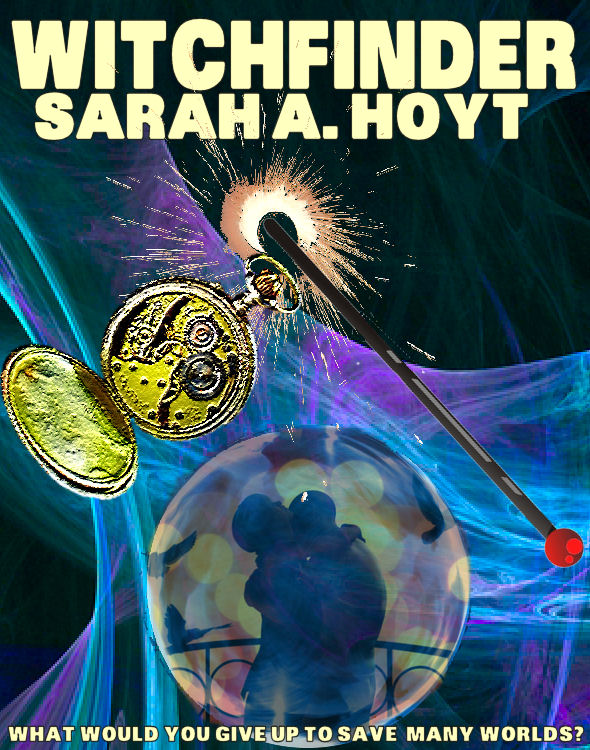
Witchfinder, Free Novel, Chapter 47 and 48

*don’t get excited.  These are awfully short chapters, partly because they’re setup and cuing, partly because the author has an awfully short attention span today.  I’m trying desperately not to get the death-flu again.  I THINK I’m just tired from yesterday (it really was an inordinate amount of cleaning and disinfecting)  I think I’ll take a nap before I look at rewrites.  Meanwhile, these are short, but should set up the coming action nicely.*

*This is the Fantasy novel I’m posting here for free, one chapter every Friday.   If your conscience troubles you getting something for free, do hit the donate button on the right side.  Anyone donating more than $6 will get a non-drm electronic copy of Witchfinder in its final version, when it’s published.
There is a compilation of previous chapters here  all in one big lump, which makes it easier to read and I will compile each new chapter there, a week after I post.  When the novel is completed and about to be edited the compilation page will probably be deleted.

Oh, this is in pre-arc format, meaning you’ll find the occasional spelling mistake and sentence that makes no sense.  It’s not exactly first draft, but it’s not at the level I’d send to a publisher, yet. *

A Ghost Of A Chance

Not al her equestrian lessons and prowess – and she was accounted a very good horsewoman by all her teachers – could have prepared Caroline for this moment.

Akakios had insisted she ride side-saddle upon his back.  Only there was no saddle, just her sitting on the horse back of this creature who was – strangely – a young man in the front.  In fact, he encouraged her – and blushed while doing so – to put her arms around his waist as she rode.  “If we had a saddle,” he’d said, with a smile.  “It would not be necessary to hold onto me.  Of course, if we had a saddle and I consented to be saddled, my father would disown me.”  He’d made light of it, and chuckled at the end an embarrassed chuckle, like one of the young men she met in drawing rooms who did not quite know how to address a lady.

After Caroline had arranged herself, as properly as it was possible on the back of a horse who was also a young man, he started walking at a pace, and they were quiet for a long while.

He spoke when she was just thinking that centaurs were very strange creatures and not at all as she expected because while he smelled of warm horse – impossible not to when he had a horse’s body and was moving – he also smelled of herbs and soap.  His mane of dark hair, tied back, kept touching her face.  They rode through a fairyland glade strewn all over with little yellow flowers.  The only path through them was a rocky, uphill way and Caroline wondered whether the grass and flowers wouldn’t feel better on Akakios hooves.  Then she noticed how careful he was not to step off the path and shivered.  One thing she’d learned, in fairyland, was that what things looked was not what things were.

And then he said, “You must not resent my father, Lady.  You see, he lost my older brother, his heir, in this mission.  Athanasius left more than a year ago, and we have felt his death.  So I have become my father’s heir and now my father fears losing me.”

“I do not resent your father.  In fact, I don’t know why I should. But what is this mission?  Helping me through fairyland?  Surely your brother could not have been doing this a year ago?”

Akakios shook his head, “No.  The real mission.  Saving fairyland and the worlds with it.”

“How can you save the worlds?  Save them from what?” she asked, but – before he could answer – something appeared on the path in front of them.

Akakios reared, like a horse.  She held on around his waist and screamed.  She could feel his body tense as he tried to suppress what had clearly been an instinctive movement – the way the body felt and the reactions built into it.  He put his front paws down with an appearance of deliberate force.  He stammered.  “Forgive lady– Forgive–”

But Caroline couldn’t think of what he wanted her to forgive, nor did she say anything, because on the path, in front of her, looking translucent and yet somehow very real was her Papa, and her papa had been dead for more than a year.

She wanted to say “Papa,” but as in certain dreams it seemed as though her voice was gone and she could not speak at all.  It didn’t matter at any rate, because Papa walked around Akakios towards her.  Though “walked” might not be the most appropriate word, since he seemed not to move his legs at all.  As he got close, Papa stretched a hand for her, but Akakios did something – Caroline wasn’t sure what, but there was a hand lifted, and the singing of magic.  What she could see of Akakios face was very pale, like strained moonlight, and his lips looked almost gray and open as though he didn’t have the strength to close them.  He too said nothing.

And Papa’s ghost spoke, “Caroline.  You must go and save your brother.  He has fallen in the most absurd trap.”

“Michael?” Caroline asked, managing to speak though her voice came out tinny and too high and sounding not at all like herself.  “I know, that’s why I– ”

Papa made an impatient gesture.  “Yes, yes, that’s why you and your mama came to fairyland, a ridiculous endeavor if I ever heard of one, but it is not Michael I speak of.  Oh, he’s in danger enough, but it will not kill him, or not immediately.  He’s too valuable to the king for what he can get from Michael.  No, it is your brother Gabriel who has just stepped into a great danger, and he’ll be torn limb from limb in no time, if you do not intervene.”

“Gabriel!” Caroline said, because her mind had been nowhere near her half-brother, whom she thought safe somewhere else altogether.  “Why would Gabriel be in danger?”  Somewhere at the back of her mind was the thought that, after all, Gabriel was half-elf, and who else could better cope with the perils of this place.

“Do not try to get past my defenses,” Akakios said, loudly, and put his hand up again, in between Papa and Caroline.  “I do not know who or what you are, but you cannot get to the lady past me.”

“I am the lady’s father,” Papa said, sounding amused.  “As for what I am, I am the Duke of Darkwater – or I was.  I suppose Seraphim has ascended, and I’m sure he’s a better duke than I ever was.”

“Papa!”

“You are not,” Akakios said, “corporeal.”  His body braced like Caroline’s pony when it was nervous, and Caroline, without thinking, ran her hand down his arm, seeking to calm him.

“No,” Papa said, a glint of amusement in his eye.  “I too fell in to a trap, much like Michael’s.  But fortunately they don’t know everything I know and it left me freedom of movement… as long as I don’t move my body.  But Gabriel won’t be allowed that.  He won’t be allowed to stay alive.  You will find him where you hear the hell hounds bay.”

A Friend In Odd Places

Seraphim looked in horror at Jonathan, and Jonathan looked back at him, raising an inquisitive eyebrow.  “I thought you were exiled?  I’m sure I heard something.  Not that I didn’t understand.  I’d prefer to be exiled than to marry Honoria, and I don’t say that just because she is my sister.  Damn rum family we would be if I married my own sister, I mean, but all the same, even if she weren’t my sister, I don’t think I’d like to marry her, because she is– Because she is–” he hiccupped loudly and said, in an ominous tone, “Damme if I don’t think I’m going to shoot the cat.”

For all Seraphim could imagine, it was quite possible Jonathan had come into the alley just for that purpose.  After all, it made perfect sense to choose a secluded spot to throw up.  But after a while the honorable Jonathan Blythe, the back of his hand pressed to his lips, seemed to steady himself.  “No,” he said, meditatively.  “Perhaps not.”

Meanwhile Seraphim was thinking furiously.  He’d known Jonathan since school, off and on.  They’d attended Eton together and often found themselves thrust in the same circles.  In such circumstances, it was impossible not to know a man’s vices, such as whether he was prone to being sodden drunk in public.  And that was not something he’d ever expected of Jonathan Blythe.  “Jonathan,” he said.  “Why are you drunk?  How have you got in this state?”

He turned around and looked at Seraphim and his eyes, so much like Honoria’s, yet had an animated expression to them that Honoria had never managed.  Jonathan’s eyes showed shock, surprise, and an underlying, “Tempting hell and the devil” sort of amusement.  “Why, I got in this state because I would much rather be drunk than think about where the old gentleman and m’sister are going to get themselves.  They think that they’re using Sydell, but Darkwater, I tell you, no one uses someone who is half-dragon-spawn.”

“Who is what?”

“Sydell.  Half dragon.  Raised in foundling home, till he was reclaimed on his father’s death.  Faith, didn’t you know?”

“I begin to think, Jonathan, that I don’t know nearly as much as I should.  Can we go to your rooms in town?  I believe we should have a good, long talk.”

I’m trying to finish the chapter

And my neighbor seems to be running around her yard screaming.  I THINK she thinks she’s talking, but her voice cuts through walls.  And floor.  And sanity.

Dan refuses to kill her with a flamethrower.  He says that we can’t go around killing people because they annoy us.  Apparently he has moral objections to killing people who shriek while I’m trying to write.

You know, I think he should have disclosed this handicap 28 years ago.

(I’m joking, I swear.  Well, not about the neighbor.  Or about the fact Dan won’t let me open the window and scream “SHUT UP FOR THE LOVE OF HEAVEN.  I HAVE DUCT TAPE AND I’M NOT AFRAID TO USE IT.”  But about killing her.)

Witchfinder tomorrow

I decided to do sheets while I wrote.  This is a good thing.  Our basement is flooded with sewage.  It was completely dry last night

To explain the back history — when we bought the house, they told us we would have to rotto-root every six months.  This was okay.  But the rotto rooting was always… weird.  They told us our lines were actually fine, but we kept flushing baby wipes.  Guys, when we moved here, the boys were 8 and twelve.

THEN about four years ago, the city came and fixed the drains on the street. They explained we had a community drain (like a party line) and that it was that part that was blocking.  Since they fixed it, we haven’t needed rotto rooting.  And it’s never been THIS bad.  It looks like it flooded to the door of the laundry room during the night (about 200 sq feet.)  We used to have a little backup, not sewage up to the door.  What it looks like is like the drain was COMPLETELY closed during the night and filled with not-our-sewage.  The neighbors across the street are making a new basement, and I wonder if they’ve done something particularly creative. The city is also doing SOMETHING on the other side of the street.  G-d knows what the heck is going on.

Of course, this always happens when I’m backed up on laundry, so Robert and I waded in — literally — to move aside baskets of dirty clothes.  Rotto rooter says they’ll be here within two hours.  If they can’t solve it I’m decamping to a hotel with the family for the duration and billing whoever is responsible.

Given this, I can’t concentrate to do Witchfinder.  I’m sure y’all will understand.  Right now I wish I could take a shower and change my clothes, but that will have to wait till this is fixed or we get somewhere else.

Sorry for the postponement.

UPDATE: The rotto rooter man hit the blockage at 150 feet, but nothing to justify complete block.  It still opened up.  He thinks it’s on the city junction (we almost don’t have a lot.  Handkerchief sized lawn, so unless the drain is laid out in spirals…  And we need to call Wastewater and get them out here to check.  Honestly, the basement has smelled like dead meat for a few days and I wonder if one of my neighbors is doing something funny or — the rotto rooter gentleman suggested — a squirrel died in the line. 

NOW I’m cleaning the entire house because, well… tracked all over, right?

GIVE ME YOUR OPINIONS: We’re now up to around 4k of unexpected expenses this month.  We already paid for Liberty Con flights for the entire family, so I can’t back out — and I’d like to see Jerry Pournelle again, anyway, as it’s been nine years. 

I could do Project Jump Start for 10k for The Brave And The Free but I’m afraid I’ll get like 1k.  …  At any rate that will take a while.   I’m going to open a zazzle and cafe press shop for my-stuff-related merchandise, but I don’t think that will be enough.

The other thing I could do is work through the weekend and put together a collection of DST- universe short stories and/or novellas (They need revising, mostly) and then offer them here for sale in e-arc format at $5 (Probably 40k words?)

Or I could do all of the above.  What do you guys think?  It’s just that at this point we’re eating into our tuition-money and I just want to cry.

Operation Baen Bulk

I’m still finishing my chapter of Witchfinder to post but I promised my friends at Operation Baen Bulk to post about it.

So, please, first view this video

WHAT is Operation Baen Bulk ??

OBB is a different kind of support for the troops. Instead of focusing on individuals, we support entire UNITS, by finding what they need, or want, and can’t easily or quickly get while deployed. . .and get it to them. In LARGE quantities. Think of it as the Warehouse Club approach to Soldier Support: we use the power of buying and shipping in bulk, to maximize the stuff delivered to our troops, out at the pointy end of the spear, and minimize things like waste, shipping costs, etc. And in the process, generally deliver a lot more to the individual soldier than normal “CARE Packages” do.


WHO is Operation Baen Bulk ?

Operation BAEN BULK started in the fall of 2009, when one of our founders got a 90-day layoff notice, and moved into the Layoff Pool.  With nothing to keep him busy, he corresponded with a few deployed GIs, and noticed that while they had individual requests, there were a number of things they mentioned their entire outfit needed or wanted.  And he needed a project to keep him sane while looking for a job with the economy going south.


And thus, was BAEN BULK born: a bunch of SF fans, all of whom read the military SF that Baen Books published, pooled our money and resources to insure the ZombieKillers (a training detachment somewhere in Afghanistan) could have some Christmas Trees and good coffee.  And him being kept busy and productive (and yes, he did find another job.  A BETTER job, in fact…)


Since then, we’ve provided for the oddball requests and creature comfort needs of several deployed units. . . and now, we’re trying a bit of a crowd-sourced model for raising funds, with achievement tiers so as soon as a threshold is reached, items will be ordered and sent off to the Ammo Dogs..

Then go here and read the rest.

I and three other Baen authors have agreed to do tuckerizations and redshirting for the operation.  And I’ll be donating also (though probably not today.)

I know the economy is terrible and times are tight, but they’re over there and in much worse circumstances than we are here.

So, go and read the whole thing and if you can do help.  As for me, I’m going to finish the next chapter of Witchfinder to put up.


I Have The Right To Sing The Blues

Normally I eschew outright political posts, though to be honest the other one I had planned for today, and which I’m not compus mentis enough (when are you ever compus mentis, Sarah?  Shut up, you)  to do was about race, and that was probably going to get political too.  

However, today I have to take the younger kid to the DMV to get his driver’s license (which will then be mailed to him, in a week or two – you wish I were joking) and it is the sort of thing that puts me in a p*ssy mood where I do unreasonable things.  

Part of this is that the DMV brings back the worst aspects of my childhood and adolescence.  To do anything in Portugal you need to go to window A to buy the special watermarked paper, then take it to window B to get a license to go to window C which in turn…  At the end of the day, if you’re very lucky, allows you to approach window Z where you get whatever the heck it was you needed.  A lot of this bureaucracy is related to schools, which means I spent an inordinate amount of time in line to get a certificate saying I had completed course A and could now take course B.  (And more than once — once after I finished COLLEGE — they made a mistake and told me I had flunked ninth grade and drop out.  They’d got the wrong page in the records book.  AND THEN I had to stand in line all over again, because it was THEIR fault, but my problem.)

Perhaps this is the Portuguese version of a jobs program, but I have this theory if they abolished 99% of it the country might actually have jobs.  It’s a crazy idea, I admit, and it might not work.  I just think that it’s about time we gave it a try.

And speaking of giving crazy ideas a try….

Dan says I’m no longer allowed to call DMV employees prepotent incompetents, though the last time it didn’t go that badly, possibly because they thought prepotent had something to do with viagra.

Dan can set these restrictions on me because he’s my set of external brakes, to be applied when I’ve burned through the internal ones (by the time I was three, I think).  That’s his job.  He – among other things – keeps me alive and out of jail.

On the other hand you know what they say about pressure cookers.  You can’t make the pressure disappear.  You have to bleed it out.

Well, if I have to behave and not call bureaucrats names – which does not stop me from mumbling stuff in other languages, mind – it’s impossible to stop from thinking about other things.

The other thing that comes to mind is this: WHY do I have to spend my entire day waiting for other people to give my kid permission to drive a vehicle?  The kid has completed a course and has a certificate.  He has driven for fifty hours and we’ve filled the forms and signed them.  He has his driver’s permit now more than a year old as required.  So why do I have to go with him?  To verify address.  By which they mean, to make sure he lives with us, since he’s a minor, and he might have faked the certificate from a professional (and expensive) driving course AND the driving logs.  Sneaky these teenagers.  Also, extremely accomplished. Also, stupid.  If they can fake all that, why not scan in a license and fake that too.  

No, seriously. I have to go along to verify address.  And to be there.   Do you know how else they could verify address?  No?  Yeah – it’s right there on his driver’s permit.  You know how else they could verify address?  He could take two pieces of mail, one with his name, one with ours.  Do you know how else they could verify address?  He could take my driver’s license with him.  Do you know how else they could verify address?  I have an address listed in my driver’s license forms which they have on file.  You know how else they could verify address?  They could call me.

But none of those would require me to waste my entire day.

This of course led to other thoughts.  It’s never a good idea to get me thinking.  

In this case what I thought was: why driver’s license?

Before you say because vehicles are dangerous and we want to make sure people are qualified to operate them, let me tell you a story: I have a had a driver’s license for 28 years.  I’ve driven for 14.  Not only did I pass my driver’s test, I passed it with flying colors.  Then, first time driving on my own, I wrapped the car around a phone pole.  Why?  Well, mostly because I had undiagnosed astigmatism, but also because despite a driver’s course and a test, NO ONE SPOTTED IT. (And trust me on this, that is a minor inverse miracle.  I have BAD astigmatism.)  Also, because no one ever told me to slow down around turns.  (Which might have at least prevented the car being totaled.)

Am I alone in this?  Oh h*ll no.  Most normal functioning adults could pass a driver’s exam after a brief practice with a car.  Does this mean they’re safe drivers?  Um… no.  It takes years of driving for that.  (I am a very safe driver.  I’m just terrified of driving.  Why?  Because I imagine my characters behind the wheels of the other cars.  I still drive, but only when I HAVE to.)

In Portugal, at least, while I’m sure the function of driver’s licenses is the same as here – I don’t know.  To give you an opportunity to interact with the government?  Perhaps jobs program? – they make a better job of justifying it.  I.e. before you can get the license you complete six months of daily instruction.  (Or to be honest, that was the system when I was there, almost thirty years ago.  Might not be true now.)  I don’t know if it teaches more than we learn here, but it MUST because with their roads and the national temperament (laws happen to other people) if they went out as unprepared as we do there would be piles of cars and corpses at every corner.

But seriously, people, yeah, the car is a lethal machine. Potentially.  However, most people aren’t using it as a license to kill, because they don’t want to die which is a likely result of crashing into another car head on.  And those who are crazy enough not to care, also don’t care about getting a license.

So what purpose does the DMV serve?  Again, no idea, other than making Sarah almost comically mad, and I don’t think they’d create an entire department for it.  (Maybe they would?)

Why do free citizens in a free country need a license to drive?

Because it’s the way things are done.  Because we’ve never tried it any other way.

And don’t tell me there’s no other way.  Of course there is.  For instance the kid is more proficient at driving than the average bear (or his mother) because the insurance gives us a huge discount for his completing this defensive driving course with a professional driving school.   We have two kids driving, we need the discount.   Insurances could certify drivers, couldn’t they?  Why not?  They’re the ones with a vested interest.  The government’s driver certification program has no vested interest in your being a good or even competent driver.  All they have a vested interest in is giving you a license.  Why?  Because the process of taking form A to windo B to window C gives jobs to government employees.  And to do that, you MUST pass the driver’s test.

I’m just glad they haven’t thought of other things that could be lethal and that we do without a license:
                    
Do you have a license to buy gas?  Do you have a license to clean cat boxes?  (Ammonia)  Do you have a license to walk? Do you have a license to operate a chainsaw?  (I saw – okay, peeked between my fingers at – Texas chainsaw massacre.)  Do you have a license to cook?  (Trust me, I have three friends who can make it lethal.  Without trying.)  Do you have a license to rock and roll?  (You haven’t seen my brother dance.)  Do you have a license to mow the lawn?  (Machine.  Sharp.  Cuts.)  Do you have a license to run a stove?  (Hot.  Makes boiling oil.)  Do you have a license to hike?  (At least one Colorado fire was started by hikers.)  Do you have a license to write?  (You could give people dangerous ideas) Do you have a license to read?  (Nine out of ten mass murdering dictators wrote their theories in book form.  What if you follow the ideas?)  Do you have a license to travel?  (You could pick up terrible diseases.)  And last and most importantly, do you have a license to be Sarah?  (A Sarah is a lethal thing to be.)

No?  Then why do you need licenses to drive, buy guns, own a dog, or get married?

And why – WHY – would any person in their right mind want to expose me to bureaucracy?

Give The Future A Chance

Because I do not want to start another of those famous blog wars that bring trolls in masses to my comments, I’m not going to mention the name of the blog or link it here.

I’m just going to say I have a policy of following links that point to my blog and get me more than half a dozen hits, and while doing that, a couple of days ago, I happened on a rather strident post shrieking that yes, Amazon is the big bad, that yes, it needs to be brought under the heel of the government, or it will take advantage of everyone and everything and that yes, corporations are evilmeannasty.

Oh, and I’m a poopy-head for saying otherwise.

I have a short story due today (for the Baen Christmas collection) and besides I’m tired of this, and I’m just going to point out some inescapable truths.  I’m not going to go into the history of corporations, or the history of monopolies, mostly because frankly I don’t have time to pull up links.  Suffice it to say that monopolies don’t happen without active or passive collaboration from government, otherwise it is in the nature of all human institutions to go sclerotic and be surpassed.

And that brings us to the important and inescapable verity: corporations are composed of people.

No, corporations didn’t get here from planet zorg. Their leaders are not creatures unlike us.  They are exactly like us, with our virtues and our faults, and variable, of course.  Which means to begin with that a corporation is only as good or as bad as those in control.

And before you tell me that the rich are not like us – b*llshit.  That’s a Marxist fairytale.  They’re exactly like us.  They just have more stuff.  And more freedom.  And less freedom.  And no, that’s not a paradox.  In the time we made more money more effort was required to administer it.  At the same time, weekends away were easier and we were free to take them whenever.  (We didn’t take them enough, because we were busy administering the money.  It’s a vicious cycle.)  I grant you we’ve never made even a measly million let alone several a year.  But from our limited experience, we were still us.  Our priorities just shifted.  Our time became more precious than our money.

My experience is enough to see one end of the continuum where you are a poor man living in a hut, perfectly free to spend most of the day walking on the beach – and free to starve – and the other end where you’re the CEO of a multinational with every minute of the day scheduled, but you employ tons of people to do work you don’t want to spend time doing, and you can buy a luxury car for fun.

What does that have to do with corporations?  Well, as people’s priorities shift, they sometimes do lose track of things.  For instance, publishers these days think the point is to control who gets to read what.  They lurch around, in a fog, refusing to get that ebooks are game changers and that self-publication is easy – and not a great addition to what we’re already doing which does include everything from paying for editing to publicity – and demanding that things go back to the way they were.

That is a good example of corporations that had established a joint monopoly of sorts.  You had to go through one of them to get on shelves and to get any push.  Because of sweetheart deals and other concentrating movements in distributors, the publishers CONTROLLED how much you sold.  They picked winners and losers.  There was no wiggle room.

Which is why they lost sight of who their real customer was.  Which was why Amazon stepped in.

Do you see how that works?  Yes, corporations grow sclerotic.  Having seen up close and personal big computer corporations, I can tell you any company big enough behaves like a dictatorial regime.  There is enough room for the people at the top to make decisions that will not affect them, which means there won’t be enough bad backlash.  Which means, they keep doing more of the same.  There is room for illusion, self-aggrandizement and grand gestures that mean nothing.  Watching the death throes of MCI/Worldcom some years ago, it occurred to me some of the people in charge reminded me of nothing so much as the more decadent Roman Emperors and that it would have been much better if they JUST declared war on Neptune, instead, of say, getting rid of development teams and then demanding new software.

BUT when corporations reach that stage, they develop blind spots.  And in the blind spots newer, faster, more targeted corporations appear.

Hence, Amazon exploited the fact no one was really doing ebooks as they should be done.  And it has grown big.  (Though not yet big enough to have issues.)

When Amazon grows too big – and it will – and too senile – and it will – others will exploit its blind spots.

Calling on government to regulate it now is counterproductive for two reasons.

First, just like the corporations are made up of people, so is government.  Worse, once government gets its big long nose in, what you have is effectively the final phase of corporations, because government IS big, and by its structure, none of the individual bureaucrats is affected by the decisions made in regulating.  In fact, the only thing that affects bureaucrats is the existence of regulations.  It gives them a job.  BUT they don’t have to jump through the hoops they make for peons.  The DMV employees don’t stand in line for their licenses.  They just get them done quickly and early.

The “government” is not some disinterested entity run by angels.  It is made of flesh and blood people, many of whom are not insanely well paid, but because of that relish their power all the more.  (And no, I’m not suggesting paying them more.  They’re on a par with private employees.)  That means that they will exert their power to the utmost, and don’t care who it hurts because well… why would they?  It doesn’t affect them.

So, say we pass a law saying Amazon has to sell books at certain prices, so other companies can compete.  Do you know who wins?  First the bureaucrats who surf the net checking the prices.  Second, the largest companies.  Amazon, B & N, etc.

Why?  Because they have the money to hire the lawyers to deal with the wrong-complaints and the multiplicity of confused bureaucrats who will think my Soul of Fire and Ruth Long’s Soul Fire are the same book and must be sold at the same price – to quote one of many many other sources of confusion.

Do you know who loses?  You.  Me.  The multitude of indie publishers.  The readers who would never have got to read Ric Locke’s excellent Temporary Duty.

There is no way of proving that opportunities were lost.  If you regulate ebooks today, ten years from now I can tell you “yeah, we’re okay with these small publishers who are big enough to hire lawyers, but think how wonderful it would be if we didn’t need them.  Think of all the great books people might have put up on their own.”  And you’ll tell me “the indies would have made the very concept of ebooks repulsive. It was a tsunami of crap.”

I can’t prove otherwise.  No one can.  You can’t prove that it wouldn’t be “even worse” if there had been less regulations.

But we can look at the inevitable course of bureaucracy, stately and deadly like the black plague.  And we can look at countries that prize regulation over innovation.  Say, the USSR where there was a law for everything, and it was impossible to live without breaking the law.  We could ask the Politburo– Or then again no, since the USSR is no more…

And we can admit that government officials are no more and no less human than corporation CEOs.  And we can admit that the more divorced from consequences anyone’s decisions are, the more irrational/selfish or at best ineffective that person will be.  And government officials manage to be more insulated from the regulations they pass than CEOs are from the consequences of firing all of R & D.  And that’s saying a lot.

I might be a poopy-head (often) but these are inescapable facts of the human condition.  The thing about inescapable facts is that you can’t escape them, even if you choose to believe all government employees are good people, selfless and full of the milk of human kindness.  No, not even if you put your fingers in your ears and sing “We are the world” REALLY loudly.  The facts of human nature will still get you in the end.

And meanwhile in your misguided effort to regulate you’ll have squandered innovation and wealth.

You’ll have squandered the future: mine, yours and the whole nation’s.

Let’s not.

Inner Maps

The house I was born in was built by my great-great-great grandparents and generation after generation had lived there.  I wonder if it was the perfect house for a would-be writer, or if any house a would-be writer grows up in is perfect, each place, each corner, invested with significance and meaning by becoming elsewhen and elsewhere.

I’m fairly sure that poor house wouldn’t pass US codes, though it was a well built stone house, with enough room for everyone.  When my parents had to marry for the usual reason – nine years before my birth – my grandparents changed the storage rooms on the lower southern side into a shotgun apartment, long kitchen running into long – and broad – hallway, running into living room.  They cut the “hallway” into a bedroom, with interior walls, leaving a narrow pass-through to the living room, and an odd shaped piece by the kitchen door, which, while not a bedroom, could accommodate a single bed and a dresser for a child’s needs.  They figured the young people would get on their feet and then find a place of their own.

They figured without the peculiarities of these particular young people.  You see, my parents have many admirable qualities, a few of which are carried to the point of oddity.  One of these is my father’s dislike of being in debt.  He can’t sleep if he owes anyone money.  Yes, even in mortgage.  (For the rest we try to live without debt also.)  This meant instead of buying a house and acquiring a mortgage, they lived in this shotgun apartment without running water (water was brought from the well in buckets and bottles depending on the use.  Even grandma’s house only had one faucet – cold water – in the kitchen.  The bathroom, a late addition, was outside the door to the kitchen, opening to the patio, and the fact that it had a shower, a real toilet, and a sink made us unusual and ‘rich’ in the village.  Our laundress loved washing our clothes because “they smell good even when I get them.”) and without a window.  There were glass insets at the front and back gave the only light, and the bedroom, where I spent a lot of my time when I was a sickly child and my dad worked out of town, got a little bit of residual light through a “window” to the living room.  Not enough to see without electrical light.  They lived in that apartment for sixteen years (and paid rent to my grandparents, so as not to feel  beholden) until they could build a house of their own and pay for it outright.  The price kept going up because Portugal (like most of the PIIGs) kept its economy pseudo-stable by inflating.

I grew up with jokes I didn’t know were jokes.  At the time, rice in Portugal was stone milled, and periodically we got a stone in it.  When this happened, dad would set it on the side of the plate and say, “There, Carmen, another stone closer to the house.”  Of course, I started doing it too.

It’s hard to resent my parents’ peculiarities, though, because I really had a very good childhood, even the 3/4 of it that were spent in bed, sick.

You see, when I was well, mostly I lived outside or in grandma’s side of the house.  For one, there really was no room for me in that little shotgun apartment.  We were joking about that the other day, Dan and I.  We wanted eleven kids, even though sending two to college is breaking us.  We wanted eleven kids in total disregard of financial realities.  But this doesn’t beat my parents’ cheerful working around physical-space realities.  Heck, my mom grew up in a similar apartment (only rented from strangers) and there were five surviving children.  Compared to that we lived in luxury.  One way to handle this was used on me part-time: you send the child to sleep at a relatives house.  This is how I shared my cousin Natalia’s bed for much of my childhood (though all the cousins were raised together, she was closer and to a large extent raised as a sister.  My brother and I both call her cousin-sister, and refer to her son as our nephew) read her romance books (she’s fourteen years older than I) and – because she memorizes stuff by reading aloud – memorized vast portions of high school biology and physics by the time I was four.

The rest of the time… well, for about four years my dad worked out of town and only came home on weekends.  So I stayed with mom in my parents’ bed.  Particularly when I was having respiratory issues, it helped to have someone there monitoring my breathing, in case we needed to go to hospital.  Sometimes when dad came home for his two nights a week, I was too sick to be moved, and he would make himself a bed on the floor of the hallway, with pillows and blankets – and more often than not spend half the night carrying me in his arms, singing old Portuguese ballads to me.  Then go back to work on Monday.  (Yes, I paid for that when Marshall had heart issues as a toddler.  I spent more nights awake, hovering over his bed, than I care to count.  But these things aren’t paid, of course, they’re freely given and out of love.  I think without dad’s love I wouldn’t be here.)

When I was well and the weather not too disastrously bad (I think mom invented “dressing in layers) I had a degree of freedom we don’t give our kids.  By the age of two I was dressing myself (from clothes mom left laid out) and sometimes mom managed to catch me on my trot through the kitchen, headed for that back door.  Or at least she detained me long enough to get a cup of something warm and a slice of buttered bread into me, before bowing to the inevitable.

My favorite entertainment system was grandma.  For those of you who read Pratchett’s Wee Free Men series, picture Tiffany Aching’s grandma, but from a non-sheep raising region.

Grandma could do anything and most of it was magic.  All animals came to her.  The only creatures she willfully harmed were snails, against whom she had a to-the-death war.  She could make anything grow, too.  She would put bought, florist roses in rooting mix, then plant them.  And they grew.  She was never still: she cooked, she cleaned, she grew, she tended, she looked after man and beast.  And if I could catch her before she headed out the door, I – the youngest kid – could trail on her rounds.  As you can imagine this was fascinating stuff.  At the time there was a radio serial (there were only two TVs in the village, and we didn’t have one) about two detectives, Rock and Friend.  The family nicknamed grandma and I Rock and Friend, because I followed wherever she went.

Sometimes, though – about half the time – she wasn’t doing something she wanted me following her around for.  So, I was left to my own devices.  The kitchen door – and grandma’s kitchen door – opened to a broad patio covered in cement squares and covered by a grape vine trellis.  In the summer the leaves were thick enough to cast a green, drowned shadow upon the ground.  Grandad’s workshop (he was a cabinet maker) and the bathroom took up the North side of the patio, leaving a narrow bridge like path to the rest of the backyard.  On the other side we had hen houses and rabbit hutches and past that the dog house (though most dogs, except the flight risk) were only confined to it when they were in trouble (the flight risk was a rescued greyhound.  If he wasn’t behind closed doors, you had to tie him down, or he’d disappear for days.  I think he just liked to run.)  Then there was the path to the back yard on that side.

The path encircled the garden, past flower garden, vegetable plot, fruit trees, clothes-bleaching lawn patches, potato plot.  On the other side of the path was a shady area, covered by the same grape vine trellis, where cabbagy type of stuff grew, because it thrives even in shade.  Then there was, in the corner, the “hut” where broken things tended to end up to either be mended or made into fire wood.  Mama cat tended to hide her new litters there.  Then an area where the trellis was thin, so it was actually sunny, and where the firewood was piled.  

That backyard was remote unexplored country, and fairyland, and all the places of imagination.  that hut was often a palace, and the wooden pile an inapproachable mountain range.  My little red tricycle was Jeep and train and occasionally airplane, as I traveled the world seeing fresh wonders.  The patio itself, or a small portion of it, covered with a rag rug (I was not allowed to play “on that cold cement.”) with all my boxes of toys dumped on it (it helps to be the youngest of a large family) could be arranged into a futuristic house, where not only hot water, but hot chocolate milk came from the faucets.

When it was raining, or I wasn’t well enough to go out, grandma’s vast kitchen could become a lecture hall or classroom – she had a lot of chairs that could be so arranged – and if I was sick and in bed, I could build fantastic lego cities for imaginary beings.

There might be better training for a writer, but I don’t know what.  Beyond having to create my own playfriends and games, I got a lot of access to adults in varying walks of life.  People tended to forget I was there, provided I hid in a corner of the room (It gave me a bad habit of sitting on the floor and feeling more comfortable UNDER tables.  When I go back to my parents’ it’s almost impossible NOT to sit in my corner under the family room table.  Yes, they laugh.) and had a book I pretended to read.  I got to hear of people’s health troubles, of how various professions were run, of things that happened at college and in other people’s kitchens and in factories and–

I didn’t know it then, but I was doing research.  The reason I listened to these things was because I could use them as plots in my imaginary people’s lives.  These bits of village gossip tumbled into a hopper, in my mind, with the books I read – Dumas and Sir Walter Scott, and the adventures of Captain Morgan – and came out later in the stories I made up.  I suspect it still does.

The house doesn’t exist anymore.  Not as such.  It is a good thing in a way – it means people are wealthy enough they don’t have to live in their ancestors’ houses forever.  When grandma died, no one wanted the house.  (Okay, I did, but we could barely afford the house WE lived in.) So it got sold to people outside the family, who modernized.  It now looks sort of like an ersatz Tuscan villa, with a balcony running across the back of the first floor.  The backyard has lost all utilitarian aspects, and is JUST a garden.  The vines have been uprooted, because they were too much work.  The house has running water and bathrooms.  In fact, the bedroom in what was once the shotgun apartment – the room I was born in – is now a pink-and-white bathroom.  It is probably infinitely better.  But it is not the house I was born in.

The village too is not the village I was born in.  Roads have been cut willy nilly – paved roads if you can believe it! – and the main road has been made obsolete by being cut in two by the highway.  The other road, the back road where, as a nicely brought up young woman I wasn’t allowed to go because it was shady and dangerous, is now the main road into the village.  And everywhere you look there are stack-a-prolle cement box apartments.  I was amused the other day because someone from the city posted a video of walking through the village and talking about rural solitude. … given all the skyscrapers all about this was almost unbearably funny.  I mean, what rural?  There are maybe three fields still being worked.  What solitude?  The place is a dormitory for the city of Porto.

Now, like the house, it is probably better this way.  The village was so poor that we, with our cold water shower outside the kitchen door were considered rich.  The village was so poor most people were raising a dozen kids in two rooms.  The village was so poor that 90% of the kids were taken out of school in fourth grade and sent to work in the textile factories.

But it no longer exists as the place I grew up in.  (I proved this by going for a walk with my younger son, last year, and getting hopelessly lost – that was funny because here we are, surrounded by poeple and carrying a cell phone, and the kid starts panicking “We’re lost in a foreign country.  We’re going to die of starvation.  They’ll find our bleached bones.”)

The woods my dad used to take me walking in, (with the dog: Lord) as a special treat on weekends, the place where we went to get tadpoles, the places we picked wild blackberries, the lake where dad taught me to make a pan flute our of reeds – all of those are gone.
            
Like the house, I no longer have any rights in them.  They are now foreign places, and I, too long away and too starkly aware of how they changed, a stranger to them.

But I suspect in my heart, I carry that home and that village around, just like the snails grandma fought, carried their shelter and hideout.

I can close my eyes and smell the herb garden, and see the greeny-drowned shade of the vines overhead.  I think these days the tricycle is most often a spaceship.

And sometimes I wonder if anywhere or anywhen else are real at all.

Fortune Favors The Bold

There is a tide in the affairs of man… and when it comes to my tide, it’s always going out.  I can still get where I mean to go, but I’ll be wading up to my waist in sandy swirls.  Not deep enough to put a boat ashore.

At least this is the view from where I am.  You know, try for sixteen years to get published, have first book postponed three times until it finally comes out one month after a national event that makes it really hard for people to care about an exquisitely written novel featuring Shakespeare.

My view of my career – and my life, for that matter – is of someone climbing a cliff, hand over hand, taking advantage of every little crevice and sometimes holding on to what’s barely a crack in the rock face with the very tip of my fingernails.  Falling, too, and sliding down or crashing onto a rock ledge below, stunned and bloodied, only to take a deep breath and start again.

I don’t know when I first realized that our – mine and Dan’s – life looked quite different from the outside.  My first hint came when I Dan worked for then-fast-dissolving MCI which had just been bought by Worldcon and which was bleeding employees faster than something that’s very fast.  We went out to dinner at the home of a couple of friends (still friends, though they probably think we hate them, given what my life has been these last twelve years.  We see them maybe twice a year, sometimes only once.) The husband worked with Dan.  As we were mooting our worries for the coming year, he said “Oh, I’m not worried about you.  You two have the luck of the devil.  You always fall on your feet.”

I remember being stunned by that because (at the time, there was one more to come) we’d twice got ourselves in situations (partly through our fault, but mostly through circumstances out of our control) where we were within a month of losing our house, and far, far closer to starving.  (In fact, the first time we got in that situation – don’t have an emergency Caesarean section on COBRA.  Just don’t. – we spent the next three years starving on the installment plan.  I.e. eating a lot of rice and frozen vegetables, which kept body and soul together but only just about.)  And even when we weren’t starving, it often felt – both in my writing career and in my life – like we were one step ahead of the dogs.

But I thought about it.  There were other people too, in the next few months, who voiced much the same sentiment.  And there have been people who say that about my career.  You know “you’re so lucky that you got…”

I’ll acknowledge one instance of luck I could not have laid down – and that was being pulled in to Baen when the first series failed.  That was pure luck and coincidence, and yes, I still intend to write The Shakespeare Gambit.  (It’s started.  If I can stop getting sick, I can finish Noah’s Boy and then SG.  And for the record, I did write it once.  Eric and I just decided it wouldn’t work as part of 163- and so I’m rewriting it as time wars.)

BUT everything else I have done in the field was not so much luck as massive over-preparation.  And that’s of course part of why things look so different from the outside and the inside.  Fortunate is after all bald behind, (and probably a bad speller, which is why she favors the bold) so you have to grab her by the forelock as she approaches.

What I mean by this is that you have to set fortune-traps and line your street with them, and be aware of any sudden “snap” of one closing in the night.

Kevin J. Anderson, applying this to writing, calls it The Popcorn Theory.  You can put a beautiful, perfect kernel in the pot, just the right amount of oil, and nurse it along.  And if it turns out to be a dud you’ll never get it popped.  Or you can put a bunch of oil in, toss in half a package of corn, close the lid (my brother and sister in law once forgot this part thirty years ago, and of course we still tease them about it!) put it on the stove.  You’ll get a whole lot of duds, but you’ll also get a large bowl of popped corn.

From the outside it looks like “Oh, wow, you’re so lucky.”  From the inside, you should see my bill for corn.

Now I often talk about the darlings in the industry.  They absolutely exist, and yes, in the few cases I know up close and personal, they were not only not setting bear traps, they think that they caught Fortune because they’re just that special.  It’s true of course.  It’s just not the specialness they think.  As in any other industry, there are always people who get promoted/favored, for reasons that have nothing to do with competence, much less brilliance.  You happen to be friends with a boss.  You’re the boss’s son in law, or more simply, you fit in with what the boss thinks of as “promising.”  I’m sure every one of you who has worked at an office has known at least one of them.

The difference is in publishing, the favored tend to not be aware they’re anything unusual.  They’re not, in their world.  They have the “right” political opinions, the “right” appropriately snobbish credentials, the “right” way of dressing and talking and therefore they THINK they’re smart.  And therefore they attribute their being pushed to being good writers because they’re smart.

I have no proof of course that some of them AREN’T smart enough to fake or acquire all of those with intent.  I’ve caught one or two of the smarter ones looking at me like “You can’t be that smart, or you’d fake it too.” – and perhaps they are right.  Terrible thing to realize I do have some morals, despite myself.  There are things I can’t fake.  Marxism is one of them.  I did it to graduate, but I seem to have used up my ability to lie without laying awake at night hating myself.  So I never could fake it – and so I never got pushed.  (shrug.)

However I doubt ALL of the darlings are faking it, judging from one of them having ASSUMED that I was in fact a highschool graduate (if not a highschool drop out) and quite uneducated, since I had a) had children.  b) stayed home to raise them.  This betrays a type of mind that just assumes all the credentials and “correct” beliefs and all that are just smart and evidence of her goodness and intelligence.  Which makes me giggle uncontrollably, but that’s something else.  (She probably also thinks she’s speaking truth to power!  One shouldn’t laugh at the young.)

But still it’s not luck, it’s fitting the right slot.  Whether you do it naturally or by design, it can be done by design.

There is an advantage to having to create your own luck.  Those poor darlings simply have no clue.  A turn of the political climate, or even a – not that this would ever happen! – radical change on how books are delivered, and they’re spinning, lost, not sure what happened and why “smart” doesn’t work anymore, while the rest of us, of few illusions, start studying new routes to get where we want.

There is an advantage to taking a long time to make it and having to work really hard: you know you can.  And if you could once, you can do it again.  And you know, too, that crawling over broken glass hurts but is not lethal.  AND, if you work up to your breaks the right way, by the time you get there, you’ll have a vast reservoir of good will and know most people involved in the like endeavor.

What do I mean by the right way?  Well, other than working like crazy, there are two things you can do to ensure you thrive (the value of thriving varying of course.  No guarantees.)  One is to say “sure I can do that,” when someone in authority asks you to do a project, no matter how tight the time or how difficult the subject (Plain Jane, and more short stories than I can mention.)  This gives you one more kernel of popcorn.  You never know.  It could go big.  Another is to help those around you who are on the way there too, in any way you can.  This helps in two ways: it builds a vast reservoir of good will.  It also makes you more human and makes you understand that while you CAN get there over the backs of people, it’s not the only way.  And real humans don’t do that.  Mind you – I might think this because the second one comes naturally to me.  You have to have done something terrible to me, and I need to be very sure you did it on purpose, before I will refuse to help you with something within my power when you need it.  It’s a character defect, probably.

BUT if you do those, you will build up a reservoir of good will with people in power (Publishers, or your boss), which means you can call favors from THEM.  You’ll also build a reservoir of good will amid your peers, and that’s saved my bacon more than once.

So why this long musing on luck? – well, we’re still suffering after-shocks from the year I took off plus two years of relatively low income.  This is recovering now, and I’m on track to making “real” money this year (about a secretary’s salary for our region) but the problem is to make up the money I didn’t make for almost three years, I need to make MUCH more, because of taxes.  So we’ve breached our reserves, and  I’m feeling up upon and hard done by, and a little scared (since my car will probably go out this year and we have two boys in college.)

And then I find myself thinking “I need a miracle” and “I need some luck.”

While these are true, that’s not the way my life works.  Maybe it’s not the way most people’s lives work.  So, we’ll do the sensible thing and tighten down and, hopefully, I’ll stop getting sick and finish the three works I have hanging by various threads.

And if the unthinkable happens and we run out well…  Heinlein broke out at not much younger than I am: at least in novels.  And there was that period after his divorce where the impossible happened.  And heck… at least I’m not living in a horse trailer.  And I’m probably unlikely to.

It’s hard to remind myself of this – to tell myself I’m not extraordinarily unlucky.  I’m not hard-done-by.  The world owes me neither a living nor luck.  Another thing you learn when you come up hand-over-hand.

It’s something I wish on the next generation – knowing how to make it that way.  Knowing to dust themselves, stand up and go on.  Do they have it?  I’m not sure.  I’m not even sure about my own kids.  They are the product of a very wealthy society and of course we tend to try to smooth things out for them.  But if I had one thing I’d tell my kids to acquire it would be that type of resilience.  (Why haven’t I told them?  Because it’s no good.  You won’t even “get” it till you acquire it.)  And then I’d hope they don’t need it, ever.

And now excuse me, I have some bear traps to set, in case fortune runs by.

Real Life Can Have Coincidences

Life gets away with coincidences that no writer could write convincingly.  Say you had two young characters going through infertility treatment — “that’s not likely.  Young people conceive more easily and–”  Right.  Tell it to real life — for six years.   All six years they had no clue what to name a girl, but they knew for an absolute fact that the boy would be named Robert Anson.

So imagine our surprise, 7/7/91.  Yeah, well, I was surprised I was alive.  So was the doctor who told Dan she couldn’t guarantee twenty minutes more, let alone survival.  But that’s not important right now.  The kid was born at just after two am — I think he was making sure it would still be  7/7 on Colorado time and didn’t realize we were in NC. (What?  No crazier than the next writer, who, admittedly is in an I-love-me jacket.)  As soon as he was born, my adrenaline levels must have dropped and the three anesthesias they’d pumped into me with no effect plus the spinal block, plus three days hard labor without eating ALL hit me at once, and I woke up 24 hours later.  All of the kid’s birthdays have been more fun than THAT.

When I woke up, I found Dan had called my brother in Portugal (Alvarim is the only one who speaks English fluently enough to be a point of contact in this situations) and told him poundage, name and that we were both miraculously alive.

And Alvarim told him, “Oh, born on Heinlein’s birthday, too.”

Which is how we figured it out, because frankly we had been kind of busy to pay attention.

Dan took advantage of my being out of my mind still — uh…  if it weren’t for modern medicine I’d have gone the way of Queen Jane Seymour.  Massive uterine infection because of protracted labor.  It cost me almost two weeks in hospital and massive morphine, still, at home.  Which is why/how I wrote Thirst, but that’s not important right now — two weeks later, to make me send a birth announcement to Mrs. Heinlein.  This initiated a correspondence, which I would not have given up even to spare the embarrassment.  Eventually we talked on AIM, which allowed me to run in ten minutes late to pick up Robert from swimming, forget I was in Col. Springs, and say “I’m sorry Robert, I was on AIM with Mrs. Heinlein.”  Which…  made the entire pool reception area go silent and then one squeaky voice ask, “Not, THE Mrs. Heinlein?”  Which caused ME mortal embarrassment.

Real life doesn’t have to avoid coincidences.  I didn’t know that Heinlein had had a “thing” for elephants.  Not beyond “The man who traveled in elephants.”

Robert — my Robert — has had a “thing” for elephants since he was three at least — perhaps we only discovered it when he could express it — he has elephant statues, elephant stuffed animals, elephant calendars and elephant … everything he can find.

Yesterday, mindful of the fact that if things go well and his life goes as he wants it to, this will be his last birthday at home, we as a family took a trip down the memory lane and went off to Denver to paint the town a mild pink.  (Red is more expensive.)

We went to the art museum, because desecrating art is one of our main amusements — but actually spent most of the time in the Western Art wing, where we saw a painting Long Jakes, which looks exactly like Dave Freer (even the eyes.  Dave, did one of your ancestors get sent out here?) We also saw a lot of … well… western-life paintings.  Robert said “Science fiction needs to have more this feel” and I said “Welcome to human wave.”

We also went to Pete’s for dinner and, oh, yeah, we went to the zoo for Robert to “soak up” elephants.  Because he can never be depressed around elephants.  We even devoted fifteen minutes to Marshall seeing monkeys, which he likes almost as much as Robert likes elephants.  (Marshall’s voice goes up two octaves and he goes “aw, look at the cute little…”

Then we got caught in a sudden downpour and drank a lot to warm up (that’s our story and we’re sticking to it.)  So, today I’m still pushing caffeine, and my brain is only SUPPOSEDLY working.

So, in the end a good time was had by all.  Now excuse me while I go install a oven hood.

And I hope everyone had a good Heinlein Birthday.  We had a pretty good time celebrating the 21st of the abridged edition.