I’m Not That Guy

Do you know that point in your life, where you’ve been going along and suddenly find you’re not you at all?

No, I’m not talking about possession, mind swapping or even multiple personality disorder.  (It has another name, mind – one my son keeps insisting I use, but bah.  He’s asleep.  Besides, they’re all coming up with new fangled names for the same madness.)  I’ve written that type of thing excessively, mind, and in all genres which betrays perhaps a morbid fear or perhaps my subconscious screaming in your ears.

What I’m talking about, though, is something different.  One of the heartbreaking segments of Dandellion Wine is about the old lady who keeps everything from her childhood, so she can remember it, until the kids taunt her, and tell her she stole it from some little girl.  At one point she describes the experience as having got into a train, and then gets out on the other side and there are none of the people who knew her before, and she’s someone quite different, and she can’t prove she was the person who got on the train.

It’s something like that, only not.

To an extent we expect to get old, and few of us really get that much of a shock at it.  Well, perhaps me.  Because so much of my twenties was consumed with trying to have kids, and I finally had them late, and that brings with it its own variety of time warping, I find myself in my late forties going “waitaminute.  I was young just a minute ago.”

On the other hand, because – like Miss Marple – I grew up in a village where “sixty” was old, I’m aware of having both more vitality, more options and probably greater life expectancy than anyone I knew growing up had at fifty.  Or, for that matter, at forty.  And heck, I’m only eight short years from Shakespeare’s death age, and look what he accomplished.  Or flip it the other way, I’m twenty some years than Marlowe when we died, and though you can see the lack of maturity in some of his work, we sure know his name.  (No, I don’t want to hear about population densities and incidence of talent.  Shud up, you.)

Though I was pretty at one time, I never knew I was, so I haven’t put my “me” in my looks, so aging matters perhaps less to me than to most women.

At any rate, gradual decline is something that’s built into us.  We’re dying the minute we’re born and all that Jazz.  (A platitude as obvious as being naked under one’s clothes, but less chortle worthy.)

What I’m talking about is something different.  In one of those moments you sometimes have while reading books, I remember coming across Terry Pratchett’s reference to Vimes’ youth as “miles and miles of twerpitude” which you have to cross to become the person you’re supposed to be.

Unlike the faux revelation of us all being naked under our clothes, Pratchett’s line is a revolutionary insight in a society where we’re all obsessed with youth.  (I think this is a left over reflex from when they expected each generation to be larger: blend in, so they accept you.)  And frankly, I think the only reason I accepted it is that I first read it in my thirties.  (Maybe not.  Older son loved it.)

What I mean is, whatever your job is or your profession, particularly in writing for the last twenty years (and maybe longer) where establishing yourself to where more than a handful of people know you (unless the publisher pushed like mad and sometimes even then) would take most of your actual writing life, you start out as an apprentice, with idols and people who are like living gods to you.  And then you end, at the end of that train ride, if you’re prolific and hard working and somewhat lucky, as someone’s living god.

Does one ever adjust to that?

I’ll admit my bar for living idols is low.  When I was little, growing up in the village, far from the US, where the future – and therefore science fiction – comes from, all writers were gods in the Roman sense – mythical creatures, more than humans.

So for the longest time, I coped with being published by telling myself I wasn’t really a writer.  After my very first story got published and I had a panic attack over it, I started making excuses “I’m only published in short stories.  I’m not a real writer.  I’m only published in short stories.”  Getting over the novel was more difficult, but hey, it tanked, so…  I wasn’t a real writer.  Then the other novels, well, I was a midlister.  Hack, not real writer.

Conventions could throw me into a complete panic attack.  I was an impostor.  What if they found out I wasn’t a real writer?

I don’t know when that changed.  I realized talking to a friend the other day that it had, that I have accepted I am a writer and a semi-competent one.  Perhaps accepting it is essential to getting your voice right, since so much of the voice seems to hang on self-confidence.

My friend is just starting to publish, and she’s going through the panics I had “These people treat me as a real writer and I’m not.  I feel like such an impostor.”  She’s not, of course.  She is a beginning writer and – I have it on the opinion of another friend who read her (I haven’t got around to it, yet, being the world’s worst mentor) a damn fine one.

It’s just that her mental perception of herself hasn’t caught up with her yet.

I’m starting to suspect mine hasn’t either.  This is not a humble brag.  I’m not Heinlein, or Pratchett.      In skill I’m definitely not Dave Freer.  And in popularity, at some cons, I’m not even Kate Paulk.  (Several people at a local con were heartbroken she was not there to sign the stories we wrote together. Apparently a rumor had gone around. It left me feeling like chopped liver.)

But I’m starting to run into fans I not only don’t know but “fans in weird places” – like my plumber.  or my neighbor.  People who didn’t know I was “that Sarah Hoyt” and whose day is made when they find out.

I’m not anyone’s living idol (I hope.  Man, that would be weird.)  I don’t think anyone would wait in the rain for me to sign their book.  But for some people I’m “more than usually good writer” and someone to look up to.  And that’s weird.

I wonder – not that I’m ever likely to know – should I ever scale the heights others have, should luck smile on me, should skill align, should I write a few books that deserve to be classics in the field, if I’ll find myself at eighty like the engineer character on Galaxy Quest, mumbling distractedly at an adoring fan “I’m not that guy.”  (Well, in my case, girl.)

It’s already weird to find that when I critique someone, or hug an online friend at a con, this is accorded way more importance because I’m a semi-known author.

I imagine being on the other side – being “famous so and so we invited to draw guests” – would be even more so.  Weird, isolating and startling.  Like finding yourself in someone else’s skin.

We used to have protocols to deal with all this stuff.  Now we don’t.  What is it like?  What does it feel like?  My mom says I never knew how to act like I was important.  Which I think just makes me American.  But it might be disconcerting to people, should I ever find myself famous/admired.  Again, that’s not likely to happen, but I’m sure it’s happened to people with my makeup before.  (Well, a lipstick has gone missing.)

I remember that people like Heinlein, Asimov, Pournelle, were once people like me.  Starting out.  Diffident.  (Well, maybe not Asimov.)  Heinlein’s bio captures Bradbury as a raw beginner.  What was it like, then, when at the end of his life – ten? Years ago – he had a line for his signing going back eight LA blocks.  (I gave up and went home.  At any rate we have two signed Bradbury’s, which we traded for some furniture.)

I suspect there are equivalents in other professions.

To my friend, as well as to everyone else, who finds him/herself thrust into a public (however small the circle) position where they’re supposed to be the admired/in charge/knowledgeable ones, I give this advice: Keep public and private strictly separate.  Even if you have a blog, show only what you want to show.  Remember a blog is your public face.  You can joke about your kids or mention them, but don’t violate their privacy with anything you wouldn’t tell at a party.  Ditto your other relatives.  And then be very careful who you let into the inner circle.  You’ll make mistakes at first.  We all do.  Hopefully no fatal ones.

Establish that habit when you’re just breaking in, even if the precautions seem exaggerated and the whole thing blown out of proportion.  That will stand you in good stead when “well knowningness” creeps up on you.  I have this theory you won’t know you’ve hit actual fame until you have done it some time ago.  You don’t see yourself from the outside.

As for the feeling of being an impostor – chances are you’re not.  Yes, some poseurs make it into the various fields, but look, that’s more work than breaking in normally.  You’re not an impostor.  You’re not THAT good.  You’d know if you were.

You are that guy/gal.  Accept it graciously and study your betters to know how to act when you are in their position.

Keep your protest to yourself, and BE that guy.
Sausage, Dinosaurs And Culture

Amanda’s article at MGC yesterday linked to an article by some intellect-critter who referred to himself as having “made culture” for the last twenty years.

On reading that infelicitous phrase, I had two reactions.  The first was what my mom says, rather crudely, when someone is proud of something but the something is an actual mess.  It is meant as crudely as it sounds: “You may as well wipe your hands to the walls, then.”  The second was “And like making sausage, it’s a process that would do best remaining hidden.”

Shortly after that, I remembered a phrase that was popular among my ninth grade class (look, it was the times, but we were also precocious) “Hang all intellectuals.”

However, stepping back from the fact that I have a tiny little problem – almost unnoticeable, really – with authority, let’s consider the boast and what it meant, as well as the fact that this person thought it was not only something worth doing, but worth bragging about.

First, can you create culture?  Yeah.  You can.  It has been done at several times throughout history, sometimes better than others.  Shakespeare can be said to have created worldwide culture, to an extent, and various communists theocracies have created culture.  (what, you were under the impression it WASN’T a religion?  Let me see… prescribes what to believe on every case – check.  Has a completely coherent system that has no reference to reality and must be taken on faith – check.  When its prescriptions fail, time and again, the fault is of the imperfect humans who carry them out – check.  Has a myth of perfection “before the fall” – check.  And oh, yeah, aspires to creating a paradise with perfect people.  [Something only religions can aspire to.] The fact that paradise is in the ever-unobtainable future and that they don’t believe in personal immortality is truly no different than other historical religions.) Usually they didn’t create the culture they said they were creating, but well… that’s on a par with everything else.

To create culture you need only take over channels of information and entertainment as completely as possible.  This is, of course, more conveniently done via a totalitarian regime.  However, since humans are social creatures and want to stand “well” with their contemporaries and “embrace the tide of history” and all that, it can also be done in the way other social things are done: infiltration, bullying, but, above all the creation of a “cool” culture that everyone else wants to be part of.

It takes more time, mind, than simply commanding that people from now on will only believe this and thus – though we have that too.  No?  Try writing a government document without being thoroughly versed in “politically correct” language – or at least express this and thus.  However, it works just as well.  If you have a highly concentrated “mass” culture and you take over the critical and conceptual channels and start blasting at full bore that to believe anything but what you believe is uncouth, artists and other purveyors of entertainment and information will fall in line.  No, trust me on this.  I know my people.  Like any group that sticks out – no, really?  How many people do you know, other than writers, who are obsessed with getting “right” events that never happened? – we try to fit in in every way we can.  (Well, they do.  I don’t know.  Maybe in hopes of being killed last?  Me I live by the Heinlein dictum.  Better to be a live LION.)  And educators and other such?  Please.  Those aren’t even a challenge.  Any kid who goes to public school and can’t wait to return to it – unless he’s a very odd duck with a naturally subversive bent, and let’s remember subversives are of necessity few in any group – is by nature a conformist, forever trying to fit with the “right” group.

And there you have how we arrived at the culture of the last twenty years.  Ever since radio and TV became the main means of dissemination there’s been the “reality” that “everybody knew.”  Everybody knew it, not because they experienced it in their lives but because it was what came at them through schools, colleges, textbooks, tv, radio, newspapers and, oh, yeah, stuff read for entertainment too.

Everybody also knew that what they experienced in their real life was often at odds with what everybody knew.  No?  Come on.  You know it.  There are things that have been “true” in all those channels for years.  Things like “every religious person is an hypocritical criminal” – even though any of us knows religious people who live as close to their ideal as they can come.  And frankly, I’d rather entrust my kid to an evangelical Christian than to a homeless person in the park.  What?  Well, come on.  In movies, tv, entertainment and the news if they can slant it, it would be the other way around.

There are a hundred such things I don’t plan to list (it would take days.)  We all saw them, we all shook our heads over them, but we didn’t say anything because if we did people would think we were crazy.  You see, culture is in large part the stories we tell ourselves.  And the stories for the last… oh, eighty years, have been spinning increasingly loose from reality.

They always do to some extent, only the ability to broadcast them wide and have people go “well, it’s not that way for me, but maybe it is in the majority of the country” broke it free from “verification.”

And because in the way of the modern era professions – including those devoted to (gag) “creating culture” – tended to form their own echo chambers where they all went to the same colleges – or aspired to – and all knew what the “good places” to work were and followed people who worked there, the stories they told each other spun ever freer from reality.

In the heyday of this nonsense (if that bastard, Hegel, was right about something it was that when a system is at the top of its dominance, it is ripe to fall) in the early nineties, what ‘everybody knew’ actually proclaimed that any ninety pound woman could take out any man in a fight; that women enjoyed sex in exactly the same way as men and for the same reasons; that victims were always right; that “noble savages” (and therefore savages) were the most advanced form of humanity.

I wonder what would have happened if technology hadn’t shattered the unified means of distribution of “culture.”  I suspect that changing in the distribution of culture was inevitable, but there are several other outcomes that one can posit as an intellectual exercise: revolt, perhaps violent; revolt, non violent, just a moving of the posts of “cool” so they are the polar opposite of what they were then; or, more likely, increasing gazing past “culture” and eventually civilizational collapse.  Actually, civilizational collapse would be the result of the path we were on if people had continued on it, simply because the stories that made the culture were anti-survival.  If you go around afraid to entrust your child to your Christian friend and thinking that every muttering vagrant is not only a heart of gold but a moral authority, your life will be short (but interesting.)  The same, writ large, goes for the culture.

At any rate, that is neither here nor there, since the technology changed.  Which is either a sign of someone driving this gig or of the fact that something in us knew the culture was going bad and we needed ways to change it.

It started with talk radio – and please remember the vilification of it.  Then with blogs.  And now it’s moved on to entertainment with music and books and, if we’re all lucky and there’s another technological step, soon it will be movies.

In every one of these small overturns, the pattern is the same.  The Lords of Entrenched culture, those who sold their soul for someone else’s cool are first shocked.  “What?  Someone is creating culture outside our channels?  Inconceivable.”  Then comes the mockery, “Those grubby people, in their pajamas.”  Then come outright attacks “the tone of blogs causes murders.  Eeeevil.”  Or “only idiots listen to talk radio” or…  Then comes the soft sobbing appeals “Can’t you see you’re destroying the true professionals?”

Along the way come dirty tricks, personal destruction of those they view as their enemies and often counterproductive attempts at countering what they view as wanton destruction.  They will never, ever, ever understand why talk radio that echoed the rest of the “culture making” apparatus didn’t succeed, for instance.  Nor will they ever GET why their “carefully vetted” newsites attract fewer readers than someone’s blog.  And they will NEVER understand why writers would rather go indie than jump through the hoops of political corrected.  Nor why readers would prefer to read stuff that hasn’t been made “politically correct.”  Why, why, “everybody knows” their world vision is right.

Being insulated from reality by their professional associations, their colleagues and peers and – often – by companies in which performance has become totally divorced from reality – as in publishing where numbers were more or less a function of what you put into them – they have no clue how different the stories have become from reality out here, in what the rest of us know as the real world.

I wonder if the dinosaurs looked up at the approaching meteor and simply denied it was there.  It was just a fad, that glowing thing in the sky.  They didn’t need to do anything differently.  It would all go back to normal soon?  Or if they raged that their rich culture was passing?

In either case, the result was the same.

And when I read intellectuals lament the “death of culture” I see dinosaurs lumbering around moaning that life on Earth is extinct forever.  Because they ARE life on earth.

Meanwhile, us mammals have work to do.  Those ecological niches aren’t going to fill themselves.

*crossposted at Mad Genius Club*

People Who Hate People

A few of you have asked me to write about Human Wave, and I know I have to – having come up with this harebrained idea, I have to continue with it and give it some shape.  Like a cat or a kid, it followed me home and now it’s my job to look after it.

Leave aside for a moment the fact that I think each of us, Human Wave writers can do more for writing and for the culture in general by writing fiction than by prattling on about what our fiction is or isn’t.  Humans are curious beasties, sometimes when faced with the Rocharsh stain they need to be told if they’re looking at the hideous crone or the beautiful woman in the hat.

While I agree with Charlie that the guiding principle of Human Wave is “You may” we all know there are things that we read that are HW and things that aren’t.  Even if sometimes we come down to “I know it when I see it.”

Well, let me bring a flashlight down and point it at the picture so you can see more clearly.

Part of this is Scott McGlasson’s fault, with his inferiority complex vis a vis his characters.  (It’s all his fault mommy.)  And partly it’s the way we’ve joked about loving/hating humans and how much butter exactly it takes to love them.

It is also at the heart of Darkship Renegades and if you squint intently, at the heart of my future history.

My future history starts with nations expropriating all those embryos resulting from in-vitro and making a bunch more and having them gestated in bio-engineered large animals (kind of like the mice who grow human ears) in an attempt to make up a massive short fall of people.  (Yes, I do think world population is already falling, or if it’s not it’s because older people are living much longer.  The problem is the modern state depends for its structure on having more young people than old.  At any rate this is supposed to be 50 to 100 years from now.  Shut up.  Making predictions is hard, particularly about the future.  You lays down your money and you makes your bet.  That is mine.)

These people are by and large not quite normal.  Part of it might be the timing of hormone baths and enzymes, which would be impossible to get right, no matter how modified the animal.  It could also be the environment, since they’re raised in batch lots.

And eventually people get funny and decide, instead, to create supermen and to “improve” their own children.  And then it all goes wrong because humans can’t be perfect, and being perfect can be the biggest flaw of all.

I was about to say we humans are a crazy animal, when it occurred to me that of course I don’t know how other animals are, not really.  We have reason to believe – now – that cats and dogs have some form of memory and ideation.

Perhaps all animals can dream of an idealized version of themselves.  Who am I to say?
I do know humans do.  I am – on a good day and with enough caffeine – human, or at least a reasonable facsimile thereof.

And we humans can see an idealized version of ourselves – a perfect version, without any of those flaws and imperfections that mar the human body and soul.

It has run throughout all of human history: the thought of super-humans, or of angels, without flaw.  For some of us those humans existed in Eden, seemingly perfect, until the flaw was revealed in the taste for forbidden fruit.  For others, there was a perfect civilization where a mother goddess was worshiped and everyone was happy, until the unhappy ones – what?  What’s that you say?  No, no, I read the books, that seems to be the gist of it – subverted the whole thing.  For others – Rousseau will never be dead enough – humans were noble and perfect before civilization.

We can ideate perfect humans.  We can ideate a perfect life.  And then we turn to our workaday world, chockablock with briars (and blockheads.)  

This used to be disease prevalent in adolescence, particularly for well-off people.  (By historical standards, we’re all well-off, which is why adolescence is actually a recent concept.  Okay, Romans had it, but it was a… er… different thing.)  The “Why does it have to be that way?”  And the “But I hate humans” always sound, inherently, as though they were said by a sixteen year old.  (And fresh from parenting a sixteen year old, the whine-that-can-cut-through-glass is loud and clear in my memory.)

It used to be for most people, though, wealthy or not, after adolescence, some form of integration was achieved.  People came to see the ideal for what it was – something to strive towards, not something to demand.  And sometimes, in special circumstances, they came to see their flaws for… well… good things.  (Sometimes they are.  Sometimes what causes people to do best are their worst traits.)

The reason people mostly came to terms with reality is that, well… what is there besides reality?

And that’s where we got tripped, starting around the fifties or so.  I think, honestly, the issue was television.  It looks real, but it is or can be flawless.  I’ve often wondered how much of our divorce rate is based on the flawless, effortless families of the fifties sitcoms during the formative years of most now-adults.  It seems as though study after study has shown we can’t tell the difference between TV and reality.  Weirdly, no, I don’t think the down-glare on married life and what I’d call the “all relationships are sh*t” view of humanity prevalent now helps.  Neither is actually reality like.

Anyway, the problem is we now have – all of us – both wealth (you don’t usually worry where your next meal is coming from.  Heck, I don’t, though there have been times in my life I did, they were brief and limited) and a vivid, collective fantasy life.

This has the result of a sort of extended adolescence.  Our arts, the collective expression of our collective soul – or our culture for lack of a better word – have got stuck in the adolescent whine of  “I hate people.”  Which means the “moral” behind just about every novel, painting, story is “Humans are bad and we should all die.”

So, what’s wrong with hating humans, you say.

Nothing.  Nothing if you could choose between humans as are and your idealized humans that can exist only in syrupy shows.

The problem is those humans don’t exist.  And the problem is the reaction of culture to realizing this was to go into a prolonged tantrum that amounts to “If we can’t be perfect we should all die.”

This is a problem because it’s starting to have an effect.  It’s become controversial to say “I love people.”  It’s become controversial to say “Humans have achieved great things.”

All of which would be fine, again, if you could choose to be something else.  But you can’t.  For good or ill, we’re humans and humans are all we have.

Did humanity produce Stalin and Mao?  Sure.  But humanity also produced DaVinci and innumerable saints.  Were any of the last without flaw?  Well, no.  They were human.  All humans have flaws.  Sometimes the reason humans strive to be good is that they see themselves as worse than they are.  That’s one of those flaws that’s good for you.

But seeing yourself – or your species – as unredeemable is as blinkered, as pathetic, as seeing your species – or yourself – as angel-like, with no flaws.  Neither of them have reality and frankly both of them lack internal tension.  Both of them are therefore just plain bad art.

So, can Human Wave be dystopian?  Sure it can.  You don’t really need to scratch very deeply into the world of Darkship Thieves to see that Earth is a dystopia and Eden is a barely balanced near-utopia, but one that crumbles on contact.  Humans are still humans.  Unspeakable things can happen (contemplate Max’s fate, or for that matter Nat’s revenge.)

BUT through it all, humans are still humans.  The ones who are good can be very very good.  The ones who are broken are broken in interesting ways.  The villains are – to borrow from Shakespeare – punishe’d.  And the good, if not rewarded, have a chance to reward themselves to a measure.  And the mixed can redeem themselves in future books.

Human Wave: it might be very dark, but a ray of light is allowed in.  We don’t hate humanity, because if we do we can’t love anything.  And there is always the option for a sequel.

You heard it here first.

Time Management For Writers or How to Herd Cats

This is my attempt at writing about time management.  Which is to say, what follows is largely – though not entirely – fiction.

Not entirely because there have been times when my method – brute force, aka ductaping writer to chair – actually works.  Those are usually my most productive times.  When I manage to sit down and write and work on only one work, and not stray, I can do a book in a week… though my record is three days.

So, why don’t I work like that all the time?  Mostly because I fall under my own influence.

When I was a brand new writer, knee high to a thesaurus, I wanted to give myself the impression that I had a “real job.”  Coming from being in college and working almost full time on the side, the concept that I got to set my own hours made it feel like I was really unemployed and lying to myself.  The fact that back then I was not making a cent off writing made things worse.

The touch-feel of work was needed for me to take writing seriously.

One thing I’ve learned which worked, from that time was that I should get up early – preferably get up when my husband got up to go to work.  If I didn’t do that, it was all too easy to tell myself I’d take just one day off, lounge in bed till noon, then next day take just one day off – the way to h*ll on the installment plan.

So at this phase of my so called career, I got up early, dressed at least as well as I’d dress to go to a business-casual job, and set hours.  “I’m writing from nine to five” worked when I didn’t have kids, when the hours shifted to match school hours.  (On the other hand, getting up early wasn’t a problem, since I needed to wake up an hour before the kids, to have an hour to collect my thoughts before I had to deal with bathing/dressing/taking to school.)

Did it work?  – Waggles hand. –  About half the time.  The problem in that time was the lack of a goal.  I didn’t have a reason to get up and work.  I had ambition, but that’s not how humans work.  Like a novel, a life needs short term achievable goals on the way to the next one.  Not knowing when or how of if I’d ever sell would send me into months and months of depressive silence and I fell in traps I later learned to avoid.  The two years lost to Tetris are the reason I don’t game.  The only exception I allow myself for that is this: if I’m ill – really ill, as in the doctor has me under prescription – I allow myself to take a week off and play mah jong on line.  That’s it.

Next came my realization that I needed short time goals.  This was the phase of the planners.  Dan had just started using Covey planners, and he bought me one.  Every morning I’d write my goal for the day.  I’d give myself deadlines for each story/book.

Did it work?  Surprisingly, yes.  I don’t know how much of it was that it coincided with:

A writer’s group.  I am right now on the verge of starting two of those with friends: one local, to provide support and encouragement to those of us planning to do indie publishing.  One wherever, online, providing critique too.

What I’m trying to do is split the two functions of a writer’s group.  I don’t know how that will work.  However, here’s the thing, the local one can only meet once a month – it is a fact of life that both the friend starting it and I are busier than a one armed one-man-band in a sinking boat – which is too far away for critique, particularly if you’re working on novels.  I would like, however, to work into it a goal-setting and reporting segment.  Whether that will work on its own, I don’t know.  It doesn’t online.  I’m hoping it works in person.  Of course, the other part of this is to make the indie writing seem as important as the traditional.  We’ll see.

The critique group, on the other hand, is well…  A critique group.  I’m hoping to attract enough of my close friends, who frankly have no respect or awe whatsoever for my skills, to get honest critiques.  The last local critique group I had didn’t work at all because I found myself in the uncomfortable position of sacred cow.  In fact, unless the people in the group really know you well, or unless you’re all at about the same level, when you have what we’d call “success” however you define it, you’re going to find people taking one of two tacs with your writing.  It’s like being on a panel with newby writers.  They either shut up in awe of you, or they come at you and rip everything to shreds, in an attempt to PROVE they’re just as good.

Neither of these is useful.  Look, at this point I know d*mn well I can tell a story.  I don’t need you to tell me “you know how to tell a story” – conversely I also don’t need you to come at me claws out and go “this is has to be the most stupid idea I ever heard of, and do you know Michael Unknown wrote a short story with this theme in 1920″ or, my favorite “you never explain what dimatough is.  How is it manufactured?”  Or…  What I need is sort of a pre-first-reader thing.  Tell me “Sarah, I felt like you got a little lost in the infodump, here” or “uh… are you really going to make Thena grow a second head in this book?  Because that’s what this line led me to think.”  Minor crap, but crap that’s really hard for me to see by myself.

Anyway, it’s almost impossible to get a group that works like the group I had for ten years.  Because we were all beginners and all trying (very trying.  Yes, there were occasionally personalities.) And because if you didn’t write something for three weeks, without major illness, you were put on probation, it was the best production encouragement I ever had.

This is neither here nor there, as the conditions are not likely to return.

To make things worse, for the last two years my time management has gone haywire by… Freedom.  In a way, I’m back to the initial stage, where I had all this freedom and therefore nothing got done.  The difference is that now I DO get paid for my writing, and therefore that is a huge incentive to write.

However, it’s not a huge incentive to write on a specific project.

Structure used to be lent to my writing by two things – what my agent chose to green light to send to editors, so if I approached her with a project and she said “Sarah, I can’t sell that” I didn’t bother to write the proposal.  OTOH if I approached her and she said, “Yes, ASAP” I worked on that proposal – unless I had a book on deadline.  Between those two I was more or less always running (and often not doing anything I wanted to do, but that’s something else again.)

Now I do have my books under contract with Baen.  But unless a book roars out with force – and somehow, books under contract never seem to – it’s too easy to hit a snag.  And when I hit a snag, there are books I’m doing for indie publishing, or short stories to edit, or work for Naked Reader Press, or the short stories I need to write, like, you know Nuns in Space is selling like crazy, and if I do three more short stories, I can do a five story antho, and then…

Yeah.

The problem is that I can manage to be insanely busy and not get anything FINISHED while at the same time wearing myself down.

Now, I don’t know how much of that was the health issues – which are, fortunately, not fully gone but on the wane.

However, it’s becoming obvious it’s time to start a new attempt at control.  I do have a planner – virgin, since January.  And a calendar, ditto.  (Part of it being it’s too far from my desk, so I keep forgetting it exists.)  I do have a write on board which at this point is permanently etched with the November deadlines (I met the first, then I got sick.)

I won’t survive by my wits alone.

So, here is what I’m going to try: I’m going to try the timed thing again, nine to five, no deviation, start with Noah’s boy, because I could use the money.  Work on it till finished.  Start on another one.

Next: I need a planner that will work.  The problem is the planner I have is depressing because it assumes I am in a corporate job.  The writers’ planners I’ve bought seem to be for literary writers and designed to do a book every three years or so.  They have “inspirational poetry” on the side, and make me want to gag.  What I think I need is a project-based planner, with the option of setting deadlines, then setting phases of the project.  If any other writer has found something that works, I’d appreciate a tip.  If you don’t have one, I might end up designing one.  Eh.  I can then sell it, so all is not lost.

And then I’m going to try the two groups so I have someone I’m accountable to.

Will this work?  I don’t know.  But I hope so.  With no deadlines and no boundaries it’s too easy to get lost in dolce fa niente, with the twist that it’s not even sweet and it’s definitely not fa niente (do nothing) but more wasting myself in myriad little pursuits that don’t come to anything.

I shall report.  And those of you who have had the same issue and have perhaps found something that works, chime in.  We will figure this out.

If it makes you feel better, with more and more of the people who still have a job finding themselves working at home or self-defined jobs, we might be on the vanguard of the way of the future.

Poor future.

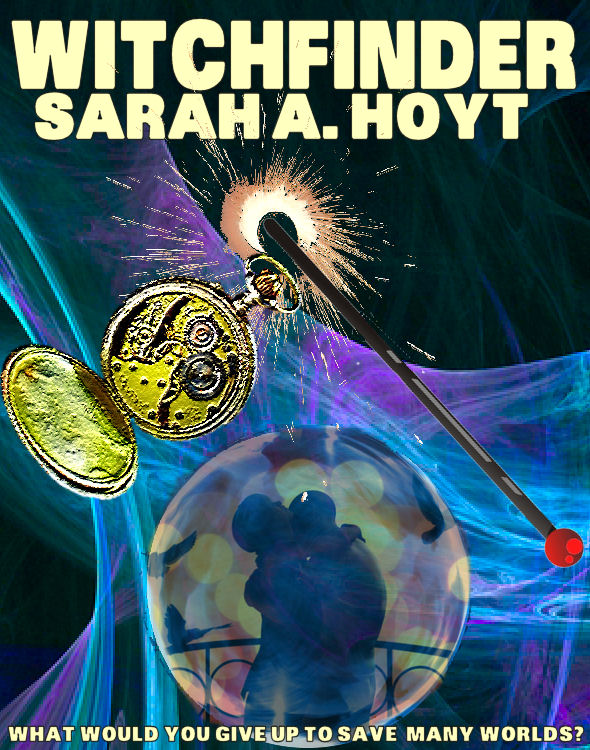
Witchfinder, Free Novel, Chapter Fifty

*Once more proving the writing thing is like a cat and once you give up on it, it comes full force, I woke with this chapter finally clear in my head.  I beg you to be patience as I’m aware that minor inconsistencies are accumulating.  This is normal first draft, and will get fixed in the end.  It should still be enough to get the story.*

*This is the Fantasy novel I’m posting here for free, one chapter every Friday.   If your conscience troubles you getting something for free, do hit the donate button on the right side.  Anyone donating more than $6 will get a non-drm electronic copy of Witchfinder in its final version, when it’s published.
There is a compilation of previous chapters here  all in one big lump, which makes it easier to read and I will compile each new chapter there, a week after I post.  When the novel is completed and about to be edited the compilation page will probably be deleted.

Oh, this is in pre-arc format, meaning you’ll find the occasional spelling mistake and sentence that makes no sense.  It’s not exactly first draft, but it’s not at the level I’d send to a publisher, yet. *

Battle Call

Akakios said, “I can hear them.  The hell hounds.  Lady, hold fast.”

Caroline could not hold anywhere but to Akakios’ middle, and she had to press her head close between his shoulders, feeling the horse body and the human move in unisson, as they ran through…  She would never be able to say more about the landscape they crossed than that it was dark, with rocks and trees.

In her confusion a fear assailed her that Akakios would set his hoof wrong and break it.  She noted her Papa had disappeared, somewhere far behind.  And then she realized that in this magical landscape, Akakios was better suited to run than she was.  Nor would she be able to find her footing.

Akakios must have felt her fear, because he whispered, “Never mind, Lady, I was born and raised in fairyland and these glades are like daylight to me.  I judge the baying is coming from out the walls of the royal palace.”

It didn’t calm her, except for her feeling it was kind of him to matter.  She closed her eyes tight and tried to trust him, and didn’t open them again till he stopped abruptly, in a way that in a normal horse, and had she not had her arms entwined around his all too human upper body, would have sent her flying over the animal’s head.

She heard a fearful barking and snarling, and a voice crying, “Miss Ainsling!” and opened her eyes.  She’d known Gabriel’s voice before she opened her eyes, of course, and she felt torn between anger and fear.  The fear because she could see Gabriel, up against a white, glimmering wall, surrounded by fearful creatures the size of bears, who might be dogs, if dogs had teeth like daggers and eyes like burning coals.

And because as Akakios stopped, some of the dogs turned towards them.  Anger because Gabriel would call her Miss Ainsling if they were in public at all, and she would guess he thought a centaur constituted being in public.  Or perhaps he was trying to spare the sensibilities of the dogs.

“Gabriel,” she said, forcefully.  “Come to us.  We’ll take you out of here.”

It was only as the words left her lips she realized she’d spoken two impossibilities.  First how was Gabriel to come to them past twenty snarling, encircling hell hounds.  And second, how would they take Gabriel out of here, when Akakios could barely carry her.  And on perceiving her idiocy, she said, loud enough to be heard over the dogs, “Oh, I am an idiot.”

This surprised a laugh out of Gabriel, which went to prove, if anyone doubted it, that he was her brother, since her brothers always laughed at her.

And now she saw that he was holding a sword in both hands, a sword that appeared to be made of light.  “Back up you little fool,” he shouted apparently forgetting he was supposed to act like a servant.  “I’ll keep them too busy to follow you.”

As he spoke, he charged with his strange weapon, and the dogs that had turned towards her now turned to him, growling and snarling.

Akakios had already started edging them both away, and presently, with no seeming transition, the whole scene looked at though it were very far away and he had brought her to what looked and smelled like the middle of an orange orchard.  The scent of flower was heavy in the air, the trees gave an impression of cozy protection, and it felt like a warm summer night.

“Oh,” Caroline said.  “How came we here?”

Akakios was looking over his shoulder at her, and looked surprised, for a moment.  “We’ve not gone anywhere,” he said.  “Well, far enough for the creatures to see it.  I invoked a place, in my father’s lands, where I often go to think.  It is not–” he paused in exasperation.  “Physical.  And yet it is.  It’s a place of the mind, a place of safety.  We are also a little there, or at least our souls are, which means we won’t be overheard by magical means, because the orchard is my place and casts its protection over me.  Lady, that is your brother?”

“My half brother,” she said.  “Gabriel.  His mother is of the fairy.  His father was my father.”

Akakios nodded.  “He is a valiant fighter,” he said.  “And we’ve heard the prophecy, of course, but Lady, where he is, and all alone, he will surely die.”

She swallowed hard.  She’d guessed as much since she’d seen him with his back to that wall, his sword of light barely keeping at bay the monstrous mongrels.

She knew the sword enough.  It was called Sword of Power and men got to taught how to create them in their elementary magic education.  Women weren’t, of course, because it was assumed there would always be a man by, ready to champion a lady with magical power.

Which was all very well and good, but being an untrusting sort, Caroline had made Michael show her how to do it.

She had even practiced with it, a summer, long ago.  However, she had never made great use of it for two reasons: first, she hadn’t been very good at it.  Keeping up the sword shape required concentration and at eight she was more likely to turn her head to follow a butterfly than to concentrate on keeping her fiery blade burning.  Second, it took an enormous amount of power.  An hour or two of holding that magical blade was like days at work and without food or sleep.

Granted that Gabriel was far more powerful than she was, how much effort did the sword take him?  How long could he keep it going?  Even if he was a powerful magician?

She imagined now that she saw in her minds eye signs of fatigue.  She hadn’t been able to see his face, but she fancied that he glowed with sweat and that he hadn’t swung the sword about with the vigor than he should have.

“Akakios,” she whispered.  “Can you command the sword of power?”

He seemed puzzled for a moment, then he said, “Aye.  But, Lady, listen– ”

“No, if you do it, and I do it, we can fight our way to him, can we not?”

And now Akakios laughed at her.  “Lady, have you ever seen a horse harried and brought down by wild dogs?  Never mind.  We’d not make it.  Before we got near my belly would be ripped open and us, both, devoured.”

“Oh, you can’t tell me we can’t do anything,” she said.  “He is my brother and Papa – whatever remains of poor Papa – insisted that I should free him.  And indeed I should, Akakios, for without him I would have been brought to fairyland when I was just a babe, and I– ”

“No, Lady, listen.  I can command the sword of power, and indeed, it will help us, but your mind must busy itself with something else.  Remember how you got to me in that iron cage?”

“I don’t have the horrid sword.”

“No, I mean, the power of your mind, commanding the beasts.”

“The unicorns?  But that’s because I am a virgin.”

He made a sound that might have been a laugh of a sneeze, or rather, she suspected, a laugh hastily turned to a sneeze.  His high cheekbones tinted a dusky red.  “If that were the virtue, Lady, I warrant you I’d never have been taken prisoner.  They should have told you then, and if not, I’ll tell you, it is purity of another kind that counts: purity of mind, purity of intent and purity of magic.  My people came to you to rescue me, because you have those having been taken through the flames of dragon magic and having all impurities withered away.  You must now, Lady, use your mind to control those beasts.”

“But…”  She paused.  She could remember in her minds eye, the horrid creatures and it seemed to her that she could remember their smell too, thick and gagging upon the air.  “But they are… Not unicorns.”

“No,” he said, a tinge of amusement behind his words.  “Not half as smart as unicorns.  But both of them are controlled by the mind of the king of fairyland.  and you defeated him once.”

“The king!”

“Who else would you think?  Yes, the king.  Listen, I shall open a very small fissure in our protections.  Extend, as it were, our minds beyond the orchard just a little.  And you can see if you can command the brutes.  If you can, I shall charge, holding the sword of power myself, leap over the heads of the brutes, and then we’ll be by your brother and able to aid him.”

She nodded and felt more than saw as he ripped, with his hand, in a quick pass, a gaping tear in the perfumed summer night onto that other place: with the indistinct rocks and terrain underfoot, the white wall at Gabriel’s back, and the snarling dogs.

Caroline reached out tentatively, trying to believe in her own power.  Encountering the dog’s minds was not at all like the unicorn’s.  One thing was to find a vacant mind edged all about with blood lust and the thought of violence.  Another and quite different to step full body into a midden.  The minds of the dogs were not like animal minds at all, but they reminded her rather of certain men she’d met – fortunately not many of them, though she suspected there would be more once she were presented to society – who stripped one with a single look and who seemed to be thinking the lowest, most revolting things to do to one.

Only of course, in this case there was no “seem” involved.  She was in the dogs’ minds and the images assailing her made her gag.  But she wrapped herself in the certainty that they could not touch her.  Had not Akakios said that her power and her intent had both been burned pure?  They could only make her feel impure and besmi rched, and she would not let them.

It was easier said than done, but she thought of Gabriel dying because she went missish and let herself be scared away by lewd minds.  And then she had it.  She quieted the dogs, as one would quiet unruly animals.  She thought strongly at them to be quiet and sit.  She could feel in her mind as they obeyed.

She could also feel it would not last long.  There was another mind controlling them, a far more powerful mind, and it was wrestling with hers and would soon overcome.

And should Gabriel try to get out of his position, the other mind would surely overcome.  And then Gabriel, without the wall at his back, must fall and be devoured.

She and Akakios must act fast before he were tempted to escape.

Before she could tell Akakios to do so, he was running.  Words he shouted, which sounded Greek, brought the sword of power to his hands.  He waved it frantically, disppelling any dogs’ intention to attack them.  And then he lept.

Before they landed on the other side – it was a very long leap – he lost height.  And as he lost height the other mind gathered control of the dogs.  Caroline saw them leap up, snarling, and saw Akakio’s sword cut down.

She screamed, sure they were lost, but Akakios kept his leap and landed, safe, on the other side, falling, however, on his knees on his front legs almost instantly.

His human body was panting and making a keening sound, but he was still brandishing the sword.

She judged, justly, he didn’t need her weight and rolled off, and said her own words to invoke a sword of power, and turned to stand by Gabriel’s side, sword in hand

She had been right – Gabriel looked tired, and smelled of sweat and fear.  As soon as she was off Akakios’ back, the centaur raised on all his legs, his sword in hand, and lay about, covering the points she and Gabriel couldn’t reach.

“Miss Ainsling, this is madness.  What possessed you to get yourself trapped with me.”

“Only that you have yourself a fine defensive position, and that with tree of us, perhaps we can fight free of this trap as you alone couldn’t.  And give over with the Miss Ainsling, do.  Akakios knows you’re my brother, and I suspect centaurs are not so nice about classes.”

Gabriel laughed.  “Very well, Caroline, then, but you are wrong.  Centaurs are particularly nice about classes.  Well met prince, but this is a sad endeavor.  How did you let yourself be lured into this by my scapegrace sister.”

Akakios, still sounding tired said, “Not entirely by her, my lord.  You see, we centaurs believe in prophecy.”

“More the fool you,” Gabriel said, fighting.  “I neither want my uncle’s throne nor will I seek it.  And I see you are cut about the legs.”

“Not badly enough to warrant worry.  One of the brutes got his teeth in, and another his claws.”

“But prince,” Gabriel said.  “I understand my sister has windmills in her head, but what do you mean us to do to get out of here alive?  Have you any ideas?”

“At the moment, not a one, save faith something will happen.”  Akakios said.

And into that moment of calm a voice boomed, loud as the trumpet on judgement day, cloying with honey and rife with evil: “So my darling nephew has come back!”

The cats ate my homework

Okay, it’s not been a horrible week.  I don’t want you to imagine me in the hospital.  But it’s not been a good week, either.  No, Ric’s death wasn’t wholly unexpected, nor was I his closest friend, but to hear someone you traded joking emails with a couple of weeks ago is gone is a bit… shocking.

The other stuff has been piddly.  Literally.  The cats didn’t like our being gone.  Let’s say I had to wash EVERY bed covering.  And there have been minor things, some of them good things I can’t talk about yet, but all rather startling or at least unexpected.  Then there was the 27th anniversary of our civil ceremony yesterday.  We don’t do a really big celebration — we save that for the “real” (religious) anniversary.  BUT we do celebrate this celebration usually involves a big family dinner to which the kids contribute (usually desert) and wine and talk into the late hours.  So — good stuff and stuff I needed after the week — but not conducive to hitting the ground running early morning.

The end result is that this is the end of Saturday and I’m still trying to WRITE the chapters for witchfinder — not revise, mind, which I’m usually doing by this point — but write.  And I feel as though I’m pulling from empty.  It’s made worse by the fact that these particular chapters are the action leading up to the climax.  It’s d*mn hard to write action (or denouement) when you feel like your head is empty and it echoes.

Part of it might also be because since we arrived from Liberty con, I’ve not had time to do my regular exercise, and after your body is used to it, it resents more than one day’s break.

I’m not even going to pretend a good part of this is not because I broke the “work habit.”  I’m pretty much puttering on Noah’s Boy too.  Cons are bad this way.

I think I’ve only done this once — but I’m not posting Witchfinder this weekend.  I might or might not post it Monday.  Meanwhile, I’m going to take some time off, do some reading, then ease into work again tomorrow with some editing (which is always easier to get into!)  And hopefully the feeling of being elsewhere altogether will pass.

I apologize to the people who are following the novel in progress, but please believe me that it will better for my waiting.  It’s not that “forced” work is not often very good, it’s that work when I’m in this mood is often incoherent.

It will come.  But not today and probably not tomorrow.

Guest Post — by Scott McGlasson

*No, I didn’t forget Witchfinder, but this has turned into “one of those weeks” and we’re beset with errands.  I will post it later this afternoon.  Meanwhile our very own BS McGlasson…. er… I mean Scott… startled me two weeks ago with a question ‘does creating a character often give you an inferiority complex’.  As I couldn’t say that it did, I told him to write it up  and if I liked it, I’d make it a guest post.  Yeah, yeah, to the rest of you, the glory and undying fame of writing before billions millions er… thousands of my adoring fans fascinated minders can be yours too.  And I run into heavy stuff often enough I don’t mind having a few guest posts laid by.  The caveat is I hate editing with an undying passion so it will take a while for me to read it.  Meanwhile, put your hands together (not that way.  I WILL do Witchfinder, you don’t need to pray for my sanity or whateve… oh, I see.  Thanksgiving.  Yes, I see that) and give a warm ATH welcome to Scott McGlasson.*

I, Suck

by Scott McGlasson

We spend a great deal of time working on the minute details of our characters, but none so much as our protagonists and our antagonists.  With protagonists, even the shady anti-heroes, they inevitably have qualities that make us care about what happens to them.  When a character really works, it’s almost like we’re meeting an actual person and listening to the way they describe themselves rather than we few dreamers creating them out of whole cloth.

Have you ever created a character that made you criticize yourself in some way?  Once the characters had fleshed themselves out, have you ever looked at their way of doing things compared to how you do and found yourself lacking?  Cuz I have recently and it’s not all that much fun.

My journey into self-inflicted angst began, as most journeys of self-inflicted angst do, at Borders Books.  But first…

Scott: So, Borders Books…tell me.  What is best in life?

Borders Books:  The open latte counter, fleet-footed employees nowhere to be found, overpriced books in customers’ hands, and the pink highlights in our employee’s hair.

Scott:  Wrong, Borders.  It’s to crush your profits, see your customers driven before you, and to hear the lamentations of your granola-gnawing staff.

…and now back to the blog, already in progress.

Like most of you, whether you want to admit it or not, I raided my local Borders Books as it was going out of business.  How could you not?  In the weeks before the nearby franchise closed, they went from thirty percent off to eighty percent off books which had, only weeks before, been ridiculously expensive.  The trick, it seemed, was to ride the crest of the chaos, hiding away the titles I wanted under other less interesting books like A Winner’s Guide To Successful Parcheesi Tournaments.  Books of that caliber worked very well to camouflage my future purchases from the grubby little paws of other wannabe writers.

The end result was a veritable Tower Of Babel of babble about writing.  At least half of those books were on character development and how your protagonist could very well suck if you didn’t pay heed.  Well, I didn’t pay heed, but I did pay ten cents on the dollar.  Today most of said tomes are under a layer of dust roughly comparable to that layered atop a forty-year-old’s home gym equipment.

Hidden deep within this collection of preemptive errata were things I’ve actually found quite useful.  Sarah Domet’s 90 Days To Your Novel, for instance, has two things going for it that I was able to apply to my greener than green, wet behind the ears authoring; a solid approach to synopsis and outline, and a useful way to do character sheets.  Am I going to use the rest of it?  Hell.  No.  There’s no way on this Earth or any other that my manuscript will be finished in 90 Days, but I see nothing wrong with selectively parsing out the useful tidbits.  Just won’t tell anyone I used a “90 Days To…” book, ‘kay?  Don’t rat me out.

From what I gather from the published authors that I’ve traded correspondence with (including our immediate blogging goddess), most do not use character sheets to flesh out their cast.  In the interest of aping success, I had not planned on using them either and was generally happy with the way my main guys and gals were describing themselves.  I hit a low point in my plot development last week and needed to go off on a tangent to break the block, so I thought I’d give this character sheet a shot, as it were.

It had the typical stuff.  His/Her Name?  Where Does He/She Live?  What Is His/Her Most Prized Possession?  Etc, etc, ad nauseam.  Where I really hit the meat of this exercise was working on my protagonist’s personality traits.  Bare in mind, the guy in question is not your average, everyday Joe.  If he was, he would be dead along with around five and half billion other such.  No, this guy is an accomplished soldier, an inspiring leader, a reluctant monarch; in other words, a great man truly worthy of narration.  But aside from all of that, Michael Edward Turner is a doer.  He does.  He came, he saw, and he did.  He will do again.  He’s the once and future doer.  He’s…well, you get the gist.

The first thing one learns about leadership, aside from the awesome bennies (especially if it’s bureaucratic leadership), is that a great deal of it is just making a damned decision and acting on it.  That’s a very powerful thing…acting on it.  The sheer act of will that takes a thing from an idea such as “You know what?  That dent in the drywall needs to be patched,” to, “Remember back when we used to have that dent in the drywall?”  What is that except being a leader of one’s one inner demons (or daimones, if you’re Walter John Williams, which you probably are not) and marshaling them into action at the behest of directed will?

Sure we’re not talking about saving the human race from both a zombie apocalypse and an alien invasion here.  We’re talking about fixing a frigging dent in the drywall.  So why is Michael E. Turner doing all of these wonderful things within the electronic pages of my manuscript while my drywall remains unpatched?

I have long acknowledged that I’m a procrastinator.  I do pine for a self-imposed work ethic of the sort that allows our gracious hostess to not only have a huge amount of work behind her—and in front of her, God willing—but also crank out wonderful screeds every day, sometimes twice a day, that keep the bloggerati thinking.  Sure, I pine away, but what is pining if not yearning without realizing?  What’s keeping me from such a work ethic?  What’s preventing me from spending hours a day behind the keyboard, working on my manuscripts rather than using that time to absorb vacuous entertainment?  Lack of will, for the most part.  Sheer, unadulterated lack of will.

And that’s where Michael is kicking my ass up one side and down the other.  Michael sees a job that needs doing, squares his shoulders to the task at hand, and gets it done the best way he knows how.  Sure, he’s got his problems—if he didn’t, he wouldn’t be interesting—but he accomplishes.  As I talk to this guy and discover more and more about him, I can’t help but wonder, “Why can’t I be more like that?”

And there’s the rub.  If a rational, mature adult can conceive of a character like Michael in such detail, why can’t said rational, mature adult BE those things?  Certainly, we can write about characters doing horribly evil things to victims in works of fiction and our moral compass prevents us from doing such things in real life, but what’s keeping us from emulating the positive aspects of our characters?  This doesn’t necessary work for every aspect of a fictional character, I grant you.  I can fully flesh out a character that can fly like a superhero, but gravity has something to say about me doing it in real life.

If I can fully flesh out a driven, accomplished individual with many positive character aspects, what’s stopping me from trying to adopt those aspects in my own life?  The answer, inescapably, is myself.

How about you?

Who Wants To Live Forever?

I’m getting very tired of writing obituaries, and Ric Locke’s was one I particularly didn’t want to write.
I met Ric Locke less than a year ago.  Objectively, we spent a few hours together – hard to say who was stalking whom – at Fencon in Dallas, and we’ve corresponded irregularly since, mostly about writing and publishing matters.
Subjectively, he was a brother of mine, closer than my blood brother in one thing at least: we had an all-consuming shared experience which made us kin.
It is very hard to lose a sibling you barely got to know.  On the other hand, he died where he belonged, and not far away from kith and kin, in a strange land: he died as he was meant to be – a writer of science fiction.
Indulge me if I mention that sixteen years ago now, I was in the hospital with what turned out to be a weird from of pneumonia, but which at the time was “undiagnosed nasty” which wasn’t responding to anything and from which I was expected to die.
At the time I had finished eight books, all unpublished.  (I had started a lot more.)  What fretted me at that moment, more than anything – more than fear of dying at 33, more than the kids who were then 1 and 4, more than my husband who would be left alone – was that I was dying with my work unpublished.  Worse: I was dying as a non-writer.
The writer-thing starts like that.  You feel that you belong with them: with the writers you admire.  Particularly in science fiction and fantasy, where we’re a tribe within a tribe, an isolated group inside an isolated group.  You look at them, there.  And through all your doubts, through all your certainty you’re not that good, you yet feel certain they’re your people.  You belong with them.  Reading them only increases your feeling, until it’s so overwhelming that it seems odd to you no one else knows about it.
And that was perhaps the greatest problem, sixteen years ago.  I was dying far from my tribe, a stranger in a strange land.  They wouldn’t know I existed.  They wouldn’t mourn my passing.  My words and my worlds would die with me, not mix in with the rich lore from my ancestors: Heinlein, Asimov, Simak.  My words and my worlds would die, and never appear again as a glimmer in the DNA of the field.
Ric was spared that.  He lived long enough and he had confidence enough to take his long-unpublished manuscript, Temporary Duty, and put it out there for people to buy.
Ric, as a man, seemed a decent enough person.  He was witty, funny, and gracious enough not to blow up at the small-press writer at the con who insisted there was no money in indie, when I think Ric had earned in royalties in a month what the man made from a whole book.
He was also brave.  That’s what I want you to remember.
I remember being where he was: the place where you feel your work is publishable, but every door is still slammed in your face.  (I was right, as Ric was.  Some of those books are now published.)  You know you are a writer, but no one else knows it.
It’s a terrible place to be, and it makes you doubt who you are and what you can do.  The demons of insecurity gather round whispering, “It’s human, but is it art?”  (Or even story.)
That was the experience that bound Ric and I.  We knew about those long years in the dark.
But he was brave.  Braver than I might have been.  I’ll never know, because I broke in before I had a chance to do what he did, which was to step out of the dark into the light and to say “I am a writer.  I’m a Science Fiction writer.  These are my people.  These are my tribe.  I am worthy.  I belong with them.”
And he was right.
Now Ric is gone, but Temporary Duty isn’t.  His world, his thoughts, his characters, have joined the collective consciousness of the field.  In the way this field works, bits and pieces of it will surface, here and there, forever.  Years from now, I’ll be reading a Human Wave Science fiction novel and go “That’s Ric Locke.  That’s Temporary Duty.”  Like recognizing an ancestors’ eyes in a new born baby, it will keep a bit of him alive forever.
And besides, every time you open his book, every time you read it, he’ll be alive again and speaking.
He had much less time than he expected or we hoped for.  But in the last year and half he became one of us.
He’s gone, but he’ll live forever.  He died, but he died in the arms of his people and has joined his “ancestors” in science fiction writing.
It’s the best mortal man can aspire to.
And he left us a legacy too: you, out there, you with the ten manuscripts under the bed or moldering in your closet – do you have the courage to put them up?  Nothing is standing between you and the light now, but your own cowardice.  Do you think you belong with us?  Stand up and be counted.
Do you want to die isolated and have your worlds die with you?  Or do you want to live forever?

*Witchfinder tomorrow.  I’m simply not up to it RIGHT now.  Sorry.*

Post Will Be Late Tomorrow

Mostly because I’m trying to figure out if the report of Ric Locke’s death is true or not.  (His hometown newspaper has not reported his obit, which if he died on Tuesday, it should have.)

Part of me hopes very much it’s not true and that he’ll come by to tell me so.  I know lung cancer is a horrible disease, but people do recover, and I’d been looking forward to seeing him again at Fencon.

Right now, not being absolutely certain is worse than knowing, processing and grieving, so I’m left in the air.

How NOT To Make Friends And Influence People

That title is about me.  This could as easily be titled “In Which I Offend Everyone II” (for part I look here.)

First let me piss off at least half of my audience when I say that I am pro-gay-marriage.  Marriage, not civil unions.  The reason for this is that I believe marriage is a stabilizing thing and therefore good for society.  And male/male couples – though the statistics don’t seem to bear me out – lacking whatever is supposed to make women more stable in mating – though again, the statistics don’t seem to bear me out, but I think that’s a wobble of the times – need the stabilizing influence of a ceremony and a public commitment to hold the course.

Yeah, it is a radical departure from the way marriage has been viewed for centuries, but for millennia, before the innovation we’ll call double monogamy, marriage was viewed as the union of a man and several women or, alternately a ceremony whereby a man acquired a woman’s promise of fidelity but in which he, himself, remained free to play the field with no consequences.  In many parts of the world that is what marriage still means.

Yeah, we could just have civil unions, but look here – it’s already happening, where it’s allowed – that IS what will destroy traditional marriage, because younger people will view it as less scary than marriage, and if they can have the legal benefits with the “freight” of tradition of marriage, they’ll do that.  At the end of that, we are France where no one ever gets married.  This is bad for children and bad for society.

Now, some people are afraid gay marriage advocates will force churches to perform these against their doctrine.  I used to snort at this.  I mean, how many Baptists rush into the Catholic church demanding to be married there?  (FYI that would be against Catholic doctrine.  In fact, even just one of the couple not being Catholic means the case has to go through ecclesiastical trial and a dispensation has to be obtrained.)  How many Jewish couples flock to mosques demanding a wedding ceremony then sue when they don’t get it?

That would be insanity, right?  And gay marriage advocates are no crazier than anyone else, right?

This is where I piss off the other half of my readership.  Guys – you’re making it hard for me to believe you shouldn’t all be in straitjackets, or at least shouldn’t all down a good dose of Prozac with your Cheerios every morning.

What’s that you say?  Hater you say?  Well… there you go again.

Look, children – shut up, sit down.  As I tell my teen and early twenties sons, you act like two year olds, you get treated like two year olds – I have TONS of friends who don’t agree with me on gay marriage.  I have tons of friends who don’t agree with me on much of anything.  Hell, I have friends who are communist.  I think they need to learn history, but that doesn’t mean I think they’re bad people AS PEOPLE.

On gay marriage, some of my more violently opposed friends ARE gay.  Some oppose it because they think it will up the ante on getting in other people’s face in a vain attempt at getting the approval mommy and daddy denied.  Some oppose it because they think it will destroy the bohemian aspects of gay life.  And some oppose it because given our common law marriage laws and alimony suits, no gay guy will ever feel comfortable letting an unemployed friend crash on his sofa for a few months.

And yeah, I have a bunch of friends who oppose gay marriage for religious reasons.  It is not my business to get between my friends and their G-d and tell them what they can and can’t believe.  As PEOPLE they’re not bad, and they wouldn’t mistreat a gay person for being gay.  (THOSE people are bad as people.)

I even have friends who believe in gay conversion therapy.  Look – I have friends who believe in crystals, auras and that they’re aliens in human bodies too.  Other than the fact that these quirks have enormous entertainment value (sue me, I’m a writer) they are otherwise sensible people, if you ignore the blind spot.

Do I picket their houses?  Write endlessly about how evil they are?  Tell them they’re not allowed to believe what they do?  WHY?  WHY IN HELL WOULD I?  WHAT WOULD IT GET ME?

So, yeah, you knew it was coming, guys, what the hell is this thing with Chick-fil-A?  No, seriously.  Have you gone off your collective minds?

I confess I have a soft spot for the chain though I’ve never eaten there. (IF we eat fast food we usually go for Carl’s Junior who gives you bunless burgers on request.  Also, they have a positive policy of hiring people with mental disabilities, which I’d like to support.)  The soft spot hinges solely on the dyslexic cows adjuring everyone to eat more chickin.  It’s a clever campaign, and I like clever campaigns.

Then comes this storm in a teacup.

Several things you might not be aware of – first this is a rehash of an attempted storm a few months back.  I know about this because my husband (the world’s least political person) got caught in the crossfire by innocently pointing out that what caused it was a FAKE pamphlet distributed at NYU saying that the company would only hire good Christians or whatever.

Second, this controversy was re-ignited with fake stuff.  Again.  The owner never said he was opposed to gay marriage (go here) – in fact the subject NEVER CAME UP.  The journalist simply decided to insert that because… roses are red?  Journalists are?  Who knows.

“Fine, you say.  But he’s a Christian activist and therefore against gay marriage.  He gives money to anti-gay-marriage causes.”

Oh, no.  Double plus ungood.  How dare he commit a thought crime?

What?  You didn’t realize that’s what you were going after?  Look, in these circumstances it’s always good to turn it around and see what it would be like done by the other side.

People who are against gay marriage are free to boycott my books – I doubt they were reading them before anyway, given the number of gay characters I have (it’s not my fault, it’s what falls in the subconscious.) – In fact everyone is free to boycott – meaning not buy – my books.  Judging by my sales figures any number of them exerts that prerogative.  People who are against gay marriage can even post on facebook about what a poopy-head I am.  Considering I’ve been hit by both sides of the “racist” field for ONE book, that wouldn’t even begin to upset me.

Now imagine the mayors of conservative towns coming out in force to say that trash that Sarah A. Hoyt writes is not allowed in their town because Sarah is a fag-lover.  Doesn’t that make your skin crawl?  Don’t you want to go “Hey, she’s allowed to believe whatever she wants to?  This is America and we have the first amendment.”  “BUT” they’ll say “She gives money to pro-gay-marriage causes,” they’ll say.  (And before you strain trying to figure out which of the current loonies I’m giving money to — I’m not.  For one, I don’t have money now.  But when I was richer (and younger, and stupider) in the late 90s early 2000s, I gave a lot of money to the Libertarian Party who was, then, pushing marriage equality.  Fair enough.)  And all you can answer is “Why shouldn’t she if she believes it’s the best for society?”

Right, now turn it around again.

The owner of Chick-fil-A, who is a Southern Baptist, believes that homosexuality is a sin and gives money to anti-gay-marriage causes.   Uh uh.  Quick, stop the presses!  Let’s make a federal case out of this.

In our democratic republic, a man whose religion opposes gay marriage gives money to prevent… gay marriage?  Yeah. This totally justifies mayors of large cities coming out and grandstanding and saying this man’s business – which, btw, does not provide bits of fried gay person but bits of fried chicken – is not welcome there.  It totally justifies calling the man a Nazi.  Because, of course – Sarah nods sagely – he’s been advocating killing all gay people.

No?  Because that’s what calling him a Nazi implies.  (Mind you, even if he advocated it, it wouldn’t make him the moral equivalent of Hitler – it would just make you the moral equivalent of stupid – because he doesn’t have the armies or police force to enforce it.  Our city has a KKK parade — or used to — which was a great occasion to get out with the anti-KKK signs, that’s all.  And THOSE people believe in killing gays — and Jews and Catholics.  BUT they don’t have the power to enforce it, so they’re just nuts we can make fun of.)  There are places that kill gays – mostly in the Middle East.  Cuba imprisons them (at least if they’re the passive partner, which means a guy who is raped can get imprisoned for life.)

Do I see any of you exert half that much rage and venom against those targets?  No, of course not – because a) that would be politically incorrect and you nerds and geeks want more than anything to be part of the cool “in” crowd.  b) because those are seriously bad dudes and that would be dangerous and you – all of you, girls, guys, gay and straight – are raging wussies who wouldn’t actually take on anyone you think might fight back and fight dirty.

What you should be asking yourself is “why Chick-fil-A”?  The country is filled with businesses owned by Southern Baptists.  I worked for one (small) way back in the day.  It was a nice place to work because it closed on Sundays.  The owners believed in that.  Being where it was and when it was, they also probably believed that both Jews and Catholics were evil evil people.  I still worked for them and didn’t implode in a puff of smoke.  We sold cheap imports from third world countries, and the checks cleared which allowed me to buy groceries.  They could believe whatever the hell they wanted to, I believed in groceries.

To my knowledge none of these businesses has been the target of not one but TWO disinformation campaigns – first the NYU thing, now this.  So, what’s behind this?  How the hell do I know?  I don’t have the time to study the org chart for the company, so at least one of these might be wrong, but several reasons I could put forth would be: someone inside the company wants to oust the current owner; someone outside the company wants to damage it – competitor or disgruntled employee; or this is the equivalent of the “war on women” and someone wants to distract you from the economy and remind you some people out there don’t approve of gay marriage.

Of course, there’s another hypothesis.  It’s Machiavellian, but not out of the question: one of the people who thinks gay marriage is dangerous because gays will become this little thought-enforcing army forcing even religions that disapprove of homosexuality to perform gay marriages has started this campaign to show how hysterical and unstable y’all are.

No?  You don’t think so?  You think this behavior is earning you friends?

Oh, yeah, fine, it’s a lot of fun to post nasty things about a fast food chain which can’t retaliate because businesses don’t do that.  It’s a lot of fun to act all righteous and indignant against people who can’t do anything to you, personally.  And kiss ins?  I’m all for kiss ins.  What the hell do you think that will do except shock some kiddies eating there?  (And not many, not in 21st century America.)

What are you going to do for an encore?  Go after every business in this country that’s owned by a religious person?  Till – what? – everyone in the nation turns against you and buys a roll of duct tape to shut you up?

Guys, when you get to the point of getting on MY nerves, you’ve lost the plot.

Go ahead, shake your little fists, why don’t you?  The people united shall never eat chick-a-filla.  Man, those are logical and convincing arguments!

Never mind those strings moving you around and never, never look up to see who’s making you dance.  Oooh, you’re so hip and cool now.  Just a part of the “in” crowd.

Keep this up and in ten years the only place gays will have a role will be in comedy, as the hysterical, irrational comic relief.

As an heterosexual woman whose grandchild or great grandchild might very well be gay and for whom I would like the benefits of marriage, I’ll be over here crying my eyes out.

UPDATE: welcome Instapundit readers and thank you Glenn Reynolds for the link!

Update, Andrew Klavan is normally more socially conservative than I am (and certainly more vocal about his religion.  While I’m religious and practice my religion and hold myself to my religion’s rules, I don’t think I have the right to argue public positions on that basis.  Let me explain — I saw what religious rule did to Europe in the middle ages.  You don’t want that.  Even a good religion gets corrupted when given secular power) , yet his position is much like mine.
The only caveat would be that I don’t understand how he thinks he’d know if the “good gay people” shunned the nutbars.  It’s not like the media would amplify their voices as they do those of “homosexual leaders” and “gay activists.”  (In an unrelated note, I plan to start calling myself an Heterosexual Leader.  If I were any more heterosexual/not married/NOT actively religious, there would be restraining orders up and down the land.)