Art and literature

RES (Whose real name is the Reverse Etymology of Science Fiction) has ordered requested us us to stop writing treatises on what is science fiction, or what science fiction should be.  Fortunately, I don’t need to because I ran across a rant that fits my ideas of “art and literature” exactly.

I didn’t remember this rant, as it’s found in Robert A. Heinlein’s Stranger in a Strange Land which I’ve not re-read since shortly before my older son was born.  There were too many resemblances there to sixties strangeness (mostly through no fault of Heinlein’s) and besides it is flawed — in my opinion.  Don’t kill me — by Heinlein having set out to prove one of his oddest ideas — that plural marriage is better for everyone — and then arranging the book so as to do just that.  Though of course, the principal purpose of the book was to show that humanity in its expression is learned.  Or not.  To explore, yet again, the enmeshing of body and for lack of a better word spirit which becomes obvious in books like I Will Fear No Evil.

I don’t want to initiate a Heinlein pounding fest, first because even though he had some odd notions (and which of us doesn’t) my best story doesn’t compare to the worst of his.  Second because that is not at all the purpose of this post.

The digression is merely to explain why Stranger (And Job, which I read only once) are not among my “Heinlein rotation” and to point out that I don’t think I got my idea of what is art (including literary art) from him.  Instead I think I came to it slowly and painfully, past the horrible period right out of college when I thought I MUST be “literary” and “highbrow” and that only in the last three or four years have I come to realize that emotion in literature is not a detriment (think of how romances are treated and you’ll see why I thought so) and have I started slowly pushing past my own barriers on inducing emotion in my readers.  (Though I still feel guilty about it.)

Only in the last few years have I come to the conclusion that the canvas we paint on might be words, but the medium is emotion itself.  For it the story and characters and all are just the means and the carrier.  If I could do the same work with a poem that it takes a novel to do, I’d absolutely do it.

Now, of course, perhaps it’s possible that Heinlein programmed me to come to this conclusion…. but I don’t think so.  If he did, it was d*mn slow in acting.

Now, before I quote extensively — first one bit about art, then a bit by the character Jubal Harshaw — more specifically on literature, I’d like to point out that like Jubal I dislike calling myself an “artist” a word corrupted by being applied to things that are either incomprehensible or unpalatable or even indigestible.  But in the sense of “real art” I should hope I am at least on my way to being an artist.

“”…. Jubal, why isn’t there stuff like this around where a person can see it?”

Because the world has gone nutty and contemporary art always paints the spirit of its time.  Rodin did his major work in the tail end of the nineteenth century and Hans Christian Andersen antedated him by only a few years.  Rodin died early in the twentieth century, about the time the world started flipping its lid… and art along with it.”

“Rodin’s successors noted the amazing things he had done with light and shadow and mass and compositions — whether you see it or not — and they copied that much.  Oh, how they copied it!  And extended it.  What they failed to see was that every major work of the master told a story and laid bare the human art.  Instead they got involved with design and became contemptuous of any painting or sculpture that told a story–sneering, they dubbed such work ‘literary’ — a dirty word.  They went all out for abstractions, not deigning to paint or carve anything that resembled the human world.”

Jubal Shrugged “Abstract design is all right — for wall paper or linoleum.  But art is the process of evoking pity and terror, which are not abstract at all but very human.  What the self-styled modern artists are doing is a sort of unemotional pseudo-intellectual masturbation… whereas creative art is more like intercourse, in which the artist must seduce — render emotional — his audience each time.  These ladies who won’t deign to do that — and perhaps can’t — of course lost the public.  If they hadn’t lobbied for endless subsidies, they would have starved or been forced to go to work long ago.  Because the ordinary bloke will not voluntarily pay for ‘art’ that leaves him unmoved — if he does pay for it, the money has to be conned out of him by taxes or such.”-Robert A. Heinlein, Stranger in a Strange Land.

(Needless to say, typos are all mine.  Also, note the above and note that subsidies sometimes come in the form of university salaries, and sometimes in the form of reading lists, too.)

“…. Most of these jokers don’t even want to use language you and I know or can learn… They would rather sneer at us and be smug, because we ‘fail’ to see what they’re driving at.  If indeed they are driving at anything — obscurity is usually the refuge of incompetence.  Ben, would you call me an artist?”

“Huh? Well, I’ve never thought about it.  You write a pretty good stick.”

“Thank you. ‘Artist’ is a word I avoid for the same reasons I hate to be called ‘Doctor.’  But I am an artist, albeit a minor one.  Admittedly most of my stuff is fit to read only once… and not even once for a busy person who already knows the little I have to say.  But I reach the customer… reach him and affect him, if possible with pity and terror… or, if not, at least to divert the tedium of his hours with a chuckle or an odd idea.  But I am never trying to hide from him in a private language, nor am I seeking the praise of other writers for ‘technique’ or other balderdash.  I want the praise of the cash customer, given in cash because I’ve reached him — or I don’t want anything.  Support for the arts — merde!  A government supported artist is an incompetent whore.” – Robert A. Heinlein, Stranger in a Strange Land.

You can’t hold it against me, because it’s not my treatise — but this he said and this I believe and this sculpting and reaching of human emotion into catharsis is in fact the essence of human wave fiction at whatever level it’s practiced.  And it is what I’m aiming for, even when I fail.

Representing!

Okay, first of all I should confess I’ve been on Facebook – aka, what I use to correct for abnormally low blood pressure – again.

Second, I have to confess that Amanda Green covered this topic in her post at Mad Genius club today.  There is an article in the Guardian book blog that made me want to pound my desk in fury.  Amanda covers it, but not from the perspective I see.  Or, to make it clearer, since it’s Saturday morning, I’m on insufficient caffeine and I am more than a little p*ssy, she shived it high and I intend to shiv it low.

The premise of the article, for those of you who don’t want to give traffic to the enlightened precincts of the Guardian (of course, are comments open?  It might be fun, if you too are p*ssy) is that Science Fiction is written only by and about white heterosexual males.

Pauses.

This is when I found out that the Guardian is publishing from a secret time gateway set in the 1950s.  In this world, New Wave, The New Weird, and all the other various changes in the field – that largely mirrored changes in society – never happened.  There was never (and unfortunately I can’t remember the title) a story in which space travel was powered by male on male sex.  There was no homosexuality in Dragon Riders of Pern (btw, written by a woman, unless they know something about Anne McCaffrey that I don’t) and one of the best regarded SF novels isn’t The Left Hand Of Darkness, also (last I checked) written by a woman, and featuring hermaphrodite humans. Also, in the same way, I guess, Ethan of Athos doesn’t count.  (Might not, after all it came out from Baen!)

I disagree with Amanda on one thing: it’s not that there’s not enough gay/black/purple with pokadots people out there, it’s that people like the author of the Guardian article discount all of those that also happen to be fun entertainment.  They’re all supposed to be about oppression, you see.

I agree with her on, to the extent the field is lacking in diversity that is more the fault of the editors than the writers.  Part of this is that editors and publishers live in an enclave so WEIRD that their idea of middle America and what middle America (to the extent it still exists) will buy is oddly skewed to the fifties.  Also, they don’t realize what will make us gag, even now, and so… their experiments back fire and confirm their prejudices.

When I was trying to publish the first book I wrote with gay characters (long ago – loooooong ago and far, far away) I talked to my (not Baen) editor about it.  I was told she could not buy a book with gay male characters (though she said it was very well written) because she’d tried publishing this book with an heterosexual, married cross dresser and it didn’t sell at all.

The fact that she thought that heterosexual, married, crossdresser was the same as a committed gay couple made my jaw drop.

Are there heterosexual, married crossdressers?  Sure.  I used to know one.  Are they anywhere representative of even the fringe?  Uh… no.

Most people either have gay friends or have friends who have gay friends.  But the only reason I knew even one heterosexual, married crossdresser is because I move in PROFOUNDLY odd circles.  And even then it confused me.  I couldn’t “get’ the psychological mechanism.  This is not a matter of approving or not approving – it was his and his wife’s issue and none of mine – it is a matter of going “Oh, my, that’s odd.”  Do I want to read a novel about it?  Well… not particularly.  If it’s well written, I’ll read anything, but the skill it would take on the author’s part to get me to board that train is rather more elevated than the skill needed to get me to read just about any other character.  And that’s me.  I’m weird.  Most people would look at that setup and go “I don’t get it” and walk away without making any effort to read the book.

There is a high entry barrier there which there isn’t with say a gay male (or female) couple. I might not have ever been attracted to a woman, but my husband is in love with one (he tells me) so it’s a mechanism I can “get.”  Unless it has explicit and repetitive sex (but that applies anywhere to any relationship in a book.  It’s sad, but I’m not bibliosexual) I’m not going to have trouble reading that book.

Keep that concept in mind “high barrier to entry in the story” – it will come into play later.

Meanwhile, just think about it.  My editor thought a married, heterosexual crossdresser was as much of a barrier to entry in a field as a committed gay couple who did not have sex on the screen, and where the main part of the plot was concerned with space piracy.  Yep.  Same thing.

I don’t honestly know if they set up these few things they let through to fail, or if they simply think that if they’re going to be daring they’ll go as extreme as possible.  I don’t want to know.  Of all the perverse minorities in the universe, getting into the mind of a NYC publisher is not worth my trouble.  As well get in the mind of the Dk’fd of Alpha Centauri during their Mdt’xyz ritual.

However, let’s leave aside the idiotic perceptions of the writer of the article, who clearly is immured in 1950s Stratford upon Thrush and quite unable to see the many examples that violate his premise.  (Or even that in recent decades the entrants to the field have been almost all female and certainly not all white) and concentrate on the topic of the article which, in my unbiased opinion can be transcribed as “Science fiction should be more representative, because wha wha wha, it should reflect the population.”

I’ve run into this argument before and – once I’m done hitting my head on the desk because it hurts less – I’m left bewildered for how to communicate to these people how fundamentally wrong they are. I mean, they’re starting from the wrong place and looking at it the wrong way.  It’s roughly the equivalent of looking through your thumb at the sea and complaining that the sea is all flesh colored with a nail.

Perhaps it will help if I point out that this is a common error about writing.  I used to tell my fledgelings, usually in a come-to-Jesus talk stuff like this: “Writing is not school.  You don’t get published when you become “publishable.”  Being publishable is the baseline you need to reach, of course, and I’m not saying here you even need to be better than that.  It’s not a QUALITATIVE matter.  It’s a matter of being good enough, yes, but that’s just the beginning, kind of like “you must be this tall to play”.  After that, other things come into play.  Like, you have to be able to hit the editor on a topic that interests him/her.  It has to be on a day that for whatever reason they’re looking to accept a book or story (hole in schedule, for instance) and it has to be a story that, rightly or wrongly, they think they can market.  To think that it’s a qualitative issue, as if you were in school, just makes you resentful, and it’s not even ¼ of it.”

This usually stopped them saying things like “Analog hates me.  I’m sure my story was good enough, but they didn’t buy it.”  If I had time I explained that I had three stories rejected because the mag had just bought something similar, and one of those reversed when the other story fell through.  It had nothing to do with quality and everything to do with timing.

My point is that most writers – even I, in the beginning – view writing as school.  We’re progressing, and as soon as we get “good enough” we’ll get published. Then when we get better, we’ll become bestsellers. This is bizarrely wrong and can hurt the writer.  You could be writing the best male-pregnancy story out there, but if it squicks 99.9% of the editors reading it (and it will.  Sorry.  I stumbled across this, once, looking for details on an sf show I wanted to make a joke about in a book – and someone called it “the male pregnancy slash/the only fandom that comes with its own barf bag.  It’s almost as bad as Duck Tails slash), it still won’t get published.  It won’t get published even if your technique is like Heinlein crossed with the best parts of Pratchett.  If you think it’s just quality you won’t step back and go “Oh, I see” and write something else.

In the same way, the Guardian article starts from the wrong premise.  It’s all “Shouldn’t science fiction be more representative” and “Isn’t time that….”

The idea at the back of the writers’ brain seems to be that there is a worldwide department of literature that oversees science fiction.  As a governmental entity, it behooves it to be representative.  It SHOULD include a statistically correct sample of every ethnicity, orientation or fancy.  It’s about time it started reflecting the world.  Or something.

Look guys, this is creativity viewed by the eyes of someone without a creative bone in his body.  (The fact that it also seems to be SFWA’s view is terrifying, but not anything I don’t expect.)

It’s also business viewed through the eyes of someone who never ran a lemonade stand.

First let’s start with “should” – why should it?  What does it owe you?  Do you ever go to the grocery store, not find your favorite type of canned beans and go “The store should carry beans for people who like this brand?”  No, of course not.  You sigh and buy the second best.  Because the store is not there to represent everyone.

Okay – literature is, among other things, a business.  I also often don’t find anything to represent me – say, space opera, with a lot of adventure and a touch of romance in the Heinlein style – or at least I don’t find it without something else I might or might not like.  So, I settle.  Because the world is not composed of me, and doesn’t revolve around my belly button.

So, what about representing society as it is?  Isn’t that a worthy goal?

What?  Why?  WHY SHOULD IT BE?  Particularly in a genre determined to depict the future?

The goal of any writer is to be read.  To sell as many of his books as possible.  This means that it might or might not represent anything in particular.  And if it doesn’t – well, your problem.

The goal is to write books that will be read.

And then we come to how the writer brain works.  In my case I get characters.  Other people get plots.  What I mean is we’re haunted by these things.  They’re not rational, carefully calculated creations.  We don’t sit down and go “I’ll have 1% lesbian Hispanics.”  If we need lesbian Hispanics in the story, they tend to fall in, either to fulfill the plot that haunts us, or because they show up in your head and go, “Hey, chickie, write me.”

(This incidentally is why talk about writers abandoning an audience to chase another make me giggle.  Yes, there are or might be some writers who do that, but most of us are simply nto that much in control, not matter what we say about it in public.)

And as for “Should” – WHY?  WHO DOES IT SERVE?

Let’s suppose I could teach the world to fire lasers in perfect harmony… so what?

Even if the book became a blockbuster… then what?

People who think reading a book with a particular character will “change the world” overestimate both the plasticity of the world and the importance of any one book or even any one genre.

For years our commercials have shown a perfectly blended society, but the blending of races has continued at the same pace or lack thereof as before, depending on regional quirks and the culture.  And commercials are watched by a lot more people than read SF.

So, until they institute a department of science fiction, to produce the stuff by the yard, the Guardian cognoscenti can gaze upon BOTH my middle fingers.

Could? Should?  WHAT kind of language is that to refer to a creative endeavor?  And who died and made you the boss of me?

You want science fiction by the numbers, there is already plenty on the market?  Don’t like that?  Write your own.

It’s a free country or at least this writer is determined to act as though it were.

Molon labe, you slaves of bureaucratic thought.

You and your diverse mama.  Go write yourself your onanistic exercises in correct think.  There must be some twisted souls out there who would like them.

Good luck.


Rogue Magic, Free Novel, Chapter 23

For previous chapters, click here

*This is the new free novel I’m posting here a chapter at a time.  This is pre-first-draft, as it comes out.  It is a sequel to Witchfinder which will soon be taken down (once edited) and put for sale on Amazon (It’s now done and with beta readers and editor.  My wretched health this year delayed everything.  (Meanwhile, if you donate $6 or more, I’ll get you a copy of Rogue Magic, once finished and edited, in your favored ebook format when it’s done.  Of course, if you’re already subscribing to the blog at a level at which you get whichever books come out that year, you don’t need to worry. *

NOTICE: For those unsure about copyright law and because there was a particularly weird case, just because I’m making the pre-first draft of my novel available to blog readers, it doesn’t mean that this isn’t copyrighted to me.  Rogue Magic as all the contents of this blog is © Sarah A. Hoyt 2013.  Do not copy, alter, distribute or resell without permission.  Exceptions made for ATTRIBUTED quotes as critique or linking to this blog. Credit for the cover image is © Ateliersommerland | Dreamstime.com

roguemagiccover

Monkeying

Wolfe Merritt, Overseer of Properties and Manufactories to the Earl of Savage:


If I’d met Hanuman in human form on a London street, I knew what I’d consider him.  A bounder or a loose fish.

I’m not saying this because of his dark skin, or because he acted and dressed like the native of warmer climes than England.  One of the things about the great leaps in magic and understanding over the last century is that we’ve come to see a lot of the magic abroad is not backward, just different and that with a little logic applied to it – which I grant you the natives rarely have done up to that point, but neither had our ancestors a hundred years ago – it can serve to do things our magic can’t do.

And at any rate, when not raised in their culture and in their often barbarous ways, people of other climes often are very good sort of folk, and very solid.  I’d seen it myself, when one of my mother’s friends had taken in a young Indian boy, brought home by some wealthy family who discarded him when they thought his magic too dangerous.  He’d been brought up by good village folk from the age of six or so, and at my age he was as solid and respectable an Englishman as you could want.

But there was to Hanuman a feeling of slick slipperiness, a feeling that he might at any moment change his mind or the rules of any agreement with anyone.

And then it occurred to me that as far as that came he was the culture of the warmer climes incarnate.  If gods were anything, were they not the outwards projection of that primitive thought which had molded the culture?  Or perhaps they preexisted the culture – I conceded, unable to remember my lessons in applied myth, which at any rate were scant and basic enough at the grammar school I’d attended – but had been picked because they fit the collective character early on.

In either case, it boded nothing good for this Hanuman fellow.

I must have given him the look I would give a bounder or a pretender, in my own circles, because he gave me a delighted grin, his teeth sparkling in the light of the lamps.  He had a gold tooth, which shocked me, because certainly gods would have no need of dentistry.  Then I realized that coating teeth with gold, or painting them, or inscribing symbols on them was long a practice of the human race.

“You disapprove of me, Mr. Merritt?” Hanuman said.

I remembered what I had told Miss Blythe about not disrespecting the god, no matter how outrageous he was, and felt I should have taken my own medicine.  “No, your … majesty,” I said, because divinity I recognized but one and he was not a monkey-king.

He grinned wider.  “Ah.  A man of thought.  But feel free to disapprove.  I believe our principles are opposed, as you’re a man of consideration and thought and deep planning.”  He shifted on the throne, continuously, as he spoke, as a very young child might fidget, but also as a Monkey might.  I realized his dual nature might be affecting how I saw him, and I tried to relax.  “But see,” he said.  “We have need of your deeper thought, and your planning.  It is against my nature, of course, thought there are plans I can lay.”

“Indeed,” I said, remembering his reputation as a trickster god.  “I have known your majesty to be referred to as cunning.”

He grinned again, then sighed.  “I do well enough when I can use people’s preconceptions against themselves, and trick others into doing what I wish, but you tell me, Mr. Merrit, how one can trick this,” his hand gesture encompassed the chamber we were in and everything above and beside.  “This creature of ancient myth, formed before man was fully rational and when gods were only things that made noise in the night and which sometimes left the carcass of one who strayed from the firelight half-eaten by the way side in the morning.”  His eyes sparkled at my reaction.  “What?  You think we know not that we originated from the minds and the wistful magic of men, before men knew they had magic.  We know.  At least we know.”  He put emphasis in we.  “Myself and mine are well aware of it.  This brutish beast, though…”  He once more made a gesture, towards the thing that encompassed us.  “I don’t think it is aware of anything but a brute desire to be out in the daylight of magic and feeding on the worship of men again, and that we cannot give it.

“And if our presence in its gut does not dispose it to kill us—“ He paused.  “We’ll die of starvation ourselves, or of boredom.”  He sighed.  “We were in transit between our world and another myth world, carrying a load of precious cargo when, out of nowhere it rose from the dark, tossed sea, and swallowed us whole.  And here we’ve been since.  And we grow weary.”

“I see,” I said.  Because what else could I say?  “And you wish to leave.  Where would you go if you leave here?”

“To your world, I guess,” he said.  And he made a little gesture. “Such it must be at least until I get my bearings.  Oh, do not suspect me of ill intentions.”  He laughed.  “Though I can see where you’d get the idea.  Yes, myself and mine also crave worship and human attention, but we do not need it.  Not in the brutish way this thing does.  And besides—“  He took another deep breath.  “And besides I suspect not even our ancient devotees would want us now.  But something must be done, and the worlds of myth set in their proper sphere again, and for that we must leave the gut of the beast.  And for that we need human magic, and human minds.”

I was willing to believe most of what he said.  Most of it.  But there was still that elusive, slippery quality to him.  And I had heard stories.

As he gestured for his monkey servants to bring candles and maps, I wondered if something this cunning, this slippery, this seemingly pleasing could not manage to reestablish himself on Earth, should he get there, and whether we wished to unleash it on unsuspecting mankind.


The Auditors and Their Measuring

So yesterday there was a mild kerfuffle – Kate wrote about it today over at Mad Genius club – with someone writing an article wanting to kick people off the SF book club.  [Oh, not the real bookclub, on which I gave up about ten years ago after getting a batch of “main selections” which I couldn’t get into at all.  (The one in that batch I got into was Diamond Age.  That’s it.  And I’ll never forgive them for making me skim some of the stuff they sent me.)]

My first thought on reading that article was “oh, good Lord, way to proclaim your ignorance before the world.  And you a Professor, too.”

Because, well, look guys – I know there aren’t many Romance readers in my audience, so you’ll have to take my word for it, okay?

This author was trying to kick people like Bujold off the Sci-fi shelf and into “romance.”

[Sarah takes deep breath, and steeples hands, which she does when she’s about to deliver herself of a sermon.]

Listen, trust me on this one, sci fi has certain genre rules, certain ways of introducing information.  If you don’t believe me, get together some of your friends who don’t read the stuff (what do you mean you don’t have any?  Kidnap some strangers then.  Totally okay.) and get them to read the first ten pages of any science fiction book you consider eminently accessible. They’ll drive you nuts.

I killed one of my first approaches to Darkship Thieves by taking it to a group of non-hardcore-sf writers.  They wanted to know EXACTLY what the ship looked like. And the lifeboats.  And all the history of the Earth since our time to Athena’s.  All this information swelled the first chapter to five, and made it about as interesting as a text book.

This is because one of the techniques of science fiction is “wait and learn the world as the adventure progresses.  This is how it works.  The readers and writers both have internalized the rules of the game.

On the other hand, Romance has its own rules.  I haven’t yet read enough to tell you all, but there’s for instance “the one” and his kiss will do things to you and…  Relationships between men and women (or women and women, or men and men – romance these days is a broad church) will not be in the least realistic.  If two people who just know are right for each other break up, there’ll be this feeling that no one else will do.  This is not real life, this is Romance.

And the hybrid that’s called Futuristic Romance?

It would drive any science fiction fan insane.  No, seriously.  I’ve read three or four of them, by authors I LIKE in Romance, and it makes me want to … kick things.  See, part of it is that they explain ALL THE WRONG THINGS.  It’s like they’re trying to reinvent the wheel.  There are ways to introduce future tech, for instance, but they don’t know it, so they explain everything that doesn’t need it, and gag at everything that does.  They give you more infodumps than Dave Weber, but all this stuff really doesn’t affect the world.  They do the romance beautifully though.

What I mean is that when someone on the Science Fiction side starts ranting and raving about how this stuff is Science Fiction Romance and the stuff is Lois Bujold, your jaw sort of hangs open in awe and you go “Wait, what?”

Because it’s clear that the poor man has never – never, never, never – in his entire life read Romance.  Though he might have sneered at it once or twice.  To him Romance means “people fall in love” which uh… is not what the genre of Romance is as such.

I spent some time trying to picture anyone from the Romance side saying a Futuristic Romance wasn’t Romance because “well, it has all this tech.”

First, I can’t do that.  Romance readers don’t care.  I’ve read some pretty good historical mysteries that also followed romance tropes.  They’re best sellers in Romance.  Second, people on the SF side would laugh so hard at the idea they’d get cramps.

And you know what?  Right now, Romance is THE best selling genre in publishing, bar none.  Not only that, but only in the weird sub branches, it is more likely to sell better than the equivalent in the “real” genre.  I realized this some years ago, which is why I’m studying the Romance touch, (not particularly good at it yet) so I can market SF as Futuristic Romance as well, and hopefully fly under both flags.  Because I want the largest readership possible.

Which brings us to “WHY are you kicking people out of SF?”

I realize this is just a professor’s opinion, but I’ve heard the same around sf cons and from “just fans” – “Oh, that’s not real science fiction, that has romance.”  “Oh, that’s not real science fiction, that has no engineering.”  OR from the publishing establishment “Oh, that’s not real science fiction, that has no major sociological point.”

Look, the reason Darkship Thieves took SO LONG to sell was that the establishment saw “no sociological point” to it.  They kept pointing me at The Sparrow as an example of what I SHOULD do.

The other reason – I’ll leave the connection as an exercise for the audience – is that SF is of all the genres the one that sells WORST.

So, basically what people saying “that’s not SF” particularly to well-selling books are doing is trying to make the ghetto even smaller, so they can…. Be properly marginalized?  I have no idea.

This goes right along with a certain member of SFWA who made a survey in an attempt to prove readership is too middle aged, too white and not “diverse” enough.  (Speaking of which, she flunked diversity.  She has an entire section for Hispanic and it does include Spanish, but not Portuguese.  This is roll on the floor funny, since families spread across both countries and in fact the difference between Lopes and Lopez is a matter of spelling.  Not that I THINK Hispanics or Latin are a different race.  They are a cultural subgroup – and there is no functional difference between Portuguese and Spanish, which even our government notes.  Oh, sure, my mom would kill me if she read this – fortunately she doesn’t read English – but the difference between the North of Portugal and the South is bigger, culturally, than the difference between Portuguese immigrants and certain Cuban Immigrants [I had a crush on one, once, long ago, and his family was just like mine.]  And certainly Portuguese of the North are closer to Spaniards of Galicia than to Portuguese of the South – there’s a reason for this.  The North of Portugal and Galicia were one under the Roman Empire which I think is longer than they’ve been separate.  BUT from over here, certainly the culture I grew up with has more in common with say Mexico than with the culture my husband grew up with in New England.  Heck, I have more in common with Italians and Greeks, too, but that’s something different. If we’re going to give special cultural points to people of tannitude, I tan as much or more than most Spaniards, certainly than those with heavy  Visigoth blood.  And back when I spent more time outdoors, people here regularly thought I was South American. – end of side digression.)

Tell me, have I gone nuts, or have they?

Is it the job of a writer to choose the audience?  More importantly, is it the job of a writer to choose the audience by exclusion?

I’m fairly sure that Heinlein did not like Fascists or Communists, but did you ever hear him ranting that they shouldn’t read his books?

On the contrary, right?  If  people we disagree with read our books, yes, we might persuade them, but more importantly, they’re buying the books and talking about them, and that will increase your reach.  Look, kids…

Like this…  If I heard tomorrow that Little Brown Shirts For Stalin had banned my books and were burning a million in public in front of the party headquarters, I’d throw such a big party…  First, it would put me on the bestseller list.  Second, it would make everyone who is against the Little Brown Shirts For Stalin run out and buy my book.  What part of this is not delicious win covered in chocolate?

So why would you want to tell people they can’t or shouldn’t read or write in your genre?  You know, Romance has some VERY sharp divisions. For instance, I can’t read most contemporary because it starts in bed and ends there, and I find this boring (no, I don’t find sex boring.  I find WRITTEN sex boring.  Deal.)

I read historical and Regency (which isn’t, really) and some mystery romance.  BUT I wouldn’t touch the other stuff.  But you know what, none of the Romance writers has told me that I’m not a real fan and they want me out, right now.  If I go to one of their cons, they don’t say “oh, you’re insufficiently sensitive to the plight of The Cowboy’s Bride’s Baby” and therefore should stop coming.  No, they try to sell me the Cowboy’s Bride’s Baby.  Which is forlorn, but good try.

And for the love of heaven, no Romance con, and no Romance group, and no Romance author has ever said “What we need is a more diverse audience.”

You know what?  If you put out a virus that attacks only the Y chromosome at any Romance con, no one would day (or two or three guys only.)  BUT no one cares.

You know why?  Because they’re there because they like writing and reading romance.  It’s not that they want to change the world or right past injustices, or any insane crap like that.  (Oh, a few of them might flap jaws about that, to sound important, but they don’t ENFORCE it.)

They want to sell books.  And the people who attend, want to read books.

And you know what?  Science Fiction was like that once.  Oh, totally déclassé, with bug eyed monsters and girls in chain mail bikinis.

And it sold.

Now it’s all about social conscience and bringing in people by the numbers, and righting past injustices.

And it doesn’t sell.

What is the lesson?  Yes, yes, I know.  The establishment would say we need more consciousness raising.  Right.

I’ll leave them to it.  I’ll be over here writing things that will sell to the largest number of people possible.

Because writing is first of all my job.  And if I’m not making that much money, I’m not doing my job.  And second, it’s a form of communication.  And if it’s not reaching as many people as possible, I’m not communicating very well.

If I wanted to be a social worker, I’d do that.  I want to be a writer, so I’ll do this.

Science Fiction is what the writer says it is, and what sells to science fiction fans of any skin color, orientation, disability or language group.

I say it’s science fiction, and I say the auditors* trying to discern which atoms are sf and which romance and which picaresque adventure can go hang themselves.


*Pratchett fans know exactly what I mean.

Our Brilliant, Libertarian Strategy

This post is going to be political.  If you don’t like that, come back tomorrow, and check MGC in about an hour.  There will be a new post and it will be about writing.

You see, I just realized the utter brilliance of our strategy on Syria.  No?  Guys, it’s the Nuke The Moon Strategy.

For years on the right, we’ve admired Frank J. Flemming’s strategy first proposed in IMAO years ago, that we should just nuke the moon, so the rest of the world will go “Whoa.  Those Americans are nuts. They just nuked the moon for NO REASON AT ALL.  We should never mess with them” and leave us alone.  Prominent righties and – particularly – libertarians have been seen sporting a Nuke the Moon T-shirt.  (Okay, so I need to buy one.  I want to get one for Toni Weisskopf too.)

Now we’ve been watching the run-up to war in Syria, utterly bewildered.  Wait, what?  We’re going in because a dictator killed his own people?  Uh.  So, when do we go in to Russia and China?  Are they already on the slate?  If we go in everytime a regime acts badly to its own people, we’re going to need a bigger army.

In fact, some of us libertarians, wary of this administration’s view on things, have wondered if it meant that Obama realized socialism/communism are direct descendants of things like the Roman Empire, and that the only way such empires can survive is through plunder an rapine.  (the flip side of Russia’s stories about liberating other countries, is that they plundered other countries, particularly in Africa, to keep their miserable regime going at home.  Otherwise they would not have last 70 years.)  So we looked at this warily, wondering if we were about to actually start that thing that the progressives have been seeing everywhere, an American Empire.

It is of course the crux of the libertarian dilemma.  We do believe in liberty for all and that all humans crave liberty.  But we do not wish to engage in war to bring about an universal revolution.  We tend to think that people will come to liberty in their own time.  In fact, some of us don’t believe in even defensive wars, which is why the saner ones of us have a small l in libertarian.

So, though I believe indeed that Assad is a very bad man (Michael Totten says so, and I trust him.  Also, you don’t argue with a man who’s been where he’s been) and needs taking out, I also know the world – and particularly the Middle East – is full of very bad men.  If we start taking them out one by one, there won’t be a functional difference from empire, unless we go in, take them out and then come home, which leaves the country in the state of the man who had demons cast out: much worse things will move in.  And then it will all be to do again, unless, of course, your idea is to get the US surrounded by enemies.

Considering this president’s background, this has occurred to some of us, too.

But then we watched the lead up to the war and it looked like anything but the beginning of a new empire, or even the beginning of an evil plan.

To begin with, what kind of empire or evil plan starts by sending John-the-French* and his enormous chin abroad?  Who could possibly take him seriously? The English were laughing so hard that they actually voted NOT to bleed and die with us, as they’ve been doing over the last ten years.

And then there’s the “We’re going to bomb on Saturday” and then “no, we’re not, we’re going golfing.” There followed the bewildering “We’re going to bomb but not hurt anyone, or perhaps even infrastructure, and we’ll only use drones.”  And before that, who can forget the famous “We’re going to bomb just enough not to be laughed at?” Oh, and the “We’re not going to have boots on the ground, unless our strategy fails, and then we’ll send our men in to die for—What?  We need an objective?  Well, no we don’t, we have drawers on our heads, so there.”

As we watched this unroll in horror, one of my friends sent me the following as his guess as to Obama’s motives:

 Let me be perfectly clear… I am not attacking Syria because I have something to prove. It’s just extremely vital to our national security interests that we intervene in this situation that everyone with a measurable IQ is advising against intervening in. I think it’s imperative that we attack Syria becase that will mean you should love me now, right? I’m Daddy’s big brave soldier now, right! DAMN IT, DAD, ANSWER ME!!! WHY DID YOU LEAVE?

This is what is known as a low blow, but I don’t feel qualified to say it is not true, either.

And after all the speculation on Bush’s motives for war, after we were ATTACKED, for a full eight years, I don’t feel particularly charitable either.  And my friend Bill Reader, might very well be right.

Another friend – one of you, whom I’ll credit if he wishes, sent me slogans for the new war:

Obama Bluffed, Hillary Sloughed, Syrians Get Stuffed

No Blood For Ego

Wage War, Not Dithering

No War On Middle East Reformers

Obama’s Syrian Plan:  If it were done when ’tis done, then ’twere well it were done leisurely

NObama War

Obama Dithered, Rebellions Withered

Obama’s Chickens, Coming Home To Roost

The Obama Doctrine: Speak Loudly, But Don’t Carry A Stick, Big Or Otherwise

The Democrat Party: Emboldening America’s Enemies For 100 Years

When the going gets tough, Obama gets flustered

Drift is not a strategy

Submission Accomplished

To which I confess I added: Is this a Syria I see before my hand?  Its Assad pointed towards me?  Oh, never mind, I’ll go kill America’s checks and balances, instead.

So… as you can tell we were somewhat confused.  But our brilliant (in the sense that light reflects off them because they’re so greasy) representatives seem determined to give the President his war.

And they can’t all be mentally retarded or daddy issues cases.**

So why would “sane” people want us to engage in a war against people who did NOT directly attack us, for nebulous reasons, with no victory conditions, on the side of an organization that DID attack us a dozen years ago, and apparently having promised to do nothing more than bomb some sand? (Which could get us told to go pound sand.)

I mean, I looked and looked and could make no sense of it.  It was like a French Absurdist Play.***

And then it hit me.  It was nuke the moon.

We’re going in to bomb a random country for killing its own people perhaps with weapons of mass destruction, which might have been deployed by the government OR the rebels we’re going to help.

We’re going to rain sheer terror on a country out of the blue because our president is bored with golf.

Friends, it’s brilliant.  It’s nuke the moon.  From now on any country out there knows that at any minute it could find itself on the painful end of the greatest military the world has ever seen.

It’s the perfect prelude to a libertarian regime, which isolates itself from the world.  FIRST you must scare the crap out of the world.

I can tell you from experience the scariest people to meet around a street corner are not the strong, evil-looking men.  They’re the coke-stringy people, with the wild eyes, muttering to themselves.  At any minute, they might come at you.  You can’t predict what they’ll do.  The only thing you can do is leave them alone.

Metaphorically speaking, this administration has set out to make the US the drug addicted drifter mumbling about space aliens and waving a knife around with no purpose.

It’s either absolutely, staggeringly brilliant…

Or we’re the meth head in the corner on our way to death by cop.

But I’m hoping for the first.  Well done, presidential advisers.  Let’s nuke the moon Syria.

*No real French people are harmed by this comparison, since Kerry resembles only a caricature Frenchman, drawn by Francophobes.  I heard rumors he doesn’t even speak French.  (Yes, he says he does.  But he also claims to be a war hero.)

**Okay, so they can, but I like to sleep at night.

*** I will note that the French are with us on this war, and they know from Absurdist Plays.  (I’ll also recycle a low blow from 2002 and point out that taking the French to war as our allies is as indispensable as taking an accordion on a deer hunt.)

UPDATE: Completely unrelated post at Mad Genius Club.

Curing Our Common Cold

I’m too lazy to go look for the book to give you the exact quote, but I know somewhere Heinlein says something about how rich men go bankrupt without missing a single meal, while poor men fall a little short on cash and go hungry.

(Update: All praise to Wayne Blackburn who found the quote:  “People who go broke in a big way never miss any meals. It is the poor jerk who is shy a half slug who must tighten his belt.” — Robert A. Heinlein.)

I don’t know if the sentiment is original to him.  Somehow I doubt it, since it has that feeling of received wisdom.

It was new to me when I first read it, and counterintuitive.  Years later I found this was true.  Which is where we, to begin with, have to adjust our definition of “rich.”

I’ve never (yet, give me elbow room) been rich, but even so, when we found ourselves without income, with a brand new baby who cost us 20k (because we were on COBRA and he was an emergency caesarean), and with a mortgage and rent to pay (we had to move an hour and a half away to find work.  I didn’t drive at the time and we only had one working car, anyway.  So, you see, I couldn’t stay home all day with an infant and no transport.  And besides, Dan was working sixteen to eighteen hour days, which meant the three hours driving were really dangerous.) we came close to missing a meal, and our eating standards became rather low (rice.  Also, more rice.  Also, seasonal vegetables) but we never missed a meal.

That is because rice and vegetables (and beans. We ate a lot of beans) are rather cheap.  They are cheap because our lifestyle is high enough – i.e. we’re rich enough – that things like that are cheap.  (Partly this is the revolutions in agriculture, but it is also the sheer wealth in society.)  Yeah, being broke meant we paid a heck of a lot bigger percentage of our income for food, and the food was mostly starches.  But we weren’t hungry.

I’m not saying there is no hunger in America, though I can tell you there isn’t as much hunger as they claim, since most of those surveys ask things like “Did you eat all you wanted to eat.”  To that even my kids would answer “no.”  Mostly because they can’t or they’d balloon.

What I’m saying is that there is no famine in America.  Kids might miss a meal now and then, but unless some adult is willfully misspending money, they don’t go hungry as such.

Not compared to the rest of the world.

(Which brings up a related subject.  Guys we need to stop putting this kind of bs out there.  The international press picks it up and people believe it.  If I had a dime for each foreign poster in a blog who “knows” people are starving on the streets all over America, I could buy and sell the city I live in.  Because they hear all the p*ssing and moaning from over here and translate it to their own terms.  This includes “how badly off would we have to be before we admit it before foreigners?” These people aren’t – most of them – agents provocateurs.  They really believe we must be like the worst parts of Biafra during the famine.  And then we wonder why they buy the siren song of socialism.  Well, if the free market has people dying of starvation in the streets, do you wonder?)

Or to put it another way – I once heard my late paternal aunt, on being asked if she was going to come back to Portugal now Venezuela was getting bad (this was before Chavez, just some minor upheaval.)  She said “I’d rather have the bad over there than the good here.”

I also didn’t understand that, until I came here.  Even now in the economic mess we’re in, we have more consumer choice and (relative to what we make) lower prices than in Portugal when it’s doing well.

Beyond that, when I got married, my parents had clawed their way up to an upper middle class lifestyle there.  As a broke newlywed here, I had luxuries they didn’t have.  Stuff like, hot water is cheap in comparison (and so is electricity) and there were cheap diners that would serve me breakfast at midnight if I dang well pleased to eat at that time.  And we had a dishwasher and a microwave.

Someone once said that there is a 2 level difference between lifestyle here and in Europe.  I.e. if you’re living a lower middle class life here, you’re upper middle class in Europe.  This is probably true, at least for some parts of Europe (which in itself has huge variations) and parts of the US (I’m fairly sure it’s different if you live in the middle of nowhere West Virginia or in Washington DC.)

But leaving aside all that hair splitting – I’ve only had a cup of tea so far, so getting lost in the weeds is a way of life – the saying holds true.  It’s much easier to go through a collapse if you’re rich than if you’re poor.

This was brought on by a visit to the zoo this weekend and by remembering an article about how the zoo in Shangai has put orange dogs with manes in the cage, instead of lions.  Apparently the clever deception was discovered when the “lion” barked.

I mentioned it as a joke to my son and he said “But China isn’t as broke as we are, and we still have lions.”

Let’s leave aside whether the command economy that reports on itself can give us an accurate idea of their “brokenness” or not.  (It can’t.)  My answer was that saying about the rich man and the poor man and explaining it works for nations too.

This is why I tell you guys not to be getting ready to go hunt squirrels with your teeth, or even sharpening flint knives.  It would take a major – major – series of nuclear hits to reduce SOME parts of the country to that level.  Or even to the level of Victorian technology.

We are the rich man.  We have a lot of accumulated wealth.  For instance, I enjoy dressmaking, and bought a series of patterns this weekend.  (Shut up.  It might even happen.) BUT I bought them for special dresses (I have a great hankering to dress retro) that are hard to find or expensive.  For my normal jeans and t-shirts, I just buy them at the thrift store.  If I am careful, I actually buy them new, but I think the most I ever paid for a pair of jeans is $7.  Because the society has so much surplus, I can buy it that cheap.  The surplus won’t disappear over night.

And there will always, barring a huge, huge, implosion caused by a larger attack than we can imagine, be money for zoos and museum and symphonies.  Oh, there might not be money for me and mine to go (though because we’re bookish and stodgy sorts and tend to visit the same places a lot, we’ve found yearly memberships a good entertainment buy.  Look at it this way, the zoo membership is the equivalent of the whole family going to a movie twice.  And that’s before popcorn and drinks.  So we go to movies once every two years, but we do have three memberships to places we go often.  Except the aquarium because it’s frankly extremely expensive. So we haven’t gone in five years.)  But there will be enough people to keep the places going, if not expanding.

China might not be falling as hard or as fast as we are (maybe it’s not falling at all.  Maybe I’m just suspicious.)   BUT a much smaller upheaval can lead to their curtailing their (as a society) high end entertainments, because they simply don’t have the capital that we have built up over almost a century.

In the same way, in countries that are certainly failing and have been failing much longer, the shocks will be much stronger.  I noticed the last time I went to Portugal that the facades in downtown Porto had nets strung beneath them to catch falling tile and masonry.  These are mostly privately-owned buildings, the owners can’t pay maintenance (we could talk here of the fact they’re mostly rental buildings and the place is rent controlled, because all the bad ideas of America go to Europe and STAY) and the city is trying to prevent tourists being brained.  There are flourishing public works, at the same time, but we won’t go into that either.  I lived through various forms of recession there, and I’d never seen those nets or the need for them.  So, it’s clearly not boom times, and it’s not something we can imagine, even though we’re in deep economic trouble.

But even Portugal is “rich” in the same sense that my family and I were reach while broke and paying two sets of living space.  We were broke, but we were buoyed by a richer milieu and years of accumulated patrimony.  (In our case, Dan’s education, which allowed him to find a job, and my willingness to cook from scratch and run up baby clothes on the machine from fabric bought in thrift stores.)

Portugal has ways of surviving.  It has people who know how to survive hard times.  And it can – though I don’t think it does much – default to producing most of what it needs at a level (not the level they live at now, but that’s something else.  However, we were talking about the stupidity of the question “did you visit farmland” when we come back from Portugal.  No.  And Yes would be the answer.  Because you’d need to be in the heart of Lisbon and nightclubbing day and night not to wander off into someone’s market garden in the backyard.  And even then you might not be safe.  Some of the highrises (not in Lisbon) people use the garage space to keep goats.)

No, the people who go to unimaginable poverty at the slightest shake of the world economy are countries like Egypt who have specialized to live ONLY off a luxury industry – tourism – which gets cut when other countries tighten their belts.  And where people are so poor that bread is a major expense, so that when Western Eco Winnies want to appease the great goddess Gaia by burning food in their car tank, and the international price of bread goes up, places like Egypt starve.

The funny – if you have a bitter kind of sense of humor – thing about that is that our Marxists, who are “for the poor” here and abroad (in abstract, of course.  In reality the poor tend to be bitter clingers, holding on to their guns and their religion and the bien pensant would rather die a thousand deaths than break bread with such) are the ones bringing untold misery to the world poor.

They’ve been very badly taught and they think by making themselves poor the rest of the world will be rich.  So they’re setting fire to the richest economy (and largest consumer economy) in the world, and think that somehow, magically, the wealth will show up in the poor countries.  This is a superstition on the level of believing that if you sacrifice your baby, the gods will send you a lot more and healthier.  In other words, it’s nonsense.  But no one educated into primitive beliefs can see their lack of logic, even when it bites them in the nose (or the pocket.)

And let’s face it, our elites are very insular.  They don’t even know working people HERE, much less abroad.  Part of the reason they think France is so wonderful is that they visit it on vacation, and see the nicest parts of it, and believe the rest is exactly the same, because they need to believe some place is the land of perpetual vacation – or in other words, the isles of the blessed and Summer Land.

They’ve never examined the truth of the saying that when America sneezes the world catches pneumonia, nor figured out how our “wealth” is actually the engine of innovation and wealth for the world.  (And it is.  Trust me.  I experienced the crisis of the 70s abroad.)

In the same way, they’ve been told that global warming is a horrible danger to the poor of the world, and they can’t think through and realize that burning food to propitiate Gaia is much, much worse for the poor.  Because “poor” for our elites is living out in the country and spinning your own goats.  They imagine “poor” as Marie Antoinette imagined farm life.  They have this little trianon of poverty abroad in their heads (which is why they also believe that the poor have some special wisdom, but only, of course, if they’re far away and quaintly tanned.  They know the poor here live in trailer parks and go to church, and they find both equally déclassé.  Poor abroad are for our elites, kind of like animals in the play farm of the queen.  They never get old or do anything unsightly.)

So, while trying to improve the lot of the poor abroad – those quaint, tanned poor with the wisdom – they are actually bringing the four horsemen of the apocalypse to bear on vast regions, because war and famine and pestilence and death follow even the slightest fluctuation of food prices.

But here?  Here we won’t miss a meal.  Not most places in the US.  We might eat rather lower on the tree.  (Given our nutritional requirements, I’ve been stockpiling dried eggs) but we won’t see food riots.  Other countries…

The time to get scared is if famine – real famine, not rioting because you want a wide screen tv – hits Europe.  Then it’s the time to sharpen your squirrel hunting skills.

Can it get there?  Sure it can.  I think it would take massive war, though.

BUT until then, learn stuff.  We’re likely to fall a wrung or two in our security and wealth and comfort.  The stuff you should be learning is how to repair things.  How to keep things going.  (Great Courses now offers courses in this stuff.)  Think Cuba and how all the people who can keep old automobiles going aren’t missing any meals. Learn to do house repairs yourself, as much as possible (I already have, because finding a handyman is an exercise in futility.)  Even learning to cut and fit clothing won’t kill you.  I mean, thrift stores will also run bare, if we get in real trouble.

But most of all study how to build under, how to take technology to the next level and bypass the clueless elites.

Because we must right this ship.  We must do it as quickly and painlessly as possible.  We owe it to the starving multitudes of the world.

The US needs to take some cough syrup – so that the poor countries of the world don’t die of pneumonia.

I’m Not Dead

This might surprise you.  It sort of surprised me, because it must be months now since I woke up later than eight.  Seven thirty is considered luxurious around here.  No, I don’t know how this happened.  I used to be a late night person.  Then the kids went to school and I found I couldn’t function in the morning unless I’d had an hour to myself first to read my newspapers (we used to take three.)  So I started getting up at six thirty to have tea and read papers.  Then I found I couldn’t get much done after the kids got home (there was all the de-programming to do, and real teaching to do) so I started getting up at four thirty to five thirty and going to be at nine.

Since the kids have started to go by themselves, without winding up — i.e. getting up on time, bathing themselves and grabbing breakfast (the last is always doubtful, so I do get up early if I can and slip an omelet in front of them on their way through the kitchen, because they often have classes till mid afternoon and food at campus is crazy expensive or from vending machines and bad for them.) my schedule has slipped back some.  I usually get up between six and seven.

I normally don’t go past six thirty unless I’m ill or truly exhausted, neither of which apply — to my knowledge at least.  Yesterday to celebrate a minor family landmark we took three hours off and went to the zoo, but only walked about two miles there, and at a very leisurely pace.  I did my normal laundry carrying, up two flights of stairs, but nothing massive (I brought two baskets up and down, not twenty) and the same for the other housework.  It is something you learn, again, when you have small kids, to carry stuff and fetch stuff, and clean as you go, because you might not have time to clean.  The kids are grown now, but I still do it — a trip for a cup of coffee to the kitchen translates into unloading the dishwasher or wiping down the stove, or running the mop on the floor while the coffee brews.  (BTW this was one of the mysteries of life to me when I was very young “how does mom remember everything that needs to be done?  How come we always have food, meals are on time and the house always mostly clean?”  It was more of a mystery after she left me in charge of the house when I was 12.  It was just my brother and I, but the week about killed me.  Laundry accumulated, food was late or overdone through waiting, I forgot to put out the bread bag in the morning, so the baker left no rolls — just on and on.  And I was on vacation, while mom had a job.  So I was astonished at her efficiency.  Now I know the reason: training and practice, like for almost everything else.)

Anyway, yesterday was nothing special.  I spent the day in utterly boring but necessary work, formatting and prettifying my reverted works, among other things to replace the Shakespeare books that are up, now I have Atlantis to make them work right and I’ve redone the covers (there is a typo on one of the covers.  The program I was working with made it hard to read small type, and I was copying reviews, and there it went.  Also, I know how to do covers better now — yes, it was only three months (I think)  Shut up.)   Also trying to put stuff in other services, and reading a lot of rules and things.  I need to and wanted to write, but yesterday continued the “catching up with cr*p” meme until three thirty when we went off to the zoo.  Then I came back to more work and had a mini conference with some friends on pm FB on stuff we want and need to do to “take back the culture.”  (There’s a lot of us doing uncoordinated stuff — it has occurred to us maybe we should coordinate.  NOT Jornolist style.  For one, none of us will trade in his conscience for a mess of influence — for another… you know, herding cats and all that. But it occurs to us making others aware of what each is doing, letting the others know what themes we’ll be hitting, and, yes, warning each other of free-lance opportunities might be a good thing. So, we had a micro discussion on this, and will continue it sporadically for months, probably, and maybe something will even result.  Cats.  Herding.  Remember?)

Anyway, normal day, right.  I’m still late on my columns for PJM, I’ve still not put the books up.  Oh, and the eternal laundry needs to be done.

So why did I wake up just short of nine am?

I don’t know and you don’t either.  But it’s already weird — a balloon went by so close to our house we could see people in the basket.

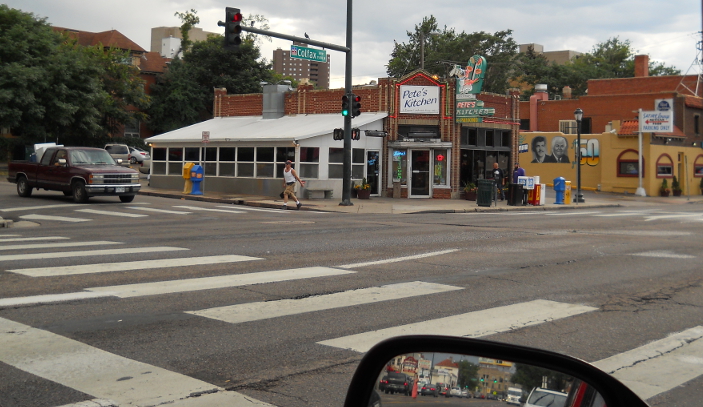
Oh, on going to the zoo… It’s like this.  If I had one perfect day I could re-live for eternity as “heaven” it would be the labor day when Marsh was three.  We found the money to go to Denver for two nights with the boys, with the general idea of “mom doesn’t have to cook or clean and gets to read” but we found the natural history museum (we KNEW it was there, we just hadn’t gone there, yet) and the amusement park at Lakeside, and the boys had a blast, and we ended up having dinner at midnight at the only restaurant we found open (this was so far back we hadn’t found Pete’s kitchen.)  And the kids enjoyed themselves SO much.  Then Marshall fell asleep against me on the way to the hotel, all sticky and heavy like kids get when they’re tired.

And the other thing is — maybe I’m wrong.  I hope to All I’m wrong — but I feel like we’re living through the last few days of the perfect summer.  Like England enjoyed before WWI.

I hope I’m wrong, or maybe it’s just personal.  If I’m wrong, it won’t hurt you to take a couple of days out now and then, and enjoy what and whom you love.  And if I’m not wrong, then store up memories to strengthen you through the dark ahead.

Also, as my sleeping late seems to indicate, perhaps it’s possible to labor too hard.  (Never thought of it.  I subscribe to the Heinlein theory of work: I do it because I like it.  So…)  That is if I’m not getting sick again, and I hope I’m not.

So cease from your labors today and go out and have some fun.


Robsquirrel

It started with the guinea pigs.  We got two guinea pigs, both female, for Marshall’s 4th birthday.  We kept them in the enclosed back porch, in a little glass aquarium.  (The book on cavy care said that cages were dangerous because they could catch their little feet and lose toes.  I’ve since decided it was wrong and that’s why the little ones died prematurely.  Even with best cleaning in the world, it wasn’t ventilated.  But our story is from before that….)

When spring came, apparently female guinea pigs thoughts lightly turned to thoughts of whoopee.  At least I presume that the guinea pigs woke up and lo, realized they were alone and there were no cute boy cavies around.  So, they did what came naturally.

This means we woke up late in the night with a sound like weeeeek, weeeek, week – reminiscent of the psycho shower scene.

Understandably alarmed, we rushed downstairs to see if by chance the guinea pigs had installed a mini-shower in the aquarium, because you never know, and were knifing each other.

No.  Both girls were standing in the middle of the aquarium (the lid was netting) giving full throat vent to what I presume were mating cries and sounded like a particularly annoying car alarm.

We tried to calm them down and when that failed, we went back upstairs and slept with our pillows over our head.

We thought that was all.

The problem, you see, is that they kept doing this for a month.  And the year being rather warm, we had the windows open.

We did not know the danger we were courting.

A month or so later, Petronius the Arbiter the Old Firm’s (we call the old set of cats the Old Firm) Resident Evil TM who was always inside/out because no walls could contain him (you only think I’m joking.  If he’d not been surgically incapable, he’d have sired every kitten in a forty mile radius.  As was, we had to keep a certificate of neutering because of owners of females who came to our door demanding we take half the kittens.) got in a fight with something bigger than him and had to be brought inside for healing.

The sick room was the powder room in the attic, next to my office, where he was – as he always did when he was sick – behaving as though he were a poor, decrepit and inoffensive cat.  I’d like to point out that whenever he got in one of his epic fights (he fought a car at least once.  No, don’t ask.  I’m not sure he didn’t win, either) the vet  would cooperate with this act by shaking his head and saying that poor Pete was probably not long for this world.  And three days later, Pete was outside again, talking up the girls and running every tom off the neighborhood. (His skin was held together with scar tissue, and his vocabulary was ¾ cursing and ¼ spitting.  He was full of guile and malice … and he let Robert drag him around by his tail, and sleep with his head on him as though Pete were a pillow.  I like to imagine it’s because Robert had a heart so pure the cat forebore to strike.  Don’t ask me what I think in my darker hours.)

So, anyway, here he is in this tiny room in the attic, and we had to go out to run errands for the afternoon, so I told Dan I’d just go check on Pete.

I go up the stairs to the attic, and I hear this awful choke-gasp, choke-gasp.  I will right here and now confess my reaction to suffering comes in two modes.  Either I go hyper cool or I lose my head.  This time, I lost my head.  I didn’t finish going upstairs, and instead came down screaming and crying and going “Dan, Pete is having a heart attack or something.”  (Note that I hadn’t even opened the door to the powder room – in retrospect a good thing.)

Dan comes running up – true story, he once left a meeting and risked being sacked because Pete had got stung by a bee (he was deathly allergic) and we only had a car.  So Dan came home and grabbed Pete and we took him for a shot.  As Dan is on his way back to work, I get a phone call because from his reaction they thought Pete was our son – opens the door…

Instead of ailing, Pete has cornered… a squirrel.  The horrible sounds are the squirrel spitting defiance and Pete.  Pete is so startled by this – bears didn’t spit defiance at Pete – that he’s not leaping for the kill.  Dan is stunned too… which means the squirrel runs out between Dan’s legs and to the little office across the way, where Dan did our financial stuff.  We close the door, so Pete doesn’t chase the squirrel over the receipts and stand there not knowing what to do.

Here I should add this is Manitou Springs, which means that squirrels are potential carriers of the black plague.  We call animal control who says “Manitou?  You’ve got to be kidding me. Squirrels have the black plague.  Don’t touch him.”

Which is all very well supposing we wanted to play ambush with a squirrel in the office for the rest of his natural life.  Also, you know, Pete is going to catch him sooner or later and I understand the IRS is notoriously averse to blood-soaked tax returns, even from writers (Possibly particularly from writers.  That whole, can’t get blood from a turnip thing.)

Meanwhile the squirrel has made it into my office and his hiding in a bookcase behind a row of books.  We call animal control again.  I don’t think we threatened to take the animal control officer and make him eat the squirrel, but that was the gist of it.  So he tells us… to open the door wherever the squirrel is, and make a path to the exit where he can’t veer elsewhere.

Now, this was a Victorian.  We were in the attic.  Down a flight of stairs was the bedroom floor, where all doors closed off from a long hallway.  Then there was another long flight of stairs, leading to the front door.  To the right was the living room doorway which had no door.  To the left was the library which had a door, and down the hallway, opposite the front door was the kitchen and the back porch, both open.

So I get cardboard boxes and boards and put them in front of every possible exit….

And we open the door and try to scare the squirrel down.  (We should have loosed the Pete.)

Squirrel comes out of my office, goes into the bills office.  He finds the one hole in Dan’s antique desk, and ensconces himself in the drawer – where he sits screaming defiance at us.

I did what any sane writer would do – I went nuts.  (The definition of a sane writer is, he/she is just below going nuclear at any time.)  I ran to the phone and started madly dialing private animal control people.

One of them finally agreed to come over d*mn the black plague.

So he comes in and he looks like an older Indiana Jones.  We have cardboard blockages still up, on the off chance he can chase the squirrel down the stairs.  He looks at us like we’re nuts (Indiana Jones and the temple of cardboard) and tells us that “Nah, I’m going to gas him.”

By this time our adorable moppets, then aged eight and four, are aware of the squirrel in the attic TM and think of him as a sort of additional pet.

Indiana Animal Controller assure the boys he’s not going to kill the squirrel.  He’s just going to put him to sleep.  I wonder if this is true, but at the point I don’t care.

The squirrel keeps telling us to come at him, all together or in single file, but he won’t get out of the drawer – the coward.

So, the animal control guy brings in a gas canister, and starts pumping gas into the drawer.  The chattering increases.

After half an hour he looks concerned.  “I risk killing him if I give any more gas” he says.  At this point I’m concerned enough that I – the woman who steps carefully over beetles on the sidewalk – said “I don’t care.”

So he pumps more gas in there.  The chattering continues. Indiana Jones in the Temple of Squirrel looks scared by this supernatural resistance to gas.  “I’ve never in fourteen years…”

So he stops pumping gas and I’m afraid that he’s going to leave and leave us stuck with super squirrel.  I should have remembered we were in the west.  “Ah, no,” he said.  “I’m going to lasso him.”

I don’t think I looked doubtful, but I probably did.  The squirrel is still yelling.

Indiana Animal Control puts on thick leather gloves, gets a little rope lasso.  Opens the drawer a little.  I’m thinking “yeah, right.”

Super squirrel is not stupid.  He doesn’t make for the opening.  So, Indiana reaches in…  The squirrel surges out, and with his third hand (do you have a better explanation) the animal control guy lassoes him, and grabs him.  The squirrel is biting him and going nuts but Indiana has leather gloves.  He dumps the squirrel in an animal carrier.

“We’re going to move him,” he says.  “To x neighborhood.  Plenty of squirrels there.”

The kids ask to say goodbye to the squirrel and are allowed to look through the bars at the prisoner who is still chattering defiance.  No word on whether he was holding up a little fist and chattering “I will be back.”

So…  Five years later we move to… the same neighborhood.  I have no proof that the old squirrel who used to dance on the fence and taunt our cats – battered, beaten, one eye missing – was the same one that had come in and – clearly – tried to rescue our guinea pigs from durance vile.

And I will not mention that sometimes I see squirrels acting oddly military on the garage roof.  I could be wrong.  Maybe there is no Rodent Liberation Front.

Or I could be right.  And they could be watching me.

UPDATE: Different Post — a Chapter of Elf Blood — At MG C


Received from the National Front for Nosferatu Rights

*I would like to point out I did NOT write this.  It showed up in my mailbox with pictures and the attribution I put in the title and the following email text: Among Snowden’s documents as captured by British Intelligence from Glenn Greenwald’s Main Squeeze “Miranda”.  I have no clue who sent it, though OF COURSE I have suspicions. (I am looking at YOU.) I find this message bewildering to say the least, but I’m not the one to pass up a guest post.  However it worries me a little… are you guys getting crazier than I? You know that’s not allowed, right?*

TOP SECRET //GCHQ/NSA/DGSE JOINT  SHAPESHIFTER TASK FORCE.…DECLASSIFICATION DATE 01AUG43

SURVEILLANCE FIELD NOTES // 30JUN13 THROUGH 30JUL13

SUPERVISING FIELD AGENT J. CAESAR

IN ACCORDANCE WITH GCHQ/NSA/DGSE JOINT SHAPESHIFTER TASK FORCE ORDER 12-003623 DATED 12NOV12, SURVEIL TEAM DELTA MOVED TO COLORADO DENVER METRO AREA ON 29JUN13 TO INVESTIGATE INTEL PROVIDED BY AGENT [REDACTED] REGARDING POSSIBLE LOCATION OF RUMORED “THE GEORGE”.

ON 06JUL13, LOCATED TWO LOCATIONS OF POSSIBLE SUSPECT DINER ON COLFAX AVENUE WHICH MATCHED DESCRIPTION OF RUMORED SHAPESHIFTER LOCATION AS DISCLOSED IN INTERROGATION OF CAPTURED [REDACTED] – SEE INTERROGATION NOTES FILE ID “THE GEORGE  FOLDER 12-00071223”. SEE PHOTOS MARKED “SURVEILLANCE PHOTO 1”, AND “SURVEILLANCE PHOTO 2” IN ATTACHED DATA ANNEX.surveillance photo 1

LOCAL UNCLASSIFIED SOURCES [DENVER POST ARTICLE DATED 05MAY12] ASSERTS THAT SUBJECT LOCATIONS ARE OWNED BY “PETE CONTOS” – ALLEGEDLY CELEBRATING 50 YEARS OF OWNERSHIP OF NEIGHBORING “SATIRE LOUNGE” BAR, AS WELL AS LATER PURCHASED “PETE’S KITCHEN”, “PETE’S UNIVERSITY CAFÉ”, “PETE’S GREEKTOWN CAFÉ” (SEE PHOTO MARKED “SURVEILLANCE PHOTO 3”). SURVEILLANCE STRONGLY SUGGESTS THAT THESE LOCATIONS – PREFERENTIALLY “PETE’S KITCHEN” – ARE IN FACT THE RUMORED LOCATION “THE GEORGE”.  SECONDARY LOCATION “PETE’S GREEKTOWN CAFÉ” INCLUDED FOR COMPLETENESS OF REPORT BUT TRAFFIC ANALYSIS CONCLUDES ONLY 17% CHANCE THAT THE LATTER LOCATION IS “THE GEORGE” VERSUS 71% RELIABILITY THAT THE FORMER “PETE’S KITCHEN” WOULD MATCH THE AGGREGATE INTELLIGENCE.

surveillance photo 2

ARTICLE INCLUDES INFORMATION REGARDING THE “PETE CONTOS” ALIAS BACKSTORY, INCLUDING IMMIGRATION FROM TRIPOLI, GREECE IN 1955.  PHOTOS OF “PETE CONTOS” ARE INCLUDED IN ADDITION TO TESTIMONIALS OF “PETE CONTOS” COMMUNITY INVOLVEMENT FROM LOCAL POLITICAL FIGURES.

IT IS UNCLEAR TO THIS INVESTIGATING TEAM HOW THE SUBJECT SHAPESHIFTER INDIVIDUALS PLACED THESE OBVIOUS FORGED ARTICLES INTO LOCAL PRESS ACCOUNTS TO OBSCURE THE TRUE OWNERSHIP OF THESE LOCATIONS. FURTHER INVESTIGATION WARRANTED TO UNCOVER ANY OTHER DEEP COVER SHAPESHIFTER AGENT(S).

DURING THE PERIOD OF THIS REPORT, SURVEILLANCE ASSETS WERE DEPLOYED AT THE SUBJECT LOCATIONS. SURVEILLANCE TEAM DETAILED REPORTS ARE FILED SEPARATELY IN THE ATTACHED FIELD NOTES ANNEX.  TO SUMMARIZE THOSE REPORTS: AGENTS OBSERVED A WOMAN WITH ONE SUSPICIOUS MALE AGED HER CONTEMPORARY AND TWO SUSPICIOUS MALES OF AGES APPROX 18 & 20 ARRIVE IN LOCATION IN A LATE MODEL HMMV LIMO CONVERSION.  THESE INDIVIDUALS MATCH THE DESCRIPTIONS OF PERSONS LABELED “HOYTS HUNS” IN COMMUNICATIONS INTERCEPTS.  SURVEILLANCE TEAMS REPORT, HOWEVER, THAT NO SHAPESHIFTER INDIVIDUALS WERE POSITIVELY IDENTIFIED. THE BACK PARKING LOT OF BOTH LOCATIONS WERE SURREPTITIOUSLY SEARCHED DURING 5 CONSECUTIVE EVENINGS, AND 4 CONSECUTIVE MORNINGS, AND NO SHAPESHIFTER INDIVIDUALS WERE OBSERVED. NO SIGNS OF ANY ALLIGATOR WERE NOTED BY ANY SURVEILLANCE TEAM.

NOTE HOWEVER THAT DURING OPERATIONS ON 25JUL13, ONE SURVEILLANCE TEAM OF TWO DISAPPEARED.  COMMUNICATIONS MONITORS RECORDED A BRIEF GARBLED TRANSMISSION FROM TEAM RADIO WHICH IS TRANSCRIBED BELOW:

“VOICE 1: WHAT’S THAT OVER THE CAR?  NO, FROM THE ALLEY.
VOICE 2:WINGS?  WHAT HAS WINGS LIKE THAT …”

RECOMMENDATION TO JOINT TASK FORCE IS TO CONTINUE SURVEILLANCE OF THESE LOCATIONS IN DENVER METRO AREA AND TO AUTHORIZE ISSUANCE OF INTERCEPTOR BODY ARMOR TO ALL FIELD TEAMS.

surveillance photo 3

Rogue Magic — Free Novel — Chapter 22

For previous chapters, click here

*This is the new free novel I’m posting here a chapter at a time.  This is pre-first-draft, as it comes out.  It is a sequel to Witchfinder which will soon be taken down (once edited) and put for sale on Amazon (It’s half done.  My wretched health this year delayed everything.  I hope to finish MY edits and cut and add this weekend — I almost made it last weekend —  at which point it will take another two weeks at the editor).  Meanwhile, if you donate $6 or more, I’ll get you a copy of Rogue Magic, once finished and edited, in your favored ebook format when it’s done.  Of course, if you’re already subscribing to the blog at a level at which you get whichever books come out that year, you don’t need to worry. *

NOTICE: For those unsure about copyright law and because there was a particularly weird case, just because I’m making the pre-first draft of my novel available to blog readers, it doesn’t mean that this isn’t copyrighted to me.  Rogue Magic as all the contents of this blog is © Sarah A. Hoyt 2013.  Do not copy, alter, distribute or resell without permission.  Exceptions made for ATTRIBUTED quotes as critique or linking to this blog. Credit for the cover image is © Ateliersommerland | Dreamstime.com

roguemagiccover


Ginevra Mythborn:

I could see the magic in the Earl’s pocket and I could see it was unstable.  I didn’t know what it was meant to do when it exploded, but it hardly mattered.  In a room crammed with high magic users, what that bomb would do was kill us all, or at least make us unable to use magic for the rest of our natural lives.  But since the physical effects of its explosion would pull the building down on our heads, it would kill us either way.

I jumped, a spell half-formed in my mind, and communicating itself to my fingers, something that could not possibly be done by these people, but which my power lent itself to.  I was almost sure, anyway, that this was a spell of my people’s.

Putting my hand over it told me otherwise.  It wasn’t a spell of my people’s.

I knew it, confusedly, at the back of my head, even as I tried to removed it through the honorable Jonathan’s coat fabric, failed, and plunged my hand into the pocket, grabbed the thing again.  I kept the damper spell on it as I ran towards the door, past the guards.

All this time I’d been trying to get out, and past those guards, and now here I was.  I didn’t think that my captors had even thought to follow me.

Out in the cool air, in the plaza outside, sweat stinging my eyes, I thought only where to throw it.  There were houses in every direction in London, and I didn’t want to pull the building down over some sleeping family.  And then there were magic users all over too.

I threw it the only way I could think of, towards the fountain with the lion in the middle of the plaza.  It was actually a monument to Richard the Lionheart and showed him in both his human and his lion form.

The bomb, which now revealed itself to be a small square of black glass hardly bigger than my palm, fell just short of the fountain.  Okay, the chance of its being defused if it fell in water were low, but at least there had been a chance. Now there was none.  It fell outside the stone parapet.

And since I’d removed the dampening effect from it, it blew.  It blew with incredible force, and explosion of light and sound, and I stood there, and would, I guess, have been stoned to death by fragments of statue.

It seemed like I stood there an hour, and the bits of statue were coming at me at an almost imperceptible pace, except that the Honorable Jonathan bore me to ground and covered me with his body, as he shouted, loudly, “To the ground men, are you daft?”

I knew it was the Earl from the shout.  I’d know that voice anywhere, as I’d heard it that horrible night, among the invasion of demons.

He lay atop of me. He was warm and heavy and smelled strongly of gin.  He was taking his weight on his elbows.  He whispered in my ear, “Miss Ginevra Elfborne.  So good to meet you again.”

I wanted to plant a knee where it would hurt him.  Which was stupid, since I seemed to think fondly of him.  Actually, maybe it wasn’t stupid at all.  I despised myself for thinking fondly of him.  There had been so many men, and so many saner ones.

But his light, teasing tone made me want to hurt him.  I thought he didn’t care at all.  And then he whispered, “I’ve been looking for you all over, and I thought I’d go distracted.”

And I stopped feeling like I’d like to hurt him and sighed.  “I had—“  I started.   Pebbles and stones and bits of statue were pelting on him.  I could hear them fall on him and around us.  A tinkle of glass announced the breaking of a window on this building somewhere.  “I had things to do.  I had…”

“Yes,” he said.  “I think you did.”  The rain of fragments was slowing down.  “Now, I think it’s safe.  Get ready to run.”

Suddenly he was off me, and grabbing my hand, and pulling me up in a fluid movement, and then he was running, fast, away from the office of the witchfinder, and towards an alley.  And then down that alley, like a man who knows his way, and down another alley, and up another, and then up a flight of rickety stairs that smelled like urine and vomit, and into a salon.

I had barely had time to register that the salon was dingy, decorated in the fashion of twenty years ago, and that the woman – at least I think it was a woman.  At least it was wearing a dress – in the middle of it was enormous and frog-like, before Jonathan gasped out.  “Higgins.  We need a room.  Fast.”

The… almost surely woman, nodded.  “I guess you do, Jon.  First room on the right is free.”

The first room on the right was a bedroom, which didn’t shock me, of course, but it was clean and looked comfortable, which did.  There was a high bed, with curtains, and a large sofa, and a small table with glasses and a bottle, and it all smelled clean.

Jonathan saw me looking at the bed and said, “Never mind that.  I brought you here because it’s a highly illegal brothel for magical creatures.  Never mind.  If you hear strange sounds, ignore them.  What I mean is, it’s shielded against magic.  Now, it is my impression you were a prisoner of Seraphim’s, and also that you were the one who set the hooks of the rogue magic into my world.

“I would very much like to hear your explanation of why.”