Breaking the Gears

pliers-1031982

When I was little, I liked tinkering with mechanisms.  Depending on the age, this sometimes meant I took a perfectly good wind-up toy and did things that made it act weirdly.  Take the crawling baby doll I opened up and then had some inconvenient pieces left over, and when she crawled again, she’d crawl three steps and lift her leg.  Three steps and lift her leg.  I was young enough I had no clue why the adults thought this was hilarious, btw.

One thing you learn pretty quickly with mechanisms, at least if you are a little kid taking apart something someone else put together, is to be wary of left over gears.  They were doing something before, and it’s highly unlikely that you tinkered with it in such a way that it made it more efficient and special.

Of course, part of the problem in Marxism is its own devoted belief in its own infallibility and scientific qualities.

When the whole point of a political philosophy is the idea that you’re going to reform society in such a way that will make men like unto angels (since all our bad impulses are the result of capitalism and “greed” and “exploitation” once it’s removed we’ll all be perfect.  This was used in the 70s as the basis for maintaining that putting people in mental hospitals in the US was the same as putting people in mental hospitals for political opinions in the USSR, since capitalism caused mental illness.) and install utopia, it’s hard to realize some of the stuff you’re tinkering with is there for a reason.

Perhaps this explains the left’s continued illusion that breaking the feedback mechanism solves the problem.

It’s a curious delusion, because the rest of us learn to love and use the feedback in our fields of endeavor.

I was only ever a jackleg repairman, but I learned not to remove the parts of the mechanism that would alert me something was wrong well before the whole thing, say, over pressurized and blew up.

And in writing feedback is just as important.  I didn’t actually make much progress in my attempts at professional writing until we got a writers’ group.  This is because I had no clue what I was doing.  Rejection letters were sometimes encouraging “definitely send us your next one” but “this doesn’t fit our needs” wasn’t exactly helpful in pinpointing the problems.

BTW in the case of writers’ group, learn to exclude/ignore the consistently and always negative ones, too.  (If you’re diplomatic, without seeming to be ignoring them.)  A feedback system always stuck on “horrible’ is as bad as one stuck on “wonderful.”  You have to assume it’s either the other person’s taste or personal animosity.  There is  reason “the blind leading the blind” is a bad thing.

Feedback is what calls you back to where other people are, when you’re so lost in your interpretation of the world that you don’t see the flaws in it.

It’s what causes you to consider whether your writing is actually understandable to other people; whether your ideas are really working out that wonderfully; whether those extra gears caused the doll not to pause, leg up.

As I said, the left is notorious for trying to get rid of that.  Tests when you apply for a job are now supposedly “racist” leading to the rampant credentialism.  This allows the left-controlled education system to “certify” people as educated and never have to admit they are failing vast swaths of the population.  Instead they use “endemic racism” to explain that.  (In fact, they use this kind of thing to explain everything, without looking at what the education establishment might be doing wrong.)

Gone is the feedback mechanism that tells us that schools are failing and failing harder for minorities.  Instead the left can posture and preen about their wonderful role in the schools.  Of course, the schools are still failing, and now they insist on Bachelors for everyone, in an attempt to teach people things they used to learn by fourth grade.  The control mechanism is broken.  Piling on more “education” will only bankrupt the country and do nothing.

Then take the push-model of book sales.  Long before there was an Amazon, chain bookstores had cozy deals with publishers that sent most indie bookstores (now beloved in effigy by the left) out of business.

And then the left dominated publishing establishment had a brilliant idea.  For decades they’d been trying to forecast failure and success, and failings.  Books they pushed out the wazzoo (A river in Sundon’tshine) died on the vine when bookstores refused to stock them because the owners had read them.  The books they had designated as to be ignored caught someone’s fancy, and suddenly were all over.

This was inefficient.  It caused way too much printing that never got distributed, and much last minute rushed reprinting. (Even leaving aside how often people chose to read the WRONG things, something that started to matter more and more in the last two decades.)

So they came up with the push model.  It was, from a certain perspective brilliant.

That perspective is the one where the real world doesn’t really exist, so you don’t need to hear from it.

Because the managers of the big corporate bookstores ALSO didn’t read, they took instruction beautifully.  So the publishers could say “you’ll take 100 of x and 2 of y” and they DID.

For a little while it worked beautifully, in the sense that there were no surprise bestsellers, (and publishing houses hated those.  I know someone who unexpectedly sold out her print run in a week.  The publishing house took the book out of print.  No, seriously.) and the books that got seen and talked about were picked by the publisher. (BTW this wasn’t even always or primarily political.  Sure, that existed too sometimes, but mostly it was the crazy fads that publishing convinced itself of.  For instance, sometime in the mid two thousands they convinced themselves no one wanted historical mysteries — they weren’t selling, true, probably because they were on NO shelves — but everyone wanted “chick-lit mysteries” that had covers with lots of shoes and dresses and whose plots were “Sex in the City with murder.”  I remember trying to find something to read, giving up and going to the used bookstore (then a hundred miles away in Denver) for my mystery fix.)

Of course, they sold less.  In fact, as time went on and people got out of the habit of going to the bookstore, because there was never anything they could find to read.  I mean, I remember being chased from Science Fiction to Mystery to finally history, to at last the sort of “utility” book you find in the discount bins you know “a chart of history” type of thing just to find something to buy on our bookstore night.

Then we gave up.

Eventually the broken feedback mechanism gave us the demise of Borders — and B & N is not feeling so good itself — and a yawning, desperate chasm in customers’ need for books that meant the way was wide open for Indie and Amazon.  Even the early badly proofed indie books were like a breath of fresh air because for the first time I could read outside the trends being pushed.

But when you’re a peddler of Utopia, you can’t admit you’re wrong or that your methods are crazy.  After all, your cult of Marx (a college-professor friend recently shocked his students by pointing out Marx is a 19th century western idea — born of the mechanical age and the idea you can make everything just so — and that imposing this interpretation on non-Western systems is colonialist) promises eventual paradise and world domination.  You can’t be wrong. It would mean your whole life has been in vain, and everything you’ve been taught is a lie.

The system might have moved the downtrodden from those “exploited” by the industrial revolution, to “minorities” “third world people” and people with interesting colorations — mostly because the “exploited” workers kept rising up in the world and spitting in the eye of Marx, the ungrateful bastages — but it’s totally still true and the way of the future.  Even if it requires conceptualizing a future where no one works and everything is free, since they’ve now tossed the “workers” out of their ideal society.  (Again, ungrateful bastages who don’t know how “good” the intellectuals are for them.)  But it is totally the future!

So all those people who say that it’s still spinach and to hell with it?  They’re just trying to destroy the train of happiness leading to the station of utopia.

Which means they must be silenced.  If they’re just silenced, then the system will work fine, and everyone will be happy and joyful.

So the latest attack is on free speech.  Because free speech can be hurty and say things the left doesn’t want to hear.  Bad bad free speech must be stopped.

They already have laws against “hate speech” or “harassment, which according to a comment here is “saying something I don’t like more than once.”” in most of the world.

The US is holding fast in our unreasonable devotion to the first amendment which irks the left as much as our devotion to the second.  Don’t we understand that bad speech hurts people?  And leads to bad think?

In any institution they control, from companies code of conduct to deplatforming people on twitter, to Google strangling hits to dissenting blogs, etc, they are already silencing that nasty, evil feedback.

Because if only they don’t hear the whistles of rising steam, the engine will never explode.

Cotton stuffed in their ears, they keep feeding more coal to the engine of public opinion and stopping up the steam vents.

The end of this is what happened to Ceausescu and his repulsive wife: “Beloved leader of the morning, pile of cooling, bullet riddled meat in the afternoon.”

But they don’t see it.  They’re convinced if they just stop the feedback, the machine will work fine.

And they’re going to take all of us into the explosion.  Mind you, in the end we win, they lose, but it’s going to get very rough there for a while.

Unfortunately when dealing with true believers, there’s nothing you can do but let them utterly prove their system wrong, before sane people can build again.


The Things that Stay

Every year, around this time of year, the newspaper my dad took, the now defunct Primeiro de Janeiro, printed a supplement called “O calendario dos….”  And now I’m at a loss as to the “the” what.  I vaguely remember something like does Matutinhos, but the google search only brings up matosinhos which is a town by the sea, and at any rate, I have no clue what Matutinhos means except it might have some connection to Matitudinal, ie. of the morning or awake.  (Yep, that’s right, I was woke before it was trendy, only we had real grammar.)

Actually it meant the “Calendar of the children” basically.  Every year, shortly after new years, dad and I would take a couple of days, cut out thin cardboard, paste the pages on it, then assemble it, so I had a wall calendar.

The calendar itself was of those things that are the most wholesome and educational, filled with rhymes that taught you stuff about months that came in like a lion and went out like a lamb, good months to plant this and that, and how many days and what holidays the day had.

I’m fairly sure in most households, even households with children, the thing just went into the trash (or to the outhouse) unread.  But for us it was a precious thing, which allowed me hours spent with dad, his telling me stories about each month and things that had happened in that month. (You know, of the “twenty years ago, it snowed in May” variety, only it didn’t snow in Portugal — in our area — between the day I was born and the day I turned 19.  Yep, I’m that hot.  (rolls eyes.))

As such things do, it persisted, so that I think I still had one of those hanging in my room when I got married.

I’m sure dad didn’t give it that much importance.  I’m sure he didn’t give that much importance to our Saturdays when we went to feed the anthills, (I figured out years later, he took me out of the house so mom could clean in peace.)  Or to the day before Christmas when he’d take me to Porto to see the men put up the lights and we stayed over to see the lights lit at night.

It’s different from the adult point of view.  For a year, after I picked the kids up, we stopped at a bakery to have tea before I took them home.  We did this because I’d just sold, and the time they were at school was a mad sprint to write books on time, which means that I usually had forgotten to have lunch.  To this day they remember those teas, and think that’s what adults should do when they pick the kids from school.

You can’t control the things that stay, or even the ones that will have a great influence over your kids (or kids you mentor.)

There were books I received at just the right time to get me interested in this or that.  There is the fact that brother took engineering and had a classmate reading science fiction (and who owned a large library.)  Those books, and more importantly the fact that my brother told me on no account to read the books he’d borrowed (well, it was the seventies.  Some were…. weird.) meant that I fell to science fiction in my early teens and never looked back.  I’d almost certainly be writing anyway, but I might only have written historical novels or heaven knows what without that chain of fortuitous circumstances.  (Weirdly, while I was in Portugal, my brother had me sign a book for this friend.  Sigh.  I wish he’d told me, as I think the friend would like Darkship Thieves.  Instead he got Gentleman Takes a Chance.  Ah, well.)

You can’t control everything your kids see or do.  I later met a family like that.  Their 14 yo homeschooled boy had no idea MURDER existed.  He didn’t know people could kill other people.  It was thought too upsetting for him.  I kept wondering (still do) what would happen to that kid when he entered college which his parents definitely aimed for.  Or even found something NOT a children’s Bible and read the panoply of bad human behavior.

Sure, we’re not the left, so we shouldn’t wallow in mud and claim everyone is a bad person, because only we are good (and should therefore control others) but there are limits how much you can raise children in a sheltered little world.  In the end, they’ll experience human foibles, failings and, yes, sins.  If they don’t know these exist, they’re going to make the perfect the enemy of the good, because they believe it can be perfect.

At the same time there are all the career parents wishing to give their kid quality time while farming him/her out to perfect strangers most of the day.  In daycare they can’t establish the same priorities.  Most daycares are run on the principle of the squeaky wheel. Which means, you know, that we’re prepping future snowflakes, ready to scream and get attention at ANYTHING.

We couldn’t do the quality time thing.  We were with them a lot, or at least I was, though in the first ten years of their lives Dan worked really long hours.  But I was with them all the time, so we settled for quantity time.  Most of it was them coming to us from the room next to the office only when there was a problem.  If I finished a book and decided to play with them for a day, it scared them a little.

But there was enough time for the little wild graces, like taking them to Walmart for back to school shopping, finding cap pistols, buying one for each of us, and then spending the rest of the day in wild shoot outs up and down stairs.  Going to restaurants, getting little swords in our drinks, and having sword duels across the table.  Taking them to zoos and museums, because WE needed a day off, and ending up having deep conversations about animals or art trends.

These things just happened, but I understand that the kids feel they were the best thing ever, now they’re grownup.

I realize many parents have to work, both of them, outside the house.  But take as much QUANTITY time as you can.  Even if all you’re doing is sitting on the same sofa, each reading something (some of my best times with my dad, now I think about it.)  Include them in your shopping trips, your coffee shop trips.  They’re a lot less obtrusive than you think, particularly if they are being included in adult activities.  It makes them feel special.

I’m not a parenting expert.  All I did is raise two of them.

But it’s the wild unexpected graces that stay.  It’s the days you dropped by the coffee shop and got them a hot chocolate while you had coffee, and you talked of nothing much.  They’ll remember that forever.  And then, when they’re adults and have pocket money, sometimes they’ll take you to the zoo, or introduce you to the restaurant they just found, or even take you to the coffee shop.  And you enjoy it, even though you talk of nothing much.

I don’t know of course, I’m still not sure I’ll amount to anything, or that I’ve done or written anything worth being remembered, but I think even should I become a well known writer and influential, there’s a good chance my real influence in the future will come through those bakery visits after elementary school pick up, and the rambling talks we had over tea.

And if I do amount to something, eventually, how much was it those hours spent with dad, cutting out the stupid little calendars?

Love grows.  The influence you have on the future might not be what you expect.  Make time to love and be loved, and to experience the small wild mercies.  (And yes, dad is AFAIK fine, but I do miss him.)

Don’t fret that every minute with your kids or someone’s kids you love isn’t highly educational.  Don’t worry that you didn’t send the kids the Most Educational Toy Ever.  Just make time.  Just time.  And let love grow.

Go Back To Where You Once Belonged

hand-296569

I have no clue where Mary’s word for the week is.  I know she said she sent it, and Mary is an honorable woman.  But my email appears to have done a disappearing act on it, so we’ll make do without.

Fifty words, the word is: root.

Speaking of roots I’m not swearing this will happen, but I’m going to try to find as many of the Argonauta collection books as I can and go back to my sf/f roots in order, to figure out, now as an adult and a professional, what about these books enthralled me and drew me in.  I think that’s important, going back to the root of your passion now and then.  Like anniversaries, renewal of vows and occasion weekends a way refresh a marriage, so getting back in touch with why you first loved something helps clear away the clouds that have gathered in the meantime.

I’ll probably blog about it, too, once a week or so, both what I liked and the things that are now outdated (not just scientifically) or that just strike me as funny now.  (Reading one of my favorite Agatha Christie’s — the moving finger — was struck with all the references to genetic hygiene. Granted in this case it referred to avoiding incest, but it’s a reminder the vocabulary was in everyone’s lips and not a Germany-peculiar disease.)

For those who wish to play at home, the list is here, and the text under the cover lists the actual title.  I’ll note I can’t find number one.  There is one of that name on Amazon and someone “scanned” the text in but not with text recognition, rather as an image, which means I can’t read it. Periodically I might post “wanted” posts here too.

Other things that will happen both here and at MGC will be changes in looks and format.  I promise nothing bad, so just sit tight.  (Not that I expect no bitching.  From this crowd?  I always expect bitching.)

I have a kitchen to clean and three chapters to finish, so go back to your regular insanity.

Health, Wealth, Love

pf-3048679

When I was little, our unsophisticated New Year’s toasts “Health” or for reasons unknown to me “Chinchin” were raised to another level by visiting relatives.  I assume they were from Venezuela, because we did them in Spanish forever more.

And you’ll forgive me because I can’t write in Spanish, and it’s be so long I might not remember the right words, but I think it was “Salud, Dinero y amor.”

Health, wealth and love.

I used to think older people were strange and stodgy because when you asked them what they wanted in the new year, they said “health.”  Even as a very sickly child, I didn’t understand the point of that.  Okay, a part of it is that I didn’t understand why anyone would ask for health.  It either came or it didn’t and in my case it seemed a hopeless business.  But more importantly, ill-health didn’t affect anything.  Sure, I had horrible nights (which I only started having recently, like within the last six months) of lying in the dark, struggling for breath afraid of dying while everyone slept.  (Why is it that breathing always gets easier with the light of day?  Seems weird.  At least now I have a kindle to distract me.) Sure I had weeks of being confined to bed, away from my playmates, and unable to do anything but make lego cities and tell myself stories (Portuguese treatment of illness hadn’t yet adapted to the existence of antibiotics, so the main thing was isolation.)  But those long and often boring days (why I learned to read Disney comics in self defense) were not interrupting anything.

Now I get what older people meant.  I’m old enough to be counting down the years I have (G-d willing, going by family history, probably 30) and fretting I won’t get to do everything I want to do, because the years just fly by and I spend so much time being sick.  And you know, I have books to write.

Wealth…  Well, I wouldn’t block my door to it. My definition of wealth at this point would be “can do what I want and end the month with money in the bank.”  Until both boys are off the payroll that seems an unattainable dream, but I’m going to do what I can, if I’m granted that health thing.

Now if I were to win the lottery tomorrow, I wouldn’t scream and tell it to go away.  But it would take getting used to.  We found out when we made about double what we do now for a couple of years that wealth has its own price.  You have to evaluate your time in relation to other things you need to do: like husband the wealth.  So you end up spending a lot more money, in trade for that time.

Wealth, if it were dropped on my lap should be lottery-sized.  Though you know, from a prudential point of view, that would allow me to get a house cleaner and an assistant, both of which I desperately need.  And stop older son neuroting (He’s a nervibore) about his student loans.

Love…  What else is there?  My kid-self wondered with some shock at all these OLD (like forties) people wishing for love.  I mean they were married.  And besides, ew…..

Sure, romantic love adds a lot to life, and I wish everyone I love a happy marriage.  The load is lighter when you pull in tandem.

But love is so much more than romantic love.  It is your circle of friends.  It’s the kids you’re watching grow up (yours or not).  It is the stuff you do.  It is the things you enjoy.

In my case, it is of course, my husband.  I feel stupid mentioning him because it’s like saying “oh, yeah, I also have legs.”  He is a part of me.  One of our kids (ah) has accused us of fighting like two cats in a sack over the stupidest things, and we do, but they’re not REALLY fights, just arguing and raised voices.  The relationship, where it counts, does seem to get better every year.  He is, simply, a part of me.  My sons: they worry me because I care so much about their futures, but they’ve also turned out much better/more interesting/stronger than I expected.  It’s the idiot cats.  This year we had a scare with Greebo, and I know the time is coming to say goodbye to Euclid, who is not approaching eighteen, and we’re not sure at the rate each of them takes a piece of our heart to the rainbow bridge if there will be any more.  But we’ll enjoy them while we can.

It is my country, my state.  It’s a little diner on Colfax avenue.  It is friends — too many to mention and most far away alas — I talk to regularly or whom I visit (the near ones.)  It is books I revisit every year (I think I’ll start the year with Heinlein audios).

It is other stupid things, like crochet on the sofa while watching a movie while the snow falls outside.  It is special exhibits at the Natural History Museum.  Walks in city park at twilight in summer when the lights come on.  It’s the botanic gardens in spring.  It’s the zoo on rainy fall days when we’re the only ones there and can talk.

It’s writing a novel when everything comes together and I suddenly see the end.  It’s researching a novel and finding JUST the right thing.

All of this is love.  Different kinds of love, but love.

There is a house clearing method in which you’re only supposed to keep “that which brings joy.”  No, I’ve never tried it, because I need tons of things that bring no joy whatsoever, like litter box scoops and tax documents.

But love, at various levels is “that which brings joy.”  I’ve been hypothyroidal enough that nothing brought joy.  It was all “same old, same old.”  Like living in a bell jar or seeing the world through a dim film.

I don’t wish that to anyone.

So in the end, I do also wish for love.  I wish for “that which brings joy” and time with the people I love, too.  And I wish for the wisdom to put work away, now and then, and enjoy life and love.

And for you too, I wish to health, wealth and love.  All of which should leave you free and capable of doing what you feel you are called to do.

We have work to do in the new year.  A lot of it.  Let us have those three basics, so we can do it.

That’s all I ask.

The Pursuit of Goodness

florence-378070


I suspect there have always been unwritten laws in society.  Do this, don’t do that, that’s not the way to greet someone. In every society really.

But I think we’re living in a time of unique lack of codification.  Which isn’t of course.  There are rules, but they change suddenly and no one tells you.

No, I’m serious.  As great (eh.  Good at least) apes, we have and develop social scripts, and signals.  This is normal.

But the great flowering of the crazy of the romantics — back to the natural man, leaving under an oak which furnishes all our necessities and such rot — exploding into the sixties with theories like “no frustration raising” in which it was believed if you didn’t discipline a child at all, they’d have no frustrations or repressions, and would therefore be a perfect angel has turned, as it moderated in expression (mostly because no-frustration children are destructive savages no one wants around) into “there are rules but we won’t tell you what they are.

Yes, this is very bad for neuro atypical people out there.  Honestly, I think our plague of autistic spectrum disorders is mostly because our society is faux-unstructured.  I suspect only about half the people can actually intuit the rules from things never said.  The other half stumble around desperately looking for the rules, or give up on socializing in disgust.

But beyond that, it’s bad because it removes the definition of what it is to be “good” in a society.

If you read older books, there were very well defined ideas of goodness.  Attending church, being cleanly, having a good, respectful marriage, working hard, practicing charity.  It wasn’t exactly easy, but it was a clear and defined path.

The problem is most people want to be good.  They want to fit whatever the society admires.  But our society particularly since the sixties, but really since sometime in the nineteenth century (only with increasing vigor) has waged a war on hypocrisy, which means acting good when “you’re not really good” and as proof of not being really good anything that falls short of perfection is adjudicated: say a man who is married and faithful but looks at pictures of naked women.

From this, it turned into an ongoing, frontal assault on traditional definitions of good and the bourgeois virtues that built western civilization.  If the people being thrifty and hard workers were “hypocrites” it followed you should live lives of slovenly laziness.  If monogamy couldn’t be adhered to perfectly, it meant you should screw everything that moved, or even waved in the wind.

But the “Goodness” of this inversion of values can’t be maintained.  For one, because it often leads to self-destruction, or the destruction of social groups.  So most people preach this nonsense, while living lives of bourgeois conventionality.

This just results in confusing the roughly fifty percent who have to KNOW the rules.

And it often causes young people to go astray for years, before they realize you really can’t live anti-civilization values while in civilization.

It might also destroy those people more adept at abstract thinking, and less adept at social thinking, because they discover the one thing that will get them viewed as “good”: the constant mouthing of leftist platitudes.  Or the screaming of them, to atone for their sin of being born to solid middle class.

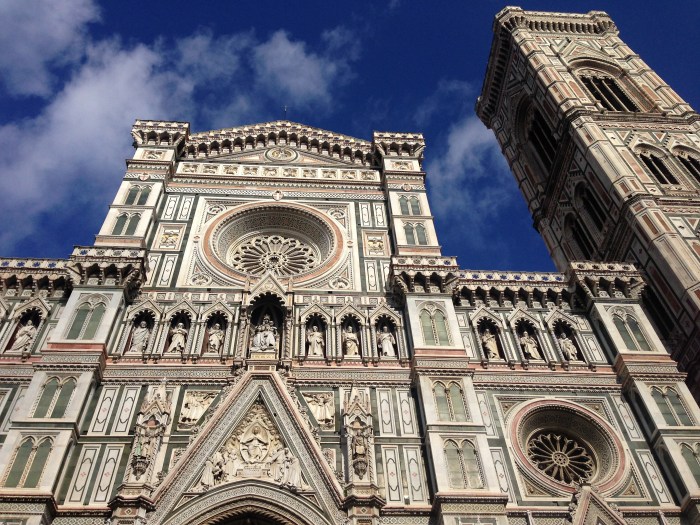
The increasingly unhinged rants of leftist intellectuals are the equivalent of the Cathedrals of Europe only far less useful or aesthetically pleasing: they’re a way to claim goodness, even if you can’t live it in your daily life; to buy your way to heaven despite the common sins of humanity.

But while the cathedrals were expensive, and overblown, and consumed the substance of a not-as-wealthy-as we are society, they were beautiful and more importantly, they didn’t gnaw at the basic values that built society.  They didn’t make it impossible for people to live productive lives, or to create the most objective good of all: a way for more people to live wealthy and dignified lives.

They did provide a refuge for the weary and aesthetic refreshment for the hopeless.

The lefty rants are vast cathedrals built of intellectual poo.  They stink up the air, and collapse in on themselves, leaving nothing but excrement in their wake.

It is time to rebuild.   It is time to reorient.  Given that all humans are flawed, and that society is built of flawed human beings, the only thing we can do is support the systems and the modes of living that have made the west wealthier than any other region and any other time.

People not living in abject poverty or being considered objects is an objective good.

Eschew the idiots calling hypocrite.  Do the best you can, and continue doing it, while the monkeys screech and fling poo.

Build under, build over, build around.

Be not afraid.

In the end we win, they lose.

Freedom

tramp

The first time I tried to run away from home, I was ten.  I took the essentials: my books, in a shoulder bag, and the family’s Siamese cat under one arm.  I think I made it halfway to the train stop down the street before mom caught up with me.

I no longer remember WHY I’d decided to run away from home, but it probably had something to do with either shoes (I liked work boots, mom didn’t) or the fact mom disapproved of how much I read.

Anyway, in retrospect it’s a good thing I didn’t manage to make a getaway.  It was, after all, unlikely anyone would give a ten year old a job, even a ten year old with her bag stuffed full of books that were much too grown up for her.  And besides, I didn’t even have a change of underwear.

Why am I telling you this story?  Because in a way it’s time to run away from home, again, this time with better preparation and supplies than that ten year old had.

No, you shouldn’t worry for my marriage or my family.  That is not what this is all about.  In fact we celebrated our thirty second anniversary yesterday (the second yearly anniversary, the religious one, and the one we consider “real.”  We had two weddings due to a complex matter of dealing with two sets of laws.)

I have recently, looking over the zombie career come to a conclusion that my husband’s oft-repeated, poliannish saying of “Everything happens for the best” might be right.  Oh, not in everything.  Horrible things happen in the world that cannot possibly be for the best. I love my darling, but he has a decided sunny outlook on the world. Probably good to balance my stormy weather, but not precisely right, just like mine isn’t most of the day.

But seriously, in the case of my career, and even accounting for survivor’s bias, he has something to it.

For instance, take the complete fiasco of my first three books, written as literary science ficiton, very well reviewed and a complete financial failure.  Well, okay, not complete, because they did (all of them) earn out, and were taken out of print the next day.  Somehow I suspect they weren’t meant to earn out.  Why not?  I don’t know.  Publishing houses play games, of which you and your book are only a minor part.  (Someday, eventually I’ll have a post called “lying with numbers.”)  Perhaps it was only the fact they’d given me a small advance, and therefore I wasn’t supposed to do well.

To be honest, there was no way I could do well, and it had nothing to do — even — with the tiny market for literary fantasy (which it is) but with the fact that my book came out, hard cover, by an unknown, with no discernible publicity (and for some reason without a “position” in their catalogue, more under “oh, there’s also this) a month after nine eleven.

Now I’m not accusing the publisher of planning and running 9/11 to ruin my career.  They didn’t actually have to.  If a book is slotted to “fail” there’s ways to make that happen without big national disasters.  The big national disaster was just “helpful.”

So the books failed, and the publishing house got someone willing/desperate to work under another name at beginners’ advances for eight books and five years.

Now I have no clue why they have books slotted to fail.  I just know they must have. The publicist who took up the first musketeer’s book as a side project, ran with it and made it a success was fired just before the third book was published with a cover so close to the first, it would fail.

I am, however, fairly sure, that at beginner advances the books still made them a lot of money (no, I don’t buy how much it costs to publish a book.  You see, I’ve done it myself now) and I suspect it was some accounting thing.  Plus a pliable, desperate author they could use as long as they wanted.

But if those books hadn’t failed, I’d have been “stuck” in literary fantasy, which, besides not paying much, I later found makes me depressed as h*ll in writing it.

As it happened, that failure at that time — and not, say, two years later, which would have happened, if I’d got two other proposals ready in time, and hadn’t been seized with an immense and unavailing lassitude that prevented me from writing ANYTHING for three months — allowed me to jump sideways into Baen.

Where Draw One In The Dark got the worst cover anyone has ever seen for a light, funny, Urban fantasy.  (Well, the paperback one is no great shakes, being a dark dragon, but the hard cover one was so bad I didn’t want to be SEEN with it, and friends who bought it stripped off the wrap-around.)

In the end, this was good, too, because it made me try my space opera, which is so far my most successful venture.

And the fact the statements for the furniture refinishing mysteries were wonky is good too.  They couldn’t buy more because that would cause them to admit they were a success.  And if they admitted so, they’d have to pay me more.  (No, seriously wonky.  The print run changed up and down according to need.  Yes, down.)  Sooner or later (turned out later) after years of paying me the absolute minimum to stay in their hands, they had to let go.  Which is good because the reprints did really well, and soon there will be a fourth.  Sorry it’s been delayed by a year of truly strange and stressful events, where I often didn’t have a half brain to give to writing.

I mean to write more indie books this year. Well, to finish three of them which are almost written.

For almost three years now I’ve been getting that feeling that it’s time to pivot my career to MOSTLY indie.  There are things I’ll do for Baen, and of course they own the DST series for the foreseeable future, so if I want to finish it, it will have to be through them.

My reasons are better defined than the ones for running away from home at 10, but nothing I particularly want to write about, for various reasons including friendship.  And anyway, I’m not running away from home completely.

At any rate the feeling goes well beyond anything happening or not happening in my career.  It’s mostly akin to the feeling that sent me careening out of the political closet: as though some great cosmic force, some — pardon me for sounding loony — something bigger than myself is applying boot to fundament and saying “do it now, or we make you.”  And the events do seem to be conspiring towards the “make you” which would leave me at a disadvantage and cost me relationships I’ve valued.

It seems to be something in the nature of a … cycle of life (cue Lion King.)  In the same way that the kids are growing, moving away, emotionally if not yet financially or physically (for one or the other) there is something pushing me to leave home, to tread the untried path, to set off into the sunset.

I might visit home, come back for Sunday dinner, hang out with my siblings, etc.  In fact, it will happen.

But I need to move my center of gravity elsewhere.

And like on that now rather distant day when I actually did move away from home, packing my bags, buying a ticket to NY, leaving behind everything I knew and all my contacts, and my innate notion of how things worked, I’m scared spitless.

Sure, I’ve done one indie book.  It did well.  But it was years ago, and it might have been a fluke.  To actually count on it for tuition (younger son) and food (older son) is…. ah… scary making.

To not try to get any more contracts and instead to say “I’m going to strike out on my own.  I’ll try to do one book for Baen a year, but that is not where I’m going to put my emotional investment” is …. probably insane.  Certainly foolhardy.

But there is that strong sense of “do it, or we’ll make you do it.”  And the things I’m made to do usually come about through disasters.  I have neither the time nor the financial room for disaster.

I do have — metaphorically speaking — my muse under my arm and my assets — craft and mind and imagination, the columnist gig at PJMedia — in a bag.

Of course we all know the tarot card for the fool is a person walking blindfolded off the edge of a cliff.  And that freedom is just another word for nothing left to lose.

And yet, I must try.  The feeling is that strong.

A year ago I told Cynthia Felice, it’s very sad that the indie opportunity came about now, when I’m in my fifties and tired.  Yes, I am that much of a fool, since I think she’s ten or fifteen years older than I.  She reminded me it would be much more difficult in ten or fifteen years.

And she’s right.  So I’d better try now.

Freedom is beautiful and terrifying.  But at some point one puts one’s work where one’s mouth is.

It’s a new year (almost.)  My resolution is to shift my center of gravity to indie.  And if my health holds out, that will happen.

Wish me luck.  It might not help to wish it, but I have a feeling I’m going to need it.


HRC: The Russians Did It – Amanda S. Green

vodka-937680

HRC: The Russians Did It – Amanda S. Green

As we near the end of HRC’s book, we finally get to see what she thinks about the Russians and the 2016 election. I could sum it all up with “Bad Putin, Worse Trump” but that wouldn’t make for a very interesting post. Besides, there is sooo much more there. Starting with the fact that, within four paragraphs, she blames our lack of faith in institutions like the media and academia, the Mercer family, the Koch brothers, Trump and Vladimir Putin for her loss. Again, what happens is everyone else’s fault but her own.

In 2016 our democracy was assaulted by a foreign adversary determined to mislead our people, enflame our divisions, and throw an election to its preferred candidate. (pg 326)

Standing on its own, that statement could be seen as a condemnation for what the Democratic National Committee did with regard to the Bernie Sanders campaign. Except HRC means the Russians, in particular Putin. Funny how she could sit there and dictate this with a straight face, knowing how her own campaign and the DNC leadership had done all it could to steal the nomination from Sanders and his supporters. But, as we’ve discussed before, the rules don’t apply to HRC. She is above it all, in her own mind at least.

Many Americans had lost faith in the institutions that previous generations relied on for objective information, including government, academia, and the press, leaving them vulnerable to a sophisticated misinformation campaign. (pg 326)

Gee, Hils, why have we lost faith in those so-called institutions? Could it be because they are no longer objective? It’s difficult to trust a press that is more interested in making the news instead of reporting it, a press that has shown its bias over and over again. Don’t believe me? Look at the recent headlines concerning our First Lady. As for trusting the government, you mean the government like the Obama Administration that is now under attack for the way it turned a blind eye to sexual misconduct on the Hill? Of course, you yourself are guilty of that, aren’t you, Hils? And as for academia, sorry, but I don’t want to trust the socialist leaning higher learning institutions to tell me how to help preserve the country I love so much. Nope, that’s not going to happen.

It is in this turmoil of mistrust that Putin, according to HRC, began his assault on our country, one aimed at making sure she didn’t become our next president. Why would he not want her sitting in the Oval Office, you ask. She’s happy to answer. “Our relationship has been sour for a long time. Putin doesn’t respect women and despises anyone who stands up to him, so I’m a double problem.” (pg 327) Not that she can point to anything other than criticizing some of his policies. But that, in her mind, is standing up to him.

Of course, this is also the woman who has delusions about her place in government after the 2008 election. If you ever had any doubt about it, this comment should erase it. “When President Obama and I came into office in 2009.” Think about that for a moment. On the surface, the statement seems innocent enough but then look deeper. The statement implies she was elected to office along with Obama, if not as co-president then as vice president. She wasn’t. She didn’t hold elected office and she didn’t come “into office” in that manner. She was appointed and had to be confirmed. That’s a bit different from having a mandate from the electorate. But she doesn’t see the difference, and that should worry all of us.

As does her belief that, had she remained Secretary of State, things wouldn’t have gotten worse where Putin’s concerned. In fact, she claims they went from “bad to worse” (pg 330) We’re not just talking about US relations with Russia but things inside of Russia itself. She spends several pages discussing how bad Putin is and how she could see it all. Funny, I don’t remember her spending too much time talking about what she would have done during those years. She didn’t come out and offer to help the Obama Administration deal with someone she saw as a serious world threat. No, she kept quiet and Putin only became the Devil on Earth when she needed another person to blame for her loss.

Of course, bad as Putin is, Trump is worse. Never, ever forget that or she will remind you. In fact, she writes about his “budding bromance” with Putin (pg 333). “He doesn’t just like Putin – he seems to want to be like Putin, a white authoritarian leader who could put down dissenters, repress minorities, disenfranchise voters, weaken the press and amass untold billions for himself. He dreams of Moscow on the Potomac.”

I don’t know whether to laugh or cry as I read that. She managed to get race into her attack on the President. She, who spent so much time attacking the white working class voters, basically saying they weren’t good enough to vote for her. A tactic that could also be seen as repressing a part of the electorate. And let’s not forget about her attacks on women who didn’t vote for her – repression and disenfranchising voters. She’s spent the entire book talking about how evil the media was to her and how there should be rules in place to prevent such bias in reporting. Couldn’t that be seen as weakening the press? And can anyone say “Clinton Foundation”? As for Moscow on the Hudson, hasn’t the DNC been trying to instill socialism in our land for generations?

Trump has a long-standing worldview that aligns well with Putin’s agenda. He is suspicious of American allies, doesn’t think values should play a role in foreign policy, and doesn’t seem to believe the United States should continue carrying the mantle of global leadership. . . urging America to stop defending allies who should be taking care of themselves. Trump said the world was taking advantage of the United States and laughing at us. (pp334-335)

Considering how Obama treated our allies, our real allies, and did so while Clinton was SecState, I find it ironic that she can write the above. Which allies are she talking about? The ones who share our ideals of freedom and trade? No. Absolutely not. She is more worried about those who stand with hands out, more than happy to take our money while plotting our downfall. I’ve no doubt she was one of those who decried Ambassador Haley’s speech to the United Nations, that bastion of money grabbers and anti-American sentiment. Well, to hell with them. We can’t afford to continue supporting those nations that want nothing more than to see the United States fail. I wonder, has HRC ever heard the adage, “Charity begins at home”? Perhaps it is time to turn our sights to fixing the problems here before we worry about what’s happening elsewhere.

Ah, but the blame game doesn’t end with Putin. HRC throws in WikiLeaks as well.

On July 22, WikiLeaks published about twenty thousand stolen DNC emails. It highlighted a handful of messages that included offensive comments about Bernie Sanders. (pg 339) Not once does she apologize for those offensive comments. Nor does she admit the cards had been stacked against Bernie by the DNC and members of her own campaign. Oh no, instead she complains because the leaks set off his supporters who were still upset he hadn’t won the nomination and claims the leak was to drive a wedge in the party, insuring Trump’s win.

“In my view, Assange is a hypocrite who deserves to be held accountable for his actions.” (pg 343) Am I the only one to see the irony in this statement? She wants Assange held accountable for the hacking of the DNC servers and the leaking of documents but she continues to do a song and dance to obscure her own role in the deaths of our people in Benghazi. She decries any attempt to hold her husband – or herself – responsible for Slick Willie’s sexual antics, behavior that from anyone else she would call sexual assault. She who erased how many emails off her server instead of letting someone else determine if they might have been germane to the investigation of her actions as SecState. But she wants Assange held responsible for his actions. Why? Because they weren’t what she approved of. That’s why. Go against the queen and face beheading, figuratively if not literally.

I felt physically ill to read the following: As Secretary of State, I was responsible for the safety of our officers around the world, and I knew that releasing those confidential reports put not only them in danger but also their foreign contacts. . . .(pg 344)

How dare she? How dare she! The only safety she is or has been concerned with is her own. She’s proven that time and again over the years.

HRC spends more than 40 pages laying out her case that she lost because of the Russians, because we were too foolish as voters not to see what really mattered. But she has a solution. First, we have to end “the war on truth”. Pardon me while I laugh hysterically for a moment. The thought of her recognizing the truth and not her own perverted version of it is more than a bit comic.

First, we need to get to the bottom of what really happened in 2016. (pg 370). That’s easy, Hils. You lost. You can’t admit it or accept it but you LOST and you still aren’t president. Ironic, isn’t it, that the media she’s been blaming for being so mean to her is who she wants to keep digging to make sure the “truth” comes out.

Second, we need to get serious about cyber warfare. Government and the private sector need to work together more closely to improve our defenses. (pg 370) That is one thing I can agree with her on. But I have one question for her. Why wasn’t she screaming from the highest rafters about this when she was SecState? Why didn’t she raise this concern after leaving office and before becoming a candidate? Why now? Oh, I know, because she lost and she has to find a reason why that doesn’t involve her own failings.

Third, we need to get tough with Putin. . .The Obama administration proved with crippling sanctions against Iran that this kind of pressure can force our adversaries to change course. (pg 371) That’s right, Obama’s administration was sooooo successful in dealing with our enemies. And she wants us to put what sort of sanctions on Russia? We’re to do this by strengthening NATO and helping our allies reduce their energy dependence on Russia. But she doesn’t say how – or how we’re supposed to pay for it because you know she wants the US to foot the bill.

Fourth, we need to beat back the assault on truth and reason here at home and rebuild trust in our institutions. . . Companies like Facebook, Twitter, and Google have already begun taking steps – adjusting algorithms, deactivating bot networks and partnering with fact-checkers – but they must do more. . . The mainstream media also has a responsibility to do more to debunk the lies infecting our public life and more directly hoe the liars accountable. (pg 372)

Let’s see. How have Facebook, Twitter and Google been doing? They’ve silenced conservative voices. I guess that’s a check in HRC’s column. They have no problem showing ISIS and similar groups torturing and beheading their victims but heaven help anyone posting against those groups. Another check as far as HRC is concerned. MSM – well, you know my feelings about the mainstream media and it bias. HRC doesn’t want the bias gone. She wants it strengthened and guaranteed to back her even stronger than it has before.

But that’s okay. They are “our institutions” and we, as voters, should trust them. Riiiight.

Except it is so wrong.

HRC lives in her own world, that much is clear. It’s a world I’m glad I don’t live in. It is a world where she continues to angle for power. She is not going to go gently into the night. This book, as well as her public appearances since the election, prove it. She can’t forgive the American electorate for not putting her into power. It’s our fault we denied her dream and she’s going to make us pay for it – one way or the other.

(You can find the other installments in this series at the following links: What Happened or How I Suffered for this Blog and had to Share, Grit and Gratitude, HRC Gets Caught Trying, A New Deal, A Square Deal or How She Wanted to be the Next Roosevelt, It’s All His Fault, Turning Mourning into a Movement, HRC: Idealism and Realism, HRC: Making History and HRC: Those Damn Emails.)

[I know this is hard to watch, imagine what it must be like to read the book.  If you want to help finance Amanda’s liquor bill, use this address  Send the woman a drink-SAH]

The White Lady of Christmas

THEWHITELADYOFCHRISTMASCOVER

(Sorry this took so long to finish.  The flu keeps kicking me back to stage one where writing becomes impossible, even when the story is in my head.  For those wondering what this is all about, this is a prequel to Alien Curse, starring little Art Arcana all grown up which I SHOULD be able to bring out sometime next month – SAH.)

The White Lady of Christmas

by Sarah A. Hoyt

© Sarah A. Hoyt 2017 – All rights reserved.


It was snowing – thick, white, fluffy flakes – when I came across the beauty with empty eyes.

This was rare, because it didn’t normally snow in LA.  In fact the last large snow storm worthy of the name had been in 1949, over a hundred years ago.

But then again, we were in the vicinity of the spaceport, and once the space magicians had started doing their thing in this neighborhood, the weather – and just about everything else – had gone to hell.  It was about as normal to wake up to a hundred degrees as to freezing weather on Christmas morning.  Or midsummer.

On the other hand, it made the neighborhood really cheap for a barely-surviving PI like me.  Lately frankly more attuned to the barely than the surviving.  The rent was late again, I hadn’t had a decent meal in three days, and the holes in my soles which I’d plugged up with cardboard were letting snow in to freeze and wet my shoes.  And there would be no jobs till after Christmas.

For some reason, cheating spouses, crooked business partners and evil warlocks might not take a break at Christmas, but those who wish to catch them seem to.  It’s as though for the duration of the season, people want to believe the best of everyone around them.  Which meant that people like me, who made a living off the worst in humanity starved.  I’d be going to the soup kitchen for Christmas dinner at this rate.

My mind was on my problems, my heart in the vicinity of the holes in my shoes, when I saw her.  She was tall and beautiful, like the lost dreams of youth, with pale blond hair, big blue eyes, and the kind of lips that made you think of frozen raspberries.

I thought I was hallucinating her, and stood, my eyes wide open, staring, as a man does who walked into a dream.  In this weather, she was wearing a form-fitting white dress of sparkling  white silk.  Snow flakes clustered in her pale hair.  Her eyes were thoroughly empty.

She stared at me without blinking, and then the frozen raspberry lips formed two words: help me!

I tried to say “with what?” but my throat was dry, and I couldn’t summon words.

She put her hand out and touched mine.  Her hand was ice cold. And then she was gone, walking very fast, past me, her heels clicking rhythmically on the pavement, somehow not at all muffled by the snow.

I’d seen those empty eyes before.  A PI comes across all sorts of things, but eventually we always come across necromancers.  My first case had been a necromancer who used the residents of entire cemeteries as workers in his factories.

For just a moment, under the unnatural snow, I considered running to St. Joe’s down the street.  I wasn’t very prone to religion, but there are things in this business that make even an atheist want to cross himself and bathe in holy water.

Worse, after the shock wore off, I realized that not only did I know what those empty eyes meant, I knew who that woman was.  Myrene Myrreile had smiled at me from a hundred movie screens, her expressive face reflecting whatever the movie plot called for.

The hair rose at the back of my head.  Someone in Hollywood was playing with necromancy.

***

There are many things a PI can do when trying to figure out who is breaking the law.  It depends on the law being broken.  But when it’s a magical law being broken, there’s only one thing you can do, and that’s to use your magical power.  Because even the simplest case of infidelity can involve illusions and cases of fraud can involve mind-manipulation.  So the only way to crack a big case is magic.

I have magic.  Don’t get me wrong.  I even had some instruction on how to use it.  Okay, it was a correspondence course, but so was my PI license.  All the non-magicians in the business were run off in the two thousand and twenties, when magic returned.

The problem is that if you use magic while you’re starving you might kill yourself.  And I wasn’t going to kill myself over a case no one was paying me for.

I could, of course, forget it all, and go in search of a meal.

But I remembered those empty eyes, and the dark lips mouthing “help me.”

So—

So I did what gumshoes did before they had magical power.  Incidentally, also, it might get me a meal.

I walked away from the vicinity of the spaceport.  The snow storm continued, which was strange.

You can’t get anywhere in LA on foot.  At least not far enough.  The skies were crowded with broom fliers.  There were magical carriages pulling passenger carts hurrying down the palm-lined boulevards.  Of course, I was limited to those boulevards I could take on foot. It didn’t seem to me like the snow was impairing anything, though it lent verisimilitude to the choir of Victorian children a Boulevard Magician had conjured up.

LA is full of these aspirants.  They come out to work for the spaceport as space magicians, or to work for the movies, but instead, they end up doing magic on the boulevards for thrown coins, or, of course, becoming PIs and living on the edge of starvation.

The Victorian children were very realistic, easily rivaling the magical effects in the movies of Art Arcana himself.  Little plump faces, and rich clothing, and singing about peace on Earth in a bubble of light in which you saw just a glimpse of Victorian London and behind it the whole yellowed and softened like a romantic vision.

The magician himself wore full Victorian gentleman’s regalia, waistcoat, watch chain, top hat and everything.  Only if you squinted really hard and used mage vision did you see, beneath the glamour of the suit, a very worn Hawaiian shirt and shorts.  He had to be colder than I was.

If I’d had any coins, I’d have dropped them in front of him.  As it was I said, “That’s amazing work.  The best I’ve seen outside the movies.”

He opened his mouth, for a moment as though to answer, then gave a little smile and bowed, slightly.

He really was very good.  For him, the dream of a studio seeing him and perhaps hiring him on the spot might very well come true, as it never could for the rest of us.

A block down from him, there was the hotel where I sometimes worked security during the screening and festival season.  They would be empty two days before Christmas, because few people chose to holiday then.

But the doorman there, Tom Michaels,  knew all the gossip, including the gossip from much better hotels, like those the stars stayed at.  I didn’t know how he did it.  Perhaps he ran a rumor spell on his radio and listened to all the gossip, like others listen to radio programs.

Or perhaps he just had a vast network of friends.

In a way I was one of them, on the far fringes, a guy he could count on for some hot gossip, and to whom he gave some information when needed.

He was at his post under the snow and greeted me with a grin, “Sam.  Long time no see, my man.”

I grinned back at him.  He was wearing his impeccable blue uniform, had a fresh haircut, and looked far more respectable than I did.  He registered this with “You look like you haven’t got much work recently.”

I made a face.  “You know how it is around this time of year.”

He nodded sagely, then shoved his hands in his pocket.    He pursed his lips, as though he were considering how much to tell me, then said, “I’d think otherwise, with the SBI in town and all.”

“The SBI?” I said, stupidly.  Yes, of course, I’d heard of the Supernatural Bureau of Investigations before.   But I couldn’t figure out either what the SBI would be doing in Los Angeles on Christmas Eve, or what that would have to do with me.

“Well, I thought you might be nibbling at the edges of the same case,”  Tom said.  He leaned closer and told me “They say—”  Paused, either hesitating or trying to entice me, to make me eager for his confidences.  “They say that someone up there,” a movement of the shoulder either towards Hollywood or towards heaven, which in this city might as well be the same, honestly.  “Has been playing at necromancy.  They say that all this is a result of that.”  He waved around at the snow.  “The weather magicians can’t fix the disturbance, and they got the SBI on the lookout for what might be causing it.”

Normally I would have questioned the idea that there was necromancy in LA.  Sure, all the other crimes, including enthralling women into sex.  But necromancy?

Necromancy takes more work, more energy, more sheer raw magical ability than almost any other magical art.  It is also, honestly, far more “wrong” than even lovespells or the other minor, inconsequential dark magic that has become common.  Most people feel when they’re transgressing with that kind of dark power.  They have to be half mad to start down that road, and because of the spells and the power draws involved, even if they aren’t, they will become so.

I would normally have said no one in LA could be a necromancer, because on a town that ran on gossip, we would have heard of someone who was that absolutely raving lunatic.

Only I remembered the woman in the snow, with her vacant eyes, and her lips like frozen raspberries, and I said, “Um.” And then, “Have you… That is, do you have any idea who that could be?  Because no one sane would be working with dead people.  And anyway, why work with dead people?  There are all sorts of people dying to get in the movies.”  As the words left my lips, I wanted to call the pun back.

Tom gave me a reproachful look, then shook his head, then told me, “No.  No, but…”

“But?”

“Do you remember Jim Fenton, the guy who used to do illusions for Art Arcana?  Word has it that the studio let him go suddenly, and he’s become a boulevard magician, working for the thrown pennies.

I didn’t remember Jim Fenton, as such.  I don’t think I’d ever met you.  I mean, I don’t exactly get invited to the stars parties unless someone has been stealing silverware and they want me to track it down.  Only in this town everyone is a little obsessed with the movie business.  It is what makes us different and special.  Without the movies, we’d be like New York with better weather and more Hawaiian shirts.

So we all sit a little longer at the end of the movies, and look at all the names on the screen, including the “second assistant to the third light magician” which, frankly is probably code for someone who fetches coffee and sandwiches.

I suspect we do it just in case we find ourselves out of town and someone asks “who’s that up and coming light and sound guy who works for Art Arcana?”

Only it’s more likely we want to know who comes into our office trying to hire us, or perhaps whom we’re serving coffee to, late at night at the diner.

So yeah, I’d heard the name Jim Fenton.  His magical effects had made Art Arcana stand out, have a plausibility and a realism that it hadn’t had since old Art Arcana Senior had started it.

And they had let him go?  That certainly indicated some sort of dirty dealing on his part.  No one would gladly part with someone capable of that kind of luminous and complex rendering out of nothing for anything short of a major liability.  I remembered the scene in Star Magic, for which he was said to be solely responsible – you know the one I’m taking about, the one where the big space battle takes place with hundreds of different spaceships, all moving in their own particularly way? – and whistled under my breath.  No.  Having let Jim Fenton go, they would have to hire about a hundred magicians to take his place.  And to get that many magicians to work together with any sort of coordinated effort was kind of like trying to get a hundred cats to pull a sleigh.  It might be theoretically possible, on force alone, but it wouldn’t be possible.  Not really.

So what would convince Art Arcana Junior, the owner of the studio of the same name, inherited from his brilliant father, to let their star magician go?  Honestly, at that level, Jim Fenton could have thrown scalding coffee in the face of the second assistant to the third light magician, and the kid would just be paid off to get medical treatment and go away.

And then it hit me.  It was the word luminous.  I’d seen the man back there, the one working the luminous illusion of the city of London in the time of Queen Victoria, and I’d thought he should be employed by the studios.  I had no idea what Jim Fenton looked like, but….

Out of my memory, I conjured an image of what the man looked like.  It was hard, because honestly, I was starving, and all I could get was his face, floating about two inches above my hand.  I had to apply all my effort to keep it visible, as it tried to fall apart into etheric wisps, but I managed it, just about, and managed to ask Tom, through clenched teeth, “This Jim Fenton?”

He looked surprised.  I also had the impression I’d miscued at least one exchange and maybe failed to answer one of his questions, as I pursued my idea.

But he looked at the image of the face above my hand and said, “Yeah, that’s Jim Fenton.  Why?…”  He looked at me with expectancy, as though hoping I had some juicy gossip.

I believe in the share and share alike system, so I said, “I don’t know yet, but… there might just be something I can do, you’re right.  I’ll tell you as soon as I know.”

He half put out his arm to hold me, as though he’d demand all the details right there and then, but I was already on my way back.

Now the bubble in which the boulevard magician displayed his skill showed a choir of angels, singing.  I realized the front one bore a strong resemblance to Myrene Myrreile.  I tried not to read too much into it.  After all she was the stereotypical, glamorous Hollywood blond.  Lots of people – and artifacts – resembled her.

Still it colored my voice as I said “Jim Fenton?”

For just a second, his illusion wavered, and I glimpsed his Hawaiian shirt under the illusion of the Victorian jacket, then he turned and said, “Yes? In a cold voice.

“What are you doing on the boulevard?” I asked.  “A man like you, with your skills?  I would think that anyone who could create the battle scene in Star Magicians—”

He gave me a dirty look.  “Can it, okay?  You know damn well Arcana has enough power in this town that if word goes out they won’t have you work for them—”

“Why would Art Arcana do that?” I asked.  “It seems to me that losing you would mean a loss in profit to them.  Surely Art is not insane?”

Jim looked at me, and for a moment his eyes were as wide and desolate as Myrene Myrreile’s in the storm.  But not as empty,  Behind his almost forcefully blank look raged a sense of fury, a sense of having been done wrong.  I didn’t even have to turn my magical senses on to see it – which was good, because as starved as I was, the magic would eat me – or Jim Fenton would, metaphorically speaking with his magic, considering that he had to be a considerable practitioner to create the effects he had.

The quick suspicion that he might have killed Myrene to acquire her magic came and went.  I didn’t even know the actress had any magic.  Sure, sure.  I hear you.  All of these Hollywood actresses, at least the ones good enough to have star billing have glamour at the very least.  It’s funny how they used to call it that, too, even before magic returned and was made scientific.

His face was working, “Why don’t you leave me alone?” he asked. “Most people don’t even recognize me.  I do okay out of the tips.  I’m not sure what you want with me.  Did Arcana send you?”

I gave him a half laugh.  “If Arcana had sent me,” I said.  “I wouldn’t be out here in shoes whose soles are bolstered with cardboard, and a thrift store suit, would I?”

He looked at me then.  Fully looked.  His gaze swept me from shoes to face and fixated on my eyes.  I didn’t think he was doing a full magical read.  At least I didn’t feel anything, but in my exhausted state, I might not.

“Then who?” he asked.

I sighed.  Any other time, any other place, in this city of illusions, I’d be afraid of saying it.  But this was Christmas eve, the one night of the year when it’s safe to speak of ghosts and ill omens.  I shrugged.  “I saw Myrene Myrreile in the storm.  She looked dead.  She asked me to help her.”

He looked again.  I felt faint scrabblings, like kitten claws working at my power.  This time he was doing a read.

He nodded curtly and made a gesture like closing an umbrella, which closed in the bubble of light and all the angels.  They stopped singing abruptly, mid note.  He grabbed my arm, his fingers like claws.  “Come on,” he said.  “I know a place.”

I felt a quick panic at the urgency in his voice, the bite of his fingers, and made as though to pull away.  He stage whispered me, “Don’t.  I’ll buy you a meal.”

By then my state of faintness was such that I would followed the devil himself back to hell for a sandwich and a glass of milk.

It wasn’t a sandwich and a glass of milk.  We took several turns, through several highly disreputable alleys, till we came to one where an almost empty diner sat, brightly illuminated.

Jim waved as we entered, and from the smile and nod of the man wiping down the counter, he was a regular.  He led me to a corner booth. The sign on the wall said the booth was reserved for parties of four or more people, but I didn’t think there was a great rush for tables.

The waitress arrived moments later, a perky young woman in a pink mini-skirt, who kept striking poses between words, as though she were hoping to be stopped for stardom.

“What.” Pose with pouting lips. “Can.” Pose with outthrust hip.  “I” Pose with pushed out bosom.  “Get.” Pose with hand on hip. “You.” Pose with shoulder-forward. “Gentlemen.”  Big smile as though she were posing for publicity photo.”

I resisted an urge to roll my eyes, which was made far easier by the smell of food, and the fact that food was right now serious business, judging from the way my stomach felt as though it were clinging to my spine.

Jim ordered for us, family style, he said, beef stew which was the special of the night, written on a blackboard behind the bar, then the server turned to me for “What.” Pose. “Will.” Pose. “You.” Pose. “Drink.” Pose.

I ordered coffee and asked for creamer and sugar on the side, because right then I needed all the calories I could get.  During a dry spell, two winters ago, I’d resorted to going into hotel lobbies that had a complimentary coffee machine, and drinking coffee with as much sugar dissolved in as it would take.

I started on the coffee with about half creamer and a lot of sugar, while we waited for the food.  Jim Fenton watched me put in ten packs of sugar and six creamers, then gave a look to the space behind my head where any halfway decent magician can see the power aura.  “Have you been doing magic on a boiled egg a day?” he asked, in a shocked voice.

I shrugged.  “Sometimes I can’t afford a boiled egg.”

He frowned.  “You know the risks.  That’s downright irresponsible.”

By which he meant that if a magician ran through his power, his power would eat his personality and vitality and leave him a dangerous power-wraith.  The thing about zombies eating brains?  It must have been a survival from a time when there was magic before – some researchers think that the Earth goes through phases on which magic works, when going through different regions in space, but no one really knows why the magic went away and then returned.  We are, however, morally sure that there was magic before now – because a magician who runs through his power and is eaten by his power does devour the mind of his victims, even if not strictly the brains.  And he is, in many ways, a zombie, that is a living body from which mind and soul have departed.

I didn’t tell him that, duh, some of us didn’t have the kind of power that allowed us to make illusions and hook in to the Hollywood gravy train.  However, I thought of it, and I must be weakened and low on protection enough that he sensed the feeling, if not the words of my thought.  “I know, I know,” he said.  “But if you came to Hollywood with thoughts of working in the movies, maybe it’s time—”

“I didn’t,” I said.  “I was born here.  My father was an illusions tailor, in the early days of magic in the 20th century.  You know, making sure that the stars had that extra dose of glamour with their clothes.  I actually never had any interest in the movie business, besides watching it, and of course, what you know if you live here.  My dream—”  I shrugged.

“Yes?” he said.

“It’s neither here nor there, and not likely to ever happen.  I stayed around here, not for the movies but for the spaceport.  I have this dream that one day I make it big enough that I can pay my colonist’s fee and immigrate.  Not likely to happen before I’m fifty, the cut off age for spacing.  But that’s my dream, and I haven’t been able to give it up.  I live in an apartment near the spaceport and I can watch the spaceships leaving for distant stars.”

There was something arrested in his expression.  “It’s a beautiful dream.  Mine is crazier.”

The server brought us our meal, and whatever else it was “family style” meant enough to serve a family of ten.  Jim Fenton ate a reasonable amount, while I ate enough for the rest of the family.  For a while we didn’t say anything, mostly because I was shoveling food into my mouth as fast as humanly possible.  Which is to say, very fast, because this human is capable of great shoveling.

I felt… Well, when you’re dangerously hungry your power feels like it’s unstable.  It gives you a tendency to cry a lot, and a tendency to feel like you’re walking some narrow dangerous ledge.  Mostly because you are.

As I ate I felt more and more stable, and finally took a pause between bites to say “Your dream?  To work in illusions for the studios?”

“No.”  He smiled.  “That was my dream once.  It was a good dream, and it left me with a very healthy bank balance.  But it’s not…  I found it doesn’t fulfill whatever it is.”

I paused again after patting my lips with the napkin, looking for a way to ask the obvious question.  Then I did, “Healthy bank balance?”

He laughed.  “Oh, you mean boulevard illusions?  Nah.  That’s not because I need the money.  It’s because I need the magic.  You know it’s a high.  You know you become …. Someone else when doing it.  I need to do it.  It also brings in a surprising amount of money, particularly during the holidays.  But the money isn’t….  Pardon me, I know it’s very important when you don’t have enough to eat, or when the dream of your life depends on it, but it isn’t enough.  No, my dream was utterly impossible.  I wanted Myrene Myrreile, you see.”

I had a vague memory that Myrreile was in fact, and had been for ten years, at least, Mrs. Art Arcana.  I knew it because it was considered one of the great successes among Hollywood marriages.  Ten whole years, and a little boy, Arthur Arcana the third.

“So that’s why Art Arcana kicked you to the curb?” I said.  “Because you were…. In love with his wife?  Having an affair with her?”

Jim Fenton opened and closed his mouth.  He was silent a long while, and I let him be while I polished off the beef stew and ate the gravy on bread.  His silence was not final.  It was like a pause in a conversation, as though he were trying to figure out how much to tell me.  He was probably taking in account the fact I was a total stranger, but the fact is that my power had been so thin and stripped that he must have got a full read into me, not just power, but personality and character too.

And now that I had some power I could squint and look at him.  He has a glorious aura of power, all around his head, flashing in yellow and blue at least two yards out.  No wonder he could make amazing illusions.  If he’d taken his power in another direction, he could have been a war magician, one of those they keep in the basement, in case they need to deploy the truly scary explosions.

“I was in love with Myrene,” he said.  “But she was in love with me too.  We…. She was too straight for an affair, you know.  She knew Art Arcana slept around on her, but she’s a good girl, from a farm in Pennsylvania, and she’s not about–  Was not about to compromise her honor.  Instead she started finding evidence of his infidelities.  She was supposed to file for divorce, and then we’d get married.”

“And she changed her mind?” I said.

“I don’t think so.  It’s just, one day she was supposed to meet me and she didn’t.  I saw her a lot at movie functions, and I got the feeling he was mind controlling her.  Her acting went downhill too.  All that amazing expression she’s know for?  It’s gone.  Though most of the critics don’t notice, because they always underrated her as an actress.  I took it for five years, then I tried to see her.  Privately.  I–  I broke into her trailer during the production of Some Like it Magical, last month.  Art Arcana caught me.  He threw me out and fired me.  And she, Myrene, just stood there, and let Art’s goons rough me up and throw me out.”  There was another silence.  I drank my coffee.  I felt as though I’d burst, but that was way preferable to being starving.  At least I hadn’t fasted enough to be sick when I first ate.  That has happened once or twice, and it’s an unpleasant experience and a waste of good food.

“Look,” he said.  “If she got out and got enough of her mind back to ask you for help, maybe that’s hope.  I’ll pay you handsomely for finding out what’s going on and freeing Myrene.”

I had a bad feeling.  I’d seen Myrene Myrreile in the snow, and I wasn’t sure what was going on was as simple as mind control.  Sure, it could be.  Some mind-control spells – Well, let’s say death is more merciful.  But what if she’d simply decided to give Jim Fenton the go-by?  What if it wasn’t at all what he had made it out to be, in this description and in his head?

“I can’t take the case in those terms,” I said.  “I mean, she might be free, for all we know.”  I raised my hand.  “Yes, it’s unlikely from what I saw and you say.  But it’s possible.”

“Right,” he said.  “Right.  He ran his hand backwards through his hair, and said, “Tell you what, I’ll pay also if you prove to me that she is staying with Art of her free will.  That’s all I ever wanted, was to make sure that there was no coercion.  But he just threw me out and blacklisted me with all the other houses.”

“A thousand up front, two when I deliver,” I said, fully expecting him to negotiate.

Instead, he reached into his pocket, brought out a leather pouch and counted out the money in the small change they’d thrown him for his illusions.  I once more cursed the fact that’s not the way the knack of my power ran.

However, even if I had to count fifty in small change, his money gave me the chance to rent a broom.  And a broom allowed me to fly through the snow-clouded air, to my fifth floor balcony.  I leapt off the broom, leaving it free to fly back to its stable, unlocked the balcony door and went in.

Because I inherited most of my father’s furniture, my one-bedroom is comfortable, if cramped and old-fashioned.  But I wasn’t interested in comfort right then.  Sure a thousand would take care of the immediate necessities, but if I wanted to pay my back rent, and keep the lights on another month, even near the spaceport, I needed the rest of the fees.

I pulled back my heavy sofa and an armchair better suited to a gentleman’s library in the nineteenth century, then rolled up the rug, to reveal a pentagram of power worked in inlay oak into the mahogany floor.  This, which must be a survival from the time it was built, in the nineteenth century and have clear nothing to do with magic, had been one of the reasons I’d rented the apartment.  It was easier to power up a pentagram permanently attached to my floor than to have to draw one in chalk every time.  Yes, magicians really are as lazy as you’re told.

I put the rug aside, at in the center of the pentagram, in the lotus position, my hands up on my knees, and I powered it up.  The glow of magical light extended from the floor up, surrounding me.  This meant I was protected.  Doubly so, since this was Christmas eve, but really that pentagram had seen so much use that I was pretty protected every time.

It’s important to be protected when you leave your body, because otherwise you’re going to be open to having your body taken over by anything that’s wandering by.  In Hollywood those were mostly shades of once great actors who had committed suicide, but I once knew this guy whose “vacant” body had been taken over by a fire demon.  I was part of the effort to trace him, and I heard when the police apprehended him, he had set fire to an entire city block.

So, leaving my body completely safe, I floated up and out of my body, looking down at me in the lotus position, in the middle of the pentagram.

Astral projection is a weird thing.  You still feel like you have a body, and are wearing exactly what you were wearing before, but you can do all those things you can do in dreams, like speed instantaneously some place, and find your way into locked rooms.

Oh, and you can be killed.  No, it’s not the old “Anything that kills you in a dream kills you in real life.”  It’s more that a sufficiently powerful magician can blow your astral body to smithereens, and after a short time your flesh body goes into a coma and dies.

As soon as I pulled away from my body, a process akin to struggling free of quick sand, I wished myself where Jim Fenton was.

There is never anything wrong with checking out your client, before you are fully committed to the case.

He had gone back to the boulevard, and was doing the angel illusion again.  Honestly, if he weren’t careful, the movie company was going to sue him for the use of Myrene Myrreile’s likeness.  But at least now I understood his compulsion to use her.

In astral projection his power pattern was more clear to me than when I was enfleshed, and it was truly clear and bright, with the faint golden glow about it that meant he had never even engaged in minor black magic like love philters.  A boy scout.

But it didn’t mean the boy scout wasn’t delusional.

So I wished myself at the gates of the Art Arcana mansion.

The thing is much admired by tourists, doing the obligatory broom tour of Hollywood.  Whole bevies of them hung around, over the mansion, even now, and I could hear a tour guide declaim, “The father of the current Arthur Arcana, Arthur Arcana senior was one of the pioneers of using whole magical illusions for movies, which allowed him to do not just fantasy and science fiction epics, but the sort of truly spectacular staging that couldn’t be done by real, live action means.  His Hannibal, famous for its battle with elephants would have caused him to run afoul of PETA, if—”

I tuned him out.  I tuned him out because even on this side of the gates – in spirit form, couldn’t really cross them without permission.  I risked disintegration if I tried – I could feel the stench of corruption, the feeling of something twisted and wrong.

It felt like…  Like inside the Art Arcana mansion there was a black hole of evil and wrong.  But it was the stench that overpowered me, the stench that told me what this was.  I didn’t know why the SBI hadn’t traced it, but I’d put my hands on the fire that Art Arcana was engaging in necromancy.

Perhaps it was because I had dealt with it before.  Once you “smell” the psychic stench of rotting corpse, you’ll never mistake it for anything else.

I shot up and above the mansion, ignoring and flying through the bevvy of broom tourists.  It feels a little tingly, but they couldn’t see me, and it didn’t hurt anyone.  Up there, looking down, I could see mommy, daddy and little boy playing in the yard in the snow.

Myrene Myrreile looked just as I had seen her, only in jeans and a sweatshirt.  Her movements weren’t right.  But what clinched it was that in my spirit form – never in human form – I could see her soul pinned to the body by unnatural meals, struggling and fighting to get free.  It was like those angels Fenton had animated, but with cuts and bruises from her struggles against the spells that held her unnaturally alive.

***

The SBI didn’t believe me at first.  Of course they would not.  I was just some nut off the streets.  Maybe I should have told Fenton first, and got him to accompany me.  Or maybe that would not have made any difference, since he was known to have a grudge against Art Arcana.

It was a very long 3 hours, as their magicians viewed my memories, tested my power, and finally looked at my power pattern for any evidences of madness or delusion.

At the end of it, they brought me sandwiches, and a tired-eyed man in a cheap blue suit who was some kind of captain or commander or something – judging from the way even the magicians called him sir – sat across the table from me, and started off by saying, “You realize going in your astral body into a place as well defended as Art Arcana Mansion is foolhardy?  There are a million spells that could have caught you and disintegrated you.  Which is why my men never got close enough to see what was going on.”

“I was safe,” I said.  “Though I’d eaten enough to power my magic, I’d been starving for days, so my astral self was… less material, for lack of a better term, than a normal astral body.  I knew there was a good chance the spell couldn’t catch me.”

“A good chance isn’t good enough.  You shouldn’t take stupid risks.”  He paused a long time as though waiting for me to promise him I wouldn’t, but the thing is that I don’t make promises I can’t keep.  Then he said, “At any rate we thank you.  We’re preparing an intervention force now.”

“I want to go along,” I said.

There was opposition.  There was a lot of opposition.  The man in the cheap suit and his superiors thought that I should mind my own business.  They wanted only professionals on the scene.

You’ve read about it in the newspapers.  In the end I convinced them that Myrene Myrreile’s soul had a special connection to me, and they let me tag along.

We broke into the mansion at midnight on Christmas eve.  This was calculated, because dark magic loses its power then.

The SBI magicians immobilized the guards, and I ran in, alone, knocking the front door down with a well-aimed kick – it was more for show than security, of course, the security being in the walls, the spells, the guards outside it – breaking the glass into a million pieces that fell like a glass cascade, making beautiful music.

I felt the SBI agents behind me as I reached the foot of the stairs.  Art Arcana reached the top at the same time.  “What in hell?” he said.

And before I could speak, the man behind of me, out of breath, said, “This is the SBI Mr. Arcana.  We’d like a word with you.”

He threw a fire spell at us.  I stopped it, mid-air.  It wasn’t very strong.  His corrupt power wouldn’t work on Christmas and besides it was done just to distract us.

Before I dispelled the thing with a puff of smoke, mid-stairs, leaving a char mark on banister and ceiling, he had run in the other direction.  I felt more than saw his rushing by again, in the hallway up pulling a blond woman in a nightdress by the hand, towards the right side of the hallway.  We heard a tinkle of glass.

There was a feeling, a very odd feeling indeed.  When we followed and reached the end of the hallway, we saw that he’d broken the window, and jumped through it, holding Myrene Myrreile’s hand.  Into the pool beneath.  He can’t have thought, as tall as the house was, that he’d survive the jump.  The fall alone, since the house was built on a hill and the pool was a good 100 feet below, would have killed them.  Or killed him and freed Myrene Myrreile from her counterfeit of life.

I remember them floating face down in the pool, hands linked.

But there are two things I remember more.  The first is the little blond boy who came running out of one of the bedrooms, as we turned away to go down the stairs.  He was maybe five, and he was crying for mommy and daddy.

I know the aftermath, the complex legal and financial convolutions that ended up giving Jim Fenton control of the Art Arcana studio – and caused him to send me a very large check, which will, in fact, pay my immigration to a colony, plus give me a good amount of start up money – and of all the Art Arcana money, if there was any.  It was said that Arthur Arcana Junior in his madness – trying to keep the wife who would have left him, and whom he’d murdered – had run through the immense fortune his father had left him and was essentially penniless.

I don’t know what happened to little Art Arcana. He disappeared into the federal orphan bureaucracy.  Magical orphans, particularly children of dark magicians are watched very carefully.  Blood calls to blood, and bad blood most of all.  But I remember his panic on that Christmas morning, as his – doubtless – very expensive gifts lay unopened under the tree.

The other thing I remember, which makes the whole experience worthwhile, was the vision in the sky above the pool, as a beautiful white angel with Myrene Myrreile’s face and vast immaculate wings rose to the sky, and smiled at me, and mouthed “thank you” before speeding on to her eternal home.

Maybe that’s worth a little boy’s orphaning.  I don’t know.  I know I freed my true client, the dead woman who asked me for help on Christmas eve.

Christmas morning dawned sunny and bright, and I went to the beach.

But not all the sunshine could erase the sadness in my heart for a great man driven mad by love, the woman he enslaved in an unnatural state, or the little boy left alone on Christmas morning.

Sometimes all you can do is free the captives.  It’s not enough.  Magic didn’t make humans into angels.  Just humans, with the same old sins and failings, the old hopes and dreams but now with the power to make them either wonderful or horrible.

And often both.