In Flanders Fields

sunset-815270

Some time ago I was talking to older son about some of my regrets.  As regrets go, mine aren’t massive.  I’m still married to the love of my life, I have two wonderful sons.

Are there things I could have done differently?  Many.  Some of them, of course, would require prescience, some only that we overcome the goofy fears of youth and take the plunge, such as moving to Colorado six or seven years earlier.  My heart told me that’s where we should be, but–  how were we to know?  Dan had never been here, I’d never been here and we knew no one here.  There was nothing but the yearnings of a little 8 year old in Portugal who was so ill informed she thought Denver was by the sea, but who wanted to move to Denver and be a writer, both unlikely experiences. It’s a miracle I took the plunge at all, and that Dan indulged me, let alone that we didn’t do it earlier.

In this case, I was telling older son about the bath we took on our starter home in Charlotte, NC, and how we should instead have bought the house we really wanted, which we decided was too expensive per square foot (but which was in a neighborhood that was gentrifying and going up like a rocket, so we’d have doubled our purchase price in the five years we owned that first house.  Besides its being the house we really wanted.)

And older son, who sometimes is wise beyond his years said, “Yeah, but you do what you can with what you know at the time.  You can’t make yourself know more, and you can’t be mad at yourself for what you didn’t know then.”

Which brings us to Memorial Day and Flanders fields.

I’ve come to have a strong desire to visit the battle fields of World War I.  Someday it will happen, if I live long enough.  Mostly because I’m conflicted about World War I.  Was it needed?  Was it the best we could have done?  Was it useful?

If Europe was going to end up united under a German aegis, couldn’t we have done it without killing the best of the youth of Europe?

WWI was the last of the good ol’ European wars where, periodically, for no reason at all, a country would go on a rampage.

And was what we lost in WWI so bad?  Compared, say to the Napoleonic wars?

Was the reason that WWI hit so hard the fact that it was a war you could take the train to, and one that the press made a spectacle of?

Or was it because it wasn’t — the Keiser not withstanding — a war not for king and country, but for country and state.  The first “industrial” state war, the foretelling of what was to come in the 20th century.

Would, had WWI not happened, Russian (to quote the prophecies of Fatima) “been allowed to spread its errors throughout the world.”

Would nothing like WWII have happened, or would it have happened harder, faster, from a great height?  Would the crazy ideas of racial supremacy and — ick — “genetic hygiene” quote even by the decent people of the early twentieth century have lead to something far more horrific than WWII, something backed by a united Europe that hadn’t lost its self-righteousness?

No one knows.

Were the stories of German soldiers committing atrocities throughout Belgium a fabrication of the press to bolster nations into war?

No one knows.

There is no “control world” against which we can test the decisions that were less than wonderful in results int his world.

They did what they could with what they knew at the time.  And millions of young men — somewhere between 9 and 11 million — marched away to defend their country, according to the best understanding of the world at the time, and their best understanding of what would keep their family alive and safe.

And they died.  They died horribly.  So many of them that those fields still give up human bodies.

And the innocence of Europe died with them, ushering in an era of mass murder by state apparatus.

Did their sacrifice help or hinder what was to come?  No one knows.

We know they fought and died for country, for home, for their culture, for decency and civilization.

In Flanders fields they sleep beneath the poppy fields, the best and brightest of their generation, waiting the final reveille and the final understanding, when they’ll know perhaps that their sacrifice was not in vain after all.

They did the best they could with what could be known at the time.

No one can do more.  May we, should it be required of us, have the courage to do as well.

Book Promo by Sarah and Vignettes by Luke, Mary Catelli and ‘Nother Mike

books-3289689

Book Promo by Sarah

*Note these are books sent to us by readers/frequenters of this blog.  Our bringing them to your attention does not imply that we’ve read them and/or endorse them, unless we specifically say so.  As with all such purchases, we recommend you download a sample and make sure it’s to your taste.  If you wish to send us books for next week’s promo, please email to bookpimping at outlook dot com.  One book per author per week. Amazon links only.-SAH*


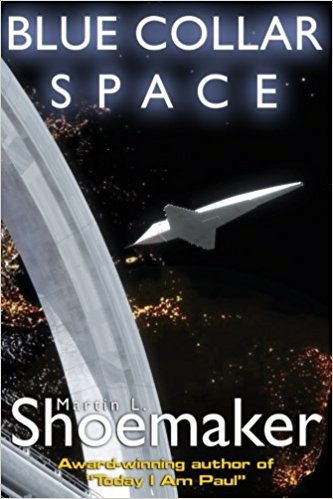
FROM MARTIN L. SHOEMAKER: Blue Collar Space.

51tyq9nieil-_sx331_bo1204203200_

The future doesn’t just happen… Somebody has to build it. Martin L. Shoemaker, author of “Today I Am Paul”, presents stories of ordinary people doing extraordinary work. Planning, exploring, constructing… living and growing and dying… across the Solar System. Includes these award-winning stories: Scramble (second place, Jim Baen Memorial Short Story Award, 2012) Unrefined (third place, Writers of the Future, 2014) Racing to Mars (first place, Analog Analytical Laboratory award, 2016) Plus seven more stories!

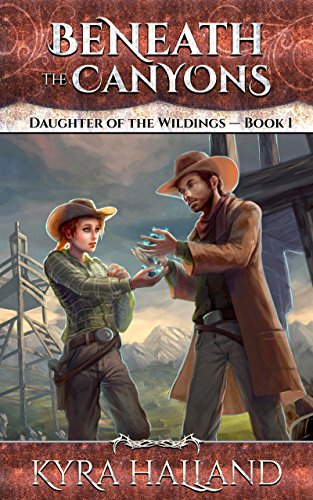
KIRA HALLAND:  Beneath the Canyons (Daughter of the Wildings Book 1)

51uytuc22tl

A gunslinging mage. A rancher’s daughter with a deadly secret. And a renegade wizard with the power to destroy them all.

Silas Vendine is a mage and a bounty hunter, on the hunt for renegade mages in the sparsely-settled Wildings. When he rides into the town of Bitterbush Springs on the trail of strange, dark magic, he lands in the middle of a deadly feud – and discovers that a local rancher’s daughter is hiding a dangerous secret.

Lainie Banfrey has been taught all her life that wizards are unnatural creatures with no heart and no soul. If anyone finds out she has magical powers, she could end up on the wrong end of a hanging rope. But when a gunslinger shows up searching for the man who has brought Lainie’s hometown to the brink of open warfare, she learns that they share the same secret and agrees to help him.

As they find themselves falling for each other – an attraction forbidden by the strict laws of the Mage Council – Silas and Lainie must find and stop the renegade mage before the dark power he has unearthed destroys everyone who makes the Wildings their home.

Beneath the Canyons is the first book in the innovative Daughter of the Wildings fantasy-western series. If you love magic, adventure, and romance in a unique setting, come discover the wonders and mysteries of the Wildings today!

Contains language, violence, and mild to moderate sensual content.

FROM SCOTT PALTER AND MIKE ROHDE: The Reich Without Hilter: Volume 1: The Falcons of Malta (The Reich Without Hitler).

The Reich Without Hitler series explores a world where, in late June of 1940, Germany is ruled by a mixed Nazi-Army junta under the new Führer, Herman Göring. It starts as our recognizable World War Two and proceeds in different directions to create something new and unique. In the Falcons of Malta, we take the war to Malta, the start of a major campaign in the Middle Sea. The book covers both the high-level strategy and one company of the Nibelungen Legion, a new service formed after Hitler’s death. Our merry band of freebooters will reveal the picaresque adventures that war can be. We even get a wartime Romeo and Juliet. Strap into your glider and come along for the ride.

[For some reason these authors have no cover.  If the authors read this and wish to have a cover, please email the promo email, I’ll contrive.  While at that this book was sent in by a fan who sent in two books.  In the future, guys, ask the author before sending it.  I know the other author wouldn’t want her book associated with this blog.  (Yes, I know, but there are reasons for this, and I even respect them.)]

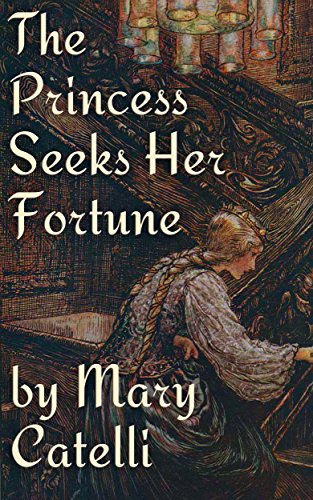
MARY CATELLI:  The Princess Seeks Her Fortune.

61fukrurtvl

In a land where ten thousand fairy tales come true, Alissandra knows she is in one when an encounter with a strange woman gives her magical gifts, and another gives her sisters a curse.

And she knows that despite the prospects of enchantments, cursed dances, marvelous birds, and work as a scullery maid, it is wise of her to set out, and seek her fortune.

LA GREGORY: Hawkwing: A Novel of the Bitterlands.

51nsj1gn-ol

Kestrel’s land is scarred in ways its inhabitants cannot begin to understand, built on long-poisoned earth and menaced by twisted plants and animals. Farmers, hunters, and magic-users fight a long battle to create safe havens and reclaim lost ground, but their casualties mount over generations.

Kestrel knows little and cares less about the patterns that shape her world. She’s a shapechanger and healer who has spent the handful of years since reaching womanhood cleansing the wildlife of her blighted land with medicine and magic. Sure of her place and confident in her skills, she takes care of her own and doesn’t poke at things that don’t concern her. But when she returns from a routine journey with her brother to find her home ransacked and empty, Kestrel must gather her remaining family and search for new allies before old magic and older hatred rob her kin of their freedom, their lives, and possibly their souls.


Vignettes by Luke, Mary Catelli and ‘Nother Mike

So what’s a vignette? You might know them as flash fiction, or even just sketches. We will provide a prompt each Sunday that you can use directly (including it in your work) or just as an inspiration. You, in turn, will write about 50 words (yes, we are going for short shorts! Not even a Drabble 100 words, just half that!). Then post it! For an additional challenge, you can aim to make it exactly 50 words, if you like.

We recommend that if you have an original vignette, you post that as a new reply. If you are commenting on someone’s vignette, then post that as a reply to the vignette. Comments — this is writing practice, so comments should be aimed at helping someone be a better writer, not at crushing them. And since these are likely to be drafts, don’t jump up and down too hard on typos and grammar.

If you have questions, feel free to ask.

Your writing prompt this week is:agreeable

Basing Characters on Real People by Amie Gibbons

*Hi guys, I’m up to my behind in alligators.  They’re little baby alligators, but all the same. Amie Gibbons gave me a post I couldn’t do since, except for some shorts, etc. I get my characters for free and they’re not based on anyone. – SAH*

5192hyklswl-_sy346_

Basing Characters on Real People by Amie Gibbons

My usual disclaimer, none of this is meant to be legal advice. Do not take it as such. If you want specific legal advice, hire a lawyer. I am a lawyer. I am not your lawyer.

Okay, now for different disclaimers 🙂

We all know the disclaimer, “Any resemblance to actual persons, living or dead, is completely coincidental.”

Yeah, that one. It’s in books for a reason. Does putting this at the beginning of a book keep you from being sued?

Of course not!

There are no magic words that block a lawsuit!

Anyone can sue you at any time for anything. The only questions are how long it’ll take you and how much it’ll cost you to get it tossed out or defend it.

So when can you use someone in your fiction? We all base characters on real people and everybody knows it. Well, first of all, if you want to use someone’s name, ask them!

I know, concept.

But those are usually friends, fans and beta readers who ask to be tuckerized or redshirted. They volunteer their names and find it flattering to be in there as some minor character, or even a major one, and it’s even fun for them to be killed off in the books.

How about when you want to get back at a bad reviewer or a family member or an ex?

Thennnnnn we might have an issue.

The famous example in my circle is Joe Buckley. He was some guy who gave (I think, but don’t quote me on which author it was because I can’t quite remember) John Ringo a bad review, so Ringo started killing him off in inventive ways in different books, then other authors in the circle picked it up, until killing off Joe Buckley was a trope in mil scifi and even urban fantasy in our crowd.

No clue how he got to do that besides asking the guy who left him a bad review if he could kill him off. I’m honestly betting that’s how it started. And the reviewer was probably flattered to be asked, even though he’d left a bad review.

So, let’s say you ask and get a hell no (which would happen in most situations where you’re doing it to get back at a personal connection) and you still want to use them, as in, their name.

Just don’t.

I know. I know. I am right there with ya. I have an ex I want to write in by name and kill off sooooo bad, and I can’t because he would sue my ass. No really, he’s a lawyer, that’s pretty much our default opening gambit 🙂

And you’re probably thinking if it’s fiction, then isn’t it fine, because everyone knows it’s not real?

Nope. Because that’s still invading their privacy.

And if it’s fiction based on real life events, or a non-fiction book, and everything you’re saying is true, you’re probably thinking it’s fine because it’s not defamation if it’s true. Again, that’s true, it’s not defamation, but it’s still invasion of privacy. Which is a cause of action someone can sue you for.

So what can you do? Well, there’s an article here http://helensedwick.com/how-to-use-real-people-in-your-writing/ that I looked up that has some guidance.

Basically, if you base it on someone who hasn’t given permission, do not use their name, and make sure the character is different enough that they couldn’t say it was them for sure in court. I mean, technically everyone could point to a character somewhere and say there are similarities, so again, they could always sue, but they probably wouldn’t win if it wasn’t so blatantly obviously them.

But again, won’t stop them from suing your ass.

Especially if they are lawyers 🙂

I have characters based on friends, family, exes, etc… but they are different enough that someone who knows me and the person the character is loosely based on might guess there’s some basis on that specific person, but then again, those characters could fit thousands of other people too. And the characters are different enough that someone who knew the person wouldn’t even think of them unless I told them I based a character on that person. And even then, it’s just fiction, meaning no one knows what in the book is based on real events, if anything, and what’s completely made up.

So, read the article, then think it through before you use your ex/bad reviewer/family member who stole your barbie when you were five in your book. Don’t use their names without permission (no, really, just don’t do it, and if you do get permission, get it in writing just to be safe), and make the character different enough that someone who reads the book and knows them won’t automatically put two and two together.

Happy writing!

And don’t forget to check out my new book, Psychic Spiral, the 5th in my paranormal mystery series about spunky psychic Ariana Ryder, and the rest of my books here.

When Your Eyes or Ears Lie to You

METOOSHEEP

This is not some great philosophical post.  I spent yesterday cleaning and I get a little loopy when I’m on my feet and carrying things for an entire day.

Unfortunately not quite done, and need to finish this morning, so I can catch up on the work for pj (and fiction) this afternoon.  Yes, my life is so exciting I clean house on my day off.  Actually I don’t mind it, as it’s exercise and it allows me to listen to audio books.  Not to say it won’t change in future when our sons fly solo monetarily.  I’d much rather pay someone to do the cruddy work and get my exercise by going for a nice stroll with my husband.  But for now, it is what it is and the time I “take off” to clean has to be paid for with extra work.

Anyway when I was really loopy yesterday I read a label on a bottle three times, because I wanted to know why the manufacturer was bragging about being able to spray angels.  Then I realized it actually said “Sprays at all angles.”

When this happens with songs, it has a name, Mondegreens.  It comes from mishearing “and they laid him on the green” as “And the Lady Mondegreen.”

The other famous one is for Silent Night with “Round The Young Virgin” becomes “Round John Virgin” confusing kids as to why his last name is Virgin.

My own personal best was with Five For Fighting Superman (Which makes me sputter almost as much as the despicable Imagine) “I’m only a man in a funny red sheet” became for me “I’m just a man consorting with sheep.”  And until I one day was really miffed and started expounding to Dan on the inappropriateness of the stupid lyric I didn’t realize I’d misheard it.

Yes, Dan laughed.  Yes, in our house that song is now known as the “consorting with sheep” song.

So, it’s Friday, I have a ton of stuff to do and I need some amusement.  What is your favorite Mondegreen, either committed by you or someone else?  Come on, don’t be shy.  Nothing can be much worse than consorting with sheep!

Trekonomics: Now it all makes sense – by Amanda S. Green

graffiti-1015952

Trekonomics: Now it all makes sense – by Amanda S. Green

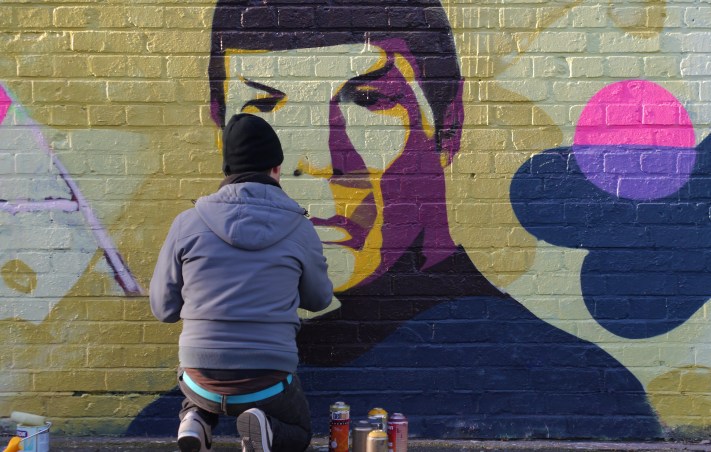
OMG, now it all makes sense. After so long, I see the error of my ways. Fandom (with a capital “F”) isn’t really trying to keep out those who aren’t a member of the cool club. They are simply trying to bring us all into the reality of Star Trek. They simply haven’t figured how to communicate that so-s-great message to the rest of us. (Yes, my tongue is firmly planted in my cheek even as I type this.)

Last week, I pointed out that part of the reality of the world of Star Trek was that “the compulsion to work to ensure one’s survival has simply vanished.” Reading that sentence out of context can lead one to assume it means the world of Star Trek is one where people simply don’t care if they live or die. That there is no longer that instinct to do whatever is necessary to keep yourself or your loved ones alive.

In context, however, it deals with a reality – if you can use that word when talking about Star Trek – where automation has reached a point where our every need is basically taken care of for us. We don’t have to work the fields because replicators can whip up anything we want out of thin air. We don’t have to work to maintain the infrastructure because there are machines to do that for us as well. Life is easy, at least when compared to what we have today. It is, according to Trekonomics, a time of “post-scarcity”.

In this world, competition has been completely transformed. “Reputation and honors, the esteem and recognition of one’s peers, replace economic wealth as public markers of status.” Think about that. Where have we heard something similar and not so long ago? Oh, they don’t come right out and say it but doesn’t this remind you of the mindset of those who continue to sling mud at Sad Puppies? If this emphasis on honors and “recognition of one’s peers” is what really matters to the general populace of the Star Trek universe, does that make the rest of us, the outliers, the members of Star Fleet? After all, Kirk and company were the outliers, the ones who didn’t exactly fit into the rest of society and who, therefore, went off to adventure in space.

Here is where I start grinding my teeth and going, “No, no, no and hell no.”

“But these are largely optional, as there are no material penalties or disincentives for those who do not seek nor attain higher status.”

I guess this is a way to say it’s okay to never get out of your parents’ house, to never try something new or to take a risk. Oh, wait, you don’t have to do any of that in the Star Trek universe because everything is taken care of for you. It is a Utopia. Except, in most Utopias, there is that underbelly that is always hidden behind the curtain or closed door. Whether it is a lower class that is kept hidden below, used and abused to keep the machines running so the “citizens” can enjoy their lives of leisure or a society so brainwashed everyone walks in lockstep with one another and anyone who doesn’t is seen as an outcast, it is there. That is something those who try to convince us of the joys of socialism forget – just as they forget that defeating income inequality begins at home and not just at my home or yours but at theirs. (Yes, Bernie, I’m looking at you.)

After once again noting that Star Fleet officers (remember, there are no enlisted because this is the age of enlightenment) are the outliers, Manu Saadia writes, “In the background, however, the vast majority of the Federation’s citizens are not nearly as driven or exceptional. Or rather they are, but in a more pedestrian way. They all go about their daily lives without much concern or worry, safe in the knowledge that they shall never want for anything.”

I don’t know about you, but that sounds like stagnation to me. It also sounds extremely dangerous on so many levels.

Last night, I was reading the e-arc of David Weber’s latest novel, Uncompromising Honor. Toward the end of the book, several of the main characters have gathered and are discussing the current situation the Star Empire of Manticore and its allies find itself in. One of them notes the danger of becoming complacent in the face of their own technological superiority over their enemy. Another character then reminds them of how that complacency reared up and bit them in the collective ass not that many years ago. They had been so sure their higher tech levels meant the enemy couldn’t hit them, much less hurt them and they’d been wrong. Now they had to remember a lesson that had been very hard learned.

Yet, what do we have in Star Trek? According to Saadia, we have a civilization so complacent that their every want and need will be taken care of that they don’t have the drive – the need – to continue improving their lives and, as part of that, their security. Which makes absolutely no sense when you have the Klingons, the Romulans, the Borg and so many other species who 1) have spaceflight and 2) aren’t as “enlightened” as the members of the Federation.

As I wrote earlier, “no, no, no and hell no.”

Saadia does admit Trek raises several economic problems – duh. Let’s be honest. Trek, like so many fantasy novels, has so many economic problems that it isn’t funny. But what are the problems Saadia sees in the Trek universe?

  1. What happens to innovation and scientific progress when there is no longer financial reward?
  2. How do you avoid the pitfalls of resource depletion caused by overconsumption in the age of replicators where everything is freely available?

I would add another question, one that impacts not only economics but society as a whole. How do you avoid becoming that society we saw in the original Star Trek where the people in the Federation become so complacent they do whatever their computer overlords tell them, including walking peacefully to the death chambers because they have been determined to be casualties in a war that is fought not in real life but in computer databanks without the horror and the pain of a real war?

This removal of the human part of the equation is what bothers me the most when you start talking about Utopias, be they ancient fantasy Utopias or the so-called Utopia of Star Trek’s Federation. Next week, we’ll look at the role of technology in Trekonomics and its so-called impact on economics, both in the Federation and in today’s world.

[Go buy the woman’s books – SAH]

They Don’t Know When to Stop Shoving

question-mark-96288

To every action there’s an equal and opposite reaction.

This is not just physics.  It’s life.

I mean it doesn’t even need a second person involved.  If I push too hard on the writing/working, I’m going to get sick, and it’s going to cost me way more time than it would have taken if I just took the occasional day off now and then.  (Yeah, despite that I never learn.  Part of it is that the twenty year old in my brain doesn’t get the body is older.)

But it turns out that the Ancient Greeks were right.  Not about that, no.  Or that.  And good Lord, definitely not that.  But they were right about the whole balance thing and middle of the road and stuff.

The problem is that most people interpret that need for balance as “there is no right or wrong, so we should both give a little.”  Which is stupid, because there is right and wrong, particularly about what to do to societies and economies, and how to run both (to the extent they can be run) those and industries, etc.

Watering the right way with half the wrong way is not going to work well.  Most of the complaints about how capitalism “just doesn’t work” aren’t about capitalism, but about “capitalism” watered down with socialism.  And the problems it causes are …  well… those of socialism.  Including adulterated markets, excluded people, and general economic misery. Which then the “right thinking” people suggest more socialism to solve, and that taken in half…  This is known as “How to kill an economy in slow steps.”

No, what you need balance in is not “middle of the road decisions” but “voices.”

Because you know, there’s wrong or right, but there’s always the chance we’re wrong.  I know, I know, unpossible, but it’s possible.  Or at least that we’re interpreting something wrong.  And sometimes dissenting voices, no matter how crazy, show us where we went off the rails.

Look, everyone has different experiences, and sometimes it causes them to know things we don’t.

Take the whole open borders thing.  As someone who has acculturated, I can say “Oooh, bad idea.” And I have some (if not indisputable) authority to do that from.  Authority that’s as little appreciated on the left as among Libertarians. And yet, I KNOW it would be a bad bad idea, and I know the results are not what they’d expect.  Not because acculturation is impossible, or because culture is genetic, but because it’s very, very difficult, you have to be wholly committed to it, and the more people you ask to do it, the greater the failure rate.  (Particularly in an anti-assimilation culture, but that’s something else.)

Or take Europe.  Our left is convinced it’s all that and a pair of new skates.  That’s because they either visit or go on local reports from either a biased media, or the people who always lived there and only know the US from (also biased, against us) movies or TV.  This is why they’re so ready to trade all we have for the European model.

But I lived there long enough to know the tragedy of the missing squid farms.  Yes, they have things we don’t have, like “security” and more “equality” of outcome, for those who consider that a plus.  The problem is it’s done at the expense of innovation AND opportunity, particularly for young people.  Europe ain’t bad, for an old age home, but I wouldn’t want my kids growing up in it.

Anyway, these things I know because I lived them, and anyone with SOME honesty has to stop and at least consider them before dismissing them because my experience is too particular or whatever.

The problem is the left, partly because they’re an heresy of Christianity, and therefore religious in nature, as their “ideal systems” get disproved has hardened into a position of not wanting to hear any other opinions.

This is not just uncomfortable for the ones silenced, it’s a problem for the left too.

Look, this is akin to turning off your fire alarm because your cooking keeps setting it off.  One day you’ll be tired enough and leave something on on the stove and go to bed… and die of smoke inhalation.

What the left has done, partly to keep their converts who as I pointed out are mostly young and mal-educated, is to stop the fire alarm.  Or at least to stop every contrary opinion they can and de-legitimize the others.

Last week, when I was arguing from something I KNOW a lefty told me to stop watching Fox news.  Or someone at Fox news.  Because he’s been told all disagreement comes from Fox News which is not legitimate.  Or something.

I don’t watch Fox News.  We haven’t had a TV in the house for close on to 20 years.  Dan watches some movies and series on the computer, but that’s it, and even then it’s not a regular thing.  And at any rate, what I was telling the idiot was something (I THINK in Europe) which I’d experienced myself

But they’ve turned off the fire alarm.  That means we don’t get to salvage (read pick away) their newly indoctrinated and misinformed, true.

But it also means they missing the size of the backlash forming.

Again and again, we see their “leaders” say things that beggar belief.

Hillary Clinton thinks she lost, not because we couldn’t trust her further than we could throw her lardbutt, or because even were she and Trump the same (turns out, no.  Interesting) that she was the one the press covered for and fawned on, and thus less capable of being checked, but because she’s insufficiently SOCIALIST.

Novelist after novelist, sports team after sports team, public figure after public figure come out and solemnly declare they don’t want anyone to the right of Lenin to buy them/support them/help them.  One after the other they tell more than half of the country that we’re bad and evil, and call us a lot of things we not only aren’t but despise.

And then they wonder how they got Trump.

They got Trump because they silenced the fire alarm.  They told my kids, even in high school, after Obama’s win that there would never again be a Republican president.  They told everyone from their publications that the Republicans were now a small regional party.  They published magazines with covers proclaiming “We’re all socialists now.”

They thought they were safe picking (yes, she is crooked) Hillary, because they were destined to win every time anyway, and it was her turn.

They turned off the fire alarm.  Their house is full of smoke and they don’t notice.

This is a public service announcement.  In the culture wars, in economics, everywhere, stop pushing.

Every action has an equal and opposite reaction.  You guys called us “reactionaries” but apparently have forgotten what that means.

I think the socialist way is dead wrong.  I think the internationalist way is not only wrong but will kill the west.  I think that feminism as it exists now is insanity.  I despise the idea some races are better than others, which is why I oppose stupidity like “White Privilege.”

But the left is pushing these ideas so hard the reaction that is starting to build is horrific, and if it reaches its full blow up, will take with it things like acceptance that the weaker have a right to live, or that charity is a good thing, or that women aren’t mentally handicapped children, or that we should judge the individual, not the skin color.

It will in fact destroy western civilization as we know it, as effectively as the full blown progressives would destroy it.

I don’t want that, you see.  I believe in life and liberty and the pursuit of happiness.  For everyone.  And I believe in being left alone.

So… we need to take off our gloves and get them to stop pushing.

Before it’s too late.


Let My People Be

reading-2557256

So I was bumping around the internet, minding my own business, (mostly because yesterday I woke with a mega back-pain apparently having pulled something in my sleep.  Today it’s gone, so I have no idea) when I came across this tweet (on an article, at Victory Girls Blog, not on twitter.  There’s reasons I don’t go to twitter):
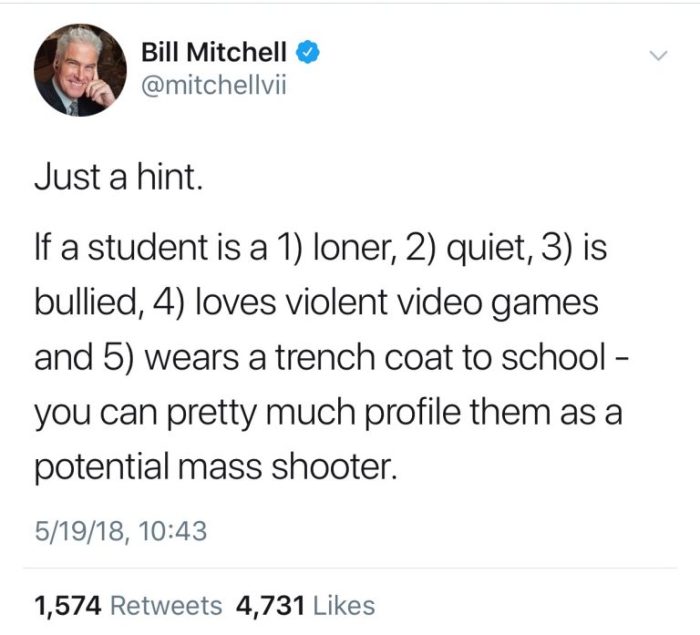
idiot

Dear LORD.  The stacked stupid in that tweet could render everyone in the world subnormal.  I think I lose 20 IQ points every time I read it.

The author said it wasn’t helpful, which of course it isn’t, but it’s also like saying “shooting a patient who is bleeding out won’t cure him.”

Let’s unpack that twitter, shall we?

First of all, can everyone in the audience who fits almost all of the characteristics or, if you change “trench coat” for some other kind of “strange” apparel fit all of them at one time in their schooling, raise his or her hand?  Good, good.  I’m going to assume a good portion of you raised their hands (more on that later.)  So… how many of you were even potential mass shooters or another kind of murderer?  I’m going to guess maybe one of you made elaborate plans to bomb the school, but never actually took step one to do it.

So, now, ask yourself, how would you have changed if, from the first day of school you’d been treated as a potential mass murderer?  Yeah… like we weren’t shunned and mistreated enough!

Now let’s take his “characteristics” from the top.

1- loner.

Uh.  Apparently it never occurred to this guy that “loner” goes both ways.  Yeah, sure, those of us of an introvertish (my profile is weird) disposition won’t be found at the center of a group, but most of “us” that I know were shunned more or less from the first day of school.

Why? Who in heck knows?

We could go with the science fiction explanation: most of us “odd people” seem to be on top of the range, or a little higher, for Neanderthal genes.  Maybe something about us activates the defense circuits of people who are less Neanderthal.

(Btw I like this idea that what makes us odd is Neanderthal genes.  No need to explain how Neanderthals went extinct, then.  “Hey, Ogg, wanna make baby?” “Not now,  Oggina, I’m trying to perfect new type of arrowhead.”)

But there are tons of other explanations.  The very life events (undoubtedly compounded by a bend of mind) that made us “odd” also made us give all the wrong cues to kids our age.  Like, for instance, the fact that I was a child in a family of adults and that I’d spent most of my childhood in bed with an illness or another (Yes, this has been lifelong.  Comes from being born premature) meant that my talking style was “weird” and my physical abilities, including coordination about those of a two year old.  At the age of six or so when most groups work on instinct, the amazing thing would be if I WEREN’T shunned.

My older son? Outsized.  The was over three feet at age 2, and by the time he entered elementary he was probably around 5 feet.  (If he’d grown to a normal age, instead of stopping growing at 12, which he says is because he became a caffeine addict early, he’d probably be a giant.) Add to that the “grew up surrounded by adults — and bookish adults — and favorite pastime is studying Rome” thing.  Just the way he looked and talked made him an outcast.

ETC.  You could come up with reasons for each of you I’m sure.  But the thing is none of us went to school going “I’m gonna be a loner.”  We — I remember, yes — went into school all bright and eager because they’d told us we’d find friends and “have fun” there.  And within a week we knew no one wanted to be our friend.  (Or if we were lucky one or two people wanted to, but certainly not the main group.)

So, is being a loner a reason to profile someone as a mass murderer?  Or just to wonder what we’re doing wrong, in terms of schooling, that some little kids find themselves in this situation.

BTW we have found that those of “us” can be identified by the habit of “Ledge walking” during recess.  Find a ledge.  Balance back and forth across it.  This works for kindergarten or first grade, before we realize we can just bring a book to read during recess.

2-Quiet

SNORT.  Sure.  Because a student who isn’t a loner is going to talk to?  And if he’s walking around the playground waving arms and having conversations with imaginary friends, wouldn’t that be worse?

Listen bub, some of us learned to keep our conversations with imaginary friends inside our own heads.

I’m not even sure what he thinks he means.  But apparently, the lone student who walks around shouting at the air isn’t a potential murderer.  This is good to know.  Instruct your kids accordingly.

3- is bullied

I’m not going to ask if this person was EVER a child, I’m going to ask if he’s ever MET a child.

Childhood, probably evolutionarily, is a time of conformity.  The child is primed to learn all sorts of “ways things are done” that will make him fit well with his tribe.

It’s just that these days what they learn in the family doesn’t necessarily correlate with the larger tribe of strangers in public school, where the main thing people have in common is “live in a certain area” and “are a certain age.”

Now I can see where, historically, this would have meant you were the same “tribe.”  Your ancestors probably knew each other. You probably all had the same general range of professions, and ate the same type of food, etc.  Even in the nineteenth century or early twentieth when public schooling started, this made a certain sense.  This was your cohort to go through life with.

Now people are too mobile for that.  But the children’s instinct is still to find a pattern they conform to. And if someone sticks out make him conform or destroy him.

Even in the village school this applied.  Use a strange word, and everyone will chase you around repeating it and laughing.

I was never bullied in the physical sense — giant for Portugal and built like a brick shithouse — but I was “bullied” in the “make fun” of sense and the “shun” sense.

The make fun of sense is interesting, and btw, a lot like the left still practices against our group.  Take the craziest things and distort them out of all rationality, then flint them in the person’s face as though that was what they meant.

Take my best friend.  Her name happened to rhyme with the Portuguese word for paper.  It took about two minutes for the horde of school children to realize this and jump from it, to “She must be made of paper.”  After that they ran after her, or surrounded her screaming she was made of paper and laughed.  For some reason this became the worst taunt ever for her.  (Me?  I just hit people who taunted her.  It’s who I am, it’s what I do.)

Or take my younger son.  His first name (he goes by middle name, in no small part I think because of those years) is one of those names that can be altered with “son” to be a surname. Kids did that and chased him around screaming that name (which is now, btw, also “fashionable” as a first name.  Never mind.)  It made absolutely no sense, but it was obviously a taunt and they laughed at him and it became “the worst thing ever.”  (The interesting part in this being we named him Marshall as a middle name, not a first, because Dan was afraid people would call him Marshmallow.  Turned out they didn’t even need that.)

The “was bullied” is part of the “is loner” and “doesn’t fit in”.  All of them are symptoms of “have a lot of unrelated kids in one place, and the kids identify one of them as different” not necessarily something that fits “mass murderer” profile.

4- loves violent video games

WHEW.  All those of us who grew up before the nineties, take a deep breath.  We can’t POSSIBLY be mass murderers, since violent video games didn’t exist.

Can we be real for a moment here?  EVEN now with very realistic video games there ain’t no such correlation.  You know MOSTLY what playing violent video games correlates with?  Being under massive stress.  Everyone I know in stressful situations loves first person shooters.

And in my day, everyone I knew in stressful situations liked violent movies, or in my case, very violent books.  In the worst year of my life, at around 12, I read the full series of Captain Morgan’s adventures which in the version I read it could be subtitled “interesting ways to kill people.” And it had BEAUTIFUL lithographs of all the severed heads, etc.

Did this make me feel/want to kill people?  Oh, please.  The most marked effect was the scene where they use a very sharp sword to behead a sleeping woman without waking her.  I was so terrified this would happen to me, I slept with scarves wrapped around my neck for two years.

All this clause means is “if people are stressed.”  Well, genius.  People who are forced to be in an environment where they’re not accepted and are bullied, are stressed.

Here’s a hint: Monkeys in the same situation are also stressed.

Quelle Surprise!

5- Wears a trenchcoat to school.

This is a Wut?

I know that the murderers at Columbine wore (black) trenchcoats because they were trying to be some variety of goth.

But frankly, what in hell is the fetishization of trench coats.  I was once body-searched at my kids elementary school because I went to pick them up in a trenchcoat, despite the fact that a) they knew me.  b) I was wearing a trench coat/raincoat with a hood because it was raining cats and dogs (in fact, the small mountain town was in the middle of a flood) and the wind would turn umbrellas inside out/carry them away.  The kids had rain ponchos, but I had a stylish (truly) raincoat mom had sent me that winter, so I wore that.  And suddenly I was a potential murderer?  Why?  Is there an instance of a raincoat becoming animated and killing people  Because I’d think I’d have heard of it.

Both sons often wore trench coats when they were young.  Mostly because it was too hot for an overcoat/leather coat, but this being Colorado, the day could suddenly turn cold.  trench coats were easier to carry.  They were usually light colored, and if they whispered in the boys ears that they should kill classmates, the kids obviously told them to shut up.

Does this apply to other odd attire?  I confess round about 12 or so both older son and I decided there was only ONE fashion and it was thirties fashion.

Now, why I did it, I don’t know except the fashion of the seventies annoyed me.  Son did it — button down shirt, tie, dress pants, eventually fedora and peacoat — because he’s massive and dark and people don’t usually lock car doors/act like they’re being threatened when confronted with someone wearing a button down and tie. Arguably he was more rational than I.

But I think we can fold this under “Wears odd clothes for his time and place.” (Unless there really are weaponized trench coats.

Which with “has a trace of individuality in an environment that rewards conformity” means the person will suffer all of the above penalties, and yes, probably be stressed and indulge in violent pastimes probably vicariously.

Does this mean they are about to snap and become mass murderers?  Well, I will tell you that treating them as suspect, punishing them and enforcing MORE conformity will cause a certain number of them to go off the deep end, even if suicide is more common than mass murder.

But the numbers of both are vanishingly small given the circumstances.  What circumstances?

Well, let’s start with how school classes are formed: grab all kids of an age and an area, and throw them in a class willy nilly, regardless of temperament, intelligence or even relative learning at that age.

Continue with how classes are run: a friend told me — when I was puzzled by how teachers treated my kids in elementary — that the purpose of elementary isn’t really to teach.  It’s to get all the kids at the same level.  Sure, the most unprepared kids are going to be taught enough to be at “fifth grade level” by the end of elementary.  BUT the most prepared kids are going to be bullied into “unlearning” what they know, so they too are at that level.  (This explained their insisting my younger kid “guess” words, and force him to sometime guess them wrong “otherwise you’re sounding them out.” and causing me to have to battle THAT at home.  They didn’t fully succeed, but they did stop him reading quickly and easily and give him a “thing” about reading.  He’s mostly over it, but sometimes still “guesses” particularly street signs and comes up with the most bizarre street names.)

It’s the same with non-educational stuff.  If I had a dime for every time a teacher told us “he has to learn to play the game” which meant “he has to conform to our arbitrary rules, even when they are counterproductive” I wouldn’t need to work a day in my life. (And frankly I got to the point where it was hard NOT to commit mass murder when I heard that sentence.)

Pity the poor kids whose IQ is north of 130 and really pity those that the testers say “We can’t give you a number, we can only estimate.  He hit his head on the ceiling of every test.”

The way their minds work means they CAN’T fit in.  They are in the same boat as every other minority/kid with visible issues.  My best friend in middle school had crossed eyes.  She eventually had surgery, but it was fairly rare at that time.  In addition, she was also very high IQ and loved math.  She was also tiny.  This is when I developed a new hobby “Beat up on physically abusive bullies.”  This in turn led to my ending up with a lot of tiny and odd friends.  It was okay.

Then there’s the “material” they’re teaching you.  Heaven helps the child who learns fast, because most learning in schools these days are set at tortoise crawl.  And a lot of the learning is indoctrination or button counting for morons.

Any halfway smart child will go out of his or her mind with boredom.  I learned to read other books under the desk, but my kids found that these books tended to get confiscated, because schools here/30 years later are even crazier than my schools were.

And then make the kids spend 8 hours a day in this environment EVERY DAY surrounded by adults who are either unable to protect them (in middle school most teachers were afraid of stopping the violent bullies, because they were… well… violent) or actively engaged in psychological bullying themselves, “They bully you because you’re weird.  If you were just like them, they wouldn’t.  You have to learn to play the game.”  (This btw, ignores the fact that a pack of children can pick on the least difference, or merely choose an arbitrary target.  AND if their bullying is given official sanction it can go insane.  Because they’re children, which is to say unsocialized savages.  Or that the traits they bully you for are USEFUL to adulthood, like a joy of reading, a large vocabulary, or the fact you don’t want to play the currently fashionable mindless game.)

For TWELVE YEARS.

What crime did those kids commit?  There are prisoners who get a lighter sentence.

And don’t tell me that’s the only way to run public school.  Over the run of public school in various countries, other methods have been tried, including but not limited to ability-grouping, allowing people to go as fast as they can (and get their sentence commuted early), and simply allowing teachers to step in and stop bullying, instead of siding with the bullies.

The ONLY explanation for the way our schools are run is that the teachers like bullying, and wish to enforce absolute conformity.  Now, conformity is, of course, easier for teachers.  They only need to deal with one level, one lesson.

BUT it is wholly artificial and not only doesn’t correspond with how individuals develop (kids can be all over the map at the same age) but has bloody nothing to do with the skills needed for adulthood.

Perhaps it was useful to train people this way in the early twentieth century when most labor opportunities were in factories, where most of what you’d do is push a lever, or move something, a million times a day.  Perhaps that and knowing how to read signs was your best qualification.

That world is gone.  It isn’t coming back.  In a world that is going to “micro” and “individualized” manufacture, a world that needs innovative thinkers, self-starters, and people who can work alone, our schools are not just bad.  They’re a liability.

Producing mass murders is just a side effect of the bullying and enforced conformity and other horrors.  (And at that it’s amazing how few kids snap and kill people.)  And no, banning guns won’t cure it.  There are always other methods of mass murder, like explosives, and these days you can find how to make those online, very easily.  And no, treating the kids who are excluded and bullied as though THEY’ve done something wrong won’t help.  Scrutinizing them every minute and telling them to “Play the game” more isn’t going to make them into standard issue students who fit in the crowd.  If anything it will drive them crazier.  It’s like blaming someone for limping, or stuttering.

So, here is an idea: let my people be.  Most of us would learn anyway! Just leave us alone.  We don’t need much.  Books, movies, computers, and time to think. There should be a way to accommodate this without breaking the bank.

Just stop trying to force the square peg into the round hole, and blaming the peg when it breaks.

Humans are not widgets and no matter how much you yell at them, you can’t make them be.  Our education system is a miniature version of dictatorships.  It’s not amazing some deaths result.  The amazing thing is we don’t fill millions of graves.

 

Truth

face-1602484

I realized recently that I have a “hunger and thirst” for the truth.

This might be strange for someone who writes fiction, and knows she does, (I always giggle at “this book was dictated by a supernatural entity/famous dead person” because I know that when I get a fully realized character that’s what it feels like.  The voice comes through (no, not auditory hallucinations, though some writers have them) but just a consistent voice in my head, and the story is told to me, as though it came from elsewhere.  But I know it comes from my subconscious.  I know if I exert will I can shape it and change it (sometimes harder than others) and I know it’s just a story.

But working in that half-light is part of the reason I need the truth, or to approximate the truth.  Look, I don’t think it’s possible to know the full truth this side of death.  The human brain is simply not designed to process it.  But knowing even a part of the truth, knowing what’s behind things like economic or political events, knowing when I’m being lied to, knowing why, all that is vitally important to me.

I spend a great part of my life reading about biology and evolutionary biology and paleontology and archeology, because … because I thirst for “as close to the truth as I can get to.”

Even building imaginary worlds should be based on a general truth: truth about people, truth on how things work.  I can have much fun with stuff like the brooms and anti-grav in Darkships, because a) it’s cool and b) I think one should introduce an element of “that should be impossible from what we know today” into any science fiction more than 100 years in the future.  This is because the future is not only weirder than we can imagine, but I guarantee some of our certainties will be upended.

On the other hand, stuff like the biological effects, I try to stay as close as we can to real science.  There are things we don’t know about the body and genes, and places I can fudge, but I try to stay within “what we expect will happen” because that is of course the “science”part of the book, the “true” part, and the cautionary tale and dream all rolled into one. (Weirdly, except in the actual engineering of humans, I haven’t even gone beyond today’s science.  All those viruses?  Yep. Biology graduate student, high school lab, about 10k in materials.  It does suck.)

And of course, I try to make humans work as they have historically.  Because if you’re not writing about people who feel and act real, why bother.

There’s more to my craving for truth: I grew up in a village, where finding the truth of even the most ridiculously small event was almost impossible.  Each household, each head of household, each cleaning lady had their own version, and you had to be  master detective to figure out who stole the schoolmistress’s hairbrush and why it turned up in the fishmonger’s stand.

If I’d loved that kind of slipperiness, I’d have made a great politician, but I didn’t.  I wanted to know what had really happened.  And the times I managed it gave me more insight into the village and the hates/personalities/loves roiling through than anything else could give me. It gave me a firmer place to stand, a place to act from.

The truth, when you figure it out, is a wonderful thing.  When I find a book that reveals a facet of some historical event that is obviously true and obviously illuminating, it’s like turning on a lantern in my mind.

Also so many of the lies I was told growing up were such limiting, destructive lies: “Humanity is a blight upon the earth and is killing it.”  “There are too many people” “the individual doesn’t matter, the future is inevitably communist.”  “We’re going to run out of fossil fuels in ten years.”  “You’ll live to see an ice age.”  (Well, that last one… never mind.)

Of course, we can’t be everywhere or know everything, but there are guidelines I’ve found to discovering the truth:

1- If a story is too smooth, it’s a lie.  Whether it’s a political theory/prediction or a narration of an historical event, if everything fits, works together smoothly and everything clicks, and particularly if it tells you about history always moving in ONE direction, it’s a lie.  Real life is messy, self contradictory and confusing.  Real history stumbles, falters, weaves across the road like a spider on LSD.  I mean, sure, we live better than in the 19th century in many ways, but we lost other things along the way.  Are we freer?  Well, in some ways.  And in other ways–
Which is why, btw, either triumphalism or utter despair about the cause of freedom are always wrong.  Always.

2- If a source, be it person, newspaper or school lies to me about one thing, I’ll never trust it about everything again.  Yeah, the lie might seem minor and inconsequential, but how can you trust the big stuff now.  I don’t dismiss them out of hand, but I verify, verify, verify.

3- Never trust anything coming out of a country that tries to control all flow of information.  Particularly do not trust GOOD reports coming from such a source.

4- Never trust something awful said about someone you already hate.  Verify verify verify.

It would be impossible to manage this, btw, if I gave a hang about most people’s private lives.  I don’t.  Trying to learn what I can of the truth about science, politics, economics and current events is about all I can manage.

And it’s also why, btw, I — and our side in general — doesn’t try to silence anyone.  Even if we know they tell us lies, their lies are a way to discover the truth behind them.

The other side?  The other side is enamored of a “Just so” story, a convoluted morality play in which it’s always the fault of someone else when you fall and break your nose. It’s a weird system, so smooth, so perfectly fitting and so without flaw, provided you don’t apply it to real people.

Because real people are messy and real history is confusing, and yep, “victim groups” can be victimizers and groups you hate can produce saints.

Admitting that would crack their entire system to pieces.  And so they must keep us muzzled, must pretend that we too believe in the system, and that our attempts to poke holes in it come from “hatred”.  Which is how they come to call supporters of almost no government “nazis.”

It’s also why they want to tear down statues and destroy physical reminders of the past.  Because if they manage it, nothing will rear up to disprove their oh, so smooth, so internally consistent system.

Except they don’t realize that humanity itself would still do so.  Because humans don’t work the way they think they do.  And their system will never survive an encounter with the truth.


Books From Old Favorites & then Vignettes by Luke, Mary Catelli and ‘Nother Mike

book-2899636


Books From Old Favorites!

*Note these are books sent to us by readers/frequenters of this blog.  Our bringing them to your attention does not imply that we’ve read them and/or endorse them, unless we specifically say so.  As with all such purchases, we recommend you download a sample and make sure it’s to your taste.

That said you JUST can NOT go wrong with Grant, Boykin and Uphoff.

If you wish to send us books for next week’s promo, please email to bookpimping at outlook dot com.  One book per author per week. Amazon links only.-SAH*

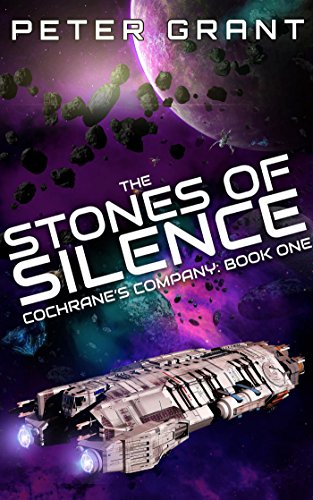
FROM PETER GRANThttps://www.amazon.com/dp/B07D1S38RJ/accordingtohoyt-20

518usjs6jml

The secret is out – the Mycenae system is the hottest new mineral find in the spiral arm. Now it’s about to become ground zero in a gold rush by every crooked company and asteroid thief in the galaxy.

Andrew Cochrane, with his crew of the finest veterans and cunning rogues, have an even better scheme. They’ve conned the owner into hiring them as a mercenary security company to defend the system. With no oversight but their own, Cochrane’s Company plans to seize the richest pickings for themselves.

But nothing ever comes easy. If they want to keep their loot, they’re going to have to outwit and outfight every smuggler, bandit and renegade after the same prize – and their boss, too!


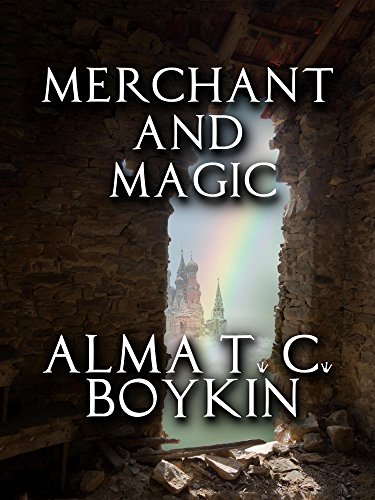
FROM ALMA T. C. BOYKIN:  Merchant and Magic (Merchant and Empire Book 1).

51-2b09wosrl

When Magic Fails…

Tycho Rhonarida Galnaar trades hides—hides tanned, hides untanned, with and without fleeces, nothing risky. He prefers steady, low-key trade, a quiet home life, and reliable business partners. Slow and steady bring wealth and do not draw the attention of nobles, thieves, or the gods. Especially not of the gods!

Counterfeit coin and cursed grain…

But the gods have other plans. Tycho’s secret—his absolute inability to work or even see magic in a world that depends on it—may be the key to solving a mystery, and saving a city. Tycho wants no part in mysteries or adventure. He’s a merchant, nothing more.

Trade is Tycho’s world. That world changes under his feet.

FROM PAM UPHOFF:  In The Rift.

51jnd8fgjkl

When the Miss Outer Space beauty pageant decided they should hold the contest in outer space, they created an irresistible prize for the pirates that preyed on ship on both sides of the Pegasi Rift. And an opportunity for politicians on both sides.


Vignettes by Luke, Mary Catelli and ‘Nother Mike

So what’s a vignette? You might know them as flash fiction, or even just sketches. We will provide a prompt each Sunday that you can use directly (including it in your work) or just as an inspiration. You, in turn, will write about 50 words (yes, we are going for short shorts! Not even a Drabble 100 words, just half that!). Then post it! For an additional challenge, you can aim to make it exactly 50 words, if you like.

We recommend that if you have an original vignette, you post that as a new reply. If you are commenting on someone’s vignette, then post that as a reply to the vignette. Comments — this is writing practice, so comments should be aimed at helping someone be a better writer, not at crushing them. And since these are likely to be drafts, don’t jump up and down too hard on typos and grammar.

If you have questions, feel free to ask.

Your writing prompt this week is: hot

Cold Equations

paper-3190198

I’m not a dialectical materialist.  I’m not a materialist at all.  I think there are more things under heaven and Earth, etc.  I think it’s entirely possible everything we know and everything we do in this life is the tip of a massive iceberg that we’re simply not equipped to see.

That tendency wasn’t helped by husband who studied math till the point it becomes philosophy, and sons who studied physics to the point where it becomes religion.

I don’t actually spend much time thinking about the submerged part of the iceberg.  By its nature it’s unknowable.  If it’s there we’ll know one day, and there’s no point stressing about it.

But given that, it’s weird that in my thirties I fell madly in love with economics.

Economics was one of those subjects I was very badly taught in High School.  Hell, I think most of us were badly taught economics at every level, because the people who teach it now are very invested in making economics into a sort of magic.  They don’t understand that the “Science” part of economics means it has natural laws, and you can no more legislate the flow of money than you can legislate the flow of water.  You can, as with water, divert if, dam it up or make it do something, sure.  But people who do this to money don’t realize it’s like doing it to water: there are always consequences.  Some of them will be unintended.  Also, do it enough and you might end up with a mess in your hands that you can’t pull apart no way, no how.

I fell in love with economics after reading a lot of Sowell, and picking some very select manuals to feed my itch.  The problem, of course, is most of the manuals were falsified and din’t relate to economics and the flow of wealth any better than a magic spell relates to that which its trying to affect.

From a credulous point of view, and falsifying results, you could think it does, but… not really.

And yet, as I started looking at things around me and paying attention, so many “inexplicable” and “strange” phenomena were explained by obvious economics that it boggled the mind.

Take for instance the way science fiction and fantasy had changed, from having people actually write stories and publish stories for the public, to being a kind of involuted display of precious and difficult wording wrapped around a core of impeccable Marxist philosophy.

That one took a bit to sink in.  Yes, like most human beings on the planet, I knew that books used to pay (sort of) a living wage.  It wasn’t exactly palatial, ever, but people — as in men, supporting families — used to live from writing.  Articles, stories, novels.  And live decent, middle class lives.

Yeah, not a ton of the people who wanted to write got there, and those who did still lived a relatively precarious life, because free-lancers, but…

Until I broke in and started attending conventions (yes, I know, but I didn’t really know conventions existed.  Came from elsewhere, remember?) I thought science fiction and fantasy was still, more or less, the panorama it had been when I read interviews with Heinlein or Clarke or one of them.  This was aided by a bit of crazy in current culture, which is the tendency for the people in charge of a failing institution or industry to claim they’re not in charge and are, somehow, victims.

I expected to break into publishing and find myself in an environment of middle aged, bespectacled professional males.  Yes, I know I should have realized otherwise from the names on the shelf, but everything I read said the field was dominated by middle aged men.

And then I broke in and went to a convention.  Uh.  It was all women, and “academic” males.  Not a lot of males, either.  The males were noticeably older, too.  Women were my age (early thirties) or younger.

After that came other disillusions, including finding out that the field as bimodal: a very few people made millions, while a vast majority made pocket money.

The two are related.  Yeah, okay, there’s a ton more to that, including that distribution was being distorted, with the push model, and that most of the women who ran the publishing houses couldn’t find financial sense with two hands and a seeing eye dog.

But at the bottom of it, at the very bottom, was economics.  (And it was the pits.)

I sometimes think that liberals want the government to regulate every industry because they think that everyone is like them and will pay bottom dollar regardless of what it does to quality, but I’m perhaps being unfair.

True, Heinlein thought publishing was taken over by the left as far back as the forties (with some exceptions. Obviously.)  And at least in Europe, I know it was.  There have been books (triumphal ones) written about it.

But the problem might be more basic.  First, there is the effect that if you edit for a long time you stop knowing what is good.  Trust me, I’ve edited magazines.  By the hundredth submission all you can say is “It’s typed and everything.”  I mean, by then you can’t really pinpoint “quality.”

This means not only that editors who’ve been at it for years lose perspective and start looking at other “markers” of quality like “My Marxist college professor would think this was good.” BUT you start thinking that all writing is much of a muchness and writers are interchangeable widgets.  If one won’t work for what you want, you get another one.

Contributing to this was the fact that most publishers for each field were a funnel.  There would be say 3 million writers, and 30 book slots available at the five or so traditional publishers.

Yeah, sure “we’re picking the best” is what they said, but you can’t.  Not with a flood of that magnitude.  You can’t even (and most of them didn’t) read them all.  You just grab a random few, or the few whose authors you’ve met, and if they’re okay and don’t have obvious grammatical mistakes (or have few of them) you publish that.

It would be like my handing you ten barrels of olives and telling you to pick the thirty best olives of the bunch.  No one has the time or the space to examine every olive for firmness and color.  You dip your hand in and pick thirty and if none of them is obviously mushy and pink, you got your thirty, which you’ll swear up and down are the best, because, well… you have to.

That kind of imbalance in supply and demand always lowers prices.  If the olive doesn’t like the deal you offered it, you toss it back in the barrel and pick another of the millions of olives who will.  You can do that forever.  You have all day.

So, in the forties and fifties, advances for novels ran somewhere between 5k and 20k.  Thing is, judging by people I know who were alive then, 10k was a living wage.  Not crazy, but living, if you lived in a small town, etc.  Also, “novel” was anywhere from 35k words upward, and your publisher encouraged you (at least if you sold at all) to write two or three a year.

By the time I came in around 98, the advances for most people (excluding superstars) were between 5k and 20k.  Novels were around 200k words (and yeah, there was an economic reason for it too, but if I go into that, I’ll never be done.) And most publishers wanted you to publish a novel a year.

Also, I found out when my first series tanked and I tried to get agents, most of the field didn’t want to make money, and expected you to have another job.

I found this out because none of the agents I interviewed wanted to even try to sell my space opera (Darkship Thieves had been finished and in the drawer for five years then.)  They all asked why I wanted to write “Schlock” when I could write beautiful “good” stuff like the Shakespeare series.  And they all laid out this plan where I wrote a novel every two years, and meanwhile wrote for academic journals specializing in history and literature, to spread my name.

We’ll leave aside the fact that literary fantasy is something I enjoy writing once in a while, as a one-off, bu that dedicating my life to it would make me slit my wrists, and look at the economics.  I made around 10k for each of the first three books, and they were taken out of print the minute they earned out.  I got told by every agent “Yeah, that’s the top of sales for literary sf/f.”  And when I told them I couldn’t live from that, they said “but you don’t live from that.  You get a job teaching in college to pay the bills.  You do this for art.”

This was usually when I slammed the phone down and said “Uh, no. I could teach in college now.  It’s not what I want to do.  I want to write for a living.”  (I managed it, too, though sometimes it involved six books a year.  Whether that’s responsible for the health breakdown that followed, I don’t know.  It might have some relation, because autoimmune flares at stress. Doesn’t matter.  I’m recovering, though the way up is kind of slow.)

I couldn’t understand why publishers (remember agents were really contractors for publishers) wanted prestige over money.

That is, until I started taking everything in account.  This was brought home to me, by an add for an editor at Tor, from glassdoor, sent to me by a friend:


Senior Editor, Macmillan – New York, NY
Glassdoor Estimated Salary: $46k-$69k

Position Description:

Tor/Forge Books is looking to hire a Senior Editor who will acquire across the adult imprints, in science fiction and fantasy, mystery and suspense/thriller, and general fiction.

Major Responsibilities:
Acquire and edit approximately 10-15 original works of adult fiction per year, including developing cover concept, obtaining promotional quotes, and working closely with the author to create the best book possible
Interact with sales and marketing, advertising and promotion, and publicity departments to develop campaigns to present books as well as possible both in-house and to readers
Interact with production and art departments; write cover concepts; understand production process and attendant costs
Attend writers conferences and conventions to interact with writers, agents, and readers
Required Skills / Knowledge:
Strong developmental editing skills
Ability to write jacket, cover, and ONIX copy that attracts readers
Knowledge of many different types of genre fiction
Extensive network of literary agents
Experience Needed:
10+ years similar editorial experience
Educational Background Required:
No degree requirement

I have friends in NYC.  46k?  you’ve got to be kidding me.  46k for a “senior” position?  For crying in bed.  It’s like trying to live on a 10k novel a year, in the rest of the country.

This also brought to mind something a mentor of mine told me when I was breaking in:

“You have to remember most editors/publishers are well-to-do mostly white women, who grew up upper class or upper middle class, went to the best colleges, and are still largely supported by (mostly) parents (even though a few of them are supported by) or husband.  They’ve never had a job other than editing.  They never had to work hard for something that would pay the rent.  They have illusions of “art” and working to “better the world” and live in tiny NY apartments, and obsess about rats, but have no idea of real struggles, or how other people live.”

The mentor was trying to coax me on how to talk to them.  I later found the mentor was right, at least for all editors/etc hired since the eighties.

And it only became more so.

So these people, who were really pampered their entire lives, and were doing this job for ideological and artistic reasons hired most people like them, and paid them the same sort of money “something to say I am a professional and have a career.”

Then, if they wondered at the falling print runs at all, they assumed it was because “people don’t read anymore.  They watch TV” or “those ignorant hicks don’t appreciate the wonderful stuff I pick” or “Flyover country doesn’t read.”

In fact, what was happening is that these newly minted editors picked authors much like them, who wrote books about … well, about the things they knew.  I mean, we SF/F writers try to stretch, but there are fundamentals of life that shape how you think.

There was no way that I, who had started working for money somewhere around 16 and who had moved across the ocean at 22 with nothing but 20kg of clothing, to marry a man who had only a little more, and who had been scraping, making and fixing for ten years to stay above water could even understand the mind set of people who had never gone short a meal in their lives, much less that they could understand my mind set and what shaped my world.

And there was no way, honestly, that most of the stuff these people picked, much less what they picked to push would make sense to 99.9% of Americans.  Their sell through and penetration among the bien pensant was as good as ever, of course, but it didn’t really reach anyone else.  (Hence the attraction of “flyover country doesn’t read.”)

It also explained/explains things like that picture of the “diverse” editorial board of the Puffington Host.

puffington host

Aren’t you astounded at their diversity?  Hey, look, there are a couple of Asian girls, and maybe a Latin chick (could be Italian.)  Tremble before their diversity.

If you assume that with very few exceptions publishing has now been run by pretty pink princesses (granted, some of them male) for 30 years or so, it all becomes very clear, from their picks, to their certainty push was a good idea because it gave them more control, to the bizarre temper tantrums they throw and the names they call when their will isn’t done.

But it’s not their fault.  It’s all economics.  They can’t make a living on what the publishing houses are willing to pay.  So they are doing it for the prestige, and hiring authors who are also doing it for the prestige (and cred that counts to their real, academic jobs.)  The fact that the dogs just don’t like the food doesn’t penetrate, because in their world they have the best taste and if you don’t like what they pick, then you’re racisss sexissss homophobic.  And if everything tanks, it’s okay.  That’s not what they’re living from.

This in turn leads to publishing books no one wants to read, which leads to their having less money for editors and authors, which leads to…

Death spiral baby!  Death spiral!

Indie didn’t kill traditional publishing.  Traditional publishing committed suicide, and that space was vacant to be filled with something.

The worst part?  Even when trad pub is limited to mega bestsellers and prestige editions and everything else is indie?

None of the people involved in this debacle will understand the cold equations at the base of their demise.