So, over the last 24 hours, my feed and my online conversations have all been about Gina Carano.
I can’t begin to tell you how completely bizarre this is for the woman who never watches TV or movies. This is not a brag, by the way. It’s a combination of being ADD and not USED to consuming my stories that way, since we only got a TV when I was eight, and even then… well, Portugal didn’t have many hours of TV a day. I go through phases of watching series — usually British mystery, though it’s starting to get hard not to find them bizarrely and stupidly “woke infused” — but usually only when I’m sick or very depressed.
Normally I wouldn’t even have noticed this mess, except that my friends had all been into the new SW series, and were all very upset.
MOSTLY what they were very upset about was that the actress got “cancelled” for something that wasn’t even vaguely anti-semitic under any sane interpretation.
My first reaction was “Oh. Actress said something, and… they cancelled her.” Which is not only “day ending in y” right now, but also has been for a long time. Part of the reason I came out of the political closet is because I’d gotten tired of watching every word I said, and every expression I made in public. Because even a slight slip would have caused my career to be completely dead. In the nineties. As it was, I wasn’t perfect, they weren’t sure of me, which is why although they routinely f*ck every writer over, for me they brought out the Kama Sutra.
So, I was going “Yeah, only innocents who don’t realize what life is like in a completely taken-over industry would think this is surprising. All power to the lady, but I’m sure she knew what would hit her for stepping out of line.”
And then I came across a screen capture of what she said. And someone asking “how is this anti-semitic.”
Which is when I panicked.
Let me explain, okay?
I grew up in Europe, which in American terms is at the very least “soft left” which is what they consider “the right.” But on top of that, I was a “young lady who made good.” I wasn’t precisely working class, since dad has a degree, but we lived with dad’s dad who was a carpenter (and I was his apprentice until school interfered.) I wasn’t the first one in my family to go to college (though both dad and brother qualified for scholarships on that head… on their mother’s side and because dad’s degree was sort of in limbo, at the time. It’s a long story.) However, I came from a working class environment, from a one room school about 50 years behind the times. And I made it to college, which at that time and in that place was 100% meritocratic and mostly by examination.
What that required was adapting to a completely different culture. (You could say by the time I came to the US I had practice acculturating.) And the left in both high school and college, in Portugal, in the seventies, was at least as crazy as here. I’d say more Stalinist than the current American Maoists, but — waggles hand — I mean for six months the Maoists were the government (it’s survivable. Not for everyone, but survivable.) Since I was in a humanities degree, the political spin was particularly pronounced, though SIL’s psychiatry books in medschool were …. completely loony left. (Yes, I read them. Hey. They came into the house. I read them even in foreign languages. Because that was the deal. It came into the house, I read it. I never understood why it took the rest of the family so long to understand that.)
From experiences in Middle School I knew that I had to hide my politics, or I’d never make it to college. And in college I knew I had to hide my politics and fake their idiocy, or be flunked. (Look, I got so good I could make fun of their ideas while they thought I was supporting them. Unfortunately by the time I broke into writing, I was tired of that game. Something to do with having kids, maybe?)
What I want to say is that I lived for the first 4 decades of my life (at least) largely immersed in what you’d call “elite intellectual left establishment) on two continents. (Most of the people in my family, my generation, are still part of it.)
So, I have the same understanding, at gut level, of how leftists think/react as most people do of those people they’re most used to.
The only way, remotely, not matter how much you stretch it, that what she said can be considered “anti-semitic” is this:
The left believes the Jews were innocent. (This is correct, btw.) That what happened to them was shameful and terrible, and a dishonor on those who attacked them.
BUT they also believe it’s an insult to compare them to the people the left hates FOR THEIR POLITICAL VIEWS.
Because they think the people they hate for their political views — us — are really that bad, and really deserve everything the left intends to do to them. Which is more or less — in rough outlines — what the Nazis did to the Jews.
I mean, they have already talked of reeducating us, taking our children away, and they do in fact do think of us as not fully human.
Mind you, they have absolutely no idea who we are and what we believe, but they know we don’t agree with them, and since their hearts are pure, and utopia is their objective, we must be the very devil, and terrible on principle.
They’ve been exquisitely propagandized to the point they think the only American president with Jewish grandchildren was “anti-semitic.” They think that black people who don’t want to careen into ruinous and deadly socialism are “white supremacists” (the poor things swallowed Gramsci without chewing); they think other races aren’t hetero-normative; they think America is the most racissss, sexissss, homophobic nation on Earth…. and they will not listen to corrections of their appalling and atrocious ignorance of true history or foreign anthropology or…. really anything. Because anything opposing the indoctrination has been trained into them as an attack on their psyche.
So, they’re ignorant. They live in a political/social universe where if you oppose the completely insane leftist version of the world, you must be evil and “a nazi” which is to say the devil. They are so completely saturated in utter inanity that they call Israel “fascist.”
BUT one thing they know, and they know it at gut level: everyone to the right of Lenin — or perhaps Mao — are untermensch who will have to be utterly destroyed, so that the final promised utopia that they were promised since elementary school will come to be.
So, in their eyes comparing innocent Jews to their political opponents is experienced as an insult to the Jews.
Because in leftist eyes, we are evil, cockroaches and sub-humans whom they have to eradicate from society.
And they will not look in the mirror, or admit that what they’re engaging in is exactly what the nazis did, only with political beliefs instead of race. And it’s complicated. These idiots have simply decided that the real master race are black people. And that all evil comes from white males. But to be fair, it shades to people like me who have “internalized oppression” and are therefore “male.”
The Nazis philosophy wasn’t all that different. Sure. there was a racial component, but opposing them was a sign you’d been corrupted by “foreign” or “Jewish” ideas. And after that, the picture blends with our woke left.
In fact, our left is in the grip of the normal totalitarian illusion, that they’re somehow more perceptive than every other human, ever; that they’re pure and above it all and that if they only kill the sinful elements of society — you and me, my brothers and sisters — they will be like onto the angels, living eternally with no strife and no sin.
In fact, they’re made of the same human clay as the rest of us, only in the grip of a bizarre totalitarian cult.
And that means–
Well, these moments in history always end the same way. In this case, given the balance of numbers and weapon-owning, I’d say the backlash will come sooner, and be more terrible than their attempt at making us vanish will be.
Which doesn’t mean any of us, individually is safe.
It does mean we win, they lose. But the butcher’s bill, alas, will turn the oceans incarnadine.
One of the giggle-inducing effects of 2021 — like 2020 but this time we laugh, because it hurts too much too cry — is the whole “holding with diamond hands” of the wallstreetbets people.
For all I now, it’s actually a stock trading term. Maybe? I mean, stock traders have all sorts of strange terms.
But the way the stonk-buying kiddies use it makes me giggle all the same, “Diamond hands, bois.”
And this morning I woke up thinking “Diamond hands, it’s not just for stocks anymore.”
Look, 2020 and January 2021 signaled one thing: that America’s awkward phase has come to an end. But the liberty bell hasn’t rung yet. And if y’all are ringing your hands instead stop it. These things take time. It will take someone with a better socio-mathematical mind than mine — and, oh, it would take much more accurate records, which we don’t have. And if we don’t have it, the rest of the world is a total loss — to calculate the equation of revolt. But one thing I can tell you: it’s not instantaneous.
Particularly in a country like the US it’s not instantaneous. I was reading an article about how the Ficus (And the ho, and whoever is manipulating them) ruined America in the first two weeks of executive orders, and it was persuasive. But I haven’t really felt the effects yet. Things are more expensive, but not beyond fluctuation. And some things, like gas, are more expensive, but we haven’t felt it yet, because I’ll be honest, we almost don’t drive. In fact, if absolutely needed most of what we do by car, we could do on foot. I just don’t care to shop five times a week, so I can drag it bag in wheeled bags. Our drives were mostly church, entertainment and (husband) work. And you know, none of those are operative right now.
Sure the increase in energy prices is going to skyrocket the energy to heat (and cool. We have a piano that doesn’t take temperature changes well) the house and next winter is going to punch us in or about the fracas. Sure, this means that everything from beef to well…. everything because transport, is going to cost more. But that will take a while to percolate through the behemoth that’s our economy. And that will probably ALSO not sock us fully before next winter.
So, no, people aren’t rushing to the fourth box. Hell, some number of them are still thinking they can fix it all in the ballot box, in two years. (Which is why my timeline is 6 months — if they go completely and absolutely stupid and try to arrest people, starting with Trump — to two years.) But again, there isn’t an exact formula for this.
What I do know is that it’s at the intersection of rulers who are oppressive and crazy — yet inefficient (most totalitarians are — and incredibly annoying WHILE at the same time not having ruined things so much that EVERYONE is grubbing in the garbage for their food.
But you know, here’s the thing, chilluns, America is different. One of the ways in which we’re different, is that there is no one to save us. I don’t think we have realized that. When it sinks in the bell might very well ring.
The other way we’re different is that we’re the economic turbine of the world. No? Well, if you don’t think so, you have never lived abroad. Or you’re as economically ignorant as Xi.
But but but China makes all the things! And they have such a huge market. Why, the NFL and movies and all that are basically saying they no longer need America, because they have the huge Chinese market, and they’re going to be rich, rich, rich, mwhahahah.
Ah. Yeah. I’ve seen trad and used-to-be trad get ALLLL excited about China. And I giggled.
“BILLIONS OF PEOPLE ARE GOING TO BUY MY THING!”
No, they’re not. But Xi, who is besides being an utter asshole, an economically illiterate one, might try to pretend it is, to get you to play on his team.
China is a paper tiger. And the paper is mostly IOUs.
Sure, they have a massive population: a massive (and uncounted, because if you think those counts are accurate I have some swamp land in FL I’d love to sell you. For one the Chinese idea of NUMBERS is different. For another, no totalitarian society has accurate counts of anything, even those things they want to count. They are by definition corrupted markets), illiterate, dirt poor population, living at a level that makes your ancestors in the 11th century in Europe seem to have lived like kings. (And that’s not counting the outright slaves of the state.)
China has a good thing going economically: They produce cheap crap, with a lot of error and sometimes outright poisoning of the customer (that too is cultural) but so cheap that they undercut every producer in the west. And the west, particularly as it plunged into socialism, needed cheap rap, because the actual spending money in people’s pockets kept decreasing.
Then Trump tried to balance the scales and stop us buying outright slave-made products. Not to mention stop China from buying our institutions with its ill-gotten gains.
Which is how we found out that Xi is as stupid as our idiot liberals, and as fracking ignorant of where money comes from.
Yo, Winnie the Pooh’s dumb twin, listen up: value is not raw materials plus labor. You genius always forget ultimately things are worth what someone is willing to pay for them. I guess Winnie the Pooh’s head is full of fluff and Xi’s is full of shit. Marxist shit, to be exact. We can’t blame him too much, so are the heads of most of our college graduates. It takes a lot of education to believe such dumb crap.
If you take America into your carnival ride of ruin — and you are — Americans won’t be able to afford even cheap crap.
The economic engine of the WORLD stops. Because America are the world’s consumers. As tight as things got in the endless Obamanian Summer Of Recovery, we were still the wealthiest country, where the common people have the most spending cash. We drive the demand for manufacture, for innovation, for improvement.
So, what these bright boys and girls in China and the US have done, by so cleverly fortifying us out of country is killed the goose that laid the golden eggs. But they won’t know till the golden eggs are gone, and they realize dead geese don’t lay.
So, while in this awkward phase, and waiting for the ringing of the bell, what do we do?
Sure, laugh at them. Gosh, that really upsets the humorless bastards and bitches. And rebel in minor and safe ways.
But I propose, bois and gels, that we perform a public service as well: I propose we show them what they’re doing in the only way they’ll understand.
Boys, Gels, Unicorns, Dragons, Minotaurs, and one obstreperous Wallaby: It’s time for our version of diamond hands. This time with our own money.
Or if we prefer, the Ramkin motto: What is ours, we keep.
I know I’d said that February I’d try to spend as little as possible. This is true. We are. Though something occurred to me: if you HAVE to spend (as in replace something major that died) do it now, this quarter, as fast as you can. Both because that establishes the proper curve to the economy (they’ll lie about it, but stink on ice is hard to hide) and because we can’t trust the quality of anything in a corrupt society and market.
And after that …. hold as tight as you can. Make that money squeal. And if you can buy in the down market (garage sales, craigslist, free swap, etc) DO SO.
So, some rules for diamond hands:
1- If you have to buy big (or have big medical, or anything on which the quality is essential) fast track that biatch. Have it done as soon as humanly possible. The quality is going to go down from here, and besides, you want the money curve to bend towards obvious ruin.
2- Those things you would buy that are mostly made in China: fabric, clothes, etc (even if you can’t do anything about medicine and such, but do try. You can often get it for less and more reliable without prescription on line. Not actually joking) buy used. If you can’t find it used…. Well. I’m going to look for fabric for t-shirts in thrift stores and failing that for too-large but newish t-shirts I can cut down.
3- food. Buy bulk and reapportion. Buy down the tree. We’ve been buying an awful lot of bulk, discount chicken. I actually seriously HATE chicken. But you know, a lot of ethnic dishes hide the taste of chicken (and any meat.) For instance, tonight I’m re-appropriating Vindaloo. (Revenge of cultural appropriation, this time it’s tasty!) Anyway, you know your area better than I do, but let your watch word for groceries be “diamond hands.” Buy as cheap as you can that still fills your purpose. And if you can, buy local. (Wow, we’re gonna be like all those left wieners, locavores, upcycling clothes ;) )
4- If you have to buy and have a choice, and know a producer is conservative or at least to the right of Lenin, buy from them. If you to sell… well, it doesn’t matter, but if you know someone is supporting the destruction, charge them double, stupidity should hurt.
5- Swap. If you can swap goods and services. We have a community here, right? Well, for instance (though for G-d’s sake not this month) I’m open to making covers in return for typo hunting. Or critiques in return for secretarial services (I desperately need someone to a) keep me on track b) do minor stuff like make sure blurbs are updated, books are redesigned and updated, etc. Son is doing some of it, but we have other projects we need to do.) If anyone wants to start a secret/membership only swap site or list, I’d appreciate it. (We’re doing the promo/list site for indie writers and it’s taking a while, as we’re cramming it around everything else.)
6- To the extent of the possible — and I know it’s not absolute — show the assholes what a world without its engine is. Diamond hands, bois and gels. Diamond hands. Hold on to as much of your own as you can. Diversify your income and hold on to your voluta (which contrary to rumor is not a sauce that goes well with liver.)
Yes, this will eat some of your time and nervous energy, but if you’re like me not being able to do anything and utter depression is eating more. And there is such a thing as “resting by doing something else.” For me, for instance, sewing is a rest.
Do what you can to avoid buying new. And EVERYTHING to avoid buying made-in-China. You’ll need that voluta. Though I wouldn’t advise you keeping it in cash. The totalitarians get funky with cash really fast. How you keep it is your choice. Real estate might or might not do well. Depends on its use. Metal is always useful, though the most valuable one is now in short supply. There’s other things.
Diamond hands. Keep, hold. Take it out of their craps table. Hold.
What is ours we keep. And what you stole we’ll take back: including our liberty, our voice and our vote.
The mills of American anger grind very slowly. But when they achieve full speed, they level everything. And that is still better than the world without America that they think they want.
Let’s give them a warning shot. Let’s show them the power of the goose they’re killing.
If it’s raining you put on your galoshes. You use an umbrella.
Well, ladies, gentleman, minotaurs, dragons, it’s going to rain. The long rains are going to come.
I expect in two years things will start to settle down. I expect in four years, the shape of our society will be completely different.
But–
I expect for the next two years things are going to purely suck.
So:
1- prepare. I don’t know what that means for you. I know for me some of the prep work is delayed, because we can’t really know exactly what we need or plan for what might go wrong until we move.
So, I can’t tell you what you’ll need. But you know the usual: A year of meds, if you can (and if they’re the kind that goes bad, vaccum seal them and throw them in the freezer. Unless they say do not freeze); spare glasses (I need to get on that.) Some bottles of water, enough to get you through a few days at least. Enough food that if you have to stay in place, or throw it in the back of the car, you can. Clothes at this time of the year for cold weather. Some thermal blankets.
It’s unlikely you need a go-bag unless you live where antifa gambols. And if you do, find a way out soonest. BUT these years have been so weird, keeping your essentials in a backpack or a duffel won’t kill you.
Have food and meds for your pets for at least a couple of months.
2- Weapons… don’t tell me about it. Just do what you can in the way of preparation. And remember, if threatened, fight like a cornered cat. We are in a war, even if most people are still in denial. There are no dangerous weapons, there are only dangerous men (and women. Particularly women.) Coming from a country where owning a gun wasn’t an alternative, trust me when I say you can do damage with an umbrella, a ruler, a shoe, a scarf or your bare hands. Keep your mind flexible. Even if Gen. Mattis turned out to decide to sell honor for approbation in the media and cheap “revenge” his advice isn’t wrong: be kind, polite and have a plan for killing everyone you meet. The defining nature of civil…. instability is that switch overs are really sudden. It’s a normal day, you’re going around the corner on the way to school/work/etc, and suddenly you’re in the middle of a fight. Be ready. Some people have already been sucker punched by this. Don’t let it happen to you. Situational awareness, sure. But also make plans in your head for various contingencies.
3- Work. Work as hard as you can, as fast as you can. While you can. Also, learn and be creative. And start multiple streams of income now. One of the things when societies change shape rapidly is that it’s going to leave some people stranded, or high and dry, with their former skills useless. It’s going to leave some areas of the country lagging, confused, with nothing to support their population. It will be temporary, and a new shape will take place. But make it easy on yourself. If you have crafts/other things you’re interested in? Learn now, plan now, acquire the implements and materials now. And if you establish multiple streams of income. It’s unlikely they’ll all finish at the same time.
4- Get yourself safe. Now, this obviously is more urgent if you’re in a big blue city that’s suddenly become East Berlin in the 70s but twice as dangerous. If that’s where you are, it’s time to move. Start your plans as soon as you can. If you own a house, you want to be ahead of the curve, so you can get some money out of it, at least. But for all of us, a change is coming. No, I’m not being mystical. A change has already come. A lot of us live where we do for work/school/etc. And for a lot of us that went away over the last year, and the entire country is wide open. This is the geographical equivalent of multiple streams of income. Is there a place where you always wanted to live (that’s not a big blue city)? Is there a place you have RELIABLE extended family/good friends who’ll loan assistance if you find yourself unhorsed in the convulsions ahead? If you still have to work in person, is there a place your job is likely to be in higher demand? I think we all have between six months and a year before traveling/moving gets…. confusing. So, look around now, and see if you need to change your residence.
5- Prepare mentally. When I say the next two years are going to be going through hell with no galoshes, I’m not joking. Prepare. Bad things are going to happen to people you love. You’re going to lose friendships, friends, family members. No, I’m not telling you there’s a way to make this be good. I’m just saying that like a fighter who braces for a hit, you should brace. The hits are going to come. Don’t let them be a surprise. Surprise will paralyze you. Some things you can’t prepare for. All you can do is grit your teeth and decide you’ll survive. Do so now.
6- Make connections. MAKE CONNECTIONS. Particularly make connections with people you can trust. BE trustworthy and show it, so they’ll trust you too. Make connections in person, on line. If you care about people, make sure you have a way to contact them if the net goes down.
7- Don’t trust any news. No, I didn’t say don’t trust any leftwing news. For now everything is on the 48 hour rule, good and bad. And reality test everything, even what you WANT to be true. Don’t react. Analyze, study, look at the facts. (Again, and again, what are the facts? – RAH) With the covidiocy such a resounding success, more psyops will be coming your way. Now most will be stupid — for us — “the Earth is going to burn in 8 years!” or “Donald Trump eats babies for breakfast.” Whatevs. But a lot of them will be smarter, more credible. Be aware of the ones that use your decency against you, as Covid did. Expect them to be: if you don’t denounce/abjure/whatever our enemies, people will die! Practice saying “Not my circus, not my monkeys,” and make it sound good. The good Germans REALLY were trying to be good. Don’t be a good German.
8- If you can in preparations and relocation, plan on friends who might land on you, at the last minute with no preparation. That’s the price of community. Just be ready.
Yes, for the next two years we’re going to go through hell. We can’t do anything about that. What we can do is put on galloshes. At least it will protect us from some of the mud, if not the lava.
And be not afraid. The worst that can happen is we die, and that’s such a minor thing, and eventually will happen anyway.
It barely warrants mention, while we’re fighting for the future.
Sometime ago I mentioned here the concept of corrupt markets.
You guys fanned out — as you will — across the web to look for the concept and couldn’t find it. I’ve had penciled in, on my wall, to write a post about it, so maybe one of you guys (I know at least one) who have a doctorate in economics or related disciplines can research it and do it up in proper format.
Yes I’m ABD but the papers I was taught to do was on literature analysis.
And btw my master thesis was on the intersectionof the biography of the author and the work they wrote. One particular author, of course, but that’s a long story to go into here, as it involved getting older books from the US. And I did it that way because at least when I went through — that was almost forty years ago, so it might have changed — the experts were adamant that the biograhy of the author had nothing to do with the work. That is, authors are widgets and what comes through them unbiden isn’t shaped by what they know or do. This idea strikes me as madness, and while I disagree with “write only what you know” I disagree equally hard with “the author doesn’t shape the work. Anyway, I still got the degree, but it’s important to note that this idea of the author as widget was out there, in academia, when I came through. By the time I broke into publishing it was in publishing, too, in the last phase of a corrupt market. And I became intimately acquainted with how corrupt markets work.
I’d seen it before in Portugal, as various governments didn’t give a hangnail for what people wanted and forced things on them from above. That too is a corrupt market.
In fact, if you really want to look at it this way, 2020 was the year we learned all our politics — governments, institutions, even our tech giants, have become corrupt markets. I was so horrified at the realization that my mind shut down, which accounts for the horrible year.
Let’s start with a definition, okay: Market is not just a way to make money (though it is that too.) Any human endeavor designed to facilitate human life is a market. Sure, you selling your apples to aunt Mimmy (I had an aunt Mimmy, G-d rest her soul) is a market. But you making regulations for your little town saying, for instance, no piles of rotten apples on the front porch is also a market.
Both succeed or fail to the extent that you meet the needs of the customer/community. If aunt Mimmy is violently allergic to apples, and yet you insist on selling her apples in a normal market you’re going to fail. If you insist on telling everyone they have to fill their front porches with rotten apples, in a functioning market you’re going to fail.
This is why politicians talk of “explaining” things to the people or “getting their buy in”. Well, used to. Because every polity has a Mandate of Heaven. Even absolute kings could be brought down by management so bad that people feel it. In Medieval Europe when things went very bad, kings built Cathedrals and did penance to restore the Mandate of Heaven. This had mixed results, unless the penance involved a copious amount of alms that stopped the famine, or whatever. If things continued going wrong the king was deposed openly or covertly.
But of course, feudal monarchy was to an extent a corrupt market, and there were violent revolutions and widespread famines to prove it.
In the same way, in the very early twentieth century, the publishers might sneer at the pulp flowing out of their pens, and they might — did, they were after all the educated “elite” — consider themselves above it all, but if the books failed, they didn’t eat, and so with some amount of corruption, the market toddled on. It was only after, when they divorced and insulated themselves from the failure of what they published, that the market became corrupted.
So, let me give you a definition: a corrupt market is that in which the supplier has divorced himself from demand by some means that allows him to continue supplying what he (she, it, whatevs) wants to provide regardless of what the demand for the product is: whether the market is books, apples, hamsters or laws and regulations, it doesn’t matter.
The follow on that is “there are no non-corrupt markets.” And I’ll explain why. The ideal market is one on one. I.e. you sell you apples to aunt Mimmy who can’t get enough of your apples. You know she can’t get enough of your apples, because she tells you so. So every morning, you harvest apples and bring them to her by the bushel load. And she pays you a good price because she loves your apples.
You see, a perfect uncorrupted market requires perfect information. You know exactly what people want, and you provide it.
To some extent that does not and cannot exist at a scale. Because your information is never going to be perfect. Btw, this is why the wise men who crafted our constitution made it so that the biggest power is at local level, where those governing can see the immediate effects of their governance and immediately feel the wrath of the constituents when they decide everyone needs a pile of rotten apples on the front porch. At that level, too, unless all your constituents are on hard drugs, you know when the voting (which is the currency in representative governments) is falsified. Because let me tell you, everyone in the village knew who the two monarchist votes were and in general what the trend of the voting was. You gossiped with neighbors, you knew what they thought of the asshole in chief. (If you are thinking this has to do with the Great Muzzling of 2020 give yourself a star. Or don’t. They will soon enough. And we won’t like it.)
So while perfectly uncorrupted markets are impossible, completely corrupted markets — those in which the consumer of apples, books or governance has no say — are things of absolute and total horror. In the case of apples and books they fail very hard, and if you’re lucky a new market develops and explodes. Well, in the case of governance, too. But before that happens utterly corrupt market for governance has a case of the mass murders, and most of the consumers end up in mass graves for failing to be the right market for the supply that those in power are SURE is the right one.
One of the first tells of a corrupt market is that the supplier couldn’t care less what the consumer wants. This is why I panicked when, a couple of years into my professional career, I found out that the publishers had no mechanism — other than sales, and that was corrupt in various ways I’ll explain — to find out what people ACTUALLY wanted to read. And the bookstores were in the process of aggregating their data (already corrupt, and yes, I’ll explain) into meaningless sets. Because large enough aggregates of data will tell you exactly nothing about each individual market. And for reading markets are very individual, having to do with the tastes of little hammlets, villages and small towns as much or more than with those of big cities, where many forms of entertainment are available that have nothing to do with reading, and where people are usually young, working crazy hours and socializing after, and not having much time to read. In fact one of my “Oh, sh*t” moments was when the publishers (when I had just turned forty) informed me they were trying to capture the 20 something market because people older than that didn’t read. It made me goggle at them, since I and all the moms with younger kids I knew read. There’s a lot of time spent waiting outside schools, or while supervising play, where you really can’t do much of anything else.
How did they know this? They didn’t. Someone in their marketing team had decided that younger people didn’t read as much and therefore they were a vast untapped market. And since their numbers were in a straight fall, this must be the market they needed to survive.
Because the publishers did no survey, no consumer research, nothing so simple as asking the readers what they wanted more of. (To the extent Baen resisted the rot longer, it was due to the Baen Bar, and publishers who paid attention. As imperfect and non-scientific an instrument as that was, it was better than absolutely no market knowlege and giving yourself a lot of excuses for failure.)
But Sarah, you’ll say, they had sales numbers! Waggles hand back and forth. Kind of, maybe? Sort of? The sales numbers are really good at measuring stunning success. I’d say stunning failure, too, but that can be obscured in a lot of ways. Like at one point they found out, in real numbers, after returns a fetted bestseller had sold four books.
How is that possible? Weren’t they paying out royalties? Well, sure. But the market was corrupted all the way through. Look, sure, they sort of knew how many books sold. Sort of because they didn’t even (forty years ago) know exactly how many books were printed. Apparently the machinery was of such calibre, that when you pushed “stop at 1k books) you might have 993 or 1012. With bigger numbers for large print runs. I’m not sure they know now, because a a publisher informed in 2003, “We’re really now all small batch print on demand.” Oh, and printruns of less than a hundred don’t get reported to the publisher.
So, it starts with “we don’t know how much supply is in play” and then it gets stupider (totally a word and appropriate in this case.) How much more stupid does it get? Oh, dear.
Well, because of the accommodations done for WWII and never withdrawn, all books are put in bookstores on consignment. In theory when they don’t sell, the front cover is stripped out of paperbacks, and they’re tossed. (In theory because in the eighties and early nineties, when it wasn’t print on demand, you found these for sale in every used bookstore, to the point they started printing warnings inside the book that you were reading what amounted to a stolen copy.) Hardcovers, in principle, get returned for full credit, and then put in pallets to be sent to those dollar bookstores.
Except there’s a lot of play in all of that. There is a large amount of shoplifting in books, as in all small objects. And then in the nineties the publisher decided it was okay not to return the covers. “Just tell us how many books you’re tossing.” Yeah.
But Sarah! There are counters on the point of sale that tell them exactly how much they sold. Sure there are. Kind of. You see, it is only in some bookstores, mostly in large cities. It excludes 90% or so of the places where books get sold in the country: Most indie bookstores, most supermarkets, most new-and-used bookstores, most military stores, most comic book stores.
So, say, you have a property that mostly appeals to the military? It’s going to seem to underperform the other books massively, even if that’s nonsense.
What the publishing houses do to pay you royalties (I SWEAR I’M NOT MAKING THIS UP) is take the point-of-sale count and average it out according to a formula over the entire country. This is why at one point I was getting royalty statements from 3 publishers, and the books the same age — say, had come out three years ago — though completely different genres, subgenres and voice, had all sold the exact same and completely impossible number: something like 176 copies per book. Which…. I live with a mathematician, okay? When he looks at numbers, be they royalty reports or election numbers and starts laughing till he cries it’s a BAD sign.
BUT counting what sold is only part of the problem. The other part is the book availability. One year — I THINK 2010 — I had ten books released. You couldn’t find them on a single shelf in the whole country. They were on Amazon. And given that, it’s shocking some earned out. BUT the casual shopper in 2010 was still largely a “walk in bookstore and browse” and for that, none of my books had a chance of selling a single copy.
“BUT Sarah, if they didn’t give you shelf space, surely they asked the store that told them they wouldn’t sell.” Sure. Except that’s not how any of this works. In 1995 — and it was the same sort of experience as the 2012 election for me. I realized the rot was very far advanced, even though I couldn’t quite process it. Or didn’t want to — I happened to be in Chinook bookstore in downtown Colorado springs, browsing a shelf when the book rep for a house (I want to say it was Berkley Ace, but I no longer remember clearly) was talking to the bookstore rep.
For those of you who never knew the Chinook, it was a lot like the Tattered Bookcover in Denver now. Upscale, a little nose in air, beautiful surroundings and hushed tones. So I could hear the conversation perfectly well.
The book rep had a catalogue of covers. And he was telling the store how many of which book they’d take. Take a deep breath, take that in for a minute. They were telling the bookstore how much of each book they’d take. The exception was a mega bestseller, whom the store wanted. Actually what the rep said was “You’ll want a hundred of book x, of course. We’re printing 150k,” (Or some equally absurd number.) Oh, and if the store wanted those 100, they had to take 20 each of three books that the house was going big on, and give them big displays. And then there were pages, and pages and pages that he said, “You may look through those and see how many you want.” The store manager flipped through quickly and sometimes ordered a couple of books for the shelf. But he didn’t have to, and the reason he did it might have to do with cover, name that caught his fancy, whatever. These people are what they call the “midlist” and when you hear that the “midlist just doesn’t sell” remember, this is how the midlist used to be treated.
The second part of my enlightenment was when I was invited to go the …. I have no clue what it’s called anymore, call it the Book Expo in Denver. This is where the book reps met with the BIG bookstore chain reps around 2002. At this place, I found I’d been invited because the book rep had actually chanced to read my first Shakespeare book, and was outraged it wasn’t getting more play. BUT the corollary of this? They normally didn’t read the books. They just took the “level of excitement at the house” usually translated by how many books the house SAID it would print. And from that they pushed “you want so many of these.”
As you imagine, there was plenty of money floating around, particularly since Amazon didn’t count for “how many books you sold.” And they could be attributed in royalty to “It must have sold x number.” Usually the books that appeal in big cities, college neighborhoods, ect. In fact, the same books the publishers and editors (who are usually graduates of good colleges with degrees in impractical liberal arts crap — I should throw stones, right –) prefer.
The market was so thoroughly corrupted they really had no idea which books had done well, and could attribute the “win” to the books they chose to attribute it. And then this reinforced their choices for the next batch.
Which is — ladies and gentlemen — the average print run has gone down from something like 100k to something like 7k since the seventies.
“But it’s a very different world. People have more options for entertainment. People don’t read as much.” Poppycock. As a reader, I had fallen through genre after genre, widened my net of “things I’ll read” and was still coming up dry most of the time by the late 90s. And I wasn’t alone. There are some number of passionate readers (not very high, but much higher than is met even now) whose needs were not being met. At the same time, the books that were being put out, and particularly those pushed, were unapetizing to 90% of those readers.
And yet, the information the publishers and editors received — particularly because of the people they talked to/lived among were mostly their colleagues and people of similar background — reinforced the choices that were making the supply more maladaptive to the demand.
BTW, one of the funny things — if you like dark jokes — is that the traditional publishers finally did a market survey. Sometime in the 10s they did a survey on whether people preferred ebooks or paper books, and trad or indie. It came back as a resounding trad and paperbooks….
Which is completely belied by the market. At a guess the surveys were done in groups and by show of hands. And probably on college campuses. (I looked at the internals at the time and they were skimpy. I no longer remember where to find the study.) Traditionally published and paper is the virtue signal. It makes you sound smart and up scale. But every author I know — of fiction, non fiction is different — sells ten times the number of ebooks to paperbooks Because they’re cheaper, and it’s instant gratification, of course.
But the traditional publishers believed that survey like gospel and set their course by it.
Two notes: they might have no clue how many ebooks they’re selling. While this is trivially easy (if opaque. We don’t see INSIDE Amazon’s book keeping, for instance) for self-published or single-author indie houses to know how much they sell, it’s almost impossible for houses with several authors. No, I don’t fully understand how or when, but when we were running a small publisher (which we’re doing again, because we’re insane) husband looked at the internals, tore out his hair, and built a complex program to keep track of the sales per author. He now uses it, freelance, to do books for small publishers (and is available for hire. Within limits. He’s working crazy hours at private job right now.) I don’t understand it, of course, but listening in on his discussions with a client: most houses have no idea how much they’re selling of what. The ebook money comes in and acts as a giant slush fund, which further corrupts the market by divorcing publishers from their disastrous choices.
Second, as far as we can tell, the tastes of readers haven’t chanced at all since the 1920s. No, I haven’t done a survey. Those are tricky and would need to be calibrated to discount virtue signal. BUT most of the people doing exceptionally well are telling pulp stories with pulp structure.
And I can’t be the only one who figured that out, as there’s a glut of books on “how to write fiction the pulp way.”
So, a completely corrupt market is one in which the information gathering means is so messed up as to be non-existent (in the case of books, for instance, the sales data is the only information, and it’s corrupted/messed up at every level.) This is the market in which you bring bushels and bushels of apples to aunt Mimmy and when she only buys half a bushel, you decide it’s out of your control, and the market for fruit is just tanking, and it’s not your fault, without ever asking her if she also would like some oranges or some berries. The end result of this is that other people start selling aunt Mimmy oranges and berries, and your market diminishes some.
HOWEVER, if you are a government, and your market is just as corrupt because you messed the elections with rampant fraud, say, and silenced opposing voices, you can make Aunt Mimmy buy five bushels of apples every morning, even if she’s allergic to apples, and the people next door would love it.
I knew there was rampant fraud in American elections after poll washing in 2012. I knew that the Republicans refused to fight it or even mention it. I didn’t know if there was enough fraud nation wide to sway a national election.
I realized it when they picked China Joe and the Ho as the standard bearers for the democratic ticket. I realized it when I watched the democrats debate, and they kept promising open borders and money and free health care to illegal immigrants, which is the equivalent of giving bushels of apples to Aunt Mimmy who is allergic to apples.
I knew it for ABSOLUTE sure when Zhou Bai Den was campaigning from his basement or not at all.
The only reason to run a potemkin campaign is that you knew you couldn’t lose. Even if a single American voted for you, you had it in the bag.
Let’s be glad, I guess, that their guess of the opposing party votes was too low and they had to fraud last minute and in plain sight. Not that it matters, since the corrupt system spit out the information.
But for what it’s worth, just like the publishers deciding that people really wanted more “literary hardcovers” from a flawed survey, our current Junta is really really bad at measuring the temperature of the country.
Which, in the end, might shorten our time in hell.
The problem is that when electoral markets are corrupted, all hell breaks lose. Particularly when it’s a big, central government that thinks itself invulnerable. And where people can communicate ONLY in their little cliques, never looking outside those, so their wrong information is forever magnified and reinforced.
Which brings us to…
Corrupted governamental markets bring about death. Lots and lots of death. There are no famines under a representative government, for instance, but they exist under every other market.
There is only one remedy: we must make this a representative republic again.
But there is only one way, long term, to make the government not become a corrupt market: most of the power has to devolve to small, local governments.
The bigger the government, the easier it is to insulate yourself from the consequences of your malgovernance and what you do to the governed. I guess this is why the left wants global government, which would be well-nigh uncorrectable. It would also have near no power at local level, and unleash utter anarchy, but the left doesn’t care about that, as they view themselves as Lords of creation.
So, whether it’s book publishers putting out stories only on the latest leftist preoccupations, or facebook pushing a new interface no one wants, or the government shutting down fracking and making energy “necessarilly skyrocket”, when a system acts as if it doesn’t care what the demand is, it’s because those making the decisions think that it doesn’t matter what people want. They’ll take what they get.
In markets, this usually leads to massive crashes and start-up replacements.
In government…. It usually ends in blood. Lots and lots of blood. Faster in the measure of how corrupt the market is.
Be not afraid, but be prepared.
Keep your clothes and weapons where you can find them in the dark.
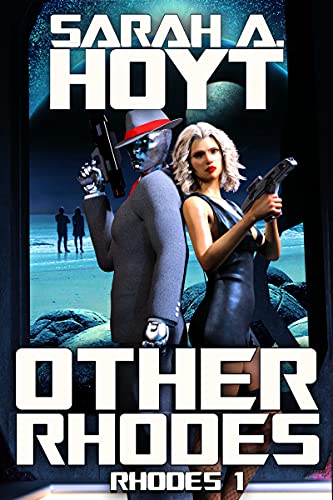
Ellie Jones turned the thing over and over in her hand, in some confusion. It was silver, and it had handle, but the size was like those stupid hand mirrors that women used to carry in their purses back when “I need to go powder my nose” was a thing.
The silver was tarnished and the elaborate scroll work on back and handle spoke of something very old. Not that Ellie was an expert. She was an accountant, not an art major. But it seemed to her this was older than most “antiques” she’d come across which were, at most, Victorian. And they looked subtly alien, like nothing she’d ever run across before.
*Note these are books sent to us by readers/frequenters of this blog. Our bringing them to your attention does not imply that we’ve read them and/or endorse them, unless we specifically say so. As with all such purchases, we recommend you download a sample and make sure it’s to your taste. If you wish to send us books for next week’s promo, please email to bookpimping at outlook dot com. If you feel a need to re-promo the same book do so no more than once every six months (unless you’re me or my relative. Deal.) One book per author per week. Amazon links only. Oh, yeah, by clicking through and buying (anything, actually) through one of the links below, you will at no cost to you be giving a portion of your purchase to support ATH through our associates number. I ALSO WISH TO REMIND OUR READERS THAT IF THEY WANT TO TIP THE BLOGGER WITHOUT SPENDING EXTRA MONEY, CLICKING TO AMAZON THROUGH ONE OF THE BOOK LINKS ON THE RIGHT, WILL GIVE US SOME AMOUNT OF MONEY FOR PURCHASES MADE IN THE NEXT 24HOURS, OR UNTIL YOU CLICK ANOTHER ASSOCIATE’S LINK. PLEASE CONSIDER CLICKING THROUGH ONE OF THOSE LINKS BEFORE SEARCHING FOR THAT SHED, BIG SCREEN TV, GAMING COMPUTER OR CONSERVATORY YOU WISH TO BUY. That helps defray my time cost of about 2 hours a day on the blog, time probably better spent on fiction. ;)*
Restarting the red planet’s core leads to the discovery of a mysterious microbe in the “interesting and intelligent” first Mars Wars novel (David Drake, author if Hammer’s Slammers).
For decades the Space Consortium of America has searched for new ways to harvest resources beyond an increasingly depleted Earth. The ultimate plan is about to be ignited. So is the ultimate threat to humankind . . .
Battle-hardened Cpt. Ry Devans and his crew of the Mars Orbiter Station One are part of a bold plan: resurrect the once-active molten cores of the red planet with synchronized thermonuclear explosions, and terraform the hell out of that iron-oxide rock for future generations. It’ll change history. So will the strands of carbon-based Martian cells that have hitched a ride on the ship.
Dr. Karen Wagner knows the microbes’ resistance to virus is incredible. It’s the unknowable that’s dicey. Her orders: blow them into outer space. But orders can be undermined. Two vials have been stolen and sent hurtling toward the biosphere. For Devans and Wagner, ferreting out the saboteurs on board is only the beginning. Because there are more of them back on Earth—an army of radical eco-terrorists anxious to create a new world order with a catastrophic gift from Mars.
Now, one-hundred-and-forty-million miles away from home, Devans is feeling expendable, betrayed, a little adrift, and a lot wild-eyed. But space madness could be his salvation—and Earth’s. He has a plan. And he’ll have to be crazy to make it work.
“Politics, intrigue, suspense, a potentially world-changing microbe, and of course the hero trying to save the day . . . Well-written and nicely paced.” —Sci-Fi & Scary
A civil war ends, and a knight returns home to a land and wife he no longer knows. A wife mourns over her lost child as her husband returns from years of civil strife. Alone, they have nothing, but together perhaps they could rebuild.
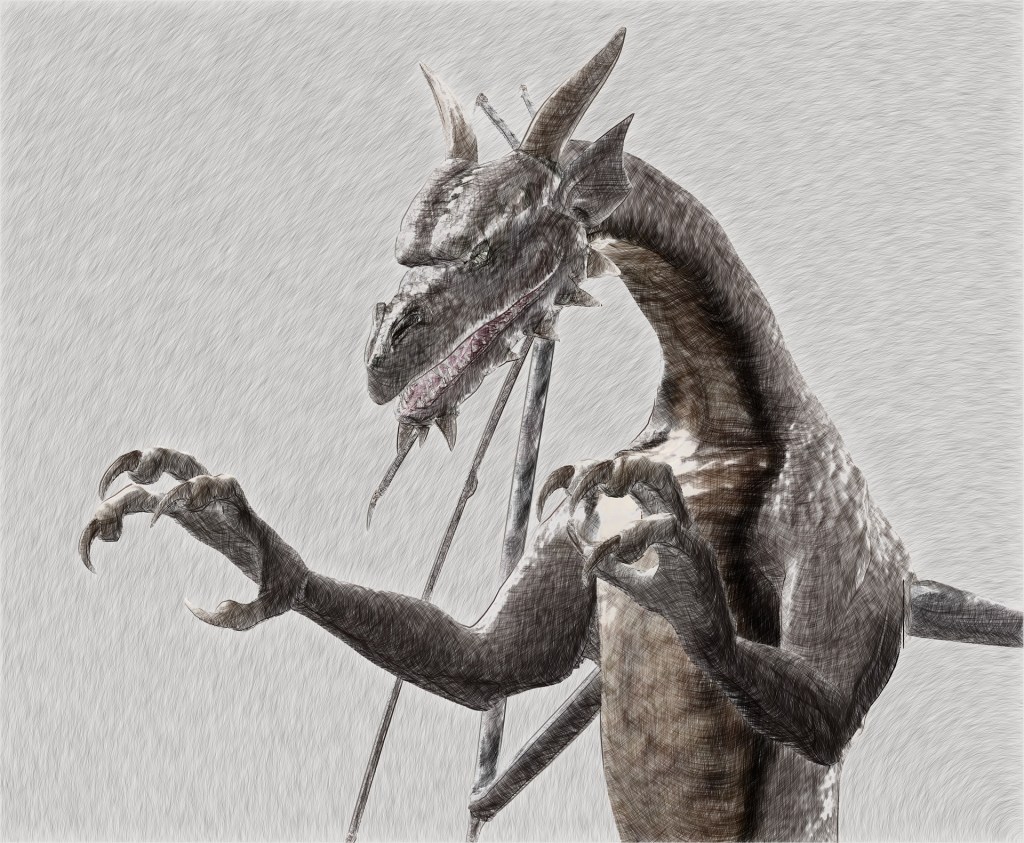
Before they can try on their own, though, they encounter a dragon on their land. Swept up in the flying monster’s beauty and power, they pack up and leave the home that holds nothing for them anymore.
The pair travel through the war torn countryside, seeing the remnants of violence that plague the land while chasing a dragon that flies above it all.
In a land of dying magic and open wounds, follow the knight and his lady as they search for meaning in a new world for both of them.
Jan well knows that it is an honor to serve the king as a firemaster.
Even when it means leaving the lands where firemasters are known and common, and traveling to where they are feared and hated, bringing with her the foundling she is raising, to fight a strange manifestation of fire.
Quiet, studious René Silva comes to Israel for graduate school. He starts attending Hebrew language classes after hours and quickly develops a crush on the charismatic, attractive divorcee teaching it. They get to talk and hit it off, and she decides there is more than one thing she can teach him. It is just learning and having fun—at least, that’s what they keep telling themselves…
When you’re a werewolf, you make your own friends… Step inside the covers and meet the monsters so creepy and so adorable that you may want to invent a new word to describe them! We like “creepydorable” but you could come up with your own. Inside you’ll find blobs, a mad scientist, and an awful lot of bats, but we invite you to begin at the beginning, with just… One Hungry Werewolf.
The Adelsverein Trilogy, now combined in a single hardbound edition, is a saga of family and community loyalties, and the challenge of building a new life on the hostile frontier. They came from Germany to Texas in 1847, under the auspices of the “Mainzer Adelsverein” – the society of noblemen of Mainz, who tried to fill a settlement in Texas with German farmers and craftsmen. Christian “Vati” Steinmetz, the clockmaker of Ulm in Bavaria, has brought his sons and daughters: Magda – passionate and courageous, courted by Carl Becker, a young frontiersman with a dangerous past. Her sister Liesel wants nothing more than to be a good wife to her husband Hansi, a stolid and practical farmer called by circumstances to be something greater, in the boom years of the great cattle ranches. Their brothers Friedrich and Johann, have always been close – in the Civil War, one will wear Union blue, the other Confederate grey homespun – but never forget they are brothers. And finally, there is Vati’s adopted daughter Rosalie, whose life ends as it began – in tragedy. But Vati’s family will will survive and ultimately triumph. They will make their mark in Texas, their new land. Adelsverein: It’s about love and loss, joy and grief . . . and the sometimes wrenching process of becoming American.
Jeriah Hartington is far from home. Born into a wealthy family, he is now reduced to poverty. In desperation, he signs on to a ship headed for the planet XKF-36. Their mission? To search for colonists who’ve been lost nearly as long as Jeriah has been alive.
Jeriah fully anticipates an adventure as they travel into the unknown wilderness. He never expected to find living people, eager to tell the tale of their sufferings. But their hair-raising account could be the downfall of everyone on the planet, even their rescuers. For a villain lurks within the ship’s crew, and no one can say who he might be.
Something or someone is killing shape shifters in the small mountain town of Goldport, Colorado. Kyrie Smith, a server at a local diner, is the last person to solve the mystery. Except of course for the fact that she changes into a panther and that her co-worker, Tom Ormson, who changes into a dragon, thinks he might have killed someone. Add in a policeman who shape-shifts into a lion, a father who is suffering from remorse about how he raised his son, and a triad of dragon shape shifters on the trail of a magical object known as The Pearl of Heaven and the adventure is bound to get very exciting indeed. Solving the crime is difficult enough, but so is — for our characters — trusting someone with secrets long-held.
Family! Can’t live with them and can’t eat them. Tom Ormson, owner — with his girlfriend — of The George, a diner in downtown Goldport, Colorado is well on his way to becoming a responsible and respectable adult, despite his rough start and the fact that he turns into a dragon. But then the unpredictable Colorado weather, the ancient leader of a dragon triad and an even more ancient shifter-enforcer combine to destroy his home, put his diner at risk and attempt to kill him. All this, of course, has to happen while Tom’s friend, Rafiel, is trying to solve a series of murders-by-shark at the city aquarium, and Tom’s newly-reconciled father is attempting to move to Denver. Fasten your seat belts, a wild ride is about to begin.
Tom Ormson and Kyrie Smith are suffering the growing pains of young romance and young business people. Tom worries obsessively about the new fryer in the diner exploding. As though he didn’t have enough on his mind, though, life decides it’s time for a sabretooth with vengeance on her mind to come to town, and for the Great Sky Dragon to try to arrange a marriage for Tom. Meanwhile, out at the old amusement park, the one with the really good wooden roller-coaster, a series of bizarre murders is taking place. And, as if that were not enough, Conan Lung, dragon shifter, ex-triad member and waiter extraordinaire starts his country singing career with an original song “If I Could Fly to You.” When Kyrie is kidnapped, it’s all Tom can do to make sure he protects her while not eating anyone.
Vignettes by Luke, Mary Catelli and ‘Nother Mike.
So what’s a vignette? You might know them as flash fiction, or even just sketches. We will provide a prompt each Sunday that you can use directly (including it in your work) or just as an inspiration. You, in turn, will write about 50 words (yes, we are going for short shorts! Not even a Drabble 100 words, just half that!). Then post it! For an additional challenge, you can aim to make it exactly 50 words, if you like.
We recommend that if you have an original vignette, you post that as a new reply. If you are commenting on someone’s vignette, then post that as a reply to the vignette. Comments — this is writing practice, so comments should be aimed at helping someone be a better writer, not at crushing them. And since these are likely to be drafts, don’t jump up and down too hard on typos and grammar.
I’m giving you the next two (Actually four but two are non-consecutive) chapters. Mostly because the headache is still killing me, and I’m having trouble finishing the story, as my fingers do the weirdest exchanges. You asked for it. Ignore “magic.” When it manifested it was the only word this lost colony had for what they did. This will worry Skippy A LOT.
You guys want to know why I’m diffident? THIS is why I’m diffident:
The King Is Dead
As he’d feared, the cries and screams echoed, even up in the guarded family wing, at the top of the ancient palace.
Eerlen Troz had rushed up five flights of stairs, the screams and baying of grief accompanying him every step of the way, as he rushed up and up and up. Sometimes a fresh note broke in, and he could almost follow the progression of the news through the various parts of the building. “The king is dead,” was spoken, and the screaming started. Visiting dignitaries in the guest quarters, traders and ambassadors, also in the guest quarters, some muffled sounds that might be from the guard quarters, and he surely hoped the military commanders staying in the palace weren’t howling like peasants who’d lost a child. Up and up and up, rushing and breathless, nodding to the guard at the bottom of each flight of steps, ignoring their pointed look of enquiry, Troz held up his long, ceremonial tunic so as not to trip on it and cursed that he’d not come prepared for this. He’d not been prepared for any of this. He’d expected nothing more than a dinner with Myrrir and the commanders, a discussion of forces and shield holders. And then a quiet night. Maker’s womb, this was the last thing he’d expected. But he must get to the child before someone else did. And it wasn’t even because the child was young and the shock would be great. There were far worse outcomes possible, when the heir to the throne was only fifteen.
By the time he reached the top floor, where the royal family slept, he knew the child – his sireling – would be awake. He was also out of breath, panting, cursing that he was too old for this. Much too old for this. And that it had been far too long a time since he’d crossed Erradi with his bed roll, hunting for his keep.
He opened the door to Brundar’s room, and rushed in, freeing his arm from the guard’s hand which had gone so far as to clutch his forearm. The guard couldn’t think he meant the child harm. It was curiosity. Mere curiosity.
The child was awake and sitting in the middle of the bed that was still too big for him, even when he was close to adult height. He sat, his eyes wide open, staring at the door, giving every impression he expected an attack. Which meant his instincts were good at least.
He was tall, but not yet filled out, a sketch of an adult without the shading, his eyes too large in a too thin and pale face. Those green-blue eyes turned towards Eerlen. Surrounded by the child’s disheveled blond locks with their bare tingeing of bronze, the face had something not quite real, or at least not quite tame. It was a face one expected to see peeking from the shadows of trees in the deep forest, a face that disappeared as soon as seen. The mouth worked. “The screams…. The…” Brundar said, his voice too thin, as though he were much younger. “Was there a breakthrough? Is—”
Oh. That. Well. When there were tapestries and paintings of that catastrophe all over, how could the child not think of that? Eerlen shook his head, more hoping than sure that it was reassuring. His breath had almost steadied. He took a big swallow of frigid air. These walls didn’t keep the heat in, no matter how big the fire in the ornate fireplace. The palace might be a confection of something they no longer had a name for, in shapes stone could not copy. But whoever the ancients were, they were more resistant to cold than Erradians or had something other than fire to keep them warm. He was grateful for the air’s coolness at any rate. And for the need to do something, to keep the horrible after effects of the death of a ruler going, before he could stop and think he’d lost his lover, also, and break down and cry like a nomad at a funeral.
But I am a nomad. At least at heart. And this is a funeral. Or a wake, he thought, but didn’t say. Instead he stepped towards the bed, and knelt so as not to tower over the child. Stretching his hands, he took hold of Brundar’s hands, and held them in his. “Brundar,” he said and hesitated for a moment. “Your parent came home…. Was brought home. He was wounded. He has … he has died. You are the ruler of Eles.”
He meant to swear his fealty then and there, but he should have known better.
It is not like he doesn’t come by his wildness naturally.
When that thought came, it was already too late, and the child had leapt from the bed, running on bare feet, wearing only a knee-length nightshirt.
Eerlen got up and followed. He didn’t waste his breath in calling. Brundar was running like a scared colt. And he’d been running towards what scared him since he’d learned to run. Perhaps not the best survival strategy, but he came by that naturally too.
He knew where to go, of course. It wasn’t the first time that Myrrir had been carried in wounded. Warrior king. Eerlen could have spit. He had tried to argue for moderation. In vain. Given the age of the one heir, given the multitude of others who could have claimed the throne sideways, by right of siring, and given that some of those had troops in their following Myrrir should have had more care for his life. For the sake of the child, Eerlen had begged. And been told, He’s my child. He’ll survive.
Yeah, well. He thought, as Brundar, far faster, vanished around the last turn of the last flight of stairs, and onto the ground floor receiving room that had too often served as an infirmary. The guards on the last three flights of stairs had been crying. The news spread.
The bottom floor was a bedlam of people crying, and wiping noses to sleeves and hems of tunics. Eerlen ran past them without even really looking, registering only that there were groups and couples, and people standing alone, pale and crying. Crazy, brave, heedless, and often far too willful. But loved. Myrrir had been loved.
Tears prickled behind his eyes, and he shook his head, as he hurried. No time. Not now. He could always howl later.
He noted without pausing that the yelling in the death chamber – the heated argument that had seen drawn swords – stopped dead as Brundar ran in, and lifted a short prayer to the Maker that the child not be run through by those swords, thereby clearing the way to the more ambitious of the arguing people.
By then he was mere steps behind and erupted into the room in time to see the five adults in the room standing, frozen in the poses they’d obviously held when Brundar ran in.
Khare Sarda of Karrash, his sword still drawn, his dark eyes flashing and Parel Haethlem of Erradi, wearing his blood-stained tunic, his face almost as pale as his pale hair, standing beside him, while facing them were Guinar Ter of Lirridar and Kalal Ad Leed of Brinar. Lords of the four subdomains of Eles, and two of them Brundar’s cross-siblings and used to ruling. All of them either with drawn swords or about to draw them. But worse in that respect was the person by the bed, muscular and somber, the biggest person in the room, his battle leathers stained with blood – how much of it Myrrir’s Eerlen couldn’t guess – his lips clamped firmly together. That would be Lendre Almar, commander of the royal guard and the army of Eles, at least the second after Myrrir. The child of the last commander. And Myrrir’s sireling. Who had always seemed to loathe Eerlen and therefore Brundar, for reasons not quite clear.
You couldn’t have arranged things more disastrously if you’d meant to, lover, Eerlen though, looking to the hasty pile of cushions and furs on which Myrirr had been lain, and which had become his death bed.
Myrrir had never been beautiful. Too many Erradians in his ancestry. A jaw too square, a mouth too strong, and the uncompromisingly direct glance that had flashed from beneath those too-straight eyebrows. Of course, let him get talking and moving, and everyone forgot that. But he’d talk and move no more. Someone had closed his eyes. His hair was still bound for battle. He still wore his battle-leathers, slashed and soaked in blood. They said the dead looked like they were sleeping. Myrrir didn’t. He looked dead.
Nothing too horrible, though his lips had contorted and remained in a final twist of pain, refusing to cry out. And he was pale. Deathly pale. But most of all, it wasn’t Myrrir. The shape might be the same, but something had left. Something was not the same. What was on the bed might be the same form, but it wasn’t Eerlen’s lover. Perhaps because Myrrir had never been able to stand completely still, even when asleep.
There was blood – a pool of it – under the body on the furs. Some of it dripped from the edge of the furs onto the floor, but sluggishly, starting to congeal. The child should not have seen that. The child—
Brundar stood very still. A statue in the shape of an adolescent on the edge of maturity. Arrested where he’d stopped in his flight, one hand forward, as though to touch Myrrir and wake him – if anything could! – one foot advanced, bare against the age-darkened oak, his nightshirt looking flimsy and far too short, even his hair seeming to have frozen in place, a mass of curls thrown back by his flight. He was so still he might not have been breathing.
And the other five watched him, their eyes intent. Eerlen would feel better if he could swear the look was not that of a wolf staring at a rabbit.
He didn’t dare touch Brundar. Almost afraid to break the moment, which would break, inevitably, the minute the child started to wail, Eerlen reached under the hem of his tunic for his ankle knives, one worn on each ankle, and that against etiquette and risking Myrrir’s laughter – Are you afraid a snow leopard will jump you in the palace, or a Drahal, sweetling? – and fuck the settled habit of not carrying swords except in battle. He was a fool to have complied even minimally and outwardly. Now he wished for his sword, his lance and his bow. And all too little. He had a feeling the minute Brundar wailed, the tableau would break and minutes later the child would be dead, leaving the throne of Eles to be fought over by the three half-siblings remaining in that room. Eerlen bet on Lendre who outmassed both Sarda and Ter. And was more battle hardened than mere governors. But it wouldn’t matter to him, because he’d be dead before they cut down his sireling, his daggers broken against those swords.
Brundar took a deep shaky breath. It sounded too loud in the absolute silence of the room. He wheeled around, standing, square shouldered and crossing his arms on his chest, looking much like Lendre Almar probably without knowing it.
The voice that came out was controlled and even, with an edge of offense. “Why wasn’t I informed before it came to this? Why wasn’t I called before the news went out?” The two questions flew like slaps at Lendre whose eyes opened wide, startled, and then Brundar turned to the four across the death bed. “And what is this? Why are swords out in a death chamber? Is this the behavior of the Lords of Eles?”
For a moment it hung in the balance. Eerlen didn’t know but could suspect how fast the child had thought and judged the reactions of those in the room, and taken advantage of his moment of absolute quietness to plan. It probably wouldn’t work, but if he had one chance it was that: sound as much as possible like Myrrir, assume authority and carry it through on that. Myrrir had been loved. For all his faults, for all his errors, he had been loved. And three of the adults in this room were his sirelings. And vassals of the new king. If they’d own it.
Eerlen became aware his heart was thudding so fast he felt dizzy. And he hardly dared breathe. The daggers felt cold as he gripped them, one in each hand.
Lendre broke first. The look of surprise passed. For a second something like laughter fled behind his eyes, and then his face was impassive again, and he fell to his knees without grace, the sound of his knees hitting the floor resounding on the wood. “King of Eles,” he said, turning to Brundar. “Defender of the lands, Lord of the people, receive my fealty.”
If Brundar was surprised, he didn’t show it. He nodded and waved at Lendre. “Stand, Almar. Commander of my guard.” The off hand acknowledgement and confirmation of post might have been done by Myrrir himself. He then looked enquiringly at the four governors. He said nothing.
Eerlen, weak with relief they had Almar and his sword, and by extension the armies behind Brundar, swallowed hard, because he would not cry, not even with relief. He caught the edge of a glance from Almar, a minimal lift of the corner of the commander’s lips and wondered if he was being mocked, but it didn’t matter. He wiped his sleeve across his face, to hide his expression. Nothing mattered as much as Brundar’s survival.
Ter tried a protest. He would. He was the oldest of Myrrir’s sirelings, rising thirty, and he had thought himself the heir to the throne for half that time. “Almar, you cannot be serious,” he said. “Brundar Mahar is a child. His sire who will reign behind the throne is an ice nomad, barely broken to civilization! Unless you mean to rule behind the throne yourself.”
Lendre knew better than to answer, and Brundar snapped, “No one will reign behind the throne, Ter.” It was said in the tone of an adult correcting a child. No real anger, though plain irritation. And no defensiveness.
Sarda put away his sword, in measured gestures, and Haethlem slid his into the sheathe at his waist. Sarda fell to his knees first, and pledged his fealty and his domain of Karrash to Brundar. Haethlem pledged fealty and Erradi – for what that was worth with war raging and invaders at its core and Haethlem’s own household more often on the run than not – and then Ad Leed pledged. Leaving Ter standing, looking sullen. To be fair, he always looked sullen. The force of Myrrir’s features had been softened in the Lirridarian, but he compensated for it by scowling.
“Ter,” Brundar said, once more the adult in the room. “We do not have the time or resources for a civil war, while the enemy has broken through into Erradi.” Just that. Not so much a threat as a statement.
Ter let out his breath in a sort of sigh of impatience, and shoved his sword, with force, into its sheathe, so hard that the clang of guard hitting metal trim rang like a bell, raising echoes from the high ceilings. He knelt measuredly, and said his oath like spitting.
Brundar looked at Eerlen then. “Archmagician?” he said. And for the first time in the whole wretched evening, Eerlen remembered he was more than Eerlen Troz, out-of-practice-ice-nomad-and-fur-trader, and the sire of the … of the new king of Eles. He felt the weight of chain around his neck and the ancient jewel it held, the red jewel of the Archmagician, the chief of the Magicians of Eles. The one who must remove its complement from Myrrir’s dead finger and slip it onto Brundar’s, before he was de facto as well as de jure king of Eles.
He bowed, slipped his knives back into their sheaths, noting Lendre’s amused look at that – he really was mocking Eerlen! — and, bowing, stepped past his sireling, now his king, to the royal corpse. It helped to think of it as the royal corpse, and not Myrrir’s remains.
He had to remove the blood-darkened, worn leather gauntlet from Myrrir’s left hand to get at the ring, at the ruby of kingship.
Unbidden, in his mind, he remembered sixteen years ago, being the newly minted Archmagician, the ruby of office shining on his chest, his mind still muddled from receiving at one go the muddled memories of his predecessors, making his bow to Myrrir, king of Eles.
It would have been easier to do this in battle, where Myrrir would be dressed in leathers and look much like the other commanders. But of course, he’d had to do it at the palace, in formal reception.
He could see himself, just seventeen, wearing his nomad furs: tunic and pants of white fur, his best but hand sewn and crude, his magician’s blue cloak still new. He’d been initiated less than a year before that. He could feel the stares of the dignitaries and courtiers, and hear that one person – he’d never figured out who, either – laughing in the corner.
And Myrrir, in silk with gold embroidery, a long, formal tunic and court slippers, that kept tapping impatiently beneath the hem, even as he sat on his ancestors’ gilded throne, looked impatient and bored.
Had Eerlen not noticed the king’s diadem lay askew on his hair, and that the hair was bound at the back, like a warrior’s, as though the king had rushed in from battle, gotten hastily dressed, and dropped the diadem on his own head as he ran down the stairs – which was exactly what had happened, with an added swear word at the need to meet the new Archmagician – Eerlen might never have found his voice.
But he’d found it and whispered his oath about laying his magicians: healers, illusion spinners, spell makers, porters and shield bearers and all at the king’s disposal.
And Myrrir had looked amused and also as though he were thinking the words that he had whispered into Eerlen’s ear much later after the celebratory banquet and obligatory music. “Never mind the magicians and healers. Can one lay the Archmagician?”
Remembering Eerlen swallowed hard. Smooth, really smooth, my love, he thought as he pulled the ring from the stiffening finger.
He turned and knelt before slipping it onto Brundar’s finger. Brundar instinctively curled his finger. Later a goldsmith would have to be engaged to make an insert to conform it to the new king’s finger. Stupid to cut it to size before Brundar stopped growing.
Eerlen bowed his head, “I, Archmagician of Eles, swear its brotherhood of Magicians and its functions, its healers, shield weavers and judicial magicians and all weavers of spells to the command of Brundar Mahar, kind of Eles.”
For the first time it occurred to him to think that Brundar was an odd name. Who called his child Vegeance? The child would grow to ask the same question.
But Myrrir had done it, and Eerlen was honor bound to answer the question when it came. Not that Myrrir’s name – Blood Oath – was any better. The Mahars were strange people. And kings for thirty unbroken generations. One more. Let there be one more. No, two more. Barren of a line-child himself, Eerlen wanted to see his sireling’s children.
“You may leave,” Brundar said, waving his hand at the four governors. “Almar, keep watch at the door please.”
Eerlen turned to leave. He could do with some kind of privacy. Tears were going to overwhelm him any second, and he’d promised himself a good howling.
But Brundar said, “Stay, Troz.” Calling him by his line name for the first time in his life. And Eerlen stayed. He heard the door close, by Lendre Almar’s hand, softly, as though he feared disturbing the dead.
Brundar turned a desolate face to Eerlen and opened his mouth as though to speak, but before Eerlen could so much as move, he turned away, took the remaining steps to the bed, lay his face on Myrrir’s shoulder and shook.
Well, at least he isn’t howling. Nothing that can be heard outside.
At length he heard the word Brundar whispered, “Enar.” It was the baby word for parent. And there, in the silent death chamber where the fate of the whole world had just been decided by the child on his knees by the bed, it made Eerlen Troz’s hair rise at the back of his head.
Because it was Murder
It was the morning after Myrrir’s death, and Eerlen Troz had felt better. He was almost sure he’d slept, for at least a couple of hours, or at least lost consciousness for a couple of hours, after the good howling he’d promised himself and indulged in. It hadn’t been very satisfying, as it had happened in his room, in the palace, a small chamber adjacent to the royal chamber and with his face pressed on the pillow to deaden the sound.
The chamber and the bed felt strange to him, and the royal apartment next door too empty, too cold. In the bac of his mind he kept waiting for the sound of footsteps, for Myrrir’s voice calling, “Len.” No more. Not even the revolting pet name which might have been appropriate when Eerlen was very young but certainly wasn’t now.
This room had once been used by a valet or a body-servant, but it had been changed into his own room, at least for the times when his presence wasn’t required elsewhere.
It was narrow, long and sparsely furnished, with a single bed, two large trunks for his clothes and a writing desk with colors and brushes enough for a business letter, or a complex dispatch. There was in fact one of those started, which he’d been working on when summoned by Myrrir’s mind touch saying he’d been wounded and was being carried into the palace.
It was a business letter and opened with “Greetings and salutations to Kalal Ad Leed, lord of Brinar—” It had been meant as a request for cloth for the army, and it fell under “doing Myrrir’s work for him.” Because Myrrir couldn’t be everywhere, and he trusted Eerlen like his own self.
With a pang Eerlen realized he didn’t know if he’d ever take on those duties for Brundar, if Brundar realized those duties even existed, and that he would probably have to find another room within the palace, if Brundar should want him to stay and not decide that Eerlen should, instead, return to his nomad route in frozen Erradi, hunting fur bearing animals, sleeping in ice caves. Not that Eerlen would mind. In many ways it would be better to escape the palace and the settled life of a courtier, not to mention the constant reminders of Myrrir. He’d never been suited to the palace. And he kept expecting Myrrir’s voice.
His eyes were drawn towards the only ornament in the room, the only thing not strictly utilitarian. It was a lifesize portrait of himself and Myrrir, painted a couple of years before Brundar’s birth. It was a copy of the one in Myrrir’s workroom on the other side of the royal bedroom. It had been painted in one of the chambers that Myrrir used as a work room: a vast room, with a vaulted ceiling and soft rugs and vast floor-cushions which Myrrir preferred to chairs or sofas.
Myrrir was dressed in a dark blue silk tunic, ending just above the knee, and court slippers in dark blue leather engraved in some kind of floral motif. He wore the swearing belt Eerlen had given him: composed of heavy squares of silver, engraved with passages from Missa’s Confession. It was quite the most elaborate and expensive thing that Eerlen had ever commissioned the making of – two bear pelts. Enough for a small house — and utterly inappropriate to Myrrir, who probably would have preferred red leather tooled with Eerlen’s name. But Eerlen had been young and over-impressed with the idea that the king would accept his swearing. Myrrir’s dark blond hair, the color of ripened wheat, was pulled back on one side and fell over the other shoulder, straight and smooth. It had been Myrrir’s despair that his hair shed ties and binds, so he had to work double hard at it to keep it out of the way in battle. He’d once cut it short when he as very young, and the story was still a scandal at court.
By Myrrir’s side, Eerlen looked – to his own eyes – insignificant and much too young. He was about Myrrir’s height, and as with Myrrir there was too much Erradian and too much Drahal in his ancestry for him to ever be pretty much less beautiful. But there the resemblance ended. To Myrrir’s laughing green eyes, his counterposed a dull grey. And where Myrrir’s features gave the impression of mobility and inner joy, as though he were about to burst in laughter, Eerlen looked grave as though he were pondering some deep matter. In fact, in those days, he’d lived with a near crippling fear of saying the wrong thing. But it could pass as deep thought in some lights.
He wore – against Myrrir’s protests, he remembered – a dull-white silk tunic. Silk had been Myrrir’s insistence, but the white had been Eerlen’s. And Myrrir had been right that it washed out Eerlen’s pale skin and hair, till the whole looked like a shadow, except for the ruby, which Eerlen had cupped in his left hand for the portrait. It hadn’t even been on purpose, to showcase his status, but he’d put the hand up and the painter had liked the gesture and told him to hold.
His other hand was forward, almost meeting but not quite, Myrrir’s hand that reached back. He too, at Myrrir’s insistence, wore his swearing belt, a thing of gold and diamonds, with Mahar spelled out in garnets in the middle of it.
Eerlen remembered being uncomfortable and feeling out of place and stupid when the portrait was painted. Right now, he’d trade all his self assurance, all the knowledge that sixteen years had earned him to be there again, when the portrait was painted. To reach fully forward, to feel Myrrir’s warm battle-calloused hand engulf his. To have Myrrir look back, laughter in his eyes. To know he had years ahead with Myrrir.
He’d endure everything – the still births over the years, the blighted hopes for his own line – Myrrir’s voice, on a rare sad note Too much Drahal on both sides, sweetling — the comedy of errors of learning how the court worked, the days of missing the ice and solitude so much he felt he’d die, the weeks of holding the magical shield over the battle against the might of the enemy with barely any time to eat or sleep – he’d endure all of it for sixteen years more with Myrrir. Truth be told for sixteen days with Myrrir. Or sixteen hours.
He sat up. For one, because if he knew he could have kept Myrrir from being murdered.
The word in his mind shocked him and he shook his head. War deaths weren’t murder. Not that way.
He dragged himself to standing His eyes felt gritty, perhaps from crying, perhaps from not having cried enough.
He’d got so far as to think he must get clothes and bathe, when there was a knock on his door.
“Come,” he said, while ready to reach for his dagger under the pillow. No, it shouldn’t be anyone hostile, not when they’d have to get past guards, but who knew? Technically as the king’s sire he had no power and no status – certainly far less than the king’s sworn lover and helper — but someone might decide Brundar loved Eerlen too well, and Eerlen must be removed.
But the person who came in would know all about the guards. Which wasn’t to say he was tame or safe. Lendre Almar stood just inside the door, his bulk projecting a strange echo of Myrrir’s more gracile form, his serious eyes a shadow of Myrrir’s laughing ones, and said, “Troz.”
“Almar.” What followed, Eerlen guessed, could be anything from a request to vacate the premises to a request to accompany him to a tidy cell, to—No, there was no good outcome here, not when Almar was frowning thunderously, an expression that made him look like Myrrir in his worst moods.
“I need help and the king is asleep. I don’t want to wake him, and the Archmagician should have authority in this, because it is judicial.”
Eerlen started. This was not at all what he expected. His hand flew to the ruby as it did when he wasn’t sure. “The Archmagician? My authority?”
Almar took three steps into the room, and stopped, his hand extended towards Eerlen but just short of touching him, a plea, lifted, half-folded, palm up. “Milord,” he said. “As a fourth circle, I beg you to stop my sir—to stop Myrrir Mahar’s preparation for burial until a quorum of the circle can examine the corpse.” He paused a breath. “If you don’t, he will be washed and dressed and the traces will be gone.” Another pause. “I’d say you do the examination yourself, but you’d still need a quorum of fourths before it were taken as official, begging your pardon, milord. But your being his sworn, you’d need corroboration.”
“Yes,” Eerlen said, curtly. Of course Almar was a fourth circle magician. A justice bringer; an examiner of scenes of death; a determiner of guilt. Ridiculous to have almost forgotten in the mess yesterday that Almar was under his control. He could have brought him to heel with– No. He could not. Almar was Myrrir’s and Myrrir’s sirelings were as stuborn as their sire. He couldn’t have made Almar do anything short of breaking him, and that’s not what the Archmagician did. But Almar was a fourth, as Myrrir had been, of all things, a third circle – a healer – as Brundar would likely be when fully grown. Fourth circles were judicial magicians, judgers of guilt and foul play.
“But the traces of what?” he asked confused.
Almar bit his lower lip, not so much in frustration as in surprise. He looked at Eerlen in utter surprise. “Of my sire’s murder.”
He could prevent Myrrir from being murdered, ran through Eerlen’s mind, in recollection of his earlier unbidden thought. Had he picked up something from the scene? From Myrrir’s mind touch. “It was a death in battle,” he said aloud. “Those aren’t murder.”
“It feels like murder” Almar insisted. “I could feel it in the room last night. The murderer was there too.” And then his eyes widened, apparently in shock at Eerlen’s long and fluent cursing. It surprised Eerlen too. He’d never been profane, certainly where anyone could hear him.
In difficult situations; faced with recalcitrant traders, or a shortage of food for the army, or a new binding by the enemy, he’d been known to say “Rotten ice” but that was it. In fact, servants and secretaries knew that very mild swearing was a sign of extreme displeasure.
He stopped in shock the third time he mentioned the Maker’s balls and the Maker’s Empty Womb, and sighed. “I will try it first? Then call a quorum?”
“Milord your being the Archmagician—” Almar didn’t quite say that given his command of power, its strength and his experience and abilities, Eerlen could create traces of murder or erase them, even if there had been the opposite. But he made it clear.
Eerlen almost swore again. “Fine,” he said, almost with venom. “Is the chamber guarded?”
“I left two of my best with instructions to let no one through.”
“Very well. Go and wait there,” Eerlen said, as he put out a call for all fourth circles within reach of Eles city, and why.
Then he rushed through bathing – he remembered when the ever-running warm water pools of Eles palace had been a sybaritic delight, but that day he rushed through dipping and soaping and rinsing, half dried his hair and braided it still half wet. He slipped on undyed linen pantaloons and short tunic, Eles peasant attire, pulling the ruby to sit over the tunic. He owned better clothes and as the Archmagician, he was entitled to better clothes, had often worn them, for effect. And as the king’s sworn– He heard Myrrir in his mind saying, “Oh, please, Eerlen. Stop trying to pretend I seduced some hapless illiterate! Put on something the court won’t gawk at.”
He frowned at Myrrir in memory. Myrrir wasn’t good at treading the very fine line of palace politics. He’d been born the child of a royal parent, after his full-grown sibling had died childless, and had known himself a ruler from the time he was born. He’d never needed to dissemble and excuse, to apologize or beg. He’d always been at the pinnacle of society, either destined to become ruler, or the ruler.
But Eerlen sensed his position, precarious, like a floorboard that turns under your foot.
Yes, he was the Archmagician. Yes, he’d lived in the palace for 20 years, and been the king’s sworn for eighteen. But it was important just now not to give the impression that he was important, that he still had a role in the palace. It would give rise to the idea he was controlling Brundar, and would rule behind the throne.
Because he knew he stood on fraught ground, he eschewed palace slippers for his own moccasins with the rough soles: better for running.
He ran out of his chamber and down the five flights of stairs.
To his surprise Brundar, looking ill awakened and too young in a long tunic of heavy dark fabric, was waiting outside the door. “They won’t let me in,” he said, his voice less the king’s and more the bereft child’s. “They say they’re examining my parent.”
As though on cue, the door opened, and Almar, pale and strained, stood in the doorway. “You must come in, Archmagician,” he said. His eyes flickered to Brundar. “And you my lord. Distasteful as it is both of you must come in.”
Brundar looked scared but didn’t hesitate. He stepped into the death chamber ahead of Eerlen.
Myrrir had been stripped and turned on his stomach. There was a sheet covering him to the small of his back, where the marks of several dagger stabs were visible.
“He has wounds in the front too,” Lendre said. “More grievous perhaps, though these…” He paused. “These were poisoned. And came from the back, where only his trusted stood.”
“His trusted?”
“Ter, Sarda. My half siblings. Their seconds in command. They were the ones behind my sire. I was… I was further back and only rushed forward when I saw him fall. I have witnesses. The dagger stabbed him in the back, several times, making it impossible for him to back away when the shields failed and he was slashed from the front. But even so, he’d have survived, only the dagger was poisoned. Plant poison, probably from gern. We can’t tell for sure, but though it was slow due to small dosage, it was the poison that killed him.”
“Only a fool poisons a dagger,” Eerlen said. “The danger of stabbing yourself—”
“So the murderer wasn’t a professional,” Lendre said. “But the king was still murdered.”
“Why?” Brundar asked, startling Eerlen who’d forgotten his sireling was in the room. “Why would anyone murder my parent? While he was fighting to defend Erradi and all of us?”
And suddenly, with a feeling that his world had sunk beneath him, Eerlen thought that they should never have done this. They should have kept it secret.
…. But then would they not try to kill Brundar? If they thought they’d got away with murder, unpunished?
AND NOT CONTINUOUS, THE TWO CHAPTERS OF SKIP’S TRAINING FOR BEING A DIPLOMAT:
Schrodinger Path
Skip:
It is not true that the engraved plaque you see when you come into the IDS buildings devoted to the training of future diplomats says Abandon all hope ye who enter here.
I do understand why that has become widely believed, and to be fair it could be that. But my guess is that it would be too much blunt truth-telling for the IDS.
What the plaque, a fine sheet of silver, or perhaps a glassteel imitation of silver says, in raised golden letters – it is also not true that the IDS has ever had any aesthetics – is: You Can Never Know Enough.
This was certainly true for me. Through the year of my initial training I was often grateful that the initial problems, first contacts and negotiations were virtual, done in mersi chamber, and with species, worlds and issues created from whole cloth by instructors. This is good, because no matter how much I studied on the upcoming situation, learned all the trigger words I should never use, the relationships I shouldn’t mention, implied we’d consider their just cause – even if their just cause was wanting to eat their neighbors raw – or whatever I did, it ended with food thrown at me, elaborate insults offered to me, or me running out of the mersi room with a virtual lynch mob at my heels. Fortunately they evaporated on the threshold. Unfortunately, after a year of this, I started thinking whatever I was suited for it was not being a diplomat.
I might have said that failing wasn’t an option. Not for my Mother, at least. But at almost nineteen, I was starting to get a feeling Mother’s view of reality might be unrealistic.
So I ignored the card she sent me to congratulate me on finishing my first year of training with flying colors – what kind of bilge were the instructors selling her? Oh, yeah, under no circumstances is the IDS truthful – and tell me she was proud of me. I set it on the table, looked at me in the blue uniform of a diplomat trainee – why did I always end up in blue uniforms? – and thought well, it was time to find something else to do with my life. Which was a pity because the small room with its single bed, its reader and its music system had been a refuge of sorts. Since I didn’t use my title here and went by Skip Hayden, no one seemed to know me. Out there, or on the estate, I’d have to become the viscount Webson, and – yes – the prodigy war hero.
But one thing my father had told me is that many people spent their lives in pursuit of careers they weren’t suited for and that it was a waste. He was speaking of a particularly thick-headed student at the Academy, but considering my performance here, I was sure he would say it applied to me and diplomacy.
I walked out of my room, stepping crisply. That was one of those things they’d told me to change – among the other hundred things. My walk was apparently too crisp and “military.” Which since I’d lived in a military academy for most of my life, should be no surprise for anyone. But one of the many mottos that the IDS threw around was: A Diplomat Always Looks Relaxed.
Well, I wasn’t going to be a diplomat, and I didn’t feel particularly diplomatic, I didn’t try to correct my walk, which at any rate meant that instructors told me I was walking like a sick duck, and just left the dormitory floor, in search of the first instructor whose face I knew. I was going to ask for a resignation form and then I was—
Well, probably going to go back to the estate and figure out what to do with the next 100 years. The impulse to become a diplomat had probably been stupid, anyway.
Of course the instructor I ran into was Matt Crowe, who was walking out of the mersi room with his own crisp step, probably just having set up hell for the next patsy to step in for a simulated diplomatic interaction.
Crowe or Mr. Crowe – though none of the instructors had less than a doctorate, mind – as he preferred to be called, was one of the youngest instructors. He was about forty, had dark hair, grey-blue-green eyes which could assume a laser-point intensity if he thought I was being particularly stupid, always kept close-shaved and looked like a military academy graduate, as I should very well know. Which meant I was always tempted to salute and call him “sir.”
I controlled with an effort of will, as I came to a stop in front of him, and of course, predictably, what came out of my mouth was a weak and wandering, “Er…. Mr. Crowe?”
“Hayden?” he said. As though it were a big surprise to find a student wandering the halls of the instruction wing.
“Yes, sir,” I said, and there must have been something to my voice because he didn’t correct me. “I wonder if I could have a few minutes of your time, sir? Or do I need to make an appointment?”
He frowned at me. “Is it vital that you see me right now?” he asked.
“Yes, sir. We could wait, but it would be a waste of both our times.”
His frown got more thunderous and I swear he’d had someone install laser light behind his eyes. That kind of look, with a glow should hurt. Him, I mean. It did hurt me. Or at least made me sound like an idiot.
He nodded once, pivoted on his heels and said, “Come.”
I followed. We walked past the mersi room, past the study rooms where we had to read over the records that we weren’t trusted to take to our private rooms, and past a rowdy group of just-enrolled trainees making jokes about their last mersi experience.
We stopped by a row of doors at the back, in front of the one that read Matt Crowe. Like most things at the Academy, they were low tech wood doors – I guess they didn’t want to get us used to unnecessary gadgets – and he pushed the door open and gestured for me to go in.
Inside it had the look-feel of an interrogation chamber, with a battered wooden desk, and two chairs one on each side. I took the one in front of the desk, and looked around to make sure there was no glaring interrogation light to point at my eyes. Crowe took his seat behind the desk, looked at me, as if that would tell him anything, and then leaned back – I guess a diplomat must strive to look relaxed, or something – and said, “What is wrong Hayden? How may I help you?”
All my instincts from Academy days reared up. When an instructor asked how he could help you, you inevitably found out he wished to help you improve your attention to detail by making you hand sew a whole new uniform between night and the morning, or perhaps clean all the restrooms in the building in two hours, given only a small sponge and a bottle of breath freshener.
But I took a deep breath, told myself I was being an idiot, and said, “I would like to resign, sir.”
He looked…. I wasn’t sure how he looked. It wasn’t exactly surprised. But it was…. Okay, I was a failing diplomat, but I’d lived with humans before. If I weren’t talking to an instructor, I’d think he was angry.
I cleared my throat, “I signed up for instruction voluntarily, and it is my right to—”
He nodded, once. And then he did the most bizarre thing.
He took something out of his pocket, got on a chair and, reaching to what looked like a completely featureless piece of ceiling, stuck the something on it. From my perspective, it looked like a round, colored paper dot. Green dot.
Then he stepped down from the chair, walked to the door, and locked it. He took his chair back behind the desk, and sat on it. Then he leaned across the desk, “Please, don’t.”
I blinked, looked up at the dot, back at the door, and then at Crowe, wondering which of us had taken leave of his senses.
He smiled, but it was a weird, restrained smile. “I suspected that’s what you wanted to do. Which is why I brought you to my office, instead of to one of the learning rooms, which is more common for this sort of interview. You see, for whatever reason video pickups just don’t work in my office, and the audio becomes oddly random and choppy, even when I’m not here. They’re used to this, so I doubt it will be noticed.”
“Sir? Is this an exercise?”
The smile became rueful, “In a way. Something you’ll learn, Hayden, is that at the IDS nothing is ever simple. Or at least that’s what I’m learning. Look, I looked at your file. You’re Viscount Webson, right? And your mom is a countess who is sixth cousin to the queen or something?”
I blinked again. “Something like that.”
“Then what I suggest is that you tell your mother someone is trying to make you wash out of the training. And tell her to have the Queen send word she would like you to graduate as soon as possible.”
I was about to say that my mother wasn’t in that kind of relationship with the Queen. And it was true. Although there was a blood relation, Queen Eleanor might be a cousin – a lot closer than sixth and probably on three sides, because Father despite being a mere commoner, had some royal bastard blood – but I didn’t think that Mother had the sort of friendship where she could ask a favor of the queen. Mother didn’t have that sort of friendship with anyone.
On the other hand, it occurred to me that I might. Well, not that sort of friendship, but that sort of reach. After all I was a war hero. Things being done against a war hero would be bad news for the monarchy’s image. I had a feeling – though I’d never paid much attention to politics – that the Queen wouldn’t like this.
I sat up straight. “Tell me exactly what’s been happening, besides my rather unspectacular performance.”
He made a face. “They have been ordering you to be put through 3rd year mersis. The ones given to the men who have done two three months rotation in the field.”
I blinked.
“Frankly the fact you have lasted almost the full simulations is a sign of enormous talent. Which is why I’d prefer you don’t resign. Queen Harmonia left us in a hell of a mess. To clean it up we need real talent. Which is why I was brought in, from the Space Force, having finished a doctorate in diplomacy while deployed. And why I am an instructor despite my having no title, amid all you noblemen, instructors and students alike.”
I narrowed my eyes as the picture formed. Crowe had been given a sponge and a bottle of breath freshener. “You’re on cleanup duty?”
“Of sorts.”
“But why would anyone put me on third year—” I stopped. “Did they misjudge my ability?”
He snorted. “Oh, no. I can’t find the details, on account of not being a director.”
Really, a small sponge and a tiny bottle of breath freshener. “But?”
“But it bothered me that they were ordering this course of action, and I poked around enough and spied at doors enough—”
“Sometimes good diplomats listen at doors,” I said, piously, another plaque in another room of the complex.
He made a face. “Anyway, I get the impression that one or more of the directors were…. We won’t say bribed but something very like. There would be a donation coming, sort of thing if you were made to wash out.” He opened his hands on the desk. “Nothing I can prove, or take to her Majesty. Not with the directors all being noblemen at the highest levels. And I very much suspect the bribe was less tangible than money changing hands.”
I sat back. Well. That could have come from anyone, though my main suspect would be Mother, complete with the card complimenting me on finishing out the year. It was just the sort of thing she would do, since she would much prefer I go back to the estate, and learn to do estate things, not to mention marry and set about producing a long line of heirs. Though the marrying might be optional. I had no idea if she knew my proclivities, but even without, I suspected she’d be absolutely happy with my having a lab contracted for children which would be wholly hers to raise, while I managed the estate, or perhaps went back to the space force.
For the first time I wondered if Father had stayed so long in the force for a reason.
But if Mother was behind this, I obviously couldn’t go to her. And if Mother was behind this I definitely didn’t want to expose her. Our relationship was fraught enough.
Well.
I looked up. Crowe was looking at me, eyebrows slightly raised, as though trying to divine my calculations.
“Look,” I said. “It’s a very long gambit, but I can send a note to Queen Eleanor through some contacts.” From what I understood, my great uncle, the Judge, took tea with her majesty fairly regularly. “I need a half day pass. But I warn you, it might not work.”
He made a face. “Very well. I will, at the same time, pass a message through my contacts. It is all a very long shot, but I’d prefer the diplomatic service of the Star Empire not lose you, Viscount Webson.”
“Just… Skip Hayden,” I said, and offered him my hand. Yes, I knew this might all be some complex lie, but somehow it didn’t feel like one.
He nodded and got a disposit pad from his drawer. He set it on an away pass, and signed it with his gen-print, then handed it over. It was a little thing, smaller than my palm. I slipped it into a pocket.
Yes, that did mean I had to endure tea with Great Uncle Zimon. And yes, the tea in his ornate office, with a footman behind each of us –making sure we didn’t drop crumbs or threw the cups on the floor, I guess? – felt unaccustomed and oppressive, though I’d done this once a month when I’d been in the Academy.
Great Uncle Zimon had a completely different idea of who and what was causing my issues at the Academy. He was fairly sure it was that the directors themselves were jealous of me, and afraid the Queen would appoint me to the board. Which would make perfect sense, of course, if I had a doctorate, which I didn’t.
But my – paternal – uncle thought the Haydens were the most illustrious and brilliant line in all the Star Empire, and all the other lines conspired to bring it down. Pretty much constantly. It was a pet paranoia which I suspected he only admitted to other Haydens, that is to me, otherwise someone would have locked him up long since.
But the end result is that he took my note to the Queen and I returned to training at the IDS, not expecting much of anything to result from that afternoon. I’d planned that if nothing changed, I’d resign in a week.
However, things changed.
The first thing that changed was that I did indeed receive stellar grades for my first year, each of the exercises being graded on a curve, for being far above my ability, and therefore the portion completed counting as more than enough.
The other change is that the mersi experiences became more…. Related to how much I had studied and how much I concentrated.
This is not to say they became easy.
Valhalla is for Heroes
Skip:
I was on the third week of my mission in Valhalla when I realized I was going to die.
And it was only partly because I’d been sent on a mission half-briefed. Though to be fair, my superiors had tried to talk me out of it.
So, in Valhalla men are tall and blond and muscular, and women are tall and blond and buxom. The last one was, to my purpose, nothing of course, but the first was enough to keep me having to calm down the caveman at the back of my brain because I was not, certainly, going to try to read the body language and whatever the social hints were in his society. Partly because, alas, Valhalla as a world and as a society was completely, screamingly insane.
Also, vital to the star empire and to humanity at large.
You see, part of the issue is that the universe in which the Star Empire subsisted was a very complex one. Okay, I might be understating things a little.
Father was – as my name should testify – enamored of Roman History. I could almost understand that. All those far-flung lands the Romans conquered, all those strange cultures. All I had to do is make them planets, star systems and alliances of worlds, and it all made sense. Almost. I mean there were limited models of humanity and social organization back then, while we’d opened up the pandora box of biological experimentation and planet transformation and–
To start at the beginning what made no sense whatsoever was the history of the late 21st century, with a lot of different nations, packed cheek to jowl in a planet where transportation had shrunk the distances between different cultures, at the same time that technology and wealth made the dysfunction of royal families throughout the ages available for every citizen, at least in the more wealthy countries. Truly, some of the ideas that animated the age were truly bizarre.
One of my instructors at the Academy said that the 21st was a struggle between globalism and localism, communalism and individualism. And then he had to explain one of the ideas on Earth at that time was world government.
Some of the boneheads in the class had thought that was a good idea, but I ask you! I mean, this was some six or seven billion people – billion with b. The fact they didn’t and couldn’t know precisely how many is a complex issue tied in to other dysfunction – belonging to hundreds of cultures with different languages and histories going back thousands of years on a particular place. Who can govern all of that that closely? Or even understand it?
Sure, the Star Empire has many worlds that are under a single government. My mother’s domain, for instance. But that world was a single colony, started less than two thousand years ago – by the colony’s timing – and if we toped five hundred million people I’d be very surprised. Not that I’d looked at stats recently, or indeed at all.
And in fact, though yeah, the star Empire is an Empire on paper, commanding over many different worlds, it’s more of a commonwealth with some hard and fast rules considered absolutely necessary to civilization, and the rest held very loosely indeed.
Trying to govern a world – or an empire – with a hundred different cultures and make them all fall the same rules, and– Well, it’s kind of like the Nirians and it all ends in slavery repression and shit, while you have to take over more and more worlds into your dysfunctional tyranny just so you can plunder them and minimally feed the worlds you already have.
This wasn’t available to the Earth at the time because that they knew – they were obviously wrong – there were no polities outside Earth they could plunder to feed their one-Earth-polity should they ever achieve that. Which they fortunately didn’t. The people who wanted it just turned the entire world into “sack stuffed with rabid rats” instead meaning the areas of calm and sanity were rare and far between.
So you take the Earth of the 21st century, and we probably shouldn’t be surprised that people packed into the colony ships as soon as they became available.
Even though the ships quickly became nicknamed “Schrodingers” because half of them just disappeared mid-translation.
Men and women by the hundreds of thousands packed into ships that had a reputation for reaching their intended destination about 50% of the time.
My instructors said it was because the entire period was psychotic.
I thought it was because sometimes you just have to get away. Or perhaps you want to try your really whacky idea.
My ancestors’s whacky idea was perhaps not insane. They had collected a population that wanted to live in an anglophonic world, ruled – to some extent and loosely – by a constitutional monarchy which harked back to some idealized version of the culture of Great Britain – a nation on Earth for those outside the Star Empire – somewhere between what my father judged as be the Tudor age and the Victorian age.
We had a constitutional monarchy, a strong common law that protected individual freedoms – at least on paper – and a culture of exploration and alliance-making. Or at least that’s what the instructors said.
Anyway, it took almost a thousand years – Earth time keeping, because this is where things become complicated – for people to realize all those colonies that had gone to Earth orbit and entered the Bardell-Vicari-Broz gate were not only effecting a translation in space – virtually instantaneous as a highly sophisticated AI simply relocated the mass from one point to the other, — and don’t ask me how, I never understood the physics but they had something to do with a holographic theory of the universe – but also translating the ship in time what appeared to be a random number of years. Or hundreds of years. Or thousands of years. Or possibly even millions, though we never found one of those, even if some ruins we found seem suggestive.
I don’t want to give the impression all these time-transitions were to the past. It wasn’t common, but it is not unheard of, to discover a newly arrived colony, aghast and upset at the idea that they’d jumped – Earth Time – five thousand years into the future. Or confused at the profusion of humanity all over the inhabitable worlds.
What might not be readily understood, at least if you didn’t study history, is that for the free worlds, of which the Empire was one of the main alliances – the other being Earth’s Commonwealth – the most important resource were people. Oh, habitable worlds, too. But particularly people.
You see, a lot of the strange ideas that had gone to space and been lost for thousands of years had evolved into totalitarian horrors, reaching ever outward to subjugate more and more worlds. The Quan Empire, for instance, was rumored to not even be composed of people anymore, having replaced all their wretched subjects with cyborgs: brains inhabiting specially designed machines. And the Nirians started out with the idea that they’d all be closely bonded and equal together and–
Father said the estimated number of people in mass graves there were around a million over three hundred years, and that was not counting chronic starvation and death from overwork.
So to anyone ethical or anyone who wants human freedom to survive, finding the smaller lost colonies and bringing them into the sphere of the Empire is absolutely necessary. As fast as possible. And also they might help us out, because—
Okay, so when I said our greatest resource was people…. It wasn’t precisely a metaphor. What we’ve found is that many colonies had developed…. Special abilities, like that place in Proxima where they had taken gen-geniering to the next level. Or the people themselves had evolved changed.
Like the fact that the natives of Valhalla were the only ones capable – granted with the use of a powerful drug — of mind-linking the schrodinger machines and forcing them to recognize time as a variable. Apparently it takes a human brain to “see” time. And unlike the Qan we don’t take the brains out of the humans before attaching them to the machine.
It has made Valhalla—started as a lost colony, and therefore very inbred, besides being in a world with very few resources – the most disputed world humans ever colonized. Both the Star Empire and the Earth Alliance have tried to lock them into exclusive contracts, which would make the rest of us subject to the other for forever. Even for free humans that’s bad. But then consider what would happen if the Qan Empire captured Valhalla…. Millions of cloned brains serving in machines
So we desperately want others with the same capacities, or others who can find a way around the problem with the schrodingers. Bonus if they don’t need the drug that allows the interface, but which kills most Valhallian men who do this in their mid thirties.
The problem is that many colonies started out strange, and evolved weirder.
So that motto of You Can Never Know Enough is actually true. But you can know close to enough. Particularly with the help of various technologies.
It starts with linguistic nano translators. Don’t ask me how it works, I have no idea. As far as I’m concerned they’re virus-sized computers that contain within them the entirety of human linguistic knowledge from the time humans recorded languages – and some shrewd guesses before that – which colonize your brain and allow you to understand and speak everything after being exposed to it for a few minutes. But I am science-illiterate, and when I explained it this way to an acquaintance of Father’s who was a scientist, he’d looked at me with wide open eyes, and then laughed so hard he turned purple and Mother wanted to call the medtechs.
Whatever they are and whatever they do, it’s like having a linguistic computer between your ears that scans everything you hear, and can assemble a linguistic model within a few minutes, and start feeding it to your lips without your even being aware of it, so that you answer in the language you’re spoken to.
I imagine what it was like to be a diplomat in old Earth. Or rather I don’t. A lot of them – from the rare bio that survived – seemed to go from country to country. How did they learn all those languages so well? Or did they make egregious mistakes? None of this was revealed in our lessons, and a lot of things we know from the 20th and 21st century are fragmentary.
After the language, there are tomes and recordings, and virtual training sessions, so you know the history and cultural touch points, and be trained so your body language doesn’t present weird.
You can learn enough to prevent having to run out of rooms with people on your heels.
My first assignment was to Novo Mundo, an amazing place which had been re-discovered after being lost for what for them was about five hundred years. But honestly they hadn’t made much of an effort to be found, and hadn’t cared much about it. They came from a place called Brazil in old Earth had had devoted those five hundred years to developing newer and stranger foods, and much much more interesting dances than I’d ever seen. Other than an incident where I’d drunk some liquor distilled from algie which they assured me was non-alcoholic and– The mission went well. I was only junior observer, anyway, and I got top marks.
The second one, and the graduating determinant was more serious. I was sent to Valhalla to persuade them not to sign on an exclusive treaty with Earth, which would require them to send their sons possessed of the ability to communicate with the schrodingers to earth only.
I wondered at the time what they were doing sending a barely minted diplomat, on a provisional license — since I had to accomplish the objective to graduate — to Valhalla to secure a vital treaty.
Failure had such strong implications for the Star Empire’s ability to travel at all.
And it was hard. Really hard. It took me two weeks of listening to and responding cogently to official speeches and objections; being polite when I wanted to tell them to take a hike and eating a lot of feigleire. I understand the translation of this from the weird native language means “mud chicken.” It was neither chicken nor… Well, I guess it is a mamal of some sort which borrows into the muds of swamps in a world where most of dry land was either swamps or deserts, since they had a single continent and a vast one. I’m told that there should not be nothing particularly objectionable about the feigleire, except for looking like a hairless six legged rabbit. But in fact there was a lot objectionable about the feigleire. As in, the Valhallians processed the meat by a process which worlds of more civilized Scandinavian ancestry reserve for fish and which produces Lutefisk.
Let’s say I never want to see or smell with feigleire or Lutefisk again, if I live to be a thousand. And I cursed whatever accident of parallel evolution made every alien creature so far discovered have the same DNA structure as Earth life and be compatible enough to be eaten.
So while in Valhalla I was in danger of starving through being served Feigleire until the mere smell of it made me want to vomit. I was also in danger of starving because, well, before letting us eat at all, the family that was hosting me made us sit through a recital of all their dead in Hel who were invited to partake the…. Ah spirit of the Feigleire we were about to eat. One of the names of that least by the way, for the family hosting me was Rhyatt Nyheizor. Yes, the lost prince of Denarcia. Which led me to wonder whether the natives were a lot more cosmopolite and clued in than they appeared to be.
Which to be fair Mr. Crowe had warned me about before I went to Valhalla.
He’d met me outside the training facilities, at a little café in a backroad of Imperial city, where mostly working people and locals ate. Over sandwiches and coffee he said, “Look, Skip, the training videos won’t tell you this, because our intelligence sucks, and we tend to take cultures at face value of what they tell us they are, but the first thing you need to be aware of is that Valhalla is not barbaric.”
I raised my eyebrows at him. Any culture who was willing to sell their superfluous sons – for some reason only men, and not all of them, had the ability to connect to the machines — to a richer culture because during the brief life they’d have after that they would make enough money to make the mother-world rich was barbaric.
“Yes, I know. You think that their sending their sons to brief, if glorious indenture on other worlds is barbaric. But you’re missing the culture. And that’s what I have to explain to you. Valhalla is also not like other Scandinavian colonies, which were planned and went out and many of which – including the Nirians, by the way, were experiments in egalitarianism.”
I arched my eyebrows again. I’d come to know Mr. Crowe. Liked him even. But the thing about him is that when he was in lecture mode, and particularly if he thought training had left me without much clue, he could go on with very little interaction on my part.
He sighed. “The name of the planet should be a clue. We don’t actually know how it ended up that way. We have names of the crew of the ship that got sent not just backward in time, but somehow sideways in coordinates to Valhalla. They were a mixed crew. Not even all Scandinavian in origin. The ship, by the way, was a scientific expedition, not a colonizing ship. They were lucky it was a massive scientific expedition, designed to study several worlds in a row. But you know, they were mostly eggheads from all over Europe and a bit of North America. And they seemed to be normal for 21st century Earth.”
“Which is to say completely insane.”
“Well, yes. But part of it, or perhaps the whole of it is that one of the crew – one of the scientists – a physicist — on the crew – was obsessed with … ah…. Not Vikings but the idea of Vikings. What Vikings had become in the literature and culture of the 21st century Earth. And not by reputable historians, more by the mythmakers. This gentleman, David Burkhead, was a neo pagan and interested in Norse Gods. But possibly what he actually did to shape the culture was bring aboard this Role Playing Game—” He stopped abruptly and gave me weather eye. I knew he was sometimes wary of my background which, no doubt, he knew as well as I did or perhaps better, since they did intelligence work on every prospective diplomat before allowing us to graduate. “Not that kind of role playing game.”
I laughed. “No. RPG. I know. Dice and rules books, and a lot of imagination. I had a group in the Academy.”
“Ah. Weird, how that particular form of socialization has survived from the 21st.”
I agreed it was, and he went on. “Anyway, this David Burkhead had a rulebook, which no longer exists but was still there when Valhalla was recovered. It was for a game called The Way of the One Eye, and it was I suppose self conscious, campy fun for the time, because Vikings were not the historical Vikings, but the creatures of myth and legend. Horned helmets and capes, honor in combat, a short glorious life downing flagons of liquor. And being created in the twentieth century it was equal opportunity for the sexes. I think some historian is attempting to recreate it, by the way, and our time would probably enjoy it as much.”
He shrugged. “The thing is, crashed on the world, once their entertainment systems and mersis stopped working and power was best used for things like making sure they survived and got crops in, while they could have power, The Way of The One Eye became their main form of entertainment and you know what they way, Literature—”
“Literature when done in a certain way becomes culture and sometimes even religion,” I said. Another of the little aphorisms we were taught. “Yes sir.”
“So Valhalla is…. RPG Vikings. Or at least that’s its underlying culture developed over the five thousand years they were lost. But they were discovered in the 23rd century. And they have had intensive trade – lucrative trade – with the rest of the human worlds for two hundred years. They’re not primitives. Still, things remain. That thing with indenturing their sons? Well, the culture of honor and familial obligation means they’d have trouble keeping the sons from indenturing themselves. For the glory and prosperity of Valhalla and all that.”
I gave him a dubious eye. He gave me a collection of syllables that sounded like “Ogshi boshgi babalet!” And grinned. “That’s their drinking oath. It means Valhalla is for heroes.”
“So you’re telling me the culture is very masculine and full of daring do and sacrifice for the tribe, and that’s not… barbaric.”
He laughed, “No more than we are, but—” He paused. “Skip, the thing is they present their oddity up front. They would wear horned helmets if they thought you’d buy it for one second. What they’ll present to you is not exactly what they are, remember that. And I don’t think there’s any chance they’ll sign an exclusive with Earth, by the way. By playing Earth and the Star Empire against each other, they get to make the best bargain for the sons they do send away. And, by the way, they’re not nearly as poor as they seem to be. Most space benders send most of their earnings to Valhalla. Over two hundred years that adds up. Don’t go in thinking you’re dealing with hicks.”
Which I really tried to remember.
But things were made worse by the fact that the Earth representative was there at the same time, and that we were being hosted by one of the Twelve Houses.
I know that sounds more lunatic than it should, but remember the society was based off an RPG, okay? They didn’t have a king, or a parliament, but were ruled by The Twelve Houses.
The houses were noblemen – noblemen being defined by “owns a lot of land, and has sufficient industry on it”, so you know “rich” would also apply – who were elected to their position in ten years chunks.
I could get into the rest of their organization and society, but honestly it would just give you a headache. It gave me one.
The house hosting us was house Braxladen. They had twin sons, the first born – a blond giant named Alexander – was the heir. I never could quite get a read on him too, and ignoring what seemed sometimes to be clear signals kept me on edge.
His younger by some minutes brother was serving as a space bender on Earth.
So, you’d think this inclined things towards the Earth representative, right? Well, so did he. Which led to a certain smug certainty, while I was being kept on my toes.
But all I had to do to have the mission be considered successful was to get a contract with the Twelve Houses. It didn’t have to be an exclusive contract, just one that ensured that we also would get Valhalla’s sons to serve in our spaceships and Earth would not have an exclusive contract.
My attempts at discussing this with Alexander, who was my designated …. Well, auditor would be a translation, though I always got the feeling what it meant was “poor sap who has to put up with insane foreigner” were diverted into pursuits that had nothing to do with it.
We rode horses to the shore, which was a feat given the spongy ground. We watched some kind of violent wrestling, where– never mind.
We went sailing in a ship filled with 200 people who needed instruction and help.
I helped build a wall to divert a flood that threatened their land. I was asked for opinions on how better to build a factory producing steelglass on Braxladen lands. We discussed how best to fairly compensate workers and keep them happy and productive.
We went hunting the Kalispen Boar. And if you don’t know what the Kalispen Boar is, you are really really really fortunate and should give thanks fasting, because the creature isn’t even mamal. It is an arachnid. I’m told it tastes nice, but it fights like the devil incarnate, and has the cunning of your average Earth coyote, which I hunted once, with dad. They say the Kalispen tastes like earth lobster. But honestly, by the time they roasted the three we’d brought in, I didn’t want to eat or do much of anything except go to bed where I lay groaning and bleeding while my bruises turned interesting colors.
And all of this, by the way, made me really grateful that I’d had the training I’d had at Dad’s instigation. Because otherwise I’d have died two days in. But still, by the third week, I was sure I was going to die, and accomplish nothing.
If it hadn’t been for Mr. Crowe’s reassurance that Valhalla didn’t want an exclusive with Earth I’d have been sure all was lost.
And then there was a banquet and Alexander told me to attend and what to wear, which was weird because he’d never done that before, and because what to attend was “something formal and yet functional and practical to move around in.”
I’d defaulted to my uniform as a diplomat, which looked kind of retro, with dark blue tight pants, boots, a white shirt and a dark blue Elizabethan doublet, but was made of fabrics that kept the body temperature right, and allowed you to move freely.
The Earth Ambassador, about my age but smaller and starting to bald, which took effort in our day and age, wore something more ornate in black and gold, but I suspected with the same properties.
It soon became obvious the entirety of the Twelve Houses, male and female was in attendance. Reading the list of invited dead took forever, but at least the food ran to large roast indeterminate beast, and I didn’t care what it was so long as I didn’t have to hunt it. Tasted like beef, and cannibalism was not a Valhalla custom.
And then, after the meal, while we were all full and sleepy, the Earth representative and I were handed swords. A space was cleared in front of the fireplace, and we were told to fight for it.
To my surprise my counterpart from Earth knew sword fighting. But he hadn’t been trained by dad. And he seemed to be playing by some rules I didn’t even know.
I was angry, tired of Valhalla, and wanted to graduate and get back to Imperial city. I fought like a demon.
Fortunately they didn’t require I kill him. Which is a good thing. Because honestly, the diplomatic repercussions would have been amazing. I disarmed him twice, got first blood once, and the treaty was signed.
It will give a flavor of Valhalla that in the aftermath I was offered my choice of any of the daughters of the Twelve Houses for the night. I had no idea if they were for real, or, if – having figured my predilections – they were winding me up.
I had no idea until I met Alexander’s highly amused eyes as I made a careful speech refusing it.
So, he knew. What he thought he was doing was none of my business. I’d had enough of Valhalla and Vallahallians to last me a life time.
I went home in triumph and ready to graduate.
I got the very strange impression that no one expected me to succeed. It was little things, like the fact that my name wasn’t on the graduation list. And no one had taken care to make sure I was given the formal robes for graduation.
Which caused a bit of a scramble in the final weeks, but which I considered a mere slip up, until much, much later.
For a surprise, Mother come and cried over me at graduation, and told me she was “so proud.”
*This is the book that I’m writing as a reward, when I write the other stuff. Not that the book is a reward, mind you. I’ll probably never be able to sell it (not because of this part, but because the alien world that comes in later is…. skivvy? to most people) to the public, but it won’t shut up. So it will get written. Anyway, this is something to hold you because I have a short story to deliver before lunch, and I woke up with the world’s worst headache. – SAH*
Hero
Skip:
Everything was going fine, until my father stopped giving orders.
Okay. No. So everything was not fine. For one we had been ambushed.
Which was the problem.
There are no ambushes in space battles. My father had dinned the theory and practice of space battles into my school before I entered the Academy at twelve. Which is as good a place as any to say I was a child prodigy.
Or maybe I wasn’t. There isn’t really any way to tell. Late born son of a brilliant father and a demanding mother. My father named me Scipio Africanus Hayden, for crying out loud. It was clear enough what I was supposed to do. What I was supposed to be. I wasn’t genetically improved – or not so that anyone would ever admit to – so it was just… Look, I had to be what I had to be. And that meant I was a young boy admitted to a military academy five years earlier than everyone else there. Which meant I had to graduate as fast as I could.
Which is how I ended up as my father’s second in command at the battle of Karan. At seventeen.
And we were ambushed. But there are no ambushes in space. Just like there are no ambushes in the high seas.
You see the enemy approach for days on end. The best you can do is hide your strategy or your capabilities from them. But you can’t hide. There’s nothing to hide in. Certainly not with a schrodinger-drive ship. You can’t port near a planet that would hide you. And you certainly can’t port close to the enemy. Or rather you can, but then the risk of porting to the same space as the enemy and achieving the most pyrrhic victory of all time is high.
And we had intelligence – we had intelligence! – from the Nirian side. They had no technology we didn’t have, and their ships had a tendency to fall apart because, well, forced labor doesn’t build good ships. And there was no way to hide a ship in space.
There was no way.
So my father, commanding five battle cruisers, the entire war fleet of her royal majesty of Britannia had ported to a nowhere convergence called Karan. Oh, there was some reason for it, including the fact that Karan gave access to other port points, which gave access to other port points which would put our colony worlds of Eire and Hy-Brasil and Prester within reach. Which meant if we let the Nirian fleet port there and hold it, with no contest, those colonies would be vulnerable, or call it actually enslaved, given the Nirian system of government.
That’s the high level version of the situation, which is all I knew at the time.
The trip to orbit, in order to port to Karan took a day, and then we were there. There was the middle of nowhere in space. In full view of Nirian vessels. Ten of them, but Father said not to worry. “Battles in space aren’t a matter of ship count, Skip,” he said. “They’re a matter of capabilities, of maneuvering, and of training. And we’re better at all of those.” He said it after dinner, leaning back in his chair, his blue eyes crinkled at the corner, the way they did when something amused him. “Always remember, Skip, free men fight better than slaves.”
I believed him. I still believe him. My father, you see– My father never gave me any reason to doubt him. Not even then.
Before I tell the story, something must be rightly understood: I look like my mother, Lady Harcaster. Her ancestors, who ruled over Aeris, all look like me: colorless, thin lipped, tall and spare, the kind of people who grow older by getting thinner and dryer and harder, like aged wood. There are holos of them going back to the time of colonization and they probably look more lifelike than the originals.
Growing up with Mother I always knew exactly what she expected of me. And what she expected of me was always impossible. So, of course, I did it.
Father, on the other hand was my anchor. From my earliest memories, I knew Father cared. So I did what he wanted me to do, not because I feared him, but because I didn’t want to disappoint him.
I suspect that’s why I accepted the appointment as his second in command aboard the HMS Victoria, commanding Britannia’s space fleet. Because I got to spend time with father and away from Mother.
Was it stupid? Oh yes. My stupidity or his? Who knows?
“Look, Skip, your rank is largely ornamental,” he said. “And temporary and probationary. The only reason for you to be Vice-Commodore, fresh off the Academy, is that you stick close to me and you learn. You learn, Skip. That’s all. That’s all you’re doing here. You’re learning.”
I learned. Oh, the blue uniform with the half cape was pretty nice, too. But mostly I learned. Because sure, I’d be the Earl of Harcaster when mother died, and have full rule over Aeris, which I loathed because it was not Capital City. But that was a function of being born to mother, who’d brought the title into the marriage. Being called Lord Harcaster wouldn’t mean anything, just like being called Viscount Webson, the junior title of mom’s family, made me feel stupid. It wasn’t something I’d earned. And I wanted to earn something.
When I was at the Academy people kept quoting Father and talking about the victories he’d achieved. I wanted to learn that. I wanted to earn that.
And the three days, while Father maneuvered, and the enemy maneuvered, and he planned for every eventuality, was like being back at the Academy. There was a hollo table, and the ships on it, floating in air, and Father moved them. And firing capabilities, and where the weapons were in each ship were discussed, as well as the shielding capabilities though these consisted mostly of turning the proper points to where we knew the enemy weapons were.
It was on the third night, with father and the eight captains and vice captains of the other ships, all assembled, that I asked the stupid question.
They’d just gone over the plan, and something that was constantly mentioned at Academy hadn’t been mentioned at all, and I cleared my throat and before I could stop myself, heard my voice say, “Sir, what about boarding? What about preparations for boarding or to combat boarding?” My voice sounded young, wishful, naïve. In fact, much like the voice of a student. Or a child. I was momentarily glad I hadn’t called him “Father” or – as in childhood – “daddy.”
Look, that was the reason that ships carried each a complement of some five hundred men each at enormous cost. Because ships got boarded. At the Academy we’d studied five battles where defending your ship from boarding had turned the tide of the battle. One of those was the first battle my father had fought as commodore, the battle of Ryrr.
But all nine men stared at me as though I’d lost my mind.
“It never happens,” Father said. “Not these last thirty years, Skip. It doesn’t happen. Their ships aren’t that agile. They have outmoded maneuvering.”
“But,” I said, feeling that if I’d already made a fool of myself, I might as well go on. “Why do we have infantry abroad, then? And why do we wear side arms into battle?”
Father patted my shoulder. He actually patted my shoulder. “It’s the Force, Skip. Things change very slowly. It’s just tradition.”
All the captains had smiled, indulgently, and I wasn’t even mad that Father had called me Skip and not Vice Commodore Hayden. Because I knew it was from an excess of feeling and not a desire to humiliate me.
It was the last time he called me Skip.
Because in the night, while we were all asleep we were ambushed.
You probably read about in the history books, but here goes: our intelligence was faulty or suborned. Which one, it doesn’t matter, and it wasn’t ever established although investigations and interrogations ran for years.
Boarding between spaceships had been done with boarding sleeves. So a lot of maneuvering went on, until you could be in the right where you knew the ship shielding was weak enough that the piercing machinery at the end of the sleeve could attach and make an entry.
Our propulsion and navigation systems were better than theirs. Which is why it hadn’t happened in thirty years.
But you know what those extra five ships contained? Lots and lots of small vessels, each of which could carry twenty five infantry toops. Ships equipped with a an explosive prow.
I woke up to the sound of alarms. Every ship penetrated. Everyone fighting with our utterly inadequate sidearms.
I put my uniform on in the dark, only because I was so fresh from the academy that waking with an alarm and dressing in the dark, without thinking, was second nature.
But the hallways were choked with people fighting and dying, and only the enemy was in uniforms. Our people were in pajamas, in their underwear, or very against regulation, mother-naked and rocking holsters, or in one case that sticks in my mind, dripping wet and with a towel wrapped around himself, Roman style.
I remember that. I remember snapshots of the battle in the corridor. I remember blood. I remember dismembered bodies, mostly ours. I remember people, their bodies torn, pouring out blood onto the glassteel of the floor. Many still fighting.
I remember sweat, shortness of breath. I remember running out of charges on my weapons, and picking them up from corpses.
All through it, I knew one thing: I should be in the command room with Father. Father would know what to do.
And then my mind becomes clear as I entered the command room. It was filled with dead. Dead in piles.
In the middle of it, Father. He was also in his uniform. He was getting up. There was a gaping wound in his chest, and he was getting up, trying to reach the com.
“Son,” he said. “Son.” And it was bare rasp. “They knew. They had—They came here first.”
He didn’t need to say it. I could see the path from the outside, through a protected wall, through two adjacent storage rooms. It was plugged with the Nirian ship, or we’d be leaking air into space.
“Father,” I said. “Commodore, please don’t talk.”
“I must give orders. I must—”
But even as he spoke his voice got fainter, and he was collapsing. And I – with my academy training, got on the com, and called, ship by ship, for status.
Our ship was the only one breached, though one of the small ships had attacked the Belcaria.
I got on the coms. I screamed into them, my voice by turns hoarse and shrill.
Did the captains understand this was Vice-Commodore Hayden? Did I even tell them? Technically Father was hors de combat. I was in command.
I roused the ships. I gave them instructions. Text book instructions. But the hollo of a man in uniform bellowing instructions to the just awakened can be effective. And the ships spun. And fired on the small would-be intruders. Before they got near. The few that penetrated were met with a full complement of wakened-in-time, in uniform, in their right minds infantry.
Me? I stayed at the coms. I stayed with it, calming, cajoling, ordering.
Do you know I don’t remember firing my side arm even once, while I was at the coms But I must have, because Father was unconscious, and there was no one else there with us but the dead. So unless the dead got up to fight – I don’t know. It’s as plausible as anything else – I fired and fired and fired, and accounted for about thirty five of the enemy, which effectively choked the door, so they couldn’t come in anymore.
They must have been working on breaking through the barrier of corpses when our people, commanded by me at a distance, and mostly from the Belcaria, took the Victoria, cleaning up as they went.
When it became clear the people trying to enter were our people, I got off the coms. I had the vague idea that if I could only keep Father alive till the medics got there, the regen would make everything all right.
He was on the floor where he’d laid down. His eyes were closed and his hands were cold, and I thought he was dead.
I have no memory of all the orders I gave in combat, but I remember what I cried, then, “Father! Daddy!”
His eyes opened. I lifted his head. I babbled about medics, about regen.
Father stared at me and smiled. He said, “Good man, Scipius. Well done, son.” And then he died.
My father had the most amazing eyes. Blue, sure, but a very dark blue, so that from across the room they looked black. But up close, you saw them blue and dseep like the night sky in summer, blue and deep like the whole universe.
One moment they were looking at me, shining, deep blue. The next they were black.
I looked into my father’s eyes and I lost myself. I forgot what I’d been meant to be, what I was.
They came in. They pronounced Father dead. I was wounded, they say. Nothing vital hit. Or nothing vital that couldn’t be regened.
They tranqued me to drag away to the infirmary.
When I woke two weeks later, they told me that father was dead, but I already knew.
I wore the blue uniform with the half-cape once more, on a freezing winter day, in blowing snow, as I stood in the family cemetery next to the Earl’s palace of Aeris, and watched father’s coffin lowered into the grave, while space force captains and countless infantry stood at attention, wedged awkwardly between statues of angels and spacemen, of kings and imperious women holding aloft wreaths of victory.
When it was done, they played the sweet, haunting “Home of the Spacer” consigning father’s memory to the stars.
I stood at attention there, and then I stood beside Mother and received the condolences of a grateful Empire, and the Queen herself pinned the Wreath of Valor upon my chest, the big one, in gold, with the replica of the first colonizing ship in the middle.
I removed it after the funeral. And then I removed my uniform. I sent my resignation to her majesty.
And then I lost myself in the fleshpots of capital city.
Yesterday something made me look for #1 son post on cons.
Maybe because I’ve been editing the last two of Kate Paulk’s con stories (and yes, begging her to finish the next) this struck me as immensely funny.
One of the things that really got to me, besides the fact that he and Kate both decided G-d attends cons as a writer, is the fact that my son in 2008 (before Denvention, btw) thought that writers’ cons were the same as science fiction cons. This makes perfect sense if you think about it from a writer’s child point of view. I.e. when he attended the conventions, as a young child, he wasn’t doing what kids his age do: running around in packs of fans, focusing on his fandom, and having fun.
Because when we started taking him to cons he was seven and already intending to write stories and get them accepted (even if not for a living) he attended as a writer. His brother, who was 3 OTOH ran away to train with the Klingons (they promised not to eat him!) and generally has looked at cons as a fan and had fun, while #1 son was going to dinner with bestsellers and editors, and learning.
So to him, science fiction cons were writer cons, and he had no clue that writer cons are far more serious and incredibly snooty (and usually more main-streamy.)
BTW, everyone coming to the conclusion G-d is an author. This is a peculiar thing. Mostly, people think of G-d as what they are. I think the whole formed of clay thing has to do with that was something most households did, for “disposable” pots, so everyone knew the process, for instance. I guess none of us can think in four dimensions, so we do the best we can.
BTW this amused me immensely. Particularly asking an angel for McGyvering material. I have to admit that particularly 2020 and 2021 have all the signs of a writer reaching terminal stages of deadline insanity.
EXCERPT FOLLOWS:
Eventually, almost every writer comes to the conclusion that G*d is an author. It makes some sense, when one considers the nearly soap-opera-like setting many people, especially authors, seem to live in. Since the plot is moved along by the problems that the characters encounter and face, and humans in general come to a unanimous consensus that there are way too many problems around, we can make the safe extrapolation that whatever celestial plot we are taking part in is zooming along at a merry click. And then it occurred to me that we are always assured that said plot is not going to go wrong. Most plotters can immediately see the problem, because no matter how carefully you plot it, stories come out the way you were expecting only if you were very lucky. And one could probably assume that, if we are to believe G*d can make the proverbial kidney stone even He can’t pass, in the form of free will and such, then by logical dictate we can assume that the universe could well be a technically demanding job even for the omnipotent. If you plotted it out ahead of time, when all you can do in the end is manipulate the circumstances around the characters and let them be themselves, the chance you’d end up where you were going would be infinitesimal. Given the assumption that you could see the future, you’d still be seeing all possible futures when the actions of the subjects were variable. This, I thought, presented a quandary, and I was not about to settle for the typical “C’est la vie” theological answer of its being a “mystery”.
And then, as I was watching McGyver, suddenly the mystery was solved. McGyver said that he didn’t plan things out in advance, because plans could go wrong… the very problem I had been pondering. Would it not be possible, then, that G*d solved the problem the same way McGyver does? I do not mean that on some higher plane, G*d is sitting there looking at earth and telling an angel “I need a paperclip, some bubblegum, and a fourth dimensional divine sphere”, but certainly a plan that you make up as you go along cannot go wrong. After all, if you aren’t certain what you are supposed to do next, then it’s hard for you not to do it according to plan; there isn’t a plan until you make one up, and then, of course, your actions in doing so almost necessarily assume you are going according to plan. Especially if we think of the universe as being, in a sense, a tremendous, complex game of solitaire, it’s impossible to know what cards are coming, but the skillful player excels in dealing with the cards as they come. End conclusion? Our Author, who art in heaven, is in all likelihood a Pantser. He has a divine plan for you, certainly, but He might not know what it is yet. I was actually somewhat relieved upon coming to this conclusion, since it meant that the universe may be screwed up at times, but, if you take the long view, it’s awfully hard for it to go astray. Unfortunately, we probably ought to worry that, in the long view, history is also inexorably a story like “The Moon is a Harsh Mistress”, and not like “Pride and Prejudice”, which would be a wonderful thing if not for the fact that we are the characters, and so ineffability is weighted towards our living in interesting times. Any historian can easily confirm that history is very rarely boring, and in fact has more sex and violence then a Brazilian soap opera.
RESUMING SARAH
And this bit, honest, I swear I WAS at that dinner, before Draw One In The Dark was bought.
EXCERPT FOLLOWS:
It was while contemplating this train of thought that it occurred to me that most writers eventually go to a writer’s convention. Since Gd is reputed to be everywhere at once, we can probably assume that transportation would not be a problem in His case. Granted, your standard writer goes to a convention to network, maybe pick up some pointers on writing, although it is not unusual for them to go just because they want to have a good time and see some old friends. In most cases, Gd probably wouldn’t find that necessary. He already has the ultimate network, for starters, and I wouldn’t imagine He needs many pointers. But let’s face it… what’s the point of making a world if you can’t play in it occasionally? Most writer’s conventions are a lot of fun, even if they’re nerve wracking and even if you do go for business.
So, next time you look around a convention, be on the lookout. Don’t worry if other conventions are going on at the same time, He’s probably attending both if He’s going at all. He’ll be the quirky bestseller who you can never quite remember the nametag of, although you’ll come away with the strange impression it said “Mr. Jaho Vah”, and subsequently determine He was Swedish on this basis (speculation as to Gd’s nationality ends there, although it might explain a lot if He eventually turned out to be American. I will say, however, that although it’s a lovely country, Gd is almost certainly not Canadian.). He’ll be the largish man who sits at the back of the inevitable “How to Build Convincing Worlds” panel, giggling occasionally in a strangely unnerving way. He may, perhaps, express slight disappointment with the angel food cake in the hospitality suite, and is adamantly certain He can do it better. He will know all the secret parties and show absolutely no problems with staying up all night during the convention. He will know all the editors and agents, perhaps hinting incredibly subtly at some shady events in their past that no one could possibly know about during casual conversation, until eventually they include Him in the dinner party out of self-defense. You can spot instantly whether you have also been included in this dinner party, because one member will order the fish and be very fond of the dinner rolls (if the restaurant did not serve either of these prior to your party’s arrival, this is another dead giveaway), and no matter how little of either you originally had you will need several doggy bags for what’s left over. Writers in attendance who have previously had careers that dropped dead will miraculously see them revived, and people who were previously condemned to the slush pile with good reason shall be healed.
RESUMING SARAH:
And before this one, I must say that the only filker son knew was someone who used to babysit for us and inflict her singing on the boys, so he thought everyone was like that, which kind of explains this part. NO real filkers were harmed in the writing of this post.
This, however, raises an uncomfortable possibility that there will also be demonic intervention. It is well known that the darker side of the occult attempts to thwart all things that the almighty does, which may well include taking a vacation. This is why preparation is of the essence. Firstly, be aware of evil forces when you see them. Keep in mind that small press editors, animé fanatics and filkers rarely invade cons en mass or travel in groups. Perhaps mischievous little tricks like the guest of honor being unable to get a badge will give it away, or if nothing else, loud groups of people who manifest outside your door at three AM to torment the three hours you have allotted for sleep.
If demonic forces do invade the conference you are at, it is important to keep in mind the con-goers basic handbook for occult defense and survival, which I will include some excerpts from.
EXCERPT FOLLOWS:
1: The basic field kit for a con-goer should consist of at least one standard bell, one book, and one candle (Your standard issue BBC. It is very rare that you will be able to see Monty python on this kit, however.) The bell can be of any description the user wishes, although a shop bell is not recommended unless one is fighting demonic influence in the dealer’s room. Religious books are preferred, although in most cases a Heinlein book or in a pinch even something by J.K. or J.R.R. can be used by a true believer. Care should be taken with pronunciation in versions of the bible written in the original Klingon, and throat lozenges are recommended. Sadly, Manga has not shown a great deal of potency although ones with higher age ratings may be used to amuse demons with short attention spans while you run away. For the candle, use your own discretion. Something suitably impressive is usually available in the dealer’s room. Flame throwers are effective, but you shall have to convince con authorities they do not work and put a big orange tag on them. NOTE: You should not include garlic, protective herbs, or silver bullets. In the first two cases because they have absolutely no effect on the forces of darkness, and the best usefulness you can expect out of them is they may be used to flavor you. Silver bullets would only be effective against werewolf demons, which are, unfortunately, a completely unconfirmed species. If you do choose any of the above, you should take the precaution of wearing a large, noticeable protective amulet. Not that this will do you any good, but it will make IDing your remains simpler.
2: Stay away from Foci of evil. If you feel an irresistible urge to go watch the filking hour, take a few deep breaths, and look up train wrecks on YouTube. You will receive the same perverse satisfaction, but with less danger.
Know your way around the con hotel. Because nobody needs to run into the middle of the J.K. vs. J.R.R. pajama challenge panel when they’re looking for the exit.
4.No matter how great the urge, do not attempt anything you saw on Buffy the Vampire slayer on actual demons. You should not take advice on fighting the forces of darkness from a girl who apparently went to the afterlife primarily to unwind in between huge climactic battles.
5.Avoid being badly plotted. Most writers know exactly what I mean. Do not do anything that you would not write a character doing because it would be obviously stupid. Do not under any circumstances become the best friend of anyone, since there are fifty-fifty odds that you will die in a crucial battle with the con-demons if you do. Do not develop a love interest, and if you start to, find the section of the hotel which still has cold running water and use it.
And finally:
Do not do something to annoy someone who can crush your career like a bug on a semi truck’s windshield. Because the prospect of being out of work in this business is probably worse than facing Satan himself. You are planning to survive, so be as plastically jovial as you usually are with people you don’t like and who have power over you, so that they remember how nice you were even in a crisis. Certain editors and bestsellers are probably at least as powerful as G*d, so even if you run into Him, do not bet you are saved.
Above all, remember that if you do run into the almighty, the little touches make the difference. For Catholics, a cross in your Starfleet insignia may garner some favor, for Jews, perhaps a nice yarmulke with Klingon sayings. Since writers tend to work on a “share and share alike” system, and helping newbies is common, you could get some sympathy from our Heavenly Author and become one of the few writers who actually appears to have G*d on their side.
RESUMING SARAH:
And while on that, might I say I miss the fun of conventions. That had palled for me long before 2020, mind. Heck before 2015.
Conventions used to be a mix of fun and terror, as I was always afraid I’d say the wrong thing and unwittingly reveal my political bend. Which would be the end of my career. (Was in fact, when I got tired of it.) But they were still fun, and we used to meet all our friends. The picture above is of me and Dave Freer when we first met in the flesh…. 15 (?) years ago. (People who wouldn’t now want to be associated with us were cut out of the picture since this is my blog.)
I miss that part. And look, it’s not just the fact the cons have gone politically insane that made it bad. To an extent they always were, the masks just fell off. It’s the fact that the cons have gone irrelevant. (Which in turn allowed them to become politically insane.)
What the fans always saw was the fun, the camaraderie with similar weirdos. For the pros it was work time and we knew if we came in twenty years ago that the market was corrupt and the industry insane. (Honestly, only the darlings didn’t see it, and mostly they pretended because it favored them.)
But the pros continued attending, because that’s how you met editors. And fans attended because that’s how you met pros. And–
Well, most of that happens on line now, and frankly publishers are becoming largely irrelevant.
So I do one con, and that’s Liberty con, and it allows me to meet my fans in person. (Yes, this year too. They’ve assured me that a face shield or half a face shield is all right, and LC has been very good to me, so I try to return. If you guys decide not to do it because restrictions make it non-fun, I get it and I don’t judge. Honestly, the fact we have to drive, because planes don’t allow face shields, is almost a deal breaker. Except, you know, we have to do a cannonball run cross country around that time, to see FIL. G-d willing, anyway, we’ll be a little closer so it’s not a grueling effort. We’ll see.)
And mind you, I love my fans. But there is a certain nostalgia for the insanity of the big cons, while not missing the bad sides.
There is a certain nostalgia for a time when SF/F pretended to be collegial, even if those of us on the right knew very well to keep our mouths shut.
But in this, as in everything else, there is no going back. There is only a going forward and keeping our minds and hearts engaged to create the new awesome.
Let’s forge new cons and new gatherings where the fun flows, and indie writers get to promote without having to fear ending their career by a single, ill-considered remark.
This last year has been a form of hell. The shock that the country submitted meekly to what I was sure — and turned out be right — was a massive psy-ops over an otherwise unremarkable cold/flu virus. I was astonished and revolted no one was questioning the bullshit handed down, even to meekly donning the masks that everyone knows do nothing, if they so much as read a couple of studies. (Yes one study showed they were maybe beneficial — the result was within the margin of error — but that was for 17 layer masks worn for no more than 20 minutes per mask. Frankly, I and other asthmatics couldn’t breathe through 17 layer masks.)
I was appalled that, even with the numbers of the Diamond Princess showing this was mostly very dangerous to the very elderly, but even to them not as dangerous as many other viruses, people chose to run panicking and screaming. That people allowed governors to become mini-kings who decided who got to win and who got to lose at life; who was essential and who wasn’t.
And there aren’t words to describe how viscerally revolted I am at the churches that closed. They closed, at government command, at a time when their flocks needed them more than ever. They submitted to sign ups and bullshit, rather than do the only thing they really exist for: serve their flock. People have died for their religion, but our unspeakable main line “pastors” were too scared of fines and being spoken harshly to or about.
As the election approached and the insanity continued, I realized why this was going on, and what it trended to. It was no more and no less than an attempt to both crash the economy and steal the election.
And they did. And we let them get away with it. Not that most of us could do much about it. Which is when I realized how little I could do, and that my country might die, and I couldn’t save it. I’m just one person, and my reach is limited.
Mind you, I don’t think they will HOLD the country. They can’t. And they know it as well as we do, which is why we have a bizarre military occupation of DC. I stand by my “on the outside, two years till the Junta’s hold breaks completely apart.” I just can’t tell how it will do it or how bad it will get. But they are, at best, toddlers running around with hammers hitting things. And our interconnected world is too complex to take much hitting. There’s only so much resilience in the system.
But I don’t know what comes out of it. I don’t think the country will break apart, but it might, at least for a while.
You guys know how I feel about our Constitutional Republic. The thought that the country might die — is dying — which took hold sometime mid-summer punched me hard.
It took the underpinnings from beneath me, and I spent months — MONTHS — unraveling my life and trying to figure out if what I had done was ever worth it, what I could have done differently and feeling guilty for everything I’ve DONE.
Like, you know, if I’d never left Portugal, yeah, I’d be an old maid living with my parents, but at least they’d have someone to look after them, and Dan would have married this woman who was making a big play for him when I came on the scene and he’d be living in the South East, which is safer, and he’d probably have been happier, because I’m so complicated and fraught to live with.
And if I hadn’t insisted on being a writer, we could have homeschooled the kids and– Just on and on and on, unraveling everything I’ve done. It is not an exaggeration to say these wide-awake nights (always at night) often ended with “And if I hadn’t been born, everyone would be happier.”
Except by unraveling everything, I then had to reweave it. I had to find out how things have happened, and would they really have been so very different if I could do it again? And most of all I had to find out what matters, and what is worth it.
So, sure, I could have stayed in Portugal and fulfilled my traditionally expected role. Except by now I’d be a murderer. Probably several times over. The role is traditional, but I’m not. And I don’t take well to authority, to handed down maxims, to demands I obey because of who and what I am. At best, if I still survived, I’d be stunted and full of bile. Stunted because mom is very different from me, but doesn’t understand it. She doesn’t even understand how different I can be. So she worries about me, and this translates into an obsessive need to treat me — still — as though I were about 10 and make all my choices for me. That means living together for these last 30 years, we’d probably be each other’s hell. Normally you hear this about people getting divorced, but: we love each other, but we can’t live together. And my deciding to stay there…. would have been good for no one.
Dan MIGHT have been happier. But let’s face it, he bores easily. And that chick was none too smart. He might also very well have a string of divorces, and be bitter and hate women. Who knows? He wouldn’t be who he is without me, because we’ve become DanandSarah. I wouldn’t be who I am without him, either. And you know, as much as I drive me insane, I LIKE US.
And I’m happy when we’re together. Now, is that all the time? Well, no. Could things have been better? Sure. If we went back in time and retained our memories, we’d have done things differently and we’d have had a better life. BUT with who we were, when we made those decisions? We’d have fucked up in different ways that’s all.
I do regret writing. Not the books.
I regret the effort to break into trad publishing. Someone was saying something about a writer friend needing less stress. I’ll be honest, insane levels of stress are sort of part of trad pub, and part of what has fucked me up, health wise.
The problem in trad pub is you have NO agency. It doesn’t matter how good you are, you can get fucked by issues outside your control. OTOH that’s not my FAULT, that’s the field. The field was fucked, yo, and it was the only game in town. Yes, it would have been better, if we’d lived a lot tighter and I hadn’t tried to publish, just written my little things and put them up when indie became available. BUT that gets to the way I’m put together, okay?
Any career path I took, I was going to try to clamber to the top. And btw, the more I find out about the shit done to my books…. I might not be the best writer around, but it took them a lot of work to keep me from getting to the top. (Not skill, not talent, but sheer determination and work. Meh. In the field as it was a talen for stabbing in the back might have got me there.) And I didn’t KNOW indie would be a thing. No one knew. (Oh, and they didn’t do it to my books only and probably in most cases not on purpose. It’s just the field is fucked up, yo.)
I AM worried for the guys and DIL. DUH.
I’m somewhat worried for us, too, but the funny thing is “not too much. We’ll survive. We’ve done it before.”
BUT here’s the thing: I can get maudlin and “envy the barren.” BUT even with all the shit that was needed to have #1 son and how much the delivery messed me up? I cannot and will not regret that the boys are here and are alive, or that #1 son found DIL Like with DanandSarah they’re Thehoytfamily and they make me happy, and I love it when we’re together, even when #1 son is fussing over maybe not having made enough food, like an Italian grandmother.
It’s like the cats: some of them have been pills, and dear LORD I’d have refinished a lot fewer floors without Euclid the piddle pot, but if I had to do it again, the only one I wouldn’t adopt would be Randy, because he was in real suffering after about 8 weeks, and anyone else would have put him down.
The others? I loved having them around when I didn’t want to kill them, but one way or another, they made life “better” or more life or something. Even with he horrible parting all too soon.
I wouldn’t give up the boys, even when they’re pains in the butt. NOT even for the chance to be a billionaire, or whatever. And I could never give up Dan because he’s part of who I am. And together we’re bigger and better than the sums of our parts.
Yeah, #1 son was planned, and was born at the WORST possible time. And we moved three times before he was one, and I was very ill for almost two years, and couldn’t even think straight. But in the middle of all that, what made it worth was…. #1 son. Those were the good times. The times I held him, or played with him, or read to him. I don’t know if I would have survived that year without him. EVEN if I hadn’t been so sick. #2 son was completely unplanned. We found out I was six months pregnant in the middle of moving.
And he was less needed to save my life, (as it were) and my only regret is that while recovering from pneumonia I put him in pre-school. I should have kept him and had more time with him. (And less time to write, but bah.) But he’s been a wonderful addition tot he family, and his quirky sense of humor and mother-hen ways has helped me through this year from hell.
Come hell or high water, what makes life worth living is the people and living things we love. It’s much easier to go through the years from hell with love. Easier even than going through paradise years without.
As I unravel my life and my decisions that’s what I can’t unravel. Because I can’t regret the love or the time with people I love. And I’m not talking romantic ecstatic love. That’s not what married life or parenthood are.
Sometimes you want to throw them all in a sack and walk away. Of course you do. Other people are HARD and harder for introverts. But you don’t do it. And you worry about them. And you do things for them. And somehow, through all that, you’re happy. It’s a weird form of happiness, but perhaps better described as “I don’t have time to obsess and catastrophize about myself” (which is a danger for ALL writers.) And I know I’m doing something worthwhile, and it’s not JUST my stupid volition and a search for an abstract “happiness.”
Look, some of the unhappiest people alive kept themselves “free” of entanglements. I know someone who is very rich and completely free of entanglements. She has money for the foreseeable future. She’s very healthy for her seventies. She owns several houses and buys cars like I buy books. And yet her greatest hobby seems to be to tell people how rich she is and how much sex with younger guys she’s having. And none of it sounds like happiness.
Or take this person we tried to be friends with for years: no woman was good enough for him. And if he ever had kids, they had to be perfect which could only happen with the perfect woman. And the most important thing every morning is determining whether he’s happy. Hint, he never is. Since he’s the only thing he has to fuss about, he fusses about all sorts of imaginary symptoms, and he spares himself any hard work, so he’s not rich either. And he just spirals deeper and deeper into neuroticism. And even people who would like to help him eventually get disgusted and walk away. Because all he keeps trying to do is make himself happy. And you can’t make yourself happy in isolation. Happiness, long term happiness, is a result of living, of doing, of loving.
Actually most dems in politics and the arts live like that, for themselves only, (which is why those that are married have such miserable families) and their one focus seems to be stealing mo’e money, because that makes them happier.
They live on the impulse of the moment of what would make THEM happy at that moment, with no regard for anyone or anything else. And somehow, this brings on the most acute sort of self loathing and misery. And all the money they steal, and all the power they claim can’t cure it.
In a way loving others and paying the price of that love: worry and work, and living for them is the key to happiness. If you don’t do that, if you never risk loving others, you’re forever an emotional infant, excepting happiness to somehow descend on you, and being upset when it doesn’t.
Something that was REALLY hard this last eternity since the lockdown was realizing how little I as an individual can do to keep this country going, to keep it free, to keep the world from hurtling into madness.
But I’ve come to terms with the fact that there’s stuff I can do to make my little corner of the world better: work at the tasks appointed to me.
Write, and look after the husband and the kids and the pets. And try to insulate them and make things better for them.
EVEN if Earth should fall, I’ll be here, keeping the roof over my family, and doing what I can to keep them happy and fed. And in that, there’s a sort of happiness.
Sure it could all go horribly wrong, and we could all die. Everyone dies. Until we do, the only thing we can do is live: live as hard as we can.
Beating ourselves against history is kind of like a fly beating itself against the window pane. It doesn’t do anything but kill us. (And by that I don’t mean kill us in a political martyr, taking a stand sort of way. Those are sometimes needed. I mean kill us in a “I fretted so much I had a heart attack.” That helps no one.)
Looking after what we can look after, and keeping our values? Yeah, okay, we might lose IN THE VERY LONG RUN. But until then? Meh. We’ll go through some terrible times, but we’re still alive and trying. And those of us who are religious KNOW we won’t lose in the long run, either. Because Himself is not a dystopic author.
Sure this regime is a horror, and we’re outraged daily by the attacks on the republic, but please let’s not make them worse than they are. They would just put us all in camps if they could, but we’re the vast majority of the country. And the country itself is vast and varied. WHO is going to put us in camps? And are WE going to let them?
Sure, there will be some people who will be lost. My guess is mostly people in the establishment. Because they still trust the establishment.
The camps aren’t sure to happen. Nor are mass executions. For that this crew would need to be minimally efficient. And they’re not. They’re more like toddlers running around with hammers, in a glass shop. Which means, yes, the next few years are going to be very difficult. FOR EVERYONE. Yes, being married, having a kid, caring for other human (or not) beings might make it worse. OR NOT.
Keep in mind that #1 son kept me alive through that horrible year, with no jobs and continuous moves, and money so tight we could barely eat. Because without him, what was there to live for, really? Hell, there were times the cats, as complicated as they made every fucking move, kept me alive, because I couldn’t just give up and let them starve/be taken to the humane society and be euthanized.
A lot of us look forward and see only bleakness, but it’s important to remember you can’t feel/see the future. This for me is a big deal, as I have at least a little bit of forward-sight. Or as I call it, I’m a bit unmoored in time. So I’m used to “sensing” what comes next, and for a long time last year I couldn’t.
HOWEVER ninety percent of “I can’t feel the future” isn’t that. It’s more that we’re outside our experience. We’re caught up in really big world events (this shit is worldwide) and when the dice are rolling no one knows how they’ll land.
Or if you prefer a friend’s terms for it: “we are at a huge inflection point, and everything is on the table.”
But — for what it’s worth remember I have a lot more in the hopper than most of you for the subconscious feelings I get. I’ve lived through revolution and counter revolution; I won’t claim to have read more history than most of you mugs, but I’ve read a lot of it, and I spent years reading about revolutions and progroms and the most unplesant people of history — and m sense of the future has come back. And as it did my feeling has gone from grimdark to “this will get better.” And “The future is better than the past.”
I REALLY feel what we’re going through is largely undoing the statist, centralist fixation of the 20th century. I REALLY feel (not think, because how do you think through that?) that in the end we win, they lose. Now, what is the time frame? I don’t know. The future is a very long time. And yes, for a while things might get worse before they get better. Though I still don’t think this Junta holds very long.
I will keep up my corner of the world and work and serve those I love.
So, my advice is this: If you’re young enough and of a mind to marry but have no one, make yourself into the sort of person who will attract a mate. Part of this is making a living serving your “highest, best purpose.” If what you’re suited to do is make really good furniture, do so. Give yourself to it with your whole heart. (I’m fairly useless. All I can do is tell stories and sling words. But I’m going to do that as hard and as well as I can. In my case, not to attract a mate, but to help my family.) This will serve you well in looking after a mate and a family when you get there. Oh, and put word out you’re looking. You never know.
If you’re in a relationship but not married, and the relationship is good, commit to it. Get married. Go all in. Being half committed is not enough to see you through the hard times. As with whatever occupation you find yourself in, do it with your whole heart and soul.
If you can have children, have them. Looking after them is the best way to become adults, and it’s what makes us fully human. Besides, they will give you something to live for through the hard times.
If you can’t have kids get a couple of puppies, a couple of kittens, something that needs you and whose hpapiness matters to you.
If you aren’t and can’t get married, if you can’t have children, get a friend or a group of friends and make them important to you. Commit yourself to their happiness, to their success. when I say make connections and how important it is to you, remember that good connections you go all in on, as much for the other person’s sake as your own.
The next few years are going to suck. I’m not lying to you on this. Imagine things getting very very difficult. They will. Prepare as well as you can, and work to make it worth to live through the max suckage to get to the other side. Try to make sure others you love and care about get through the max suckage, and feel it as little as possible.
Put one foot in front of the other. And love. Love as much as you can, as many people as you can. Seeking your own happiness and relevance is a dead end. Working in the light of our principles to secure freedom, prosperity and happiness for those we love is the way this is won. We love them, so we do what we can to get them through this. And loving them gives us a reason to get through this. And on we go.
This is how we win. One person at a time. One day at a time. Even if we don’t see it in this life.