Cash: Because your pumpkin spice latte consumption should only be between you, your barista, and your diabetes doctor!
“But you need a card for . . .”
Actually, I don’t. 99% of the time folks that want my money will figure out a way to take cash or check. The other 1% is what prepaid cards are for.
Approximately 4.5 percent of US Households are unbanked as of 2021, that is, they have no bank or credit union accounts in the household (1) 6.9 percent of US Households use general purpose re-loadable prepaid cards. (1) So you’re in good company when using prepaid cards. Or at least sufficiently abundant company.
There are two types of prepaid cards we use: the above mentioned general purpose, and dedicated vendor cards. Do I want to buy on Amazon? I take my money to the grocery store, swap it for an Amazon card, click through the menus on Amazon to upload the money to my account, and shop away. This is a win for me because my budget stays intact: there are no impulse purchases. Do I want to buy gas at Costco, or better yet, make one of my teen drivers fill the van when they borrow it to go play D&D with their buddies? Take cash to Costco, load my Costco Cash Card, and hand the young men the cash card. This is a win for me because they can’t spend it anywhere else.
Notice what doesn’t happen? Debt. Debt doesn’t happen. Notice what else doesn’t happen? Theft. Sure, someone could steal one of the card numbers, or even the physical card, at which point our annoyance is limited to the loss of the money currently on the card. Perhaps a couple hundred dollars, at most. That would be annoying, not devastating. Nothing bounces, no fighting to get the money returned to the account, no overdraft fees to dispute . . . and it’s never happened. Do you know anyone who hasn’t had either their credit or debit card stolen?
Now, we do have credit union accounts. We use them all the time. The tellers know me pretty well, most of them recognize me on sight (I’m the main person who goes into the credit union). No one blinks twice at me taking out a grand in cash: it’s my pattern, and the easiest way to make that change is to gossip with the teller about how you’re getting into Dave Ramsey and it’s such a great program . . . “Cash is King!” Say it with the smile and enthusiasm of the newly converted, and they might almost throw your money at you to get you to go away without preaching!
Am I worried about theft? No. First of all, I live in a Constitutional Carry state. You can safely assume that someone in your immediate vicinity is armed at all times, the commonly stated number is ten percent of adults carry, though I have no idea how they arrived at that, it seems . . . accurate enough from chitchat. Someone tried to rob a Wendy’s here: the assistant manager held the would-be robber at gunpoint until the police arrived and arrested the would-be robber. It’s not a great place for that kind of criminals. Second, no one carries cash. There’s no blazing sign that says “This person carries cash not plastic” over your head. The only moment when your payment choice can be determined is the checkout, and don’t flash how much you’re carrying, like any sensible person. If your bill is $210, pull out just $220 and make a comment about how closely you calculated that purchase. Dress like a normal middle class person for your area and project ‘credit card debt’ and who will guess differently?
What’s the catch? The catch is there are a few places that don’t want your business. A few services you can’t order. Some of them never thought of it, and will figure it out when you say something. Summer camp for the kids wanted us to register online and pay with a card. I went into the office, in person, and they figured out very quickly how to take cash or a check and register the kids. Your line here is “While this doesn’t apply to me, you do know that the poorest segment of society is unbanked, and you surely don’t want to discriminate against those children, who are overwhelmingly minorities and the children of single parents. How are you going to fix this?” Everywhere I have encountered the “We must get money from a card online” that involves anything child-oriented has figured out how to fix this right away. Well, it took the music camp twenty minutes, but really, that’s pretty fast, and the boss was out on lunch, so . . . really pretty fast. For the rest of everything, there are prepaid cards.
On top of this, if you want to have a credit or debit card and just not use it, unless it’s really an emergency, you can do that. No one needs to know, it can be your secret, and hide in your wallet. I have a business debit on my business account, I use it only for business expenses, nothing else, and that’s all fine and good. It doesn’t exist as far as actual daily life goes, and the only money at risk is the business money, not current living money.
If you have cash or checks, and your local stores are as smart as our feed store, they’ll even be able to do business with you when the internet is down. That was a memorable day. The credit union also pulled that one off, but most businesses had to close because they couldn’t figure out how to ring up tickets and take money without working registers. The credit union and feed store just went to pen and paper for the duration.
The more people insist on not using electronic payments, the more businesses will insist on their favorite politicians keeping cash around. Make a minor scene if some place won’t take cash. Not a major scene, just “Oh, I guess you don’t want to sell me this” and leave it on the counter and walk out. Encourage others to use cash. We all grew up in the nineties or earlier, right? Well, except for you, you, and you, but you three can learn how this works: I know you, you’re smart. Take a mental step back in time, disconnect from the hustle, enjoy the feeling of never fighting the ‘Oh, our reader is acting up, try it again’ electronic battles, and become so much harder to track.
And your pumpkin spice latte habit stays between you, your favorite barista, and your diabetes doctor, where it properly belongs.
There are things that make America different. Most of them were seeded in the bill of rights.
Some of it has to do with being a nation of immigrants (even if you have Ameridian ancestors, sorry, you are descended mostly from immigrants.)
The people who believe that to be or become Americans you have to be as blond as Hitler wished he could be are deluded. If being independent minded and for self-government were dependent on low pigmentation, the Scandinavian countries would be hot beds of individualism, instead of cultures that consider “enough” the highest praise, and who try to become a herd of faceless sheep. At least Germans would hold the torch of freedom throughout the centuries, right? And England wouldn’t have become so cowed during and after WWII that they’re almost gone as a culture now.
Now various people will adduce that these populations have been replaced. Not really. They’ve imported a lot of thirdworlders, but honestly that was after the socialist insanity started, not before. And despite what you see in their TV shows, the non-pale populations are still distinct and often holding themselves apart minorities. There’s way more intermarriage in America, and even here well… go to any high school. Groups tend to gravitate like to like.
The theories of racial replacement before the 20th century are usually as credible as the DaVinci code conspiracies. I remember the crazy people who decided that Portugal’s decline as a world power started because of miscegenation. As proof of this they held SELECTED royal portraits. In fact, the Portuguese royal family, as most royal families, were their own race to an extent, since they all married their cousins. But go far enough back, and look at the portrait of Henry the Navigator, whose mother was btw English, and whose father was a royal bastard. This was before the period of greatness, which to an extent, he instigated. The man could be dressed in modern clothes and disappear anywhere in Portugal. Or Greece. Or Italy. Heck, in the US he’d ping Latin on sight, and not one of the lighter ones.
So, you know? Nothing to do with melanin. While, yes, there are traits associated with certain populations, which traits can influence culture, it’s not like that. It’s not that clear cut. Each of us has the virtues of our vices. My tendency to go inside and imagine when I’m unhappy is what allows me to write novels. My tendency to get incredibly anxious about politics is why I keep this blog, because otherwise I’d probably shut down, in the fetal position.
IQ is a very bad measurement, partly because it can be manipulated. (And is.) I say this as someone who tests very high in IQ. (No, higher than that. But lower than my kids, so there’s that.) And often is, by people trying to make a point. Most of the IQ of people in Africa you hear bandied about was from tests done by South Africa back when the government was for real white supremacist.
Also, even if you were to assume that IQ was a real measurement of aptitude (I invite you to go to a Mensa meeting and see how “successful” most people there are. And how LEFTIST. It will disabuse you.) for self-government, it, like height, health and a million other things are influenced by a million things, from early stimulation to nutrition. To, you know, not putting wine in the kid’s bottle because you want him to sleep. Or not doing that too often. To, the kid not living in the kind of environment where he gets concussions on the regular, for instance. Trust me, in my childhood, those were disqualifiers for most of the population. And we were not a third world country. And the area I lived in was not poor or uneducated by comparison to most of the country. You have no idea how well off even the poor in America are.
So, why are Americans different? Why is our base culture and our base assumptions about the world different than most of the world’s, and most of historic humanity’s? For good and ill?
First, the bill of rights. In preserving both the right to free speech, and the right to arm oneself, as well as the base assumption that the state doesn’t have omnipotent power over you, the culture was shaped. Most Americans recoil at the idea the government OWNS you. In the rest of the world it’s at worst met with a shrug. Unless they’re heavily influenced by us. Yes, a few on the left have lost that. But not really. They confess from the lips out that you might as well belong to the government. Until the government does things they don’t like. And then they claim rebellion is patriotism. They’re American and that’s baked in so deep they can’t eschew it.
Second, heredity. No, not racial heredity. That’s not how any of this works. Most races Americans see aren’t even races. (Latins are the Mediterranean sub-race, unless they’re Amerindians. Latin is a commonality of culture with fuzzy borders. Parts of France and Ireland might as well be Portugal. The fact Americans look at frankly South American Amerinds and people like me and see one “race” is an effect of the government making “Latin” a thing, and people starting adding people to their mental category. OTOH most American “blacks” are, what do you call them? Oh, yeah, freaking Caucasians. Seriously. Until they tell you, you assume they’re white. Because this country, under the left’s influence have gone crazy for the one drop rule.) On the other hand individual traits are inheritable-ish. And they influence culture. (What they don’t really have is any relation to skin color, in general.)
What do I mean by traits being inheritable? Well…. if you’re blue eyed, depending on the other parent’s heredity, there’s a chance at least one of your kids will have blue eyes, right? (Might not be high. Four of my grandparents and six of my seven uncle/aunts were blue eyed. Mom is dark-green eyed. My husband’s dad is blue eyed. I’m dark eyed, my husband is dark eyed, all our kids and siblings are dark eyed. Human heredity is hell o’complex even in this.)
Those of us who are naturally stubborn as all get out and have kids are aware that unfortunately it breeds true. Perhaps made worse when we’re the kind who don’t want a spouse we can just roll over. Technically it could keep increasing to infinity. (And yet sometimes such families throw a docile child. It’s odd. They tend to get rolled over.)
And those who are born of curious parents tend to be curious. And–
Well, until the 20th century and airplanes, being a country of people who themselves or their ancestors had immigrated here has consequences.
I can’t begin to explain how weird immigrating is. You leave everything and everyone you know behind. To an extent, you leave yourself behind. To acculturate — which until the late 20th century was a cultural and often a legal requirement — you had to leave yourself behind. To become something else. (Which involves at least if you’re smarter than the average bear and aware becoming aware of the differences. Which is why I’m writing this.) Those of you who haven’t done this, or haven’t done this with the intention of becoming one of the country you moved to, literally can’t picture this. You have no mental model.
The fact that it takes years even in the best circumstances, is the reason I’m against mass migration, and ghettoized one-nationality neighborhoods even if legal. It takes years. Even with you, yourself, trying to fit in, trying to change. I estimate it took me a good 15 years, and note I left my entire family and culture behind, self-consciously stayed away from even Portuguese books and language (save for the obligatory Saturday call to mom.) Am I completely integrated? Mostly. There are things I know are still “weird” but I don’t know how much of that is being “Odd” and how much being born abroad. And I have the memory of being different, and how I changed, because some of it was conscious.
Thing is, my kids are American. They are not anything else. We had some vague idea of making them bilingual, but older son ignored any language not English, so we gave up. Younger son never even got that. They are WEIRD, but not for the community they grew up in, which was science fiction. There, they are perhaps too “normal.”
People who come over in mass migrations and stay within their own culture are different. Partly because mass migration takes less effort, mentally and emotionally. And partly because acculturation, even when expected, could take three or four generations, and usually only happened when you started intermarrying.
But both my kids have, by inheritance or just growing up with us, a tendency to be “leave me alone” and “no, I don’t want to rule you, but neither will I be ruled.” Which runs in both families like an Olympian champion.
And that’s the thing, to come over, to leave everything behind, and to stick it out you have to be of a certain frame of mind. Unless you’re running from absolutely certain annihilation, which some people were through the centuries. If you’re coming over because your country is uncomfortable and doesn’t feel right? Yeah, you have certain traits. And those traits pass on.
A lot of the European migrations, in addition to coming at times of famine or whatever, came mostly from people willing to risk it all on a throw of the dice. And that’s a type of mentality. And it passed on.
The vast majority of people in America take self government and self defense as their G-d given right. Which is why every time the left tries to clamp on gun ownership, we buy more guns (to take on canoe trips. Look, that’s hereditary too, I guess.)
Yes, there are a lot of countries of immigrants. And we all have certain characteristics in common, but no other country has the bill of rights. And some countries define themselves by how nicely conforming they are, unlike that uncouth America. (Oh, Canada.)
I think it took both to shape us into who we are.
Americans are different. There is a different “texture” to society. Americans …. “every man a king” is a good way to put it. Or “I can do what I want provided I don’t mess with you” or– well, something like that. But it’s more like Americans STAND. By themselves. (This means wealth and the automobile had effects here it didn’t have anywhere else, and it’s a mixed bag, but that’s another post.)
It’s hard to define unless you’ve lived abroad as something else. You don’t know for instance how much more conforming students are in school abroad. How many things people assume other people have the right to do to them. Or the top down pressure of “your betters” which has gone from birth (sort of, a lot of Europe still is in awe of the “well born”) to wealth.
The ridiculous trust for experts imported into America by FDR and maintained only by extreme leftist control (prospiracy, not conspiracy) of education and the press is NATURAL in Europe and other places. Or at least has been beaten into the culture for centuries.
And yes, cultures are real. Cultures might perhaps be more easily understood if you view them as communal sentient beings. They’re very hard to change, and when you push them a way, they often go another. The only ways we know of changing culture involve taking the kids and raising them as something else. The degrees of violence involved vary.
If you put all this together, you’ll start to get very alarmed about the erasure of our borders. And you should be, not going to argue. At the same time, it’s not the apocalypse it might very well be for Europe.
Look, Europe has been worrying me for a long time. Before I came here. Was it part of the reason I came here? I don’t know. It’s hard to tell what the hell was in my mind back then. I first came over at eighteen, and was seduced by the creativity of the common person in America and the ability to be yourself outside of a socially rigid culture. (Portugal is second maybe to Japan in that.) Then when I decided to immigrate it was that plus the fact that I could tell Portugal — and Europe in general. It would have been easier to immigrate to England or France. I had relatives — had no future. Even back then. I could tell for the most obvious of reasons: even in the eighties, no one wanted to get married or have kids. I had been applying for grad school and work and had secured an offer. (They’d take care of paperwork.)
Then I fell in love, and things went…. odd. So I can’t tell you why I moved.
But I can tell you that Europe felt broken even when I was a kid. They had some awareness they were broken, too, and kept trying to fix themselves by borrowing stuff from America. Which didn’t work, because mostly they borrowed irrelevant stuff that has nothing to do with what shaped us. Sometimes counterproductive stuff.
I was of an age and ran in circles where I heard a lot of planning for how great the EU would be, and it will amuse you mostly they thought America was as good as it was because of…. size and standardization from the top down. Hence their obsession with bureaucracy and the curvature of bananas.
Europe felt full of self-loathing. Most countries, each despised itself.
Was it the result of WWI or the invasion and occupation of cultures by the alien philosophy of Marxism?
How about both? I don’t think the infection of Marxism would have taken hold without the measure of confusion and self-loathing from WWI. Go read books from between the wars sometime.
Europe in many ways has been casting about for ways to commit suicide.
The internationalists, most of which are European in reality or culture think they’ve hit on that by quite literally stripping the third world and throwing it into the first.
Part of it is the Marxism belief that wealth can’t be created, only stolen. Part is the bizarre gramscian idea that communism is hereditary and inheres to darker skin.
So, you see, both the crazy people on the right and left agree. People who can tan, like me, are literally communists from birth. Even if they aren’t. These people agree, btw, because they understand nothing about other cultures, and confuse familial or tribal cultures with Marxism. Oh, they can be as destructive of wealth and productivity, but communist they ain’t. Which is why I roll my eyes so hard they fall on the floor and get covered in cat hair. Give me a moment to pop them back in.
Now, does the left think it’s destroying America? Most of them? No. Remember, they also think communism is perfect freedom. (But how can you be free if you have to work for a living? is their war cry.) So they think they’re turning us into an utopia. They think, depending on how racist and stupid they are (the average is very, btw) that they’re destroying capitalism, or that they’re destroying “white culture.” (Which doesn’t exist. Anymore than “African culture” exists. Or “Latin culture” exists. Actually that later is closer to existing, because Rome never fell, in essentials. Only in government. But even then the cultures it absorbed matter. For instance, the Portuguese consider the Irish organized. So, you know? And I have it on good authority the Brazilians think Portuguese are regimented.)
What are they actually doing?
Well, even with the millions streaming over the border, they’re NOT in fact creating a majority. At most they’re creating a significant minority. Maybe.
Or they would be, if — as they believe — everyone who can tan — them little brown brothers! — were A CULTURE.
They’re not. They ran out of Mexicans willing to immigrate YEARS ago. At this point, they’ve run out of South Americans. They’re importing the world, and I think the terms of recruitment are mostly “The guys go over there, get ALL the benefits, right wrong, and send A LOT OF MONEY HOME.” Not “Go to America to life” but “go there for a few years and make a lot of money.”
Even the go to America to live groups, like Mexicans in the past, were a mixed bag as to whether they stayed permanently. Most didn’t. It was always a high-male proportion, because those are more willing to go into the unknown. And it was always predicated on “send money home.” AND “get social security” which was enough for a comfortable retirement back home. (Luxurious even.)
This is why after decades of importing Latin Americans they remain oh, maybe 10% of the population. I know higher has been estimated, but it’s hard to tell, and unless you count one-drop — which idiots in the census do — it’s hard to tell. REALLY hard. Our census for that matter is mostly a fiction for various reasons.
Because everyone who comes in doesn’t stay. Everyone who stays doesn’t stay in the barrio. People intermarry. A lot. And even in these debased times, people acculturate, even if most of them aren’t aware of doing it and only realize it when they go back.
And because it’s verbotten to study this, and the left has MYTHS and doesn’t believe in cultures as distinct from race, there aren’t any serious studies of the proportions of the population that do this.
I know that when Obama first opened the borders — and took the economy South — the lack of jobs made people head back out fast. La Grande Salida.
Is the same thing happening? I don’t know. And neither do you. I find it weird that where I am there hasn’t been a noticeable uptick in Spanish magazines or “foreign subgroup” hanging about. Where I am that should already be visible.
There has been an increase in tent cities, yes. And homeless. Heaven help us. It has us looking around an considering maybe another two three years and another “we don’t want to” move. But those idiocies trace directly to a mentally retarded mayor who has decided that if we make it easier for more homeless to come here, it won’t result in more homeless. Most of the homeless look like home-grown addicts.
Logically, since they’re importing from further afield, imports who feel unhappy would have more trouble going back. Then again, I can tell you, particularly from my observation of exchange students is that the same culture or culture family pile together. People out of their element look for people close to their culture. And if they don’t find them (which will be difficult, given the variety imported) they find ways to go back. (Defeating that impulse is self-driven and hard. Unless you’re somewhat broken. Hi.)
And since these people are given money, they might very well find ways to go back. Depends on how many of them are being paid to come in/stay with some idea of using them for police/army actions. (Which will fail, because most of them rather fight each other or use the weapons for crime. It’s cultural.) I suspect a number are. But again, we have no numbers on any of this, besides “Came in and disappeared.”
The only thing I can tell you is it won’t go the way it’s expected. It won’t go that way, because the left has no clue what they’re doing.
They think they’re moving widgets in with widgets. And the new preferred widgets are stronk and will kill/maim/scare/ take over the old widgets.
Even in Europe I suspect it won’t go the way they think. Though in Europe the population is disarmed and in some ways pre-defeated. It’s also old as a rule, which makes a difference. And smaller, which means you can — sort of — overwhelm them. Sort of. Even there, I predict there’s life in the old dog yet, and it might wake them up and bring them to themselves. It is right and natural for the nations of Europe to care about shared heredity, even if they’re mostly just a hodge podge. For various reasons, including continuity.
I don’t know if they’ll win in the end, but they might.
Here? Dear Lord. The left has no idea who or what they are. They’re doing this because they could subvert African nations by weaponizing the native population. Being dumb they think it’s a matter of darker skin and having a majority who can tan will change us permanently.
Can someone find eyes? They’re under a sofa a think. Indy might be playing with them.
Again, illegals remain a minority. And will. Even as they scrape the rest of the world. I doubt most of them want to STAY. They want to GET while the getting is good. And our own culture isn’t weak, or ready to give up. The occupying government and the kakistocratic gerontocracy aren’t good indications. We? Here, on the ground? Are different. And starting to get pissed.
One thing the left fundamentally misunderstands about America is our attitude to government. We don’t think they have a right to “rule” us. We tolerate them, while they’re tolerable. We have lives and jobs and kids. And revolution is not worth it. Unless they make themselves intolerable. Which they’re trying really hard.
And the police isn’t there to protect us from the criminals. It’s there to prevent us going PRIMITIVE on them. Which we will if we don’t trust/there is no police.
There is a reason Americans haven’t rolled over for socialism the way Europe did. It’s there to see if they try. Even now, we’re nowhere as bad on that as Europe.
Yes, they’re going to try to create barrios and ghettos. With indifferent results is my guess.
There is bitter laughter at the organization of “migrant” (No, not really. Illegal aliens is the proper term.) camps. Because the left has one play book, and when they realize they can’t use these people as they think they can, they’re going to turn to their murdery standby. And camps… Shakes head. All in one place. easy to eliminate.
They’re going to try, probably, to create a more “effective” antifa, one that isn’t afraid of the suburbs. One that doesn’t need to be bused from city to city.
My guess is outside the big cities, the results will be astounding. Not the way they expect.
If it weren’t for their myths about “white culture” and how peaceful we are, they’d see it coming, but they won’t.
And that’s the ones that don’t kill each other.
Look, it’s going to be unpleasant as hell, and I’m looking at it in horror, but the truth is that what’s left in ten years is a SLIGHT increase in our underclass. At most. And I’m not sure about that. We’re not an easy environment to survive in, even while being law abiding.
Our homeless, our underclass, as is, are a matter of us being able to afford them.
The other things the left is doing guarantees that time is coming to an end. Even without any great convulsions, we’re headed to a tight time. Yes, it could devolve into bands of roving bandits. Maybe. But the population is heavily armed and has the home ground advantage. What’s more important, most of these criminals are used to a disarmed, cowed populace. One that will be pinched and very upset.
I hope there’s no big convulsion, because in one of those people like me and the kids will be mistaken for the enemy.
But even without it, things will get spicy. And very bad for them.
What we’re going to need, and not far off, is actual police services, not the Stasi, but people who will actually focus on organized crime. And it will be a problem.
Because what remains from this is organized crime. We’ve never got rid of the mob, there’s now the Russian mob, adding the Cartels doesn’t help.
THAT’s the main cause of my current worry and depression.
The rest will shake out. And in America I’m sure we win. In Europe, who knows? Depends on how much they really want to die. You can’t permanently save suicides.
Meanwhile, you — you out there — prepare some more. I need to take my own medicine and go to the range. It’s time and…. organization, and yes, money, to an extent.
Make sure you have a defensible position against higher crime with more third world tactics. Stay off drugs. Regardless of what you think of them, they empower the cartels. Don’t bring illegals home, even young or cute ones. Stay off the highly corruptible/corrupted charities that cater to them.
If you’re young enough and can, get married. Have kids. The future belongs to those who show up. And teach your kids, of whatever level of tan, to be stubborn, independent Americans.
Because once this thoroughly disgusting period is past, and Marxism is buried in the midden of history, America is headed for the stars. Taking humanity with us. And trailing glory all the way.
If you wish to send us books for next week’s promo,please email to bookpimping at outlook dot com. If you feel a need to re-promo the same book do so no more than once every six months(unless you’re me or my relative. Deal.) One book per author per week. Amazon links only. Oh, yeah, by clicking through and buying (anything, actually) through one of the links below, you will at no cost to you be giving a portion of your purchase to support ATH through our associates number. A COMMISSION IS EARNED FROM EACH PURCHASE.*Note that I haven’t read most of these books (my reading is eclectic and “craving led”,) and apply the usual cautions to buying. I reserve the right not to run any submission, if cover, blurb or anything else made me decide not to, at my sole discretion.– SAH
Getting out from under the Commonwealth’s thumb should be a good thing. Of course, there are a lot of people who think that means the Earth is fair game. BSR has to keep them from exploiting the folks back home. Of course, the fellow Bob outsmarted on Tantrum isn’t taking it well, either. Come see what the fleet has to do to keep Earth safe.
Arkady was a servant’s bastard, but when he needed to update his records, his friends dared him to claim a father . . . A year after the Japanese left the Alliance, then turned to attack the Home World . . . things are getting back to normal on Home. Normal being the usual viciously competitive power struggles, both personal and to maintain the class structure of Lords and the brain chipped slaves . . . The Lebedov Family is undergoing a shift in it’s internal structure as the older Lords die of natural causes . . . and sometimes helped along . . . Arkady may not have chosen the best time to try to join the ranks of the Lords . . .
Robert Zubrin: “Zimmerman’s ground-breaking history provides every future generation the basic framework for establishing new societies on other worlds. We would be wise to heed what he says.”
The human race is about to go to the stars. Big rockets are being built, and nations and private citizens worldwide are planning the first permanent settlements in space.
When we get there, will we know what to do to make those first colonies just and prosperous places for all humans?
A novella-sized tale of adventure, humor, good versus evil, and Cops & Dragons.
Brynn Starsinger, Lieutenant of the Queen’s Watch, is an anomaly among the elves of the City: an orphan seemingly born with no ability to work magic. After being falsely accused of murder, she is sentenced to face the justice of the mysterious Fey Lord. Though Bryn fears her life is over, the Fey Lord angrily declares the covenant had been broken and merely sends her off to sleep. When she is awakened by Turo, a dragon of many questions, and Bryn discovers the Fey Lord has been defeated, his forest left devastated, and everyone in her beloved City has vanished. Now Bryn and Turo must race against time to not only save the elves of the City, but also thwart the sinister plans of the Cult of the Fallen God.
“The last thing I expected when I went to grieve in the mountains was to get chased by werewolves, kidnapped by a dragon, or meet a legend. But that was exactly what happened.”–Sara HawkeSara Hawke, a highly-educated former PhD candidate in Linguistics, is plunged into a situation that strains her skepticism: first she meets a pack of werewolves while camping on the night of the full moon, then she’s rescued by a man the werewolves seemed to fear. Her rescuer then decides that she’ll be good company until he decides to let her go. Then he tells her that she has the potential to be a sorceress, and offers to teach her. Along the way, she learns that legends aren’t always what they’re cracked up to be, and are occasionally more than they seem…
‘He heard and felt something behind him that chilled and stopped him. It was a growl-the last sound he would have expected in the tight, dark space. His foot had touched something, solid but not hard. His mind flashed with images of wild animals cornered in dark spaces-rabid raccoons, possums, badgers? But these were animals from his mother’s stories of Virginia, not of the city, not of Boston. Sam wanted to turn and look but held still. He decided to move his foot back again. He felt the resistance, and again, there was the growl. It was gravelly, rising from some animal depth. It was not a small animal. What could it possibly be? Sam couldn’t stop himself from turning…..
………………………………
Scarboy… the story of an extraordinary German shepherd’s journey through the lives of four souls in culturally-torn late 1960s America – a hippie poet, a black boy, a racist cop, and an ailing musical prodigy – and how he changes their lives forever.
Rip Pauley is a former Hollywood screenwriter now living in South Carolina. “Scarboy” is his second novel.
An American teenager is caught up in a hunt for treasure in the murky politics of independent conquistador kingdoms built on the ruins of Aztec cities.
In this alternate history novel, fifteen-year-old Elijah Haigh’s mom sends him to live with his army major father because he keeps getting into trouble. Bad move. His dad is stationed in New Galveston, in an alternate reality where Spanish Conquistadors set up independent kingdoms in the ruins of the Aztec empire. Apache raiders still roam nearby, while the US and a surviving Tsarist Russia come from their own realities to compete for influence and natural resources among the conquistador kingdoms and search for the fabled King’s Fifth, a lost and possibly mythical gold hoard supposedly held in trust for the King of Spain until it was lost during civil wars among the conquistadors. Elijah goes on a joyride with Julius Butcher, a teenage Indian guide, and ends up in the middle of a scramble for that gold hoard and a high stakes competition for influence in the alternate reality between the Russians and Americans.
The latest collection of essays, jokes and news headlines. Side A is mostly about the ‘woke’ agenda and the need for resistance, becoming standard current events towards the end. Side B is pop culture, mostly focusing on a handful of rock bands, movies, comics and the ongoing strike. The upcoming collapse is getting nearer, that’s what I’ve been covering all this time. If you need to stock up on back-up supplies, this one’s for you. Or not.
In the world we know, Nikola Tesla’s Wardencliffe experiment proved a costly failure and was ultimately torn down for scrap. But what if things had gone differently and he pressed his work to completion? In a world similar to but unlike our own, Tesla completes his transmission tower. But when he turns it on, he discovers his calculations were incomplete. Some unknown factor has created a connection with another world with physical laws unlike our own. The commingling of curved and angular space has led to catastrophe. Now his greatest rival, Thomas Alva Edison, compels him to repair the damage. To do so, Tesla must make his way through a ruined city to the locus of the damage. And through his mind echoes the baying of unseen hounds. A short story originally published in the anthology Steampunk Cthulhu.
Vignettes by Luke, Mary Catelli and ‘Nother Mike.
So what’s a vignette? You might know them as flash fiction, or even just sketches. We will provide a prompt each Sunday that you can use directly (including it in your work) or just as an inspiration. You, in turn, will write about 50 words (yes, we are going for short shorts! Not even a Drabble 100 words, just half that!). Then post it! For an additional challenge, you can aim to make it exactly 50 words, if you like.
We recommend that if you have an original vignette, you post that as a new reply. If you are commenting on someone’s vignette, then post that as a reply to the vignette. Comments — this is writing practice, so comments should be aimed at helping someone be a better writer, not at crushing them. And since these are likely to be drafts, don’t jump up and down too hard on typos and grammar.
Sorry, today will involve a lot of reading, some of it published on this blog years ago. But if you don’t do it, I’ll seem to be making castles in air and it won’t make much sense.
First let’s get some stuff out of the way. Yesterday I posted this in comments:
I officially declared an invasion at our border because of Biden's policies.
We deployed the Texas National Guard, DPS & local law enforcement.
We are building a border wall, razor wire & marine barriers.
The further context for this is what the Bidentia has done and plans to do:
NEW: After last night’s mammoth Venezuela Temporary Protected Status re-designation, DHS will redesignate Afghanistan for TPS.
It will offer Afghan nationals who arrived between May 2022 and yesterday — incl those who crossed illegally — work permits and deportation protections pic.twitter.com/9sJH0OQRXj
The further context to this is that Afghanistan has basically been taken over by the Taliban, to whom Bidentia left a lot of weapons and pallets of cash. I think they were to buy slave-soldiers to invade. (Am I paranoid? Most of the time not paranoid enough.)
The further context to this is the writings of Gramsci who rescued communism from Marx’s philosophical hole. Marx believed the works of the world were natural communists and internationalists.
And then those humans, who never play to communism’s script refused to be internationalists when WWI hit, which is why the left is still howling it was nationalism that caused it. Because it’s due to nationalism that WWI didn’t result in world communism. (Face palm. Their dreams would be cute if they didn’t require so much blood sacrifice.)
Now, go and read these and refresh your memory of what these hordes are and who is behind the recruiting etc.
For those of you who won’t refresh your memories, because you have jobs, or something:
These are posts from 2018, when the left was talking its head off about children in cages, and the superbowl had commercials of little girls scaling the evil wall, to be handed American flags.
Then as now, most of the hordes coming in were young men of military age, and not being very bright, they were stupid enough, often, to unfurl their country’s flag and sing their anthem as they passed the border.
What the articles makes clear is that these people are not “peasants seeking a better life.” Oh, there might be some, here and there. But the truth is that the vast majority are committed communists (Yes, all communists should be committed. They are insane and enemies of mankind, but that’s something else. And yes, I know the left will be outraged at this. Prove me wrong. Come up with a policy that doesn’t destroy humans, you vile commies.) They are also of military age. They are in fact, foreign fighters being imported by a vile, tiny minority that has got control of the levers of power in our society by skullduggery, indoctrination, crooked laws and the tongue-laving services of a compliant and submissive press.
Except their hold is breaking. Part of this is that none of them are very smart. Part is that they’ve all been indoctrinated into what amounts to a cult. They’re full believers in the arrow of history. They’re full believers in Communism being inevitable and the future.
In the last few years they had a few bad shocks. Trump’s vote totals after all they did was one of those. Heck, Trump winning in 16 scared the crap out of them. Our not disavowing the Jan 6 political prisoners was another. Only the senile and the brainwashed even believe that the best armed group in America tried to have an insurgence without guns. Our not disavowing Kyle Rittenhouse was another. The lack of riots — and I suspect, in REAL vote count, the lack of women running to the polls — when Roe vs. Wade was upended, except for their curated and paid for groups horrified them. They still think “the youth” and “the educated” are the same scum-sucking idiots they commandeered during the Vietnam war. That they’re something quite different terrifies them, because it might mean the arrow of history is wrong.
The measure of their fear is their armoring DC and calling all the national guard units. They really expected us to march shoulder-to-shoulder and tear them limb from limb.
It never happened. It never was going to happen. Listen, we’re all more soaked in narrative than we should be, but the left tends to be soaked in CINEMATIC narrative. (Partly because it’s easier to tell lies with images. You can have a barely coherent set of ideas and beautiful visuals, and people will remember the visuals and selected words, and not that none of it made any sense.) So they always imagine the “shoulder to shoulder” thing. Partly, because that’s their own lie about both the French revolution and the Communist revolution. they think the people “united” marched shoulder to shoulder for righteous retribution.
In fact these revolutions are always the work of propagandists and intellectuals, supported — in the case of the communist revolutions — by foreign money.
Keep that in your back pocket. It’s needed to understand their major error in judgement.
It didn’t’ happen, because that’s not how these things happen. They happen in sullen resistance, which Lord knows we have, and only turn to outright shooting and destruction when the powers that be make it untenable for people to survive. Or when they threaten the women and children, which they’ve started doing. (And with the invasion it’s going to get massively worse.)
People — real people, with jobs and families, not brainwashed intellectual-class commies — don’t fight until things get very dire. Americans if anything, culturally (and some of us have acculturated exquisitely, thank you) are even slower than that. We tend to do the right thing when it’s almost too late. (Looks at Governor Abbot, though frankly, it has been said and might be right he was waiting for the result of the Attorney General impeachment to make sure that the Bushes influence in TX had waned enough for this.)
So, what is the Bidentia (like rodentia but dumber. Even squirrels are smarter) trying to do?
Ah. Well, see, they are starting to feel the shape of things. It’s all gone sour. It’s all playing against them. They started out terrified in Jan 2021. And in the way of the guilty and corrupt, the fact there was no immediate backlash is playing hob with them. Plus the sullen resistance. And to be fair, Simon Jester (Look up The Moon is a Harsh Mistress) dancing n front of their eyes with FJB, Let’s go Brandon, etc. going viral. (Do more of that.)
They’re stupid. Their followers are indoctrinated. None of them are very bright. And they haven’t managed to do the one thing they need to do for their “revolution” of “the people” to succeed: confiscate our guns.
They’ve tried. Oh, Lord, they’ve tried. Night and day they’ve tried. And Obama tried before them. But every time they try the gun industry goes brrrrrrt and another mega quintillion of guns are bought by the population. (And inevitably lost in tragic boating accidents. Look, it’s not our fault. Americans are lousy boatmen, true. But the guns so love a trip by water. Who are we to deny it to them? It’s just humane enrichment for the poor things. We never let them shoot those who richly deserve it.)
Despite their debasement of our armed services, I think they’re starting to get the feeling the rank and file isn’t with them. And their attempts at bringing more of their kind by having a drag queen do recruiting haven’t worked. (I TOLD you they don’t understand people.)
But they’re afraid. And also, they want to establish the reign of however many years they have left before their senescent leadership goes to their eternal punishment. (The young ones like AOC or for that matter the very insane Obamas should be aware that the oldesters don’t care if the young and stupid stay behind to have their necks stretched in the inevitable backlash. They aren’t. They are that dumb, truly.)
These people have committed crimes that would grace a demon’s resume — we know, because what’s come out so far is probably the least of it — and stolen from us more than any gilded age pirate could dream of. They’ve done themselves very well indeed, while indulging appetites that would make Screwtape go “Whoa, that’s going too far.”
And they’re terrified it will all come out. Despite their stomping, and trying to control all the information, things keep coming out. And they have all this lovely money. And they’ve given it to their children, their lovers, their retainers. And they don’t want to answer for their crimes before death comes for them. (The crazier ones might be playing with things to stave off death. More scientific than the Chinese Emperors had, but oh, boy, the side effects, still. And yes, I’ve heard rumors, and will hear more when this is published. And some not so rumors.)
They want to overwhelm us with force, to make us go quiescent, like every other population terrorized by communists, that gives up and starts obeying them.
The problem is a) we’re Americans. b) they’re out of time. No, seriously, even Europe is starting to turn against their insanity. Their out of time.
What they’re trying to do is an old style communist revolution. Which won’t play well against our immense territory, our well-armed populace, our fractiousness.
So…. in their minds, they’re bringing in an army.
Do you think it is a coincidence that the Federales cut the razor wire in TX the day before the vast contingent of military age men showed up? Or do you think the traitors knew the invasion was coming? I give you two guesses, and the first doesn’t count.
Do you think it’s a coincidence that Biden created the Hitler Climate Jungend just before the “volunteers” showed up? Or that he passed laws allowing them employment, when honestly there is no employment for anyone right now?
Pull the other one. It plays jingle bells.
Now, this looks very scary for us. Or very inevitable victory and short and victorious war for them.
IF YOU’RE THEM.
Remember, they believe in Gramsci. They believe that the vast “dispossessed” hordes of the world (remember, they’re Marxists. The economy is a fixed pie, and we just slice it. This is why some idiot comedian recently said America shouldn’t leave that well, if others live that badly. These complete lackwits think all humans have done is pass around the same bits of “wealth” since the stone age. This is also why they think reducing the population will make everyone rich. They could benefit from EVER having run an honest or even only mildly crooked business. (Hello, Mr. Trump.))
Remember also these people — all commies — are consumed by a nostalgie de la boue. The dirtier the more authentic. The most evil, violent, unruly, the strongest and those who will inevitably win. If you read their literature (listen I have a degree in the stuff, for my sins) you’ll be unable to ignore that.
To them the fact that these third worlders are violent and criminal means they’ll win.
They’d profit from a real history about how the West conquered the world. Not their histories who make the defeated enemies into Noble Savages and peaceful nature worshipers. Real ones.
Barbarism and undisciplined violence is the natural condition of mankind. It is not, as it appears to these pampered, terminal stage soy-boys, a kind of super power.
When undisciplined barbarians meet the civilized, the result is that the barbarians commit a lot of unimaginable atrocities. Women and children are slaughtered and raped.
This is the way of tribal humans, way back. Look, when fighting other tribal societies it worked. It was even humane. If your hunting party trespasses on another hunting party’s territory and is slaughtered and eaten, the gnawed bones sent back to their people, you’ll stay away from that territory.
But we’re not tribal. In fact, Americans, for all of the left’s efforts, are the least tribal people in the world. Their race war propaganda has only influenced the same people who bought into the Covidiocy hook line and sinker: the soft-headed academics, and the inner city pets. Who are not only a far-smaller part of the population than they think, but also the ones likely to be eaten FIRST as we’re seeing in NYC.
We’re sort of distilled essence of Western Civilization.
Our reaction to atrocities (they’re coming) will not be to surrender (yes, they think it will. Remember, they believe their own media, who is always eager to surrender. Remember all the kneeling to BLM? And yet, they didn’t dare even fan out to the suburbs, because that didn’t go well.) but to lock and load. It’s going to take a few shocks to get people pissed off enough, but once they’re pissed off enough it’s Kathy bar the door.
Look, I don’t want this. I’m still praying this cup passes us by. But the left is being insane. And they’re going to make this hurt. And there might be no escape.
It won’t be civil war. At least at first, it will be a convulsion, to get rid of the invaders. A lot on our side will get hit, because Americans can’t tell the difference between well… me and my kids and Mexicans. (Trust me, the difference is obvious.) Or American blacks and Hatians. (Again the difference is obvious. Not once have they spoken to me in Spanish in the Mexican grocery store.) And trust me too, there’s a lot on our side who tan. (Yeah, older son and I can pass, if we stay out of the sun long enough, (though the number of times we’ve been asked our ethnicity!) Younger son can’t. As his fiance has found out, he tans with a regular lightbulb. And he’s darker than both his father and me. In fact as dark as my dad.) Heck, there’s a lot of Mexicans on our side. Those who’ve been here for three generations and have businesses and are looking at the invasion and going “Oh, hell, I got away from that.” Heck, there’s that in the back of my mind, too, because Portugal isn’t the same but is close enough.
There’s a lot of us who always planned to immigrate legally and did it. (No, not the marriage. That was fortuitous and happy. It took me ten years to confess to husband that when I accepted him, I turned down an offer of employment for which the employer had already done all the work. I had planned, I had applied. It can be done. It’s difficult, but it can be done.) We’ve always disapproved of illegal immigration. And we’re furious at the invasion. Only partly because we fear for ourselves and our kids. As do a lot of people who’ve been here almost from the beginning and whose kids tan.
The left thinks of course that external looks mean “solidarity” and that if we tan we must be on their side.
But we’re not responsible for their insanity, nor should we credit their propaganda.
What I’m trying to say is: It’s going to get ugly. It’s going to get very ugly. They’re messing with the men who just wanted to be left alone. They’re guided by a myth that has no contact with reality. They’re importing people they don’t understand who, to them, are just widgets marked “exploited dark skinned person.”
It’s going to go sour. It’s going to go sour fast. And yes, it’s going to cost some of us everything, either because we’re caught in the initial atrocities or because we happen to look — to people who are scared and angry — like invaders.
Get out of the big cities if you can. If you can’t, please, for the love of heaven, have a place you can run through if the rough music starts. Get to metaphorical high ground, before the storm drowns you.
Have a safe rendez vous for you and yours. Have ways to defend yourself. Have what you need to get through a time of supply disruption.
And be not afraid. The West has won every one of these confrontations. The idiots coming in, and the idiot commie from Mexico who thinks he can threaten us with Russia (Russia! It’s like he’s living in the 80s when Russia looked like less of a paper mouse) and can always kiss up to China for help (China, my dude, is imploding. You’re a dumbass. That’s why you’re a communist.)
As for the cohesion of these idiots “army” — bah. It’s at best a self-murdering rabble trying to make a buck and steal. They’re already seeing this in NYC where the invaders are fighting each other in the street. (In Italy too, for that matter.)
Note I’m not even talking about civil war. Just stopping the aggression. And yes, it might come to civil war. And yes, I’m still praying for a miracle.
The truth is even in limited clashes, and a rounding up and returning the invaders to the sender, a lot of us will not get to the other side. None of this post is what I want. It’s what I predict from the game pieces at the moment. And it’s terrifying enough.
But if I don’t make it to the other side, it’s enough that America does. (Though I’d like husband and kids to make it.) That is my victory condition. We restore the republic and get rid of the occupiers.
It’s going to take time. Their very stupidity and fear makes them dangerous. And they’re determined to provoke violence. And violence is going to hurt all of us.
But in the end we win, they lose.
Prepare, prepare, prepare. Think through the dilemmas ahead of time.
One of the perennial accusations from the left against us was — still is — in the term of the left’s beloved USSR that we were “nekulturny.” Which is to say without culture.
One of my favorite books — in fact the basis for the essay that got me into the exchange student program, without which I wouldn’t have known there was a place I belonged — is Farenheit 451. The words “I am Ecclesiastes” sends a shiver up my spine. Because in the context of the book it represents the thin thread of memory linking humans to timeless wisdom, to the intellectual heritage of our ancestors.
Hold those two threads in your head, please. I’ll be bringing them together in a moment.
The accusation of being without culture resonated within the right, even with me. Even though I knew, as far back as thirty years ago that the left dominated the culture not through some great feat of creativity or amazing intelligence, but because they wouldn’t let anyone else IN, I believed that the right lacked culture because of something innately broken in most. I will confess most of this was through exposure, as a young woman to my grandmother’s moralistic and stifling Victorian books. There’s only so many stories of good boys who grow up to be saints, and bad boys who grow up to be evil and punished you can read before you believe that it is wrong to inflict that on children. Or to be fair, on humans. Hold that in mind, too, please.
This was not improved by the few places where the right held sway being prey to a sort of bizarre need to preach. So, Christian houses instead of publishing things that emulated Tolkien wrote tales like the Victorian ones. Evil punished. Virtue rewarded. Faith in G-d is a vending machine and will reward you with material goods and a perfect life!
In retrospect, those places and those houses were caught in the same sort of trap that the left has caught itself. By wanting to be explicitly and … um…. heavily (like a hammer pounding an anvil) “Christian” they ended up writing to a choir of believers, and losing even people like me, who, while believers, want to read fun stuff with engaging characters, instead of lengthy sermons with characters.
Now, don’t tell me there are decent Christian writers. I know that. Though it’s not my favorite form of entertainment, I read them now and then. I don’t have many among my favorites, and don’t remember their names. (I only remember most author’s names when I see them. Unless it’s a handful I have re-read a lot.) I do remember reading a Christian author writing WWII books in the mainstream who was a delight and a wonder, and amazingly knowledgeable. I will just have to go search to find her name. Unfortunately I read her in KU so…. (I wish Amazon would keep a record of what you borrow. Honestly, the last two years, if I love a series I’ve started buying it. Even if I never read it again, it makes it easier to find it on the kindle, to recommend to someone.) Also Denton Salle’s Bears of God work is Christian allegory of a sort, and I’ve read those (before they were published.)
However, this was my view of it 30 years ago. Remember there was no Amazon. The only books available to me were those I found in the bookstore, and though I bought heavily from used bookstores (oh, let’s be honest, people, I often “shopped” the rejected bookshelf in front of used bookstores: a lot of gothic romances; some good books in too poor a shape to be resold; a 19th century medical encyclopedia set which unfortunately seems to have been lost in our first move in Colorado. (Probably “lost”).) So the number of Christian books I’d been exposed to were limited, and quite often were “free” books given away at our church. (A way to publicize for self-published or small press religious authors.)
So I accepted the Nekulturny accusation for our side, and embraced the dictum — by my late friend L. Neil Smith — that “you can’t fight a culture war if you ain’t got no culture.” In fact I’ve quoted it in here and urged you to go and make excellent culture. This imperative remains, perhaps more than ever. We need good artists — hi, Richard! Hi, Maggie! Hi, Caitlin! Hi, Jack! Hi, Cedar! — good writers, (too many of you in the audience, and many becoming better every day), good movie makers (there we still lag, not in content, but in tech and well… money), good philosophers (hello, Doctor Peterson!), good thinkers, good readers. We need them, not for the “right” but for humanity at this point. More on that in a moment.
Twenty years ago, I’d started suspecting that the “the right is not creative” slur was just that. I knew enough of “us” submerged and hidden, and had seen how the leftist gatekeepers would only let us through if we sang their message. How even the non-leftist house was hampered by a leftist distribution circuit. And I’d seen the amazingly good people who were unable to dissemble their political beliefs (yes, many on the right are religious, but not all Probably, honestly the same proportion as the general population. Believe it or not there are a lot of “religious” leftists. They just don’t understand how the doctrine has gotten substituted with Marx in their heads.) who were resolutely held out of publishing, even though they beat the inferior product the left was pushing into every store all hollow.
I had a long standing back and forth argument with Roger L. Simon — of Blacklisting Myself fame, mind — over this. He thought the left was genuinely more creative. To be fair Dr. Peterson thought that until very recently. Heck, for all I know he still does.
It’s very difficult to pierce through the massive gaslighting veil the over culture had/has become.
But by 2000 I had some awareness of it. Most of all I had some awareness of how bad — horrifyingly bad — the mainstream output was.
What I mean is, look people, I’m a reader. Reading is my main form of mind clearing. Listening to audio books is my main form of keeping myself on task while gardening or cleaning or other body-work that doesn’t involve the mind. I’m addicted to narrative, but even more simply to words strung together as some people are to cocaine.
I don’t remember the full Heinlein screed in Glory Road, but I’ll do my own: I’m addicted to the printed word. Let me go too long without, and I get twitchy and weird, and start picking fights for fun. I read while eating, while cleaning, while cooking, while walking, while sitting with friends. If I can find a way to read while sleeping, I’ll do that too. Before Kindles, which can be covered in ziplocs while cleaning or cooking, I had a class of books I either got for free or very cheaply, which I knew were going to end up bleach-stained, wet or covered in tomato sauce. In extremis, I’ve read old newspapers, instructions for machines I never used, inserts for medicine I don’t anticipate taking. The back of cereal boxes goes without saying. However, I’ve read newspapers and books in languages I barely understood by preference to not reading.
I don’t read while writing, but it would be glorious if I could do both.
I have nothing against movies. They’re okay when I’m tired and can snuggle with my sweetie, and do my crochet while I watch. I have a few favorites. But they don’t compare to books. Books let me inside other heads.
I don’t game. Either kind. RPG is too much like what I do while writing, and therefore by the time I found it it felt too much like work. (Though I sort of invented it in parallel to play back in Middle School.) And computer gaming is addictive but not …. rewarding for me. I don’t like the way entire years can go up the spout when I become obsessed with a game. At least books I can read a couple a day and still write.
Anyway, this is to say, you see how it’s my main form of entertainment, my way of easing the Weltschmerz of living in this workaday world, so I can get through and not be even more of an almighty termagant.
The problem was by 2000 I was having trouble finding books to read. Partly it was because I don’t like ideas pushed at me undigested — even those I agree with, as I say ahead — and don’t like to be preached at. By 2000 some of my favorite genres had enough preaching in them that I couldn’t avoid it. Science fiction and mystery for instance were soaked in the shibboleths of the day for the left. While I escaped for a while by reading historical, that was around the time that mainstream publishers — perhaps because others like me were escaping that way — decided that historical “just didn’t sell” and shut off that spiggot. (No, it wasn’t legitimate. First, because they really have no idea what sells. It’s almost impossible to figure out. No, not by design, but because the business is a kludge of 19th century practices and “clever fixes” that aren’t. Second, because by that time what sold was mostly what was pushed. So if they decided it didn’t sell it was a self-fullfilling prophecy.)
I escaped to romance for a while. But then even regencies were more and more unlikely sex scenes (I’m not a reading voyeur, but I’ll take it to get the story. However, see “unlikely” not to say impossible.) and feminist screeds (to believe these romances every woman in the late eighteenth early nineteenth century read Mary Woolstonecraft (bah. Talk about preaching) worked at women’s shelters, thought that the patriarchy was oppressive and longed to have a profession. Since this wasn’t even true in the so very patriarchal Portugal of my youth, where most women were quite contented with their lot, my disbelief got suspended from the neck until dead.
From that I ran screaming into popular history, but that too started getting invaded by the time indie came about and I realized that no, it wasn’t what people were creating. People hadn’t — all — gone stupid and Marxist and full of the latest “niceness” of the left. It was just what they chose to publish or injected in the books.
Indie put paid to the idea the left was more creative.
But more importantly, since about 2008 when they decided they’d won, and we were all socialists now (snort, giggle) the left put paid to that.
The books they push, almost enforce, are as strangely confining and stultifying as the stuff grandma read as a young girl in Victorian times. If you don’t believe me, read this review of one of the people they lionize, complete with the conceit that you can’t read anything unapproved because it contains “mind viruses” for which the only cure is death, because you can’t save the ones infected by bad think. (Thank you, Deedee for reminding me of this. You’re responsible for this post.): Message Received.
Most of the left’s output these days is simply unreadable. You can’t go three pages without stumbling on a just-so story, a lecture disguised as dialogue, or something so at odds with reality that you laugh out loud in the middle of a supposed serious scene. (Well, to be fair I can’t. I might be more sensitive than most. I grew up during the cold war under a succession of “socialist” governments. I have a cold war wound. It only hurts when I laugh.)
Their print runs show it. Though to be fair, all of traditional publishing is having issues because of the completely insane and getting worse system of distribution. If you want to know more about it, after I’m done here, look up “printing to the net” in this blog. Or “he beats me but he’s my publisher” which also speaks to what creatives went through and still go through in most of traditional publishing.
And so, the left has done what it always does. When communists can’t feed the masses, because government owned stores (Chicago, really?) and price controls (TrudCastreau, really?) fail to make food plentiful and available (Hey, morons, Marx was a lousy economist. In fact he wasn’t one at all. He was a propagandist pretending to understand economics. Since I don’t think any of you can read Thomas Sowell without a lot of effort, I recommend you read Eat The Rich by P. J. O’Rourke, to figure out what you’re doing wrong.) it must be the fault of hoarders and wreckers, and the black market still, somehow, feeding the people at great cost must be eliminated. Then their stupid ideas will work. In Hell.
Now they can’t get people to read their very boring and completely inane books. Their movies are becoming more and more like the books — collections of the latest wisdom from above spewed on the page, connected by a thin and unconvincing narrative, which often is not a narrative at all, just a meandering irrational “and then this happened.” (I suspect the declining quality is because the people in charge of selecting these books are now half-baked humanities graduates who really don’t read for pleasure or understand books, but want to be heroes of the revolution. You have to be very stupid or very timorous to conform to what most of the houses demand these days. Not, not so far as I know Baen.)
And because those horrible people won’t read their books, starting about 20 years ago, the “culture” of the left has gone to war with anyone greater than them. Again, I beg you to believe “greater than them” is not an effort. There are probably fourth graders who are greater giants of literature, though we’ll never find out since they do it with pencil, on composition books.
It started with fury against the past. I was somewhat puzzled back in the late eighties when I saw them demonize Heinlein — Heinlein! — as racist and sexist. This is enough to make anyone who read him laugh out loud. But they managed to convince people who never read him that to read him would put them beyond the pale.
Then it spread. These days anyone who is halfway competent, anyone who wrote more than 20 years ago, practically anyone who can carry a tale in a bucket has come under fire by the people who no longer remember how to think, let alone how to tell a story.
Sometimes literal fire. I used to be an habitue of libraries, because, well… you really can’t support my habit (before KU) on a middle class salary, and I didn’t marry a millionaire. And there were only so many used bookstores I could ransack for book rejects.
In the last ten years I’ve been less and less interested, and the last two years, after moving, I didn’t bother to get a library card. Libraries have taken to a) only stocking books approved by the (leftist) review system. b) getting rid of books older than a couple of years. c) stocking a lot of commercial movies and music. The openly communist head of the librarians association is not an aberration. Like all gatekeeping, it was taken over.
The left has gone quite literally on book dumping sprees of all books in libraries and school libraries and well…. anything they can reach that don’t conform with their bizarre anti-reality vision.
They’ve started rewriting the people they couldn’t completely get rid of. Not only Roald Dahl (not a right winger, but my kids liked his YAs particularly Fantastic Mr. Fox when they were in elementary) and Agatha Christie (among many others) but also Don Rosa’s Disney comics have come under the re-write sentence, which is worse than burning, because it distorts the past, so people will think they know it and know only lies.
They’re even attacking statues and plaques, because anything in history, anything REAL in culture is a threat to their nekulturny views.
In fact, because their views keep changing and they demand you forget the past ever existed (hey, morons, 1984 was not a manual) they must continuously rewrite the past to conform with current views. This means they can’t tolerate history.
Because they can’t carry a story in a bucket, they must destroy all writing that can.
Because they think what causes people to consider and think (and sometimes disagree. As much as I love Heinlein, I’m sorry he fell for Margaret Mead’s hoax) when they read a good novel, they are sure there are mind-viruses and therefore this infective literature must be destroyed.
Because they no longer can see reality through their just-so stories or perhaps just their terror of being thrown out of the in group, they have become convinced that our “leaders” are somehow hypnotizing us, and not that we’re believing reality over our lying eyes.
In the end result, and even if — as far as I know, but I pay so little attention to TV I wouldn’t know — they aren’t enthralled by the endless, meaningless soap opera that consumed people in Farenheit 451, they have made their own culture as transitory, as meaningless, as unappealing as that endless soap opera.
Our culture is shaky. I don’t like that we rest on Amazon for distribution, particularly since, like most of the tech enthralled of government money, they go crazier by the month. (Though to be fair, some of it is just “brilliant ideas.”)
I also think that to reach the larger culture, which thanks to our craptastic schools has trouble reading well enough to read for pleasure, we’re going to need movies, and for that we need better tech to compensate for the lack of deep pockets. We also need less explicit preaching, but that’s something else. And the tech is coming along, just if you’re someone who can, please work on hurrying it up.
And we need more culture-makers on every level, from art to music. And we need them not to preach and not to become a mirror of the left, but to make genuinely good art.
Trust the woman whose would-be-fluffy space regency will probably qualify (though who knows if it will even be nominated. I’m not campaigning this far out) for a Prometheus, your beliefs will come through. Don’t worry about that.
Even maimed, just starting to be able to put stuff out and work freely as we are, we have more culture than they do. You can only call us nekulturny if you think all culture is on the left.
And that becomes more difficult every day. Even explicitly leftist writers are coming under fire because…. well, they wrote more than 20 years ago and they SOMEHOW the current left can’t understand, captured the lightening in a bottle of good story. Therefore, they must somehow have mind virus. Making it worse, they also dared — DARED — not to explicitly support ideas the left itself never considered before recently. (Like trans. Or the idea that we must discriminate racially to stop racial discrimination. Or–) So they must be memory-holed. Along with all the past.
So the left has no culture. The left has gone Fahrenheit 451 and takes great pleasure in burning.
Go and read as widely as you can. Collect the classics of genre and of mainstream in their original form. If you can bring out forgotten, our of copyright classics in paper so others can collect it. Oh, and memorize if you can. (I can’t anymore.) After all that is the ultimate repository. (I recommend the founding documents. You know why.)
And go and create. Go and write, and draw, and paint, and sing. Go make culture that stands on the shoulders of the giants of Western Civ and doesn’t piss — or axe — downwards.
A couple of nights ago, I got in a weird confluence of ideas.
I have found out recently that when my phone got spoofed, and my email hacked, back in April of 2021, it was part of an effort that involved a lot of people on our side getting that happening to them at the same time. The email was then used to send insulting emails to those people they thought were monetary supporters. At the same time, the emails were rifled for “incriminating” messages, used to bring legal charges against these people, or to discredit them with the community at large.
It did a number on my mind for various reasons. Note I’m not saying who was behind the hacking because I don’t know. But the fact that legal charges were brought in some cases makes you think… well, you know, the Stasi is real even though it goes under other names.
For the record, the attempted hack was curtailed earlier (and there are now measures in place), by pure luck. I happened to be up really late for me, through being too tired to go to bed. (It’s a thing.)
Also for the record, the shenanigans attempted didn’t land, because their ideas of who I am appear to be pure leftist projection. While I have monetary backers — Hi, y’all — for this blog, they’re not political monetary backers, and they don’t send me emails encouraging messages or slants. In other words, there is no journolist on the right, and there is no equivalent of Soros directing our efforts.
Most of what my email contains are actual personal things. Messages from friends and family. Kids and cats pictures. The occasional editor email, though now that I’m not doing comics, not even that. Links to blogs that hope I’ll link them, or links a friend found interesting. Discussions of how a book did with a friend.
So most of the insulting, (highly racist slurs, btw) emails were sent to friends telling me how much their book had made, and one to my comics editor. None of them “landed” because the reaction were immediate texts saying “Sarah, you’ve been hacked.” First, because I don’t use that language, and second because the messages made no sense since these weren’t political backers but friends. (Even the comics editor became that.) And because it was curtailed early, there was no time for fake emails advising violence, or fake posts on facebook to be made.
It didn’t worry me so much for their doing it again. The emails through which things like FB are secured now are not that one, but far less public (and one outright secret) one, and there have been measures put in place to prevent phone jacking. Not that the phone jacking would get them much. Most of my logins now require dongle.
However, under the “bothersome” the attempts at breaking into my email are now up to several times an hour — and yes, it is that particular email. The one for the book promo is better disseminated but no one tries to break into it. And my other emails with various degrees of being out in the open, but not used with my political blogger friends, are not bothered at all. Usually I get one or two brute force hacking attempts a day, but now it’s up to several times an hour. (I need to remember to send the screen shots of that to my internet security friend. ADD is a harsh mistress.)
The other thing I found out at the same time, through incidental comments in a chat, is that the next attempt was to tap into people’s internet to capture the stream. Doing that on ours is bizarre, but yes, we do have proof that was actually done to us just before we left Colorado. The only reply to that is “Dudes, wait and get it when I post it on the blog or publish it.” Because there is nothing, literally, in either my email or my internet signal that couldn’t be made public tomorrow because most of it is. Oh, some of my correspondents would hate to have their emails made public because they are in the political closet, but they’re not political operators. They’re professors or scientists or members of the Armed Forces (not high up.) Knowing they associate with me at all might bring questions, but then again most of them use pseudonyms, and the emails themselves are blameless. “Hey, have you read this?” and “Look at the cute face my cat made” comprise 99% of it, the rest being maybe more personal and less political than that.
However, the fact that so much effort was made made me queasy. Particularly because I know some of the other people to whom this was done, and they’re much bigger. My claim to “bigness” is posting over at instapundit, (which is yuge) but other than that, I’m medium-small and I’m just a science fiction writer with a nasty politics problem. Ce ci n’est pas mon metier.
Of course, you can count on my fans to make my psychological spin worse. When I posted this confusion of feelings on a chat with a bunch of you, one reminded me of an almost forgotten “story. ” What I Saw At The Coup.” I’d read it at Free Republic way back. (Under my now long dead nom de blog, I was a Freeper way back, and remember the heady days of the Memo.) And told me that being a nexus of “I know someone” I would almost certainly have been one of the two thousand who disappeared in the first wave.
The story, when it came out seemed completely unlikely to me. I went and found it and re-read it. And holy d*mn. Suddenly things lined up. Without the super-brazen first act, it’s like they’re trying to run the scheme in the story. Their Jan 6th false flag was their attempt at capturing the 2000. And guys, I remember the months leading up to it and most of the comments of one-shotters coming through telling me I had to be there, and they’d pay my way weren’t even ever approved. But there were a lot, and some I approved. And the main reason I didn’t go? I didn’t see a point in it. I didn’t think anything could be done that late. The color revolution had to be fought earlier or not at all. The other reason honestly is that I despise traveling. It’s an enormous effort, a disruption of my life, and I’d rather not at all. And I had my fill of big, uncontrollable demonstrations long before I became an American. Being shot at twice and menaced once is enough for a lifetime, thank you. But a trap never occurred to me.
And then, if you read that story you’ll find the next attempt was disrupting and playing hob with people’s internet access (which also happened to us, beyond the spying on.)
To an extent it’s almost like they read the story, but thought that they could run this without getting retribution, if only they were sneakier.
Well, they gave me the final push to leave Colorado — for which I thank them, given that my health would have been better if I’d moved six or seven years ago and was in a state of complete collapse by the time I moved, but I might not have without that final heave-ho — and a very unpleasant night fixing all my accounts.
However, none of it is working, or not very well. Partly because one wonders at their targeting, but mostly because they are leftists and think like leftists. Their model of the world is broken. They can’t imagine that any of us are doing what we’re doing because we love America and the ideals of individual liberty, and not because — as on their side — it’s a scheme for being paid or for increased power. So the attacks they try only land in a very few instances.
It’s like their starting #metoo to “get Trump” (which it obviously was) and instead snagging a lot of leftist males. (Though it does make me wonder what they thought they knew about Babbit and Boyland. Doesn’t it you? Not to mention that retired carpenter in Utah. I think they’re jumping at shadows and there is no pattern. They only think there is.)
Yeah, the fact that they’re trying this, and view me as an obstacle to their crazy-cakes grabs for power is disquieting. But not new. Head-tiltingly-confusing because I’m not that big, but then again, they have no truck with reality.
In the same way, and bizarrely, their attempt at starting world war III to cover up destroying internal opposition is not working. Russia proved to be a paper mouse, and despite the left tying Trump to Russia in their own minds, this has failed with most of the right. (Though a vast number of bots in comments of other blogs would have you think otherwise.) While we might be exasperated at the money ostensibly flowing to Ukraine (most of it getting sucked into corruption on the way there) none of us thinks Russia is either blameless or a place to support. And so their hopes of suppressing us under “war powers” and accusing us of supporting the enemy have been dashed.
Mind you, they’re still giving a lot of money to Iran, and trying to let in as many potential terrorists as possible, so they’re not done, but I expect that too will go sour on them, because they’re not working from reality.
Which brings me to the second thing that made me think and worry.
Since 1933 and the rise to prominence of FDR, America has been an occupied country, governed by a ruling class that hates the nation’s older way of life and wants to see America on the side of the global revolutionary Left. This is why FDR’s administration was filled with communists and the American government gave $300 billion to the USSR in its existential war of survival against the fascists. America did not remain neutral in that conflict because the American ruling class was explicitly on the side of the communists.
I mean, he’s not wrong insofar as our country being in the grip of communist sympathizers from way back, but he’s wrong about a few things:
First, this started under Wilson, which paved the way to FDR. Second, well, being on the side of the Nazis wouldn’t have improved anything. Frankly, they were as disgusting an evil. And staying out of the war might not have been possible. Plus I’m not sure we’d like the world if we had. Then again it might have looked much like the EU anyway. On still the third hand, I might have grown up speaking German, an idea that makes the blood run cold. Or I might have ended up exterminated because of my ancestry. So, I’m grateful America fought the Nazis. I’m not grateful America supported the USSR. For the record my favorite solution would be for us to defeat the Nazis and then defeat the USSR. As we now know, they really had nothing.
And the thing is not only did we aid the USSR in war, but we continued aiding it. There was humanitarian aid. There was, more importantly, turning a blind eye while Russia swallowed and despoiled half of Africa and South America. It was when that help was removed and pressured added by Reagan that it collapsed. But it was barely surviving before. Communist countries can’t survive without aid. Or without raiding other more productive societies for stuff to feed their masses. And if you consider the relatively small USSR population, and the level of life they managed (below lowest US level) while sucking half the world dry of goods and people and resources, it will be patently clear the US could not go full Communist and survive for more than a few months. No one can even feed us.
He’s also right absolutely that all of our upper echelons of everything, even those that are supposed to be on the side of the right and the good are corrupt and if not explicitly communist are implicitly so: this is true of everything from grocery chains to churches and yes, the army too.
This was accomplished by corrupting the universities way back in the early 20th century. Communists were seen as not just the wave of the future, but also “just” and “fair” and wanting the best for others. What it meant in practical terms is that universities which run on virtue signaling and are ever willing to embrace of virtue that requires no sacrifice went into it with both feet. Being a commie became “just smart”. There was a brief period of confusion, because the USSR fell. For about a blink they didn’t know what to do or why. And then they realized their networks were still in place and they could do what they’d always done.
BTW more or less the same happened in Russia, only it couldn’t get its vassals back without active US help. It’s been trying to ever since. They want the USSR back. And if you say “Oh, but they’re nationalists” I’ll tell you they always were. The “international” in socialism was a ruse. It was always Russian Nationalism Everywhere. Just every other country was supposed to bow to Russia. Seriously, if you were in one of the countries it was doing its best to swallow this was painfully — literally — obvious. Russia swallowed communism as a vehicle for its expansion. The idiot US commies swallowed communism as “Russia is our model.” Bah.
Anyway, after the collapse of the USSR they scrambled back to their normal positions, and their normal fight to destroy the US which they view as the only obstacle to world communism.
My generation, heck, my parents’ generation, my kids generation, and what would be my grandkids — if we’d spawned at a normal time, and our kids too — have now been indoctrinated in communism.
They brought all they had to bear. Their recruited all their cardres for all the prominent positions from those who got the highest marks from their political officers, not to the best or brightest. Oh, they might think they’re that too, since they confuse “compliant” with “smart.”
What have they accomplished?
Not much.
No, wait, seriously, not much. They have corrupted education, science, entertainment, the arts, and commerce. The management of all the corporations is insane, and while thinking they’re making things “just right” or “healing past wrongs”or whatever, what they’re doing is running their own vehicles of power into the ground. The leftists in government are either old, crazy or unbelievably, jaw-droppingly dumb. Or all three, of course. Most of us who are religious roll our eyes at the heads of our churches, and pray for their conversion to the denominations they technically head.
Most of us were leftist, or at least wobbly coming out of college, particularly those of us who had it inflicted in extra-long mode, in the form of graduate school. But most of us — a good 3/4 of them by gut feel and how hard the left has to fraud — got better. We dropped the stupidity, and started believing our lying eyes.
The fact that as tied up in fraud as we were we managed to defeat their hand-picked inheritor to Obama, Hilary Clinton, is a sign of how few inroads they’ve really made.
The fact that they needed to lock us up, scare us, use massive fraud and then at last fraud in front of G-d and everyone in 2020 means that all their “hold on society” is illusory.
And the grand way in which their schemes bite them in the *ss is even better. After all the lock ups, what have they achieved, but destroying the cities that are the center of their power (and their investment), losing a lot of kids to homeschooling, sending a lot of women home to mind their own kids, lowering college enrollment, and generally shooting themselves in the foot, with a really big gun.
This is because even relatively smart people, if they are communists, if they — this late in the day — buy the ideology hook line and sinker, they have to have such defects in their thinking that they can’t perceive reality or other people as they really are, and must see them through the received shibboleths of Marxism.
By definition, this means that they will neither see the unwanted results of their actions, and that their actions will have results they can’t even possibly guess at.
My friend Bill Reader (on whom I need to check. It’s been a few months) is fond of saying we’re doing all right for an occupied nation.
He’s not wrong, but we’re doing more than all right.
They’ve thrown everything they can at us for near on 100 years, and we’re still unbowed, unconvinced, unbeaten. And we’re finally fighting back. Oh, not kinetically, but in a million ways.
We’re making it clear we will not obey, we will not shut up, we will not go quietly into the not so good night they wish on us.
We are not broken. We are not beaten. And they’re losing more real ground by the day.
Sure, it’s going to get nastier. The result of their breaking our economy and institutions and our very physical borders is that things will break down. And some of those things we actually need.
There is something very bad headed our way. A lot of us feel it. And as my grandmother would say, it’s plain enough we’ll have to eat the bread the devil kneaded, for a while at least.
Be not afraid. Keep fighting. Those who seed despondency are enemy agents or have fallen under the sway of enemy agents.
Though the bombs and rockets keep exploding, and its’ dark and scary and loud out, though many of us are walking wounded and on our last shred of hope, every peek over the ramparts shows our flag is still there.
And will continue to be. It is just our turn to hold it up high and make sure that future generations can see it wave as they come out into the light of dawn.
There is a saying that God does not give us more to bear than we can handle. I think, no matter your religious beliefs or lack of belief we all come to a point where we just cry out “Enough!” I have reached that point many times in my life. One problem arises after another until I’m overwhelmed and feel ready to break or run away or just crawl back into bed and put the blankets over my head and hide.
In the world we live in, this can happen in many different ways. It happens as we read the news and are bombarded by all of the horror stories – real events happening which we could never have imagined would happen – pastors being arrested in Canada for holding worship services, doctors being fired for following actual science instead of following the popular trends, getting told someone is a man or a woman because that’s how they currently feel, children getting sterilized or babies murdered and being told it’s healthcare. The list goes on and on to the point that we sometimes want to be like the three monkeys: hands over our eyes, our ears and our mouth, no longer wanting to hear the truth, see what is happening or say what we believe because if we do we can no longer trust that people will treat us the same.
When it feels as if the world is falling apart around us, it is hard to find the strength to go on. And those are the times when we can reach deep within and find the will to not only carry on, but to overcome. To persevere. Even if we cannot accomplish wonders, we can finish the jobs set before us and that is often all that is needed. If we are very lucky, we can not only finish, we can excel. But even if we fail, just making the attempt is enough. It’s a start, and it doesn’t mean the end.
As a young adult out on my own for the first time, I struggled with depression. I was lost and felt like a failure and that there wasn’t much point in carrying on. I didn’t have much of a social life. I went to school part time, I worked full time, and in my spare time I read a lot of books. I was at one of my lowest points when I read Shards of Honor by Lois McMaster Bujold, and in that book she wrote “I’ve always thought tests are a gift. And great tests are a great gift. To fail the test is a misfortune. But to refuse the test is to refuse the gift, and something worse, more irrevocable than misfortune.” For me, life was a test. And I was able to realize that life is also a gift. And I learned to persevere.
Perseverance doesn’t mean that life somehow becomes easier or smoother. Sometimes it means that the path becomes even rockier and harder to follow. There are scrapes and bumps along the way. Times when you need to stop and catch your breath. As an example, in mid-August we had more rain than normal for Ohio, which I’ve always found to have more than enough rain in a normal year. And what I thought was a simple toilet paper clog on a late Saturday afternoon turned into 7-8 inches of sewer backing up in the middle of my laundry room and several inches of water in almost all of the rest of the basement. As bad as it was, I knew that it could have been much worse. Yes, things were destroyed, some irreplaceable. But all of my appliances and furnaces made it through. The water didn’t reach the bottom shelf on my bookcase. Most of my spare pantry was spared with the exception of one case of water and one big bag of rice. And my insurance covers sewer backups. So I put my head down and started to do what needed to be done, to not just restore the damage but to make improvements that would limit it in the future and fix other water issues that happened in the past.
And then, last week, my son disturbed my bath by letting me know that there was an issue in the kitchen. The floor was covered in water which was pouring from the ceiling. He manned the mop while I helped clean it up the best that we could. We ended up having to take down the upper cabinets in part of the kitchen and ripping out the ceiling, then testing to see – was it from the tub? From the joins between my son’s bathroom pvc drains and the cast iron leading down to the basement? We finally decided that it must be coming from the shower in the master bath – the second time in less than a year. And again, we could have let this bring us down, but it could have been so much worse. A leaky shower is so much better than a leaky toilet!! So again, I get the opportunity to teach my son to persevere. As the great Monty Python said, “Always look on the bright side of life.”
While it sometimes feels that it’s not only my house, but the whole world which is falling down around us, I think that if we hold to the truth and persevere we will make it through. We will find that we are not alone and that we can support one another and keep going. Life is not a race. It is a marathon. And it’s not about coming first, it’s about completing the course, even if someone is having to carry you across the finish line. Hang tight. Hold on. Keep calm and carry on.
However, let’s be real here: there are limits to incompetence. Yes, even the incompetence of our government.
There is also, no shit Sherlock, limits to what you should be willing to swallow. Even if the plane was left on autopilot, it would have crashed by now. And someone would have seen/felt the crash. Or a fire would have started where it crashed.
After the bravura insanity performance of our media over the covidiocy, the stolen election, their attempt to sell us on the idea that the most armed people in the world tried an insurrection on Jan. 6th with no weapons, their attempt to sell us on the idea that Bidenomics is wonderful, etc. etc. etc. are we just going to believe this?
After the upper echelons of our military have proven themselves utter traitors and rank idiots by opposing Trump and going all in on Biden, they don’t deserve to be believed either.
So, yeah, the Stealth Fighter is missing. And they had to report it, because there are still sane people and patriots in the military (everyone below the political ranks, would be my guess. And a few of those who are stealthing.)
So they had to announce it. On Twitter, of course, where it rapidly becomes a joke.
But seriously, in a country under invasion by hordes of military age males, some of them from our declared enemy, China, a top of the line stealth jet is missing. Um…. where could it be.
I don’t — understand me — know anything about the capabilities of this jet, or whether it could be programmed to land. I suspect some of you know. I also don’t know if WE — not the military, mind, we — have proof the pilot ditched, instead of landing in a secluded location. Some of you might have some idea.
But what I’m sure of is that some way this plane is now in the hands of China and getting headed for their chop shop, to be duplicated, partly to furnish Russia which is buying armament and war vehicles from China.
If I’m right, China will “develop” a model comparable to this within three months.
Though of course it’s possible that the jet was simply diverted to the hands of Iranian fighters also pouring over the border. After all Joe Biden, like his owner, Obama, has a strange and almost painful fondness for Iran.
I guess I understand it, for Obama, since his declared intent was to be the anti-Reagan. So his goal was to reverse the defeat of the USSR and the humiliation of Iran.
Anyway, that, weirdly, is the best case scenario, because frankly under inshallah maintenance it won’t do much, and they certainly can’t replicate it. So our tech gets used against us once.
However: and this is very important: Even though it sounds funny, we should be mad. And we should be demanding answers.
Like the spy balloon they’re trying to memory hole (Maybe it was scouting a place to swap a plane, eh?) this is very serious, can’t be accidental, and is proof of treason from the highest levels of government and our military.
Treason: aiding an enemy in a time of war.
And it should be treated as such. Or all of us are going to have to go in pilgrimage to Benedict Arnold’s grave to say “never mind. Just kidding.”
If you wish to send us books for next week’s promo,please email to bookpimping at outlook dot com. If you feel a need to re-promo the same book do so no more than once every six months(unless you’re me or my relative. Deal.) One book per author per week. Amazon links only. Oh, yeah, by clicking through and buying (anything, actually) through one of the links below, you will at no cost to you be giving a portion of your purchase to support ATH through our associates number. A COMMISSION IS EARNED FROM EACH PURCHASE.*Note that I haven’t read most of these books (my reading is eclectic and “craving led”,) and apply the usual cautions to buying. I reserve the right not to run any submission, if cover, blurb or anything else made me decide not to, at my sole discretion.– SAH
The first Western in a brand new Mountain man trilogy from Scott McCrea!
Fleeing the blood and madness of the Civil War, Richard Bradigan takes to the mountains and a life of freedom and independence. He meets legendary mountain man Bon Chance LeGrand and learns the skills necessary to survive in the wild.
When he rescues a young Potawatomi woman, however, freedom does not come so easily…
Alice Haddison hunts monsters. The kind that get up after she shoots them. It’s not a great hobby, but it’s the one she’s got. She’s good at it because she’s had so much practice. They always seem to come to where she is. She can put them down so hard they stop getting up.
The local police are not happy with Alice and her hobby, they arrest her a lot. But Alice has friends in high places, they want her out there and attracting monsters for them. It makes for a crowded schedule.
Tasmarin is a place of dragons, a plane cut off from all other worlds, where dragons can be dragons and humans can be dinner. It’s a place of islands, forests, mountains and wild oceans, filled with magical denizens. Fionn–the black dragon–calmly tells anyone who will listen that he’s going to destroy the place. Of course, he’s a joker, a troublemaker and a dragon of no fixed abode. No one ever believes him. He’s dead serious. Others strive to refresh the magics that built this place. To do so they need the combined magics of all the intelligent species, to renew the ancient balance and compact. There is just one problem. They need a human mage, and dragons systematically eliminated those centuries ago. Their augury has revealed that there is one, and they seek her desperately. Unfortunately, she’s fallen in with Fionn, who really doesn’t want them to succeed. He has his own reasons and dark designs. The part he hadn’t worked out is that she will affect his plans too. Chaos, roguery, heroism, theft, love, kidnapping, magic and war follow. And more chaos.
An English warship and captain from 1813, and a U.S. destroyer and captain from 2036, find themselves on what is apparently a barren planet. They face a severe survival dilemma, but that will prove to the least of their challenges.
Chloe’s job just got more complicated. This time, she’s leaving the cemetery, but not the undead, to help solve another mystery. Libraries are silent as a grave, aren’t they?
BORROWING SOMEONE ELSE’S PERCEPTIONS FOR A POPULAR DEVICE CAN ONLY MEAN COMMERCIAL SUCCESS. RIGHT?
Samar Dix, the inventor of the popular DixOcular replacement eyes with their numerous enhancements, has run out of ideas and needs another hit. Engaging a visionary painter to create the first in a series of Artist models promises to yield an entirely new way of looking at his world.
But looking through another’s eyes isn’t quite as simple as he thinks, and no amount of tweaking will yield entirely predictable, or safe, results.
Vignettes by Luke, Mary Catelli and ‘Nother Mike.
So what’s a vignette? You might know them as flash fiction, or even just sketches. We will provide a prompt each Sunday that you can use directly (including it in your work) or just as an inspiration. You, in turn, will write about 50 words (yes, we are going for short shorts! Not even a Drabble 100 words, just half that!). Then post it! For an additional challenge, you can aim to make it exactly 50 words, if you like.
We recommend that if you have an original vignette, you post that as a new reply. If you are commenting on someone’s vignette, then post that as a reply to the vignette. Comments — this is writing practice, so comments should be aimed at helping someone be a better writer, not at crushing them. And since these are likely to be drafts, don’t jump up and down too hard on typos and grammar.




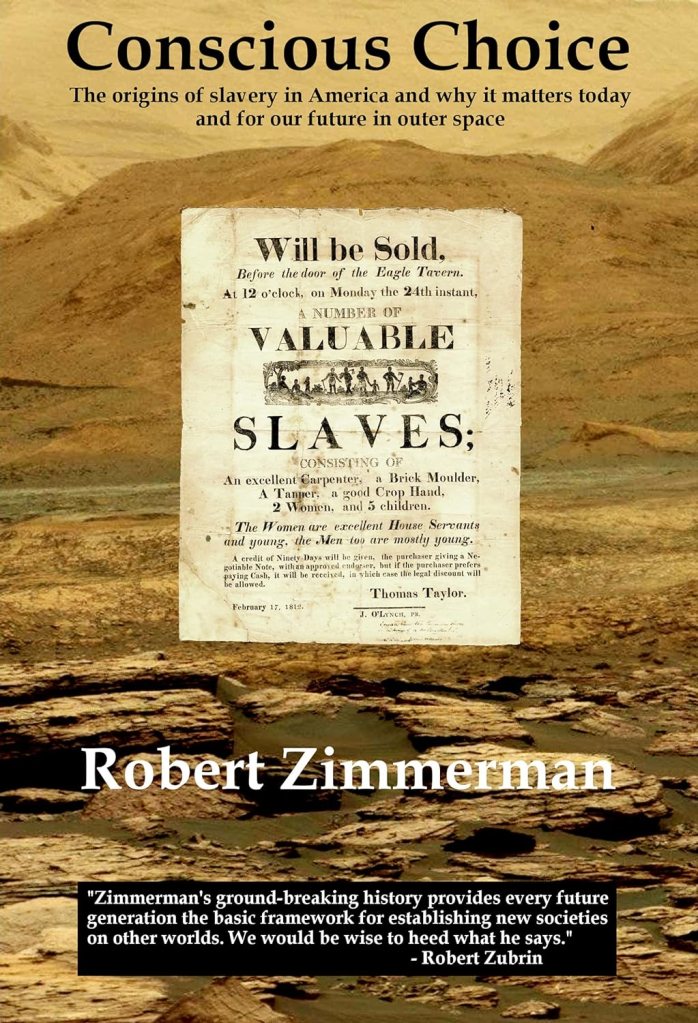


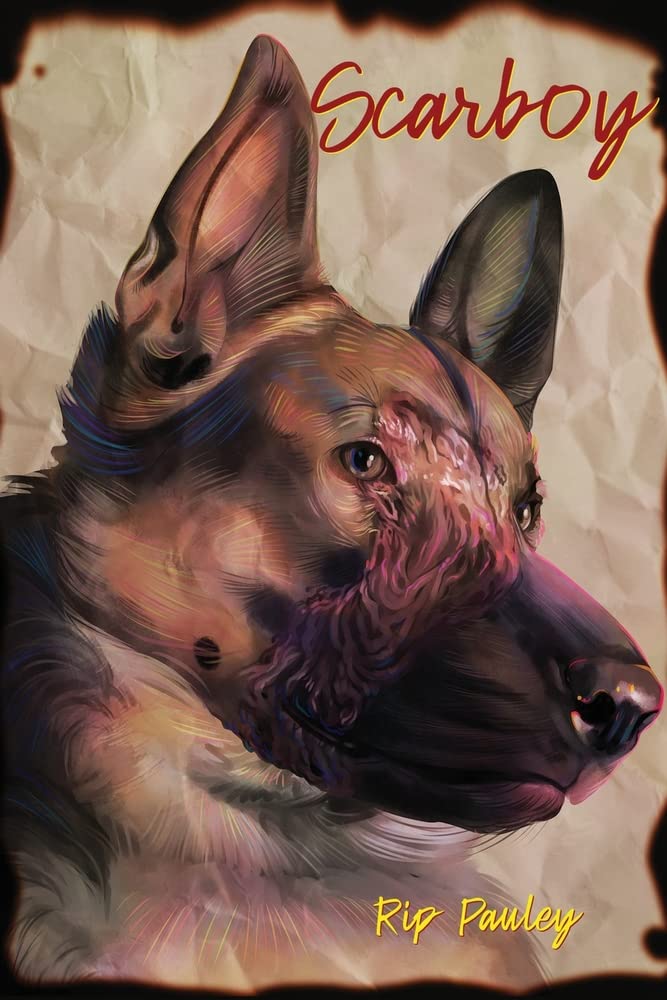









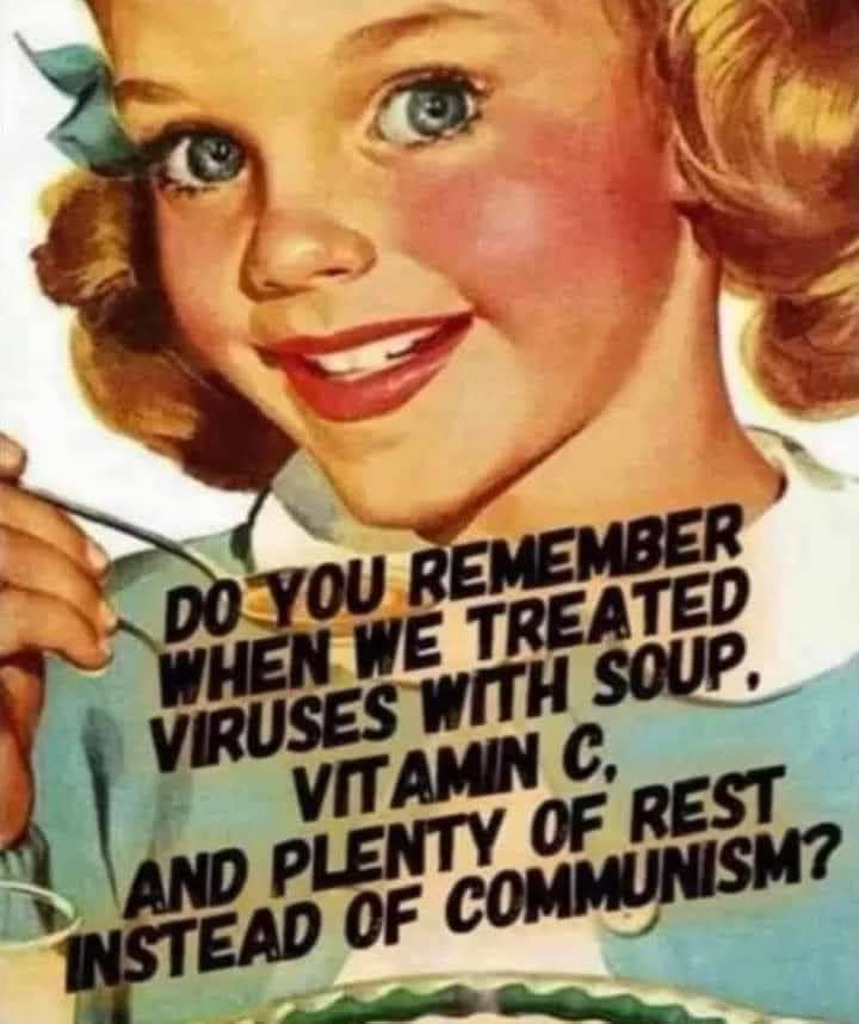

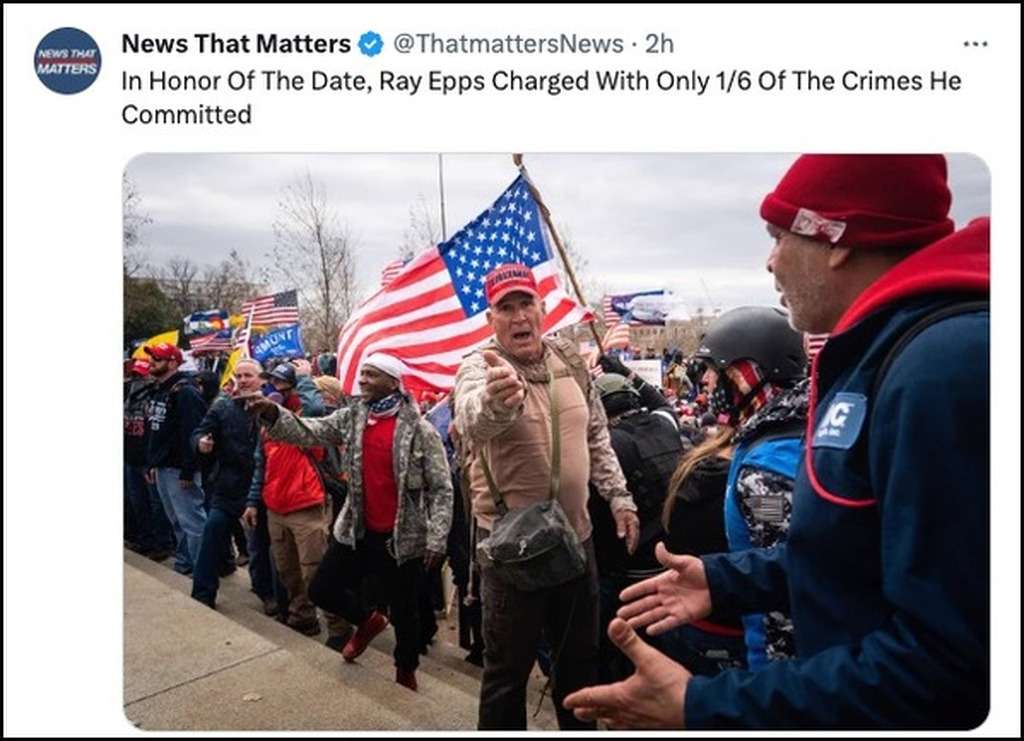

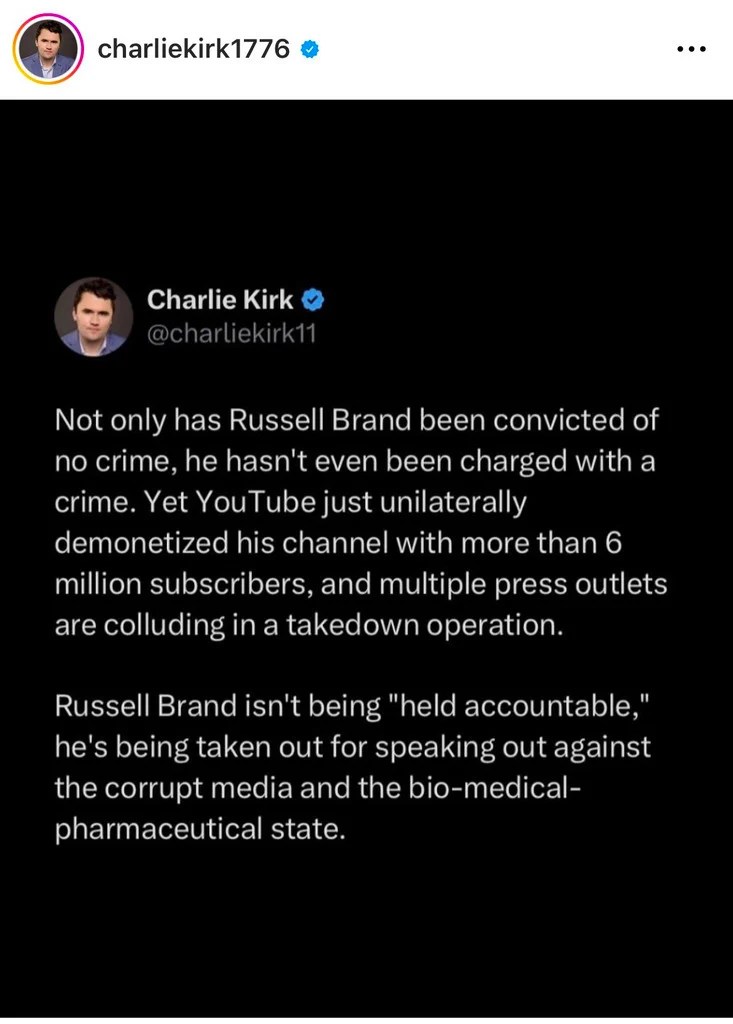






































 According To Hoyt