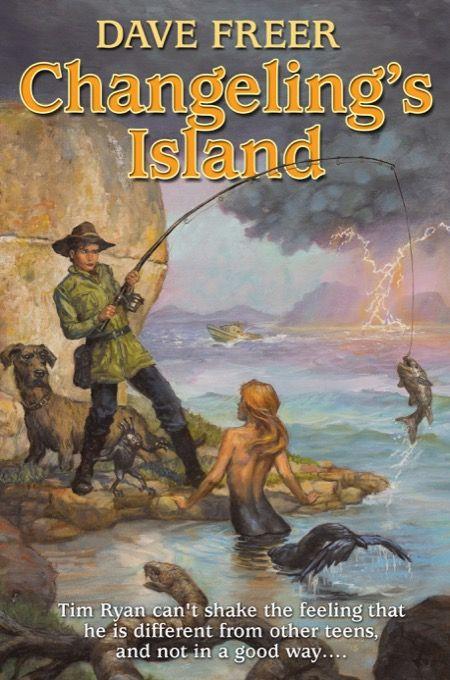
This story is set in the world of Vampire Musketeers, and it is the origin story for Aramis. There will also, eventually, be origin stories for Porthos and of course Athos. We already have D’Artagnan’s in Sword and Blood.
If you like it, consider pre-ordering Sword and Blood, which comes out Monday.
First Blood
Sarah A. Hoyt
He was not a man.
The knowledge washed over young Rene D’Herblay as he hid between the wall of the refectory and the side of the lectern, clutching the cross he’d taken from the wall above his bed. That knowledge made him shake more than the sounds coming from the refectory, in the dark: the sounds of bones breaking, the sounds of fighting, the laughter of vampires, the sucking of blood, the gurgles of the dying.
He was not a man. Not a real one, a fighting man, fierce and feared as his father had been. Not even a man like his older brother, the Chevalier D’Herblay, lord of the D’Herblay domains and respected by farmers and tenants who looked to him for protection.
Rene might have whiled away his days in this refectory, while the Reader read improving texts from the lectern, drawing swords on his spilled soup and dreaming of commanding armies, but his family had always been right about him: small and slight, he had been made for the safety of the seminary and the protecting arms of the Church, not for the rough and tumble, the strife and blood of the battlefield.
Only now the church itself had been broached, the seminary had been broken into in the middle of the night. First, the Judas goats, the servants of vampires, had come, removing every holy symbol that might disturb their masters, spilling all the holy water and the salt that might have injured the vampires.
Rene had awakened to the sounds of fighting and dying in the room and, instead of finding a sword and fighting the Judas goats, he’d minded only his safety, grabbing the forgotten cross from the wall above his bed and running madly to the chapel where he’d taken the holy blood from the tabernacle. In the dark he couldn’t find the monstrance that contained the holy body.
Slim, slight, Rene had always been told by his towering brother that he was more girl than boy, that he didn’t look like the family, that he partook a sickly and weak nature from being born of a sickly and delicate second wife of dubiously noble blood, who’d proven herself unworthy of the D’Herblay name by dying at Rene’s birth. Usually Gautier added, in an undertone, that Rene should have died with her and good riddance. But Rene’s build now served to preserve his life, as he’d been able to squeeze into a corner where no one would think to look for a seminarian.
Now he clutched the cross and the wine and tried to remember the words of a prayer, any prayer. Only no prayer would come. And he was shaking so hard that the holy blood spilled on his rough linen shirt: the only thing he was wearing since he’d been in bed when the Judas goats came. And the cross was leaving marks on his hand from being clutched so tightly.
Someone screamed just on the other side of the tall lectern, and Rene clamped his teeth together, afraid their rattling would call attention to him and tried to form in his mind “Our Father–”
“Our Father–” but he never got past that, because all he could remember of his father, who’d died before Rene was five, was a stern face, a stern voice telling him not to cry when Rene had just injured himself; and a hand on his shoulder while a voice said, “Always remember that you’re a D’Herblay. Always make our name proud, my son. Be a man.”
And now Rene wondered, in a sudden pang of fear if he’d see his father on the other side, and what his father would say. And would God look like his father?
He tried again to form the words in his mind “Our Father–”
But he couldn’t go on. All those years he’d spent dreaming of leaving the seminary; of joining the musketeers under the assumed name of Aramis; of doing great deeds. It had all been for nothing.
He wasn’t a man.
“Oh, what have we here?” a voice sounded from above him. Looking up, Rene saw, looking down on him, two wide staring eyes, a very pale face surrounded by a welter of dark hair, and a cruel grin that displayed two large, sharp fangs.
Rene heard the strangled cry leave his lips as he tried to knit himself even tighter with the wall, attempting to escape. But there was no escape. Why had he thought there would be? Most people in the seminary, his masters and colleagues, were now dead or dying. He could smell spilled blood everywhere, as well as piss and the sweat of fear – some likely his own, though he was too scared to be sure. Why had he thought he could escape?
The vampire’s large hand plunged behind the lectern, grabbed at the back of Rene’ shirt and lifted him until his feet left the ground. Vampires have unnatural strength, Rene thought, his mind stupefied and amazed, as his body tried to scrabble and bring the cross in front of the vampire’s eyes – easier said than done, since the vampire was grabbing him facing away from the vampire. Vampires have unnatural strength. It had to be, because though Rene was shorter than most men in his family and slimmer and more limber than most men, he was not that small for a nineteen year old. And men shouldn’t be able to lift nineteen year olds as though they were infants.
He tried to spin, without having anything to serve him as a base to spin from, and bring the cross in front of the vampire. He’d not managed it yet when the vampire hit Rene’s wrist hard with his free hand. It cracked and blinding pain radiated up Rene’s arm and shoulder.
Now the vampire spun him around. In the same movement, he turned from where the cross had fallen and laughed, a great, amused laugh, “Ah, you’d be a brave one, would you? But why fight it? We don’t kill pretty little boys like you, you know?” The laughter again and something in the vampire’s eye, something that Rene thought fit the word concupiscence which he’d heard before, from his confessor, but never fully understood. Oh, he’d loved Aimée. He’d loved Aimée a corps perdue, which was why Gautier had sent him here. But he’d never looked at her as though she were fresh steak and Rene a famished tiger. That a man, a vampire, should look at Rene that way made Rene’s gorge rise and his mind befog with fear and disgust. “No,” he yelled, and – to the new bout of vampire laughter – his hand that had been clutching the chalice with the holy blood to his chest, rose as though of its own accord and flung the liquid in the vampire’s face.
Laughter turned to scream, an unholy scream that rent the night in two, and Rene had time to see the vampire’s face melting like wax in the fire as the vampire let him go. Rene dropped the cup and ran.
Knowing he was lost; knowing he didn’t have much time, knowing the darkness was full of other vampires, Rene scrambled away, half crawling, before he got to the door of the refectory. He flung it open and ran blindly along the corridor, his bare feet slapping the cold flagstones, his pain-wracked right wrist cradled in his left hand.
He was going to Hell. The one thing drummed into them, over and over and over again, since they’d been in the seminary; the one thing that his priest had drummed into him at home, before the seminary, was that the bread and blood were truly parts of Christ. They were to be preserved from desecration at all costs. In extreme instances, the faithful was to take the communion into himself, if properly confessed, and save it from desecration. Instead Rene had flung it in face of the vampire. He was going to Hell.
It wasn’t until he’d run, headlong, the length of the hallway and emerged onto a street covered in ice, under falling snow, that it occurred to him to wonder how different could Hell be from this France where vampires had taken over, where vampires ruled the night and good people locked themselves in their houses at sunset, hoping that this time the blood suckers would pass them over; hoping to be human one more night.
Rene knit himself with the shadows of the houses and kept running. It was very quiet out here. Every window and door he passed was heavily barricaded. There was no refuge.
After a while, he wasn’t sure how long, Rene realized his feet hurt with the burn of cold every time they hit the frozen dirt and muck on the streets. He thought, distantly, as though it were all happening to some other person long ago, that his feet would freeze. And then the rest of him would freeze. And he would end up dead – as dead as he would have been if the vampire had bitten him. Only in that case there was at least the possibility of a life in death and– No. He remembered the look in the vampire’s eyes, and for the first time the phrase fate worse than death made itself clear in his head.
He kept running because his body didn’t know enough to realize he was dead and that there was nothing he could do. He kept running, looking frantically about for an open door, for smoke, for fire, for a hint that there might be hope somewhere. Which was when he saw the light coming from behind him to light up the street, and, turning around, saw the seminary and the church to which it had been attached go up in a great conflagration of fire, and vampires leaving in groups, laughing and essaying little jigs. It was impossible not to note some of those vampires wore the same bodies that had, until recently, belonged to his masters and colleagues.
Rene’s gorge rose, and he threw up unexpectedly at his feet, a brief eruption, since all he had in his stomach were the remnants of soup and a slice of bread he’d swallowed for supper, this being Advent and a time of fasting.
The vampires would come. They’d spread over the neighborhood, looking for fresh blood. Wiping his mouth to the back of his hand, he scrambled into the first alley he came to.
Where he heard the noise of fighting, the grunt of a man overcome by another. Looking ahead, he saw the man in the heavy cloak and the vampire holding him, bending over him, about to take a bite from the man’s neck. The memory of the vampire’s eyes, the unclean lust in them – a lust for blood, Rene guessed, more than other pleasures of the flesh – flashed into Rene’s mind. Blindly, he looked for something to use as a weapon. He glimpsed a flowerpot in the recessed doorway of a house. It was empty of everything but soil and the withered twigs and leaves that remained of the flower that must have grown in it in spring. Rene would have given anything for a heavy tree limb, but if this was all he had, then this was all he had. He grabbed at the edge of the flower pot with his left hand and, clumsily, flung it through the air at the vampire’s head.
For a sick moment he thought he’d hit the vampire’s victim, or nothing at all. Rene had been good at games of marksmanship and strength, but not with a left hand that felt half frozen. But then the vase hit the back of the vampire’s head. There was a sickening crunch. The vampire started to turn and Rene jumped back to knit with the wall. Then the vampire fell, suddenly, and Rene looked up as the vampire’s would-be victim straightened.
He was a man in his late middle age, with a fringe of white hair and an expression of decided gentility, and he looked tired, as though he’d fought the vampire to a standstill. He glanced across at Rene and his eyes widened, as though not believing the form his savior had taken, then he looked down at the vampire and spat on it. Reaching down, the man retrieved the largest piece the pot had broken into.
“Monsieur,” Rene managed to say, though his words were barely a whisper, all breath and chattering teeth. “Monsieur, we must run. There are many of them, all around. They’re headed here.”
The man looked up. He was positioning the shard of pot on the vampire’s neck, in a way Rene couldn’t understand, and he gave Rene the barest twitching of lips that might pass for a smile, a laughing in the teeth of hell kind of smile that was perhaps amusement but not joy. “I know,” he said. “I know, my son, but we must sever this one’s head from his body, or he’ll come after us. He knows who I am, you see.” As he spoke, he set his foot, clad in a heavy, spurred boot on the edge of the pot shard and stomped down.
Something black poured from the vampire’s body, flowing across the frozen street like oil, and smelling like a thousand opened graves pouring forth corruption. Rene shuddered and found himself trembling as his stomach attempted to bring up contents it didn’t have. He found a hand on his shoulder, warm and supporting. “It takes you like that,” the man said calmly. “It takes you like that, the first few times.” Then, in a concerned tone, “Here, son, what are you doing out here, half naked and barefoot?”
“The seminary,” Rene answered through clacking teeth. “The seminary was attacked. I was asleep. I ran out–”
He couldn’t be sure if the man had sworn. It seemed to him he’d said, “Sangre dieu.” But surely a man like that wouldn’t swear. Or would he? Rene could not decide. What he could decide was that the voice was saying, “I was too late. It is my sin.”
He looked up, “Too late, sir?”
“Yes,” The man said. “I shall explain, but not here. We’re in danger. Come with me.” Then, with a cluck of the tongue that indicated annoyance, he took off his heavy cloak and put it over Rene’s shoulders. “There is nothing I can do for your feet,” he said. “No spare pair of stockings or boots, but refuge is near. Come.”
Rene hesitated for no more than a second. Judas goats were often said to prowl the night, looking for young victims for their masters. But at least in the lore of vampires such as had formed over the last twenty years since those ancient tombs had been opened and the even more ancient horror unleashed that was now overtaking France, a Judas goat could not hurt a vampire. And this man had killed one.
The cloak seemed to make Rene feel the cold more. His body was wracked with pain. His skin felt as though it was on fire. His feet, meanwhile, had gone numb and distant. But he turned and followed the man, who removed a sword and a knife from the dead vampire’s body, and then walked, close to the wall, looking ahead, the weapons glinting in his hands.
***
“I broke my sword earlier fighting them,” the bishop said as he turned to face Rene. Or at least, he said he was a bishop, and Rene saw no reason to doubt him, though he wore neither cassock nor hat, nor anything but a silver cross glowing dully on the chest of his serviceable shirt – revealed when his coat was removed in the warmth and safety of the hideout.
The hideout was in the basement of a public house whose publican, the bishop said, was a good Catholic and an honest man, though Rene was sure that this hideout must in the past have hidden smugglers or smuggled goods. Well, it stood to reason, did it not? Why else have it built?
But the man had answered to a careful knock on the door and to a whispered password. He’d shown the bishop all deference, and clucked over Rene’s pain and his now bluish bare feet. Then he’d shown them to the trapdoor beneath the barrels and – before rolling the barrels back into place – his wife had brought them food, as well as bandages, clothes and boots for Rene.
So Rene now sat in a chair in the cozy hideout, his feet in socks and boots. The bishop, whose name was Gracien, Monsieur D’Alban, had opined that there was no lasting damage done. He’d given Rene wool pants, and a coat which were his to wear when they left. So too was the traveling cloak draped across the back of the chair on which Rene perched as he swallowed warm soup and drank quite good wine.
Monsieur D’Alban had bound Rene’s wrist and absolved him – though the description of Rene’s sin seemed to occasion amusement. It was almost the only thing in the grim description that did. When Rene explained he’d spilled the holy blood, the bishop had smiled and said it was not willing sacrilege but the desire to save himself. And besides, D’Alban had added with reasonable though – Rene was sure, questionable theology – hadn’t Christ died to save men? Surely it was proper that His blood should be spilled for the salvation of Rene’s body – and possibly soul
And then, at the end of all this, and after D’Alban had eaten just a little soup and a bite of bread, D’Alban had started pacing the small confines of the room, his hands behind his back.
Once, when he was very little and before his father died, Rene had been taken to see a marvelous beast, a lion which had been brought at great expense from Africa, and which was being exhibited by a motley group of men in all the little villages around the countryside. Confined to a narrow space, the tawny beast, all great teeth and claws, had alternated between biting the iron bars preventing its ravening the spectators, and pacing in its tight confines, its eyes burning with suppressed violence.
D’Alban’s pacing reminded Rene of the beast perhaps because, like the beast, D’Alban had golden eyes that burned with the need to do something. Something he was prevented from doing. Words erupted from him, irregularly spaced and abrupt, phrases without beginning or end, less designed to communicate with Rene than as shards of an inner dialog forced into vocalization by turmoil, “I was to warn them,” came. And then. “His majesty signed the treaty with the Cardinal tonight.” Then, “No more priests. No more ordained men. No more church in France.”
This caught at Rene who had been told for the last two years, as he was preparing for unwilling ordination, that his role as a priest was vital in defending France from the vampire onslaught; that only a strong church could prevent all humans being killed or becoming vampires.
He cleared his throat as D’Alban continued pacing, and said, “Pardon me, monsieur, but … did you say that there will be no more priests in France?”
D’Alban turned and fixed him with an intent golden gaze, “As of tonight, my son, as of tonight. The King has signed a treaty with the Cardinal, according to which no person will be unwillingly turned, in exchange for our turning our churches into wastes, killing all those priests who don’t agree to be defrocked or to become vampires themselves, and ordaining no more. And no one will roam the night killing vampires simply because they are vampires.”
Rene blinked. He remembered priests – and seminarians – chased down and unwillingly turned. He remembered– “No person unwillingly turned!” he said, his words full of scorn.
The bishop nodded. “Just so. But what do you expect? Once turned, no vampire will come to the court of law and say it was unwilling, will he? And no one else will be alive from these attacks.”
“I’m alive,” Rene said. “I would testify.”
A look much like pity suffused D’Alban’s eyes. “I doubt not you would, son. But to what judge will you take your righteous campaign? Who would listen? The king wants to be at peace. He disdains the fights that have erupted in his court. He wants no fighting in the Palais Royal. He wants to pretend everything is as should be: everything is as it was, and he’s still the king of the French and the kingdom still peaceable.”
Rene blinked again. He felt very cold of a sudden. “But, Monsieur, it is not so. Are you telling me that the king… the king has… given up?”
The bishop nodded. “He would say he’s made a private peace,” he said. “I’d say the king has surrendered.”
A long silence fell, and Rene felt colder than he had out in the snow. Then he was running for his life. Now, he felt as though his life and the life of every one in France had already been given up. They were already dead men, it was just their bodies didn’t know it yet. “Monsieur,” he said, and cleared his throat. “Monsieur! What can one do to prevent this?”
A heavy sigh tore from D’Alban, giving the same feeling as the words that had come from him before. “What can one do?” he said. “I’ve talked to Monsieur de Treville, the captain of the king’s musketeers. He is, like me… That is, all the musketeers, to be admitted to the corps, have had to endure the vampire bite and feel its allure, and yet survive. Monsieur de Treville, and myself as well, will continue fighting and refuse to surrender France to the abominations. He, like me, refuses to surrender the souls of France.” He fell onto a chair, heavily. “Son, you’ve not been bitten, so you’d never qualify for the musketeers. But you were in seminary. And you did fight to defend me tonight. You saved me from death or worse. Monsieur de Treville will prepare fighters for France, and we need that too. But we need priests as well. The things priests can do, the simplest ones: blessing water and salt, and yes, the sacraments, are a threat to vampires, which is why they wish to abolish the church. Oh, not our church alone. Those people we’d for centuries considered in grave error – the protesting sects that deny the authority of Rome, other… other religions, even the folkways of ancient times, seem to have some remedies against the vampires. They too are proscribed. They too are hunted. And for that alone, we must make peace with them and turn against the vampires as common enemy. But our side is … not enough. Because we are hierarchical and congregate, we’ve been more effectively hunted down than other religions, other holy men and … and women. We need men to defend the souls of France, son. He needs workers for His vineyard,” the bishop said, alluding to the biblical passage. “Will you labor in it?”
“Monsieur,” Rene said. “Monsieur.” For so long he’d dreamed of being a warrior, of leaving the trappings of the church, the dry manuscripts, the singing, the mealy-mouthed ways of priesthood behind. He’d dreamed of becoming a musketeer, a warrior, a fighting man. He’d call himself Aramis. He’d call himself Aramis and he’d fight, be a true man like his father, be respected like his older brother.
But he was not a man. He’d taken the coward’s refuge when danger had come. And only by the blood of Christ was he here yet, and still human. His life, as such, now belonged to the church. “Monsieur. I was not… That is… I had not yet… I wasn’t ready to take orders. My studies were interrupted. My … I wasn’t sure of my vocation.”
An ironical look from the golden eyes, and then pacing resumed, ten paces to one wall and ten paces to the other, while D’Alban cackled in one of his mirthless laughs and said, “Meaning, of course, that you were packed unwillingly off to a seminary because you were a younger son and there was nothing that your family could do with you?” He gave Rene an evaluating look, “Why not the army, I wonder?” he said.
“My brother said,” Rene began, and his cheeks burned as he remembered the full extent of what his brother had indeed said. “My brother said I was not the type of man they needed for a soldier, Monsieur. He said I was too weak, too fearful.” The other things went through his mind: hands like a girl’s and that face like a babe unborn, and your mealy-mouthed love of books and words. He did not say them.
“No?” D’Alban said, and shrugged an elaborate shrug. “A man who attacks a vampire with a flowerpot while barefoot and with a broken wrist seems like the sort of a man our poor army needs, but perhaps your brother had other ideas. Or perhaps he preferred you in the church where no cadet line could dispute the succession in future times. Is that it?”
“There– There was Aimée,” Rene said, thinking that at any rate he would come to that, eventually. If he was going to be ordained – was he going to be ordained? – he’d need to make a more complete confession than he’d made so far, and Aimée would need to come into it.
“Aimée? A girl?”
“A… She was my father’s ward, monsieur. Her father was one of Father’s friends, and very… very wealthy, and when he died he left Aimée to my father to raise, with the idea she’d marry my father’s heir, of course.”
“Of course. And how old was she, this Aimée? How old is your father’s heir, for that matter? Is he the only one?”
“My brother, Gautier, Chevalier D’Herblay,” Rene said. “He was my father’s only son by his first marriage. His mother died when Gautier was ten, and my father married again five years later. My mother was– Gautier said she was of questionably noble blood because her father was the second son of an earl,” he straightened his shoulders and decided to say the worst, “An English Earl, Monsieur. And… and he was a soldier, and… and my mother married my father and died giving birth to me.”
Monsieur’s eyes didn’t look disgusted at the horrible taint of English blood, but the eyebrows were low over them, as though he were trying to understand something. “So Aimée was your sister-in-law?”
“Oh, no, Monsieur. Not then.” He realized he was telling it all very badly and tried to explain. “No. She was, you see, raised with us… raised with me. She is a year younger than I And my father died when we were little. I didn’t think much of it then,, because she was skinny and… and weak. And she always wanted to do the things I did, but she couldn’t and I had to help her. She was a very great nuisance.”
“Girls often are to little boys tasked with looking after them, but I presume she didn’t stay a nuisance forever.”
Rene sighed. “She went away for a year, to a school. Then she came back. This was… three years ago. And when she came back, Monsieur, she was a young lady.” He cleared his throat. “What I mean is she had a way of talking, and a way… a way of walking and… her figure…” He blushed and stopped.
And now D’Alban lips were curling upwards again, and the way he cleared his throat sounded uncommonly like a chuckle. “You need say no more,” he said. “I am aware of what you mean.”
“Well, yes, but… But she was closer to my age than to Gautier’s,” he said. “And Gautier said she was his affianced bride. And then, then,” he said, in a crescendo of indignation. “After they found us kissing in the pigeon loft, Gautier had the gamekeeper thrash me with a cane, sir, as though I were a peasant, and he said that she was his affianced bride, and that I was not to go near her or be alone with her, ever. He said I was to go to seminary, and he would marry Aimée.”
“I see,” D’Alban said, his face once more grave.
“Yes, monsieur.” Rene inclined his head, thinking of that sleety, cold morning when he’d been forced to the church to witness his brother marrying the woman Rene loved. Aimée had looked pale and wan and Rene knew well that she’d been forced into consent by being starved within an inch of her life. There had been nothing Rene could do. In his mind, he’d been the brave Aramis. In his mind, he’d defended Aimée, he’d ridden away with her, to live in bliss upon some distant land. In that world, there were no vampires, and no need for money or inheritance.
But in the real world there were vampires, and travel of any kind save in well ordered caravans with armed guards detailed to keep the vampires at bay, was suicide. And money was more needed than ever in a France where half the domains or more had succumbed to the vampire onslaught. Vampires neither tended the grain nor made bread. Humans were left to starve or forage like animals in those lands. And to live in one of the still safe areas, one needed money and income, which Rene, the second son, did not have.
And so he’d let Aimée slip between his fingers; slip from his arms. And he’d been packed off to the seminary of Notre Dame des Miracles, to become a priest who would be barred by vows from touching Aimée ever again.
“Ever again?” D’Alban asked, with inconvenient prepiscacy.
Sighing, Rene confessed. The stolen night, before Aimée succumbed to the push for marriage. Already knowing she was lost, she’d determined to spend a night with her true love before consigning herself to a lifetime with the man she despised. He remembered her warm in his arms, her scent surrounding him, and he sighed, “And I can’t repent it, Monsieur. I can’t. I know I should, its being a grave sin to lie with my brother’s affianced wife, one of those sins that’s proscribed in the bible, one of the things … Enfin, Monsieur, I’ve known my soul was damned from that moment.”
The bishop tugged at his lower lip, which seemed to be an unconscious gesture done while deep in thought. “There is so much sin to go around in that story, my son, that yours is neither the gravest nor the most damnable,” he said at last and then he sighed. “It is true that in normal times, and were the church still whole, I would hesitate to confer priesthood upon you. Your love for that one woman, your inability to maintain your chastity… It would give me at the least very grave doubts about your ability to sustain your vocation. And bad priests, such as that one who called himself Cardinal, France does not need… But…” He resumed pacing. “The truth my son is that just like our alliance with those we formerly considered heretics, what the church needs as priests, and what a priest is, has changed in this new world. For one thing, if I ordain you, you cannot take a vow of chastity.” A smile responded to what must have been Rene’s look of surprise. “This does not mean I’m encouraging you to commit adultery with your sister-in-law. That I’m afraid you must give up, if not repent. But, my son, from now on clergy must be in hiding, and we have all, for the duration, been released from those vows of chastity that would make us conspicuous. We’ve also been given dispensation on fasting and clothing and other… other minor issues. It is of paramount importance that we stay hidden. It is of paramount importance that we continue to live among the people and provide for the needs of their souls. And that we fight vampires with the holy weapons at our disposal.”
“Oh,” Rene said, and nothing more, because he wasn’t sure he understood it. “But I haven’t completed all my studies. I’m not sure–”
“The few rituals you’ll need to know,” the bishop said, “and how to administer the sacraments, I can teach you here, in a day. You look like a man of quick understanding. Perhaps you’ll not understand all the theology, but you’ll have time to learn that, and we do circulate treatises and such, clandestinely. For now, more important is for you to know that you’ll have to be willing to risk your life. For being a priest is punishable with death, or being forced to become a vampire, should you be caught.”
Rene cleared his throat. “But isn’t that the penalty for being a human in this poor France of ours?”
Again the appreciative smile. “Perhaps, but as a priest you’ll be hunted, sniffed out. They’ll be looking for you. It is their primary purpose to kill or destroy all the priests. You will be a particular target. As a mere man, you might be able to hide. As a priest, you’ll be searched for. People will be rewarded for turning you in. Do you understand?”
Rene nodded. He understood. But he wasn’t a man, and if he was going to fight the vampires, ironically, he’d do it by becoming the priest his brother had thought was a quiet and out of the way occupation for his weakling of a brother.
“Yes, Monsieur, I understand.”
“And are you willing?”
“Yes, Monsieur, I am willing,” And then, because he thought he’d need a lot of that, “So help me God.”
And thus, in a basement that smelled of soup and old wine, Rene D’Herblay became the priest, Monsieur D’Herblay, without the careful study, the fasting, the vigil and the panoply of ritual and pomp that would have attended his ordination had he agreed to go through with it even a year ago. And the next morning he left, back to his domains.
***
“It is very important,” Monsieur D’Alban had told him, “That you not do anything you’d not have done if we’d never met. Let’s suppose you didn’t meet me in that alley last night. What would you have done, supposing you could have secured boots, breeches and a cloak?”
“Gone home,” Rene had said unhesitatingly. And, to the bishop’s raised eyebrow. “Well, what else could I have done, Monsieur? I am a second son, and if I weren’t going to be a priest…” He let the thought hang in the air.
Monsieur D’Alban nodded at length. “Very well. Go then. Go back to your brother’s domains and dispense what comfort you can in our beleaguered land without getting yourself put to death. You’re more use to the church alive. If you should come to Paris ever again and wish to contact me, or others of … of us in hiding, come to the publican. He’ll know how to send a message. And for now, go with God’s blessing.”
And so, Rene had taken God’s blessing with him on an ox cart headed out of the city. To be honest for his progress he more indebted to the bishop’s coin than the bishop’s blessing. Monsieur D’Alban had given Rene two louis d’or which meant that Rene had been able to sleep well enough in secure inns for two nights and to have solid meals during the day, even if his rides were on farmers’ conveyances in caravans of merchants and farmers.
At the last village before his brother’s domains, Rene, knowing the surrounding countryside, had chosen not to bolt himself in for the night, but, instead, to go on to his ancestral home. There weren’t many vampires hereabouts, anyway, though Rene suspected it would come to this region, too, in time. And besides, he wanted to see Aimée, though he told himself he would avoid grave sin. He wanted only to see her, he told himself, and assure himself she’d grown reconciled to her fate. He arrived at his brother’s domain at near midnight and found the house well lighted. This surprised him. Perhaps it should not have, but Gautier had been ever so parsimonious with candles – justifiably, Rene supposed, since the domain, never wealthy, was even poorer with many of the outlying lands lost to vampires. Gautier had decreed that the house should only stay up an hour or two after sundown, before all the candles were snuffed and everyone sent to bed.
Rene had hesitated, knit with the trees, on the path leading up to the front door. Perhaps Aimée’ inheritance had allowed them to spend a little more, to be a little freer with money? But he didn’t feel that was true, and his mind spun on the idea. No. Gautier spend more than needed?
After a long time, hesitating, he approached instead the kitchen, at the back of the house. He’d been raised as much by the cook and the housekeeper as by his brother. No, more so, as those worthy ladies had taken it upon themselves to feed and care for the waif, for whom neither father nor brother had thought to appoint so much as a nursemaid.
No, that wasn’t true. His father, the cook, Irenie had told him, had wanted to send Rene to one of the outlying farms, to be raised by the farm wife. An unusual arrangement for the family, but not uncommon for noblemen in general. Irenie had thought the problem was that the old gentleman, as she called Rene’s father, had feared being reminded of the wife he’d adored and lost. But his brother had intervened and said, instead, he could be raised by the servants, and in the end, if Irenie hadn’t found him a willing nursemaid among the village women, he’d likely have been fed on bread softened in cow milk, and just as likely died. As was, it was Irenie, and Madame Adelaide, the housekeeper, who had overseen Rene’s travails with childhood illness and comforted him when he was distraught.
Going around the back, he was surprised to find the kitchen dark, when the rest of the house was blazing with light. He knocked at the door twice, though, and waited.
At length it was opened by Irenie, wearing a nightgown, with her salt-and-pepper hair loose down her back, and carrying a candle in a candlestick. Her moment of total blank surprise was broken by a breath like a sob, and “Rene. Oh, my lamb!” And the next he knew he was pulled into a warm embrace that smelled of freshly baked bread and spices and he felt about three years old and quite safe.
At length she stepped back and held him at arm’s length, “Monsieur D’Herblay I should have said, should I not?” she said, with a little smile, and before he had time to answer, “You’ve grown quite a lot in two years, have you not? And how fine you are, tall and broad of shoulder. And what brings you back home, I’m sure I don’t know but a good thing you’ve come. And a good thing, too if no one should know.” She shrugged. “Not, that is, until you’re ready.”
He raised his eyebrows at her, unable to put the question any more clearly. And he realized there were tears in her eyes, shimmering, and a look to her face, as though… As though she were waiting to appraise him of deaths.
“Irenie! What do you mean? What has been happening in my absence?”
“What hasn’t been happening,” Irenie said, and wiped her eyes with the edge of her apron. Your brother, and she, poor lamb–”
“Aimée?”
“Aye, as she was. Poor lamb, she–” The cook shrugged. “Come in, monsieur, come in. I have some soup kept by and some bread for myself and… And my friends as they come by. Come in Monsieur. Safer if we go to my quarters.”
***
Her quarters, which she had always called that were in fact a small room, smaller than the confessionaire at the seminary. Just a little longer than was needed for Rene to lie down to his full length and a little shorter than it would take for Rene to lie down across its width. But Irenie had indeed outfitted it as though it were not just a bedroom but real quarters, with the narrow bed pushed up against the wall, and in the center of the room two chairs and a table. At this Adelaide and Irenie would sit, Rene remembered, for their long conversations in which not just their master and his whole family, but most of the village came under examination and often censure. Rene remembered playing on the floor at their feet while they talked and drank hot chocolate. Now, he sat on one of the chairs. And presently Irenie brought him bread and butter and broth, and ate some of the bread and butter herself, presumably to support herself through the sad tale she had to tell.
It started with Rene asking the question that had been bedeviling him, since he’d heard Irenie’s talk of Aimée, “Irenie, now, what happened to Aimée? Did she die?”
Her eyes answered him before her mouth could. Woebegone and dark, they seemed to say if that were all it would almost be cause for celebration, “Aye, and in a manner of speaking, she did. And it was all that devil’s fault, monsieur, and none of her asking for it, I assure you.”
He felt cold, cold to his core, as he said, “She was turned? Aimée is a vampire?”
“Aye, Monsieur.” Irenie sighed. “And I’m sure as we could blame her more, but Monsieur, well…” She took a deep breath. “First of all, I want to tell you, Monsieur, that your son is well and not turned.”
“My–” Rene stopped, staring and wondering which of them had gone insane.
“Well, your nephew I should say, but between us we need have no pretense, and the boy looks like you, Monsieur, and none of your brother, but your mother’s side, all blond and slight. And milady, Aimée, as she was, told your brother that it was because he was born so early and so weak, but now that he’s walking and… well, it’s hard not to tell whose he is, but I want you to know he’s safe and unturned. I have him with Marie out in the village, she who is the niece of the one who nursed you. There’s nothing for you to worry about. We took him away the very night she was turned, and she’s never looked for him, though your brother did before he went to Paris. But madame… aye, well, as I said, we could blame her more, only we couldn’t, because she was so thin and wan, and always weak and sickly after the babe was born and your brother– You know what he was like. And he went away and he came back turned and… Only he’s left for Paris, to work for the Cardinal, and it’s only her here.”
Rene’s mind reeled. “Aimée is a vampire. And Gautier has gone to Paris? And when did all this happen, Irenie? The village didn’t know it yet.”
Irenie nodded. “Just this week, Monsieur,” she said. “And your brother will, I don’t doub,t come back with a party of others of them, and then we shall all be damned, but for now…” She wiped her eyes to the apron again. “For now, she amuses herself turning the stable boys and… It’s just you see, she’s well, and she hasn’t been well in two years.” Then the lines of her face hardened. “Only it can’t go on, Monsieur. It can’t go on, and she’s destroying young men, what haven’t done any harm. And now there’s three of them who guard her wherever they go, and one of us has to stay up all night, to make sure the rest of the staff is protected and…”
“But… good heavens,” Rene said. “There’s more of you than there is of them. Why haven’t you destroyed them?”
“Monsieur. She’s still Madame Aimée, as she was. I raised her as I raised you.”
“Are you telling me you don’t have the courage?”
“Well, monsieur. Perhaps it is vampire glamour at that. They say as vampires have that. But I think it is just that… well… she’s Madame Aimée.” She gave a deep sigh.
“That,” she said. “And you know how strong they are. Any one or two of us who goes up against them shall be killed. The only way we could be sure of winning the battle would be to abandon the house and set fire to it. And even so, they might escape.”
“And so you see, Monsieur, why I’m so grateful you’ve come back.” She looked at Rene. “You’ll do what must be done. You always did.”
***
He didn’t know whence Irenie’s confidence came, but he scouted the land. First, he’d seen the other servants. It was impossible to avoid them. They came creeping into Irenie’s room by twos and threes, as though warned by some mysterious force – a force it was, just not mysterious, since Irenie had talked when she got him his dinner – of his presence. They’d come to plead with him, to see him, to reassure themselves one of their masters wasn’t a vampire. Adelaide, whose son had been turned, had squeezed his hand hard, “Only do what you have to do Monsieur. I can’t say he’s any longer my son.”
And then Rene had gone to his room, creeping through the servant stairs. From his room he heard Aimée’s laugh, and it made him pause, as memory rushed upon him, at the sound of that high, tinkling laugh.
But he armed himself. Knives and a sword. His still broken wrist was bound. It still hurt like living fire, but he’d be able to use it. He thought of the vampire in the alleyway, and of the corruption pouring out of him, and he wondered if he would be able to kill her – to kill Aimée – when his entire being called out to her.
He walked out, fully armed, along the hallways to the lighted salon from which music and laughter came. Aimée was sitting at the spinet, playing a tinkling tune.
She looked well, Aimée. A little paler than she had been, and thinner, but her eyes sparkled more brightly than ever, and she looked happy. Aimée hadn’t looked happy since she’d found out she was to marry Gautier.
For a moment – for just a moment – Rene thought she’d get up from the spinet bench and give him her hands, and smile, and she would tell him it was all a mistake, and she’d never been turned. Gautier, yes. Gautier was, after all, a grasping man, looking for worldly power, and there might not be much difference between Gautier the Lord and Gautier the vampire. In fact, at least Gautier the vampire might be an improvement, since his evil would be out in the open, for once.
But when she turned around to look at him over her shoulder and her eyes looked cold and concupiscent. And when she turned around to look at him, the smile that tugged at her lips was more menacing than welcoming and the voice in which she said, “Ah, my beloved brother has come back to me,” was full of dripping mockery.
“Aimée!” he said. He couldn’t help it. Through the back of his mind ran all the theology about vampires. How they couldn’t be preached to or reasoned with. How they were all naked craving and none of the human thought. None of the human emotions, either. They were not even as reasonable as animals who could be tamed, through pleasure or pain. Instead, they were little more than animated craving.
But this was Aimée, and Aimée had been, for so long, like another part of him. how could he not reach her, reason with her? Somewhere within her soul must be hiding, wounded, sobbing, but still there. “Aimée, what happened? How can you be–? How can you have let it–?”
He stopped. She was looking at him, her eyes dancing with poisonous glee. She laughed. “How can I? Well, you left me, didn’t you, my dear, dear brother. You left me to the pawing of the creature, to his embraces. You left me to bear your son in pain and anguish and to make up stories as to why he didn’t resemble your beast of a brother. What was I to do? Being a vampire has freed me of pain and of illness, of fear and confinement. Was I supposed to have died and be decorously dead, like your mother in the church, beneath a holy statue.” She laughed at the thought. “I am well, Rene, well, as I have never been, never since I found out I was to be a sacrifice for my fortune. I am well and happy and can play and dance again.” Her eyes sparkled up at him. “It is a remedy that would suit you well, brother my dearest. It would free you of your fears and your weakness.” Her smile turned sly. “It would make you a man.”
He wished to protest, to say that she was wrong. He wanted to say that he’d never left her willingly, that he had no more choice than she did. He wanted to tell her of the strict discipline of the seminary, of the cold rooms, the careful hours, the learning of things no one could care about. He wanted to tell her of the whippings, the penitent flagellation, the fasting.
He could not talk. His mind was in turmoil, caught between horror and allure; wanting her and dreading what she was at the same time, and yet wanting her all the more through his dread. His sword and his dagger hung useless in their scabbards. He could defend himself. He should defend himself. Instead, he said, softly, “Aimée!”
And on that word, her eyes softened. They widened a little, too, and she looked just like his Aimée. “Rene. My Rene,” she said.
“I didn’t leave you willingly. That is, I–”
Aimée shook her head. “I know, I know.”
And suddenly they were clinging, kissing, desperate. She smelled as he remembered and she felt maybe a little cooler to the touch, but not like he imagined a vampire should.
He thought of his vows, and then that he’d never promised chastity. It seemed to him she made a sign, but he couldn’t tell what it was nor to whom. And then her mouth moved from his mouth, her lips from his lips, and kissed a path from his ear to his neck, then up again, and she moaned softly and said, “Rene.”
The bite disconcerted him, sudden, painful. He tried to move away but her arms around him had the strength of iron bands and then the bite stopped hurting and pleasure spread, in waves, from his neck and over his entire body, pleasure such as he’d never felt before, not even that one night in Aimée’ arms.
Time contracted, then expanded, the pleasure filling all eternity, greater than the universe and God himself. He heard himself moan with it, and it seemed to him that Aimée laughed, or would have laughed, hadn’t her fangs been deep in his neck.
He knew then that she would kill him; she would make him a vampire. But wasn’t life forever with Aimée better than any eternity to which the human soul could aspire?
Her spirit touched his, seeking, like a child at a locked gate, to open his own mind so they could be one in thought and body. He rushed, joyously, to let her in. But there was something there, a sense of dread. He could feel her mind in his saying let me in and we’ll be one forever.
But at the same time, behind that presence, there was a feeling of horror, a feeling of betrayal and fear. His throat closed. His mouth worked. His fists clenched. And he read, somehow, behind the presence of her trying to enter his mind, the feel of a predatory creature, of a wolf baying at the lamb, of something… something dark, and old, and hungry.
He tried to pull away from the fangs, from the pleasure of her bite on his neck. He couldn’t pull far, but he caught a glimpse of her eyes, and in them was the same craving, the same naked concupiscence as he’d seen in the vampire’s eyes in the seminary.
Struggling back, pain again obvious from the site of the bite, he caught a glimpse of three burly men he vaguely remembered from the stables, the three vampires that guarded Aimée. And he realized, in horror, that he would become just one of them and probably no more important to her than the stable lads.
He struggled to free himself. He could not move. Her hands were stronger than anything he’d ever felt, her embrace unbreakable. He was clasped close against her while she drank his life and presently she’d live him only enough that he would turn…
Suddenly he felt Aimée by his side. Not the physical Aimée, the vampire holding him and turning him into a creature of darkness and perdition, but the girl he had known, small and slight, blond and sad eyed who could yet smile at him and laugh with him, in a joy and love so genuine that it was as though the sun came out. He felt the Aimée who loved him, the childhood friend, the lover who’d come to his bed even for just one night before they parted. She was there. He could feel her warm presence, her hand on his shoulder. He could hear her tell him not to stop, not to surrender. There was no one to defend me when the darkness came, but you can keep others from going down into the dark. You can defend our son. Would you see him turned?
The thought of that boy he’d never met put fight in his arm, strength in his soul. Aimée was clasping him so he could not get away, but he could slide his hand into his belt, and pull out the dagger there.
It seemed to take forever, each movement unnaturally prolonged, but at the very last he had the dagger and, raising it, with sudden violence, pushed it between their chests, point towards Aimée. He pushed it home, through her heart, and the smell of corruption came.
She screamed and reared and hissed. And in that moment she let him go.
He sprang back, lightheaded, knowing he was bleeding from his neck, feeling weak and lightheaded and hurting with tiredness. He pulled the dagger from her heart even as she fell, and he took the sword in his right hand, ignoring the screams of pain from his broken wrist.
It was all barely in time. As he sprang back, like a wild man, a weapon in each hand, just as Aimée’s three companions, ignoring her even as she lay pouring black blood onto the expensive carpets on the floor, came towards him. They had knives. They needed no more. They were both larger and, of course, stronger than him.
His mind flashed with the thought that he could run away. He should run away. It would be the work of a moment to break through the window and, his knowing the outside garden like the back of his hands, he knew there was a beech tree just outside which would allow him to shimmy down its branches to the ground and then run through the time. But in his mind what he thought of as the true Aimée sounded, asking him if he’d allow his son to be turned.
If he ran now… If he left now, what would become of that little boy whose name he didn’t even know? Bad enough that Rene had brought him into a world where vampires threatened him. To desert the boy, to run, to save his own life, would be worst of all.
He thought of Monsieur D’Alban telling him they needed special priests, special men who would guard France against invasion. How could Rene let his own son fend for himself when he intended to defend France from encroaching dark?
The first blow caught him off guard, coming not from a knife, but from a chair, which one of the vampires threw at him. Rene jumped back, barely in time, as the delicate chair splintered at his feet. And then two vampires came at him, one from each side, each putting hands on him from one side, one putting a knife to his throat, “Now stop fighting, lordling,” the boy said, his voice rough. “I always did think you were much too spoiled.”
Rene got a feeling of something. The vampire was projecting something at him: something that was supposed to make Rene stop fighting and obey him. Vampire glamour? He didn’t know, and he didn’t care. He felt the injunction to stop fighting, but it had no effect on him.
Perhaps the boy was counting on its working, because he looked startled as Rene wriggled down and away from the knife. This he knew. This was much like his fights with Gautier when he’d been a little boy of five or six, and Gautier a young man bent on doing what he called “disciplining the brat.” He knew the rules and the game. And it started with looking helpless. He rolled away from the knife, got on his hands and knees still clasping the weapons, and made as if to crawl away from the fight. The two vampires again came at him, fast, but with less caution than before.
Rene straightened quickly, and put a blade through each of their hearts. They fell, dragging the blades with them. Before he could recover the blades, the third vampire, and the largest of the boys, was on him, snarling and growling. He bore Rene to ground with his strength, held him there, “What are you going to do now? You have no weapons.”
It was true. Rene’s arm hurt, and his knee. His neck hurt where Aimée had bitten him. The smashed chair was under him. It wedged itself uncomfortably into his back. He should give up.
But his hand snaked back and grabbed the bit of the chair that was hurting him, and as the vampire’s fangs came down to bite him, he wedged the bit of chair into the open mouth, piercing the vampire’s throat.
The vampire screamed and reared. Blood that smelled of rot poured out. And Rene, without thinking, picked another piece of chair and pushed it through the vampire’s chest, into his heart.
* * * *
Before he left, he saw his son. The boy was indeed his. No doubt about it. Blond and beautiful, combining his vivacity in childhood with Aimée’s grace, the child seemed scared of this bruised stranger – of his bandaged hand, his bandaged neck, his low, raspy voice, his hooded, tired eyes.
“What is his name?” Rene asked.
“Pierre, Monsieur. After Madame’s father.”
“It is a good name,” he said, speaking to the servants who clustered around him. “You care for him. As of today he is the Chevalier D’Herblay.”
“The Chevalie… but what of your brother?”
“Gautier is a vampire. Vampires cannot hold land for the king. They’re creatures of the Cardinal. The land is Pierre’s. You will hold it for him. And I… I will make sure that Gautier doesn’t come back to claim what isn’t his.”
By which he meant both his son and his land.
“But Monsieur,” Irenie said. “Monsieur! What about you? Can you not hold the land?”
“My mission,” Rene said. “Is different. I have taken orders. Keep this child safe. In him rests the future of my family.”
And then he’d kissed Pierre’s forehead and given him his paternal blessing. And he’d gone to Paris to find Gautier.
* * * *
It hadn’t been hard. Partly, of course, because Rene knew where to find him. It was just like Gautier to leave details of his whereabouts in his desk, in his domain. He was staying in such and such townhouse in Paris, to which documents were to be sent.
After a long voyage through most of which Rene slept, Rene found himself early evening in front of the townhouse. It was a graceful building that had, probably, at one time, belonged to a merchant of some sort.
Rene had no intention of attacking early evening. He remained prudent. He might have killed vampires back in his domain, but he knew he’d done it, to a great extent by luck and chance. He would not brave a fight again on his own. But he wanted to verify that Gautier was there, that he was still living in the place.
Studying the area, he found that there was a wall at the back, and then a pear tree which he could climb to look through the window of the second floor. If needed, he would climb in through that window and go in, to see if Gautier was still there.
But he’d no more climbed the tree than from the street in front of him a sound came, startling him and almost making him fall. “A moi of the king, to me musketeers!”
He edged away from the window, to look from the edge of the tree, at the street, where two men, one of them a giant and the other a noble-looking blond man were fighting a multitude of vampires pouring out the door.
Rene’s mouth opened, in surprise, at the way these two men fought. They fought like the heroes of old, he thought. Like the people he’d only read about, the brave warriors who had once besieged Troy, and met offensives a hundred times stronger single handed and proud, these two seemed to be killing vampires almost too fast for the eye to follow. They stood, seemingly undaunted and fearless. It was a thing of beauty to behold, after what Rene had seen in his own dormitory, the way that the vampires prevailed over all. Here, the humans were not afraid of vampires. More, the brown-haired giant called out jeers and taunts to the vampires as he mowed them down.
So fascinated was Rene by the fight, by these men’s bluff courage, that he didn’t notice any sounds or see the window open. But it must have opened, because he heard a familiar voice nearing, “Hullo, little brother,” He looked up to see Gautier standing nearby, his eyes sparkling with malice.
There should have been, Rene thought, the moment when he realized Gautier had changed and that his eyes looked not at all like a human. There should be a change in Gautier as there had been in Aimée. But there wasn’t. Instead, Gautier looking much as he always had: a tall, bluff man, with broad shoulders and the sort of bull neck that every culture everywhere has associated with a fighter. The way his eyes sparkled coldly hadn’t changed. He looked at Rene as he used to when he was about to do something that would discomfit the young man, or get him in trouble with their father. “I heard what you’ve done, you little coward,” Gautier said. “I got a letter from one of the tenants I trust, informing me that you dispatched my lady wife and installed the whelp at the hall. My tenant could do nothing about it, but that is no problem, for I shall return to D’Herblay tonight and set all to rights.” He grinned, and sharp, overlarge fangs glinted in the moonlight. “After I consign you to Hell.”
And then he had his sword out.
Rene didn’t know how to fight in a tree. In all his time of dreaming up sword duels, his time of memorizing signor Fabrizio’s book on fencing, his play in the armory with various swords against stationary targets, he’d never thought to fight in a tree.
But something he knew would be to his brother’s disadvantage. Gautier had that mistaken idea that courage consisted of charging first and thinking later. Rene placed himself, by small shifts, where he could swiftly move around the tree by virtue of stepping this way and that. All near branches would support his weight. And then he drew his sword. He’d stand his ground for once, and not flinch.
“Oh, you have a sword. How precious,” Gautier said. And then he charged. He charged assuredly, as he should. Rene realized almost immediately, as he found himself flitting this way and that, his sword barely parrying his brother’s thrusts, that Gautier was far more experienced. Truly the only thing that Rene had in his favor. The only thing keeping him from being speared right through in the first moments of the fight, was that he could stand on branches that wouldn’t support the older D’Herblay’s greater weight.
But his ducking and feinting had a limit. Twice, Gautier’s sword came close to impaling him, and Rene knew that twice more it had drawn blood. He could feel throbbing in his arm and in his hand, where he’d been forced to parry thrusts with his own flesh.
Once more, he thought he could run to fight another day. But he thought of what Gautier had said, about going to D’Herblay. Doubtless Pierre’s life would be counted in minutes, were Rene not to stop Gautier now. Or worse, should Gautier not realize that Pierre was Rene’s son, Pierre might live only to become a soulless vampire.
Fueled by his panic, Rene thought that blood should act as a distraction to a vampire. And he needed to distract Gautier. He could feel his arm bleeding beneath its sleeve. Reaching for the cut, he hooked a thumb through it, and tore doublet and shirt across, exposing the cut and the blood. Two drops fell, glistening to the wood.
Gautier’s eyes followed them. Rene ducked under Gautier’s sword arm and thrust his sword upward towards Gautier’s chest.
Gautier roared like a bull and reacted quickly, backhanding Rene, and sending him flying backwards. Rene managed to grab onto a branch to stop his fall, and to step onto the wall in a controlled stumble, then from there to the ground in a jump that would likely have broken his legs had he not spent his childhood climbing walls and jumping from them. As it was, though he fell on the balls of his feet, the fall jarred his bones and made his teeth hurt. He had barely the time to recover, before Gautier had jumped onto the street, in turn, and with a roar, dove for Rene.
Every instinct screamed to run away. Rene stood his ground. Or he stood his ground, until the last second, when Gautier was about to run him through. And then he sidestepped, thrust his sword in the way.
The force that had failed him before, when his broken wrist hadn’t given him enough strength to puncture through Gautier’s muscular chest, was now of no importance. Gautier’s roaring charge carried him into Rene’s sword.
Even though Rene let go as soon as he could, the impact made his wrist a screaming focus of agony. But none of it mattered, because he had seen Gautier’s look of extreme surprise, as he crashed to the ground, pouring the black blood of vampires onto the flagstones.
And then the pain overwhelmed Rene and he lost consciousness, knowing that doubtless some vampire would kill him while he was unconscious. But he’d killed Gautier. And Pierre was safe.
* * * *
Someone was torturing Rene by thrusting a hot poker into his wrist. That was his first impression, followed quickly by a second, that someone was binding his wrist as carefully as he could in the circumstances. That it was a he was confirmed as a voice said, “Bear up, young man. If you’re going to vomit, wait a moment for me to get out of the way.”
Managing to bring his eyes barely open, Rene was surprised to see one of the amazing fighters he’d been watching before. It was the blond man. He was kneeling by the chair – chair? – on which Rene sat and was binding Rene’s wrist against a wooden splint.
The question of where the other fighter had gone was answered by the giant appearing at Rene’s other side, carrying a cup of something. “Drink,” he told Rene. “Drink.”
He put the cup to Rene’s lips, and Rene drank deeply, only to cough at the burn of brandy pouring down his throat.
“I hope you don’t make him drunk, my friend,” the blond man said, tying a neat knot and cutting off the ends of the strip.
“Who?” Rene managed. “What?”
“We are musketeers,” the giant said. “Recruited by Monsieur de Treville. I am Porthos and this is my friend Athos.”
“Athos is not a man,” Rene said, blustering, not sure of much, but sure of that. “It is a mountain. There is a monastery there!”
The man introduced as Athos laughed. He looked up at Rene as though evaluating him carefully. “Some of us in Monsieur de Treville’s regiment are running from vengeance or… minor infractions. Minor infractions committed when fighting vampires.” He looked into Rene’s eyes, and Rene was startled to find the man’s eyes, which looked, at first glance, black were in fact a very deep dark jade green.
The man called Athos sighed. “But from what we gathered during your fight, and after, when you were… I’m afraid, raving out of your head in pain, you too are running from something and in much the same circumstances. On your honor, will you keep our names?”
“I– Yes.”
“Then I am Raphael, Comte de la Fere. And this is my friend Monsieur Du Valon, who prefers to answer to the name of Porthos. And you?”
“I am Rene D’Herblay. I suppose… Chevalier D’Herblay until my son– That is, most will consider me the Chevalier D’Herblay.”
“But you’re not?” the giant rumbled.
Rene shook his head. “No. I am Father D’Herblay.”
For a moment, he thought he’d scared them. They looked at each other. The taller man raised his eyebrows. The blond man shook his head, but it wasn’t a denial, more of a concession.
“I’ve never heard of a priest fighting like you,” Athos said.
“We… The bishop said we needed a different kind of priests to… to protect the people.”
“Warrior priests,” Porthos said. He paused a moment. “Monsieur de Treville–”
His friend took it up. “Has given us the power to recruit trustworthy musketeers who will not be afraid to confront and kill vampires. Will your vows prevent your doing that?”
“No,” Rene said. “I don’t believe so.” He looked down at his wrist. “I don’t know how much good I will be. I–”
“You have very good technique,” Porthos said. “It needs only practice, and I promise you’ll get plenty of that. I know you have the making of an exceptional swordsman, and I should know. I was once a fencing teacher.”
Rene blinked at the thought. He’d tried to avoid the church to become a warrior, and now… and now he found the church led him to be a warrior.
“And we’ll look out for you, while you learn. There is an oath Athos and I have had, since we started going out fighting vampires together. One for two and two for one, but now…”
“But now we’ll change it,” Athos said.
Rene’s hand was wresting upon his knee, and Athos lay his own upon it. “One for all,” he said. Porthos grinned broadly and put his hand on top of their two hands, “And all for one.”
“You’ll do,” Athos said. “Are you enlisting under you own name? You’ll have to tell your real name to the captain, anyway, but if you are a priest, it is perhaps better to go under an assumed name. What would you like to be called?”
It took no time at all to think about it. A million dreams of leading men in war, a million school boy fantasies rushed in on Rene, and it was with a smile for his foolishness, and an embracing that his path did, indeed, lay in fighting that he said, in a voice that seemed to him older than he’d ever been, “Aramis. I am Aramis.”
Pre-order Sword and Blood.