I am a novelist with work published in science fiction, fantasy, mystery and historical "novelized biography". I've won the Prometheus award and the Dragon award. I also write under the names Elise Hyatt and Sarah D'Almeida. http://sarahahoyt.com/
Go ahead. Ask them. I was in a discussion the other day that ended up on the topic of asking questions of teachers, lecturers, speakers, etc. And it was brought up that many people never asked questions, even on topics they didn’t understand, because they figured that they were the only one in the audience or class who didn’t understand the topic. That is simply untrue.
I used to tell my students that the only truly stupid questions were those which asked about whatever I had just said. For example, me: “The exam will cover these topics <list of topics>.” Student: “What’s on the exam?” That’s a stupid question. Asking me for clarification, definition, further explanation, background, history, etc. Those are not stupid questions, even if you assume you are the only one in the room who doesn’t get it. I emphasized to my students that if they asked what they thought was a basic or stupid question that I could guarantee about 80% of the rest of the class would be thinking “Oh, thank GOD you asked that! I had no idea what Professor Ornery was talking about!”
Asking the “stupid” questions applies to our current political and social situations. The CDC and its attendant sycophantic media outlets (i.e. mainstream media) have decided that the horrifying, frightening, xenomorph’s evil twin delta variant is GOING TO KILL US ALL!! Based on this latest freak out, I have some questions and you all should too. These questions must be asked out loud, so that those freaking out, and those pushing them to freak out, are forced to actually provide answers. I’m not saying those answers will be accurate, true, or even useful. BUT the point of asking out loud is to force the issue into the middle of the room. If you don’t ask the questions then those who use the panic of citizens to fuel their power will assume you are in agreement and are suitably cowed with panic.
It is up to us, the recipients of the panic to stop panicking and ASK THE STUPID QUESTIONS. Make people explain things. Make your coworkers, friends, and family members explain things. One thing that the CDC cannot explain is why they used a non-peer reviewed article that was originally rejected for publication as the basis for their decision to reverse course on masks. Why are they using this bad information/bad research?
Could it be because they require panic in order to maintain their status as “experts?” Could it be because they don’t actually know what they’re doing? Could it be because they’re all little bureaucratic Napoleons who get mad when people don’t pay attention to them all the time?
So, I’ve come up with some questions that everybody needs to be asking out loud. Remember that “out loud” part.
Why is the CDC using that non-peer reviewed report?
Do the vaccines work? If not, why not?
If the vaccines don’t work, why are we being pressured to get them?
If the vaccines don’t work, why are you thinking about forcing us to get them?
If the vaccines do work, why are people still getting sick?
If the vaccines do work, why are you going back to masks?
Why do “experts” seem to think that “highly transmissible” and “more dangerous/lethal” mean the same thing?
Why do “experts” get upset when us hoi-polloi go to their websites and get their data and run our own analyses?
Those are the ones I came up with for the WuFlu. There are others I have for our political elites (bear in mind, I have ideas as to answers, but these are questions that need to be asked out loud and in public):
Why does Jen Psaki still have a job? Why does Fauci?
Why are BLM or antifa protests fine, but protests against current/proposed policies deemed “superspreader events” before they even start?
How is it that no one in the White House recognizes Alzheimer’s when it’s right in front of them?
What makes you think we don’t see the dementia?
Why is Harris the VP when she couldn’t even make it to the Iowa caucuses?
Why do you think that our freedoms are something the government gave us?
Just so we can prepare…what’s the next crisis you’re going to dream up?
I know there are more questions that people have. So, start asking! Don’t be afraid. Even if you have a job that you think may be jeopardized, these questions can be raised in an innocent I’m-just-seeking-information kind of way. The trick is to make the person lecturing you (for your own good of course) explain their lecture. So, when they’re telling you about masks, ask where the CDC data came from. Ask where your coworker/friend/family member got the information, ask for links.
Keep asking. Restate their comments back to them – “So, you’re saying…” If they get angry, ask why they’re angry. If they ask why you won’t mask or vaccinate, that’s your cue to go back and ask where the data comes from. Ask them how many people they think have died from delta variant. Ask them to examine their premises and assumptions.
Ask, ask, ask.
Don’t be afraid to ask the “stupid questions.” It’s even better if you can do that in front of an audience. Like in my classes, I can guarantee that a large percentage of your audience will be thinking “oh, thank GOD somebody asked! I didn’t understand that either!”
If you wish to send us books for next week’s promo,please email to bookpimping at outlook dot com. If you feel a need to re-promo the same book do so no more than once every six months(unless you’re me or my relative. Deal.) One book per author per week. Amazon links only. Oh, yeah, by clicking through and buying (anything, actually) through one of the links below, you will at no cost to you be giving a portion of your purchase to support ATH through our associates number. I ALSO WISH TO REMIND OUR READERS THAT IF THEY WANT TO TIP THE BLOGGER WITHOUT SPENDING EXTRA MONEY, CLICKING TO AMAZON THROUGH ONE OF THE BOOK LINKS ON THE RIGHT, WILL GIVE US SOME AMOUNT OF MONEY FOR PURCHASES MADE IN THE NEXT 24HOURS, OR UNTIL YOU CLICK ANOTHER ASSOCIATE’S LINK. PLEASE CONSIDER CLICKING THROUGH ONE OF THOSE LINKS BEFORE SEARCHING FOR THAT SHED, BIG SCREEN TV, GAMING COMPUTER OR CONSERVATORY YOU WISH TO BUY. That helps defray my time cost of about 2 hours a day on the blog, time probably better spent on fiction. ;)*
AN ADDITIONAL REQUEST: I ASK EVERYONE TO SHARE THIS ON FACEBOOK, SINCE I’M IN FACEBOOK JAIL FOR BREAKING THEIR STANDARDS. Since their standards are pro-Taliban and anti-America it’s a fair cop, but Facebook is to blame. So, for now it’s up to you to make it go wide and free.
Mystery abounds on the planet Camelot, and it’s up to Barbarella to unravel it all in order to save a secretly enslaved populace in what’s supposed to be a literal paradise. Answers will be forthcoming, but getting there will be half the fun—at least for you, gentle reader! And those answers may just bring down paradise…and lead to an even greater galactic evil! Love, lasers and liberty—this one’s got it all, courtesy of acclaimed novelist SARAH HOYT and visionary artist MADIBEK MUSABEKOV!
Kaelin knows an alien when she sees one. The trick, given her eyesight, is actually getting close enough to see them. She might as well wish upon a falling star!
Against all odds, one just walked right up to her and introduced himself as Roger. He’s on a mission from Molly, the friend she’s traveled half-way across the country to see, with news of her alien ever after and a shopping list. Apparently, the best technology in the galaxy isn’t stocked with hair conditioner…
When their hands touch, everything changes. Kaelin has a chance to become everything she ever wished she could be… but it will cost her everything she currently is.
Prince Serogero has found the perfect match in an imperfect woman. When he catches her during a seizure, everything he assumed finding his mate would mean is turned upside down. His people’s technology can help her, if she lets it, but at what cost to her, and to him? When his duties and her safety conflict, can they create a happy ending?
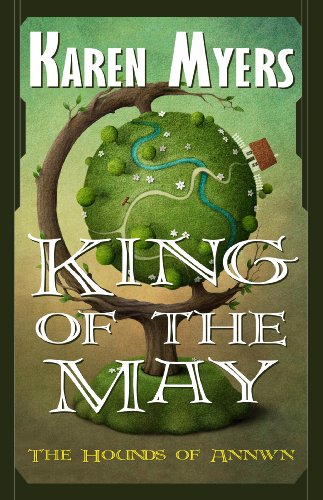
When an ancient sorcerer pursues an enchanted blade at any cost, only one man stands in his way.
Archaeologists uncovering a lost Mayan city unearth a magic artifact. An earthquake disturbs the operations of neighboring narcotraffickers. An ancient sorcerer and his mercenary henchmen arrive to claim the artifact.
When these three factions converge, Karl Thorson, ex-Special Forces, is thrust into action.
Dexicos Megistos, a nigh immortal sorcerer, wants to retrieve a mystical jade dagger. Alejandra Matamoros-Lopez wants to smuggle narcotics through the tunnels beneath the ruins, avoiding the notice of rival cartels. Professor May Chen wants to see if any sparks remain from her relationship with the head of the archaeological dig.
Karl Thorson just wants to do his job, and maybe have a cold beer.
Can he safeguard the archaeologists, especially the lovely Professor May Chen? Can he defeat a murderous band of narcotraffickers? And can he deprive the sorcerer Dexicos Megistos of the jade dagger?
Don’t miss the first book in the Semi-Autos and Sorcery series. It’s the kind of Urban/Contemporary Fantasy fans of Larry Correia and Jim Butcher are hungering for.
“A fast-paced fantasy romp which is not anything like Indiana Jones, though you might be forgiven if you notice a similar feel …It is a fun ride, really.“–Steve Perry, NYT Bestselling Author of Indiana Jones and the Army of the Dead
Wounded in body and spirit after the fall of her kingdom and loss of her lover, the knight Kaila has one last duty to perform before dying: seeing two orphaned children home to their clan in Bringanzo’s Desert.
But all is not lost. When the shaman of Three Mountains Clan takes Kaila on a smoke quest she learns Kreg is still alive, fighting his way across the lands to her. She will raise an army to free him, though hell shall bar the way.
And once they’re united, not even the beast men who overran Trevanta, shall keep them from taking back their land.
First published in German in 1810 and never before translated into English, Julius von Voss’s INI: A Novel from the 21st Century is a long-lost classic utopian novel. The setting is the world of the 2090s as imagined by an author writing nearly 300 years before, when the Industrial Revolution was just barely getting started. Teams of trained eagles pulling balloons, whales harnessed to a floating island, a gigantic umbrella sheltering an entire city… the marvels keep on coming. INI is also a love story, as the hero spends the novel striving to make himself worthy of the title heroine in the most literal way. Much of the novel is a tour of the world of the future: after traveling through Europe and then North America, the hero meets with disaster in the Arctic and finds himself marooned at the North Pole. With its detailed vision of history and science for the next three centuries, INI is considered by some to be the first German science-fiction novel. While a product of its time for better or worse, it is sometimes whimsical, sometimes eccentric, and always imaginative. Long hidden behind the language barrier and known only by its title from a few scattered references, INI is now available in English to science-fiction historians and others interested in early fantastic fiction. Includes vintage illustrations as well as historical and translation notes that put the story in context.
This collection is from ten different Texas authors. There was no ‘world’ or set up for the stories. It was up to the individual authors to write their stories, so you get a wide variety! Vampires, dragons, werewolves, enchanted swords, runaways, SciFi, and cowboys… Stories for everyone in this collection of Texas authors!
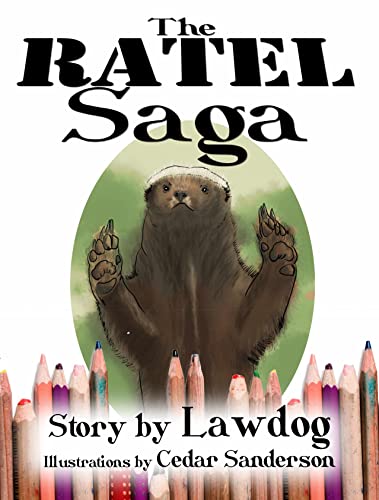
Alma TC Boykin- Pigmentum Regium; Monalisa Foster- Caliborne’s Curse; Dorothy Grant- Business not Bullets; Kathey Grey- The Invisible Train; Pam Uphoff- Runaway; JL Curtis- A Favor Owed; Jonathan LaForce- Knights and Dragons; Peter Grant- Starting over; Lawdog- Bad Night in Falls Town; John Van Stry- They Only Ever Just Send One; Wayne Whisnand- For a Child.
This is the result of that collaboration- May I present Tales Around the Supper Table- The Anthology.
Sarah has studied as a demonologist with the Church ever since. Along with her friend Beau and her magical guardian dog Merlin, she trains to put her unique psychic gifts of reading and manipulating energies to good use.
But investigating evil is wearing on everyone, and a trip for Sarah’s friend Lizzy’s wedding provides just the vacation they need. It’s even in the beautiful inn she and Lizzy went to summer camp at when they were little.
She had so many good times at this place. So why are memories straight out of a horror movie popping into her head?
Sarah knows nothing supernatural is going on, she’d see it, she’d remember it, but when guests start disappearing, everyone’s left questioning their reality. What could fool Sarah’s powers, Beau’s faith, and Merlin’s senses?
When someone starts rustling cattle, it doesn’t take long for the whispers against Rand to start. To save himself and his young son, Rand has to prove his innocence and find the real rustlers.
(I want to apologize for the whimsical bolding and link capture, but in addition to doing this in a moving car, WordPress has been making this difficult for months, because WordPress is as’ho’e.)
Vignettes by Luke, Mary Catelli and ‘Nother Mike.
So what’s a vignette? You might know them as flash fiction, or even just sketches. We will provide a prompt each Sunday that you can use directly (including it in your work) or just as an inspiration. You, in turn, will write about 50 words (yes, we are going for short shorts! Not even a Drabble 100 words, just half that!). Then post it! For an additional challenge, you can aim to make it exactly 50 words, if you like.
We recommend that if you have an original vignette, you post that as a new reply. If you are commenting on someone’s vignette, then post that as a reply to the vignette. Comments — this is writing practice, so comments should be aimed at helping someone be a better writer, not at crushing them. And since these are likely to be drafts, don’t jump up and down too hard on typos and grammar.
I’ve been accused of being a class traitor, something that amuses me as much as being called a gender traitor or any other kind of traitor to something I never swore allegiance to. And something that, in one case, is a diseased chimera from the useless brain of Karl Marx. And in the other is not exact science “the contents match the can” the left thinks it is.
What I was accused of, particularly, was of not liking the Dinosaur-my-love idiocy because I “identified with the working class.” Which … not really. Not in the sense the idiot means by “working class.” Which is itself a deranged abstraction but in the case of the Dino-abomination seemed to mean “louts who hang out in bars and beat up people because it’s Wednesday and there’s nothing good on the telly.”
Actually that story is a good example of what I wish to talk to you about. There is a — for lack of a better term — class or if you prefer category of people who really have no clue how the other half lives. What that woman poured into “working class” was some kind of emulsified crap from reading regency romances (the gin!); the eructations of Marxist professors; and the fear of those who aren’t like them, and who must wish to murder them for being so open minded and smart. Or something.
I’ve seen this so many times it’s no longer a surprise, even if that one was particularly vile.
Revolting, yes. Surprising? no. People with a college degree try to depict people whom they consider beneath them socially, and it quickly devolves to white-trash stereotypes and insanity. (Of note, many people (if not most. I don’t think anyone has done a survey) in trailer parks have at least some college. But none of these people think they can even read or write.) And the things these people can do, often complex jobs (don’t ask me to install faucets or do anything with drains. You won’t like the results.) are dismissed as “things dumb people do.”
Which brings us to where we are.
Our current difficulties have been described as a class war. Yes, in that sense myself (and husband) would be class traitors. Or as a friend of mine calls himself “new class traitors.” We are both (hyper, alas) educated, and (him more than me) have the sort of background that should make us eat all that internationalism with a spoon. Our work with words and numbers (me/him. We divide labor that way) should make us prone to abstraction and convinced we can rule the world from our desks, with a wave of our unblistered fingers.
And yet, we insist on siding with those people that the self-proclaimed elite classifies as “hobbits.” And about whom they joke.
And about whom they know bloody nothing.
It hit me yesterday though that we are precisely on the side we should be.
Forget classes in economic or even educational terms. Marx is dead (and I feel fine). Though he had something going when he talked of workers. Not much, of course, because the man was a dumb grifter. So when he thought of workers being a separate class, he thought of it as his leading the hobbits to paradise. (Rolls eyes.) The man who was raping his kitchen drudge though he was a natural for leading workers. Sure. (You know what if I get a time machine, I might or might not kill him but I AM going to give him a Persian blessing. I.e. spray him repeatedly with cow urine. He needed it. And it’s a pity no one ever did it.)
But still, making workers a separate thing made sense. Oh, not in the “owning the means of production” because for some of us those are our minds, and I work very hard to own it, thankee ever so much.
You see, it’s like this: People who make things (even useless luxury things like yours truly) think differently from people who DIRECT things and tell you how things should be made.
This has shadings, because there is an entire preening gaggle that sort of makes things, but not really
For instance artists who live off the public dole, or the academic grift don’t make things. They serve their masters. The work is not tested. It doesn’t have to satisfy. It just has to repeat what you heard. And the flawed, broken parts will be taken as “very smart.”
While artists and writers who are public-oriented i.e. who write for money are a completely different kind of thing. They are people who work. This is why you could always tell Baen writers in the old days. They looked and acted in completely different ways from the other houses. Mostly because by and large we weren’t trying to impress professors.
In the same way, indie writers tend to be more like Baen writers were. People who work, and make a living with the sweat of their brows (ow, my arthritic fingers.)
And of course, anyone who makes clothes, paints walls, grows things is someone who works. Because they have to do things and do them to a certain standard or it fails. You can’t cover flaws in construction up with pretty words: the missile won’t fly, the bridge will collapse, the novel will never “close.”
Yesterday I was watching people install granite counters (I was supervising guy making our internet work…. He didn’t, btw) and when it all came together, the young woman in the crew said “I love it when it comes together” and it hit me it was the exact same feeling as when I navigate a difficult plot point, and bring the novel to a satisfying conclusion. I.e. I can’t just stop mideway and say I don’t know what it means but it’s commentary on something or other. I.e. I’m more kin to that young woman (I was highly impressed. Like me, at her age, she could do the physical work of a man. It’s rare, but it happens.) than to university professors explaining the symbolism in the use of punctuation in a novel.
The problem you see is that the people who never do anything, never build anything that has to be made to certain specifications, have no clue — none — of limitations.
Why not? Well, because they’ve never met them. In the realm of ideas, in which they build abstractions, the result is always right, and who are you to question their vision?
In the real world we learn that the stain won’t go on evenly (I will finally have an actually, for real workshop) despite your best efforts, and then you have to fix; that the bookcase you built should take that dictionary, but in fact it just collapsed, that….
You learn that there is a reality, and that it pushes back on you, and it’s not all shaped by your mind. The stain didn’t blotch or the varnish crocodile because of systemic racism. Preaching to the drains about systemic oppression won’t make no never mind. You need to do the work, and do it so it works.
Unfortunately, the profitable path in our society for almost a century has been to be pharaoh’s supervisor, ordering the slaves to make brick without straw.
Which is how we get to the embassy in Kabul being very very concerned with pride month, but not so much with getting their people out safely.
All of which… leads to where we are. There’s a group of people who can’t find the real world with two hands and a seeing eye dog. And they hate, despise and fear those who can, because those people refuse to fall in with the beautiful abstractions of the shit-spinners.
And they keep trying to control everything. Partly because then reality can’t sucker punch them, I think.
If we let them go on with this, they’ll kill us and destroy civilization.
I think we’ve realized this, which is why we fight. And I’m right on the side I should be, even if the things I make are in the long run rather useless.
This is a war of the workers/those who make and build and create things, against the useless supervisory class, who just tells us how things SHOULD be made: completely divorced of real world materials/specifications/market.
They’ve been driving us to a point we can’t do anything but fight back.
Heaven knows we’ve been trying to do it with words/ideas, not with steel.
But one way or another, we’re almost at
Holla ye pampered jades of Asia! What, can ye draw but twenty miles a day?
They said the world would end in fire next time. But no one said the fire would be set when a bunch of buffons de derriere were running around with matches, misinterpreting everything, and claiming we had to listen to them because they’re experts.
Seriously? They didn’t know Afghanistan, a place that is like our primordial tales where parents are served a stew of their children, a place that not only has never been civilized but relishes barbarism, would fall that fast. And now there are Americans — not all of them aligned with the idiot chauve-souris de la lune — there, exposed to the barbarism and the horrors, and America can’t help them. Which btw, is going to make our enemies sharpen their teeth and think we’re ready to fall, when it’s just the idiots at the top who are…. well, idiots.
Meanwhile the Junta has its hair on fire over Covid, or at last that’s their pretense, to get us to look away from their craven failure.
Here’s the inside scoop on those “overloaded” hospitals. It’s true. They’re overloaded. Oh, not because Winnie-the-flu is that terrible, particularly not the “dreaded” Delta variety. It’s because many medical personnel chose to exit rather than take the vaccine as condition of employment. So “I’ve got weasels in my pants” Joe’s attempt to fix it by making all the nurses take the vaccine means–
Come on, guess it. Go for it. I give you three guesses and the first two don’t count.
EVERYTHING is STUPID.
And do you know why everything is stupid, boys and girls?
Oh, sure, Socialists and Communists who’ve lied so much they don’t know where truth is anymore are running around and ordering things in the way that makes sense to them. (Spoiler: it didn’t make sense to anyone else.)
But they are the symptom, not the origin.
The origin is the idea that “experts” have special magic and should be given control of everything.
Now, that virus bit sometime in the early 20th century.
Sure, if I want to build a house, I’ll find an expert. But if the expert is building a house with the roof two inches above the floor, I can tell him to go soak his head and have it fixed.
And that’s the way things used to be. People were judged on accomplishments not credentials.
Sure, after WWII, probably because of the GI bill, we became very hot on credentials, but that was not terrible, because people were still judged on what they did.
And then– And then in the eighties, sometime, everyone started worshiping “expertise” by which of course they meant credentials.
It had nothing to do with ability, just “knowing the proper procedure” and having the right manner, and saying the right words.
And things that had never before been under the “proper procedure” protocol now fell under it. Business. How to dress. etc. etc.
There were “ways” to do things.
My problem, of course, is every time I looked into those procedures and “ways” and established modes, at least in any field I had the slightest bit of expertise, I found that it was all smoke and mirrors and buck passing.
It’s probably not coincidental that worship of the experts ran hand in hand with leftist takeover of fields and institutions. After all, they don’t want to be judged by their results, do they? Who of them would escape a whipping?
So they default to tab a, slot b and didn’t they teach you to use the right term?
I remember being yelled at by a bunch of undergrown brains on this blog because I questioned their teacher. How dare I? She was the ‘expert.’ I had to respect her.
She was an English teacher, whose corrections on my son’s papers led me to believe that English was her second language. The first was dumbass. (Turned out I was wrong, btw. The first was cannabis.)
And that was my warning that everything was stupid. And getting more so.
From now on, in the wake of Fauci — whose insanity led to people dying of AIDS 30 years ago, because he was sure it was airborne, so people were neither warned about dangerous sexual practices, nor was our blood supply secured nor, btw, were the poor people dying of it get family support, because it was “airborne” and “anyone could catch it.” Now he’s led the country into a rathole, destroyed the economy, and is preening and posing, demanding fascistic rules and restrictions on citizens. — I suggest a new rule. Which is in fact a very old one.
By their fruits thou shalt know them.
And the fruits of these experts are all rotten and filled with death.
I say we shall have a great Simplification. (The first one to get the reference gets a signed book of his choice. Though he/she might want to remind me of this mid-September.)
No more experts. Question everything. Apply common sense. And keep an eye out for obfuscation and passing the buck.
A man with a (mental) overcoat is an enemy. You know what to do. (What? A book for that one too? Okay fine. just remember to remind me in September.)
Build under, build over, build around. Because she’s gonna blow, and we — heaven help us — we! are the last best hope of mankind.
Be not afraid.
Hearts on high.
Yes, some of us might very well die of this. But dying isn’t the worst fate. There are much worse things. Like being abandoned in Afghanistan by your government run by “experts.”
No more experts now. Just us.
We might not be the ones we were waiting for — I was expecting someone taller and less tired — but we’re the adults. And it’s time the adults came home.
“Intreat me not to leave thee, or to return from following after thee: for whither thou goest, I will go; and where thou lodgest, I will lodge: thy people shall be my people, and thy God my God:” – KJ Bible.
Was a choice ever made? Do we ever think about it and go “Yes, I want to change everything about me, and become part of this other people/this other nation/ this other way of living.” Do we even change? Or do we just find the place we want to be, the place that is like us.
I’m not talking here of refugees. They go, poor things, in a rush, often pushing wheel barrows of all their possessions. (This image has been much on my mind recently.) And I’m not talking about economic migrants. They go where they can earn a livin, and most of them return. The ones who don’t…. some at least have found the place they were meant to be. Others stay because the kids now belong to this other place. The “wisdom” in Portugal is to return where the kids are raised, and before they can wife. Not that I ever intended that. Not that there anywhere to go outside America. Probably, strangely there never was.
It has been on my mind, in the way of sad recollections Operation Eagle Claw, when Jimmah sent men to die in a poor planned mission to rescue the Iranian hostages.
I was seventeen then, and my heart broke. Believe it or not all around me people gloated that the Americans had failed and been humiliated (I was in school. Most people at least pretended to be leftists.) And my heart broke. It broke twice: it broke for the people who’d died, and the pain Americans were suffering under an incompetent president. And it broke that I couldn’t be here, to share in the burden.
I think that’s when I knew whatever happened in the world, and in my life, I would end up here, because in my heart I was already one of you. I suffered when you suffered, I triumphed when you triumphed.
Later there were choices. I chose to marry rather than take a job offered because, well, I fell in love. That he was American just made things more convenient. Had I married anyone from any other nationality, I’d have to bring them here, and that might take time.
But those were secondary choices. The choice to become American wasn’t. It needed, even so, a lot of effort, to learn to live here, and adjust my mind to fit in. But you see, there really was no other choice. It was already the home of my heart, and I think the Bible also says wherever your heart is, your body will follow.
I’m one of you now. I wed the country as firmly as I wed my husband. My children are Americans. I’m an American. There is no other choice and nowhere else to go. There probably never was.
Oh, IF America falls — no, I don’t think we will, though I’m telling you it’s going to look a lot like it for a decade or maybe a little less — there still wouldn’t, in practicality, be anywhere else to go.
When America sneezes, the world catches pneumonia. We’re going to have it rough, which means the rest of the world will die in droves.
But of course, in the place of my origin, I have family and connections — strained and frayed, granted, but still there — and people who’d take us in, and it’s highly unlikely my family would ever starve. (They’ve survived anarchist revolutions, and national bankruptcy and…. there are ways, and they find them.)
Even so, it’s not a choice. I could not live there with my heart over here. It’s easier to suffer in the land you love, and with your compatriots than to be secure in a land where people gloat at the misfortunes of America.
I know every time I go over, to visit, I spend the whole time praying that nothing major will happen that will seal me off from coming back home. Because this is where my heart lives.
We’re going to have a rough time. There is no mistaking it. I don’t know when things will explode, but I can guarantee they will. And then…. And then it’s going to get very rough. Very rough. Pray, and stay alert, and keep your clothes and weapons where you can find them in the dark. Be ready to melt like shadows or stand like men. At times both will be called for.
But at least we’re all together.
Remember you’re Americans. You’re the proud heirs of something the world has never before seen: the common man having a say in their governance, and power to go with it.
Never forget it. And don’t let it slip from you. Pass that flag, with the glorious stars and stripes unstained to your children.
Be not afraid.
None of us got a choice. Not you and not me.
But it is our very great privilege to live in a time when freedom is imperiled. It is our very great duty to protect it.
Our lives, our fortunes, our sacred honor. A price that was once paid. And might yet be required of some of us.
And it will not be a choice. And it will be worth it.
In the end, great stories are always about death and blood. Spend yours advisedly.
Stand as Americans. That is also not a choice.
Intreat me not to leave thee, or to return from following after thee: for whither thou goest, I will go; andwhere thou lodgest, I will lodge: thy people shall be my people,
Sorry for the protracted silence. The carpet was worse than we expected, so we engaged in a quixotic adventure to rip all or it out and zinzer.
Now on the way back to Colorado, to get that house ready for sale in two weeks (or less if we can,) while leaving people installing flooring under local friends’ supervision.
I’m so tired I could fall on my face, but not so tired that I missed the fall of Afghanistan, a needless non-forced error. We could have left without leaving hostages, and without burning our own flags, to avoid them falling into enemy hands. The last days of deranged regimes tell you what their real priorities are: ours are burning American flags, giving weapons to terrorists and leaving our hostages in enemy hands. Duly noted. Remember that when time comes to deal with the Junta.
Something changed with that fall, something material. I don’t know what. But the mood in the country is different. It’s not quite 9/11 level, but there is a sense of vital outrage. I think people who’ve never paid attention are now awake and watching.
May G-d have mercy on our souls. And may we get to sell the old house, and complete this move in safety. Yes, it’s selfish. I’m a selfish being.
There is a sense of a grinder heading towards us, perhaps one that will mill very finely indeed.
Once again, make safe what can be made safe. Get you and yours to a safe place.
This is your warning: Sauve qui peut.
And keep your clothes and weapons where you can find them in the dark.
Este parte, aquele parte – This one leaves, then the next e todos, todos se vão – and all depart forever Galiza ficas sem homens – Galicia you’re left without men* que possam cortar teu pão – who can scythe your wheat
Tens em troca – In exchange, you do get órfãos e órfãs – orphans tens campos de solidão – lonely abandoned fields tens mães que não têm filhos – You have mothers who lose their children filhos que não têm pai- children who have no fathers
Tens em troca – In exchange, you do get órfãos e órfãs – orphans tens campos de solidão – lonely abandoned fields
Viuvas de vivos mortos – Widows of living-dead
Que ninguem consolara – Whom no one can console.
*The North of Portugal, like the tip of Spain above it, are both Galicia/Galiza.
Just found myself singing in the shower, and getting tears in my eyes. And this is odd. Because I’ve not that done that for the 36 years since I left. (Leaving my mom and more importantly my dad, if not with no children reduced by one. Which out of two is noticeable, rather.)
I won’t pretend there were no regrets on leaving but they were tempered by the fact that Portugal already resembled the stupidest time line back then, and I kept going “I can’t believe” on everything from how food is served or available, to how roads are laid out. Also, frankly, my attachment was to grandma and the village, and that is pretty much gone (Except for grandma’s grave. And that’s still important to me.)
I miss dad, I hate that I can’t go to my nephew’s wedding, but as dad put it last time I saw him “that’s a very old pain.”
So why the fresh bout of pain that comes out in song?
Well, leaving Colorado will do it, and I swear if it were not for the altitude, I’d not have. I’d have stayed and fought for it.
Colorado was the homeland of my heart, the place I tacked to for 22 years before we finally moved there, and then we lived there for 30. Our friends are there, the places the kids grew up, the places we’ve loved for thirty years are there.
Sure, it’s occupied by communists, but I deduce from the fact that they won’t let anyone audit the election that it’s just occupied. It hasn’t actually changed that much, even with the invasion.
But for now, for right now, given the effects of the altitude on my body and given how very stupid the establishment is, it’s time to go.
This one is going to hurt like a mother. But I’ve done it before. I can do it again.
However living is dying a little, to those left behind, as they die a little to us. There is a break never to be healed. And mourning to be done.
We now own a house in another state. Then it’s back to Colorado for two to three weeks, to get house up for sale, and then we move for good.
The View From Rural Japan – a Guest Post By Francis Turner
As the real wuflu pandemic fades away, even though the control freaks try to keep the fear alive, it’s probably useful to look at how the wuflu affected places not covered by the news. As it happens I have had a ground floor view of how the wuflu and associated covidiocies affected rural Japan because I live in Shimane prefecture – in Western Japan.
Shimane Prefecture circled
Compared to many places Shimane has been barely affected by the wuflu in direct terms. I think we’re still at way under 1000 cases (~800?) and 2? deaths. In other words more people in Shimane have died from house fires or traffic accidents than the dreaded wuflu. Looking back to early 2020, Japan was where we saw the first wuflu cases in a controlled non-communist place – to whit the Diamond Princess. Possibly as a result of that experience, possibly as a result of other, things Japan has generally speaking had a remarkably low number of wuflu fatalities and not that many cases. Shimane (pop 650k), has as I noted above, effectively no cases with cumulative infections in the 0.1% range and serious illness/death being a rounding error. Japan as a whole isn’t much worse: deaths are currently around 15,000 total which works out at a bit under 10/100k population and total cases are about 1 million which is under 1% of the population. I know a handful of people outside Japan who died of/with the wuflu and more who have had the disease badly enough to require hositalization. I know of no one in Japan that has had a positive test.
One of the key differences between Japan and most other countries is that most things did not “lockdown”, and to the extent that there was a lockdown it was either short-lived, local or both. This doesn’t mean that widespread covidiocy has not occurred (and is not still occurring) but the national government has not ever told the entire country to cower at home the way governments in Europe did. To the extent that the country did “lockdown” in April 2020, with almost all schools, restaurants and bars closed (along with various other offices), it was temporary and did not last beyond mid May. It may have been slightly more than “15 days to flatten the curve” but it wasn’t more than 45. That national kind of lockdown has never been repeated and the lockdown as a whole has been a lot less that that seen in other places such as Europe. Even in regions where “states of emergency” have been declared – Tokyo and environs, other urban prefectures mostly – most people worked most of the time. People have been encouraged to maintain “Soshiaru Distansu” and to “Terewaak” where possible, so the hordes of Salarymen (and women) commuting to the office has dropped dramatically. The floods of salarymen going out in the evening with colleagues to get drunk together on expenses has shrunk to a trickle, and in fact large chunks of the travel/hospitality sectors are on life support, but factories, warehouses and so on have generally remained at full activity, so Japan has not see the massive drop in GDP etc. that we have seen elsewhere.
In late March-May 2020 most (all?) schools in Japan closed for a few weeks (though April was also the spring vacation so the total time closed was probably three weeks or so) but sanity prevailed and they have not generally shut again – some individual schools that have been the center of a “crustaa” of cases have partially or completely shut for 14 days to cut out the cluster. Here in rural Japan
..the whining schoolboy, with his satchel And shining morning face, creeping like snail Unwillingly to school
has been a constant after May 2020, just as it was in the past. Admittedly now the schoolboy (or girl) will typically be wearing a face mask (often around his or her chin) while creeping like snail but that is about the limit of the impact. School and after-school activities like baseball or band practice have continued, exams have taken place as normal and so on. This year graduation ceremonies took place (with spacing and a lack of parents to applaud). Last year key inter-school competitions like the national high school baseball championships were either cancelled or took place in a much reduced form. This year, despite a recent rise in cases, the events are taking place more or less as normal though I believe there are limits on the numbers of supporters allowed to attend.
In other words, and this pretty much sums up Japan’s general reaction to the pandemic, the wuflu has only been allowed to nibble at the edges rather than take over the entire culture.
Personal Experience
So what does that mean to someone living here?
Mostly little change beyond the universal mask wearing virtue signalling and related pointless sheets of vinyl/perspex everywhere. Every business has a bottle of alcohol to spray over one’s hands as one enters and many people take advantage of it. Many public places also have an automated temperature taker thing at the entrance and you get a bing as you enter. As with the alcohol rinse this is semi-optional in that I’ve observed people skipping the scan and not being told to go back and do it, but most people comply. I think a lot of this is communal virtue signalling: the business shows that it cares not to infect its customers and the patrons show that they don’t want to infect the business or other patrons.
Masks are universal in public places but discipline in general is sloppy and getting sloppier. The local Kuroneko Yamato delivery bloke (delivering Amazon etc.) has his mask below his nose if not around the chin and he doesn’t care that the person he delivers to has no mask on at all. People walk around shops with their mask below their nose. People take their masks off when they are served the first drink in a restaurant and never put them back on until they leave. Last year people out hiking in the mountains often wore a mask, or put one on when passing another group of people, this year we just say “konichi wa”. And so on. Masks were worn a lot more seriously 12 months ago, now it seems like most people are just going through the motions, which is something that outsiders won’t realise when looking at the statistics.
Mass events (theatre performances, sports events) have mostly resumed in 2021 after being cancelled in 2020 – some (e.g. baseball) resumed in September/October of 2020 and despite waves of increase in 2021 most have continued to occur with an audience throughout 2021, though not in places like Tokyo. In fact that’s been typical. More spectator events take place in smaller towns than in larger cities. One notable example was the Olympics where events in Tokyo had no spectators but those in more distant locations (e.g. the marathon in Hokkaido) did. This is actually logical given that the Wuflu has spread much more in the larger conurbations and is an example of the Japanese government’s general decentralization of health to prefectures and municipalities. Shockingly Japan has figured out that rules for densely populated Tokyo (16,000p/sq mile) make no sense in Shimane (<50p/sq mile) and has in large part left it up to the local governments to decide what health/quarantine measures should be applied.
Beer girls on duty at Mazda Stadium (Hiroshima)
Back to mass events. Typically these mass events have a reduced audience with one seat in two kept open to do the social distance thing and everyone has to have their temperature taken by one of the scanner gun things on entering. Inside everyone in the audience wears a mask (when not eating or drinking) no matter whether the event takes place in a small auditorium or a large open-air baseball stadium. The singing at sports events has been stopped, which is a pity, but at times/places without a specific state of emergency, that, the masking and the limited capacity are the only differences to pre-Wuflu. At baseball, the beer girls still deliver and despite the pleas to not crowd, fans leaving the stadium are just as packed together as normal. Some events insist that you give contact details which I’m pretty sure only have maybe 50% compliance with regarding an accurate name/address etc. I’m not sure what the Japanese equivalent of Mickey Mouse is but I suspect he’s been attending a lot of events.
There have been zero supply chain issues for daily goods, after the brief toilet paper panic in early 2020 (February) and the subsequent mask shortage (March/April 2020). Some more specialized goods are harder to get (e.g. certain bicycle components and frames are not always available, just as is the case in other parts of the globe) but we aren’t seeing any obvious inflation or increases in prices. Having said that though, gasoline and diesel have gone up in price after being unprecedentedly low in 2020. Prices at my local “gasoline stand” are now ~150Y/liter which is a significant rise off their lows a year ago of around 120Y/L and slightly higher than they were in late 2019 (IIRC ~145Y/L)
Really in Shimane, the main difference between now and 2019 is the lack of tourists which brings us to…
The Leisure Sector
Travel, hotels, restaurants, bars and so on are the sector that has really been hit hard by the wuflu. Basically package tourism stopped dead in April 2020 as did business travel and most business entertainment and none of that has come back in the year plus since, with the partial exception of a few package tour trips briefly between waves of wuflu. A number of leisure sector businesses, mostly ones run by elderly proprietors, shut in April 2020 and have never re-opened. Many bars/restaurants have come up with takeout menus and local craft breweries and sake makers have aggressively moved into online sales. Many larger establishments are also struggling and have cut employees. Both JAL and ANA seconded a number of their ground staff at local airports to other organizations and the local Matuse area bus/taxi/rail company Ichibata has had big problems and may eventually go bust because it has seen its tour bus and other tourism related business fall off a cliff. I’m sure other companies that I haven’t seen in the news have also had problems but the large hot spring resorts (e.g. Tamatsukuri Onsen in Matsue) were in the news last the winter noting their lack of customers.
To their credit the government, both national and local, have realized that there is a problem and come up with ways to try and soften the blow. The main thing they did last year was provide various ways to subsidize people going out and eating/drinking/staying at hotels. The schemes have differed in precise implementation but essentially as a customer you buy several thousand yen of coupons with a discount of somewhere between 20% and 60% which you then spend at the leisure establishments of your choice. Interestingly some schemes have had two discount components. First you get a discount purchasing the coupons or booking online using special booking codes, then once you arrive at your destination you get a few Y1000 vouchers (the number depends on the campaign and the amount of the booking) that you have to use before midnight the following day. The vouchers are usually redeemable at the hotel/ryokan for drinks or souvenirs (omiyage) and may also be used at other places too such as (some) local convenience stores, souvenir shops etc.
I have no idea how well this has worked generally but it certainly incentivized the wife and I to do more weekends away than we might have done otherwise and from observation we are far from alone in so doing. We’ve also tended to go up market a bit (e.g. we went to a posh Tamatsukuri ryokan in February which would normally be well out of our price range, but with the various subsidies was now nicely affordable) and in total have probably spent more money on domestic tourism and entertainment than before. On the other hand I’ve had zero business trips and zero foreign business/leisure trips so we’re probably still spending less in total.
As I understand it various local governments have also spent wuflu funds directly subsidizing the salaries of some travel company employees by having the employees seconded to their tourism bureaux. Unlike countries such as the UK where people have been paid to stay at home, in Japan these seconded personnel have had to do things. Some of it may be a bit make-worky (e.g. tarting up a local airport) and the work may not be quite as strenuous but overall the principle has been that you have to show up and do something to continue to get your salary.
Overall I think this approach has been pretty good. I know there have been establishments that have fallen through the cracks; for example the large chain izakayas for example have generally reduced their numbers of employees because even with the incentives to eat out they haven’t seen enough custom to make up for the lack of business boozing, but no scheme can be perfect. However in general the schemes have kept the majority of the leisure sector alive and the incentives have been well targeted to keep most people in the sector doing more or less the same job they were always doing at more or less the same wage. As a result, combined with the fact all other businesses have continued as normal, there has been no need for secondary fixes such as eviction moratoria for lack of rent payment because almost everyone has still kept their job and thus the ability to pay rent. I’m sure a number of tour bus drivers have taken jobs driving delivery trucks and I have no doubt that a number of people that worked as waiters or similar have redeployed to deliver food and, as noted above, there are certainly a fair number of small establishments that have gone for good but there hasn’t been the mass dislocation that I understand to have occurred in other countries.
From the news (I can’t personally confirm) it seems that people are now flying within Japan in fairly large numbers for the first time since early 2020. This is a difference between now and early May. Then we had to attend a funeral in Tohoku at short notice and, despite it being “Golden week” – normally a time when every flight / hotel etc. is fully booked – we were able to book flights, rental car and hotel with no problem at all despite the lack of notice. If the funeral were occuring now I suspect things would be rather different.
Vaccines and Recent Developments
Unlike the UK, USA and Israel, Japan has been fairly slow to vaccinate. It has, however, followed much the same strategy of vaccinating the healthcare sector and the vulnerable elderly first and then moving on down the age cohorts. Although things got off to a slow start for any number of mostly bureaucratic reasons, the organization seems to be pretty good and the program is now chugging along solidly. Since this is a public health matter implementation has been local. This has led to some differences in speed of vaccination. For example the town my in-laws live in vaccinated essentially the entire population of the town by the end of May, while the city I live in has yet to vaccinate most people under 60. As far as I can tell Japan as a whole has now vaccinated pretty much everyone in the health/elderly care sectors and everyone who wants a shot who is over 60. It’s probably more like everyone over 55 and it looks like it everyone over 40 or so will have had the opportunity for at least one shot by the end of August and be fully vaccinated by late September.
There has been a certain amount of vaccine skepticism. The Japanese have historically not been very trusting of vaccines and this has spread to the Wuflu ones. One of the reasons why vaccination took so long to get started was that the government insisted on additional trials in Japan (another, allegedly, was that the Japanese companies that make the needles and syringes, after making sure that no unreliable Chinese needles would be used then failed to ramp up their own production) but take up among the elderly has been very high. It looks like, as with other countries, take up amongst the younger generations will be lower.
Happily there does not seem to be a serious push for mandatory vaccine passports or mandatory vaccinations (an optional vaccine passport for international travel is available). In fact overall the Japanese government bodies have treated their citizens as intelligent people who can make their own mind. Data on cases, deaths, hospitalizations etc. have been made available and there are a number of good governmental places with collections of statistics. Most are in Japanese of course but Tokyo, thanks to it’s relatively large population of foreigners, has a nice English language site with most of the relevant stats for Tokyo. The treating of the population as grown-ups is probably another difference between Japan and most other places and it is, I believe, the main reason why the current round of states of emergency in Tokyo, Osaka etc. is being somewhat ignored.
The reason is summed up in these graphs above from covid19japan. Despite an ongoing rapid spike in cases deaths remain under about 20/day.
Aside: It is worth considering how Japan compares with other countries. Japan is now seeing ~15,000 cases a day. This is 10/100k of the population more or less and yet is the worst it has ever been. Compared to almost any other country that is exceptionally low as in about an order of magnitude lower than other places. For reference the UK, having recently seen a large FALL in cases, reports (according to the official gov.uk website) about 270/100k
Back to Japan. If you dig into the Tokyo numbers you see that the same disconnect between deaths and cases also applies to hospitalizations.
Tokyo reported infectionsTokyo hospitalizations for Wuflu
Hospitalizations have slightly more than doubled since the start of July while new infections have risen eightfold. A similar metric applies for “Patients with severe symptoms” which have tripled to a massive 150 out of some 35,000 people currently considered to be infected.
Another graph (from Tokyo, but in Japanese) shows the breakdown by age decade and week (up to the week including July 27).
The yellow (and black) are the over 60s to over 90s. In April these ages were about 15% of the total infected, by the end of July this fell to about 5% and a graph I saw on TV but can’t find online had that number dropping even lower in the last 10 days or so. Since the over 60s are also (as with other countries) about 90% of the seriously ill and dead, if the numbers of over 60s who are infected remains low then so do deaths.
It seems to me that the Japanese, particularly the younger Japanese are basically done with Covidiocy. Yes they’ll conform to social norms and wear some kind of mask when out on the street, but in a more private setting like a favorite bar or karaoke box, they discard the masks and the norms. Given that these places tend to be precisely the places that are ideal for the virus to spread (enclosed, crowded, poorly ventilated…) it is no surprise that cases are increasing. But since the elderly are vaccinated, even if they are catching the Wuflu they aren’t generally getting seriously ill or dying. This is undoubtedly due to the fact that the majority of susceptible individuals (i.e. the elderly) have been vaccinated and I suspect that the younger Japanese have consciously or subconsciously figured this out.
Lessons from Japan
Some people may look at Japan and draw the conclusion that masks work because masks have been universal. I’m not sure that is necessarily the case, but I think the attitude behind the (original) universal masking may have been key. That attitude was basically to avoid the three Cs in the illustration below
Also my personal observation suggests that people who worked around the elderly were particularly rigorous in avoiding potential infection and they did test/self-isolate if they thought they might have been infected. They also appear to have taken hygiene and disinfection really seriously. They sanitized surfaces, the washed hands, they took care not to cough on their charges (or indeed anywhere in the vicinity) and so on. Relatedly, unlike New York (or the UK), old people who tested positive were hospitalized in isolation units and kept there until they were either dead or recovered instead of being discharged back to a care home or similar. In fact hospitals isolated all wuflu cases and took great care to not have the infection spread in them too. Thus, although elderly people did catch the wuflu, the infections were one-offs and did not lead to mass infections of other elderly.
In other words (see the graph above about Tokyo infections by age group), everyone tried to keep the elderly from getting infected and most people tried to limit spread by not hanging around in places where the virus could spread.
I do think that there are probably other reasons too. Japanese people, including elderly Japanese people, have fewer comorbidities than others. They tend not to be fat, diabetic or other health issues that are known to be predictors of serious wuflu infection. Indeed Japanese are on the whole more active and spend more time outdoors than other places I have lived so being low in vitamin D is rare. I suspect that the Japanese diet may help too. The wuflu has tended to kill people with “one foot in the grave”. Japan has more centenarians than other countries and way more healthy active old people and comparatively fewer with “one foot in the grave”. I suspect that these are related to the lower levels of wuflu infection.
It is possible, likely even, that the Japanese total infection rate is higher than the statistics report. However I suspect that while there may have been asymptomatic cases, I suspect that because of all the hygiene and 3Cs avoidance, most of these hypothetical asymptomatic cases will not have spread the virus to anyone else. Although there have been a few cases of senior politicians etc. breaking their own wuflu restrictions, in general neither they nor anyone else did break the guidance last year. The government didn’t ram through unconstitutional lockdowns and it didn’t issue hysterical ever-changing guidance. Instead, it asked the Japanese people to think of others and, in very large part, the Japanese did. There may have been a fear of being shunned for spreading the virus to help incentivize voluntary compliance but Japan is a very high-trust society (yes you can lose your wallet on the street and get it back with all its money in it) and so people have been able to trust that everyone around them has been following the guidance.
Conclusion
I do think that the current rise in cases is because people have simply stopped following the guidance so strictly and I think the reason for that is that there has been a general realization that if they get ill they won’t kill grandma anymore. I also think that this realization is essentially correct because we’re seeing very much the same sharp rise in cases without similarly steep rises in fatalities or hospitalizations elsewhere too. If the politicians have any sense (and evidence to date suggests many don’t) they’ll announce that restrictions are no longer necessary and try and get ahead of the crowd.