Man Was Born To Strive

Recently we were talking about what we would have done if we’d known what was ahead.

By and large we’re okay, and the kids turned out okay, but I have great remorse that I tried to write when they were small, and often prioritized writing over spending time with them. This rather ignores the fact that I’m more neurotic than a shaved cat and would probably have driven them insane(r) if they were my 24/7 job.

But anyway, I said something like “I would not have spent my time beating my head against trad pub, and writing a lot of things I felt no push to write, but were demanded by the houses/I knew they’d be accepted. I’d just wait till Indy came on, and write for the drawer till then.”

I realized almost immediately after I said it that yeah, it sounds lovely, but short of sending my mind back in time, with everything I’ve learned on the “wrong path” I probably wouldn’t be the same writer, and I wouldn’t be better either. I’d never have learned what was actually wrong with the things I first wrote, and why they didn’t sell (Yes, some of it was left weirdness turning them down, but not all. I had no clue how to foreshadow for instance, or how to assign different weights to plot elements.) I’d never have learned to write fiction that appealed to others, because I wouldn’t be forced to. If I were writing only for me, I’d have no idea how to make a negotiation between what I like and what’s likely to appeal to most readers (not content, but presentation, mostly.) I’d not know that sometimes the books you were forced to write (Dyce) can be the most fun to you and others, if you claim the theme pushed at you and make it fun.

I’d be a much less flexible and practiced writer. Not to mention that not having the practice of butt-in-chair and writing, I’d probably have 200 unfinished novels, and no clue how to finish anything, let alone anything anyone else wanted to read. (And I’d never have learned to write short stories.)

So, the wrong path might very well have been the right training. If I can get my aquatic birds in a row and write like I mean it now, that it.

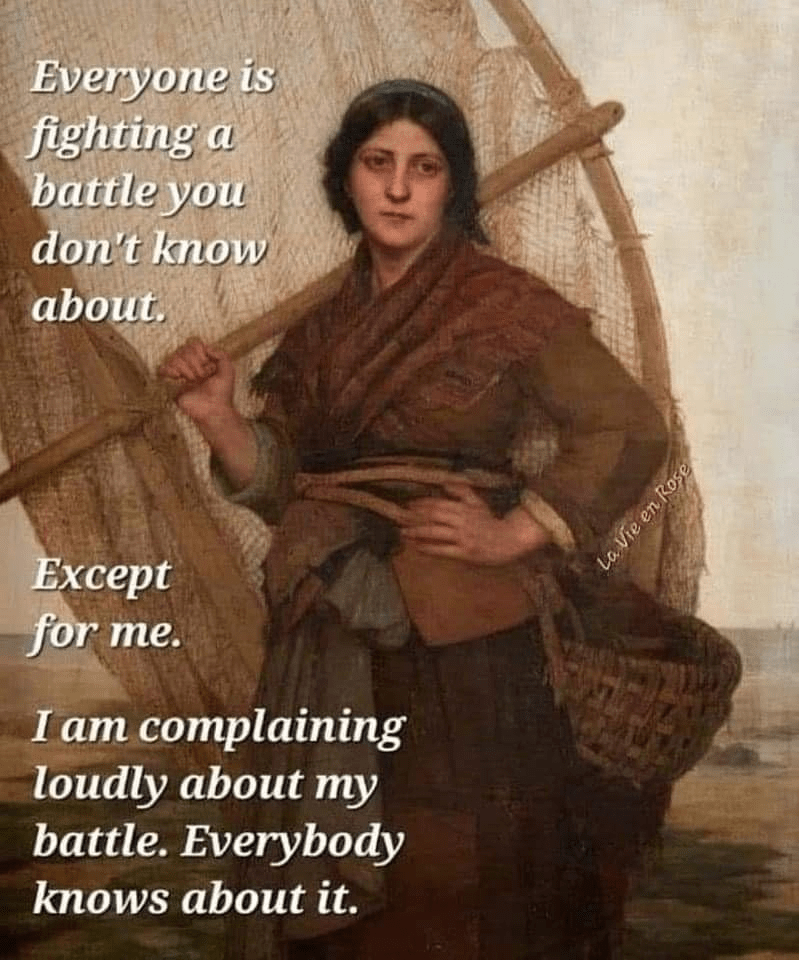
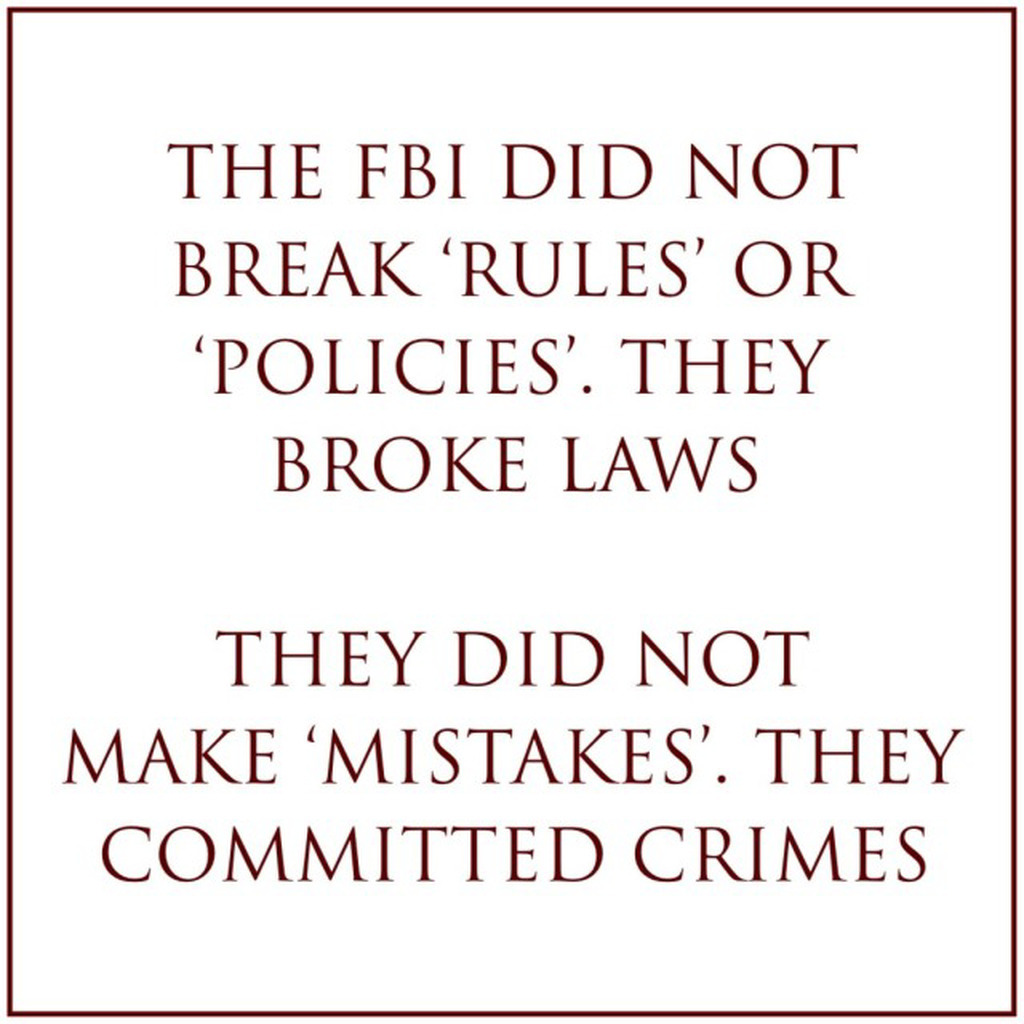
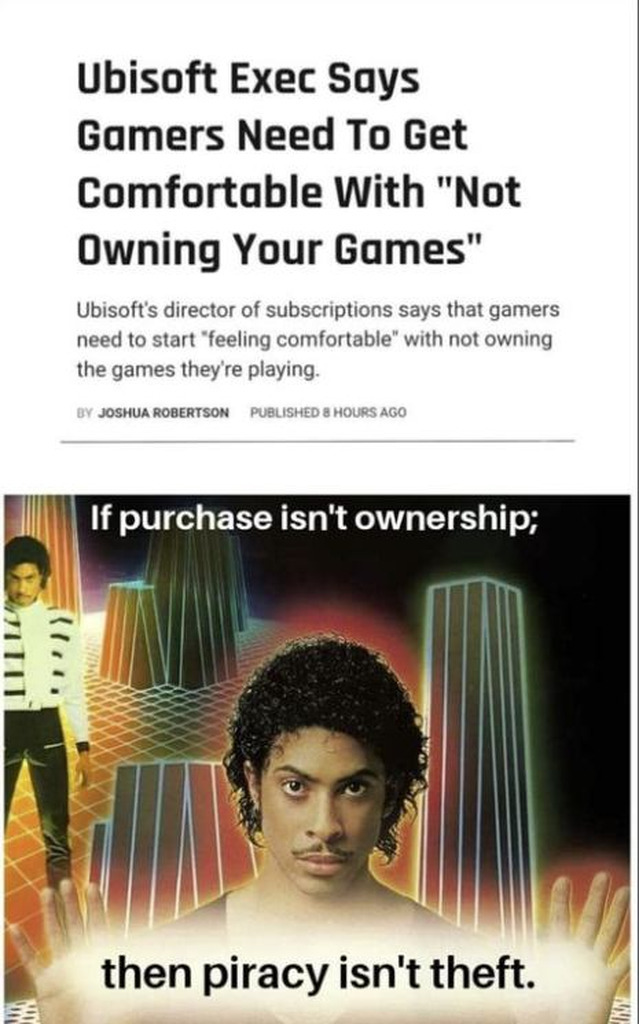
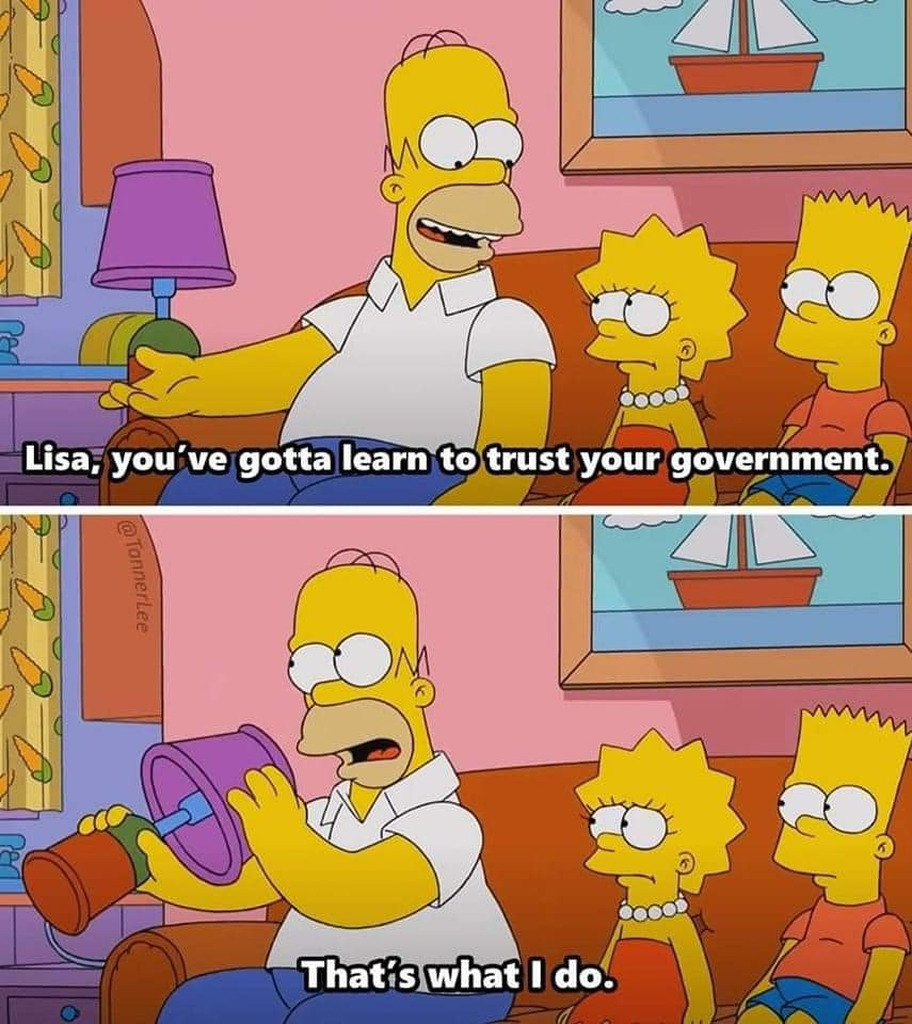
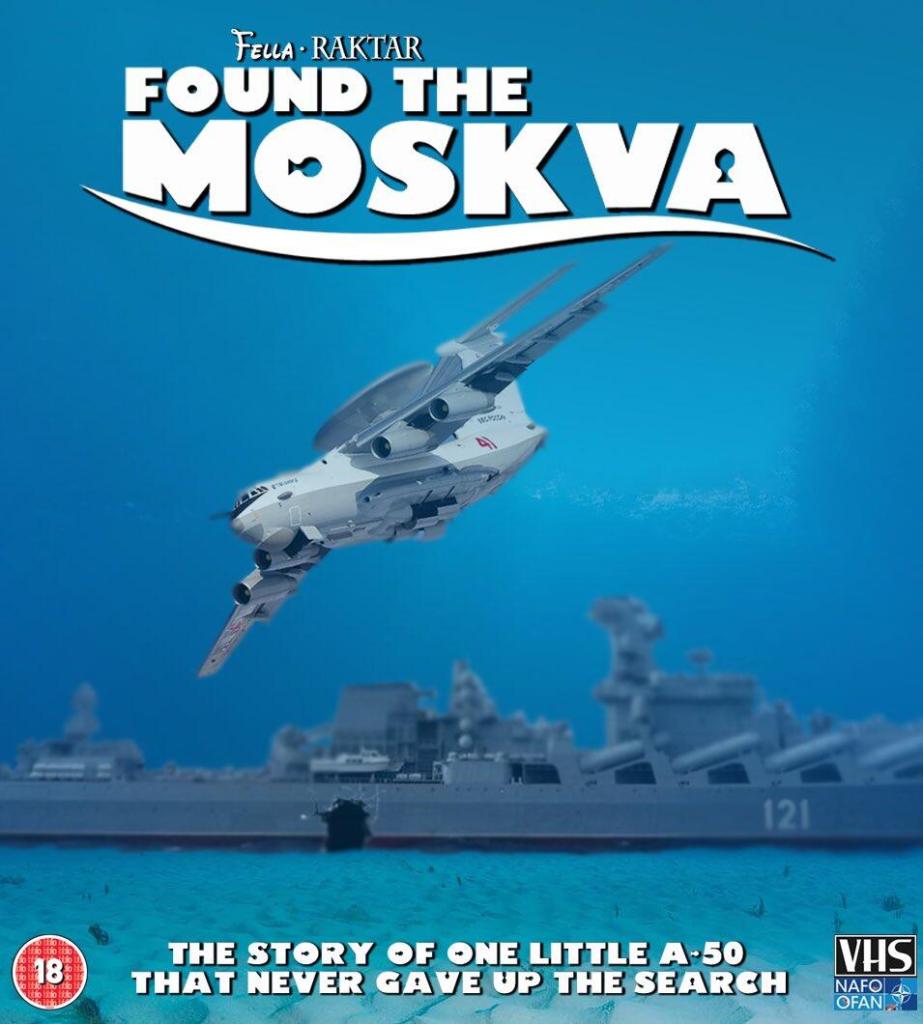
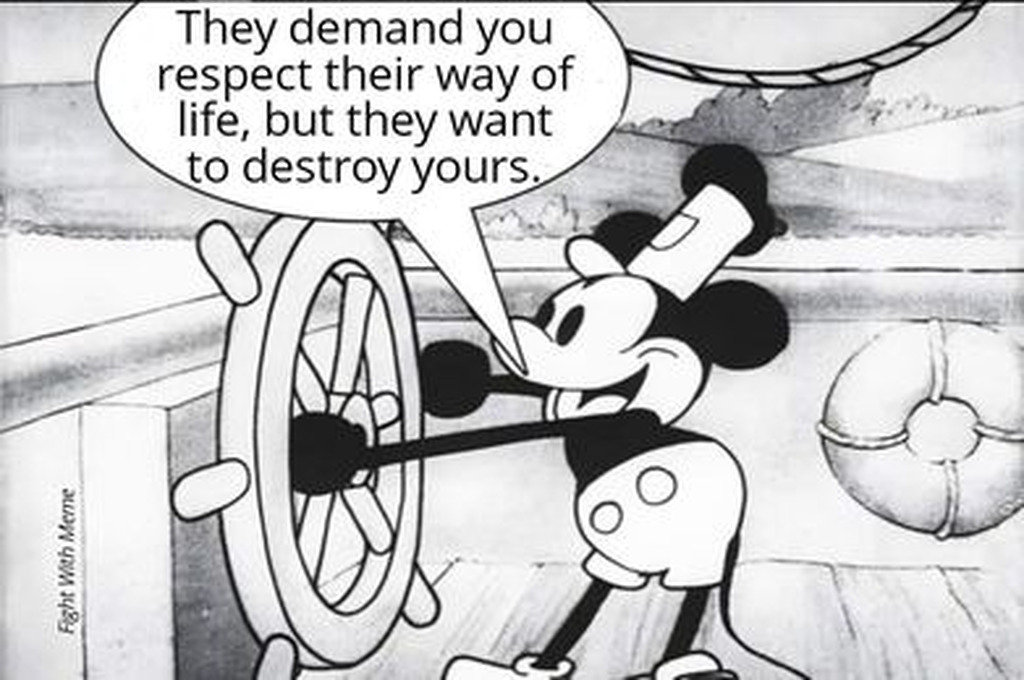
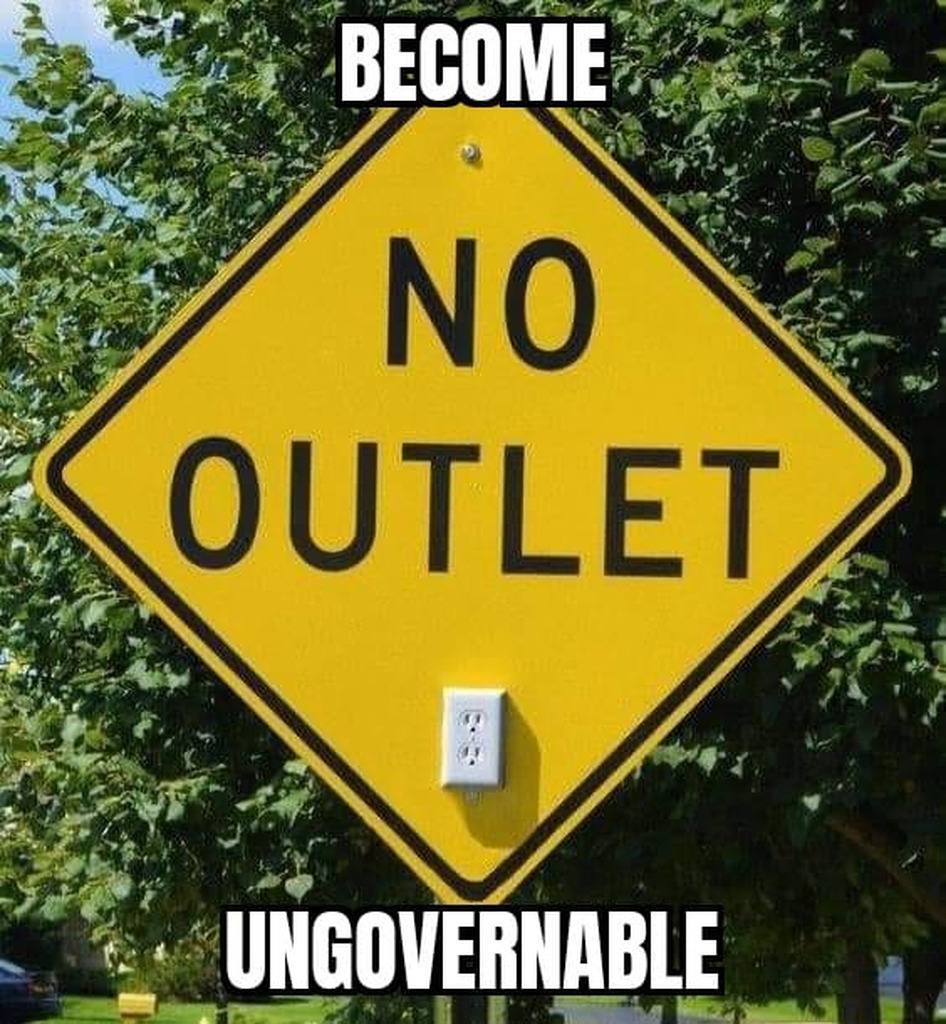
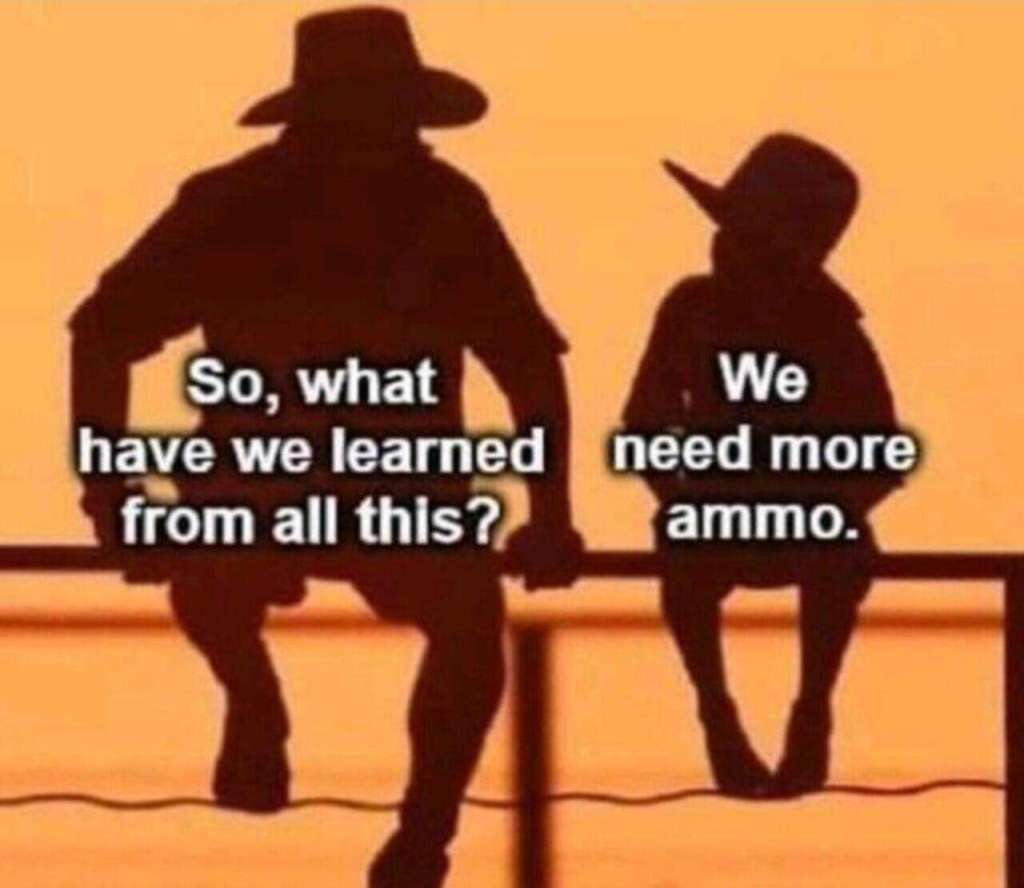
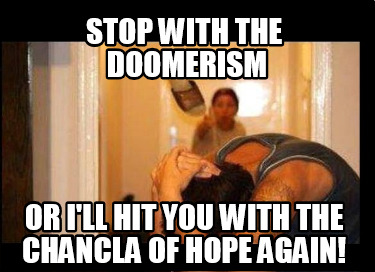
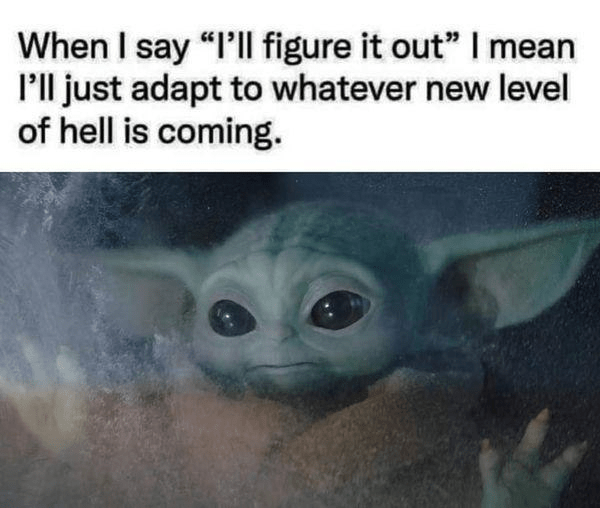
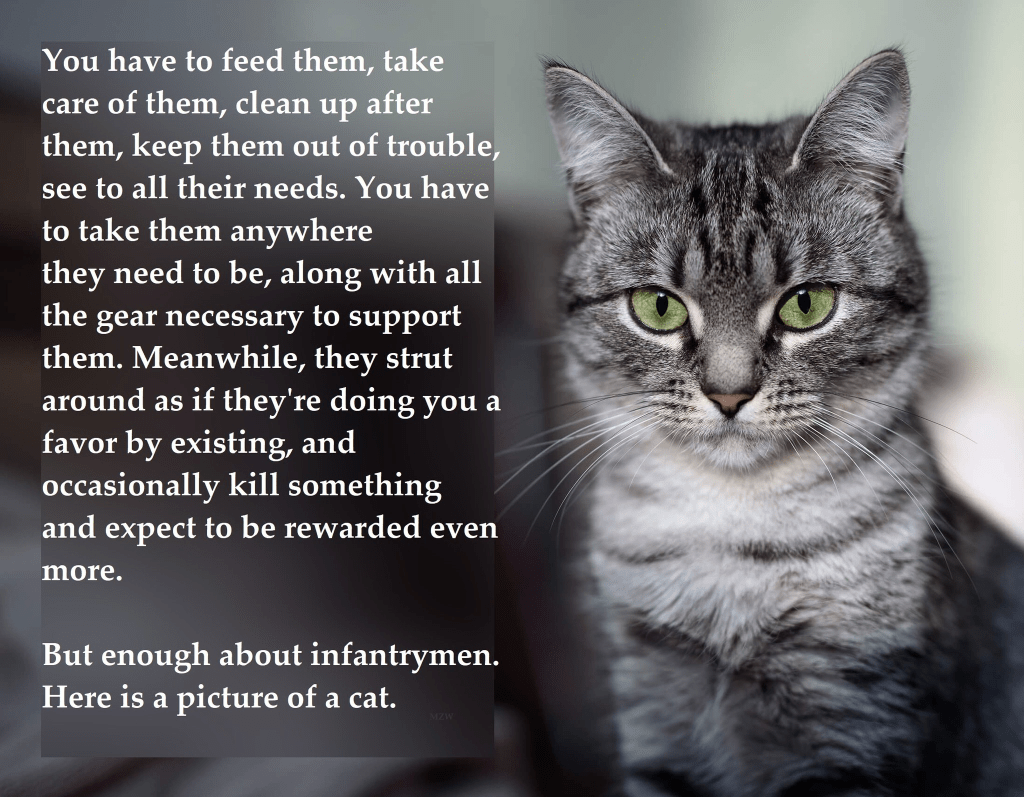
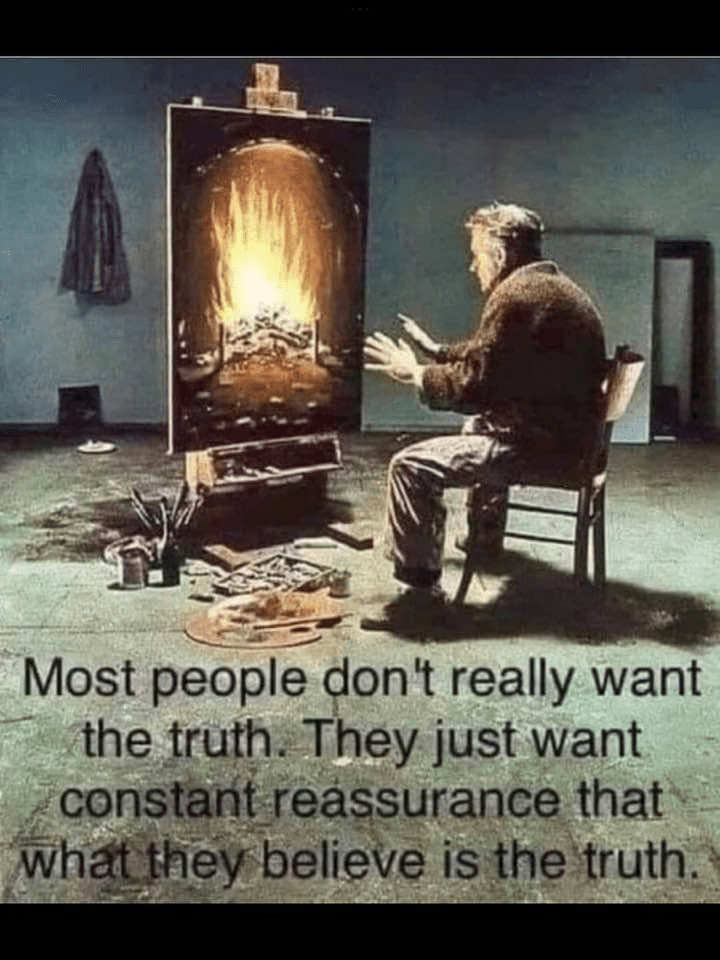
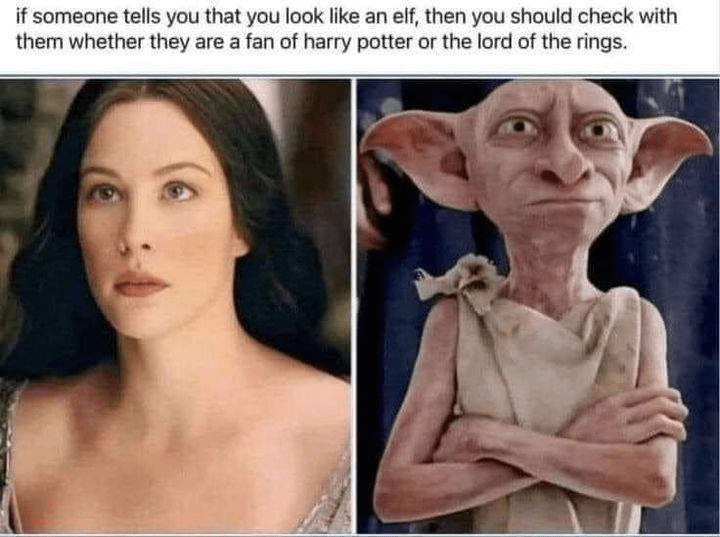
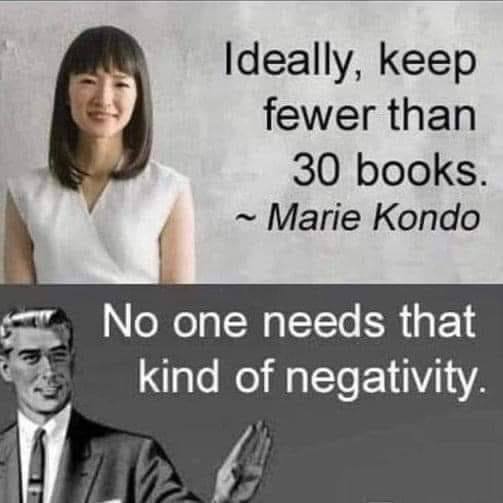
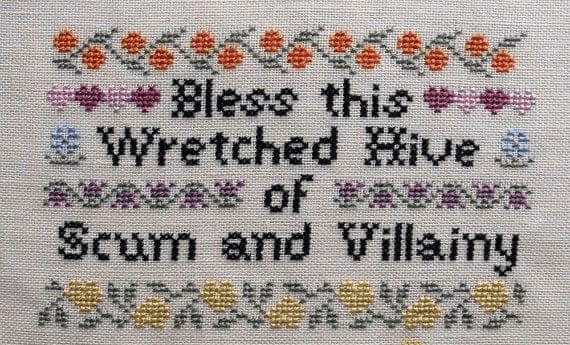
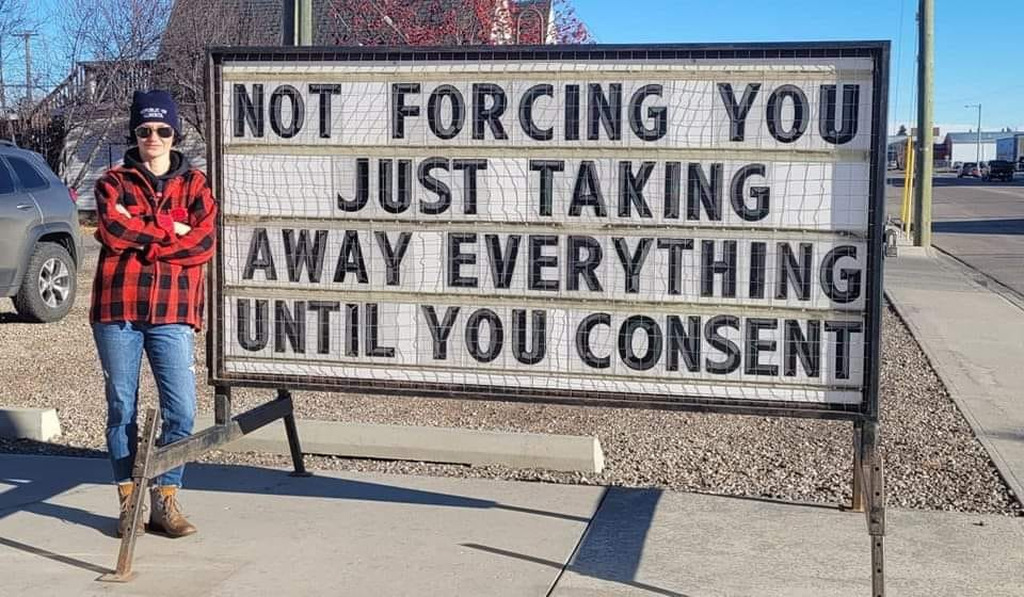
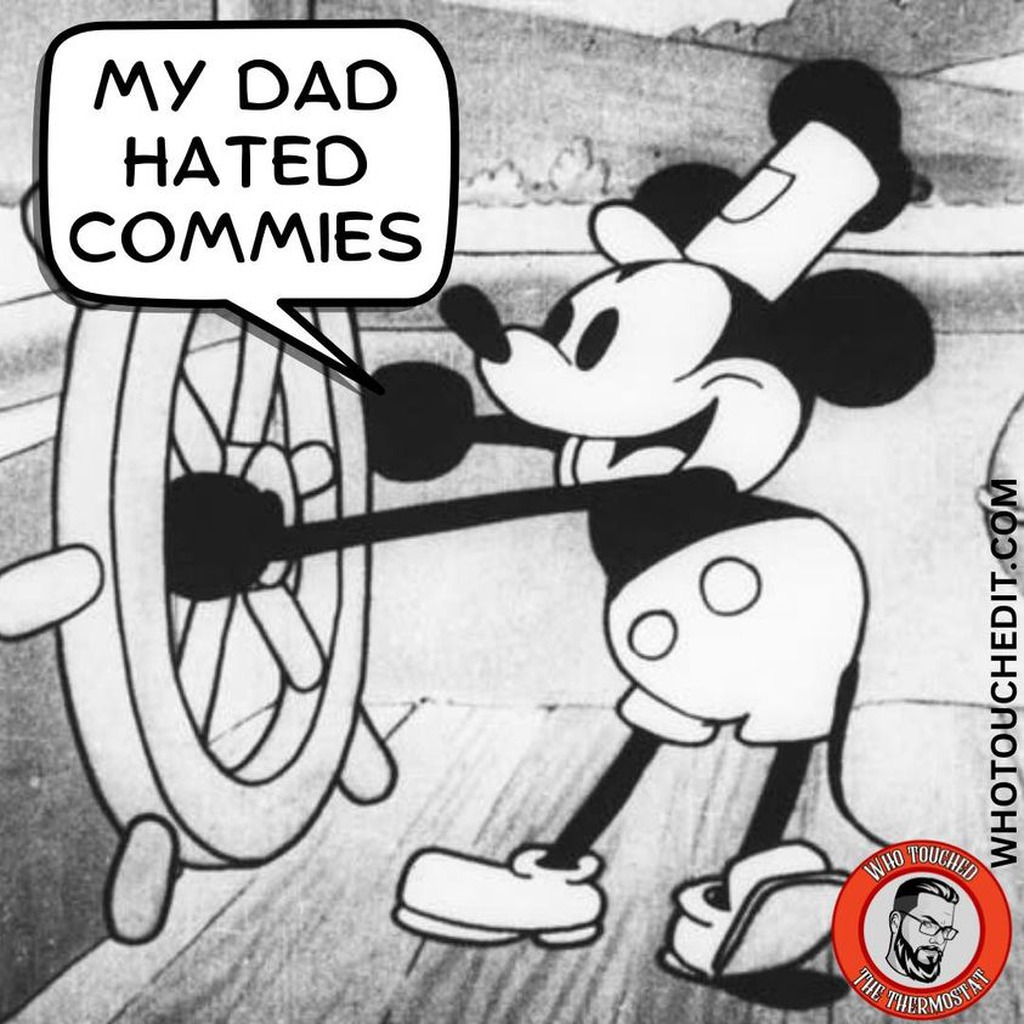
What brought this on? Oh, this:

As someone in the group where this was posted pointed out, other than the title, these could be self-care affirmations. Because, sure, we all need to remember sometimes we need to step back, take a deep breath, and not chase the red dot all the time.

BTW these would be more likely be called “anti-communist affirmations” because in a communist regime, no one has time to create or produce what they want to, monetized or not, so this is irrelevant. In communism, you pretend to work and they pretend to pay you, and just chasing down the necessary food in stores takes all your time.

But leaving that alone, look, of course you’re allowed to create what you feel you need to, even if it’s not beautiful. Why wouldn’t you be? The corollary is that people are allowed to spit on it, and hate it, even if it IS beautiful. So what?

And what the heck does it even mean for a form of work to be “valid”? This sounds like the whining of a twelve year old whose father doesn’t think that playing games is as valid as school work. What is work, even? Why are we talking about work? Most of us don’t “work” in the sense our ancestors did. Most of us sit in chairs and wiggle our fingers, or carry things indoors, in temperature controlled environments. As for “valid”, I was unaware of a ministry for declaring the validity of work. Is this “Pay me for doing things that benefit no one?” I suspect it is. But you see, that’s bullshit. You can do whatever you want so long as you support yourself. (The reason most trust fund babies are useless.) No one cares. But you can’t force people to pay you for doing what you want to do which benefits no one else. Even if you call it “work.” You are free to call whatever you want to do “work” and people are free not to pay you for what amounts to strange forms of onanism.

Not needing to accomplish anything to be worthy is another fun one. Worthy of WHAT? Most Christians believe that all humans are worthy of basic respect and treatment as humans and co-equal children of G-d. That’s a religious belief. But what the heck is worthy, even, in the context above? Again, worthy comes with freight. Worthy of what? And no, you are not worthy of respect, adulation, or even frankly passing interest, unless you have done something that renders you so. You’re worthy of basic decent treatment, maybe, unless you’re a whiny pain in the *ss, in which case you’re worthy of shutting up and going to your room without dinner. Your worth is not measured by deeds, maybe, but it should be measured by behavior. You behave like a decent human being, you’re likely to get the same in return. Anything else? Well. Do the thing, and we’ll give you the respect. The thing can be simply working to feed yourself (and/or others you’re responsible for.) Or it can be some great artistic or scientific feat. Then you’ll be worthy. Of respect, admiration, whatever you’ve earned. So, yes, you need to accomplish something. What that is, depends on how much respect/adoration/whatever you want. My question here being: Why are you so focused on what others think of you?

Communists don’t believe in souls. No, seriously. Read Communist manifesto. Of course you’re not defined by what you produce. You’re fed by what you produce. Okay, sometimes not directly, but see here, a society that doesn’t rely on enslaving others to your needs works like this: You make something others value (or trade your time away to do something others value). In return they give you tokens of exchange. You use these to get what you need: food being a primary thing. But if you work hard and do something really valued, you might even get a lot of free time to do things you know no one will pay you for. This is easier in free and prosperous (the two go together) societies because there is so much extra food, wealth, time.

And we’re back to worth. What in actual h*ll is “worth” in this sense? No, man is not the sum of what he does or learned or the certificates achieved. To all this he must add something more in the awareness that others exist and that in a decent society he owes them respect and dignified treatment; to all this he must also add enough self-awareness to try to avoid injuring others or mistreating them, including taking advantage of them. What the heck this has to do with “worth” is a complete puzzle to me.

I’m not usually slow in decoding language, but it seems to me this pathetic little poster uses “worth” to mean “love.” And to claim he/she should be loved regardless of what he/she does…. or not. Which is cute, but is the scream of a toddler. Whether you’re loved without doing anything to deserve being loved is a matter of luck. Your parents might be stupid enough to love you no matter how many times you spit on them. I doubt anyone else will be.

For other people, normally, to be loved you have to be capable of love first. This means you have to be aware that other people exist as separate entities from your pathetic little self. nothing in the semantic confusion of this stupid “anti-capitalist” screed leads me to believe the writer is aware other people exist or what society would be like if we all followed his deranged prescriptions. So, the scream of a toddler, with a full diaper, who has just taken all the other kids toys and broken them, and now stands there insisting you must love him.

As for not monetizing hobbies: everyone has to make that decision. I’m broken the other, and am going to have to monetize my hobbies, because otherwise I feel like I should write all the time. Greed? No, not really. But what I’m paid for produces the most, which is good for me, and my family. It allows us take the kids and spouse/future spouse out now and then, and get the good vet care for the elderly cats.

However, because changing pace helps me rest, I should be doing things other than writing, at least one day a week. If I monetize “war with snails” medieval ornaments, or making dragons or something, I’ll do more of that. Which will be good for me. (Even if they’ll never make as much as writing.) HOWEVER I know people have other different internal demands and make different choices. Larry Correia, famously doesn’t monetize his very good miniature painting, because otherwise he’ll nag himself over getting it done and it will stop being fun. And that’s fine.

Note to person who wrote this: Hobbies are an invention of what you (and Marx) call capitalism, also known as the free market. You see, people wanted things, and other people wanted to sell these things to them. The sellers wanted to optimize their making of saleable things, from which drive eventually the industrial revolution was born. Also fertilizers and better agricultural techniques. This, in turn, made people have enough they didn’t need to work from when they woke up in the morning till they slept at night, which even most of the rich did till about 200 years ago. Which in turn allowed them to have hobbies: things they do not for money.


So, yeah, you can do extra things you do and don’t sell. You might think this is some kind of natural right, but it’s not. It’s the result of centuries of free trading, which the idiot who wrote this wants to wreck because he’s an idiot who thinks the world owes him a living and food just falls from trees. (Jean Jacques Rousseau. If we invent a time machine, we need to make sure he’s whipped every day and twice on Sunday until he either stops being stupid or quits writing.)

As for defining what success looks like for you, this sound like the toddler again. “It’s good if I say it’s good.” Because he cares passionately what society says.

Most of us have long ago defined our own success and don’t give a hang what “society” thinks. Society might think that jet setting lifestyles are success, but I hate traveling and like my routine, for instance. Society might think that certain fashions are needed, or certain designers. I slouch around in jeans and t-shirts.

Success for me is feeding and taking care of myself and mine, having raised kids who (so far, knock on head) didn’t turn out mass murderers, and writing books people pay me for. That’s it.

Who the heck is “society” anyway? The person writing this would be well served by remembering there is no such thing. There are loud voices, which is what he calls “society” but most people living their own lives, don’t care.

They also don’t care about him, his “worth” or what he chooses to do with his life and time. As long as he’s not a burden on others, or forcing others to give him his “needs” at gunpoint, the rest of us couldn’t care less. It’s not so much that the world doesn’t owe you a living. It doesn’t, of course. It’s more that the world doesn’t owe you NOTICING YOU EXIST. That is the reality for every single one of us. Sane people don’t crave the attention or love of “the world” or “society.” We have people who matter to us, and from those we crave attention and/or love. Which is fine, so long as we’re capable of giving THEM attention and love.

Look, it’s not just that if you don’t work you don’t eat. This might or might not be true in our society. Free trade (that despised “capitalism”) has made us so prosperous, at least in countries that remain somewhat free that most people won’t starve. Other people, out of charity or pity will give you money or food or a place to sleep.

It’s more that man — and woman, for the twits who need that spelled out — is made to strive. We are the product of a long evolution in which our ancestors worked desperately and were always on the verge of disaster. Without something to struggle against/attempt to get better/more/ work for/endure/etc we stagnate. We lose track of what’s important. We start thinking that the creations of our mind are of primary importance, even if they not only don’t serve any purpose, but aren’t wanted by anyone else. We end up believing in nebulous constructs like “society” and “worth” and demand that one give us the other.

The truth is that more self-worth and self-respect is found in doing a menial job that pays for your own basic needs than in all the self-involved art no one would pay for.

The other truth is that if you want to do something passionately enough, you also want it to be seen by the most people possible That means not only getting technically better at it, but getting better at it in a way other people will pay you for it. Because words of love are one thing, but when people give you their beer or coffee money for what you created you know they mean it.

The truth is that if you can find something you’re good at — art, craft or service — and get good enough people pay you for it, you can spend your entire life struggling against your own limitations, be happy and fulfilled and not care what the “world” at large thinks, and whether you have “worth” in an abstract sense.

Go and find something large enough it’s worth striving against and this nonsense will fix itself. And pay your own way while you do it. And you’ll be someone worth knowing.

Associations A guest Post by David Bock

*I want to apologize for two guest posts in a row. I’m still late on the serializing blog too. So: Dan had hernia surgery in the beginning of the month for multiple hernias. He’s healing slowly, which is normal for diabetics. This means he can’t lift anything. So I must go shopping with, etc. just in case. On top of added responsibilities because of younger son and future DIL being out (Cats, quails to look after) this week and next, things have entered a vortex of crazy on this side. I got up at 7 am and first sat at a keyboard half an hour ago. This too shall pass. And I’ll write tomorrow. But I had a guest post waiting and chapters are more needful right now, since people are paying for them. – SAH*

Associations are funny things. You can be associated with people you’ve never met or ideas that have no bearing on your life or are even diametrically opposed to the ideas you actually hold.

As someone with strong feelings about firearms freedom, especially in a place as unfriendly as New York, this happens with alarming regularity.

This type of forced association occurred in almost every conversation I had with my mother where the subject of guns came up. In our last conversation on this topic, she stated I had too many guns. Mom didn’t quite know how to respond when I instantly came back with “there’s no such thing.”

When I was young, my mother actually tried to blame World War Two on “people like you.” She meant people with my interest in firearms.

If I had a dollar for every time it was suggested I held a certain political position simply because of my respect for the Second Amendment, I’d have a much larger collection of firearms.

For example, in addition to American Rifleman, over the years I‘ve had subscriptions to Guns & Ammo, Shooting Times, Gun Tests, and a few other related magazines. Apparently, some marketing algorithm decided that since I liked guns, I’d also be interested in mailings from cigar distributors, whiskey distilleries, anti-abortion (or pro-life if you prefer) organizations, and various flavors of political mailers.

I don’t smoke (but I do like pancakes), I don’t drink, and while I’m conflicted in the case of abortion, I don’t think it’s the government’s job to make that decision for anyone, pro or con. Needless to say, those mailings did not get a positive response.

Since the Second Amendment is my litmus test for favor, the same is often true with politicians. If I mention that I like a certain politician’s record on gun ownership, I must, therefore, support all their other positions.

Politically, I generally lean small L libertarian. Or as I like to put it, I’m a member in good standing of the “leave me the hell alone” party.

Which reminds me of another example, years ago, I was hanging out with some friends in college and one of them asked me about my personal politics. I answered with something along the lines of “I’m not really sure, but I’ve been told that I’m probably closest to libertarian.”

He came back at me by stating I must be against child labor laws. When I expressed confusion, he said that I claimed to be libertarian and libertarians don’t support child labor laws.

This showed me two things about this person. They hadn’t listened to what I’d actually said and they were more interested in playing a game of ‘gotcha’ then in having a rational discussion.

Before we moved out of New York, I was involved with Cowboy Action shooting, I may start that up again in our new home, but that’s for another time.

For those who aren’t familiar with it, Cowboy Action Shooting is a competition involving lever action rifles, single action revolvers, and double barrel or early pump shotguns at relatively close range steel targets. All this while dressed in historical period or Hollywood cowboy style clothing. It‘s lots of fun.

Anyway, this was around the same time as the passage of the New York State mirror of the Federal Assault Weapons ban, so around 2000. I was at an event and was chatting with some of the shooters. Now, you would expect that folks participating in a shooting event would be generally pro-gun. Nope, their big concern was that the law didn’t affect their firearms and sport. They assumed that since I was there that I must feel the same way. Imagine their shock when I stated my opposition to this law and many of the other gun laws that were already on the books.

It was a few years before I felt comfortable enough to go back.

Since the New York SAFE Act in 2013 and the 2016 presidential election, the false associations people have applied to gun owners have gotten worse.

If it turns out some pro-gun political candidate I commented on approvingly has ties to the Ku Klux Klan. “David, are you part of the Klan?” Mmmm, probably not a lot of Jews in the KKK.

Some elected official makes a negative remark about a member of the Queer community, possibly not even having to do with their sexuality. “David, are you a homophobe?” If so, I’m really bad at it since I was one of the early volunteer instructors with Operation Blazing Sword.

I mention I find almost any comedian funny. “David, how can you support such misogyny?” Why don’t you ask any of my many female friends how I treat women? Especially the ones I taught to shoot.

I know I should be patient and calm with these accusations, but it gets harder and harder every year. One day, if I live long enough, I expect to become one of those cranky old men who will tell you exactly what they think in no uncertain terms.

I’m kind of looking forward to that.

Letter From A Minotaur: Dear Humans, you F[REA]KING MADE IT! by Orvan Ox

Yeah, sure, things looks difficult and maybe even grim, now. But that’s a look down to one of the highest abysses (yes, I know that seems nonsense) from an even higher Really High Ground.  Yes, things are going weird, screwy, and the immediate future is not going to be wine and roses. There are certainly places to not be – downtown in many large cities, even in the First World. All too many supposedly “enlightened” places in Europe. The parts of Asia under tyrannical governance. And, well, pretty much all of Africa – but what else is new? But this is 2023, not 1923, not 1823, not 1723, and it dang sure ain’t 1323! What follows is a far complete list of things, but… consider:

You want light? Flip a switch or push a button. You don’t even need a match. And that’s assuming you haven’t already automated it or have this or that system working for you with voice command. Your biggest health problem, at least until the Great Silliness of late, was – of all things – that it’s too easy for too many to get too fat. That, alone, would have pretty much all of history begging to get in. Starvation is something many would have to work at… and it takes governments being not merely tyrannical, but downright EVIL to generate a famine in your modern world. You looked Famine and Starvation in the eye, kicked them hard in the shorts, and said, “We will destroy you with… PRODUCTION!” You yank nitrogen from the very air, fiddle with it some and make ammonia, and nitrates, and… so on. And the world all but grows and blooms at your command.

The Plague, Black Death? Yeah, it’s still around… leashed, collared, watched, and when necessary KILLED. Have you even seen, in person, a person so unfortunate as to be afflicted with Hanson’s Disease? If so, you are one of few to have seen… a leper. And even THAT is treated. You took the rat-fink of a drug that crippled many of a generation – Thalidomide – and aimed it the disease!  You lot took freaking Mustard Agent and aimed it at leukemia! And then you got Serious and all but wiped out smallpox! You humans decided that, at least this once, you’d NOT exterminate to extinction… so you have a couple carefully kept samples.

You have your choices of fibers (and not-fibers!) natural or synthetic for your attire. An admittedly long lifetime ago, it was all ‘natural’, and only precious little per person. A few outfits. One for good, one or two for general life or light work, and maybe something ragged for heavier work. Now? Clothing is often bought “just because” – and it’s not to just fit in, but to stand out… or fit in a particular tiny group.

While you do not (yet?) enjoy energy “too cheap to meter” as was suggested by the early proponents of atomic, er, nuclear power, you having something else that is quite amazing. All those packets flying about the net and such? “Cell” phones? Sure, you pay for a connection, but when was the last time you cared if a call was Long Distance? Connectivity is if not “too cheap to meter” rather close. Communicating across the world is now done without really even thinking about it, save to adjust for differing times – maybe.

Weather forecast are.. mostly accurate. Alright, short term, but even so… it was not so long ago that even that was a risky bet. Now? Tomorrow’s weather might not be sure, but overall it’s at least close to known. And even a few days out isn’t a complete gamble. Now, much more and you still might be better off with a dart board, sure.

And, to a large degree (ahem…) you don’t have to care too much about the weather. Your homes are heated – or even cooled – automatically. You want water? Turn the tap. You want hot water? Turn the other one, or move a control the other way. You have machines to aid in cooking, to aid in cleaning, to move from you here to there, to entertain, and even some to simply exert yourselves with as you no longer do that much physical work because you do not need to.

And yeah, I know, you’re just not satisfied. You have flying machines, but want better ones. You sent some of your own kind to the Moon, but you want Mars… and the stars. You have this, that, and the other… and want more and better, faster and cheaper. And since you guys don’t really quit, you’ll get it, too. Eventually.  I might have seen some of this. Maybe even a lot of this. But this I know: I ain’t seen NUTHIN’ yet!  You look to the future, invent it, declare it obsolete and go on to invent an even better one. Over and over.

And the real miracle, the thing all the other things beget? You have… TIME.

But every once in a while, for just a moment, stop, ponder, look back, and realize… YOU F[REA]KING MADE IT!

Carry on! After all, there’s an even better tomorrow in need of being invented, right?

That Water Is Not The Fountain of Youth

This is a very funny post for me personally to write. For the record, I’m in beyond complete sympathy with the meme that says “I don’t want to adult today. I don’t even want to human. Today I want to cat” with a picture of a sleeping cat.

Probably this is because my main feeling right now is of being exhausted. Physically, emotionally, morally. It doesn’t matter, mind you, because the burden is right there, and what are these shoulders for if not to bear it. It has to be done, so it’s done.

But it doesn’t mean I’m fully grown up. I’m not. Maybe none of us ever is.

I was thinking about it today, and I realized several things. First, you don’t get in the kind of trouble we’re in without there being serious issues downstream in society.

Look, Marxism is malware for the human mind/spirit. It takes everything that works and breaks it, and tries to install programs that not only don’t work, but lead to mass death/starvation and even more massive unhappiness. It’s so perfect for that, that one is tempted to think it’s supernatural. And maybe it is, for all I know. But it doesn’t need to be, as it — like all good malware — clicks seamlessly with the pre-installed system.

All of us are prone to wanting everyone in the group to love us. We’re social apes. All of us are prone to think that if only so and so “shared” we’d be much better off, and it would be perfect. All of us are prone to glorifying envy, when it’s our envy. All of us, or at least the male half, think that sexual partners should be available for everyone on a need basis, and that denying sex means something is wrong. All of us wish there were no consequences for our pleasures. All that Marxism offers.

But it offers it by breaking causality. By making action not relevant to reaction. Which means it breaks reality. Reality cannot reset or teach us, when our brains don’t ‘get’ the connection.

For a century or so, now, all our institutions of communication and learning have been attempting to install Marxist malware in all of us. They succeeded better in Europe than here, partly because the American ethos is to be temporarily embarrassed millionaires. There is still more opportunity and mobility here than anywhere else in the world, which is not to say we’re not in deep trouble, we are. But that’s something else.

The problem is that the part of the software that took in America is hooked on our ethos of “every man a king” which is the “I do what I want, and don’t need to conform.”

This is good, to an extent. It’s what attracted this very Odd foreign-born girl to the US.

But it is also bad, when it hooks up to the narrative of the miracles of science TM, immortality just around the corner. Immortality, like backyard fusion is one of those advances that are always 50 years away. And probably will always be, to be honest, though perhaps I’m wrong.

Look, enormous advances have been made on the treatment of aging. Not of mortality as such, but of aging. As a rule, older people now are more vigorous and in better shape than they were 20 years ago. I remember when 80 was practically dead, and now we have vigorous, capable, still working 80 year olds. I remember when 100th birthday got all sorts of notice, and now its semi-mundane.

I suspect most of that fight was won through anti-biotics, because constant infection weakens the body over time. At least that’s what increases longevity in our pets. The fact we treat them when sick even for minor illnesses.

And this is great. I won’t say I don’t want immortality (of a non mystic kind. That I expect to have. Or at least hope.) I mean, it sounds tedious, but then I haven’t tried it, much less in an immortal society so how would I know? It’s kind of like imagining heaven. It’s one step too far. I can’t picture a constant state of bliss. And to an extent we can’t picture immortality.

I’d be okay with another 40 or 50 years, provided my kids got comparable life spans. (All the people who live very long tend to lose their kids, and that I don’t want.) And if I was well enough to work for most of that time. I mean, I’m willing to take a year or two of frailty and illness. if we’re talking about what we want.

But the truth is what we want is not what we get. And even what I want is highly unlikely to come true. At 60 I stand at the edge of the time where, like in a Russian novel “And then things get worse.” There are aches and pains climbing stairs. Nights where there’s no comfortable position. I have to use a machine to breathe at night. My weight is not entirely under my control (or even vaguely. LOL. Yes, I probably should find a good endocrinologist, but that’s easier said than done.) And things don’t work that should.

And here’s the problem: the entire society, for just on fifty years has been hell bent on denying this.

The “You can do what you want and have no consequences” melded, seamlessly into “forever young.” That’s the song our entire culture sings.

One of you pointed out that most sitcoms, most movies, most stories are aimed at “forever college students.” Our society in general, with lack of support/mutual aid (voluntary)/demand for no ties is based on the idea you’ll be young forever.

I was watching a movie the other day where the character has an abortion so she can dedicate herself to her career, and from my mouth unbidden came the words “Of course. Because you’ll be forever young.”

Not that having kids helps, in a society where ‘break the tie and do your own thing’ is the norm. (Guilty as charged. Though there were other reasons.) But– BUT — the underlying message of the culture is that you’ll be forever young, forever able to take care of yourself, that your capabilities only increase till your drop in your traces.

And choices/lifestyles are adjusted to that.

I’m not saying everyone lives like that. Obviously not. A lot of people are now forming associations of the aged, trying to look after each other. And there’s a lot of you supporting/caring for aged parents. However, that’s not the message in the culture. In fact woke has taken that to 500 with the Disney princess goal now being not even to get married but to “be a great leader” (the last two or three I have seen.) Even rom coms are now ending with the girl leaving to have her great destiny.

Most of us, let me assure you, don’t have a great destiny or a magnificent career. Most of us don’t become great leaders. Yes, sure, it is a thing to aspire to, when you’re young, but not to push on everyone as a universal goal, which everyone should achieve. Because life doesn’t work that way.

Yeah, not all of us marry or have kids, and if we do we won’t have perfect marriages or kids. But the goal of a “good enough marriage and kids” is achievable to the majority. The goal of “World shattering success in business politics or the arts” just ISN’T, let alone the goal of “world changing leader.”

And when things start failing/not working/the physical extracts its due — as it always does, no matter how long you cheat it — having had kids, having something after is much more satisfying than the told watch and the handshake.

Yes, some kids turn out rotten. Some families are toxic. But I think you’ll find movies/tv/books exaggerate the incidence of that. Most of us have a decent care for those who birthed us/raised us. And most parents care for their kids, however imperfectly they express it. And even with the stretchy bonds of the times, it’s better than nothing. It’s the natural aid and comfort society.

But it’s not just about having kids. How many people put off learning something they always wanted to learn, writing something they always wanted to write, doing something they always wanted to do? Because there is always time. And then you hit sixties, and things aren’t perfect, but they’re good enough, and there’s always time. And then one day there isn’t time, and you never saw it coming.

The problem of course was the ideal of youth culture, which came from the elephant of boomerdom passing through the snake. Combined with, yes, longer, healthy lives.

But the way it’s in the culture it’s the “I dictate my own reality” that seems to be part of Marxism.

You don’t dictate your own reality. I’m here to tell you that you live not only in a slice of space, but a slice of time. And that one day you and everything you know and are will pass. You’re given so long. No more.

Worse, I’m telling you that no matter how long we can prolong youth and relative vigor, at some point “Things get worse.” And you need to make provision for that: Mental, physical, monetary, community.

And most of us — note what I’m saying US. I’m not preaching from a mountain top. I’m here, with you — haven’t. Maybe we’ve made SOME, but most of us haven’t internalized that unless we’re very, very lucky — I want to go like great grandma who dropped while doing her work. Dead before she hit the ground. Blessed, really — there will be a prolonged period of “things get worse”. Of being unable to. Of things that exceed our energy. Of aches and pains. Of days when you don’t have the spoons.

Because we’re human. And no one has found the fountain of youth. (And if they had, we’d just postpone things till we died by misadventure with everything undone.)

We haven’t dispensed with the common lot of human kind. We just lied to ourselves and told ourselves we had.

In reclaiming the culture, it is important to make adult — foresightful, capable, competent, willing to work even for long term goals — an ideal again.

Being a college student is fun, I suppose. My college years — or my kids, for that matter — weren’t typical. But living like you’re one until you die is not possible. You will get old. You’ll have to make concessions. And it will be easier if the approximately final third of your life is planned for. If you’re ready.

Getting old isn’t for sissies. Nor is it for people in denial. It’s important to stop the denial, and to orient our lives to being an adult as long as we can be, so that our old age can be less painful and more productive.

And now I’m going to get off the computer and spend ten minutes wishing I could be my cat, sleeping in the sun. And then I’m going to work on my chapters for subscribers, which have been put off by very weird stuff this week. I now owe four each novel, to catch up. Ah, well. It’s doable today and tomorrow. So, I go.
Because metaphorically the light is failing and night comes soon. And I’d best be ready.

Coordinated storm of crap

Many of us are amused with how fast the left acquires a sudden mission to propagate the one holy acceptable opinion. How it changes overnight, and how it comes from all of them at once, in almost the same words. And how it gets repeated ad-nauseam, in defiance of all sense, until the message changes.

This has led the least kind among us (eh. Myself, sometimes) to refer to our leftist brethren as “NPC”s who do whatever the programmers put in their heads.

The sad truth, though, is they’re not NPCs. They’re humans, like the rest of us, just — a lot of them — through cowardice or a more conformist temperament, humans who want to be “right” with the “majority” as they perceive it. They, like most primitives the world over, have no moral center, and want to back the winner and the strong horse.

Add in a dose of truly bad education, and their self-conceit as smart, and what you have is someone who reads all the accepted publications, catches on to what they’re saying, and runs to get ahead of what they think will be (and to be fair is, of their kind only) a parade.

The sequence goes something like this: Leftists, for nefarious, stupid, or money reasons (and often all three) declare that they want something utterly, inconceivably stupid to happen: ban something, force some tech, whatever.

Immediately, on command, some “scientist” (usually of the softer side) who smells grant money does studies showing this idea is brilliant and will bring about utopia. The stupid is flawed and irreproducible, but the journalists are all leftists who want to “support the current thing” and jump on it. Suddenly every possible and some imaginary publications tell us how the Current Thing is the most important thing ever, and it must be done nowwwww.

Take Joe Biden’s idea of cooling the Earth by covering the sunlight. — Okay, not his idea. Or maybe it is. Who knows how much meth they’re putting in his ice-cream? — But the idea of the group of people who form “Joe Biden.” Or the idea of those jokers at the WEF that the planet is BOILING and the only solution if for us peasants to surrender to their wisdom and eat the bugs, and give up private transportation.

All of a sudden maps showing perfectly normal summer temperatures are shown in red, and fire colors. And all the articles suggested for me by pocket talk about even more doom and gloom on the climate than normal: home insurance will stop working, because everything is going to burn up! (This shows you the pedestrian imaginations of the left. No wonder Hollywood is floundering. For heaven’s sake, if the Earth is going to end in fire, I can come up with bigger worries than home insurance. These people have been entirely too sheltered all their lives.)

And of course, your leftist friends are probably breaking down and sobbing in the middle of the day because they’re going to “burn up.” (I suggest laughing and saying “Yeah, it’s summer. Put on some sunblock, and let’s go get ice cream.” But then again, I enjoy liberal tears. They’re so refreshing.) I do suspect, however, that except amid the young and stupid (the two conditions often go together, but less so if you didn’t send them to public school), this is finding no purchase. Because the rest of us know “Yeah, it’s summer.”

Which means this gambit is going to ramp to insanity, because you see, the left believes the stuff they make up. It’s part of who they are. Social, highly obedient personalities. So, they have no idea how to back down. It will become a holy crusade, all the more holy for being unbelievably stupid.

That is the big obvious play right now. But there are more subtle ones. You see, I live in a very weird place, being hyper aware politically, and living with someone who is not political at all.

So my husband sees these “studies” cross his screen, and has no idea why this is being pushed, or that it makes no sense whatsoever.

I — as many of you know, and it causes entire days to fall into nothing, when I have to take benadryl to stop it — suffer from hellish eczema. It’s better than it was at altitude, but it’s still pretty bad. My darling is always on the look out for articles on things that might help (Yes, I’ve tried some of the strangest remedies.)

So last week at lunch, he shows me an article saying showering with warm water might exacerbate skin conditions.

And he had no idea why I was laughing. “Honey,” says I. “Joe Biden wants to ban water heaters. Mostly because they want us to go back to pre-industrial hygiene standards, because that will kill off most of the population.”

He stares at me for a moment, then makes a disgusted noise. “I should have known!”

Yes, he should. But he doesn’t pay attention to politics, so he’s not aware of the crazy stuff they’re going to try to push next.

I’d be angry, except at this point, all this push, and all this coordinated messaging is not working like it used to.

I remember their big push for “all women have to work outside the house or they’re worthless” — it was everywhere, from women’s magazines to newspapers to official “studies” and it made three generations of women absolutely believe it and follow it lockstep (including my generation, yes.)

I remember when they were pushing for something, like oh affirmative action. Suddenly from case studies to sitcom characters everything would have the same message, till if you said anything against it, you’d be considered crazy.

Here’s the thing: it’s not working. Their spin on illegal immigration, which, yes, included sitcoms, did not budge the needle on Americans lack of appetite for it. Their CRT push, with again all artists fully behind this, did not budge the needle except amid leftists themselves. Their climate push has most people either laughing or increasingly angrier (and usually both.) And their attempt to make us be unwashed for our own good is going to fall even flatter. Most of us are already pissed off at toilets that don’t flush and machines that don’t wash.

But the left doesn’t know how to quit. I’m looking forward to studies showing that candlelight makes you prettier and keeps you younger longer. They’re coming, mark my words.

And we have to laugh, because crying won’t help anything.

We’re going to have to let them tantrum and say all the stupid things. Until it ends. And we can’t make it end a minute earlier by being very upset.

But it ends.

And in the end, we win, they lose.

Be not afraid. All they have is their control of the message. It’s a veritable coordinated storm of crap. Which, increasingly, only drowns them.

Book Promo and Vignettes by Luke, Mary Catelli and ‘Nother Mike

Book promo

If you wish to send us books for next week’s promo, please email to bookpimping at outlook dot com. If you feel a need to re-promo the same book do so no more than once every six months (unless you’re me or my relative. Deal.) One book per author per week. Amazon links only. Oh, yeah, by clicking through and buying (anything, actually) through one of the links below, you will at no cost to you be giving a portion of your purchase to support ATH through our associates number. A COMMISSION IS EARNED FROM EACH PURCHASE.*Note that I haven’t read most of these books (my reading is eclectic and “craving led”,) and apply the usual cautions to buying. I reserve the right not to run any submission, if cover, blurb or anything else made me decide not to, at my sole discretion.– SAH

FROM CEDAR SANDERSON, JOHN VAN STRY AND A STAR STUDDED TEAM &MORE: Single Servings of Liberty.

Twenty stories, short and sweet, each one with the image that inspired it. Bite-sized fiction that will tantalize and thrill you.

Come, read a little, and see how it expands your dreams.

50 words, no more, no less. And the universe is at your command.

FROM DANIEL ZEIDLER: Ilse’s Game

Taking the fight to the Tyrant in the thrilling conclusion to the Sarbotel Rising Duology!

The Tyrant wants Ilse as his human pet, but she has escaped every attempt his forces have made to capture her. Ilse is through with running and hiding, now she and her Guardian ally are leading the Royal Army across thousands of miles of hostile territory in order to launch a surprise attack on the Tyrant and his mercenary forces. Success means the liberation of the kingdom, but failure may mean the end of their world. For Ilse, the stakes are far more personal and she and her allies may be walking into a trap…

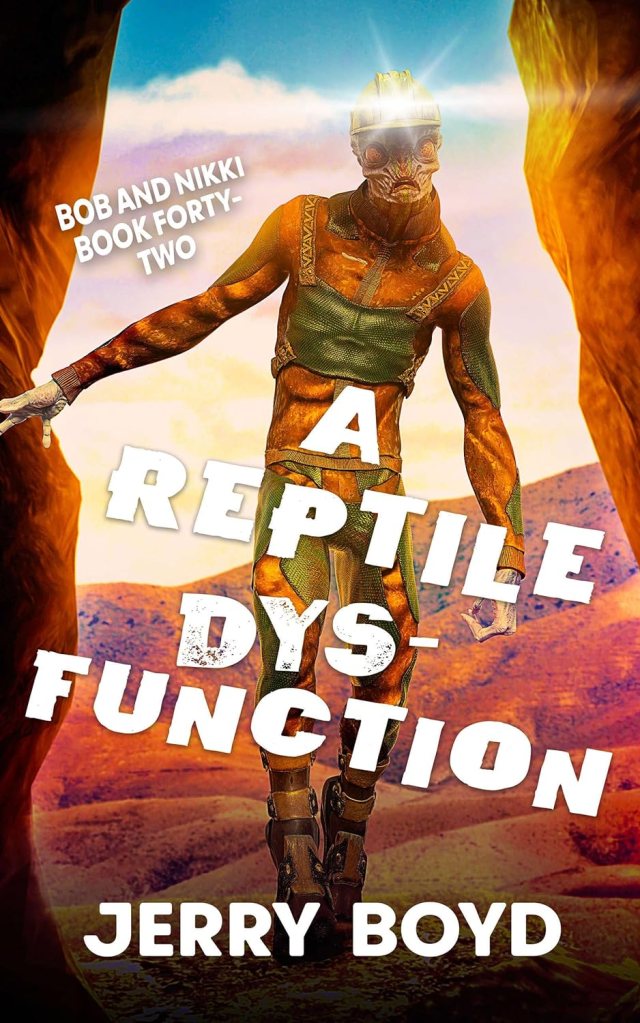
FROM JERRY BOYD: Hannah Comes Home. – A Bob and Nikki book.

Jim is working hard. He and Hannah need a place to start a life together, and he has to build it. His dad has messed up, and now he has to get the company started on a way to fix the problem. Of course, it wouldn’t do if Bob and Nikki didn’t make it to Jim’s wedding. Watch Bob and Jim struggle to get it all done.

BY CHARLES ALLEN SELTZER, REVIVED BY D. JASON FLEMING: The Way of the Buffalo (Annotated): The classic pulp western.

When Jim Cameron saved a stranger’s life, he hardly expected that stranger to promise to shoot him dead.

Sunset Ballantine wasn’t bothered that a man had tried to shoot him from a distance — no bullet had ever touched him, despite living his long years in the west and getting into many a gunfight. He *was* bothered that this Easterner was going to run a railroad right past his front door in sixty days. And even more bothered that the man didn’t change his mind once the threat was issued. Ballantine’s word was iron law in Ransome, always had been. Yet this Cameron, understanding full well that Ballantine meant it, and would undoubtedly beat him to the draw in any fair fight, was pushing ahead anyway.

Would Cameron back down? Would Ballantine go back on his word? Could an old western hand face down the forces of Progress, or must he go the way of the buffalo?

  • This iktaPOP Media edition includes a new introduction giving the book genre and historical context.

FROM MARY CATELLI: Queen Shulamith’s Ball.

A ball, a ball, Queen Shulamith would hold a ball. . . .

In the magical city that all kingdoms can reach, and none can conquer, filled with kings and queens, intrigues and wonders, that the reclusive queen would stage a ball was a marvel among marvels.

It will mean much to many: a young woman newly arrived in the city; a woman and a bear who dance on the street; two small orphans sent to the house of their great-great-grandfather; soldiers staging an invasion; and a queen securing her position.

FROM DAVID COLLINS: The Green Flag.

Logan Russel finds himself being transported to a different world. Now, as Lord Green, The Sage of Power, he is granted ridiculously over-the-top powerful magic.

The problem is (there always has to be a catch) that his life depends on the whims of a sketchy god, and to stay alive, he must uphold “the green flag.” Unfortunately, the god never told him what the “green flag” was. He must also avoid actions that raise either a “black flag” or a “red flag.” But, again, the god neglected to tell him what those were… There are many things they could be…

As his humorous adventure continues, he collects a bevy of beautiful, powerful, and overly friendly women. Unfortunately, without knowing what the flags are, he must tread very carefully. Before being transported, he was “inexperienced with women.” Is the temptation of the flesh one of the flags he must avoid?

[Previously released as “Green Sight”]

FROM LEIGH KIMMEL: Lunar Surface Blues

The High Frontier is no place for foolishness, but nature can always make a better idiot.

Four years ago, Molly’s parents brought her up here to the Moon when their work brought them to Shepardsport. In the time since that move, she’s earned her place here and a seat on this field trip. Only one problem — she’s been given the worst possible EVA partner.

A pencil-necked dweeb with an attitude, Benji wants to be one of the guys. But his stunts keep putting them both in danger, and the adults keep blaming Molly.

When Benji gets in over his head, can Molly save him before it costs both their lives?

A short story of the Grissom timeline.

Vignettes by Luke, Mary Catelli and ‘Nother Mike.

So what’s a vignette? You might know them as flash fiction, or even just sketches. We will provide a prompt each Sunday that you can use directly (including it in your work) or just as an inspiration. You, in turn, will write about 50 words (yes, we are going for short shorts! Not even a Drabble 100 words, just half that!). Then post it! For an additional challenge, you can aim to make it exactly 50 words, if you like.

We recommend that if you have an original vignette, you post that as a new reply. If you are commenting on someone’s vignette, then post that as a reply to the vignette. Comments — this is writing practice, so comments should be aimed at helping someone be a better writer, not at crushing them. And since these are likely to be drafts, don’t jump up and down too hard on typos and grammar.

If you have questions, feel free to ask.

Your writing prompt this week is: QUEEN

How To Write Short Stories

The idea dictates the size of the story.

“I can’t write a short story. I try and it turns into a novel.”

Okay. On the one hand, I understand. The first thing I wrote in English was forty thousand words, and it was basically an outline. When unpacked it became 120k words.

But you see, I had no idea how I broke in. And in the mid 80s, what I could find available on library shelves told me the way to break in was to submit to magazines and get a following and the eye of editors that way, and then eventually someone would pluck my novels from the slush pile.

Children, let this be a lesson to you. Always check the copyright date of books.

Why? Well, because the most recent of these books was 20 years old. By the mid 80s trying to break into print via short stories was stupid. By the mid to late nineties, when I was actually writing a short story a week and sending it out (I still wrote EIGHT novels first.) there were more publishing slots for novels than for short stories. I know. We proved it on a late night boozy chat, my then friends and I (all newly published) at World Fantasy. We did the math.

But now that’s not true. I’ve seen the old ways come back. Places like CKP and Raconteur press and a dozen other little outfits cropping up that will publish short stories they like, regardless of whether the author is known or has a name or whatever. (“Team and more” has become legendary.)

You do ten or twenty of them, and they stand out, you do develop your own fandom. (Or keep your algorithm at Amazon going.) And then, when you finish your novel, you’ll have people actively looking for it.

It’s a less onerous way of paying your dues, and probably the most painless way of extending your fandom. People buy a book because someone they like is in it, but they’ll read the other stories too, because why not? And if you’re in it too, and they like your story, you just made another fan.

So, this is my “I understand.” And my “But here’s why try.”

Now, 38 (dear Lord, really?) years away from that kid who couldn’t write anything shorter than 10k, even if she tried really hard? The problem was that I had the wrong idea of what a short story was.

I thought it was like a novel, you know. Only shorter. And since I tend to think in six book epics, when I tried to shorten my ideas, they became outlines.

Short stories ain’t that. Ideas for short stories work very badly for novels. Trust me on this, I’ve seen a few that the author expanded, one of which I consider one of the most perfect short stories ever written (Midnight Mass by F. Paul Wilson) and it ….. just fizzles.

Short stories can be a chapter of a novel, but if it’s a short story worth a damn, it will be the first chapter. The one that sets up the action.

And ideas for a novel don’t fit into a short story. You try and…. well, you keep finding you have to write something else, and next thing you know it’s 50k words and still growing.

“Okay,” you say (because the you I’m addressing is all my obstinate mentees) “then I don’t have ideas for short stories.”

Maybe you don’t. But it’s something that can be learned. I mean, I don’t know about you, but when I started writing I didn’t know what a STORY was. So I would have this cool idea, about a bit of magic or an invention, and be completely at a loss for how to turn it into a story. Like “Imagine if we had flying cars.” Um…. okay. I can write lovely paragraphs about it and make it really cool. But that’s not a story.

I had to train myself to realize that a story is about someone, and someone with a problem. So I had to come up with a problem that the invention of flying cars either solved or created, then find the person on whom this would have the strongest impact, then write THEIR story.

But that story, yes, could be a short story or a novel.

I’m not going to outline a novel and a short story using flying cars. I’m tired and I have serialized novel chapters to do.

Instead I’m going to give you something to ponder: A novel is a transformative experience/event for a person or a group of people. It normally has a very complex set of motives and solutions, and it has to be implemented and shown in detail, at length, until we experience the catharsis and resolution. Some parts of it will be faster. Some will be slower.

A short story is a pivotal event or experience, told at a rising pitch, without a lull until catharsis is achieved.

Or if you prefer, a short story is a compressed and heightened emotional experience. It’s purpose is not to tell what happened but to punch you in the gut with an emotion, be it joy or sorrow, admiration at how clever the protagonist is, or whatever.

You walk away from a novel going “Oh, wow, I’d like to live in that world” or “I’d like to visit that magical city” or– You walk away from a short story going “oooh. That was an experience.” And the emotion lingers in your mind like taste on the tongue, if the writer did her job half competently.

You want to learn to write a short story? Steal narrative songs. They’re even more compressed but they give you — pardon me — the beats.

Take Sabaton’s Last Stand, for no particular reason but its being one of my favorite songs.


Is it a story? Yep. Is it a full story? Yep. Could it be made into a novel? Sure. If you unpack the very first lyrics and expand them, following someone who is trying to solve the issue by diplomatic means. Then you get to the point of the last stand as the climax. But that’s not the idea compressed here. THAT is the “things that come before and probably after.” And if you did the novel you’d have to contrive it so one of the Swiss Guards was trying to prevent the face off, and then got caught in it, which means it’s also a downer.

However take it as written (and for the record, I’m not suggesting you steal the story. It’s historical, but I’m not suggesting you tell it as Sabaton did, either. It’s not quite a copyright violation, but it’s close enough to be uncomfortable. I’m suggesting you analyze what they did because it also works for a short story.):

So, take this:

In the heart of Holy See
In the home of Christianity
The seat of power is in danger

There´s a foe of a thousand swords
They´ve been abandoned by their lords
Their fall from grace will pave their path, to damnation

It’s a paragraph or two in a normal short story. Yes, you could give the history of the Swiss guard and explain what led to this standoff and then you could explain the consequences of their falling, and all that. I suggest describing a power point presentation in excruciating detail!

Sarah grabs your tail as you head out the door to do so. Sit down, youngster. That was me being sarcastic.

[UPDATE: It was pointed out in the comments that “they were abandoned by their lords” referred to the Imperial mercenaries. Look I am not deep in the “Sack of Rome” though I’ve read a couple of books about it. However I had a VAGUE memory that the big lords had also left the city before the attack, and look, it makes a much better story. Sure, knowing the antecedents is important, but piling misfortune on your protagonist to compel him to move? *Chef’s Kiss.* So I’m leaving it, because it makes a better story and this is not about the historic incident, anyway, but the structure. (Yes, Padwan, all writers are despicable in pursuit of story. I could tell you tales. And do.))

Look over those lines again. Which one conveys the greatest anguish for people still very much in a feudal system who are the protagonists of the story — by being one of the 189?

If you said “They’ve been abandoned by their lords” you get a gold star. That is the point at which the plot drops in the pot. Both because abandoning your vassals was unthinkably despicable at the time. AND because it means they’re in real trouble.

So, start with alleys, etc. Vatican city at the time. Through it a Swiss guard comes running. And because I’m not in the mood to look up the names of the fallen, or take a liberty with real people, and also because it’s me telling this, his name is Giorgio and he’s one of the youngest guards, newly sworn in to the protection of the pope.

You can either start with the “We’ve been abandoned by our Lords” and give us how it’s received in the barracks and the alleys outside, and what they look like with the Imperial troops advancing OR you can start with him running through the alleys and bursting into the guardhouse with those words. It all depends on whether you want to do atmospheric. There is no right or wrong. What you can’t do is convey what that line means before it’s uttered.

Once it’s uttered, you can convey what it means in a few lines, OR you can have the other guards react and convey what it means: the betrayal, the danger, the troops marching down on them.

There should be someone who wants to leave. After all, no one can expect them to give their lives in a doomed cause. The end is inevitable, right? what’s the point?

Why that way, and not explaining before? Because if you explain before, your readers will have no idea why you’re telling them this, and will fall asleep. And then you have to pull their faces out of the soup, and clean them up before continuing to tell them the story.

Then someone makes this argument:

Then the 189
In the service of heaven
They’re protecting the holy line

…………………………………………………

For the grace, for the might of our lord
For the home of the holy

Or in other words, even if their lords are forsworn, they’re not. And they swore to protect the papacy. And if the pope falls without another pope installed, any other pope will be suspect. Also, again, they swore, and they’re fighting for the Lord.

So, they’re going to do their best to slow the advance of the enemy, so the pope can escape.

I mean, they know they’re giving their lives, but they’re not suicides. They’re giving their lives for SOMETHING.

Under guard of 42
Along a secret avenue
Castel Saint’Angelo is waiting

Okay, this is way telescoped in a way you can get away with in a song, but not in a short story. And at any rate this is the meat and action of the short story.

IF I remember the history this is based on, and the geography, sort of — the one thing I remember clearly is that the leader of the Swiss guard was killed in front of his pregnant wife by being literally cut to pieces. Because that sticks in the mind — 42 of them took the pope along a secret avenue to Castel Saint Angelo which is over the bridge (one of them) that gave access to Rome. I’m not absolutely sure, but right now, for the purpose of the story it is so.

42 are sent along, to guard the pope. Because this is a short story, and you have to show the stakes, they see their comrades massacred to guard their retreat. Including the scene I described above.

So Giorgio is shocked. He knows what he’s coming, and he was fond of his commander too, thought of him as a father. He wants to give up, but he can’t, not with that example.

This should be narrated with full sensory, and dialogue, and we get to know maybe the two people close to Giorgio. (You don’t have time for 42 in a short story. Not and it have any impact.)

Just as they get the pope in a boat (sounds like a dish) and he’s getting away (I THINK it was an escape by water, but again, I’m not going to research, so you’ll deal.) For the purposes of the story, he’s in a little rowboat, heading for a ship that will get him away safely. The people rowing are the ship’s crew, so none of the 42 can escape. And anyway the Imperial forces are bearing down on them. They can signal to their comrades the pope is escaping and cut off his escape. Or they can shoot arrows at them or–

But we have the 42 who promptly engage them in battle to defend the pope’s retreat.

If you really want the gut punch, have the Imperial forces offer the youngest guards a free pardon. “You’re just kids. If you come over to our side, we’ll spare you.”

Georgio isn’t sure. I mean, he heard all that stuff about the faith, but he’s really only here because his father wanted him to. And– But his comrades scoff at it, and he can’t betray them, lose his last link to them. How would he live with himself. He thinks of his mother/brother/sweetheart back home, and he says a mental farewell. (Make this scene really poignant and involve all senses, as he imagines being with the person right then, and trying to explain, and apologize for what he’ll never be able to do.)

Then the fight. And just before the end, because he fights back, the enemy does something utterly despicable, and he realizes what a disaster it would be if they won, and he feels:

Dying for salvation with dedication
No Capitulation, annihilation
Papal commendation, reincarnation
Heaven is your destination

In the name of god

Yes, he is doing what is right. And as he fights to his last breath, he knows he’s not only helping the pope escape, but he’s giving courage and strength to his two friends we got to know up close and personal before.

And he can see the pope has reached the ship and the ship is sailing away, as he lies there dying. Yah, take that Imperials, the tiny Swiss Guard force WON.

Put in a last line, that has this effect:

For the grace, for the might of our lord
For the home of the holy
For the faith, for the way of the sword
Gave their lives so boldly

It was 1527, gave their lives on the steps to heaven
Thy will be done!

The reader walks away having shared in the catharsis and the heroism.

So? Structure?

  1. Character is in trouble. The trouble can be of his making or not, but it’s bearing down on him, and he is the most affected.
  2. Start with the “oh sh*t” moment, when he realizes the size and shape of the problem.
    Give any necessary explanation or detail immediately after, and in as brief a form as possible. In short stories, you MAKE THE WORDS COUNT. This doesn’t mean you shouldn’t give us sensory detail or some description. You should. You just can’t have unnecessary stuff in there. It’s like a poem in that way.
  3. Have a brief refusal of the call. Your character considers escaping from the sh*t avalanche rolling down hill, instead of facing it and having an adventure. You don’t have time for a very long refusal of the call, so he must either talk himself into accepting it, or see something that shows him how devastating denying could be. He accepts.
  4. Once the call is accepted, there’s a plan for how to answer. It doesn’t have to be a huge plan, right then, but it should be concrete. I mean, not “I’m going to survive” but “If I climb that tower, I’ll survive longer, and I can shoot anyone who comes after me.”
  5. First portion of the plan goes wrong, and they have to go to plan b. Ie. the leader is cut down, so now it’s up to the people taking the pope to Castel St. Angelo. Ie, the way to the tower is blocked, the king refuses his request, whatever, and your character has to default to an even more risky and iffy plan b.
  6. Here you can have plan b go wrong. Then plan c. Or you can just have plan b work. The rule of thumb for try fail sequences is three, but one can be abbreviated — character is about to go there, oop, it’s closed. Or this being a short story, depending on how short, and how interesting plan b is, one try/fail might be enough.
  7. Write plan b, and bring it to fruition. Make it fun.
  8. Reward: the character wins (my favorite) or loses in an interesting way, balking evil of its victory, in the way he meant to do.
  9. Optional, but I like it: a “let down” paragraph, bringing the reader to his full upright and locked position for landing.
    “And that was how I saved the city and lost my best friend.” Or “I still remember that day, when in front of the king, I pledged to be a knight of St. John. And all it cost me was a broken heart and my spleen.” Whatever. It should be memorable enough to echo in the reader’s mind as he/she walks away.

Now, go forth and try it on for size, when the “problem” is that the girl is still single, and hasn’t met anyone. Or the guy’s true love got away. Or the great hero is trying to find a white gorilla.

Figure out what the moment is at which point it’s going to roll forward. Not what came before (or after) just how it gets rolling.

Does it mean if you don’t follow this structure it’s wrong? Oh, hell no. There are a thousand ways to do this. I don’t like unstructured, but people do it successfully. I don’t particularly like just drop the minute it’s won, but people like it.

And I actually like what I call circle and younger son calls boomerang. You start either at the moment of climax, or when it’s won, but express that in a cryptic way. “This would be the last day I lived in Venice.” Something like that.
And then you boomerang, either in memory or fact to where it all began, and move foward to meet the end.

Once you have the basics down, you’ll start experimenting. The thing to remember is that you’ll never be perfect right off the bat. Heck, chances are you’ll never be perfect. But along the way, while practicing, you can create some things that are pretty darn good.

Now go do it, and leave the old writer in peace so she can go to bed.

Merit

When we’re talking about the regime of incompetency we live under, there are many causes we can adduce, all contributing to this fine mess we find ourselves in.

Yes, there is reduced competence in teaching, which echoes down the line. Yes, our corporations, largely through aiding and abetting of big government and “management doctrine stupid” have decided that individuals don’t matter. Like publishing, in the last 30 to 40 years, they convinced themselves that you could pick up anyone off the street and make them into the perfect employee. Without training or anything. Just “voila, there you are.” And they’d be perfect.

And in this, we must get to a basic, very basic understanding of how they came to believe this.

It goes to government stupid. Look, most things go to government stupid which in turn, in this century of our Lord, the 21st — but even so, let Him return! — goes back to the Marxist twaddle that passes for thought and philosophy in our institutions of purported learning.

First let’s get into the institutions that set the standards, the so called “elite” institutions. There might have been a time in which they were the most demanding, the ones with best teaching and deepest learning. I don’t know. of this miracle, I, in the twentieth and twenty first century, have seen no proof.

I do know people of merit and ability who have graduated from the Ivies and Ivies adjacent. They are, to be fair, as with every other institution, a small minority. But that equality with other institutions, explains neither the awe in which they’re held, nor the way their graduates permeate the upper echelons of our society, the ones with decision power and policy making power.

So–

Well, let’s get back to how they get to be what they are. And what type of people get in.

I was not myself, in Portugal, a graduate of the “best schools” till I got to the University, which was hard-merit when I came in. You came in via grades, which in turn were obtained by national, blind-graded exam. All anyone knew about you was a number. And the tests from one region were sent to another to be graded to avoid recognition of handwriting. (This might or might not have made any difference in that. It’s a small country, and I had relatives in the South, though my family was all — way back — in the North. Because sometimes people moved for jobs.)

Anyway, my degree was one of the less (though not by any means least) competitive, far behind medicine, engineering and law. It accepted the top half of one percent by exam results. (TBF I qualified for law. And I didn’t object to it, except at the time it didn’t exist in Porto, and I didn’t want to be sent to Coimbra, to live with an old maiden aunt I’d never met. This might have been a mistake, if I’d stayed in Portugal. As is, it wouldn’t have made any difference.) Now, it’s all different, because there are private colleges, and the children of the rich always have degrees. (Usually, weirdly, law.) Which is more or less like us.

What determined if you got into college? If you’re going “native intelligence” I’m going to laugh till I cry, and then cry some more.

Sure, that’s what I made it on, though I suspect the reason I actually made it was stubbornness and terror. Stubbornness because I’d set my mind on going to college (only one cousin didn’t) and I was willing to abuse myself endlessly to do so, including studying and reading things well beyond what my school taught, in my copious (ah!) spare time, and spending all my money on books instead of pretty clothes, and shorting sleep and health; terror because mom had decreed that all her kids would have university degrees, and I wasn’t brave enough to find out what she’d do to me if I failed.

However, once I entered college, I found out I was in a different bracket of society. I wasn’t the only one. Another girl from the village made it, same year. Though I think we were the only ones for the next ten years.

Most of the people I went to college with grew up with foreign vacations, no summer jobs (or other attempts at making money) and their families could buy and sell mine before breakfast, three times a day. And not notice. They wore designer clothes, not mom made. They had the latest electronics. And most of them already knew each other.

You see, most of them had attended one of a small set of private schools, or had EXTENSIVE tutoring through middle and high school. Because the regular, public schools simply didn’t teach you what you must learn to pass the big, bad standardized exam.

Okay, my mom had edged the bets for me. Our local school was truly, appallingly bad after elementary. She suffered through my Middle School, and me getting effortless As and learning nothing, and then she …. got a fake address by paying someone to receive and forward our mail, and sent me to school in the most expensive district of Porto (known as The Hollywood Zone because of the mansions.)

So I was already out of place in high school, but not as much, since a lot of other people did the same. Also 90% of the school was in tutoring and extra learning after school. I know, because I did some of that tutoring for extra money.

I had another ace in the hole, in that my family — male and female, except for mom — has been bookish since forever. So I had books of mythology and a lot of literature available in every corner of the family houses (but mostly stuck in the potato cellar, because cool and dry) and I had the textbooks of everyone who had attended college before me. (My more or less ten years older brother was the youngest before me, and all but one went to college, usually in STEM.) Add to that that dad read every philosophy and popular science book that he could afford, new or used, and that every book that came into a house I had access to was mine to read (Saith the Sarah) and I probably had a more extensive and rounded education than most of the tutored or private school people.

Also I had terror and stubbornness.

And the fact that there was a secret-squirrel exam defeated the connections advantage.

I assumed Portugal was different from the US. I assumed in my inimitable way that class and money made no difference, except for giving someone a better chance to learn, etc.

So it never occurred to me to put my kids in private school. Partly because we were so broke, though if we thought it was necessary we’d have done our best to arrange for it. Partly it never occurred to me, because our friends had their kids in the most expensive private school in the area, and I wasn’t impressed with the kids’ progress.

So I did what dad and mom did: make them attend the local not particularly great schools, while demanding they outperform everyone around them.

And I only found out how wrong I was when older son was applying for college in pre-med. Older son had not only amazing grades in an advanced program, but the sort of eclectic deep-knowledge I’d acquired for the same reason of a house saturated with books. And by our favorite go-to fun being museums, lectures and courses. To which must be added that having two geek parents in rarefied geek professions (I didn’t say they paid well, but writer and rocket scientist are, by definition, dream-geek jobs) meant that he’d hung out with top-performance and learning geeks from infancy on. And being one of the weird kids who makes friends with adults preferentially, he’d learned a lot by running his mouth and having someone correct him on history or math, or whatever.

He got a lot of interest from the Ivies, but was not accepted by any. By the time the results came back, this wasn’t a surprise. You see, one of the ivies had a reception, locally, for the kids of the parents who had applied. Locally understood as “Denver.”

Being idiots, and totally unaware of what we were getting into, we went. Let’s say I don’t normally dress like I’m homeless. Some of you have met me at cons, in the last few years. But in the last few years, I’ve kind of given up, partly due to strange health-related weight gain, partly because of other health issues, partly because…. well. I’m just tired.

However, this was — dear Lord — just about fifteen years ago, and I dressed business-casual, in slacks, a button down and a pullover. Dan wore slacks and a polo shirt. We looked like peasants. To be fair, we’d have looked like peasants if we’d dressed in our best. All the parents there were in expensive, possibly designer clothes, and in expensive jewelry. Their shoes probably cost more than our whole outfits.

They also had that …. air. All the moms were ladies who do lunch. All the fathers were VP of this or that. And our son was the only one who had attended a public school. We know this, because you had to give the name and school of your kid to ask questions.

Also the questions had little or nothing to do with the program. They were either virtue signaling about how “diverse” the program was, or making sure their kids would be in the right circles, by asking if professor so and so was still there and if they still held those darling study sessions for the precious sprouts with all the heads of various companies lecturing. (I might be a little disgusted still.)

So, from that time on I knew he wouldn’t be accepted. We weren’t their kind. He did pre-med in a state school and was the only one in his class to be accepted to medschool, beating the odds yet again. However, looking at the class composition, his odds were about like mine in Portugal, in a country that admits it’s not particularly meritocratic, and which still has its cultural roots in an aristocracy of birth.

This is part of the issue we have with the “higher institutions of learning” and the legacy admissions or even just admissions because “they’re the right kind, honey.”

I used to wonder why our richer friends didn’t care if their kids weren’t learning anything in their expensive private schools. Well, it was because it didn’t matter. The name of the school attended was a passport in itself. The name of the school ensured they were NOT peasants who would embarrass the school.

These schools teach all the important stuff. “Important”consists mostly of “diversity and wokeness.” To be fair, so did our public school. So does yours. Trust me on this, and check what your kids learn.

As far as I can tell, the bulk of the attendees at our best institutions of learning, and those who go on to post grad of any significance (not post grad in “studies”) are almost universally from the “good schools.” And if public schools those are public schools in the “good areas.” (Which has also distorted our real estate market, but that’s something else.)

The rest is rounded out in essays and interviews to make sure you have the right (left) credentials.

This is filled in by people who tan interesting tones because it’s an article of faith that “diversity” (of skin tan and hair color, of sexual attraction or identification and particularly (!) of having a vagina. An all-white-woman team is the most diverse there is) is our strength, even though every study in the world shows the opposite.

And this establishes the credentials and, more importantly, the connections to staff the upper echelons of everything. Yes, including your medical, technical and political reaches.

Which is how we end up with the politicians and more importantly bureaucrats we have, who might be able to find their own ass one time out of three, and the first guess doesn’t count, with carefully written instructions, two hands and a seeing eye dog.

It’s not that more competent people don’t exist, or that they can — and often do — educate themselves around the edges, and the best they can, and are often, despite total lack of credentials, the best in the world. It’s that they wouldn’t be considered for anything serious.

(And here, I must make a plea for you people to stop trash talking the kids. The kids, by and large are all right. Particularly when you consider the bilge they’re fed for sixteen years of schooling. I run into them a lot, both in my fandom and in real life. They are okay from about 30 on and with the usual exceptions. Because, you know, America’s primary, secondary and tertiary educations — with a few, shining exceptions — suck rotten, moldy eggs. But we have so many other ways to learn, from extension courses to clubs relating to “x” interest, to now youtube videos. My kids have a lot of expertise in fields it would never occur to me to think existed, like historical cooking. Or strange corners of programming.
The thing is that these specialties kids acquire are very rarely practical. Because they’ve intuited early on that they’re not “the right kind” and because learning without a diploma or certificate won’t get you hired.)

The universities down the range take their cues from the ivies. The process of admission is often the same written for state and regional level. And the SATs have been watered and “subjectified” enough (the essay will do it) to permit this process to be wholly devoid of merit. Women, for instance, are often given the “lady’s A” in all STEM courses — don’t tell me they don’t, I saw it in action — even if they cannot in fact perform. So they get the “diversity” advantage into any college. (And usually drop out of STEM in the first or second semester and into some form of arts, for which they’re heartily shamed by all right-thinking people who think humans are exchangeable.)

Also a lot of “affirmative action” lawsuits and government stupid, built on believing that people of a certain level of tan must be represented in every program at the same level they are in the population, or you have “discrimination” have got into the corportations’ heads (not to mention university graduates’ heads) the idea that humans are interchangeable widgets provided they have the same markings (external, or acquired) as someone else. A gay employee is a gay employee, whether a genius or a moron. I’m exactly the same as Occasional Cortex, because we tan at about the same level (if I ever saw the sun.) And white males are exactly the same. They tan the same and have the same genitalia, and besides they’re all “privileged.” A privilege that doesn’t translate into better education, or access to better jobs, more power, or promotions, mind you, because that would be racist.

They are privileged because people who looked vaguely like them in the past, long before they were born, had a lot of power. Not all the people who looked like them. By and large not their direct ancestors. But some people who looked like them. Maybe. (Irish and Italians look nothing alike, except to these right berks, for instance.)

Meritocracy? Tickle me and maybe I’ll laugh.

Not only is the game rigged, there is no universal, blindly graded exam that will allow you to get around the rigging should you, by a concatenation of strange circumstances be able to get around the blocks placed in your way.

Know your place, peasant.

And this is how we got where we are. A university degree is required for everything, including managing a coffee shop, and the university degrees are apportioned for characteristics that have nothing to do with your learning, ability to do the job, or even interest in the job.

Remember the left thought the rest of us would be p*ssed when they said if we were getting rid of racial preferences, we should also get rid of legacy entrance into colleges? They really have no clue what we’re p*ssed off at. But even the legacy entrance is too little to get rid of. We need a universal, blind way to compete aristocratically. You know, like the SAT used to be before it was tampered with.

Because only meritocracy and competition, red in tooth and claw (and trust me, it was. Back on the week of the exam for college entrance, there were suicides and psychotic breaks. [And I didn’t feel too good myself.]) and selecting for the best for whatever the d*mn job is, and absolute focus on the job, not virtue signaling and not “diversity is our strength” will dig us out of this hole, before civilization collapses.

Which means civilization is going to collapse, since no “elite” no matter how impaired gives up their power willingly, and though these people are as impaired as the French of the Ancien Regime who were inbred enough sometimes even an impartial observer couldn’t find THEIR *asses (and got distracted by the battle ships on their heads) they believe themselves as superior and as important as did those noblemen who would lose their heads in the coming kerfuffle.

Is a kerfuffle coming here too? Well, for sure. Because if civilization falls (temporarily. We’re too far to fall completely and forever) things get readjusted. Suddenly.

Ça Irá, eh?

Or maybe we’ll get lucky and these completely incompetent duckies can be removed for power without spiciness. Yes, it’s unlikely, but it’s what we must hope for. Because unfortunately the (real) good, competent people are made of the same flesh and blood as everyone else, and a lot of them will die in any mess. Which we can’t afford. We might have about enough to continue civilization. Maybe. And a few more who can be brought up to speed to do the job (any job) given a little time. But not a ton of spares. Without the extension in life spans, we’d already be hurting badly.

But if you shake the kaleidoscope and look around the pretty patterns formed to distract you, you’ll see that in fact every fight going on is this: the self-proclaimed elites of Marxist nincompoops are in a fight for their lives against the rest of us, who might not have the credentials, but could do their jobs with both hands tied behind our backs.

They’re bringing up new and creative ways to manipulate the system, in a game of calvinball, in the process breaking everything that still works. And we’re losing patience, and starting to panic. Which they don’t realize, because yes, they really are that stupid and divorced from reality.

Build under, build over, build around. And hang on for dear life, as all of the west bucks and writhes attempting to rid itself of its malicious, parasitic riders.

We win, they lose. But it’s going to hurt like a mother!

Zafiil: A Review By Kermit Grenoille

Zafiil: A Review By Kermit Grenoille

Every so often, I run across a book that speaks to me, on levels deeper than the surface storyline.  Stories that hold examples of humanity’s hope and hubris, of innocence and pride, of sin and redemption.  I’m not a fan of being preached at by my reading material, unless I specifically seek out something for this or that purpose, or for general edification.  Usually, I read fiction, sci-fi, fantasy, as sheer escapism and to enjoy a lovely story.

But every so often, I stumble across something that is More.  Something that tells a good story, provides escapism and a good time, yet still sneaks in references to Reality, that tear down, lift up, humble, and edify the reader.  Something that makes me aware of my own self, reflects my beliefs back at me, allows me to examine What Is, What Was, and What Should Be in my own life.

We all know the old adage of “the curtains are blue!”, and in this regard, one does not need to “get that something extra” out of Zafiil.  It’s a really good story on its own, and stands on its own merits that way without any reading-in assistance of viewer-dependent allegories.  Yet, when considering the possibility of allegories, I found something, several somethings, incredibly powerful layered into this book.

A little back story:  Back before Volume 1 was released, Maggie put up a few cover samples in a “back room author chat,” as she was getting ready to release this saga for sale.  I, at the time having no clue who she was, and being in that chat due to mutual friends, offered my opinion on which ones I liked best.  Others also commented, and ultimately the ones I liked were actually chosen.  Well.  I had said that those were the covers that made me want to pick the book up the most, so feeling dutiful, I bought them.  And promptly discovered that Zafiil, while perfectly capable of standing alone, takes place in a MUCH wider universe.  So I went back to the author, and asked for recommendations to read before tackling this epic.  I took the recommendations, devoured them, and then got distracted by other series for a year.  I only now came back to it, and realized that I had done MCA Hogarth, the story, and myself a disservice.

For a little background, Zafiil takes place in her wider “Peltedverse” setting, which is a futuristic science-fiction / science-fantasy universe.  Filling this universe are Mark One Humans, the “Pelted” – anthropomorphic animal people tracing lineage to humanity, and a couple of truly alien races.  Politics, spaceflight, and a rich and well developed history for this universe provide a backdrop for various stories, snippets, vignettes, and a couple epic sagas.  Zafiil herself is a member of one of those alien races, but I won’t go into detail here, so as to avoid true spoilers.

If you’re looking for a David Weber esque deep dive into technology and the mechanics of spaceflight, this isn’t the universe for you.  But if you like character-driven stories, written by someone with a deep understanding of Who People Are and How People Work, then it’s right up your alley.  From alien civilizations making first contact and all the problems that can accompany, to fireside cozy tales of characters dealing with daily life and the small dramas and worries we all have, there’s something for everyone who appreciates believable characters in the Peltedverse.

Against that setting, Zafiil tells the tale of one such alien civilization, and their own first contact with the greater universe.  The titular character, in fact, happens to be an ambassador, sent out in hopes of discovering alien life.  Fortunately – unfortunately – she finds it, and is nearly killed in the process.

The story goes on from there, following Zafiil as she travels across half a galactic arm, lands on multiple planets, listens to echoes of long gone interstellar wars and some more recent, sparks diplomatic tribulations, and inspires religious quandraries.among her own people and those she meets.  In the process, Zafiil discovers what she really is, but more importantly, who she is.  Meanwhile, the reader learns more about her people, the Faulfenza, about their faith, their history, and their innocence.  

Far from being preachy or message fiction oriented, any analogies or allegories made in the story run deep, and can be overlooked.  It can be read and enjoyed simply for what it is and appears to be on the surface.  But maybe, just maybe, the reader may see some reflections of themselves and the world we live in as well. 

A tale of innocence lost, of naivete shattered, of childhood departed.  A tale of loyalty proven, of faith regained, and hope for the future.  Zafiil is a masterpiece well worth the time – and tears – and laughter – involved in the reading.

The Competency Crisis

Recently, in a conversation between friends, the hypothesis was floated: what if all the burning farms, derailed trains, crop failures, etc. etc. etc. etc. ad scary nauseam aren’t really enemy action, but more a competency crisis.

As in these things happen not because big-bad is plotting against us, but because no one knows how to do the things they purportedly do anymore. Some kind of know, but they are hampered, slow, and sometimes hemmed in by counterproductive regulation or the result of previous “strokes of genius” decisions that broke the system.

I’m not going to bore anyone with what I know to be a massive crisis of competency plus inherited factors breaking ability to function in the field. I already did that at Mad Genius Club this morning, and am not unpacking the whole thing again.

But here’s the thing: All of us can live without a functioning fiction writing/selling market. Maybe not as pleasantly/happily, at least for those of us addicted to reading, but we can survive. We have old books to re-read, and if we get really desperate we can write our own fanfic.

It’s another thing when you talk of transportation or medicine, or farming, or– Well, everything else.

I have friends and fans in a lot of places. And almost everyone’s story is of being caught in the middle of a system where nobody knows or can do much of anything. It’s all the way the cogs and bureaucracy move. And the way they move is completely divorced from what needs done, or what anyone knows how to do.

To give an example: Suppose you were hired to haul buckets from a well. But when you actually get the job, you find out, no. Because of inherited systems, and what your superiors expect, you’re supposed to climb down the wall, hand over hand, and bring up water by the cupfull. And there are regulations in the works to make that by the spoonfull. However, you’ll be fully held to account if you can’t provide the amount of water the company is contracted for. You. Personally.

So, you do what you can. You fudge the books. On paper, you’re getting all this water up. Where the water goes no one knows, every one down stream (pardon the pun) from you does the same.

If this sounds like the soviet system? It is. It’s just that the directives don’t come directly and traceably from the government. (Though under the infestation of Bidentia they increasingly do.) Instead, they come from “experts” “scientists” “Studies” “marketing gurus.” And sometimes they are curtailed or made worse by agencies and regulations.

Yes, the managerial or worse “expert” class is the same that furnishes government. These are not your friends, are not meant to be your friends, and are convinced they know much more than you do.

What they know in fact is “how to manage.” But it’s not how to manage anything. They know theory of management (or whatever) derived from no reality (mostly from the writings of Marx, if you dig a little) and pushed ALL THE WAY DOWN.

It’s like — exactly like — being run by “experts” who memorized the Little Red Book. It might please those in power, but it has nothing to do with accomplishing the actual job in front of you.

Part of this has to do with colleges. Remember all those student demonstrations of the 60s? If you’re like me, and didn’t hit college till the eighties or younger, you might think these are, as the movies show, all anti-war and for civil rights, and all that jazz.

Unspoken to any of us is the fact that half of these demonstrations were to DUMB DOWN THE CURRICULUM. To demand easier grading. And social factors taken into account. And to “update” to “relevant things.”

The idea being that we were in a sort of an year zero and anything else, in the long storied glories of Western civ no longer counted, except for us to declare ourselves superior to it.

Hence, Liberal arts majors who don’t know Latin or classical history (or really any history except maybe ‘history of pop music’ and that watered down.) And economists who don’t understand the basics of economics (hello, AOC), etc. etc. etc.

It gets worse from there.

My own job ad hoc and has more or less always been self taught. But the degree I have is the closest thing to preparation for it. (If you ignore the languages part and look at the literature.) What this means is that I had to unlearn all my training before I became even passably competent.

Again, my job is non-essential. But I hear the same story from everyone Either being taught the “current thing” which is actually wrong, or being taught relatively correct things, but not what came before, so there are holes in your knowledge you don’t even know are there and don’t find out until you trip and fall headfirst into them. If you survive, you start learning. But sometimes…. well, there’s a fire or a derailment.

Now imagine that at every step of the way. Every. Step. Of. The. Way.

The problem is not that we have so many fires and destruction of infrastructure. The problem is that we’re averting maybe 9 in ten through sheer stupid luck and inertia. Which won’t last forever.

A friend was bitching about a newly-laid down road, which already had potholes. This is sort of emblematic of our situation.

My generation, and I say this as a studious kid who learned everything she could, was half taught. I’m still filling in holes in my knowledge, both of routine everyday things relating to the household, and of my job and how to do it. I’m not alone in this. I’m 60.

But I know, from reading, that my father’s generation was already, for whatever reason half-prepared. Which means I’m more like a quarter prepared. And the kids…

Well, I saw what they were teaching mine which amounted to making it impossible for them to learn anything real. So I taught them as much as I could around/over/under the school. This means they’re good on the basics. But I didn’t do their professional training. They’re trying to do that over/around/despite the schools/system. Yeah….

So, what we have is a crisis of competency. Some of it might be the end result of what happens in a top-down system, including education.

And some is the results of that maleducation. Sometimes I think the only thing preventing a total crash is that people are working later and later. That at this point that means my generation is holding up the tent is horrifying, because I know how badly prepared we are.

Ladies, gentlemen and cats — Indy is lying across my wrists and biting my knuckles as I type. Sometimes he rolls across the keyboard. It’s not why this is so late, but it’s not helping — we’re in trouble.

We keep waiting for the adults to come in and rescue us. We are the adults. See that white horse? Get on it and ride to the rescue.

Or in other terms: it is our honor and our very great privilege to be the generation with our butts in the bear trap in the crucial place at the crucial time.

You know where you’re weak and where your system of work is absurd. I know you’re tired. But you can’t say “apres moi le deluge.” It’s the future of humanity at stake. Not just the west, not just civilization. If we fall, humanity falls, and I don’t know when and if we climb again.

Learn, learn, learn. Become aware of the holes, and fill them. And teach, teach teach. Yeah, yeah, the children are the future. Only they’re now middle aged, and the future presents itself lost and uneducated. Go fix that.

Do it now. We might not have tomorrow. With incompetence winning this war, we’re skating over the abyss by our lucky charms.

And luck is an unreliable mistress.