Post Later

Okay, you reprobates.  There will be post later, but I’m not sure when.  Someone neglected to tell me we had an errand this morning that required me to be in a place without this computer till early afternoon.  I have alternate arrangements.  If they work, post very soon.  If they don’t work, post in the afternoon.

Till then ABSOLUTELY no rotating the Earth on its axis, and NO running slaloms around the sun again.  Are we understood?  Beta Centauri has complained about you kids….

Slide In All Directions

Me? I’m a homebody.  I like having my routine.  Without serious provocation or enticement, I will get up at the same time, shower in the same water temperature, have the same thing for breakfast and sit down at the desk at the same time to churn out words.

It’s not so much being boring, as getting the little decisions out of the way, so I can sit down and face the big decisions: what is motivating this character?  What does she do now?

Or if you prefer, I’m a sorry little woman who lives only vicariously.

Ever since High School I displayed both a passion for routine, and a low boredom threshold.  What this meant is that my ideal job was of course one in which I do the same thing every day and it’s always different.  Writing is like that, and so are a number of other mind-professions.

If you squint and shake the snow globe, you could say that I’m removing the stress of breaking routine so I can have the stress of creating.

All of which would be true.

The problem is that life doesn’t stay still, and this year (and last) just about the only family member not in a transition/major change situation was younger son.  And frankly we’re not at all sure about him, since he’s very introverted and secretive.

What this means for a family that has more or less always lived in each other’s pockets is that not only has my cheese been moved (all of my cheeses, including physical) but also that the movement of everyone else’s cheese is reflected back at me too.

Things I recently found I no longer know how to do include shopping for this family, because we never know if Marsh will be in for dinner or not, and what I cook for a dinner routinely lasts Dan and I two meals.  So stuff I bought just sort of accumulates.  That’s okay.

This is all made worse by knowing I’m in a temporary location, so I can’t really settle in to a routine.

This is not an excuse for being this late — no, the excuse for being this late is that I was sidetracked to look at house listings, which I’m sooooo tired of doing and which vaguely depressed me — but it’s what I was thinking about, because all of us go through periods like this.

Transition.  Things sliding in all directions.  You can’t tell what the final configuration will be.

I was sort of okay housewise, while I thought I knew where we’d be moving.  Not okay, but far less stress than having no idea where we’ll end up or what configuration.

But then, in these transitions, and leaving aside the house matter, that is often the essence.  And when you think you know how things will end, it’s often not so.  I.e. I know I thought Robert moving out would play out a different way.  I both miss him more and less than I expected, and the change gives us BOTH a chance to grow in different directions.

Transitions are needed because often people like me get ossified into a routine and don’t even notice it doesn’t fit them anymore.  No, you do what you’ve always done.

They are difficult, because breaking routine is difficult.

But as I deal with this unusually prolonged house search, the hope I hold onto and what has been true more than once in these transitions, is that on the other side of all this mess there will be a new, can’t dream it yet, and even more satisfying routine for me.

One that will allow me to put up blog posts on time, natch.

Girl can dream.

Liberty and Safety, a Blast From The Past Post, August 24 2013

*Sorry about the unholy lateness.  The short form of this is we were putting an offer on a house, when someone got there first by hours, again.  ARGH.*

Liberty and Safety, a Blast From The Past Post, August 24 2013

It is a truth universally acknowledged that it is a bad thing – a very bad thing – to make Sarah berserk out over breakfast, which is why most sentient species, some invertebrates and some single-cell life forms have learned to avoid it.

No, this doesn’t mean Dan and the boys are in trouble.  No, that’s fine.  What happens is this – after week from hell, I was running around with a headache so bad I could barely think through it.  In case it wasn’t obvious from the rate of typo to word in the last few posts, I also could barely write through it.

As happens we found a hotel that met our low-price-to-low-flea rate and Dan and I ran away so I could get work done on the overdue Baen novel.  (It is unique in writers that our vacations involve the chance to write MORE.  Shouldn’t be a great shock, though.  Our “let’s go out to dinner” nights involved “I need to work out a novel plot.”

This was particularly needed because on top of the situation with our friend Alan – who should go home from the hospital today and start a new course of chemotherapy, so that’s good news – my kids are having beginning of school year issues.  Since it is written (I don’t know where, but if I ever find out, I’m setting fire to it) that nothing the Hoyts do can be easy or simple, they’re both adding second majors and weird ones at that, and giving the bureaucracy hissy fits.  This for some reason causes them to run into my office at the rate of a kid every five minutes, to p*ss and moan.  So, the office gets impossible to work in (also smelly.  The cats hate competition) and I lost two entire days to this.  Which also added to my blazing stress headache.

So we ran away for three days and two nights to “get writing done.”  So far so good, right?

Yeah.  Except that breakfast is included in the room special promo sale.  Which is why we stayed here.  Have breakfast latish and you don’t need lunch, so that’s one meal less to pay for.  (Hey, we’re writers.  We’re cheap.  Also, largely poor, our days of being rich beyond the dreams of average – sic – having crashed at the same time the towers turned to rubble and the tech boom collapsed.)

So we went down to breakfast.

Just when you thought it was safe to go down to breakfast…

We were in a little isolated table but separated by a curtain from a large group table.  I heard the words “They can’t expect Obama to fix everything with one measure.  I mean, things were so bad it doesn’t have a quick solution,” and I told Dan “Right then, I’m going to order an omelet, before I start ranting.”

When my calmer half said “I don’t know.  I’m kind of hoping they make you start ranting.”

So I went down to get the omelet, and I came back and sat down.  The large group of unmitigated stupid seemed to be talking lower – at least.  If I said the multiplication tables backward in my head, I could tune out the occasional break through sentence like “What we need is more business regulation.”

And then, zero to nothing, I heard something, and I started shaking – painful body-long shakes – trying to suppress the berserker.

The phrase was “the problem is we have too many liberties in this country.”  Like that.  Like that, I found I was putting my head through the curtain and saying “If you discuss politics in public, I’m going to intervene.”

I want to point out that when I’m fighting the berserker, my voice gets really weird, and my eyes get this bizarre “one step over the line and you’re dead, Mister.”

I’ve been known to make postal workers run away (true) and airline employees bend over backward to give me anything I want, while I’m being perfectly polite and suppressing the berserker.

But these people were wrapped in an invincible mantel of stupidity.  They said – I swear to Bob – “What?  This is a public space, we can talk about anything we want.”

I said “Absolutely.  And I can correct you anyway I want.”

At that point the better half who is a New England gentleman intervened. “Yes, it’s a public space,” he said.  “And we’d like to have breakfast without your politics intruding on it.  Can you keep it down, please?  Particularly if you insist on being ill informed.”  (When calmer half feels the need to put in the knife, imagine what my excitable self was feeling.)

And so I downed as much warm coffee as I could, because if you can’t find alcohol, warm liquids will help, and eventually the shakes subsided.

Too many liberties…

There are three things to take from this encounter: first, it is polite and proper, if sharing a public space with other sentient beings, to try not to say anything offensive out loud.  I tend to discuss the latest scientific developments, a novel I just read, anything innocuous.  I’ve gone to dinner with PJM colleagues and not discussed politics loud enough for the other tables to hear – and shut up when the waitress approached.

Look, guys, there was a reason that Englishmen who had servants said “not in front of the help” – it wasn’t just to avoid gossip.  It was also to avoid making another human being, not in a position to retaliate, uncomfortable.

Good manners and all that.

So, if you have politics to discuss, keep your voice down or save it to your room.  UNLESS you’re sure that the entire room is taken up with your coreligionists.

Another thing is that these people looked fairly normal.  I didn’t see any badges of the little Satanists for Stalin or anything of the kind.  This scares me beyond belief and I’m trying not to be depressed.  They really think Obama is fixing “this mess.”  I… Look, go over to the Zero Hedge guys… just read this.

A tiny excerpt:

#1 When Barack Obama entered the White House, 60.6 percent of working age Americans had a job.  Today, only 58.7 percent of working age Americans have a job.

#2 Since Obama has been president, seven out of every eight jobs that have been “created” in the U.S. economy have been part-time jobs.

#3 The number of full-time workers in the United States is still nearly 6 million below the old record that was set back in 2007.

#4 It is hard to believe, but an astounding 53 percent of all American workers now make less than $30,000 a year.

#5 40 percent of all workers in the United States actually make less than what a full-time minimum wage worker made back in 1968.

#6 When the Obama era began, the average duration of unemployment in this country was 19.8 weeks.  Today, it is 36.6 weeks.

#7 During the first four years of Obama, the number of Americans “not in the labor force” soared by an astounding 8,332,000.  That far exceeds any previous four year total.

There is more.  Oh, yes, there are 33 of these facts.  But the mainstream media won’t report it, and those who are dumb beyond the dreams of average (sic) swallow it, hook, line and sinker.  And what can we do?  I’m serious.  WHAT can we do?  This is sort of like before the French Revolution when people demanded Necker be returned to power because when he was borrowing and spending everyone was doing so well.  There are no words.  To paraphrase Heinlein, stupidity is the only capital crime.  The punishment is always death.  Unfortunately when it’s public stupidity, the death often falls on those who weren’t stupid.

Those who don’t know history are doomed to repeat it and take the rest of us along for the ride.

The third point though…

There are few things you can say that are so HEINOUS that they send me into automatic “Must suppress the berserker” mode.  Look, guys I’ve got through entire dinners with communists without getting there, and without looking speculatively at the silverware and considering how to kill someone with a fork.  (Okay, I lie about the second one, but all the same. Thoughts are, thank you, private, and my hobbies are my own.)

But that “we have too many liberties” got under my shield and went directly to the “attack” and immediately as well to the “you can’t go berserk in a public space.  No, really.”

How can anyone think we have too many liberties?

Oh, I know.  They think that because they believe in the myth of the “superior man” who will take care of them.  The man on the white horse who knows better than everyone, and who can run everything so that no one is ever afraid or poor or sick or marginalized.

In other words, they dream of the ideal childhood.

The rest of us know that never in the history of the world, not even the calmest, has there been a time when a leader could guarantee safety, health and contentment to everyone. There will always be poor, unloved, suffering people.  You can’t help that.

You behave in a way you help those around you and you try not to be a burden, but even then at times that will fail.

Those of us who are religious believe a time will come when we will live like that, in perfect harmony and contentment with a superior being watching over us.

But last time I looked, neither king, premier, president, emperor or satrap had the power to look into the hearts and minds and judge everyone perfectly.  And no, the NSA spying ain’t it.  And none of the above were the creators of the universe.

They are all, in fact, fallible men, usually fallible men attracted to power over others, who want to run you not for your own good but for their own internal satisfaction.  And since people who crave this sort of power tend to be more broken than writers, their internal satisfaction might be something that even they don’t understand.

There is no man on a white horse.  There is, always, an old trickster, coming to town and promising eternal peace.  If you look carefully, you can see the horse is a mule that has been painted white.  And the man is just using the same old promises the human brain is wired to crave, but what he wants is quite different.  And even if he truly believes what he says, he can’t deliver.  He’s just a man.  He can’t know what each individual wants and needs.  Only each of you can know what he wants and needs.  And sometimes not even that.

Clearly the people on the next table would like to believe in the man on the painted mule.  I would too.  The idea someone will look after you perfectly is SO appealing.  But I’m grown up.  You can’t go back to kindergarten.  And even my kindergarten teacher had no clue how to handle me.

I’ll handle myself, thank you.  Even to the point of making sure I don’t berserk out at the breakfast table.  It can be done.  It’s just not easy, or comforting or pretty.

It’s a horrible way to live.  Except for every other one.  I’ll keep my liberties, thank you.  You want to give yours up, I can give you a list of destinations willing to oblige you.  It starts with Cuba.

No kings, no queens, no lords, no ladies.  We won’t be fooled again.


Messy Day

Back tomorrow.  Started the day going over finances, trying to figure out the 3 years when we’re still responsible for both boys.

I haven’t been able to work in a week, and before you send me remedies for the block, I’m NOT blocked, I’m just not at home, due to looking at houses, or if at home we’re doing stuff like cooking and eating, or sleeping.

Inspiration still hits, but I’ve been deviating it to art, because I’m way too busy to write stray stories that just appear.  And this one, I don’t even know what the story is, just that it showed up one day.

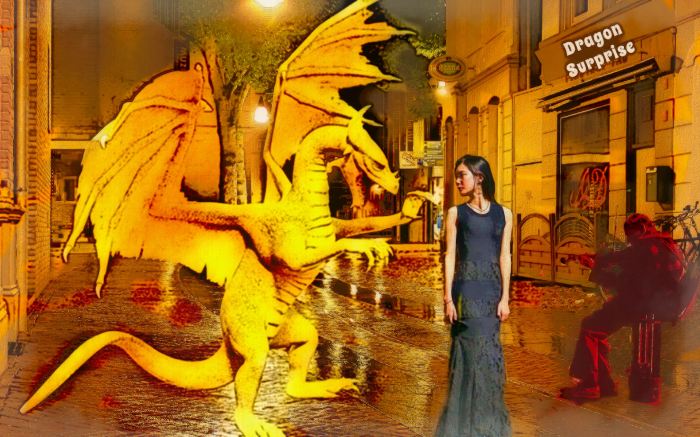
I call it Lady, will you dance? which is the title it wanted.  I have no idea what the story — or world — is.

I’ll be back tomorrow.  I’m so sorry.  there just isn’t enough time.  I’m going to try to actually work when I come back.

ladywillyoudance.jpg

Tribal

Human beings, whether you believe they were created “out of” or evolved out of creatures of the Earth are built on a frame of great apes.  This is good when you think in terms of chipping flint or building moon rockets.  But when you think in terms of “why aren’t humans angels?” that’s the answer too.  Because we’re uppity apes.

Me, I’m not a human hater.  I’d like us to be better in many ways, but I don’t expect us to be perfect, because we’re great apes.  It’s a relief we no longer physically fling poo at each other and restrict that to twitter, frankly.

In fact, humanity has the flaws of its virtues, and all of them go back to that “Great Ape” thing.

Recently I landed (accidentally) on a site where the comments were full of people extolling the virtues of tribalism, and tribalism as a way of the future.  These peole were, quite unabashedly, white supremacists.  They weren’t precisely saying white people were “superior” (though they were saying it, sort of) but rather that being white they wanted to support the white race, because it was theirs and this would bring them parity would “other races.” And “Stop the extinction of the white race.”  I could (and would) write volumes about “white race” given the chance, because that name is a massive, yawning falacy all by itself.  What constitutes “white” varies from country to country.  I’ll be absolutely honest, if you’re going to talk of “races” my dad is more accurate when he speaks of races as covalent to countries “the Portuguese race”, “the Spanish race”, “the French race.”  Even though those are mixed as hell, if you translate it as “breed” and stir in culture that’s part born from breed-impulses and which reinforces them, and you come close to having something real.  Sort of.  Kind of.  Because individuals are still individuals, variation is great, and ancestry is complex.

But “White race” encompassing all those with MOSTLY European DNA is not a thing.  It’s not a thing in the same way “black race” or even “African race” is not a thing.  Most people in Africa DO NOT CONSIDER themselves all one race.  (And if you’ve ever visited or had friends of different tribes — if you haven’t, please talk to Dave Freer sometime — you know the differences in body type, let alone in behavior, are even more marked than say between a German and a Chinese, except for the ability to tan rather well.)  Hold on to that.  The “they do not consider themselves.”

What Africans consider themselves as is members of a tribe.

So, what is tribe?

Remember humans are built on a Great Ape frame, right?  Great apes tend to move around in groups.  Bands.  Often with a single male, more often (if I remember my biology right.  I might not.  I feel half dead today) with a dominant male, subordinate males, and a harem of females.

Part of the reason we have an atavistic impulse towards leaders who are “saviors” and men on a white horse if from this.  Bands with a strong leader, obviously, did better.  It’s also according to Dave Freer one of the reasons the notion of “fair” is ingrained in us from the earliest conscious thought.  In a small band, hoarding all the food, say, is unfair.  Unfair and counterproductive as it weakens the band.

We know from archeology that hominid and hominin bands had some strikingly admirable qualities that we still consider moral: for one we have reason to believe they looked after the infirm, the weak and the old.  We don’t know what advantage this conferred on the band.  Perhaps wisdom (the grandmother hypothesis) or perhaps just that knowing they’d look after you if you needed it made you a better band member.

So, we were made to live in a band, or perhaps an extended family.  At least in our legends, memories and dreams those loom large.  So let’s say that’s it (even if living in one is neither as ideal nor as dreamy as our new agers imagine.)

Humans long to belong and to be part of a band.  That’s baked in the cake.  I know for instance that I was much more effective as a writer when I was in a writer’s group that functioned like an extended family.  We all were.

Realistically it made absolutely no sense.  I mean, sure, we encouraged to write more and submit more, but other than that, how could it help success?  Well, we were braver, both in trying new things and knowing that if we got that rejection we’d have a popcorn and chocolate pity party with our friends the next week.  The tribe was real.  We were there for each other in the highs and lows.  And that gave us confidence and strength, which is why humans long for it.

How extended can that family be?  Well, if you’re from a Mediterranean or Latin background, you know the answer to that is “a few hundred.”  I mean you count cousins till the fifth generation, uncles and aunts to the third, and in big celebrations everyone descends on you.

Weirdly science agrees.  We can feel loyalty to groups of about 150 people.

I don’t know what size tribes are.  I KNOW some are much larger, but when they are I suspect they’re more “loosely affiliated clans.”  And people probably feel the bond/loyalty to their little piece of it, unless there is war or whatever.

I do know that tribal warfare is some of the most bloody in history, and I have reason to believe that tribalism, not disparity in arms, but tribalism — aka software in the head — gave the European Empires Africa and most of the Orient.

You see, I read enough of it when I was writing the Magical British Empire trilogy (coming soon in author’s editions, if I can stop looking at houses in most of my free and not free time) about the “conquest” of various lands and I can tell you at least in Africa for d*mn sure, what gave Europeans Africa was tribalism.

You see, contrary to the beliefs of the custard heads, the Zulus weren’t natives of South Africa, any more than the Boers were.  They had conquered down from the North just as the Boers were arriving in South Africa.

The difference was, despite all differences and infighting, the Boer belonged to a super-tribal organization, identifying itself as “civilized man” or “the white race.”  (Though usually the first, as Dutch, Germans etc didn’t consider my ancestors — or the Italians and sometimes the Spaniards, and definitely the Greeks as “white.”)

So when the white people landed and started settling (not just in South Africa, though some of the Zulus actions were the most extreme) the Zulus did what they’d always done to defeat other tribes.  They descended on the settlement and practiced acts of stupendous cruelty and horror.

This was not savagery, but a highly sophisticated response.  If you did that, you created a fear in the other tribe, which would run or at least face you while impaired.

They could not conceive — hardware in the head — of a supra-tribe comprising many countries and lands.  It was “tribe or nothing.”  And tribe was people at least vaguely connected by blood.  “Our kind” or as Portuguese translates relative “belongs to me.” (A lot of un-evolved — in the linguistic sense — languages including, I believe some Scandinavian ones — I only had two years of Swedish thirty two years ago.  So, I don’t remember — and definitely older versions of English, make no distinction between nephews/nieces and grandchildren.  That gives you a sense of WHO was “tribe.”)

Of course their tactics backfired because Europeans had newspapers and shared information over all of Europe, which in turn brought retribution down on these tribes, and degraded them to “less than human” which made the reprisals ferocious and ultimately what won the war and gave Africa to the Europeans.

If you look at it and you don’t even have to squint that hard, what makes Africa the mess it is is tribalism. You have individuals incapable of sharing information or doing commerce with those people over there, who are “not people” which is the meaning of “other tribe at an instinctive level for Most of humanity. It is tribalism that has held humanity in Africa behind in development.  (And yeah, IQ.  Look, guys, if you take IQ that seriously you never studied how it’s arrived at.  Geesh.  Or how conditions of upbringing influence it.  Let’s just say our pediatrician assured us if we adopted our adoptive kids — barring serious impairment — would end up testing about like us.  He said he’d seen it often enough and I believe him.)

But Sarah, you say, when they want tribalism, they don’t mean their family and a few other people, they mean everyone who identifies as white or black or–

Well, that is because the words they say don’t mean what they think they mean, or because they’re using “tribalism” to mean “racism” a word that has been debased.

So let’s examine the virtues of racism.  Um… divided countries filled with people who identify as different races and who work actively against each other SURE are my idea of paradise.  This is why “balkanization” is the highest value to aspire to, right?

Which is where we return to “identify as race” or “there ain’t no such thing as a white — or black or purple or pink with poka dots — race, unless you define it as a national identity.  (And the people who think they can identify a national identity in the US are stark raving bonkers.  Even when it was a British colony, it had Dutch, French, German and yep, a lot of Portuguese in New England.)  Even as a national identity it has holes, but as a combination of “probably some shared genes and culture reinforcing tendencies, it KINDA SORTA makes sense.

“Race” in the ethnographic sense means “tends to have these characteristics” however let me tell you that I visited South Africa during apartheid and at the time one of the big news stories was the finding of a baby girl in a dumpster.  The baby girl was alive, which created an issue: what race was she?  And the ultimate answer was “can’t tell.”  There was nothing on the physical level that could tell you.  Her skin could be dark white or pale African, her hair was not there yet, etc. etc. etc.

To do this we have to figure out how the “black” or “White” or “yellow” race and the idea of identifying with/as them come from.  And the answer is: the twentieth century.

I don’t THINK it started with Marxists (though they eventually jumped into them enthusiastically) but I do know it started with the modern state’s attempt to keep those dependent on the nation state either loyal or (for multi ethnic nations) divided.

As it exists right now, where black people in America identify with Obama though they share no ancestral experiences with him (descended from slave traders on both sides, which you must admit is fitting) it was created by the Marxists, who view creating dissension in a nation as a way in.  And it focuses SOLELY on superficial characteristics.

Which is why they try to convince us there is such a thing as a Latin “ethnicity” visible on site, and not a conglomerate of vaguely related cultures.  And they’re so good at it that people often even pick me (and always my kids) as Latin, but WORSE because they’re muddled in the head, often identify us as Mexican (I swear to you, though neither the kids nor I look it. Someday I’ll tell you about the boss who thought my name was “Feliz Navidad.”  Yeah.)

Look, what I’m saying here is this: the people who want a “white race tribalism” as bringing “parity” in other races only make sense in the context of a super-state who a) keeps these ‘tribes’ from one another’s throat.  b) uses them to keep people from turning on the state.  c) dispenses benes according to victimhood.

Take that state down, or remove most of its powers.  Make governing small, local, more responsive and not only is there no benefit to identifying as the “white race” but the distinctions start surging.  Most people REALLY don’t consider those who are “vaguely like me” tribe.  If you remove the benes/action of big government which make that a thing, the identification reverts to “me and my cousins” or in America “me and my small town.”

Which might not mean that people from podunk are people, but those from Knudop are just animals.  Have you seen how they eat their ice-cream?

BUT it will mean that “White race” means less than “Yeah, Bob is black, but he is my neighbor and our kids go to school together.  Why you want to mess with him?”

The only way these super entities make sense is in the context of the super state.  Which means the people advocating for them MUST want a super state.

I know they imagine that the white “race” being so superior will simply kill or enslave all the others and therefore they’ll rule as little kinds in their fiefdom.  This is because they don’t understand the reason whites did this before was that they eschewed tribalism.

And because I know this will be read by idiots, let me point out I’m not against nation states.  In some ways they’re a great invention, if a recent one.  Nation states, which forge a sense of nationality between everyone within their borders are in a way a great thing.  And yep, they need to have borders and those borders need to be defended.  (Ia nation without borders isn’t a nation.  I have not been an internationalist libertarian for a long time.)

Which is why I invite you to look at France.  France had a massive illegal immigration problem with Portuguese.  At some point they tackled it by making it absolutely mandatory to put kids in from pre-school on.  My cousin was one of those.  He now lives in Portugal, where he married, but I suspect most of his hardware-in-the-head is still French.  By five he knew the anthem of France, all the stories and poems little French kids knew.  By high school he was a Frenchman.

Open borders was still bad for them (eventually they had an illegal immigration problem with Muslims.  Still do.) BUT at least most of the kids, until the French got even crazier notions than open immigration, became French.  As French as they could be.  (And keep in mind genetically Portuguese from the North have a good deal of French, because of the crusades.)  And the country worked as a French country.  Even with a bunch of other contributions.

IF OTOH France had insisted on teaching people Portuguese Pride (which they might now) what is that word again?  Balkanization?  Yep, the highest aspiration of civilization.

In the country as it is now, what we need is less tribalism and more Americanism.  I sympathize that those identified as white get hind teat, but pursuing “white identity” only works if you assume the government teat, with its complementary tyranical tendencies will ALWAYS be there.

If your goal is to reduce the scope of government, oh, sure, be tribal.  You can’t avoid it.  My chosen tribe is “those who belong to me” some of which are, sure, in Portugal and I have blood ties with them, but the vast majority of which aren’t either blood relations or in Portugal.  Some of you are my chosen tribe, my chosen extended family.  And I don’t even know what some of you LOOK like.  You could be purple with tentacles.  You still “belong to me.”  By choice.

BUT being tribal is looking after those who “belong to you” — your family, your group, your buds.

It can’t and doesn’t stretch over “I’m for the white race.”  Really?  Hillary over Thomas Sowell?  Be REAL.

Which is why crazy extended tribalism might be the wave of the future.  If your chosen future looks like 1984.  Mine doesn’t.


Harbingers

UPDATE: Great, another word press improvement!  Now you have to TURN COMMENTS ON.  They’re off by default.  Sorry about that.

Perhaps it is because we’re looking for a house to buy that I’m very sensitive to the signs of economic downturn and economic “never got very well.”

This is actually the equivalent of being a middle school girl trying to figure out whether a boy likes you, and all the contradictory signs would drive you nuts.

I mean, we never had a summer of recovery, at least not here, and if you had to describe the situation of most of my friends after the crash of 08 it would be “diminished.”  But diminished isn’t necessarily flat broke.

Someone — I think Doctor Pournelle — said that even if we were in as bad a situation as the depression, we wouldn’t experience it the same way because of all the cool gadgets we have.

When you become unemployed, no one comes over and takes away your computer, rips out your plumbing, impounds your mp3 player and makes sure you can’t buy even “new” used clothes.

And our society has so much surplus right now, that it’s hard to pinpoint what “poor” is, not in round income terms, but in “how you live” terms.  Creative people can live much better if they’re willing to work for it/buy discount/shop smart.  I should know, since we kept up with our two-income peers or exceeded them because I was willing to shop thrift stores for clothes, and buy used furniture which I refurbished, and cook everything from scratch.

Heck, even when the kids were little and we were pinched as h*ll, we even had cool tech.  We just bought it on ebay one generation later.  Which is why our first “ebook readers” were nokia planners at $15 a piece, one per kid/adult.

So… is recovery in full swing?  Well, no.  There’s stuff like the fact salaries never recovered, that places high and low (restaurants and stores) are closing, but bargains stores are thriving. There’s friends who lost their jobs and have yet to be able to find one, or have six month intervals between jobs.

None of this happens in a thriving economy.  Our economy, at its very best is walking wounded.

However, when you go to places like zero hedge and they’re screaming about economic and civilizational collapse, you — or at least I — have to fight the impulse to roll your eyes.  At least if you’re older than thirty.

As with climate-mageddon, we heard all this before with different “signs” of collapse.

The first time I heard “the end is coming and we’re all going to be eating our neighbors and returning to neolithic civilization” was in 86.  I believed it then.  Now…  Well.  How many times can you cry wolf?

And as I said before, I don’t believe in actually reverting to previous civilizational levels, because no collapsed society in our time has.  But what are the chances we become, say, Lebanon?  Or Venezuela?

I don’t know.  Some of the signs and portents are very scary indeed.  For instance, there is the international situation and a wounded bear dying for a rematch.  There is China and North Korea and…  Oh, yeah, Islam, all dying to take a swing at a confused giant.  And we’re not projecting strength at any level.

And the economy… Well, sure.  Hard times are much easier to weather.  I know when I was TRULY broke before, what got to me was this: I couldn’t afford books, or TV or movies.  So life was an endless slog.  I remember getting the books used bookstores discarded, which ended up with me reading a lot of gothic romances in the nineties, because the library didn’t keep up with my reading habit.  I remember those years when we had to plan for WEEKS to go to a dollar movie.

So we don’t feel it as much.  But yes, we’re tight, and trying to find new places to cut, which is where we’ve been since 2008.  And it’s gotten to the point I just have to make more money (Which is why there will be a lot of indie this year.)

OTOH we have two boys in college.  On still the other hand, we’ve cut more than enough for that, and I’m making more than I did when we started this, so the “tight” is something else.  Some of the pressure eased off when gas dropped in price, because produce and even meat went cheaper.  And there will be some more easing during summer.

But here’s the thing: I look around and I go “I don’t believe in total collapse” and “I refuse to restrict my life in fear of a collapse that’s been predicted for 30 years,a t least.”

Otoh, we have the worst political class ever.  And the economy is anemic.  And the world situation doesn’t look good.

The thing is, if  collapse happened, I’d kick myself.  (Not a total collapse.  I still don’t believe in that, but a bad collapse.)  Because we’ve seen the signs and the harbingers, and why didn’t I do something more pro-active to prepare?

On still the other hand (there’s at least three) collapses aren’t that fast, and this slow eating away at our comfort margin is SLOW.  So for someone who is fifty and little, possibly irrelevant.

Which door do I open?  The dame or the tiger?  Who knows?  And the contradictory harbingers don’t reveal anything.

Predicting the future is hard, particularly because it’s not happened yet.  So we try to cushion ourselves both way.  And maybe we’ll get lucky.

The thing to remember is that i you can react quickly and well it’s sometimes better than preparing for specific things that never happen.

So have plan a and b and c and d and f just in case, but don’t live as if the apocalypse (other than snowmageddon) is on top of us.

That’s what I’m doing.

This is NOT a post

I was out all day looking at houses, and came back fairly late for us.  Yes, the deal fell through.  Yes, I’m all out of spoons on the house front.  Now the only question is “to buy the first thing that’s not horrible, or not.”  The idea of a forever home or anything more than 5 to 7 years is QUITE gone.  Yeah, the house might surprise us.  Anything is possible.  But what we’re looking at now is JUST buying SOMETHING.  Which is not the frame of mind I wanted to be in.

OTOH a) if we’re not fully moved by June it’s going to make Portugal impossible, and this is maybe the last time the whole family can go for 10 years or so.  10 years is a long time, and people die.  In my parents’ generation most of the people I expect.  Which means after this trip my ties to the place will thin even more, but also, I’ll miss one last glimpse at what it was.  And I’ll miss having the kids along.  I suspect this is the last trip they make to Portugal unless one or both of them marry a woman with an interest in the place, which is highly unlikely.

So, a house must be bought and soon.  That none of the choices are ideal is I suppose our fault for not having continued looking while waiting for the short sale.

b) I’m so emotionally drained by the whole now you get it now you don’t short sale thing, that I don’t think I can emotionally bond with another house again for… possibly years.

A year and a half on the move takes it out of you, as many of you know.  And I made the big mistake of emotionally moving into the short sale, because well… we were offering ASKING price, and it comped favorably to the neighborhood, and the last thing it occurred to us was that the owner’s second lien would come back and ask for 50k more.  (To put this in perspective, a house six doors up that we tried to offer for but which had an offer hours old when we tried, sold for 10k less than we offered ON THE SHORT SALE and is pretty much comparable.  So, no, it won’t appraise for 50k more.  Crazier still, this is their second lien and the house is set to foreclose in less than a month.  If that happens, the second lien gets NOTHING.  While we were offering it a penny on the dollar.  Not great, but better than what they’ll get.  So, we thought… they were sane.  Which they aren’t.  Also we seem to have THE single most inept negotiator on this green Earth.  As in, she doesn’t negotiate at all, just transmit the bank’s demands.  Ah well.  The sellers picked her, not our agent, who is quite as upset as we are, if not more.)

So, here we are.  And that’s about it.  And I don’t feel like writing a blog post, as has been the case most of the week, sorry.

I have a post on tribalism baking, but no energy to deal with it.  I did search to see if I’d said what I wanted to say before, but I haven’t.  So.  It will have to be written fresh.

And now I’m going to shower, down another cup of the magic potion known as Coffee, and settle down to write.  I have a book to finish.

Book Review: Deck of Cards by Rebecca Lickiss – D Jason Fleming

Book Review: Deck of Cards by Rebecca Lickiss – D Jason Fleming

51nxcw0epjl-_ac_aa160_

Before we even begin the review, I urge you in the strongest possible terms to do two things: ignore the cover, and ignore the title. Seriously. Pretend that somebody who hated the book and wanted to make sure it sold zero copies somehow got control and slapped the cover onto it.

I’ll come back to this later.

Rebecca Lickiss’s Deck of Cards is a space opera, with heavy elements of thriller and comedy of manners thrown in for good measure. Imagine early Lois McMaster Bujold, as this fits very well with Shards of Honor and Barrayar, despite being a wildly different story.

The story is also set in a very complicated world.

Five is a resident of the planet Fenris, and somewhere in the top dozen or two slots for the line of succession to the throne to rule the planet.

As the novel opens, we quickly learn that Five, whose real name is Valor, works with his siblings together to protect the youngest ones from their mutual father, Sigil. There are more than twenty siblings, nearly all called by number by their father, and the protection is needed. The opening scenes have Sigil returning from an audience with the King and taking out his fury, causes unknown, on Five’s right hand, breaking every bone in it. Five’s relative acceptance of this clearly signals that, while this attack was extreme, it was simply of a piece with all the previous treatment by his father. Further, it’s very clear that Five takes abuse on himself so that the other siblings won’t be targeted.

Almost immediately following, Five learns that he has a required audience with the King the following day, and there is a rush with the doctor to get his hand into presentable shape in time.

The audience with the King is, if anything, even more disastrous than his encounter with his father. The King tells Five that he will marry a daughter of the king of Ariel, the mysterious Princess Dedalean Leonargus, as a means of easing tensions between Ariel and Fenris, and encouraging trade.

Which explains Sigil’s vicious attention to Five’s right hand, since that’s the hand that will hold the wedding ring.

Yes, the wedding ring goes on the right hand.

Lickiss’s novel has many, many impressive accomplishments, not least of which is the detailed world-building. In this case, I’m referring to the cultures and histories of the two worlds featured, rather than the climate, geography, or other physical features.

Fenris and Ariel orbit the same star, Ariel having the much larger orbit, and according to legend, they were colonized at the same time, four hundred years ago, in a desperate last-ditch effort not to lose a revolution. We don’t get much more detail about that, but the legend includes the fact that the two worlds will unite again in a hundred years to re-take “Target”, a planet somewhere outside of the system, whose location nobody seems to know.

In the meantime, Fenris and Ariel have been at near-constant war, all the while looking over their shoulders dreading outside invasion, in spite of the fact that many (including five) don’t actually believe the legends. Five’s marriage is publicly part of an effort to reconcile the two cultures ahead of the fulfillment of the forefathers’ plans to re-take Target.

Privately, however, there is another purpose.

Five’s father, Sigil, is a wildly violent, unstable, unpredictable psychopath, as has already been established. And several people in line for the throne have died in mysterious, not-quite-provably murderous circumstances, including the King’s two sons. Sigil wants the throne, and the King knows it, but can’t move against Sigil for unknown reasons, though part of it is clearly fear.

And the secret reason Five is being sent to Ariel, along with his youngest siblings and other children currently in Sigil’s path, is to provide a safe haven for the King’s as-yet unborn son, about whom nobody knows except the King, the Queen, and now, Five. Once established, and the prince born, the child is to be sent to Ariel as a bastard child of a royal cousin, as cover. The real reason is to keep him completely out of Sigil’s purview.

Following all of this so far? Good, because that’s merely a part of the first two chapters. This is all merely set-up. I haven’t even gotten to Arielan culture, the large cast of characters over there, or the delightful interactions between the emigrants and the Arielans.

And it’s all handled magnificently, with only a few minor missteps, none of them relating to the story itself.

Lickiss handles a very, very large cast, with complicated and shifting interrelationships, in a way that makes me jealous. And once you tune into the cultures that she has built, it’s pretty much all crystal clear, except when it needs not to be, to keep the reader in suspense. She also develops two related, but markedly different cultures, almost purely through showing them to you, not lecturing the reader much at all, except when characters truly don’t or wouldn’t know things, and need to be lectured about them.

The story is engaging and interesting all the way through, leads to a very satisfying ending, and leaves the door wide open to further stories in this setting. We never find out much about Target or the circumstances that led to Ariel and Fenris being colonized, for example.

It’s all quite excellent and entertaining, and I recommend it highly.

That said, there are some minor defects, technical things really, in the story itself.

And there is also the cover, and the visual presentation of the Kindle edition of the book.

Within the story, there were a very few times where Lickiss did not signal things quite clearly enough, at least for this reader. It is, as I indicated, a masterful job of juggling a very large cast, keeping all the interrelationships straight in the reader’s head, and showing the different cultures to boot. However, a few times, she slips. There is an important conversation between Five and the King of Fenris, private, that I started out thinking was between Five and his father, because she used the King’s given name, something that had been mentioned once, I think, but hadn’t stuck in my head for some reason. That was the worst example, but there were a few other times in the book where I had to stop for a moment, go back and reread a paragraph or two, to make sure I was oriented correctly within the story. (Also, toward the end, there were a few obvious typos that pulled me out of the story briefly, simply because there had been so few, possibly none, in the early going, so they stood out.)

The title works once you have read the story, because one of Five’s idiosyncrasies is that he uses a deck of cards (unique to the story and world) to play solitaire as a way of helping him sort out relationships and figure out how to solve problems between people. However, it is not a title that indicates “space opera” or “science fiction” in any way, which is why I said to ignore it. It’s not a bad title, but it fails to signal the reader what kind of story it is.

And the cover. Oh, alas, the cover.

Look, within the story, both Fenris and Ariel have strongly feudalistic tendencies, and some primitivism, such that the aristocracy live in castles, and on one planet, they are horrified at the very mention of indoor plumbing, because that might give away their real level of technology should Target attempt to invade. And no, that makes no sense, as characters in the story realize, but it’s a brilliant bit of world-building that rings true.

However, a plain picture of a castle-like structure? That, really and truly, gives you zero idea what kind of book this is. On top of which, it’s bland rather than intriguing. And currently, SF covers still tend strongly toward artwork rather than photographic realism, for obvious reasons.

So, ignore the cover, don’t let the title fool you, this is a fun, exciting space opera of a fairly unique kind, and I want a sequel, or even a prequel, dammit!

This review of Deck of Cards by D. Jason Fleming is licensed under a Creative Commons Attribution-ShareAlike 4.0 International License.

Fretting Dowagers

It might not be immediately obvious to people in this blog, but growing up my family lived fairly close to the bone.  We were never outright destitute except for a couple of years and that was for weird reasons.  But we never had a lot of money.

Now most of this was probably because mom was socking away every spare cent, in fear of being destitute.  BUT we were close enough to the bone (and to be fair when I was very young there was no money to sock away) that in summer the shoes I’d outgrown during the winter got cut down at front and back and used as sandals.  If there was some money or someone gave me sandals, they were bought very large and worn as little as possible to preserve them for the next year.  Later on, I mostly lived in flip-flops during summer, because they were really, really cheap.

And most of the time I was growing up, I wore a lot of my brother’s cut-down and refashioned clothes, which since he was almost ten years older and built like my boys, mostly meant I lived in a lot of brown pants and largish sweaters.  I also wore dresses mom fashioned from remnants and left overs but since those tended to be rather fashion-forward for the village and also since I was the terror of new clothes (something I paid for with younger son) this didn’t happen often, except for pictures.

This has a point. I’m not complaining.  I was never really hungry, except for two years, and we made do.  A lot of my toys were empty containers and detergent prizes (like cereal prizes but given away by things like Tide) but mostly I amused myself making up stories bout what I did have.  Not saying I didn’t nearly die of envy when all my friends had the fad toy of the moment and I didn’t — I wrote me getting one of those into a story, once — but it was a metaphorical “die” which didn’t mean much.

However, as I advanced in schooling, I became aware that my family’s economics were… well, much tighter than most people’s.

There is a reason for this, and keep in mind what I’m describing is at least 30 years out of date.  I don’t know what goes on in Portuguese education now.

Thirty years ago, Portuguese education was free through college and mandatory through ninth grade (I was amused, shortly after moving to the US, to see some religious organization asking for money for Portuguese children, so that they could have schools to attend — which the organization was supposed to build. — I’m not going to say the schools were that great, but through about 4th grade not only ws it fine, but there were schools those kids were ALREADY supposed to be attending.)

I can hear the “oohs” from the audience though possibly not this audience, which has the values of TANSTAAFL engraved on the inside of their eyelids.

The school was free… if you could get it. And yet for each level you went up in studying, you hit another strata of society, much more so than in the US now or at any time.

EVERYONE was supposed to be in elementary, and because even parents without education saw the value of learning to read and write, most kids attended this.  At least most boys.  Some families saw no value in it for their daughters.  However, the wave of “removals” started in 3rd grade.  Your kid had mastered the basics, and you went to a doctor and got them certified as educable mentally retarded, which took care of the poorest of the poor, who viewed kids as cash cows to help the family survive.  Most of those kids ended up in the textile factories, which were allowed to hire them since they’d been certified as mentally incapable to do more.  (Note their school records weren’t even looked at.)

After fourth grade came “preparatory school” for two years.  About half of my class went to this.  Unless you were really low middle class, you’d send your kids to it.

But at the end of it there was another flurry of removals with the same certificate that they couldn’t do more.  This took a lot of the poorer middle class.

There was a reason for this.  By seventh grade you started on physics and pre-calc, and teaching ranged from the rare brilliant teacher to a lot of dross.  Which meant in seventh grade a lot of people started failing unless their parents hired tutors for them.

A lot of middle-middle class people and high-middle class people could afford that.  A lot or our close family did it, but our nuclear family could not. However, my mom, for various reasons, was determined to show that we were just as good as anyone els,e so “removal” was never even considered for either of us, and we were told we would have the highest grades or else.  Sometimes doing this required finding old books that explained what our teacher didn’t, or simply hitting your head against the wall till you managed it.  Both of us had very creditable grades and went to magnet High schools in the city.

Perhaps because it was a magnet high school, I found I was seriously outclassed in terms of clothes, food, and general consumer goods.  That was fine, as I settled on being a rebel and weird.  (What do you mean that couldn’t have been hard?)  That was fine because it fits the Portuguese myth of genius and just impressed my classmates.

And going to the magnet school instead of the high school the village kids attended and which was staffed lower down the teacher vine — so without tutoring you just COULDN’T get it.  I know.  My best friend went there — when they instituted a brand new and designed to weed out students test in 9th grade.   It failed, either by outright failing or by not making as good a grade as they should, about 3/4 of the class where I attended.  It failed almost everyone at the school the village was assigned to.

The ones who didn’t “outright fail” were channeled into “professional training” mostly elementary school teaching, secretarial, book keeping, mechanics, etc.

The ones who stayed in were assumed to be university bound.  By this time most of my classmates were not just richer than I but so much richer than I that I didn’t even get it.  I was insulated from realizing it, because my closest friends were like me, battlers who came from lower economic/regional backgrounds, and who just wouldnt’ quit.  Even then some of them were having tutoring.  I used tutoring a lot as an excuse to avoid things like mandatory rallies and such.  “Oh, sorry, I have tutoring.”  But I never had it, except that in college I had tutoring in the sense I tutored others.  During the very bad, no good, awful two years of our family life, my brother tutored and kept the mortgage paid and enough food on the table we didn’t outright starve.

Mom chose the living room sofas for tutoring convenience.  Ie they must not break easily, since kids will do stupid things.  BUT neither my brother nor I were tutored, we simply used it as a money maker later in life, when things like film tickets or stamps to write to one’s boyfriend in the US became important.

By the time I hit college, I knew I was in a social sense “outclassed.”  But you have to understand, not only did I still live in the village, where our family was relatively well off, or at least socially influential, but my mom had retired (heart condition and tight deadlines don’t mix, so the doctor made her retire) and acquired a new hobby: designing and making new clothes for me.  I had so many clothes, of so many styles (particularly since dad managed a textile factory and there were always end-rolls and things that didn’t get picked up by the client for some reason) that in my little mini village circle I was considered a clothes horse AND incredibly well dressed.  (It was all very eighties.)

In college I made new friends and for reasons that would be hard to explain, one of those groups were people not just wealthier than I but wealthier than most people in Portugal.

They knew I wasn’t up to their income, but to their credit, they didn’t care, and had a tendency to include me in stuff by having my restaurant bill show up mysteriously paid, or by inviting me to all paid vacations.

The first of these I went on, my mom spent weeks making my wardrobe and truly excelled even her excellent skills.  I looked… uh… much, much richer than I was.

It wasn’t till we were at the beach house and comparing stuff we’d brought that I realized I’d brought rags and hand me downs.

No, no, no one had switched my clothes, and objectively there were well made, fo good materials and DESIGNED to my body, so they made me look good.  But there was a problem.  They had no LABELS.

My friends were oohing and aaahing over completely unremarkable t-shirts and jeans, because they had labels of international designers.  They politely ignored my clothes, so as not to embarrass me.

I watched and after the dismay passed was mostly amused.  I — and my close friends back in the village — thought my clothes were amazing, because they were unique, made me look good AND would last, even being washed against stone in a water tank.  BUT our friends who were much richer took that stuff for granted (even when it wasn’t true and the clothes didn’t fit their body type) and concentrated instead on the labels that meant these clothes were very, very expensive and therefore exclusive, particularly in Portugal.

I realized that I’m watching something very similar to that clothes comparison session, for the last 10 years or so.

There are countries in the world where food is scarce, or at least expensive.  There are countries in the world where women can get killed and mutilated for daring to learn to read; there are countries in the world where gay people get pitched off roofs.

Meanwhile anyone who matters in America — the opinion makers, the cognoscenti, — obsess about micro aggressions, over what what gender pronoun to use, over whether we should ONLY read minority authors.  They beat their chests and apologize for the racist/sexist/homophobic sins of ancestors (or field ancestors) about whom they PLAINLY know nothing.  They will descend on you like a pack of dingoes for using the word/thought/concept that isn’t IN this week. They lecture you on the lack of privilege of an NYU graduate who frankly tans a different TONE than I but about the same darkness.  They demand “safe spaces” carefully stratified by skin color and preferred sexual partner, because people might STARE at them.  STARE.  How does that compare to being knifed in the street or raped when outside the protection of males, which is the reality for most women in the world?

Labels.  Only the very rich obsess about labels.  Go a little further down, where things are actually slightly less of a give-me, and people are quite happy with homemade clothes that are good.  Or put in societal terms, people are happy to have clothes to cover themselves with, that are adequate for the weather.

Maybe there is a strata of American society that NEEDS this and doesn’t have it, but other than the outright homeless, I doubt it.  I doubt it because for the last 30 years I’ve shopped for clothes at thrift stores, and my winter coats average about $15 which most of us can afford every few years.  Because we have so much surplus, that we donate so many almost-new clothes that the stores can sell them CHEAP and still fund their cause.  (Mostly I shop at ARC.)

Which means in global terms most of us are rich.  And the people who command the heights of the media and the culture (mostly women and ivy league educated, btw) are really, really rich.  So they’re obsessed with the labels, and never mind what the clothes — or society — are actually suited for or supposed to do.

They’re all fretting dowagers making sure the chairs in the Titanic are well arranged enough to give a hint of their social standing.

Because the thing is, there are real problems in the world, both in our structural economy and in the drums of war echoing around the globe which can very well engulf us while we’re changing “no blood for oil” because that’s such a COOL novel, that all the special kids are wearing.

It will change.  In the Titanic, even dowagers scrambled for the lifeboats when the going got real.

I pray it will not change as hard or as fast as our divorce from reality is inviting.  And I prepare in case it does.  And I give the fretting dowagers, looking for labels on their social standing and importance, the smirk they deserve.

Reality always wins.  And no one is rich enough to be insulated from it forever.  And in the first stages of things getting unstable, the dowagers get louder and obsess more on the irrelevant, because it’s their way of telling themselves everything is fine.

Hold on to the sides of the boat.  I have a feeling there’s choppy water ahead. Keep your cool and row.

Time Travelers

Sometime in the late nineties there was a common spam email that went “I’m a time traveler stranded in your time.  I have reason to think you know what I’m talking about.  There is this part I need.”  Anyway… I don’t actually know what they were meant to be except a prank, because there were no links to follow.  Or perhaps they harvested the emails when you responded.  One of these hit strikingly close to home because the signature was my nephew’s name.  And while our last name is common, in Portugal no one goes just by the last name, but by two conjoined names, and his is  an ancestral thing in our family (which I don’t have) that my brother chose to recreate, and therefore relatively arcane.

No, I didn’t answer that email. And this is a good thing. (Probably.) BUT this morning when I was thinking of the “uniqueness of the American experience” what I thought was most unique about us was innovation.

Yes I know.  You’re going to come through and rant that Israel is eating our cake on research (bet you I know a lot of those projects, too) and so is Germany, and, and and–

But books for technical fields abroad are often in English, imported from America (I should know, I’ve shipped off my share of those, and got on the most FASCINATING mailing lists.) and even in fields like plumbing and car mechanics, most of the time you have to learn from Americans how to do it.  (Yes, yes, there’s some things we got from abroad, but some of them don’t even become widespread till they come to America.)

Even science fiction (yes, yes, Mary Shelley and Jules Verne and H. G. Wells — pfui) as a popular and widespread genre wouldn’t exist without Americans.

Which brings us to why.

It’s not magical.  And it’s not genetic. What pushes a country to excel in this or that is often the fruit of a confluence of happy accidents.

I spent a lot of time studying why the Portuguese discovered new lands; why larger, better equipped countries didn’t do it first (and yep, without Portugal starting it off, the whole age of discovery might have been delayed another 100 years, at least.)  The answer, if I remember correctly started with: Stayed out of the 100 years war; had a tradition of seafaring and knowledge from both Greeks and Moors; didn’t lose as much population as other countries to the black plague; is a tiny, not particularly fertile (landwise) country.  Etc.

In the US if you ask why we tend to be more… future inclined than other lands, I would start with: the people who came here broke with their past.

You can’t start to understand how much Americans underestimate the influence of the past in other countries.  Sure they go elsewhere and see modern appliances/plumbing, etc.  And they attribute the differences to quaint culture stuff.

Which is true.  It’s also true it goes all the way down.  A friend once told me that she grew up among people still refighting the Civil war in arguments.  I told her that was nothing.  I grew up among people who in every day association, unconscious prejudices, reaction to certain features, and occasionally verbally, are still refighting the Punic Wars.  And most of this is subconscious, so it’s hard to tweak.  You just feel there are things you do and things you don’t do, people you associate with and people you don’t, at a GUT level, and it’s very hard to bring it to the light and examine it.

My older son describes Portugal as an iceberg: a tiny, above the water part, towing an immense weight of history, some of it so deep and dark no one is sure about it.  BUT all of it influencing how the iceberg moves and what it does.

Note some of this is changing with TV and mass media.  And that’s part of why Americans have this advantage in creating the future: because people came here and changed languages (most of them) and therefore lost touch with the old legends and the things grannies teach their kids.  They became people who learned stuff from the same mass media.

Sure, there is a shallowness to that type of culture — everyone complains about it, even us — but then again there isn’t.  When the culture is purposely designed for that (and some of it was.  A lot of it… well.  More in another post) it can create a society that thinks over what it does and what it wants to do: a society uniquely suited for innovation.

This contributes to the US being like the aspergers kid in the playground.  Things other cultures do (or more likely don’t do) instinctively, we think over to the nth degree, then try to do consciously.

Now what we are and what we do is largely an accident. It is, it occurs to me, what China tried to achieve all the times it burned its books, jailed its storytellers and wiped out its history.  But because they were all the same people in the same place, stuff leaked through, and while they managed to forget a lot, it was just enough to repeat the same old blood-soaked mistakes again.

So, it’s purely an accident.  And one that forces on both extremes keep trying to undo (both weirdly trying to make us more like Europe, only their own version of Europe in their pointy little heads.  None of them would know the real Europe if it took a bloody chunk out of their asses.)

However doubt not that if America goes down for the long count, so does innovation, at least for a while, and maybe forever, until the same accident strikes again elsewhere.

Which is why we’re not going to let it go down.  We’re Americans.  We’re time travelers.  We come from the future.  And we’re going to take the world there.