When The Chips Are Down

One of the things that has always puzzled me when our current mavens (Aristos is such a difficult word to type) go on is their obsession with skin color or gender or whom you are attracted to.

When the chips are done, none of that matters.  When the chips are down, humans go tribal, and when humans go tribal they couldn’t care less about that kind of thing.   When the chips are down, nobody cares if cousin Henry’s mother came from a line that was hereditarilly likely to hold a tan.  He’s still cousin Henry.  When the chips are down our women are our women and d*mn it, our women stay with us.  They might still care if cousin Henry is what Southerners used to call “A little funny” – but only because in our culture that has an implication of un-manliness, and in a threatening situation you wouldn’t want them there to think we’re a soft mark.  Only, let cousin Henry be bigger and brawnier, and pound his chest harder than the other warriors, and they’ll go “He’s a little funny, but he beat someone’s head in last week, so shut up.  He’s cousin Henry.”

It is only if the stress goes on very long, and if you have no hope of getting out of it, that you start purging your own numbers, but at first shock, you close ranks not by race, not by age, not by gender and not by orientation: you close ranks by culture.

How do I know this?

Well, I was an exchange student from July of the year I turned eighteen (so when I was still seventeen) and up through May of the year I turned nineteen.

Don’t pfui me.  There is stress in that situation.  There is also a great mingling of nationalities, races and cultures, and a great opportunity to sit and observe.  (Yes, you could say I had the first sight and the second thoughts.  I was a baby writer.  Who do you think Pratchett is really describing when he goes on about witches?  At least on the perception part.)

You take a bunch of sixteen to nineteen year olds, at the age of greatest social insecurity, you uproot them completely and you throw them into a vast group (there were 2000 of us from all over the world for the two or three weeks of orientation in NYC) and you make them comingle.  Whether you mean to or not, you traumatize them and you pull the rug out from under their feet.  (I remember one of my colleagues being asked by some minor reporter what she thought of American boys, and trying to answer “Well, really, to know what they’re like you have to know how well they talk, and I don’t talk well enough myself to judge.”  By which she meant the … markers of Portuguese courting which involve status markers through language weren’t there, and she didn’t know which markers to use.  That’s a minor example.  All the Portuguese were in distress, too, being used to six meals a day and getting only three.)

The first thing I noticed was how little mingling there was outside nationalities, PARTICULARLY with Americans.  Keep in mind we were chosen because we wanted to spend a year in the US, away from our families, learning about US culture.  We were, in fact, all of us, chosen for xenophilia.

And yet, when you got us in a group that contained some of our “people” we clung to them.  More, when there was socializing outside the group it was with similar cultures.  First, came the colonies of that nation, no matter how long ago they separated and NO MATTER WHAT THE SKIN COLOR of the people was.

People from Senegal gravitated towards people from France and vice versa.  Portuguese hung out with Brazilians (this was before the cold war ended, so we had no students from Mozambique or Angola.  I’m sure we do now, and that they gravitate towards Portuguese students.)  You’re going to say “well, that’s a linguistic thing” – yes, of course, to an extent, and I do think the reason that the Latin contingent in general was more likely to cling together is that English is taught late and often VERY badly.  (I lucked out, and it was pure luck, and had THREE excellent teachers, or I would not be where I am now.)

But it’s not all linguistic.  As I noted before, Spanish speakers can’t understand Portuguese at all – and no, I’m not buying the phonemes thing.  Sorry. They also refuse to understand WRITTEN Portuguese, while any Portuguese can figure out written Spanish.  Besides, continental Portuguese (unlike Brazilian) is a “flat” language.  It sounds like a language spoken by deaf people.  So it’s not the tones – BUT after the colonies and the same-language countries, group clung to “culturally similar.”

Let me explain – after that big group, they broke us up into groups going to our region, then more again, into groups going into a small area (my area included about ten small cities around Akron OH.  Cleveland was another area.)  Then periodically – Christmas break, Spring Break – we were shipped elsewhere and got together with other areas, so I got to watch several reshufflings.  If the Portuguese-speaking group (or the Spanish speaking group) was too small, they aggregated.

The same happened to other cultural and culturally “similar” groups/ex colonies/etc.  Germans and Swedes tended to gravitate together, for instance.

I’m weird here.  I tended to gravitate mostly to Americans and then to … whoever was nice.  My best friends that year were a British girl and a Japanese girl.  But perhaps I’m not so weird – more on that later.

However, during my year in Ohio I loved visiting my family’s best friends, who were Cuban.  I loved it because they did things (stupid things, like wash dishes) in the way my family did, which was comforting, in the middle of strangeness.

And sometimes the “feels familiar” goes back very far.  Gallicians from Spain hung out with the Portuguese by preference.  Yep.  All one province under Rome… how long ago?  But they’d rather cling to Portuguese – under stress – than to Spaniards.  There was something to the gestures and the body language, and the food preferences that brought you together.

Later on, while in Portugal, I found that American expatriates and I clung together despite political, social and other differences, because we were under stress (shuddup) and therefore the other felt comforting.  Heck, I liked the way the consul’s home SMELLED because they used American products to clean.  And one of my professors and I formed a friendship based entirely on watching the A team, something I’m sure we’d never have watched that religiously, otherwise.  But it reminded us of home.  (Yes, I’m a messed up chick.  Take a number.)

Also after I returned to Portugal I got to watch groups of foreign students coming through, and observe the same stuff.  They didn’t really want to hang with Portuguese. They clung to “sibling” culture groups.

Except… Americans.  Americans would interact with Portuguese with a will (and sometimes with both feet.  That poor American boy whom we made repeat the sentence “I need some batteries” over and over again…  And he had no clue why.  [For those who don’t speak Portuguese, batteries are pilhas, the lh pronounced palatal and not like the dental l.  Most Americans can’t make that sound and therefore mangle words like Silhouette.  Well, the poor guy couldn’t.  So he kept telling us he needed pilas – think on it, it will come to you.  Think slang and some legionaires’ dirty joke] – which when you’re still in your teens is irresistibly funny.)

Anyway, Americans were these gonzo people, trying to interact with everyone.  If you assume that Heinlein had turned my upbringing American enough that I was sort of Proto-American, my wanting to mingle as a kid in America was perfectly normal.

The exception to the Americans who went outward, to everyone, was the exquisitely (in retrospect) Patrician chick from California, who looked down her nose at Portuguese, demanded all vegetarian food, and once ate the roses off some poor lady’s garden (for shock value, I imagine, though she might have been that weird.)

Are Americans still like that?  I don’t know.  It’s been thirty years since I was involved with exchange students.  I think they might be more like the crazy chick from CA.

BUT – very important but – I think this is why our mavens are so against assimilation and tend to decide that culture is race and wanting you to change your culture and become American is racist…

You see, the last thing they want is We The People united against them.  And since they intend to inflict stress and pain on us, on the way to their Earthly Paradise (where 90% of us will be dead) this is a grave risk.  So they intend to keep us in insular little groups according to the countries we or our ancestors came from.  They can they play us against each other, and pretend to save us from each other.

Don’t let them.

I’ve never introduced myself as Portuguese-American.  I renounced previous allegiances when I naturalized.  Yes, of course, my origins are Portuguese, and it shaped a lot of my thought.  So it’s not like I hide that I grew up in Portugal.

But when the chips are down, I know who my tribe is.

My name is Sarah A. Hoyt, and I’m an American.

The Sporadic, Spasmodic, Self Promo Post

It occurred to me that not only did my health crash — and it has its up and downs.  The reason this is so late today is that I’m actually fighting SOMETHING that kept me in bed till eight thirty — make it very difficult for me to do promo guest blogs, but that I’ve been very bad at promoing here.  And since I have a book recently published, another book coming out in a couple of weeks, and another in July, I thought I’d go ahead and tell you about them.

The book that came out in December is Darkship Renegades, the second book of the Darkship Series — when Kit and Thena get to Eden they find all is not sound.  Or at least Kit gets arrested, and, after they spring him, he gets shot in the head.  To save him, they have to return to Earth and figure out things they’d rather not know about Jarl and the rest.  (click on the picture for the Amazon link.)  In this book we find out how truly interesting it would be to have angels govern us.  Or, as close to it as we can get.

darkshiprenegades

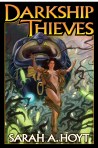
This book is the sequel to the Prometheus Award Winning Darkship Thieves

Darkship Thieves

In which a shy young lady…  Oh, stew it, in which a hellion of what Jerry Pournelle called (in his very nice review) “a princess of Earth” meets a rogue from a largely libertarian world and fights her way into a new home.  Cruel and unusual violence, explosions and torn nightgowns.

Coming out in March is A Few Good Men, the first book of the Earth revolution that starts immediately after the end of Darkship Thieves.  In both Darkship Thieves and Darkship Renegades you read about that weird sect, part religion part political movement, the Usaians.  Well, when Lucius Dante Maximillian Keeva, who’s been in solitary for 15 years and only didn’t go nuts because of being given access to literature and history “gems” (what they use instead of disks, deal) from the past breaks out of Never Never, he finds that there is an armed branch of the Usaians, the Sons Of Liberty, who appear to have murdered his younger brother, Max.  Imagine how thrilled he is, when he finds out his only hope of surviving is to ask the Sons of Liberty for help…  The tag line for this book (in the bookmarks) is “Your live, your fortune, your sacred honor, did you think those were just words?  Did you think this was just a game?”

51dnfgqJDXL._SY300_

Completely unrelated, but coming out in July — and I understand that the previous are schedule for re-release soon — is Noah’s Boy, the third book of the shifters series (the first two are Draw One In The Dark and Gentleman Takes A Chance.  The fourth will be Bowl of Red, and I’ll try to get to it this year.)  I don’t have a picture here, though I understand it’s in the Simon and Schuster Catalogue, and if someone links in the comments, I’ll swipe it.  It’ s a very pretty cover.

Noah’s Boy

Diners, dragons, panthers, were lab-rats, tuckerized flies, unnatural cavalcades of shifters and lion-policemen, oh, my.  I suspect the d*mn series is actually SF masquerading as fantasy and this book is a huge step in that direction.

Also upcoming soon enough but not from Baen, a YA called Shadow Gods, in which high school students save the world from an invasion of the Titans, which in this version are eldergoddish, with the help of some of the Olympians.

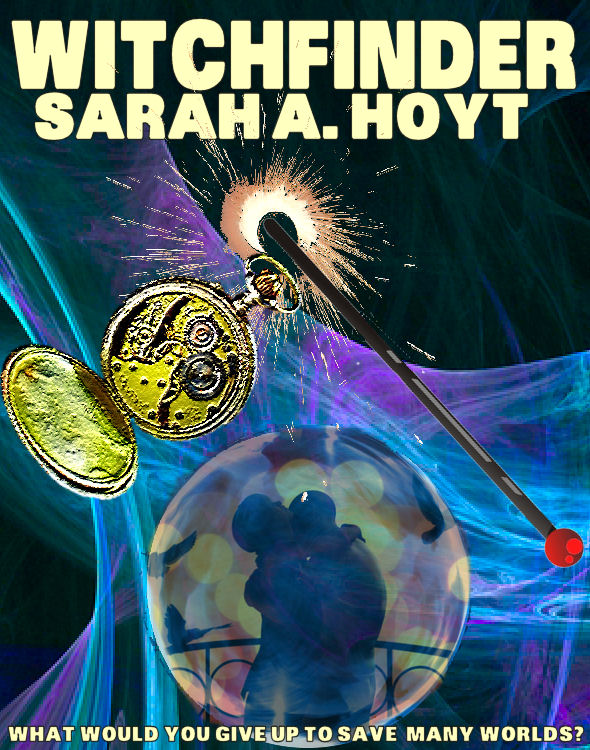
And of course Witchfinder.

D*mn sequel btw, wants to be called Rogue’s Progress, which gives no hint at all that it’s fantasy.  I SHOULD know that Jonathan Blythe would be trouble.

And this afternoon I’m going to try to get to the long-delayed (LONG delayed guest blogging, supposing I don’t crash, burn and end up sleeping.  I really don’t feel well.)

Anyway, spreading this self-serving, self-promoting page would greatly help the author continue writing and providing free ice-cream doing these free blog posts, as well as the free novel Fridays.  If any of you are willing to take bookmarks to cons, let me know, and I shall send you little bundles of them.  Books are also available, if you’re willing to do a review.  There are also (very few) t-shirts for Darkship Renegades and a few more t-shirts for A Few Good Men, which I’ll be happy to give away in contests.

Drinking Their Own Ink

Sometime ago I started talking about the problem with the publishers being that they were drinking their own ink.  I.e. they make up stuff, put it on paper, and then piously believe it, as though it were a fact.

They tell themselves the bestsellers – you know, the ones they actually give publicity and support to and to whom they pay high advances – support their houses, and next thing you know, they’re believing it, and getting rid of midlisters left and right and becoming puzzled when the bottom line doesn’t improve.  That’s because – duh – what they’re doing is roughly the equivalent of a steak restaurant deciding they make most of their money on the desserts and the appetizers, which are, of course, the highest priced in relation to cost on the menu.  Therefore, they’re now going to serve only appetizers and desserts…

The problem goes way deeper than publishers, though – we have a whole slew of people drinking their own ink, starting with our own government.  (Possibly because our government, our churches, our arts, our media, all draw for leadership from a pool of people who know each other, run in the same circles and were taught the same “truths” by the same mentors.)

Take that amazing froth of wishful thinking called the State of the Union address – did any thought go into what the speech writers wrote?  No?  I think not.

There is for instance the wonderful idea that we can’t get out of this hole by cutting expenditures.  REALLY?  REALLY?  So, let me see, if my family is spending 2000 a month, while making 1500, cutting expenditures is not the way to go.  We shouldn’t examine our food budget, cut back on entertainment or perhaps move to a smaller place.  No way no how, because cutting is not how you get out of a financial hole.  No, golly-me.  We’re supposed to get a student loan and take a course in something the government assures us will pay off.  AND we’re supposed to go out to eat more.  And move to a bigger place.  And buy a newer car.  And then we’ll be…

What?  I don’t know.  And neither do these people, because they’ve never balanced a checkbook.

The Aristos don’t have to balance anything.  There’s always someone willing to finance them while using them as stalking horses.  After all they talk so purty, and they say all the right things – the things that will allow those using them to get a greater grasp on power over the lives of everyone else.

Or take the minimum wage nonsense.  What kind of insane idiot, with the crisis of unemployment we have would want to RAISE minimum wage?  I mean, both the man reading these words off the teleprompter and the idiots who wrote them for him to read have presumably enough intelligence to stand upright and speak at the same time.  So it shouldn’t be possible for them to NOT understand that a wage is something paid in exchange for a service.  It is therefore tied to the value of that service.  The idea of legislating it at ALL is insane, and leads to people who can’t afford to pay it hiring illegals or simply not growing their business past the one man stage – because, children, economics is a science.  You can’t simply legislate wages, any more than you can legislate rain.  BUT on top of that the idea of in a recession wanting to tie the minimum wage to the cost of living is so astonishingly stupid that–  That I run out of words.

But the Aristos don’t know that.  The Aristos never had a minimum wage job, and they never had to climb out of it by acquiring skills that made them worth more.  The ARISTOS were born with the right connections, and mouthed the right platitudes, and lo and behold, the money tree was shaken into their lap.  This means they have clue zero where money comes from, and they think that the only reason everyone DOESN’T make a bazillion dollars an hour is that private employers are greedy and need the government to beat them into generosity.

What that kind of inanity – there is a reason wage and price controls only bring poverty and collapse everywhere they’re tried – will do to the economy is anybody’s guess, but I can tell you what it will do to my kids’ generation: it will eat their future.

I was talking to my son the other day and he said “Everyone in my generation has flat given up.  The height of our ambition is to someday have a job that actually allows us to live independently.  There’s no grand dreams for us.”  It was the saddest thing I’d ever heard, and even this modest ambition was just made more difficult.

But the Aristos don’t know that.  Their own children’s nests are feathered with the spoils of their parents’ career.  They have no idea what they’re doing to normal people out there.

And the Aristos are different.  They drink their own ink in a different way. They think that we are heading into a future without jobs because our automation and tech is getting that cool.

Of course, those of you who like me were semi conscious (teens) during the Carter years remember the exact same thing from then.  It was all “We can’t solve unemployment, because we’re that much more efficient that in the future there are no jobs.”  Then came Reagan.

But the Aristos don’t remember this, because part of the requirement of being a courtier is to convince themselves Carter was wonderful.  And that the current unemployment is due to our precipitous ascent to Earthly paradise.

This is why they’re not worried about debt.  See, any day now, the robots will learn to spin straw into gold…  Or so the Aristos believe.

And in this future where we all lie under the trees, they want to thin human population, so they’re not worried about people not reproducing.  And everyone who remains, will live off the benevolence of the state.

No, seriously – the latest place I read this was a centrist economist, who was repeating this utter nonsense without irony.  Yep, unemployment will be high forever because our machines are that efficient.

I bet you – gold, because money doesn’t count, one ounce – that if we pull out of this tail spin, in twenty years anyone reading this bullhockey will split his sides laughing “their technology was so advanced they thought, that they didn’t have enough jobs to go around, they thought.”

But the Aristos believe the ink they spill as though it were gospel.  Because it’s written, and it sounds good, and in their sheltered, soft lives, being able to speak well and write well is THE most prized ability.  It shapes reality.  Well, it shapes reality as far as they are concerned, because they say these things and money falls on their lap, and praise is heaped on their heads.

And worse, now, when the best jobs that can be got are on paper 29 hours, (because to be 40 would incur the massive expense of Obama care and take the employer under)  but in fact require you to work 60, with unpaid overtime because “well, you must finish the project” they’re going to look at the ink on paper and say “Wow, most people are working under thirty hours, but productivity is up.  It really is the end of jobs.”

Because the Aristos are like children, who believe their own fairytales and they, unlike the rest of us never held a job that was much shorter on paper than in reality.

In fact, we should pity the Aristos.  Like some Eastern royalty, they live isolated and never see outside their palaces.

This is fine, while the palace endures.  But their own actions are fast bringing the palaces down.  They don’t understand economics.  And the main thing they don’t understand is that other countries have been allowed to do very stupid things, because the US was there to rescue them.

We don’t have a US to rescue us.

What can’t go on won’t.  The Aristos are on a course to meet the mud at speed.

Holla, ye pamper’d jades of Asia! What, can ye draw but twenty miles a-day?

UPDATE: Welcome Instapundit readers, and as always thank you Glenn for the link.  And if you’re new here, consider hitting the links on the books on the sidebar and/or pre-ordering A Few Good Men from Amazon.  (And yes, to those who invited me to guest blog — or who wish to — that WILL resume tomorrow.  The health thing is finally settling down.)

*The Mad Genius Club Post is up.*

The Mirrored Night

I’ve recently been hearing people complain, at the same time, about  both the new media meaning that news come from so many angles that no one seems to know what to believe so people believe all these reporters without CREDENTIALS and about how people believe nothing and look for holes in everything that’s reported.

Since the people I’ve been hearing complain are fairly conventionally liberal (what I would call establishment “liberal” – they don’t think about it much, but they tend to buy the party line, because everyone who is anyone repeats it) this is of course one and the same complaint.  They want to quote Leonard Cohen their “mirrored night” back.

Because for them news are a matter of “being in the know like everyone else who is in the know” they want an easy source of information that all the right people believe, a guided conversation that is reflected in all the conversations at the water cooler.  They don’t want to know the truth, so much, as they want to know what to believe so they won’t be revealed as dumb at water cooler conversations.

One of the things they seem to focus on is the “Sandy Hook” conspiracy theories as being particularly nefarious because they “are people’s attempts to deflect from the conversation we must have about the causes of the massacre.” This reference to the Sandy Hook Conspiracy Theories baffled me a little – or would have, if I couldn’t decode it – because though there are some (when aren’t there about a nationally reported event?) even I have only managed to run into one.  And I frequent the “out there” libertarian blogs which are, by definition, conspiracy central.

But the reason to focus on THAT conspiracy – not, say, the nine eleven conspiracies that brainless stars believe – is that the theories are nefarious because they deflect from the administration’s attempts to shove gun control down our unwilling throats and to use a school shooting as a pretext.

Because only a fool or a sadist speaks the truth in social circumstances, I almost bit through my tongue not to answer “Okay, do let’s talk about the causes of the massacre: improper care for the mentally ill; or perhaps families that are not families because each parent is doing his thing and pursuing his bliss; no fault divorce?; families with no father?”

That of course, was not what they were talking about, but gun control, which has not ever in fact, stopped ANY massacres.

Are these people, then, total stooges of the administration?  Do they want government controlled news?

Of course not.  What you have to understand – particularly if you’re younger than I and grew up in the new information era – is that the news used to be something you perused to know what everyone knew.

It doesn’t matter if it’s true or not, it matters that there is a consensus reality.  Most people out there only want that.  And their complaints about the new media is that they’ve been denied that.  They no longer know “what to believe” to be socially acceptable.

Having been accused by a friend of being “too cerebral” as a writer (guys, I like explosions and soppy love stories, sometimes in ONE book, so I don’t see what in hell he means) I’m probably making my case worse when I say that’s never what I wanted to know.

Maybe it was very early on reading the Times report on incidents in the Portuguese revolution, which were not only wrong to what I’d witnessed, but managed to be more wrong and narrative-y than the more or less state controlled Portuguese newspapers of the time.  (Who needs state control, when every journalist believes the communists are ALWAYS on the side of angels?)

Maybe it was the fact that at one time I wanted to be a journalist – a real one – maybe it’s the fact that fiction counts for nothing if you don’t try to reflect a deeper truth.

Whatever the cause, when I read the news – in any media – what I’m trying to look for is the truth.

So to me, the same thing counted for reading the “real” newspapers twenty years ago and reading the blogs now.  I used the same tests: what a commenter yesterday referred to as “reality testing” – does this accord with my experience of how things happen?  Okay, suppose it does, next, does this accord with stories about similar incidents I’ve heard from people I trust?  Okay, suppose it does.  Apply Occam’s Razor.  Is this the simplest explanation for observed facts?  If it involves a conspiracy, does it necessitate hundreds of peripheral people collaborating?

The nine-eleven conspiracy fails on that.  The people in those airliners undoubtedly existed, and I don’t see them being walked out of their lives forever, into some sort of witness protection program and NEVER FOUND AGAIN.  (Beyond its failing on “how things happen” because fire does indeed melt steel – rolls eyes.)

I will confess that the “too many people in the conspiracy” has now failed me twice: the jorno-list thing.  I simply wouldn’t have believed it wouldn’t have blown up earlier or again (since I’m fairly sure it exists again.) And the Hide the Decline ditto.

OTOH these are not random people.  Everyone in the conspiracy is a true believer, and each of their careers depend on it – so I should have paid more attention to “is this how things happen?”  because it invalidates the “too many people.”  After all, I’ve seen this in fiction, where we’ve managed to have the impression of lockstep simply due to the gatekeepers and those of us who disagreed being too afraid for our careers to say anything.

But the point is, I’ve always done that, my whole life, because I always wanted the truth.  The reason I wanted the truth is because if you don’t know the real causes of things and what is really going on, you can’t anticipate the effects.  What is really going on – as opposed to what you’ve been told – might necessitate a reaction to prevent the true effect of what is going on from killing you.  It’s not just “What you don’t know can kill you” it’s “what you think you know can kill you.”

What I heard reflects the normal person’s frustration with not knowing what to believe to “fit in.”  They view news not as information, but as a system of social cohesion.

They don’t seem to realize social cohesion is usually created – in the modern state – by rulers, with intent to lead the people for their purposes.  They’ve forgotten – or never heard about – the “news” apparatus of Hitler and Stalin.  And they clearly haven’t been paying attention to the successive “summers of recovery” even as we sink deeper into penury and morass.  Or if they have, they believe that if only we believed–  (Click your heels and say “there’s no place like mainstream news.”) — the economy WOULD have recovered (the average person on the street seems to have clue zero what makes the economy go, or downright wrong ideas “price measures labor” or “money is gold based.”  “If we believed in it, socialism would work” is about a same-order fallacy.)

I for one prefer a news system in which I can filter from many dissenting voices.  And I test EVERYTHING.

And part of this reflects the fact that the left has in fact managed to politicize EVERYTHING.  (They weren’t just whistling Dixie about “the personal is political”.)  I realized that at the con as an otherwise very nice young woman said that her panel on steampunk had been interrupted by a very rude bestselling author who called them polite fascists and went on about how they longed for a return to British Imperialism.  She was bewildered by this, since she likes the setting for the costumes and the gadgets.  And she said in a plaintive tone “I don’t know why he wanted to do that.  We’re not political.  I hate politics and I don’t think it belongs anywhere near your fiction.”

While she was right that the author was insufferably rude and that most people involved in steampunk are in it for the manners, the costumes and the sense that at that time civilization was going somewhere – she is wrong about the argument being about “politics.”

The argument is in fact about history.  (And had I been there, I’d have folded that author’s words all in corners and made him eat them – since he’d already broken decorum.)

In that case, because there was no point yelling at the very nice author, I had to bite my tongue again.  What she didn’t want near fiction was not “politics” it was HISTORY.  And when you refuse to refute the skewed view of history being forced on you, you are in fact accepting it as the consensus.

History is just slightly older news.  In history as in news, what you don’t know can kill you and what you think you know can kill you FASTER.

You might not be interested in what is really happening; what is really happening is interested in you.

Those who forget history and ignore current events aren’t destined to repeat them – the twentieth century has shown us, by and large they’re destined to die from it.

A Random Bag Of Stuff

So, Witchfinder is done — well, it’s all over except for the (moan groan, sigh) editing — and Galaxy fest is done.

I want to put a question to the hive mind (Stop that, RES, you’re not allowed to answer with either buzzzz or honey): I want to do the goes to hell to figure out why hell is invading Earth thing but unless and until I figure out I don’t need someone with special forces training, there’s going to be a long (possibly six months or more) hiatus.

So, in the meantime (and it could be longer as, as you know, these things can take a time to gel, and also I’m now under contract for the next DS (still unnamed) and for Through Fire, the second book of the Earth revolution) do you guys want me to post Jonathan Blythe’s book?  (Tentatively entitled Magician Rogue?)  ’cause I can start that probably second week in March (I can’t let it interfere with Witchfinder.)

And meanwhile, to keep you all amused and sort of tying in with next post — if it were real, how would we KNOW?  http://www.buzzfeed.com/andrewkaczynski/montana-emergency-alert-system-hacked-broadcasts-zombies-war

Okay, zombies are silly (probably.  I mean, the Bible does go on about the dead climbing out of their graves and walking among the living) but suppose it was something like UFOs.  How would you know it was true, or just the upteenth joke?  (And remember that Connecticut school that closed for however long because the students were convinced there were vampires among them?  Right.)  I was recently listening to the beginning of Puppet Masters — why wasn’t it contained?  Because no one believed in UFOs.

And…  Sign, portent or a remarkable coincidence?  http://www.weather.com/news/pope-resigns-20130211

Thinking In Post-its


Yesterday I got incensed on the Art Creates Community thing.  It’s been appearing on more and more bumperstickers around here, and makes me roll my eyes.

I identified this with the sixties, even though – to my knowledge at least – this one is recent, simply because it seemed a characteristic of the sixties (perhaps due to the mass media of the time) to push ideas as slogans.  These slogans, everywhere from t-shirts to bumperstickers, got repeated so much (particularly at my young and unsuspecting generation) that they got accepted by the majority, totally unexamined as “everyone knows.”

You know, “Make love, not war.”  Why?  What about one prevents the other?  In most cases, people make love AND war.  If you believe the legendary works of the Greeks, people go to war because of making love – or even closer at hand, if you read a lot of WWI and WWII set or written fiction, you get the idea people went to war to impress girls.

Of course it was an excuse to stay at home and do hippie chicks, instead of obeying the draft, while managing to abrogate to yourself the mantel of virtue.  “Hey man, I chose to make love not war.”  Of course, they were actually making sex not war, and most such men – like all weasels – treated women very badly.  BUT the slogan hid a multitude of sins.

Then there’s – please gag me – “What if they gave a war and no one came?”  I swear I want to print response stickers to put underneath that say “Well then the war comes to you.”  The same with “What if schools everything they wanted, and the army had to hold a bake sale to buy a bomber” – which makes me want to say “well, I hope the school enjoys having its *ss bombed.”  Or “It all ends with sending ill-equipped children to the front to die.”

The problem with post-it thinking is that it hooks into humans social nature, i.e. wanting to be in with everyone.  And while it’s easy to come up with totally ridiculous sayings that SEEM well meaning and that people put on their cars, t-shirts, websites to seem virtuous, it’s much harder to make a cogent argument in that space.  And it’s impossible to counter a slogan someone embraced to be “in” with logical thinking.

Take “No blood for oil.”  Tell someone that’s the stupidest thing you ever heard/saw and they ask you “Do you think people should die for oil?”  Well… no.  No one should die without heating too.  And no one should die in famines.

The problem is the operating word there is “should” which is the language of desire, not the language of reality, which uses “would” and “could.”

No one should die for oil – which btw, was not even close to what the war in Iraq was about, as proven by the fact being simon-pure we didn’t take the oil – but as the country shouldering world peace (I’m not going to get into a discussion on whether we should or not.  Pax Americana is a globalist project and I’m not a globalist.  OTOH I believe we should be well defended and bellicose enough no one even looks at one of our citizens crosseyed.) we have to ensure enough stability that oil isn’t used as a tool of terrorism (that works) and that the prices don’t spike so much (that works too!) that poor people at home are dying from LACK of oil.

But ignore that energy is the basis of our economy.  Ignore that oil is the main part of our economy. Think of it as shiny black liquid, and “No blood for oil” is obvious.  It’s also vapid, childish, and wrong and avoids discussions of “How were we to maintain world stability without going into the Middle East.”  Which is the entire purpose of it, because half the people the “Should” side gets to back them would get bored and wonder away when you start discussing comparative strategic advantages of going in elsewhere or of not going in and just bombing the heck out of the place, or–  They don’t want the details.  They want to sound thoughtful and caring.  “Make love, not war.”  “No blood for oil”  Look, what good people they are.  They don’t want anyone to die.  No one “Should” die.  Forget that this is impossible, and that they have the median IQ of a half brick.  They have their slogan, and it shows they’re GOOD.  And they’re willing to die for this half-baked slogan.  Because that makes them saints or something.

In that context, “Art Creates Community” is a bland and innocuous slogan.  Mostly I see it in cars when I go to art classes.

However, I’ve reached the point when, frankly, any and all postit thinking drives me batsh*t insane and makes me start jumping up and down and screaming.  (Yesterday at the con someone told me that I couldn’t be Latin – she was sure I’d grown up in the Soviet Union and she thought that was a good thing.  Children, I was so tired I skittered away from THAT fast – because you know, I’m so laid back, and cerebral.  Ah!  I’m just PRIVATE.  I don’t roam the corridors of a con screaming.  I roam the corridors in my HOUSE screaming.)

Let’s examine the slogan – it’s absolute true at face value.  There’s a community of people who form friendships and networking and interests around the museum and the art school.  So, Art Creates Community.

Only, the bumper stickers have a line under it from some government fund that underwrites them AND art.

Um…  Look, my writers’ group, when I had one, created community.  We helped each other through illnesses and financial distress.  But we had no government funding.  Did we need government funding?  Well, we subsisted ten years without it, and in that time most of us transitioned to professional status.  So…

The thing is that ANY shared interest creates community.  I have friends who know tons of people in their gun-collectors/gun-manufacturers/gun-dealers community because, well, they go to the same shows, and they get to know each other.

So, Guns Create Community (a well defended one.)  I say the city government should finance guns.  No?  Why not.  They create community.

And, as a commenter noted, churches create strong communities.  Should city government finance churches?  Why not?

ANY shared interest creates community.  Gaming Creates Community.  Should the city subsidize that?  Why not?

And don’t tell me sometimes good art needs public support.  For the love of Keemchee, the Soviet Union or Nazi Germany supported all sorts of art.  When the government supports art you get gigantic statues of Mao Tse Tung, (Or gigantic statues of Martin Luther King looking like Mao Tse Tung.)  And please, don’t bring up the Italian Renaissance.  That was different.  The patrons were individuals who just happened to be massively rich.

The best art done with government patronage was Shakespeare, and frankly those are the worst of his plays (which his having learned to write for the people first, still aren’t too bad.)

So do I think we “shouldn’t” support art?  Well, I do think a city government so far in debt that they can’t keep all the street lights on AND stop a popular inter-city bus CAN’T support art.  That is the language of reality.  It has nothing to do with should.  It has to do with could and the fact that there ain’t no such thing as a free lunch.  You take money from one side, it’s gone.  You don’t have it for the other.

So don’t I think we SHOULD support art?  That’s neither here or there.  I am an artist myself – very beginner – as well as a writer, which some people would consider an artist.

Do I think every artist should have enough to live on and pursue his or her art?  Sure thing.  In an ideal world, in which soup rains from the sky, clothes grow on trees and a two-bedroom home sprouts after the rains like a mushroom.

But that’s not the world we live in.  A world in which if you pay for soup you can’t pay for art is the world we live in.  A world in which if the government finances art, it can’t finance lighting the streets is the world we live in.

Now, I happen to think that worrying about the daily bread and having only a little time to do art sharpens the art and gives it a human touch.  (But then, of course, too much worry can kill it.  We’re human.  It’s all imperfect.)

But even if I didn’t believe that, I still would have to say that while I think EVERYONE should have enough money to pursue whatever art or hobby they wish, I don’t think it’s possible to make it so that everyone CAN.  I also think everyone should live forever.  I don’t think everyone CAN (or anyone, right now.)  I think it SHOULD rain soup.  I don’t think the government should at great expense send helicopters overhead to dispense soup.

Art Creates Community.  Guns Create Community.  Religion Creates Community.  Make your community self sufficient.  There ain’t no such thing as a free lunch and no one SHOULD be compelled to pay for yours.

Ignore that long enough, stick to post-it thinking, and the gods of the copybook headings come to tell you that if you will have art on the streets, you can’t have lights.  And then no one can come and look at the art in the evening without being mugged.

Or… you could think past post-its.


Defeating The Great Depression

Weirdly this is not an history post.

Right now a lot of us have fallen into a great depression.  The economy, the politics (also known as teh stupid at a national (and state, and local, and epic) level (take my city for instance.  They are turning off the lights in every cross street to save money, BUT they are still filling downtown with great, mostly without redeeming value, (yes, there are exceptions, but not many) piles of metal for “art on the streets.”  Because, art is more important than the safety of lighted streets, and “art creates community” or something – will the Sixties never lie down?  They’ve always been dead.)  Our kids are coming of age, and there’s no economy for them to step into.  We’re most of us holding on to the edge of a job that might or might not be there in a year – or a month.  Everyone is holding their breath.  Something has to give, but no one knows what.

We wait and we wait, and we can’t talk to anyone, and no one will talk about anything that’s really worrying them in public (though we do, in private, with a bottle of wine and some time.) And we get depressed, because what we believe, what we do, what we are, what we want, and simple stuff that could be one to make the economy better is obvious, but nothing gets done.  Or teh stupid grows deeper.

There is a certain Weimar republic weirdness.  People talk around and over things.  People smile a lot.  Even cons that used to be acrimonious, no one talks of anything important.  (Well, except me, when someone said money was a measure of labor.  You guys know what it does to me.)  We’re all being overnice with each other as though we were all accident victims and slightly dazed.

The people who still have jobs are working too hard.  The people who don’t are wondering if they ever will again.  (Some think they won’t because they bought the with-folded-hands-crap.)  Those of us who drink are wondering if we can afford as much as we need.  Those who don’t drink often act drunk through sheer exhaustion.

But mostly, mostly, we each one of us feels powerless, lost, as though what we are, what we think, what we want, all the plans we had for ourselves and kids and our careers, and our friends, and our retirement, count for absolutely nothing.

It is not good for man – or woman – to feel alone.  It is no great shakes for man – or woman – to feel powerless and irrelevant.

I can’t tell you what to do, personally.  I’m not you.  I’m finding my own way out of the grey goo, into some semblance of normalcy.

Either things will get better or they won’t.  Either the worst will happen, or it won’t.  You can’t do anything about it, but you don’t want to give your life over to a wasteland for however long.  We hear history moves faster now, but history is still not that fast.  The collective thought and feeling are a slow thing to move and change.

And meanwhile… well, in Venetia Heyer makes some reference to the years the locust ate.  This is of course a reference to the Bible.  But it is also a weirdly resonant phrase.  The character is referring to his years spent in wenching and gambling, not building a life, a family, an estate.

I hate to tell you this, but if you’re going to waste years, wenching (what is the distaff equivalent?  Roguing?) and gambling are better than grey goo-ing.  In another, smaller scale, I let the locust eat the years I was struggling to break in.  I’d lose hope, and spend months, years, spinning in place, doing nothing.

It serves nothing.  It helps nothing.  So whether you’re overworked, underworked, or completely lost in some hopeless routine, let me share what has helped.  Because one way or another, either this will end well or badly, and in either case you’re going to need to be alert, prepared, and not so depressed you can’t move.

Prepare for the worst, hope for the best and – to quote Heinlein – keep your clothes and weapons where you can find them in the dark.  Metaphorically, at least.

I’m not going to tell you how to prepare for physical survival.  It would be stupid.  There are far better informed people.  I do wish womeone who can’t eat carbs – for reasons other than diet – would have a list, though, since our storage is whimsical, to put it mildly.

What I’m going to tell you is how to keep yourself from being a depressed pile of mush, in the meanwhile.  Because – trust me, I’m by nature a depressive, and I KNOW – if you are a depressed pile of mush, you won’t think clearly in an emergency; you won’t react quickly in a life threatening situation; you won’t take advantage of something getting unexpectedly better; and you WON’T survive, no matter how many plans you’ve made.

So, this is what has been working for me – your results may vary.


1-      Control.

Years ago, in the throes of burnout, I bought a book on how to get out of burnout.

They identified three causes of the burnout: overwork; lack of control; hopelessness.  They said countering just one of those could get you out of a burnout spin.

I don’t know where the book is, but I think it’s in one of the massive “to sell” bins, because it was to my purpose nothing.  At the time, I couldn’t take control of my career, I could do nothing about working less (not if I wanted career to continue) and I’d pretty much lost all hope of my career experiencing any progress (I think the year I had six book releases and NOT ONE made it to bookshelves in CO was the time I figured that out.)


In a way we’re there.  And of course, we can’t do anything substantive about those three things.  But there is something we can do on a minor scale.  You can control yourself and your surroundings, and make some improvements.


a)      Eat well, exercise, try to get in shape (I recommend Charlie Martin’s 13 weeks program.)  Try to be the healthiest you can be.  Depression – at least in me – tends to translate into sweet-cravings and couch-potatoing.  Counter that part.  Control your body.  It will pay off.

b)      Clean and organize your surroundings.  No, I’m not being mommy.  Look, there is a psychological effect from living in a mess, and you don’t need it.  And being able to find a book, a reference, a tool when needed is an inestimable good.  The other advantage of these two is that most of the time they will tire you out, so you can stop running in the hamster wheel of the mind and sleep at night.


2-      Hope

Whether you’re unemployed or employed, you need to feel like you have something you can do to help in the future.

I’ve said here before the future is not one job, not one occupation, but multiple streams of income.  Yes, I know, if you’re already overworked you’re going to throw things at me (it’s okay.  I’m really good at ducking) because there SIMPLY isn’t the time or… the “give.”  But there is, if you find it.  And it can help you.  During the worst time in my writing career, I picked up art.  As income it hasn’t come-in yet.  (But it could, if I organized better.  Something that I’m working on.)  But as something to learn – something that I could feel I was making progress in and it was volitional, it’s inestimable.

Writing six books a year was eating me alive, so I added art classes and time to draw, and I felt better.  It makes no sense, but it worked.

Given the times we live in, and that the future is uncertain, I’d advise you to pick a hobby that can double as a money-making thing, preferably one you can do on your own/contract/fre lance.

I don’t know what your talents are.  My family is NOT normal – you knew that, right? – so yesterday we spent time picking courses off a catalog, and the gamut went from history to music, to art, to storytelling.  Activities and skills people are working on in my circle range from editing to handy-manning (shut up you!) to building computers from discards, to writing indie, to art, to all sorts of what used to be called womanly crafts.  Embroidery, crochet, knitting, calculus, statistics, piano, languages, programming, baking, backyard gardening…  All of these will almost for sure have a value and allow you to make at least some money.  All of them are absorbing enough to keep the mind from the down spiral.

Pick one and master it.


3-      Rest

This will seem insane, considering the stuff above, but listen to me.  One thing I learned in the burnout years was that I couldn’t rest simply by doing nothing.  Doing nothing was an opportunity for the locust to come gnawing at the edges of how hopeless my situation was.

The mini-vacations my family does – Denver, mostly, for three days or so – worked (kind of.  Family time does, because I like the guys) but it didn’t LAST.  Instead of a vacation a year or so, I found myself needing a vacation every month, which, of course, interferes with mini-galt, and also with the fact that we were (and are) fairly broke.

So, here’s my advice:


a)      Plan your escape.  Look, there’s mini-galt and being broke and stuff.  But then there’s holding yourself to such an arid and work-laden schedule that makes you feel life is a never ending slog.  It means that sooner or later you will break out, and then it will be worse for the finances (and you.)  There will be the “ARGH, can’t take it,” and a ticket to an expensive show you don’t even want to see that much; or dinner out somewhere expensive, or…

Here, we follow Heinlein again (genuflects.)  “Budget luxuries FIRST.”  Luxuries can be anything from planning an afternoon a week lollywagging in front of the tv or games (hint, do NOT go with other people’s idea of fun, even your nearest and dearest.  My husband likes sitcoms, but they drive me up the wall.  My kids love minecraft.  I think it would leave me more tired than just working.)  The fact you plan it, and it has limits, stops it from turning into endless escape and then into grey goo because you’re doing nothing and you know it.  Say “Saturday at two to five, I’m going to do THIS” and then that’s fun.  Sometimes your escape can be an hour a day “when I come home from my too-demanding job, I’ll take a bubble bath/read a book/watch a stupid show.” Don’t be ashamed of what you do to escape.  It will probably be stupid.  It doesn’t matter if it works. My busiest and most stressful year in school was made better by a truly spectacularly dumb Brazilian soap.  For whatever reason it worked for me, and it was on at seven when I got home.  My parents ate before me, so I’d take my dinner to the TV room, and watch the soap for an hour, after which I was ready to face reality (and homework.)

b- Plan some bigger escape too.  Budget it.  Eat pancakes if you must, for three weeks (or vegetable soup, in my family’s case) but take that mini-vacation for three days once a quarter.  Or go hiking in the wilderness for two days, if you’re that kind of wild and wooly.  Or drive to see something you always wanted to see and lacked the time/funds to.  Or buy a season ticket to the symphony (this is my own personal dream.  We can’t afford it, but I’m trying to figure out how to do it.)

If you have a family, the “big escape” should involve ALL of you.  Something you all like to do, if at all possible.  This a) is cheaper.  b) it gives everyone something to look forward to “another three weeks, and I finish this, and we go to Denver and go museum hopping.  Wheee.”  And the kids/husband are going “another three weeks, and…”  c) it helps reconnect with those you love.  Part of the issue with depression is that after a while you feel as though everyone around you is miles and miles away.  Having fun together, DOES help reconnect.

c – Merest escapism.  This was mentioned above, but I want it to have its own place, because it’s not something that needs to be part of scheduled time off, or that needs to be very expensive.

It has become fashionable to sneer at escapist entertainment.  This is nonsense.  It is part of the whole utilitarian view of human as a unit in society, a cog in the wheel.

If you’re reading this blog, chances are you read.  In the middle of “better reads” feel free to have the utter escapist novel.  For me, weirdly, when I was really depressed this involved revisiting the trashy reads of my younger years, mainly Enid Blyton.  But it can mean reading category Harlequin or pulp SF – don’t be afraid to do it.  The only criteria is “does it make me bubbly-happy inside?”

Again, you need to limit its time, or nothing else will get done, but if you read before bed, make every third read something that makes you happy, even if (particularly if) it has no redeeming qualities whatsoever.

And if you’re a writer – speaking for myself – write a bubbly-silly story or short novel every once in a while.  It will both (hopefully) give you some money  (and sharpen your mad indie skills, if you’re not going that way yet) and I’ve found (don’t think it’s just me) it helps with the escape.  I too can escape into the silly stuff.

Games, movies – all of this comes in escapist flavor.  Make escapism part of your plan.  Limit it, of course, or nothing else will get done.  When you’re depressed you obsess on things, and if escapism is all you do, it’s kind of like living on Cheetos.  After a while you get sick of it, and it doesn’t nourish you either.  But as part of your “make self feel better” a little won’t hurt you.

And now you’re going “Sarah, if I do all this, I’ll be stumbling-tired and nothing will get done.”

No, you won’t.  A lot of this is planning ahead, which will increase your sense of being in control of your life and your future.  And some of it – cleaning, organizing, exercising – can be combined.  BUT most of all, by pulling yourself out of the Great Depression, you WILL rest better in the time you have, and work better when you can.

Learning a skill might be only an hour a week, but you’d be amazed the difference an hour a week makes after a year.  Exercising might be fifteen minutes a day, but it too makes a difference.  And your escape might be reading ten pages before bed, but you’ll sleep better for it.

My specific strategies might not work for everyone, but something like it will.  Give it a try.  This great depression is communicating itself to everyone, all around – and it is no use to anyone.

Don’t sit down under it.  You have so many years – don’t let the locust eat them.


Plot Perseverance and Plodding

Lessons learned from writing a novel very slow.

Most of you know I write pretty fast – three months on a book (first draft) is slow – but most of you don’t know why I do it.  Also,  I’ve taken a year and a couple of months to write a book before Witchfinder but the process was completely different.  Normally when a book takes me that long to write, it is because – like poor Noah’s Boy – it keeps getting interrupted by more urgent stuff.  (In Noah’s Boy case, this was mostly health.  It occurs to me, mostly because Stephen Green talked about his health issues and people thanked him that I must at some point do a post about the weird intersection of hormones and writing in me, because other female writers might have the same problems, or develop them as they age.  But it wasn’t all health.  In the middle there, after I got rights back to Draw One In The Dark and Gentleman Takes a Chance and before I’d done – or thought of doing – anything with them, Baen decided to re-issue them after all.  This meant that I had a chance to do some revision (the first book badly needed it, just on wording.  It was written while I was recovering from concussion, something that brings up all the English dialects I ever learned, so it went from British one paragraph, South African the next, [my grandfather spent 20 years in South Africa and he was one of the first people I practiced English with, when I started learning] then shaded to the Midwest, then settled in Colorad.  It was unsettling for me to read) but it had a drop-dead in early December, so everything had to stop while I pursued that.  BTW, that’s good news about DOITD and GTAC.)

That is a slightly different process and while it suffers from some of the same symptoms, like for instance plot skew, it’s not so much plot drift as picking up on it again and realizing I can’t do it as outlined.  When I pick up months or years later, I’m not THAT writer, anymore.

So, first let’s dispose of the reason I try to write fast and without stopping once I’ve started a project – because I’m handicapped.  Actually honest-to-goodness measurable brain issue.

For years I’ve told everyone that I test profoundly handicapped on visual IQ tests, and this is true, but the reason I test that way isn’t necessarily visual intelligence per se.  I can visualize stuff and work from that visualization, as has been proven since I started doing art.  No, my problem, which also affects word puzzles of the acrostic kind and definitely affects number puzzles is that I’m almost completely incapable of visualizing PATTERNS.

This is a very specific kind of intelligence, as we found when we had the younger kid tested, because he has no limit to it (as in, they ran out of sets.)  He sees patterns and codes better than anything else.  This is the sort of person they throw seeming senseless messages at and the person discerns the code.

Well, he has it, and I’m totally lacking in it.  (Curiously, this is the reason he preferred non fiction to fiction for a long time.  He saw the “pattern” very early, and could see how it would end.  Now he’s learned to read for other reasons.)

This is why I came into the field with fully alive characters and had the hardest time in the world figuring plots.  My first published novel, I stole the plot from Tam Lin and sprinkled it with Shakespeare, and hoped it would work.  (Not coincidentally, what I’m trying to figure out in art right now is composition.  This is not un-akin, in its first groping efforts to a blind man trying to figure color.)

Well, as we d*mn well know, even a deaf person can learn to sing, and after twenty years of groping and practicing – and a heck of a lot more time reading plots – I can see the “plot shape” of a book.  It’s nothing as formal as an outline (though I outline, also, often the plot shape is cleaner than what I outline which tends to get pulled about by characters, which means I have to fix it in post.)  It is more literally a pattern-shape in my mind.

The problem is that I lose that hard-won pattern if I get distracted (and this is why I hated selling on outline, when I had to, with a purple frothing passion.) or if it takes too long to complete.

For those of you who crochet or do some other handy work, imagine that you can see the work in your head, but not write it down, because THAT changes it – and you have to finish the project before the pattern in your head changes, which it will, very gradually.

Ideally, I write a first draft in three weeks, because then the pattern is set, and I can work around it to clean it and make it clearer.

Now, I might be completely wrong on this, but while I am handicapped (probably having to do with the circumstances of my birth) I don’t think I’m alone in struggling with patterns/plots.  In fact, I know at least one other published author in the field who has almost exactly my issue.  (I’ve never asked her about the circumstances of her birth, which could confirm or deny the brain-issue hypothesis.)  And a lot of women writers in general have issues with the “plot thing” just like men have issues with the “character thing” – this is generalized and, yes, possibly sexist, but I could give you reasons both innate and training why it is so.  However, like any other generalized statement, it applies only to statistics and not real people, so chill.  There are outliers, on both ends.  There are people like Dave Freer who are good at both plot AND characters.  (We would hates him, my preshious, but he’s such a nice guy we can’tz.)

And, again, I might be completely wrong on this, since I’ve never been anyone else, but most writers seem to write novels more like I wrote Witchfinder (though usually not writing only Fridays – though some do) than like I write my normal novels, so a disquisition on what I learned from the experience might help someone, or at least make you stare in a kind of fascinated horror.

1-      Plot.  Oh.  My.

I started out with a more detailed plot than I normally do, because I KNEW it was going to need to be there, to back me on the days I came up empty.  Most of you have tweaked to the fact that Gabriel Penn stepped out of his role and took center stage.

What most of you don’t know is that almost every other character did too, and that the novel took a violent wrenching turn from where it had been meant to go.

While Nell was always meant to be the lost princess, this was not supposed to come out for five or six novels, during which time she and Seraphim would develop a partnership saving unfortunates in worlds where magic or shifting was deadly.

Yes, ladies and gentlemen, what I’d meant the plot to be was one of those that could be easily serialized under “adventure and rescue” with a set of characters who changed/grew/revealed SLOWLY over time.  A type of series more like Nero Wolfe than like my Magical British Empire set.  Seraphim was supposed to take center stage in this, and the adventure was supposed to solve the mystery of his father’s death and set him fully as Witchfinder for the future.  In the end, Nell was supposed to return to Earth, but they would have a tentative thing going.  Yeah.  That worked.  Head>desk.

How it happened – faced with writing this under the gun, and while busy with other books/stories, or plodding through health issues, I found that I had to write what I could write that week.  This forced me to be way more pantser than I normally am.  The pattern dissolved and I had to go with whatever thread of feeling/character was strongest at the time, because that’s what speaks to me most clearly.  So the d*mn thing because a group-novel with all hands in, Gabriel Penn revealed supernatural origins (to be honest I THINK this would have happened over an episodic scene, anyway, and Nell took the bit between her teeth, and Seraphim’s family… well… you saw.)

2 – Perseverance

I think in fifteen months, I missed ten “regular posts.”  This in a year that was worse than usual for hormonal oscillation and just several rounds of “crud.”  Posts got done through cons, vacations, illnesses and minor (or a couple of major) personal disasters.

I’m not absolutely sure what this means, except to tell you that it can be done, no matter how busy you are or how insane things get.

I was writing Fridays only and often managed less than a thousand words (though sometimes seven thousand would just flow. And sometimes I wrote another day of the week.)

The final count comes to 150 thousand words, which is not at all shabby output for a pro writer per year, and this was my VERY part time work.

You can do it.  Full time job is NOT an excuse.  Block off Saturday afternoons or something.  If you want to do it, it’s possible.

3 – Plodding

One of the things I know I’m going to have to correct is that the novel would fall in these iterative loops.  I’ve observed this before in things like fan fic that are posted episodically.  You have an episode due, and you’re simply NOT up to a great effort, you post a chapter in which something happens, but not something that will majorly affect the plot.  This can give an effect of loop-de-loops, though I later used some of those as foreshadowing for major stuff.

If you’re forced to write like that, don’t worry.  First, it might not be as iterative as you think (I don’t know.  I haven’t read it yet, might prove far less so than I thought) and if it is you can fix it in post.  It’s more important to keep your date with writing than to make sure you baked it a cake (as it were.)

Now, where do I from here, now the first version of the novels is finished, “in the public eye” as it were?

The first thing is to let it sit for a couple of weeks – which is easy, because I have a ton and a half of stuff I need to catch up on, including a short story for Baen, a couple of novellas for Goldport, and some other commitments, as well as reconnecting with my family (the problem having been Noah’s Boy, btw, not WF.)

I’d really like to get a day or two for bothering dinos in there too – but we’ll see how money is since driving to Denver involves gas and then there’s at least one meal at Pete’s, of course.

I have already entered the difficult-book-is-finished cleaning phase and it’s about half done.

This is good too, because it creates a mental distance.  Until I do other stuff and fill my brain with other characters, WF will be there, in the background.  I want it gone, so I can read it with fresh eyes.

I’m guessing I’ll find a lot of iterative loops in the book that will need to either be removed or smoothed out.  I know I’ll find a lot of “pointers” at things that ended up no happening.  For instance, in the beginning, I was going to give a lot of weight to his rescues, so…  They will still be there, in the sequels (though not all – or perhaps most) sequels are from Seraphim’s or Nell’s POV, so there still needs to be a hint of other worlds.  Besides, this is set in the same universe as the Magical British Empire which legally is now in my hands (getting the company to GET that they must cease and desist might take a little longer) which means I can now give hints of that, and integrate the two “world builds” – which probably means I need a new name for the d*mn thing too (the universe, not the novel.)

The thing is, I DON’T KNOW if I’ll find iterative loops.  When I’ve had to re-read my work years later, I’ve often found that what was in there was not at all what I thought was in there.  Like, in the YA, I THOUGHT I’d kept my politics under wraps.  That worked.  Not.

But that’s one of the things I MIGHT have to do. The other thing is to foreshadow the stepping-forward of minor characters.  The Honorable Jonathan Blythe will need foreshadowing since I think the next book in this world is his.  Gabriel will need foreshadowing.  So will the prophecy.  His mother might have to make a couple other appearances.  The rest will need to get smoothed out.

Basically, I’ll have to add foreshadowing, remove foreshadowing, and then go in and weigh events properly, to draw the eye to the right points.  I might leave in stuff that won’t come to fruition till later in the series, but it needs to recede to the background.

This is not so different from what I do in normal books – only in those I have the guidance of the original plot, which in this case has been well and truly trampled and can’t be counted on at all.  (Or to quote RES in a different contest, I got it drunk, took it out in the woods, and I shived that b*tch good and proper.  The original plot is DEAD and buried.  So I need to reconstruct a plot from what I do have.  I don’t know how much will be grave digging and Frankenstein and how much is a little baby plot under all that.)

I’ll note with amusement that this is one of the problems they warn you might run into when you do the National Novel Writing Month (which I stopped doing because it seems to be a jinx thing) hence one of the normal encouragements in those circumstances “no plot, no problem.”  I.e., you can fix it in post.

For now these are all the thoughts I have, and they’ve rambled as much as that poor zombie plot.  I’ll keep you posted as I dig the grave and hook up the electrodes.

In the end, I’ll have a functional novel — I promised it, so it will happen — but in between there will be a ton of learning.  Maybe we should all change our process now and then, if nothing else — like learning a foreign language to help with your own — to see our own process more clearly.

Witchfinder– Free Novel — Finis

*This is the end of the Fantasy novel I’ve been posting here for free, one chapter every Friday.   If your conscience troubles you getting something for free, do hit the donate button on the right side.  Anyone donating more than $6 will get a non-drm electronic copy of Witchfinder in its final version, when it’s published.
There is a compilation of previous chapters here  all in one big lump, but there are some chapters missing, notably the last few.

Oh, this is in pre-arc format, meaning you’ll find the occasional spelling mistake and sentence that makes no sense.  It’s not exactly first draft, but it’s not at the level I’d send to a publisher, yet. *

Fire and Flood


After the Dragon flame came and seared away…  Caroline didn’t know what.  She felt that for a moment she saw the whole royal nursery illuminated from the inside, like the words of the scripture about the day of judgement when the secrets of every heart shall be laid bare.

She herself was not affected.  She’d come through dragon fire once, and she felt like there was nothing left to burn, and she turned to Akakios and saw him, for a moment just as he was, young man and centaur both and something else, something that might be his soul – something shining and…  Something she belonged to.

It was hard to put in words that which was not designed for words, not even those spoken only in the mind.  She reached back her hand, in the flood of fire, and found his hand reaching for hers, warm and alive and very human.

And in the next moment the dragon turned on the sobbing woman who’d been – perhaps still was – Seraphim’s fiancé, and concentrated the fire on her.

Honoria screamed and fell to the ground on her knees.  Just as inside Akakios, Caroline had seen his true essence, Honoria’s looked smaller, and sad, and defensless – at least for a moment.  And then that seemed to shrivel away and leave nothing…

The dragon looked at her with a pittying look, and then it shifted.  Where it had been there was a woman, the woman that Caroline had helped in the glade.  But her eyes were even sadder, now, and she looked around and then fixed on Caroline, “You,” she said.  “You are kind.  Get someone to minister to this unfortunate.  She is bearing the child of a dragon, and she is not whole.”

The dragon shifted again, “But now I must go,” she said.  “The new king will require my attendance.”

Caroline had barely the time to blink, and the dragon was gone, not through the window, but transported.  Honoria remained on the floor, crying, and Caroline wondered with horror whether her being asked to look after Honoria – and her child?  Caroline blushed at the thought – meant that Seraphim would have to marry Honoria after all.  How else could Caroline be expected to look after the woman, if they were not to be related.

But she didn’t want Honoria to marry Seraphim.  If she was pregnant, then she must have behaved – as mama would say – like a very abandoned female, and with Sidell, yet, who seemed to be at the heart of all this.

She didn’t even know if Seraphim was alive, and she feared very much that Seraphim would consider it his duty, too, to look after Honoria and her baby, though it were none of his.  But her heart turned within her.  She didn’t even know if Seraphim were still alive.  He’d been transported with Sidell-who-was-a-dragon.  Where would he be now?


A Time To Choose

Marlon would never be able to tell exactly what had happened as the dryad who was his mother transported him out of the room.

There was a time of infinite slowing, it seemed, when he saw life from the heart of a tree, a creature almost immortal – and full immortal in fairyland – straining years through the measure of growth rings and sunlight, viewing humans as nothing but passing, ephemeral creatures, the kind you could ignore.  They wouldn’t be around very long.

His human senses, such as he retained, offered him a mingled green view, a passing scenary of centuries, of buildings being erected and collapsing, and none of it mattering very much.

The tree he was – he thought after a while that what was really happening was that he was sharing his mother’s memories – was in the center of a grove, surrounded by brothers, and sisters, just like it.  He felt their thoughts, as slow as his – hers? – and just as close as his own.  They were one, that grove of trees.  Just enough individuality to be unique, but enough community that it was like being one of a group of twins, with that communication it was said twins had, where they could guess each other’s thoughts.

He felt the love and joy of the creatures around.  And he thought how cruel, how inhumane of his father to have separated his mother from this for more than two decades.

It wasn’t that a human could have withstood such magical, solitary confinement well, but that a dryad couldn’t stand it at all.  They weren’t meant to be alone, but to live in a grove, roots entwined, a small part of a living whole.

And then the voice came, like a dream, “This too you could have, my son.  This too you could choose.”

He stood still, within her consciousness.  He felt the bark – as it were – form upon his body, as his outstretched arms became branches.

It should have felt terrifying, but it didn’t.  It was more the feeling of coming into your own house, of closing the door after yourself, of entering a space where you were safe and nothing could harm you.

But that wasn’t true, was it?  He stirred, and felt as if the bark upon him cracked.  He felt his mother’s mind, rushing to still the panic, but the panic wouldn’t subside.

His mother had been safe, like this, covered in bark, in a woodland glade, but the dragon had reached in and despoiled her, and taken her away to enclose in an evil spell, animating it and giving it strength.  He wouldn’t be safe.

“The dragon could do so with the connivance of the king,” she said.  “But there will be a new king now.”

But the dragon within Marlon was now alive and awake.  Or if not the dragon – he didn’t think he, himself, could actually turn into a dragon.  But there was dragon in him.  And no wonder all his life he’d been caught between two natures, never sure what he was or what to do, both the dragon and the tree that burns, both the rooted communal being and the individual who longed to nest upon cold treasure.

But if he became the tree, wouldn’t the dragon rebel?

And the human too?

And then he felt his power rushing back to him.

He’d given his power to Gabriel, for his final fight.  If the power returned to him, it could only mean one thing: Gabriel was dead.

Bark and quietness went flying, and the sacred stillness of the grove, as Marlon screamed, “No,” and his scream shattered the illusion and left him – cold and alone – in the middle of a whirlwind of magic.


Rings on her Fingers

Nell, in the space she was in, in which she was not Nell at all, pulled up all the defenders of the land, waking long dead warriors from their graves and bringing up the force of the land against the intruder.

Suddenly she felt a force join hers, and a polite voice she knew well say, “This too I shall take from you princess.  I shall manage my own.”

She recognized Gabriel Penn’s voice, and in the next second, the forces of fairyland were pulled back, the land of Avalon was left without intruders, but more, she felt as though suckers had been attached to places of power, and were now being detached.

“My predecessor,” the exquisitely polite voice said in her mind.  “Was not strong enough to hold fairyland, and he let it become a parasite upon other times and other places.  I will not continue that practice.”

The feeding lines pulled back from all the places where they had been attached, and the magic of the land surged, luminous and clear and pure, so much magic.

In the center of it, Nell let it wash over her like a cleaning tide.

Once it was past, once the blinding light of it was gone, she pulled at the severed ends of the magic that had once knit land and king, the magic severed by Sidell’s crime and Sidell’s dark magic.

In a land in which the king is part of the magic of the land, and part of the heart of it, it shouldn’t be possible for an intruder to come between and to turn the king deaf to the land and the land against the king.

That it had happened at all had required unusual perfidy and dark treason, and a man endowed with the magic of two worlds.

Nell pulled back the threads that had gone into fairyland, through Sidell’s dragon-nature, and knit together the ends of the king and land.

For a moment, she was caught in the middle, as the land surged to its rightful sovereign, like a child long separated from its parents.

And then suddenly, with the surprise of something you know it’s coming, but which has been so long in arriving that you think will never now come through, the burden was lifted from Nell’s shoulders, the land from her mind.

The spinning around her of wishes and wants not her own, of places and beings that were, for a moment, like a part of herself, left her shaking.  It was a relief, but the sort of relief one feels when a long illness ends in a quiet death.

She reeled under the blow of the withdrawal of power, and she, who had been multiple and ubiquitous, was suddenly just Nell, in a small body, and all too human.

She was also, she realized, in the royal palace.  At least the hallway in which she found herself looked like an engraving she’d seen in a book about the royal palace of Avalon.

Facing her was an elderly couple.  Though they were dressed like the upper class of Avalon, it took her a moment to realize they were the king and Queen.

Kings were, after all, supposed to be on thrones, and surrounded by majesty and might. Not in a hallway, looking surprised, and clutching at the hand of their equally-surprised looking wife.

But the majesty hit Nell immediately afterwards.  She knew the power she had held, all too briefly, belonged by right to this man.  She could feel him – even at the same time that he was just a middle aged man, in a restrained dark suit, being the land, and keeping all the places of power flowing through himself and to the land, defending all magical borders, clearing all magical snags, keeping the land in good order.

And he did it without letting his emotions affect it, without letting his real life intrude.  She’d never be able to do it.  Never.

She realized she’d said all this aloud, when the man’s tired face – how tired he looked.  No, how ravaged, like the land that has endured the scouring wave of a tsunami will look ravaged and stripped of life and joy – essayed a small smile.  “You learn,” he said.  “You learn.  And I didn’t do so well myself, daughter?” the last was said tentatively, as a question.

Nell swallowed.  She felt the grime of the cave on her hands.  She knew her hair was a mess.  She was wearing jeans, which must seem very odd to Avalon eyes.

She was facing the king.  And she didn’t feel in the least princess-like.

“I’m not going to force you to take the crown, you know?” the king said.  “I’m not even going to force you to stay in Avalon. The land would be better for you, but God willing there will be time for me to train another successor.  There are some cousins—”

For a moment there was immense relief.  It was like having the land lifted from her shoulders.  There was freedom.  The door was open.

Nell could leave.  She could go to Earth.  She could go back to her normal life.  She’d had her adventure, as grand, as important as anything she could have dreamed of within the pages of a fantasy novel.  She’d had Antoine, who turned out not to be a villain at all, but a noble centaur prince, sacrificing himself for his kind. And if he’d also tried to attach the heiress to the throne to him, who could blame him.  He was a prince.  Giving up a throne for a throne, and a position of power for a position of power seemed only fair.

She had met Seraphim, and she’d known he could love her, and she could love him.  She’d seen palaces and hovels and strange worlds most humans couldn’t even dream.

Now she could go home, and settle into life at the farm, the life she’d thought she’d have when she was a little girl.

It was a relief, a great freedom, an inestimable gift.  She had adventure, and now she could have her life back.

She opened her mouth to speak, only then she caught sight of her mother.  She couldn’t be anyone else – she looked like Nell herself, only aged, both by time and by a broken grief.

Catching her mother’s gaze, Nell knew the Queen had mourned the daughter she’d lost, the daughter she wasn’t allowed to search for.  She read in those eyes the loneliness of years, when the Queen had tried to imagine how her child was growing up and how – the longing of the empty arms to hold the child she’d held all too briefly.

And now in them she read the resignation to let Nell go, if Nell must go, and a sort of sadness for the future she would also miss.

She looked back at her father and beneath the regal look, she caught the same fear, the same pain. The king and queen Nell could have refused.  The throne she could have ignored.  But not the longing in her parents eyes.  They’d missed her growing up years, but they might yet see their grandchildren grow up.  Would, for sure, see them grow up if nature allowed, because princesses don’t decide their own marriage.

Farm and normal life vanished.  She was the princess of Avalon, and one day she would carry on her shoulders the burden her father now carried.  And her son or daughter would carry it after her.  She was not Nell, herself, alone, but a link in an immutable chain, forged before her birth and extending well into the future.

Slowly, slowly, she sank to her knees.  She inclined her head.  “Sire,” she said.  “Father.  I would like to be allowed to resume the duties I should have had, and to learn to carry your burden one day.”

There was a moment of silence, and then, to her shock, to her trembling surprise, the king and queen were pulling her up, hugging her, being human and warm and parents.  The Queen was crying, convulsively, a seemingly-unstoppable spasm.

“My dear,” the king said at last.  “Amelie.  There is nothing left to cry for.”

“I know,” the Queen said.  “But sometimes we cry for joy.”  From her sleeve, she took a handkerchief and dabbed at her face then, with what seemed to Nell as near-miraculous self-control, she took a deep breath, and the crying stopped.  She smiled tremulously at Nell.  There was a smudge on her cheek where Nell had kissed her, and Nell’s handprint was on the king’s shoulder.

The King and Queen looked at each other and didn’t seem to notice.

And then the Queen called out, “Come and bring my daughter some suitable clothes, and prepare a bath for her.  The princess our daughter has come home.”


Duke and Duke

The man on the tomb woke up and sat up, and Seraphim realized that while it was his father, it was his father as he’d never before seen him.  He’d supposedly died only a year ago, but his hair was all white, and his face lined.  Yet, his eyes had the same carefree, roguish shine Seraphim remembered.

And Seraphim’s mother looked up.  It was her, who’d stood by the tomb.

“Your father guided me here,” she said.  “When I was lost in the paths of fairyland.  His projection… his spirit, found me and brought me here, where his body was.  Here, where he could keep me safe.”

“His… Body?” Seraphim said approaching.

Into his half-unbelieving ears, his father poured a tale of how the old king had kidnapped him, to use his magic as fuel for fairyland.  “He left a changeling to die in my place, an aged fey in my form.”

“But why?” Seraphim said, striving not to show that in fact this was the final blow.  He’d had pride stripped from him, and love too – because he knew better than to think he could aspire to Nell – and now his title, the title he’d resented but strived to deserve, was taken from him too.

And the heart could not stand it.  But it had to stand it. This too he would endure.  This too he would survive.  His father was the duke, and Seraphim would return to being a dutiful son.  It wasn’t as though he had illusions about the Duke’s ability to actually perform his duties.  It wouldn’t do.  No.  The Duke would be the Duke, and Seraphim would retreat to the obscurity of managing everything – at least what papa didn’t squander.  The Duke would, Seraphim supposed, resume his duties as witchfinder.  And Seraphim would have the estate management and the books to balance.  And in the fullness of time he’d find some nice, steady girl to marry – with Papa’s consent – and produce children for the succession.

It was what would have given him great joy, even a year ago. But now… Now he’d have to do it alone, without Gabriel’s supporting presence.  And he’d have to learn again the quiet ways of keeping papa in check.

He looked at his mother, saw her looking at his father, realized that – despite all his faults, his roguish inability to keep himself to her only – she loved him.  She was glad he was alive.  Seraphim ought to be glad for her.

But Seraphim’s father was looking at the young man with Seraphim, and Seraphim realized it must seem very odd, since they were both mostly naked and looked like they’d crawled through a furnace.  He opened his mouth to explain.  “This is Raphael.  I don’t know his sur—”

“His surname is Ainsling.  I met his mother on Earth,” Seraphim’s father said.  “Barbara, before I met you.  I was trying to forget—”  There was a pause.  “His mother died giving birth, and his aunt took him to raise.  I have… visited.  But he disappeared.  Two years ago.  We thought–”

The young man nodded.  “I was lured with, of all things, a job advertisement.  Sidell…”

“Ah,” the duke said.  “Ah.”  Into the silence poured all the horrors that Seraphim could well imagine, of two years in that cave.  He’d never ask the man – his older brother? – what it took to survive, in that place where so many were now skeletons.  There were things you can’t want to know, even if someone else had to live through them.  And besides, Seraphim’s all too vivid imagination told him he didn’t want to know.

The angel names given his children was something he must get out of Papa and soon, though it might not mean anymore than a personal eccentricity.  But right then there was something more pressing, “You’re older than I,” Seraphim said, in a controlled voice.  “That means you’re the heir.”

“Not for all the tea in China,” the man said.

“Nonsense, Seraphim,” the duke said.  “His mother wouldn’t marry me…  And then I met your mother.”

Seraphim was going to ask more – about Raphael’s mother and who she was and, giving the man’s resemblance to both himself and Gabriel, whether his mother too had looked like the fairy princess who’d captured the duke’s heart.  But all sound stopped on his lips.

A centaur had galloped up, and now crouched upon its front knees, in the way centaurs did, that passed for bowing.  “The king of fairyland,” he proclaimed.  “Wants to speak to all of you.”


A Moth To the Sun

Marlon found himself, suddenly, in an immense white hall.  Confused he looked up.  Shocked, he said, “Gabriel!”

Gabriel sat on the throne of fairyland, a throne of crystal and light.  And yet, he wore the clothes he’d worn as the servant of the Darkwaters – a somber suit of good stuff, nothing too expensive, but respectable enough – and looked just like the old Gabriel.

He might have been the incoming student, sitting quietly in Marlon’s lecture, so many years ago.  Oh, older, perhaps, but the same cursed green eyes that had looked up at Marlon’s with an odd sort of hopelessness, now looked down at him from the throne.

Gabriel smiled, a smile that looked sadder than his eyes, and said his real name, in the Elven tongue, in liquid syllables that the human tongue couldn’t hope to pronounce, then added, “But you may call me Gabriel.”  The sad smile again.  A deep breath.  “You saved me.  By giving me your magic, unquestioningly, at the right time.  You saved me, and you let the prophecy happen.  In exchange, I can give you—”  Another deep breath, and those despairing eyes gazing into his.  “I can offer you a title in fairyland.  Pick what you want.  Duke or Marquis, or what you wish.  Only… Only stay, Marlon.  Stay in fairyland and be of us.”

Marlon looked up.  The ice-looking throne, and Gabriel upon it, looking as he always had.  And then he saw the trap.  There were always traps in fairyland.  One had to watch for them.  And to expect plain dealing from its king, was akin to expecting dryness from a rain storm.  “Gabriel,” Marlon said.

Gabriel looked as he’d always done, but he wasn’t.  He’d pulled his majesty back into himself, to appear inoffensive and mortal.  He had chosen his old clothes to lull Marlon into believing nothing had changed.  But Marlon’s magical eyes could see the tendrils of power infiltrating and expanding everything, twisting and writhing through all that was fairyland, which was to say the heart of magic, slowly expanding through all the universes.

The power, so immense, on that throne, was not something that Marlon’s all too mortal mind could even comprehend.

If he stayed, if he continued to love the small part of it that was Gabriel, Marlon would be consumed as surely as completely as a moth in love with the sun.

He felt as though his heart were being pulled from his living body, but he had once already tried to hold on to a love that could no longer be, and through it created a living hell for what remained of the man he’d loved.  He bit at his lower lip, a quick glance of pain, to recall himself to reality.  “I can’t, sire.  I can’t milord.  I am not wholly of fairyland, and I have duties.  For if you are here my natural father must be death, and I must – I believe I am the last of the line.”

He felt as though something snapped.  Gabriel had been holding on to one last forlorn hope, Marlon realized, and, being the king of fairyland, hadn’t been able to prevent himself from holding out one last enchantment, a magical trap to convince Marlon to fall in on the side the king wanted.

A long silence, and then Gabriel laughed, a laugh that sounded surprisingly like his old laugh, but which echoed in strange harmonics that resonated with the magical parts of himself.  “I should have let you keep the slave spell on me, my friend,” he said, softly, amusement and sadness mingling in his voice.  “Then they couldn’t force me to be what I must be.  It cost me more than you can guess, to give up that mortal life—”

He was silent again, and when he spoke again, it was with the force, the majesty of the sovereign of fairyland, “Go then from us, Lord Sidell.  Yours is an old and respected title.  May you bring it the honor it should have had.  We shall speak with our brother the mortal king of Avalon to end your exile and give you what is due to you.”

And like that, Marlon was alone in his lodgings.  In the corner lay something.  He didn’t need to look closely to know that what remained of Ayden Gypson had also left him.

There was relief in it, of course, and joy too, for Ayden’s sake, but he’d never known he could feel so thoroughly, so unutterably alone.


Paying Dues

Seraphim found himself before the throne of fairyland.  It was hard to tell exactly what the room looked like.  It seemed to extend in all directions, and be full of people, but if you turned your head, all you saw was white marble pavement extending till forever.

Gabriel sat on the throne, only it was not Gabriel.  Not the brother that Seraphim had known, the friend he’d shared his adventures with.  Instead, it was something … not human.  There was the human there, but submerged, like the dark shadow at the center of a light.

Dark wasn’t exactly right, either, since Gabriel seemed to be attired in something that might well be woven crystal and light.  And yet, his expressions were the ones that Seraphim knew.

There was gladness and relief at seeing them, at knowing they were alive and well.  There was amusement and affection in his look at his father, and affection and slight sorrow in his look at Seraphim, and a look at Raphel that told Seraphim that Gabriel at least knew very well what the man had had to do to survive in the dragon’s den, and didn’t like it any better than Seraphim liked his own imaginings.

They stood staring at Gabriel.  Belatedly it occurred to Seraphim, they ought to bow, but then Gabriel was speaking to their father.  “Father,” Gabriel extended something.  It was a small circular silver object, and it took Seraphim a moment to realize it was his father’s pocket watch.  “It might have kept you from being killed,” Gabriel said.  “But might I say it is a bad place to keep a soul?  I would take it now into yourself, sir, and trust on more mundane protections.”

And their father, who had never in his life looked embarrassed, now managed it.  He said, “Well, with Sidell on the prowl…  Well…”

“It was almost captured several times,” Gabriel said.  “And then it was lost and it took me all my power to retrieve it from where it was fallen.  Take it, sir.  The rest of us carry our souls with us, and you might find, it helps you act more human, more humanely, than you have done.”

Like that, and while their father did something with the watch, he turned to Seraphim, “You will resume your duties, brother,” he said.  “And I have not forgotten how difficult those were, because of the lack of funds.”  There was a gesture, and then, from the dark, something that was no more than a sketch of light – with wings? – put a large trunk in front of Seraphim.  “Those, my brother, are for you, and for the education of the young ones, Caroline and Michael, and I assume the education of prince Akakios, too, who barred himself from our world through his choices.  You will have to provide for him, and I’m providing for you.”

“Fairygold?” Seraphim asked.

A laugh that was much like the old Gabriel’s.  “No.  We do know, in our long lives, of gold that was buried and forgotten.  That’s all this is.  It will be transported with you, when you go.  May you use it in health and for your house’s honor, Duke.”

Seraphim blinked.  “I am not—”  He started, but didn’t finish. There was the sense of his mother’s arm, clutching at his father’s, the sense of something that wouldn’t be said, but that his parents had talked about long before he’d seen them again.

“Ah, I have no intention of resuming the position,” his father said.  “Just reversing the succession.  Parliament.  A whole lot of bother.”  He cleared his throat.  “Your mother and I… That is, I have identities and lives and… sometimes property in other worlds, and I only strayed because your mother couldn’t go with me, and now—”

“I shall make paths through fairyland free to you,” Gabriel said.  “So you can cross wherever you wish to go.”

Seraphim thought, suddenly, that he was the most despicably inconsistent of creatures.  He’d thought he wanted his title and his responsibility back.  He’d thought—

But now it fell on his shoulders like a crushing burden, he realized even the gold at his feet was not enough to make up for the pain in his heart, for the loss of Nell.  And that the duke of Darkwater could even less afford to break decorum than Seraphim Ainsling could.

Gabriel had turned to the other man, “And you my friend, when you arrive at your place, on Earth, you shall find in it those bits of the dragon treasure that will be of use in your land.  Go from us, and strive to forget the years the dragon ate.”

Raphael disappeared, and Seraphim’s father, his arm around his wife, turned as though to go, and Seraphims aid, “Wait.  Why the angelic names?”

The duke looked puzzled.  “I thought they would protect you.  I thought you’d need it.”

“Likely,” Gabriel said, amused, as the old duke and the duchess vanished.

“I wonder,” Seraphim said.  “If there is a Uriel somewhere.”

“I wouldn’t bet against it,” Gabriel said.

“I am going to miss you,” Seraphim said.

“I will miss you too,” Gabriel said.  “As much as I can miss anything.  As much I can remember, brother.”

Like that, Seraphim found himself standing in the middle of his bedroom, in the closed-up house at Darkwater.  There was a very large trunk at his feet, which he was sure was full of gold – gold that couldn’t begin to compensate for the loss of a mother, or a love, or even a brother.

But the Duke of Darkwater didn’t cry.  He presumed now, with Sidell’s plot unraveled, he was no longer hunted.  He must get his servants back, and his family.  And he must see to Akakios’ settlement and education.  And he must see to Caroline’s education too.  And Michael’s.  And he must, in the fullness of time, pick a bride.

The duke of Darkwater had a lot to do.  Crying was the one thing he couldn’t give time to.


Breakfast In Family


“I don’t understand,” Caroline said, pettishly, over the breakfast table.  “Why I must go to boarding school.  Or why Michael must go to a different boarding school.”

Perusing the paper in front of him, with unseeing eyes, Seraphim said, “Because there are no schools that take both boys and girls.  Because now that mama is no longer with us, you must learn things of deportment and dress which I am simply not qualified to teach you.  Because you will eventually be presented and have to maintain your status, so that you can marry Akakios when he comes of age.”

“I don’t understand either,” Caroline said.  “Why the king made Akakios a duke.  He is a prince.”

“Of centaurs, which don’t exist in our world.  The prophecy bars him from fairyland, and he can’t turn into a centaur here.  So, we are paying for his education and the king has made some sort of exchange with fairyland, which has created him an earldom.  You will be well provided for.”

“I don’t want to be well provided for if it means going to school and only seeing all of you on holidays.”

Seraphim didn’t answer.  His eyes were fixed on a picture in the front page of the paper.

“And I don’t understand either,” Caroline said.  “Why Nell must marry the nasty prince of Lombardy.  And I don’t care if everyone thinks it’s so romantic.  It’s not.  I saw at her coronation as princess, how she looked at you.  And I saw how she looked at you when you were officially created the King’s Witchfinder.  It isn’t right for people to marry people they don’t love.”

“Sometimes,” Seraphim said.  “It is their duty.”  He had tried to do his duty.  He’d offered to marry Honoria.  It had only got Jon to laugh in his face and say “For a mad woman, clean out of her head, who needs to be led around by her hand, and have everything done like a toddler, my sister attracts a lot of marriage proposals.”

“A lot of—”

“I saw Sidell this morning,” Jonathan said.  And to Seraphim’s face.  “The son.  The one we knew as Marlon Elfborn.  I understand he was your brother’s—”  For a horrible moment, Seraphim feared that Jon was about to say something graphic that involved the word “tup”, but he seemed to be a different Jonathan, these days.  “Well, never mind that.  He offered for Honoria, and I accepted.”

“But—”

“My dear Seraphim,” Jonathan said.  “The child she carries is his half brother.  He feels obliged to look after her and the child.  And it is succession for him.  And unlike you, he will not feel the need of a woman for his present comfort.”  He grinned, the impish grin of the old Jonathan Blythe, even though he sat in his office, and wore a mourning armband for his father, who had blown out his brains in this same office.  “My dear Seraphim!  He made me the most stiff-lipped speech, about his duty and how one isn’t put in this world only for one’s own pleasure.”  A deep sigh.  “He could have been you.  As though I didn’t have duty enough in my own life.  It is all very depressing.”

It was all very depressing.  If Seraphim had been allowed to marry Honoria, at least he would have had an excuse for how barren and empty his life was.  Duty and more duty.  It was all duty.


A visitor

Lord Sidell sat in his office, looking out the window over his lands.  From where he sat there was a copse of trees visible, turned all the autumnal colors.

He got up and paced to the window.  His son – well, the one the world would always know as his son – had been born yesterday, a healthy lad, more human than Marlon himself and perhaps more stable, since there was nothing of dryad in him, and the dragon was very little.

Marlon had felt it incumbent upon him to keep the child from the homes for magical orphans, to keep him from opobrium and shame.  He would be brought up as the legitimate son of the son, and he would grow with an adoptive father who would, Marlon thought, be very able to love him, despite everything.

It would be interesting to see a child growing up, to teach him to fish, to read him books.

For now, there was a nanny hired, because the little tyke’s mother wasn’t capable, even, of looking after herself.

He’d been told she would not last long, and he mourned that.  Though she was a shell of a woman, his duty to her, the supervising of her nurses, the daily visit to her chambers, in which he reassured her that all was well and she was safe, were anchors in his life.

Now the child and having the child raised as normal, as average as possible for someone with dragon blood must be his anchor.  The one anchor he wanted he could not have.

He had this: the title he never wanted, the lands he never coveted, the child he hadn’t sired.  On his grounds, too, he had Ayden’s grave.  He knew no essence of Ayden remained behind, but he visited the grave in the evenings, and it gave him the solace of memory of a time not so duty-bound.

He heard a sound behind him, the clearing of a throat, and turned around, sure it was his butler, Miller, with some minor point of household etiquette.

Instead, he found himself looking at familiar features, familiar dark, curly hair, familiar green eyes.  He looked wholly human, though he was wearing clothes a little better than those expected of a servant.

“Gabriel,” he said.  And then, “Is it really you?  How is it possible?”

“It is really me,” he said, and there were almost no magical echoes in his voice.  “Not for long.  A few hours.  Now and then.  But once you learn to control it… I can be me.  On Earth, I can be me.  Now and then.  For a few hours.  If you would—”

A long time later, Marlon said, “You’re not going to do something foolish and pretend to age along with me, are you?  Because it won’t fadge, my dear.  I’d know.  And it would be worse than—”

“You won’t age very fast,” Gabriel said.  “You have too much fey blood for that.”

“No.  But I will age faster than the eternal king of fairyland.”

Gabriel sighed.  “Yes.  And no, I won’t pretend.”

Marlon squeezed his hand.  It felt warm and alive and human, and a little calloused, as it had been.  “Good,” he said.  “Good.”


For Love

She couldn’t take it.  She couldn’t endure it.  One more official portrait with Louis Hess, the Prince of Lombardy, and she was going to go completely insane.

Nell could take the lessons in magic, the lessons in managing a kingdom, even the lessons in deportment and attire, but she could not endure pretending to be in love with someone while her heart was breaking for Seraphim.  Not that there was anything wrong with Louis.  At least not that she knew.

“I wasn’t in love with your papa when we married,” her mother told her, while they looked over the wedding clothes, one more time, on the eve of the wedding.

Nell sighed.  Her mom looked up at her, and Nell had the impression there was laughter behind her eyes, though she looked grave.  “But I wasn’t in love with anyone else, either.  And I’ve seen the way you look at Darkwater.”

Nell made a dismissive gesture.

“The thing,” her mother said.  “Your marriage to the prince of Lombardy was decided before you disappeared and your father couldn’t stop it or go back on his word.”

“I know, Mother.  We’ve been over this.”

“Yes, well.”  Her mother smiled.  She went to a corner and came back with a valise.  “Look, your father can’t break the contract, but it doesn’t mean it can’t be broken.  And once it’s broken, it can’t be put back together.  We’ve made arrangements…”  The smile turned into a grin.  “We’ve not waited and prayed to get our daughter back all these years to see her made unhappy.  Go, Nell, seek your happiness.  We will be ready to pardon when all is done.”


In The Night

“Milord, there is a gentleman wishing to speak to you,” the footman told Seraphim, who looked up from the ledger he’d been frowning at, without seeing it for hours.  The room was too quiet.  The house was too quiet, now that he lived here alone. And there was no shortage of money and—

And Nell was to be married tomorrow, and forever out of his reach.  Not that she’d ever been in it.

“Yes?” he said welcoming this distraction.

“He is at the door, with a carriage.”

“What?”

“He says the princess royal has had a horrible accident, and she wants to see you, she wants you at her bed side before she—”

“Nell!” Seraphim said.  This was worse than the idea of her marrying.  He got dressed in his coat, and his hat, he got his cane, all in a rushed dream.  He ran down the stairs.

The young man waiting at the bottom was vaguely familiar as one of the king’s secretaries, which surprised him, since he was wearing a driving cape, and the attire of a coachman.  But he supposed even in extremis, the royal family must keep these things private.

“She asked that you come, your Grace,” he said.

“Of course.  Of course,” Seraphim said, plunging into the open door of the carriage.

The carriage was dark.  There was no lamp lit inside, as there would be normally, but he was too panicked to worry, and then, when he thought to worry, his eyes had started to adapt, and the carriage was bowling along at a fantastic speed over cobblestoned roads, rocking so hard he was afraid it might tip.

But his eyes had started adapting, and he could see, sitting opposite him, very pale, very composed, Nell in a traveling dress and hat.

“Nell!” he said.  “What is the meaning of this?”

“We’re getting married,” She said.  “There is a priest waiting to marry us at Canterbury, in the dead of night.”

“What?  But–  Nell, you can’t be eloping with me!”

“I’m not.  I’m kidnapping you and marrying you.”  Her little face was very serious.

“But… my dear… your duty…”

“I will do my duty,” she said.  “But mama said it is no part of my duty to sacrifice my heart for an old treaty.”

“Lombardy will take offense.”

“Well, then let them.”  She looked at Seraphim very seriously.  “We’ll send Jonathan Blythe to them.  They’ll end up believing this was all their own idea.”

Seraphim opened his mouth, closed it.  He thought of his lonely study, his lonely life.  “My dear, we can’t, we—”

“Seraphim Ainsling – if you don’t want to marry me, tell me now, and I will order the carriage turned around.”

He opened his mouth.  He closed it.  “You know very well I can’t tell you that.”

“Very well.  We have an hour before we get to the chapel.”  She smiled at him.  “And it’s a very long time since you last kissed me.”

 

I PROMISE

To finish Witchfinder tomorrow, but right now I’m going to bed.  For the record, today I cleaned my office.  It will tell those of you who read me how long it’s been since the last time I REALLY cleaned (defined as going through drawers and shelves (though not all of them.  I still haven’t tackled DESK) that I threw away my chapter notes for Heart of Light.  (These are the type of notes that are so cryptic no one else would get them.  Stuff like “Make sure she holds the shoe” that only make sense in the heat of the novel.  In case you think I threw away priceless documents.  My husband won’t let me throw away page proofs, for instance, because he thinks some fan someday might be thrilled to have them.  (These are all at least five years old.  They’re now all electronic.)