The Blood Of Our Dead


pow-1377526_1920

It might not be immediately obvious, but I was raised in a family that revered military service, at least in times of war.

It was a different type of military honor than in the US though, because it went all the way to Rome and it was the idea of tribal defense, and also the idea of manly deportment (which weirdly never excluded me in my family.)  Legionaries shouldn’t cry, you were never a craven coward, even when you were a girl child and trembling inside.  When battle was offered, you joined battle with all seeming appearance of outward glee.  At any rate, you were supposed to fight to defend those smaller and weaker than you because that’s what humans did.  And yeah, sure, you could get hurt, but who cares about that?

“To every man upon this earth

Death cometh soon or late.

And how can man die better

Than facing fearful odds,

For the ashes of his fathers,

And the temples of his Gods.”

I fell from this into Heinlein, so many of whose books (including the juveniles) have someone adapting to military discipline and to the higher purpose of their calling to serve.

Both of these are antithetical to my education in an Europe which believes that any display of patriotism and militarism CAUSES war.  Yes, that is the lesson they took from WWI and WWII.

However, having tried recently to read a mil sf book I couldn’t quite get into, I do still see the military in Heinlein’s light, and can’t understand having the military for the military’s sake, without a reason to fight, without the fight meaning something.

Americans, by definition were given the best reason to fight.  We are something new in the world of men, a tribe of laws, a nation forged by an ideal.  We are so bizarre the chances of our surviving much from our founding were low.

Fortunately we raise enough young men willing to fight for the ideal, even when the ashes of their ancestors aren’t here — unless you count their spiritual ancestors, of course — and enough scientists and inventors to have the best military in the world.  And we also understood early on that the best way to defend our freedom was to fight for the freedom of others.

Yeah, sometimes we misstep.  And sometimes our leaders are in thrall of shiny foreign ideologies and get us deep in things best avoided.

But by and large, the blood of our heroes was shed to preserve what we are: the last, best, hope of mankind.

May we always produce such heroes.

And may we survive.

I understand the appeal of peace.  I understand the waste of young men dying in battle.  But I also understand that peace is not a unilateral choice and that humans being humans there will always be threats.  And I understand that if we go the way of Europe, Western civilization is lost or at least ripe for conquest.

I’d thank those who have died to preserve the USA but the gift is too large for “thank you” to mean anything.

All I can do is respect their sacrifice, honor them, and continue to uphold the country they died for.

Vignettes by Luke, Mary Catelli and ‘Nother Mike AND Bring On the BOOKS by Freerange Oyster

*oh, yeah, you guys might want to go over and read this interview about Darkship Revenge, too.*

Vignettes by Luke, Mary Catelli and ‘Nother Mike

So what’s a vignette? You might know them as flash fiction, or even just sketches. We will provide a prompt each Sunday that you can use directly (including it in your work) or just as an inspiration. You, in turn, will write about 50 words (yes, we are going for short shorts! Not even a Drabble 100 words, just half that!). Then post it!  For an additional challenge, you can aim to make it exactly 50 words, if you like.

We recommend that if you have an original vignette, you post that as a new reply. If you are commenting on someone’s vignette, then post that as a reply to the vignette. Comments — this is writing practice, so comments should be aimed at helping someone be a better writer, not at crushing them. And since these are likely to be drafts, don’t jump up and down too hard on typos and grammar.

If you have questions, feel free to ask.

Your writing prompt this week is:
*I have no idea what this means, but this is the email I got.  It’s possible they just forgot to type in the word, or that my email somehow ate it, i.e. I don’t think they’re this avant-garde, however having left it to the last minute, I’m forced to put it up as is.  Let the games begin – SAH*

 Bring On the BOOKS by Freerange Oyster

Alma Boykin

Circuits and Crises

The Colplatschki Chronicles Book 6

Danger wears yellow; duty means death.

Emperor Andrew labors to regain the lost secrets of his Lander ancestors, spending weeks peering at yellowing pages and half-shattered machines. Far to the south, a tide of yellow, color of Selkow the Mighty, builds against the Dividing Range’s eastern slope, ready to overwhelm everything in its path. In between stand the fortress of Sigurney and the patricians of Scheel, merchants more terrified of their new neighbor to the north than of the rising tide below.

When the passes open, three men stand between obsession and destruction.

On sale this week

Blackbird

The Colplatschki Chronicles Book 7

How far can duty and anger drive a man?

One man the Turkowi fear above all others. Like the Blackbird of legend, he fights all the creatures of Selkow the Beautiful, braver than any unbeliever had right to be. “Shh, be quiet, or Matyasa will hear you,” Turkowi mothers warn their children.

It was not always so. Once he was Matthew Malatesta, second son of a mercenary, younger brother of the heir to Marteen, grandson of Duke Edmund Ironhand of Sarmas. Matthew aspired to nothing beyond beating the Turkowi and buying a few books. Then the Oligarchs of Morloke drove him into exile.

Thus began the saga of Duke Matthew Charles Malatesta: the tale of the Blackbird.

On sale this week

David Burkhead

Big Blue

When an accidentally detonated nuke from a stolen submarine releases something never before seen, Sea Hawk pilot Lieutenant Steve Pomerantz is sent to investigate. He finds a blue-green monster ten times the size of the largest Tyrannosaurus Rex and seemingly impervious to every weapon in mankind’s arsenal.

Earthquakes in the South Pacific, at a location dubbed as the most remote spot on Earth, raise tsunamis all along the West Coast. Air Force Captain Jamal White, pilot of a C-130 Hercules is pulled off of search and rescue duties to ferry two scientists to investigate. What they find is a new continent arisen from the deep. And on that continent something stirs, bringing terror and madness in its wake.

Two monsters, one from the frozen North Atlantic, one from the remote South Pacific, on a collision course with the survival of mankind hanging in the balance.

Dark Fate 9 A – That’s a WHAT?

FIRST AND VERY IMPORTANTLY, THIS IS NOT CANON.  THIS IS COMPLETELY UNSANCTIONED (okay, not completely.  Larry said I could do this for you guys without his ripping my head off) MHI FANFIC.
Good, now that we got that out of the way, why am I doing this?  Both Grant and Fado Negro (Portuguese Monster Hunters) have minuscule parts in Guardian, the MHI book I’m collaborating with Larry Correia on.  However, obviously the Portugal of Monster Hunter is not the real Portugal (Really, no arcane creatures come stumbling out of the undergrowth there.  If there were arcane creatures, the country would be chock-a-block in them, when you take in account the continuous human occupation since… well, forever.)  And this story gives me more of an opportunity to firm the worldbuilding.  (Yes, it would be MUCH easier to do this with a notebook and noting things down, but that’s not how my mind works, d*mn it.)
Okay, that’s the rational excuse.  The real reason is that d*mn Grant Jefferson won’t leave me alone.  (Always had a thing for men from Patrician New England families.  Ask my husband.)  So I’m torturing him.  Also Guardian won’t come out until I do this more or less at same time (I’ll be sending first chapter of that to Larry soon.)
Will this ever be a book?  Don’t know.  First Guardian will get delivered.  Then, this being finished, I throw it at Larry.  And then it’s his SOLE DECISION. (Which means, don’t you monkeys hassle him.)  It’s his world and his character.  I’m just grateful he lets me play in it in Guardian and here for your amusement.*

For those who have no idea what this is, Dark Fate starts

First chapter is here.

Second Chapter is here

Third Chapter is here

Fourth Chapter is here

Chapter 5 is here.

Chapter 6 is here.

Chapter 7 is here.

Chapter 8 is here.

“So, King Don Manuel,” Sylvia said.  She took a blind corner, while turned to look (and talk) to me.  I noted that she stayed completely on target, in the right lane, and wondered if she was using some type of precognition.  “Manuel the first, that is, though there’s some dispute on whether the second should count.  Anyway, King Manuel who reigned from 1495 to 1521.  He was known as the fortunate.  Most people assume it was because in his reign all the work done on the discoveries started paying dividends, and it did in the form of gold and silver and spices from all the far flung parts of the empire.

In fact we had documents that lead us to believe he was the target of Ifrit attacks, started by a curse from the remaining Moors in Portugal.  He was stupid enough to not know if it was a Moorish or a Jewish curse, but never mind that.  The thing is that he took a lot of that gold from the discoveries and started prize money for those who killed monsters.  We call it POT.”

“Pricipesco Honorario e Tesouro. The H is silent.  Anyway, it started out paying to anyone who killed a monster, but this was the middle ages, or just out of, and sometimes it was really hard to verify that the things killed were actually monsters.  So it sort of fell by the way side, particularly as people believed less and less in monsters.  And the kings didn’t believe in Monsters at all, and the funds that were left to them to administer just never got disbursed.

King Alphonse VI who ascended in 1656, though, and he was known to like Fado, which at the time was mostly played in the parts of Portugal inhabited by converted Moors.  Well, apparently the Ifrit was not dead, and a king of Portugal was much like another king of Portugal.  So, one night, while the king was listening to a Fado ensemble called Fado Negro, that is Dark Fado or Fate which is the other meaning of Fado, he was attacked by the Ifrit.  Fortunately for him, the members of the group were alert and capable, and killed the monster.  They were rewarded from POT and also given a royal commission to fight monsters.

“Since then the group has gone through several rearrangements.  In the eighteenth century it became a Student Fado group, hence the clothes we wear.  Baron Forrester– Never mind.  Anyway, we are now a student Fado group, and legally and ostensibly that is all we are: but it’s easy to carry weapons in our traveling vans, easy to hide them under the cloaks, and no one really looks too closely at a group of student singers out in the middle of the night, doing who knows what?  So, that’s who we are, and why we use both instruments and weapons.  There are several different groups, really, from the different colleges, and the college of Psychology part of Dark Fate is used by  the Portuguese government to hide monster outbreaks.”

“All right,” I said.  “By hereditary you mean Monster Hunting runs in families?”

“Yes,” she said.  She’d turned again, and the car was suddenly full of the smell of the ocean, but the smell of an ocean completely full of dead fish.  She didn’t seem to notice, and just told me.  “Like my parents.  They were monster hunters when they were students.  It’s a profession that fits the young well, but people tend to retire once they graduate, or shortly after.  Shortly after only if Dark Fate is very short-handed.  My dad was the one who organized the party that killed the avatar of Dagon causing the sonic booms in the beach at Madalena in the early eighties.”

I made a sound as though this were very impressive, though of course I had no idea what she was talking about.  I imagined that the incident had made it into the lore of monster hunters in this small Atlantic country, but America tended to have so many of its own outbreaks, that we rarely studied those elsewhere.  However, I said, “An ancient god, uh?  Do you get those here a lot?  After all the area had been colonized since forever, and mostly what Portugal was built on was Portugal.  And each tribe, and each invader had brought another layer of beliefs.

“You have no idea,” she said.  “Though the worst ones are the false saints.”

“False saints?”

“So, when the country became Catholic, if the church couldn’t discourage the worship of a particular god, they Christianized it, i.e., they made it into a Christian saint.  This is why the celebrations of St. John, at the time of the solestice are so …. fraught.  They tap into older, not even fully coherent superstitions and always cause a lot of outbreaks.”

“I see,” I said.  And realized that, out of nowhere, a fog had enveloped the car and that in the midst of the fog, a vast, dark shape loomed.  “What is that?”

She looked, screamed, twisted the wheel, hit the brakes, and opened her door.

“Jump, jump, jump,” she said.

(And I apologize for this being so short, but today was a day, including shopping for a computer because my current writing computer has started developing a “malaise of the week.”  I promise the second half of this chapter — the fighty part — by Wednesday.)

Not Dead But Laughing

This morning I made an executive decision that going for a walk and spending time with my husband was more important than getting this blog up on time.  We had to do it in the morning, because we were expecting rain around noon.  But of course, then there were errands and we ended up at home around one.  At which time, like a good blog hostess I sat down to do Dark Fate for you (yes, later) but decided to first refresh my memory on the king’s of Portugal and their potential monster hunter interests.

Which is when I came across this.

I have no idea who created this, and it can’t possible be reputable, but it had me laughing so hard I couldn’t just write.  No, I had to expose you to this wonderful piece of… of piece.


Area Inhabited:

 Early Portugal was found around the 1000s by Paleolithic’s.

This was important, since well into the middle ages, and after the Roman empire, the poor Paleolithics had no place to go anymore.  People in Portugal, at the time of its independence were a little surprised at the arrival of time-travelers, but since they lacked a good SFnal tradition, they lacked the vocabulary to express it.

The Paleolithic people were from a prehistoric era about 2.6 million years ago.

So, we presume there was a bit of acculturation.  Like, for instance, the fact they were not really human.

These people were sailors that were exploring land when a person in there group, now known as King Afonso Henriques, spotted Portugal.

For which purpose he used a round brush and some blue paint.

As for the person being known as King Afonso Henriques, that could have been on account of having been born in Guimaraes, then the capital of the Count’s Domain that would eventually become Portugal, and baptized by that name in the local church.  Oh, wait, not king, of course, because at the time he was merely the heir to the count.

King Henriques became the king in 1128 because he had killed his mother which made the whole country cherish him and his rules.

As killing one’s mother does, as a matter of course.   Or it could have been that he put his mother in a convent because, while fighting for independence of Castile, he found his mother was conspiring to return it to the Castilian domain.  Which makes perfect sense, since she was the daughter of the king of Castile.  But do carry on.  Your version is way funnier.

He then thought of the name Portus Cale meaning port of cale.

Portus Calem meaning warm harbor, the original name of the city of Porto, but also the name of the count’s domains that included it.  But again, dude, your version is way funnier.  What were you smoking?

It was then changed to Portucale. In between 1580-1640 Portugal became close with Spain. They were known as neighboring countries.

For which purpose REALLY big hooks and staples were used.  Again, dude, what?  1580 to 1640 Portugal and Spain were ONE COUNTRY due to one of those pesky inheritance things monarchies suffer from.  Eventually the Portuguese kicked the Spaniards out and became independent again.  they continued to be neighboring countries because geography is a stone cold bitch.

The Pre-Celts and Celts were the first people to settle there. Years later the Moors, Gallaeci, Lusitanians, Celtici, and Cynetes settled there. Portugal then became independent in 1139.

This sentence seems to be out of order. Or maybe not, since you believe the Portuguese king was “Paleolithic” and arrived in a boat.  I’m a little confused about how Portugal had a king before being independent, but never mind.  Carry on.  I’m sure (and I’m terrified) you’ll explain.

The Moors were before 1139, you completely forgot the Romans, you don’t have the Germanic tribes and btw, I have no idea who or what the Cynetes were.  It’s possible they existed and accidentally got snagged in your demented narrative, but they sound like a really cool pastry, or perhaps baby swans.

Everyday Life:

 Portuguese people enjoyed a lot about their country but the most important to them was music, art, drama, and dance.

Having been a Portuguese people, I beg to differ, mostly what Portuguese people enjoyed about their country when I lived there was wine and food with a side of beaches.  But don’t let me stop your rousing narrative.

 You could enjoy these hobbies by going to the mall where they had cinemas, hypermarkets, and restaurants.

I am so confused, was this before or after the Paleolithics?  Because when I lived there we were well into the bronze age, and there were no malls.   But yeah, people routinely enjoy music, dancing and theater in hypermarkets and restaurants, not to mention malls.  Because that’s the way they roll.

The food in Portugal differed by the region.

Hell, it sometimes differed by house.  You couldn’t pay me to eat my aunt’s food and she lived next door.  She washed her chicken.  With soap.

Some foods that were common to all regions were fish, meats, cod, and seafood. Cozido a Portuguesa was a famous stew that they ate in every region.

My head hurts again.  Cod is fish which by definition is seafood.  As for every region, by the time fish got to tras-os-montes it would be Garum.  But fine, go on.  As for Cozido, no, you ignorant moron, it wasn’t and isn’t a stew.  Cozido means boiled.  It’s usually a selection of boiled meats and vegetables inflicted on the unsuspecting for Sunday dinner.  (Sorry mom.)

One genre of music was known as Fado, this was popular and sung about sea, life of the poor, and other.

PARTICULARLY OTHER.

 Each region showed there appreciation in different ways, like in Lisbon you clapped after the song but in Coinbra one would cough as if they were clearing there throut.

You know, I don’t even know where you picked this up, or if you’re PFA with one of those hooks used to bring Portugal and Spain together, but since you can neither spell Coimbra nor throat I’m going to assume it’s a fit of insanity.

When I lived there, we clapped, as people do.

Sports were not particularly played often

Which would be a remarkable shock to every Portuguese person I know, since every group of boys plays soccer.

but they had the same sports one would find in other countries, football being the most popular. People had few jobs to choose from, but everyone would hunt, gather, fish, or be a house mother.

Being a house mother was particularly difficult in the Paleolithic since colleges hadn’t been invented.

Also let me assure my readers that while we did NOT have malls, people were not hunter gatherers.

Hunters hunted for bones of oxen, deer, sheep, horses, and pigs.

This was way more expedient than hunting for the animals themselves, as bones put up way less fight.

Clothing was different in the rural and city areas but not important to the Portuguese.

REALLY not important, which is why the most important industry in the North when I lived there was textiles and specifically ready-to-wear.

Men and women in the city wore western pattern clothing, but in the rural areas the men wore stocking caps, berets, trousers, and baggy shirts. The women in the rural areas wore black shawls and long dresses.

First — again, what ARE you smoking? — Portugal is the Western-most country in Europe.  Just wanted to get that out there.  Second, I don’t remember ANYONE but folkloric dance groups wearing black shawls, long dresses, caps, berets or baggy shirts (well, some hippies in the sixties/seventies.)  Mind you most men DID wear trousers.  They still do.  It’s well thought of.  And unlike you, dear sir, they wear them on their bottom half.

Government and Political Organization:

 In Portugal, the government started as a monarchy and that lasted until the twentieth century.

I am in utter shock that you managed to write an ENTIRELY correct (if not particularly in depth) sentence.

 After the monarchy came the democracy in 1974, which is still the present government of Portugal.

You were going on so prosperously, and then had to step in it.  I begin to understand you got the history of Portugal from government pamphlets.

The monarchy was overthrown in 1908 and after some fafsing with the prince who survived the assassination declaring himself king, the Portuguese REPUBLIC was declared.

They experimented with several forms of organization eventually falling for the then-hotness of national socialism.  When that ended in the revolution in 74 Portugal became a “democracy on the way to socialism” (it said so in my 11th grade history book and their constitution.)  International socialism one assumes, otherwise there was no point to the revolution. This was removed from their constitution recently, but since the current government is a concatenation of communists, socialists and various leftier than you micro-parties, and since at any rate they’re part of the EU and therefore little more than a subordinate state, you could say the present government are leftists in search of relevancy.

 Today the democracy includes the president, the assembly, and the legal courts of law.

And their little dog too.

Now let’s go back in time and see how the government used to work.

I can hardly wait!

Afonso Henriques was the first king of Portugal. All kings had royal counsels. The counsels consisted of a chancellor, a scribe, majordomo, and a notary. The scribe wrote documents and things for the king, the notary helped the king make important decisions; the majordomo was the bodyguard for the king, and the chancellor was the highest owner of land.

My head hurts.  The king’s council consisted of prominent noblemen.  I’m sure there was a scribe and possibly a notary (but probably not that early on.) The Majordomo ran the royal household (if he existed.  Portugal often did things on the cheap.  And as for the chancellor a) I got nothing. b) owner of land?  Again I must ask what you are smoking.

Another important part of ancient government of Portugal was the Cortes. The Cortes was another royal counsel that the king would often go to with any help he seeked. It was made up of men from all of the social classes. The job of the Cortes was to help the king with decision making when needed, but the Cortes could not do anything unless the king needed them.

Or, in English, the cortes were a parliament made up of the three estates: church, nobles and commons.  They were summoned by the king and dismissed at will.

The Cortes was abolished in 1697 because of the monarchy of Portugal.

 Because before that Portugal was governed by space aliens.  Your Portugal, since of course, in the real world it had been a monarchy all along and several kings dismissed the Cortes when they didn’t like what they heard.

Also, Portugal was divided into different estates or terras as they were called. Every terra had a governor who was a citizen of the terra. The governor made small laws and help together the terra, but the king still had all of the power.

I don’t even.  Terra= earth and is colloquially used to refer to a locale, like “this is my terra” i.e. the place I come from.  However Portugal was divided in provinces.  Yes, local noblemen had some power, and yes, in theory were vassals to the king, but how much they listened to him depended on time and place and most of all the king.

HOWEVER I want to note they helped together the terra with the same old grappling hooks and that they only made small laws, no more than three paragraphs.  In your world, at least.

The political organization has changed a lot from what it used to be like.

Not so much as you’d expect.  Sure, the names change, but scratch a socialist and you’ll find a feudalist.

Social Organization:

Heaven’s mercy.  You’re not done.

In ancient Portugal,

Look, old Portugal maybe.  In ancient times there was no Portugal.  Greece, Rome, Phoenicia, but no Portugal.  It was a horrible oversight, since the poor Paleolithics (with or without misplaced apostrophe) had nowhere to go.

there were 3 different social classes; clergy, nobility, and commoners.

 Well done.  Mostly correct.

The first and highest social class below the king was clergy. There were 2 parts of clergy. Upper clergy was the higher bishops and abbots

And, as Ronnie of Blessed Memory put it, there you go again.  Look, this isn’t hard.  It was the same everywhere at one time.  First, no, below the king it wasn’t the clergy but the nobles.  Clergymen had remarkably small armies at the time.  Second, I think you mean cardinals and bishops.  The abbots were just heads of houses of monks.

Lower clergy was the lower group consisting of monks and priests. Both groups of clergy were treated very well and had a lot of rights.

And some lefts as well.  Yes, I’m sure those Parish Priests were just overflowing with rights, whatever you mean.

The next social class was called nobility. Nobility had 3 groups within it. Highest nobility consisted of wealthy men of Portugal who had large estates and had their own private armies. Lesser nobility was made up of fairly wealthy people who owned smaller estates, no private armies, but freedom and rights.

Mostly the right to be drafted into the army of the next big nobleman.  Also, I want you to go to your corner and write down precisely what “freedom and rights” mean.

Villein knights were high commoners but considered in the nobility social class.

Hot ice and wondrous warm snow.  WHAT IN HOLY HELL ACTUALLY, out? Villeins were somewhere between slaves and tenant farmers.  And as for commoners who were considered nobility, look…  I… What?

They rode horses and used weapons, planned attacks on Muslims,

As one does, when there is no good movie at the cinema in the mall and one is a Paleolithic.  Look, bub, for the time the Moors were still in the peninsula the attack and counter-attack and taking of slaves on both sides was continuous.

Also and for the record, dear sir, I used to be Portuguese.  Planning and Portuguese are even weirder than villein knights.

and served the king. The next and lowest social class was commoners. Commoners farmed, raised stock, and did village crafts.

If they were in the city, they were forbidden from doing crafts.  “To the village with you,” they were told.

They were at the very bottom of the pyramid.

Which is why they were so sharp.

Outside of the social pyramid were slaves. They had no rights, no privileges.

Except those granted to them by their masters, which now I think about it was the same for every step of the pyramid.  Um…

Also by outside you mean “on the bottom.”

 The social pyramid of ancient Portugal may not have been fair but it grouped the people successfully

And by successfully you mean “look how purty it all looks on paper.”

After this he GOES ON to desecrate religion, music and culture, but I don’t think I have the heart to continue.  Also, I have Grant to torture.  Let it be noted that after the state and church split (kind of.  Portugal is still, by organization, a Catholic country and religion is taught in public schools) “they became two large landowners.”  According to that page.  I think though after that it reaches the level of wrong where “it’s not even funny.”  So, I’m going to go play with Grant.  Meanwhile, have fun with a glimpse into this amazing parallel world.*

*By amazing the management means REALLY stupid.  I mean, apparently the Portuguese university first founded in Coimbra (I graduated from the branch of same institution in Porto) was the oldest university in… Latin America.  Boy, that commute was killer.

Living In Your Time

For reasons of an older relative’s birthday, someone I respect and love, and whose opinions I discount — often — with “he is a man of his time” I was thinking again of the ephemeral quality of human life.

No, I’m not sad about it, and it’s not even a depressing thing.  It’s more that we humans tend to act like we’re forever and as if the opinions and views of our age will last forever.  There is to the human soul — I think — an intimation of eternity that makes it hard for us to see how temporally bound to a passing time and place we are.

We live in our little niche and get to see — nowadays — maybe all of 90 years or so (said relative informed me you’re only old after 80, so stop whining and go work) but we behave like it’s forever, and like what we get to see lasts forever.

Hence all the talks about how we shouldn’t read the racist/sexist/eeevile people of the past, because you know, they don’t accord with how the world is currently seen.  And the direction we see is, of course, the right one and forever.

It never occurs to the people saying this that their opinions, views and intent may be reviled in the future.  No, it doesn’t matter if their idea is towards greater equality of male and female (end results, not even before the law, mind, which yes, is a problem.)  The classical world, having more surplus production and therefore “wealth” than the medieval world allowed greater equality of females in society (at least as usual in certain classes, at certain times.)

The medieval world which came after was against it.  And it’s no use all your saying that that is not right.  Where are you judging right and wrong?  By the standards of your time?  Your time too shall be judged and found wanting.

Take my disagreements with this older relative: he believes in a much greater place for the state than I do.  No, he’s not leftist.  But his seeing the 20th century unfold in fire and blood did not cure him of the idea that what we need are good men at the reins.  Because that’s how his mind was formed at a very young age.  None of us does well at stepping beyond the assumptions instilled before we were even literate.  To the extent I do a little better at shedding those, it is because I had to acculturate to a new nation and beliefs, a process that leads you to question everything and is a little going insane.

So, if the future is to laugh at us; if what is considered moral and virtue signaling in our time isn’t “forever right” how do we live? Who is to guide us?  What do we believe in?

I’ll tell you what I told an acquaintance who is just now wading into public politics and discussions hinging on opinions (and history, and study, but mostly opinions): Don’t go with the loudest voice; don’t oppose progressives just because they’re progressives; don’t turn all the lies on their head and think that’s the truth; don’t cut slack to those on your side behaving badly (sure, defend them when they’re under attack, if the attack is unfair, but still call them out on their bullsh*t.)

Find out what your principles are.  Examine them ruthlessly.  Don’t be shocked if in some you agree with the left.  (For instance, I want equality under the law for men and women, and I’m quite happy with more women in stem, but since I view people as individuals, I don’t believe in SHOVING women into stem to prove an ideological point.  I also think gay marriage is a stabilizing force in society, because marriage is a quintessential bourgeois institution, and once gay people enter into it, they stop being weapons of the left. [Though I also believe in the right of churches to refuse to perform said marriage, because the civil institution and the religious one are separate, even if people get confused about it.]  Also, bourgeois institutions will save the west. We need to teach our kids about them more.  ALL our kids.)  Don’t be surprised if in some you disagree both with the left and the right.

You can’t guess whether the future will decide you’re a monster.  So if you’re going to be pilloried as a monster, make sure it is for something you believe in.  Examine your beliefs.  Get them down to “Here I stand. I can do no other.”  And once you’re there, let the attacks come: attacks now, attacks in the future, attacks in the past, if we discover time machines.

Once you found the things you truly believe in and are willing to fight for (even if future events can lead you to change your mind, because you’re only human and you’re not part of a cult) and you’re not following the weather vane of someone else’s opinions, you have a place to stand.  And you can face eternity with a smile.

Rejection of a Dark Age By Christopher M. Chupik

Rejection of a Dark Age By Christopher M. Chupik

This is a companion-piece of sorts to my earlier post:

https://accordingtohoyt.com/2015/11/15/reflections-of-a-golden-age-by-christopher-m-chupik/

As I mentioned before, I never read much YA when I was a young adult. Early on, I vaulted past my contemporaries. Most of the books aimed at kids my age were depressing “problem novels”. I didn’t want to spend time with depressingly realistic kids with depressingly realistic problems. I had school for that. Escape was what I wanted.

Working at a library now, I handle a great deal of the new YA books that come our way. The success of The Hunger Games has unleashed a flood of copycat dystopian fiction. I read the jackets and feel a depressing sameness creeping in:

“In the dystopian near future, climate change has wrecked everything. The EvilCorp/EvilGov has taken power, crushing freedom and reorganizing society into an unfair class system designed to make teens angsty. Actiongirl Unlikelyname is completely ordinary and totally special. She must join the Resistance and make a choice that will change her world forever: which generically hunky guy will she be with at the end of the trilogy?”

This Twitter feed does a great job of mocking the cliches:

There’s a few YA novels set on other planets, but they almost invariably involve evil corporations or “the one-percenters”, who of course have colonized space on the backs of everybody else. What a great way to get the kids interested in space exploration, than to turn it into tedious left-wing class warfare propaganda, right?

And most of these came out back in the Obama years, when left-wingers, and by extension their fiefdoms in the publishing industry were optimistic about the future. But now that they lost the election one can only imagine the outpouring of over-the-top dystrumpias which is about to flood bookshelves in the months and years to come.

Now, let it be known that I’m not entirely against the dystopian trend. I did grow up reading John Christopher’s Tripod and Prince in Waiting trilogies, after all. I certainly see the value in showing the younger generation that leaders should not be blindly trusted, that “progress” is not a guarantee and that freedom is not something that you inherit, but something that must be constantly renewed, lest it be lost forever. All are important points.

But I’m worried that all our kids are seeing of the future is doom and gloom. There was some of that when I was growing up. The media of the ’80s played up the threat of impending nuclear war for what I’m sure were completely non-partisan reasons. And then there was the steady drumbeat of ozone hole/acid rain agitprop. But I had Star Trek to show me something better. And even though I look at Trek‘s worldview with some skepticism now, I still appreciate that it’s a fundamentally optimistic view of humanity’s future. YA science-fiction readers aren’t getting that. What they’re being told, over and over, is that the future sucks and that science-fiction is the genre about how much its its going to suck.

And the politics are far too simplistic. It’s easy to say you want a revolution, but readers are often given the impression that rising up and replacing the existing order never ends badly. Indeed, it’s more likely that a totalitarian regime exists because of such a revolt. After all, there’s only one revolution in history that didn’t result in tyranny. Hint: it’s not the Russian one.

And the worldbuilding in a lot of these is pretty weak too. Obviously, no teen wants to read a treatise on the socioeconomics of a fictional future. Not many adults either. But would it hurt the authors to spend the time to create something that could stand up to more than a few minutes of scrutiny? You can learn quite a bit about survival skills and how to build a society from Heinlein’s Tunnel in the Sky. And the younger generation needs to learn it from somewhere because they certainly aren’t getting it from our increasingly-misnamed “education system”.

There are a few books that buck the trends. Timothy Zahn’s six-book Dragonback series is a great Space Opera with a genuine sense of wonder (alien dragons that become two-dimensional symbiotes on human hosts) as well as a complex and logical plot with characters who act intelligently. There’s even an honest corporate executive.

Brandon Sanderson has written some YA, including his Reckoners series, which starts with Steelheart. While it has dystopian elements, it’s a great take on the idea of superheroes and villains, with Sanderson’s customary rigorous worldbuilding and strong moral sense.

Baen has published a few YA novels of their own, including the Weber-Lindskold Treecat books, which are good entry-level SF and a gateway drug to the Honorverse.

I should add that the adult books of all these authors would also be appropriate for YA readers.

At risk of turning this into shameless self-promotion, it would be remiss of me not to mention the Huns and Hoydens who have done their part to address this issue with their own writing. Our own Dave Freer has written several YA books, including his Steampunk novels Cuttlefish and The Steam Mole and his Space Opera Stardogs. J. M. Anjewierden’s The Long Black is a Space Opera in the classic vein, with a young heroine escaping from her oppressive homeworld (think a heavy-gravity North Korea) and striking out for the stars. Cedar Sanderson’s (no relation) new SF novel Tanager’s Fledgling is not strictly YA, but she informs me it is “written to be YA friendly” so that’s good enough for me.

If you have other suggestions (and I know many of you will), feel free to add them in the comments below. And as to older writers that young readers today should try . . . well, let’s just say that’s another post altogether.

Don’t give our children the dead dreams of Karl Marx. Give them something to dream about.

It’s only a Dark Age if you allow it to be.

https://www.amazon.com/Tanagers-Fledglings-Tanager-Book-1-ebook/dp/B0718ZFGK2/ref=sr_1_1?ie=UTF8&qid=1495668541&sr=8-1&keywords=tanager%27s+fledglings

https://www.amazon.com/Stardogs-Dave-Freer-ebook/dp/B00KWWP808/ref=sr_1_1?ie=UTF8&qid=1495668572&sr=8-1&keywords=stardogs

https://www.amazon.com/Long-Black-Chronicles-Book-ebook/dp/B06ZYS7KC6/ref=sr_1_4?ie=UTF8&qid=1495668612&sr=8-4&keywords=the+long+black


The Slicing Edge of Freedom

I’m sorry I’m so late with this.  The post at MGC took far longer than I expected.

I started to explain how much more freedom we, who deal in stories and words, have nowadays.  I don’t know if anyone who is not in the business can fully appreciate how much.  It’s so much, in fact, that many in the business still don’t believe it.

I remember circa 98, when no one was buying Darkship Thieves blowing up with something like “I wish writers could just sell their work on the street and at fairs” (I lived in Manitou Springs, then, a small town in the Colorado mountains, with a surprising number of working artists, some of whom are actually very good.  None of them were “known” but they sold and made a living in stalls, store fronts, co-ops and fairs.)

Well, now we can do one better.  We can set up our little stall on line and attract a global audience.  We’re free to write anything, regardless of what “real publishers”TM think of it.  Note for instance how well military science fiction does with the public in general, even though the only publisher who would buy it (for decades) was Baen.  We’re free to have it copyedited or not.  Yeah, some people don’t, and some people aren’t even punished for it.  We’re free to take our books on sale, monetize and get paid, and to work as hard as we want for what we want.

This is not a post about writing, so we’ll leave it at that, but I’ll note there is a reason many of my colleagues are terrified of this development.  They lash out at indie writers, they lash out at anyone suggesting indie writing is an alternative, and they always lash out at Amazon who made all this possible.

That is because freedom is terrifying.

The Bible, which, whatever else it is, is a repository of impressively old traditions and narratives and very accurate on the nature of the walking upright hairless monkeys, says that the Israelites, in the desert, longed to be back in slavery.

I know a lot of my colleagues long for the fleshpots of NY publishing, chains and all.  I also know that after the wall fell the Eastern countries got a number of “backlash communists.”  And I know a lot of people go back to bad marriages of (practical) servitude, rather than walk away.  And that humanity as a whole seems to be trying to crawl back into a caste system in which 90% of the people have no freedom and 100% of the people aren’t as free as we are.

A Libertarian friend of mine thinks this is because people like being slaves; they like servitude.

He is wrong.  It’s not that people love being slaves.  It’s that freedom is scary, because if you’re free you can fail AND YOU ONLY HAVE YOURSELF TO BLAME.

It’s no coincidence that America, arguably the freest country in the world, when it comes to pursuing the avocation you want to pursue and being successful (or not) is also the birth place of SJWs and Micro aggressions.  It’s no coincidence that it’s in America, a country that prizes women so much it’s almost a matriarchy, that women keep insisting they live in a patriarchy and grossly oppressed.  (All without realizing how much more oppressive even other western countries are. Let alone places where your genitals will be mutilated for the crime of being a girl.)

These things are done, and eternal oppression forever claimed, because humans don’t want to be slaves.  Oh, no.  They want to be free.  Completely free to do whatever they want.  They also want someone to blame as they fail.

A few people have even managed to get themselves into that position, but if you’re not the son in law of someone relatively rich and important, it ain’t gonna happen.

You’re going to have to take your freedom, your failure, and your guilt about your failure, as one single deal.  This is called being an adult.

At one time there used to be much psycho-babble about fear of success.  Frankly I thought — and still think — this is bullsh*t.  Everyone i know who claims a fear of success aren’t terrified of being acclaimed, rich and famous.  No, what they fear is that they’ll succeed just enough for everyone to realize how they failed.  Say, they’ll have a bestselling book, but the websphere will be on fire with word of their horrendous typos, or their ignorance of chemistry or something.

Because success has downfalls.  And being allowed to succeed comes with fear you won’t.  Or that your success will be imperfect, and everyone will make fun of you, or–

Yes, sure, you can try to blame the cat for your failure (my son at eight blamed the cat for removing the muffins from the oven and eating one, so why not.)  And you can try to crawl back into a situation where you have an excuse for your failure.

But barring the son in law thing, you can’t have your cake and eat it too.   And no one is REALLY going to believe you’re oppressed for you gender/looks/race in the US today.  Maybe a little picked on, sometimes, for a few people, but not OPPRESSED to the point you can’s succeed.

Adulting sucks.  But it is what you must be, if  you want to have your freedom and eat it too.

Shut up about it, take the bitter with the sweet, shoulder the awesome burden of your freedom and carry on.

Tort Law Negligence by Amie Gibbons

Tort Law Negligence by Amie Gibbons

(This is a repost from a series I did on law basics for the layman.  This is all just what we call “black letter law,” as in simplified and pretty set concepts, and, as always, is not to be taken as legal advice.)

Basic principle: No matter what, no matter where, no matter who, anyone can sue anyone else for anything. (Bonus points if you can name what I’m misquoting   This doesn’t mean it will stick in court and certainly doesn’t mean they’ll win, but they can sue for anything and make you spend beaucoup bucks on an attorney to defend your ass.

Negligence law is under what we call torts. No, it’s not a cake, a tort is a legal term for when someone harms someone else.  So when someone is suing you for some harm it’s usually under torts.  Those are split into intentional, negligence and strict liability (some consider strict liability as a subset of negligence but we’re not going to address it here).

Stuff like a car accident, lighting property on fire with your candles, sitting on a cake in another person’s expensive dress, and dropping a piano on someone’s head are, again we use the word usually, under negligence.  It’s when you harm someone/their property without meaning to do harm basically.

In a lawsuit there are things we call elements of the cause of action, the thing the person is suing about.  And when they sue, the person has to show all those elements, meaning show that if they are telling the truth about what happened, the “tortfeasor” is liable for the damage.

The elements of negligence are duty, breach, causation, and injury.

1) Duty is, as you can probably infer, the duty someone has to look out for another. Doctors have a duty to their patients, parents to watch out for their kids, everyday people driving to look out for others on the road. There’s different standards of care that people can owe to each other depending on the relationship. The standard for average dealings with people on the street without a special relationship is that of the “reasonable person.”

2) Breach is when someone fails in this duty. The doctor did not follow up with the patient after surgery as quickly or often as the industry std said he should.  The parent left the child alone for a few days.  The person driving the car looked down at her phone to check a text, thus taking her eyes off the road.

3) Causation is the tricky part. It’s a two parter. The first part’s easy to get through: the tortfeasor has to be the but-for cause of the injury, as in but-for the person driving, the person walking would not have the broken leg.  Or but-for the doctor performing surgery to get the tumor out, the patient would still be alive that day.

The second part is where is gets messy, it’s proximate cause. Also known as the “direct cause.” It means that the tortfeasor does a direct action that sets in motion an unbroken chain of events leading to the injury with no interference to break the chain. It gets more complicated such as multiple events joined together to make the injury happen, any one of which taken away would have prevented the injury, but the general idea is one cause leads to a chain of events that leads to the injury without something interfering.  (This is a really, really simplified explanation.  Lawyers have a lot of fun screwing around with this element.)

4) Which brings us to our last element, injury. Someone’s dead, paralyzed, pissed about their ruined property, ect…

And my tort professor pounded this into our heads every day of class:

No Injury, No Damages!

Which should mean if a person comes out of you almost hitting them with your car or a piano perfectly fine then you’re safe, but no, because there’s emotional damages and it goes from there, until you can be sued for making someone cry. Doesn’t mean they’ll win in court, but they sure as hell can sue.

(And don’t forget to check out my latest novel about silly psychic Ariana Ryder, Psycho (and Psychic) Games.)


Ephemeral

Do you know who your great great great grandmother was?  All sixteen of them?  How about your great great great grandfathers?  And are you sure?

We humans keep forgetting how ephemeral we are.  I think it was easier to realize that when life expectancy (real life expectancy, not statistics, as in “how does does someone from your class/region/mode of life expect to live?  As in, what they used for Social Security was gamed that way because you were not likely to collect even ten years of it.  So, please, no arguments about how people in a small village in the Alps which you studied for your doctorate always lived to their late eighties.  I have a limited appetite for bullsh*t and I remember being a kid in the village and when a sixty year old died it was “well, he’s old” not “so young?”) was just over the mid-century.

Now we can look to “almost a century” and the rate of centenarians is increasing.  And we tend to forget how ephemeral we are on the face of the Earth, how we come from the unknown and go to the unknown, as far as our genetic line is concerned.

Okay, why is this other than depressing you?

I actually don’t mean to depress you at all.  Our role in this is a bit part.  We do the best we can and frankly even as writers we have maybe 30 good years (if we’re lucky) and then we exit side stage pursued by a bear, and we have little control on who follows us, who uses us, who gloams onto us, and what “children” we spawn.  Ginny once told me that Robert would be proud to have a daughter like me, and I’m very very glad of that, but sometimes I wonder what he would make of me, particularly as I mature.

The same applies to my beloved grandmother, the woman who more than anyone else is responsible for who I am.  Oh, she knew about the story spinning.  As far back as when I was five she gave me a very serious lecture about knowing which voice was mine, and never losing track of that, and also about vocations (not religious, but for professions) and the damage done by ignoring them.

But sometimes I wonder what she’d make of me, now I’m almost as old as she was when I was born.  I know she’d think our house was “a palace” but her ideas of palaces were frankly… well… she was a woman of the early 20th century in a small rural village.  I wonder what she’d make of the rest.

I’ll never know.  The principles she gave me stay within me.  They inform my decisions in a world and a country she couldn’t begin to imagine, or to picture me in.  They probably informed more of her great-grandsons’ upbringings than she could dream of.  And yet, she might not recognize them in the form they took, removed from the village in which she lived her whole life.

I miss her everyday and would give years of life to walk once more around the side gate, past the patio-of-the-renters, past the wooden gate grandad made, past the orange tree and the flowerbed with the calla lilies, and call her, in the big, cool kitchen.  She’d come from upstairs (where she was probably cleaning) and make us tea, and we’d sit and have tea in the good cups with the good (from a tin) biscuits (cookies) and I’d pay to do that once more, and hear her talk about her day, and everything she’d done.  But even more so than when I was in college and couldn’t explain my worries to her, I’d have to stay quiet.  Maybe tell her that her great grandsons are studying to be a doctor and an engineer (nothing strange to her.  It’s the family diseases) but not the details of our everyday life, or the things that worry me, because that would be alien.  I already do a deal of that kind of editing with my mom who is only eighty something.  And if grandma lived she’d be 112.  That’s another world which has passed and gone into the night, with everyone who was an adult then, because we humans are ephemeral.

This is why it’s insane to set too much stock on ancestry.  You can’t because you don’t know it.

I’m always highly amused by everyone who spends time and money tracing one line or two or three way back.  You can’t trace them all.  And you can’t account for what great great grandma did behind the kitchen door with the traveling peddler.  You didn’t know all 8 of your great great grandmas, and no, you can’t vouch for their morals.  In any group larger than two or three there will be at least one squirrely one.  Guaranteed.

Yeah, sure, there’s genetic tests.  The problem with that is that EVERY conception, going back and back and back, half the DNA gets “wrapped up” and essentially thrown away (yes, it’s more complex than that, but that’s the image.)  Which means the Victorians had a certain point and unless you come from a highly inbred line already, marrying your first cousin is not the end of the world, and the kids won’t have ten toes in each foot.  There is a chance the DNA you guys share is actually negligible.  You might not share any with your sibling, though that’s unlikely.  But it’s possible.  And if you and your sibling show completely different ancestral groups, no, your mom wasn’t unfaithful.  You just inherited different sets.

So if your test shows an unexpected group, that’s a revelation, but if it doesn’t show an expected group, it means nothing.  Just that the genetics of that group aren’t present in you (though they might still be passed on to your kid.)

Genetic tests tell you what’s in you, but not what your ancestry is.  Only what manifests in you, if that makes sense.

Which bring us to: we’re ephemeral.  We’re all parts of people we forgot, we didn’t choose and most of whom would be rather shocked by some aspect or other of us.

But I’m not saying we don’t matter.  Remember when I said my grandmother, in a little village in Portugal, who only traveled to the “big city” (twenty minutes away by train) half a dozen times in her life, has influenced the upbringing of her great grandsons, across the sea, who speak a language she never learned, and live in a society she couldn’t ever fully comprehend (not that she was stupid, but yes, it really is that different.)

Principles like respecting true vocations; working as hard as you can in all the time you’re giving; not giving up even after your heart breaks fighting against the odds; putting your family first; being loyal to your friends and those to whom you owe favors — all of them came through me, as well as I could make it, and onto my children.

Your DNA is ephemeral.  It might or might not pass on to your own kids, in any proportion worth mentioning.  Your body is ephemeral.  You don’t even know how long you have it, and it has a tendency to start breaking down unexpectedly.  Your work is ephemeral.  It passes on to the hands of those who’ll interpret it through a fun house mirror (I was reminded of this yesterday at finding the feminists ire in comments on Patricia Wentworth’s mysteries.  If you google it, you’ll find the woman should be a fricking feminist icon, but these women object to her portraying early 20th century women as early twentieth century women presented in public.  (Her women usually exert power in distinctly feminine ways.))

The only thing you can do is raise your children or children in your sphere well: model behavior you want to see passed on.  The behavior, the example, tend to remain.

Everything else passes.

So you have a lot of room to screw up…  Even while doing the best you can.

Now go do the best you can.


Vignettes by Luke, Mary Catelli and ‘Nother Mike AND A Few Books For your Consideration by Freerange Oyster

Vignettes by Luke, Mary Catelli and ‘Nother Mike

So what’s a vignette? You might know them as flash fiction, or even just sketches. We will provide a prompt each Sunday that you can use directly (including it in your work) or just as an inspiration. You, in turn, will write about 50 words (yes, we are going for short shorts! Not even a Drabble 100 words, just half that!). Then post it!  For an additional challenge, you can aim to make it exactly 50 words, if you like.

We recommend that if you have an original vignette, you post that as a new reply. If you are commenting on someone’s vignette, then post that as a reply to the vignette. Comments — this is writing practice, so comments should be aimed at helping someone be a better writer, not at crushing them. And since these are likely to be drafts, don’t jump up and down too hard on typos and grammar.

If you have questions, feel free to ask.

Your writing prompt this week is:
desk

A Few Books For your Consideration by Freerange Oyster

Pam Uphoff

Fort Dinosaur

The Directorate Book 6

Ebsa has escaped from his dreary desk job, leaping joyfully into a scientific study of a cross-dimensional world full of Dinosaurs… his job? Protect too many over-enthusiastic and not terribly practical scientists from their subjects, aided by his thrown-together team of desk-jockeys who liked their former jobs and an Action Team with a nasty reputation.

Sam Schall

Battle Wounds

Honor and Duty

Captain Ashlyn Shaw has faced the realities of war. Death is her constant companion, an unwelcome one. After losing four of her company in an ambush that never should have happened, she is asked to accept a special mission. Command suspects a traitor has infiltrated their ranks and they want Ash and others to act as bait in an attempt to draw them out.

Worse, at least as far as Ash is concerned, FleetCom is focusing on only one possible explanation for the ambush. That narrow view could lead to even more deaths before those responsible for betraying Fuercon are identified. All Ashlyn can do is keep her eyes and ears open and pray the Marines onboard the Dresden are as dedicated to keeping Fuercon safe as are the Devil Dogs.

And God help the traitor should Ashlyn discover their identity. No one betrays home and Corps and gets away with it.

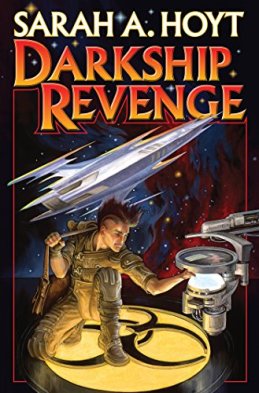
Sarah A. Hoyt

Darkship Revenge

51x643uifpl

The popular Darkship series returns!

After winning the civil war in Eden, Athena returns to her calling, collecting powerpods with her husband Kit. Now weeks away from Earth, she goes into labor. To make matters worse, a strange ship attacks Athena and Kit’s Cathouse and kidnaps Athena’s husband. That ship is called Je Reviens. It’s a named steeped in history—and not the good kind of history.

Hot on Kit’s trail, Athena discovers that you shouldn’t name a ship Je Reviens unless you intend it to return. The genetically modified Mules are back, and they have a plan to prevent themselves from being exiled ever again. And if the Mules win, the best thing humanity can hope for is slavery.

The worst is death.

While a bio-engineered plague wreaks havoc on the forces of liberty, Athena must risk herself, her husband, and her child for the survival of humanity.

The Mules may be about to find out what revenge truly is: one angry mother.

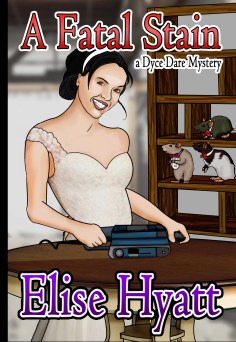
Elise Hyatt

A Fatal Stain

Daring Finds Book 3

A_Fatal_Stain

When Dyce Dare buys a table to refinish, the last thing she expects is to find a human blood stain under the amateurish finish. Whose blood is it? What happened to the person who bled on the table?
Helped and hindered by her fiance, Cas Wolfe, her friend Ben, her son E and an imaginary llama named Ccelly, Dyce must find the killer and the victim, before the killer finds her.

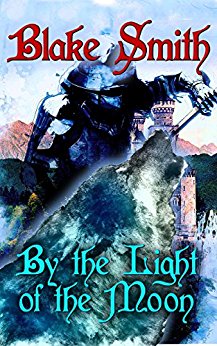
Blake Smith

By the Light of the Moon

61un6gj3cpl-_sy346_

Aatu is eighteen years old, a respectable landowner, and about to marry the girl he loves. The south coast of Finland provides everything his little village requires.

It’s a peaceful life, until a band of ex-Crusaders land on the shore. With the harsh winter and lean times approaching, they cannot be allowed to stay for long. When their priests disturb things best left alone, Aatu fears a minor annoyance will become a disaster.

Aatu’s people turn to the old ways to fight the enemy, to teeth and claws instead of swords and spears. Though they are outnumbered and unused to fighting, Aatu is about to discover that wild wolves are not the most fearsome predators in this land, and even the most peaceful people can become ferocious in defense of the ones they love.