Vignettes by Luke, Mary Catelli and ‘Nother Mike

silhouette-3120378Vignettes by Luke, Mary Catelli and ‘Nother Mike

So what’s a vignette? You might know them as flash fiction, or even just sketches. We will provide a prompt each Sunday that you can use directly (including it in your work) or just as an inspiration. You, in turn, will write about 50 words (yes, we are going for short shorts! Not even a Drabble 100 words, just half that!). Then post it! For an additional challenge, you can aim to make it exactly 50 words, if you like.

We recommend that if you have an original vignette, you post that as a new reply. If you are commenting on someone’s vignette, then post that as a reply to the vignette. Comments — this is writing practice, so comments should be aimed at helping someone be a better writer, not at crushing them. And since these are likely to be drafts, don’t jump up and down too hard on typos and grammar.

If you have questions, feel free to ask.

Your writing prompt this week is: Border

Lost in my own Mind With No Breadcrumbs – A Blast From the Past From July 2013

*This post amused me, because ALL the drama has got more so in the last –omg — 8 years. And organized fandom, cons, and increasingly trad pub mean even less than they did then. Meh. Shine on you crazy diamonds. I’ll be in my office and I’m not to be disturbed. – SAH*

One of the problems with being a writer is that you end up living way too much in your own mind.

This is fun when what you’re doing is… oh, coming up with wonderful worlds, or even horrible ones, alluring characters, or perhaps even horrible but interesting ones.

What I’m trying to tell you here is that it’s fine to let your imagination run on the page, but do not under any circumstances let it run free in your real life.

Okay, fine, so I admit that I’m the sort of person who has to control herself not to make the story of her trip to the grocery store more exciting.

Early on I realized that telling my mom how I was attacked by brigands on the way to get peanuts at the corner store was a bad idea.  If it didn’t sound realistic, I got grounded for lying.  If it sounded realistic, mom went on the war path.

So I learned not to lie.  Though I reserved the right to tell the story of the hunting for the peanuts in as thrilling a way as I could, “And then there I was in the isle, when, looking to the right, there it was: PEANUTS.  Oh, how joyous I was—” etc.

For the rest of the stuff I wrote stories.  I mean, people in general don’t expect stories to be true.  Though there was the gentleman who chided me for making up elves in my biography of Shakespeare.  (Yes, he DID mean Ill Met By Moonlight.  No, I don’t know why.)

For the rest of the stuff I still write stories.  You can sort of assume that if I’m telling something as true, it is true as far as I know, always barring errors of memory and the way the past becomes colored in our minds.  (How is it that I always remember things happening at six, eight or fourteen?  I think the Author forgot to fill in the other years.)

I do know the limits of memory and what you think happened in the sense that after about twenty years things blur a bit, in my case particularly visual details.  There are places I’m sure I knew so well they live inside me and places in my head (the places I make up) look just like them.  My grandmother’s kitchen has done the turn of fantasy palace kitchen and science fiction kitchen/cottage.  And…  And yet, would I be shocked if I could go back to it?  Would I find I’d miscounted the number of chairs?  That the cabinets were the wrong shade of blue?  And how come I can’t remember the color of the walls at all?

Memory, particularly when you’re a writer, when it softens with the passing of years, tends to make things “better stories.”  Usually it messes the timing.  Say that this is the story of how I found a ring.  (No, I don’t think I ever did.)  In real life, I might never have found who the ring belonged to.  But my mind will conflate it with the story I heard years later of the woman who threw her engagement ring away, and I’ll be sure I found out that was her wedding ring.

Not, consciously, you realize – just over the years, as they pass, the random events assemble themselves into story.

That’s fine.  It’s human.  The human mind creates stories out of random.  It’s possibly what makes us human. The ability to turn “don’t go into the forest because there’s a 20% chance you’ll fall and break your leg and no one will find you in time into “don’t go into the forest, there are rodents of unusual size and swamps of flame.”  And if you made the story good enough, the kids believed it, and nothing bad happened.

However, there is a tendency being writers to make stories out of other things.  Specifically, to make stories out of things we don’t understand.  And since most of the things we don’t understand are people, there is a tendency to make up stories about how people are behaving this way because they personally hate us… or something.

Years ago, when I took the Kris and Dean Professional Writers Workshop, they kept telling us “Try very hard not to make up stories about why publishers or editors are doing things.  THAT can kill your career because you’ll decide they hate you and act weird.”

I’ll grant you it was easy to decide all publishers hated you. If you go by once it’s a mistake, twice it’s a coincidence, three times is enemy action, all of us midlisters were under enemy fire ALL the time.

But most of the time, it was just how the system worked.  Doesn’t mean that you shouldn’t walk, when you finally could.  (Free, thank the Lord Almighty, free at last.) It just meant that your editor was not doing it on purpose.  He/she/it worked for a very large house, and if you weren’t one of the properties hotly defended you were more likely to get trampled and the book’s chances destroyed in bizarre ways than of getting off the gate with nothing bad happening.

It was almost impossible not to get paranoid, and of course my FEELINGS were often that everyone was against me, but realistically I knew mostly they didn’t remember I existed.  Sort of like the old joke “Everyone hates me.”  “Don’t be ridiculous.  Most of them don’t know you.”

But because my rational self knew that whatever the emotions, most people in NYC publishing didn’t in fact know I existed, I was very surprised when, telling an older writing friend about an editor missing an appointment with me, he teased me by saying “Oh, yes, he hates you and is trying to destroy your career.”  I guess he thought that’s what I was thinking because of how distressed I was.  I was distressed because I wasn’t absolutely sure I’d kept the appointment at the right place.  (I have no sense of direction.)  And paranoid or not, it’s not a good idea to stand up editors.  (Turns out we had each heard a different hour, and he called me and it got straightened out.)  But at the same time I wanted to say “Oh, that, no.  Thank you.  I’m not that stupid.”

At the same time, I couldn’t blame him.  I watched people go into meltdown because their editor didn’t smile at them in the elevator.  Writers and the sort of explosive emotional situation old publishing created resulted in… drama.

Since I left all publishers save the one I like and can deal with, I tend to keep from drama in my life.  The sad truth about me is that you can completely annoy me one day and I’ll forgive you in a week – not because I’m good natured but because I have a rotten memory for names. You can be a total asshat, and unless I really know you, in a week I won’t remember.

What this means is that I can be fulminatingly furious at someone in the field, but it won’t keep.  Look, I’m far more interested in what’s going on inside my head.  I can write an entire article talking about how wrong, wrong, wrong you are – not, mind you, calling YOU names, unless you have really stepped in it, which usually means you attacked me or one of mine in a personal way – but this doesn’t mean that when I meet you at Worldcon (in the once every five years I go) I’m going to cut you dead.  Chances are even if I think your politics or your favorite movie are repulsive, I find things about you to admire and even like.

Look I have friends – though they might feel otherwise about me – even among the glittery hoo-has of SFWA.  If we don’t talk about their particular issues, they can be pleasant and even interesting people.

One doesn’t condemn an entire person or forfeit an entire friendship just because our friend has one or two really stupid ideas.  If we did that, there would be no friendship and no person who passed muster – particularly among us opinionated lot.

What I mean is that I tend not to get in conflicts, and not to get involved in emotional drama, not because I’m particularly good, but because I’m really busy.  I’ve got barely enough strength for my daily life, my commitments, and my writing.  I do not have time to wonder if some friend is mad at me because I didn’t compliment her on her new sneakers, and I certainly don’t have time to be mad at you forever because you said my hair was funny.  Even when sneakers and hair are stories, or careers.

Unfortunately I’ve discovered, either because people are scared of what is happening in the field and trying to find emotional relief, or because publishers are not all consuming targets of their anger anymore, that some people have had feuds with me for years – that I was TOTALLY unaware of.

Usually the first I hear of it is when a friend of a friend says something like “I don’t want to get in the middle of your quarrel.”  Which leaves me blinking and going “Our what?” since I haven’t given this person half a thought in months.

This can be very flattering, of course.  It’s almost as good as having someone in love with you, when someone cares so much they carry on an entire quarrel without your even knowing.

But it’s a little bit crazy too.  Now, if you are in this field – or even if you aren’t, I understand this sort of thing happens in other careers too (though of course, I know as much about honest work as a duck knows about prospecting for gold) – and even in normal social life (about which I also know… yeah.  Ducks.  Gold.) – seriously, do try not to get involved in too many feuds.

I’ll admit the thing with SFWA got under my nose, like mustard, mostly because honestly, when they start going after older men for being older men, they’ve crossed lines that sheer decency would leave uncrossed.  I was mad, but it wasn’t personal.  I still am mad.  It still isn’t personal.

What I mean is, the people on the other side range from a handful of self-willed villains (or at least self-righteous harm-inflicting people) to a myriad of people who are just going along, just heard something, want to be on the side of angels.  Even when they act like loons, it doesn’t mean some of them aren’t quite decent, the sort of people I’d let catsit.

No, none of them have gone out of their way to pursue a feud with me – at least not that I’ve heard.  (Though granted, I haven’t heard much, more or less on purpose.)  I was just talking about that situation was an example, because of how insane it got and how fast, fueled by everyone’s imagination and wish to be offended.

I’m seeing that happen more and more, and the thing is, I think the reason it’s happening is that it doesn’t matter.  Someone said that disputes are hotter when the stakes are very, very small.

Right now, there is no proof that good standing in fandom, or with your professional equals means anything anymore.  A lot of the people who are buying books have never attended a con.  The local fandom can no longer affect the laydown of a book.  The author of Wool was second only to George R.R. Martin in sales, but when he attended a big con he had no one at his autograph session – because he was selling to people who don’t go to cons.

From personal experience cons have been losing importance.  Organized fandom has been losing the ability to influence sales… at the same time that not a week goes by I don’t hear of some new feud.  (Not usually involving me.)

I think it’s because, like thinking your publisher hated you was better than thinking you’d been THAT unlucky three times, thinking that people in the field are destroying you is better than thinking that you just haven’t figured out how to deal with the new conditions yet.

The problem is that when your creativity is going towards interpersonal drama, it’s not going to writing, or whatever you do for a living.  Also, it makes people outside the field think we’re nuts.  (Which might or might not matter ;) )

Do other professions experience this too?  Does it matter if someone is fighting with you if you’re not even aware of it?  What do you do about it in saner fields than SF/F?  Am I hurting myself by being unaware that some people might/might not have it in for me?  Where do people find the energy for al this?  Am I broken because my attitude is, “hate me all you want, so long as you’re not actively coming over to argue with me?”

I remember in the village women mostly spent their lives in interpersonal feuds over things like “she cut in front of me in the fish queue, so I’m going to cut in on her at the green grocers.”  Even back then, I couldn’t muster enough interest to remember who was mad at whom, and shocked people who were feuding with my family by talking to them – not out of good nature, but because I couldn’t remember.

Am I the only one with a wretched memory?  Or is it just that I channel so much inside, I couldn’t bother to remember who I was mad at?

Perhaps it costs me in sales, or friends, or something – but if I have to put that much drama into something, I want to sell it.

(Grumbles off, convinced there’s something seriously wrong with her.)

Without Law

justice-2060093


When I was little, my favorite folk hero wasn’t even from my culture — the one my region had that was somewhat similar was an out and out villain, who might have robbed from the rich to suborn the poor, but didn’t have the same streak of nobility — it was Robin Hood.

And no, I didn’t love him for the same reason the left does. They seem to think he’s some kind of Bernie Sanders in tights (pauses to try to make image go away) deciding who has earned too much (Oh, sorry, as Mr. Obama said, “made enough money”) and equalizing it with those who weren’t willing to not make that.  Or perhaps a male Occasional Cortex giving money to those unwilling to work.

What they don’t know about the middle ages…

Anyway, mostly what Robin Hood did was keep the boot of the powerful — which isn’t the same as rich, even if they often coincide — from the neck of the people barely struggling to survive. And he did it with elan and aplomb and — in the serials I read — a good deal of pulpy trickery which is the equivalent of magic.  I liked him the way I later liked the Saint (the Leslie Charteris one. Though the movie was very well done, it was not the same person.)

The reason Robin Hood needed to do that is that the king had gone on the crusades and not come back, and with him had gone the law, since in those pre-magna carta days the king was the law.

Yes, in real history there was a lot more going on there, and Richard himself was an almighty pain in the neck, as kings tend to be.

But it wasn’t who the king was in theory. In theory the king was supposed to be in charge of making sure the hereditary noblemen didn’t exploit the poor.  Sometimes it even worked in the sense that the king didn’t really want the noblemen to become so big they challenged him and that meant making side-pacts with the peasants, to keep the noblemen in check.  This De Haute en Bas strategy was used more often by the French kings, who frankly had “vassals” who had more power than them until they managed to concentrate the power in the Sun King. (Though Henri IV, with his concession that Paris was worth a mass, had started that concentration.)  There are some historians who think it was the attempt at using that strategy by the admittedly inept Louis XVI that misfired and blew up into the French Revolution.

At any rate, at least in the serials of Robin Hood, the king was the law, and the regent or the governor of Nottingham were not the law, and allowed the noblemen to run rough shod over the peasants and take their last groat for unspecified purposes.  It wasn’t so much a matter of giving people what they hadn’t earned as of giving them what they’d earned that had been expropriated by the powerful.

In real life, of course, the unjust taxes of John Lackland were to save Richard’s skanky ass from prison in the land of one of his nominal allies. Never mind that, though. This far back, it’s the symbology that matters.

As we all know Robin Hood — or at least I know, because I fell down that rabbit hole for a month and a half at one time, in all my spare time — is mostly mythical and conflating him with the time of King Richard is nonsense, as he seems to go much further back, perhaps to some mostly-forgotten Celtic myth.

Which is a great pity because I’m starting to think we need a figure like that.

Because Judges have gone insane and think they can overthrow the very law under which they were sworn.

It started to become really obvious when that moron Judge Posner decided to diss the Constitution of the United States, but now it’s gotten truly ridiculous.

Do these idiots think they’re kings by Divine right and that the law is what they say it is, so they can chop away at the very law that gave them their position?

Do they imagine by destroying the rule of law it will be the rule of them?

They wouldn’t be the first nor the last to think so. And usually the result of this is that they end up dead. Unfortunately, usually, so does their land.

Because laws are what we have instead of the word of a king and of a king protecting the less powerful from the more powerful. You chop away at that, and you leave it to the supposed, self-proclaimed elites to try to “rule” over those they presume have no power.

Oh, they think it will be all lovely and the way they wish. To the extent they already ignore the laws and engage in crony capitalism, and deplatform those they disagree with and — if you please — brag about it in the public sphere, it’s no wonder they think so.

But they could benefit from reading some history. They won’t. The truth is like Louis XVI they understand very little about people.  At least pour Louis was born to it and was trying to be the best he could, not a rapacious little know-nothing trying to grasp power he wasn’t prepared for.  And yet their fate will his his.  Oh, and the fate of many of the revolutionaries that toppled him.

The genius of the American system is that we can dispense with a king only so long as the Constitution is supreme.  As long as its respected and its rule inflexible, we have no need of a king applying some De Haute en Bas strategy just to allow us to breathe when that boot is lifted from our necks a little. In fact, the law allows high and low to cooperate, mingle and prosper together.

Which is altogether too bad, as it’s been subverted, ignored or outright prostituted for more than a hundred years. And now the idiots are trying to call it outdated.  When they aren’t outright trying to use it in the service of their unlawful intents.

Idiots? But it gives them so much power!

Sure it does. Except it never stays that way. Without a really wily king — say Louis XIV — the whole thing tends to explode, as it did in the French revolution.  And even Louis XIV, it could be said sowed the most distant seeds of that.

The only way for men to work and live together without boots on necks or, eventually, the owners of the boots adorning lampposts (and it wouldn’t be only that. Why, we can do even more high tech than the guillotine. More satisfying too.) is for the law to apply to everyone, and to be inviolate and respected.

Once there is a law for the “high” (and boy, are they. That Oxacan ditchweed must be a special crop.) and one for the low, the time when high and low grapple and the cries of aristo, aristo a la lanterne are heard throughout the land are as inevitable as Fall following summer.

Only a moron or someone blinded by utter greed to the point of foolishness would forget that.

But they’ve been forgetting.  And there’s more of them every day.

And if we don’t fight back for the law now, we’ll all be wading through blood later.

Be not afraid. Keep your principles, and your ideals in mind.  The sea is about to get rough.

But in the the end we win they lose. Because no matter how many times it sinks, civilization always rises again.

And equality before the law IS civilization.

This and That and Those

I am aware there is a last batch of books to send, and my only excuse is that January and more than half of February were a blurr of total tiredness and decongestants.

I have no idea what that bug was. Seemed to be an upper respiratory thing, but it just wouldn’t let go, and mostly it would make you feel terminally tired.  I got so scared I went to the doctor, but got told “yes, that’s what’s going around.”

And then Wedding things (I never thought the mother of the groom needed to be so involved, but there are reasons I’m not going to go into) and others took over.

The others has mostly been well… whoever has a doll of my household, stop the pins already.

My render computer hadn’t exactly been failing, but the more competent I got at rendering: i.e. the more complex, the more it would crash, hang up and just generally not finish rendering.  The resulting renders were “good enough for covers” but had a certain plasticky-feel that gave away their rendered nature.  The post work to stop that was a lot of work.

When it stopped being able to save renders, having run out of space, we decided we needed something else.  So right now we have what we call a two-computer solution.  Dan’s music computer which he hasn’t had time to use was pressed into action and upgraded with a bloody expensive video card, and I do the setup in the part of my office I use as an art studio, then go downstairs and work in Dan’s office for a few minutes to get the render going.  The results are much better and I can do effects like fog or rain, now.

Not that I’ve got much done, because we have a house guest coming on Monday and if you can’t picture what my house looks like after two months of very sick, don’t. It’s not pretty. So this week I’ve been doing stair stepping and weight lifting, only without machines.  It’s good for me, and it will get me in enough shape to hit the gym again and this time regularly.

Today I’m FINALLY going to unbox and shelve books in the library (it tells you what the last two months have been that I started assembling the library system in December and finished yesterday.  This is somewhat important, as we need to keep a place where the cats can’t get into to keep stuff for the wedding.  Mostly because the cats have been on a pissy reign of terror. For the next few months my mission, if I should choose…. Oh, what the heck, my mission, every Saturday is to tip out carpet and paint the floor with Killzee.  Four times.  This stops the peeing, which means they’re just going where they smell the pee of long-past (and not ours) cats. I suspect it starts with Euclid, who is nineteen and very senile, then goes on to Havelock who is frankly daft and thinks “oh, this is the new place to pee” and then… and then I have to deal with it.  Not this coming week, but after that. We have the material for the flooring, but we’ve realized that we’re not twenty, which frankly is a shock.  Anyway, Euclid, when we got him, had been trained on paper and fabric by an elderly owner, either on purpose or accidentally.  He once tried to destroy my office flooring by repeatedly peeing on a business card that had fallen from the corkboard (and I didn’t find and couldn’t figure out where the smell was coming from, because it was behind a desk.)  So we don’t trust him with wedding stuff TM.

Anyway, over the next year, one room at a time, we’ll get the house done. I just don’t want to have to push and do it all in a month, because that kills me, and I also don’t write at all.

Yes, the time is coming we’ll have to say goodbye to Eucles.  Right now he has some upper respiratory thing, so I need to take him in today or tomorrow.

Yesterday I thought we were opening a new episode in the drama as my car just plain stopped in the morning, but it turns out the garage that we already didn’t trust because their first go at it, the car was worse than before, also lied about replacing spark plugs.  Yeah, that. No wonder it’s been almost impossible to start the car in the cold.

At least it’s not a ton of money which is good as right now we didn’t know where it would come from.

I need to write. I need to write a lot. I’ve been, in case the tone of the posts didn’t make it clear, in somewhat of a slough of despond, mostly due to two kicks in the gut one after the other last December.

But I’m shaking out of it, most willfully.

Things I’ve learned: if I’m doing hard physical work and don’t write before I start, it just won’t happen.

If I write more than 1k words in the blog, or a complex subject, writing won’t happen.

I’m not sure what to do with this, save, now that the schedule for PJ is practically non-existent, resume my old schedule of writing four posts on Sunday afternoon.

Four posts is doable in an afternoon.  More than that and I blank.

So, here’s the thing. That leaves two days, leaving Sunday as a writing challenge.  I’m willing to take guest posts, of course, particularly from the usual suspects who have done them before.

Or I can give you excerpts of what I’m working on at the time.  It might be something of one, something of the other, as happens.

In the middle of all this I must find time to redesign this blog and do a proper website.

I have a packed schedule for this year.  Stand by.  Stuff is about to get written. And published. And again.


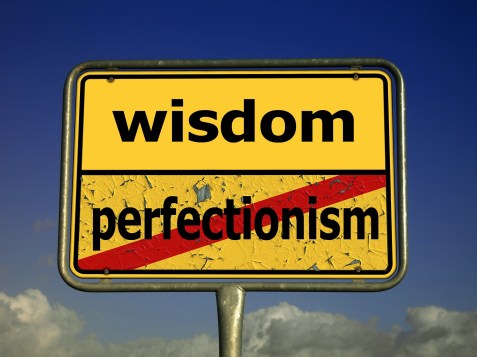
The Flaw In Flawless

wisdom-92901_1920

Perfectionism should be classified as a disability.

It has blighted more lives than autism, destroyed more potential work than brain damage, stopped more achievement than miss-education. It can devour entire civilizations, and arguably has.

I don’t know how we managed to infect both boys with it, though arguably both of us have it, and also arguably perhaps it’s genetic.  In their case it causes this weird veer between insecurity and what might come across as boastfulness: first by thinking they’re not good enough for even the simplest things, and then by overestimating their competence compared to other people when they figure out that they can in fact do some things. Then they get disabused of that and go back to insecurity.  It’s a hell of a cycle.

I solve it by being permanently trapped in insecurity.

If you’re an artist or even just a “creator” or worker: a writer, an artist, a programmer, a cook, holy heck, even a house cleaner, you know exactly what I’m talking about.

There’s this odd tendency to be more dissatisfied with our work the better we do and then to decide not to do things because, what the heck, it will never be good enough.

The way it blights lives is… interesting.  As in I’ve seen perfectionists utterly ruin themselves by doing nothing.  Oh, you want to write/create/climb your work ladder? But you look at your work and you know you’re not good enough because you can see flaws, so why even try. And then you do nothing. And then… and then you’re 65 and you’ve done nothing and achieved nothing in your life, and it’s a miracle if you came close to supporting yourself. (And the only reason you’ve done so is because you did some job you considered was menial and didn’t matter, so your perfectionism didn’t infect THAT.)

If you’re a true perfectionist, you also never had any relationships. Because even though you’re far from the ideal mate, you judge every potential by tagging up defects.  If you can’t have perfection, why bother.

The very smart are extremely susceptible to this, but everyone can fall into the trap. If you care or know enough about any field, the flaws in your own (and others) work will stand out glaringly and in relief and then you can’t do ANYTHING.

Of course, the more you practice and know the more flaws you see. And it eventually shuts you down.  I catch myself in this trap frequently to the point of being amazed when semi-pro anthos buy my work, because I’m sure it’s the worst thing ever written.  And I can shut myself down for years.  (I’m not alone, I know you know other writers with this problem.)

Which, sorry to bring up Peterson again, but he’s the only person I’ve seen who said this, if you’re by nature creative can make you mentally ill. It can turn you into a depressed zombie.  And the way through it and out of it is NOT to give up the art/work even though that feels like the only way. It makes life worse.

In fact, perfectionism kills. The fact it leaves an animated corpse behind only hides the crime.

And yes, it can kill societies.  There is an age when people can see all the flaws in society but are too young to know what the alternatives are. Also our schools are deliberately not teaching history as it really was, so it’s really hard to know that the alternatives are worse, or that no society was ever perfect, because humans aren’t and every law is a double edged sword that cuts more on the not-intended side.

Throughout most of history that age is called “adolescent” and “young adult.” But in the US it’s called democrat or — in the rest of the west — socialist or communist.

The illusion that you can create a perfect society usually empowers the worst sort of tyrant and brings about hell on Earth. For the recent hit parade see Cuba, Venezuela and soon South Africa. Though frankly it can go back further and it has claimed more than 100000000 victims in the 20th century alone.

And that’s the active perfectionism, the let’s get out on the street and kill everyone who isn’t fully onboard (or send them to camps to die) form of it.

The passive, depressed perfectionism of “I could try something but it would be worse” is the social this and social that of Europe.

For a continent that gave the world innovation (and fire and blood, but those usually are linked) for centuries, they are now reduced to a continent that tries to improve all its little flaws and ends up creating more, and sinks more and more in morass, to the point they have stopped reproducing, are a virtual 3rd age home, and are in the process of being actively invaded by a far worse (in terms of the lives of common people under it, which is the only universal criterium) culture. And think they deserve it.

The problem perfectionism can’t be solved by rational analysis. That only gives the demon of perfectionism another place to attack, this time your character. “You can’t ever be perfect, so why bother?” And deepen the depression.

The only way to get past it is to do.  Just do. Sure, it will never be perfect. The world isn’t perfect.

For a while there, don’t even try “for the best you can.”  You’re wounded, bleeding, and you don’t feel it.

One way you can tell is it infects everything even slightly creative or artisan. Hell, in the depths of this, I can’t even cook.

All you can do is create. Don’t judge it.  If you’re a self-publisher or an artist who sells your work directly, find someone relatively unbiased, or someone who was right about your work in the past, and put them in charge of saying “good enough/not good enough” before it goes for sale.  Even if you think they’re being crazy or incredibly lenient. JUST DO IT. And keep doing it.

Because perfectionism is sterile, dead, and deadly.

Human endeavor, as messy, imperfect and all thumbs as it is, it alive and nurturing. It will keep your mind alive, and the risks you take allow you to have A LIFE, instead of death in life.

Be not afraid.

Too depressed to create, work and do? Why should you be different from the rest of all the all-too-human clay.  Just do it.

Do it through the depression, the tiredness, the meaninglessness.  Do it.  You can only start from where you are now. The longer this goes on, the worse it gets. So, just start.

Does the perfectionism ever let up?  No, not really. But you get used to keeping it in its place, reduced only to spurring your growth, but not interfering with work day to day.  And sometimes looking back at something you created while half-dead with worry and self-loathing, you realize it’s ALMOST perfect and a good thing.  And sometimes people email to tell you how much it meant to them. And sometimes, sometimes, you realize you don’t suck, and it gets marginally, slightly easier.

And sometimes it comes back. A reverse. Bad sales. A truly spectacular bit of bad luck, and there it is, grinning at you with its perfect, gleaming and — you’ll realize — skull like face. And if you let it, it will kill you and destroy everything you have.

Don’t let it.  Nothing mortal is perfect. Don’t even try to make it perfect. You don’t know what is perfect either. You’re just mortal.

Give life a chance. Give yourself a chance to have a life.

Go and do. Create. Work. Do it now, do it today.  What if it sucks? What is sucking? What makes you think you know?

Be not afraid!

Don’t Jump Off That Ledge II – A Blast From The Past From June 24 2013

*I’m hearing a lot of the doom and gloom again, and heck, I’m feeling the doom and gloom myself, partly because of the shenanigans going on in my state, and because I know better than most how deep the fraud is and how hard it’s going to be to get a victory against it in 2020 no matter what. And how we might not be able to, after which if we’re lucky — and it’s still awful even if we are — all hell breaks lose. If it doesn’t, we’re going to hit Venezuela before we come up for air.
These are not pleasant thoughts, but please, please, please, be aware that in the long term it doesn’t mean we’re losing. If you expected our so called “elites” i.e. the people who want to be the boss of you to give up without a fight, you might be too optimistic o live.

Weirdly, man on man, woman on woman, on the street, the freedom-people are starting to win the culture. But we’re deeply screwed at the institutional level, and have been for a long time. It’s going to take a long time to do what my military friends would call unf*cking ourselves.  We must be in this for the long haul. Which means we must not give up and become suicidal now, when the tide is turning (for several reasons.)

If we work very hard, one way or another, our grandchildren will be free. And that’s a good enough reason not to give up.

I’ll do a more cogent post tomorrow.  Today I have SO MUCH to do, and until I can, I want this post to remind you things could be far worse. In many ways the peak of the “progressive” project was in the seventies. Thank heavens that’s past. – SAH*

Don’t Jump Off That Ledge II – A Blast From The Past From June 24 2013

At Least It’s Not The Seventies

Those of you too young to remember the seventies – looks towards the kiddy table – might not realize why this is a good thing.  Yes, I do agree with the Professor that at this point Carter is an (unattainable) best case scenario.  However, that’s politics, and politics is always several decades behind life.

Yes, I know tons of scientific advances and amazing stuff were being one in the seventies, but – either because the mass media controlled the dissemination of what it wanted to show – or (and having lived through that time I incline to the second) people really believed this bizarre stuff, a lot of odd ideas got credence in the seventies that right now only apply in highly specialized areas… like in colleges, or among the very young and the very stoned.

–          This is the dawning of the age of aquarius was semi-respectable.  No, the religious and the older people didn’t really buy into this, but “what’s your sign?” WAS a normal gambit for opening conversations.

I’m not going to discuss the relative merits of astrology, but I’m going to say when an entire civilization formed on the enlightenment principles chases after it, things have gone seriously wrong.

–          Psi power is the future.

It might be – but if it is it needs to be tamed and brought within the realm of the “studyable” (totally a word, shut up.)  It wouldn’t be the first odd knowledge to become mainstream and studied, HOWEVER – and this has been discussed ad nauseum on these pages before, both by me and the commenters when they were intent (for reasons known only to their psychiatrists) on creating a brand new magical world – the way we’ve gone about it is clearly wrong, and event he “best scientific efforts” of places like the USSR have failed to do anything.  “But Sarah,” you say.  “All the scientific advances from the USSR proved to be the ones they’d stolen, pretty much.  So their process was wrong.”  Oh, sure, as Solyndra proves top-down scientific research doesn’t work.  Also, note I’m not saying there are no psi-phenomena.  I couldn’t.  And any writer who can uses a different process.  BUT as discussed here, right now it seems to be powered by something that’s notoriously observation-shy.  This causes it to be a hot bed of trickster activity (some of it psi – read The Trickster and The Paranormal.)  But in the seventies, any number of otherwise educated people (Heinlein!) believed that a lot of our science could be profitably replaced with psi-stuff.  Even scientists believed that.  Again, maybe this is possible in the far distant future, when we tame the unobtanium that powers psi, but they thought they were in the process of doing that, and it was just around the corner.  Again, when a lot of people believe that, at our current level of knowledge of it, something has gone seriously wrong.

–          Communism is the future.

Yes, even a lot of people on the right believed this.  No, seriously, they really did.  You see, there were all those figures coming out of the USSR (like the ones coming out of China now – snort!) that said how much more efficient a controlled economy was, so of course, in the end they won.  A lot of the race on the right was to create a parallel, equally controlled but more humane system, so that in the end our system would win.  This was essentially social democracy (and sometimes Christian democracy.)  A lot of the GOP cut their teeth in this era (those older than me by a few years.)  This is why they act the way they do.  (Juan McCain, say.)  This is why their whole attitude is “the same, only slower.”

The fact they were wrong wrong wrong takes a while to percolate and might necessitate their death.  Whether we collapse before that, who knows, but at least we’re no longer there and the new generation doesn’t assume controlled is better.  Which is good because:

–          All tech is mass tech.

Even though things like Future Shock talked of micro manufacturing, no one believed it.  Now it looks likely to be the thing of the future.  Also things they didn’t know were in the future include blogs, information transfer, the ability for the individual to do more and have more power than ever before.

This makes the future horrifying, upside-down, and very much OURS.  “Ours?”  Yep, the odds, because dahlings, when the going gets weird, the weird get pro.

–          All Children Must Go Through State Indoctrination School

Yes, I know the homeschooling movement began in the seventies.  It was also mostly “unschooling” which only works if your kid is self-motivated and driven.  (I suppose in the end what I did with younger son came close to that.  He would spend the morning sprawled on my bed – it’s largest and my office is across from it – reading golden age SF, then write me essays about how the science and tech have changed, and that was a school day.  Or he lectured me on Greek Myth while we gardened, and that was a “test”.)  But now it is respectable, it’s becoming the default in some places, and there are so many resources.

-If You Don’t Want To Have Sex With Everyone, You’re Repressed &

In The Future There Is No Marriage.

Turned out those were only true in France.  Okay, only the second one.  Despite the statistics, etc, and despite the spectacular damage that the economy and the crazy fems have done on our kids’ chances of marriage, I believe we might have turned the corner.  At least there are fewer movies pushing general, forced promiscuity as the only way to be sane.

Mind you, now the feminists believe having sex with a man at all is a betrayal of the cause, but that’s something else, isn’t it?  When the most idiotic thing around is political neo- Victorianism it’s not good, but it’s considerably better than the Brave New World Assumption that you must have sex with everyone, all the time.  When THE gay cause is the securing of the benefits of marriage to same sex couples… We’ve won.  No, I know some of you don’t feel that way, but compare it to the “marriage is just a piece of paper” cause.  We’ve won.  In the future, we’re all married.  (But not to each other, en masse, because that would be icky.  Some of you don’t wear pants.)

–           UFOS

I leave it as a class exercise whether there are UFOs.  I mean, some of Puppet Masters’ is right on it, there could be real ones, in the mass of insanity.  But by the late seventies, we were getting the “UFOs are a spiritual phenomenon and these aliens tell us how to save the Earth” BS and no, really, no. Even Marxism is more rational or at least “integrated” as a religion.

–          Things Just Get Worse

I know that this is hard to believe, but it was expected then that double digit employment rates would last forever, that the economy would just get worse.  We had too many people, see, and the future was grey, starving and awful.  Again, they’re trying to resurrect that.  Don’t buy it.  It’s a lie.  (Though in most of Europe, which never had a Reagan, the 70s now look like a high point for stuff like savings and employment – not in the PIIGS though, they got tons of money from EU and…  Okay, those indicators still suck, but they do have more consumer goods.)

–          Bell bottoms, that particularly horrible brown that was everywhere.  That particularly

horrible orange that was everywhere, too.  Afro perms, even for guys.  Psychedelic wall paper. Yoko Ono.  No, this is not a “tastes cannot be disputed.”  It’s a “EWWWWW”

–          We’ve Learned

We’ve learned.  At least those of us not in the political class.  Most of these ideas bring out a half-laugh, sometimes embarrassed because we bought into them when we were very young.  Reading some of middle Heinlein does the same.  “Oh, sensitives, RAH, really?”  It’s hard to remember this was “respectable” at the time.  And though our kids are indoctrinated into Marxism, now they’re told it didn’t go right before, not that it’s the way of the bright and shiny future.  And the kids have a reckoning coming (poor things.  Unfortunately those of our kids who have been brought to reality have to go through it with them) and they will learn.  Some already are.

The most important thing we’ve learned is that communism is not our inevitable future.  And that’s enough.

Don’t jump off the ledge.  It’s not the seventies.  We’ve learned some, and the years between have proved us right and opened new tech options that are on our side.

In the end, we win, they lose.  Whoever tells you otherwise, just wants you to stop fighting.


I Am Myself Alone

dna-3598439_1920

One of the things I did a lot, growing up in a village and seeing the unending generations stretching back — some in the village, in various houses, some in the nearby cemetery — was to think about ancestry.

Oh, not in the sense of eugenics, though that too a bit, as anyone who grew up in farm country.  But in the sense of “who was here before me?”

I still think that way a lot, hence the interest in historic fiction/non fiction, and in alternate history.

As far as I can tell we live in the world in slices of time.  The world I live in is not the world my grandmother lived in.  This also worries me a little, because I am one of those who believes the soul goes on, and I’d like to see grandma some day, but I’m not sure we’ll have any points of contact left, when we meet.  Not that it matters. I could sell years of life just to sit in grandma’s kitchen and have tea out of the good cups just once more (after I was about about twelve she insisted on bringing them out for me and the good “bought” cookies too. Sometimes Ferrero Rocher chocolates, since we both had a weakness for hazelnuts.) But I also realize it’s probably like a two year old worrying about what he’ll do for a living. I think on the other side of eternity things are so different they’re unimaginable to us, here on this side.

So, concerning ourselves with this side, which we know we have, we live in slices in time.  They overlap a little, and the physical circumstances make you think it’s all the same, but it’s not.  I suspect even people who died in the mid twentieth century, were they brought forward now, would find our world hard to understand.

Anyway, when you live surrounded by the leavings of other generations: Roman mines, medieval ruins; when your walks in the woods take you into abandoned farmhouses and millhouses, it’s impossible not to think in terms of ‘where I came from’.

And when you get to meet a lot of your ancestors, either in person (we’re a long-lived family. For the much younger child of a younger child, I still got to meet one of my great grandmothers.) or in others’ stories (grandma was as close to her grandma as I was to mine, and apparently the chain goes on, ad infinitum, and so do the stories.  It took me some time to realize stories of the napoleonic wars weren’t her grandmother’s but probably her granmother’s grandmother’s, though making sure of that would necessitate actually doing genealogy and I can’t be bothered.

But there was also talk about people in the village that went back generations.  How do I put this?  My mom’s grandmother for good and sufficient reason took off for Brazil with her husband’s best friend.  Not only were all her daughters carefully studied for evidence of flightiness, but her granddaughters had to prove they were extremely pious and well behaved (yeah, mom failed that so badly. I’m a pale copy compared to mom. Mom … well, mom is mom. And if G-d in his infinite wisdom hadn’t had her be born a girl in poverty in Portugal, she’d probably be supreme leader of the world by now) or they were tarred with their grandmother’s offense.  In fact the only reason I wasn’t (and I probably was a little. Only that explains the village thinking my geeky, solitary self was juggling foreign boyfriends and local ones too) is because mom moved to dad’s village, and I wasn’t in her neighborhood to be pointed out as “so and so’s granddaughter.”  It helps too that unlike mom’s family which tends to the small and lythe (at least until middle age) I took after dad’s family, which tend to be tall, ungainly and of elephantine proportions. So I was more Almeida than anything else.  Bookish, depressive, large, with a gift for words and just enough of mom’s nervous creative energy to run me into writing for good or ill.

You see that above? I thought of people in terms of heredity.  Not unbreakable heredity as the crazy eugenicists, no. Just heredity. Because mom’s family (not unusual for their genetic origin) throws out both morons and geniuses (though I think the morons were nutritional or probably disease. But I might be wrong.) And dad’s hovers from normal to genius and back again to normal and I’m not sure why.  And let’s not forget the village family that was low-normal (at best) until the farmer’s daughter met the proverbial city slicker.  Her child was a prodigy.  Was it his father?  No one remembered him as that brilliant.  Sometimes thing meet and spark in a different way. Genes, most of all. Hybrid vigor and all that.

I also grew up with a sneering disdain for the entire idea of races as separate entities, because even in the village I’d seen people who married black people from the colonies, and three generations later you couldn’t tell, and in three more it would be forgotten.

Recently I was shocked to find that your great grandkids might be only marginally related to you.  Two percent or so, at a level that is barely above other people in highly genetically connected regions, like the one I came from.  And my 23 and me report at the fourth level includes a lot of English, French and German people who aren’t aware of and don’t test for any Portuguese/Iberian ancestry. (Sure, ggggggggdaddy was a traveling man. Probably. Whoever the sod was. Like I know.)

It shocked me, because, as I said, in the village you thought in families.  In fact, if the village still existed and hadn’t long since been subsumed into a suburb of Porto, overwhelmed with stack a prol apartments filled with “foreigners” (anyone from more than ten miles away) my kids could walk down the main street without introduction or explanation and be pointed to the family houses because “they’re Almeida right enough.” (Curiously, other than being a lot taller, they also have the same characteristics as my husband’s family.  Since he recently got 2% Portuguese on his 23 and me test, I’m waiting for the other shoe to drop and determinedly staying out of “your relatives” page. Because. Look, that’s the other thing you know, growing up in a village.  Everyone is cousins, it’s the degree that matters.)

Of course, your descendants can also have a lot more of your DNA.  The shuffle is kind of random, and we’re in the early days of figuring out what is what, and where heredity fits in.

All this to say that it doesn’t matter.

Because, you know what? Even if you’re as close to an ancestor as to be them come again (sometimes with a sex change.  If older son hadn’t been born while grandma was still alive, and got to meet her, I’d be a convert to the idea of reincarnation.  In the same way, my younger son is as much my dad as someone can be while being a different person. If he’s seen dad for more than a cumulative two months (maybe) over his lifetime, I’d say he’d just modeled himself on dad. As is, nothing explains it except very odd genetics.) you live in a very different world.

Perhaps the world is more different for my kids and my parents than it would be normal, because immigration came in in the middle, as well as tech innovation.  Maybe.  But I think my world is that much different than grandma’s, and always was even before I came here. Look, grandma had gone to the city 20 minutes away by train a total of five or six times by the time I was in my teens.  And I lived there except for sleeping. Yes, she read a lot, but it in her day it was “books suitable for young ladies” not the kind of thing I read… No judgement, just completely different.

So, even allowing heredity a lot of influence, even in the fifty some years between grandma’s birth and mine, the world had changed a lot.  And the way it changed allowed me a range of options (college!) a village girl of grandma’s time never had.  It closed others too, by societal disapproval.  My parents would have been rather miffed if I had the grades for college prep and chose to marry in the village and work with my hands.

Our starting ideas, our options, the food we ate, everything we learned at that age before we’re fully conscious of learning, was different. Even if you grant the exact same innate interests and abilities (I don’t, I knew grandma. We were similar, but not anywhere near the same) the result would be very different.  And not just in opinion but in impulse and the basic way of processing the world. (I got a good dose of mom’s temper.)

Which means, while I was very aware of my ancestors, and it amused me to find a resemblance in a portrait, or to be told I was just like paternal grandad’s mom (not the flighty one, the terrifying one, who could knit an entire sweater in an evening and kept her daughters in law in fear and awe)  I knew whatever characteristics of her I had, I wasn’t her.  She was in the cemetery, in a very handsome family tomb, before I was even a gleam in daddy’s eye.

So.  Reparations.

There is no doubt, if you read history, that people in the past treated other people very badly.  We still do, too, but I guess it’s much more awful when society is not quite so affluent and when being on the bottom can mean starving to death.  It is impossible to read history, particularly primary sources, and not to be horrified.

But part of that is that we’re imposing our values on the past. Look, history is looked at backwards, while we live forward.  Take slavery (I don’t want it.)  Yes, it was a horrible institution. It was also pervasive in human history, and as far as we can tell pre-history, world without end. Hell, still is in well, considerably less of the world than it was, but in Africa it’s pretty much still a thing, and not just in Arab countries.

Romans had complex rules to deal with it, and lived in fear of slave revolts.

It required mental gymnastics, because it was obvious to anyone that slaves were as human as their masters, and so a complex set of rules and philosophical separations were instituted and once any idea of the equality of man (or that man ought to be equal before the law (and G-d) the whole thing was doomed, sooner or later.

Americans tend to have a bizarre idea that slavery was always by race. I blame public school. I don’t know if it’s deliberately obscured, to emphasize the specialness of racial victimhood, or just because race and slavery are so associated in American history that it overshadows everything else. (Yes, again, is it malice or stupidity? Perhaps we should formulate an axiom that sufficiently advanced stupidity is indistinguishable from malice.)

Men and women of all colors were enslaved throughout history.  Heck, in the peninsula, in the long centuries in which it was a frontier between Christian and Moor, the slaving went on both ways.  One of my favorite medieval “songs” starts with “To war, to war oh moors, I want a Christian slave.”  The person speaking is a Christian “queen” married to a moorish “king” (whatever that meant at the time) who doesn’t trust her moorish slaves not to poison her, and so wants a Christian slave.  (Yes, the story goes on to have her sister be captured and enslaved. Never mind.)

Roman slaves were often blond, and the citizens often of African origin. But even there, it wasn’t tied to race. (Though celts were apparently in general fairly cheap, from what I can figure.)

So. All of us have slave ancestors. ALL OF US.  All of us have slave owners in our ancestry.

Even in the US — though rare — there were black slave owners.  And if you’re going to parse quadroons and octaroons who might very well be slaves, you’re going to assume race is one-drop but only for non-white races.

Again, reparations.  In the twentieth century. For evils done to people who looked vaguely like people alive today and who might or might not be their ancestors.

No? Then what? Are we going to institute a policy that everyone has to prove they have a slave ancestor? No, not every black person in the US does. Obama, for instance, mostly has slave owners in his ancestry (probably having nothing to do with his attraction to Marxism, but permit me an amused smirk.)

And there were a lot of black immigrants, too, in the last almost century. Who had no slave ancestors in the US.

Only the left who thinks in tribes (because it’s easier to make tribes into client groups, than to make individuals into serfs) could think “reparations” makes any sense.

Do black people in America as a whole suffer from the after-effects of slavery?

What? Compared to what and to whom?

Only a philosophy who thinks of people as widgets can think it’s possible for everyone to start out tabula rasa and that those of us who aren’t VISIBLY minority (well, I read minority, but that’s a whole other story having to do with the government breaking people into categories) have some kind of advantage at the get go.

We’re all individuals. What advantage did I have coming in, away from family, friends and all possible connections and at a time it was a pain to even get my education certified? Or for that matter, what advantage did I have, when most people have truly bizarre ideas about Portugal, (including but not limited to thinking it’s a country in South America.)

What advantage did my husband have, setting out into math and computer programing? His parents were not particularly interested in any of his interests. He had no head start.

Sure, a lot of people do start out ahead, with inheritance, but weirdly that doesn’t tend to help in the long run (Heinlein’s dictum about making your children’s life too easy would seem to apply.) And a lot of people start out with nothing and either climb, or more likely, stay at nothing.

None of which, in this year of our Lord 2019 seems to have anything to do with the color of your skin, or at least not in America.

If reparations made any sense, as in compensating you for the psychological wounds done to your ancestors that still hamper your progress/ability to thrive (okay, it’s unlikely but possible. Families as well as countries have cultures, and it influences you very early on) how far would they have to go. Does the baneful influence of past enslaving/oppression vanish? when does it vanish? How many generations? Should I demand the people who happen to live in Rome compensate me for some long-distant enslaved Celtic or Greek ancestor?  No? How about I present a bill to Saudi Arabia for the enslaving of my ancestors? Do people now living in Portugal but descended from slaves get to present me a bill for the enslaving of their ancestors, presuming one of my ancestors was a slaver captain (maybe. I don’t know of any, and we weren’t at the societal level where we’d have a lot of slaves. But according to some accounts of 18th century Portugal even beggars had slaves), or do I get to present some other Portuguese people the bill for presumed slave ancestors?

Or how about, given the mating habits of slave owners, just pass money from one pocket to the other and pat ourselves on the back?

It is time we say enough is enough. Yes, America as founded had slavery. Yes, it was an awful thing.  Yes, people bled and died to end the institution.  Are we going to let the guilt mongers destroy the best thing on Earth in the name of that long ago — and expiated — sin?

Or are we going to tell them shove it, and take a long walk off a short pier?

Black, white, yellow and possibly pink pokadotted, Americans are Americans. Isn’t it enough to stop all the crazy obsession with race and the past, and instead now — at least four generations after anyone was enslaved — look at people as people? How about we yes admit that the past had horrible things in it, but also consider so does the present. We’re all human and tainted by the fact that we’re living forward and we can’t see injustices the future might find glaring.

Instead of standing in judgement of our ancestors, let’s absolve them. They were just human, doing the best they could. Sure, some were outright villains, but they’re gone now.

Our sins are ours alone, and we can only account for those.

What sense does it make to hold people whose ancestors weren’t even here back at that time for the sins of other people who looked vaguely like them? Or to consider people perpetual victims because they look like people who were victimized in the past.

I will gladly pay reparations to any slave I’ve ever owned.

I will demand no reparations for things done to my ancestors who were not me.  And while I feel great sympathy for the great grandmother who took off for Brazil (her husband was a loon and inordinately fond of axes and menacing) I am not her. Her oppression and the terrible decision she made were not mine.  All she contributed to me, besides a little bit of genetic material at the maybe 4th cousin level, is she might have given the village reason to get really creative with gossip about me.  Which in the end harmed me not at all and provided some minutes of amusement every time it was brought up.

I am not my ancestors. Nor are you.  Ancestral guilt is a lie used by would-be rulers to keep the serfs in line. It is they who ought to feel ashamed and guilty of trying to bind free men and women with the shackles of heredity, of a past they had no say upon, of a skin color they did not choose.

They, these would be masters of our fate, are in fact the same old evil in a new shiny package. (And again, it’s probably just coincidence that so many are descended of slave owners, but I’m allowed to smirk.)

We owe them nothing, except a “Leave me alone.”  Nothing. They have no power over any of us, whatever our skin color.

We are Americans and therefore inheritors to freedom.  They can take all those shackles and shove them where the sun don’t shine.

The shackles don’t fit. They never will.

Vignettes by Luke, Mary Catelli and ‘Nother Mike

write-3994024_1920

Vignettes by Luke, Mary Catelli and ‘Nother Mike
So what’s a vignette? You might know them as flash fiction, or even just sketches. We will provide a prompt each Sunday that you can use directly (including it in your work) or just as an inspiration. You, in turn, will write about 50 words (yes, we are going for short shorts! Not even a Drabble 100 words, just half that!). Then post it! For an additional challenge, you can aim to make it exactly 50 words, if you like.

We recommend that if you have an original vignette, you post that as a new reply. If you are commenting on someone’s vignette, then post that as a reply to the vignette. Comments — this is writing practice, so comments should be aimed at helping someone be a better writer, not at crushing them. And since these are likely to be drafts, don’t jump up and down too hard on typos and grammar.

If you have questions, feel free to ask.

Your writing prompt this week is: position

Out of Time

steam-3160715_1920


The most shocking thing my — admittedly very odd — sons ever told my brother was that the Beatles weren’t all that.  Imagine supercilious teens saying “oh, they were all right, I suppose.”

This tied in with something we were talking about here yesterday.  The internet, while seemingly innocuous and unobtrusive has changed our lives at such a fundamental level that even those of us who grew up through the shift don’t fully understand how different things are now.  particularly for writers.

There is one well established author, for instance, whom I found myself fuming at because instead of simply looking up archaic forms of common names for her supposedly “alive since the middle ages” characters, just sort of made modern names sound old timey.

Now, I had some reason to fume, because even pre-internet I knew how to find this. But then I was trained in linguistics and my mind contained concepts like “find a book with archaic forms and tracing of given names.” Also, given the erratic nature of book supply and demand in the 80s, I was probably just immensely lucky to find THAT book in a used bookstore near home.

Which probably means that she wasn’t as sloppy as I thought.

But for people younger than me, this is a really difficult concept.

Can I see my sons listening to the Beatles and going “Yeah, that’s okay.”  Sure. I mean, how do you take what the band did away from “but they were the first to do it this way” and/or “Oh, but I remember listening to ‘I wanna hold your hand’ while holding hands with my first crush.”  For some people, they’ll always be very special. but not for everyone.

In the same way, I ADORED McCaffrey’s Pern when it first came out.  I read the books as soon as they were released.  Then — well, kids, life — I wandered away from them for a while.  Now a lot of my audio buying are what I call “nostalgia trips.”  Books I read as a young woman, or books that meant a lot to me get an edge of newness by being experienced for the first time in audio.  So I bought Pern.  I couldn’t.  I think I listened to half the first book before giving up.

There is absolutely NOTHING wrong with the books, and I know that intellectually.  The problem is that so many people (mostly meh fantasy) have imitated her style and plots, and taken some of the vocabulary that me-now keeps thinking “oh, this is so derivative.” Even if I know it isn’t. The books are just victims of their massive success.

So, what does any of this mean?

Nothing, really.  We’re all now competing in a “all time” market.  Pixels on screen don’t show their age.  I find it interesting that I’m discovering some classic mysteries, and I don’t know if I’m reading books written in the era compared to books written now set in the era.

The only way I’ve found to distinguish is when a description trips me.  You see, writers writing in the era didn’t describe some things that sound odd to present day readers.  I no longer remember which series, but one of the ones I was reading tripped me with the assumption that OF COURSE a car was open, except for a windshield. Went to check, and it was written in the 20s (I THINK.)

Of course, the author at the time couldn’t say “and this car didn’t have a roof” even if he/she had been a clairvoyant because people at the time would think he/she was zany.  It would be like us writing, say “and the suit fabric didn’t have adjustments to keep the ideal temperature.” Or “and the wall didn’t have treatment to repeal dirt.”  People reading it now would go “what in heck world do you come from, buddy, that you need to tell us that.”

All this taken into account, how should a writer write to avoid this dread curse?  Meh.  Write the way you were going to, anyway.

I have this theory that in the fullness of time all the “sounds like Pern” books will be forgotten and McCaffrey’s work will again sound new, shiny and special to new generations.  I think Pern will endure (as far as it’s possible for us to predict what our great great great grands will like. I mean, maybe Chuck Tingle is writing for the ages.)

There is that too, you know, the amnesia of each new generation, or even a new market.  My brother was very mad at me when Harry Potter came out because “you could have written that.”

He was right to an extent. I could have written SOMETHING like that.  (What he missed is that there was no guarantee wit would go that big, because book marketing is as much a feature of luck and timing and the author catching the publisher’s eye as anything else.)

I grew up reading British Boarding School YAs. (Pratchett lampoons some of the stereotypical characters brilliantly in Pyramids.)  And I write fantasy.  Mashing the two was a concept I didn’t even think about because it was so OBVIOUS. And I assumed they would be obvious to everyone else, missing the fact that even when I was a kid these books were already passe and old fashioned and that for Americans they were completely innovative.

Note I’m not saying “I could have been Rowling.”  Even if I’d written books with that inspiration (and I probably wouldn’t have. I don’t write YA very easily) it is highly doubtful my execution would have been as appealing as hers.  My brother has the layman’s belief that the important thing about books is the idea.  Pros know it’s the execution.  I’m just illustrating the fact that everything old is new again, to a new generation or people far far away.

So, if you’re a writer, write whatever you want.  In the end, with a little bit of luck, cream will rise.  And heck, even not-cream can make a lot of money if it hits just right.  If you want immortal fame, otoh, that I can’t help with.  It’s all a matter of guessing what the future will like, which is even harder than predicting what the future will BE.

And if you’re a reader… exercise a little charity.  No one is asking you to suffer through a book you’re not enjoying. But keep in mind that sloppy author might not be so much sloppy as from a time far far away when information was more difficult to come by.


Changing Gears

human-192607_1920

You know, I’m always surprised when I talk to anyone about how things have changed in the last 20 to 30 years and get something like “sure, we have computers, but that doesn’t make a big difference. It’s not like the introduction of the automobile, or flight.  Now if we had flying cars…”  It happens every time we’re talking about how technology has changed life, and yet it still puzzles me, because it’s a form of willful blindness.

I yield to no one in my disappointment that there are no flying cars, honeymoons on the moon, or even the long-sleep, Heinlein style.  Because yeah, that future would be shiny.

But in terms of the actual change, except perhaps for long sleep, I want to submit to you what is happening is as significant as the invention and widespread use of the automobile.  It’s just less… visible.

On the other hand it touches more intimate forms of the human life. In a way it touches everything, permeates everything, changes the way we think, live, experience relationships, or even have fun.

Cars? Sure, they changed how fast people could get somewhere, and how much work it took to keep your means of transportation (even permanently cranky cars don’t need to be fed or have their stalls mucked out every day [makes note for biological car stories.]) More people have cars than ever could keep a horse and carriage.  It made it possible for dating young people to get away from their families, and thus changed our dating and relationships (sociologists say. I think they’re full of flies. Same change happened at the same time in Portugal where no one had automobiles. I think it comes from other sources.)  The fact that it made distances shorter (in time to get there) also changed the character of manufacturing, which could now serve a greater area. Also, by allowing young people to range a greater distance around, it made the concept of moving for work or just because you want to more plausible.

In fact, as the only person here (I think) raised in a pre-automobile frame of mind (yes, there were trains and buses, but trains have been around a long time) I’m probably the only person who realizes how much cars, highways and ubiquitous driving changed our perception of the possible.

Before people think of doing something, that thing must be so obvious in their minds as to be in the realm of possibility.  All of us have things we know are perfectly possible, but which would never occur to us in every day life.  Usually because of money.  Say, Dan and I have some time off coming up (maybe in the end of the year), we can think “hey, we have a few days off, what will we do?”

Things occur to us that wouldn’t occur to my parents (who might think of driving or in the old days taking the bus to the beach all of 10 miles away.  And the fact I didn’t grow up on the seaside, and only went there for a month a year, and it was a major endeavor tells you how different things were.)  Like for instance we might think of going to our favorite hotel in downtown Denver and hitting all the museums.  Or we might think of staying at home and hitting various interesting exhibits all around a 200 mile range.

That 200 mile range still, for my parents, requires major planning and is considered a great endeavor, not something you’ll do every day.

Because they didn’t grow up with cars.

On the other hand, it would never occur to Dan and I in those circumstances to go “Hey, we could fly to–” mostly because we haven’t had that kind of money most time in our marriage. Even if it were possible now (it isn’t, but we have great hopes in one or two days) it’s not in the range of things we think about, unless someone reminds us/tells us.

In the same way moving out of your area (say the nearest 10 miles) didn’t use to be a thing.  People wouldn’t even think about it.  Trust me, growing up we knew that them foreigners five miles away lived in unspeakable ways, and who wants to live near them.

Automobiles and jaunts of 50 miles or so, made it possible for people to think of living elsewhere, and to know that over the hill the people are probably not unspeakable barbarians.

Some of that change is for the better, some for the worse and some is just change.  And even the better and worse is impossible to fully correlate until probably a century from now.  Because humans live in a world of unintended consequences.

So, what has changed in the last 20 to 30 years?  Sure, everyone has personal computers, but mostly we just use them as glorified typewriters and phones, right?

Ah, you sweet summer child.

Sure, mostly I use my computer as a glorified typewriter.  In fact, if you look up “uses computer like glorified typewriter” I believe they have a picture of me.

But even I…

Look, I usually start my day by checking in with my assistant… who lives in another state, in another city.

Depending on what I’m doing that day, I might also check in with a couple of friends who either want me to do something for them or want to work on something together.  One of those friends lives on the other side of the world, in Australia.  During possibly the worst time in my career (well, mostly because it was the first really bad time. After a while it only hurts when you laugh) that friend was one of the people who kept me going/kept me sane.  We’ve met three times in real life, but we are close friends.

That’s very personal and right there, and it has good and bad consequences.  I have a large, distributed and frankly loud circle on line. It’s easy to forget that I mostly worked locked in my office and see no one.

On the one hand having friends is better than not and the internet allows Odds and people in weird professions to have a circle “of their peers” perhaps for the first time in human history.  On the other hand, the monkey brain interprets not seeing people in the flesh as “we’re all alone. Our band cast us off, and we’re going to die.” So you’ll get very depressed and have NO idea it’s because you need to see people, interact with people, and let the monkey brain know everything is okay.  I need to consciously keep track of it, or I start spiraling into despondency and don’t even know why.

Next up, it’s changed the way we learn and work.

No, really. This was just starting up when I was homeschooling younger son (for a year) and even then it was really useful to be able to buy him a Latin course and a Greek course.  I took them along with him. I could never teach it.

Now I understand the options are infinite.

I realized how much this changes things, in the personal sphere, when I fixed my vacuum last year after looking the problem up on line, then watching a few youtube videos on fixing it.

From how to install wood floor to how to solve highly abstract problem, there’s a video that teaches it. Or various videos and wars over the best method.

Even in little things, like where to grab dinner, our old method of going through the yellow pages is vastly inferior to just hitting the net.  When we moved here, we used to work till  8 pm unboxing things, and then we had to figure out where to eat that was still open.  In a suburb, this is harder than it seems, and without the net, we’d probably have wandered around getting hungry and angry.

But it goes beyond that.  I have a bunch of friends who work remotely.  Which means the “gig economy” both good and bad is accessible to a wide range of people who before would need to contract and work in their employers building.

This is good and bad.  The good part is that all sorts of people whose options would otherwise be limited: people who can’t drive for some reasons, mothers of small children, the disabled, etc. can now have jobs remotely.

The gig part is good and bad, though I’ll note there are also several traditional jobs now, where you work most of the time remotely.  And “gig” doesn’t mean long down times provided you have a wide set of in-demand skills.

The real downside is that this opens our job market to the world.

Now, I understand in true third world countries most of the workers, even educated ones, won’t be as reliable, so not as desirable as Americans.  To an extent.  Because when you can pay someone in Elbownia $2 an hour and for the same skill you pay people in the US $50, how much better do Americans have to be to earn that? (The weird thing is they often are.)

But the ramifications from this will shake the world in the next century.  How? I don’t know.

Property values will change. How? I don’t know.  I know people that think cities will disappear. I don’t think so.  in fact, the drive towards more remote working has come with growth of cities.  Honestly, this doesn’t surprise me, because I’ve worked from home a long time. I can see if I worked in an office every day I would prefer a more remote location to live in. It would be more restful.  But that monkey brain thing?  Frankly where we live now, and my eyes being still too weird for me to drive, we live TOO remotely.  I can’t be sure of seeing someone I’m not related to in about a mile (the neighbors don’t walk much.)  We’ve lived in downtown areas most of our life, because I could go out the door, walk around the block and see enough people to appease that “must see human beings.” drive.  Also, if you work at home all the time, your entertainment moves outside the home. You want to be able to go out to eat, or to a museum, or a park, or whatever you do.  So…. will cities shrink or grow? I don’t know.

Will people move to more remote and cheaper cities, though? since they can telecommute to the big city and get the bigger salaries?  Probably. Some of them.

What about countries? Would we, for instance, consider buying a farm in Portugal and working remotely, so that our money went much further?

Well, no. Mostly because I know Portugal. Looking over the blogs of American expatriates in Portugal, I went “duh”.  Yes, it’s cheap, but you’ll have to work with a bunch of things that, like hiring dirt cheap labor in another country, might not be fully compensated for by the lower cost.  In Portugal’s case (and I’m not picking on Portugal. It’s just the place I know really well) the things that usually drive expatriates screaming back home are: insularity — you can move to a village there, but you’ll never be fully accepted except as a curiosity — unpredictable services like electricity and water or disaster preparation/mitigation; medical care; ability to get products and things we’ve come to expect in the US.

Will all this stuff equalize in time? Will the cost of living in the developed countries come down, other countries come up, and will — in general — the world become more unified in lifestyle and abilities.  Will it — say in my grandkids time — be trivial to say “We’ve been looking for houses, and we think instead of California, we’re buying a house in Sri Lanka?”

Possible.  Maybe even probable.  Though I don’t know that I buy it in that short a time.

But “the poor will always be with us” also applies to countries. There will always be a cheaper place to hire workers from.  This means the workforce and get very weird, very insecure.

Is this good or bad? I think in the longer term good.  Getting there, though, is going to be nothing short of horrendous.

And then there is my very specialized area, where I work and where I study and where I also amuse myself.

This morning Dan and I were talking about how the way we watch TV series, or read has changed drastically.

I like to look at these things every few months, because figuring all the details of how our experience has changed helps me figure out how to market.

One of the obvious things is the ability to “binge” be it in a tv series or a book series.

In fact, we’ve changed almost entirely to binge-watching.  I was always a binge-reader, but now more people are, and that changes things too.

Binge watching: for the last two/three months, we’ve been watching Midsommer Murders.  Not every night, because we often can’t take the night out. On the other hand on a lazy Friday or Saturday night, we might watch two or three episodes.

Why? why not pick a different series every day of the week? Because there’s comfort in a series, and it’s easier to go to a place you “know.”

How does that change things? Well, obviously we privilege long-running series. There are a lot of British mysteries, but most of them have one or two seasons. This doesn’t allow us to settle in for the long run.

It’s much the same with books. Every indie will tell you you need to bring the books out close together and you only start making real money after ten in a series.

Note that traditional still hasn’t realized this, and are continuing their old game of one or two books — or at most three — and you’re out.  And they don’t understand why their bottom is falling out. They also haven’t realized that bringing books out more than six months (and that’s pushing it) apart is a killing blow unless you’re going to promote the writer to a fare-thee-well.  Why? Because readers have a lot more options, and with the best will in the world, they’re not going to be aware when your next book comes out, or they’re going to be riding off on something else by then.  Traditional simply isn’t made to cope with this, which is why they look much like the dinosaurs staring at the asteroid and unable to figure out what to do.

Which means I need to re-learn the way I used to be and write faster.  Not as easy as it seems, after 20 years of being trained to one book a year.

As a reader, though, indie has changed my life even more.  I almost don’t re-read, unless you’re really an extraordinary favorite. I have too many options for new books. And instead of having five or six authors I check obsessively to see if anything new is out, I usually search by name until I find, yeah, a series. Then plunge into that series for a week and move on.  I might come back, but unless you hit really high on my personal tastes, I’m not going to personally look for you. Too many other options.  I’m more likely to look at a suggestion and go “oh, I like that series. Let’s see the new one.”

There are other things.  You know the trick many long-running authors got away with in trad, of writing essentially the same book?  Yeah. It doesn’t work so well when I’m binge-reading.  By book three I’m going “oh, good lord. I’m bored. Let’s find something else.”

The other thing — and I really need better and more detailed story bibles — is that glaring inconsistencies between books are more visible when binge reading.

In my field, things are in wild flux. The one time I was legitimately approached by a real movie company, it was on my facebook PM.  Used to be you had to have agents for them to find you. Now? Meh, they’ll figure it out.

But I bet they’re in as much turmoil everywhere.  I know some things like online shopping and ‘just in time’ supplies are changing everything down to every day retail.

What does it all mean? I don’t know.  I know that the revolution of instant worldwide communication and of private access to the public sphere (you don’t need to work for a newspaper to be read by thousands of people) is not done with us.

It’s more invisible a change than the automobile, but it might very well be more pervasive and more fundamental.

I won’t see the end of its second, third and tenth order effects. My grandkids might not.

We’re also all jumpy, because this is a very large, very unpredictable, and in historic terms very fast change.

It’s like walking through wild terrain that changes constantly.

Keep your eyes open. Only by being aware of how things change can you find your way.