Your Envy is Not a Super Power

porcelain-644780_1920

My friend Charlie Martin shared this link on facebook, (the link is not facebook) as he often does with cool/old images.

I clicked through both because I also like cool/old images, and because I was waiting for dinner to finish cooking, and didn’t want to start something like an article in the fifteen minutes I had.

And then I hit the comments.  Yeah, I know, never hit the comments.

I want to talk in this post (there’s another one about this pictures tomorrow) about how ridiculous the commenters striking blows for equality or race equality or whatever the hell they thought they were doing were.

Sure, I know, there was a ton more inequality in the early 20th century (which btw, should tell you how much we actually need the government to intervene to create “equality.”  The equalization has been through prosperity which mostly happens when the government leaves people alone) because the industrial revolution was just gathering steam around the world, and therefore prosperity wasn’t as widespread.

I.e. people lived better than their ancestors, just not nearly as well as us.  And the people who were at the forefront of investing/taking risks, were often obscenely rich by the standards of their time.  Just keep in mind that all their wealth couldn’t buy them the air conditioning, entertainment or modern medicine available to our “poor” today.

Some of the people in these pictures were singled out as “victims” by the Marxists in the comments, which of course know a lot of things that just ain’t so, and are terribly proud of themselves for parroting them.

One of the pictures for instance is of an Irish woman identified as “mother of seven” knotting fringe for shawls.  There are holes in her dress, so of course, I expected the Marxists to strike at that. They sort of did, but just by saying she should repair her own dress.  You know, people should be required to run SOMETHING even if just a lemonade stand for profit before the age of 18. Understanding that profit doesn’t come from mending your own dress in your scant time might be salutary.

But I’d forgotten — silly me — that in the course of my adult lifetime, the Marxists have moved on from making every “working class” person a victim to carving victims out of various genders and races.

For instance, it’s a terrible thing that the woman is only identified as “Mother of Seven” and not by name.

Because, you know, these many years later, knowing her name is really important.  And not that she was a stranger to the photographer, and that her labor was ennobled by her working for her seven children. I.e. if you asked her, she’d likely rather — proudly — be known as mother of seven (by which I presume they meant seven living children, which spoke to both her genes and her abilities as a housewife and mother) than by her name, which again would mean bloody nothing to any of us.

Note that the idiots don’t know this is how paintings were titled. I.e. unless they were portraits of someone known to the painter and probably paying for the portrait, they got called either after the myth they represented or by the generic description of the subject.  “Poor man” “beggars at the door of the church” is in line with “mother of seven.”

Also they don’t understand how valued motherhood was. Also, oh, what the heck.  To them the long-dead woman should be retroactively empowered by us demanding that she have her name. Because they’re provincial, blinkered and stupid, and their view of the world was shaped by being taught a poisonous philosophy dreamed up by an envious little man who never worked a day in his life.

Then there was the picture of the photographer’s wife on a camel.  The photographer named the picture “Else on Camel.”  The outraged armies of outrageousness were furious because he didn’t name the camel drivers (and why not the camels, too. Does PETA know of your slight?) in the picture.

And someone else, superciliously came and explained it was okay because in the early twentieth century all these people were considered little more than savages.

Yeah. They were. That’s because they came from countries where the culture made them into little more (and sometimes little less) than savages. Many of those countries are still populated by savages, by any objective, civilized standard.

The sad part is that our country too is filled with educated savages, who think that because people can tan, or have fiddly bits of the inny variety they should be given all deference, even if there’s objectively no reason for it.

We’ve allowed our children to be educated by loons who think that tribalism (that old foe of mankind) is a good thing, and that what we need is more victim tribes until everyone is — by the magic of intersectionalism — compensated to the exact degree that people who looked vaguely like them were once victimized.

Let’s leave aside the fact that the subject of the picture is the photographer’s wife, and that adding the eight or nine names to it would make the art piece (which color photographs very much were. Rare too.) less valuable and more confusing to refer to/sell.

What these ridiculous provincials don’t realize is that the camel drovers might not have wanted to give their names to complete strangers.  Or that they wouldn’t feel slighted by their name not being in the pictures. Why should they?  Do these idiots think the camel drovers logged onto facebook later and were pissed at not being tagged?

The chances of them ever seeing that photograph was nil, and burdening the picture with a never-ending name would only hurt it/its popularity.

But more importantly, at the base of it, these insane idiots think that these drovers and their descendants need their exceedingly woke selves to come and de-victimize them or elevate them, or something.

Their assumption of superiority and their cultural-colonist attitude is so complete they don’t realize that the Arabs of the time — looked down onto or not  by the Europeans — considered themselves immensely superior to the Europeans.  In fact, so did every little tribe in Africa.  The Maasai (admittedly not a a little tribe) word for “European” is “Confines their farts with clothes.” (Or at least one of the words. I came across it in an article written by a Maasai.  Entirely possible he was pulling our legs. Because people that the left feels they need to white-knight for often do pull the legs of idiot Europeans.)

I grew up in Portugal when the rest o Europe considered it somewhat of a third world hellhole (it wasn’t, but it wasn’t very far off) and none of us felt beholden of the rest of Europe’s opinion of us.  In fact, most Portuguese felt themselves immensely superior.  For reasons.  (Mostly cultural reasons: the language, the poetry, the history.)  In fact “For Englishman to see” was the equivalent of our “Good enough for government work” and referenced the fact Englishmen (which was sort of shorthand for all tourists) were gullible and should be taken advantage of.

And then — THEN — there was the picture of the little girl with 20 dolls or something like that.  It’s a portrait. Probably done of the daughter of the photographer’s friend.  As the other photos, they showcase the thing the person being portrayed is proud of.

Wouldn’t you know it? Some woke idiot took exception to the little girl having so many dolls when other people were poor.  And some other suffering from Marxist Tourette’s said “no little girl needs that many dolls.”

This is why my desk has head-shaped dents.  Does any little girl need 20 dolls?  Depends on the little girl, doesn’t it?

I just did a headcount, and I think the most I ever had were 12, but then I spent more time reading than playing with dolls. (Not that I didn’t play with dolls.)

Were 12 excessive?  I was a sickly kid, with no relatives/friends close to my age, in a time with no computer entertainment, no video.  I often used my dolls (or the far more numerous little plastic dogs I used to people my lego cities) as actors to tell myself stories.

My parents (and relatives) could afford the dolls, and I enjoyed playing with them.  Were there kids without dolls?  Probably. At least there were kids with no plastic dolls, as cheap as they were.  (My mom made her own dolls when she was little. From fabric scraps.) And?  Envy is not a virtue. And one shouldn’t encourage it in anyone, kids or not.  You want better, work for it. Is this fair to kids?  No.  But how would depriving me of my dozen or so dolls give dolls to everyone else.  My parents would just stop buying dolls for me, if they were to be given away, the doll industry would collapse, and dolls would become rarer and more expensive.  (For the record mom always gave toys away to children in various charities, because she’d had to make her own.)

Who is to say what I needed or not? And who is to say how many dolls that long-dead little girl needed?  People who think they can dictate how many dolls a child needs also think “At some point, you’ve made enough money.”

It’s as though they believe envy is a kind of superpower, and by aiming it at other people they can make everyone else miserable and they, themselves powerful.

They need to be answered early and often “you’re not my judge.  Your envy is not a superpower. I will not submit. Take a hike.”

Because otherwise they propagate according to their own kind, and like locusts eat at civilization.

If they’d had their way and “equalized” the early 20th century society according to a list of victimhood and spoils, the world we live in today would resemble the darkest hours of the USSR.

Envy is a sin, not a virtue.

To invert morality that way leads to hell. Even when the hell is on Earth.

 

All in All It’s just another, Another Brick in the Wall.

wall-3265883_1920

Or not.  Recently a friend complained about the “drama” surrounding every little movie release, and every time an actor/actress (sorry, the stupidest thing in the world is using only the male name for a profession where performance is definitely gendered) flaps jaws and says something stupid and leftist.

He’s not wrong.  I’ve read conflicting reports of how “Woke” Captain Marvel is.  The upside of the movie seems to be that “it’s good popcorn fodder.”

But he’s also not right.

I understand the principle of saying that you shouldn’t attach too much importance (one way or another) to the pronouncements of creatures that are there for their physical attributes, and whose lines are written by someone else.  The left, after all, idolizes them as geniuses (snort, giggle) and the right, disgusted, apostrophizes them as monsters.  All of which is giving way too much credit to ego-inflated speakers-of-lines.

And I understand being upset that a movie one considers popcorn fodder is viewed as as evil as the Communist Manifesto.  That too is giving it too much importance as well as, potentially, not enjoying it for what it is, despite whatever clumsy messages Woke Hollywood thinks it snuck in.

I understand him. I even sympathize. You see, he’s much younger than I.

But…

But I remember what he doesn’t.  I remember a time when we gritted our teeth and read the books/watched  the movies of people who hated us, because they were the only game in town. If you liked to read, or if you liked movies, or even if you “just” liked to stay in touch with what people were seeing and talking about, you had to.   And of course, you had no idea anyone else was reading the messages of contempt and hatred for your nation/the west that came through loud and clear to you.  You wondered if it was all in your head.  And you didn’t talk about it.  You never talked about it.

Why not?  Because the blogs didn’t exist as an alternative opinion-maker.  The internet didn’t exist as a place to communicate to like-minded people.  The entirety of public opinion was formed by what the inimitable Sabrina Chase named the “News-entertainment industrial complex.”  And they were uniformly left.  In fact, the idea much of the left has of us, as stupid, credulous, uneducated and hateful is a remnant from those days when every conservative on shows/the media were portrayed that way.

But they were the only game in town, so of course people thought they were just reporting what happened.  What would YOU think?

Thing is, they still have a lot of power.  Sure, not as much as they used to. They didn’t get to elect Hillary! By the force of propaganda.  They did manage to choose who’d run against her, but then the slip intervened between cup and lip, because a lot of the American people went mule, hooves stuck in the dirt and said “No. And also, gaze upon my middle fingers.” (These mules have hooves and fingers.  Deal.)

BUT as I was reminded recently reading a story of a friend who isn’t even really leftist, just fairly apolitical but grew up in the same times I did, the stereotypes the years of monolithic information and entertainment, uniformly leftist, built a fund of stereotypes upon which our culture coasts.  Ie. For instance, if you grew up in that time, you’re likely to believe a Southern Preacher is ignorant and superstitious.

Are there Southern Preachers who are ignorant and superstitious. Sure there are. But there are also a good number of them who are educated, well-read men of genuine faith.  The possibility of this is much higher if you’re talking about one of the better known denominations, but possibly the best-read preacher I ever encountered came from a tiny sect.  And religion is not superstition or lack of understanding of science.  Or at least, my religious, scientist friends are not superstitious. Nor stupid.

And of course, my friend knows that if he stops to think. But when you need a minor character, you often reach for central casting, which was entirely staffed by the stereotypes the Media Industrial complex disseminated when you were too young to think.

It’s still there.  And worse than finding it in print, you find it in the way people are evaluated, and it affects how promotions work, or – in the arts – how you’re viewed.

I’ve gone the many many rounds on this, and you’re likely to get more out of the posts Dave Freer has done on Mad Genius club.  (Search for statistics. He’s done a bunch.)

But let’s just say it wasn’t – and isn’t – a coincidence that all the acclaimed writers and artists of the post-war 20th and early 21st centuries are almost uniformly to the left of Lenin.  And no, it’s not because the left is more creative. (I dare you to look at Hollywood’s more recent offerings and say that without laughing.)

If anything the left, in this 4th generation of cultural dominance, is less creative. They’re coasting on the subconscious image built by their cohorts in the media for decades. The image that artists and “smart people” are leftist, if not outright communist.

No? Go look at the portrayal of communists in entertainment.  They’re daring, and perhaps troubled, but so smart. Even in Agatha Christie.

And when the Soviet Union imploded and exposed the sewer of lies at the heart of this bullshit, the media ignored it. If there’s a communist or extreme left character in a movie or acclaimed book today, their biggest defect is that they care too much.

On such lies are personalities and would-be dictators like Occasional Cortex built. And Obama. Who almost destroyed us.

And if you’re an artist or writer, or even peripherally involved in the arts and seeing things up close and personal you see how the sausage is made: the easiest ride to the top is given by liberal privilege.

For at least thirty years now, I look at the “darlings” in my field and roll my eyes and know they’re only where they are because they give good Marxism.  (A darling is not just a bestseller. It’s a fawned upon bestseller, the sort trotted out for all the cushy speaking engagements and “acclaimed” academic pieces.  The right has some bestsellers. They got there with more work than should be possible. And a little luck. But mostly work. And there are a lot fewer of them, because it needs everything hitting just right.)

I can’t evaluate myself – can anyone? – but I know some of these “oh, so smart” “great writers” are less competent than my fledglings who have a couple of indie books under their belts. It’s not hard to tell. They often fail at basic craft points.

Note I’m not saying there are no talented people on the left.  Dave Freer says that the distribution of raw talent should be about the same on both sides, judging by other historical eras. I never argue with him on this stuff, because I’m not that crazy.

I’m saying that due to liberal privilege they get the acclaim and fawning before they even develop their craft.  Which, humans being humans, often means they never develop it, because they don’t realize they’re not great yet.

And each of them and the acclaim they get contributes to the image that art is a leftist thing and that leftists are “so smart.”

And this is where I disagree with my young friend. Sure. The right bellyaches a lot about some actress running her mouth, and they make too much of “hidden messages” in books.

But it’s not only natural, it’s needed.

It’s natural, because – as with an immunity to a disease – the more you’re exposed to Marxism, the more you come to want to fight even miniscule amounts of it.  And the amounts aren’t and weren’t so miniscule.  If you suffered through not being able to find a book/movie/song without a political message that offended you, you will forever detect and be driven mad by such messages in your entertainment.

I know my husband doesn’t even see things that have me sputtering and leaving the room before putting a shoe through the screen.

It’s needed because every one of those movies and books, unchallenged, builds onto the stereotypes they’ve been lovingly polishing for a century.  And those stereotypes, in turn, convey the impression that liberalism is not just smart and true, but the only view anyone else has.

With education, it’s the pillar holding the left’s cultural power, now they don’t have a monopoly of the means of communication.

And it’s a bad thing.

So, should you see a movie whose actress has been promoting it as “so woke” and in which a lot of people on the right see despicable messages.

I don’t know.  I shouldn’t. You get in even more trouble for putting a shoe through a movie screen. But I wouldn’t be upset if my husband saw it. (He probably will, in the fullness of time, because he sees a lot of stuff.)

I would, however, insist on telling him what the actress has been saying and what SHE THINKS the movie she starred in means.  After he watches it.

Because I won’t interfere with his entertainment, but neither will I let the stereotypes and straw men the left builds go unchallenged.

I can’t. I remember when they were.  And I know where they’re leading us.

I don’t want to go there.  And if you think for a moment, neither do you.

Sure, drama is unsightly.  But not complaining of the stupid messages in – even – popcorn entertainment?

All in all it’s just another, another brick in the wall.

Weaponized Criticism by S Andrew Swann

51c2b6wph35l._sx336_bo1204203200_

Weaponized Criticism by S Andrew Swann

Writing is a performance.

The act of writing implies communication to an audience. Writers, especially in the fiction trade, pour our hearts and souls onto the page in hopes that we can engage others to feel some of the emotion we’ve felt. I don’t care how long you’ve been doing it; there is little that can compare to the emotional reward of hearing that you effectively achieved that goal. There is no finer compliment that a reader can pay you, than saying that something you wrote inspired the intended emotions; fear, or excitement, or joy, or passion, or sadness.

Of course there’s a risk.

You don’t get to choose your audience, unless you’re just handing out manuscripts to your immediate family and friends. And no one gets to choose the audience’s reactions. It doesn’t matter how much effort you spent on making a story perfect, it doesn’t matter how emotionally raw you felt bleeding those words on the page, it doesn’t matter if it’s your first novel or your hundredth, it will find its way into the hands of someone who absolutely loathes it. If you spent five years carefully crafting your prose, someone will mock you for clumsy language. If you’ve lived months in your protagonist’s’ head, to the point you were responding to your significant other in the wrong voice, someone will bitch about your flat characterization. Some people will find your epic space battle boring. Some people will find your sex scene hilarious. Some people will interpret the villains as heroes and the heroes as villains. Some people just won’t get it.

And that’s fine.

No one reasonably expects everyone to sing the praises of every book. People have different tastes and different points of view. Normally a bad reaction isn’t a strike against the reader or the author, just a sign that this is the wrong person for that particular book.

But that’s not how it typically feels to the author, especially new authors.  New authors hang on every kernel of feedback. Their freshly minted book is a part of themselves, their baby, and at the start it is the whole of their literary career. So, of course any negative feedback is painful, and incredibly hard not to take personally. Even a writer who knows, intellectually, that it’s only one person’s opinion, might still have to fight back tears and feelings of inadequacy after any one-star Amazon or GoodReads review.

This insecurity is the natural state of the author, and it usually takes years of experience and hard-won wisdom to temper it. Authors, especially new ones, have a hard time separating themselves from their work. They’ve put so much of themselves into the story; it feels like part of them. An attack on the work feels like an attack on them.

And it pisses me off to no end when I see asshats on-line deliberately trying to exploit that insecurity.

By now you probably all know the story of Amélie Wen Zhao and her book Blood Heir. She was a new rising star in YA publishing, about to debut a three-book trilogy with Delacorte to the tune of something like $500,000. She was justifiably stoked to land such a deal. And, aside from the money, she had the excitement that every single professional author can identify with; her first book was going to see print. I think any novelist will tell you, there is precious little that compares with that feeling. Her own words on Twitter: “I am THRILLED to announce that I AM GOING TO BE PUBLISHED.” Most fellow writers can recognize and feel her excitement with just that sentence. She expressed that excitement on her own site:

“I don’t think it’s sunk in until this very moment, when I sat down to write this post — that I am going to be a published author.

I AM GOING TO BE A PUBLISHED AUTHOR!!!!!!”

Then came the toxic fandom.

In the maelstrom of the intersectional apocalypse known as YA Twitter, people started expressing opinions about Blood Heir, a book that has not been scheduled to see release until this June. While there are review copies floating out there, it would be way too generous to say everyone opining about the book had even seen a copy, much less read one. One major point of fury was part of the book’s promo materials, suggesting a world where “oppression is blind to skin color.” Cue the cries of RACIST! (After all, we all know that everywhere, at all points in history, oppression is inevitably tied to skin color. Such as in Cambodia, Rwanda, and in the Holodomor.) Another RACIST scene happens when a black character (with “tawny” or “bronze” skin and blue eyes) dies in the protagonist’s arms. And apparently there is a slave auction, which is obviously only a feature of the 19th Century African slave trade in the United States. (Quick, no one tell ISIS.)

The absolutely vile thing about this Twitter pile-on, wasn’t these idiots condemning a book they haven’t read, based on fourth-hand interpretations of someone’s possibly intentional misreading of an eARC and the promo text.  What is vile is the idea that these pronouncements, made in insufferable high dudgeon, are all posed as moral judgements not only of the work, but of the author. The pathetic twits in this tweetstorm had the received wisdom that the book is problematic, so of course the author is problematic. The book is bad, therefore Amélie Wen Zhao is bad.

When you reflect on the joy she had announcing her publication, and on how brand new authors tend to feel about their debut work and criticism thereof, this event graduates from disturbing to absolutely horrifying. For all the claims to moral high ground, these are evil people going about evil business. And in Zhao’s case, they had an evil result, when she apologized to the mob and withdrew her book. (I didn’t even know you could do that, she must have quite a generous contract.) She no longer is even defending the book. She’s defending HERSELF from accusations of racism.

And that is what makes this whole thing so wrong. When someone turns a critique of the book into an attack on the author, they’re weaponizing their criticism in a manner that is particularly suited to hurting new writers, who haven’t learned that most criticism— especially on-line criticism— doesn’t mean anything in the long run.

I do not think it is an accident that these YA mobs target new writers. The people doing this are predators who sense vulnerability. They are driven by a desire to punish, and the accusation of racism just happens to be the most convenient bludgeon at the moment. A debut author— especially one who seems to be having a measure of success, something these deeply unhappy people cannot stand— makes an inviting target.

There is good news though. It didn’t have to end the way it did with Amélie Wen Zhao. Anyone finding themselves mobbed by these twitter ghouls just needs to remember two bits of hard-won wisdom, common to most authors who have more than a couple of books under their belt. First, on-line attacks on your work don’t matter in the long run, especially those produced in that abscess of the internet, Twitter. Second, those attacks have no bearing on your worth as a person, despite any claims they make to the contrary.

Compare the current eruption of woke Twitter with the one surrounding Laurie Forest’s book The Black Witch two years ago. Her debut book was attacked in exactly the same way, on just as flimsy premises. The attacks were led by a single 9000(!) word review that dismissed the book as “racist, ableist, homophobic, and … written with no marginalized people in mind,” and called it “the most dangerous, offensive book I have ever read.” (Aren’t we sheltered?) That review was enough to spur the ghouls on to attack the book and Forest as something just short of an apologia for Jim Crow, segregation and anti-miscegenation laws.

Unlike Zhao, Forest didn’t cave to the mob. I’m sure she felt the same devastation, the same pain, and probably the same doubts and second thoughts. The difference, I think, is that someone with some wisdom was there to tell her that in the long run, these so-called critiques weren’t going to matter. They didn’t reflect on her, and in the end, wouldn’t reflect on the audience of her book.

Now two years later, she has a trilogy in print to a fair amount of acclaim. The books have found their audience and seem to be doing well. And there is little to no cries of racism in the Amazon or GoodReads reviews of the books. Because she refused to become emotionally tangled with the hate mob, this event became less than a footnote in her career.

Unfortunately for Amélie Wen Zhao, it seems she’s allowed the hate mob to define her career. We’ll see where she is in two years, but I’ll be surprised if she’s doing half as well as Laurie Forest, and that’s a shame.

***

After writing the above, there was yet another case of a YA book being pulled. So, I would be remiss if I didn’t mention the latest casualty of weaponized criticism, Kosoko Jackson. His case may prompt some schadenfreude, since he was part of the mob that hounded  Amélie Wen Zhao. But he was part of the same pattern, a debut author who would probably be extra sensitive to any airing of his intersectional sins.

These attacks come from a set of people acting as a pack of wolves. They’re looking for the weakest prey to stumble from the herd. Jackson’s case is illustrative of the fact that, whatever social justice pieties these Twitter mobs preach, the true goal is not to elevate fiction or any marginalized individuals, it is simply to exercise power. Thus they aim their attacks wherever the most damage can be done. Since Jackson had been part of the mob itself, such critiques are made that much more damaging, and therefore irresistible, whatever his privileged demographics might be.

***

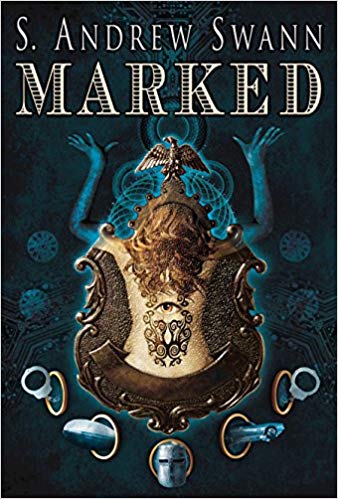
  1. Andrew Swann has been writing professionally for a quarter century. His latest book, Marked, has just been released by DAW. It’s written for fans of urban fantasy, time travel, zombies, airships, steampunk and Dodge Chargers.

    “Marked is a fast-pasted, suspenseful urban fantasy-mystery. . . highly recommended.”—Midwest Book Review


“A great book. I’ve never read any stories with the premise…. A mix between Doctor Who and the Invisible Library series, with a dash of that old tv show Sliders mixed in as well.” —Slapdash + Sundry


“Marked, by author S. Andrew Swann, is a genre-bending action and adventure free-for-all.” —Gizmo’s Reviews

Vignettes by Luke, Mary Catelli and ‘Nother Mike and Sunday Book Promo

books-3289689

Sunday Book Promo, the I Guess You Slackers Are Writing Again at Last (Like I Should Talk) Edition

*Note these are books sent to us by readers/frequenters of this blog.  Our bringing them to your attention does not imply that we’ve read them and/or endorse them, unless we specifically say so.  As with all such purchases, we recommend you download a sample and make sure it’s to your taste.  If you wish to send us books for next week’s promo, please email to bookpimping at outlook dot com.  One book per author per week. Amazon links only.-SAH*


51corvage3l

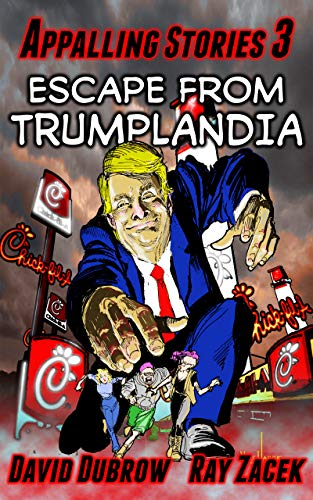
FROM DAVID DUBROW AND RAY RAY ZACEK:  Appalling Stories 3: Escape from Trumplandia.

“Trumplandia is like nothing I’ve read before – hilarious, dystopian porn!” – Patrick Courrielche, co-creator of Red Pilled AmericaWhat happens when the wokest folks you know go on a road trip through the reddest of Red States in search of the Promised Land?45’s election didn’t just upend every talking head’s political predictions, it shredded the very fabric of space-time. The United States of America have become the Disunited States of Trumplandia, plagued by bizarre cryptids, Cthulhu megaliths, and alternate reality wormholes, all crushed under the tiny orange fist of the President Who Must Not Be Named.Fed up with the Fanta-Faced Führer’s fascism, a caravan from the Unitarian Universalist Church of the Lightbringer seeks asylum in the Free Republic of California: a progressive paradise that waits with open arms for anyone brave enough to make the journey west…and survive.

These are their stories.

512c8w43sel

EDITED BY JAMES YOUNG (AND I’M ONE OF THE AUTHORS, WITH POSSIBLY THE WEIRDEST MIL ALTERNATE HISTORY EVER): Those in Peril (The Phases of Mars Book 1)

btw, I’ve been invited to the next one, and they’ll let me play with Richthofen.  So, you guys better make sure this one does well.

Throughout the human experience, historians have wondered, “What if?” What if Japan had been on the side of the U.S. in World War II? What if things had been just a little different in the Falklands? What if Russia had started World War Three?

Wonder no more, for these questions, along with many others, are answered within the pages of this book. Told by a variety of award-winning authors, like Sarah Hoyt, the 2018 Dragon Award Winner for Alternate History, and Kacey Ezell, the winner of the 2018 Baen Reader’s Choice Award, “Those in Peril,” deals with naval warfare that never happened in our world…but easily could have.

The first book in the exciting new “Phases of Mars” anthology series, there is something for everyone inside! From sailing ships, to steam, to today’s modern aircraft carriers, “Those in Peril” traces several centuries of naval warfare…that wasn’t. From adding a psychic…to making a different choice of friend or foe…to something insignificant toppling a kingdom, this book has it, so come aboard and find out “what if” all of these things had changed history…just a little. You’ll be glad you did!

Inside you’ll find:
Naked by Kacey Ezell
Captain Bellamy’s War by Stephen J. Simmons
A Safe Wartime Posting by Joelle Presby
Beatty’s Folly by Philip Wohlrab
Martha Coston and the Farragut Curse by Day Al-Mohamed
The Blue and the Red: Palmerston’s Ironclads by William Stroock
Far Better to Dare by Rob Howell
Off Long Island: 1928 by Doug Dandridge
For Want of a Pin by Sarah Hoyt
Nothing Can Be Said Sufficient to Describe It by Meriah Crawford
Corsairs and Tenzans by Philip S. Bolger
For a Few Camels More by Justin Watson
Per Mare Per Terram by Jan Niemczyk
Fate of the Falklands by James Young

51-gxfz7lol

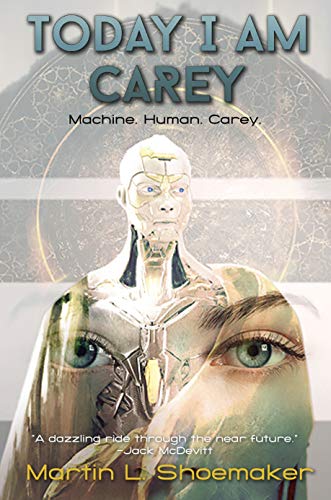
FROM MY FRIEND MARTIN L. SHOEMAKER:  Today I Am Carey.

REMARKABLE DEBUT NOVEL FROM CRITICALLY ACCLAIMED AUTHOR MARTIN L. SHOEMAKER. Shoemaker proves why he has consitently been praised as one of the best story writers in SF today with this touching, thoughtful, action-packed debut novel, based on his award-winning short story Today I am Paul.

TODAY

Mildred has Alzheimer’s. As memories fade, she acquires the aid of a full-time android to assist her in everyday life. Carey. Carey takes care of Mildred, but its true mission is to fill in the gaps in Mildred’s past. To bring yesterday into today by becoming a copy. But not merely a copy of a physical person. A copy from the inside out.

I AM

After Mildred passes, Carey must find a new purpose. For a time, that purpose is Mildred’s family. To keep them safe from harm. To be of service. There is Paul Owens, the overworked scientist and business leader. Susan Owens, the dedicated teacher. And Millie, a curious little girl who will grow up alongside her android best friend. And Carey will grow up with her. Carey cannot age. But Carey can change.

CAREY

Carey struggles. Carey seeks to understand life’s challenges. Carey makes its own path. Carey must learn to live. To grow. To care. To survive. To be.

Vignettes by Luke, Mary Catelli and ‘Nother Mike

So what’s a vignette? You might know them as flash fiction, or even just sketches. We will provide a prompt each Sunday that you can use directly (including it in your work) or just as an inspiration. You, in turn, will write about 50 words (yes, we are going for short shorts! Not even a Drabble 100 words, just half that!). Then post it! For an additional challenge, you can aim to make it exactly 50 words, if you like.

We recommend that if you have an original vignette, you post that as a new reply. If you are commenting on someone’s vignette, then post that as a reply to the vignette. Comments — this is writing practice, so comments should be aimed at helping someone be a better writer, not at crushing them. And since these are likely to be drafts, don’t jump up and down too hard on typos and grammar.

If you have questions, feel free to ask.

Your writing prompt this week is: rail.

I’m not doing a post

fantasy-2546204_1920


Yes, this is totally meta.  Normally I’d put a guest post up, but it’s Saturday and I don’t feel like it.  I have a house to clean.  (Bonus points to those who tell me where the quote “Fundamentally, we have a caldron to fill” comes from.)

I want to write after I clean.

So I’m not going to write a post.

The stomach flu seems to be done with me or vice the versa.

The pic at the top is to play with.  And here’s the unedited beginning of what I’m working on today:

Other Rhodes

Sarah A. Hoyt

There was someone in the airlock.

This wouldn’t have been alarming if Joe had been in, or if we were in some place that I knew and could trust. It wouldn’t even have been particularly alarming if we had been in one of our routine investigations: tracing dodgy money across several star systems, or finding out if a hot asteroid cowboy was married in three different concessions.

But we were in the most serious investigation of our career and possibly of Joe’s career. And our ship had landed in an out of the way world, out of all hubs of commerce and law.  And Joe had been gone for over twenty four hours.  Since we kept Earth-standard-day aboard our ship that meant he had been gone overnight.  And he never did that.

I realized there was someone in the airlock as I heard the door from it to the inside of our ship beep with loud and repeated alarm, indicating fumble-fingered attempts at entering the admission code.

I’m not an investigator, or an operative. Yes, I know I have an investigation license registered with the interplanetary Order of Private Investigators. I pay my dues, I’m up to date.

But we only got that so Joe could have me use the computer to look up the history of people he was investigating, or so that I could do similar no-stress, no-danger work.  He was the investigator. He had the training. He had the reputation.  I was only the fairly useless society girl he’d married.

Before I married Joe Aster my name was Lilly Gilden. You might have read about me on the various websites that keep track of what the very rich, very beautiful, very blue-blooded families in the galaxy did.  When I got married, my abilities consisted of smiling, looking good in holographs and dancing.

In fact Joe and I had met while dancing the tango, a recently revived ancient dance. I was in one of the clubs I frequented, and he was on a case.

We’d danced two tangos, our bodies moving perfectly in tune, his blue eyes smiling down at me, and I knew I wanted to marry him. It didn’t matter that he was from a family of no consequence, nor that he had no money but what he made as a private investigator.

Papa had said that if I married Joe, he’d cut me off and then I’d regret the penury and the need to work.

Joe and I had registered our marriage with the Galaxy archives that day.  And so far, two years in, I hadn’t regretted a single moment.

When he held me in his arms, and my head rested against his shoulder, I regretted nothing.

And if Joe ever regretted his largely useless and ornamental wife, he’d not let on.

We had, in fact, been living the perfect extended honeymoon, until this job.  And now I was alone in the ship, while someone tried to break in.

Joe had taught me what to do when something like this happened:

First, get the zap gun from the drawer in the compartment we used as an office. Joe wanted me to wear it all the time, but I was afraid I would accidentally fire it.

Second, turn on the com and ask who was in the airlock. Even if the person didn’t answer, I should be able to tell by the sounds how many people there were.

Third, call him, and tell him to get home and remove the intruder.  That is, assuming it was an intruder, and not just an inept client trying to hire us for something.  Which had already happened more than once, in the two years I’d been aboard, and hadn’t the old man who wanted us to determine whether his young wife was genmodded got the shock of his life, finding me pointing my little silver gun at him.

I got that same silver zap gun. Like most of our battery and energy storage technology, that gun owed its existence to the ruins of the civilization our archeologists called Kyrion.

We’d never met the aliens who created them, but what they did with energy was borderline magical to us, and it had allowed my father’s generation to create guns like this tiny little ovoid, nestled warm in my palm.  It could fire an intensely hot ray that would burn a precise hole in anything in its way.  And it had no kick, no misfires. Just point and click.

I clicked our security panel enough to allow for communication, fiddled with it until every sound in the airlock was a hundred times amplified, and shouted into it, “Who is there?”

The sounds coming from the airlock were clicks, thumps and a curious sound, as if metal dragging across metal. And something else, something that bothered me without my being able to say why.

“Who is there?” I repeated, despising the way my voice trembled on the words.

Click. Bump. Thump, and just as an hesitant, curiously mechanic voice said “Stella?” I realized what was disturbing me, putting a cold shiver up my spine and making the hair rise in the back of my neck.  There was no sound of breathing.  No sound of breathing at all.

I swallowed hard and took three steps back, involuntarily, holding my little zap gun tightly.

You see, we’d come here on a borging case.

What is borging? you’ll ask.  And well you might, if you are a decent citizen who gets his news through the official channels and has never come across the darker and seedier parts of human civilization.

Let’s just say that there are jobs so difficult and dangerous that no free human being will do them, and yes, that’s why slavery is outlawed in most planets and one of the most despicable crimes in the human repertoire.  But borging is worse than slavery. Slaves, however much they’re considered and might even consider themselves property, can be freed. They can dream of escape, they can one day be again autonomous individuals.

Borgs, that is Cyborgs, the result of the borgers activity are just the brains of humans encased in gleaming glassteel bodies. The body is fed by batteries, the brain is kept alive by transfusions of a special liquid which you could call synthetic blood, though it’s more than that.

It’s a process that has 80% failure rate. Most of the poor souls – it’s almost never done voluntarily – who get borged go insane, the brain never fully adapting to the loss of human senses, or to understanding the new electronic senses.  Most victims of borging die insane, locked inside a hard unresponsive body, blind, deaf, paralyzed and probably desperately trying to scream. They’re the lucky ones.

People Who Hate People – A blast from the past from July 2012

People Who Hate People – A blast from the past from July 2012

A few of you have asked me to write about Human Wave, and I know I have to – having come up with this harebrained idea, I have to continue with it and give it some shape.  Like a cat or a kid, it followed me home and now it’s my job to look after it.

Leave aside for a moment the fact that I think each of us, Human Wave writers can do more for writing and for the culture in general by writing fiction than by prattling on about what our fiction is or isn’t.  Humans are curious beasties, sometimes when faced with the Rocharsh stain they need to be told if they’re looking at the hideous crone or the beautiful woman in the hat.

While I agree with Charlie that the guiding principle of Human Wave is “You may” we all know there are things that we read that are HW and things that aren’t.  Even if sometimes we come down to “I know it when I see it.”

Well, let me bring a flashlight down and point it at the picture so you can see more clearly.

Part of this is Scott McGlasson’s fault, with his inferiority complex vis a vis his characters.  (It’s all his fault mommy.)  And partly it’s the way we’ve joked about loving/hating humans and how much butter exactly it takes to love them.

It is also at the heart of Darkship Renegades and if you squint intently, at the heart of my future history.

My future history starts with nations expropriating all those embryos resulting from in-vitro and making a bunch more and having them gestated in bio-engineered large animals (kind of like the mice who grow human ears) in an attempt to make up a massive short fall of people.  (Yes, I do think world population is already falling, or if it’s not it’s because older people are living much longer.  The problem is the modern state depends for its structure on having more young people than old.  At any rate this is supposed to be 50 to 100 years from now.  Shut up.  Making predictions is hard, particularly about the future.  You lays down your money and you makes your bet.  That is mine.)

These people are by and large not quite normal.  Part of it might be the timing of hormone baths and enzymes, which would be impossible to get right, no matter how modified the animal.  It could also be the environment, since they’re raised in batch lots.

And eventually people get funny and decide, instead, to create supermen and to “improve” their own children.  And then it all goes wrong because humans can’t be perfect, and being perfect can be the biggest flaw of all.

I was about to say we humans are a crazy animal, when it occurred to me that of course I don’t know how other animals are, not really.  We have reason to believe – now – that cats and dogs have some form of memory and ideation.

Perhaps all animals can dream of an idealized version of themselves.  Who am I to say?
I do know humans do.  I am – on a good day and with enough caffeine – human, or at least a reasonable facsimile thereof.

And we humans can see an idealized version of ourselves – a perfect version, without any of those flaws and imperfections that mar the human body and soul.

It has run throughout all of human history: the thought of super-humans, or of angels, without flaw.  For some of us those humans existed in Eden, seemingly perfect, until the flaw was revealed in the taste for forbidden fruit.  For others, there was a perfect civilization where a mother goddess was worshiped and everyone was happy, until the unhappy ones – what?  What’s that you say?  No, no, I read the books, that seems to be the gist of it – subverted the whole thing.  For others – Rousseau will never be dead enough – humans were noble and perfect before civilization.

We can ideate perfect humans.  We can ideate a perfect life.  And then we turn to our workaday world, chockablock with briars (and blockheads.)

This used to be disease prevalent in adolescence, particularly for well-off people.  (By historical standards, we’re all well-off, which is why adolescence is actually a recent concept.  Okay, Romans had it, but it was a… er… different thing.)  The “Why does it have to be that way?”  And the “But I hate humans” always sound, inherently, as though they were said by a sixteen year old.  (And fresh from parenting a sixteen year old, the whine-that-can-cut-through-glass is loud and clear in my memory.)

It used to be for most people, though, wealthy or not, after adolescence, some form of integration was achieved.  People came to see the ideal for what it was – something to strive towards, not something to demand.  And sometimes, in special circumstances, they came to see their flaws for… well… good things.  (Sometimes they are.  Sometimes what causes people to do best are their worst traits.)

The reason people mostly came to terms with reality is that, well… what is there besides reality?

And that’s where we got tripped, starting around the fifties or so.  I think, honestly, the issue was television.  It looks real, but it is or can be flawless.  I’ve often wondered how much of our divorce rate is based on the flawless, effortless families of the fifties sitcoms during the formative years of most now-adults.  It seems as though study after study has shown we can’t tell the difference between TV and reality.  Weirdly, no, I don’t think the down-glare on married life and what I’d call the “all relationships are sh*t” view of humanity prevalent now helps.  Neither is actually reality like.

Anyway, the problem is we now have – all of us – both wealth (you don’t usually worry where your next meal is coming from.  Heck, I don’t, though there have been times in my life I did, they were brief and limited) and a vivid, collective fantasy life.

This has the result of a sort of extended adolescence.  Our arts, the collective expression of our collective soul – or our culture for lack of a better word – have got stuck in the adolescent whine of  “I hate people.”  Which means the “moral” behind just about every novel, painting, story is “Humans are bad and we should all die.”

So, what’s wrong with hating humans, you say.

Nothing.  Nothing if you could choose between humans as are and your idealized humans that can exist only in syrupy shows.

The problem is those humans don’t exist.  And the problem is the reaction of culture to realizing this was to go into a prolonged tantrum that amounts to “If we can’t be perfect we should all die.”

This is a problem because it’s starting to have an effect.  It’s become controversial to say “I love people.”  It’s become controversial to say “Humans have achieved great things.”

All of which would be fine, again, if you could choose to be something else.  But you can’t.  For good or ill, we’re humans and humans are all we have.

Did humanity produce Stalin and Mao?  Sure.  But humanity also produced DaVinci and innumerable saints.  Were any of the last without flaw?  Well, no.  They were human.  All humans have flaws.  Sometimes the reason humans strive to be good is that they see themselves as worse than they are.  That’s one of those flaws that’s good for you.

But seeing yourself – or your species – as unredeemable is as blinkered, as pathetic, as seeing your species – or yourself – as angel-like, with no flaws.  Neither of them have reality and frankly both of them lack internal tension.  Both of them are therefore just plain bad art.

So, can Human Wave be dystopian?  Sure it can.  You don’t really need to scratch very deeply into the world of Darkship Thieves to see that Earth is a dystopia and Eden is a barely balanced near-utopia, but one that crumbles on contact.  Humans are still humans.  Unspeakable things can happen (contemplate Max’s fate, or for that matter Nat’s revenge.)

BUT through it all, humans are still humans.  The ones who are good can be very very good.  The ones who are broken are broken in interesting ways.  The villains are – to borrow from Shakespeare – punishe’d.  And the good, if not rewarded, have a chance to reward themselves to a measure.  And the mixed can redeem themselves in future books.

Human Wave: it might be very dark, but a ray of light is allowed in.  We don’t hate humanity, because if we do we can’t love anything.  And there is always the option for a sequel.

You heard it here first.

Sufficiently Advanced Malice

alien-1905155_1920
Image by maciej326 on Pixabay

It has long been discussed, when talking about public figures “is this malice or stupidity?”

I remember the previous administration inciting this question, and I don’t remember that it was ever resolved.

Post 2016, having observed both the transparent malice and rampant stupidity of public figures (mostly, but not all, on the left) as well as the way they think that stupid malice or malicious stupidity are attractive, has led me to formulate a new axiom, which I first stated inverted, but RES suggested it this way, and it seems to be more fitting: sufficiently advanced malice is indistinguishable from stupidity.

No?

Let’s take the case of our former president. For reasons that a child psychiatrist should have made sense of long before the man came of age, he hated and resented America, the (white) grandparents who raised him, the mother who didn’t desert him, and in fact everyone and everything connected to America, to the point of not liking very much the pomp and ceremony associated with our flag, and refusing to show it any kind of respect.

Look, it’s not even that hard to understand. Boys want their fathers, and if the father is absent they tend to idolize them. For Mr. Obama, this led him to idolize Africa and socialism as well.  (His mother likely contributed to this, as did his grandparents who were, already, themselves, red diaper babies.)

This means that he hated America both for ideological reasons and reasons of history.

Which means that he did stupid things, like go on the apology tour, or try to bring the US economy down in the full belief that this would cause the rest of the world to be better off.

This is because hatred makes you stupid. You can’t help it.

Just like love makes you see everyone and everything related to your love in a golden light, and think that you share far more than you do with your chosen mate, hatred makes you think anyone relating to the thing you hate is tainted and needs to be ended.

Mr. Obama hated us, and everything about America from free trade to the Constitution must be wrong. Wrong, wrong, wrong, and to be destroyed.

Which was stupid, because he owed everything he was to America, and could survive nowhere else. And also because people aren’t completely stupid, and despite the treacherous media, and his hidden organizations, America eventually caught on.

In the same way, Occasional Cortex might not be as stupid as she sounds.  It’s just that she was raised expecting to automagically succeed.

I can tell you that, because she is, give or take, my kids’ age, and no young woman, let alone a MINORITY young woman ever got called on their sh*t be it academic lack of effort, or bullying classmates and generally making themselves pains.

No, every girl and young woman, particularly minority ones, got given what used to be called a gentleman’s A, now surely a lady’s A, and told they were a bright shining star and the world would be astounded at their brilliance.

And then they hit the cold cruel world. What we know about Ms. Very Occasional Cortex, is that she had a rather undistinguished working career, from bartending to trying to start her own business and flopping.

Of course she’s convinced — trust me, as someone of a similar sex and race background, I got told this every time I failed by one or more helpful people.  “Helpful.” — that this is the fault of racism and sexism and capitalism.

And she hates them. She hates them, my precious. She hates them and that awful place called America.

Which means it makes the Green New Deal (green nude heel) fatally attractive to her.

Sure, it’s obvious that she can’t do arithmetic except in the sense that two plus two equals coconut. And she can’t figure out how economics works. That you can blame on her schooling.

Mostly though, she is blinded by hate of the “cruel” system that didn’t treat her with the respect she’d like to be entitled to. So blinded that even had her comprehension of science and economics been greater than zero, she would still embrace the Green Nude Heel. Because it must be true. It must work. It must.

Like Mr. Obama, wanting to fundamentally destroy transform America, she seized the boogeyman she was threatened with all through schooling (my kids were): Global Warming.

With this boogey man she can convince people to fall in line, stop all this unfair striving and succeeding people do without permission, and thereby become “the boss” and dictate what everyone gets to have.  And of course, the system will be caring and compassionate even to those unwilling to work.

Her malice makes her so stupid that she states these things out loud, while her confederates have only whispered them behind closed doors.

Is she stupid?

Oh, dear, with either of my examples, if they were as stupid as they seem to be, it would be doubtful if they could walk and chew gum at the same time.  Mostly they’re malicious: full of anger and hatred to America and all Americans. And this makes them stupid.

As stupid as Hillary Clinton when she decided that calling us “deplorables” would make us vote for her.  Who even thinks like that?

So, sufficient malice causes people to be stupid.

Do not let yourself be blinded by hatred. It’s all right to hate the ideology, but try not to hate those who spout it. Instead, try to understand.

Because one stupid faction is enough for a century or two.

And the stupid don’t tend to survive.

Two Worlds, Not Alike at All

kindle-381242_1920
Image by Free-Photos on Pixabay

As you all know (or at least should strongly suspect, since we’ve talked about various aspects of them all the time) we live in interesting times.

Technology is changing so fast that it’s changing the way everything happens from courtship to cooking, from politics to leisure.  And most of us aren’t exactly particularly well adapted for this level of change. Not even those of us who welcome it and try to change with it, surfing on the surface of the change like somewhat adroit acrobats.

Look, human beings, evolutionarily, weren’t designed for rapid changes in circumstances. Those are usually known as cataclysms.

Sure we conquered the globe and adapted to many different environments, but we did it over generations, slowly, where each one moved incrementally towards the goal. It’s not like in cartoons where an ape came down from the trees, shaved and got a briefcase and went to work.

In many ways we’re in no way adapted to the environment we created, which is funny, except in the sense it’s not funny at all.

I meant to go indie back in 2011. Only health intervened, and made it almost impossible to JUST fulfill my traditional contracts.  Which means while I was sitting forcibly out of the game, and biting my nails, I spent a lot of time observing.

Sometimes I’m still struggling with it.

Because you’re so used to seeing things one way that you have to keep recalibrating just to remind yourself that things have changed.

Take for instance organized fandom and cons.  They used to be the lifeblood of your career. And of course, you thought — or assumed — this was because you made fans that way.

It’s entirely possible this was never true.  As I detailed yesterday, part of the thing was that book selling and book publishing had become symbionts, jointly deciding what would be published AND seen. As an author, what you saw was not necessarily what was happening.

So you saw that going to conventions and particularly seeing your publisher/editor (which is why big cons like worldcon, world fantasy and now Dragon were/are important for those in the trad publishing game) led to bigger laydowns and sales, and you made it a point to attend.

In my case, seriously, I wish I had back all those summer weekends spent at worldcon. Best decision I ever made was to stop attending and, instead, start going to Denver to the amusement park with the boys.  And I regret all the Halloweens we left them with babysitters to attend world fantasy.

Sure, it kept my career going, at least for a while, but if I knew then what I know now.  Never mind. If I knew then what I know now, beyond minimal publication to keep the boys in shoes and vacations, I’d have spent my time writing books to come out in indie as soon as possible.

Because it turns out conventions have bloody nothing to do with selling to the public. In fact, the public that attends conventions, and even the public that will talk to an author on facebook or online are not the same public that buys masses and masses of books.

It’s like the old explanation of parallel worlds, you know: two worlds, side by side, one much larger than the other, and each operating by completely different rules, each unaware of the other.

What I’ll call gatekeeper world, because it encompasses both publishing, bookstores, and to an extent, conventions, is contracting. There are more and more people looking for sins and looking to destroy those who commit them. This applies to anything from an inconsidered tweet to a character they don’t like in a book. For instance I was recently told that female characters should have no flaws.  I have also recently come across a bunch of reviews of my books which try to divine things like what kind of man I like from my books. (Which btw is a step beyond insanity. I write men my female characters will like. I already have a man, thank you so much.) Anyway, amid all this nonsense, they have completely forgotten they’re in the business of selling books. So books are more and more indistinguishable from “moral tracts on the condition humans should have” and — unexpectedly — sell less and less.

My friends still trad only are scrambling to stay employed and reporting lower and lower advances.

Meanwhile in indie, people are thriving that I never heard of, and you haven’t either.

People who started writing less than three years ago are making multiple hundreds of thousands of dollars, and even in my circles where everyone reads voraciously, have never actually made the radar.   They are unknowns. Just rich unknowns.  Certainly no one at cons ever heard of them.

Because I’m curious and of an exploratory type of curiosity I’ve sampled some of these authors.  Yes, many of them are clumsy and badly written.  Not all though.  Only some.

The thing to remember though is that they are well written enough.  Well written enough for what?

Well, well written enough to sell.  If you go back and read Burroughs, say, you’ll find that he was not a particularly good writer on the word level. What he was was a great storyteller, often by violating every known rule, including telling you a vast amount of how things should be, instead of showing how they were. But it worked, and obviously he was to the taste of his contemporaries.

What I see in indie is, weirdly, like a return to the old days of pulp. Novels are shorter.  They start somewhere around 30k and usually top out at 50k.  An 80k word book is rare, and 100k plus very rare.

The reason for this actually makes sense. The change in book length was driven, more than anything, by the need to make a book large enough to sell for $5 — later $8 — dollars for a paperback. They could fudge it some. A friend who did very well never could write more than 65k, but her books were printed with larger type.  But less than that? no.

So, books are returning to the size that most people can consume at one sitting or in an afternoon.

More surprising is the plotting. Let’s just say I’m starting to doubt that the public’s tastes ever changed away from pulp. Grand adventures, improbable events, big battles seem to take the day.  The carefully crafted lengthy stories of interior development traditional publishing favored? not so much.

In romance, sure there’s still a space for sex, but most of the romances doing really well are not ALL about the sex, as traditional publishing had become there, ten years ago.  And there is a vast and lucrative niche of “traditional romances” by which you should understand stuff in the Heyer tradition with little more than a kiss.

In fact “things traditional publishers hated” are a good way to make the big money in indie: Romances without sex, space opera, mil sf, cozy mysteries.

It turns out all these things they told us no longer sold, didn’t in fact sell, but not because the public didn’t want them, no.  It was instead because the public didn’t get to see them. The publishers decided what the public would see, and the publishers decided these weren’t “worth” selling.

I don’t know how much of that was in conjunction with most publishers being the graduates of a few select colleges who viewed it as their job to enlighten the benighted, and how much it was simply “I want to brag about what I publish at parties, and my friends hate this stuff.”

What I know is that they no longer have any say on what sells and doesn’t sell.

And that there’s a whole parallel universe out there they’re not even aware of and can’t influence.

And that it’s worth exploring and seeing what’s there.

Which by itself is a pulp plot.

When Amazon Killed Bookstores

bookstore-1129183_1920
Image by louda2455 on Pixabay

Remember when Amazon killed bookstores? Cool story bro.

Except for the fact that it is entirely fictional.

I came across it most recently in a facebook group where someone informed me that in 1993 bookstores (chain and indie) in his area were doing perfectly well. This is fine and it was true in our area too, more or less.  More less than more, if you looked closely because the seeds of destruction were already sown, but we didn’t know it/see it, unless our lifes revolved around reading and writing.  Arguably mine did, but only arguably, since I had a small child and another on the way, so I had more things worrying me than the current novel, let alone than what I was currently reading.

At any rate, in 93 I was broke, so buying a paperback could stop me being able to buy groceries for a couple of days, so most of what I read came from the free bookcases outside the used bookstores (you remember those, right? It’s where they put things that they’d turned down for trade, but the customer insisted on leaving behind. I spent two or three years reading a lot of Gothic romances, out of date biology manuals and some “history” on the level of ancient astronauts. On the bonus side I acquired a strange interest in cryptozoology that didn’t in any way imply I believed the sightings.

Anyway, onward. We were at the edge of paying off our debts (mostly the debt for the birth of #1 son by emergency caeserean while we were on COBRA, but also the debt for moving across the country.) and it would usher in five or six years where we went to bookstores a lot.  In fact between us and our best friends we setup a weekly “date” in which we’d leave all kids with a babysitter and head off to the dollar theater.  We’d buy tickets then kill two hours by going to Barnes and Noble and — if we were flush — to eat.

By 1997, we started referring to our bookstore trip as “going to be disappointed by Barnes and Noble.”  Because largely it was.  More and more, I found it difficult to find anything at all to read on the fiction shelves.  When you consider that I read science fiction, fantasy, mystery and in a pinch various kinds of historical fiction and romance, this was nothing short of astonishing.

Mystery at the time was often in the grip of what I called “waves of crazy.”  The one I remember best happened later, around 2005? and it was bookshelves filled with nothing but what I called “Sex in the city” mysteries, where the single protagonist obsessed on sex and shoes. It was bizarre, disturbing, and I still have no idea what the publishers were thinking, except that apparently a TV series translated to general readership.

Fantasy had fallen down a hole of “the poor deserving heroine gets a sword” and the fascinating, intricate civilizations that are, to me, the redeeming feature of heroic fantasy had vanished.

Science fiction…  Well, our stores, both indie and B & N seemed to mostly carry game-related and tv-series related fiction.  Since I’m not interested in either, I slowly stopped reading SF.

Oh, and indie stores weren’t better (and were often worse) than B & N.  In my area (and I grant you we lived almost next door to a college) they were populated by people who spent a lot of time trying to radiate intellectual superiority.  One stock phrase was “We don’t stock THAT.” And “that” mostly referred to the sort of books I liked to read.

I did buy — from the discounted tables — a vast quantity of history books, most of them “swords in the middle ages” type of general information things.  Not deep, but the sort of thing a writer needed in pre-internet age, when you hit a point in the story and went “how thick was the blade in this time period, again?”  Having set up my library this last week (I need to find the digital camera and get a picture of the shelf system that took forever and took over our garage for four months. The weird thing is that at eight feet high it looks tiny compared to the built ins. It will be replaced by more built ins, as soon as we have the money.) I came across a ton of them.  Some I can now get rid of, but some are a source of highly targeted info that doesn’t allow me to be captured by internet squirrels.

But what we actually went there for, with ready money to burn, that we couldn’t find.

These years, say 93 to 98, I was buying fiction, but mostly used.  In fact, (we lived in the Springs at the time) Murder by the Book in Denver was how we started our incredibly ritzy vacations.  I.e. we went to Denver for two (or if particularly flush three. Though usually more like two and a half) days, stayed at embassy suites with the kids (because two separate rooms and free breakfast which if eaten at around 10 held the kids till early dinner at 5) hit the museums and the amusement parks, and generally painted the town a very pale pink.  Before that all started and an important consideration for “when to leave on Saturday” was “Murder by the Book” where we stopped and (sometimes the guys waited in the car) I went in and filled two large bags (or boxes) with used books.

For whatever reason I read cozy mysteries like people eat popcorn. I will read one after the other, requiring nothing but momentary entertainment.

During this time I started noticing three things: one, most of the books I was buying were very old indeed. Like, first published in the thirties.

Two: most of the newer books, particularly the ones (I was learning to recognize this at the time) whose cover and numbers indicated they’d gotten “push” were almost unreadable. I remember the ones that took long breaks in the middle to preach politics, but it wasn’t even that. It was say the ones where the professor characters sneers at everyone not an academic. Or the ones where characters’ moral worth is assigned by political orientation or….

Three, I often found writers whose voice and worlds were engaging and set out to find more (often by researching in the still-infant internet) and found out they’d been published two or three years before (but had never been on my local new store shelves) had written three books and disappeared forever.  As a reader this was frustrating and exhausting.  Mystery readers, particularly the ones who read mysteries like popcorn, get very invested in “their” series. I hated falling in love with new surroundings and knowing there wouldn’t be any more. It made me reluctant to try out new writers.

I also bought other books, in the used bookstore I could push a pram to.  One of the authors I found around that time was Terry Pratchett.

And I found others, too, it’s just that my rate of buys slowed to a crawl compared to when I had been able to buy books before.

In this net argument the same person asserted that by 2003 all these stores were in trouble, and it was self-obviously Amazon’s fault.

Now, I have a pretty good memory, and I was one of Amazon’s first customers. My desperate search for reading material sent me online, despite having to purchase with a credit card (for a while we kept an account exclusively for this purpose), having to wait two weeks for the books (no prime) and generally missing the browsing experience. But I could — and did — get the books I wanted.  Even if most of the series died at three books.

But 2003 was before ebooks were a thing, and though Amazon was — I think — bigger than a really big bookstore, it was not the weight in the world that it is now. By and large it was “just a store.”

It certainly didn’t have the power to kill other bookstores.

And yet, I agree, by 2003 bookstores in trouble.

The thing to remember is that just because a model was succeeding it didn’t mean that the model that succeeded killed the failing model. Sometimes industries, models and general ways of doing things commit suicide.

Which is the best way to explain what happened to publishing and bookselling in the nineties and oughts, and hell, still today.

There were contributing factors, outside the industry(ies) scope, which I didn’t even bring to mind right away when we started the discussion.

I maintained the most important thing was that book publishers and book sellers forgot that their primary motive for existing was “making money by selling books.”  Instead, they were publishing things they either thought would impress their NYC cohort or — often — things they thought “would sell” from a completely non-reader perspective. Hence the Sex in the City mysteries.

Which btw, speaking of yesterday’s post and provincialism, might seem weird to those of you not in publishing, but was part of how the business worked (and for all I know still does) to the point that when the Shakespeare series wasn’t doing well, they told me our only hope was that someone would do another “Shakespeare movie.” (Rolls eyes.)  The model was apparently based on the idea that movie goers and genre book readers are exactly the same people, and that popularity in one translates to the other.  Oh, and a total allergy to market research.

But there was more, and some of it, bizarrely, from outside the industry. There was the Thor tools case, for instance, which made it impossible to warehouse vast unsold inventories (or iow how careers in the field were made when your books, like mine, are “slow and steady sellers.”  You keep the inventory and grow that long tail until eventually the writer is selling massive amounts per book on release.)  Because, you see, you were taxed on those per cover price value, from what I understand.  So print runs got ever tighter and laydowns smaller, and writers started being treated like lottery tickets, who either paid big money up front or were let go or had to change name.

The need to absolutely predict sales numbers, and the fact that even an inaccurate prediction that led to a bestseller could undo an editor’s career, in turn, made the booksellers embrace “by the numbers” stocking, aka ordering to the net.

Which is a brilliant idea, maybe, for a tiny bookstore. It sucks mightily for a large chain which then allows the publishers to manipulate laydown.

You see, ordering to the net is very sound, if all books got the same headstart. If you have a store full of books that each stock say five copies, and some only sell two copies, and some sell 5, it makes more sense to reorder the 5 and only order two from the authors that only sold two copies before. Of course it does.

What it makes no sense though is in a world where some books have 100 copies, others have 1 or 2 per stores.  The chances of your finding, let alone buying that one copy are infinitesimally small even if you don’t throw in that many of that single or two copies WERE NEVER UNPACKED. As I found over my first series debacle, the books would show on stock on the computer (I was trying to do drive-by signings) but the massively overworked clerks never unpacked them. What that showed was stocked 2, sold none. The fact it would take a miracle to sell books that were in the closet (even when I showed up to sign it took days to locate them) didn’t matter to the computer.

Publishers, pressured to “print only what sells” welcomed this chance to manipulate what sold.  They routinely told the bookstores they had high confidence and were printing 100k books (which meant they were actually printing 50k. It’s lies all the way down.)of those books they wished to push.

Which in turn led to push marketing.

All of this adds up to: between 93 and 2003 the publishers and bookstores colluded to push on the public ONLY what they believed the public should read.

The end result — which I’m sure shocks everyone — of books being chosen and pushed ONLY by an insular (provincial) NYC establishment is that the books — unexpectedly! — stopped selling and people were turned off from reading in droves.

This in turn led to… bookstores failing.  Publishers are arguably still going (and I have ideas on how and what it means, but that’s something else again.)

So, apparently to the man on the street, this means that Amazon killed the bookstores (and video killed the radio star.)  No, seriously.

What I say is that if you’re a business that forgets your primary concern is to sell, you weren’t killed. You committed suicide. In the market place. With a smug assumption of unearned superiority.

All Amazon did was exploit a vastly under-served market.


Provincials

Having had occasion in the last month — because I’m the one who speaks both languages — to mediate two bureaucracies of the same organization across two countries, I’m now convinced most people are not just bizarrely provincial. They’re unaware that the customs of their tribe are not a law of nature.

And people run on automatic with this, even when it doesn’t make any sense.

For instance, when I changed my name at citizenship, I didn’t know I was going to have to engage in a pissing contest over older son’s birth certificate.

You see, North Carolina has — or had 27 years ago — the sort of ridiculous paperwork for producing a birth certificate that would only occur to people who never gave two thoughts to how things are done elsewhere.

Instead of asking for the mother’s maiden name, it asked for mother’s maiden surname, and then drafted a birth certificate using that and the mother’s name.

My name at marriage was Alice Maria da Silva Marques de Almeida. But when I wrote my maiden surname was Almeida they proudly gave us a certificate saying Robert’s mother, when single, had been Sarah Almeida.  Head>desk.

I tried to explain this was a massive problem, because if anything happens and they need to trace their ancestry and/or need to prove who I was before I was married/changed my name, it will read like fraud.

At which point they told me it was okay, because when you change your name, they go back and change your birth certificate.  (Bangs head slowly on desk.)

I had to point out that, as far as the Portuguese government is concerned, I’m not even married yet. Because I’d have to pay a bazillion (more or less) dollars (okay, it was 4k and travel to places with a Portuguese consulate) to have that recognized in Portugal, and I’m just not that invested. Recognizing a name change from another country? not on at all.  Hell, I’m not sure they do the birth certificate thing when you change your name in Portugal.

They eventually conceded and changed the certificate but it took forever and a day, and they kept insisting that of course my birth certificate had to be changed. That’s just the way things were done.

Let’s say what I’ve been battling is of the same order, if slightly more explainable.

This arrant provincialism penetrates everything.  For instance, in conversation with my mom a few weeks ago she told me the doctors that treated me in childhood had no idea what the antibiotic doses were for a child, so they just gave me adult doses.  Later I mentioned this in a party of family and friends, and they all told me it was impossible.  All, of course, except the friend who has spent time abroad, dealing with their medicine, and who just nodded.

Because of this, politics at the international level is blind man’s bluff both ways.

Particularly since all the press is determinedly invested in misreporting and both ours and their sides tilt as left as possible.

A friend abroad assures me that in her country the people think that US anti-abortion protesters are troglodytes and religious fanatics (and also very few) but they don’t know that our abortion laws aren’t the same as theirs. I don’t remember if her country has an utter ban after 10 weeks, or 8 weeks, which they of course assume is exactly the same here. They don’t understand that if they were here and faced with actual attempts at legalizing post-birth infanticide they would, if they’re capable of morality at all, also be anti-abortion (and morally outraged.)

People in Europe, whose countries nationalized/socialized medicine shortly before or after WWII, solemnly tell us that it would be barbaric to just let medicine be private, and that they’d have people dying on the streets for lack of care… as we have.

They have absolutely no idea that our hospitals are bound by law to give care to anyone who comes in. It is in the best interest of their press which is by and large leftist to keep them uninformed and thinking that the alternative to their slow, sclerotic, biased system is “dying on the streets.”

And of course, they have no idea of how many innovations our medical system implements, that are unheard of in their countries.

Then people here hear how satisfied people abroad are with single payer, think it’s a great idea and we should have it here.

That’s not even counting the people who, during the cold war, kept telling me if Russia really were such a hell on Earth, surely people who lived there wouldn’t speak so well of it. The entire idea of suppression and fear meant nothing to them.

And let’s not get started on people who say things like “But it has to be that way. It’s like that here” because they think the way things happen — anything from finding a job to getting married — in their place is the only way they can happen anywhere.

I run into this more often than other people, of course, because of dealing with family on both sides. So I’m more aware of it than the average person.

So, what is this to people who dojn’t have family both sides?

Two things: first the globalization thing. The left still doesn’t understand why it doesn’t work, and the only reason they can figure out for us to oppose masses and masses of immigrants coming in is “racism.” Because they don’t understand how deep culture is, or how much it changes… everything, from work habits, to attitudes towards law and order, or learning, or innovation. To them culture is different attire and interesting food.  And the only reason you could disapprove of those is that you are a vile racist, of course.

They honestly think giving pamphlets to Middle Eastern men in Germany telling them that rape is wrong, m’kay is going to change attitudes towards women that have been taught and propagated for centuries. Because of course, culture doesn’t mean anything.

I don’t, btw, understand how they correlate this with their belief that culture is genetic and can’t be changed, but then, you know, if they were consistent they’d also have to explain how the sexes are exactly the same except for reproductive organs, meaning they think and feel exactly the same, and yet it’s worth it to go through massive surgery because you feel like the other sex inside. Or how saying that people start diverging by sex while in the womb is “transphobic.” (After all why change if you’re already the same. Pfui.)

But this ignorant provincialism is why the left thinks that they can just bring people from everywhere here and nothing of significance will change except they’ll be more progressive by nature because neo-Marxism, through the person of Gramsci, told them so.

Second thing is that as communications bring our world ever closer, and enmesh various cultures into work groups and companies, more and more as tech gets better, the cultural clashes and the assumptions that blow up in people’s faces are going to be spectacular.

And only being aware of the differences will allow people to survive.

Paradoxically, better communication will bring the world closer and further apart, and might perhaps for once and all put paid to the idea that nationalism is meaningless or dead.

Interesting times ahead.