Okay, fine, he said “what is the truth” or at least that’s an interpretation. What actually happened was a guy was asked “What is art” and said “I’ll be d*mned if I can tell you, but I know it when I see it.”
This has been made fun of by Academics, Intellectuals and other people who are formally wedded to just so stories and theory, but in the end it is the only way to identify art. Humans know art when they see it. Or hear it. Or read it. Perhaps “know it when they experience it.”
More importantly, though I — and most people — know it when we don’t see it.
First let’s start with Sarah’s beg #1: I don’t know if “art” exists anymore than I know if “talent” exists (beg #2.)
I know craft exists and I know work exists. Whether some works move me to tears because the artist was exceptionally talented and was creating art, or because the artist spent enough years practicing that he had sublime ability to craft the piece in just such a way is not only above my pay grade. It’s so far above my pay grade it’s left Earth’s near-orbit and is floating in space.
Whether it’s close-to-perfect craft or the kiss of the gods, though, I do know art when I experience it. See that “moved to tears” thing. Now, it’s not always tears, of course.
I would classify art as “remotely causing people to experience emotions by use of symbols.” Some is better than other, but all art causes an emotional response in the person experiencing it. The emotional response can be anything, but it is an emotional response. Note, the emotional response has to be what the artist intended, because a lot of “non art” in my experience causes disgust or horror or a desire to hit the person who created it with a really large shoe.
(There is a spicy and largely mentally handicapped argument that writers who use AI to do covers will also use it for their novels on Twitter. We’ll get to that another day next week. Let’s just say it makes as much sense as “artists who use AI to generate descriptions are also using it to paint for them.” — which is to say none whatsoever. Though the second is more possible in certain sub-fields. Abide in patience. It’s a side spur, and I’ll go trundling down it next week.)
An I know art when I don’t see it. Take for instance Big Tish:
The only emotions I can manage for that absurdly banal display is “Why is it taking up space?” and “Did my tax dollars finance that?” And also “Good Lord, couldn’t she have put on a dress, if she was going to be on display?”
Look, that ridiculous nonsense has set off an argument where some artists somehow have come up with the absurd conclusion the decline of art is because we don’t pay artists enough.
This is absurd, because no one is obligated to pay for anything. And people pay, willingly enough, for things they like.
That these things — Thomas Kincaid comes to mind — immediately get declared “non art” is not anyone’s fault but the critics establishment.
That some people choose to consider art only what the critics establishment says it is is I think an effect of schooling. “What is art?” “What teach says it is!”
The problem is that “teach” aka critics and professors for the last 100 years have been at war with popular taste and trying to distinguish themselves from it as a primary mission.
This has led to the uglification of public spaces and the creation of either incomprehensible or horrific “art” that evoke ONLY a sense of disgust and annoyance from the public… who of course refuse to pay for it.
This in turn lead the government to step in, with further enshitification of what is considered art.
In literature they now do Marxist Theory to prove that things no sane person would buy for sheer enjoyment or love are important and must be read and inflicted on school children, while beloved books that make their author rich must be “trash.”
This is all insanity. The tax-financed and NGO financed horrors aren’t art. They’re very expensive White Elephants that our inheritors will try to hide or turn to rubble, because this illusion of importance can only be supported by massive infusions of money coming from a large, all pervasive and out of control state. (Which no one can afford.)
Art? Art is fine and will continue being paid for. Because it evokes strong feelings. Be they joy or fear, or even just “It makes me feel funny, and I like it.”
Art is ludic enjoyment. And the public will always pinch money from their six packs to pay for what they enjoy.
Excuse me, I must make a point. It might not be the most popular point in the world, but it is a point that must be done.
A lot of you seem to be running with “Well, even if Soviet propaganda made us unreasonably scared of nuclear war, this is to the good because it prevented a nuclear war.”
Um…. it sure did. Or at least it prevented us from doing a first strike… Which honestly given the presidents we had those years was probably not very likely.
On the other hand, it also prevented us from using conventional warfare for real, or pretty much do anything except oppose Soviet expansionism and adventurism — which was essential to their survival since socialism is always parasitic and extreme examples, the kind we call communism are parasitic and destructive, meaning the only way to avoid complete starvation is to devour other countries — in a token way, with our troops hemmed in by ridiculous ROE and not allowed to win. Though even then, most of the time, unless the thing was in our face, we just sent the Soviets sharp worded letters. And leftist presidents? They didn’t even do that.
While we were avoiding very hard offending the Soviets because after all they had the same arsenal we did or more, and they were on an hair trigger and if we said boo, they’d eliminate us.
But that’s okay, right? Because we didn’t send a first strike.
Look, this is nonsense. It’s fossilized “nukes will kill da urth” shite in the back of your brains.
Peace is lovely. War is always awful. But sometimes war is needed. Period. And peace is sometimes too costly.
Arguably the “cold” part of the cold war, that counterfeit peace, cost a lot of people all over the world. It cost the deaths of the “little wars”, the destruction of economies, wealth and ability to create and invent all over the world. It caused the deaths of American service men fighting with both legs in a sack of ROE. It cost us our overculture and academic integrity being infiltrated and corrupted by the soviets, because of course the intellectuals were so scared of the superior Soviet might (and just a little turned on, as they always are by despots) and hoping they’d been eaten last. It might in fact have cost us our country. I don’t think it will, because we’re still fighting. But except for a few lucky breaks, it could have, plunging the whole world in a morass of civilization (and population) destroying “socialism” for a while.
Is that worth it? Because we avoided the big bad nukes (largely non existent on the Soviet side. Oh, they had some, but nowhere near parity, and for a while at the beginning, they in fact had almost none) and deaths from hot war?
I don’t know. I don’t know and neither do you. And don’t go pretending you do because you can paint mind-pictures of little girls dying in nuclear explosions.
Do you know how many graves were filled all over the world by the Soviet expansionism that we allowed? I heartily advise you to read a history of Cuba since the Castros. I advise you to read the black book of communism. I don’t know if any books have been written about what the Soviets and their Cuban mercenaries did in Africa. What I know are mostly first person, eye witness accounts, but if you distill the worst of The Black Book Of Communism, then steep it in the juice of nightmares you’ll be there.
So, would it have been better if we’d realized how much stronger than the Soviets we were and had put an end to their blustery larceny and mass murder? Maybe. Or maybe, as I suggested on Monday’s post if our more “progressive” leftist presidents had realized they had the ability to remake the world to their crazier dreams, we might be in a worse position.
My husband likes to believe we’re living in the best of all possible worlds. And maybe we are. Maybe.
But here’s the thing: we don’t know. We can’t now. Even now, a lot of our thinking and still a lot of our war theory, a lot of our thought, a lot of our calculations of war and peace are polluted by the propaganda pounded into our heads.
It’s entirely possible that really, refraining from pounding the Soviet horror and letting it prance all over the world was the best result of a bad situation. Or possibly it could have been better and fewer people might have died.
But we have no way of knowing. And it’s irrational and stupid to pretend we do.
Look, to give a more recent example: perhaps locking down was the best thing that could have been done with COVID. Oh, not because the virus was terrible, but because the propaganda machine of the dems might have managed to start a civil war to set themselves up to steal the election. Maybe this is the best of all possible worlds, and it will presently rain ice-cream from a clear blue sky.
But the events happened because of massive propaganda. Not only didn’t we make the decision clear-eyed, we still don’t know what happened. And we might never know. And this burns me beyond what I can reasonably explain.
It is the same thing with the lies and pervasive propaganda by the Soviets. It caused us to do things in a way we might not even have considered if we knew the truth.
Is the result still the best?
I don’t know and neither do you.
This upsets me terribly, but not as much as people pretending that it was all worth it.
Newspeak Nations: How Language Erases Struggles – by Charlie Martin
I’ve been re-reading George Orwell’s “Politics and the English Language” again, something I recommend anyone interested in politics or writing should do regularly. Here’s a bit that struck me today:
But if thought corrupts language, language can also corrupt thought. A bad usage can spread by tradition and imitation, even among people who should and do know better.
Orwell, like Ayn Rand, wasn’t so much inventing a fictional world as he was fictionalizing the world he knew, enhancing it to make a point. To clarify it, Orwell wrote in the Appendix to 1984:
“The purpose of Newspeak was not only to provide a medium of expression for the world-view and mental habits proper to the devotees of Ingsoc, but to make all other modes of thought impossible,…”
The thing is, we’re not dealing with Newspeak, at least in detail. Instead we are seeing people on both sides parroting phrases they’ve heard elsewhere in place of thinking about what they mean.
My maternal grandfather Bill McClintock was born in the Choctaw Nation. Now, by definition, a nation is a group of people with a shared culture, history, and identity. There’s no question that the Choctaw Nation was and is a nation.
But when he was born there in 1895, the Choctaw Nation was part of Indian Territory, along with the Cherokee, the Chickasaw, and the others of the Five Civilized Tribes. The Indian Territory was part of, and under the authority of, the United States. Grandfather was born in the United States, not in some country — I don’t know, Choctawland maybe.
Through a succession of decisions made by the Great White Father, Indian Territory was broken up, opened to white settlement, and eventually became part of the state of Oklahoma.
Now, by definition, a country is a defined geographic area with an independent government, and borders.
There was no country of Choctawland because while it had more or less fixed boundaries, it was wholly contained in the United States, and while there was a tribal government, it was effectively subservient to the Federal government and not really independent or sovereign at all. (Oh, there was some face-saving assertion of sovereignty, but it was subject to regular intrusions, more in sorrow than in anger.)
This linguistic distinction—nation versus country—matters. I felt it sharply when someone claimed Israel was a country long before May 14, 1948. My objection isn’t about doubting Am Yisrael, the Jewish people, who have existed for millennia, nor do I question their deep historical and spiritual connection to Judea or their right to return to their ancestral homeland. My issue is the sloppy conflation of nation with country, which muddies history and erases struggle.
To unpack this, let’s look at the Balfour Declaration:
His Majesty’s Government view with favour the establishment in Palestine of a national home for the Jewish people, and will use their best endeavours to facilitate the achievement of this object, it being clearly understood that nothing shall be done which may prejudice the civil and religious rights of existing non-Jewish communities in Palestine, or the rights and political status enjoyed by Jews in any other country.
The language there is instructive—hard to beat the imperial sleight-of-hand of a British diplomat—in that it says “a national home for the Jewish people.” The phrasing is cagey, leaving room for endless interpretation, but it was declaring that Jews should have the right to enter Palestine when it was removed from Ottoman control.
What it didn’t say was that the Jewish nation was to be a Jewish country. And, under the Balfour Declaration, it wasn’t. In effect, the British were asserting their intention to create a Jewish Reservation in Palestine, just as the United States created an Indian reservation following the Removal. You remember, the “Trail of Tears.”
There followed 30 years of struggle and a revolutionary movement to establish the country, the state of Israel in the territory once called Palestine since the Romans.
Insisting that Israel had been a country since time immemorial denies the struggle that made Israel a state, and denies the ability to think about that struggle.
When someone insists Israel was a country “since time immemorial,” they’re not just wrong—they’re wielding language to erase history, much like Newspeak aimed to erase thought.
Just as the Choctaw Nation’s struggle for autonomy was buried under U.S. promises of “sovereignty,” the Jewish nation’s (Am Yisrael’s) fight for a state was no foregone conclusion but a hard-won victory against imperial odds.
To conflate nation with country is to deny those struggles, to dull our ability to think about power and resistance. Clear language isn’t just pedantry—it’s a rebellion against the fog that hides truth.
So, the short version of this is: I decided to go on a trip through how I fell in love with the science fiction genre. My voyage was facilitated by there being only one imprint of science fiction books when I was in Portugal (though there were some fly by night imprints and the occasional Brazilian translation. Also at one time this amazing collection supposed to be read by artificial light without glare. It was light blue. Lasted like 3 books, but that was when I was in my early twenties.) Anyway, it’s not absolutely certain that I real all of these books, let alone in this order. For a look at what reading science fiction in Portugal in the seventies, at least for an oddball young girl was a different experience. I gave a fuller account here.
However, there is a chance I’ve read any book of Colecção Argonauta if not owned, at least borrowed. (I had entire friendships because my friend’s parents had a shelf of science fiction books. I regret to say I was a terrible human being when in pursuit of books to read. Truth is, my parents didn’t speak to their daughter about science fiction. I could have had a safer, more socially acceptable like pot. But nooooo. It was science fiction.)
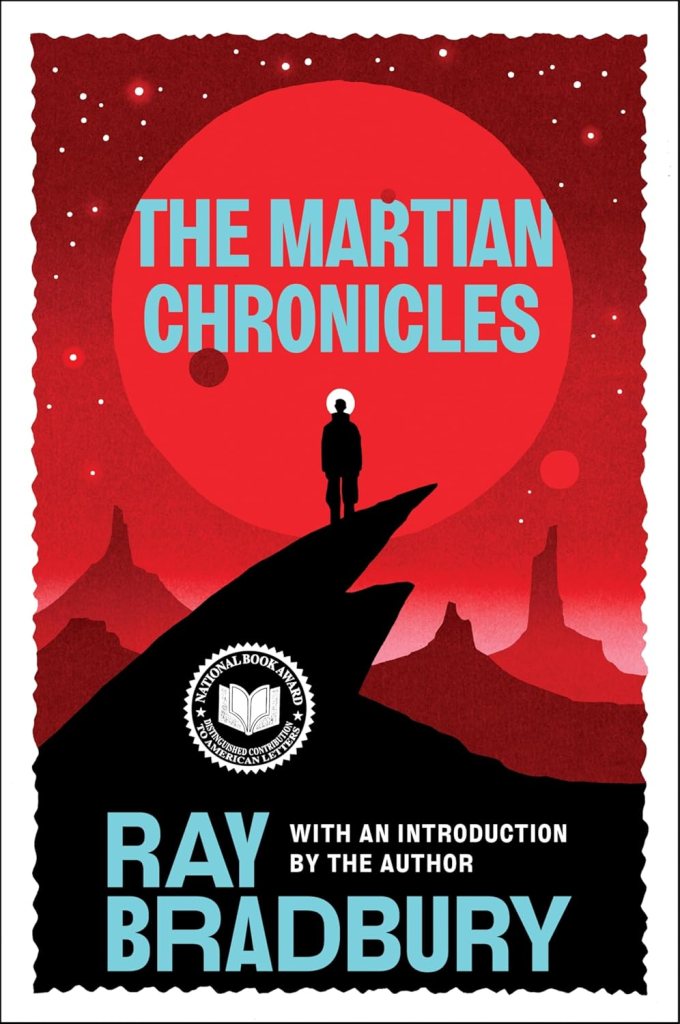
This is the first of the books I ran into that I remember reading, and of course, I remember Ray Bradbury. Ray Bradbury was one of three authors I’d buy sight unseen, look for in every shop that carried SF, and in the bookshelves of friends, casual acquaintances and teachers. (The other two were Heinlein and… Clifford Simak.)
I selected my favorites with no particular encouragement and knowing absolutely nothing about them. The reasons I liked them was that their books gave me pleasure. Later I added other favorites, and some of them are on the list of books ahead. There were also a list of other authors marked “Sometimes like” and a list of “can tolerate.”
But those three never disappointed.
They are, of course, completely different in voice and texture, but I loved them all.
You can look his bio up, if you need refreshing. I’ll give my non-bio impressions of Ray Bradbury. He reads as wonderfully in English as in Portuguese translation (that’s rare. Though Heinlein does too. The texture of both is remarkably consistent in both languages. Again, very rare.)
Ray Bradbury is the kind of writer you read not only for his thoughts — though they’re often quite incisive or even surprising (a quality you want in science fiction) — but for the dream-like, poetic quality of his language. (Or at least I do.) He is a writer you can get drunk on. I knew enough to know he was more acceptable to high fallutin’ literature teachers and professors than my other vices. So when I needed to convert bunch of them to allow me to write papers about science fiction or include science fiction in the school library, it was Bradbury I handed them.
He’s also the graveyard of newbies. I haven’t been in a lot of writers’ groups, but in almost every one of them, there was a kid who came in who wanted to write like Bradbury, and mostly was writing very bad Bradbury pastiche.
The reason for this, of course, is that Bradbury has the bardic gift. No, hear me out. It is a condition of mind, perhaps of being touched by the divine or eternity, which makes you a little unmoored in time and a lot attuned to language and a sort of dream state that evokes deeper truths beyond what they actually think they’re writing.
No, of course I can’t tell you that objectively, but it is the internal explanation I’ve come up with for how Bradbury did what he did. And it helps understand his books at a deeper level and beyond the mere plain storytelling.
Yes you can take me to take a hike on that. And I can tell you “Fight me.”
(This edition, which yes, has my associate’s link which means I win a tiny commission at no cost to you comes with an introduction by the author.)
I know it was the first Bradbury I read, because I expected something completely different when I first read it. I was I think 12 or maybe 13, and I remember reading it in Summer, because I remember reading it on the terrace, atop of my parent’s garage. And I remember I expected something very different. You see, the spine said Science Fiction, so I expected … well, calculations, and how to build a rocket, and the detailed colonization story.
What I got instead glossed over the exact measurements and the calculations and went straight into … well…. fantasy. Or at least more fantasy than what I expected.
And yet, it grabbed me right up and transported me into a world that was impossible, and which yet I completely believed. I’m not going to say short story by short story, and of course this is a novel composed of short stories.
I no longer remember how I felt about it at 12 other than “I like” but I know how I feel about it now. First of all, obviously, I enjoyed the book. Now a bit of deeper analysis.
The things he gets incredibly right:
1- this quasi-dreaming fantasy feel might be the best way to narrate the encounter between two cultures so alien to each other as humans and (this story’s) Martians.
2- He doesn’t make the Martians into noble savages and the humans into crude invaders. In fact in the very first stories, the Martians come across as pretty awful.
3- He gives us humans good and bad and makes us root for them.
4- the xenophobic idiot is the bad guy.
5- well, he’s BRADBURY. The worst story in this is better than anything I’ve ever written. He suggests things he never says, and we’ll get into that in a moment.
The things he gets wrong — in my opinion! —
1- he partakes of the belief in the nuclear war fear mongering propaganda which was quite normal in this place and time and honestly he probably couldn’t have been published without it.
2- This one is utterly baffling but I finally figured it out by noodling: He has all the new colonists abandon Mars to go back to Earth when war broke out. This broke me out of a it for a day or so, and I had to walk around to process it.
You see, I couldn’t understand it, because I am me, and I belong to my generation. Years and years, growing up I heard how the Earth was just going to break out in nukes all over, and after that it would be unlivable.
If my generation had gotten away and be in Mars for twenty years, and war broke out on Earth, and it were the kind of war where everything completely falls apart and will not be habitable for a long time? Hey, we’re staying on Mars, perhaps toasting the explosions in the night sky.
But this is not what Bradbury’s experience was. He was born in 1920, so he would have grown up on stories of immigrants in America abandoning everything to go back and to Europe and fight for the countries they left behind. And he probably saw it again in WWII, at least among the British immigrants.
Other than that, as I said, I greatly enjoyed the book, probably as much, maybe more than I did when I was a teen.
There is one hinted at thing that I think struck me the first time. I think so because at some other time, I read Dark They Were And Golden Eyed, and I agglutinated to this novel so i was convinced it would be in it.
Why did I think that. Well, of course, in DTWAGE the humans who have immigrated to Mars become the Martians we saw at the end of beginning of the Martian Chronicles.
The reason this made perfect sense to me is a story in the middle of The Martian Chronicles, in which a Martian Youth headed to a party in one of his cities crosses time-paths with a young Earth colonist headed for a party in one of his cities.
They argue over which of them is in the future of the other. And you get this sense of vertigo, like they don’t know and neither do you. And of course, DTWAGE ties a bow in that, so maybe they are both right.
Anyway, highly enjoyable and evocative and it gave me a little chance to enjoy the same magic I experienced when I first read it.
Next week, well… next week is complicated.
Next up is Tomorrow Sometimes Comes, by F. G. Reyer. The book can be obtained from Amazon, but in paper and for $30. And since I have no memory of it at all, I don’t want to take the plunge. The next book after that is even worse. Its the first book of the Lucky Starr series, and it runs into the hundreds of dollars.
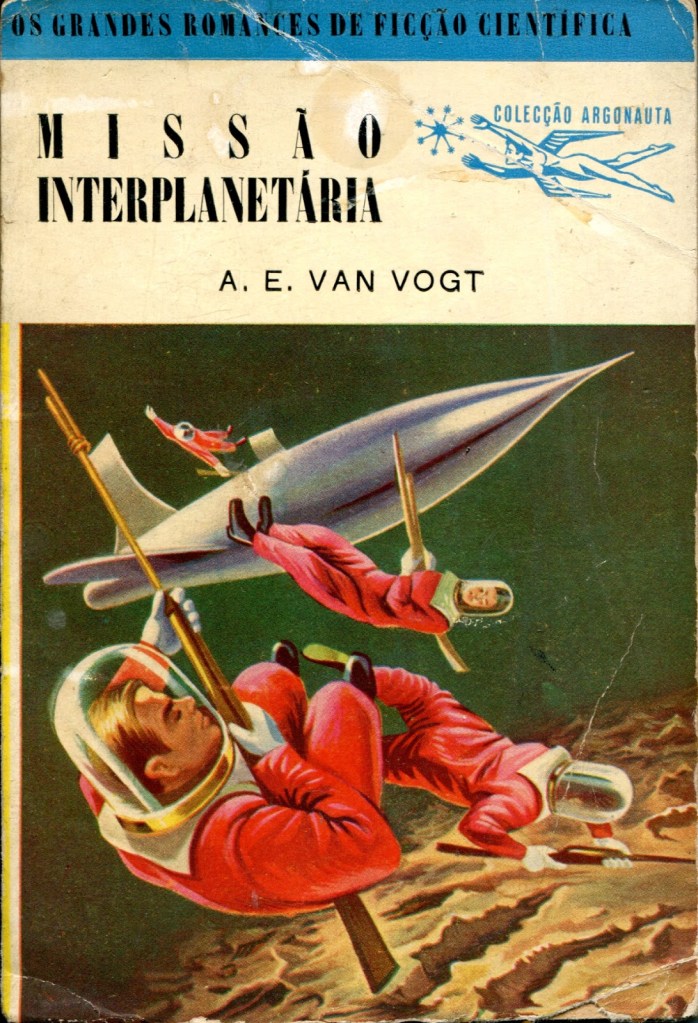
With your permission — right? — I’m going to skip these two and advance right into this beauty:
I have mixed feelings about it. I’m fairly sure I never read it, because having read about the voyages of the Beagle in my early teens, I’d have remembered this. And I used to love A. E. Van Vogt. While not making it into the top three, he was solidly in the second tier, with such people as Poul Anderson.
However, I’ve tried to read him in English, and I haven’t been able to get into any of them. (Which, I grant you, were some of his later, more psychadelic works.)
All I can say is I’m going to try it, and we’re going to see! See you next week for our next installment of Reading The Future of the Past.
I have finished Martian Chronicles, and will give you a review tomorrow.
There are a couple of big flaws in the book, but not enough to outweigh the fact it is a bardic masterpiece in a 100 ways.
The other flaw, which I will discuss tomorrow is understandable and it’s just “the limits of a person in his/her time.” but this one…. This one sticks out like a sore thumb, because it doesn’t feel organic to the story.
Yes, of course I’m talking about the anti-nuclear-war propaganda. The “nukes are going to end the world and life as we know it.”
It might have been truly his feelings. Of course, it might. Again the “man of his time, in his time” thing, and in his time, when he wrote the book the propaganda and the fear mongering of “we’re all going to dieeeeeee” was so total and so present in everything that it was impossible to think it might be… well, paid for by the enemy. Which, yes, we now know it was.
But somehow it doesn’t feel organic. It feels like something that was inserted because at the time to publish in science fiction, you must “put in the bit against nukes” or they’d never publish you.
This, you know, is the problem with any centralized industry, much less one that is supposedly dealing in “art” or at least in expression of art-like products.
I could write chapter and verse on it, but of course there was nothing doing at the time. production facilities, distribution facilities, concentration of publishing in a few companies with large offices, (though not as gigantic as they would become) mostly in big cities, all militated to making publishing part of what the immortal Sabrina Chase calls “The entertainment industrial complex.” Which, of course, was staffed by people who’d attended the best colleges and all “knew” the same things.
What they “knew” at that time is that nuclear war would end life on Earth as we know it, including a lot of utterly senseless bs like the nuclear winter, all of it propagated by the USSR the same way the anti-war demonstrations, etc. in W’s presidency were all propagated by communist fronts. (Probably mostly Chinese financed. A lot of things are these days. Might have been Russian, though. They might have had a few pence left over from their anti-fossil-fuel efforts. Oh, heck, who am I kidding, it was probably the commies in USAID.)
But they “knew” it and were filled with urgency to propagate the danger, and therefore any book talking about the future must include at least a reference to the dangers of nuclear war, or nuclear energy or something.
Everyone, from Heinlein on was doing “urgent” stuff about the dangers of nuclear war, though most of Heinlein’s truly scare-writings were in short stories and essays. The novels just sort of waved at it.
We can argue, and will in the comments, I suspect about how real the risk of nuclear war; how real the USSR’s nukes were, how functional most of the nukes around the world (maybe even ours) are now. (Incidentally and interestingly, the last time I was at the Cosmosphere, there was noticeably a lot more cheering for “international” cooperation in space (bah) and in the cold war exhibit the quote from Khrushchev and a notable absence of the plaque saying they actually didn’t have “anything” but these large metal tubes they drove around the country to give us the impression they had more missiles than we did. If I’d known there would be revisions, I’d have taken pictures. Also, I wonder why. Ah, well, humans.)
What we can’t argue though is that the study on the “nuclear winter” was falsified, the idea that it would sterilize the ruin the land forever has been proven nonsense, and while — doubtless — a nuclear war would have been horrible (would still be horrible, if there are still more than a few functional missiles around the world) and wrecked the world for a while, but it would not be the end of the world for by any means.
And coming across stuff that might as well be underlined and highlighted “propaganda to make the US give up right now and get rid of all its nukes and quietly surrender” drives me incoherent.
But, you’ll say, perhaps that propaganda, while it didn’t make us give up our nukes and surrender to the Soviets (thank heavens we elected Ronald Reagan, people!) did it perhaps do a good job in preventing us from going head to head with the Soviets and destroying a lot of things?
Shrug. I don’t know. And neither do you. We don’t have a parallel world to run that experiment on and observe. (And now I have a plot idea!) but here’s the thing: yes, it prevented a lot of destruction. It also created a lot of destruction, because for fear of a head on confrontation we let the USSR stomp all over the world accruing mountains of corpses, misery and ruined futures in Europe, Africa and Asia.
More or less destruction than a nuclear war would have caused? Well, again, I’m out of a parallel world to run the experiment on, but depending on how real and what maintenance they had (kicks imaginary spaceship. “Russian Technology!”) it is arguable and in fact QUITE likely that we got more damage from letting the commies stomp all over the world, for fear of a nuclear war.
Heck, considering the parlous state or our art, culture, history and everything infiltrated by the covert and not so covert Marxism and hatred of our own country… a nuke might have been less damaging. (Stop shouting, and think, really think about how much cr*p we allowed the USSR and for that matter Russia and China to do by treating them as equals.)
OTOH it could be argued, and if I had a parallel world to run tests on (what if our world is where tests are run?) that having the “progressive” establishment know the US was the only super power would be very bad indeed. Would you trust LBJ or for that matter even JFK to not go completely nuts if he knew no one could oppose whatever crazy ideas they came up with. (No, I’m not going to forgive JFK for USAID!)
So, other than the crying need for a world to run tests on is this all about.
Propaganda. In hindsight it is absolutely starkly clear how much we were propagandized and how many lies were in it.
The same can be said for the covidiocy, though a lot of people remain under that panic. Just like, for that matter, there’s a lot of panic still about nuclear war. and a lot of it is hangover of that propaganda.
Propaganda, particularly that pervasive, takes a long long time to work through a society.
Cold war kids, who voted Reagan in, didn’t know that a nuclear war wouldn’t destroy the world either. We were just so tired. Our entire lives we’d been told the hammer might fall at any minute. And honestly we didn’t care anymore. We just wanted to have a chance to win, and let the hammers fall where they may.
And again, even now, not all of us are past the after effects of the propaganda. The trauma comes roaring back every time Putin stomps.
So– remember we didn’t die. Remember that the propaganda melted away when challenged.
And remember how real propaganda can seem, and how it can fool the best of us: scientists, geniuses, artists, poets, even divinely inspired bards like Bradbury. There is no shame in falling for the propaganda, but–
But we must do our best to get at the truth, and mitigate poisonous propaganda. Because in and of itself, it can create as much destruction as any nuke.
Nowadays with a more decentralized information regime, there is a much better chance to get at the truth.
And we — both the cold war kids, those who came after, and the newly minted Covid kids — must always, always, always dig to get at the truth.
Before the lies detonate and destroy our entire world.
If you wish to send us books for next week’s promo,please email to bookpimping at outlook dot com. If you feel a need to re-promo the same book do so no more than once every six months(unless you’re me or my relative. Deal.) One book per author per week. Amazon links only. Oh, yeah, by clicking through and buying (anything, actually) through one of the links below, you will at no cost to you be giving a portion of your purchase to support ATH through our associates number. A COMMISSION IS EARNED FROM EACH PURCHASE.*Note that I haven’t read most of these books (my reading is eclectic and “craving led”,) and apply the usual cautions to buying. I reserve the right not to run any submission, if cover, blurb or anything else made me decide not to, at my sole discretion.– SAH
It’s fascinating at the junction of universes – until one of them starts throwing shockwaves!
Alexan and Petra have settled into an idyllic life as Jarl and Frue of Ygg, each satisfying their respective divine curses. But Siluria next door starts generating massive shockwaves, unable to absorb the energy being generated by the scourgings every seven days. Worse, Siluria is home to the warlike diligar, who are likely to launch an invasion as their home is ravaged.
It’s hard to unravel a puzzle the size of several universes. Alexan has only just begun to solve it when one of his experiments poisons an enigmatic divinity far greater than himself or Petra.
Ten years ago the Savients took over Niban, forcing the independent inhabitants into poverty and despair. Bass White saw the careless cruelty of the Savients kill his mother and his father. When a resistance cell is discovered in his city bloc, the Savients seek to make everyone pay.
With his wife Amie, Bass races into the caverns to escape the Savients’ brutal enforcers: the Atrasai. The couple barely make it to the limits of known territory outside their underground city, however, before the Atrasai catch up with them. It would take a miracle to save them…
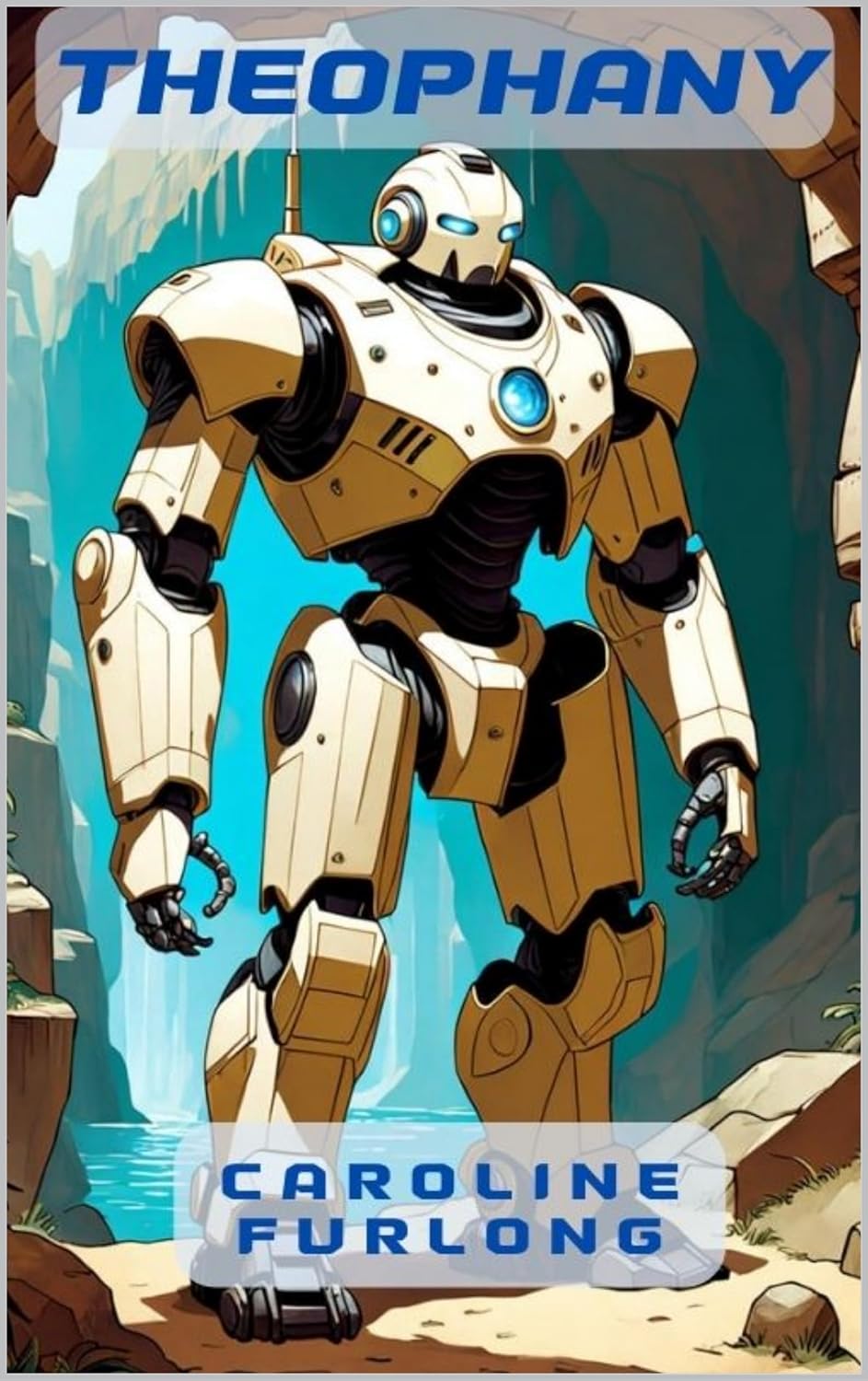
…or a combat medic robot.
Join Bass and Amie in this sci-fi story of healing, hope, and wonder. After a decade of fear and pain, even a little light can bring out the best in man and machine. But will the best be enough to heal?
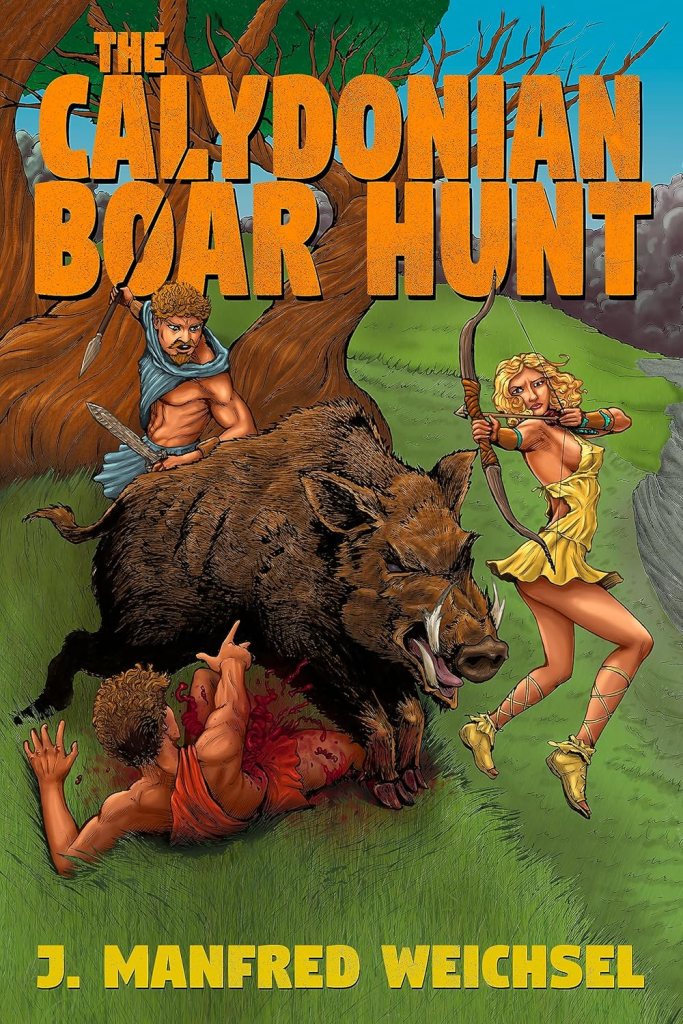
King Oeneus has just been given the secret of wine by the god Dionysus. Unable to hold his liquor, the drunken monarch forgets to honor Artemis at the harvest festival. In revenge, the angry goddess sends a crazed wild boar to ravage the kingdom with burning breath and razor-sharp tusks. Nothing can stop it.
The befuddled king, desperate to save his land, calls upon the greatest heroes of Greece to hunt the beast. Meleager, the king’s son, reluctantly finds himself leading a group of men he doesn’t respect or trust.
Soon the party of mighty mythical heroes is on the trail of the fearsome monster – but one of them is a heroine! Atalanta is a huntress to match Artemis herself, and quickly wins the heart of Meleager, despite the objections of the others.
Will one of the men make the kill, or will they be humiliated when the prize goes to a woman? Will Prince Meleager woo and win Atalanta, or will the gods intervene? Who will die and who will survive in this tale of loves and even greater lusts in ancient Greece?
A rip-roaring tale of jealousy and foul play, a family at war with itself and a battle of the sexes – told in Weichsel’s unique, no-holds-barred style. A pulse-pounding adventure that will appeal to fans of fantasy and horror, a wild ride through the weirder corners of Greek mythology. Strap on your sandals, grab your spear, and get ready to hunt the wildest boar of them all.
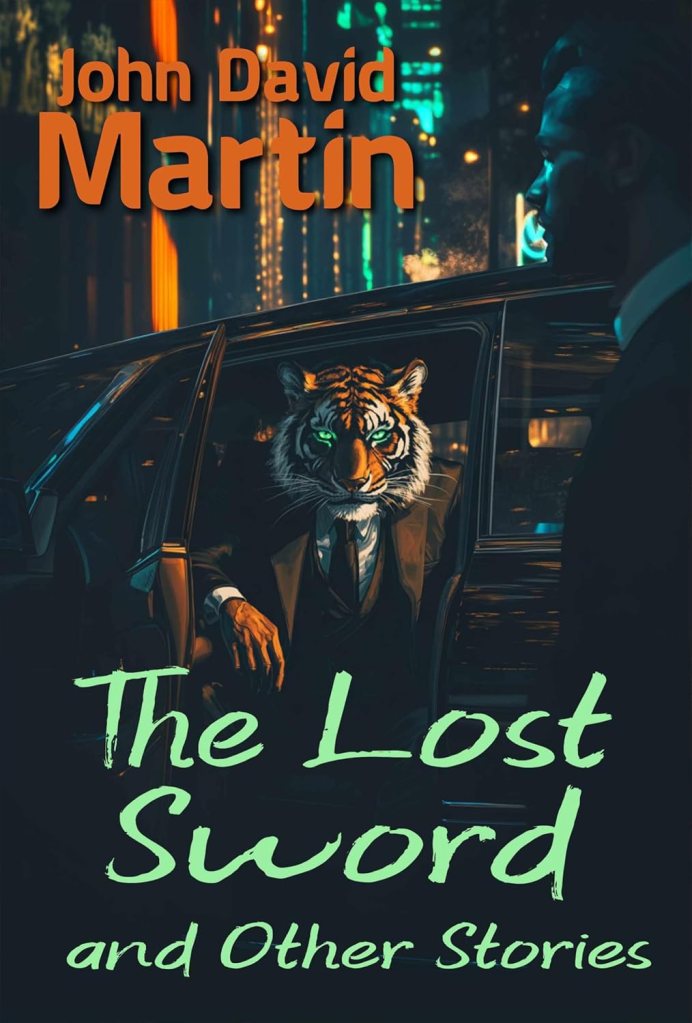
Jared Thorne: A para-human detective and his dryad wife hunting for a legendary lost sword in a multi-dimensional city. Eysteinn Bjarnarson: A descendant of the viking who settled North America fighting to win the love of the town beauty. His only opposition? A monster of Indigenous Canadian legend and…her father. Captain Faust of the North American Marine Corps: A descendant of one Dr. Johannes Faust who learns some deals are heriditary. But can they be re-written? Milo “Wolfkiller” Patel: A teenage bullrider on an alien world facing the challenge of his young career. Pawel and Tamar: Newlywed asteroid miners whose wedding cruise from the trans-Martian orbit out to the belt turns deadly. These are the characters whose stories I have faithfully recorded for you here.
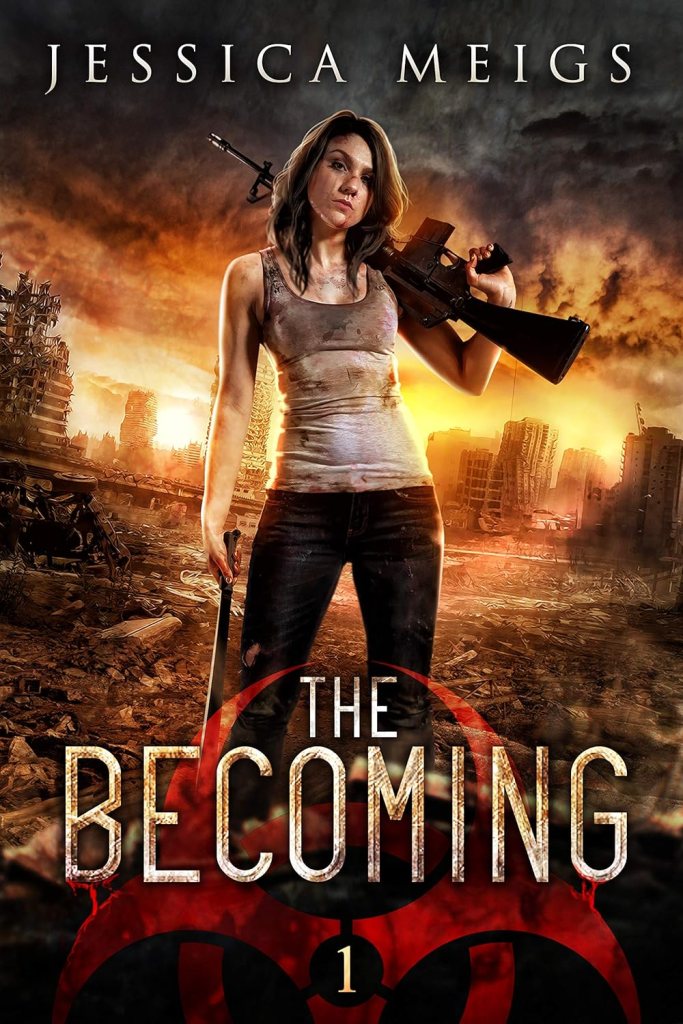
The Michaluk Virus is loose. It will take all of Cade’s skills to survive it.
A deadly virus has escaped the CDC in Atlanta, and Cade Alton is blindsided when it reaches Memphis and strikes down the heart of her family in a frenzy of blood and terror. Forced to dredge up military skills she hasn’t used in years, Cade teams up with her best friend in order to survive the onslaught and escape the city.
But fleeing Memphis doesn’t mean the end of her troubles. As the virus continues its relentless spread across the Southeastern United States, she finds herself surrounded by virtual strangers who have banded together for survival. And not everyone is getting along.
When the virus reaches their Mississippi safe house and they’re forced to flee, Cade is faced with a difficult choice: accompany her best friend back to Memphis in a search for his wife, or travel with the others to rescue a survivor trapped in Biloxi. No matter which she chooses, the options will have deep repercussions not only on her life, but on the group’s very survival.
If you love survivor-focused post-apocalyptic stories in the vein of the Rot & Ruin Series by Jonathan Maberry or Mira Grant’s Feed Series, then you’ll want to take a bite out of Jessica Meigs’ The Becoming!
Pick up your copy of The Becoming and start the epic tale of survival today!
“The last thing I expected when I went to grieve in the mountains was to get chased by werewolves, kidnapped by a dragon, or meet a legend. But that was exactly what happened.”–Sara Hawke
Sara Hawke, a highly-educated former PhD candidate in Linguistics, is plunged into a situation that strains her skepticism: first she meets a pack of werewolves while camping on the night of the full moon, then she’s rescued by a man the werewolves seemed to fear. Her rescuer then decides that she’ll be good company until he decides to let her go. Then he tells her that she has the potential to be a sorceress, and offers to teach her.
Along the way, she learns that legends aren’t always what they’re cracked up to be, and are occasionally more than they seem…
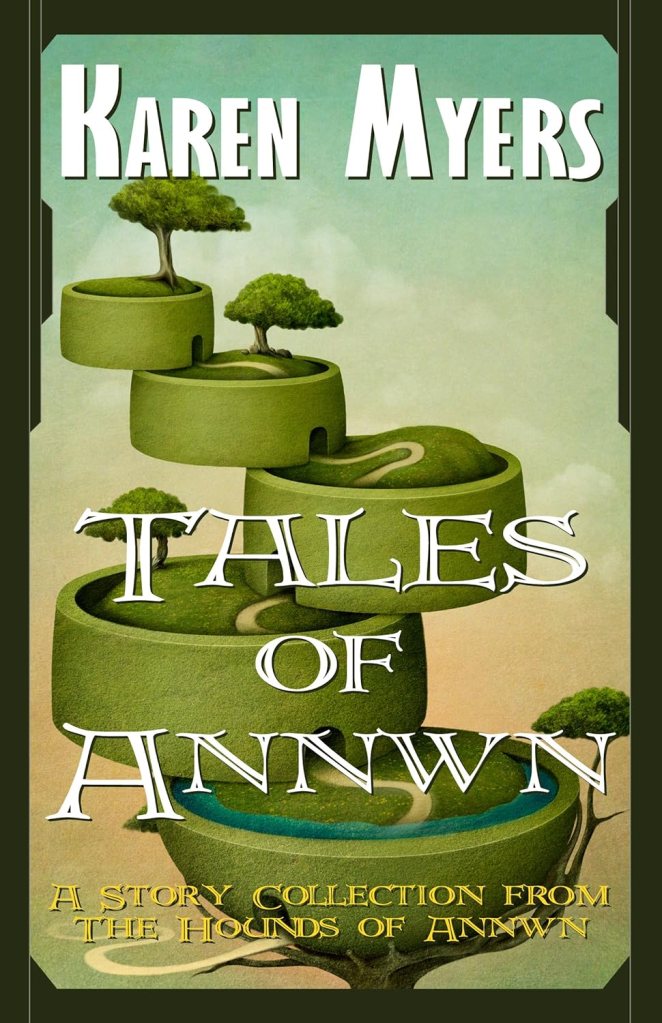
A Collection of Five Short Stories from The Hounds of Annwn.
The Call – A very young Rhian discovers her beast-sense and, with it, the call of a lost hound.
It’s not safe in the woods where cries for help can attract unwelcome attention, but two youngsters discover their courage in the teeth of necessity.
Under the Bough – Angharad hasn’t lived with anyone for hundreds of years, but now she is ready to tie the knot with George Talbot Traherne, the human who has entered the fae otherworld to serve as huntsman for the Wild Hunt. As soon as she can make up her mind, anyway.
George has been swept away by his new job and the people he has met, and by none more so than Angharad. But how can she value the short life of a human? And what will happen to her after he’s gone?
Night Hunt – When George Talbot Traherne goes night hunting for fox in Virginia, he learns about unworthy men from the old-timers drinking moonshine around the fire and makes his own choices.
Who could have anticipated that the same impulse that won him his old bluetick coonhound would lead him to his new wife and the hounds of Annwn? Every choice has a cost, he realizes, but never a regret.
Cariad – Luhedoc is off with his adopted nephew Benitoe to fetch horses for the Golden Cockerel Inn. He’s been reunited with his beloved Maëlys at last, but how can he fit into her capable life as an innkeeper? What use is he to her now, after all these years?
Luhedoc needs to relearn an important lesson about confidence.
Dragon shifter Tom Ormson wanted two things: to serve killer souvlaki at his Colorado diner and enjoy married life with his pregnant panther-shifter wife. Instead, he got unwanted psi powers and a dragon triad syndicate demanding his leadership.
When Kyrie’s grandfather is found murdered, police officer Rafiel—Tom and Kyrie’s closest friend—must solve the case while being pulled into a power struggle for lion clan leadership. With all shifter clans in turmoil, separating allies from suspects becomes a deadly game.
The suspect list grows wilder by the minute: murderous chicken shifters, a skull-collecting otter who teaches art history, a Minotaur delivery man, chaos-causing spider monkeys, and an alligator shifter who might be a double agent. Meanwhile, Rafiel’s dragon girlfriend visiting town might get caught in the crossfire.
In Goldport, Colorado, the special of the day comes with a side of shapeshifter chaos. Just don’t ask about the capybara incident.
Who is the child Reza can hear crying every time she goes to the new addition to the Royal Library? Her boss insists there is no child, that it is nothing more than her uncanny sensitivity to the unseen world making a nuisance of itself.
Worse, searching for answers gets her angry rebukes about respect for the dead. The further Reza goes, the more certain she becomes that someone is hiding an ugly secret.
It’s a secret that traces back two generations, to a dark period in this land’s history. A time most people would prefer to forget, not caring that denial doesn’t make a problem go away.
The truth may set you free, but not without a price. And Reza fears that death itself might turn out to be an easier price than the one demanded of her.
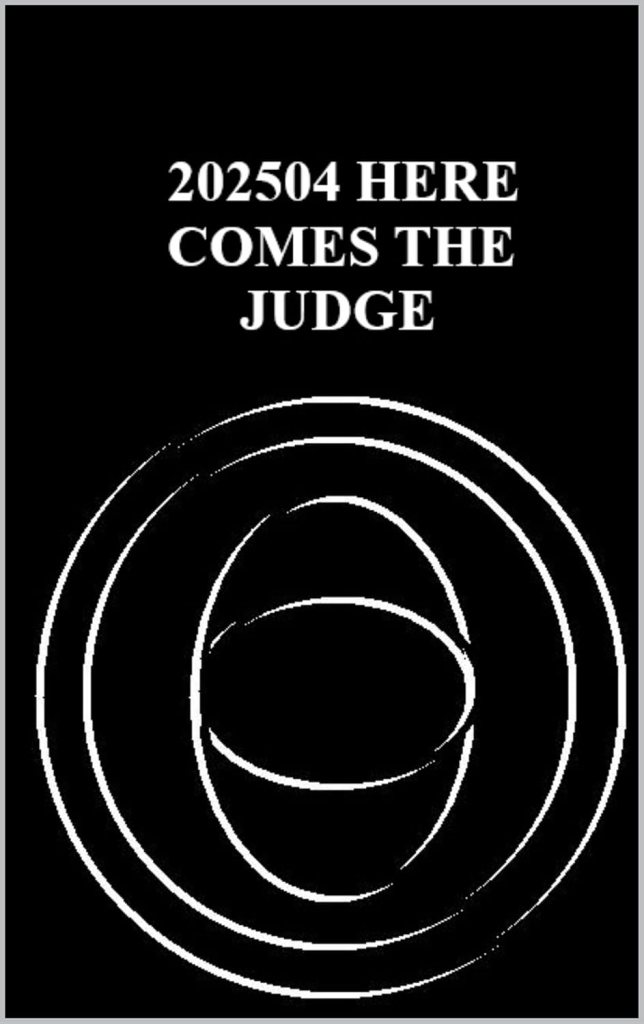
Collection of current events and various thoughts from April 2025. Things are getting messier and we’re all just trying to hold on. This is my attempt to keep track of what’s going on and why. Whatever court of law we’re headed towards, we’re all defendants and don’t even understand all the charges. Can we trust the judge to do the right thing?
Vignettes by Luke, Mary Catelli and ‘Nother Mike.
So what’s a vignette? You might know them as flash fiction, or even just sketches. We will provide a prompt each Sunday that you can use directly (including it in your work) or just as an inspiration. You, in turn, will write about 50 words (yes, we are going for short shorts! Not even a Drabble 100 words, just half that!). Then post it! For an additional challenge, you can aim to make it exactly 50 words, if you like.
We recommend that if you have an original vignette, you post that as a new reply. If you are commenting on someone’s vignette, then post that as a reply to the vignette. Comments — this is writing practice, so comments should be aimed at helping someone be a better writer, not at crushing them. And since these are likely to be drafts, don’t jump up and down too hard on typos and grammar.
Well, it’s been that sort of day all around these parts. Everyone’s fine. There were checkups and shipments and pollen and just . . . it was very much a Friday. (Ok, with the pollen, fine might be pushing it, but everyone’s alive and breathing, which is not Nature’s fault: she tried.)
So, please amuse yourselves, or not, with what might be on the other side of that door. And there will be memes tomorrow, bet your bottom dollar there’ll be meming.
Yeah, yeah, things got delayed because …. well, I hope I’m not getting sick again. It is possible. The thyroid prescription has been upped to maybe stop this cycle.
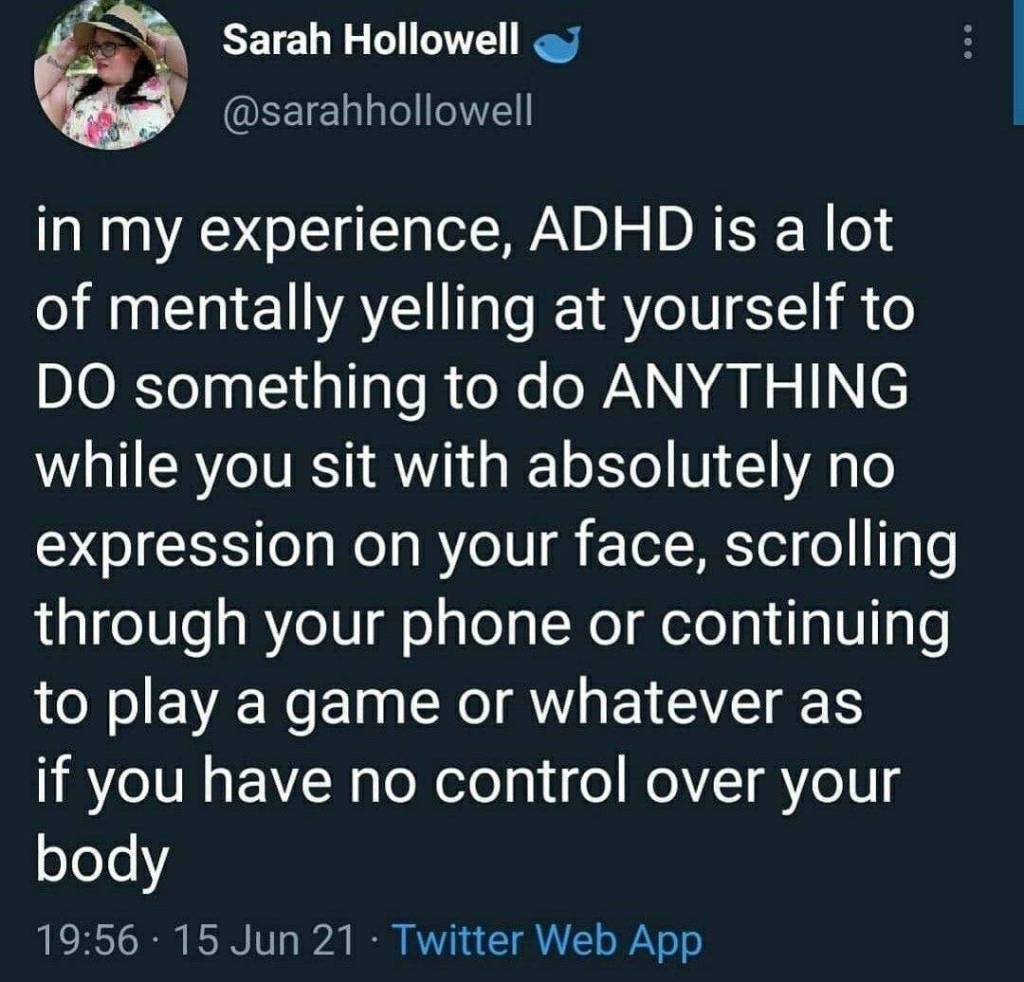
I’ve actually been up since — much too late 10:30. I mean the cats thought we’d died. But it was the two of us, so maybe it’s something else? — but exceptionally ADD with it and not getting much of anything done, though much started.
Anyway, part of the … interruption …. was a young friend who’s been down a long time, and her normal “popping back up” mechanisms aren’t working.
And I want to talk about that, and about the whole whole mess with health. Not whining this time, I hope, but explaining why I keep making the hand I was dealt worse. I’m doing this because I think a lot of us have that problem, and I suspect at least one of you out there needs to hear this.
First, look, when our cats start getting older, we take them for checkups every six months. Because they hide when they’re sick. And sometimes a checkup catches something that can be fixed with a tablet, and it means they live another five years, not five months.
And if you’re saying “But I’m not old”. It all depends on perspective. At this point, to me, everyone looks alike babies. And at the same time, I still feel like a kid, just beginning. I think humans have an internal certainty of their being eternal beings, and as such they know our entire life here, were it a century just makes us infants in eternity. Which is fine.
But talking of the body… Look at my cats. I start taking them for six month checkups at around 10 (unless we’re really broke, then it’s 12. Or beyond broke, in which case neither cats nor humans get checkups.) Because they’re considered elderly at 10. Which in the wild, eating what they can catch, etc. is about right. But you get them checkups and most of ours live 17 to 21 years.
Humans in the wild… ah, you’re good for 35 to 40 years and then things go wrong. You might tick on a couple of decades more, but you’ll be old. Really old.
So–
Yes, things can go wrong younger too, but after 35, consider things might be breaking down, okay?
And here’s the thing, I was talking tot he endo and pointed out I don’t even know what’s a sign of low thyroid or just being sick, or my auto-immune being spicy again, since the three tend to synergize each other into vortex from hell.
But one thing I know, and it’s comforting of a sort: I’ll always blame it on myself, my mind, my personality defects and my not trying hard enough until someone says “Hey, there’s something wrong physically.”
The weird thing? No matter how much I beat myself we wouldn’t have caught this latest thyroid issue, which we only caught because my GP tried to diagnose it as hyperthyroidism (apparently it’s fairly common for GPs to misread the results that way. Heck, I had an endo in Denver do that too.) And one thing I know for sure, having had friends who were hyperthyroidal, when you’re sleeping your life away, your get up and go got up and went, and you’re 80lbs overweight, there is no way in heck you’re hyperthyroidal. So I asked for a referral to a specialist, and yes, the meds helped, though not all the way. (And yes, I was diagnosed as hypothyroidal, not hyper.)
The thing is low thyroid which is disturbingly common in middle aged women is heck to diagnose if you are … me.
If you are chronically depressed, forever checking yourself against reality, and ADD — but can’t medicate because it makes you into a paranoid, aggressive moron — causes you to have to kick your butt into actually working, finishing things, fullfilling obligations, etc, it’s really hard to figure out when things have gone seriously wrong.
The first time my thyroid went wonky (Yes, it got better, but not all the way… And then it went bad in another direction) I went through years of brain fog — which I’d never had before, but you know what it is when you feel it — and until the symptoms were alzheimers-like and the writing stopped, it didn’t occur to me I needed medical help. I was just depressed and being a wimp, you know.
And the other thing I’ve had (and fortunately it’s just annoying) since I had first son (the caesarean) I’d get these black spots on my abdomen, gross black spots, and over time, sometime, these black things came out. I figured out it was because I was so fat, and–
Turns out it’s stitches from the Caesarean working themselves out of the body. (Yes, the OB used the wrong stitches. What else is new.)
Or take my infertility issues. I’ve felt guilty about it for decades. If only I’d not done this, I had done that, if I had– Now they have a diagnoses which also matches stuff that happened when I was 19. Autoimmune. Which shouldn’t shock anyone, but– So, the surprise is not that we only managed two kids with years of treatment and all. It’s that we managed kids at all. Most women with my condition never do.
Honestly, this is such a pattern that while I feel guilty as heck over my weight and the fact I don’t exercise enough, it wouldn’t surprise me even a little bit to find out it’s some problem that you can’t fight with will power and strong enough work ethic.
Because that’s the hardest thing, right? You know yourself. Or at least I know myself. I’m lazy, scattered and have a tendency to get depressed when someone drops a hat across the world.
Again, my solution to anything that goes weird is “kick yourself harder.” And sometimes it works. Heck, most of the time. I’ve managed to be unmedicated for depression for most of my life. (Holds up fingers in V — sixty two years, still at large! The fools! Mwahaahahah.)
So…. how do you know?
You don’t, but there are some reliable guides:
If something is weird, and isn’t exactly hurting but is just “Uh, that’s weird!”: A spot on the skin, lightheadness at certain times, after certain actions? Sure, maybe it’s nothing, just your body chanting, or whatever. OR– Or it could serious. Drag yourself to a checkup, mention the thing and don’t minimize it. See what it is. (Minimizing meant my husband went with something untreated for 20 years, so…)
If all of a sudden you can’t do anything you’ve done for years, whether that is hiking a mile or writing a novel in a month? Get it checked up. (The most likely cause for a slow down in writing or reading is your eyes, BTW.)
If you’re a depressive and have your protocols in place to deal with it — reality check, take a break, do enjoyable activity, see friends, sleep more, whatever — and it’s simply not working, go in for a checkup. And don’t prejudice them towards psychological issues. Have a blood test. A lot of serious issues, including some cancers first present as “depressions I can’t kick off.” (I remember Eric Flint describing the onset of his cancer long before they figured out it was there as “Depressions from the pit.”) So, check that. Check as much as you can. Your GP will gladly give you happy pills and not look at underlying causes. So describing exhaustion and sleeping too much or whatever and not hopelessness or depression is best to begin with.
And if you find yourself engaging in suicidal ideation out of the clear blue sky? First check if you’re taking Montelucast. No, seriously, it now has a black box warning. And you can take it for years and suddenly the symptom appears. Which is what happened to me.
If you’re not, run, don’t walk to a doctor, and yes, tell them what is going on. Because nothing is solved by the world having a you shaped hole in it.
…. And now I’m going to have some caffeine and go revise. Speaking of explaining things just not working, would you believe I forgot caffeine this morning? No wonder I have nothing done. Argh.
This is not my post about the Martian Chronicles, or not the full post at any rate. Mostly because I’m still at 25%. I’ve been rationing it — it’s not difficult to read — because Bradbury is contagious on the word sense level, and I’m in the middle of a revision that I don’t want full of poetic light and sound.
Not that there’s anything wrong with the poetic vision. On the contrary. But if the middle chapters are THAT people will wonder what good drugs I had for those chapters and why I didn’t take them for the rest of the book.
I will say though when I first read The Martian Chronicles, sometime in the long summer of adolescence, between 12 and 18 or so, and being UTTERLY baffled by it. You see, I was expecting a normal science fiction book about colonizing Mars.
But I liked poetry.
Coming from a long line of poets and people who told epic tales in beautiful language, having been trained to “no, that’s not the right word, try again. That word in that sentence is cacophonic. Try for euphonic.” from the moment I could speak, or at least as far back as I could remember (the injunction was usually more subtle.) poetry worked for me.
Bu the book disturbed me and left me with the sense I’d missed something.
As it turned out, I was right. Though perhaps getting Martian Chronicle the way it’s hitting me this go round takes having immigrated and acculturated, as well as having spent the last thirty years reading tales of first encounters, civilization, discovery, colonization around the world.
Which is weird since Bradbury never did any of that. But then poets are weird. There is a reason it used to be considered one of the poetic gifts. Like prophecy or soothsaying. Their minds are not all in the same dimension, nor do they move in a linear fashion.
Anyway, this brings us to how the stories are hitting me: the lost expeditions, the reactions from the Martians, how things work out…
They hit …. about right, including the flying language reaching for what can’t quite be expressed in words.
Look, even on Earth, when cultures long-separated meet, the misunderstandings, not understanding at all and either imbuing with supernaturally good characteristics or… well, the opposite, go on forever.
And are sometimes lethal. I’ve pointed out before that things like the Boer war with the Zulus stemmed from a fundamental mistake on the part of the Zulus. They were waging perfectly normal, effective war, as our ancestors did in the Neolithic, if the tales of the grave are to be believed.
When a new tribe appears in your territory, or territory you want, you go all our and commit what we’d consider heinous massacres, doing horrible things to everyone, including women and children. This shows the other tribe that you’re scary and mean business. They retreat. (Unless they’re stronger, or can’t, in which case they do the same to you till you retreat.)
But they weren’t prepared for meeting an…. international culture that communicated by writing and was so far from tribal they considered all humans people.
In that light their atrocities weren’t scary. I mean, they were that, but they were more. Enough to make the Westerners looking on wonder if they were human or even had souls.
From then on their loss was spelled out.
The story with Amerindians is the same. (Yes, they are indeed Native Americans. They were born here, most of them. Seriously. Just because their legends say they were here since the Earth and the sky, blah blah blah, we KNOW that’s a lie. I don’t like lies. Maybe they were here forever “spiritually”. It doesn’t matter. Is “Indian” a misnomer based on a mistake. Sure is. What? Are other peoples in the world not misnamed. I’m not at home to this kind of linguistic insanity.) Only they had better PR and Europeans, bedazzled by Rosseau endowed them with “noble savage” clothing. (Savage they indeed were, since they waged neolithic-like war.)
Viewed in that light, what the Palestianians did on 10/7 is the same kind of cultural mistake –but it begs the question: Where did these people come from? Were they imported wholesale from the neolithic? And while on that, why do they think this is their territory? — and is at long last getting the same kind of response from civilized humans. Because cultures don’t change any other way and use humans as mere vessels.
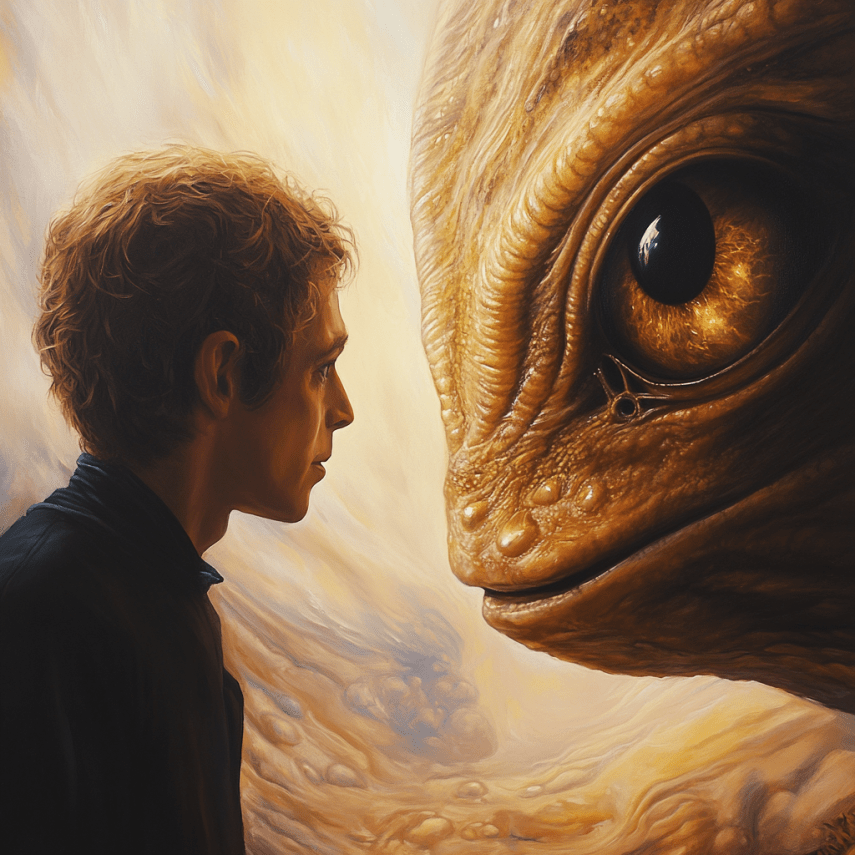
Anyway, now imagine you’re not meeting another human culture, separated a few thousand — or a few hundred — years, but something totally and completely alien, with no frame of reference.
I particularly like the story of the second expedition in Martian Chronicles, in which the Martians never even know an expedition landed because they know these people are crazy and causing infectious hallucinations via telepathy.
That is, of course, unlikely. Or is it? Have you seen some of humanity’s more… interesting explanations for what they don’t understand and which doesn’t fit our frame of reference? To save yourself embarrassment look up “scientific” theories of the past. I bet you we’re doing the same a few places, but of course we’d never know it. Because it’s us doing it.
I laugh, every time I hear announcements that the government is going to “reveal” aliens.
If aliens are here, there’s a good chance they’re so different we’re not aware of them.
And probably they’re not aware of us either.
That light in your house that turns on and off for no reason any of you can figure out?
It’s because the aliens who share your house and think it’s a natural formation like it that way.







































 According To Hoyt