Book Promo Vignettes by Luke, Mary Catelli and ‘Nother Mike and Heads Up

Heads Up

*Okay, heads up first. I have a minor test/surgical thing tomorrow morning.  The reason this post is ridiculously late is that I spent the morning chasing down the necessary prep (think about it, it will come to you) for which the center forgot to send me the prescription.  On that, I wish to add “ew, yuck.”
What this means is that likely there won’t be a post tomorrow morning.  Which is why I don’t feel bad about putting promo up THIS late. -SAH*

Vignettes by Luke, Mary Catelli and ‘Nother Mike

So what’s a vignette? You might know them as flash fiction, or even just sketches. We will provide a prompt each Sunday that you can use directly (including it in your work) or just as an inspiration. You, in turn, will write about 50 words (yes, we are going for short shorts! Not even a Drabble 100 words, just half that!). Then post it! For an additional challenge, you can aim to make it exactly 50 words, if you like.

We recommend that if you have an original vignette, you post that as a new reply. If you are commenting on someone’s vignette, then post that as a reply to the vignette. Comments — this is writing practice, so comments should be aimed at helping someone be a better writer, not at crushing them. And since these are likely to be drafts, don’t jump up and down too hard on typos and grammar.

If you have questions, feel free to ask.

Your writing prompt this week is:  Toys

Book Promo

*Note these are books sent to us by readers/frequenters of this blog.  Our bringing them to your attention does not imply that we’ve read them and/or endorse them, unless we specifically say so.  As with all such purchases, we recommend you download a sample and make sure it’s to your taste.  If you wish to send us books for next week’s promo, please email to bookpimping at outlook dot com.  One book per author per week. Amazon links only.-SAH*

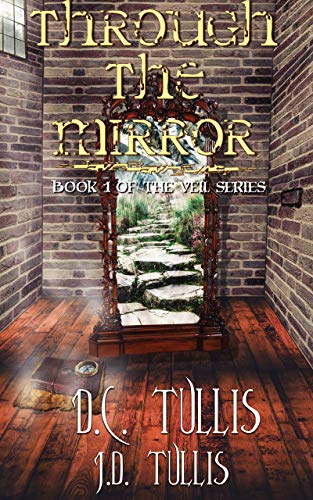
FROM J. D. TULLIS:  Through the Mirror (Book 1 of The Veil Series)

516w6qowugl

In Through the Mirror, Jason Whitelock and Ellie O’Connell are two high school seniors that live in the isolated and slightly mysterious port-town known as Eastmouth. The shocking discovery of a hidden room catapults Jason and Ellie into a clash with terrifying, lovecraftian alien forces and shadowy government organizations. Stranded in an impossible situation, the two must band together to survive the odds and find a way to escape back into the semi-normal lives that they had greeted with boredom only days prior.

This book should be of interest to fans of Jim Butcher’s ‘The Dresden Files’, Larry Correia’s ‘Monster Hunter Series’, and Rick Riordan’s ‘Percy Jackson and the Olympians’. It is the first entry in The Veil Series.

FROM J. L. CURTIS:  Rimworld- JACE

51r-cqpvpel

Roberto de Perez engineered his escape from the soul-killing drudgery of corporate leadership, to a remote research lab under an assumed name to play with research projects, like the creation of AIs more powerful than any protocol envisioned.

Freedom isn’t perfect: As a mid-level lab manager developing a brand new self-aware AI that’s actually better suited for combat shuttle control, Roberto unwittingly crosses a line with an external agency he didn’t know cared, and his own internal bureaucracy isn’t happy, either. What he doesn’t know is that there are people determined to keep him from succeeding at any cost.

What he doesn’t realize is his new AI has learned to manipulate the system all too well from watching Roberto, and everyone underestimated what it will do when its existence is threatened…

Novella 17,600 words

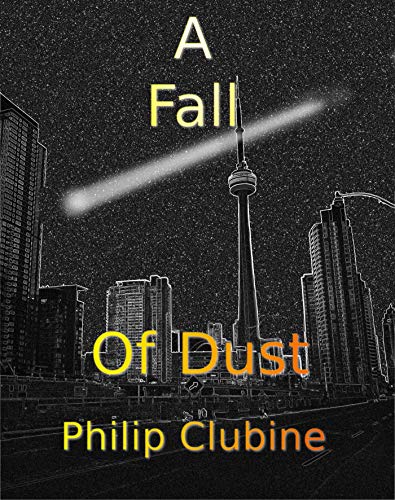
FROM PHILLIP CLUBINEA Fall of Dust.

51xfppds4tl

When you know the world is ending, what would you do? Some people give up. Others tend to go a little crazy. Then there are the planners and the ones that refuse to believe things will end. Nick Theopolis, convienience store owner, reader, and planner is one of those.

It won’t be easy. Mobs, hunger, and collapse of general infrastructure. Don’t worry, he’s got a plan for most of that.

FROM ALLENE R. LOWRY:  Einarr and the Oracle of Attilsund (The Adventures of Einarr Stigandersen).

51yzrjcxg6l._sx331_bo1204203200_

No sooner have Einarr and his friends returned to meet their ship at Kjell Hall than they have to set out again. Captain Stigander has determined it is time to get serious, both about lifting the Binding that keeps them away from the home his son barely remembers and about more material matters, such as gaining the wealth and manpower they’ll need to take on the usurper’s enthralled army. When the svartdvergr Jorir hears his new Lord’s tale of woe, he suggests a detour into the far northern reaches of the sea, where dwells an Oracle he has had cause to visit before. Now the crew of the Vidofnir sets off to seek its fate in a rather more literal way than anyone is used to.

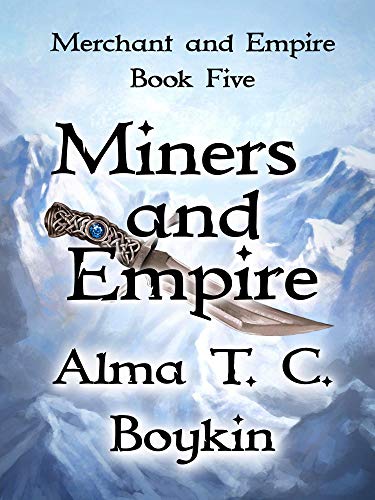
FROM ALMA T. C. BOYKIN Miners and Empire: Merchant and Empire Book Five.

512iwstlfzl

Aedelbert Starken shapes stone, not magic. Or so he thinks.

The town of Garmouth depends on the mines for life. Aedelbert comes to the city with his partner Caedda Quaedel in order to build three new smelters for the ore. Aedelbert and Caedda, master stone-cutters, just want to work, collect their wages, and move to the next job. Nothing more or less.

To their chagrin, building smelters and training an apprentice pose the least of their problems. A noble with a grudge threatens the mines and the city, leading to a race between the men of Garmouth and the mines, the noble, and the forces of ice and water.

Aedelbert wants nothing to do with any of it. The Scavenger, however, has other ideas. And what He gives, He can also reclaim…

67,000 words.

And I Can’t Get Up

monument-2032694_1920

If you’re like me, you have trouble with the usual encouragement and sayings that are meant to give you strength/courage/optimism.

You know perfectly well what I mean. I’m not going to give sources for these, because I hear them from everywhere, and my mind isn’t really good at buying anything wholesale.  Hint, my mind buys it even less if it comes with a cute kitten.  I think I started hating motivational posters before I had my first job (Which this being the eighties was PLASTERED in them).  (Though at one time I did have the “hang in there” poster because the kitten was adorable.  So, I’m inconsistent. Deal with it.) We are naturally attracted to demotivational posts out of frustration with the easy pollyannaish motivational posts, and annoyance with the people who believe in them.  Hold on to that thought. It’s important. Seeing people for whom things seem to work, particularly things that our annoying brains tell us are far more complex than the poster/maxim/story is making them out to be causes annoyance. Frustrated annoyance. And a desire to believe the opposite.  If people tell you “Hang in there” you know you’re going to drop hard. You just know it.

Some of it is born of experience, sure, but be honest with yourself, you expected it all along.  Remember that too, it’s important.

One of the things that annoys me most is the saying that “the best predictor of whether you’ll succeed is how many times you fail.”  Mostly because that’s not how that works. That’s not how any of that works.

That saying is sort of the incarnation of survivor bias.  The more you’ve gotten knocked down AND still managed to get up, the more likely you are to succeed, sure. But that’s because you’re already by any definition a fairly exceptional person.

I’ll use writing for a bunch of this because it’s THE experience I have, but honestly, you could use anything, from your love life to your attempts and being the world’s best tiddly winks player.  (Why am I obsessed with tiddly winks? Well, my eidetic, brilliant brother spent something like 12 years devoting all his free time to playing tiddly winks, a game that in Portugal, usually was left behind at age six or so (for boys. Girls didn’t play it.) In retrospect, it was an addictive behavior. If he’d had video games, he’d probably have been addicted to that. It’s not unusual for very, very bright people to need to dull the pain of… well… of the world not being made for them. And if they have an addictive personality, even if they don’t fall into drugs or alcohol, they’ll get addicted to something REALLY weird.  For one of the worst times of my life, I was addicted to fanfic for a TV series that I never watched. Why? Well, it kept the brain minimally occupied so I could dream my life away without DOING anything. Yes, brother eventually stopped it. But meanwhile my parents kept joking his ambition in life was to be the world’s best tiddly winks player.)

Most people who want to be writers never start.  Laziness? Maybe. Perhaps. Sitting down and putting fingers on keyboard is not physical work, but it is work.

I’d argue though that most of the time the problem is not so much laziness as the fear of never getting better. I know that’s true for almost everyone who tries to draw anything.

And trying to write a story is a series of compromises. In your mind the thing is multicolored and gigantic, with 100 actors and 1000 elephants. But you can’t write that. It’s simply not something you can put on a page. No one is going to follow that sort of diffuse action. So you compromise.  You’ll tell this person’s story. Maybe 10 actors. And one elephant.

And even then, if you’re a beginner you’re going to botch it.  For instance, it’s perfectly normal for beginning authors not to be able to handle more than two characters on the page at a time.

So most people give up. Our model as humans seems to be “perfect first time, or I’m no good” but also most people don’t believe they can get THAT much better. (Hint, you can.)

I no longer remember the statistics, and since I don’t know how they collect them anyway, they’re probably meaningless, but it’s something like:of a million people who ever thought to write a book, one actually does it.  Of course, there’s no way of measuring how seriously they thought of it, so again, it’s just a vague indication.

We do have more solid ground for people who actually wrote anything significant AND submitted it, ever getting accepted.  The ratio is something astronomical like 100000 to one.

Why? Because most people give up after the first rejection.  On this, I’m going on my experience in many writers’ groups over the years.  Any number of people I met along the way wrote ONE NOVEL. It was a good novel, in most cases (two were brilliant.) They then spent the next five, ten, fifteen years trying to sell it, so single mindedly focused on selling it, that they never wrote another.  And the novel got rejected. It got EPICALLY rejected. It got rejected by every reputable outfit and a dozen of the oh, 100 or so I knew ended up falling for scams like “pay us to read” or “pay us to publish.”  When this failed to obtain success, they stopped writing. Well, honestly, they’d stopped writing years before, in favor of selling the one novel. But that’s something else. The truth is that they looked at that novel as “proof of concept” and since it didn’t sell, they knew nothing would sell and they gave up.

This is understandable, but completely contrary to reality.  So contrary it doesn’t even coexist in the same plane.  It’s part of the lies we tell ourselves and the world tells us “if your thing is good enough, it will be a bestseller.”  Doesn’t work like that. You’re not submitting your novel to some all-knowing perfect judge. You’re submitting it to a person who is flawed and has issues in his own life and views your story through their own lens. And sometimes their lens has bloody nothing to do with anything you could anticipate when writing the novel. For instance, one of my series took SIXTEEN years to sell, because it was weird, but also because the one house who WOULD have bought it rejected it with “we bought something very similar just last week.”  You know, in such circumstances I assume they’re lying. But I know what they bought, and yes, it’s very similar. And it went on to be a bestseller.

Let’s assume you’re one of the very resilient few and write a second novel and a third novel, while trying to sell the first. (I wrote nine. Three of those have sold since.)

The fairy of good fortune comes and touches your novel.  It sold. YAY.

Good for you. Be aware the chances of its becoming a bestseller is not dependent on quality, but on distribution, cover, and how much the house pushes it.  Heck, the chances of it becoming a GOOD seller are minimal.

Most people who sell a book never sell a second. I don’t know how many, but way in excess of half.

By the way, all of this applies to indie. Most people who put a novel up never sell more than a dozen copies. Discoverability is the problem, mostly. Just advertising your novel everywhere is not going to make it a bestseller (for one indie is heavily biased for series.)  I’m not in writers’ groups now, but I KNOW just from people who write me and who decided they were “no good” after a novel or a short story that the “drop out because of perceived failure” rate is about the same.

So, what about if you sell a second or a third, or a fourth novel?  Yeah. My career has died… eight times now.  Utterly dead. At one time it took me almost two years to sell anything to anyone again. I did a full relation of my career here.  Well, more or less full. I elided some set backs. And there’s been one more since that was written. Without going into details let’s say my own remaining option — ONLY option — is going indie with both feet. Whether I’ll ever recover my IP is something else again. No, I’m not ecstatic about any of this. More on that later.

One of the most bitterly funny things about me is that most people perceive me as an optimist.  One of you in comments yesterday asked where do you master the will and the optimism to try again.  Ah!

It has nothing to do with will or optimism.  Seriously. Absolutely nothing. It has to do with being alive and wishing to remain so.

My family is notoriously unlucky. I was born knowing that or at least imbibed it with mother’s milk.  Seriously “if we made baby bonnets, babies would be born without a head” unlucky. The stories of wars, investments and just general life in which we backed the losing side KNOWING IT WAS THE LOSING SIDE is extensive.

On dad’s side (you don’t want to know about mom’s truly) we tend towards melancholic depression, dark sense of humor and sad poetry.  Because I’m half mother’s daughter, my depressions can get way more active and self destructive. Which is why I learned to control them early.

To all this is added a disposition I’ve started calling “born owing money.” (Though in fact I wasn’t, mostly because my parents have a debt-phobia, one they passed one.)  You don’t approach the world as though it can give you things. You approach it as though you’re afraid of bothering it, and would much rather it didn’t notice you.

How much are all of these attitudes responsible for the repeated failures in my career.  I don’t know. When your lens is flawed, what do you see through.

I don’t believe in affirmations. Sometimes I’d like to, but I don’t. They’re like the motivational posters.  It does you no good to write on your mirror “I’m beautiful and everyone loves me” if you know with bone deep certainty that this isn’t true.

And yet, I know from observing others lives that what you start out with really influences the outcome.  And by that I don’t mean your gifts, talents, beauty, or even wealth.

A little man who looks like a monkey and smells like a diseased weasel but who believes he’s the master stallion of the world will have women hanging off him. A smart, handsome man who thinks he’ll never get a romantic relationship will die bitter and alone.

Part of it is that if you don’t believe something is possible, you don’t even see the opportunity when offered.  Part of it is that when you get it, and attempt it, you keep expecting it to crash. And part of it is that you don’t protest bad treatment, don’t ask for what you deserve.

i.e. Yeah, your beliefs about life and yourself can set you up for failure.

I realized last year I simply did not believe I could be successful in writing.  What does that influence? Well, everything. From how much I put in my writing, to how much I write, to how much I promo, to…

“But Sarah,” you say “I’ve really failed over and over and over at thing x. Why should I try again?”

And I’ve failed over and over and over again at becoming spectacularly successful, or at least having a publisher recognize the potential of anything I wrote. (Weirdly a ghost written novel for another writer made her career.  Odd, uh?)

So, why not just lay down?  Why not give up?

It depends.  Is it something you CAN give up? By which I mean without significantly losing part of who you are and what you want from life?

I could give up sewing or art tomorrow. I probably won’t, but I could. They’re “interesting” occupations, not part of what I am and how I’m made to function.  Not the thing I’ve wanted all my life.

I’ll eventually have the kids move out of state (probably) and see them only a few times a year. That’s fine. My relationship as a mother is something created to be given up (if successful.)  If we’re lucky, we’ll replace it with friendship.  But could I give up my marriage?  Well, we’ve had our ups and downs, but I fight for it because no I couldn’t. Not without losing a significant part of myself.

The crucial question is “And if you give up, then what?”

For something that’s central to you, the answer is usually “I don’t know. I do nothing.” or perhaps “I’ll just drift.”  That might not be the answer, in those words, but it is what will happen.

In the few times I thought I HAD to give up, I undertook bizarre, mind numbing activities. To avoid doing the beloved thing, because that hurt.

So, where do you find the strength — ah! — and the optimism — ahah! — to get up again?

You don’t. You get up because you have to. Because there’s nothing else on the other side of giving up.

Look, we tend to think in static categories.  “I’ll just give up.”  Or “I’ll succeed.”  Or “I’ll fail.”

But none of these are permanent. Nothing stays still, not even our emotional states.  All of them are followed by “and then what?”

Even those who succeed will EVENTUALLY experience failure.  Trust me, I have a ton of friends who are bestsellers. Most of them have experienced catastrophic failure more times than success.

“The key is to get up one more time than you fall down.” Sure, but how. From what?

From a fear of what happens if you don’t.

I hesitate to write this, because the person might read this blog and know himself. But if he does, perhaps it will help, because it’s high time he understood it.  Hell, we saw it happen and we didn’t understand it.

Decades ago, when we were young and green as grass, and Dan was just starting up his career, we met someone about our age (a little older)who wanted more than anything to be a writer.  His education and background were different from ours and he thought this was massively important but it wasn’t.  When we were all young, he was starting out in a profession with just as much potential as Dan’s, and he was moderately successful and made just a little less than Dan.  And hell, he had advantages I never had in writing. For one, he was a native speaker of English. For another, he had some vague idea of how publishing worked.  Very vague, but better than mine.

Over the years, I wrote and wrote and wrote. It took me 9 years from first sending anything out to selling a short story at semi-pro rates. It took me 13 to sell a novel (and that series crashed hard.)

I’m not made of iron. I’m naturally pessimistic. Sometimes rejections hit so hard they disabled me for months. Not just being unable to write, but sometimes spending months crying and trying to hide it from Dan and the boys.  One day I had 60 some rejections ON MY BIRTHDAY.

But there was nothing else, so I kept writing. Along the way I stopped here and there, tried to give up and got some really spectacularly stupid addictions (fanfic for TV series I’d never watched, for instance.)  And carried them on for months/a year before realizing it was not just making me useless, it was making me hate other people/resent them for no good reason.  Like, I hated everyone who was still writing — even my closest friends — even though they had NO success.  Because they were writing, and I couldn’t/had given it up.  When I started being mean to my kids, because I was hurting and someone else had to hurt, is when I realized I had to pull up. Even the stupid addictions are hard to give up. Trust me. It was difficult.

Along the way I had some successes too. Some critical acclaim. A couple of awards. Series that sold well enough I had the income of an underpaid secretary now and then for some years.

Our used-to-be-friend?  Not so much.

He had a story accepted and the magazine went under without publishing it (note this happened eight times with the first story I sold. It killed magazines.) and this seemed to be it for him. He wrote a few more stories because all our friends were writing them, but some of them he seemed to think he was being clever and mocking our idea you could just write many stories. He seemed to think he was writing very bad stuff.  In fact, that’s some of his best, but never mind.

And he became more and more invested in the idea he’d write a novel, it would be a world-shattering success, he’d be set for life.  This is not the way things happen.

I don’t know if he tried it. One of our kids thinks he did. And got rejected.  Possibly.

What I know is that year on year, as the “defeats”– and he seemed to view MY successes (such as they were, dear lord) as his defeats — accumulated he did less and less and less. He restricted himself more and more.

And though it took us years to realize it, he came to first resent us, then hate us.  It manifested in a hundred different ways, all under the flag of continued friendship.  We felt sorry for him and tried to help him, but every time we saw him, it became more unpleasant.  Until two years ago at the end of the year he went too far and at a time when we had neither financial nor emotional resources to handle it.  He has tried — at least twice — since then to “avenge” himself by bringing crisis into our life, at a time when he thought we were at a party or enjoying ourselves. (We weren’t, but that’s something else again.)

Normally I hate losing friends. I hate cutting off contact with anyone. This time I realized I was ridiculously relieved.

I realized over the years he’d acquired the habit of belittling us, attacking us verbally, inflicting his presence on us at the least wanted times, and generally being a pain in the ass.

Why?

See the thing above.  This was an immensely talented individual who fell down a couple of times and decided that was good. He’d just lay down and rot.  But he couldn’t help knowing what he’d wasted. And he couldn’t help resenting those of us who had gone on to do ANYTHING.  Anything, even my halting, painful, not very profitable career seemed amazing to him, and also like “if there was any justice, I should have had that.”

From the amount of times he tried to bleed us (financial emergencies. Loans never paid. Etc. etc. etc.) he also viewed us as “very wealthy.” (We’re okay.  We make do. A little stressed now for reasons that should pass in a year. But mostly through the miracle of living beneath our means, buying from thrift stores, etc.)

You can’t lie there.  You can’t just lie there.  You’re alive. You can’t stop. Because you can’t. Because that’s not how humans work.

Not getting up is a choice, and not one that ends in a static option. You’re not just going to be there, forever, world without end. No. You’re going to become bitter, resentful, envious of everyone and everything, even JUST those who are still trying.  You’re going to say “I wish I had their optimism” without having a clue if they have it, because they must have SOMETHING you lack.  You’re going to think it’s their academic education (ah!) or their higher class background (ahah. Doesn’t translate between countries) or that they’re prettier than you, or have better clothes, or … Lord alone knows.

And in the process you’re going to destroy everything, including the regard of people who once cared for you. You’re going to push everyone away. Most of all you’re going to destroy yourself.

The opposite of trying once more isn’t just laying there.  The opposite of trying is dying. And a horrible death in bitterness and self-destruction.

The example I gave is NOT the only one I’ve seen, it is just perhaps the most spectacular example of it I’ve ever seen.

When you fall and decide you can’t get up, you’re choosing to reign in hell, rather than serve in heaven. You don’t have to be religious to understand that. Milton knew a thing or two about people.  You are NOT lacking strength or optimism.  Because those aren’t needed to get up again, and try again.  You can do that from nothing but stubbornness.

No. You’re choosing to lie there and die because your pride is hurt. You should have been an amazing success.  Don’t they recognize your genius? Fools! you’ll show them.

Only the only person you can destroy is yourself. And you do.

This is why I crawl up, on bloodied and hands and knees and try again. Despite total pessimism and lack of strength. Over and over and over again.

If they made a motivational kitten poster of me, it would be too bloodied and gruesome to hang in an office.  My spirit animal is Inigo Montoya.

Will I succeed? I don’t know.  I am actually trying to convince myself success is possible, because I’ve realized mind set is important.

Will I lie down and die? No. Because that’s not an option. Failure is not just a static state. It’s decaying and bitterness and giving yourself in to evil. And I’m not doing THAT.

So.  Up on bloody knees. Despite weakness and despair, up.

Because there’s nothing else.


The Ancient Enemy

abstract-1628422_1920

No, not that one.  Though perhaps that one, or a more concrete incarnation of it.  Though evil seems cohesive and organized, it is often either about to bring about the oldest enemy of mankind, perhaps the oldest enemy of life or perhaps just that enemy with a mask on, dancing forever formlessly in the void.

I was probably one of the few people not at all surprised that Jordan Peterson’s seminal work was subtitled “An antidote to chaos.”  Because of course that is our ancient enemy, the enemy of every that lives down to the smallest organized cell.

Perhaps it is my Greek ancestry (in culture, via the Romans, if nothing else. I mean 23 and me has opinions, but they revise my genetic makeup so often I’m not betting on anything.  Also, frankly, they base it on today’s populations, so that if say every person in an extended family left Greece to colonize Iberia, today I’d show only Iberian genetics. [Spoiler: I don’t. Europeans are far more mixed up than they dream of in their philosophies.]) that makes me see Chaos as a vast force waiting in the darkness before and around this brief bit of light that is Earth and humanity, ready to devour us all.

I can’t be the only one impressed by this image, as I’ve run across echoes of it in countless stories both science fiction and fantasy.  If you’re reading the kind of story that tries to scrute the ultimate inscrutable and unscrew the parts of the mental universe of humanity to take a metaphorical look under the hood, sooner or later you come across a scene where the main characters get to the end of it all and face howling chaos and darkness.  Only it usually doesn’t even howl, nor is it dark. It’s just nothing. Which is the ultimate face and vision of chaos.  And most of us know it. Perhaps writers, most of all.

I have a complex relation with chaos, in that part of me seems to be permanently submerged in it.  Some of this is the culture in which I was brought up.  You know, the Portuguese might have crime, but no one can accuse them of having organized crime.  Or indeed organized much of anything.

It’s not just the disease of “late industrializing culture.” There’s something more at work.  For one, the Portuguese pride themselves on it. They routinely contrast the British habit of queuing for everything to the Portuguese habit of queuing for nothing (And you haven’t lived till you see a communion scrum with the little old ladies having their elbows at the level of young men’s crotches) by describing the way Portuguese do not queue as “All in a pile and may G-d help us.”

Do they have a point?  Kind of. If Portugal weren’t such an old nation (but maybe it’s a second childhood) I’d call them the college kid of Europe. They can’t quite get their act straight, but they can be startlingly, amazingly creative.  One of the things I’ve talked about (I THINK?) here is how many of my brother’s cohort, coming of age at a time when there were NO jobs took up some kind of craft work, from making jewelry to (I used to covet them) making elaborate, hand painted  wooden dragon mobile’s and selling all of this.  Looking back at that pre-EU time when it was relatively easy to set up a (illegal, of course) stall in downtown Porto I realize most of the stuff on offer was downright artistic, and often incredibly creative when you realized what materials they were working with.

Then the economy recovered, they got jobs, a lot of them connected to or linked to government and all of that stopped.  And of course with the EU there are no illegal stalls.  I mean Papiere, bitte and all that.

And somehow, perhaps because the new generation knows they have all sorts of “benefits” and “support” coming to them and have never felt the bite of chaos, the crafts and arts in the stores are either startlingly mundane or bizarre.  I’m still rather puzzled by entire “scenes from life” (including one that was an operating room) sculpted with penises instead of humans.  I mean… who even buys that?  Okay. We know who buys that. But do the German tourists and their nostalgie de la boue think they’re tapping into something uniquely “uninhibited and free”, some kind of wild Portuguese sexuality?  Raises eyebrow.  The Portuguese have been civilized land long before the Germans traded their furs for a place as Roman soldiers.  And sure, the Romans could be startlingly and inappropriately sexual (I call to mind a mural, not out of place in a Roman middle class home that had monkeys copulating with children) but it didn’t mean that the culture was “free”, rather that they had different rules.  Frankly, the sixties attempt to erase history has corrupted real art and… well, everything else.

Which is kind of the college student thing.  Chaos and free time allows you to be very creative, but then you’re not organized enough to parlay that into a career. (I mean, if they’re destined to be the touristic “warm port” of Europe, perhaps they should consider letting real art flourish. Or even encouraging it.  Grants for small businesses and young people. It beats the jobs that don’t exist. Just demand they be actually creative and accomplished, instead of giving grants for art that my kids could do at age two and about as interesting.

Leaving that digression aside, I don’t know if it’s genetic — might be. Kids show signs of the same issue, but it could just be being brought up with a mother who periodically crawled into a book for two weeks and forgot all daily routines — but I know that being raised in barely controlled chaos leaves its mark.

How chaotic?

Those of you who know me in real life will be shocked to find out that I was considered too organized by most Portuguese. Certainly too organized to be in any way artistic.

I often joke I spent most of my teen years standing around on street corners.  This is somewhat dulled when I say I was usually reading a science fiction book while doing so.  You see, my friends and I would arrange to meet at a certain time. I’d be there fifteen minutes early (with public transportation you have a choice of early or late. Particularly public transportation…) The bulk of my friends would drag in an hour later.  One or two would show up two hours later.  Sometimes it was too late to go see the movie we planned on seeing.  Sometimes the fact that they were so late meant I wouldn’t be home for dinner, and I had to find a phone booth to call mom and tell her, which in turn turned her dinner plans to mush.

Other things I did were just as baffling to those around me: I had schedules, even while on vacation.  Get up at a certain time, do this, do that. Set pieces around which I would fit in the “freedom” of summer.

Later, already in the States I got — bizarrely — confronted with the same accusation “you’re too organized to be a real writer.”  Being green as grass and isolated I took a three-day course (over a long weekend) on something like “writing your novel.” (I honestly no longer remember what the course was. It was something whose title attracted me, but which — despite being taught by a Real Writer (TM) mostly consisted of either blather or things I’d figured out on my own.

Being green as grass and young and a bit stupid (youth is full of derp. It eventually leaks out, but not fast enough) and being tired of the “when inspiration hits” stuff, by the end of the weekend I brought out my records of words written, my schedule on when to write and when to send out, and my spreadsheets of where I’d sent those stories.

I was then told that I was too organized to be creative.  Which …  Considering I was sending out a short story a week, writing two to three novels a year (while watching two toddlers) and sold my first short story within months of that class is funny to look back upon but wasn’t funny at the time.

I lost that somewhere along the way. It wasn’t even the kids — though part of it was, and I’ll explain why — as health and also the fact that at one time I was working for three publishing houses at once. (Only way, then, to make a living, which I needed to.)  If you remember your high school, where every teacher thought he owned ALL your time, imagine that with employers who, for a five thousand dollar a year contract, felt free to hit you up at any time with their “urgent” (yes, someone else’s procrastination is your emergency, if you’re a free-land writer.) stuff.  You’d be in the middle of a novel, and chaos in the form of page proofs for another would hit. Or your publisher would ask you to write a blurb for a colleague (and those were never used, adding salt to the wound) or you’d have to write an article for some publication that 10 people read and couldn’t say “it’s not worth my time” because it would be held against you.

The kids contributed to this backwards and sideways, and I’ll explain how.  Hold on for another digression first (look, I haven’t had enough coffee, and my sleepiness manifests as talking a lot. Deal.)

To me the first encounter with chaos, with that nothingness into which the world dissolves (and more on how this is a very modern enemy kind of) was in summer vacations starting in about Middle School.

You see, my school time was highly regimented. I was either in school, doing homework, helping mom with the house or snatching the occasional (okay, more or less constant, but mom couldn’t know that) half hour of reading between chores.

So summer vacation would be bliss, right?

Well, summer vacation in Portugal when I was growing up (ah, revolutionary times.  Chaos) could go anywhere from the standard 3 months to 6 months. I remember a year that we got out in May and the next school year — via a combination of teacher strikes and the school flooding from bad pipes — didn’t start till January. (They never told you when it would start, either. You had to call every day or so, or you might miss it. No, seriously.)

This might have been okay if I had anything to do during summer.  Sure, I kept busy, mostly reading. Sometimes trying my hand at various crafts. Taking walks. But there was no form to it, no schedule. I didn’t even have enough friends (usually no more than three) to impose order on my off time.  So a day of formless nothing flowed into a day of formless nothing. It didn’t matter that I was reading everything I could vacuum up.  It mattered that other than Saturdays when I had to clean house, life had no set piece, no form. I found myself simultaneously glutted with opportunities and bored, diverted and depressed.  It’s a hell of a state.

Which is why by the time I hit college I’d learned to have a “set piece” routine around which I fitted stuff, and to set goals for my time off.  “I’m going to work on my French and I want to be able to read x in the original” or “I need to write 100k words by end of summer”.  And to take those goals very seriously indeed. Because overwork is better than chaos.

Getting married brought another adjustment. I found early on, when I first stayed home to write — the first of many attempts — that if I didn’t get up when Dan did (but not go to bed at the same time. He used to subsist on 4 hours sleep, which would kill me in two months) I’d get up at noon, and the day would be utterly formless, with nothing accomplished.

The biggest mistake, but also a necessity, was setting my schedule around the boys when they were in school.  Get up two hours early, to get quiet writing done.  Work on it when they were in school. Be “just mommy” when I picked them up.

Which means the last six years or so have been me adapting to the insanity of their being home at irregular hours (mostly because we chose to have them live at home while in college, to save money.)  Now that younger son has to live away (you can drive from Denver every day, of course, but he claims it curtails his studying. And probably his social activities, but never mind.) and older son has his own establishment, it’s time to re institute routine. Except for this being the year of traveling hell of course. As in, I’m gone for a week or two of every month until either July or September (some things are still in the air, but this year being what it is…)

There is however a deeper chaos than the formless routine.  The utter and complete lack of goals and ambitions, of something to work towards.  I never lacked that, but I sort of did.

You see, they are both born of the same thing: prosperity.

If you lived in a rural community in the already excessively civilized and well off middle ages (compared to earlier times) you didn’t have time to fall into formlessness and chaos. There were things to plant and things to cook and animals to tend to (and animals are a heck of a taskmaster. You can’t explain to them that you’re taking a day off.) Grandma who did all of these things was busy every day of her long life, with no time or space for chaos.

Did it curtail artistic creation?  I don’t know. We have art from the middle ages, and often even “just” cloth work of the sort that occupied most women’s “free time”is startlingly artistic. Mind you, their life wasn’t regimented, just busy. There is a difference.

Life even in the village when I was little was hemmed in by the ringing of the bell (the famous toc sine.)  People who no longer prayed at the prescribed dozen times during the day (yeah, Christians did that too) still set their lives by the bell.  “I will clean the stalls till vespers, and then I need to put supper on” say. (I don’t remember if it was vespers, mind. I no longer remember any of the names of the bells.)  There was order, even if it was loose order and not to the clock precisely.

More importantly it was hemmed in because most of the people there were on the verge of real ruin at any time — real ruin is not having to declare bankruptcy, it’s starving to death and going without clothes — and this imposed discipline.

We have made life so rich and so safe, people can afford to dissolve into chaos and making themselves nothing.

Only the end of that road is reigning in hell.  And in hell everyone suffers, even the king.

There are enough people who confuse chaos with freedom. There are enough people making something into nothing and destroying everything, themselves most of all.

Don’t be one of those people. Build order into your day. Scheduling, sure, but also… to combat chaos you need goals.

Peterson says aim for the highest you can achieve. He’s not wrong. Your goal should be your stretch goal.

But what if you fail?

TRUST me, I know what I speak of. Failure is just a form of chaos.  Don’t stay mired in it.  Don’t blame yourself beyond figuring out what you did wrong and correcting.  If you fail, burn that bridge when you come to it.  In the meantime? Aim for the best and highest you can get.  The best you can do, the most you can earn, and most of all, the best person you can be.

You know the army thing? “Be all that you can be?”

Aim for that.  If it fails, it at least won’t leave you mired in chaos.

And you can always try again, as long as there’s life.

Go. Counter the chaos in the world.  If all you have is this little candle, it is enough to give light to this little corner of the world.  And to wring order and shape out of formless, all devouring chaos.

Chaos is the enemy. Within it nothing exists. This is not the calm you long for. It’s just nothing forever.

You, even the most disorganized of you, are stronger than chaos. Remember that. And use it as your sword to combat the all devouring endless nothing.

Go.


Life is Pain, Highness

eye-2274884_1280

When I was little and my dad had to put alcohol or iodine on my scrapes and cuts (and let me tell you, I had the biggest — if not the best — scrapes and cuts. I think I was 12 before I kept intact skin on my knees for more than a week or so) he’d say “Of course it’s hurting. If it hurts it’s healing.”

This is of course nonsense. If you put your hand in a brazier it will hurt like hell, but it’s not healing anything. In fact, it’s destroying your hand and all its structures. And quite opposite what the mechanism of pain is supposed to do.  Or to put it succinctly: pain is there to stop you doing things that destroy parts of you.

Got that, right?

Pain is in fact an extremely effective mechanism to stop you doing things that could hurt you or even destroy you.  It’s one of the reasons all great apes “spank” their offspring.  A swat to the butt, a smack to the hand, and the little ape who doesn’t get “don’t melt your crayons on the heater, you’re going to set the house on fire” or “don’t run out on the street, you’ll get run over” while still totally ignorant of why he shouldn’t do these things, internalizes “I shouldn’t do these things, they bring pain.”

The problem is this mechanism of pain is only perfectly suited and evolutionary correct to make the organism successful (the definition of success in nature is stay alive, reproduce) if you are a much simpler form of life, like say a squid or a very primitive fish.  In those cases, if you feel pain, you should probably stop doing whatever you’re doing, so that you can survive and go on to have offspring. (If plants are capable of feeling pain, as some people now theorize, this would apply to them too.  Stretch your leaf that way, it burns, pull it off that — very slowly, I suppose, though the idea of a plant waving its arms around is funny — would work too.  Mind you, I haven’t looked into any of that research, so I’m not sure how valid it is. Though those great ethicists, the Arrogant Worms assure us they hear the screams of the vegetables.)

The problem arises from the fact that you — and me, and more than likely everyone reading this — are not a primitive fish or a cephalopod, and I’m almost sure none of you is a plant.  Instead you and I and all of the human race are rather insane apes.  Apes crazy enough to climb down from the trees, to explore the savannah, and then to leave that behind and take over the rest of the world, most of which environments aren’t even really well suited to naked apes.  Imagine for a moment how crazy an ape needs to be to create airplanes.

Which means that pain is a double edged sword for humans.  It is useful in learning to stop destructive behaviors and might be useful in learning. (I don’t know. It was extensively used in my elementary education. Can’t say it ever did much. When you transpose digits you transpose digits.  The teacher might think that the fact you answer 6×7=24 means you haven’t studied, but it just means that you transposed 42 and she didn’t leave you time enough to count on your fingers.  I have to say ruler to the hand proved quite ineffective in rewiring my brain. It might have worked more/better if it were a genuine case of laziness or stubbornness, though I don’t think so, because sometimes that too calls for rewiring. But I understand that before we all got so sensitive, it was used in all sorts of teaching, and I doubt they’d use it for centuries if it didn’t work for ANYONE.)

It is however spectacularly bad at giving us indications that we should stop some behaviors when in fact we desperately need to do them.

Take exercise (please. At least an hour a day. I try.) It often hurts. It particularly hurts if you haven’t been doing it and are trying to force a long-unused limb to function.

By the time I turned forty I realized some parts of me hurt more or less all the time, notably my feet. But I’d had friends in the past who completely stopped walking for exercise, and tried to limit their time on their feet, because it hurt. Their back brain was telling them “it hurts, let’s stop this.”  Because, you know, when the capacity to feel pain came to organisms long ago it was useful to prevent behaviors that would kill you.  So the primitive chordates who felt pain left more offspring, while the ones who didn’t swam right into the equivalent of a woodchipper laughing all the way because they didn’t feel any pain at all.

I’d seen my friends stop using whatever hurt, trying to avoid pain at all costs, and slowly ending up unable to use that part.  The end of that road was truly spectacularly bad health (I mean, beyond the fact my body is sui generis) and the mobility scooter.

Because I know that and I have free will and a higher brain, I leaned into the pain even when every step I took was like walking on knives (in retrospect that apparently was the result of concussion. Who knew?) muttering “shut up body, you’re not the boss of me.”

Now, when you’re doing something like that, you need an external authority, someone you can trust who tells you “at this point you’re just doing damage.”  For exercise, your doctor will do. Though of course, I didn’t have a doctor I could trust for complex reasons.  But it worked. After a while it didn’t hurt as much or I got used to it, and I’m not in a mobility scooter (And really, who thinks pain in the arches of your feet is the result of hitting your head? There should be more information about that stuff, right?)

The same applies to emotional pain. There is much — much — debate about whether animals can feel emotional pain, and most of it is discussed in the sort of terms that make me want to put my head through a wall to stop THAT pain, if you know what I mean.  Sure it’s valid to say “if the fish can be sad, we can’t eat him.”  Valid and insane. Because since some people think even plants feel pain and sadness and what not, it means we can’t eat anything.  Or, you know, we can accept the pain of knowing that we have to kill and eat things that can feel sadness, do it as humanely as possible, and stay alive.  Because — news flash — other animals/plants eat each other too.  Until we’re advanced enough to manufacture nutrition out of inert materials, that’s just the way the world is built.

Sure, that emotional pain you feel, the sense of void, when your life is a never ending round of drunken binges is there for an evolutionary reason. It tells you, “Ouch, stop that.”

But just like the pain of exercise, of teaching an old(or young) body new tricks, there is a different type of emotional pain.  It feels the same. It feels exactly the same. Which is where you must think yourself out of the hole. (Or hire a qualified professional, and though I have a very good psychiatrist friend, most of the profession… never mind. Go and read this article when you have time. Most of them seem to think pain is bad and you should stop it. Maybe they are primitive fish.)

I’ve spoken here, before, of my acculturation to the US.  It hurt like hell.  I mean at the level of emotional pain that you just want to stop it.

I was fairly successful and fairly happy (yeah, I never fit in, but some of us are used to not fitting in, and that’s not exactly painful) as a single adult in Portugal.  And then I found myself in a country where I was an infant.  Things I did that were okay or even courteous in Portugal suddenly offended people. Ways of finding my way, or finding places to shop, or even deciding what to cook for dinner were completely different.  And I did things wrong. Of course I did things wrong. So many things wrong.  In fact they were so wrong I didn’t even know what the right things were, or what I should be watching for.  The language in which I was very — thank you — proficient led to patterns of thinking and expressing myself that signaled completely wrong here.  (Arguably, after 12 years, when I was first published, there was still a lingering effect. I tended to pour English out in never ending sentences which, while grammatically correct, gave people the idea my goal in life was to be “literary” or to emphasize language over character and plot.  It was in fact neither of the above; just a side effect of the brain pathways of growing up in a Latin-derived language.)

I fell, like most humans do, into a pattern of complaining about everything. Everything was wrong, everything was mean to me. People discriminated against me (it seemed like that when I had clue zero what I was doing wrong. It seemed like people went out of their way to be mean.) I also attracted the sort of friend one attracts in those circumstances.

Until I realized that when I kept telling myself I could never fit in and would never be accepted I was making it a self-fulfilling prophecy. So, I ditched the friends and set about figuring out what I was doing wrong and how to fix it.  By and large, it worked, though of course, it’s a process of advance and set backs (more on that later.) In some ways I’m still figuring out what I’m doing wrong.  All of us are. Even those who never changed countries and cultures.

There is — at least on one side of the political divide — an impulse to keep people from feeling that pain of adjustment. Their philosophy is not “what hurts heals” (which is fairly deranged) but “it hurts. Bad. Stop it. If you make the poor immigrant feel emotional pain, you’re racist.” (Which is both deranged, counterproductive, and de-facto racist.)

Am I judged differently because I speak with an accent and tan rather well (more perceptible now that I have more or less normal thyroid levels)?  Sure. It’s not even a question. For instance, NY publishers decided on sight that my “authentic” voice was somewhere between Portugal and South America.  No, seriously. It took me years to understand I was being perceived as something other than white. (The sad thing being that now people back in Portugal view themselves as Latin. Thus the insanity propagates.)

But we’re all judged on all kinds of things. I would even work on losing my accent, if it were worth enough to me, painful though it would be. But it would take a long time and a lot of work (and I’m mostly deaf particularly in the fine distinctions so it would take even more time and work) and I’d rather be writing.

Does it hurt? Now? No. It hurts going back to Portugal, because I fall into this state of not knowing how to do/procure anything. And I can no longer use language … proficiently.  I understand it fine and can speak it for most daily purposes, but I’m no longer a proficient user.  Living here? English? No. That’s just normal. At some point the pain stops.

There is another situation, one that’s more difficult because it neither fits the side of “it hurts, stop it.” or “It only hurts till you get good at it.”

Let’s face it, we’re not only insane apes. We live in a society populated by insane apes.  And in my lifetime some of those insane apes have been possessed by a belief in a philosophy that screws up every field it touches. And it’s touched most creative fields, where, for my sins, I must work.

The problem is this: writing matters to me. I don’t think it matters more than my family, because it only matters as much as me. But it matters as much as I do.  And while I’d gladly give my life for my husband and kids, without even the slightest hesitation, and obviously gave up writing (or at least a lot of it) when the kids were small and/or the family needed me in moves, and whatever, I can’t give up writing permanently without giving up myself.  Giving up writing wouldn’t be dying, precisely. I have lots of other things I want to do. But it would be dying ultimately because none of those things are part of me, essential to me and who I am.

Let’s not argue here on the concept of vocations. Some people just have them. It makes absolutely no sense, but it’s as though we were designed for this one specific thing, like those stupid tools that come with disassembled furniture and which work only for assembling it, but distort or break if you try to use it to, say, unjam your food processor or screw in the picture frame. I don’t know why. Could even be evolutionary. (Evolution doesn’t have to make sense. Evolution just is.) Or it could be the grand plan of a Great Planner. I know which one I believe, but I have no proof, and I never demanded other people believe as I do against their reason and judgement. (Against their indoctrination, yes. Or as younger son told me, when I asked him how he came to beliefs remarkably similar to mine when we never talked politics — to be fair he doesn’t TALK much — “You gave me just one guiding principle “Question everything unless absolutely and incontrovertibly proven. So the indoctrination never took. And if you’re not indoctrinated and study history and science, you’re going to end up about in the same place.”)

The point is that there is this thing I must do and what I do with it is part of me. It’s…. part of my emotional and mental anatomy.  Which means when it gets stepped on, it hurts.

This was very necessary when I was just starting out. To be fair, my stories were wretched. I think everyone’s are, even if you read a lot. The spanking of getting rejections sometimes hurt so badly I stopped writing for weeks (on one notable occasion where someone mocked a story relentlessly in a writers’ group, I stopped writing for six months.) But it hurt to stop it too.  And the hurt of stopping it was different. Like putting your hand in a brazier, it made part of me non-functional. I couldn’t/wouldn’t allow myself to write, so I also wouldn’t allow myself to do anything else, till I ended up in the emotional equivalent of a mobility scooter. I was okay for cleaning house, loading the dishwasher, cooking simple meals, but for the rest I was becoming incapacitated.

Which meant I had a choice between two pains.  The pain of rejection was greater and more acute. The other pain? I could become habituated to it. It became the pain I lived with.  Except that it kept throttling me, limiting me, preventing me from doing anything, eventually preventing me from living/feeling/existing as a normal human being.

While I probably could have lived like that (I don’t know how long. I have a medical friend who says people who do that don’t live long) it wasn’t fair to my husband or kids. They deserved better than living with zombie-Sarah.

Once that dime dropped I realized it was another of those situations. I must grit my teeth and lean into the blows I knew would come and do it. Because not doing it hurt less, but hurt forever. And eventually killed if not the body then everything else.

So I did. Of course, I didn’t do it stupidly, so I learned and studied as much as possible, so as to minimize the pain.

The thing is, in writing — and in other fields — because we’re in a broken time, and our mechanisms are all broken — arguably they always were, it’s just the way they’re broken now is probably more annoying to me than other ways they could be broken — the pain kept coming.

Dave Freer has talked about it. If you have no idea how this field works: unless you’re very good AND very lucky (yes, you need both) the field is more or less like my early attempts at living in the US: You’re going to get hit, you’re going to get hit constantly in ways great and small, and half the time you not only have no idea what you did wrong, but you didn’t actually do anything wrong, not even according to normal mores.  You just set off someone’s alarms/annoyed someone personally/ or someone is annoyed at someone/something else and takes it out on you. ALL THE TIME.  Because the field is fluid and performance is hard to track, it’s like running a race while random people hit you with tennis rackets and sticks and stones.

I spent years thinking if I wrote a slightly better book, or a massively better book, or a completely different kind of book, when I handed it in, it would get publicity and good print runs and good placement, and it would sell, and I would stop feeling like I was on the brink of disaster or having myself and my work devalued by the various houses I work for.

Don’t sit on the edge of your seat. The spoiler is it made absolutely no difference. None. The idea that if only your book is good enough you will sell is sold by the entire industry, but in traditional publishing (and to a certain extent in indie, though that’s more complex) it is simply not true. Your book needs to be good enough that if it catches attention your career can lift off. But you could be the offspring of Jane Austen by Shakespeare, (which, btw, I’m not claiming to be) if your printrun is so small and your distribution so limited that no one ever finds your books, and you’re impossible to find after a few months, so word of mouth makes no difference, you’re never going to take off.  Instead, each book is like birthing a baby someone takes and drops into the deep ocean.

Since each book has a piece of you (some a major piece of you) you get to a point you try to give up writing. Not because you don’t want to do it, not because you don’t realize if you stop part of you dies, but because all your being is screaming “Take your hand out of the wood chipper you daft bugger.”  Because it hurts. It hurts badly again and again and again and again.

And yet you can’t stop. Because to stop hurts less, but hurts constantly, and eventually kills.

If being a writer (or an artist, or a cook, or a doctor, or whatever the hell) is part of you you just have to do it. Or die.

Which is when pain is completely counterproductive. And without realizing it, you start shorting the book, or the work around the book. My latest and craziest hangup is not checking my email for days on end.  Yes, I DO in fact know how crazy and stupid that is. But since the last round of pain (oh, someday. Maybe. Maybe some days I’ll tell you.) came over email, my back brain has decided it’s perfectly sane to avoid it.  Which means, say, Liberty con (where I’ll be guest of honor this summer) is having a hell of a time contacting me. Which means it must stop. I must go back to being sane and checking my email every day like a normal human being.  Another favorite trick of the backbrain is surfing facebook endlessly. Because if I’m doing that, I’m not writing things that will not do well, which will hurt.  But even though it hurts less, it’s just a way of dying.

Sometimes the only way past the pain is through it. Sometimes the pain has a duration. Sometimes you know it’s with you for as long as you live. (I hope not. I hope I find my way through indie. It will hurt sometimes, but not… not every time. Hopefully.) But it’s who you are. It’s counterproductive pain.

And even though you have nothing left in you, nowhere from which to push, to stop is to die.  In self preservation you must continue.

Sure, you can go and get medicine to inure you to the pain, but I rather suspect that’s just yet another way to die, to make yourself not-you, to stop being.  And my husband doesn’t deserve to have to live with a drugged-up zombie either. (Note, if you’re suicidal or other such condition, you don’t get a choice on that, and I’m not judging.) Might as well just live with a facebook zombie.

I’m trying — I hope — to establish a routine.  I think if “at nine I check my email and then I sit down to write” just becomes the “normal”thing and the “done” thing I can detach it from the smacks to the snout with baseball bat that both email and writing (or at least sending my books out into the power of others) brings. It becomes “I just do this.” And while still hating the pain, the pain is no longer the result of that, just annoying stuff that happens.

This must be what I do. This must be the way forward. I will learn. I will do it.

And I will be grateful every day I live in an era prosperous enough for this to be my pain and my problem. 100 years ago, it would be more trying to sew as my eyes failed, trying to walk as everything hurt (Thank you, Lord, for ibuprofen for those days) and — because of the autoimmune — having to cook with my hands in raw flesh.

There is always some pain to life. The less of it we endure, the more we become sensitized to it.  I’m not saying that the pain I’ve met with is small. It’s not. (Trust me.)  But it’s smaller than what others have to endure (oh, think of living in the Soviet Union as an individual freedom lover. Even if you don’t speak up. Particularly if you don’t speak up.)  It’s just that it’s my pain, and I’m very sensitive to it.

But just as if when my feet hurt I had started avoiding walking the 3 miles I try to do for exercise, soon just walking across the living room would hurt, and then standing up would hurt. Because we become more and more sensitized to smaller and smaller pain. The back brain learns it can’t tolerate any pain and we must stop. Must stop NOW.  I’ve seen the end of it and it absolutely is a mobility scooter and not being able to wipe your own butt.

I think it’s the same emotionally. I think it’s the same with a vocation. It’s the same in your profession, even. It’s the same in anything worth doing.

Avoid all pain and you end up curled up on the floor, in the fetal position, refusing to be or do anything.  Love family? They can hurt you.  Love pets? They will hurt you, if nothing else when they die. Make friends? they can hurt you in a million ways. Do something you love? It can hurt you. Do something for a living? Even that can hurt you, when you’re criticized/undervalued, lose your job.

Life is pain, highness.  Anyone who tells you different is trying to sell you something.  Pain is a spectacularly broad-spectrum deterrent. If you allow it, it will deter you from life. You’ll be nothing and do nothing.

Choose your bets.  As Heinlein said, the game is rigged, but if you don’t bet you can’t win.

And if you have a vocation, you don’t even have that much choice.  You’ll bet on that number and that color till the end of time, because you have to. All you can do is strategize how to detach the inevitable pain from your daily routine and work.  (And I really hope regular hours and actions does that.)

Because life is pain. The only way to completely avoid suffering is not to live.  By which I don’t even mean commit suicide. I mean, be like a plant.  Though, as the Arrogant Worms remind us, even the vegetables can scream.  And I suspect knowing you wasted yourself is the biggest of all sufferings.

So, go forward.  Yeah, it will hurt. But the alternative is dying.

Twist, turn, find ways to do things so that it softens the blow or at least separates it from what you must — MUST — do to live.

And by all means, don’t go shoving your hands in wood chippers.

But you can’t be a zombie. And so you must live, pain and all.

If you’re very lucky — I’ve been a few times — sometimes with the pain comes ineffable sweetness, a sense of a job well done.  And if you’re very very lucky — I was — there will be someone there to soften your path, to hold you when you can’t stand on your own, to help you every step forward: your spouse, your relatives, or even just the feeling of someone watching over you.

Go. Don’t be afraid. Life is pain. But there is joy too.  And there is learning and growing.  The world is vast, time is infinite. And it’s yours. What’s a little pain in comparison with that?

Pay the price and place your bets.


On Marrying Odd

heart-1745300_1920

As the wedding ceremony finished up, I found the song going through my head was not in fact Sunrise Sunset, but Miracle of Miracles (also from Fiddler on the Roof.) Which — I’ll note — also went through my mind at MY wedding.

If you’re Odd, you often partner late or compromise about it, or not at all.

This is mostly because, to quote mom (on younger son, but we’ll extend it) “the world is not made for us.”

The fact that we’re Odd means we’re not, by definition, average. There are therefore, statistically, fewer available partners for us.  Add to that that a lot of us first knew rejection on the playground.  Comparing elementary school histories, husband and I came to the conclusion the way to find the young Odds might be to observe a buy playground. The kids balancing on a low wall, a tiny ledge around a flower bed, or whatever, while completely alone will probably grow up to be one of us.  (Elementary was a little different, as I invented LARP (well, I’d never heard of it) wrote the scripts and had my very small class playing it.  When I went to the bigger middle school, though, I did a lot of flower bed edge walking/balancing.  Unless I could find a corner to hunker down and read.

I got very upset at a colleague who accepted his son’s diagnostic as autistic, as far as I could tell “because none of the kids in kindergarten like him.”  I mean, I’m willing to admit a lot of us are or ping on the spectrum, though I’m assured younger son and I are almost anti-autistic, in that we relate so well.  (You could say learned.) But we’re still profoundly introverted, so people tend to leave us alone, possibly because we’re glaring at them without realizing it. Certainly because we’re giving off “leave me alone, in my hamster ball of solitude.”

Even if we’re fairly normal, most of us seem to have limited, small-group of friends.

It could be because we’re weird.  On that, we also many of them come from cuckoo’s egg families. I’m assured by psychologists that it’s not that our parents are normal as such, but they’ve learned to fake it and might no longer remember their childhood. (They say our quirks, from IQ to social presentation are in the main inherited. Mutations happen, but not often.  I’m not sure I buy it, as I know families that throw out geniuses and morons.  But I’ve also seen people learn to “pass” over the years until they, themselves aren’t aware they’re not average.  Which is why identification is best done before High School.)  So often parents and siblings are completely bewildered by us, and teach us that there is no one like us, we belong alone and why even look?

My MIL and my SIL said at some point that they introduced me to husband because they didn’t understand more than a word in three that either of us said, and because we were both interested in weird things like parallel worlds and space exploration.  Oh, and we both read science fiction.  Well… I read it, he watched it.  Take heart children, mixed marriages can work! The reported thought was “OMG, here’s a girl who might get him.  Let’s introduce them. He’ll never marry otherwise.”  They were probably wrong, as when I entered the lists 4 years later, he was being pursued by several NON ODD women.

Which a lot of us “settle” for.  Well, not necessarily women. Just normal.

The end results are mixed. As with everything else, it depends on the temperament of your normal spouse.  If she views your oddity as a bad thing and spends the marriage trying to change you, it will end — or worse continue — in tears.

Often even happy “mixed” marriages leave the Odd feeling very lonely, unless he finds a group (real and virtual) like this to hang out with.

The thing is that most Odd marriages throughout history were of this kind. I mean, try to compute how many of us there would be in say a village of a few hundred.

It had an advantage of sorts, in that it kept mixing the genes back into the pool.  As Dave Freer told me, years ago now, it’s a good thing for any social group or species to have “goats” which is what I call odds:i.e. members who don’t quite fit in, try new things, explore new paths (and new diets.) But it’s not good for us to go so far from the INSTINCTIVE socialization of our kind that we have trouble communicating across the divide.

Because it’s possible, you know?

What I mean is that you kids have it easy, with your internets, your blogs, your fan groups.  You can meet people just as odd as you, strike a friendship, marry, often across the country or the world.

Sure, my generation had started doing that (Kate Paulk and I are prime examples of this, marrying our husbands across the world, after a largely long-distance courtship.) but it was all expensive phones, and cumbersome post.  You guys can have virtually free Skype, with cameras even.

My prediction is that many more of us will actually marry each generation, and that many of us will marry Odd.  Whether this leads to speciation, search me.  Since most of us on this blog seem to have a high component of Neanderthal, it has occurred to me that perhaps this is the Neanderthal genetic come back, aka “Neanderthal resurgence, this time it’s serious.” Yes, I’m mostly joking. And if we speciated it would take a long time.  Though a completely separate culture, even if online, might go a long way to mimicking that AND speeding it up as well.

But it will never be that easy or simple. Because we’re harder to partner than the average person.  And Odd women particularly so, as I have a notion we scare the living daylights out of normal men. I’ve seen it in action.

So, one son married, one to go G-d willing, with a following wind and his finding someone suitable. (Almost EE, ME and ASE engineer, free to a good woman! No, seriously. All that’s required is that she be kind to him.)

Wonder of wonders, miracle of miracles.

This ties in with cozy mysteries — don’t ask — where I’ve been reading a lot of them.  And running into things like characters saying “We’d get married someday, but I’m still young” from characters who are about 30.  And those are largely “normal” (average) characters.

I’ve been worried about this for a long time.  For the new generation, it really looks like 30 is the new 20, and they’re finally ready to sort of, kind of face adulthood.  “But not yet, we’re still young.”

This of course is true, because life expectancy keeps increasing, particularly active/functional life span.

OTOH there is one little hard fact we come up against: Women’s fertility starts to go sour around 30 to 35, depending on the woman, and drops off a cliff around 40.  One way to stop it happening is an early (like 18) pregnancy and birth, but we surely can’t require everyone do that.  To be clear, if you have a baby early, you stay fertile longer.  No one is sure why, but I’m told this is known in animal husbandry.

The other problem, particularly for Odds is that for those of us with math brains (yes, defeated by digit dyslexic, but absent that that’s how test) is that both men and women have a higher chance of autistic offspring after about 35. (We used to think this made no difference for men. Turns out it does. No, I can’t find the studies, anymore.)

Which means despite all the advantages of internet, etc, people are marrying later, having fewer kids, and Odds tend to marry later than normals.

What to do about it?  No clue. Maybe at some point there will be a drug that mimics that early pregnancy (I don’t know. The pill doesn’t do it.)

There have also been advances in freezing eggs and even one’s ovary.  There seem to be some advantages to the second in terms of prolonging fertility, but it’s still very expensive.  If it had existed in my time, and I’d known how negotiated my fertility would be, I might have tried it.  It would give us a chance at more.  If I were a young odd right now, still unmarried, and had the money?  I’d surely do it.

Because the one thing I know is that they’ll need Odds in the future.  They’ll need normal people, too.  The future belongs to those who show up.

Ignore the idiots who say that we have too many people. No, rat experiments don’t apply to humans. No, we’re not overwhelming the environment. Only a big-city-dweller would believe that.  And Europeans should be aware that they have a countryside that’s getting emptier and emptier, and that still, compared to America, they’re crowded, even in the semi-deserted back of nowhere.  In America we have miles and miles of miles and miles.Often with extra miles.  Famines? all of the ones in the last 100 years have been a matter of distribution, mostly messed up by totalitarian regimes and crazy politics.  Ultimately the answer to “Too many people” is “Too many for what?”

And the answer to human voluntary extinction is “you first, bub.” Because if you’re a human who hates humans, what in fact you’re saying is that you hate yourself. You first.

I believe in the future. I believe in finding mates who understand us, love us, and make our lives richer.  And I believe in children, normal and Odd alike going on long after we sleep in the dust with our forefathers.

I’ll drink to that.

Miracle of miracles.


Vocation and Interest

soul-636097_1920

I’m still not ready to write about the wedding.  Not that there was anything wrong with it, mind, though from our pov, it’s half a wedding, the other half waiting now about a month to be finalized (legal/religious, separate for various convoluted reasons. Also to allow different sets of grandparents to be present.)

OTOH, traditional and important (traditional and old is not the same thing as outdated and not necessary. These rites exist among various cultures because they lend solidity and …. heft to structures.) the wedding is in a way superfluous.  In good relationships “that which G-d has joined together, no man may tear asunder” is already accomplished before the ceremony makes it official. The ceremony is a reinforcement of the existing bond, a telling the world “Look, this exists. You must respect it and help us respect it.”

It was that way with us, and I feel it is that way with these two.  Not that you are as joined together on your wedding day as you’ll be, mind. Marriage is in a way the process of growing together into something bigger than the sum of its parts, something that when it’s good propagates, grows and brings light to dark corners.

Nor will a marriage solve every issue with the individual or for that matter the couple.  Dan and I for instance, as a mighty unlikely combination.  Our close friends, who knew us well, gave our marriage maybe a year, with good weather and a following wind.  This was mostly because we’re in some ways very different and both very, very, very stubborn. Which is why in the first year of marriage we argued a lot, and I packed my bags to leave at least once a month.  But I never left. And after a while we found coping mechanisms that allowed us to disagree without getting angry at each other (we’re not perfect.  Snipping still happens when very tired and overwhelmed.  But it’s snipping, not real division.  Heck. I’m much harsher on myself.) And eventually what evolved between the two of us was much bigger than the sum of its parts and allowed us to be and achieve what neither of us could do alone.

Anyway, so that’s, I suppose some thoughts on marriage.

But it brings us to a whole other thing.

I don’t feel these two so much met as they found each other, as if the whole thing was pre-written, predestined, since the beginning of time.  As indeed my marriage.

It’s not just hind-sight, i.e. my saying “this was so unlikely” (even if felt like someone was chasing and cornering us and leading us to each other, and taking unwonted pains to bring us back together after we squandered our first chance) “that it must have been meant to be.”  Random chance can produce something that is unlikely but works.

And it’s not just survivor bias.  It’s not going “I’d never have been happy with anyone else.”  There are a few people I could have been happy — in a completely different way — with.  I’d be a different person, now, and arguably, so would they.

It’s more a feeling that Dan and I didn’t so much meet as recognize each other.  I feel the same way about our daughter in law.  When I looked into the future of our sons, I knew there was someone (if they were very lucky) they’d eventually marry who would make them … more themselves, the selves they were supposed to meet. And when we met our daughter in law we didn’t so much feel “Oh, this is one who could–” as “Hi, we’ve been waiting to meet you for 27 years.”  (Which btw was never a feeling with other girls. Even when we would have liked them be the one.)

Anyway, this brings us to “you’re destined to do this.”

There is a lot of nonsense about “what you’re meant to be” which almost exactly parallels the nonsense around “true love.”

We grow up with the idea that there is not only something we’re “meant to do.” (An idea that’s easier for religious people, as it means fitting into a grand plan, but perhaps those not religious can view it as finding their optimal place in an organized chaos pattern.) But we also grow up with the strange idea that once we find the “destiny” be it in love or in occupation, it will be effortless, we’ll never look back, and we’ll be happy.  There will be a song in our heart, joy in our every day, bluebirds will come out to do the housework and mice to do the sewing.

Maybe it is that way for someone?  Maybe even a lot of someones.  As someone who has a vocation and a marriage she feels was if not predestined at least inspired by the Author, and who has sons (well, one son. One down, one to go) and friends and relatives with the same two gifts… I’ve never seen it happen that way.

Often, in fact, the predestined relationship, the one that matters, the vocation that you do, sometimes against your own will, is not birdsong and happiness, but a struggle, everyday, by your fingernails.

Okay, not the relationship.  At least after the beginning it should smooth out and you should have mutual support and comfort as well as everything else.  Though sometimes it gets scary.  When one of us is ill or we have to be apart, for instance, we always fight. Hold that thought.

It is the same with my vocation — for my sins — of writing.  I’ve tried to escape it by every means possible, up to and including convincing myself I can no longer practice it.

It doesn’t work.

Now, when this happens, and feeding into the idea that there is more to this than who I am or my self-satisfaction, is that whenever I try it and get my head to a space where I don’t allow myself to write, stuff starts happening that is extremely unlikely to borderline bizarre to push me back to writing.  Writing fiction, specifically.  And lately, as some sort of inner voice has insisted, writing fiction for indie.

This is how I ended up double-fired (well, laid off in a case) in December and since then everything including things not remotely connected to me have conspired to get me to put butt in chair and write fiction to publish indie.  I could detail the sequence, but not without getting into mucky stuff I don’t wish to air or would make me sound insane. HOWEVER trust me when I say it is simply impossible to make sense of it, even via conspiracy theory, unless the entire world is a conspiracy against me (frankly, most of them can’t dislike me. They haven’t MET me yet.), and that at this point we’re well into Job levels of “He took my cows and my fields, and…” (only not directly.) and since the creator I believe in isn’t a sadist, and He’s leaving me only ONE avenue to make money and survive, I’d better get to writing and publishing indie, before He takes this blog too, which has been good for my mental health these last several years.

It  feels very much like being herded by a gentle and yet unyielding hand.

Thing is the purpose might not even be for me to write as such, but whatever I need to write to understand?

Anyway, vocations — and sometimes very good marriages — are things we fight and chafe against and sometimes, if we’re exceptionally self-destructive, find ways to destroy completely because they’re terrifying.  They’re something that’s us, but bigger than us.  Something gigantic, immense, something that touches the heart of what it is to be human, perhaps the heart of what human IS.  They are somehow personal and eternal, ephemeral, constricted to our lives, and things of eternity.

And if you don’t think that’s scarier than h*ll, you’ve never experienced it.  And somehow you find yourself in the middle of this and you think “if I lose this, it will destroy me. I’ll cease to be. This is now part of me, an essential organ.”  And being human, fallible, stupid and at least a little bit self destructive you think “Maybe I can survive if it ends now, but the longer it goes on” and then you try to break it, so it won’t hurt when it dies.

And sometimes you’re in a place where it already hurts you. When your spouse is ill, or has to go away at least for a while.  Or when your vocation keeps being met by obstacles, setbacks and disappointments.  In both cases, often, when you feel inadequate and unworthy to either vocation or marriage or… well, yes.

You try to destroy it then to stop the pain. Because if it’s not real it can’t hurt you.  You try to deny it, block it, turn it away and say “that was never me. I was never that person.”

Except it is and you are.  And killing part of yourself hurts like hell and will probably destroy you if you manage it.

I’ve never managed it and have ceased trying with my marriage for decades now.  I have, however, continued to fight and lash out at the vocation and extirpate from me this thing that, in the main, has cost me trouble, worry and attempts to mold myself into something I’m not in order to survive the business.  Or at least the business as it was.

It was only last week I realize I fight it so hard because it is what matters. Because it is a part of me near the center of my being.  And if I managed to destroy it, it would ultimately — even if the body kept on — be a really complicated way of committing suicide or at least severe self-maiming.

A vocation is not just an interest — I’m interested in tons of things — or something you do well.  Arguably I started out doing writing very badly and have now come to some sort of competency through hitting my head against the wall often enough. (rephrenology for the win.)  It’s not even something you WANT to do. Heck, there are a ton of things I want to do, some of them much easier.

A vocation is difficult and so scary that you — I — almost feel compelled to try to escape it.  And such a vital part of you that giving it up causes pain but it also always — even when going well — has the potential to hurt you, consume you or destroy you.

Which is why I often hide for the hills.

Fortunately something there is which herds me back to the path, when I’m about to make a break for the electric fence.

In this case, beyond the litany of firings, laying offs and closings of pathways that has been going on since November last year, we’re now in the realm of “petty.”  I mean, killing ones cattle and crops one gets, but when the plow rusts, so one has to plant that which has to be done by hand with the hoe, it becomes a comedy.

We came back from the wedding trip, to find that the alarm on younger son’s car has stopped recognizing his key, so that’s going to cost us a bunch of money which we frankly don’t have to repair (we know what’s wrong. We just lack the tools to fix it). That falls under cattle and fields, and we’ve reached the outlying paddocks or perhaps the rabbit cages.  BUT this morning we woke up to some kind of city truck on the street, and found our internet is gone.

Well, after the wedding I’d be inclined to spend the day socializing on line, catching up on things that slipped, and perhaps discussing other stuff.  But the truth is I can’t.  I’m writing this while tethered to my phone, as our house is without internet access.  And the phone has a limited amount of data.  So I might not be in the comments much today, until the internet problem is solved.  And perhaps if I’m good and finish stuff to come out indie, I’ll be allowed to have internet and stop being herded quite so hard.

Until then, I’m going to work.


It Is Done

No, not the book.  The family affair that kept us all in massed confusion for the last couple of months. Or at least the first part of the project is accomplished.  It was yesterday, but only today have we had the time to get to a computer.  These things are exhausting.

RES, the dastardly wallaby (and other stories) demanded pictures.  well, the Hoyts being the Hoyts we forgot the camera at our lodgings.

There will be pictures later, by the by.  For now, it was lovely.  It went on very well and we’re very happy.

You may hum Sunrise Sunset now.


Envy and the Crab Bucket – A Blast From The Past From March 28 2013

together-2643652_1920

Envy and the Crab Bucket – A Blast From The Past From March 28 2013

Yesterday one of my online acquaintances/fledgelings who is fast becoming a friend had an unpleasant experience which brought to mind sideways and backward something that’s been percolating at the back of my mind for a long time.

First let me start with a story – years ago (21 years ago, to be exact) my family was living in Columbia, South Carolina and we were dead broke.  Part of this was because my husband had been unemployed for six months, and hadn’t been able to get a job, since he had to look after me through a difficult pregnancy.  Six months of paying your visa with your mastercard when you’re young and were barely making it before REALLY puts a dent in your finances.  Then the birth of our long waited and worked for son was a three-day-nightmare ending in a two-surgeon emergency Caesarean under COBRA.  The bills, when all was said and done, came out to 20k.  Twenty one years ago when that was still money — heck, it was a third our debt on our then house.

To make things worse, it took me about a year to recover from the pregnancy, I had post partum depression and was neither physically able, nor emotionally capable of thinking clearly, much less finding a part time job or even doing little stuff (I started towards the end of our year there, stuff like making baby booties from tapestry scraps, and selling those at our garage sales for $5 a pair.)

Dan got a job almost immediately after I gave birth, but it required moving to Columbia.  We still had our house in Charlotte and it took us more than a year to sell it.  We had to pay for a place in Columbia.  All we could afford was a house with no air conditioning.  Yeah, it sounds like “uphill both ways” but on a normal day, not the three months that passed as winter, we woke and it was 104 degrees in the house.  And Dan worked sixteen to eighteen hour days (It was that type of software shop) and we only had one functioning car.

I honestly think if it hadn’t been for its being South Carolina and there being cheap places to buy fish and vegetable stands by the side of the road selling excess zucchini, and if I hadn’t got help from my parents, we’d have starved to death.  We did, more than once, consider going into a soup kitchen.  Never quite had the nerve to.

As the year wore on and we worked out a payment plan for the medical bills, and I started being more able to think and do stuff, now and then, rarely, we could afford to go to Burger King.  We’d get a burger for Dan and a grilled chicken sandwich for me, and we’d drive down the street to this really nice neighborhood and park in a place with a nice view and eat.

I’m no saint.  I didn’t like the situation we were in.  I got bitter very often.  But it never occurred to me to envy those people (many of them our age) in the nice neighborhood.  I liked the thought that even though I couldn’t and might never be able to, these people got to live in these nice houses, with these lovely gardens and not everyone had to slog along with me.

I didn’t think these feelings were that rare or that strange, but around that time I was reading about Eva Peron and there was a quote about how she grew up poor and the thought that there were rich people in the world infuriated her.  I was shocked, not just at the naked envy but the fact the magazine doing the profile seemed to think of it as normal or maybe even a virtue.

In writing, G-d knows, I’ve come across tons of people who had a much easier ride up than I, and yeah, I do get bitter.  Do I envy them, though?  Do I want to see them brought low?  Well, no.  I do get very annoyed when they assume (sight unseen) that I must write much worse than them/be stupid not to have broken big yet (instead of suffering from a bizarre combination of luck and odd circumstances.)  I get annoyed because even from my modest success, I can tell you writing, like all other careers, is not a meritocracy.  Wait, like all other careers not dealing with vital stuff, like things that will explode if mishandled.

Now, I believe in traditional publishing (Baen excepted, of course) there is a strong element of political bias.  Yes, I know, the OTHER side says that conservatives just don’t make it because they’re establishment and therefore not creative.  First, it would be the first time in history that creativity is consigned to a political side.  Second – REALLY?  We’re the ESTABLISHMENT?  Really?  Only if establishment is defined as “people who hold no positions of power in the industry whatsoever, except a relatively small house we love to beat up on.”

Anyway, so I do think there’s political bias.  Whether it hit me or not, I don’t know. There were ways around it, but some I couldn’t do and sleep with myself.  (Or wake with myself.  Waking was the hard part.)  But I do know that BOOKS that got the fawning treatment had to hit the points they were looking for.  (Yes, there is a way to tread the needle, I just never did it.  By the time I knew enough craft to, I was in a permanent state of anger at having to do that, so it didn’t happen.)

But beyond that, there is luck.  While I don’t think that my first publisher had me slotted for a long and fruitful career, I also don’t think they planned 9/11 to completely torpedo sales of my first book.  I also don’t think  that they planned to pay for a book dump, then have stores order only two, so most stores never unpacked it.  And, of course, according to the push model then being used, that book and those numbers  took me ten years to recover from, to get even to the level of “normal beginner”.  (The name changes, though that house adores them, did nothing but make it harder for people to find me and for me to build a following.  Jim Baen told me — and Jim would know — that the numbers go off the COPYRIGHT page.)

Even from my small amount of success, I keep running against unpublished or small press published people who are at least as good as I am.  Yeah, sometimes it means that though their talent is great, they fail at something: submitting, sending out, application. BUT I don’t assume they’re idiots.  Sometimes, it’s luck and life circumstances.

Anyway, all this to say I don’t precisely feel envy of people above me in readership and distribution.  I want to get where they are, but I don’t want them to not be where they are.

Again, I’m not a saint, and I’m not bragging.  It would be like bragging that I never wanted to eat live snails.  It’s something left completely out of my makeup.  I don’t want to bring people down to my level, though I often want to get up to theirs, and sometimes – mostly on my friends’ behalf – I get a little annoyed when people who have a lot with a lot of help think I’m a lower life form because I’m stuck where I am (or my friends are where they are).

But we’ve got – partly because of the idea of Marxist economics, I THINK, in which everything is zero sum and if you have something it means I can’t have it; but also because of this odd idea that seems to affect mostly boomers (no idea why) that anyone who succeeds is crooked and must be brought low – to a place in society where we glorify envy.

People are considered worthy, not because of how hard they’re working or because they’re decent people and good friends, but because they’re “disadvantaged.”  I.e. they’re in a bad position, and this alone entitles them to bring others down to elevate themselves.  And people who are successful – at least in all books and movies – are considered somehow crooked and evil because they’re successful.

I don’t understand this.  I don’t think that a society as a society can survive this sort of upside down idea.

While we’ve always as a society been sympathetic to the underdog, now we’re sympathetic to the underdog qua underdog.  Forget deserving poor. The most deserving thing is to BE poor, and the only way to remain moral is to never try to do better, never “sell out.”

This was brought to mind by friend’s experience.  He is in a position, after a long time, to do something about writing a book he’s thought about for over ten years.  He’s been talking about it a lot, as writers do with their early projects, and he’s just got told that he can only do this because he’s “lucky” and that therefore he’s somehow unfair for doing it.

Look, guys, I know what we all told Josh K. (And told him, and told him – runs!) about homeschooling, and I won’t say anyone can do whatever they have their heart set on.  I know very well that any number of people end up in places in life for a time at least when NOTHING can be done, no matter how much we try or want to.  And sometimes the time you can do it, never comes.

I was there the year after Robert was born.  Between the depression and recovering (not least from six months on bed rest) there were days I counted myself lucky if I and the baby were both out of bed, bathed and dressed by two in the afternoon.  And the days dishes got done and we had time/energy for a nice walk down the street were red letter days.

However, if there’s something you want to do ENOUGH which is not bound to a particular time (so, not like homeschooling!  But a lot like writing) you can do it in practically any circumstances. Not all.  But almost all.  I did write – and send out – a novel during that horrible year.  Note only ONE 90k word novel, but given what all was going on, not bad.  It was my first personal rejection too.  And the other novel I started that year eventually won me a writing contest, which sort of got me on the road to publication.  At least it showed me I wasn’t delusional.

Now, I’m not going to say it’s easy to have a full time job or infants and a house you’re rehabilitating, or anything else and write (or do art.  Or compose.)  And yeah, some people have it easier than others.

But here’s one thing I noticed: once you start working on it and pursuing your dream (whatever it is), there will always be people who come out to attack you and go out of their way to try to stop you.  Most of these people SAY they too want the same thing, but they just caaaan’t.  Poor they.

However, I’ve lived fifty years in this world. I’ve seen a number of those people get their “opportunity.”  Do you know what happens?  They continue whining, sometimes finding the most transparent excuses for why they “can’t.”

Whining is a WHOLE lot easier than trying, and in our society it comes with its own crown of victimhood.  Pah.  And bah.

Don’t let these people get you down.  They’re all wanna be Evita Perons, unable to be happy until everyone else is in the muck.

Pity them a little, if you’re a good person.  Then run ahead and forget them.

The best way to live is to do what you can, work towards what you can’t (yet) and never try to pull others down to your level.

It’s what’s best for you.  And over time maybe it will turn the culture around, too.

What Really Matters

heart-1908901_1920

I can’t say much coherent — I’m doing laundry. Also need to hem up a dress and pick up dry cleaning — so I’m going to say something I realized in the last twenty four hours.  Which will strike some of you as very funny, because you have probably guessed, between the lines, what I’ve been wrestling with a long time, sometimes more or less in public.

But yesterday the dime dropped as I was looking at someone going through much the same thing, and I realized something finally, and with the kind of certainty you can’t deny.

When you’re mad (a little at yourself, too) and depressed, the thing that you threaten to give up or stop doing is that which is most important to you. An important part of you.

Say you always wanted to be the best tiddly winks player in the world (an ambition far better than wishing to be a writer. More attainable too) and you even managed to go pro, and make some money.  When the career falls through, not really because of your fault, but because tournaments are down and there are none in your area, you might view continuing to play at the local level, which you hear makes more money but are afraid won’t, as too much trouble.  You might say “well, it was a good run, and now I’m going to collect bottle caps and exhibit those for money.”  And it might even be true.  The matter is how you do it and what you mean.  If you’re saying it in cool mind and heart and you just walk away and start in on the bottle caps, then whistle as you go, you’re a free man.  But if you do it because there is no way out from where you are that you can see, and you’re afraid you’ll never make any money money off tiddlywinks again, and — most importantly — you are mad and depressed… You probably should go back to tiddlywinks, and find a way, by gum, to not only make it pay, but to make it WORK. Because that’s a part of you, an important part of you and that’s why, being depressed and mad at yourself you’re trying to excise it.  It’s kind of like a smaller (or perhaps bigger) way of committing suicide.

I have often said that my prom date should have realized I was in love with Dan, because I spent my entire prom running Dan down.  He was so fascinating, and it was so utterly annoying that he didn’t notice me (he says he did, but we were both 18 and stupid, so he was hiding it) that I felt compelled to tell my date how horrible Dan was. For three hours. Non stop.

I didn’t realize until yesterday that apparently it’s the same with vocations. The thing you can’t leave behind drive you insane in the same proportion it frustrates you.

You don’t bother thinking about and attacking impulses/activities/interests you aren’t that invested in. I have never, ever, threatened to stop rendering figures. I enjoy it well enough. And if for some reason I couldn’t do it tomorrow, I’d have to find someone to do my covers.  And that’s about it.

I do periodically, and gave it a real try this last year, try to give up writing.  I thought I didn’t want to do anymore.  But no one works that hard at denying what they no longer want.

So I guess I am what I am. I love what I love. I was born to do one thing.

And I’m going to do it. It’s going to be harder than hell, but that’s all I can do, so I’ll do it. (After this week. This week it’s clothes and packing and stuff.)


This That and Very Definitely The Other

sunset-1988076_1920

So today is crazy-er than usual.  Heck, the whole week will be, for reasons already stated. BUT….

Passing thoughts in no particular order:

-If we ever fill a room with furniture so that I can’t SEE most of it (the room is packed with it until dining room’s floor is done) it can’t be that way for more than a week.  Also, if I can’t get there, neither can the cats.

We found where Euclid has been peeing. I could smell it, but couldn’t find it.  Except, of course, I happened to be on the stairs at the right moment.  Then I shifted heavy furniture around till I could get to it.  He’s probably been going there for MONTHS.  It’s clean now, but I feel like I bathed in cat pee, and have to take a shower. (Probably its aerosolizing in contact with hot water? I didn’t touch the stuff.)
In the future, any room that’s filled with furniture, should be for no more than a week, and hopefully less.  I need to be able to see every corner and clean when cats are bad.

It’s possible this will resolve when Euclid dies.  The others have been known to follow him, but Euclid has always had a problematic relationship with the boxes, since we got him when he was 1.  He’s now 19.

I think I’m getting him a kitty-cage, three floors, and keep him confined, pain-killed and happy.  We’ll take him out to cuddle in the evenings.  Honestly, mostly he sleeps, these days.  It’s that time.  Since we have another 3 cats and the youngest is 9, my guess is the cage will be used now and then over the next 10 years.

It’s also possible the others never engage in this kind of hooliganism.  Euclid was never too sure about the box (he seems to have been trained to paper) and he’s gotten worse.  Most of our elimination problems with the last batch disappeared when Randy died.  Pixie only had this problem when he could no longer walk much.  So… We’ll see.  But for now, Euclid will be confined, so I don’t kill him.

-Making a joke about Trump being the tar baby president, I found the book my kids had of Uncle Remus stories (not given by us, but I assumed it was THE BOOK, you know. So I never noticed) was “expurgated” meaning my kids don’t know a lot of references.  Apparently Uncle Remus is “racist” despite its being mostly African legends.  I find this bewildering.  I mean, it was one of the first books I was read (so before 4 or 5) and things like the Tar Baby and the Briar Patch are my family’s references, as much as anyone else’s. I hate bowdlerizers, whether from moral, historical or politically correct reasons.  I will accept things like “The Bible for children” ONLY on the understanding that they’re an introduction, but at some point children get the real thing.  And you never lie to them that the pale imitation is the real thing.

(Shudders at the idea future generations will try to bowdlerize Heinlein.  Well, me, too probably if anyone reads me in the future. BUT HEINLEIN would be a crime.)

– Somewhere along the line, I’ve missed some things about being an adult in the US.  Mostly because Dan also didn’t know them or assumed I knew them, and when I couldn’t find them when I first moved, in small town NC, I just assumed they didn’t exist.  Apparently, though they don’t go door to door, there are people who professionally sharpen knives in the US.  I’ve just been using the knives till home-sharpening no longer works, then donating them.  It’s fine, most of the sets were cheap, but our first set was good.  Oh, well. Took me thirty four years to find that out.  I wonder if it’s just me, or other people have such blind spots? You don’t even know what to ask, because you don’t know there’s anything to ask.

– looking decent takes a lot of time. I’m divided between continuing to only care about it when I have a special occasion like, oh, a wedding, and resuming just dressing in things that cover all crucial areas most of the time, or, you know, actually trying to make an effort to get to base level, now crazy child raising years are past, and then just maintaining.  Um… part of me thinks my husband deserves something better to look at than me skulking around in jeans and oversized t-shirt.  What to do, what to do… (And yes, sexissss.  Well. I like looking at him too, so turnabout is fair play.)

-This week we’re having warm weather, though I’ve heard of a snow storm approaching this weekend. (March, comes in like a lion and goes out like a wolverine, apparently.) I find I’m very anxious for convertible weather to get here.  Convertible weather is when we quit working at five or six and Dan says “Hey, want to go out in the convertible?”  Usually we drive the scenic route to the park and go for a walk.  Yeah, lame.  But also wonderful. Of such lame things is life made.