January 6th

How eager was I to write a January 6th post?

So eager that I came downstairs to write a blog and promptly fell asleep for three hours, even though I actually slept well last night.

Okay, that might have more to do with the fact that I am actually, in point of fact, still recovering from “the cold that keeps coming back” whatever the heck that bug is. Dan says I didn’t cough less last night, so all I can say is I must have slept through it? But I am coughing less during the days, which is at least the right motion. And he dragged me to do the doctor, so I’m medicated. (So, yeah, you know, not that kind. I remain at large. But I am medicated for the cough and secondary infections. Bronchitis in this case.)

However, there is nothing happy about Jan 6th. Not the two innocents butchered for no reason except they needed bodies as far as I can tell, not the setup to give themselves a reason to go after ideological dissenters, not the sad spectacle of grandma’s indicted for “parading” which is apparently now a crime in America, nor the people they still hold in jail, because why not, they have China envy and dream of making protesters disappear.

The only thing I can say is that what January 6 has done is given us a gauge for “Don’t do this. Nothing good will come of it, and there’s a good chance there will be a setup to get us in trouble.”

Mind you I think the setup failed. I think they were trying to get a semi-revolution going (because they read the mood in the country) but the right didn’t bring guns and didn’t do more than walk around being tourists, so they’ve been stuck making the best of what they got, and trying to hide any real damage was agents provocateurs and any real deaths by violence were of protesters and unprovoked.

Which brings us to… well, this is important okay?

Like the year they didn’t assign us a teacher for German and still expected us to take the final exam, we tried demonstrations, but really who cared if 12 people demonstrated? We looked insane. If one of us had had contacts and got to the press, it might be made something of, but it would need to be someone who could pull a favor.

In the same way, what was the 6th going to accomplish?

I don’t know what Trump thought it would do. He OBVIOUSLY never meant to overthrow the government. OBVIOUSLY. He might have thought that Pence would make a stand on principle, and wanted to have people nearby to cheer it, in which case well… he’s gullible, but we suspected that, at least for his inner circle.

But we knew, from the moment the supreme court ignored the obvious markers of fraud that it was all going to be swept under the rug, and that the establishment was determined to carry through with the soft coup and install what is probably a Chinese Client government in power. (Though, hey, they’re poli. They symp for Russia too. Or what else do you think throttling our oil production does?)

It was obvious all of the establishment and frankly most other people were completely baffled by the color revolution, using our rules, and only suspicious if you know math or accounting, and literally didn’t know what to do. Any functionary, when unsure what to do will lean into “we’ve always done it this way” which is why we’ve been skating our merry way to hell, with a few, cheering outbreaks of rebellion and sheer “I won’t.”

I suspect those are about to become more frequent and at all levels. Hey, dems, if you wanted to convince us you were legitimate, there wouldn’t have been barbed wire around the capital, and the national guard hunkered down, like you thought we were all about to drive in on tractors; there wouldn’t have been making much out of a demonstration that even taking the actions of the agent provocateurs you’d peppered in as part of it, paled before the things antifa and BLM have done; and there wouldn’t have been chasing around and trying to delegitimize everyone who said the election was crooked.

In fact, you had examples of this before you, since you claimed both George W. Bush’s and Trump’s elections were illegitimate and no one tried to jail you, cancel you or call you election deniers. Mostly because no one had anything to hide.

But you did. So you didn’t appoint special investigative councils. You didn’t at least pro-forma demand it be looked at. You didn’t even let any of it come to court. And then, to put the topper on the cake, you decided it was fun to do it again for the mid-terms, in granted a more subtle way (You had some idea what you were facing.) But still sus as all get out. And frankly at this point you have been so ridiculously sus that none of us will trust you to count the votes for prom queen in a rural high school. Unless we go all one day, paper ballots and purple fingers, we’ll assume you’re crooked and making up voters wholesale.

And here we are. We know what you did last two cycles. You know what you did last two cycles. Your conscience has you panicked as all get out, because you know we’re armed to the teeth and you know we know what our ideological ancestors did a certain Christmas. And we are p*ssed. Yes, we know the remedy for this. It’s in the declaration of independence. But we also know that we don’t want to tip it all into the pot unless there’s no alternative. We are sitting here, stewing in anger, and thinking that the entire nation is a powder keg, and you flash bastards are dancing on it, obliviously, convinced that if you show us who’s boss we won’t do anything, and — because you’re panicked and stupid — trying to rush through every yota of your mentally retarded agenda, like that will keep us quiet. (Who knows, maybe you think that actually will bring about nirvana. After all it never worked anywhere before, but now you’re in charge, so it’s different.)

This year is going to be hell o’ weird. The speaker votes are just the beginning. It’s going to get odd. D*mn odd.

And the left — talking to my readers now, so you lefties shut up. I’ll offend you again in a minute. Just wait — is divorced from reality at the best of times. Very divorced from reality and in cloud cuckoo land the rest of the time. They’re going to start getting spooked.

You see, their creedal revelation changes but it always pretends to foretell the future, and the future is always precisely according to their plans of the moment.

If I’m right 2023 is not going to go according to anyone’s plans. Hold on to your hats, strap on your seat belts, because we’re riding this fiery basket through a dumpster fire that collided with a clown cart. Making sense of this is going to be weird.

When the left feels uncomfortable, they revert to trying to create traps for the right, and create situations that — they think — will cause to act as they would, and give them just cause to exterminate us. It’s obvious that Jan. 6h fizzled. They somehow failed to convince most of the public that the people with most guns in the US showing up to demonstrate without their weapons intended revolution. Go figure. It’s a puzzle. For them. Their true believers are super-convinced, after all, because they never saw anything on TV news that they didn’t buy wholesale and ask for more.

But that means they’re going to try to create more traps. And I figure the best I an do is give you the following touchstones:

1- Look at the imagery. The left CAN’T help themselves. Because it’s part of their creed that this is what “the people” want.
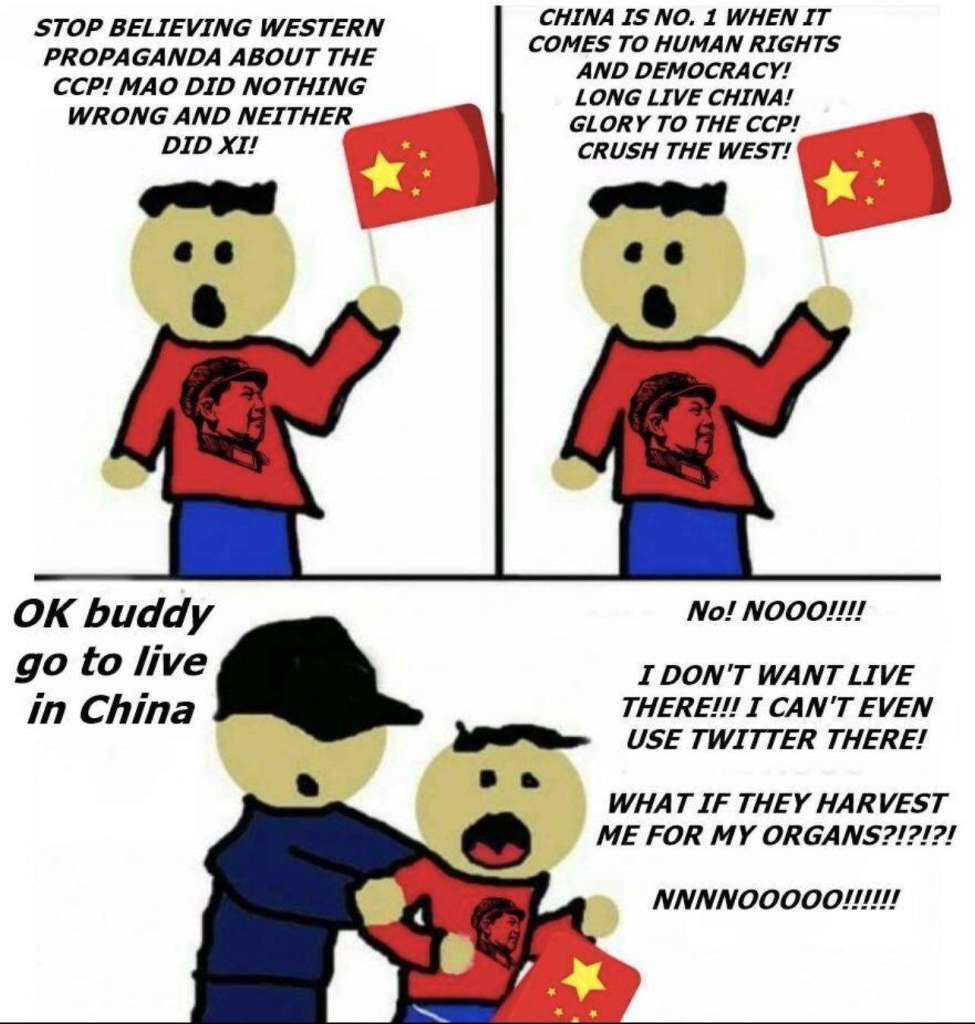
Anything they create will be called “Front” or “the People’s” and the site and leaflets and all will be pasted all over with Maoist imagery, stars and fonts.
They can’t help themselves. And maybe they are taking dictation from the CCP.

2- Look at where they want you to go, whether they want you to sign up ahead, etc. Is there a way they’re going to track you to be able to put you on lists, etc. (Yeah, well, you know? I am already on lists. But most of you aren’t.) If it’s an obvious “collect names” set up…. well, why bother.

3- AND MOST IMPORTANTLY: What is it supposed to accomplish?
Jan 6 was never going to accomplish anything besides “one last hurrah.” And one last public speech by Trump. The establishment had already closed ranks. There wasn’t going to be any reversal on that.

What did you think you were going to do? March shoulder to shoulder and demand they redo the elections? In what world was that going to work? Unless you got seventy million to converge on DC and that wasn’t going to happen, the best you’d have managed is start the shooting war right then and there. And even that would have required five or six million.

There are limits to what demonstrations can do. And at the time, before the lunacy of the last two years, most people didn’t even want to believe there had been fraud. Even people on our side. (I’m not going to link Larry’s essays again, but you can find them if you search his blog for fuckery. I didn’t need them, because I have a feel for when numbers go wrong, but you might.) People hoped we could just take the hit, and it wouldn’t be worse than the 70s. (Well, howdy.)

SO TO SUMMARIZE: Don’t take any wooden nickels. Don’t fall for fake imagery. Don’t fall for attempts to get a few hundred people to do something that looks bad, so they can go after the rest of us.

Other than that? Stand way back from the points of packed powder and watch carefully. At some point it’s all going to blow, unless we get very very very lucky. (I want to believe G-d protects fools, drunkards and the United States of America. I do. We will see.)

And while you’re waiting, don’t forget that laughter is good for stress relief, and some of the traps the idiots will try to set will be for real hilarious.

No, seriously. I don’t think they can get much “better” than the “Patriot Front” delivering polo-shirted, sun-glassed guys with military haircuts and identical shoes various places to claim there was a serious White Nationalist movement afoot. But you never know. They’re scared and stupid, and that’s a heck of a combination.

At this point, they are the clown car that collided with the dumpster fire.

Buy stock in popcorn. Be prepared. And be not afraid.

And remember, keep your clothes and weapons where you can find them in the dark.

And pray you have no need to do just that.

Infection

This last week Pope Benedict died and also — for a short story — I found myself researching Denver in the 1920s.

Also, sometime in the last few months, an idiot lib asked for “amnesty” for what they did over the covidiocy.

All of these fell into the vat of squirm that is my head, and from it emerged the thought: We are all tainted.

No, seriously, we are all tainted. It’s impossible not to be. (Which is why the church chose men with strong shoulders to take on the sins of others in confession and pass it on to the One with the massive shoulders to take int. In a less religious sense, it is why most of us FEEL tainted.)

In case you don’t remember, when Pope Benedict ascended there was much gnashing of teeth on the left (they are experts) about how he had been a member of the Hitler youth.

I don’t remember how it was resolved, and whether he was or not, but I do know one thing: it didn’t matter to who he was as a late middle aged man. Because I have some notion of what the pressures were at that time and that place, and I suspect, “No Hitler Youth meant no schooling” which in point of fact meant no seminary and no ordination.

It was like that in Portugal under National Socialism and I remember my brother and older cousin who was raised with us having their uniforms ironed for Portuguese Youth (the equivalent) muster on whatever days were assigned to them. Nice uniforms. Snappy. But wearing them was just a thing you had to do to be in school. Everyone did. Nothing to do with actually being ideologically committed to it. It was “take part in this, or you don’t get to be in school and have to go and work for next to nothing in a factory.”

The same day, while researching Denver in the twenties, I came across the rending of shirts and beating of breasts at what used to be The Museum of Natural History and now the Museum of Nature And Science (I never liked the name change. What the heck is a museum of nature, anyway? And why is Science separate?) Apparently someone found a list of the KKK members in Denver at the time (When Colorado was sort of taken over by the KKK TBH) and the first director of the museum was on that list. Cry and woe, and scrutinizing all his decisions, and taking his name off the salon named for him.

Thing is, if no one suspected he was that or doubted his decisions at the time; if no one can point at a single one of his decisions that’s suspect, now that his affiliation is known: who are they to judge? Do they know if he was actually a committed KKK member, who believed in their crazy sh*t? Or if he was a guy who went along, let them put his name up, and went to a meeting or two just to get them off his back, but who secretly hated them with his whole guts and the fire of an undying sun?

Because it could be either.

Which brings us to the amnesty. Which, like everyone else, I don’t think should be granted. Not to the main instigators, like Fauci, who frankly have thousands if not millions (if we count the third world, and also the fact he founded the original research) of deaths on their conscience. Sorry, no. There need to be trials. Because we know monsters exist. Before we trust our institutions again, we have to know the monsters have been purged, and publicly too. (Which is what the left keeps missing.) No amount of “trust us, really” will take until we see the trials, and see that they are fair and open, and that punishments are enacted. I don’t care if it was in service of a soft coup. People died alone and terrified in hospitals. People put off treatment — not of their volition — and will die of the conditions not treated. Human lives will be lost to this pageantry of stupid. And that’s unforgivable. That’s not shrugged off. We need trials.

As for your local Karen, who ran around leaving you nasty notes, and keeping you from entering stores, no matter if you have an asthma pump with you, because she wanted you to wear the useless face diaper: she must at least admit she was wrong. She must admit she was swept away on a wave of hysteria, and that her imbibing propaganda from the TV is not a justification to make you suffocate, and she SHOULD have listened to reason. And she should be made to meditate on what makes her so frigging broken. The “confession” phrase from The Marching Morons would be a good beginning “Forgive me, Freud, For I have Neurosis.” (Except no reason to invoke Dr. Fraud. Saying “I’m a neurotic mess and I was an idiot” is a good start, though.)

But here’s the thing: In a year, or ten, once those have been done — the trials and the apologies — we’re going to have to forgive and forget. And if people dig this nonsense back in sixty years, it will be wrong.

One of the ways the left is broken is guilt by association. You one day talked for five minutes at a dinner with someone who once said something racist, so you’re racist, and you must be cancelled. Even though you might not have known what that person said, or whatever, because only Twitter addicts would know. Of course, they only apply it to those they dislike, so the many racist eructations of Joe Biden Fraud in Chief of the US remain unexamined and unassociated with anyone in his circle.

That’s just part of how they’re crazy. It’s also, in a way, bitterly funny because once the infection establishes itself, you”re not going to find anyone in the field, or the vicinity, or the country, who hasn’t at least got a mile case.

We’ve seen this with the covidiocy. Even otherwise sane and capable people suddenly lost their minds and started screaming we wanted to kill them if we weren’t wearing the mask, and who were we to doubt the great and powerful oz experts?

Humans are social apes. The ability to match the group interests and the group concerns is obviously an evolutionary advantage. In the wandering bands of our ancestors, being cast out was death. If everyone was rubbing blue mud on their belly, you did the same with much enthusiasm.

Yes, there are those of us who hold out, or even scream against it. And there’s mud-rubbing that’s vile and evil and should be denounced and stopped (All the examples in the intro.)

But do you know how many humans even HAVE principles? Much less clear ones? To some extent principles are a luxury of those of us who “think too much.” And even if you have principles, realizing when those are being infringed by an all-pervasive ideology is hard.

If your principles are soft and foggy like “be nice” what are you going to do when being nice requires not confronting the illusions of people who are convinced if you don’t ducttape a mask to a disabled child’s face, you’re causing your grandmother to die? I mean, one should hope that you’d come to yourself somewhere after “Well, if you can you should wear a mask” and before “if you’re asthmatic and can’t wear a mask, you should stay in house arrest for however many years, even if you live alone, and get everything delivered.” BUT if you don’t stop before you’re ducttaping the mask to the disabled kid, how nice are you?
And yet perfectly normal, everyday functional people went that far.

Even if your principles are “don’t kill people” what are you going to, when everyone around you assures you these creatures being killed aren’t people? Or when they assure you that by not getting rid of the “filthy unvaxed” you’ll kill more people?

It almost requires having an ear for evil, and weirdly some of the nicest/sweetest people don’t. Because there doesn’t seem to be evil in them, and/or they prefer not to think on evil, so if they have it, they aren’t aware of it.

The truth is that normal, everyday functional, generally nice human beings are capable of doing the most vile stuff, from discriminating and killing on race and religion, to being authoritarian little sh*ts and causing deaths.

It might be the default mode of humans, in fact. “Do what the pack is doing no matter how vile, so they don’t eat me next.”

It’s also repulsive. And some of us take very strong exception to it.

And yet, there will need to come a healing. Yes, even for election stealing and covidiocy.

No, it shouldn’t come — can’t come — before it’s all exposed, corrected, worked against so it doesn’t happen again, or at least not in the same form.

And that…. right now, is a long task to do in the future.

But supposing it is and it all comes out, in sixty years we shouldn’t be upset because someone who was 10 during covid ran around being a little Karen. Stupidity of that kind shouldn’t keep her from high office. One should instead look at her actions since.

It is funny — ironic really — that the same people beating their chests because a predecessor on the same job was in the KKK rolls — aka — the popular horrible thing of that time — but will probably wear Che T-shirts and talk about the virtues of Mao and how communism is misunderstood. And it’s ironic to see people with submission diapers on their face complain the late pope once wore the Nazi youth uniform.

It’s much easier to denounce, and apologize for, sins we didn’t commit. It’s much easier to beat your chest for the sins of those you’re only tenuously related to.

It is, in the end, just another form of pack behavior and virtue signaling.

What is hard is, in the moment, realizing when your behavior is crazed enough — even if it matches the behavior of everyone around you — to justify that kind of condemnation in the future, because it is obviously evil.

In general, I think Pratchett’s rule that evil is treating people like things apply. Or if you prefer, treating people like widgets.

Sure most people can wear masks — weather or not masks do anything — but some people can’t. Isn’t condemning those people to years of solitary prison evil? When all they did was have a genetic condition?

Or you know “Everyone says this is so dangerous” and not looking at numbers, and therefore causing the elderly to die alone? Because “everyone” says so, and it doesn’t matter how many individuals disagree.

Forgivable? Sure. Or not, but it will have to be forgiven, in the very long run, because people change and hopefully grow.

But it would be nice if we could equip people at large with the ability to stop the nonsense. Before it goes so far.

I do realize some of this is built into people as people are, and mass communication and propaganda makes the whole thing worse.

But still, I won’t rub my belly with mud. The mud is toxic, radioactive and spattered with the blood of innocents. And before you ask to get back to the pack, you’d better admit it was a pretty stupid idea to rub mud, to begin with. And don’t you go apologizing for great grandad’s mud. He is dead, and you don’t know the pressures he faced, in his time, with his mud. Maybe people like you threatened to kill him if he didn’t rub mud.

You’re not a good person for denouncing the past. We will not absolve you because you point fingers at your ancestors. Let each time carry the burden of its sins. Admit yours, so you don’t repeat them.

That’s all.

Coming Back To You

We humans like tidy stories and clear lines.

But life isn’t like that. Live is complicated and confusing, it has self returns, and winding paths.

Our republic can get lost all over the place. It has. You can say it was lost almost as soon as it was founded, and things crept in that should never have. But with al that, all the flaws and warts, and the last hundred years marred by statist idiots (to be fair it is almost impossible to escape the infection of the age and the twentieth century was a time of centralizing power) it is still the best place on Earth and the hope of mankind.

Which makes me feel much better, because I swear the last 20 years have been a saga of pushing forward, recovery, falling down again, recovery again…. rinse repeat.

Now, there are signs of hope. Despite the fact I’ve been coughening (totally a word) for the last month and a half straight, first of one thing, then of another, I have been able to do things that seemed impossible in Colorado, like start reformatting older books and putting them out, now looking prettier and with paper editions. (I Dipped Stripped and Dead and French Polished murder, because that series should have a new issue next month, then All Hot for shifters, and then a Darkship book (I’m divided on which one.))

Anyway, there are these completely normal things, like assigning isbns that I kept giving up on in Colorado like it was too much effort…. And my brain wasn’t working quite right.

I think something to the altitude and chronic low oxygen was messing me up. There might have been depression along with that…

But I’m doing what I can to get back to me. To get back to where I should be and where I work.

We, none of us, know how long we have.

Okay, so we didn’t choose to live in the clownworld timeline, when the big floppy shoes come out and they’re all honking noses at each other.

But it is what we have and it is where we are. Yeah, we should prepare and do our best to survive whatever this crazy year throws at us, and frankly, after 2020 we’re none of us very trusting what that will be, right?

But–

But it’s still you, and still your life. Don’t put it off waiting for times to be better, for things to be easier, for a better time to be you.

I’m finally — hopefully releasing later this year, and yeah, all of you will hate it, but it needs out — writing the world that has been with me for 46 years, because… Well, if I get to the other side, and it died trapped in my head? It’s just not right. It was given to me for a reason, even if everyone ends up hating it.

I’ve packed my bags, I’m walking up hill. I’m trying not to hurry, because I’m afraid of getting sick and lost again.

But I am coming back to me.

Because who else am I going to come back to being?

I’m hoping to be me as hard as I can, clown world or not.

The Futures We Escaped

I moan a lot over the futures we wish we had. Flying cars Halfway across the world being not much more than flying to the next city in time or cost. Unlimited energy.

And I yield to no one — except maybe Jeff Greason — in my wish that we already had the space colonies Heinlein wrote about. (Though let’s be honest, he was on an extremely accelerated/non-plausible time line for the same reason the Greenies are — to keep the attention of kids for whom the future is maybe 20 years. You have to tell them something is going to happen in the next 20 years, or they’re not interested.)

However, even in Heinlein’s books there were some serious horrors leaking around the edges of history and the world set up. Like, you know, whole world government, everything centralized and of course overpopulation, food rationing, etc.

So–

The futures that seemed inevitable, until they weren’t.

1- World government.

To be fair, it seemed an absolutely sane and inescapable prediction for people who had seen the centralized nation states of the twentieth century consolidate. With faster communication, would come total union, right?

I note Heinlein stopped believing this after his world tour. In fact in Friday he has a fractured USA.

That second vision is more likely. There are too many cultures int he word and too many competing interests to have a world government. Even on the administrative side, a world government might be absolutely impossible, unless it’s a nominal government and the sub-governments do everything really.

In which case, you know what? It’s no different than what we have, except we call any war a civil war.

The only people this idea still makes sense to are people who think they can change reality by changing the words.

2- Overpopulation.

Yeah, I know what the population “counts” are, but we don’t have overpopulation. We don’t have any of the signs of overpopulation, and it’s becoming plainly obvious, country by country, locality by locality that there’s no overpopulation.

Malthus was an unpleasant fatalist. he was also wrong. Humanity doesn’t keep reproducing like mindless rabbits.

To be fair, this makes perfect sense because we’re a scavenger species. For scavenger species the population curve is the bell curve, not an exponential climb.

3- Total depletion of resources leading to the “rusty future” in a lot of eighties science fiction.

A lot of resources are in fact depleted, but we have found others This is something that the “Greens” seem unable to grasp. Humanity is a continuous depleting of resources, and discovering new resources and new ways to use them. For instance, given our population, I don’t think we have enough flint to knap for knives for all of us. It’s an obvious crisis.

In the same way, do you think it’s even possible for all of us to have a horse? Our cities would be hip-deep in horse poo.

But we are the ape that adapts. Things change. And the future will be as shiny as we want it. Unless fashion calls for dull, of course.

4- The world isn’t a communist state, or filled with communist states.

There are some yes, but the ones there are are in obvious trouble, and only the propagandized and the ignorant believe it is a way to live, or a way that brings about paradise. In fact, most of today’s communists are merely wanting to reign in hell.

They know they’d unleash hell, tehy just think they’d be king.

As bad as it is that people are still fighting for this, it’s miles ahead of the status quo till the eighties, where people actually believed planned centralized states were better.

We still have a fight ahead of us, and we might still fail, but there will never be a whole-word communism. and those of use devoted to freedom will eventually win. It just will take probably more than my life. At least on a world-scale.

5- We don’t have some sort of central authority that contols all of something: genetics; who is arrested; etc

A lot of places have crazy authorities, but not the whole world. we’re not enslaved by the Tech Lords (and what a pitiful lot those turned out to be) and the agencies trying to subjugate us are not all powerful, more along the lines of a bunch of venal chuckleheads. Annoying, with no morals and insane, but not all powerful. It could be worse.

And I’m sure my readers can think of other horribles that didn’t come to be.

It could be worse. It will get worse for a while. It is up to us to make it much, much better.

Get to it.

Prepare, Prepare, Prepare -Riding the Catastrophic Change Wave part VI

It was the strangest of timelines, it was the clownworldiest of time lines.

It always amuses me — except when it infuriates me, because it’s used as an excuse not to actually listen to what I’m saying — when people tell me I’m a raging optimist. It amuses me because I’m the person most likely to see the worst case scenario in any situation. In fact I’m so likely to spiral down for absolutely no reason anyone else can see that I have built routines into my thinking to examine them for the reality of what I’m seeing, and more importantly, for what I’m ignoring.

And here I am, in the most bizarre of timelines, telling people to be not afraid and — instead of reminding them the enemy gets a vote — reminding them we get a vote (although in this case it’s not a vote-vote, natch, as well as that the enemies plans not only don’t go according to plan, but that often what they do turns upside down and sideways.

It is time to remind you of this again.

Yes, everything is broken. It’s broken by an almost-century-long assault on our institutions our thinking and our organization financed by Marxists. Or if you want to look at it another way, it is broken due to the ideas of — spit — Jean Jacques Rosseau percolating through the addled heads of those who hold onto the Marxist theories as though they were ONLY a Christian heresy. The rich people with tapioca brains have convinced themselves that if only all of society and property were abolished we’d go back to a paradisaical state of innocence where no greed or jealousy occur, and everything is free for the taking, with no labor or strife. It’s the sort of poppycock only rich and spoiled people would believe.

But it doesn’t mean the doom script in your head is the truth or that it’s going to play out till we’re Cuba or Venezuela. Because a) we get a vote too. b) the sources of money are running out.

The problem is that you’ve imbibed the script of a communist revolution as much as the Marxists have, and you’re convinced once they seize power it’s ‘game over.’

I will remind you the only place they have taken over in the 21st century was Venezuela. And Venezuela, I’ll be honest, had massive problems of its own even before this. And in taking over Venezuela, they lost their grip on a bunch of other places. In fact their empire has shrunk to nothing, and their “curtain wall” of vassal countries is gone.

What ya’ll are forgetting is that the spread of communism required big money and big force. The big money, ultimately, came from us, because well, we financed Russia by giving it food aid and others, and in turn they took over and despoiled half the world, robbing it blind. (And no, I’m not going to pretend it was the USSR. It was always Russia in a snazzy mask.) And then they used that money to soften the opposition (us) and to destroy the next victim from within. And if the victim didn’t fall on schedule, they deployed Cuban mercenaries. That’s mostly what devoured Africa, and why Africa became a lot more free (if still effed up) once Russians couldn’t afford to pay Cuban Mercs.

This can’t happen to us. We’re too big. Our population is too well armed. Russia is a shadow of itself. Money is now from financiers like Soros, who are malevolent but truly hell of stupid when it comes to really understanding us. And before you say he’s a master mind, I’m fairly sure he was behind the Occupy Wall Street sh*tshow where whoever organized it (and it most likely had input from Obama’s “world class” (I didn’t say what world) brain) thought if they showed the masses how to rise up, the masses would. I’ll point out they probably thought the same about BLM and antifa, and instead all they did was p*ss off Americans.

More importantly, they can’t do it — even if they think they can — because coming in here will stop the money engine of the world. They’ve already severely hampered it with covidiocy, which in turn is hurting China, because CHINA’s world class brains are so steeped in communism they didn’t realize destroying the economy of their main consumer would hurt them. (Shakes head.)

Since most of the money for continued internal subversion, including probably paying for the soft coup in 20, came from China, it will get tighter and tighter as things spiral. If they succeed at all in destroying part of the US (we’re too big to be all of it) things will get massively worse for them, even as we hurt.

Now, do I think it’s all roses going forward?

Are you kidding?

Look, minds that come up with a plan like worldwide lockdowns have no understanding of reality. This doesn’t mean they’re not terrifyingly destructive.

And they drink their own ink, so they run on scripts that would make an extremely cheesy revolution movie, however, they also run on their understanding of past history. They would love to run the WWI script to totally suppress internal dissension, or the WWII script to totally reinvent our structure. That is what they’ve been trying to do. And while things won’t turn out the way they think they will, they can still do a heckofalot of damage. Big time damage.

Damage that will be extremely hard to recover from, particularly because as BGE reminded us yesterday, the rest of the world is in worse shape than we are and is largely in the process of a demographic die-off.

So, the first way to prepare is …. to prepare. Food, water hardening of your position in case of shelter in place, and a graduated plan of places to run to if you have to run.

I don’t need to go over that. A lot of you have better preparation than I do. And a lot of us moved in the last two years to a more defensible/secure position.

Whatever the heck is coming down the pipe, won’t be bad every place. As a general rule of thumb, if your area was bad with BLM consider relocating, because it means you’re in an area that tolerates this kind of shenanigans and where the authorities are already corrupted.

Some places will see no disruption, or very little.

But the disruption as they try to break our back is going to do other things. It’s going to make the economy insane, and jobs impossible to get.

First, remember that there are always jobs, and always people looking. In Lebanon, in the middle of the civil war, there were people working, and people shopping.

Second remember most of the economy goes to connections and who you know, because when things are unstable, you can’t afford to pull a wolf’s head into your business.

So… preparing: Widen your skill set as much as possible. For instance, if you’re a programmer learn more languages and start looking a bit into hardware (I know most of you guys do that, anyway.)

And widen your network. Acquire a hobby, take a class, toddle down to your local pub and have a pint, talk to the other mommies when taking kids in or picking them up, and if you’re a church goer don’t be me, and rush in for the services, then out again. Consider volunteering to clean, or going to that pancake breakfast.

The wider your network, the more likely you’ll hear of a job when things start to contract and become less trusting.

Oh, and develop multiple streams of income (working on that) in case one of them gets taken down or blocked by TPTB. This requires assessment of “What can I do” and perhaps upgrading a hobby to a back burner job which you devote more time to than just for play, but not as much as your main job. Or develop two hobbies into streams of income, or whatever. Make sure that one of these can be done in cash, just in case.

The more sources of “making a living” you have, the less likely they’ll stop everything. And the more resources you’ll have to fight back.

Add to that if you’re mouthy but anonymous, go as known as you can. It’s counterintuitive, but they’re less likely to attack someone like me than either the really big — for them, say Tucker Carlson. They always prefer talking heads, because reading is hard — or the small anonymous people. Not saying they won’t come after me, but even they have to judge there would be a reaction they couldn’t control. The middle-well-known seems to be the safest place to be.

That’s about it, and you’ll be very busy, which also will give you less chance for coming up with doom scenarios. (Works for me.)

And now pardon me, I have a short overdue, a novel hanging fire, and a comics script to finish. Setting up for the secondary stream of income will come in by the by.

Stay frosty, stay busy, remember that you are a person capable of spoiling their plans.

Go to it.

Be not afraid.

New Year Book Promo and Vignettes by by Luke, Mary Catelli and ‘Nother Mike

*So I forgot New Year’s was Sunday. And Amazon finally stopped futzing with Through Fire and it went through. So, today we have book promo. Tomorrow the conclusion of my deep dive into what we’re facing, which honestly probably will amount to “Brace” but hey. Anyway, new year new books. – SAH*

Book promo

If you wish to send us books for next week’s promo, please email to bookpimping at outlook dot com. If you feel a need to re-promo the same book do so no more than once every six months (unless you’re me or my relative. Deal.) One book per author per week. Amazon links only. Oh, yeah, by clicking through and buying (anything, actually) through one of the links below, you will at no cost to you be giving a portion of your purchase to support ATH through our associates number. A COMMISSION IS EARNED FROM EACH PURCHASE.*Note that I haven’t read most of these books (my reading is eclectic and “craving led”,) and apply the usual cautions to buying. – SAH

FROM SARAH A. HOYT — NOW WITH HARDCOVER OPTION: Through Fire

Zen Sienna is a woman from another world and does not want to become the wife of a ruler of Earth. But she also doesn’t know how to escape the man’s courtship.

Which is just as well, because when a revolution happens, she turns out to have the skills to stay just one step ahead of the corrupt revolutionaries and the insane government to keep herself and those she comes to love alive and lead them to triumph.

Follow Zen in a harrowing adventure where a stranger in a strange land proves herself the most qualified to survive.

FROM C.V.WALTER CONTAINING ONE OF SARAH A. HOYT’S BEST AND WEIRDEST SHORT STORIES: Saints of Malta

Malta. An island full of history and mystery. Conquered, invaded and defended through every age, it’s a place that inspires the very best and the very worst humanity has to offer.

Join these authors as they explore Magic and Mayhem, Saints and Demons, who battle over the island of Malta.

FROM PAUL CLAYTON: Escape From the Future and Other Stories

What if you had access to a time machine and could go back to visit a deceased love… one more time. Would you?

In 1962, Bobby Newman’s Grandpa, a basement inventor, loses his wife to cancer, then begins to lose his mind to grief. While tuning up his not-yet-perfected time machine for one last visit with his wife, he ends up going the wrong way… into the dystopian future of 2025. Inexplicably, he sends the machine back.

FROM LARS WALKER: King of Rogaland

It’s 1022 AD. In Norway, the balance of power is poised between two mighty men – King Olaf, full of new ideas about central government, and Erling Skjalgsson, defender of the old democracy. Two worlds are watching as they contend – the familiar world we live in, and the unseen world around us, full of witches and elves and the dead who walk in the night.

Erling is fighting for survival, and for the future of the land. The steps he must take aren’t always gentle ones. At his side is his Irish priest, Father Ailill, concerned that Erling might gain the world and lose his soul. Concerned, also, about Erling’s nephew Asbjorn, a proud young man inclined to cut corners with the law.

And to one side, they have an interesting guest in the household, a cheerful young nobleman from Scotland called Macbeth…

FROM TONY ANDARIAN: Dawn of Chaos: (Sanctum of the Archmage, Volume One)

It wasn’t demons, death, and slavery to the Dark that truly frightened her. It was the woman she would have to become to fight them.

A new constitution prepares Carlissa for an era of enlightenment. The old order fades, and a promise of freedom stirs the air. In the space of one terrifying day, that promise is shattered in a bloodbath of fire and magic.Thousands of years ago, an epic battle was fought between good and evil. The demon lords had opened a door to the realms of hell itself, and their horde threatened to overrun the earth. But the Kalarans, led by the hero Calindra, destroyed their hellgate and drove them from the world.

The Great War has long since been lost to myth and legend. The Church struggles for relevance as the people forget their covenant with the gods. A renaissance of freedom and learning stirs the air in the modern age of Carlissa, led by the royal family, and the wisdom of the Archmage.

All of that comes to an end when a dome of shimmering magic appears in the capital city.

The people fight desperately to survive the chaos that follows, and wonder bitterly why the gods seem to have abandoned them. Their only hope lies with the magic of the Archmage — and his, with a young princess who never wanted to rule. She must find the strength to set aside her bard’s calling and take up a battle against impossible odds, or surrender her land and people to the Black Magus and his demons.

FROM J. BRUNO: The Amazing Flight of Aaron William Hawk Vol. 1: Into the Vast Nothing.

A young boy, a ginormous kite, and a blustery mountaintop—What could go wrong?

Ever since he could sit upright, young Aaron Hawk shared a deep passion for flying with his father. That is, until his father’s tragic death. Making Aaron forget all the things that were close to his heart. But in an effort to revive his dreams, Aaron builds a huge kite, and in a daring quest for adventure, he rides it across the skies. However, his harrowing ride ends when he crashes to earth, deep in the woods. He finds himself tangled in the wreckage of his glider, but fortunately, mostly unharmed. An elderly aviator comes to his aid, and later reveals a fantastic story of an island where one can learn to fly like a bird, and gives the boy a magical compass. And so begins Aaron’s journey. Follow along on this wondrous quest as Aaron discovers what it takes to face his fears, take hold of his spirit, and chase his dreams. But how much will Aaron risk to follow his heart and find the mystical island?

FROM MARY JO THOMPSON: Glass Prison

All she knew was that after the explosion, her sister was gone. And for all they knew, VISP and LIMIT, two opposing organizations tracking the girls, these kids were at the center of the most destructive attack on the power grid in modern history. An event that plunged the world into chaos and darkness. For years she had been contained unconscious. Now she’s waking. And she’s not alone.

FROM CHRISTOPHER WOERNER: 202211 Take Thanks

This booklet is an edited collection of the pamphlets published throughout the month of November. It covers the ever-worsening times we live in nowadays because our rulers demand it. As always, it covers current events with some observations of leftism and tyranny, with a bit of pop culture here-and-there.

We need a resistance movement more than ever. That’s basically what I’ve been aiming for in all the books so-far and it’s not going to stop until I do and so does everyone else.

FROM PAM UPHOFF: Code Name Igor

Lord Axel Ivan Vinogradov Is a Mentalist with the Fast Reaction Teams that protect the small population of the Sanctioned Research World of Siberia Max from acquisitive Cross dimensional Worlds.

As the Three Part Alliance crumbles, Axel–code name Igor–finds himself overstretched between his duty, and his family. Especially after he is accused of murdering his corrupt and very much not-loved uncle.

Vignettes by Luke, Mary Catelli and ‘Nother Mike.

So what’s a vignette? You might know them as flash fiction, or even just sketches. We will provide a prompt each Sunday that you can use directly (including it in your work) or just as an inspiration. You, in turn, will write about 50 words (yes, we are going for short shorts! Not even a Drabble 100 words, just half that!). Then post it! For an additional challenge, you can aim to make it exactly 50 words, if you like.

We recommend that if you have an original vignette, you post that as a new reply. If you are commenting on someone’s vignette, then post that as a reply to the vignette. Comments — this is writing practice, so comments should be aimed at helping someone be a better writer, not at crushing them. And since these are likely to be drafts, don’t jump up and down too hard on typos and grammar.

If you have questions, feel free to ask.

Your writing prompt this week is: UNTIDY

Green Shoots — Riding the Catastrophic Wave of Change, part VI

Before I begin the post proper, an argh and an explanation on why I call this a catastrophic wave of change (As opposed to say the changes mid nineteenth to mid twentieth century.

The ARGH: Amazon on the last day of the year has invented a new and heretofore unheard of brand of stupid. Last night I uploaded all of Through Fire, ebook and paper. Normally they gag on paper. When it’s a rights thing, they gag on all of them. Today? Today they published the paper without a burp, but are holding fast on demanding I prove I’ve the right to publish myself to publish the ebook. Of ALL the stupid possible. Head>desk.

An explanation on why this wave of change is completely catastrophic. And I wouldn’t, btw, say it’s smaller than say beginning of twentieth century of 1950. It’s just less spectacular. It’s a wave of change hitting details of every day life.

Because the wave of the late nineteenth to first half of twentieth was spectacular. It was also the completion of a wave started somewhere circa the 1500s: a wave towards mass/specialized production; centralization; expertise; urbanization.

Yes, the cresting of the wave took us to what we consider “normal 20th century” but the push had been going that way for a long time. And while the end of it bore spectacular fruits in science and engineering, it had already gone sour in politics. The centralization had already reached the level where it wasn’t meeting market demand and was breaking more things than it helped, even as it completed.

The wave we’re going through really only started sometime in the eighties/nineties, and might have started first with politics because it had already gone sour. But it was reinforced by computing; e-commerce; an internet bursting with knowledge of all kinds.

And…. And it’s going the other way from the mass-industrialization wave: to personalization; to individuation; to non-site specific, and therefore — for the first time in history — anti-urbanization.

And before you say “But it’s just little stuff.” Yeah, it really is. It’s little stuff that affects every day life. What we know. What we think. What we do and how we do it.

If you think it’s not astonishing that I can talk to my friend and co-worker (well, same profession) across the world free of charge and not metered — also instantly — you aren’t my age. If you think it’s not astonishing that I can look up how to repair my specific brand of vacuum and do it in minutes, you weren’t born in the twentieth century.

But it’s more than that. For someone like me who always wanted to KNOW? There is graduate level education on history, on writing, on…. everything on line, and most of it is free.

This is untethering the “rule of experts” and frankly untying our institutions. It’s part of the reason we’ve gone Full Tilt Boogie clown world with the shoes on. The institutions can’t add anything sane, so they’re specializing in full-frontal crazy.

But…… But the wave goes on. People put things online teaching other people to do things. Right now I could take a month and become the world’s foremost expert in something in a few days. I could learn animation and start making short movies in two or three years (which I don’t have. Ah, to be twenty again!)

And parents are teaching their own kids. One of a couple (usually the woman) is going home to do that. And young people, starting with millenials (well, really with my generation, but we had fewer resources) really want to know “the right way to cook steak” or “the right way to iron a shirt.” They’re trying to re discover every day skills lost to the great wave of industrialization and specialization.

And people are moving out of the cities (granted, leaving them to be occupied by ferals, but that’s a political thing.) People are writing and doing art and writing music and making crafts, and teh Amazon stupid notwithstanding selling directly to a starving public. I also hear of doctors who let you pay in cash (we haven’t found one yet) and it’s cheaper. And there are probably a hundred other people doing workarounds for the non-functional systems.

Now, I know I’m not seeing all the “Green shots.” But if you look around in your own area, you’ll find them. The centralization and specialization movement was great for humanity and for the technology of its own time. Some things will always be cheaper and easier done on a grand scale. But not all. And it’s time to start walking a lot of it back. Which is happening.

Tomorrow — yes, I know I inverted the order of promised posts. Deal — and appropriately for New Years, we’ll be talking about to do to prepare yourself for the future.

Because it’s coming at us fast, and while a lot of it is unknowable, and some will feel like pulling the rug from under your feet (all of 2020) there are things you can do to prepare and ways to remain flexible.

Be not afraid. The future is deep and long and the wave is going our way for once!

You’ve Got To Have Faith! — Riding the catastrophic wave of change part V

So we’ve been talking about how everything is broken. Yes, I know I haven’t gone into everything, but that’s easily explainable: first, I don’t have the rest of my life to do this series of articles; second, I don’t have visibility into a lot of areas (while I have visibility into a lot of them because I have a wide circle, and I like listening to people talking about what they do.)

Now, to a certain extent everything has always been broken. I mean, we’re humans. Humans are…. not perfect. yes, I know, I was surprised (and annoyed) too when I found out. For the longest time I thought it was just me.

But — unless this is a mirage caused by the fact that we’re not living then — it seems that not all times were as broken as ours.

We can see it from “real signs” too — for one, in most times the technological and therefore the social change waves were smaller or further apart. So there was time for stabilizing in between. For another we know that things were more stable from the fact that at times in the past (though not all times) the population grew.

Population growth requires both real world stability that allows for marriages and for kids to survive infancy, and confidence in the future that has people actually want to have kids. (Yes, contraception in the past was nowhere near as efficient, but people managed, thank you so much.)

Also, judging from “things accomplished” at various times in history things were more stable than now.

Now we are in one of those in-between states, or at it goes in internet parlance, the time in history before the map goes angry and full of arrows. Which tends to coincide with really fast — i.e. catastrophic — technological change, funnily enough.

People in general seem to like and be designed for stable times with slow improvement. When things change very fast, be they for good or ill, the culture can’t adapt fast enough.

This ends up causing a mismatch between demand and supply. In either direction.

Now I think as a libertarian (ish) at this point I’m supposed to don my ceremonial dance outfit, and shake my rattles, and intone solemnly “the invisible hand will provide” while the rest of you roll your eyes. But bear with me a little.

Let me illustrate the technological change, and the mismatch in the field I know best: books.

Although publishing has been embuggered (totally a word. Also not a swear word. There was a case in Oz that ruled it wasn’t) for a long time, maybe since the time monks copying manuscripts by hand and drawing snails on them was the biggest production effort, they got particularly embuggered as to production and distribution as a result of WWII and the agreement that sellers could send back whatever they didn’t sell, which led to the onus for whether a book sold or not to be all on the publisher, not shared between publisher and distributor, which already led to some interesting side excursions. In fact, over time, it led to a concentration of publishing in very few, large houses, because smaller ones couldn’t take the hit of large, unexpected returns.

You can tell the field started running aground then, because advances stopped keeping pace with cost of living, and reading for amusement fell steadily since then.

Yes, you can blame radio, or movies, or TV, or gaming. Why shouldn’t you? Publishing did. But the fact is, given compelling enough reading material those shouldn’t have had an impact as the total leisure time per capita increased over that time period, and also a lot of other forms of entertainment — associations and clubs, neighborhood ties, etc — decreased over the same time, leaving more time for reading.

When something falls steadily like that, as a class, there’s a fundamental mismatch between producer and consumer.

However, it took until the advent of computers for the distribution time to get truly stupid. Because humans can be dumb, but for really weaponized stupidity they need computer help.

Because the producers — publishers — took the main risk in books, you can’t blame them for trying to have more control over the distribution. But it took a chain bookstore — Borders — going weaponized stupid to drive the whole thing over the edge over the course of a decade and change.

You see, Borders realized that they could keep track of what sold via computer, and had the brilliant idea of “ordering to the net.” Say they had a hundred books in stock, and 80 sold. Next book by the same author order only 80. Then fifty sold. Order only 50 of the third.

This both saved the bookstore a ton of space, and allowed it to take incentives from the publisher for stocking more of the books the publisher wanted to push, which in turn led to rapid expansion of the chain. and its being copied by other chains.

There was only one small problem with the reasoning: First, no book ever sells a hundred percent. For one, there’s always theft. So, you were left in the best of cases, with a reductive spiral that ended in zero over a decade or so. Second, if you had only one or two books on the shelves, the chances of selling any of them were close to zero, no matter if the book was brilliant. Most people would never see them. And this led to the deaths of careers (or at least change of name for authors) within one or two books.

This in turn made the real producers — writers — into “lottery tickets.” Unless you were one of the few the publisher chose to push, your chances of selling enough to sell another one were essentially zero. But the publisher kept getting more midlisters and burning through them in the hopes one of them would be a freak multimillion dollar ticket. Which didn’t happen because the stores were no longer set up to do that. (For the stores to do that, you needed a system in which the staff could discover a book and start handselling it to customers. Impossible, when what’s on the shelves is dictated by the tri-state area manager which was another effect of the efficiencies of computer management.)

Trust me, because most of my career was consumed in this: the system sucked for everyone. Publishers might have thought it didn’t suck for them, but in fact, printruns were falling straight down. A meh print run when I started out was around 10k, (which is what my first book sold within a year.) Nowadays a 2k print run will make the publisher give you another chance. That’s how bad it was.

Meanwhile, writers were breaking. Most of them only had one or two books to prove themselves, and by the time people found their long-out-of-print books, they had disappeared. Writers don’t do well with this. The best of us vibrate like tuning forks. Meaning even when we try to be super-realistic and hard working, we still work largely by “this idea that won’t let go.” Not knowing if you’ll ever sell any other book makes you suggest books that are likely to be sold, and not spend three years chasing the wild idea.

More writers gave up. More writers became bitter. The ones that survived through multiple name and genre changes just burned out slower. And the offerings became more blah.

Meanwhile publishers who never had any real idea what the public wanted just started buying to impress other publishers or their college teachers. And the distributors kept consulting the computers like they were oracles. AND and this is really important: the reading public had nothing to read. I know, because I’m one of those people who are broken, and who mostly READS for entertainment. I ran from genre to genre looking for something I COULD read (as Dan described in his post yesterday, for himself.) For a long time I took refuge in popular history, before that too went sour. I stopped going to new bookstores. I was really grumpy about it.

There might be some hope on the horizon for Barnes and Noble, though, you know, believe it when I see it and all that. (And they’re still impaired by concentrating on paper bricks, no longer the efficient way to distribute story. Until they figure out how to integrate stores with the sale of ebooks, they will be vulnerable.)

Anyway, everything was broken and getting worse and worse.

And then the winged hussars arrived. Okay, it was Beezosbub riding on Amazon. And yes, Amazon has its own issues, is following the path of a monopolistic distributor, and we desperately need alternatives, BUT for a while at least (I’m questioning their algorithms right now) they fixed the mismatch between distributor and consumer for books.

Which fixed one issue while breaking everything else around it, because all of a sudden even the pretense of working was taking from the system. That kind of breaking is actually needed before things can re-organize.

Note the only reason the early kindle with the green screen, or the early indie ebooks with their weird formatting and often sounding like the author had just heard of the genre for the first time yesterday (I have in mind the author who spent a hundred pages explaining robots in a science fiction book. No, really.) made inroads enough to keep improving and get followers is that the break between supply and demand in story was so bad that anything was an improvement. Anything at all, no matter how bad.

I’d also maintain we’re in the middle of the same thing with politics. It had been ticking along, stable, but selling to a smaller and smaller percentage of the population, until most people really had no use for it. (And partly it was because of the means of communication that held up the narrative needed for centralized politics losing their monopoly on information distribution.) What the purveyors of governance want to give us, and what we want are widely apart. Hence that dreaded “populism” emergence.

And let us face it, the only way that Trump could ever have won was under the same conditions that the ugly green kindles survived. Right now, what we’re seeing is the equivalent of the publishers back then pricing ebooks higher than hardcovers to “prove” ebooks aren’t wanted. That’s what electoral fraud is. That’s what the shenanigans with controlling social media are. And like with ebooks, it’s all whistling past the graveyard. Because with that wide a mismatch between supply and demand you can’t paper it over. And you can no longer control the landing, either. But the established parties, like B & N won’t do the logical thing until nothing else is possible.

We’re in the middle of the same thing with education. Hence the “professionals” screaming that parents shouldn’t have a say in the education of their children.

And we’re in the middle of the same thing with employment, where it seems impossible to get an actual job, unless you’re female and have a politically-inclined degree, in which case you’ll find a job in the regulation apparatus that is making everything more broken.

Dons snazzy libertarian sacred robes in red white and blue: When you see these signs, rejoice, for it is a sign that the invisible hand is… er…. at hand.

Okay, here’s the thing. You’re listening to someone who has immense trouble with invisible anything. My actual religious faith is more a matter of convincing myself I have faith than actually having faith.

So, yeah, I’m really leery about the invisible hand. I’m also really leery of stuff like “trust the process.” I’m always mildly baffled and put out when both of those work.

BUT think about it: Economics is a science. No, it’s not a hard, hard science to an extent. Not if you try to drill down to the ultimate individual level. That’s because it involves human behavior. And in the individual level, humans are as predictable as … well…. as avatars of chaos.

That doesn’t mean that economics isn’t a science. Just like quantum physics, though, it’s limited as to what it can predict.

What it predicts fairly well is what happens at the intersection of supply and demand. And large enough demand will find a way to be met. Fast or slow. Peacefully or not.

The corollary to “everything is broken” is that there are forces already working to fix it. Now, in the way of such things, most of those will of course fail. And some of the ones that survive will also become part of the broken (looks at social media and paypal.)

But while demand continues, the forces working to bridge it towards being supplied will continue. And eventually a path will be found. Causing more disruption around it, as it starts.

(This btw is why regulations cannot control the market, only distort it.)

Think of it as a river insufficiently dammed up, while the pressure builds. When it breaks, it’s going to cause a lot of destruction before it finds its natural bed.

But in the end the river will flow, and demand will be met.

Our best hope as individuals is not to go under and not to drown.

Next up: the signs of the invisible hand at work already.

And hopefully new years day some advice, so this will lean heavily on comments, as mine is the same it’s always been, except for the added “keep at it, and don’t lose heart.”

Anyway. More tomorrow.

Romance Is In The Air by Dan Hoyt

*Yes, I will continue my series. Tomorrow. But when Dan handed me this (right after I posted yesterday, of course) I realized I’d have to run it.- SAH*

Romance Is In The Air by Dan Hoyt

Amazon Unlimited has me figured out. Yesterday I got an email notification of my 2022 progress:

  • 51 Books
  • 1963 Hours
  • 35,682 Pages
  • 18 Authors
  • Top Genre: Romance

Most people who know me well aren’t surprised by that last bullet point. After the Sad Puppy kickers completely twisted the movement – which for the supporters was ALWAYS about recognizing well-written enjoyable fiction recommended by readers, rather than message fiction recommended by gatekeepers – my beloved SF/F field became over-saturated with books that just didn’t hold my interest. For a while, my primary reading moved to cozy mysteries and Regency romances, both of which were blissfully devoid of twenty-something authors lacking the strength of character to perform a two-minute fact-checking Google search before overlaying today’s mores onto yesterday’s reality. Somewhere along the way, cozies started preaching, too, and although I read the occasional thriller or mainstream novel, I leaned more into romances.

I read a lot of historical and contemporary romances over the past few years, and I can tell you one thing – the term “tsunami of crap” came from the romance genre, 100%.

My lovely wife, Sarah, does her research – sometimes to a degree that I wasn’t sure she’d actually have positive income from the property. Most of time, my fears were unfounded, and the novel was received well enough to warrant the research time and expense. Plain Jane is a great example of that, paying royalties for a good decade or more after its publication.

One other historical romance author that does her research is Julia Quinn. The Bridgerton books are head-and-shoulders above the “tsunami of crap” and well worth the read. [I confess that I really wanted to hate the Netflix series – not because of its unapologetic twisting of history, but that it didn’t represent itself as an alternate history from the beginning (only after several episodes), when the books clearly were not alternate, but well-researched, history – but I ended up enjoying the series, despite its occasional pulpit moments.]

But most historical romance authors only do the barest research, and often it’s based more on what other romance authors wrote or fantasized about, rather than actual history.

Which brought me to the occasional contemporary romance. It took me a while to learn the code words – “sweet” vs “spicy” being the most important for me, because I already know … well, let’s just say, today is our 37th wedding anniversary, and I’m pretty clear on the mechanics at this point. I’m more interested in the emotional development. Sadly, contemporaries can be pretty preachy, too, but frankly less adroit in the hands of inferior writers, which makes them as easy to discard mid-novel as pretty much any F/SF award-winner in the last decade.

Lately, I’ve been binging on the works of a contemporary author whose writing is head-and-shoulders above that aforementioned crap tsunami. I’m not fond of first-person present-tense, but she makes it work. She has quirky characters that remind me a lot of some of Sarah’s characters (like the Dyce books), believable real-world settings, daring topics, and even the occasional Keystone-cop-style physical gag to lighten the mood. I’ve caught out a few technological timeline problems (like Instagram before it was actually released) and other anomalies, but they’re few and far between. Overall, she has a well-grounded, rich world of organically-connected series that go beyond the “seven brides for seven brothers” trope or a “cowboy billionaire family” or whatever, and spans more than a decade, sometimes with a single storyline. When a new standalone novel in one series pops up using a character introduced in a different series, I see where there was a hint seeded for that character in the other series, even if it was published 5 years earlier. In other words, some thought was given to the entirety of the author’s novels (a la Heinlein).

Given that the author, Meghan Quinn, is represented as a lesbian mother, it’s not surprising that most of her novels have gay or lesbian side characters, but they’re believable, not just straw stereotypes, preaching on a soapbox. [Shameless plug for Sarah’s A Few Good Men, another believable gay couple, and main characters, to boot!] Since we have quite a few gay and lesbian friends, both single and couples, and none of them proselytize about their preferences, the characters’ circles are truly authentic.

So, why, you might ask, did I choose to tell you all of this today, on a random Wednesday?

Remember I said it was our 37th anniversary? The novel I’m reading right now, Untying the Knot, is an example of one of those daring topics I mentioned, with the heroine starting out the novel by serving her husband with divorce papers. [No, Sarah and I are not getting divorced; bear with me here.]

Not what you expect from a romance, right? Isn’t it supposed to be happily-ever-after? The characters didn’t communicate (typical of romances) and fell back on a dangerous trap: “if you don’t know what’s wrong, I can’t tell you.” Hint: yes, you can. None of us are mind-readers, and sometimes we miss important cues. It doesn’t mean you’ve grown apart irrevocably, just that you’ve strayed a bit and need to find your pathway again. Another hint: if you see your partner drifting out of hearing range, you might consider saying something about it sooner than later.

Minor spoiler alert here. Don’t read any more if you can’t handle it.

There’s a flashback scene mid-way through the book where we see the first time the heroine takes the hero home to meet her parents, and it’s brutal the way her mother treats her. I’ve seen this kind of behavior firsthand and secondhand too many times for it not to affect me when a parent has nothing good or kind to say about his or her child, and always assumes the worst. It’s bad enough to think such things about your offspring, but to voice them to strangers is unforgivable.

It was one of those scenes that hurt, physically, to read.

But reading it made me thankful that Sarah and I found each other. A little over thirty-eight years ago, as I was about to walk out the door to go to work, I got an unexpected overseas phone call. Two hours later, I knew that my life was going to change; I knew I’d been incomplete until then, and I was certain of the inevitability of our future together. [This was baffling to virtually everyone that knew me, nearly all of whom tried to talk me out of proposing – which I did just four months later.] Why? Because Sarah got me, and I got her. We talked about anything – fears, deep and dark secrets, desires, everything big or small.

I thought I’d been in love before, but this was different, and I knew it was the same for her. I could hear it in her voice. For the first time, I recognized a new life pathway had just opened up, and it was for both of us. I understood deep down that this new pathway could be brighter and better than the pathway I had anticipated for myself alone; all I had to do was open my heart and believe Sarah saw as much value in me as I did in her; that she’d see the wonderful possibilities in a future together.

I never doubted she would, and when a natural time came for those three words, “I love you,” I didn’t hesitate or second-guess myself. And we’ve grown together since then, in ways I could never have imagined, but always together.

Sure, there were hard times, and times when we argued fiercely, but eventually one of us reminded the other that we promised to have each other’s backs, even if it felt like it was us against the world, and that we don’t have to endure the hard times alone.

Sarah, Happy Anniversary. I love you more each year, and I’m glad we have each other. Always.

Ladders, Ramps and Holes – Riding the Catastrophic Change Wave, part IV

I come not to complain about employment problems, but to try to figure out why “everything is broken.”

Most of us worked sh*tty jobs coming out of college, or while in college, or just starting out if we didn’t go to college. This is part of the American work experience. It’s like living in the stupidly cr*ppy student apartments or starting homes. (I actually lucked out on those, which I suspect is compensated for by older son’s first apartment, where what should be a corner cabinet in the kitchen was just a space filled with dirt. We didn’t dig in the dirt. For obvious reasons. This was also the apartment where the doorbell rang if you flushed the toilet.) It’s a bragging point for older adults, including parents and grandparents. “Oh, lord, remember that apartment where if you touched the stove the smoke alarm went off?”

And the truth is, because of the culture, most people are really proud of their “I ate frogs” period. It’s America, not other places, mind you.

Yes, you do get snowflakes complaining that they have to work at all, but if you go back, you’ll see the same going back for decades. The snowflakes they shall always be with us.

But the nature of jobs itself has changed, which the culture itself hasn’t adapted to. This is normal. The culture lags reality by two or three generations. That’s why we’re still seeing movies and books where the “grandparents” (objectively about my age or a little older) disapprove of women working. In fact, by the seventies pretty much no one under forty disapproved of women working. By the nineties, when I could stay home to mind my infant and try to break into writing, I was looked at askance for NOT having a job outside the home. Also in the nineties, I shocked a younger woman when she found out I had a post-graduate degree, because SURELY no woman smart enough to have a degree would be a stay at home mom. (Even if I was trying to break into writing.)

So, culture lags reality. In the late eighties, when Dan was talking to a company near his parents, my MIL advised me if they were serious (they were, though we turned down the offer for various reasons) they’d want to meet me and have a dinner with me and the other spouses of people in the department. This was apropos of the fact I had brought no “good clothes” up, only jeans and t-shirts. Dan and his father worked at similar levels. Apparently 20 or 30 years earlier companies vetted spouses? Anyway, the whole concept was completely bizarre and I accepted that was her experience, but I didn’t even know what to make of it.

By the eighties we heard tales of corporations that “looked after you.” You were hired for whatever frog-eating position was available, and then there was a ladder. As long as you were decent, honest, and a hard worker you’d be promoted.

I’ll be honest, I have no idea if that was ever true. In Portugal it kind of was, but Portugal runs on Roman models, and it’s all patronage and vassalage, all personal.

If it was true, I suspect what changed it was the huge elephant of the boomer generation moving through the snake of the system. Because there would be a glut of employees, so it was a buyers market for employers and they would need to offer less and could be more demanding. (The laws of the market apply to everything, yes. More than you’d think. A glut in supply means the demand gets more finicky.)

I know our experience of the job market is you found something, and then if you ever wanted a raise or a change in status, you went looking. And then again. And for a while there in the nineties, when Dan worked for a large corporation, there were annual layoffs and you never knew who would be cut. So we’d spend a month holding our breath as the ax fell and fell and fell again.

The good side of that kind of job market was that while it was almost impossible to advance within a corporation (unless you had certain markers that had nothing to do with your competence) it was fairly easy to get a job just off the bat by applying. Oh, you still had to send out hundreds of resumes, but you’d likely get something.

This changed after the great crash of 01-03. Suddenly the only way to find a job is to know someone. Same as in Portugal, in fact. I’m not sure why, but I’d guess something about unemployment or laws relating to that has changed, so people are less willing to take a chance on a wild card. It’s usually what causes these dramatic shifts.

At the same time, we started seeing bachelors being required for the most trivial of work. We’ve all seen advertisements for managing a coffee shop: must have bachelors.

Now, we know perfectly well where that comes from. I mean, I have read essays from college freshmen that I would have been ashamed to turn in in first grade. But the thing to understand is that it’s not the kids fault. To get to the point of people being so completely unable to express themselves in writing, a LOT of effort has gone in to PREVENTING people from learning. This is yet another finger pointing at our broken education system.

And part of the problem here is if you get someone non stem with a bachelors, they’re not likely much better at expressing themselves in writing.

Also even if they are better, they have no way to let it be known. The fact that jobs are deathly afraid of giving competence tests for fear of lawsuits is causing this nonsense, and making it almost impossible to get a job, because employers can’t trust anyone to be competent, even with credentials.

Meanwhile those who are employed are working their behinds off. The best way to signal that you can do a job, is that you are already doing a job. And then everyone wants you. Almost everyone I know who isn’t a free-lancer — I know a lot of free-lancers — and who is a mind-worker has two or three jobs and another gig on the side, because they were given an offer they couldn’t refuse.

All this while the “”Scrabbling bottom” who are mostly young and without connections are … scrabbling. Usually in retail and food service. Where they are treated as having already failed, if they’re there, and are given ridiculous job hours, etc. And then called lazy if they quit that and…. go home to tend to their kids or whatever. Oh, and if they get promoted, they usually take sniping from above and below. Because retail is a crab bucket, as is writing, and other places where there are a lot of eager widgets for a smaller number of positions.

“But there aren’t enough people applying!” you’ll say. And that’s true, probably. Maybe. Absent HR monkey games. But again, culture takes a long time to change. And this was formed when there was a vast pool scrabbling to get in.

It is clear and obvious that whatever is going on in our work force, is not conducive to getting the best people hired, or even to getting the work done once you’ve been hired.

I’ve floated several ideas of why this is, including, of course HR games and our broken education and event he fact that our workforce is tipping increasingly female, except in a few select professions. (And that means that the social mode of female applies and females — at least those who haven’t been taught to act male in work — have their own social games, which interfere with modern workplaces (though they are amazingly well suited to serraglios or the harems of proto-hominids. Go figure. Possibly workplaces resemble more the friendly competition of the hunt.))

Over all of this is government and litigation nonsense. Certain people must be hired, due to characteristics that have absolutely nothing to do with their performance of the job. And the DIE (die, die die!) nonsense is just a codifying of that. I will say, yes, there are women and people of various shades who are as or more competent than the palest of the pale. I flatter myself I’m one of those. And this is why no good is served by hiring for “has vagina” or “can tan” because that only encourages the random hiring of people with those characteristics, not those who are as — or more — competent. Anyone with an ounce of competence at their job should despite the DIE nonsense. It is a poison pill to the work marketplace.

How do we change from that? I’m not sure. It’s only clear that we have to change. And again, the left’s crazy rush to cram even more of the “doesn’t work” down our throat will only accelerate the change. Because it will accelerate the crash. Right now almost all the workplaces I have visibility in to barely work, except for the heroic work of one or two out of a 100 or so employees. The exceptions are small companies, and tightly knit groups, where things still more or less work. (And I suspect those companies, like those individuals in the bigger companies, are pulling disproportionate weight.) Add more of the dross and staffing of “widgets that look like this” and a collapse will happen, which will hasten a rebuild.

What the rebuild looks like, I have absolutely no idea.

I will only say that no, I don’t hold it against anyone, young or old, caught in this mess who decides to “lie flat”. My own experience of a broken marketplace for labor, with traditional publishing — it was broken when I came in, and it kept breaking more. There was no ladder up. There was no ramp. It was a sinkhole, and I kept myself from sinking for twenty some years by sheer, stubborn will power and refusal to die — is that it breaks you after a while. You take too many kicks in the teeth, and you can’t get up. You get the football taken away at the last minute one too many times, and you just can’t motivate yourself to run for it once more.

But as much as I don’t hold it against people, work is a necessity to live or even “merely” to survive. Most of the problems we’re having come from the fact that young people aren’t getting their foot on the ladder. Can’t even see a ladder. And are burning out caught in the sinkhole, while the cost of getting into the sinkhole gets higher in education and time.

Again, I want to point out I’ve experienced this in publishing where by the time I came along breaking in could take a decade, but once in you were treated as a lottery ticket to be disposed of if you didn’t bring a disproportionate pay off. It’s a matter of supply-glut.

And yet, we hear employers are hurting for employees. But the way the market is behaving is “we have a glut.” Could be hangover from the boomers. Could be. Or it could be something else and I can’t guess what.

The problem with corrupted statistics at every level is that it gives a high confidence we know what’s going on, while we lack even minimal understanding into what’s actually going on.

At this point it feels like we’re on our way to losing vast portions of two generations to “failure to launch” which affects everything from marriage to…. well, another generation. And whatever the officials are seeing must be dire as they’re now insisting we need the open border so we don’t run out of people. Think about it. All while the market behaves like it has too many people-widgets applying for jobs.

Can I tell you what to do to fix it? No. I can tell you to get as many abilities and as much knowledge as you can, and keep pushing. I suspect there’s a big…. crash (an earth-shattering kaboom?) ahead, and we’ll need everything we have to rebuild.

But lacking a crystal ball I can’t even tell you the shape of it. Just to keep pushing. Yes, I know it’s hard. The times that (to quote grandma) my heart broke, so I fashioned my gut into a new heart and kept going are more than the fingers of one hand. I know. My hair didn’t get white all by itself.

However, I do know we’re going to need a lot of capable people in the future. Not just for us, but for civilization. Keep trying.