 It seems to me that this is my week for apologies. I apologize. I have guest posts working, but I was so tired, yesterday, that I couldn’t find it in me to schedule (or read even) them. And this morning, when the place opened, I had an MRI.
Complicating things, I slept very badly. Partly the two deaths, partly other people’s issues which I, like an idiot, tend to take on my shoulders, partly the book which I’m still fighting (mostly because I keep having headache-clusters and I’ve been in the middle of the auto-immune attack of the year, I think, with asthma and arthritis particularly bad.) To make matters worse, Havey-cat decided it was a great time to demand pets every ten minutes, and when he failed to get them, run around the room batting things to the floor. Since half the room is my “art studio” this woke me up, but unfortunately never enough to kick him out and close the door.
So today I’m at least two of the seven dwarfs, plus an alternate one: Sleepy, Dopey and Wheezy.
Which is probably why I’m attempting to do a post I had in mind for a long time, except perhaps with a different slant.
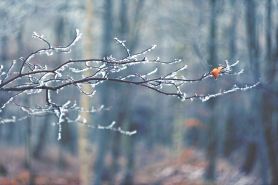
I first thought of the concept of “bare branches” when reading about Chinese families where the son couldn’t afford to marry. The family line ends. The branch is bare.
Most of us, on this blog, are bare branches. Okay, I might just feel like it, but it would not shock me overmuch if neither of the boys marry/have kids. It seems to be a thing for Odds. It’s also a thing of our times. I’m not sure EXACTLY what other long range goals modern feminism will have accomplished, but crashing human population in the lands it infects seems to be very effective.
My grandmother, younger than my mom is now, had something like 12 grandchildren and five great grandchildren. My mom has four grandsons and no great grandchildren. In fact in the whole extended family, including in it my cousin Natalia, who was raised with us, there is ONE child in the generation after my boys: a two year old born to a father who turns forty this year. So, there is a very good chance that if I have grand kids I’ll never see them. And it’s equally likely I’ll never have them, too.
So — bare branches.
Part of the reason for so many bare branches, particularly among the highly educated is the postponing of marriage and children till after education. Part of the reason of bare branches among the Odds is that even in the age of the internet, there are so few of us we have trouble meeting/mating. (Particularly those of us who are not on the left. I swear we should start Almacks at Liberty Con.) Also, we have, as Kate put it in one of her con books “bodies as strange as our minds” and I suspect, though I have no proof, that infertility is higher in our ranks. Though, frankly, just marrying late will do it. And then there are any number of us who — most of us being cuckoo eggs and hurt by our upbringing, not because our parents were bad, but because we were odd — simply don’t think we’re fit to be parents. And hell, we might even be right, though it could be argued nobody is fit. But we are perhaps more conscious of it.
It’s entirely possible that the odd branches have been bare throughout history, that the people who communicated and lived for the mind were mostly childless, and left no descendants. Certainly most of the great names of the past were either childless or (Shakespeare, for ex) grandchildless.
It’s possible the Odd world passes every generation, and every generation new Odds step up. Leo Frankowski in one of his books thought that the church led to a massive decrease in IQ from the middle ages, by siphoning off the smarter boys into celibacy. But I’m not sure that’s how that works. I suspect a lot of the people went into monasteries or convents because they were Odd and having trouble mating (imagine pre-internet.) And I’m fairly sure that’s not how intelligence works, or whatever you want to call the way our brains work sideways and upside down. I imagine a number of us are thrown off every generation. And the operative might be “thrown off.” Evolution has a way of cutting off extremes. And older son tells me the type of “extremely connected” brain we seem to have comes with issues like sensory and emotional issues. Also other issues run in the same pack, like extreme auto-immune.
Some days I look around at my friends and colleagues and feel as though I’m living in a lost world, one that will leave no genetic trace in the future.
I kept meaning to write about it, and getting too depressed and not doing it.
Which brings me to yesterday. Yesterday a first cousin once removed (I think. My mom’s first cousin, and raised with her) died.
She wasn’t around much, when I was little, because she and her husband lived and worked MOSTLY abroad. I think it was something like: South Africa, Rhodesia, France, Belgium. They retired and moved to Portugal about the time I was born.
But without being around much, they were still two of my favorite people. She, because she REALLY liked children, and he because he was… well… Odd. There were other reasons, too. They never had children. She wanted them. He didn’t (his upbringing having mangled him.) But they tried. It just never happened.
In a way they were a strange marriage, for the time and place I grew up in. Most people were married FOR the children, or at least acted like it, in the village. It was strange to see a middle aged childless couple, much less one that obviously enjoyed each other’s company. And he WAS Odd. Quick-witted and with killer snark. I remember being three or four and trying to imitate him as he did yoga. He stopped and rather solemnly taught me how to do it. Which is part of why I liked him. He never treated kids like kids, but like serious little adults. And his wife was just … a mother thing, always trying to console and help.
It will tell you how much I liked them that I don’t remember a single gift they brought me. Because their visits were their own reward. (I’m sure they brought me gifts. you bring gifts for the children in the family. It’s a Portuguese thing. I just don’t remember any.)
He died somewhere between ten and fifteen years ago. No, I don’t remember, for two reasons: the first is that he had a stroke, and stopped functioning at grown up level somewhere around 20 years ago. The other is that I only go to Portugal once every few years, and the visits run together in my mind.
She died yesterday. It was a great sadness, because she had become my parents’ main companion to go out to dinner, or have a picnic, or even just hang out and talk to my parents.
I first knew she had died, because my nephew, Jorge Ferreira de Almeida, (a poet of some renown himself) posted a poem on Facebook, which weirdly brought about that idea of “bare branches.” I thought the poem was his, until now, in fact, when I realize it’s a quote. Cynthia Bagley very kindly has translated it. I’ll reproduce it below.
“Cedo ou tarde
Devias saber
que é sempre tarde
que se nasce, que é
sempre cedo
que se morre. E devias
saber também
que a nenhuma árvore
é lícito escolher
o ramo onde as aves
fazem ninho e as flores
procriam.”
Albano Martins, 1930
You should know
it is always too late
when one is born,
it is always too early
when one dies.
And you should
know
that no single tree
chooses
the branch– where birds
nest, and flowers
bloom – Trans by Cynthia Bagley (a poet you should read, if you read any.)
My cousin had no children, but her kindness and — let’s face it — her husband’s Odness left a wide imprint on a little Odd girl who felt otherwise completely out of place.
We who are or might be (in my case) bare branches might not have had a choice not to bloom. But we have a choice in how we act in the future. You never know how far the ripples go, when you drop a pebble in a lake. I spent very little time with them, and yet they presented to me an encouraging and unconventional example, one that made me feel loved and less isolated than I’d otherwise be. Their loving, if childless marriage, gave me a model that might be very needed, since we probably will have a good thirty years after the boys leave which will be… well… any minute now.
You don’t choose not to fruit. But it doesn’t mean you have to be barren. Writing and art and science are all legacies of a kind, so are freedom and reason, and even “just” living a good, happy life. The tree might not bloom, but the roots, under the ground, might fruit long after the tree is gone.
Go forth and be fruitful.


