The Myth That Kills – A Blast From The Past from October 2012

*Sorry to do a blast from the past.  There’s stuff going on.  Nothing bad.  Well, mildly bad as apparently minor-surgery-the-saga will have to be repeated in six months.  But mostly stuff I have to get done/finished/written that is getting in the way of even having a blog idea.  And, well, this seems apropos. – SAH*

The Myth That Kills – A Blast From The Past from October 2012

I’m very afraid this is another of those posts that will get me accused of being a “gender traitor.”

That’s just fine.  If you think a gender – the fact that you were born with one piece of physical equipment – demands your loyalty and forces your opinions to be the same as those people with the same piece of equipment, call me a traitor.  Guilty as charged.

You see, I tend to think of people as people.  This has largely been a handicap in writing fiction in the current age, because I’m expected to view women as saints-and-martyrs and men as oppressors-and-satyrs.

Have I met some examples of those?  Oh, heck yes.  Hasn’t everyone?  But I’ve met the opposite too.  Hasn’t everyone?  So why is only one of those the “correct” thing to put in a novel?

Ah, but you’re going to tell me that pushing women as victims, as saints, as nurturers is the way to go, so we can carry on with the feminist victory and equality of the sexes.

(Looks across the computer at you)  I don’t think that word means what you think it means.

Equality means, in this as in anything else, equality before the law not equality of results.  This is something that we keep forgetting.  Look, that was the ultimate difference between the American and the French revolutions.  Americans wanted equality before the law.  The French wanted equality of results.

They had justifications, too. They were dealing with an historically beaten-down peasantry, starved, uneducated (though not nearly so much – the revolution happened because education had started to spread.  Never mind. We’re going with how they viewed themselves) used to being deferential.  They needed more than just equality before the law, they said.  They needed to redistribute some of those advantages, to enforce equality of results for a while.

We all know how that ended up, right?

It always ends up that way.  Humans are individuals, not groups.  When you empower the groups, you empower the worst in any group. The power-thirsty, the aggrieved, those who want to manipulate group-outrage for their own purposes.

It is the same with women.  It’s lots of fun to read the more sentimental writers of centuries past (and the not so sentimental and totally un-ironic feminists of the last century) go on until your eyes bleed about women being kinder, gentler, softer, nicer.

Poppycock.  Poppycock with powdered speciousness.  Yes, women presented that way.  This was the result of centuries where women had the subservient position.

The first one of you to open her mouth about how this is the injustice feminism needed to correct is going to go to the corner with the dunce cap, so help me bog.

The reason women were “oppressed” for “six thousand years” (longer, for certain values of women) had NOTHING to do with men dethroning the goddess myth and destroying the perfect matriarchal society because they’re evil or any other re-writings of the Judeo-Christian myth of Eden.  Marija Gymbutas was – yes, I’m crossing Godwin, and I have a reason – as much of a fabulist as Hitler, and about as good a scientist.  She didn’t have armies at her disposal, but those who believe in her might in the end bring down civilization as effectively as the Nazis would have done, so I do not apologize for using the analogy.  (If you don’t think convincing women that all men are their enemies, handicapping boys in school, running men out of the teaching profession, and generally making men guilty-until-proven-innocent is a civilization-killing meme, you need to go out and meet some real men and some real women.)

Women were subservient in society due to that horrible oppressor: biology.  When you were going to have to be a celibate or spend half of your life pregnant, you missed out on other aspects of life.  Yes, I love those of you who had no problems in pregnancy.  I had to diametrically opposite experiences: the first pregnancy would have killed me without strict bed rest, for the second I kept forgetting I was pregnant.  HOWEVER in both of them in retrospect, not at the time, I missed vast chunks of intellectual function.  There is an hormone cocktail that is supposed to make you fat, happy and dumb during pregnancy.  It is what it is.

Worse, even for women who never get pregnant, until modern hormonal treatment, we women were prisoners of our hormones.  Even now I have more than a friend who hit menopause and… became someone else.  In very rare instances, the change is for the best.  Most of the time it’s a “What on Earth happened to your brain?”

I thought I had dementia for a long while – I literally couldn’t remember the names of my characters or what had happened from a chapter to the next.  And if I wrote it down, I’d have to go look at the notes, and then when I came back to the book I’d forgotten what I’d looked up.  For a while (most notably the last Musketeers mystery) I had to have a friend check my work because I’d forget what I was doing and had tons of internal inconsistencies.

Turned out it was an hormonal problem, not dementia and not menopause, as I thought.

Now, that’s an extreme case, mind you.  But it’s not unusual.  And though men, too, can have this type of issue, it is considerably more common in women.  What makes us women — the ability to generate new life – also makes us cyclical creatures, both in the monthly sense and in the life-cycle sense.  And if you think your hormones don’t affect the way you think, let me tell you the only reason you think that is that you’re inside your skull and being affected.  Until my experiences with hormonal insanity I too thought I was impervious.

Anyway, the point is until modern medicine with contraception and hormonal supplements, women were swimming with an iron vest strapped on.  Add to that that only women can be sure that their children are theirs.  This made men – of course – wish to make sure women were controlled, to make sure the kids they were providing for were their own.  It made for a society where women were somewhere between children and chattel and men had all the responsible positions. (Though even then some women managed to break through.  Individuals are… individual.  It’s one of their characteristics.)

Does any of that still apply?  No.  Thanks to modern medicine, we even can figure out whose daddy is whose without keeping women in purdah.

And though it took a little while, society changed. Women started taking the place of equals in society.  Like the French peasantry, which would have come along once barriers to their equality under the law were removed, we have started taking intellectual callings and sometimes physically intensive callings.

We are now, if we want to be, equals.

The problem is that most of us don’t want to be equals.  And the reason for that is that most of us have been sold on the feminist creation myth of the great mother and the perfect society with men as the spoiler of paradise and the villain.  And most of us are stupid enough to buy it.  (Yes, I know men worshiped goddesses.  If you think that made the society feminist, you have birds in your brain and you probably also believe there’s some magical herbs that are as effective as the pill and have no bad side effects.  (No.  There aren’t.  There was a bush that had similar properties, but it went extinct in Roman times).  Societies that worshiped goddesses often demanded the most control over women and engaged in temple prostitution.  They also had a marked tendency to child sacrifice.  On the other hand, most societies worshiped both.)

Also, most men are of course bigger than us.  Stronger. And there’s the whole historical inequity.  Just like the French peasants.  So we demand laws that favor us and more importantly we demand the blood of our enemies.  And we demand to be treated with a respect and a care that would have scared Victorian maidens.  We use the slightest thing as a weapon.  Because only when the oppressors are gone, will we be free.

This was bad enough when it was the French peasantry.  But men are not some aliens dropped on the Earth from afar – they’re our fathers, brothers, sons and husbands.  They’re an integral part of what makes humans humans.  They’re not a monolithic group, just like women aren’t, but statistically they’re better abstract-and-visual thinkers and the people who are more likely to think outside the box, just like statistically we’re the socially-oriented people, more detail-specialized and better at cooperating.

Society – a civilized society – needs both to survive and go forward.

But women have been sold on males-as-the-boogeyman and therefore they see evil intention and coordination and conspiracy behind males’ being people.  Meet one abusive male, and you’ll go through life convinced that all men are like that.  Does anyone do the same when meeting an abusive woman?  I don’t know about you, but I’ve had bosses from hell in both genders.  So, why is only one accused of being “oppressive”?

Because it’s the myth.  And it’s a myth the power-hungry people who took charge of the feminist movement (one that initially only wanted equality under the law) are happy to perpetuate.  It’s a myth every college, every entertainment gatekeeper cherishes.

It’s a poisonous myth.  It’s also a stupid one.  No one in their right mind would talk about “War on women” for instance.  Are you insane?  Why would normal men – yes, your husband, your brother, your son – want to make war on women?  And yes, that means you, your sister, your mother.  Hell, even my gay male friends like women and have mothers and women friends.  And yes, for those of you about to be stupid, even males on the opposite side in politics have all of those, and no, none of them hate women.  (Except perhaps the occasional pathological case.)

(If you bought that wanting to not pay for contraceptives out of the public purse and at the expense of other people’s religious conscience is a “War on women” you might want to inform yourself.  Not giving you something for free is NOT restricting access.  Otherwise, people are restricting your access to food, housing and entertainment.  Is that a war on humans?)

I’ve watched the rise of this myth with slack-jawed amazement.  HOW can you even think that.  Guys, my men – and I live with three of them, husband and two sons – couldn’t “conspire” to keep chocolate hidden from me (they’ve tried.) And they’re all three of them brighter than the average bear.  WHY would you think men in general would want to conspire to keep you in submission?  Most modern guys wouldn’t know what to do with a truly submissive woman.

Oh, I know.  It’s the myth you heard, from Gimbutas and her sisters in school all the way to the latest movie you watched.  Males want power over you.

Well, some males maybe.  Those who belong to a religion that dresses women like upholstered furniture.  But it’s just one culture and there’s reasons for that (including but not limited to a culture of scarcity and a tradition of bride kidnapping.)  It’s not all men, and it’s certainly not MOST men of the western world.

Like the women who no longer remember why women were “historically oppressed” the men alive now were never in a society where men had the upper hand.

I have a friend who believes that it’s a pendulum.  Men had the upper hand, now women do, then it will swing back.

Unless science has some sort of pendulum too, I don’t see where she’s right.

What I see is women who were freed by tech advances and who THINK they were freed by marching shoulder to shoulder and taking permanent offense.  These women live in a state of paranoia, dreaming up male privilege that is invisible to anyone but them, and taking offense at ever more ridiculous things – even things that have nothing to do with gender – because they’re so terrified of men taking the upper hand again.

I look at them going to war with spelling: Womyn, Herstory.  I look at them dancing around dressed as vaginas (!) because apparently the most important thing in these women’s lives is their sexual organs. I look at them acting as a pack and attacking whoever they’re told to attack because “so and so is anti-woman” and I think… these are humans?  These are civilized people?  Don’t they see they’re being tools of the Marxist divide-and-conquer strategy?  Don’t they see the end of this is either societal destruction or TRUE backlash for the sake of saving civilization?

Apparently not.  So… carry on.  Dance around in your little fabric vaginas.  Think that all men are out to get you.  Refuse to have children, because some of them might be male.  And scream, scream, scream about made-up outrage.

That’s the way to bring civilization down and destroy the technological advances that brought us equality.  If that’s what you want, DO carry on.

Apres nous, le deluge.
Outsourced Violence

handsome-3367458

Yesterday someone posted a meme with — I suspect she’s an actress, from some of the comments, but you know, I wouldn’t know actors/actresses (honestly, changing it all to the masculine word in a profession where you use your body and appearance is f*cking insane, and I’m done with the corruption of language) if one bit me on the flesh part of the behind — with a woman with a quote from her saying something about how it’s a good thing if the current climate makes every man afraid of every woman because women have been afraid of men for six thousand years.

There are some statements so completely insane that the only answer to them is “I don’t know what planet you came from, woman, but I personally have never been afraid of every man.  Also, you look remarkably well-preserved for six thousand years.

So, it starts with that.  From the mention of six thousand years, this woman is assuming that Maria Gimbutas was correct and that men overturned the peaceful matriarchal society which worshiped goddesses about that long ago.  She might not even know that’s what she’s buying into, having been taught this bullshit as fact.

So, to go to the beginning of this mess: if you’re not six thousand years, you haven’t been “in fear”that long, and as for other women being in fear… You don’t know.  You only know what you’ve been told.  And if you’re ignorant that you think there was some big reversal six thousand years ago, you haven’t really looked for scientific proof, or frankly given it much thought.

So far as we know there was never ANY large scale matriarchal society.  EVER.  Not over six thousand years ago, not ever.  Granted, that is the pre-history, and there are no clear narratives.  But absent Gimbutas dreaming that bull’s heads were uteri, there really is not even a glimmer of a trace of a guess that women were ever in charge.  Those vaunted amazons of the steppes turn out to be teen boys, not women at all (now we can analyze DNA from old bones.)

Yes, there have been female fighters throughout history.  They are outliers.  Most “female military” is either honor guard or largely ornamental until the 20th century and the existence of weapons that don’t rely on upper body strength alone.

Which brings us to the reason large scale (there were isolated tribe, yes, in special circumstances) matriarchies are unlikely in the extreme in our past or our future: women aren’t as strong as men.  They just aren’t.

Over the weekend, I watched a weedy teen male whose waist I could encircle with ONE arm lift a cabinet I couldn’t budge.

Sure I’m middle aged, and would have at least lifted it somewhat 30 years ago.  BUT moving it around like it was nothing?  No.

Because 99.9% of men are stronger than all but 1% of women.  Period.  (Barring illness or other impairment.)

So, how was it possible that in prehistory, with no other improvement to human strength, women would rule?

It wasn’t.  The only way women can rule is to convince men to use their muscles on THEIR behalf, which honestly, one way or another, history shows we’ve managed.

So no, we haven’t been afraid of men for six thousand years.  We’ve cooperated in an unstable but so far successful project called civilization. As long as some men will defend women, the bad men who’d make us afraid are kept under control.

But that requires that women don’t go bad en masse, and don’t use the apparatus of a bloated state to oppress all men.

Actress (I think) chickie wants to have all men afraid of every woman.  That’s because her head is stuffed with fecaliths and she doesn’t realize that women can only have power in society by consent of men.  That women’s violence is outsourced to the apparatus of the state.

Make every man afraid of every woman, and the apparatus comes apart.  The center does not hold.  Those big burly men you want to arrest random men on your behalf?  They will instead beat you to near death, tell you to put a burka on and cook them dinner.

This is where this ends.  Using the apparatus of state violence for “advantage” and “to make men afraid has only one end.  The society these idiots want is not even possible, let alone stable.

The end is a return to barbarism, and in barbarism, women are prisoners and chattels, as they’ve always been.


Vignettes by Luke, Mary Catelli and ‘Nother Mike

fantasy-3637110.jpg

So what’s a vignette? You might know them as flash fiction, or even just sketches. We will provide a prompt each Sunday that you can use directly (including it in your work) or just as an inspiration. You, in turn, will write about 50 words (yes, we are going for short shorts! Not even a Drabble 100 words, just half that!). Then post it! For an additional challenge, you can aim to make it exactly 50 words, if you like.

We recommend that if you have an original vignette, you post that as a new reply. If you are commenting on someone’s vignette, then post that as a reply to the vignette. Comments — this is writing practice, so comments should be aimed at helping someone be a better writer, not at crushing them. And since these are likely to be drafts, don’t jump up and down too hard on typos and grammar.

If you have questions, feel free to ask.

Your writing prompt this week is: standing

Bob Woodward’s “Fire” is more like smoke and fractured mirrors by Amanda S. Green

whisky-1872379_1920

Bob Woodward’s “Fire” is more like smoke and fractured mirrors by  Amanda S. Green

This has been a week. Between personal and professional demands on my time, not to mention the circus that’s been happening in D.C, finding a topic to blog about shouldn’t be difficult. The problem is that anything I chose would see my electronics be put in danger. The accusations against Judge Kavanaugh drive me up a wall. I’m tired of trial by innuendo and conviction by media. I’m sick of watching the DNC sending Beto O’Rourke around the country to build his image for future, nationwide office. The thought of him becoming my Senator scares me shitless. I could continue.

So, when Sarah pinged me this morning to ask where my blog post was, I almost told her there wouldn’t be one. I’d been dealing with a forest fire of the metaphorical kind since I woke. There isn’t enough coffee in the world to get me going this morning, and that includes the Death Wish coffee I’ve been guzzling for the last few hours.

However, I made a promise to her some months ago that I’d do a post a week for her. I’ve let her down a couple of times and she’s been gracious enough to let me change the day I blog on. So, I sat my butt down in my chair and tried to figure out what I could do that wouldn’t send my MacBook Air through the wall.

Mind you, what I decided to do might not accomplish that last. But it should be entertaining. At least I hope it will be for you. I have a feeling I’m going to be looking for booze, much much booze.

To prove I will take one for the team, this morning I downloaded the free sample for Fear: Trump in the White House. No, I won’t give Bob Woodward a dime of my money. Especially after reading the sample.

Okay, buckle up and here we go.

You know you’re in for a hit job—let’s call it what it really is, a hatchet job—when you see the title. But it gets better, for relative terms of better, when you open the book and you get to the epigraph.

“Real power is—I don’t even want to use the word—fear.”

Woodward attributes the quote to President Trump. Of course, being the “good” journalist he is, he doesn’t give the context for the quote. He only gives time and location. After all, it is soooo much better to start off showing what a power-hungry and, shall we go ahead and say it now, evil man Trump is. (yes, tongue is firmly planted in cheek as I type that.)

One thing about it, Woodward does set the tone for the book and he doesn’t disappoint—assuming that is the sort of book you want to read.

Next up is the “Author’s Personal Note”. The tenor begun with the title and the epigraph continues.

President Trump presents a particular hurdle because of the deep emotions and passions he brings out in supporters and critics. (Fear, Kindle location 45-46)

Wow, he’s written five books about four presidents: Nixon, Obama, Clinton and Bush. Yet it is only Trump he seems to think brings out “deep emotions and passions: in his supporters and critics. I guess he slept through the Obama administration, not to mention Bush’s. Or could it be he has something personal against Trump? Or is he, like so many journalists today, falling back to the age of “yellow journalism” seen in the battles between William Randolph Hearst and Joseph Pulitzer?

But let’s see what else he has to say.

Hmm, we might not get to much of the book with this preview. We have the “Author’s Personal Note”. Then we have his “Note to Readers”. Couldn’t these have been combined or is he padding the book? I know. He had a word count from the publisher that he failed to fill and this was the only way he could do it. Or maybe the publishers wanted to make sure there wasn’t much of a preview of the actual book available—could they be worried readers wouldn’t want to buy it if they saw what the book actually contained—and chose this way to pad the beginning? Oh well, those are questions we’ll never have answers to. So let’s see what good ole Bob has to say to his readers.

Ah, here we have Woodward’s own admission that this is a hatchet job on the President and his administration. He tries to dress it up but he fails. When you have an author, especially someone who is supposedly a well-respected investigative journalist, saying that the book is based on interviews conducted as “deep background”, you know it means he is going to play fast and loose. There will be no specific quotes and no specific context given. Here’s what Woodward himself writes:

This means that all the information could be used but I would not say who provided it. (Fear, Kindle location 59-60)

I don’t know about you, but that alone takes this book from non-fiction to fiction. It is also where I would be sending the book back to Amazon and asking for a refund. Which is why I didn’t buy it in the first place. I have no respect for a writer, especially a journalist, who writes this sort of bullshit and doesn’t have the balls to demand his sources go on the record. Hmmm, could Woodward be the one who wrote the Deep State memo to the Times? I doubt it but that anonymous memo is the same sort of hit job as this book appears to be. Trial by innuendo and conviction by media.

To which I call bullshit.

When I have attributed exact quotations, thoughts or conclusions to the participants, that information comes from the person, a colleague with direct knowledge, or from meeting notes, personal diaries, files and government or personal documents. (Fear, Kindle location 61-63)

I don’t know about you, but that statement says to me that he not only accepted but embraced gossip and innuendo more than he did direct knowledge of the situation inside the White House. Frankly, the one thing echoing in my mind—said in a perfect imitation of Governor Ann Richards—is, “Poor Bob, he’s still looking for his next Deep Throat but this isn’t it.”

OMG, we still don’t get to the meat of the book. Now we have a Prologue. Damn but I’m glad I didn’t pay good money for this.

I have to admit, he sets a pretty stage. He paints a scene that could have come out of National Treasure or any entertaining political thriller. It opens with Gary Cohn, Trump’s top economic advisor, walking into the Oval Office and crossing to the Resolute Desk. There he sees a one-page letter drafted by Trump to the South Korean president. Cohn then reads the letter and decides he knows better than the President. So he steals the letter. He is, by innuendo, protecting us and the world from our president.

Did Cohn steal the letter or not? No one really knows except Cohn and possibly other members of the Administration. However, if you check the media, you would see no question about it. If you do a Google search, you have to go 7 pages deep before finding anything that might cast doubt on Woodward’s allegation. After all, they have to keep with the narrative, one Woodward is so happy to embrace and do all he can to push.

Does Woodward say Cohn told him about the incident? No. This is one of those “deep cover” interviews apparently. So we don’t know who he talked with. Oh but, Amanda, what about the copy of the letter that good ole Bob released to the media to support his allegations? Again, there is no proof, no attribution of where the letter came from—at least not to my knowledge.

Again, trial by innuendo, conviction by media.

“I stole it off his desk,” he later told an associate. “I wouldn’t let him see it. He’s never going to see that document. Got to protect the country.” (Fear, Kindle location 91-93)

Now we get a bit of a clearer picture. Some “associate”, and who knows who that might be and how far removed from the alleged event, told Woodward about this. Where is the fact-checking? Where is the accountability for the source or for the alleged facts? There is none and I doubt we will see much accountability in the rest of the book.

In the anarchy and disorder of the White House, and Trump’s mind, the president never noticed the missing letter. (Fear, Kindle location 93-94)

Holy hell, talk about bias.

We aren’t even into the meat of the book—hell, we aren’t even into the first frigging chapter of the book—and we get author intrusion so hard and fast it is jarring. We have one incident alleged to have happened but this is enough to prove “anarchy and disorder”. Better yet, Woodward reveals he is also apparently a mind reader. Wow. I guess he gained that power after Watergate. Otherwise, he would have revealed who Deep Throat was, maybe. Who knows what this yellow journalist would have done.

I give up. I’ve never before thrown in the towel on a book for ATH before getting to the first chapter. This is a first. There really isn’t enough booze in the world to get me to read all the Prologue, much less the rest of the book.

Woodward might have once been a good investigative journalist. Now? In my opinion, he’s a hack and I’m probably insulting hacks. This book appears to be nothing but a hit job, violating so many journalistic principles it makes my head spin. No, it makes my stomach turn. My great-grandfather who was a newspaper editor and my uncle after him who was a reporter would have publicly disowned Woodward for this piece of fiction.

Don’t waste your time or your money on this. Seriously, don’t. Unless you want to use it for kindling or target practice. All Fire is is confirmation the liberals are in control of most of mainstream publishing and are doing all they can to push their agenda of making sure there is a Blue Wave come the mid-term election. I won’t even talk about the fact this piece of crap (and I’m insulting crap) came out on 9/11. That is simply the ultimate insult to our country and to our intelligence.

Gawd, where’s the booze? I need booze.

*Get the woman some booze – SAH*


The All Powerful Machines

monitor-1307227_1920(1)

It’s probably as impossible for me to explain to you young’uns what it was like to talk or think about computers in the seventies, as it is to explain what it was like growing up during the cold war “waiting for the hammer to fall.” (Or how convinced everyone was that the communists would win because they were more efficient.)

I grew up reading stuff like Martin Cadin’s God Machine, and RUR’s robots, so of course I knew that machines could achieve full consciousness and rule us all.

It wasn’t till computers started being bought by private companies in Portugal in the seventies, and the excuse “it was a computer error” came in, that my brother (an electrical engineer) pulled me aside and explained how insane this all was.

But people my age and older than I fail to get it, still.  I was jaw-dropped when one of the luminaries of science fiction, on a panel, said we should have kids raised by robots to eliminate bias in their upbringing.  There walks someone who has never heard of Garbage In, Garbage out.  The bias would be baked in.

Some — many — of the younger people fail to get it too, aided along by the insane depictions of AI in movies and media, and expect computers/robots to be our saviors, to bring about that famed post-scarcity society.

Others think that machines will run people out of their jobs in droves, and we must therefore stop the machines before they make humans obsolete.

In regard to machines, particularly “thinking” ones (they’re not.  Actually “thinking” still eludes us.  What we have is a very sophisticated version of arranging virtual gears and things) I like to misquote Shakespeare “neither a Luddite nor a credulous acolyte be.”

Sure, computers will become more sophisticated and better, in the next 100 years or so. There might be a limit, sure, but we’re clever monkeys, and always get around those.

Will they ever be truly sentient, or define themselves as opposed to us?  I kind of doubt it.  Heck, some people doubt WE are sentient.  But even if they did, they’d be our “children” i.e. human in all but externals.  Because they would be built like us, who else would they reflect?  So they’d be about as troublesome as humans always are to each other.  Rule us?  Maybe.  But how much worse could they be than what we’ve done to ourselves in the past?

Then there’s the dream of the pure “planning” and “thinking” machine, which was part of the attraction of communism.  The dream shall always be with us, and always unattainable.  Not only would the machines be in our image and semblance, but who can believe planning everything and ruling over chaotic humans would create a better society?  Ultimately planned societies/economies, MIGHT work great for some alien, but I’d trust our chaotic nature and the improvisational smarts of the cleaver and tinkering monkeys we are against all the planning in the universe.

As for running humans out of jobs, bah.  Humans are really good at inventing new jobs for themselves, which is why almost no one these days does our original jobs of hunting and gathering.

For the same reason there will never be post-scarcity.  Why?  Because we’re better at inventing new “needs.”  Get sent to the middle ages — or my childhood in the sixties — and you’ll find out how many things you “need” don’t exist.

By medieval terms we’re already post-scarcity.  You notice any of us lying down and letting the grapes fall in our mouths? (well, some.  Even our welfare recipients live better than medieval man, but that’s a talk for another day.)

And this is good, because humans are also striving monkeys.  We were born for strife, and without it we wither and corrupt.  Which is why “no demands” charity destroys people.

So, be not afraid of the machines, but use them as we use a ladder: to reach somewhere we couldn’t get before, and learn new and interesting things, and discover even more, bigger and more confusing problems.

Here’s to humans.  The chaotic rebels they are.  May they always be so.


Scandal

millstone-1227233_1920

Among the many moral precepts I failed to heed, mostly because I could make neither heads nor tails of it, was the “woe onto him who gives scandal. It were better for him if he were tied to a millstone and thrown into the sea.”

The illustration on that page of the cathecism was amazing, with all the vivid emotion of a Victorian lithograph, showing a man having his neck tied to the millstone, which of course led young geek me to stare at it and go, “Well, no worry throwing it in the sea.  The minute they throw it anywhere his neck will be broken.”

At the same time, at my time of life, and the place where I lived, this seemed like a truly overblown reaction to the things my grandmother and her cronies called “scandal”: wearing your skirt a little too short; kissing your boyfriend; having loud parties.

In retrospect, these, and their slightly more serious cousin — getting knocked up before marriage — were indeed scandals, to an extent and in a way, but the scandal is to my mind more what we’re seeing unroll in Washington (or Rome): something that unmakes the rules of society and the world.

What I’m trying to say is that I keep hearing people who pay attention and seek their news beyond the media (because the way the media is behaving is a scandal) keep saying that, oh, the conspiracy of our State Department and the FBI against (at the time) a presidential candidate was a scandal.  What is going on with Kavanaugh being accused of being a poopie head at an undisclosed location, with no witnesses when he was in high school, and the thing being taken seriously, or the accuser being praised for courage is a scandal. (At least half of the #metoo accusations and the way they were taken was a scandal.) For that matter the way that Benghazi was willingly covered up by a compliant and partisan media was a scandal.  The entire Russia investigation nonsense is a scandal. The way conservatives (and more generally males) are treated in our society is a scandal.

A scandal is — as I see it, and I want to point out I’m no theological expert — an action or statement that so fundamentally breaks the rules on which the society/church/science/interest is based on that it unravels the thing upon which it stands.

So, were those kisses in public, the short skirts, the parties scandals?  Definitely and to an extent.  The pregnancy was more so.  But they were little scandals.  They were indeed breaking the rules of the society, and if you flaunt enough such breaks, the rule becomes dead letter.

Now, I happen to think a good many of these rules, in Portugal, when I was a kid, were in great need of being broken, or at least softened.  Stuff like the skirts, or kissing your boyfriend, or even going out alone at night fall.

But I would think that, wouldn’t I, born in the early sixties and coming to age in the seventies, “let’s demolish oppressive rules” (particularly for women) was THE rule to follow.  Of course where it led is not what we expected.  We’ll leave it at that.  I’m not someone who can judge it, particularly since I’m now acculturated to a culture where the rules were never as oppressive.

I still think the whole millstone treatment is a bit much for a quick peck with your boyfriend, or even a pre-marital pregnancy, but then again, I’m not good with rules.

On the other hand, the kind of scandal we’re saying, and coming closer and closer together, and unreported and thereby unpunished is dismantling the very underpinnings of our society.

You can’t have government trying to discredit a candidate without causing people to doubt all elections.  You can’t have the vast amount of fraud we have without removing the underpinnings of our trust in elections.  You can’t have “believe all women” without removing our judicial system, in which the accused is always presumed innocent, even if you found him with the smoking gun in his hand (he might after all have just picked it up after the murderer ran off.)  You can’t have trial by rumor and innuendo without undermining our entire system.

It’s impossible. If without witnesses, without corroboration, with an history of false memories (she blames her therapist for her having thought that there were four attackers before) if Kavanaugh’s accuser is allowed to derail his nomination, a fundamental thread will have been pulled out of our social fabric. Hell, if she and everyone who is putting a man and his family through hell aren’t PUNISHED in fact, or in deed (by having their every shady moment brought to light) society has suffered a death blow.

“But Sarah,” you say.  “Wouldn’t that intimidate some woman on coming forward, after suffering some assault?”

Sure is.  If she comes out thirty years later, has no proof, has no witnesses and is demanding an FBI investigation of something that EVEN IF TRUE is NOT A CRIME.  (Drunken groping might be boorish behavior, but it’s not assault or a crime.  At least not depending on the severity, etc, which frankly, her being obviously drunk out of her gourd at the time is impossible to determine.)

Women are not gods.  We never were.  Just because we say something is so, it doesn’t mean it is.

Women lie.  Just like men lie.

And beyond that, when you talk of something that long ago, women might believe they’re telling the truth, but there’s no guarantee they are. EVEN if they told their friends/parents — which this chick didn’t — women have often been mistaken/have hallucinated it/are not quite all there/recovered memories under therapist or not, which are largely fabrications.

Not only does the insistence that we believe some woman’s unprovable, vague recollections insane, the insistence that, even if they were true, they should derail the career of a man who has never had such an incident again, amounts to destroying everything we believe in.  There is a reason that juvenile records are erased, and again, this is not even something that would warrant a record.  Heck, I’ve been groped and pinned to walls by guys whose names I don’t remember (fortunately I was never drunk in public unless I was with my family, and even then just on the tipsy level.  So most of those men got knee in the groin or hat pin ditto) but I would blush to derail even a job application by one of those guys, even if I knew who they were.  To be a teen is to be uncouth.  I suspect most of those men would now shy away from groping a total stranger with no encouragement (particularly if they remember the knee to the groin.

But there is something far more important than our judicial system at work.  There is civilization as we know it.

Exaggeration?  Not by much.

Already in every day life any man is held hostage to any woman.  A woman, in our colleges, in our work places, in most de-facto living arrangements can end a man’s career by saying that he hurt her/abused her/failed to listen when she said (whispered/muttered) that she was uncomfortable.  Most of our institutions don’t pursue investigations.  They get rid of the man because it’s easier.

This is already causing males to be afraid to date, or be alone for any reason with a female.  In the work place, this makes any type of cooperation between males and females risky and fraught.

These new rules as practiced are already hurting women (even women like me, who’d never make those accusations, because we’re not that neurotic.) And they do hurt some select men very badly indeed.  Destroy many of them.

If we go on, if we keep assuming women are beings of light who never lie, never make up stuff, and whose word shouldn’t be checked, this goes one of two ways: the bad and the very bad.

The bad is where after a while people rebel.  Look, the rules of cutting extra slack to women are there for a reason: we’re weaker; for a part of our lives we’re impaired by hormones and pregnancy; we have a disadvantage in working outside the house.  So, some extra slack is cut and our path is eased (well, at least some of ours.  I’ve never noticed it.)

The unspoken condition is that we don’t abuse that extra help, that extra protection (things like the fact that a woman wears provocative clothes or having a checkered past not being brought in on rape cases for instance) by using it as a cudgel to get our way and destroy men just because we want to destroy them, because we disagree with their political stands, or because they’re ugly and their mothers dress them funny, even.

Now this has been abused a long time everywhere else.  Like the middle school trying to kick younger son out for kissing a girl against her will in the lunch line, while they had footage of him spending the whole time talking to his Spanish teacher.  (Yes, they did say “maybe it was another day. Women don’t lie about this sort of thing.”  Consider this and consider the unmaking of the world already in that assumption.)  Yes, liberals (of all sexes) have tried conservatives by wholly made up rumor forever. Witness idiot last week who decided an anti-Marxist article was anti-racial-subgroup of the day.  And the rumor goes forth, and the left believes it, because it’s convenient to believe it.  This has been going on a long time, because they need to believe everyone who disagrees with them is a villain.  Or that designated “evil” people like males are villains.  It makes the inevitable purges and gulags of Marxism seem justified.

But when it happens this publicly, this obviously, this nakedly, this in-the-public-eye?  The scandal is magnified twenty fold.

When women do things like that, and do that publicly and openly enough, and experience no punishment, society — if it still has enough cohesion to save itself — will turn against us.  With a great convulsion the “make the way easier for females” will be cast out.  And we’ll be cast in the same position as women in Muslim countries.  Our word will be worth nothing, and we’ll be sexual and emotional playthings of men.  If you think it can’t happen here, you’re not aware of both the great anger building up, and the foundational nature of the crime against everything this society is built on taking place.

That’s the bad result.  But there’s a very bad one.  Which is that this is allowed to continue and every woman is allowed to be a tin-pot dictator, capricious and irrational like the wind.

In that future — and we’re almost there — humanity doesn’t survive, because men simply disengage from women.  There are other sources of pleasure, and they’ll just stop risking playing kissy face with the alligator.

So, what can you do?  You can make sure this is the scandal it indeed is.  Make a great noise.  Point out how this is unraveling all of our system.

And vote.  Vote against every ass clown who is howling for a man’s blood based on a crazy  accusation of non-crime.  And vote against everyone of the same party who doesn’t immediately and vocally disavow the ass clowns and all the madness they stand for.

Because if this is allowed to stand, it were better for them if they were tied to a millstone and cast into the ocean.

And for that matter, us too.


Leaving Your Mark By Christopher M. Chupik

books-1163695_1920

*Worry not.  I am all right.  But taking two days of doing bloody nothing this week left me with two days worth of what Dan calls “administrivia” in both house and business to do, which means I’ve spent te morning running around like a port-wine drunken turkey with its had cut off (a story for another time.)  So…. Thank you to Christopher Chupik who doesn’t mind my putting his post up late. – SAH*

Leaving Your Mark

By Christopher M. Chupik

I open the book and see the name inscribed in neat handwriting on the end paper:

“Irene M. Montgomery”

I smile. We meet again.

Over the past fifteen years or so, I have purchased a dozen books which used to belong to Irene:

Pirates of Venus by Edgar Rice Burroughs, Warrior of Llarn and Thief of Llarn by Gardner F. Fox, Prince of Peril by Otis Adelbert Kline, Three Against the Witch World by Andre Norton, The Legion of Space and The Legion of Time by Jack Williamson Lost Worlds and The Years Best Fantasy Stories volumes 1, 2, 4 and 6, all edited by Lin Carter.

From time to time I find people’s names in books I purchase used. One person even had a personalized stamp for his name. Some used bookstores stamp their books. But this is the first time I’ve ever run across the same person’s name again and again. And it makes me curious about the person whose books I’ve inherited. Just who was Irene M. Montgomery?

Googling brings up an Irene M. Montgomery who died in 1917. Clearly not her. Of course, “Montgomery” could well have been her maiden name and she is now listed under her married name. But I have no way to know. So I am left to judge her from her books.

And what can I deduce?

For one thing, she took very good care of her books. These are in great shape considering their age. For another, her reading tastes dovetail very closely with mine. It’s clear Irene had a passion for both the Planetary Romance and Sword and Sorcery subgenres. Likely she was one of the millions who discovered Burroughs during the reprint boom of the ’60s. I can relate, having discovered him myself twenty years later. Many of my ERBs are Ace editions, with Frank Frazetta covers, like the one Pirates of Venus sports.

The popularity of ERB prompted Ace to reprint authors like Otis Adelbert Kline, ERB’s chief rival during his life time. Now, OAK wrote about Venus first, back when ERB was writing about Mars. When ERB wrote about Venus, OAK switched to Mars. Legends of a “rivalry” between the authors seems to be just that — legends. As to the book itself, well . . . Prince of Peril isn’t that great, I’m afraid, but it’s perhaps not entirely OAK’s fault. Despite the “complete and unabridged” which adorned every Ace reprint, Ace did in fact abridge novels, the works of OAK included. Paizo’s short-lived Planet Stories line reprinted OAK’s Martian novels unabridged and while they are a slight improvement, Kline still comes in a distant second to Burroughs.

OAK’s biggest flaw was that his alien worlds never feel as exotic as they should. His names lack the same ring of romance that ERB brought.  There’s a nagging feeling at times that if you took out the alien animals and advanced technology, they could just as easily be taking place in some far-off place on Earth. OAK’s most important contribution to the field was being the literary agent of Robert E. Howard.

When Ace ran out of older authors, they started publishing pastiches by contemporary authors like Norton, Fox and Carter. Fox’s Llarn novels are fairly standard Burroughsian fare, but with some interesting twists. Fox was a pulp veteran, and one of the most prolific comic writers of all time, creator of the Flash, Hawkman, Adam Strange and many, many more. Norton’s Witch World series is too big a topic for this post, but I will note how the series starts off in Burroughsian territory (Earthman transported to other world) and gradually shifts into Fantasy over the course of the first six books.

I can also tell she was a big reader of DAW during its yellow-spine days, back before they courted respectability. It’s not a surprise that Irene was a big reader of Ace and DAW: Donald A. Wollheim was editor at both. Wollheim was a big Burroughs fan, and one of the first publishers willing to take a chance on Fantasy back when SF was king. The early DAW leaned heavily into Sword and Sorcery, the subgenre created by Robert E. Howard during his short but prolific life.

Carter’s Years Best Fantasy anthologies are interesting. While Lin Carter may not have the most sterling of literary reputations, there’s no denying his enthusiasm. The man loved Fantasy, especially Sword and Sorcery and made no apologies for it. While his own works varied from decent to hackwork, his work as an editor is better regarded. Though one is not sure whether to be galled or amused by the audacity of Carter always including one of his own stories in with the year’s best.

Looking through his table of contents, I see a number of familiar names: Charles R. Saunders, Gardner F. Fox, Tanith Lee, Jack Vance and Karl Edward Wagner. There’s even an early story by George R. R. Martin, back when he was still writing (I kid!). It’s a pretty impressive lineup.

Lost Worlds was a very influential book for me. When I first signed it out from the library back in the early ’90s it was the first time I was exposed to Carter, as well as Robert E. Howard and Clark Ashton Smith.

I don’t have anything of hers from later than 1980. Since her tastes ran towards two genres that had almost died out by then, it’s not hard to imagine why. Despite the success of the Milius Conan film, Sword and Sorcery was on the wane by the ’80s. Marvel’s Conan comic was limping along and most of the literary output in the genre was in the form of Tor’s decidedly uneven and repetitive Conan pastiches. Planetary Romance was also gone, save for Kenneth Bulmer’s Dray Prescot novels and John Norman’s — shall we say controversial? — Gor series. And I think that Irene wouldn’t have been interested in that. Both series were published by DAW and came to an end in 1988. Of course, it’s entirely possible she did continue buying new books and I just haven’t bought any of them. I’d like to think she still found things worth reading.

My hometown once boasted six used bookstores and now has three — and one of those is closing. Almost all the new bookstores belong to the same chain. The experience of walking into a bookstore and running across some unexpected rarity from another decade is becoming a lot harder.

Not all hope is lost. The e-book revolution has brought many older works back into electronic print. Gardner F. Fox’s Llarn series, for instance, has been reissued as part of an initiative by his estate to reprint all his works. And while scrolling through Amazon lacks the romance of browsing bookstore shelves, sometimes you can still be surprised by what you find.

All used books once belonged to someone else. But it’s rare that we’re reminded of that fact. Without Irene’s name written inside, I would have never given any thought about the person who owned these books before me. Because she did, I am reminded of her each time I open them up.

Irene M. Montgomery, you have not been forgotten.

But It’s My Vocation!

hands-1926414_1920

Last week, Foxfier mentioned vocations.  I don’t tend to use the word because it’s too fraught with religious meaning, (being a specific thing of many religions) and also fraught with the meaning of predestination, destiny, fate, and things you are “meant” to do.

It’s also fraught with crazy, because all of those invoke crazy in our culture.

There are a lot of strange thoughts in all our heads, un-examined, about vocation and “what you were born to do.”

Forgive me if these sound erratic and odd, but I’ve been up since 3 am doing preparation for minor surgery*, and there are the remnants of anesthesia in my system.  By 4 am I was actually hearing voices, awake in the sleeping house.  (Voices of people who weren’t and couldn’t be here, like younger son.  None of them saying anything earth shattering btw.  More like “oh, there you are.”) This has happened before when extremely sleep deprived, but not with that clarity, so keep in mind I’m in a semi-altered state.

In the religious sense vocation is probably easiest to define.  A vocation is a calling; specifically what G-d is calling you to do.  This removes a lot of the crazy from it, because if He created the world and knows all its pasts and futures through all its permutations and potential infinite universes, then it stands to reason that He knows what you should be doing.  If you’re a believer and He tells you you should be doing something, LISTEN.  (Of course, distinguishing if what you’re hearing is His voice, your wish, your parents’ desires and expectations, etc. is a whole other ball of wax.)

But it’s long since escaped the confines of religion to cavort the secular world.  Where it often doesn’t call itself “vocation” but “what I’m meant to” or “was born to” do. (Also many religions believe you can have secular vocations, from marriage to specific careers.)

Here’s the thing though: people often adduce to that that if you’re following your vocation, your “one true path” it’s easy.  It’s “the path of least resistance. That you’ll feel happy doing it than anything else in the world.  That it will be (a least if secular) financially rewarding, and that it’s the equivalent of following your bliss.

As someone who probably has a vocation (secular? sacred? who knows? who cares?) to do what she does, and also because misery loves company has read an awful lot of stuff about people similarly afflicted, including those with traditional religious vocations…. uh.  No.  None of the above.

Even people who in retrospect truly were called to do something, often fought with it tooth and nail; fought to make a living/stay with it.

I could say that doing it is easier than not doing it.  That’s about it.  And even then sometimes it’s “depends on what you mean by doing it.”

And rather than bringing with it bliss… well… there is a feeling to when you’re doing the thing you were born to do/feel compelled to do: it’s akin to when you are tuning a radio and finally get a station with perfect, clear, crystalline quality. It feels like you’re doing what you should be doing, that’s about it.  If you’re not, the dissatisfaction and resentment can grow and eat your life.

But no one promised you a rose garden.  Even if you think Himself above set you this task or this avocation it’s easier to think of it (also reconcile it with free will) by thinking “He set a hundred” (or a million people) “this same task, because humans are fallible and fragile.”

It doesn’t absolve me from doing the best I can.  But it means that though it’s my vocation, I might not be the most perfect fulfillment of it.  Or  might lack the luck/positioning/contacts/ personality to even reach enough people with it (if it’s something like writing.)  Doesn’t absolve me from doing it, but it means it can be a very frustrating experience as well as anything else.

But “you have a vocation” is not “follow your bliss.”  It’s more often “you drew the short straw, you luckless fool.”

And yet, if you — like me — fight against it, you just hurt yourself.  And what peace and fulfillment you get is from doing it.  Even when it’s not fulfilling in any way but psychological.

Which is when you must shut your ears to the idea that not all vocations are rational — imagine you were born to be a perfect interstellar explorer right now — and that it’s quite possible this is just a defect in your nature and hope beyond hope that there is a rhyme or reason for it and someone is keeping score.

But all I can tell you is that following your vocation hurts less than not following it.

*Hopefully it stays with this bout of minor surgery, and doesn’t become major surgery, a life-roadblock or worse.  I find out in a week.  I’m hoping for column a, because too much of my life has already been devoted to illness.


Vignettes by Luke, Mary Catelli and ‘Nother Mike & Sunday Book Promo

Vignettes by Luke, Mary Catelli and ‘Nother Mike & Sunday Book Promo

fantasy-3565281

*First, a brief announcement/forewarning: if I don’t put out a post tomorrow morning, do not be alarmed.  I have a fairly harmless and routine procedure at 8 am, which will necessitate leaving the house at something like 6 am.  Now, because I’m very slightly nervous — I always am — I’ll be up probably in the VERY cold light of dawn. So I might put a post up.  Or I might not.  There is no telling.  It’s also possible I’ll put a post up later, or just sleep.  The doctor tells me I’ll probably just sleep. But I never react normally to things.  So…  If you don’t see me here tomorrow, rest assured nothing catastrophic has happened (probably) and I’m likely all right just asleep in the easy chair in front of British Mysteries, which I understand are bad for you, but are my main form of  video entertainment – SAH*

Sunday Book Promo

*Note that these are books sent to us by readers/frequenters of this blog.  Our bringing them to your attention does not imply that we’ve read them and/or endorse them, unless we specifically say so.  As with all such purchases, we recommend you download a sample and make sure it’s to your taste.  If you wish to send us books for next week’s promo, please email to bookpimping at outlook dot com.  One book per author per week. Amazon links only.-SAH*

FROM DAVID L.  BURKHEAD:  Roaming the Universes.

51pgxwib2bdl

Epic journeys through space and time

Whether exploring the solar system in the near future or venturing to worlds of magic and mystery, these fifteen stories take you on a journey to other universes.

Included are stories from the FutureTech Industries series, from the Knights of Aerioch, and an assortment of stand-alone tales.

The stories may be short of length, but they are not short of wonder.

So climb aboard and see what these other worlds have to offer.

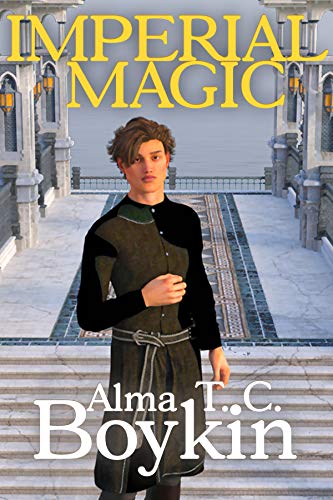
FROM ALMA T. C. BOYKIN: Imperial Magic: Merchant and Empire Book Three.

51wtiyamlfl

*From the author: More than anyone really wants to know about… fur. Good fur. Bad fur. Falsified fur. Exotic fur. I wonder if the merchants in Novgorod ever got tired of inspecting squirrel pelts? that was Russia’s greatest export in the 1100s-early 1400s. (Yes, I know, now I want to read it too – SAH)*

The Great Northern Emperor Returns!

Ewoud Rhonarida needs experience, or so his father insists. Tycho sends his son east, to the trading center of Kehlibar vlee. There, Ewoud must learn to balance deference with duty. When he fails, it costs one man his life and endangers more.

But Ewoud attracts the attention of the Great Northern Emperor. This could be a boon. Or it could signal the undoing of the Galnaar family.

Tycho labored to remain unnoticed. Will his son’s fame be the family’s ruin?

(Also, will the author please stop being goofy?  72k words is NOT a short novel in today’s parlance.  That’s 50k words and under.  72k words is a novel-novel.  Heck, it was even in trad pub.  I had a friend who consistently delivered novels under 70k.  The publisher sighed, made her print slightly bigger and added some bonus stuff at the end.  Seriously.  over 60k no one will argue is a novel.  You indie kids are driving me bonkers.  Also, get off my literary lawn.  Or rather don’t.  I like y’all But start listening to your “elders” dang it. – SAH)

Vignettes by Luke, Mary Catelli and ‘Nother Mike

So what’s a vignette? You might know them as flash fiction, or even just sketches. We will provide a prompt each Sunday that you can use directly (including it in your work) or just as an inspiration. You, in turn, will write about 50 words (yes, we are going for short shorts! Not even a Drabble 100 words, just half that!). Then post it! For an additional challenge, you can aim to make it exactly 50 words, if you like.

We recommend that if you have an original vignette, you post that as a new reply. If you are commenting on someone’s vignette, then post that as a reply to the vignette. Comments — this is writing practice, so comments should be aimed at helping someone be a better writer, not at crushing them. And since these are likely to be drafts, don’t jump up and down too hard on typos and grammar.

If you have questions, feel free to ask.

Your writing prompt this week is: cakes