But I have some kind of stomach bug, and can’t seem to find my brain. (And after being so late yesterday, too. Sorry.)
I barely slept, so it’s not surprising.
I might try to do something later. Sorry.
Author: Sarah A. Hoyt
I am a novelist with work published in science fiction, fantasy, mystery and historical "novelized biography". I've won the Prometheus award and the Dragon award. I also write under the names Elise Hyatt and Sarah D'Almeida. http://sarahahoyt.com/
The Tragedy of the Squid Farms on Mars

We’ve all heard about the tragedy of the commons. The left apparently takes it as a reason for strong regulation, while the rest of us are out here waving our arms, screaming and going “no, no, no. Regulation has a cost. The tragedy of the commons is not having well defined rights, like the right to property.”
(In fact we know that the more things are owned in common, or nebulously in any country, the more that country is likely to be a sh*thole. For instance if things belong to the tribe, or even the extended family group, there are good chances the tragedy of the commons will operate. And far less incentive to excel. But that’s something else. Tribalism is a problem. Always. A discussion for another time.)
What the left always fails to get is what I’ll call The Tragedy of the Squid Farms on Mars.
You see, part of the problem is the mental framework. To the left any money earned anywhere in the country automatically belongs to the government. This confirms my suspicion that at heart, deep inside, they think of the normal form of government as feudalism. This is because I’ve seen very old land deeds and other documents from when Portugal was a monarchy and it read something like “his majesty, graciously allows his subject so and so to exert ownership over this parcel of land” the underlying conceit being that the whole land of the whole country belonged to the king, and it was in his purview to hand it out to whomever he pleased for as long as he pleased, while it still belonged to him. (The documents I saw were for things like house plots, not fiefdoms, incidentally.)
The left seems to be going off the same book when they say things like “How will you pay for the tax cuts?” as if the government is OF COURSE entitled to all your money, and if you’re getting some back, that part must be compensated for.
This goes hand in hand with their idea only the government does anything worthwhile, including demanding the president (at least if Republican) do something about things over which he has no power. “What are you going to do about unemployment?” “What are you going to do about anti-semitism” or “What are you going to do about hurricanes?” (The later and the whole antropogenic global warming climate change obsession, btw, give new meaning to the “everyone complains about the weather, but no one does anything about it” joke.)
Because of these frameworks, they miss what taxes cost.
Yes, sure, government invests in medical and scientific research. Government pays people money that gives them more comfortable lives than they would otherwise have. Government does a lot of things.
But are these the same things that private individuals would do, given the same money in their pocket, instead of paid in taxes to spend as they wished?
I don’t know if any formal studies have been done, but we know that countries with more state funding inevitably lose out in both innovation and wealth to those who allow individuals to keep more of their money.
Look, it’s something like France, which had a massive, extremely complex research and implementation program for what would be CHEAP audio and visual calls all over their country.
They were immensely proud of it and in the late seventies, when I was taking French, we watched little movies about how great it would be in 10 years or so, and there were articles about it and…
And it was still not implemented when the personal computer overtook it and made video calls all over the world for very little a reality. And yes, I do know how much the government put into developing the internet. What I don’t know is how much faster and more functional it might have been without that. Sure, it might also not have existed. But what would have existed INSTEAD?
Here’s the thing: contrary to what the left thinks, when you leave wealth in the hands of the individuals, they don’t just flush it down the toilet or build gigantic bins that they fill with money, in which they go for a refreshing swim every day.
People do things with that money. And even if all they do is buy stuff (thereby allowing someone else to accumulate wealth) or invest it, that money gets aggregated and finds things to do, as it were. Wealth goes to work on things that seem interesting, might be interesting, or are otherwise likely to make money for the individuals who hold the wealth.
Individuals have money to start new businesses that would never have existed if they’d paid that money in taxes. Or they “invest” in free time and a really nice garden, which in turn lifts the spirits of people who invent something because they feel better than they would otherwise.
The left insists that if they leave money in individual hands, it will just be “wasted.” (Because, you know, no money spent on a vast a apparatus, most of it a jobs program for useless paper pushers or power-hungry martinets is ever wasted.)
How do they know? Have they tried leaving enough money in the hands of those who earn it to make a difference?
Not in the twentieth century. Though we can infer from the fact that the most sclerotic, dying countries are the highest taxed ones, that perhaps what government considers “best” and what we consider “best” are not the same.
Not just taxes, but regulations too weigh heavily on possibilities. Sure, the left sees “lands saved” (or created. oop) when say, regulations curtail oil drilling. But what I see is energy taking up an excessive amount of every family’s money, wealth that would otherwise be freed for other investments, for starting businesses, even “just” for fun.
The problem we have is that leftists lack utterly in imagination. They see the “pristine” plots of land, or the things government does with our money and they find it good.
But they’re mind’s-eye blind. They can’t see the wealth that has been consumed for almost 100 years now say on the war on poverty to create chronic poverty having instead been used by individuals to create, to invest, to build, so that, in that parallel world in which money stayed in individual hands, we now have interplanetary travel, colonies all over the solar system, and squid farms on mars that feed all of humanity.
Their lack of vision, their killing of possibilities without the slightest thought to them: That is a tragedy.
Whispers

Whispers, particularly malicious whispers against someone, are a terrible thing. Anyone who has seen them to their work, winding around a workplace, a small town, or even a profession, an avocation, a political organization, knows how destructive they can be.
This is partly because human memory is not … reliable. I did a post for PJ recently (hasn’t gone up yet or I’d link) about why it is a good idea to demand proof instead of running off and condemning people because someone’s testimony is “credible”) and frankly what I found shocked me, because human memory just plain isn’t reliable.
This is a problem, because so much of what we are and our image relies on our memories of what we did, thought, believed. Particularly for those of us who have lived a life of the mind, it is helpful to say “I believed this. I stood for this. I fought that.”
But it turns out what you remember — anything you remember, not just traumatic memories, or important ones — is porous, malleable, conformable. Turns out things can leak in. Particularly in terms of small incidents (stuff like someone giving you a dirty look or giving you a wide berth as they pass you in a hallway. Or even touching you in passing. Things you would not have paid attention to even if they’d happened) it’s easy to make you remember things that never happened. This is also easy with things a long time ago, say more than ten years. There are other things that happened and you find proof happened and you did but you have no memory at all of them. They just vanished like water off a duck’s back (on this was based the whole cult of “repression.” I.e. you’re supposed to have repressed memories that were so traumatic you wholly walled them in. Now, apparently it is proven this is just not true. Sure, there are memories you’ve lost forever, but they’re as likely to contain completely trivial stuff as very traumatic stuff. Your brain is just not a great recording instrument. Of course, this is not as good for storytelling as the one great memory whose unlocking will change character and world forever. The world persists in disappointing the craftswoman in me. First Atlantis never existed, now this. Sigh.) Oh, also every time you remember something it becomes contaminated with the tie you remembered it, or with something someone sitting nearby said, or with your current feelings on the matter.
It is also possible for stories you read or watched to contaminate what you remember. You know that whole “We laughed, we cried, it became a part of us”? Pretty much. Emotions felt at a piece of (successful) entertainment can wrap themselves around similar (or dissimilar) memories of yours and give them a different meaning.
And no, I’m not going to give links to all of this, because I did about half of them for the article which will come out eventually and it took me the best part of an afternoon.
However it turns out life would be much easier if we were just the place where falling angel meets rising ape. We are that, caught forever between spirit and flesh, but it turns out except for the individual moment, we’re half story and half dream, too, all wrapped up in the spirit and the flesh.
This not only makes it important for us to believe ourselves as part of something bigger than our individual lives (and in this post religious and post nationalist age, that is very often some crusade or other, and at the very least “virtuous” in the way the current world views virtue. Which– never mind. That need to be part of something bigger gave its force and its horror to both Nazis and Communists. No, nationalism wasn’t to blame for any of the long wars of the 20th century [not even the first. It was more stupid alliances] but the need to be part of a greater whole that was going to bring paradise to Earth was in fact at the root of making normal people into monsters. Remember that. Perhaps it is that all created things will eventually recreate the sins of angels. Who knows. But remember that. When a movement’s aims are too good to be true and promise the impossible, ignore how good it makes you feel and remember what such movements have done before.)
Because we know our own individual death is inevitable, we are susceptible to stories larger than us. We get captured in them and pulled along. Yes, sure, religion has been that, at times. And at times the narrative has been such that the story was heinous. But getting rid of religion only makes us susceptible to other, more secular stories. Again, if someone promises you paradise made of normal human beings, in this too solid world, step back and think. Because we’ve heard and seen and read and — as a species — lived that story before.
But that impermanence of memory and that strange fluidity of humans who need to belong — that social ape frame upon which we’re built has a lot to answer for — makes whisper campaigns very effective. You hear something about someone you work with, or even more effectively, someone you see only infrequently or meet only over the internet. You hear they’re evil, or dangerous, or have beliefs that go against the current society’s most prized virtues, and suddenly it seems to you that you remember all sorts of things. And you step back, and you feel the crowd must be right.
And suddenly someone with a stellar reputation, someone who’s been as honest and reputable as a human can be, someone you rather liked in fact, finds him or herself in the middle of a social desert, and finds career — and if bad enough family — falling apart. Often with absolutely no idea why or how. Oh, of course, usually people find other excuses for doing the person down. And even if later on the initial malicious rumor is disproved they find reasons they were perfectly right to treat the person as they did. Most likely by then, this person who found him or herself reviled and exhiled for no reason he or she could figure out has started lashing out, and is resentful or angry, or worse, depressed. So it’s easy to find a reason. He/she is either hostile or lazy. You were perfectly right to treat this person badly. Bad temperament. Hard to work with. Not someone we want around.
I know the rumors about me. I know because the writing community leaks like a sieve and is made of socially inept people, which means sooner or later someone tries to either confront me or condole with me. Which means it all comes out.
I also have shrewd guesses as to the — self interested — sources but there’s at least three, and it’s all gone mingled.
Sure, I’m hostile, lazy and occasionally hard to work with. Or in other words, a writer. If you don’t believe me ask anyone who’s ever done a stint as an editor. I found this out when I did anthologies. Mostly we’re cranky, dissatisfied with our output, mope and sometimes lash out for no reason other than that we’ve been fighting the story in our heads and it just won’t work. Pretty much all sane writers know we’re like that. (The insane ones view themselves as wronged angels.) We console ourselves with the thought that visual artists are worse. I was actually surprised it was true, when I tried to buy art.
Difficult to work with and crazy beyond the norm of writers? Well, I’ve yet to cuss out any of my editors to their faces (doing French verbs in your head helps with that) or to publish names and places, and scan in or paste the crazier parts of editorial letters and manuscript notes. I’ve also never sued my publishers or editors, something that’s not as rare as you would think. Oh, and I’ve never called book distributors to call them names because my book isn’t on shelves.
I’d say for a writer that counts as being fairly stable and easy to get along with. I know that on the line level I’m actually almost supine. Oh, you want to change was to might have been? Tilts head sideways. Whatever. You want to move a punctuation mark? Be my guest. I missed punctuation class because I was sick. Yes, each time for each of seven languages. Shut up. It’s how I remember it.
The other stuff? The racist, sexist, homophobic stuff? Oh, hell. Yeah, sure, if everything means exactly its inverse. Does it? Or if — beyond what you believe — socialism/communism is best for minorities women and gays. Is it? Because if not, no, I’m none of those.
I am Odd, always was. I have real trouble believing the notion of race. Partly because in our village I saw someone from Africa come in, marry in, and there not being a trace that you could say “African” in her granddaughter.
Are there racial characteristics? Sure. Mostly caused by human populations being geographically or culturally isolated and breeding with each other (probably. We aren’t actually sure, to be honest, but that’s the logical hypothesis and we’ve seen it happen in other animals.) Does it come with mental and emotional as well as physical characteristics. Probably. But probably not as tightly bound to “appearance” as people tend to think. The stereotypes we associate with races first of all vary by culture that holds them (no really.) and by time (apparently the idea that black people can’t help gambling was a racist stereotype at the beginning of the 20th century. Something I only found out by reading books written at that time for people of that time.) But more importantly humans are plastic because our memory is. We’re likely to live up down (and sideways) to stereotypes. We’re likely to be influenced by our upbringing and culture might have deeper roots than genes. And we’re very influenced by story. So if we believe our race “has always been held down” no matter how ridiculous, we’re going to be hostile and expect things to be handed to us. Regardless of what race we are.
IQ… ? Again, part is what you do with it. Even things like memory are trainable. Do me a favor if you have little ones. Make them memorize poetry. Vast tracts of poetry. Turns out there was a reason for that. It trains you to be able to memorize things you’ll need later. But it’s not just Anatole France that has proven that sometimes the physical apparatus has nothing to do with the IQ displayed. Time and again (ask any brain researcher) you find people with brains so diseased or traumatized or otherwise screwed up they should not be functional have done brilliant and wonderful work. And the inverse too. Because that story part of us, that dream, that whatever you call it beyond the physical can make us brilliant or stupid more so than what we were born with.
Nature or nurture? Yes. And heaven help us, we have no idea where one stops and the other begins.
I believe in race for racially-bound genetic illnesses, and even that… meh. Sometimes they don’t go with external characteristics.
I believe there are also racial narratives which can make people act a certain way. For some reason the 20th century decided it would get rid of all in-group positive ones, and fill it with negative ones instead, which… didn’t work so well. Blame Marx and the rush to be “oppressed” because that meant the future was yours.
I believe in individuals. And if an individual is decent — or even interesting — I couldn’t really give a good goddamn what color you are, what your features are or even if you have an accent. (Though I have trouble understanding accents. Stop laughing.)
Sexist? Um… to an extent. Guilty as charged. It’s grandma’s fault, see. She taught by example more than by word, that men were very well in their professions, and perhaps, maybe, the more trustworthy ones, certain aspects of politics. But the truth was anywhere outside their metier they were basically overgrown children with their enthusiasms and their strange fixations (in grandma’s defense, most men in the family are Odds.) Women who did all the real and important work, from finance planing to looking after kids, to real estate trading, to social positioning of the family so jobs and opportunities would come to us, were supposed to never let on that men weren’t quite the masters of the universe they thought they were. Because, hey, look, not their fault and they were doing the best they could. Also, they were in their own way as cute as kids and puppies. Why be mean to them? Support them, help them, keep them fed and clean, and let them do what they’re good at to help you with your aims.
I’ve grown a bit before that, and I don’t view all of those roles and characteristics as solely male or female, and I, thank heavens, married a man who is a true partner and someone I can talk to. I also think my sons are fairly all-around useful, and not just in their chosen path. Grandma wasn’t wrong for her culture and place, but seriously, I’ve gone past that. Sometimes, though, I reflexively fall into it, and drive all three men insane, particularly in times of stress when I try to get them to get out of my way as I shoulder whatever the problem is which is likely too big for me. Sorry guys. It happens. Childhood training abides and comes out when you crack.
However, I’m afraid these people think/say I’m sexist AGAINST women. I’m not even sure what sense that makes. Sure, I’m against women when acting as a mob and donning the holy cloth of victimhood, mostly because they’re letting the story get away with them. Sure, of course, to be sure, women were very oppressed throughout history (mostly due to biology.) But make no mistake, despite what history which only records powerful men says, so were most men. The past was a bad place. You don’t want to go there. But no woman alive today in the west was really oppressed. Sure, life wasn’t all they wanted. Yeah, tell me a story I don’t know. They might have been abused and mistreated — as often by women as men — but those are individual ills, not group ills.
And yeah, I’ve been known to tell my fellow American women that they’re acting — as group — like lunatics, by buying the stories spun to them. Look, someone has to do it, and the guys are afraid to. Also I’m terribly unimpressed by those that say (or find scholarly quotes to the intent) that women like me are what keeps women in bondage. You are not in bondage, except inside your head. You want to look at bondage, look at Islamic countries and think. The only bondage you’re in is to STORY and the story that’s being spun to you to make you part of an unthinking mob is that you’re oppressed by INVISIBLE sexism. Look, guys, when a story depends on an invisible villain and attacks those who would disprove it, it’s not only not true, it’s incompetent. Storytellers should be better than that. I am. Even while very, very ill.
I also believe that men and women have certain, coded in the genes, differences. Always accounting for statistic variations, which means you can find individual examples that are the opposite, men are stronger, faster and better at visual thinking than women. They also tend to think in straighter lines, faster, and because of the way the brain is influenced by hormones with more assurance. Women are better able to bear pain (or weight) for a long period of time or make a great effort over a great period of time, better at verbal thinking and … more connected thinkers. We think in weird clusters and by bizarre paths, which give us a bigger — and often more contradictory — picture than men get. Which also means we present as slower and less confident. But which is in many ways necessary for species survival. Or IOW you know the thing about coming to conclusions with insufficient data? The thing that throughout the ages got called “feminine intuition”? As much as its fun to make fun of it, there’s something to it. Often we can’t pinpoint why but we “know” something and yet it’s true. If you analyze our thought process getting there, you understand we used insufficient and marginally related data to make a picture which is predictive with a high degree of certainty. Since most of the world isn’t a math equation, all variables known, this skill is invaluable.
Is it sexist to believe in those differences? Well, yeah, so is biology. I am sorry, but I’ll believe my lying eyes, not your pretty story.
Homophobe? Are you for real? Seriously now? Can you say that without laughing?
Being an odd I spent my life falling in with other odds, and sometimes these were people who stuck out for differences other than just thinking upside down and sideways. I’ve pretty much always had gay friends, though sometimes I wasn’t aware of their preference (nor did it matter for our association.) I’ve found by and large they’re… people. Some are good, some are despicable. Some are smart, some are dumb, but more importantly, some I want to spend time with, some I don’t. Which is all that matters to me.
In the long scheme of things, who you like to sleep with makes absolutely no difference to me unless I’m married to you. In which case, I hope you want to sleep with me. (So far so good.)
Unless I’m friends with both members of the couple to the same degree (happens) who my friends sleep with is always inexplicable, but if that person makes them happy, I’m happy for them and will treat the SO with the courtesy and respect due someone very important to my friend. That’s the extent of my interest in it.
Oh, unless you mean that by hating socialism and communism I’m bad for gays. But you know, this actually came up in a free for all yesterday, and I can’t think of a single communist country that treats gay people well (or like full citizens.) Not one. Totalitarianism and not being like everyone else don’t mix.
As for socialism, yeah, I know, someone is going to bring up Europe. Europeans are polite and have a social face. I know. I used to be one. Whether you’re a minority or gay, if you visit the socialist (or non socialist. Are there any?) countries of Europe, you’ll come away thinking they’re the sweetest, most accepting….
Be glad you can’t live there, as a citizen. You’d find differently. Warts and all, the US is the most accepting of those who are different, and that includes racial and orientation and any other differences. Europe as a rule is way more conformist and enforces the “normal”, which no, isn’t any of us.
As for women, it depends where in Europe. I loved how I was treated in Austria, but I was a tourist. More southerly latitudes, your illusion in European — and you’ll think socialist, natch — enlightenment might not last out your vacation.
I believe individual freedom is best for all minorities, even that ultimate minority of one.
And I like individuals. I like them a lot. In fact, after being subjected to group attacks (mostly psychological) all through 5th and 6th grades, my love for individuals saved my life. I started by finding them hilarious, honestly, and then went on to find some of them admirable, and sometimes to find the admirable and the despicable together and forgive the later for the sake of the first, because… who is unmixed.
I’ve never behaved badly at a convention, except once and I wasn’t on a panel then. Someone on the panel said America was finished, and I was half out of my seat and arguing before I realized what I was doing. I’d have behaved worse but oldest son by-adult-adoption grabbed me by the back of my coat and held me back, reminding me I was out of order. It was one incident, okay? And at most I planned to be vociferously argumentative. Not even swear words.
I might be hard to work with as a writer. I don’t know. I know there have been horrible delays the last seven or so years, mostly because I was very, very ill and didn’t know it, so I couldn’t account for it.
Edits? I have an issue? I tend to believe whatever critique people give me, unless it’s out there, other-world outlandish. My friends who’ve been with me in critique groups know this, which is why I’ve been forbidden by them from being in critique groups anymore. Semi-outlandish critiques I’ll buy whole, and they’ve sometimes destroyed/stopped books.
If I fight back it’s because there is no sane way to fit critique and work in the same world. Or because someone is kicking history, because, no. I still have to be able to justify decisions made in say historical or alternate history.
Other than that, I’m more likely to be TOO compliant.
Now I know this will do absolutely nothing to counter rumors. And the ones who think anti-Marxist means sexist, racist, homophobe will decide they were right. Be that as it may. There’s only so much you can do for people. Sooner or later they’ll run out of narrative, and maybe come to reality again. Unless they find a better narrative with spiffier uniforms, and then Lord help us all.
After fifth and sixth grade where, after a point I was put in Coventry and no one would speak to me or acknowledge my existence there is very little that any social group can do to “punish” me that I can’t live with or get around.
And as for making a living? Bah. There’s indie. And so.many.names. Catch me if you can.
Cons? Look, remember I can see my numbers in indie. Cons might sell me one or two books over what I’d normally sell. Maybe. Sometimes none. They’re important for meeting with my fans, because they want to meet me. But for what they give? Too much effort, too little return. I go to LC because I get to see most of my friends and fans in one place, all together. It’s easier. It’s also a family trip and as the boys move away and have families of their own, that will be even more important. Other than that? It doesn’t matter. As the boys get more on their own and we have more money, I’ll try to do weekends here and there to see the rest of you. I teach writing almost every week at MGC, and I’m available to talk on various online platforms. I’m not an hermit, and I don’t need a con to have a platform.
So on the whole, while I know I can’t counter the whispers, I’m lucky to be in the profession I am, when I am. It might set me back a little, and sometimes it makes me sad, but overall? Nothingburger.
All the same, I thought it was useful to point out what I actually believe and who I actually am.
So people suspicious of a narrative have a place to go to and point at.
Those who aren’t suspicious of the narrative, and who let themselves be manipulated and pushed by it? I can’t help you.
And sooner or later you’ll find that those who live by the narrative die by the narrative.
At that point, you might think I’m an idiot, because despite everything you’ve done and said I’ll be here, ready to help and be your friend.
I’m not an idiot. I’m just tolerant of human frailty and like individuals. I might never trust you the way I used to, but I’ll help you if I can. You’d need to be truly heinous and have hurt my friends a lot for me never to change my mind about you.
You see, I like individuals. And unlike grandiose narratives built of stone, or creeping whispers made of poison, individuals change, individuals surprise you, individuals can be redeemed.
And I like individuals.
From Where You Dream

You know in the past I’ve said that if you don’t believe in selling out you’re never going to make it.
I still stand largely by this. A novel that’s published, a novel that sells is almost a collaboration between the writer and the person who buys it/reads it.
I was explaining this to a young artist friend the other day. she’s, oh, a good twenty years younger than I, and she’s technically perfect, and she doesn’t understand why her complex, layered art, absolutely original, sells far less than the people who are doing hackneyed cute elves in cute clothes, or even things vaguely reminiscent of various anime series, or even TV series.
I had to explain that while people can and often do realize how beautiful or well done your work is, they want to buy things that speak to them, often things that speak to them because they’re already in their minds from a movie or a comic book or something.
I was the queen of making my kids incomprehensible costumes for Halloween. Mostly because… well, mostly because I think too much. But also because we were broke and I was usually flying off what fabric we had on hand. The first costume I made for Robert was as a little prince, with a golden crown made of metallic fabric and because the kid was 1 and a half, a stuffed golden fabric sword.
Every house we went to, they said how beautiful the costume was, then they asked “But what is it?”
Girls would be instantly recognizable as princesses, but even that might have caused questions if it didn’t look like a princess from a Disney movie.
When the boys hit pre-teen, I started just buying cheap costumes at the store. They made the boys much happier, and made me happier because less work. Mind you, as they got older, they started making their own costumes, too. The only one I remember being fantastically successful was when Marshall dressed as a devil, and Robert followed him in suit and briefcase. “He’s the devil and I’m his advocate.” Open briefcase. “I’m serving you a writ of trickus or Treatus.” If we’d had an empty swimming pool, the boys could have swam in candy that Halloween.
But the point is, when someone says they want something utterly new? They don’t. Particularly when they’re shopping for entertainment or something for their walls. I mean if you’re looking to be a suces d’estime, someone only critics love you can be– No, wait. Even then you can’t be as original as you want. Because you have to follow the mode of “originality” in vogue in the artistic world. That usually involves betraying whatever your vision is anyway. And to make things worse, most of the time (ah, unless you have “liberal privilege” you also won’t be making a cent of money.)
So. You’re going to have to compromise your vision somewhat anyway.
And after a while, after you’ve learned to do it, it starts becoming second nature. You can still be a good craftsperson and original, provided it’s something that falls in a category your audience recognizes.
So you can make a realistic, impressive… elf. In relatively pleasant looking clothes, which people on the street (or at least geeks on the street) will want to put on their walls.
It’s about the same thing in books, which is why I’ve explained — a number of times, though FYI my early editors didn’t get it — that I tend to mine English History more than Portuguese History. Because Portuguese history is too “exotic” and doesn’t slot easily in the reader’s minds. (Incidentally, this sort of familiarity and not racism is why most fantasy worlds tend to be some version or other of medieval England/Tolkien’s middle Earth, even when they’re not. Because for every aspect that deviates, you’ll have to work that much harder to make it to a wider audience. Because they’ll have to work that much harder to get into your more complex world.)
So, what does this have to do with the selling out? Or the place from where you dream?
Making good, commercially viable art is not selling out. But there is selling out. Particularly in traditional publishing, or for that matter the music industry.
As traditional publishing started relying on megastores to publish, they also started relying more and more on megabestsellers. And because no one really has any clue what will take off — yes, massive priming of pump is needed, but even then most things that get that treatment never take off — least of all NYC editors who have a narrow circle and a narrow vision of culture, they got into this chasing their own tail mode, where when something hit they produced a million copies.
Only, due to various marketing stupidities, those also started having a shorter and shorter lifespan.
To give you an idea, when I tried to sell the Da Vinci mysteries (which had been conceived and outlined for some time) they got rejected because they weren’t the DaVinci code. Well, duh. Plagiarism and all…
And when I tried to sell the Musketeer mysteries, those editors who recognized that it being told in D’Artagnan’s voice didn’t mean it was told by someone “like a servant” (A rare thing already) told me that maybe there would be a market for them, “if there is a big movie.” Uh uh.
I was never very good at chasing the greatest and latest. I know that shocks you, right?
But I was good enough. After a while they get inside your head and you pre-reject ideas and starts without even knowing you’re doing it. Till all the joy leaks out. It’s not just a job, “just like driving a truck.” It’s…. more boring than that.
It was at a time like that, that I found my old manuscript for Darkship Thieves, found out that it still had sparkles, but that the first chapter and a half was basically unneeded, and started revising and putting it up. But the magic was still there, in that book written in a month while basically taking dictaction form my own head.
And yeah, now I’ve also been looking at old stuff, trying to find where the magic went. And it’s starting to come back.
Because it’s there, way back, in the place from where we dream. It is as though it were a part of some great dream you belonged to before you were born.
Back, back and back, back to the life and energy of creation. Close your eyes and go there.
And the magic will come. And then even if you shape it and fit it to your needs, it will be there. Ready to call at will.
And it will never die. Because the dream doesn’t die. And you’re a part of it.
I don’t know how to explain it but there are things that have a force, an energy. You’ll feel it when you encounter it. you probably have already, in a favorite book, particularly when very young.
That sparkle, that energy, seems to be something humans — particularly creative humans — need to stay alive and interested, to remain creative and involved. It’s different for everyone but go and think of a book you loved in childhood. Revisit a favorite day dream. Take a walk through a place that was once magic.
It might be shy and hide for a while, but it will come back. It’s coming back for me.
And it is needed if life is going to be more than drudgery.
UPDATE: Despite the style of this post, written last night when I was a little hazy, I’m feeling much better. My throat might have been a case of extreme dryness. So I’ve acquired a whole-house humidifier and have it going. I feel better. (Yeah, Colorado, as my doctor put it “is not an environment fit for human beings.” [And that was before the Californian invasion.] We love it, but we pay for our love.)
Going Fishing
Sorry, I’m not going to put a post up. Yes, two excuse posts in a row are bad.
But I woke up in the morning, half asleep, reached for my thyroid meds and the water, took a swallow and… didn’t. As best I can tell my throat was swollen shut.
Still feels very sore (though I took the tablets.)
It’s entirely possible it’s stress and auto-immune as yesterday’s work day was short-circuited by family news. (That’s not great either.)
If you guys want (and if I still feel ill) I’ll put up promo post and possibly (if I actually can get someone to help me with the physical part of it) my paper book stuff.
For now I’m going to drink warm liquids, and possibly sleep.
Grumph!
Today — or tomorrow, sometime, at the rate these things are moving — I’m going to put up a list of the books I have available for sale. Paper books, I mean. They come from varying sources, from contrib copies (you know when you have thirty books those take up a ton of space), to copies I bought to give away because I didn’t know I could get them for free, to the periodic cleaning of Baen’s warehouses, to remnants from Comicon which I took off the seller’s hands.
I have no idea how much of each one I have.
I can tell you the ones I’m short on include stuff like the musketeer mysteries, the first of the Shifter’s series (hardcover). And a bunch of other stuff like that. If it’s non-baen, I probably have few, not because I got fewer but because they’ve been out for a while and I’ve flung books at various people.
I’ve never actually sold any copies, but this is getting utterly ridiculous. One of the big bookcases in the library is full of my stuff, double-stacked and my office closet is rendered non-functional by (mostly) Darkship Revenge and Darkship Renegades copies. Also, well, money wouldn’t hurt right about now.
So, what I was going to do yesterday was have #2 son who is indentured to me on Fridays, go into the garage and find the extra boxes, then come up here and give me a rough count of books in the closet and what kinds, then put most of them in the guest room for easy access. This might or might not involve a lot of up and down stairs with boxes. I’m a caring mother. I try to keep him up on his aerobics and weight lifting.
Actually, he and Dan rearranged the garage when son stored his crap stuff there, when he moved to a smaller place 2 years ago.
So he probably knows where things are, while I’ll just stumble into furniture and boxes of discarded-but-not-ready-to-donate clothes.
Unfortunately due to things truly beyond his control, son couldn’t come up yesterday.
I was also going to make original book plates, so these books, sold this month are a limited, this month only thing.
I’ve done one but the human figure is about thumbnail size, which is not what I was aiming for so I need to redo it. Then the art computer decided it would be fun to crash taking the second with it. I’m now redoing it.
If all this sounds like “the dog ate my homework” it probably is, but I’ll try to get the list here today. If all else fails tomorrow at the bottom of the promo.
So, forgive me as I dive back into the chaos that is my life right now.
Just Something
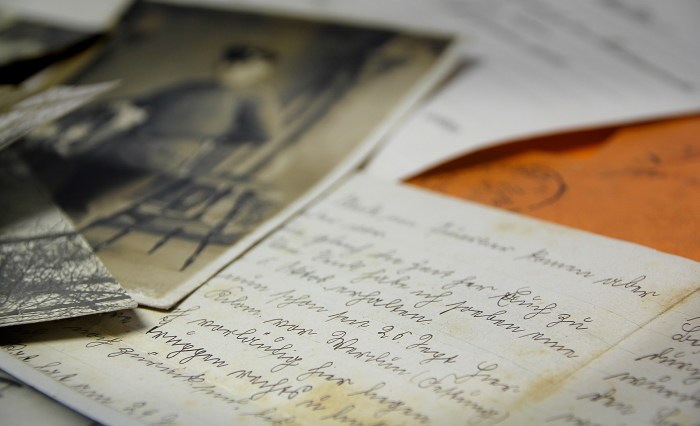
Eighteen years ago I sold a book that wasn’t written because the house passed on the book that was almost finished. The reason given for no interest in the book nearer completion was that and I quote “The Red Baron is bad. He fought Snoopy. Also, he was a Nazi.” which explains the arguments on politics I’ve been having with people in my field ever since. It also reminds me I need to dial down my vocabulary. And get a way to look into parallel worlds.
Later, when I understood NY publishing I realized I was trying to sell a mil sf novel to the wrong house. (Yeah, they bought some, but the slant was different. Hence not from me.)
I’ll be danged if I have the SLIGHTEST idea where the rest of this novel is (I had trouble finding this) though my guess is in one of the boxes filled with diskettes. Don’t know if it would be worth looking for.
To my eyes, though I’d do it differently today, there’s still SOMETHING here. Is the something worth going into the unpacked boxes and spending a couple of Sundays searching through diskettes? And then spending a couple of weeks fixing the fact I had clue zero how to foreshadow? Or is it just something to nod at and say “it might have been.” Maybe.
The rest of the story, btw, could be encapsulated (though not PRECISELY of course as the personalities are different, and… anyway but it’s the feel of it and there are aliens) Prince Roger against the Good Men. I no longer remember if I sent Richthofen back in the end. I remember DEBATING it with myself. But not what I actually did. (Not sending him back meant sequels. Again, think Prince Roger.)
Anyway, I know some of you don’t like snippets. This isn’t so much a snippet. I’d like ya’ll’s opinion on the advisability of doing an all out search for the rest of this. And I KNOW ya’ll have opinions (a few.)
The Years Undone
Sarah A. Hoyt
Over The Valley Of The Somme, the 21st of April, 1918.
The wind bit Manfred Freiherr von Richthofen’s exposed face, whipped his white silk scarf into a frenzy.
He didn’t notice.
Hunched forward, Manfred, the Red Baron, held the levers of his airplane in his right hand, his square-tipped fingers simultaneously controlling the flight of his plane and firing both of his front-mounted machine guns in a well-practiced way at the fleeing enemy plane.
Far beneath Manfred’s plane, a persistent fog obscured the trenches and the men in them.
Manfred had done his time in the trenches and he would prefer death in the cold, clean air above the clouds to life in the damp mustiness, the sluggish boredom, of the trench.
Despite the cold and the wind that, intensified by the speed of his flight, made the red-painted plywood frame of his plane crackle and groan, Manfred felt warm.
Hot.
His heart beat fast and his pumping blood made his pale-skinned face glow. His right hand managed the levers, his left thumb squeezed the trigger that fired both machine guns at once.
Tracer bullets flew to the right and left of the enemy plane, leaving glimmering white trails behind.
Right where Manfred wanted them.
Suddenly shots from behind Manfred startled him. He had a tail.
No matter. He took a deep breath. He couldn’t turn and run. Not now. Not when he was so close to bringing the enemy down.
Manfred concentrated on the plane ahead, not the one behind. He thought of what he wanted to happen. What must happen.
The enemy pilot would land. He would be forced to land. And Manfred would claim the credit of having made yet another prisoner for the fatherland.
His sweaty fingers played on the controls, taking his airplane lower and lower, in pursuit of the zigzagging airplane ahead of him.
He savored the inevitable joy of his soon-to-come triumph. It would be his eighty-first.
The fog had cleared. Yet, if Manfred glimpsed the mud and trees beneath him — if he saw the hulls of bombed out buildings, destroyed in the years of World War I — it was as an animal sees things, without comprehension or understanding. He certainly didn’t know where over the valley of the Somme he flew, or when he crossed the lines to the enemy side.
The focus of his icy blue eyes had narrowed to the plane he was pursuing. Only his prey mattered.
He cared for nothing else
He lost altitude without noticing it, sinking in pursuit of the sinking enemy. The pounding of blood in his veins, his dry mouth, the excitement before the kill, all of it kept him narrowly aware of the chase. Only the chase. He noticed a green hedge ahead of him and jumped it with a tug of his lever, gaining altitude for a moment.
Suddenly, bullets came at him from the front, joining the bullets of his pursuer. Ground battery bullets. Futilely, he thought he needed to escape. Turn tail. Make for home.
Too late.
He had time to think that he was over enemy lines; that he had been an idiot; that he had violated his own rules, pursuing an enemy into the mouth of danger. He always told new men in his squadron not to fly too low; not to pursue enemy behind their lines; not to–
Bullets tore into his flesh.
Hot pain ripped his skin and muscles and nerves. Bullets hit his legs; one shattered his knee. The convulsion of his pain was cut short by a volley of shots drilling into the soft flesh of his stomach.
A fiery hot bullet pierced his chest. Unbearable pain blurred his vision as his rib broke under the impact. His heart trembled, fibrillated, as — stricken — it sought to pump blood to veins it could no longer reach.
He was dead.
He knew he was dead, and yet his head remained clear. His lungs filled with blood and he felt as though he were being pulled under water — drowned. His fingers, of their own accord, turned off the engine of the plane.
He didn’t want to go down in flames. A fiery death had filled all his nightmares for months. Death, yes. But not in flames.
His body shook uncontrollably, and the mouth he desperately opened couldn’t gather breath into his flooded lungs.
The sharp, salty taste of his own blood, mingled with the lingering sweet traces of the biscuits and marmalade he’d eaten for breakfast.
He thought of his mother and his sister Ilse. When Germany lost the war — and Manfred had known for some time that Germany would lose — his mother and his sister would be defenseless, at the mercy of the enemy. If only Lothar— But his younger brother could not be counted on to take responsibility for his family. Or for himself.
Manfred had known that for some time, too.
He felt cold. Much too cold. His body twitched and wrenched spasmodically, in a final, senseless dance.
Why did death take so long? He couldn’t breathe. Why did he remain alive?
His plane spiraled towards the ground.
He pulled his goggles off, threw them from him, irrationally trying to remove the red haze that obscured his sight.
His heavy leather flight jacket, his leather coveralls, his fur flight boots, all of those were no obstacle to the cold wind that whipped around and around him as he went down, down. Blood bubbled out of his mouth.
Lights flashed through his blurred vision and he heard odd voices speaking a language he couldn’t understand. He caught English words amid the gibberish, “transport” and “time” and “now, now, now, now.”
Hands grabbed him and pulled him. Celestial beings were unduly rough. Who would have known the angels spoke English? Manfred tried to remember a prayer, but couldn’t. And he’d never been taught to pray in English.
Light expanded around him, and yet he fell into darkness.
As far as the world of 1918 was concerned, Manfred, Freiherr von Richthofen, the Red Baron, World War One’s most famous aviation ace, was dead.
I
Manfred woke up feeling drowsy and drunk.
He stared at the ceiling a long while, trying to remember where and with whom he might have gone drinking.
As a rule, he didn’t drink to excess and lately he’d hardly drunk at all. He’d been too afraid that if he drank too much he might see the ghosts of all the comrades he’d lost in this war; the ghosts of all the enemies he’d killed in combat.
He lay in a bed and he felt— Tired? No. Not tired, just oddly confused — detached — as though he watched himself from a long distance off and none of it mattered very much.
The bed, the heavy dresser, the wardrobe, the small round table, all were familiar, all well known from his childhood.
He must be in his room in Schweidnitz, his ancestral home, in Silesia.
The light fixture on the ceiling was made from the rotor of a plane he had downed. Around the room were his other trophies: pieces of canvas with the numbers of airplanes he had shot down; and there, on the southeastern wall, near the window, was his very first trophy: three duck feathers stuck to a piece of cardboard.
He smiled at it and at the memory.
As a brash young boy of seven, he’d shot three of his grandmother’s pet ducks with his airgun. And though the adults hadn’t entirely approved of his exploit, he couldn’t help but still feel proud of it.
On another wall was the head of the boar he had killed while still in the cavalry, when he had wiled away long nights of boredom by escaping the trenches for the nearby game preserve of a fellow nobleman.
To the right of that was the little shelf that held the silver cups he’d ordered for himself, to commemorate each of his victories.
He stared at that shelf a long time.
Something was wrong. Something was very wrong with that shelf, though he couldn’t immediately say what. He stared at it till his mind started counting the trophies. Sixty-four. Sixty-five. Sixty six. His hair stood on end.
He pulled himself up on his elbows. He counted with growing terror from sixty six to eighty. Eighty trophy cups.
Though he had eighty victories to his credit, Manfred had stopped ordering the trophies after the sixty-fourth. And no one else would continue such a private ritual for him. Not even his mother.
Cold sweat sprang from his every pore, soaking his short, pale blond hair.
He forced himself to sit up. The room spun around him. His chest hurt with a dull ache, like much-bruised flesh, and breath wheezed in and out of him, as if he had a bad cold.
The room smelled funny. He’d obviously been sick, yet he couldn’t smell the sickroom odors of illness, sweat and disinfectant. In their place, there was an odd chemical smell, barely masked by floral scent.
His bed felt different. The mattress moved beneath him, as a living thing, and the sheets and blanket felt lighter and softer than anything he’d ever touched.
Suddenly, with startling clarity, he remembered he had been shot down. He remembered the bullets entering his body. His chest. Memory of the pain made him start and draw breath.
He’d been shot through the heart.
His hands flew to leg, and stomach, and chest, everywhere he’d felt the bullets penetrate. There were no wounds. His hands met only his own soft, unbroken skin.
He was sleeping naked. He never slept naked. His heart beat fast; his head spun.
He should have been dead, but he was alive. He should have pajamas on, but he was naked. Of the two, the latter puzzled him the most. He might, by a miracle, have survived those wounds. But he never slept without at least a shirt on.
Who would put him to bed naked? Under what circumstances would he, himself, go to bed naked?
His familiar room in the ancestral mansion at Schweidnitz looked different in minute ways. Who would have altered his room? Why? How long had he been unconscious?
Was he truly in Schweidnitz, or in an English prison camp? And if he was a prisoner, why would they play with him? Why make this room look just like Schweidnitz? Why give him this mattress—
It twitched under him, as his weight shifted.
He managed to haul himself out of bed. Standing on the wooden floor he held holding onto the mattress with his left hand, while he shook with the effort of being upright. His legs hurt, as if he’d been lying down for so long that his muscles had forgotten their accustomed purpose.
With his right hand, Manfred pulled the sheet off the mattress. The material beneath was soft and looked like pig’s skin. It felt warm where his hand touched it, and moved to accommodate his fingers, cuddling against them like a cat.
He pulled his hand away. Holding onto furniture and walls in the crowded room, he managed to make it to the window.
If only he could look out and see the familiar terraces of his home— If he could, perhaps, see his sister, Ilse, or his youngest brother, Bolko, out in the gardens, then he would know he was home. That, despite all the odd details, he had nothing to worry about. He would know everything was fine and that all his feeling of danger was a remainder of his illness.
But the curtains — though they looked like his familiar, heavy velvet curtains — didn’t open. No matter how or where he pulled, the material resisted him.
A mad dream. This had to be a mad dream. Curtains didn’t resist being pulled. But then mattresses did not nuzzle you.
He stumbled to the massive dresser beside the bed. He would put on some clothes and then he’d go in search of someone who could help him understand this madness.
The drawers of his dresser wouldn’t open. He tugged and pulled; pulled and tugged until he was panting, breathing hard, his chest aching. Until the whole dresser should have tipped over on him. The drawers didn’t budge.
He rushed to the door. He was going mad. The bullet he’d received in the head in July 1917, almost a year ago, had finally driven him insane. The bone splinters, that the doctors had never succeeded in removing fully, must have worked their way into his brain.
If only he could get out of his room, find his mother. She would know what to do. She would calm him and comfort him. She would—
To his surprise, the door knob to the entrance door turned under his shove.
He’d half expected to be a prisoner in his room.
Outside was a corridor that looked like nothing in Schweidnitz, like nothing Manfred had ever seen.
The walls and the floor glistened like glass — deep grey glass. They met at not-quite-straight angles, as if they’d been poured while liquid and had hardened into shape afterwards. Soft lights shone from within the ceiling, their glow halfway between the gentle light of candles and the brash intrusion of electrical light.
Manfred took a deep breath, steadying himself with a hand against the slick, cold wall.
Naked, in a strange environment, he felt helpless and lost. Mad. He must have gone mad. He had suffered a head wound. Since then, he had felt reluctant to go up. He hadn’t wanted to kill again. Yes, he must have suffered a breakdown. But what kind of strange asylum was this?
His bare feet slapped the cold, smooth floor, as he crept down the hallway.
From somewhere, nearby, came the sound of voices. They didn’t sound German.
As he struggled along the smooth, glassy hallway, closer and closer to the voices, he tried to identify the words he heard. Most of them were gibberish, but some sounded like ill-pronounced English. From his meager store of English, he identified, or thought he did, the word “transfer” and the words “back” and “time.”
In the middle of it all, a German word struck his ear: doppleganger.
Manfred frowned as he inched around a corner in the hallway and saw an open door, with bright white light spilling out of it. The voices came from there.
A doppleganger was a double, someone who looked just like you. What an odd word to pronounce, amid the gibberish and the English.
Perhaps he had misheard. Perhaps he’d just misinterpreted a collection of foreign sounds.
Keeping knit to the wall, sliding his back against it, he approached the well-lit room.
His heart beat faster. What would he find? What people were these? Was he in their power? What did they intend with him? He mustered all his strength to keep walking, though his legs felt tired and powerless and his whole body ached with the strain of standing up.
He must reach that room. He must find someone who could tell him where he was. He must find out whether he was mad.
He edged into the door and stood there, his bare back against the slick, cold door frame.
People clustered around a high, narrow bed. The people were all young — some male, some female. Their skin colors ranged from as pale as Manfred’s own to as dark as midnight. They all wore orange pants and shirts.
As they moved away from the bed, Manfred looked past them. And froze. On the bed lay—
Manfred blinked.
Standing there, his feet against the cool floor at the entrance to the room, Manfred saw himself laying on that portable bed. Himself, Manfred von Richthofen, in the flight suit he’d worn the last time he remembered climbing into his airplane.
He blinked again.
The press of people around the bed, men and women — all dressed in look-alike orange suits — stepped away. One of them stepped back, almost as far back as Manfred stood. She held a gun in her hands.
They were so intent on their work, they didn’t see Manfred.
She lowered the gun, aimed it. A shot rang out; two; three; four; five shots.
The pale-skinned man on the portable bed shook with the impact, arched his back, convulsed. Blood ran out of his chest and mouth, stained his flight jacket, the top of his pants.
Manfred remembered the taste of blood in his own mouth, the pain of the bullet tearing through his chest, ripping through his heart.
These people had killed him — or were killing him. The same wounds, the same… He shook. Unsteady on his feet, he lurched forward.
The crowd noticed him at last.
A woman shrieked and men and women exclaimed in the language Manfred couldn’t understand.
He forced his way through the disoriented group, up to the bed, his hands in fists, his heart hammering in his chest, his mind clouded by a rage he only half understood.
The body on the table still looked like Manfred. It glared at him with his own pale-blue eyes. It wore his flight suit.
It was dead.
And yet Manfred lived. Or was he a ghost? But no. Hands grabbed him.
“Calm, calm, calm,” someone said, in badly pronounced German.
He looked at the group now clustered around him.
Men and women — young, healthy, well fed, their features more exotic than any he’d ever seen — they all stared at him, their eyes wide open; suspicious, shocked.
No words were needed. They’d captured him. They were the enemy, and he their prisoner.
Two men grabbed his arms. Manfred tore away from their hands, but other hands grabbed him, brought his arms behind his back, held his hands together. Other hands held him in place.
His mind whirled with confusion. His head pounded. He struggled to free himself, but he was too weak and there were too many of them holding im too firmly.
They would kill him now. They would shoot him as they had shot— The man on that table— Who was— Himself? How could he be Manfred? Who was Manfred?
His lips formed the words “Wie?” and “Warum?” How and why.
The only answer he got was that same, oddly-pronounced, “Calm, calm, calm.”
A slim, dark girl held something green and round in front of his face and squeezed it. A fine, cool mist surrounded him.
He smelled flowers, then lost control of his legs, lost control of his body.
With his eyes still open, his mind still spinning, trying to find an answer, Manfred fell.
The crowd of strangers broke his fall, held him up. Many hands lifted him, and placed him on a bed like the one where his look-alike had died.
He wanted to fight then, to fight his way free of these people who were going to shoot him, to execute him when he couldn’t even stand up. They weren’t… honorable. Who knew what they might do?
He heard himself make a high, keening sound of protest, but couldn’t control his mouth to either speech or silence.
The people around him pushed the bed. It slid forward smoothly, floating on air.
Near the door, for just a moment, Manfred caught a glimpse of a girl with green hair and the face of an angel.
She had oriental eyes, a broad chin and gently curving lips and the type of body men in the trenches dreamed of but rarely got to see. Her skin was a deep, shining gold.
Manfred wanted to call for help, and managed to open his lips and shape, “please, please, please.”
But she only smiled at him, as he passed.
Her smile was the benediction of a mad angel.
II
Magda Pilates, a.k.a. Mag-pi, pulled back a strand of her outrageously colored hair and walked past the open door to the med-room, ostensibly not even glancing inside.
But she saw.
She saw everything well enough, though she didn’t allow even a pause in her rolling walk to betray it. Her feet, in their accustomed heavy boots, hit the floor rhythmically.
Seemingly, she stared straight ahead, her hands deep in the pockets of her dark-blue suit.
She missed nothing of the room or its occupants.
Though most of the med-techs had left with the blond guy on the carrier, three of them remained behind with the strangely dressed corpse that resembled the blond.
So, another substitution was under way. And a new flier had joined the ranks. From the looks of him, and the fact that they’d had to tranq him to get him under control, a psychotic flier.
Mag-pi smiled. This was going to be fun.
No one had explained the mechanics of time-transfer to Mag-pi. No one had told her that each of the transferees were fighter pilots brought forward in time; nor that they could only be brought forward after their death had become a certainty in their own time; nor that after bringing them forward they created a double of each of them and killed it in the manner each of them was supposed to have died and then tunneled back through time and put a corpse where a corpse would be expected.
No one had told her, but Mag-pi had an habit of finding out things. It had kept her alive for her twenty two years of life.
A twenty-third century pilot, who’d helped Earth’s land states win the war against the artificial sea cities, Mag-pi had been amid the first transported to the twenty fifth century.
Confined to this compound for over two months now, she had talked to other transferees.
And she knew about the death thing. That you had to be as good as dead in your own time to be transported.
Mag-pi remembered her own death all too well. She remembered the wine her superiors had served to her and her squadron, to celebrate their final victory.
She remembered her throat closing and the spasm that had bent her spine backward. Even now, at the memory, her mouth filled with the bitter aftertaste of the poison.
Damn. They’d killed her — they’d killed them. And now in this future age, having talked to people of all times and places, Mag-pi knew why: because Mag-pi and her boys were bioengineered human artifacts. Improvements on the human model — their genes tailored for better speed, coordination, reasoning.
Those same improvements that had made them such good pilots and helped the old, land-bound nations of Earth win the war had been their death sentences. Because the old countries could not afford to have the enemy find out that they owed their victory to bios. The landstates couldn’t admit they had broken international law against tampering with the human genome.
Exit Mag-pi and her boys: Falcon, Sparrow, Eagle, Phoenix, Owl, Condor and Macaw.
Mag-pi’s fists bunched in her pockets.
Well, now the rulers of Earth needed heros again. And this time she’d make damn sure their reward wasn’t death. She’d make damn, damn sure.
Deep in her own thoughts, she jumped, in surprise, when a man stepped out of a side door, in front of her.
He had very short dark hair and wore the orange uniform of a Peace Keeper — some sort of policemen who did the maintenance and crowd control work around the compound. “What are you doing here?” he asked. “This area is restricted.”
The non-challance Mag-pi had exuded while walking down the hallway fell from her shoulders like a loose coat. She ducked her head and managed to push her cleavage just slightly forward, making it even more prominent. Looking down, she said, “I’m sorry. I got lost. The rec hall?” Peeking upward, just slightly, between the green strands of her hair, she saw the man glower at her, and kept her submissive posture, her bent shoulders.
The man made a derisive sound in the back of his throat. “The rec hall is on the other side of the compound,” he said. “As you know.”
He nudged her shoulder to get her walking, and escorted her down the narrow, grey-walled corridor. The grey corridors were the ones where people were brought in, where interesting things happened. The ones Mag-pi gravitated to, to figure out what those in power were planning.
It wasn’t the first time that Mag-pi got caught, but somehow these people never checked with each other. Or didn’t care. Why wouldn’t they care? Perhaps because they were planning to kill her.
Frowning towards the ground, she saw her boot clad feet hit the shiny floor in the same rhythm as her guard’s slippered feet.
They reached a door and the guard allowed the eye-level camera to scan his retina. He pressed a green button. The door slid open.
Mag-pi walked through it, feeling the weight of the guard’s suspicious glance on her back. She waited until she heard the door slide shut behind her, before lifting her head and resuming her rolling walk.
It never occurred to these guards to ask how she got into the restricted part of the compound. She certainly wasn’t about to tell them that she’d got in through a ventilation window set fifteen feet up a smooth wall, where no normal human could climb.
No normal human. Mag-pi smiled to herself. She walked down a green-walled corridor, made of the same dimatough as the grey corridors, but open to all.
The rec hall announced itself form a distance by the sound of rapid fire speech in many languages, by occasional laughter and by the smell of food, alcohol and tobacco, the latter a substance Mag had discovered only here – having been so tightly controlled as to be non existent in her time. Though other, more serious drugs, had been abundant and free-flowing.
Entering the rec hall, Mag-pi instinctively looked around for her boys, glancing over the heads of a hundred or so fliers – mostly men — hunched over tables, talking, eating, drinking. Most of them spent their whole time talking about their situation, trying to understand it. And none had even figured that this must be the twenty fifth century because they had people who came from times up to the twenty fourth. Fools all. And the half dozen women among them were no better.
Of course only Mag-pi was a bio-improved female. The only one of her kind. And only she had figured that someone had been gathering combat fliers from all eras, which meant they were preparing for some big battle.
Mag and her boys would be fighting again. And this time she would protect herself. And them. By all means available.
“Mag.” A familiar large hand grabbed onto Mag’s arm. “Where have you been? We were worried.”
Without looking, she shook away the grasping hand. Rudolph Sven, aka Raven, was getting above himself. The tall blond had been sharing Mag’s bed for the last month and clearly he’d forgotten that – as the only woman in the group – she made the decisions as to whom she would favor. And none of them kept tabs on her.
But she had time for no more than frowning at Raven, because the rest of the boys pressed in. All in their twenties and all different, from raven’s pale hair and bright green eyes to Falcon’s towering ebony frame. Race meant nothing when you came out of a test tube.
But they all looked as concerned as Raven. All except Macaw, who did justice to his nickname by dyeing his hair a deep red, with an abstract overlay in bright colors that made it look like an old tapestry.
He looked amused and gave her a fleeting mad smile. “What shiny treasure have you gathered, Mag-pi?”
She shrugged. Maybe she’d give Macaw a turn next. He was as mad in bed as out of it. Exhausting, but fun. “There’s a new flier arrived,” she said. Exciting news, because it had been over a week. And that meant that they had researched to bring up someone historically important. “Pale blond. Short. Totally psycho. They had to tranq him.”
They all surged forward. All of them could have found things the way Mag-pi did, but they never even tried. Instead, they relied on her.
“What kind of clothes was he wearing?” One of them asked. Mag-pi grinned. “The flier? None.” Mag-pi grinned. “But his replacement…” She demurred.
“You saw the–” “What did the–” “How did they–”
“He,” she said. “Was wearing a leather flight suit. Early twentieth century, I think. Red boots.” A short silence.
And then Sparrow, short, dark haired, with dark, dark eyes peering attentively from beneath a slick-smooth mass of hair, asked, “Did he speak? What language?”
“Like English.” In her months here, she’d got quite good at figuring out the cadences of ancient languages. “But harsher.”
Sparrow’s face lit up. “I’ve been wondering when he would arrive.”
“He?”
“The Red Baron. German. They were bound to get him, since they’re getting the best.”
The Red Baron. Fragments of his legend flitted through Mag-pi’s mind. His courage, coolness and daring. His ability to unerringly fly the wooden crates that passed for planes in those days. His accuracy at shooting and air combat. All of it had been talked about even in Mag-pi’s training.
She bit her lip. Whatever battle was ahead, their handlers had clearly picked the best of each time. Which meant they needed great fliers. Not just good ones. So though they were all at the mercy of their strange captors, the best ones were bound to be safe.
And Mag-pi was determined to be the best and keep herself and her boys safe. She squared her shoulders.
Let Manfred of Richthofen be a legend. She was sure she could fly better than he. And kill better. He was only a natural human.
Cocoon

Who are you really?
What I mean is if you met yourself at seven, are you the same person? Some of us remember being seven, but I might have trouble even speaking to that little girl, attending a one room school in Portugal.
And some of the things she believed and did I know just ain’t so. We have some memories (some of them pleasant) in common, and I’d probably break the face of one or two of her enemies, just because they were smug and full of themselves and that annoys me.
Then how about 12? 14? 18?
Hell, my teen years are even more embarrassing than the kid ones. Or as Terry Pratchett put it “You have to crawl through a lot of twerpitude to be who you are.”
But heck, what about 30? Ah. My big L Libertarian years, when I was even active in the past. Things have… changed, let us say. Not much. I just learned the limits of the possible and the real world. And OMG, if I could go back and hit that kid over the head with what a cesspool traditional publishing is, was, and by design will always be. Could have saved her a ton of heartache. Particularly if I could tell her to write anyway and just keep it in the drawer till indie.
On the other hand I wouldn’t have been me. I’d have written FAR different things, would never learned how much I LOATHE writing “Literary”after “Literary” for four or five books, might never have fallen into the blogsphere as self-therapy and might never have met any of you.
If I live that long, particularly if I succeed at the stuff I’m trying to do now, I’m sure my seventy year old self will shake her head and think I was a crazy kid, trying very hard, but really didn’t have a clue. And I’m sure some of my core beliefs will be revised or reversed. Not the ones on the USA thing, likely, but a lot of feelings.
Butterflies are lucky. They leave their cocoon once.
It’s probably very scary. Think of it, even their living space isn’t the same. They go from crawling on things to flying. The poor dumb beasties probably have no idea what comes next. Of course, they’re not humans, but I always imagine them emerging and going “WTF are these things on me? Ahhhhh. When I flap them I get hurled around!”
We emerge from cocoons all the time. In fact, if we haven’t in a long time, we’re probably overdue. Thank heavens, it’s not normally as complete a transformation as for that poor larva/butterfly. It’s usually one area at a time, but–
We were watching a show the other day where a guy maintained he wasn’t a murderer because it had happened 14 years ago, and all his body had turned over at a micro level in that time.
To an extent, of course, yeah, physically it was true. But he had killed and remembered killing and as Agatha Christie insisted, it seems to get easier the second, third, fourth time around.
However, sometimes, particularly in a life in which one major process of acculturation and one major process of conforming took place, it’s hard to trace the continuity of personality through the years.
Sure, the basic impulses are the same. And I don’t think I’ve changed about my kids or my husband (except I swear I love them more every day) but everything else is subject to change, seemingly.
We roll through life as a changing continuum. Even appearance and food tastes change, and if you could meet yourself from a few years ago, chances are you would say “who is this person?”
Something that always bothered me about a final judgement was that. Am I to be judged on what I did at two? Three? But that wasn’t ME. Otoh it shaped who I am. And most traditions have either forgiveness or infinite mercy in the mix. (My only chance is TRULY infinite mercy.)
The one thing that came up yesterday, though, because we were discussing change and how people see it as an unalloyed good, as though change was never for the worse (see, Venezuela! Or for that matter, Iran. And I’m sure we all have seen that in individuals changing for the worse too.)
Even when it’s for the best, change hurts. We won’t discuss change forced from above and societies, because there is pain and death and all these eggs are broken and no one has ever made an omelet, so stop screaming “this time will be different.”
But even good change, like for instance the internet, which has made things so much better, is also upending commerce, disrupting our day to day life, upsetting our relationships and therefore “hurting”. The industrial revolution is the cause of our present prosperity, but it hurt too, by making people change how they lived.
People don’t like to change how they live. No matter how innocuous.
On the other hand if you don’t change…
This being a group of writers who was discussing this, talk to turned to friends who got stuck at some place or another, either limiting their success, or limiting it so hard they got discouraged and stopped writing/dropped out.
I’m not sure I’m not one of those friends, right now, where I stand. I just stopped at a “higher” point than others.
Partly because I’ve been sick and I’m now recovering, I’m aware of short cuts that have become habitual to avoid expending energy, and to avoid trying something that scares me, and… Those don’t help my writing. So there’s going to be pain in the future, as I chew through the restraints of the cocoon and see if I can emerge.
Then there’s indie o’clock. I’ve been aware for… 5 years? that not only are people doing much better in indie, the only thing keeping me from doing it, is a mind tooled to traditional. (Well, that and illness and recovery.) In other words, the cocoon, that has been familiar.
Well, you know and I know what happens to butterflies — or moths! — that never emerge. They die.
The last year has felt like a series of kicks to the fundament, the sort of thing that also propelled me into coming out of the political closet. Like someone or something has been cornering me, blocking all my avenues of escape, forcing me to do what scares me and will hurt. Forcing me to retool my mind, my affections (no, not the guys or Dan. Or even the cats) my loyalties, my … cocoon. Pushing me to grow and change in ways that are going to hurt if for no other reason because they’re new and I don’t know how.
Also, you know, some butterflies emerge damaged. Or emerge just to be gobbled up by the early bird.
Fortunately I think I’m a moth. Watch out for that owl!
All the same there is no other choice. Well, there is death, but you know, that’s something I plan to avoid as long as possible, even if only metaphorical.
So I’m gnawing my way out of the cocoon. In a few years, we’ll see if I’m a butterfly or a moth, or a very brief flash a bird ate.
The only thing I I know is that in five years, I will probably be so different I won’t recognize me now.
Look, there are these things on my shoulders. And here comes the wind.
Staying Alive

Sorry this is so late. I woke up with a blinding headache. And don’t go getting all paranoid. My head aches because I’ve become a human barometer, and we have a storm blowing in.
On that, conversation last night with older son he says I’m wrong and meningiomas are ACTUALLY very rarely malignant and can’t figure out why I remember it the other way around. I can. I was so hypothyroidal and sleeping in one to two minute increments at the time, that it’s a miracle I don’t remember more walking dreams as reality.
Anyway so the overwhelming chance is that the thing outside the brain skin is NOT malignant, but we should still check it for mass effect since my vision is wonky. To be fair, the other part of the vision being wonky is probably that the thyroid is getting FIXED. See, while I’ve actually become near-sighted since I fell in bathroom and got concussion 16 years ago (I was before, but of the “if reading for a long time” type)) my biggest problem was and remains astigmatism. That’s an eye shape thing, and gets worse or at least different with … well… tons of things. My pregnancies threw it off, but stress threw it off, too, and, and and. We’ve eliminated one potential cause: diabetes. I don’t have that. I eat low carb only because otherwise eczema goes WILD.
The thing to take home about my health is that everything is pretty much better. For the first time in decades I have not a single open sore, or even rash from eczema on my body. I’m lighter, and my blood pressure is down, my thyroid is probably ALMOST there, though still a little low (have to do tests) and honestly, most of the problems are “coming up” problems. It’s like this, you know how to clean your house you have to make it dirtier? Well, to come up from severe illness (Or in my case, three, which is apparently what it takes to make me STOP writing as I did six years ago or so) you are going to have new and interesting stuff show up. Some of it is not even new, but you were too tired to notice it before.
It’s like during our first snow storm this year, which arrived out of a clear blue sky, and we went from 60 degrees to under thirty in a couple of hours: the tree in our front yard shed all its leaves in those hours. Son who is a biologist laughed and said “Yep, tree just went ‘preserve core function to survive’ like a human in shock.”
Long-lasting illness is like that. Only it’s SLOW. Slowly you cut everything peripheral, until you’re just concentrating on surviving.
This is why the writing shut down. Those of you who don’t write might find this weird, but to write action, or really anything demanding, you need PHYSICAL energy.
When I was writing the big fat Mediterranean fantasy (sure, and fairly soon, since what it needs is rewriting, breaking into three books, and maybe one book from a different perspective added, but probably not till Fall next year) the end is a series of battle scenes and chases, some of them magical. I was writing all morning, taking a break to scarf down a whole pizza (This was a month that something… Dominoes? had a ridiculously low price special, and I didn’t want to take the time to cook. And btw I don’t really LIKE pizza. I’ll eat it, but I don’t’ go out to look for it. But it was fast and by the time it arrived, I was ready to eat my chair or pieces of the desk, and the cats and toddlers were looking mighty tasty) then write all afternoon, eat a normal dinner, and I was losing a pound a day. Because writing fully immersed and heavy action is exercise and burns calories. (There is some support for this from a study. The trick is to IMAGINE INTENSELY.)
As I got really ill, even writing emotions was too much effort/work, and the writing stopped.
Because I needed that energy to survive.
Now the energy is coming back and unfortunately anger always comes back first. Which leads to my periodically being less than diplomatic, or stomping around the house going “Sarah smash.” Mind you, the things that upset me are upsetting, but normally didn’t grant this reaction, because I didn’t have anything to react with.
And I notice little things more, too. When I’m not in pain 24/7, I notice stuff like my head being a barometer.
I’ve been managing my depression for years, for instance, but I think the current bout was brought on by my being better. It goes like this: I’m a weird introvert, just like I’m a weird everything, I guess. I don’t like large crowds and they exhaust me (even when I like seeing all you guys at LC. There’s a reason I get con crud.) I even hate to work in an office and be surrounded by people. But I need a “minimum amount of people I like” a day. Mostly Dan to be honest. Well, in this house (and the one before) our offices are separate, and in this house different floors. So, what happens is that we only see each other an hour or so a day. It was easier to disguise this when we had the kids in the house, because they are also “people I like.”
Last Monday we realized that part of the reason I’ve been on the edge of depression is “just not enough time together.” So we took the afternoon off and I got markedly better. I think we need to return to the habit of date night every week. How to do it with our butt in a financial bear trap is something else.
So, that bear trap: younger kid had some money when he started college (mostly from odd jobs, etc. I used to joke I rented the boys out for heavy labor for the summer. It wasn’t wrong. They’d say carry stuff for friends doing yard projects, and get fed and paid some minimal amount.) We had also agreed we’d pay half tuition. He’d take loan for what we didn’t cover. (Same deal with both of them, undergrad only.)
Problem is two fold: a) his college plays scheduling games, so what should have been 5 years for two degrees is going to end up being 7 (sigh.) Second, after 4 he ran out of eligibility for the lower-interest loans. And none of us wants to touch the higher ones. However, since college seems to think everyone will take the higher ones, they didn’t warn us of this until this time last year. b) He’d been using his own money to live near college, because… well… he’s going to kill me for saying this in public, but he has sensory processing problems. Not as bad as they were as a kid, and yeah, I know there are accommodations, but he’s a proud bastard and refuses to take them. Also he says employers won’t accommodate. I know that’s wrong, but I also get his point.
The problem is that he needs — often — to go over the material in silence after the class to really get everything, because the slightest amount of ambient noise disturbs him/makes him not understand what is said.
It’s difficult to do that when taking a full load and driving an hour and change each way. I get that. So he was paying his way for house and food and such.
However, when the loans weren’t in play he ran out of money very fast. Since he’s taking a full load plus labs, he doesn’t have a hell of a lot of time to work. Right now he’s paying lodging from his work in summer. HOWEVER before he did that, we had run through out “can get at without fuss” savings (we have savings, but we’d lose a portion just by getting them, and we’re trying to avoid that.)
And we have — damn it — apparently another year and a half (though the last year is light on scheduling.)
There is no way anyone can cover that from donations, unless one of you is a mega-millionaire, honestly. Last year I made around 60k and after taxes he took everything I made plus. Yeah, tuition is expensive partly because his minor requires some graduate level classes.
He doesn’t want to move in next year. We don’t want him to move in next year. (we’re just getting to like empty nest.) But if we can’t find a work around, between my making tons of money maybe even from indie (ah! I’d still prefer Baen buys more on the series they have, partly because I’m going to continue those series anyway. We’ll see. They can only do what finance allows, of course. And numbers are part of that.) and his making enough for rent, he’ll have to move in. We can take a loan (and have him pay back when he graduates) but we don’t WANT to. So we’ve been cutting everything to the bone. And of course being tight on money cuts out expeditions, fun stuff and just… well… things that keep Sarah from driving herself nuts. And stop the writing. Which is a hell of a bear trap, you must admit. Ah, well, maybe I’ll get well enough to chew off my foot, metaphorically speaking and write like a hurricane.
Meanwhile, he can’t really hold a job while taking maximum load (for another six months) because the hours he has are ridiculous. He can HOWEVER do his own business. He’s trying to do that, by running his own typesetting business (He’s really good, being very detail oriented.) He’s thinking of getting people on call to subcontract things like copyediting and covers, so he can run a complete publishing business. (his email address is Typesetting Hoyt at gmail dot com UPDATE, IN AN ATTACK OF COMPLETE DERP I DID THAT WRONG: IT’S typeset Hoyt at Gmail dot com. No spaces and symbol instead of at.)
One of his gifts is to organize work groups (which is weird for an odd) and to well… manage. So if he ever gets to his own little organization he’ll probably be very good too.
Right now he’s building his client list painfully slow, but maybe by next summer he’ll be making enough for rent. And maybe I can write enough, too. It’s possible. It could happen.
Anyway, at least we know what the problem is, and now we can get better.
Which is what I meant to say: sure, sometimes I still glitch, but overall things are getting better. Even when I suddenly notice other problems.
Things are getting better. And frankly, since my entire career was with hypothyroidism, and half of it (the half where I didn’t write a minimum of three books a year) with sleep apnea and oxygen insufficiency on top of that, I’m kind of curious to find out what I do without those. Yeah, just running in circles without focus IS an option, but I’m hoping not.
And I’m hoping to have enough relatively healthy time between now and old age setting in to find out.
Wish me luck.
A Lengthy Explanation
I woke up at 4:30 am with the need to explain an altercation I got into in my conference (Sarah’s Diner) on facebook, yesterday night.
I wasn’t raised in a barn, and public blow ups upset me because they SHOULD be beneath me.
The explanation turned VERY long and pulled together threads that I don’t think I ever made explicit here, including stuff about my health and what is going on with my career (though a lot of you caught some of it by implication and inference, I haven’t been explicit on anything.) To be blunt a lot of this was stuff I was trying to ignore in the hopes it would go away, or at least leave me alone. Since it’s now, 3 years later, clear that it won’t, the least I can do is explain it.
So I copied that post and it’s below. When reading it, remember it partly refers to events in a conference on Facebook. But the general explanations as to why I behaved like a fishwife still apply.
As is in the post I have a doctor’s appointment shortly, but I should be back around 10am my time or so.
Yesterday I lost my temper here in the diner and resorted to outright insults.
I don’t think I’ve ever done THAT before or not quite in the same way and certainly not against a colleague.
So…
Because you guys know I try to run a friendly, apolitical, religion-accepting group I thought I should explain.
First the TL/DR, though please, if you can I BEG you to read the whole thing. It’s probably the longest post I’ll put up here, that’s not a book excerpt. It’s THAT important to me. So if you can, please read the whole thing.
The TL/DR is as follows: A few friends (two of them Kate Paulk and Amanda S. Green, aka, my main accomplices in pretty much everything. The “famous” one Larry Correia and the at the time “about as famous as I” Brad Torgersen) joined in a campaign to remove science fiction awards advertised as “fan awards” from the hands of a clique (proving it was in the hands of a clique was our first point) and give it back to the fans. That was it. That was point A through Z of our agenda. It was called Sad Puppies after an earlier “joke” campaign of Larry’s designed to show the award once won by Heinlein and LeGuinn was in the hands of a clique and a political one at that.
The campaign Brad and I were involved in was SP 3. I was supposed to take it, but I was deathly ill. (More below) and Brad who is a pure hallo knight stepped in to do it so I wouldn’t kill myself.
I got up from cancer surgery (QUITE LITERALLY THE NEXT DAY) to find the campaign and the guys who were the most visible in it being demonized as racist/sexist homophobic (more in the long version.)
I was ill, I was not evil. So I (quite literally) dragged myself up from bed rest and down two flights of stairs to my then basement office, where I spent the next three weeks up till all hours, trying to defend them and point out I was part of this campaign from the beginning.
For my trouble I was smeared the same way as the men ON NATIONAL PRESS and lost any leftist friends I had remaining (keep in mind that I had already, by then, come out of the closet politically. But this is when anyone leftist in the field either walked away, unfriended me or “remained a friend” while slandering me more or less to my face. Yes, there are at least three of you in here who didn’t walk, two of whom were vocal SP3 supporters. Thank you for that.)
I KNOW because I have caught the fringes, not so fringes, and people I trust (or people I barely know who have no reason to tell me this) have all told me this that there’s a whisper campaign against me that has pretty much destroyed any of my chances of a continuing traditional career. (No, I’m not lying down and dying. I’ve published indie in the past and made more than on any of my traditional books. I can do it again.)
I know that both bookstores and cons have been targets of this whisper campaign that presents me to strangers as “racist, sexist, homophobic,” something so laughable it would not stand the test of anyone who’s seen me, spoken to me or “merely” read my books.
In fact, I think the whisper campaign after SP3 WILL NOT LET GO of me because they can’t reach Larry and Brad superficially (except for the fact he’s married to an African-American) fits their “these are all white mormon males” slur but I BY EXISTING, having the friends I do and writing what I do pretty much refute it.
Because I was and am a mere midlister, there have been few people who troubled to push back against the campaign, and whisper campaigns are hard to defend against, anyway. Mud sticks. Amanda has suffered some, but less, because she’s pure indie. Kate pretty much dropped out of social media and the field (though there’s more to this) over it.
To have one of those colleagues, who have been slandering me and my friends, pretty much openly, again align himself HERE with the people who attacked us and the whisper campaign as well as the slanders on national press was the last straw, and I blew up.
I’m not going to blow up at any of you for saying the wrong thing. We’ll still enforce diner rulers, and if you try to oh, advertise yourself/sell stuff without permission or bring politics or religion in, my mods will remove it/possibly wag their fingers at you. But that’s it.
Now, if you want the deep context:
Larry ran SP 1 as a joke. It started as a badly drawn cartoon and a blog post. He was more or less joking — as a lot of us had over recent years — about how the Hugos had changed and didn’t represent what they used to.
SP 2 he got more serious and I’ll admit myself (and Brad, and my two friends, Kate and Amanda) had a few emails about it, mostly about “design” and how to ask for noms. That sort of thing. I confess that entire year is a blur. I didn’t even realize one of my shorts online at baen.com (Dog’s Body) was one of the recommends.
Turns out at the time I was trying hard to die of undiagnosed hypothyroidism, sleep apnea and uterine cancer, while dealing with a house I suspected (turned out I was right though we still don’t know why) I was allergic to (my auto-immune had back to back flares for 13 years, and my asthma became life-limiting. No, we couldn’t find mold or any of the normal culprits.) [FYI part of the reason this year has freaked me out so badly is that this is the last time my fiction writing shut down hard. Though to be fair it’ a different kind of shut down, and it’s possible this time it’s only stress.]
I sort of lived in a “soup” of events that happened and then I forgot. I know Larry got attacked as evil-bad, but nothing like what would happen in the next year.
Because some of the accusations were racist/sexist/homophobic, and honestly because I was out of my mind, not sleeping, very depressed and generally ill, I offered to take the next year.
In December of that year we started the process of moving from the house of 13 years to a rental, so we could fix our house (a victorian) for sale, a project that was mostly my responsibility as always — not a complaint, I’m the one with two carpenter grandfathers and experience in hands-on remodeling — also on the first week of January I got the phone call telling me the mass in my uterus was cancerous but still encapsulated and scheduling radical utherectomy and ovarectomy for early March.
Because I’d promised the guys I’d take it, I was trying to do it (guys, I once tried to drive to Myrtle beach when Hurricane — ah — Hugo was causing it to be evacuated, because I’d promised to do hospitality for a con. It took my husband practically sitting on me to keep me from doing it.)
Brad, who was then a mere acquaintance, but who will be my blood brother forever more, finally CALLED ME and told me he’d do it, please, for the love of G-d, get ready for my surgery and then rest afterwards, and stop trying to kill myself.
I will point out part of the great stress at that point was my family and I and probably my friends being afraid it wasn’t as encapsulated as we thought.
Some of you in the gun/right blogsphere know that Connie Du Toit, an online friend, and family at a remove (she was a “sister” to a friend I call my “little brother by another mother.” I just never met her in person.) was dying after a similar process.
So. I let Brad take it, and started preparing in case things went very bad indeed. Remember I have two sons and a husband and at the time a son was applying to medschool, while the other was in his first years of college, both in situations of high tension.
I actually don’t remember if this period was weeks or months. I was concentrating on something else.
I know Brad took nominations on blogs, and that it wasn’t political at all, because that’s what he said when he started out. In fact he made it clear it SHOULDN’T be even vaguely political, if he was going to run it. Brad thought the Hugos could be saved and mean, once more “things fans like to read” and to that end mostly encouraged fan participation.
Imagine my surprise when I woke up from pain killer fog to find out that the campaign which had got a bunch of nominations was being demonized IN NATIONAL PRESS as “white supremacist” (Yes, with Larry and Brad. Snort, giggle. And myself behind the scenes.) and the men smeared with sexism and homophobia.
Again, I was ill but I wasn’t evil. I dragged myself from bed and for the next few weeks joined the online fray going “Guys, I’m involved in this. How can it be those things? And how can you say we want to drive women, gays and minorities from writing sf/f? First, we don’t have gatekeeper power. Second, three of us in support roles are female and one of us is a fricking first generation Latin immigrant. Third, Larry is a second generation Latin immigrant (and looks it as much as my guys) and Brad is married to an African-American woman.”
ALL I GOT for my trouble was the whisper campaign against me. How bad and widespread was that? A long-time friend who is NOT IN ANY WAY INVOLVED IN PUBLISHING OR LITERATURE, except for being a rabid mystery fan, but who lives in NYC and thus has friends of friends in publishing (and who happens to be gay) sent me a joke text saying he’d heard I wanted to fry him in oil, but please don’t serve him with arugula or he’d haunt me.
This was so weird I asked “wha?”. (We text several times a week, but usually about books we’ve read/our families/stuff like that.)
He didn’t realize this was in any way serious, but the whisper campaign had reached him. He thought it SO bizarre that, not being plugged in to our field and having been my friend for years, he thought it was a joke.
Another prong that reached me was COSINE in the springs telling me they still wanted me as a guest and I’d always be welcome, regardless of what people said about me, because they knew it wasn’t true. (COSINE is a TINY con. It’s also — as a point of reference, because it means nothing in context — mostly organized by left-wingers.)
Other things that have happened since include the fact that the Darkship Series which was doing wonderfully had almost no lay down for the next books, and yes, friends in the bookstore side said that everyone “knows” I’m evilbad, racist, sexist, homophobic and the books are evil, and since I’m not a bestseller, why risk issues by stocking me. (Yes, there’s other issues where I and the house dropped the ball. BUT I’m not washing ALL dirty laundry in public RIGHT NOW.) Rightly or wrongly, whispers have also reached me that because of this, and except for collaborations under contract, the house will never publish me again. I’ve had no confirmation, but that’s not how the field works, and various projects being dropped on the ground mid-negotiations lead me to believe it’s correct. No, in 2018 it’s NOT the end of the world. (Oh, look, it’s indie o’clock.)
That’s what happened. That’s the price I paid for standing by my friends and trying to remove the fan award from the hands of a clique so powerful they can get lying articles into Entertainment Weekly.
The furor and the viciousness surprised this veteran of street battles and a woman who had outright COMMUNIST professors tell her she’d have a B UNLESS she ‘joined the party’. (Yes, my answer was, these are my middle fingers.)
It didn’t do any good anyway. The media that reached out to us distorted Brad’s words and intentions (trust me. And I feel guilty for that because with THAT I could/should have helped, including telling him to please record everything. I plead loopy and high on pain killers, and TIRED to the point I was passing out at my desk and having to be helped up the stairs.) They also TOTALLY ignored me. Brad and Larry kept saying “look, this is crazy cakes. Call Sarah. She’s with us on this.” And people ignored me (for the same reason the campaign against me is whisper. Because if said about me to people who’ve met me or read a couple of my books, it’s laughable.)
SP3 was hounded in the press and slandered publicly. Our nominees of color/other orientations/women were hounded to drop out and denounce us, including threats they’d never work in the field again.
Here I want to single out Kary English who refused to drop out (and who incidentally is socialist — this is not political — and took her punches right along with us.) She’s a very brave lady, and I hope all of you who have any interest at all in justice will support her. She’s also an amazing writer, btw. I have a vague memory — remember what was happening in my world at the time — that Amanda S. Green was the first one to mention her as an amazing writer.
Then this was used to “prove” we were racist/sexist/homophobic and those of you don’t know about the assterisk ceremony ask someone who knows. That ceremony watched via computer almost caused me to have a stroke. Remember I’m a berserker who suffers when she can’t reach through the computer and throttle those who deserve it.
It also broke forever my opinion of writers I’d admired and promoted.
Over the next year things got better. I was diagnosed with hypothyroidism and started treatment (though because it’s a rare form the first treatment made me gain 20 lbs. It’s okay. Lost it now, plus some.)
Then we moved.
In that year, my friend Kate Paulk took SP 4. By then I was disgusted, and sure the field couldn’t be saved. I was also moving/being treated/a son was moving away, another moving back to our new basement apartment — look Denver rents are unreal and his eligibility for loans meant we had to pay for two years of his rent, or he would be left hanging the last year of medschool. No, you can no longer work while in medschool. We elected to pay that amount in mortgage rather than his rent, because we can sell this house afterwards if needed and have something to show for it. Part of the reason we moved to Denver. I didn’t support Kate as much as I should have, but Kate tried to run the MOST open, conciliatory campaign ever (also ineffective to an extent because of it.)
Her payment was to be demonized, and to the extent I weighed in it was to defend her.
By then it had become clear that the Hugo was not only in the hands of a cabal with two editors with media reach at the center of it, but that they thought of it was a way to attract authors and get prestige (authors who are also college professors STILL value the Hugo. Looks good on a resume and gets you jobs. That’s it.)
I claimed Sad Puppies for the year after Kate, but with no intention of doing the Hugo. Instead, I was going to run a read-recommendation site. Most of all I WANTED to keep it out of the hands of people I didn’t know/couldn’t trust/who thought it was a vehicle (G-d help me) to success.
I wanted to do that, because I didn’t want someone to either really run a racist/sexist/homophobic/white supremacist campaign and/or to be manipulated into looking like he was in a more credible way than they could manipulate us, because that would completely tar our names and reputations in retrospect. (Bad enough someone we had no control over ran a parallel campaign that could be semi-credibly tarred that way, because the person running it actually is those things and proud.)
As it turned out this is when treatment for hypothyroidism kicked in earnest and I was diagnosed with sleep apnea. I started the year in the hospital, and … again, its’ a blur. So SP 5 never happened. And yes, crazy people attacked me for it (crazy people who thought I owed it to them to run it) including calling it “dereliction of duty” for refusing to either pass the campaign on or run one FOR THE HUGO. Because apparently they own me and I owed them.
I was using my scant ability to function to write the books owed: Darkship Revenge (which for some reason isn’t listed on Amazon as part of the series. Wonder if that has anything to do with its not selling well enough for a mmpb edition. What do you guys think? Is it possible the fact the series page lists it as a FOUR book series have anything to do with it? Nah. Pure coincidence, I’m sure.) and Uncharted which needed intensive research, which I was doing right then.
L. Jagi Lamplighter Wright approached me this year, pointing out even Kate’s campaign served to promote indie books, and would I consider letting someone else run it, even if I wouldn’t do it, even “just” at a promo site.
I’ll be honest, I didn’t want the name resurrected for the reasons of backward taint I mentioned above. But just for confirmation I emailed Larry to ask what he thought. Let’s say the reaction was explosive and that “I will personally ruin them” was mentioned in conjunction with “anyone anywhere who resurrects Sad Puppies.”
So, yesterday I wander in here (yes, I’m doing much better thank you, even if this year has been financial and emotional hell for my family, only about 1/4 of it fallout from SP3. And yes, I know I can get our butts out of the serious financial bear trap by writing a lot of indie books. It’s just, as I’ve told some of you in the past, financial stress shuts me down. Yes, I’m trying to get over it and showing some success.) and Jagi has mentioned the publicity campaign for indie.
I don’t think (from what I remember. Not going back to the thread) she mentioned calling it Sad Puppies. Someone else did, though.
Reading through the thread I explained that yes, I think a promo site for indie books is needed but that Larry doesn’t want us to call it SP and I for one am not brave enough to defy him, and that honestly, I thought having ANY of us associated with it would taint it. (Look at the extent of the whisper campaign against me and its consequences, and you figure it out. I’m not putting myself down nor do I intend to give up writing, but mud sticks, and it would be quixotic to claim after all this crap that no mud clung to me. Oh, yeah, I no longer attend MileHi which is technically my home con, because the program organizer denounced me (she ain’t too bright) as racist/sexist/homophobic. The other cons in the Denver area don’t even invite me, though they invite smaller authors, nor, without Baen paying for me to go, does comicon accept me as panelist. Yes, destruction has been that widespread. I attend cosine because they went out of their way to be nice to me. DESPITE the campaign.)
Then I read down the thread and find R S who has in the past denounced us as racist/sexist/homophobic, for which he has NO excuse having met all of us has sided with the opponents and by implication re-slandered us.
I blew up. I’m a berserker. I blow up.
I apologize to you, my fans, for behaving like a fishwife. I hope you understand my motivations.
I knew he had slandered me on his page, directly and by implication in the past. I also know he’s politically my opposite — but that’s no excuse. Some of you here are also. Writing ISN’T politics even if some politics sometimes leak into books — but that’s still no excuse.
Then by saying that if it was called Sad Puppies “some of us will stay away with a vengeance” he was both siding with the people who slandered us and implying he STILL believed it all. In my own conference.
Forgive me if the red mist descended.
I didn’t break anything. I didn’t even have to drink to stop myself breaking things (alcohol is a central nervous system depressant, and if I can I use it when the shakes and crying set in when I’m trying not to break things. Look, I know it’s romanticized in books and movies, but the berserking is a right bitch, okay?)
I was, however, rude and intemperate, for which I apologize.
Semi-related and because in this post I’ve related more of the health thing than I have ever in the past:
I’m doing better. Much better. This year feels like waking up.
I’m being treated for thyroid (though I think recently something went weird, as I’m losing hair again and there are other symptoms. I need to get my *ss down to take a test.)
I was floridly hypothyroidal to the point my doctors — every doctor, including gynecologist — had me tested twice a year. The tests came back normal. Turns out I produce thyroid fine, it’s the uptake and conversion that’s screwed up. It’s an auto-immune thing, and none of the doctors (not being endocrinologists) knew enough to run it down. It had been going out of kilter since I had younger son and was seriously bad by two years ago. As a side note, ALL of my career was against the backdrop of being incredibly hypothyroidal a disease that impairs brain function and energy. No I have no clue what that means, but I wish I had those 20 years back.
The cancer was completely encapsulated, and I needed no radiation/chemo/any of it, and have had no problems since.
Sleep apnea was diagnosed about a year ago. It was made worse by the weight gain while trying to fix the thyroid, but honestly, it’s probably been with me for ten years, because it’s part of mouth conformation and something that gets worse with age.
It COULD be treated with a dental appliance, but because (particularly when asthmatic) I also have oxygen deficiency issues, the machine works better.
For the first time in ten years I’m sleeping in more than a couple of minutes intervals and having been treated for that for 8 months, things like emotions are coming back.
I’ve lost to date since… July? 37 lbs and have 50 to go. And I’m starting to want to write fiction again and would probably write more if it weren’t being eaten by the non-fiction (paid non-fic, my attempt at getting our butts out of a financial trap mui grande. It is what it is.)
Oh, yeah, the hospital early two years ago yielded a diagnosis of meningioma which is a tumor in the skin of the brain. Yes, it’s malignant (I’m at a high risk for cancer, because of auto-immune) [update: Son says they’re not all malignant, which is what I had UNDERSTOOD. But then I was not processing extremely well when I had it explained to me. He says they can only tell if it’s malignant by growth which is why I need to go have — expletive — MRI] but it’s ISOLATED and can’t reach anywhere inside that skin. It’s also over my vision center. Mass effect has played havoc with my vision and caused me to give up driving years before this was diagnosed (my depth perception sucks and my eyes were changing too fast for glasses. I also have double vision. I thought it was a menopause thing, but it’s apparently the fact this thing is over my vision center.)
Lately it’s got worse, for which I have an appointment today, because an MRI might be indicated.
Okay, that’s it, puppies, health and apology, all of which woke me up in the middle of the night. And probably the longest post I ever wrote in this conference. If you stayed with it to the end, I’ll be echoing this on my blog, and I hope you understand why I blew up.
Thank you for listening.

