Pie

I have no idea why Dave Freer kept repeating to me as “he” in the example of getting outed as not sufficiently vocal and leaving and going fully out of the closet.
Eh.
Cue “For the times they are achanging.”

davefreer's avatarMad Genius Club

I like pie…

Now my answer to who gets what share of the pie in publishing (actually in most things) is hey, let’s make a bigger pie.

That’s always seemed a sensible answer to me. I’ve spent years talking about ways to make reading more popular with as many people as possible. I can summarize many thousands of words into this: Give as many readers as possible what they enjoy. Help them find it, keep them coming back for more.

A rising tide floats ALL boats.

View original post 2,411 more words

Vignettes by Luke, Mary Catelli and ‘Nother Mike and Book Promo

dragons-2531215_1920

*Note these are books sent to us by readers/frequenters of this blog.  Our bringing them to your attention does not imply that we’ve read them and/or endorse them, unless we specifically say so.  As with all such purchases, we recommend you download a sample and make sure it’s to your taste.  If you wish to send us books for next week’s promo, please email to at outlook dot com.  One book per author per week. Amazon links only.-SAH*

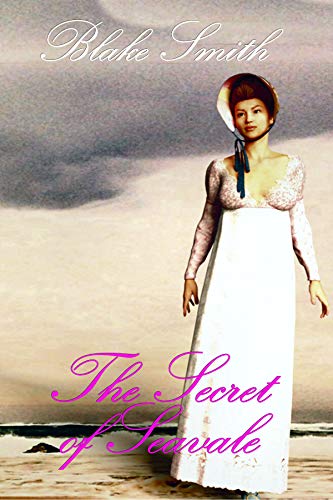
FROM BLAKE SMITH:  In Pursuit of Justice: A Novel of The Garia Cycle.

51emdrp7-pl

Garia and the East Morlans have been on increasingly rocky terms for years, and when Téo and Zara ran away together, they touched off the powder keg of war between their kingdoms. Now they have to fight for their lives while learning to live in a foreign land.
In the Morlans, Hanri and Alia are facing their own sets of problems. He must control and divert the single-minded vengeance of his father King Reynard, and she must sort the gold of information from the dross of gossip in a palace swarming with rumors. It could mean the difference between life and death for all of them

FROM PAM UPHOFF: External Relations (Wine of the Gods Book 37)

514sfh4zocl

The Granite Peak Colony has been discovered, lost rediscovered, fought over . . . And now the Department of Interdimensional Security and Cooperation has informed all parties to come to an accommodation peacefully–or they’ll impose one.

Izzo Withione Alcairo had been appointed Director of External Relations and told to clean up internal corruption and nepotism. Now it looks like he’s going to have to do it while engaging in cross dimensional diplomacy. With a pregnant wife, a gothic horror of a residence, and a sexy young princess throwing herself at him, it’s going to be an interesting first year.

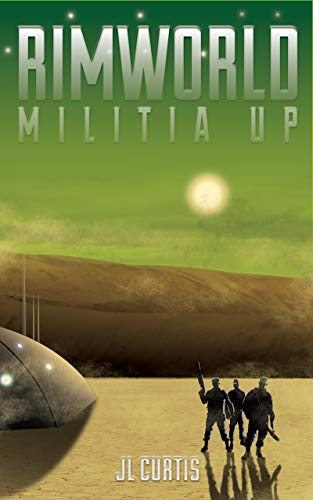
J L CURTIS:  The Grey Man- Generations.

51llsrb12ll

A new generation carries on the legacy of service in the latest Grey Man novella…

Marine Corporal Jace Cronin, a scout/sniper, survived insurgents in the Philippines, only to be handed an even greater challenge: the Naval Academy. He won’t be headed in alone, though. Esme Carter got her own slot and is ready to go head to head with him over who’s the best. They’ve got their eyes on lieutenant’s bars and pilot slots, and woe betide anyone who gets in the way!

Vignettes by Luke, Mary Catelli and ‘Nother Mike

So what’s a vignette? You might know them as flash fiction, or even just sketches. We will provide a prompt each Sunday that you can use directly (including it in your work) or just as an inspiration. You, in turn, will write about 50 words (yes, we are going for short shorts! Not even a Drabble 100 words, just half that!). Then post it! For an additional challenge, you can aim to make it exactly 50 words, if you like.

We recommend that if you have an original vignette, you post that as a new reply. If you are commenting on someone’s vignette, then post that as a reply to the vignette. Comments — this is writing practice, so comments should be aimed at helping someone be a better writer, not at crushing them. And since these are likely to be drafts, don’t jump up and down too hard on typos and grammar.

If you have questions, feel free to ask.

Your writing prompt this week is: useful

Still Working On Guardian

I’m still working on Guardian, and I’d really, really really like to get it done today.  (I have been benadryled (totally a word) a lot for the eczema etc, and it’s taken a toll on work that’s detailed and fussy.

I promise not to make this an habit, but one more Saturday, have some pics to play with:

invite


shalllead

Bernie Sanders: The Little Socialist That Could – by Amanda S. Green

thelittlesocialist
*Like Thomas the Tank Engine from Hell – SAH

Bernie Sanders: The Little Socialist That Could – by Amanda S. Green

Bernie believes the American public is either too stupid to see through him or we just don’t care. I know, I know. This shouldn’t come as a surprise. Still, when I see it so blatantly displayed as I do in his book, “Our Revolution”, I can only shake my head. Then I despair a bit when I think about how many actually cast their votes for him in the last presidential election. Of course, when your choice is Bernie the open Socialist or Queen Hillary, the closet socialist and empress wannabe, it might be difficult not to vote for him.

As we start the second chapter of Bern’s book, he reminds us that he is the “longest serving independent” in Congress’ history. Now, in one way, he’s correct. He is an “independent” if you count the Democrats and the Republicans as the only political parties in our nation. Or, I guess you could say he’s an independent because he doesn’t side with either of the two major parties. But when you really look at the statement, you see how he is pulling the wool over our eyes.

Let’s start with the elephant in the room. If he is an independent, why did he run for president on the Democratic ticket? That sort of says he identified with them, doesn’t it? Or maybe it shows that Bernie isn’t as dedicated to remaining independent as he’d like us to believe. After all, if the DNC hadn’t worked so hard to torpedo his run, something he supposedly had no idea about until after it happened, wouldn’t he have owed them some form of gratitude for the monies and politicians it put behind him in an attempt to get him elected? That would sort of undermine his “independence”. It would also firmly put that “D” behind his name. Now, I know, the Dems have been moving ever more quickly toward the socialist end of the scale, especially since FDR, but still. . . .

Then there is the simple fact that he identifies as a Democratic Socialist. If you go to his website, you will find a nice – and long – speech by good ole Bern about what he believes and what he believes Democratic Socialism is. Yes, there is a lot in common with the Dems, but he goes so much further than they do, at least publicly. And, by the way, once you identify with a political ideology, you aren’t independent. Independent means you think independently from any one political platform or party and consider the issues from all sides, etc. Bernie has proven over and over again that he is anything but an “Independent”.

But I digress, let’s consider what else this so-called Independent has to say.

His second chapter is supposedly about his political life in Vermont. What becomes clear very quickly is that good ole Bernie liked the political life. He ran for office the first time in 1971. He’d gone to a meeting of a “small third party”, the Liberty Union Party. At the time, Vermont was holding a special election to replace Senator Winston Prouty, who had died in office. A member of the House was giving up his seat to run for Prouty’s senatorial seat. So that, Bernie realized, left two seats up for grabs and this “small third party” was looking for folks to run.

Now Bernie, not being shy even though this was his first time to attend a meeting of the LUP, spoke up. He remembers talking about the economy and Vietnam, among other things. So imagine his surprise when they asked if he wanted to be their nominee for Senate. He was now running for office!

Think about it for a moment. Bernie hadn’t been involved with this political party. He didn’t know them and they didn’t know him. But he was now their senatorial candidate. With no money, no organization and no idea what the hell he was doing, he was now running for office – and not for local office but for the United States Senate. Riiiight.

As I think back, I realize that my campaign was not only a great learning experience and a lot of fun, but it laid the foundation for everything I have done politically since. During that campaign I did as much research as I could into the major issues facing the country, something I very much enjoyed doing, and spoke my mind about them. I didn’t worry about who I offended. (OR, pg. 26)

That’s how the U.S. got saddled with Bernie. He thought it was fun. He didn’t mind who he offended. He didn’t even know the major issues, not really, not until he began researching them. It was typical Bernie. Jump into the middle of something without really knowing what was going on and then go whole hog. Sort of sounds like the last presidential election, doesn’t it? Did he really think the fix wasn’t in from the beginning? Who didn’t know the DNC was going to do everything possible to make sure Hillary was their candidate? The owed it to her after she stepped back to let St. Obama take the nomination eight years earlier.

I guess the only thing good to come out of that election was Sanders lost. Unfortunately, he didn’t stay away from politics. His 2% of the vote didn’t discourage him. Instead, by his own words (OR, pg 27), he wasn’t satisfied with that 2% of the vote. So, he ran for governor. Once again, he ran on the Liberty Union ticket six months later in 1972. Again, he didn’t get discouraged, even though he only received 1% of the vote.

You get the picture. Bernie didn’t like losing. In 1974, he ran for the Senate again. He still ran as a “third-party candidate”. These candidates, according to Bernie, are often viewed as “spoilers” in an election. Duh. It only took him three campaigns to figure that out? I thought he was supposed to be smart.

One thing you can say about Bernie, he’s persistent. He ran again in 1976. This time, he ran for governor. He garnered his highest vote tally – 6%. This would be his last time to campaign with the Liberty Union Party and, for a few years at least, he was out of politics. Not that he didn’t continue to try to push his political agenda. During this time, he “wrote, produced and sold filmstrips” to schools about Vermont’s history. (OR, pg 28) In 1979, he branched out from Vermont history because he discovered that many college students didn’t know who Eugene Victor Debs was. This must have greatly offended Bernie’s socialist bones because he produced a 30-minute film about Debs. It is obvious from the book that Bernie would love to be Debs and so much more.

Debs was a great American, but his life and work remain largely unknown. He was a man of extraordinary courage and integrity whose tireless efforts on behalf of workers and the poor laid the groundwork for many of the programs established by FDR during the New Deal. Debs was the founder of the American Socialist Party and a six-time candidate for president. . . The life of Eugene V. Debs, his vision of a world of peace, justice, democracy, and brotherhood, has always been an inspiration to me. I have a plaque of Debs on a wall in my Washington Senate office. (OR, pg 29)

While Bernie hasn’t run for President six times – yet – no one can deny that he’s become a career politician. Not counting primaries, he has run in something like 21 local, state or national elections since the 1970’s. He might think he has a political revolution going on, but he doesn’t. His revolution is exactly what the Democratic Party has been moving toward since the 1920’s or earlier. The only difference is he openly calls himself what he is – unless it means identifying it on the ballot. He is a socialist. The DNC knows if it should drop the mask completely, it will lose the moderates in the party and that is the last thing it wants to do, at least not yet. So, they define Bernie as an outlier and point and laugh. They will use him in an attempt to get what they really want.

And it is blowing up in their faces, as is seen with the primary win by politicians like Alexandria Ocasio-Cortez against the DNC backed candidate. She is now going around the country, targeting other candidates backed by the DNC. Then you have Cynthia Nixon, she of Sex in the City fame, running for New York governor and openly embracing the Social Democratic label.

Bernie has become a thorn in the side of the DNC and he loves it. We, on the other hand, need to keep a close eye on what is happening and continue to fight. Our country has already slipped too far down the road to socialism. We need to put the brakes on now, while there is still hope to at least slow the slide.

Bernie is many things but dumb he’s not. In 1980, when he returned to actively being involved in the political scene, he ran for mayor in Burlington. He’d done his homework and had a plan, something I’m not sure he’d had in those earlier races. This time, he wouldn’t run as part of the Liberty Union Party. Now he was an “independent”. He also created a strategy, one he continues to use today.

We would run a campaign based on coalition politics. We would try to bring together, under one umbrella, the many diverse elements of the city that were unhappy with the current city leadership. And there were a lot of them. Over the years, as is often the case in urban politics, the administration had drifted further and further away from the neighborhoods and the working families of the city, and closer and closer to the downtown business community and the moneyed interests. (OR, pg 30)

Think about it. This is pretty much what he did in his presidential campaign. He reached out to those young voters who felt unconnected to the major parties. He had all the buzz words, all their “concerns” covered. He has, over the years, fine-tuned his approach and too few voters have caught on. they listen to all his pretty promises and condemnation of the status quo. Instead, they should be looking at his voting record, at the bills he’s proposed over the years and asking the hard questions about how he will pay for his high ideas. But they don’t.

So, we have to.

And we have to press him and those coming after him for answers. We have to remember that they won’t all be convenient idiots like Ocasio-Cortez with her ill-considered responses.

Bernie might never be president, but he is teaching a new generation of socialists how to manipulate the public into their corner.

I have never forgotten, however, that the most important political work that can be done is making door-to-door contact, speaking directly to your constituents and answering their questions. We need a lot more grassroots politics in America. (OR, pg 31)

This is where Sanders, and even Trump, out-performed Hillary. Again, fortunately. They not only recognized the need to make that sort of contact, whether it was door-to-door or in rallies, but to have a discourse with them where they spoke to issues that these potential voters felt were important. They connected with the voters, something Hillary didn’t, especially in the primaries. Had the DNC not given her the super votes, the presidential election might have taken a very different turn because the Democratic nominee would have been Bernie.

Like Bernie or not – and I don’t – we can learn from him. We need to learn from him. Otherwise, we are going to see him and those he has trained taking over our government. Our country may be flawed, and we might be slipping down the slope toward socialism but, damn it, we shouldn’t just accept that as inevitable. We should be fighting it tooth-and-nail. We should be doing all we can to understand the tactics of the enemy – the DNC and others who would destroy the basic rights guaranteed each of us in our nation’s founding documents. But to do so, we have to understand the enemy. If we do, then we can use their own tactics and their own arguments against them.

Now pardon me while I go find the brain bleach. I’ve already had too much Bernie and his brand of politics for one day.

(Help Amanda drink enough to keep snarking.  We’ll collect for her liver transplant later.
Hit her Pourboir jar now! – SAH)

The War Between Men And Women

silhouette-3129148(1)

Or “this isn’t what we expected.”

When I was little the women in the family could sound like any feminist when talking about the men in the family.  But it was different.

Look, there were realms.  The house was the realm of women, and in it men were treated somewhere between nuisances and children.  Yes, part of it is that Portugal is a very traditional culture with overtones acquired from the Arab occupation and that leaves certain issues.  For instance, when I was little, if a woman wanted a job outside the house, she needed permission from her husband or father.  And I want to point out right here, no, I don’t actually endorse that, particularly the father thing.  (Presumably if you’re married you and your husband both agree on who works where.  If not, well, there are problems with no fault divorce, but it sounds like you actually don’t have a marriage.)

To compensate for the outside being the world of men — seriously.  No woman from 9 to 90 could step outside the door without having sexually explicit things called out to her by some random guy.  No woman could safely be out of doors alone after 8pm or nightfall, whichever came first, etc. — the inside was the world of women, where men were treated like brain damaged infants.

The “Lord of his household” thing?  Sure, he had the legal right to tell a woman she couldn’t take a job (a lot of the women in the village took jobs cleaning because her fathers/husbands wouldn’t sign the papers.  So they arranged with other women to come in, do some part of the housework, and get paid either in money the husband never saw, or in kind (food, cloth, etc.)  And the village, like most Latin cultures was rife with wife-beating (not in OUR family.)  But other than that?  Women set the house as they liked it, (and mostly to impress other women) and largely chose what the kids would do.  And even violent men got treated as a mix of a nuisance and a child in the house.

At the lowest level in the village, men often drank all the money coming in (to be fair, the women did too.  It was often the only thing they agreed on) but in more middle class households, the man handed over his paycheck, got given an allowance, and the woman disposed of all the rest.

And women did say things like “Men are so incompetent.”

But note, it was in THEIR realm.  In the men’s realm women would ask for help to go to the bank (no, most paychecks never made it to the bank.  Well, my mom was the investor in the family, so that’s different) or to deal with authorities of any kind, not because they were incapable, but because they felt outside their realm.  And there, men would make comments about women.

I was weird, because I was expected to have a degree and not married, so I got trained in a lot of the “things of men.”  Women in my family were, anyway, and in any case, things were changing by the time I hit adolescence, at least in pockets.

In one of his books, through the mouth of Lazarus Long, Heinlein wonders if men and women are the same species or merely symbiotic.  I thought it was hilarious when I first read it.  I’ve been laughing less and less ever since.

Sure, statistical groupings are such that some individuals from one will always be closer to the other in characteristics.  But in general?  The majority of the population.  Ah!

I find my early training in an intensely sexist society helps in a way. Why?  Because most groups were either all men or all women — except for me — and thus it’s easier for me to sense (even in mixed groups) what kind of group it is.

Women groups are intensely hierarchical.  Aren’t I confused?  Don’t I mean men’s?

No, I don’t.  I sometimes wonder what in living hell is wrong with people who write the peaceful planet of women and are actually themselves women?  Were they raised exclusively by males? Have they never experience female groups?  Are they lizard people with a society with only one sex?  The men who write this twaddle, I understand better.  Put a man in a group of women and every woman goes instantly into “front keeping mode” on being sweetness and light.

Women are non physically violent but strongly hierarchical.  Group mechanics are such that often the entire energy and focus of the group is a) establishing pecking order b) enforcing conformity.

Can you have a good working group with all women?  Sure.  But it has to be rather unusual women and women who are consumed by some kind of passion.  So you’re less likely to get it in, say, clerical work or bureaucracy and more likely to get it in the arts, crafts, or helping professions.  Something you can imagine something being devoted body and soul to you can see a good all-women work group.  So, you know “What I want to do with my life is” complete that sentence for the job you’re contemplating in an all-women group: “All I want to do with my life is heal the sick” and you might get a decent work group.  “All I want to do with my life is file form a in slot b” less so.

Men in groups, OTOH are more focused on task and less on personalities.  Hell, men (and me) are less likely to notice slights, digs and subtle disputes.  If you’re not hitting them in the face with a brick, the interpersonal will matter less, but they tend to get hyperfocused on their task.  There can be bitter disputes, yes, but that’s usually because that guy down in cube b tends to never Florpz the Dbars the way they should be doing, and it’s slowing down the entire group.

Again, statistical likelihood and lived experience.  There is probably out there an hyperfocused group of women.  There is probably out there a group of men that are more into the brow beating, psychological warfare and pecking order than a room full of seamstresses.  It’s just not as likely.

So, what does this mean for the war between men and women.

Well, in the real patriarchy I grew up in (Yes, it was) the men and women solved the fact that they have very different hierarchies by isolating to their own corners.  Even in having and raising children they divided responsibility and the man was the heavy while the mother was the one who set the day to day: what you ate, what you dressed in, etc.  My family was weird, so my free time was spent with dad a lot, but most kids saw dad as a distant and law-giving figure.  Mom would climb the mountain and come back with the tablets of the law, but Dad was the law giver and punisher.  (Not dad.  He was really bad at the punisher stuff.  I wonder if that’s why I fit so badly in Portugal.)

In each of their realms they treated the other sex as damaged children.  This still happens to an extent, even with women working outside the house, because the woman is still responsible for how the house looks and is still in charge of making and getting things for the house, and even the man helps in her domain, he’s still only a “helper” and his position THERE is subordinate.

I was and am for women having the right to work outside the house, if they so choose, and not having to get anyone’s permission.  I’m not for women getting pushed ahead of men or getting extra brownie points for being women in the work force, because that smacks of a trained pet.  “The question is not if she does it better than men. The amazing thing is that she can do it at all.”

I think women who are more comfortable in the workforce should definitely do so.  I also think that couples where no one intends to stay home with the kids (or arrange their schedules so one of them can be home with the kids at any time) shouldn’t have kids.  But that’s me, and I’ve seen too many children farmed out to be raised by low-skilled strangers.  I also know enough history to know that never ends well.  OTOH I’m neither G-d nor emperor, so carry on.  But do give it some thought.  We’re maybe 1/2 genes and 1/2 environment.  Do you want strangers making your child’s environment?

Anyway… moving right along.

What has puzzled me more than anything is the left’s insistence that we live in a patriarchy.  I’ve seen the real patriarchy running around with no clothes on, and this ain’t even close to one.  Hell, to a great extent, it’s turned into a matriarchy, with the women conquering the world of men, integrating men in their hierarchy and bullying them, at the same time they control the house.

Yes, I know, women make less, blah blah blah, which would be terrible if it were actually true (No, it’s not.  I’s an effect of choices of field and hours worked) but in point of fact, most companies will aggressively try to hire/promote any semi-competent female, because of numbers and showing those to the government and not giving the appearance of discrimination, since you can get sued on Numbers without any real proof of ill will.

All of which brings us to the war between men and women, and the left’s persistent fear of “patriarchy” so subtle no one can find it in the real world.

I have a highly heretical theory, and one that means we are in deep trouble.

You see, having grown up in a patriarchy, I know the type of woman who succeeds in business in those.  These are hard driven women, who live for their work.  They turn their passion to whatever they’re doing, and devote themselves to it utterly.  See that thing above, where a group of women who is doing something they consider vital can be results-focused (and amazing?)  Yeah.  A woman alone can be like that too.  These women who would go into business would either build giant companies or climb to the top of their fields.

I knew women pianists, mathematicians and businesswomen who were respected and feared by every man who worked for them.

Let’s see: they acquired training despite insults and assumptions they were stupid (been there, done that) and then went into the workforce despite the assumption they were there to snag a man.

Despite all this, they were so focused and so good they went to the top of the field.

Dave Freer says there is this effect to a real discriminated against minority.  The ones who succeed are amazing.

But these were the women the early feminists focused on.  And an image was created that if we were universally allowed/encouraged to do this, then we’d all be like those few exceptional individuals.

No one large group, male or female, is EVER like its exceptional high achievers.  Most human beings are mooches, slouches and time servers.  It’s the nature of humanity.

So. So when it became DISCOURAGED to be a stay at home mom and women were pushed (still are) into careers whether they want them or not (and don’t tell me this doesn’t happen.  Even while staying at home to write, I faced withering disdain that I was “just a housewife” everywhere from the doctor’s office to social occasions) they found that they don’t get ahead/do as well as those exceptional high achievers.

And so, because women have told themselves just-so stories about how they are better than men (always have, but it used to be in their domain only) they posit a conspiracy.  Women are more likely to believe in conspiracies anyway, because the hidden velvet glove (with the spikes in it) are how all-female groups are organized.

Hence the ghost patriarchy.

I was reminded of this yesterday when one of my colleagues was running her mouth and positing hidden racism because otherwise black people would dominate the writing field, because they are all “Geniuses and so creative.”

Will someone find my eyes.  They rolled onto the floor again.

People of all sexes and colors are geniuses and creative.  But no large group of people, no matter how sorted is. 98% of humans seem unable to create anything new, though they can improve on other things.  It’s a different way the brain works.  And as for geniuses… “When everyone is a genius, no one is.”

For an adult to believe that all or even a majority of a race, a sex, a geographical origin, an orientation, or a profession, are “geniuses and so creative” denotes a certain lack of… ability to engage reality.

Most people are mooches, slouches and time-servers.  It’s what humans are.

But because some groups have convinced themselves of this nonsense, and allowed it to become part of their internalized image, they HAVE to see conspiracies to keep them out everywhere.  They have to start tallying up micro, picco and nano conspiracies.  Otherwise they’ll have to look in the mirror go “I guess I’m not as good as I thought I was” and no human being wants to do that.  For one, it leads to a lot more work or the humiliation of “settling.”

And so, the more equally society is, the more it gets accused of being a patriarchy and “colonial.”

Which in turn makes it harder to achieve anything, because some percentage of the population devotes its energies not to doing/creating/building, but to fighting the rest of the society they blame for their troubles.

It’s human.  And unless we fix it, it will be the death of us.

A Solar Activity Update- By Stephanie Osborn

A Solar Activity Update- By Stephanie Osborn

http://www.stephanie-osborn.com

My experience

I did my graduate work in spotted variable stars at Vanderbilt University, so in the astronomical community I would be considered a variable star astronomer. Based on our experience, many variable star astronomers consider the Sun to be at least borderline variable, and I am one of these. In point of fact, pretty much across the board, astronomers dropped the “solar constant” years ago, because it simply wasn’t. (Unfortunately, other disciplines have not.)

I personally have been watching solar activity for many years now and have watched the activity gradually decrease. As a consequence, I began keeping a rough spreadsheet in summer 2016 as I watched activity begin to drop dramatically. So I have about 2 years of recorded data. It is fairly simplistic, because I only wanted a snapshot and didn’t have time to do more detail, but it serves the purpose, as we will see shortly.

The current solar cycle

This graph is the latter part of solar cycle 23 and all of cycle 24, roughly to date. (Note, however, that the plot ends in ~March 2018. It’s very difficult to find plots that are current to the month.) The red line is the projected curve. The blue line is the smoothed curve. The purple dots and jagged line are the actual data.

steph1

Note that the peak for 24 was approximately half that of 23. Also note that we are currently already as low as the minimum that ended cycle 23, at approximately 8.5-9 years into an average-11-year cycle. Theoretically, we still have a couple of years to go before the actual minimum is reached, though 11 years IS an average.

Recent solar cycles

Here is a graph presenting solar cycles 14-24(current). This takes us back to around 1900AD. Note the decrease in the height of the peak (solar max) of each cycle since ~1980. Note the decreased activity in cycle 20. Note the gradual increase in peak height from 1900-1960, though there is a slight drop in cycle 16, around 1930.

steph2

Long-term observations

This next chart goes back a LITTLE farther. This is a view of activity over the last 400 years. Note that this graph does NOT include cycle 24; it stops at 23. Cycle 24 is already at roughly the same level as the cycles found in the Dalton Extended Minimum, and this has been noted by several groups with experience in the field.

steph3

An interesting correlation

This is a clipping from a Michigan newspaper which was sent to me a couple of months ago. Note the article date written in the margin.

steph4

Correlate this to the very low peak of solar cycle 20, which occurred during the 1970s. Note the snow event in 1942, in the cycle subsequent to the diminished cycle 16. Also consider the “Little Ice Age,” which was a prolonged cool period (~1300-1900) overarching the four back-to-back extended minima: the Wolf, Spörer, Maunder, and Dalton Minima (running ~1280-1850AD). Also note the year 1816, the so-called Year Without A Summer, aka “Poverty Year” and “Eighteen Hundred and Froze to Death,” which occurred during the Dalton Minimum (~1790-1830; some argue a later end).

steph5

Legend:

Column 1 is the year.

Column 2 is the month.

Column 3 is the percentage of days in that month with no more than 1 sunspot/sunspot group.

Column 4 is the percentage of days in that month with NO sunspots.

My data (2017)

steph6

My data (2018 — incomplete)

steph7


My data, graphed (total)

steph8


The latest data

I haven’t had a chance to include the last couple of months of data in the charts as yet. However, in brief synopsis, May had 77.4% of days with no more than 1 sunspot group, and two sets of seven consecutive spotless days. June was much the same, with another spotless week early on; another session of spotless days began June 27th…and continued through the entirety of July. Today, as I write this, it is July 31st, and we have had 35 consecutive spotless days. Since it takes about 24.5 days for the solar equatorial regions to rotate once around its axis, this means that we have seen the entire photosphere spotless; not even the solar farside has spots, and this appears to be corroborated by the STEREO solar observing platforms. A couple of short-lived, almost-spot plages developed during this period, on July 3rd and 21st, but otherwise there were no visible photospheric features. Virtually the only other solar activity came from the enhanced solar wind streams from coronal holes, and even those are diminishing in size and strength.


Other solar activity

Flare numbers are decreasing; CME numbers are decreasing. BUT cosmic ray flux is increasing. Why? And what do all those words mean, anyway?

Sunspots, flares, and coronal mass ejections (CMEs) are all related; flares tend to produce CMEs, and tend to form near spots. This is because they are all magnetic events. A sunspot is believed to be the “snarl” produced in the magnetic field lines as a result of differential rotation — since the Sun is not a solid body, it does not rotate uniformly; rather, it follows Kepler’s Laws of orbital motion. The poles rotate faster than the equator, and the interior rotates faster than the photosphere. But since it is a plasma body, and plasma is composed of charged particles, it generates a strong magnetic field. As this differential rotation proceeds, the field lines gradually wrap up. If (among other things) local inhomogeneities occur, the field strength can vary, and the field lines may “snarl.” But they also tend to move upward as the plasma convects. When the snarls reach the photosphere — the visible surface — they are slightly cooler, hence darker, and appear as sunspots.

But these snarls contain carp-tons of magnetic potential energy. And from time to time, that potential energy manages to release itself, in the form of a magnetic reconnection event. This is, in essence, the field trying to simplify itself and untangle, after a fashion — the field lines break here and reattach over there, in an effort to reshape themselves and eliminate the snarl. This converts the potential energy into tremendous amounts of other kinds of energy — thermal and kinetic, to name a couple — and the result is a flare. This explosive event can — but does not always — then generate the equivalent of a mushroom cloud, which blows off the photosphere into the solar system, accelerated by the reconfiguring magnetic fields. This “mushroom cloud” is the CME.

Given that this differential rotation creates an extremely complex overall magnetic field, sometimes field lines leave the Sun and stretch off — essentially to infinity — in places not normal for a typical dipole (bar) magnet, which ordinarily would mean JUST the poles. These regions of “infinite field lines” are visible in certain wavelengths of light as darker regions, due to the relative lack of plasma in the inner corona, and they are called coronal holes. The solar wind tends to be “enhanced” along these field lines, since the magnetic field is effectively accelerating the plasma in these regions. They are strong, and can create minor geomagnetic storming and aurorae on Earth (or the other planets) if we pass through that enhanced wind stream, but it won’t be as strong as getting hit with a big CME.

Cosmic rays are generally subatomic particles of various sorts, originating from outside our solar system — sometimes outside our galaxy. They are extremely energetic and are produced by the more powerful cosmic objects out there: pulsars, magnetars, supernovae, black hole accretion disks, even quasars. They can be dangerous precisely because they are so energetic, and often if they hit an object, they produce a cascade of additional particles. (In atmosphere, this is called a cosmic ray shower.)

BUT, since most of them are charged particles — they’d be incredibly hot plasma if you got enough of ‘em together in one place — they can be deflected by magnetic fields. And woo-ha, a moving plasma such as the solar wind constitutes a current, which in turn generates an interplanetary magnetic field! So this magnetic field protects the inner solar system from potentially deadly cosmic radiation. (The term “flux” simply means you’re measuring the number of such particles passing through a given area — typically a square meter — per second.)

So. The stronger the interplanetary magnetic field, the better the protection we have from cosmic rays, and the lower the cosmic ray flux will be.

BUT.

When the Sun is less active, the slower and less dense the solar wind will be, hence the weaker the interplanetary field will be.

So we would expect that an active Sun would mean a low cosmic ray flux, and an inactive Sun would mean a higher cosmic ray flux…and this is exactly what we see. More, as the solar activity has diminished in recent years, we have watched the cosmic ray flux increase.

steph9

Credit: graph from spaceweather.com

Note: Stratospheric flux tends to be more representative of solar system fluxes than lower-altitude measurements; this is because the atmosphere attenuates the rays. Note how the flux has increased from 78x to 88x that found at sea level.


My thoughts

Based on all this information, it is my considered opinion that we are about to enter an extended minimum, if we are not already in one. The double-dynamo solar model predicted one more solar cycle before entering an extended minimum. However, this model, while able to accurately recreate the shapes of recent solar cycles, has been unable to adequately model historic extended minima. It must therefore be concluded that it is not complete. It is my educated conclusion that it does not go far enough, and there is at least one more dynamo which needs to be modeled. It is therefore likely that the onset and the exit of the predicted extended minimum may be “squishy,” and the dates may vary by as much as a solar cycle or more.

It is very true that “correlation does not equal causation,” but when correlations begin to mount, it is foolhardy to refuse to consider the possibility of a coupling mechanism. To name a few correlations:

  • Greenland/Vinland settlement around 1000AD/tail end of the Roman Warm Period
  • The Little Ice Age/four consecutive extended minima
  • The Year Without A Summer/Dalton Minimum
  • Snow in summer in 1942/low-activity Cycle 16 preceding
  • Snow in summer in 1979/low-activity Cycle 20 preceding
  • Modern Warm Period/increasing solar activity in 1st half 20th Century
  • Plateau in warming in the 2000’s/gradual decrease in solar activity since ~1980

Yes, certainly volcanic eruptions and other events factor into the situation. But how many correlations does it take before we need to sit up and take notice? Before we seriously start to wonder what is really going on?


For more on solar activity, check out The Weather Out There Is Frightful, by Stephanie Osborn. https://www.amazon.com/gp/product/B008JA00D0/ref=dbs_a_def_rwt_bibl_vppi_i9


The Dumbest Idea In History- a Blast From the Past From November 23 2015

The Dumbest Idea In History- a Blast From the Past From November 23 2015

You know, recently we have been hearing a lot about how this or that or the other thing — authentic foods, yoga, certain fabrics and attires — are “cultural appropriation” and therefore a manifestation of racism and should be stopped.

This goes hand in hand with the weird and rock bottom stupid idea that culture is inherited in the genes.  This is what gets the stupid-left (yes, there is a smart left.  Mostly they pull the strings of the dumb bunnies) all in your face and screaming when you criticize a cultural behavior, like, say, wanting your women covered in sofa-slipcovers.  They call you not ignorant or provincial but “racist” and thereby reveal that in their tiny, blinkered minds, people are born with the innate fear of the magical rays given off by women’s hair, that send men wild with incontrolable lust.

It might be easier, honest to Bob, if they had children or, for the few of them who DO have children, if they’d paid any attention to their kids’ development instead of to the weird movie going on in their heads which leads them believe things like that a baby recoiling from unfamiliar appearance means the baby is racist.

The only culture babies are born with is the fauna and flora in their intestines.  No, seriously. Anyone who has or knows anyone who has adopted a child from another country/different race knows that kid grows up to be more like their family than like his/her birth family.

No baby adopted as an infant from China learned Chinese instead of the English of her adopters.  (My older son went one better and totally rejected the Portuguese I spoke to him the first year and a half of his life, learning only English.  My guess is because that’s the COMMUNICATION he saw happening, while observing his surroundings, and since no one else spoke Portuguese he tuned it out because it must be gibberish. He must be deficient in those Portuguese genes.)  No baby adopted from Africa has an instinctive liking for African music, unless he’s been raised with it.  (And then comes the question of which part of Africa, but we’ll leave that alone.)

If you’d taken my boys away at birth and given them to a perfectly normal white, middle class, suburban family, they’d probably still be odd, but their oddness might not include science fiction and fantasy.  And though they’d probably still both be good with written expression, they might not be good with written expression as we recognize it.  If they’d grown in a family that didn’t read or write that much, they might be better than their families, they would still not be up to a level recognized as excellent in society at large.

What they would still be is still tall and swarthy and built like brick sh*thouses.  Because, you see, that part is encoded in the genes.  You can’t change your black eyes to green because you grow up with a different family.  But you can be incredibly organized if you grew up with parents that required incredible organization, even if you come from a genetic background –oh, Portuguese — that is prone to the organizational method known as “let’s all pile in, and may G-d sort it out.”

I’m not saying there are no genetic characteristics that affect things other than appearance.  Of course there are.  They are a little harder to sort out from “raised with parents with those characteristics” but I’m fairly sure there are SOME.  Like both my kids are too stubborn for …  well… anything. (I remember trying to get Robert to obey me in some small thing (He’d thrown a paper on the floor, I think, and I told him to pick it up, and he was in one of his non-obeying days) which took me half an hour and a friend, watching it, said was like breaking a prisoner of war.  (Not really.  I didn’t torture him. It’s just that I had to talk him into obeying.) He was three.)  And DO trust me, we did not TRY to make the d*mn kids stubborn.  (And Robert is a lamb unshorn compared to his brother, he who made pre-school teachers tear out their hair.)

But innate tendencies do not a culture make.  Innate tendencies might dictate whether you leap out of bed with a song on your lips and incite murder in the mind of your roommate who drags self out of bed with groan and crawls till noon by the grace of coffee, but it does not dictate what language you speak, what attire you wear, or whether you think women look best when disguised as sofas.  Those are things you learned from your relatives/guardians when you were too young to think.  They might be filed under “must do” at a level where you have never examined them, but that doesn’t mean you can’t examine them. And change them.  It just means it takes time, is painful, and no one is going to do it without major upheaval requiring it.

I would never have changed my language from Portuguese to English without having moved to the US.  I mean, for one it would be weird, and mom and dad don’t speak English.  Going around the house with an interpreter would have made them think me crazier than they already thought me.  And I would never have given up my fresh bread with butter for breakfast, if ya’ll had bread delivery in the morning.  (And why don’t we have that?  It would seem to me there’s an entrepreneurial thing waiting to happen.  Bread, bagels, doughnuts or cinnamon rolls, newly made and waiting for you, still warm, in a delivery box by the door early morning.)

But circumstances dictated I changed those, and while it was difficult and painful, it got done.  Because I’m human and humans are creatures who learn and adapt.  Which means they can learn new habits, new languages, new expectations: everything that makes up a culture.

In fact, throughout history, we’ve learned and changed.  We’re not still in a cave somewhere chipping flint the way our first vaguely human ancestors did.  Or in the branches, afraid to appropriate the culture of those who walked upright.

No, when a group of humans found something, the other group followed, learned, improved.  You can still find very isolated tribes who don’t have the concept of the wheel, counting above three or past and future tenses.  BUT note the point is “very isolated.”  If they hadn’t been isolated, they’d have picked up these concepts from the cultures who contacted them. It’s called learning more “functional” concepts.

The “functional” here refers to concepts that allow you to live longer, reproduce more and raise more fat babies who will have more fat babies.

Because Western culture, the dominant culture of the world at the moment, went a little (okay, a lot) crazy after the long war of the 20th century, some seriously non-functional-in-the-long-run concepts have crept into it.  In the short run they confer a brief advantage in the fat-baby race, but in the long run they lead to fewer HUMAN fat babies, and perhaps to the extinction of those who adopt them.

One of those is this notion that people come pre-packaged with culture.  In the short run, having infected our social services, it means you’ll get more tolerance for refusing to assimilate, and we’ll indulge your ideas that all women should be covered up, and that they all should live to produce your fat babies.  This might even work on enough women to give you a genetic advantage.

But the idea that culture is innate is not only a STUPID idea (note I’m not painting this post on cave walls, so we must be capable of learning and changing), it’s an EVIL idea.

Let it take hold and sooner or later it leads to genocide.

Oh, sure, the remnants of Judeo Christian ideals, imposed on that stupid idea, means that we tolerate self-harming and definitely society-harming behaviors and shush people who criticize them as being racist.

The problem is the idea of inherited culture is fundamentally incompatible with Judeo-Christian ideas, which require self-control, discipline, ability to change and follow a set of ideals, and which in Christianity’s case, is big on redemption and conversion, both of which require you to change, to adapt and to become different in your interactions with the world

So if the idea of inherent and race-dependent culture wins out, the idea that all humans should have equal rights and that we should support and take care of those less fortunate because they are human like us and their kids might be fine, goes out the window.

What you have left is the idea that some humans are fundamentally unable to work in the modern world.

Sooner or later, then, a leader arises who says “Hey, these are sub-humans.  Let’s get rid of them.”

In fact, this has happened not once, but several times throughout history, because the idea that you’re born with your culture is one of those stupid notions humans can’t quite get rid of.  (Possibly because we are tribal creatures, at heart.)

Note this is not what I want to happen, it’s a horror I dread, but it WILL happen.  It’s not a matter of if, it’s a matter of when.  From the idea that telling someone to learn the language of the country he was born in and lives in is racist comes the idea that genocide makes perfect sense.  Because if some people can’t learn and adapt, well, then, they’re a drain on society.  And if not everyone is — within statistical variance and excluding obvious impairment — equally able to learn and contribute at least enough to pull their own weight, then why should the more able be saddled with the less able?

At the end of this thought process mass graves yawn.

But I’m starting to hear such rumbles.  All of us are.  And they’ll grow as the short-term-incentives we provide lead people down disastrous long term paths.

We must fight that idea loudly and derisively every time it comes up.  Telling someone to learn English is not racist.  Language is NOT encoded in any race’s genes.  Telling someone to show up on time for a job is not racist.  Some cultures have no sense of time, but that’s culture (and tracks fairly well with the cultures that industrialized later.)  Telling someone like me (who grew up in a culture that doesn’t prize organization) that I need to be more organized and start posting these on time is just sense.

Culture is not race.  Humans, as humans, are incredibly adaptable.  All of us came from people capable of overcoming, improvising and adapting.

Given the right incentives everyone can do it.

Does this mean people need to leave behind colorful modes of dress, interesting dishes, beautiful art?  Oh, please.  No.  It just means the main culture will absorb, change and use those parts of any culture that catch its attention.

Cultural appropriation?  Flummery.  It’s called being human.

And now I’m going to appropriate some fire to appropriate some coffee, so I can appropriate this keyboard to write stories in my appropriated language.

And proud of it.


Broken

pottery-576265

Yesterday was a very significant day for my husband.  It’s the birth date of his brother who died at 42 in 2000.

It is significant not because they were very close and best friends.  In fact, after a childhood and young years of conflict, they’d just started repairing their relationship; talking occasionally; being able to hang out or have dinner together without fighting.

That was probably the worst of it, because there are no words as bitter in the world as “it might have been.”

Dan wrote about it here.

I have friends going through other types of life transitions right now, some good, some not and I myself have been going through something I might some day be able to talk about in public (it does not involve family in any way, certainly not divorce.  But it involves other people even though it’s central to MY identity/life, so I can’t talk about it, not yet.  Maybe some day) which is a transition, a loss, a gain and a sort of “it might have been.”  (But isn’t, and never will be and it’s time to let it go.)

We were talking in this blog about predestination, free choice and the things humans choose to do or not to do, and how free they might be or not.  As you know, I believe in individual freedom.

I was thinking of that because of what Dan said, in his post, that given an infinite possibility of universes there is some place where his brother turned sixty yesterday, and maybe we flew out for the party, because they’ve become best friends.  Weirdly, if he’d lived that’s not even a strange outcome.  It was sort of going that way, despite their starting out very antagonistic and being very different people.

Of course I don’t know if there are multiple universes.  It’s an interesting thought to play with.  Perhaps the whole reeincarnation thing is a misunderstanding and we actually live multiple lives concurrently, all of them as us, and are then weighed on the balance of those lives.

Of maybe none of this makes any sense, since we’re talking in a human language about things beyond time and space.

What came to me, though, is that yeah, your choices might be narrower as you live.  Or not.  Sure, reverting the choices and bad habits of a lifetime might be near-impossible.  BUT not impossible because you’re human, and humans can can change.

We’re like a piece of pottery that gets used and used and thins out or loses glaze or even gets broken.  After some time, there’s only so much you can do with it.

Or you can use kintsugi, the Japanese art of repairing those cracks and hurts, owning them and making something beautiful out of them.

You can’t unlive your past, but you can integrate your broken bits into a new and wonderful whole.

There is no human who lived who didn’t make mistakes, doesn’t have regrets and isn’t broken.  It’s part of your history.  But it doesn’t dictate your future.

Accept it, integrate it, and be who you really want to be.

You’re broken.  So what?  It’s the breakage that makes you you.  Fix it to make it better than it was.  And live on.

Let go of hate, resentment and regret.  Build.  We’ll get there.

Vignettes by Luke, Mary Catelli and ‘Nother Mike and Book Promo

rules-2330728

Sunday Book Promo

*Note these are books sent to us by readers/frequenters of this blog.  Our bringing them to your attention does not imply that we’ve read them and/or endorse them, unless we specifically say so.  As with all such purchases, we recommend you download a sample and make sure it’s to your taste.  If you wish to send us books for next week’s promo, please email to bookpimping at outlook dot com.  One book per author per week. Amazon links only.-SAH*


FROM ROY M. GRIFFIS:  The Big Bang: The Lonesome George Chronicles Book.

617j5rv89ml

In this page-turning post-apocalyptic thriller, Roy M. Griffis explores an alternate timeline in which America falls victim to a coordinated attack by Islamic jihadists and Chinese Communists. It’s 2008 and George W. Bush is still president. Three years later, the man called “Lonesome George” is in hiding, leading the resistance from a secret location.

Multiple plot lines skillfully braid the tales of resistance fighters in various parts of the country. Whistler is the hard-bitten commander of a military unit in Texas. Karen, a former congressional aide, stumbles through the radioactive rubble of Washington DC. Molly, a leftwing columnist in San Francisco, finally puts her talents to good use on the underground radio as the voice of the resistance. Alec, a famous Hollywood actor, loses his wife and daughter in the nuclear attack on Los Angeles and becomes a legendary fighter, inventing the gun that bears his name.

A vivid imagining of an America gone horribly wrong, written in gripping detail.

FROM ASHLEY R. POLLARD:  Bad Dog: Military Science Fiction Across a Holographic Multiverse (Gate Walkers Book 1)

51nr2takwnl

In 2071, Sergeant Tachikoma leads a Marine combat armor squad. She knows the Corps never promised her a rose garden, only the chance to fight for her country.

Now, she faces her greatest challenge, two terrifying alien pillars that trapped her into reliving the same day again. The day she dies.

Today, she needs every ounce of courage to save her people from annihilation.

Based on cutting-edge theories on the nature of the universe, this white knuckle military SF thriller contains drama and mystery.

“This story is great, with a very firm grasp of the Marine Corps lifestyle.”
Sgt D. Barrow, USMC

PATRICK  K. MARTIN: Threads

41cyhbcnzwl

Science tells us that there are an infinite number of possible universes and nearly as many versions of you. Imagine if you had to be all of those lives. Imagine all the things you could ever be, good, bad, lover, fighter, benevolent or evil. Imagine if all the possible threads of your life became roads you had to walk. . .

WARNING; this book contains Adult material and Mature content and is not recommended for younger readers.

BY MEDRON PRYDE:  Forge of War (Jack of Harts 1).

51umq9l8xkl

In 2205, we learned the answer to one of the oldest questions of all time. Are we alone? They brought medicines with them that nearly wiped out diseases, and extended the human lifespan into the centuries. They helped us study advanced technologies, and expand our colonies hundreds of lightyears from Earth. It was a golden age that many thought would never end.

Jack grew up in a world at peace, his only interests, partying and girls. But when a sneak attack killed millions of Americans, and wiped out almost everything and everybody Jack knew, he volunteered to serve and get some payback. But the Marines want more than people looking for revenge, and cybernetic partners demand a higher commitment. If Jack wanted to earn his commission as a Marine Corps fighter pilot, he had to let himself be forged into something stronger than he’d ever felt the need to be. A man willing to live up to the name of his squadron. A Cowboy.

Historical note: The Marine Corps fighter squadron that is a central part of this story was named in honor of the real life Marine Fighter Attack Squadron 112, the Cowboys. Because of these aviators, and everyone else who has served, I am free to write this story. I will never forget.


Vignettes by Luke, Mary Catelli and ‘Nother Mike

So what’s a vignette? You might know them as flash fiction, or even just sketches. We will provide a prompt each Sunday that you can use directly (including it in your work) or just as an inspiration. You, in turn, will write about 50 words (yes, we are going for short shorts! Not even a Drabble 100 words, just half that!). Then post it! For an additional challenge, you can aim to make it exactly 50 words, if you like.

We recommend that if you have an original vignette, you post that as a new reply. If you are commenting on someone’s vignette, then post that as a reply to the vignette. Comments — this is writing practice, so comments should be aimed at helping someone be a better writer, not at crushing them. And since these are likely to be drafts, don’t jump up and down too hard on typos and grammar.

If you have questions, feel free to ask.

Your writing prompt this week is: live