In case you were wondering I do feel guilty and upset at myself when I swear at long-time readers and call them Vichy. In my defense, the reader hadn’t bothered to take in what I was saying about the clusters of the virus, or to address them honestly, and instead tried to hector me with supposed superior knowledge, never considering whether I knew anything about it/had read extensively about it.
So, pull up a rock and let’s talk through this, okay? Your fears, my fears. And why I’m suffering from PTSD and the other day cried while driving through Denver to pick up food at our favorite place, because I felt all that was left behind was the shell of the only city that ever felt (truly) like home.
Let’s begin with: Nobody knows anything.
I’ve said before that we’re going into an increasingly ignorant age. Not because data collection is impossible, but because our society is so complex and dispersed we each know only a very small part of what can and will influence our lives or perhaps completely destroy them.
It was always like that, of course. Big, flourishing cities pre-Black-Plague didn’t know their end was coming. But in a way they had it easier. First, because they didn’t think EVERYTHING was knowable. Only G-d knew everything, and ultimately their fate was in the hands of G-d. As a society, they knew/believed that this world was a transitory place, and what mattered was their eternal faith. And over that they had full control by their behavior. (Which in turn descended into a lot of legalistic stuff about doing all the right things, even if those things were external and small.)
Regardless of personal faith, society as a whole does not believe that any longer. Society believes, rather in living as long as possible, because as individuals we’ve lost our moorings in the world/time. We no longer feel that our lives don’t matter so much — maybe — but we’re part of something bigger than ourselves that will continue long after we’re gone, and to which our contributions matter.
On top of that, we have some idea of the vastness of the world, our smallness in it, and that someone across the world having bat soup a la mode can mean we and ours will die without being able to do anything to prevent it.
This is a situation designed to induce madness, particularly when all our news apparatus is trying its best to drive us to panic fear, because they think they can use it to then panic us into socialism. Destroying the economy is a plus value in this, as then we’ll need (they think) socialism. Socialism never really fixes such situations, but it is often something people embrace when desperate (before they get defeated and starve.)
The problem here is REALLY nobody knows anything. It seems like every other day a new theory about what this virus is comes out. The latest onne is that it de-oxygenates the blood itself, rather than merely making it hard to acquire oxygen. Look, it’s possible. It’s just not PLAUSIBLE and the person expounding it lacks the credentials. OTOH Medium took it down, which these days is almost a sign of its making sense.
If that’s true, btw, transfusions, not ventilators are the needed thing.
But then again…. Take the bilateral “ground glass” x rays. Do they mean anything? I don’t know. I know that when I was dying of pneumonia, a nurse tried to stampede me into a biopsy (they really wanted to give me one, even though they ADMITTED it would probably kill me) by saying I had “bloody holes” in my lungs. I didn’t. She didn’t know how to read an X-ray. I’ve heard from professionals that the pattern is just “bilateral pneumonia.”
The low oxygen and still breathing fine was how I presented when I had intercellular pneumonia (That what I was told later. It makes no sense to me) X-rays didn’t detect it, though you could hear it, and eventually a highly skilled radiologist pointed out I did have signs of pneumonia in the x-rays. Before that, except for my low ox they’d have thought I was hypocondriac.
It is that illness, more than anything that makes me doubtful of almost everything we hear. You see, medicine is more art than science. We tend to think “Oh, you take a test, and you know for sure.” but that’s not true. I hear we have a test that’s accurate in 85% of the cases, but it is not in wide distribution. Our best right now is 70%. Which means Winnie the Flu is being diagnosed on a ton of things, but ultimately it’s being diagnosed the way it was in China: if you present at the hospital with bilateral pneumonia and with a host of symptoms that change every day and with every whisper out of the medical community, they assume it is Winnie the Flu.
And I keep remembering that experience and thinking of three doctors screaming at each other in my room (my husband says I was being treated by committee) each convinced I had something completely different. The candidates were: a disease from a fungus that grows in Brazilian caves (later it emerged this doctor thought that Portugal was right next to Brazil. A not uncommon error.) An hereditary disease of Russian Jewish MALES (note this doctor never asked me if my kids were biological, but really!) An auto-immune attack.
These were all brilliant people, good in their specialties. They had tested me for everything under the sun. And they had no clue what was going on.
The ER doctor — now I know a lot of doctors, I understand they can be very good or very bad — who was a bit of an old hippie (they too can be very good or very bad) and whom at first I thought was a nurse because he was the LEAST egotistical person I ever met and introduced himself as “just call me Johnny,” told me they were getting a lot of cases like mine in. All between 20 and 40, all otherwise healthy (yes, the chart said obese, but I was at most 10 lbs overweight. I just never fit the “skinny charts.” Current doctor has more realistic views. Things change) and all showing the same symptoms, including the fact our immune system wasn’t reacting. I.e. I had a raging infection but no fever.
He put me on (then new) IV Zithromicin and a tablet. (We got a copy of the process at the end of it, for my SIL in Portugal to read, and I wonder where we put it in the end. I have a strong feeling the tablet was chloroquine. I hear that it’s been used for years in conjunction with Zithromicin (yes, I know I’m spelling that wrong. I am dyslexic and hate medicine names.) when doctors face a viral infection that is not responding to anything else. Anyway, Johnny (bless him) put me on this stuff, and over the next twelve hours I started improving markedly.
Then the specialists came, assured me what I had was not an infection because I had no fever and my immune system wasn’t responding. The antibiotic would do nothing and the other drug was “just nasty.”
After twenty four hours of non-treatment, I was found blue in the middle of the night (as in “you were a lovely shade of cyan” said the nurse who found me) and put in ICU. Where I continued to get worse, and they wanted to do surgery. Or alternately hit me with really large doses of anti-histamines, or…..
In the middle of this, after consulting by phone with SIL in Portugal who told him they were seeing the same cases over there, same age range, and that they were treating exactly as Johnny had, husband demanded they put me back on it. Doctors refused. Husband, for first time in our entire married lives exerted the “you said you’d obey me” and ordered me to get dressed. We were driving to the other hospital in town and seeing if they did it. And if not, we were driving to Denver and hitting all the hospitals.
For perspective, I was so oxygen deprived, my heart had swelled to three times its size and I was tachycardic to the point they wouldn’t let me get up to use the bathroom. Or sit up. Or anything, really. And honestly? I wasn’t sure husband was right. And SIL hadn’t SEEN me, and all these learned doctors were so sure (except where they didn’t agree with each other.)
But husband ordered, I had promised to obey. And I’m a woman of my word. So I sat up and — very slowly — started dressinng.
Doctors PANICKED. As I remember the words were “Fine, but you’ll see it will make no difference.”
Three days later I walked not just out of ICU but out of the hospital, under my own power. In my last interview the Pulmonologist told me I’d be back in months, a year at most “because that wasn’t pneumonia.” I had pneumonia a couple of times after, but they were walking pneumonias and not the crazy thing that almost killed me at 33.
Now, other things came out after that/during that. For instance, for half a day while moved from ICU I shared a room with a woman my age, who had the same symptoms but who took the “massive dose of anti-histamines” route. The infection had raged like fire on which you pour gasoline. She was suffering serial organ failure.
I later learned — through a local interest newspaper story — that there had been 40 or 45 similar cases in our small town, and that the ones who had Johnny’s seat-of-the-pants ER doc treatment had avoided ICU and walked out in two/three days. (BTW because my case had got much worse before they put me on the treatment again, I was on THREE zpacks a DAY for a month after I got home. And I was debilitated for year.)
Okay, forgive me that long excursion. I wanted to explain why we’re getting a cacophony of contradictory symptoms. It’s not abnormal, when it’s a new virus. (BTW, we never figured out what the thing in early 96 WAS. All we know is it ran through science fiction conventions, probably explaining some of the age bias since they ran “younger” then. And I’d never been to one of them, but I was in touch with someone who had.)
So, the problem with Winnie the Flu:
Nobody knows anything. We get all sorts of contradictory reports and crazy theories.
It’s politicized. Things are being attributed to it, both infections and deaths that almost certainly aren’t. Because under its cover, a lot of mayors/governors can get assistance with their failing budgets.
The tests suck. The tests suck like a hoover. This leads both to diagnosing it by symptoms, and probably to some number of false positives. This in turn muddies the “treatments that work” thing.
The media has seized on it I THINK not even out of a coherent desire to oust Orange Man Bad, but because they’re giddy at their new found relevance. They were being ignored when people had lives, but bored and scared people at home keep turning on the news, and getting sad cases and ‘certainties’ from various places and “it’s coming for you.”
I have people reporting spouses (almost always women, because were more susceptible to mass behavior. It’s just part of how we’re wired) so terrified that they refuse to leave a room in the house, demand everything sterilized and won’t let the kids play outside because the virus might get them. This is not rational behavior. It’s hysteria.
I’ve run into people suffering this, and they keep coming back to “millions will die” which is not only unlikely but — at this point — bloody impossible. So the only thing I can figure is a steady drumbeat of fear from the media is panicking everyone. And the media is relishing it like an aging actress given one last leading role, and feeding on itself.
Speaking of feeding on itself: we’re not only suffering rule by experts, but we’re suffering rule by geeks with no perspective of anything else. I DO yield to just about anyone in my admiration for Dr. Fauci. He is a “political expert.” I.e. a scientific expert with a talent for politics. I’m always wary of those. His history is patchy. But dear lord, he has the limelight and he loves it, and he’ll NEVER relinquish it willingly. So never expect him to give the all-clear. He’s now saying that “hey, we will let you out when there are no more cases.” and asking us to bear the “inconvenience” which tells you he has no clue what the shutdown is doing to the economy and people’s lives.
Oh, and let’s — do — touch the psychological. Like a lot of raging introverts, I should be fine with this. It’s not even that different from normal every day life for me. We work from home most of the time, though we usually have a date night Saturday afternoon/night where I get to SEE people and interact minimally with them (like to order dinner.) We do museums, the gardens, or the zoo, at whim.
So, why am I coming unglued? Partly because those outings, apparently, are absolutely necessary. But also because in normal times I can get a wild hair and drive to the hobby store and get some fabric or paint to try something. I rarely DO, but I can. I can go to the nursery and get roses. I rarely do, but I can. And when I go to the grocery store there aren’t normally distancing nazis and YOUNG PEOPLE (it’s always young people) wearing masks and looking terrified. (I’m okay with anyone with white hair wearing masks. Meh. You should be responsible for yourself. Though the homemade fabric masks don’t do much. But the proportion is one white haired person to ten young and looking terrified people.)
Also, you guys know something of my history: lockdowns and curfews terrify me. I’ve never had one being about what it says it is. They’re always about controlling people, and we usually find out WHY months later. So, yeah, the PTSD makes me less than rational.
HOWEVER most introverts are reacting as badly as I am and a friend in law enforcement says they ARE seeing the hokey-curve of deaths. By suicide.
So– What do we actually KNOW is going on:
- Something ravaged China. There are probably 10x to 16x the deaths they reported. I was tracking this through December, as were a lot of people, probably a lot of them here, and I was panicking at the hints of how bad it was.
Because China is incredibly secretive, we don’t know what happened there, though. And the virus could be that virulent there for other reasons, including pollution or malnutrition. Or they could be using the virus to cover deaths of famine and internal purges. Who knows? It’s China.
Keep in mind that part of the panic as we watched China is that we are used to the idea “the killing plague will come out of China.” This is true in 90% of apocalyptic fiction. - We DO know the outbreak in Wuhan was massive. It doesn’t seem to have been that bad in the rest of China, btw. BUT the outbreak in Wuhan was bad enough that it panicked China into shutting down HARD and hurting themselves.
OTOH see what I said above: lockdowns and curfews are ALWAYS ultimately about controlling the populace because rulers are scared of THEM not of the ostensible emergency. And there were rumors of Hong-Kong like outbreaks in mainland China. WAS China using the virus to hide unrest/etc? Were they shutting down because that was preferable to being unseated? We don’t know. I’m going to go with “they panicked at Wuhan blowing up out of control and assumed the rest of the country would go up too.” - Which brings us to something else we know and have seen over and over and over all over the world: this is a virus of clusters. It gets bad in clusters. It’s not even noticeable elsewhere.
While all the clusters are in dense cities, not all big (or even dense) cities get outbreaks. The favelas of Rio aren’t dead now, etc.
So why is it bad in clusters? We don’t know. We can come up with a million excuses, but in the end WE DON’T KNOW. We can’t know. We can’t even guess.
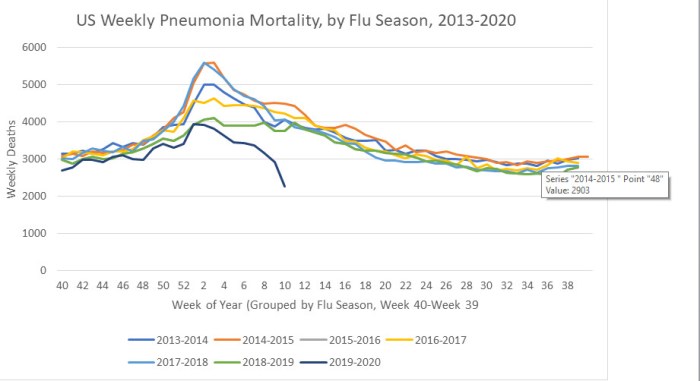
That guess above assumes people with higher blood ox (naturally) are less susceptible. BUT that makes no sense, as it’s more severe on blood type A. And blood type A is NOT it for that. - It mostly kills the elderly. No, please, stop. IT MOSTLY KILLS THE ELDERLY. Remember that anything pneumonia gets attributed to it. In some cities so do unexplained deaths. So, yeah, there are — I THINK — at last count 45 “young and healthy” dead throughout the country attributed to it. It might even be true that all 45 died of it. Let’s say it is. That is so far below the number who die of “just unexplained shit” every day in the US without us shutting down completely that it doesn’t warrant worry. It certainly doesn’t mean EVERY young person, from babyhood to fifty is now at risk. They probably have a better chance of being stung to death by a bee.
ALMOST all the dead are elderly (with co-morbidities, yes, but our elderly all have them. We’re in the uncomfortable place where the maladies of old age aren’t yet unavoidable, just survivable.)
I’m not saying this doesn’t matter. I’m saying that this is a characteristic. So in this sense it’s a normal respiratory virus. The target population is the USUAL one. - It has a LOT of asymptomatic cases. I direct you to the Diamond Princess “closed study” as it were before everything went political. Most cases, something like 80% were asymptomatic. You might not know this, but this is exactly the same as the flu. Most cases are asymptomatic spreaders, which is why we ESTIMATE flu mortality every year. It also has a long incubation period, but here we run into those ever-moving “rumor” characteristics. The incubation period, when you feel fine but are getting ill ranges from 4 days to 21. It could be more. It could be less. This makes it impossible to track spreaders, or even to know who’s at risk.
- Clusters don’t seem to appear randomly. They seem to be bad from the beginning (this militates to its having been here a long time, so it’s not a new infection. Yes, THEORETICALLY we could get new ones, but we’ve not seen that. The cluster-areas remain the clusters. I’ve hypothesized culture, but the truth is WE DON’T KNOW. We just know they’re clusters, and they remain clusters and other places don’t “cluster”.So, taking that into account, and also the fact symptoms are weird — I’ve spent 20 years telling people that NO, stomach flu isn’t flu, but damn it, this thing has stomach symptoms in some percentage of people. BTW, weirdly so did the one in 96 — and only hit a fraction of the sick, what do we have?
I don’t know. I know the virus exists, because we’ve tested for it. But is it responsible for most of what we’re seen? I don’t know. Is it horribly lethal? I don’t know. (Doesn’t seem to be, but then there’s Wuhan.)
Honestly at this point if someone said the COVID-19 is something else completely innocuous and what causes the deaths is a virus yet undetected, I’d not be able to say “hey, this is wrong.”
Because we don’t know anything.
And that’s what’s panicked people. That plus the media screeching 24/7 that we’re all going to die and that the worst is ALWAYS “the next two weeks.”HOWEVER here’s other things we know:
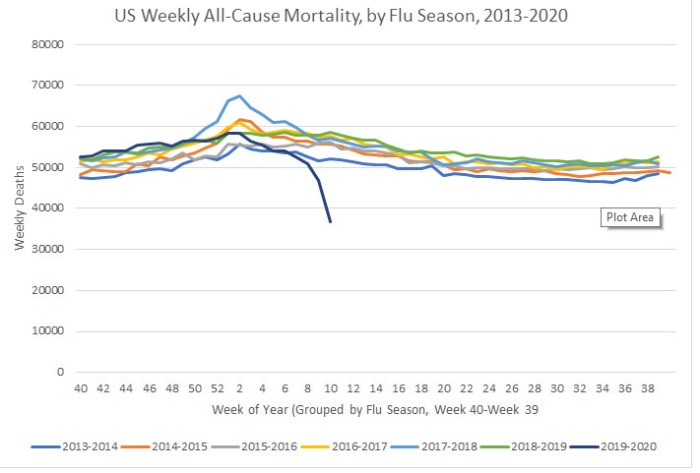
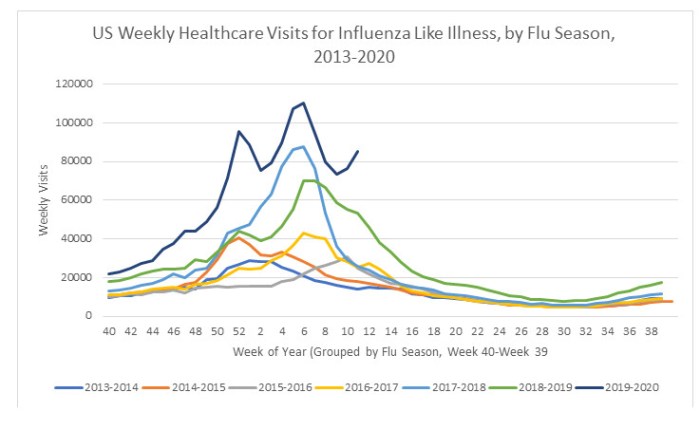
- Right now, we locked up the economy put around 20 million Americans out of work, destroyed businesses, jobs and livelihoods, and are waltzing with famine this winter (yes, I know farmers are planting…. and in CA letting crops rot in the field, and being unable to find parts for machinery or buyers for their product. Milk is being dumped. Farmers are having trouble feeding their animals. The list goes on) for something that even with the dodgy diagnoses has cost round 10k to 12k lives so far. Say that went ten times higher (HIGHLY unlikely.) It’s still only “really bad flu season” since the estimate for the last really bad one is apparently 80k lives.
Worse, as America is impoverishing itself, other countries are doing the same, partly because they KNOW we must KNOW something. Not only are we going to be AT BEST really tight and poor next winter, we’re going to watch other countries in much worse straights, and we can’t help. - Poverty and hunger, particularly sudden lead to civil unrest and war. And not just here, but all over the world. And we won’t be able to help.
- The dead are mostly elderly. The ones hit by the financial misery will be mostly young and might never be able to get the jobs/lives they need. We’re creating a lost generation to buy people another optimistically 2 years of life (most of the dead have more like 6 months expectancy.)
- We are piling on debt, which at this point we will HAVE to inflate out of. Growing out of, which is what Trump was trying to do, is now a forlorn hope.
Inflation kills savings and impoverishes everyone. it will hit hardest on my generation of late-middle-aged who probably — barring miracles — have seen our life expectancy curtailed from 80s to maybe mid-seventies, if we’re all very lucky. - We’re putting the entire nation under massive stress. We don’t know what causes cancer, but we DO know stress and psychological pressure contributes to it.MEANWHILE:
- Not only aren’t our homeless dying — and please, please, please, don’t tell me because they’re so sickly they resist this better. THAT’S NOT HOW ANY OF THIS WORKS.
- One of the major foci is NOT in Rio, which held the Carnival.
- The wretched of the world, from Africa to Latin America aren’t ALL dead. And they would be if this were that deadly. They just would. Social distancing is impossible when you live on top of each other. And no, it’s not true that warm and wet weather keeps you healthy, or else why lock down FLORIDA?
- Our politicians don’t seem to be taking this seriously. As with global warming/cooling/climate change, or with the TSA, it all seems like drama and kabuki.
If they were THAT worried that it was that bad, they’d be cracking down not on young people playing basketball or young families in parks, but in the homeless, clumping around and becoming foci of disease.
A lot of the things being done are worse than “normal life.” Like closing schools and throwing kids into daycares (which, yes, is happening because people who work at “essential jobs” can’t stay home with them) which mix them with younger kids who spread disease more. And by closing most stores and leaving only grocery stores, it means more people are handling the same things, and crowding the same places and it’s actually impossible to keep 6 feet away in most of them. IF the real risk was what politicians are pretending it is, we’d ALL already have died.MORE importantly, to me, we’re giving up our liberties to the WORST sort of politician without even token resistance. I’ve seen people who claim to be freedom lovers thanking their governors/mayors for LOCKING THEM UP and preventing them from work.
Guys, once liberty is given up, it’s much harder to recover. And these people, from neighborhood snitches to Walmart nazis, to power mad mayors and governors REALLY ARE the worst sort of bully, closing parks (instead of merely issuing distancing guidelines.), arresting people kayaking int the middle of the ocean, and frankly behaving like tin pot dictators.
At the national level we have a political class crowing with delight at “the end of Western civilization” and trying to get their Green New Deal crazy cakes environmentalism implemented on the back of this. Watch if they don’t try to keep travel restrictions in place forever!
I’ve been through this before. Once you have a population that thinks the government is its father and its mother and can keep them “safe” and that the government does everything out of benevolence, you’ll never, ever, ever be free.If we’re willing to do this to avoid what will be for sure even with all the doctoring, under 20k deaths, what will happen when they tell you how many people die by driving? Or that you can avoid heart disease if you stop eating meat? or that — It goes on.
And this is why I have been cursing out even people who probably don’t deserve it (but who should have thought about what I was saying instead of hectoring me.) I feel like I’m in the middle of mad people tearing down our liberty and the structures of our exceptional country, because they think they’re ALL going to die fo something that’s not that lethal unless you’re really elderly, or are in the middle of a cluster.
BUT more importantly — were it ten times more lethal — they’re willing to surrender to despotic authority to be kept “safe” from a danger that can’t be predicted or fully understood.
Once you take that step… well, you’re over as a free people.
I don’t think — I hope — we’re there yet. There are too many of us going the other way. More every day.
But the baffling unconcern and credulity of the ones rushing to be protected has me nervous, upset and above all disgusted.You, most of you reading this, were born free. You have no idea how rare and amazing that it.
TRY very hard not to sell your birthright for a mess of totalitarian pottage.
Not only does it never end well, but the world needs America. Now more than ever.