On 9/11 it took some two weeks before my liberal friends started beating their chests and saying that it was all our fault for… existing, I guess.
After the horrendous events of Saturday in Israel, twitter is already full of idiots, most of them, yes “liberals” (in newspeak, since they are totalitarians at heart) doing the two step of “Israel brought it on themselves” followed by alleged (they’re not. Well, they’re maybe European right, which is national socialist at heart) right-wingers doing the “let them fight” two step.
I’ll just say it right now: if you can look at the wholesale slaughter of civilians, including grandmothers and babies, and say they had it coming, you’re a monster. And if you think it’s nothing to do with us, and both sides are wrong, you’re a monster and an idiot. An idiot at a level that I can’t begin to describe. I’m surprised you can breathe and walk at the same time, and I wouldn’t be surprised if you have to repeat at the back of your head “move foot.”
Those who condone monsters are monsters. And those who think that throwing the baby off the sleigh will keep the monsters away are stupid monsters.
If you think the monsters are only coming for Israel, and don’t have America — and all the West — on their sights, you’re an infant, and not worthy of speaking where adults gather.
WATCH: Israel is only the first target, warns Hamas commander.
Like the left, these people believe they deserve mastery of the world and all in it, and stew in rage that you haven’t yet rushed to give them everything and subject yourself to them. Any country that does better than their shitholes must be punished, because of course, they’re supposed to reign supreme. Don’t do them the injustice of believing they don’t believe their own religion. They do.
Which means they’re everyone’s problem. And the left, the other cultists sure they should inherit the Earth due to their ultra specialness and the power of the arrow of history has done their work for them. Look at what happened in Israel and look to our open borders.
A week or a little more ago, I warned here that I had a sense of very bad things coming. Very bad things close up. This sense, btw, probably has buggerall to do with prophecy. I am, sadly for my sanity, a compulsive reader of news and well… everything. And I have the type of brain best described by Heinlein in Friday, when the boss calls Friday in the middle of the night and asks her when the Bubonic plague will hit again, and she answers, though she’s not sure where the answer came from. She’s been processing things at a very deep level, and arrived to conclusions that have nothing to do with her conscious.
(Yes, you can get me to give that type of answers if you wake me up, and they’re often accurate. Fortunately (?) the people who have access to me when I sleep prefer to either ask me funny questions or implant novel ideas. Yeah. That sort of person.)
Most often though, I just wake up at 3 am and “know” something. Sometimes I can backtrack logically and tell you what I know and why, which is why I went from worried about Covid to coldly sure it was bs. And I knew what I’d seen that prompted that certainty. (For all the good it did me to scream in the desert.) Or take when I knew the 2020 election would be stolen. It was obvious no one would run Biden, or the campaign Biden run, unless they had unimaginable amounts of fraud sewn up, so that they could defeat practically anything short of a major landslide (which caused them to fraud at the last minute and visibly.) This did not much other than depress me and make me frantic. Again, no one else seemed to listen.
So, I don’t like these “hunches” and I dislike them more when they are vague, unfocused and of the “something wicked this way comes.” Which is what I had.
A lot of you have pinged me to ask me if the events in Israel were what was triggering it. Maybe? Though I don’t think it was that specific, there was a certain easing of the “now there’s nothing we can do” sort Saturday night. (What my subconscious thinks I can do, I don’t know. It has an inflated idea of my importance in the world, I think.)
BUT — and it pains me to tell you this — we’re not done. The first pebble has fallen, but the avalanche is not started yet.
If you ask me, I suspect the two-steppers — because these people think twitter is life — are encouraging the left…. and others.
The amoral, excitable elements among us looked at what happened in Israel, and they liked it. Oh, they liked it. They smell blood and they want them some.
Who? you’ll say.
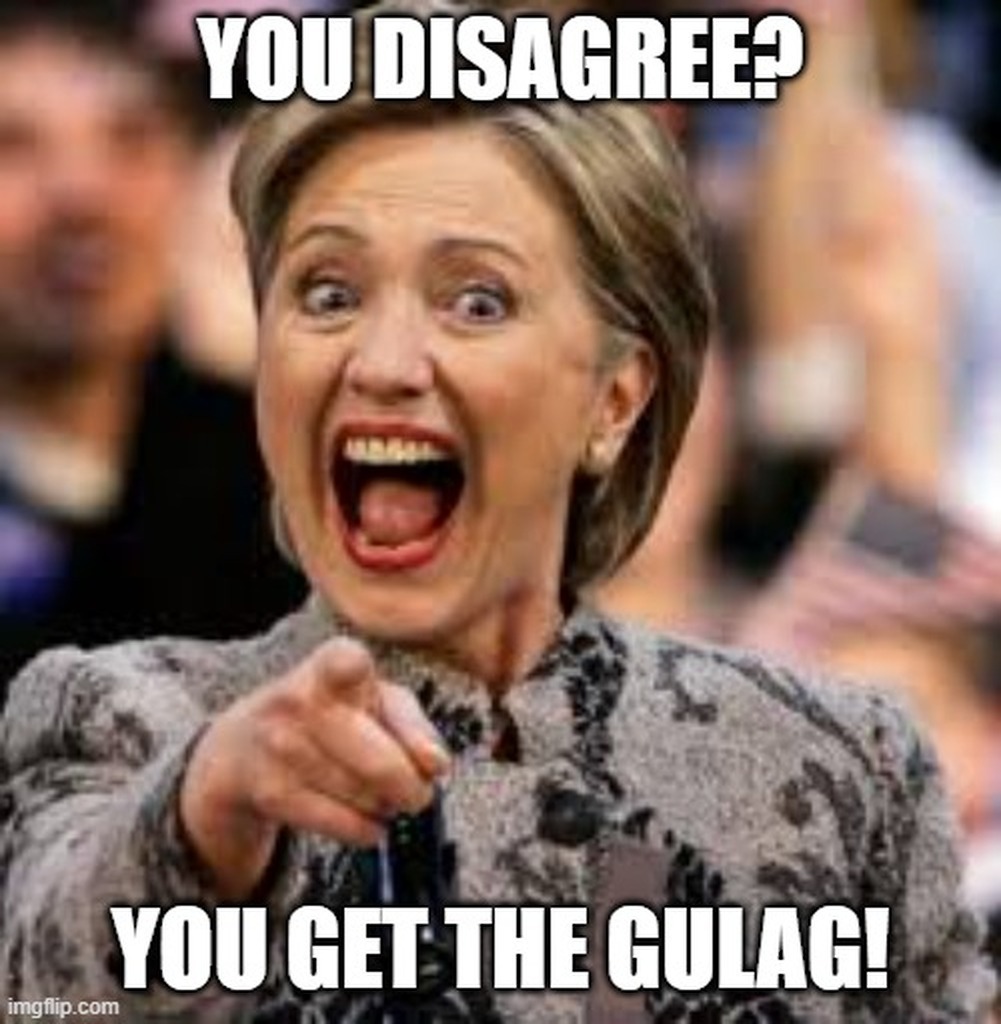
Oh, we’re spoiled for choice, and it’s a devil’s choice. We have our national malcontents, who think if only we let them go Stalin on us, they will have paradise. Hillary wants to re-educate us, but let us face it, most of the left just wants us dead. Some cartoon character I no longer remember was talking last week of killing all Trump supporters. So, you know. They want blood. They want to let the beast out.
Then there is the open borders. Even in the best possible situation, when you let carefully vetted foreigners in, there is hostility. I saw it as an exchange student — and distanced myself from my fellows because of that — when day two of gathering the students from all over the world at a NY university for “orientation” (Mostly how to buy things, how to write a check, what is considered polite. That sort of thing) the students were talking about how horrible the Americans (Volunteers who had given up their summer to help us) were. I don’t want to rundown my fellow exchange students. This wasn’t universal, just a majority. And even those who were blaming all their difficulties with… being in dorms? in a university? on American horribleness became saner when separated (as most of us were) from those of their culture or adjacent cultures.
I think it’s instinctive in humans, in a new situation, to try to bond by denouncing the strangers. And the strangers to denounce were the Americans, because this was their country. So, that’s what they were doing. (No, I wasn’t doing it, but that’s because a) I didn’t really bond well with my countrymen — Odd, you know? — and b) I realized, having the self-consciousness of a snail, that it was unhealthy to turn against America when we were here for a year. Yes, there were things that annoyed me during the year, but 90% of them were the climate. I think some people at headquarters delighted in sending people from lands without snow to places where snow remained on the ground for six months. Eh.)
But now picture that with often illiterate and very much pre-modern people flown across the world to be smuggled over the border, with promises of everything free, and more wealth flowing to them than they can imagine. (Yes, sure, some people still come here to work. But we all know that since Obama, there has been a campaign to convince people to come to the US for the things they are “entitled” to. Like all the health, welfare, education, etc. programs.)
And… it’s not going according to plan. Even in the best of times, with limited immigration, it won’t. Look, exchange students took umbrage at dinner being too early by Portuguese standards. And later, when I was with my host family I was surprised they — early 80 — were struggling paycheck to paycheck, and expenditures carefully controlled. Because that wasn’t the image of America in my mind.
Now, in a situation of mass immigration? Logistics becomes a nightmare. Even if we tried to give them everything the left has promised — and we weren’t broke as heck — it would be impossible. You can’t feed/care for/look after these many people perfectly.
I’d think by now any number of groups among those who came in, are working up a fine froth of anger at America. This is made worse by a lot of them having been recruited by/from communist orgs, for whom America is and has always been the enemy. And by the fact a lot of them are recruited from those who consider themselves at war with America and we’ve mostly ignored, like Iranians. Or, you know, Chinese. Or Afghans. Or–
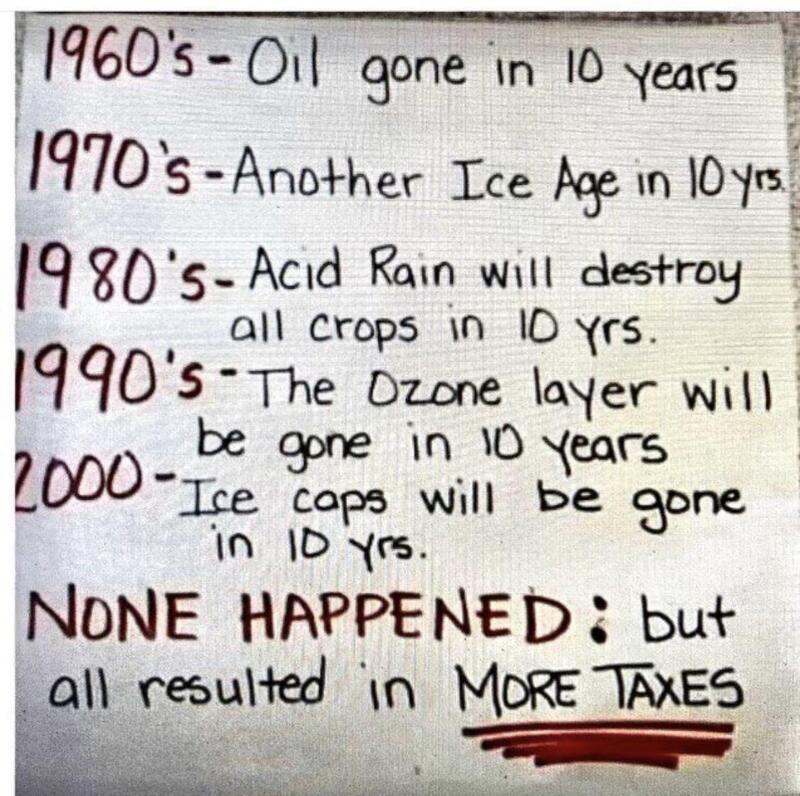
Oh, and let’s not forget the climate hysterics, who are sometimes distinguished from the outright communists (but there’s a slide.)
The usual two step are going to convince all of these that they’re safe to act. And, oh, they want blood. They want revenge on Americans, who have the nerve to live their lives and pay these people very little mind.
And the two-steppers are going to convince them that they’re safe; that we’re soft; that it’s a great time to act.
Will it be as bad as Israel? Well, no. There’s a lot more of us. The country is very large. There will be no coordination between the various groups. There’s unlikely to be (but I wouldn’t bet against some) a barrage of rockets and covering fire to create confusion. It will be, as I’ve been telling you, isolated. Some places will be very bad indeed; some will read about it on the news. Which honestly is what a lot of people even in Israel are doing.
What will be as bad? All these idiots will be convinced they’re winning. There will be a barrage of pictures of the atrocities they commit. They will be doing selfies with the raped and murdered. And they will be PROUD. Just like the monsters of Hamas, they will be giddy with blood and wanting to show off.
And then things are going to get very weird, very fast.
And there will be a crisis. Because something shifted in the night between Saturday and Sunday. I expected to be angry. I didn’t expect how angry other people would be, nor the reason of their anger.
It wasn’t so much the surprise attack on Israel. I’m sixty, and some of my earliest memories of the Olympic games involved the massacring of Jewish athletes by terrorists. And I remember the Yum Kippur war. And I remember the Iranian hostage crisis. And I remember — Most of us are inured to Islamic terrorism. We’ve seen too much of it to be shocked. And I don’t know about people who grew up here, but I grew up in Europe, so communist terrorism is also a known. From the lunatics who’d take whole planeloads to Cuba, to the lunatics who planted bombs. You guys saw your bit with the likes of Weather Underground, though our media, then and now would not report much of it.
But that’s the thing. The reporting has changed. The media has been protecting the monsters, by not telling us the full measure of their blood-insanity. Even now they’re keeping quiet on a lot of killing, and either not revealing the motive or back pedalling the identity of the killers, or the insane evil of the killings.
This won’t happen this time. Like the Hamas savages, these people think their ability to hurt others is a super-power. They think violence makes them super-human and somehow justified. They’re going to take selfies. They’re going to tweet. They’re going to post on facebook.
And there will be a lot of them, from a lot of organizations, cascading, because once one starts the others will also want to brag and show how important they are. There are probably some in planning, right now. When it will hit, no one knows, but my feeling is probably not long. Because they saw. And they want. And they’ll be driven by the feeling the war is already won, all they have to do is join the victors or be left out.
Our official response will be weak and vacillating. Our media will do its best to cover it up.
It won’t work.
Because something shifted overnight between Saturday and Sunday. Something in the zeitgeist. The quiet, private men and women who just want to be left alone woke up.
What comes next? I don’t know. I know it won’t be pretty. And it’s not something I’m looking forward to, no. Because when the majority gets upset, all those who stick out are at risk. My liability is an accent and a vague “Latin” look, though honestly it could be Italian. Or any other Mediterranean sub-race. (You are allowed to spot the issue.)
But it doesn’t take that. It takes “Odd” and “sticks out.” Now America has more of a tolerance for that than practically anywhere else on the globe. (And my guess is the whole globe will go froggy if/when provocations happen in America. Why? I don’t know, but people, they had BLM demonstrations the world over. And demonstrations against Trump with “not my president.” It’s like they can’t help themselves.)
So most of us might be okay? Probably. Just not a good time to make too many waves, I guess.
Be aware. Be alert. Plot your routes. (Ask me how happy I am to be traveling this week. OTOH maybe some of you will come to Son of Silvercon in Vegas, yes?) Watch your six. Be prepared to defend yourself and those around who need protecting. Before, during and after.
Mass insanity is very hard on individuals. And must be prevented from devouring everything.
And you are to keep yourself alive and well. Because we have a republic to rebuild.
Be not afraid. Something has shifted and the common man is awake. And angry.
It is our duty to control the fire, lets it consumes us and everything we value.