If you wish to send us books for next week’s promo,please email to bookpimping at outlook dot com. If you feel a need to re-promo the same book do so no more than once every six months(unless you’re me or my relative. Deal.) One book per author per week. Amazon links only. Oh, yeah, by clicking through and buying (anything, actually) through one of the links below, you will at no cost to you be giving a portion of your purchase to support ATH through our associates number. A COMMISSION IS EARNED FROM EACH PURCHASE.*Note that I haven’t read most of these books (my reading is eclectic and “craving led”,) and apply the usual cautions to buying.– SAH
Having met the Innumerable and joined their cause against the Architects, Barbarella must clandestinely return to the home of the Architects in order to retrieve Vix, left behind when Barbarella was extracted by an agent of the Innumerable. See? We’ve come full circle! As is often the case, it’s not what you see that’s the danger, it’s what you can’t see, and Barbarella sees plenty of that wherever she sees an Architect. And lest we forget, there is the small matter of the Unnamable out there…
Darker than dark, ruinous and ravening, the realm of Hades ravages its lord . . .
As ruler of the damned, Lord Dìs sustains the bounds of hell that prevent its shades from escaping to batten on the living. But the drain on his strength, immense as it is, requires him to steal life from the innocent. When Dìs’ wife Persephone insists he refrain from his cruel ritual theft—and he fails—she leaves him.
Alone and broken, Dìs renews his vow to fulfill his duties without the replenishment he craves. But the burdens of judging the newly dead and preserving them from extinction, all while anchoring hell itself, inexorably grind Dìs beneath a crushing weight.
Dìs must learn that merely refraining from evil redeems nothing. Unless he can restore those he destroyed, madness will claim him and the bounds of hell will implode.
Illumine Hades is the concluding tale in the exhilarating Hades Cycle. If you seek heroic sacrifice, redemptive love, and the terror of the ancient gods, you’ll love J.M. Ney-Grimm’s cathartic finale in which all the series threads weave together toward glory.
In the midst of preparations for a critical mission, Leland Andersen can’t afford the return of a childhood nightmare. Yet night after night the vision torments him, of an astronaut dying in flames.
Nora McKinzie is a Houston police officer — and a member of an ancient order founded to fight eldritch entities wherever they might flee. When she receives a warning that a sworn enemy is on the move again, her obligations come into conflict with each other.
Both of them are present when Johnson Space Center comes under attack by terrorists. And they both know that the official explanations don’t hold together.
Two people, one deadly secret — and an enemy from beyond time and space.
A novel of the Grissom timeline.
Previously serialized under the title A Separate War.
Jacob Zvi has turned his back on everything he was taught to value. His faith, his family, his citizenship, and even his morals. Yet seemingly divine fate introduces Jacob to the struggling members of an Orthodox congregation in the middle of a ghetto in New Orleans while terrorists explode a purloined Soviet nuclear artillery shell atop the Temple Mount in Jerusalem.
This is what I call my work biography. It’s about how to survive in the business world and, inevitably also about the changes in technology that I went through in 40 years of software development from punch cards to Artificial Intelligence. If you’re young and reading this, I hope it shows you what to expect–not how to climb the corporate ladder, but how to contribute to making things people want while making life better for you, your family, your fellow employees, and the company you work for–whether they want you to or not. If you’re farther along in your career and reading this, I hope you nod in recognition at many of the things I’ve been through.
Enchanted pools, shadowy dragons, wolves that spring from the mists and vanish into them again, paths that are longer, or shorter, than they should be, given where they went. . . the Misty Hills were filled with marvels.
Madeleine still left the hills, years ago, to marry against her father’s will. If her husband’s family is less than welcoming, she still is glad she married him, and they have a son, two years old.
But her husband’s overlord has fallen afoul of the king. And all his men fall with him, including her husband.
She sets out, to seek the queen and try to bypass the king — and the Misty Hills.
AN ERRANT CHILD WITH DISASTROUS POWERS AND NO ONE TO STAND IN HER WAY.
Penrys, the wizard with a chain and an unknown past, is drafted to find out what has happened to an entire clan of the nomadic Zannib. Nothing but their empty tents remain, abandoned on the autumn steppe with their herds.
This wasn’t a detour she’d planned on making, but there’s little choice. Winter is coming, and hundreds are missing.
The locals don’t trust her, but that’s nothing new. The question is, can she trust herself, when she discovers what her life might have been? Assuming, of course, that the price of so many dead was worth paying for it.
Kate Thomason, twenty-first century healer, is snatched from an eight-handed clone massage in twenty-ninety-seven by H. G. Wells’ time machine to awaken in Wells’ bedroom in eighteen-ninety-seven, her modesty guarded only by a sheer peignoir. Whatever could be Wells’ plan for her? He can’t send her back; entrapped in a world wholly alien to her, how shall she survive? She can think of only one asset – in a Victorian world of surging libidos she’s a beautiful woman with a ‘pragmatic’ take on sex. In any era that will get a woman far. Wells presents her at dinner to playwright Oscar Wilde, newspaperman Frank Harris, Professor Aronnax and others. Kate’s scandalous bodice isn’t the only thing on the guests’ minds that evening; Professor Aronnax proposes taking the Nautilus to hunt for the Loch Ness Monster.
Vignettes by Luke, Mary Catelli and ‘Nother Mike.
So what’s a vignette? You might know them as flash fiction, or even just sketches. We will provide a prompt each Sunday that you can use directly (including it in your work) or just as an inspiration. You, in turn, will write about 50 words (yes, we are going for short shorts! Not even a Drabble 100 words, just half that!). Then post it! For an additional challenge, you can aim to make it exactly 50 words, if you like.
We recommend that if you have an original vignette, you post that as a new reply. If you are commenting on someone’s vignette, then post that as a reply to the vignette. Comments — this is writing practice, so comments should be aimed at helping someone be a better writer, not at crushing them. And since these are likely to be drafts, don’t jump up and down too hard on typos and grammar.
And I Can’t Get Up – A Blast From The Past From April 2019
If you’re like me, you have trouble with the usual encouragement and sayings that are meant to give you strength/courage/optimism.
You know perfectly well what I mean. I’m not going to give sources for these, because I hear them from everywhere, and my mind isn’t really good at buying anything wholesale. Hint, my mind buys it even less if it comes with a cute kitten. I think I started hating motivational posters before I had my first job (Which this being the eighties was PLASTERED in them). (Though at one time I did have the “hang in there” poster because the kitten was adorable. So, I’m inconsistent. Deal with it.) We are naturally attracted to demotivational posts out of frustration with the easy pollyannaish motivational posts, and annoyance with the people who believe in them. Hold on to that thought. It’s important. Seeing people for whom things seem to work, particularly things that our annoying brains tell us are far more complex than the poster/maxim/story is making them out to be causes annoyance. Frustrated annoyance. And a desire to believe the opposite. If people tell you “Hang in there” you know you’re going to drop hard. You just know it.
Some of it is born of experience, sure, but be honest with yourself, you expected it all along. Remember that too, it’s important.
One of the things that annoys me most is the saying that “the best predictor of whether you’ll succeed is how many times you fail.” Mostly because that’s not how that works. That’s not how any of that works.
That saying is sort of the incarnation of survivor bias. The more you’ve gotten knocked down AND still managed to get up, the more likely you are to succeed, sure. But that’s because you’re already by any definition a fairly exceptional person.
I’ll use writing for a bunch of this because it’s THE experience I have, but honestly, you could use anything, from your love life to your attempts and being the world’s best tiddly winks player. (Why am I obsessed with tiddly winks? Well, my eidetic, brilliant brother spent something like 12 years devoting all his free time to playing tiddly winks, a game that in Portugal, usually was left behind at age six or so (for boys. Girls didn’t play it.) In retrospect, it was an addictive behavior. If he’d had video games, he’d probably have been addicted to that. It’s not unusual for very, very bright people to need to dull the pain of… well… of the world not being made for them. And if they have an addictive personality, even if they don’t fall into drugs or alcohol, they’ll get addicted to something REALLY weird. For one of the worst times of my life, I was addicted to fanfic for a TV series that I never watched. Why? Well, it kept the brain minimally occupied so I could dream my life away without DOING anything. Yes, brother eventually stopped it. But meanwhile my parents kept joking his ambition in life was to be the world’s best tiddly winks player.)
Most people who want to be writers never start. Laziness? Maybe. Perhaps. Sitting down and putting fingers on keyboard is not physical work, but it is work.
I’d argue though that most of the time the problem is not so much laziness as the fear of never getting better. I know that’s true for almost everyone who tries to draw anything.
And trying to write a story is a series of compromises. In your mind the thing is multicolored and gigantic, with 100 actors and 1000 elephants. But you can’t write that. It’s simply not something you can put on a page. No one is going to follow that sort of diffuse action. So you compromise. You’ll tell this person’s story. Maybe 10 actors. And one elephant.
And even then, if you’re a beginner you’re going to botch it. For instance, it’s perfectly normal for beginning authors not to be able to handle more than two characters on the page at a time.
So most people give up. Our model as humans seems to be “perfect first time, or I’m no good” but also most people don’t believe they can get THAT much better. (Hint, you can.)
I no longer remember the statistics, and since I don’t know how they collect them anyway, they’re probably meaningless, but it’s something like:of a million people who ever thought to write a book, one actually does it. Of course, there’s no way of measuring how seriously they thought of it, so again, it’s just a vague indication.
We do have more solid ground for people who actually wrote anything significant AND submitted it, ever getting accepted. The ratio is something astronomical like 100000 to one.
Why? Because most people give up after the first rejection. On this, I’m going on my experience in many writers’ groups over the years. Any number of people I met along the way wrote ONE NOVEL. It was a good novel, in most cases (two were brilliant.) They then spent the next five, ten, fifteen years trying to sell it, so single mindedly focused on selling it, that they never wrote another. And the novel got rejected. It got EPICALLY rejected. It got rejected by every reputable outfit and a dozen of the oh, 100 or so I knew ended up falling for scams like “pay us to read” or “pay us to publish.” When this failed to obtain success, they stopped writing. Well, honestly, they’d stopped writing years before, in favor of selling the one novel. But that’s something else. The truth is that they looked at that novel as “proof of concept” and since it didn’t sell, they knew nothing would sell and they gave up.
This is understandable, but completely contrary to reality. So contrary it doesn’t even coexist in the same plane. It’s part of the lies we tell ourselves and the world tells us “if your thing is good enough, it will be a bestseller.” Doesn’t work like that. You’re not submitting your novel to some all-knowing perfect judge. You’re submitting it to a person who is flawed and has issues in his own life and views your story through their own lens. And sometimes their lens has bloody nothing to do with anything you could anticipate when writing the novel. For instance, one of my series took SIXTEEN years to sell, because it was weird, but also because the one house who WOULD have bought it rejected it with “we bought something very similar just last week.” You know, in such circumstances I assume they’re lying. But I know what they bought, and yes, it’s very similar. And it went on to be a bestseller.
Let’s assume you’re one of the very resilient few and write a second novel and a third novel, while trying to sell the first. (I wrote nine. Three of those have sold since.)
The fairy of good fortune comes and touches your novel. It sold. YAY.
Good for you. Be aware the chances of its becoming a bestseller is not dependent on quality, but on distribution, cover, and how much the house pushes it. Heck, the chances of it becoming a GOOD seller are minimal.
Most people who sell a book never sell a second. I don’t know how many, but way in excess of half.
By the way, all of this applies to indie. Most people who put a novel up never sell more than a dozen copies. Discoverability is the problem, mostly. Just advertising your novel everywhere is not going to make it a bestseller (for one indie is heavily biased for series.) I’m not in writers’ groups now, but I KNOW just from people who write me and who decided they were “no good” after a novel or a short story that the “drop out because of perceived failure” rate is about the same.
So, what about if you sell a second or a third, or a fourth novel? Yeah. My career has died… eight times now. Utterly dead. At one time it took me almost two years to sell anything to anyone again. I did a full relation of my career here. Well, more or less full. I elided some set backs. And there’s been one more since that was written. Without going into details let’s say my own remaining option — ONLY option — is going indie with both feet. Whether I’ll ever recover my IP is something else again. No, I’m not ecstatic about any of this. More on that later.
One of the most bitterly funny things about me is that most people perceive me as an optimist. One of you in comments yesterday asked where do you master the will and the optimism to try again. Ah!
It has nothing to do with will or optimism. Seriously. Absolutely nothing. It has to do with being alive and wishing to remain so.
My family is notoriously unlucky. I was born knowing that or at least imbibed it with mother’s milk. Seriously “if we made baby bonnets, babies would be born without a head” unlucky. The stories of wars, investments and just general life in which we backed the losing side KNOWING IT WAS THE LOSING SIDE is extensive.
On dad’s side (you don’t want to know about mom’s truly) we tend towards melancholic depression, dark sense of humor and sad poetry. Because I’m half mother’s daughter, my depressions can get way more active and self destructive. Which is why I learned to control them early.
To all this is added a disposition I’ve started calling “born owing money.” (Though in fact I wasn’t, mostly because my parents have a debt-phobia, one they passed on.) You don’t approach the world as though it can give you things. You approach it as though you’re afraid of bothering it, and would much rather it didn’t notice you.
How much are all of these attitudes responsible for the repeated failures in my career. I don’t know. When your lens is flawed, what do you see through.
I don’t believe in affirmations. Sometimes I’d like to, but I don’t. They’re like the motivational posters. It does you no good to write on your mirror “I’m beautiful and everyone loves me” if you know with bone deep certainty that this isn’t true.
And yet, I know from observing others lives that what you start out with really influences the outcome. And by that I don’t mean your gifts, talents, beauty, or even wealth.
A little man who looks like a monkey and smells like a diseased weasel but who believes he’s the master stallion of the world will have women hanging off him. A smart, handsome man who thinks he’ll never get a romantic relationship will die bitter and alone.
Part of it is that if you don’t believe something is possible, you don’t even see the opportunity when offered. Part of it is that when you get it, and attempt it, you keep expecting it to crash. And part of it is that you don’t protest bad treatment, don’t ask for what you deserve.
i.e. Yeah, your beliefs about life and yourself can set you up for failure.
I realized last year I simply did not believe I could be successful in writing. What does that influence? Well, everything. From how much I put in my writing, to how much I write, to how much I promo, to…
“But Sarah,” you say “I’ve really failed over and over and over at thing x. Why should I try again?”
And I’ve failed over and over and over again at becoming spectacularly successful, or at least having a publisher recognize the potential of anything I wrote. (Weirdly a ghost written novel for another writer made her career. Odd, uh?)
So, why not just lay down? Why not give up?
It depends. Is it something you CAN give up? By which I mean without significantly losing part of who you are and what you want from life?
I could give up sewing or art tomorrow. I probably won’t, but I could. They’re “interesting” occupations, not part of what I am and how I’m made to function. Not the thing I’ve wanted all my life.
I’ll eventually have the kids move out of state (probably) and see them only a few times a year. That’s fine. My relationship as a mother is something created to be given up (if successful.) If we’re lucky, we’ll replace it with friendship. But could I give up my marriage? Well, we’ve had our ups and downs, but I fight for it because no I couldn’t. Not without losing a significant part of myself.
The crucial question is “And if you give up, then what?”
For something that’s central to you, the answer is usually “I don’t know. I do nothing.” or perhaps “I’ll just drift.” That might not be the answer, in those words, but it is what will happen.
In the few times I thought I HAD to give up, I undertook bizarre, mind numbing activities. To avoid doing the beloved thing, because that hurt.
So, where do you find the strength — ah! — and the optimism — ahah! — to get up again?
You don’t. You get up because you have to. Because there’s nothing else on the other side of giving up.
Look, we tend to think in static categories. “I’ll just give up.” Or “I’ll succeed.” Or “I’ll fail.”
But none of these are permanent. Nothing stays still, not even our emotional states. All of them are followed by “and then what?”
Even those who succeed will EVENTUALLY experience failure. Trust me, I have a ton of friends who are bestsellers. Most of them have experienced catastrophic failure more times than success.
“The key is to get up one more time than you fall down.” Sure, but how. From what?
From a fear of what happens if you don’t.
I hesitate to write this, because the person might read this blog and know himself. But if he does, perhaps it will help, because it’s high time he understood it. Hell, we saw it happen and we didn’t understand it.
Decades ago, when we were young and green as grass, and Dan was just starting up his career, we met someone about our age (a little older)who wanted more than anything to be a writer. His education and background were different from ours and he thought this was massively important but it wasn’t. When we were all young, he was starting out in a profession with just as much potential as Dan’s, and he was moderately successful and made just a little less than Dan. And hell, he had advantages I never had in writing. For one, he was a native speaker of English. For another, he had some vague idea of how publishing worked. Very vague, but better than mine.
Over the years, I wrote and wrote and wrote. It took me 9 years from first sending anything out to selling a short story at semi-pro rates. It took me 13 to sell a novel (and that series crashed hard.)
I’m not made of iron. I’m naturally pessimistic. Sometimes rejections hit so hard they disabled me for months. Not just being unable to write, but sometimes spending months crying and trying to hide it from Dan and the boys. One day I had 60 some rejections ON MY BIRTHDAY.
But there was nothing else, so I kept writing. Along the way I stopped here and there, tried to give up and got some really spectacularly stupid addictions (fanfic for TV series I’d never watched, for instance.) And carried them on for months/a year before realizing it was not just making me useless, it was making me hate other people/resent them for no good reason. Like, I hated everyone who was still writing — even my closest friends — even though they had NO success. Because they were writing, and I couldn’t/had given it up. When I started being mean to my kids, because I was hurting and someone else had to hurt, is when I realized I had to pull up. Even the stupid addictions are hard to give up. Trust me. It was difficult.
Along the way I had some successes too. Some critical acclaim. A couple of awards. Series that sold well enough I had the income of an underpaid secretary now and then for some years.
Our used-to-be-friend? Not so much.
He had a story accepted and the magazine went under without publishing it (note this happened eight times with the first story I sold. It killed magazines.) and this seemed to be it for him. He wrote a few more stories because all our friends were writing them, but some of them he seemed to think he was being clever and mocking our idea you could just write many stories. He seemed to think he was writing very bad stuff. In fact, that’s some of his best, but never mind.
And he became more and more invested in the idea he’d write a novel, it would be a world-shattering success, he’d be set for life. This is not the way things happen.
I don’t know if he tried it. One of our kids thinks he did. And got rejected. Possibly.
What I know is that year on year, as the “defeats”– and he seemed to view MY successes (such as they were, dear lord) as his defeats — accumulated he did less and less and less. He restricted himself more and more.
And though it took us years to realize it, he came to first resent us, then hate us. It manifested in a hundred different ways, all under the flag of continued friendship. We felt sorry for him and tried to help him, but every time we saw him, it became more unpleasant. Until two years ago at the end of the year he went too far and at a time when we had neither financial nor emotional resources to handle it. He has tried — at least twice — since then to “avenge” himself by bringing crisis into our life, at a time when he thought we were at a party or enjoying ourselves. (We weren’t, but that’s something else again.)
Normally I hate losing friends. I hate cutting off contact with anyone. This time I realized I was ridiculously relieved.
I realized over the years he’d acquired the habit of belittling us, attacking us verbally, inflicting his presence on us at the least wanted times, and generally being a pain in the ass.
Why?
See the thing above. This was an immensely talented individual who fell down a couple of times and decided that was good. He’d just lay down and rot. But he couldn’t help knowing what he’d wasted. And he couldn’t help resenting those of us who had gone on to do ANYTHING. Anything, even my halting, painful, not very profitable career seemed amazing to him, and also like “if there was any justice, I should have had that.”
From the amount of times he tried to bleed us (financial emergencies. Loans never paid. Etc. etc. etc.) he also viewed us as “very wealthy.” (We’re okay. We make do. A little stressed now for reasons that should pass in a year. But mostly through the miracle of living beneath our means, buying from thrift stores, etc.)
You can’t lie there. You can’t just lie there. You’re alive. You can’t stop. Because you can’t. Because that’s not how humans work.
Not getting up is a choice, and not one that ends in a static option. You’re not just going to be there, forever, world without end. No. You’re going to become bitter, resentful, envious of everyone and everything, even JUST those who are still trying. You’re going to say “I wish I had their optimism” without having a clue if they have it, because they must have SOMETHING you lack. You’re going to think it’s their academic education (ah!) or their higher class background (ahah. Doesn’t translate between countries) or that they’re prettier than you, or have better clothes, or … Lord alone knows.
And in the process you’re going to destroy everything, including the regard of people who once cared for you. You’re going to push everyone away. Most of all you’re going to destroy yourself.
The opposite of trying once more isn’t just laying there. The opposite of trying is dying. And a horrible death in bitterness and self-destruction.
The example I gave is NOT the only one I’ve seen, it is just perhaps the most spectacular example of it I’ve ever seen.
When you fall and decide you can’t get up, you’re choosing to reign in hell, rather than serve in heaven. You don’t have to be religious to understand that. Milton knew a thing or two about people. You are NOT lacking strength or optimism. Because those aren’t needed to get up again, and try again. You can do that from nothing but stubbornness.
No. You’re choosing to lie there and die because your pride is hurt. You should have been an amazing success. Don’t they recognize your genius? Fools! you’ll show them.
But the only person you can destroy is yourself. And you do.
This is why I crawl up, on bloodied and hands and knees and try again. Despite total pessimism and lack of strength. Over and over and over again.
If they made a motivational kitten poster of me, it would be too bloodied and gruesome to hang in an office. My spirit animal is Inigo Montoya.
Will I succeed? I don’t know. I am actually trying to convince myself success is possible, because I’ve realized mind set is important.
Will I lie down and die? No. Because that’s not an option. Failure is not just a static state. It’s decaying and bitterness and giving yourself in to evil. And I’m not doing THAT.
So. Up on bloody knees. Despite weakness and despair, up.
Headed to KC for a week long writing retreat. Needed since I’m so far behind.
Taking advantage of a moment on the road with connection.
We’re having a Huns dinner in Overland park tomorrow evening. Ping me on email or FB if you want directions. Sorry for the short notice, it’s been a little nuts with the kittens. Younger son and DILit are staying here to keep the kittens and house in order.
I never said I wouldn’t say “I told you so.” In fact, I’ve already said “I told you so” at least once.
Only infants and the mentally incompetent could look at locking up the vast majority of the population and think it would have NO effect on the economic well being of this country. Worse, only infants, the mentally incompetent and indoctrinated Marxists (BIRM) could think — after the numbers from the Diamond Princess were out there for everyone to read — that either COVID-19 was the end of the world, or that we should put the entire population under house arrest to prevent people dying of it. As though it wouldn’t become endemic anyway.
And it took a particular level of bizarre insanity to believe that COVID-19 would kill you at your favorite restaurant or church but not in Walmart.
We won’t even get into the specialness that caused a bunch of you to tell me that it was okay for the homeless to be congregating in every street corner (and in Denver in proliferating encampments EVERYWHERE with all the shared needles, trash, etc. of such encampments) WITHOUT dropping like flies, because they lived outdoors and were “particularly hardy.” Dudes, if you ever work in any emergency room, you’ll learn that not only aren’t the homeless “particularly hardy” but that they have the most bizarre medieval diseases. Yes, there are jokes about “tooth to tattoo ratio” and that low/high means they live forever, but in truth if you see before and after pictures, you know homeless people tend to die early and hard and not just because most of them are crazy and drug addicted (though that’s a contributing factor.) IF THIS HAD BEEN A REALLY DANGEROUS PANDEMIC, the kind those videos from China — some of which were manifestly fakes, like where people put out their hands to break the fall when they “drop dead” in the street — suggested, the homeless would have first been very sick, then dead.
Also, note the same people then said it was very important to wear masks OUTSIDE WHILE JOGGING because this virus was some kind of magical and could hang suspended in the air outside in a “cloud” so that if you walked through it hours later, you could catch the dread disease.
AND let’s not forget treating us like lunatics when we explained that the masks did nothing, and that yes, they’re used in operating rooms — where they’re changed every few minutes, btw — to PREVENT THE SURGEON from coughing on an open wound.
And I want to award no prizes, and may G-d have mercy on your souls to those that told me that the Diamond Princess’s numbers were as low as they seemed to be because “They have the best of care in cruise ships.” This when cruise ships are known as floating illness barges and the population aboard is the oldest of any gathering in the nation.
Oh, oh, oh, and a special mention goes to everyone who ran around with their heads on fire because “the ER is at 95% capacity” when it is at 100% capacity every flu season, AND also all the “special wards” built for “overflow” patients saw not ONE patient. All these facts were available and easily looked up.
And in the end, we failed the vulnerable. The old-age homes, which are for real hygiene and care nightmares, by and large (mostly due to hiring a lot of um…. dubiously credentialed, dubiously documented, dubiously acculturated foreigners) did suffer massive death tolls. None of your locking school kids helped with it. ALL YOU DID was force those people into solitary confinement in their final months, and keep their family away. You bastards. You ugly, unreedemed, you SHOULD be ashamed of looking at yourself in the mirror bastards.
Now we’re treated to Doctor “I am the Science” Fauci sullenly saying he didn’t close anything. No, what he and his co-conspirators did was tell a sitting US president lies to force him to lock things down, and when he refused to do it by central fiat, to run around scaring every mayor and governor so they did it.
The reign of stupid terror was such that would-be tyrants abroad seized the opportunity to terrify and lock up their populations. Damn them all to hell for preventing me from seeing my dad for the last three years (and I don’t know how long it will be now, because — reasons caused by the lockdown) and for terrifying my mother so much I spent hours yelling at her on the phone, when she tried to ORDER me to get the not-a-vax.
Oh, and the not-a-vax. All “vaccines” done on this model had such horrendous side effects and lack of working that the trials were shut down early. This was pushed through with practically no trials. Sure, it might be simon-pure, other than the fact it does nothing to prevent you catching or improve your outcomes from the disease. However, in my inner circle — say 100 people, most of whom managed to avoid taking it — I know THREE cases of serious injury caused by/happening right after the vax, that have no other explanation. If all these *sshats really want forgiveness for what they said and did, they should let real trials run on that sh*t, and also careful examination of what went wrong. No? Well, then don’t blame me if people assume the worst. After what you’ve done, what do you expect?
And then, and then, people have the nerve to complain about how angry people are. There haven’t been incidents of storming various places and hanging everyone inside, so I’d say we’re amazingly controlled and civilized.
So, why am I writing this? Why am I ranting and saying “I told you so.” Why do I say “no forgiveness without repentance?”
Well, because the CDC is busily making sure they have the power to lock us all up again, at the whim of the WHO who are basically Chinese agents. Because the same people will run around screaming “death” and weaponizing niceness and altruism, and telling you that if you simply want to live a normal life and preserve your civil liberties you want to kill grandma.
Because they never admitted they were wrong. So they will not stop it next time they have an excuse. Or they get scared of the sniffles. Or they want more power. (They always want more power.)
I want to see some real “We should have known better.” And “We acted like unthinking lunatics.” And “We knew science didn’t work that way, and should have thought, instead of emoting.”
I WANT TO SEE REPENTANCE, damn you. I want you to look at yourself in the mirror and see the hideous reflection there. I want you to say “I did this” and “I tried to come up with specious justifications, because I’m a cowardly bully.” I WANT some frigging self-examination.
Because without real repentance it will happen again and again and again. And people will die. People are already dying. And lives have already been destroyed. And without realizing that, you’ll KEEP DOING IT.
And it wasn’t funny the first time. And I ain’t laughing.
I confess I heartily hated the seventies. The ethos of the time was blah, the ideas believed by most of the people in power were either stupid or outright criminal. And to top it all out, the aesthetics were a dog’s breakfast.
When we were looking for houses in Colorado, the last time we kept running into seventies houses, which to be fair were very cheap for the amount of floor space and general amenities. They were also often falling apart, but that’s something else. What they were mostly, like most things in the seventies, was very poorly designed. By which I mean they seemed to have been designed for a species not humans. Because, you know, the future was all open floor plans, and everyone was going to live in the open, sleep in the open and occasionally go to the bathroom in the open.
Quite possibly my “favorite” arrangement was a 1500 sq feet floor, with a kitchen huddled in the corner of it. I have no idea where the bathrooms were originally, but on the second floor, they’d added bathrooms randomly, and seemed to have closed them also randomly as problems developed, like tile falling from the walls, and built another bathroom elsewhere. And all the bedrooms were in the basement. Dan loved it, because he loves crazy things. As Dan does. (I mean it explains our marriage, right?) But to me it smelled of old sin and insanity.
Because what you have to remember about the seventies is that people were doing a lot of drugs. Also a lot of things that were WIDELY believed (and which stuck, because all there was WAS mass media) involved stuff like “We’re running out of everything” and “The world is going to freeze” (the remedy was, of course, socialism) and “planned economies work better; freedom is decadent” and “We’re reproducing ourselves to death” and– Oh, yeah, we were just waiting for the hammer of nuclear war to fall.
These things were earnest beliefs, and while I’m sure there were reasons to believe otherwise, no one heard of them, because again, mass media was the only media.
So reasonable people thought the seventies was the end of the road, and that socialism was the future.
If you’re looking at that cockeyed, yes, the establishment is indeed trying to do a re-run of the seventies.
They only have one problem: We know most of that stuff isn’t true.
How do we know it? Well, in the seventies you could sell “Oil is so expensive because it’s coming to an end.” It’s harder to do that when oil was cheap four years ago, and then the government closed the exploration and pipeline.
It was easy to sell “the future is all communal” when the mess of the late sixties hadn’t yet PUBLICLY exploded in everyone’s faces. It was easy to sell “The population is too high” when you weren’t opening the borders to give that appearance.
Yeah, the kids believe the nonsense today. Or pretend to believe it. They don’t have a hell of a lot of power, so they say what they think will get them what they want.
But in the population at large there is a lack of buying it, that the overculture doesn’t know what to do with.
They keep pushing tropes first debuted in the seventies, harder and harder, and can’t understand why it’s not working, or why absent fraud they would be voted out of every position including dog catcher.
You see, reruns are harder to sell.
And big lies are harder to sell too, when there’s a lot of places to find the truth and some of us have gotten addicted to truth telling.
Look, I tell lies for a living. They’re called novels. It’s much harder to tell a lie that’s based on things people once believed but which have been proven to be lies. It’s much harder to tell a lie that goes against the spirit of the time.
And this forced seventies rerun is just ridiculous and built on air. It is like many things the overculture does, something they’re running with absolutely no support from anyone else.
And the audience is getting mad.
Sooner or later this nonsense is going to get cancelled.
Possibly the least American thing about me, the one thing that acculturation can touch, is that most people not just born and raised in, but immigrating to America, seem to long for the untouched spaces, the miles and miles from the nearest neighbor.
Me? I am a creature of cities. I feel safer — in normal times — in a large city. I like to know there is someone within reach of my cries.More importantly, since my body seems to need walking and since it refuses to walk nowhere, I like to be within reach of places where I can go and have a coffee and people watch, or alternately walk to a store, a church, a farmer’s market.
I haven’t had that for 7 years, and my weight shows it. As do the deep depressive bouts.
I can’t really explain why I feel both safer and happier in large cities, except, perhaps some deep-set evolutionay things. After all, except for smaller contributions, my ancestry reaches to Greece and Rome, long-builders of massive, cosmopolite cities. There is the contributing fact, as well, that I’m an introvert who needs people. I need to SEE people. I don’t in any way need to interact with them, you see? Just see a lot of people, different from myself.
And I know a lot of you are going to bring up all the reasons cities are yucky. And I’m going to shrug and say “whatever.” Because city or deep rural area is all a matter of taste. Both are yucky in the way that humans aren’t ethereal angels, and we must deal with the realities of life, including other people. It’s all on how you prefer to live. My awareness of my surroundings and preparedness to defend myself is no different on a city street than say, my brother in soul Dave Freer, when he goes foraging in deepest wilderness. There isn’t a difference in degree or in skills. Only in favored environment. (No, city people aren’t more dependent on others. Not unless they are in the welfare class, and even then. I was born in the second half to the twentieth century. No sane person then would be dependent on others for their safety and well-being. And if you read enough, you’ll find that goes back to Rome. There might have been a time of greater trust, maybe, but if there was it was small communities and special circumstances. Other than that humans who trust others excessively left no descendants.)
At any rate, I come not to praise cities but — against my own preferences — to bury them. Or at least to sing their funeral dirge. Which is both surprising and weird, to the point that few other people seem to be wrapping their heads around it.
So, let’s talk about cities. Their origins, at least as far as we know, came with the invention of agriculture. Maybe. Gobekli Tepe casts some doubt on that.
The history I was taught was that with agriculture, humans stopped being nomadic, and banded together for agriculture and commerce, and then cities grew.
Maybe.
It makes more sense to me that cities are older than that, older even probably than most people being settled. It makes sense to me for cities to be cross roads trading posts, places where various nomad tribes met to trade and exchange wives and sell slaves and what not. And some people would stay behind, and become …. hosts to these gatherings, merchants, people who kept things that the next people might want. (And some would be dad’s ancestors, probably.) If you want, you can even see agriculture coming from that, not the other way around. Sure, humans probably had figured out seeds and seeding, and the growing of things, but staying in one area would make that painfully obvious. Probably aid in animal domestication too.
No, I don’t know. Neither do they. But it is a possibility.
What we do know is that humans congregate, and that humans tend to congregate in certain places that become/acquire physical structures for the gatherings.
Most of these “cities” even those praised as rich and affluent and admired had maybe 1000 people. 5000? 10,000 was a large city in pre-history, or at least we think so, it’s hard to tell.
However, any modern urban dweller would think Thebes at its height — 80k people — or certainly Rome at its height — estimated at four or 5 million (?) — were cities. Now their living arrangements might strike us as icky and weird beyond belief, but cities they were.
The point I’m trying to make is that cities are very ancient things for humans, a result of our tendency to congregate and trade and gather for all purposes, from religion to finding a mate we’re not related to, to you know, that nice little tavern on the corner that serves some beer to die for.
In the nineteenth and twentieth century (though reaching back to the 16th) we grew megalopolises. If you were a lover of science and knowledge, cities were where you learned. If you wanted to make money trading, you headed to the city. If you were an artist, the cities was where there was money and interest enough to make you famous, or at least to allow you to not starve. If you “just” wanted work in the growing manufactories, you headed to the city. You wanted to exert your craft and learn and excel? Go to the city young man.
Even in the US, and never mind the people who moved ever west when they could see the smoke of other cabins, cities in the newly settled territories expanded rapidly and became the centers of commerce and culture. They also became the subject of f*ck-f*ck games, but that’s something we’ll get into in a minute here.
Now the games go on, but things are changing. Despite the fact that in the late 20th century we were all taught — or imbibed through entertainment — that the future was the megalopolis, and that in the future everyone lived in cities, the future has taken a sharp u-turn, and what we’re looking at is quite different.
We are standing, staring in awed horror, as cities take themselves apart. It seems Detroit was the foretelling of destiny for the American cities, the inescapable future. But in the end it’s not even Detroit. It’s the way of those enigmatic ruins found in the middle of nowhere, where you look at them and say “Who were they? Why did they build this? And why did they leave it?”
Why did they leave it in the first half of the 21st century is readily answerable: crime, malfeasance, bureaucrat hatred of those they govern, making the cities unlivable. Who will stay to be abused when they could live anywhere?
And that’s the second part, the sting in the tail of what’s happening: the seekers of knowledge, the setters of culture, those who make and break things do not need to live in the city anymore.
To the extent we need to congregate, we can do it online. And we do. My work friends range all over the US, with a few more far-flung tendrils, like Dave Freer. I can talk to them, share knowledge, coordinate projects, and I don’t need to see them in the morning for coffee. (Though I’ll grant you, it would be nice.) Both husband and younger son work from home offices for out-of-state companies, while living in places where they probably couldn’t find work, if they looked.
I’ve seen this coming — insert Foul Ol’ Ron screams of “I tol’ ’em, I tol’ ’em, Millenium hand in shrimp.” — for years. FOR DECADES.
Yeah, yeah, I’ll grant you that only about 30 to 35% of the people CAN work remote (and only that many because many clerks and administrative assistants CAN in fact work remote.)
There is a vast number of people who CAN’T: factory workers, and factory supervisors, truckers, and everyone in the hospitality industry.
But the point on this is that the push towards the cities and what made them centers of abundance and interest and magnets for the young were the people who can work remotely.
The other point that some of you might miss — if you haven’t driven around this great country of ours recently — is how much factories are automated now. No, seriously. I first became aware of this in the eighties. We knew someone who lived in the middle of nowhere and worked in a factory. It was him and another guy. Two 12 hour shifts. (I don’t know what they did for weekends.) The factory was that automated. Someone just needed to be there to deal if anything went wrong. The factory made the sorts of things later outsourced to China (I guess it was cheaper. Who knows. Slaves are maybe cheaper than machines.) — plastic buckets and basins, plastic container of all sorts, the kind you found at the dollar store.
More recently, in the last five years, driving criss-cross America for cons and just because we wouldn’t be locked down, we saw many of these. In the middle of nowhere, there will be a factory, and it’s plain there is no great population nearby. They make…. well, a lot of the things that are starting to come back from China (because even five years ago, the problems were obvious.)
No, this doesn’t mean that these professions can be remote. But it means that they can be located in nowhere’s ville — except for one thing. Notice I said that we saw these while traveling around. My friend Jeff Greason says we’re limited by ability to ship stuff. He’s not exactly wrong. But he’s not exactly right either.
Sure, for a certain size of product, you need…. seaports, or airports or at the very least railway confluences. (And if your ears just perked up on that, more in a minute.) For the small crap? All you need is a highway and trucks. (Did your ears perk up again? Yeah.) And America has plenty of those…
Now the conditions for this abandonment of the largest cities, this slow emptying, were there all along. Since… the mid nineties and reliable net access at least.
Militating against them was …. habit. Inertia. Even now, the managerial class is fighting light living hell to have everyone go back to offices. For one, because, you know, they have those expensive buildings. But also because most of them are raging extroverts. But a broad class of mind-workers are fighting back just as hard.
Because…. well, you know? Those people moved. And found they like living some place smaller (in some case the suburbs, but–) and raise their own kids, and spend time with their spouse.
The catalyst was the lockdowns. MOST people found they could work just as well away from the big centers. And they intend to do so. For one, in the midst of economic f*ckery it’s a lot cheaper.
The bureaucratic classes, never having realized what they were bringing about (their minds are slow to see new things) are fighting this as hard as they can. There is a strong attack on transportation, a wish to make trains “unsafe” (which is new, since lefties love choo choos) and a fight against trucking, in the name of their insane enviro illusions. Because if they can stop transport of goods across great distances they can — they think — pen us all back in the cities.
And they need to.
You see, for many years — at least 100 and possibly more — there’s been this weird game going on with cities at least in America. Make the city hard to live in, chase the productive away. Bring in huddled masses (that way you can accuse the productive of being racist or perhaps just rich and uncaring.) Devalue the real estate. Then start a clean up and sell the real estate (which weirdly you or your friends own) to the newcomers. Heck, if you can put restrictions on building, you can sell it to the huddled masses coming in to work on the rebuilding, with every little closet turned into an apartment. (We call that NYC.)
And I think a lot of importing homeless and the destruction that went on, particularly during lockdowns, had this in mind. Recall the NYC mayor, likeanidiot saying that he’d replace the people fleeing with illegal immigrants. He meant it, because, well, that has been the history of NYC since the civil war. And when the factories were IN THE CITY and therefore illiterate immigrants could — being used more or less as slave labor — become immediate sources of wealth, this made perfect sense.
They’re just starting — slowly — to get a feeling this time might be different. I’ve read articles lamenting “What are we going to do with all these expensive office complexes” with the usual berks calling for it to be turned into welfare housing, an expensive endeavor that will only accelerate the destruction.
I understand Denver is one of those seeking to restore the idea that it’s clean and safe for tourists. Good for them. But at least one of the people who visited there recently reported an eerie feeling of “where are all the people?” And judging by the “please send money” from all the cultural institutions (including our church) we used to patronize, I see no reason to doubt it.
Note too, that smaller cities aren’t facing this kind of come apart. At least not yet, perhaps never. Because they remain regional trading spots. And they probably always had a lower percentage of what we’ll call “mind workers” (Only because laptop-class is a weird term that lumps people like me and bureaucrats together.) They might bleed a little but not crazy amounts.
Is there a way for the great cities to avoid death? Well, h*ll yeah.
No, they will never be great industrial centers again. Most of them already weren’t that. And the daily worker grind and commute is or can be a thing of the past.
But most great cities in America have history. And a lot of them are in scenic places.
Besides, they have something mid size cities, towns, and little towns and villages throughout the US can’t get: a variety of cultures, cuisines, shows, etc.
If the weasels in charge of the largest cities — most of them socialists, which can be defined as followers of a 19th century prophet who seek to take us back to the 1930s — had half a brain, they’d set out cleaning up: not just the physical landscape, but crime. (They should all be supporters of a tight immigration policy, but they live in the past) They should make cities as welcoming and safe as possible. Attract interesting ethnic communities, with their cuisine, sure, but they too must be safe for tourists. And make a big deal of the city’s history and culture.
In fact, make each vast city a sort of amusement park, where people in the far flung parts of the country can go. I bet there are enough internal (not to mention external) tourists, to make these cities, centering on the hospitality industry, very wealthy indeed. Glimmering centers of pride for locals and people of the world. Magnets for tourism. You can even slide a little debauchery and bohemian life in there, if you don’t wave it in the face of those who don’t want to see it. The outre has always been an attraction of large cities.
If you’ve noticed, they’re going EXACTLY the other way.
That’s because the ironically self-named progressives really live, mentally, in the early twentieth century. Their philosophy is not suited for any other era.
So they’re going to try to drag us kicking and screaming to the past. And do a lot of damage, trying.
But this type of movement can’t be countered, short of shutting down all of civilization, and I’m going to bet they can’t.
Insert pithy saying about sliding through tightening fingers.
In the end, we win, they lose. Because their entire movement is an attempt to force toothpaste back into the tube.
And meanwhile the rest of us who prefer large cities must learn to live in smaller ones. And do the best we can.
If you wish to send us books for next week’s promo,please email to bookpimping at outlook dot com. If you feel a need to re-promo the same book do so no more than once every six months(unless you’re me or my relative. Deal.) One book per author per week. Amazon links only. Oh, yeah, by clicking through and buying (anything, actually) through one of the links below, you will at no cost to you be giving a portion of your purchase to support ATH through our associates number. A COMMISSION IS EARNED FROM EACH PURCHASE.*Note that I haven’t read most of these books (my reading is eclectic and “craving led”,) and apply the usual cautions to buying.– SAH
Nick Bryant was a junkie. Lived on the streets, and everything. And then, he saved a baby girl from drowning, and fell into the role of protector. As he, the baby, and her older brother get to know one another, he decides that maybe, there’s more left to him than the drugs, and decides to try to live again. And maybe build a family.
Enchanted pools, shadowy dragons, wolves that spring from the mists and vanish into them again, paths that are longer, or shorter, than they should be, given where they went. . . the Misty Hills were filled with marvels.
Madeleine still left the hills, years ago, to marry against her father’s will. If her husband’s family is less than welcoming, she still is glad she married him, and they have a son, two years old.
But her husband’s overlord has fallen afoul of the king. And all his men fall with him, including her husband.
She sets out, to seek the queen and try to bypass the king — and the Misty Hills.
The entire sworn personnel complement of the department consisted of the Sheriff, the Chief Deputy and two patrol deputies.
That was it.
I miss that county.
To me, law enforcement is tracking an Alzheimer’s patient for four hours through the boonies after he wandered away from home; answering a 911 call because a rattlesnake is about to eat a nest full of baby birds; and scaring off ghosts because the lady of the house lost her husband ten years ago, her children live out of state, and you are the only outside contact she gets.
For me, being a cop is about keeping an eye out for a black-and-white dog of indeterminate ancestry, red bandanna, whose 9-year-old owner is crying his eyes out.
Most new officers will start out in medium-to-large cities/counties and never know what it’s like to patrol when your only back-up is 45 miles away as the cruiser drives – and asleep in bed, to boot.
So, I tell stories and hope that through those, the Gentle Reader can get a glimpse of what it’s like to be a Western small-town, rural Peace Officer
Most people who grew up in the Western world don’t realize just how different.
In this volume, LawDog relates stories of growing up in West Africa, including run-ins with the flora and fauna, a younger brother, their engineer father and redheaded mother.
The Africa Files isn’t just a collection of childhood shenanigans, though there’s a lot of that, but also a fond recollection of a time and place that shaped a Texas lawman.
Dorcas knew what she was doing when she volunteered to join the Forward Hope; getting as far away from her past as possible.
What she found on board was a purpose and community far beyond anything she’d dreamed of since her escape. Off the planet and surrounded by aliens, she’s safe from the machinations of the creature who abducted her years before…
Or so she thought.
When a nightmare from her past threatens to come after her family, Dorcas does the only thing she knows how to do; confront the monster in his lair and pray for a rescue.
The continuing story of April, Jeff, and Heather after they conspire to rebel against North America and their efforts to find friends and a safe haven in the stars. Continuing to close the time gap to the later Family Law series of books. Heather and her peers impose a ban on armed ships beyond L1 in the Solar System and a prohibition for explorer ships going interstellar heavily armed. There are continuing stories of future characters still stuck on Earth. Heather has a lot of help from her friends but it isn’t easy being the queen.
His mission–sabotage the Cyborg Empire–goes awry when the Cyborgs discover his dimensional gate, and Gior, the obnoxious young woman with the rare talent of being able to manipulate dimensional phenomena, is forced to close that gate moments before the Cyborgs capture her.
Now Ice is not just marooned in enemy territory, he needs to rescue Gior quickly, before they get a control chip into her brain.
Lord Danut Adrescu returns to his keep to find a mystery and a warning. A battered young Healer who cannot speak, and a vision of battle with a half-bull monster. What links the two? And what ties them to his new sword, a battle-claimed blade made by the finest Italian swordsmiths?
Vignettes by Luke, Mary Catelli and ‘Nother Mike.
So what’s a vignette? You might know them as flash fiction, or even just sketches. We will provide a prompt each Sunday that you can use directly (including it in your work) or just as an inspiration. You, in turn, will write about 50 words (yes, we are going for short shorts! Not even a Drabble 100 words, just half that!). Then post it! For an additional challenge, you can aim to make it exactly 50 words, if you like.
We recommend that if you have an original vignette, you post that as a new reply. If you are commenting on someone’s vignette, then post that as a reply to the vignette. Comments — this is writing practice, so comments should be aimed at helping someone be a better writer, not at crushing them. And since these are likely to be drafts, don’t jump up and down too hard on typos and grammar.
I think what’s dead clear at this point is that half the takes about the Starship launch indicate that people don’t know what Starship is for, or how the program around it within SpaceX operates. In 2021, Everyday Astronaut did a tour of Starbase guided by Elon Musk, and interviewed him the whole time. Even if you’re not a fan of Musk, the whole interview should be required listening for people who are serious about understanding Starship. The second part especially is the juiciest in terms of understanding some key points that I will condense down here. The below quotes by Musk are pull-quotes from the video. I have in some cases used ellipses to condense down some beating around the bush, and used bold to emphasize what I feel are critical statements, but you are welcome to hear the un-retouched statements and form your own opinions.
First, Starship is designed to be a rapid prototyping program that throws things at the wall as quickly as possible. Musk sees it as explicitly a program designed around aggressive iteration to the exclusion of all else, describing it as the “polar opposite” of Dragon. He says:
“We have just a fundamentally different optimization for Starship versus say the polar extreme would be Dragon. Like Dragon there can be no failures ever, everything’s gotta be tested, to, you know, six ways to Sunday. (…) That’s like extreme conservatism. Then Falcon is a little less conservative, it is possible for us to have say a failure of the booster on landing, that’s not the end of the world. And then for Starship … is like the polar opposite of Dragon. We’re iterating rapidly to create the first ever fully reusable rocket… Orbital rocket. And fully and rapidly reusable, reusable in a way that is like an aircraft.” (5:34)
Rapid prototyping is not a new concept and Musk did not invent it. While it is unusual to see something the size of Starship run through rapid prototyping, it’s a mainstay of engineering, and practical work of all kinds. Even people who follow makers and engineering YouTubers should be familiar with the process (But if you aren’t, watch any video by Stuff Made Here, Collin Furze, or even I Did A Thing. Or for that matter, CodeBullet, for the equivalent in coding. Or NileRed, for the equivalent in chemistry. This is a common process, commonly employed by people trying to do difficult things that don’t come with an instruction book. It is also a fundamentally scientific and empirical process. Empirical translates roughly as “guess and check while paying attention”.)
Second, Musk knows that this will result in ships not coming back, and he is perfectly comfortable with that:
“But this is also a case where we’re intentionally iterating the design rapidly. And basically ships and boosters will either be amazing lawn ornaments which then have to be stored, and they look awesome, but you know, we don’t want 12 of them. It’s gonna look bizarre and where would we put them? So, since we’re making rapid iterations with each, almost with, basically every single ship and booster has had significant iterations. But you either want it to blow up or… The early ones… You want them to blow up or you’re going to have to find a place to store them. So we actually want to push the envelope. And frankly if you don’t push the envelope you cannot achieve the goal of a fully and rapidly reusable rocket. It’s not possible. You have to go close to the edge on margins.” (22:16)
This goes to the question of whether the launch was a success. While I have somewhat more muted opinions than LaughingWolf (which I will get to in a minute, and explain why I think what I think) I think this article is an excellent and informed one. One point made in the article is that Starship is testing to destruction, and they are getting good data in the process. I concur, and I think Musk’s critiques of the shuttle program are extremely poignant to the discussion of the value in testing to destruction.:
Musk: “Space shuttle had almost no room for iteration because there were people on board, so you couldn’t be blowing up shuttles.”
Interviewer: “Well and they did very, very little iteration.”
Musk:”Very little. In fact a lack of iteration was the problem. Because they, a lot of the issues they were aware of, but people were too afraid to make change.”
Interviewer: “Cause the design froze.”
Musk: “Yeah ’cause (…) There was a risk reward asymmetry. So big punishment for… If you make a change and something goes wrong, big punishment. If you make a change and it goes right, small reward. So the issues with the “o” ring and then with the insulation coming off and hitting the wing were… They had seen this before. They were known issues. But it… Because it had worked before they were like ‘well, it worked before’. Eh. Russian roulette works before. So. ‘Look, I’ve pulled the trigger so many times and… There must be no bullets in this gun’. Anyway, it’s hard to iterate though when people are on every mission. You can’t just be blowing stuff up ’cause you’re gonna kill people. Starship does not have anyone on board so we can blow things up.It’s really helpful.” (7:05)
Musk’s answer to the risk and difficulty inherent in making this rocket work is different from NASA’s. It is not to build in layers and layers of safety protocols. That was how Dragon was built, but Starship is a very different creature. Their plan is to fly the ship until they are familiar with every way it fails and have designed around it. This mindset is explained in more detail by Musk in a short conversation about launch escape and the lack thereof:
“Launch escape I think is… You basically just need to fly a lot and have a lot of redundancy. So if you lose an engine on the booster, it doesn’t matter, basically. If you lose multiple engines it shouldn’t matter. And you should be able to lose an engine on the ship and everything is okay. (…[substantial amount of technical discussion of launch escape] … ) you can’t have an escape system on the Moon or on Mars. You can’t have something pop off and then have chutes drop… there’s no atmosphere. And then Mars has a very low density atmosphere so it’ll just hit the ground supersonic. You know, it’s not going to save you. So the ship has to be safe enough for people without an escape system, because otherwise you can’t go to the moon, you can’t go to Mars. So it’s kinda pointless to do it on Earth. Just fly it a lot.” (8:51)
To summarize all of the above—Starship is a program meant to rapidly prototype and iterate rockets. They are operating the rockets with thinner margin for error and as a result they consider rockets failing, and in particular, exploding, to be a necessary part of this work. In a sense they even consider it desirable, because the purpose of the testing is in large part specifically to determine how the rockets fail, since they are deploying them in circumstances where escape simply will not be an option and figuring out how to engineer around the ways they commonly fail is the only way to make them safe enough for use.
There is an interesting and related side digression here I think is worth mentioning. The rocket that exploded doesn’t appear to be the most recent version. According to the wiki maintained by the SpaceX superfans who spend their lives staring at Starbase, the stack that blew up consisted of Ship 24 and Booster 7. For simplicity’s sake (and because I find it funny), let’s dub the now-vaporized test ship 24/7 for short (Which reverses the nomenclature actual SpaceX fans use. Then again, given its definitely-not-intentional launch date, and fate, I would accept “420 Blazin’ ” as an alternative name. Incidentally, and apropos nothing, the first ship ever stacked by SpaceX—and fueled, but not launched— was reportedly Ship 4 on Booster 20 according to the same wiki).
The presumptive successor to Ship 24, Ship 25, is built. In fact it looks like it has been sitting on the test site since January. Technically even Ship 26 has been built (though it looks so different that there is still speculation on what it’s actually meant for. Starship has many planned variants.).
Booster 7 was also a few iterations back. SpaceX is currently working on building Booster 10. For complicated reasons Booster 8 was scrapped before completion, so Booster 7’s successor is the already-constructed Booster 9, which is, even from external inspection, heavily redesigned from Booster 7. Also— semi-famously in some internet circles, there is at least one substantial and poignant difference between the Boosters—Booster 9 uses an electric servo to direct its engines, while Booster 7 was the last to be produced with hydraulics. Why is that relevant? Because there is speculation that a small explosion seen on the side of Booster 7 during thrust was the hydraulic system.
It is possible that the use of the older hardware is intentional, to try to suss out any fixable problems with the ship and booster waiting in the wings before deploying what would theoretically be the 25/9 rocket (Which I would like to vote, if it ever get stacked, be referred to as “Odds Squared”.).
In light of that possibility it’s worth noting that Musk describes SpaceX as intentionally running old hardware on missions where they might be expended:
“For Falcon Nine and even like the block 5… So called block 5, which is more like version 7 really… But we don’t even wanna use the early block 5s. So, like even those are a pain in the ass and we would prefer to retire them. So like when we have like a mission that requires an expendable booster we’ll put an early block 5. Because the early block 5s are not as good as the later block 5s, and they’re more of a pain in the ass to get ready for flight.”(28:34)
And as a digression within this digression, Everyday Astronaut—who you might have guessed follows SpaceX closely— speculated during the livestream of the rocket launch that the prototyping and variation extends down to individual engines. Which is to say, it was his opinion that even the individual engines on the booster may have differed from one another, just based on how SpaceX operates. Of course, that is pure speculation, but especially if you view launches as an opportunity to investigate a variety of failure modes rapidly, would make a strange kind of sense, and allow you to gather much more data, albeit at the cost of increasing the risk to the overall launch. It would also recontextualize the engine failures on 24/7 if the engines had subtle variations.
So now that we have this context, the obvious question is—why do I have a more muted take than LaughingWolf? Well, while I agree that SpaceX did say on the day of the flight that it was a victory if the thing launched rather than blew up, Musk had also previously addressed the question in detail during the above interview. And, yes, this was remote from yesterday’s orbital test flight, but on the other hand, this was also a less guarded moment where he seemed to be just saying what he honestly thought, before he was under media and investor pressure to manage expectations as aggressively. In response to a question on the goals for the first orbital launch, he said:
“I mean our goal with the first one is, for the first orbital launch, our goal is to make it to orbit without blowing up. That’s our goal. And frankly if we even get the… If the booster even does it’s job and something goes wrong with the ship I would count that as good progress. Like basically, actually, to be totally frank, if it takes off without blowing up the stand, stage zero, which is much harder to replace than the booster, that would be a victory. Please do not blow up on the stand. That’s the number one concern.” (16:20)
Musk enumerated three additional goals there and the launch only achieved one of them, sort of. The booster did seem to do its job, depending on how you define its job. It seems to have “only” gotten about 24.2 miles, or about 1/4 the way even to low Earth Orbit. You could probably infer as much from the fact that it was visible on camera the whole time if faintly. But that’s still a decent chunk of the way. It’s not clear why the ship went tumbling or to what extent the booster was malfunctioning to cause that. SpaceX’s stream of the event live didn’t really report any problems until the attempted separation for the boostback. The rocket was described as nominal to that point. It’s possible that boostback was supposed to start that early in flight, and that’s why the ship flipped. If it wasn’t—which seems equally plausible to me, but then I’m not a rocket scientist— perhaps the maneuver was intentionally initiated to try to get some data on the process even though they didn’t get to the desired altitude. If either of those is the case, the separation mechanism seems to have failed. It may also be that the ship was just tumbling. Starship looked visibly angled seconds after launch. The engines out on the Booster seem like obvious potential culprits.
But perhaps the most unfortunate of all these is that the launch site appears to have been seriously damaged. The launch tower looks intact, but it seems like in retrospect perhaps Stage Zero should have been more comprehensively considered the launch site in general rather than just the tower. Starship dug an enormous crater underneath itself. Retrospectively it seems obvious it would do this. The Falcon Heavy, which has six fewer engines and a lot less power overall, is seen in videos of its test flight being launched from Kennedy Space Center over trenches meant to divert flame and soaked in water. It’s not clear at the time of this writing why Starship launched off a flat, dry surface. Maybe SpaceX wanted to see if it was viable? They certainly have their answer! Some joke that they let the rocket demonstrate how big its minimum flame trench would be. This is an admittedly effective but kind of messy way of doing that. Whatever the reason, I would imagine— given the long term goal is to make the rocket rapidly re-useable, that maybe the biggest thing getting reworked after the launch is, strangely, the launch site, which at this point looks decidedly one-use.
Some people are speculating the flying concrete chunks contributed to the engine outs and even to the failure of stage separation. While I’ll hold off on saying absolutely that that’s not the case until the final report is issued, to me it doesn’t seem very plausible. I just don’t think concrete chunks would be able to overcome the headwinds generated by 17 million pounds of thrust in order to strike the engines, no matter how they ricocheted. As for the failure of stage separation, well, forgive me for stating the obvious, but that’s way up at the top of the rocket. How exactly would that work?
Lest I come off as too much of a negative Nancy, allow me to point out that a lot went right with the flight. It didn’t accomplish the things that Musk has described wanting it to in the past, and it only got through a limited number of mission milestones. But… they were big milestones. The biggest and most powerful rocket in history cleared the pad without exploding, in its first launch test as a full stack. It pushed through Max-Q relatively intact. It was also fairly stable (if canted) even with a few engines out, including being able to—presumably as a result of its onboard electrical igniter—relight an engine that went out in flight (it’s worth noting that Falcons have also had engine-outs on missions that were ultimately successful, and of course engine-out capability was specifically discussed as something the rockets should have by Musk above). And the biggest positive of all, SpaceX now has a ton of new data on what the rocket looks like when launched that it didn’t have before. And for a company that plans to fly the rocket until they know every way it’s prone to breaking, well, they now know several more ways it can break. And there’s a good chance those ways will be truly novel. Musk noted in part 1 of the interview:
“If you look at like the various reasons why we blew up Starship and you looked at the risk list, none of the reasons they blew up were on the risk list. Maybe you could argue one of them, maybe, was on somebody’s risk list, but it wasn’t brought up beforehand, put it that way.” (32:58)
I think we have good reason from the track record of the company to hope this test provided the necessary information to build bigger and better things. People forget that there was a time in the recent past that landing and refurbishing boosters was a pipe dream, and SpaceX blew up a lot of rockets learning how to do it, to the derision of the same idiots now perversely semi-celebrating the explosion of Starship and telling people this proves we should just stay on Earth. Now SpaceX is using re-useable rockets to beat all comers at launch costs. He who laughs last…
In the final estimation, my own take on the Starship launch is that, honestly, it wasn’t a success, not on the day of the launch—but it could become a success. If SpaceX learns the things they need to from the 4/20 launch to either get closer to orbit in the next launch, or at least to discover a new and exciting failure mode, then the launch will indeed have been a success. As it stands today it is a potent seed for success. I hope we get to see it bloom. I hope that Musk isn’t being too optimistic—or overcome by bravado—in wanting another launch in a few months.
But after all of the above, don’t be surprised if it blows up too. That’s what test flights are for.
I will leave you with a final quote from Musk, from part 3 of the interview, because I think understanding what drives him may be the biggest reason to bet on SpaceX over other private aerospace companies.:
“I think if we operate with extreme urgency, then we have a chance of making life multi-planetary. Still just a chance, not for sure. If we don’t act with extreme urgency, that chance is probably zero.” (13:11)
Puppet Masters, by Robert A. Heinlein is one of my favorite novels.
Yes, I know. “It was just a metaphor for communism.” This is usually said with a superior air, as though the idea of communism as brain bugs that control the unwilling is such a ridiculous thing. Fine. You be superior. Me, meanwhile, am looking at the brain infestation of Soviet communism still wrecking the world after the Soviet Union was relegated to the midden of history, and I reserve the right to laugh at you for being an idiot.
Or “It was just a gimmick story, about a space invasion.” Sure. And most of Shakespeare is just gimmick stories, often told.
You can pose and strut as much as you think adequate to salve your intellectual pride, but I’m going to be here giving you raspberries. When you’ve produced anything half as good as Puppet Masters, and particularly anything that applies as a “make you think” story in so many dimensions, you can critique some aspects of it. Until then you will abide in patience.
Me? I’ve never written anything half as good. And I like it anyway. I don’t care if it’s a metaphor for communism as a brain virus, because I’m simple enough to think communism IS a brain virus. (No? Convince me.) And it has caused me not just to think over, but to become informed about “how things work” which in turn made me a better writer and a better citizen.
So–
It started with that opening, when I was…. somewhere under 18. I’m still a sucker for secret entrances, and passwords to see the hidden/access the unspoken. I know this shocks you, right? At least if you haven’t read my books.
That’s all that grabbed me, to begin with. And then….
And then things came long, like the idea that if you could get in under the procedures and rules, you were safe, even if you were an enemy in the nest. The constitutional Republic has that weakness. If you appear to follow the rules, you can get in and destroy from the inside, and the rules don’t allow the good guys to get rid of you.
(As we have proof daily.)
But the thing that sticks with me and keeps coming back again and again is the corruption of information.
You see, in the novel — it’s okay to have spoilers for a more than fifty years old novel, right? — humans controlled by the alien brain bugs pass on corrupt information. So, for a long time most of the nation doesn’t even know that the invasion has happened, much less fighting it.
And this insidious corruption of information costs lives.
It preserves the idea that nothing is wrong, at the expense of losing the fight. The reality is so huge and scary people won’t believe it, unless confronted with it, face to face.
And here we are. Because most of the US — the world, really — media is infected with the brain bug of communism from their education (A lot of them unknowingly. A lot stupidly. For a while now it’s been fashionable to say something like “Of course, I’m not a communist, but Marxist analysis is just so useful for….” This is kind of saying that alien brain bugs are so useful for all sorts of things, even though they don’t in any way belong to or apply to humanity.)
So all our information is “filtered” through this complete lack of reality and truth. Which means what is true is distorted, but most of it just ain’t true.
Which gets us to “test, test, test.”
It is important to remember various things, one of them being Occam’s Razor. Sure, Covid-19 really might be the first bug where a)natural immunity doesn’t work b) masks miraculously protect from tiny viruses c) the virus can hang suspended mid air, outside, ready to infect you when you walk by hours later. d) locking up the entire population will cause the virus to stop being infective and just go home to sulk or something.
It might. Or you know, Occam’s razor: it’s all a big government/media propaganda operation centered around a bad flu. Looking at the case studies and casualties, starting with Diamond Princess seemed to support this simplest hypothesis, too.
Or you know, it’s entirely possible that suddenly in the dead of night after the count stopped, all votes found were for Brandon. It’s possible. It’s just highly unlikely. More likely is that the count was stopped and in the dead of night the brain bugs Marxists with the dead-alive candidate were frauded in. The fact this has happened all over the world and that the “victors” felt the need to be inaugurated behind barriers seemed to confirm this most likely hypothesis.
Another thing to remember in this day and age is that very seldom can they hide all sources of information. Some rando will have seen and blogged something.
So, you know, BLM riots might be perfectly spontaneous, but isn’t it weird that pallets of bricks “suitable for throwing” just show up?
And isn’t it weird that Antifa has to be bused from town to town, almost like there aren’t enough of them?
And on and on and on.
The thing to remember is that your sources of information are corrupt. And that whatever the mass-industrial-complex — aka the mind-control bugs — want you to believe is probably not true.
If you eliminate that, what remains, however unlikely, must be the truth.
I think these days the difference between conspiracy theory and proven truth is two weeks. Sometimes less.
If you reject the smug people telling you things like “Oh, that’s just a metaphor for communism” as if no one ever should be afraid of cuddly, fluffy commies, you’ll be ahead of the game. These people also tell you a load of nonsense, like that you’re just racist, or you just don’t want women to achieve, or that civilized habits are “White supremacy” or– If you ignore their supercilious air of unearned superiority and examine the arguments, you’ll find they have none. Just hectoring and posturing. Bah. I don’t have to listen to that. And I can turn it right around and laugh at them for being fools.
So, go forth. Laugh at the smug superiority of idiots. Test, test, test. And continue fighting the illusions of the Puppet Masters.
They hate humanity. They want to destroy us.
Unfortunately for them, we don’t destroy easy. And we’ve had just about enough.











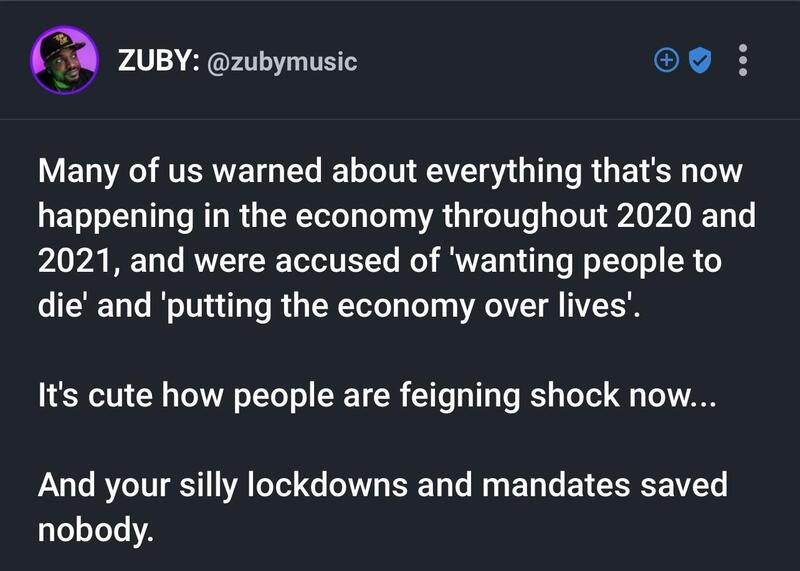























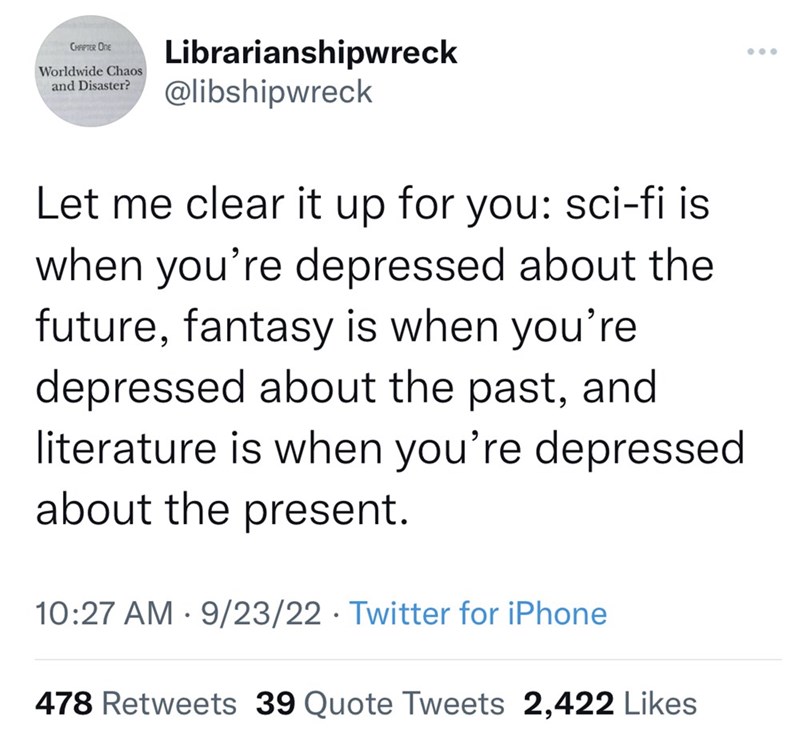

















 According To Hoyt