St. Patrick, All American Saint

st-paddys-day-2049043


Sometimes the left is so predictable, it makes your teeth ache.

Okay then. It makes my teeth ache.

You see, some special critters last week were complaining about how celebrating Saint Patrick is cultural appropriation.

We’ll leave aside, for the time being, the fact that I’m not exactly sure who we’d be appropriating St. Patrick from.  I mean, sure, he’s a Catholic saint, celebrated by … well, pretty much everyone in America, Catholic or not, Irish or not.

He is, I presume, celebrated in Ireland too, but from what I heard it’s a more subdued celebration, a religious one and certainly having nothing to do with pinching people for not wearing green and/or green beer.

The problem with the left is that they don’t understand America.  Yes,  I’m sure a lot of them were born and raised here, and the fact they understand America so poorly is the worst indictment of American education I’ve ever seen.

Because St. Patrick, as he’s celebrated is not cultural appropriation.  He is an American Saint, in the sense we celebrate him, as much as a Catholic saint.

To understand this we need to go back to the history of Irish immigrants in America.

Even I – and on one side my husband is a third generation Irish Immigrant (on the paternal side on that side his ancestors go all the way to the revolution.  The other side is oh, German, Scottish, Amerindian. In other words, my husband is also all American) – hadn’t fully grasped how bad things were for Irish immigrants in the beginning.  I hadn’t fully grasped it until I was reading a history of Cleveland (I was an exchange student to Stow, Ohio) and found out that the procedure of the police when investigating any crimes in the early 20th century was “Find all the micks and the Italians, and interrogate them till they give up the culprit.”

The thing is, as my husband noted when I told him this “that it wasn’t wrong most of the time.”  And, yeah, he’s right. At the turn of the century some of the criminals in these communities had histories that read like a demon’s resume.

But the Irish integrated. They worked, they  worked at being American. They taught their kids to be American.

Oh, but they still celebrated St. Paddy.  And St. Paddy became a point of pride.  And the t-shirts with “Kiss me, I’m Irish” came out.  Till eventually everyone wanted to join in the fun (and, let’s face it – hoists her bottle of stout in the general direction of the screen – the beer.) And because by then the Irish had become Americans, they said “Sure, why not? Everyone can celebrate St. Paddy’s with us. Everyone is Irish for a day.”

This was something totally alien to Europeans.  When my – second generation Irish immigrant — history teacher during my exchange student year asked me what I was doing for St. Patrick’s, I told him I wasn’t Irish. He told me I looked like an Irish lass to him.  (For the rest of the year he referred to me as his Irish lass and kept asking people if I didn’t look Irish to them. Turns out he wasn’t completely wrong. According to genetic report, there’s some Irish in there.  Actually there’s some of almost everything. No wonder I like America.)  And dang it, for St. Patrick’s day, the entire school (mostly German and Polish, judging by both looks and last names) was Irish.  They wore shamrocks, and they dressed in green and they wished everyone a happy St. Patrick’s.  It was in fact the most American thing ever.

Because we Americans are about nothing if not cultural appropriation.

We take what’s best about each group of incoming immigrants, and we shamelessly make it ours.

And groups like the Irish, once reviled and marginalized become central parts of the American story.

You know what’s needed for it, though? That they give up their tribalism.  Which to be fair most Irishmen, and even most Italians have.  Sure. They will still be very proud of their heritage, but when their kids marry outside it, they just pretend  to think that there’s a bit of their heritage in the new spouse.

One of my school friends, who is – almost certainly – pure German, has become an Italian mom by this magic.  And that’s fine, though it’s only in America.

I was thinking about this, when I read this article in the Atlantic.  If you don’t want to lose brain cells by reading it, the gist of it is that Talar Ansari, probably second generation immigrant from some Arab country or other, looked at the shootings in New Zealand, and is sure that the “White Supremacists” are going to get him. And that white supremacists are a far greater terrorist threat than Islamic radicals.

(Will someone get my eyes? They rolled all the way under the sofa.)
Honestly… where to begin? Are there white supremacists in America? Sure. There’s 300 million of us.  There’s people who believe all kinds of crazy things.

Are Muslims in danger of white supremacists?
Well, except for a minority of them, Muslims are white (and most Arab countries were allied with Hitler, btw.)  They’re as white as I am (Latin is a cultural subgroup, not a racial one, though everyone forgets that.)  We’re a member of the Mediterranean sub-race of the Caucasian race.

The prejudice against new immigrants has bloody nothing to do with race. See the prejudice against Irish and Italians.

And, note that I said above, some of it is logical and justified. Marginalized communities often harbor in their midst less than savory elements. Because those hide where people band together for tribal comfort. (See the science fiction fand-and-writer community and pedophiles.) Because users use people. And entire groups of people.

The problem I had with Talal Ansari’s view is that it was entirely tribal and entirely one-sided.  He sees all these threats (real and imaginary. Look, if there were white supremacists under every rock in America it would have saved Jussie Smollet a lot of trouble.) against his people, his tribe, his community. He sees “islamophobia” everywhere.
But he doesn’t note when someone of his religion spreads anti-semitic  “Jewish banker” conspiracies in the house of representatives.  And he’s apparently blind to the very real reason that Americans have to fear Islamic terrorism.

To explain it to the blinkered Mr. Ansari: because people who claim to be of your religion want to kill us for being American. That was the crime of those who died in 9/11, and the ones who died in the Boston Marathon, and of those who have avoided death only because the would-be terrorists were caught in time.

Is it unfair that people – yeah, even me – cringe at a group speaking in Arabic in a public place?  Sure it is.

It was also unfair that the way to investigate crimes in Cleveland at one time was “round up all the Micks and the Eyetalians.”

Was it permanent? Nope. Those people tried to be as American as they could, and, yes, called out their own bad elements, instead of talking about how oppressed their tribe was and holding on to their tribal specialness.

They went forth and raised their kids to be American, and married other brands of American, and shared the good things in their culture – food and drink, mostly. It’s always food and drink, but also devotion to family – while forgetting the ancestral hatreds of the places they’d left behind.

And eventually everyone became Irish for a day. And everyone  faced with a vast quantity of pasta gestures encouragingly and says “Mangia, mangia.”

Because they’re American, the culture that takes the best of every culture in the world and forgets the worst, the evil things, the ancestral hatreds back there.

What Mr. Ansari needs is a shamrock. We won’t push the beer, if he’s keeping to his religion’s prohibitions on alcohol (Remember, Irish and Italians were also once a religious minority.) Saying top o’ the morning wouldn’t hurt either.  Nor would wishing everyone a happy St. Patrick’s day. Or saying that for a day he’s descended from the O’Ansara’s.

Because Americans will accept anyone who makes an effort. (And, yes, steal their best recipes. Sorry, it’s who we are. It’s what we do.)

You’re in America now. You can hold on to all the crazy that made the place you or your ancestors came from a place to leave.

Or you can remember you’re an American first and say it with us “That Ilhan Omar. She’s such an idiot anti-semite.”

Then wish a Happy St. Patrick day to your Jewish co-worker, wear a shirt that says “kiss me, I’m Irish” and have a good time.
Top o’ the morning to you! Welcome to America.


Vignettes by Luke, Mary Catelli and ‘Nother Mike and The St. Patrick’s Day Sunday Book Promo

young-3493802

The St. Patrick’s Day Sunday Book Promo (just pretend all the covers are green!)

*Note these are books sent to us by readers/frequenters of this blog.  Our bringing them to your attention does not imply that we’ve read them and/or endorse them, unless we specifically say so.  As with all such purchases, we recommend you download a sample and make sure it’s to your taste.  If you wish to send us books for next week’s promo, please email to bookpimping at outlook dot com.  One book per author per week. Amazon links only.-SAH*

FROM BLAKE SMITH: Hartington Abroad (Hartington Series Book 2)

51g0hdbkzrl

Jeriah Hartington is far from home. Born into a wealthy family, he is now reduced to poverty. In desperation, he signs on to a ship headed for the planet XKF-36. Their mission? To search for colonists who’ve been lost nearly as long as Jeriah has been alive.

Jeriah fully anticipates an adventure as they travel into the unknown wilderness. He never expected to find living people, eager to tell the tale of their sufferings. But their hair-raising account could be the downfall of everyone on the planet, even their rescuers. For a villain lurks within the ship’s crew, and no one can say who he might be.

EDITED BY JOHN RINGO AND GARY POOLE (AND DAVE FREER AND I HAVE NOVELLA-LENGTH STORIES IN THIS):  Voices of the Fall (Black Tide Rising)

61s22bk-ba3l._sx327_bo1204203200_

ORIGINAL STORIES SET IN JOHN RINGO’S BEST-SELLING BLACK TIDE RISING SERIES. The zombie apocalypse is here in these all-new stories from John Ringo, Sarah A. Hoyt, Michael Z. Williamson, Jody Lynn Nye, Travis S. Taylor, and many more. Sequel to the best-selling anthology Black Tide Rising.

Civilization had fallen. Everyone who survived the plague lived through the Fall, that terrible autumn when life as they had known it ended in blood and chaos.

Nuclear attack submarines facing sudden and unimaginable crises. Paid hunters on a remote island suddenly cut off from any hope of support. Elite assassins. Never-made-it retirees. Bong-toting former soldiers. There were seven and a half billion stories of pain and suffering, courage, hope and struggle crying out from history: Remember us.

These are their stories. These are the Voices of the Fall.

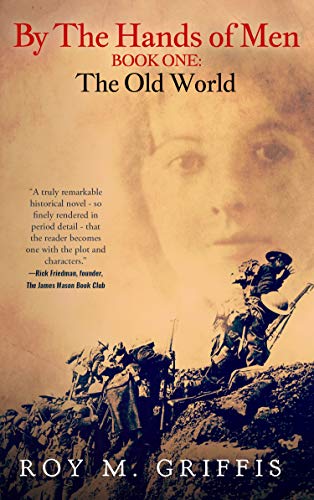
FROM ROY M. GRIFFIS:  By the Hands of Men, Book One: The Old World.

51i6i2bcx8wl

A soldier fights for his soul in the trenches of France.  A field hospital nurse battles death every day.  Are duty and honor enough of a reason to go on in the hell of a world at war?

A mere mile from the blood-drenched front lines, Russian refugee and nurse Charlotte Braninov encounters English Lieutenant Robert Fitzgerald, who helps her save the life of another soldier.  Robert’s calm, courtly manner lingers in Charlotte’s mind, a comforting memory amid the deluge of suffering that surrounds her when she returns to the hospital.

Wounded during an unauthorized mission of mercy, Robert Fitzgerald finds himself demoted to a Medical Supply Officer, where he once more meets the brave young Russian nurse.  When Charlotte volunteers to help the Lieutenant learn about his duties in this new life of service, a quiet friendship blooms and love grows in that harshest of soils, even as the war rages on.  But human cruelty and endemic disease claw at their lives.  Can love survive in a world torn by warfare, greed, and deception?

The Old World, a novel that readers are calling “deeply moving,” “stunning,” and “magnificent,” is the first volume of the By the Hands of Men series.  Epic historical fiction by Roy M. Griffis, the saga sweeps across four continents in a gripping tale of fate, loss, redemption, and love.

A truly remarkable historical novel– so finely rendered in period detail – that the reader becomes one with the plot and characters. – RICK FRIEDMAN, FOUNDER, THE JAMES MASON COMMUNITY BOOK CLUB

Vignettes by Luke, Mary Catelli and ‘Nother Mike and Sunday Book Promo

Vignettes by Luke, Mary Catelli and ‘Nother Mike

So what’s a vignette? You might know them as flash fiction, or even just sketches. We will provide a prompt each Sunday that you can use directly (including it in your work) or just as an inspiration. You, in turn, will write about 50 words (yes, we are going for short shorts! Not even a Drabble 100 words, just half that!). Then post it! For an additional challenge, you can aim to make it exactly 50 words, if you like.

We recommend that if you have an original vignette, you post that as a new reply. If you are commenting on someone’s vignette, then post that as a reply to the vignette. Comments — this is writing practice, so comments should be aimed at helping someone be a better writer, not at crushing them. And since these are likely to be drafts, don’t jump up and down too hard on typos and grammar.

If you have questions, feel free to ask.

Your writing prompt this week is: obsolete.

Letter from a Minotaur: Why Humans are Scary – by Orvan Ox

fantasy-3729146_1920

Letter from a Minotaur: Why Humans are Scary – by Orvan Ox

Summary: Persistence

That’s the core of it, or perhaps the driver of it, but it’s not that alone. The way of using it matters. The tune High Hopes[1] might have a very persistent ant, or ram but we know that in reality the poor ant and ram aren’t going to get anywhere. There’s even the line (not in that tune) about how repeating the same thing hoping for a different result is sign of insanity.

Humans are stalkers. Sure, you might say that all actively hunting creatures are stalkers – and that passive hunting is called trapping. These might be extremes on a spectrum, but humans? Oh, the stuff of nightmares! There you are, peacefully (or not) grazing on the plains and… these things appear.. and come at you. They are not very fast and a short run gives distance. But not relief, for they keep coming. Run. They keep coming. You have to sleep sometime, but they seemingly don’t. Or some disappear – but different ones take their place! If you do get some rest, they’re there when you wake up. That is, if they didn’t get you in your sleep. Or you didn’t drop dead of exhaustion from this slow but evidently eternal chase. Lions and Tigers and… a good many others…  they’d have found something else to chase some time ago. Alright, some pack-type animals also do this. But they tend to have claws and sharp teeth and not much else going for them.

Now, somewhere in human ancestry, some human – or some proto-human, picked up a rock. And threw it. And it hit something. This might have happened many times, but finally there was that “Aha!” moment of “Say, this could be useful. Or (or and) it happened with a stick. Either way, or both, humans now had the projectile weapon. They could project power. Not far, but a little distance means a little more chance of survival and even slightly better chance helps.

And then some clever person likely mused, “What if I put a rock on the end of a stick?” Sure, club. Force amplifier. Spear – force projector. And then the weapons program really began – how to project things farther, faster, more accurately?  And if the otherwise wonderfully effective means of defense the muskox has (a defensive line, made circular when needed) hadn’t been thwarted before, it was then. Persistent development.

Oh, but it doesn’t end there. Sure one could continue on the advances in weapons, but once the concept of projected force had been realized, the key was out in the open.  Humans dream, and they dream impossible things. And despite that, have a habit of doing them anyway – eventually.

One way or another, they figured out fire. Some put the credit or blame on Prometheus and tell his story, but however they got it, got it the did. And then used it, for many things. And watched the smoke rise – for centuries, millennia.  Meanwhile there were dreams of flying. The tale of Daedalus and Icarus, for one.  In what might well have been sort of a “D’oh!” moment that was another “Aha!” a couple brothers, Montgolfier, watched the smoke rise. They thought about it and… if the hot smoke rises, could it lift something into the air? Hello hot-air balloon and one version of flight.

Of course it didn’t stop there. Systems to try guide the balloon were added. As chemistry developed its way away from alchemy, new lifting gasses were tried.  But it was still largely at the whim of winds, the speed was only wind-speed, and there was this great gas-bag above. Humans didn’t stop trying to “fly like a bird” just because they had figured how to fly one way.  Never satisfied, powered flight, heavier than air flight, was a dream – eventually realized in the early 1900’s when a powered heavier than air machine did something none had done before: NOT crash.  Flight, perhaps, had been achieved by such before, but the controlled landing? That was new. About 16 years later, they crossed the Atlantic with descendant of that machine[2]. In another 8 years, a lone human would do it non-stop in a more advanced machine.  Even that wasn’t enough. Faster! Higher! Jets! Rockets! And sound itself got left behind. Persistence.

Rockets? Yeah, they had those for ages and ages and such were toys and crude weapons (that projecting power thing again). Still dreaming a very old dream: Going to the moon.  One very early story of such, utter fantasy, even hinted or more than hinted at how one part needed to be dealt with. No, not Verne – he had so much more right, having so much more knowledge available to him. This story is much older.  I’d point to a reference, but I have not found such readily available. A fellow is planning a trip to the moon and someone asks why he doesn’t ride a horse or some other animal more befitting such a grand journey, only to be told that the trip will be long and all supplies must be kept as light as possible. Thus the ideal mount was not the horse which would need its own supplies, but the dung beetle.  Oberth dreamed – and built. Goddard dreamed – and built. Tsiolkovsky dreamed – and how! von Braun dreamed – and did he ever build! Persistence. Armstrong left footprints.

Once upon a time (alright it was the 1970’s – a mythical time indeed. Alas, often mythically bad. Avocado-colored kitchen appliances? Wage & Price controls?) I had access to the set of the World Book Encyclopedia’s books of yearly updates.  Sometime in the 1950’s or perhaps early 1960’s someone claimed that “hang on the wall” flat-screen televisions were 10 years away from being real.  I was reading this well over ten years later and there was no such thing. It might well have been twenty years – but such things were, I had heard, still somehow “10 years away.”  In the 1980’s, I heard it again – except this time it was, if not right, closer to right. LCD screens did appear, and there was even a TV watch. It was more than a simple strap-a-TV-on-your wrist thing and rather clunky, but it existed. Now? People have flat-screen televisions bracketed to walls.

Power generating fusion reactors were 20 or 30 years away – and still are.  And humanity is still working on that one. Will they get it? I wouldn’t bet against it.   Even if they discover or invent something better, some will almost certainly not be willing to leave that dream behind. Humans “keep on keeping on.”  They realize the dreams of the ages, and then dream anew or look at the unrealized dreams and keep at things. Persistence. Downright stubbornness, even.

Without detail, a very short list of the “impossible” things humans have gotten to:

They dreamed of flying. Now they fly.

They dreamed of reaching the moon. They’ve grabbed bits of it.

They dreamed of telepathy. They have radio, Bluetooth equipped phones.

They dreamed of magic mirrors. They have television and webcams and video-calling.

They dream of telekinesis – and they’re working on it, even making some progress.

Humans just do not stop.  That is what makes them scary.  Do NOT get on their bad side.

[1] I rather like the Doris Day recording of the tune.

[2] The Curtiss NC-4 flying boat, finally landing in Lisbon after Starting in NY state 19 days earlier.

The Eyes of the Present

steampunk-2819946_1920

I used to think the past was sepia toned.  Probably most of us did, as kids.  At least most of us who are old enough to have grown up with framed pictures of grandparents and great grandparents, looking down on you from some wall.

My grandmother had a picture of her mother (to whom she’d been very close) on the wall of the upstairs family room, and I used to look at her, and try to trace a resemblance, and worry about whether she’d like me.  But she was sepia. I mean, I knew there had been color in her day, but to this day I’m not sure what her coloration was. How could I know? the picture was sepia.

In the same way, the black and white movies of WWII made it seem like it happened a lot more than the 23 years before my birth.  Those things, back there, in black and white, int he long distant past were not quite real.

Of course I knew that there had been color in those days. But it was an intellectual knowledge. I’d never seen it.

Which is why the colorized reels of WWI had so much impact. Suddenly these people were real, and many of them startlingly young.

And it’s why pictures like these are so startling and important.  They bring the past to life in a way we’re not used to seeing it, and they make these people just people: like us. Human and alive.

It’s harder, or it should be, to dismiss who they were and how they lived and to think we have it the hardest evah now we see them in color.

Only of course, it’s not because these people viewing the pictures are so startlingly and innocently devoid of historical knowledge they think the shepherd boy in a sort of tunic is cross dressing. (No, seriously.)  And the idiot who then said that dresses weren’t “female” till much later than that is only slightly better informed.  Dresses for INFANTS were normal till just after WWI (so in fact just a few years past that.) regardless of the infants sex.  But smocks were worn by males and females of the working class, for the simple reason that it took less fabric than pants.

I suspect until the far more prosperous middle years of the 20th century they continued to be worn in various places, and I’d not be shocked if they’d been work in the poorest and most remote villages of Portugal, either. (I lived in a cosmopolitan part of the country, me.)

To talk of “gender” or to imagine that someone of that time in a peasant village was crossdressing… dear lord.

Then there was the idiot who thought the woman making fringe to support her family should instead repair her dress.

This is your Marxist economics at work. She should fix her dress, and maybe make a better dress to herself, and then pay herself, and of course she’d be richer or something.

I was shocked none of them pointed out that the woman in elaborate Irish peasant dress was barefoot, and that there were many diseases you could contract that way.  Or perhaps “weren’t her feet cold?”  (My mother who grew up barefoot summer and winter says no, they weren’t.  You just got used to it. I don’t know. I’m glad I live in better times.)

And of course — of course — they admired the thatched roof with grass growing on it, and talked about how they wanted one.  By which time I was laughing my head off, because, you know… anyone who grew up with thatch or got to experience a thatched roof knows that by the time it “grows” things it’s thick with bugs and crawlies, and you’re going to get stuff dropping inside. The thatch needs to be renewed. (And no, I didn’t grow up with it. But some farmers had it for animal lodging and/or storage areas, so I got to see it/experience it in visits.)

I’m surprised they didn’t talk about how ecological and “green” it was.

Look, I get that it’s hard to convey to our kids how different, how PROSPEROUS a world they’re growing up in.  A friend about my age and I were talking about it last week, and we realized that we can tell our kids till we’re blue in the face, but they’ll never understand the stuff like “you can’t buy veggies out of seasons, so the first tomato of spring is amazing, and old apples from the cold room are the sweetest things you get in winter.)  They’ll understand it intellectually, just like we understood intellectually the deprivations of the people in the 30s (yes, worldwide. When America sneezes, the rest of the world catches pneumonia.) It’s awful, and long ago, and thank heavens we live now.

But now telescopes forever, just like in my mind it had been forever since WWII when it had been only slightly more than it’s now from 9/11.

The thing is that the schools and culture aren’t even trying.  These people, some of them not much younger than I but raised in very different circumstances, go about believing that the past is just like the present, only less woke, and if only those horrible people their ancestors had only had access to the woke philosophy of the young people of today, they’d have been exactly like us.

Stuff like “that woman knotting the fringe might have been all that stood between her 7 children and starvation” will either go over their heads, or they’ll start praising welfare, completely unaware that even if people wanted to back then they couldn’t feed a lot of surplus population. Because there wasn’t a lot of surplus production.

It was only those “satanic mills” and the wealth they generated, which then got applied to other things which then generated wealth that has got us to where we are now, where people who have never had a day of hunger in their pampered lives can talk about what victims they are because someone laughed near them or looked at them funny, and they know it’s the inherent racism/sexism/ismism of the west.

Short of sending them back to see the past, all we can do is teach. But we must make sure we do teach. By means of textbooks if needed. By other means if possible.

Because when people think thatch is cute, we’ve come a long way baby.  And the Gods of the Copybook Headings are revving up their engines to come and explain it again.


Your Envy is Not a Super Power

porcelain-644780_1920

My friend Charlie Martin shared this link on facebook, (the link is not facebook) as he often does with cool/old images.

I clicked through both because I also like cool/old images, and because I was waiting for dinner to finish cooking, and didn’t want to start something like an article in the fifteen minutes I had.

And then I hit the comments.  Yeah, I know, never hit the comments.

I want to talk in this post (there’s another one about this pictures tomorrow) about how ridiculous the commenters striking blows for equality or race equality or whatever the hell they thought they were doing were.

Sure, I know, there was a ton more inequality in the early 20th century (which btw, should tell you how much we actually need the government to intervene to create “equality.”  The equalization has been through prosperity which mostly happens when the government leaves people alone) because the industrial revolution was just gathering steam around the world, and therefore prosperity wasn’t as widespread.

I.e. people lived better than their ancestors, just not nearly as well as us.  And the people who were at the forefront of investing/taking risks, were often obscenely rich by the standards of their time.  Just keep in mind that all their wealth couldn’t buy them the air conditioning, entertainment or modern medicine available to our “poor” today.

Some of the people in these pictures were singled out as “victims” by the Marxists in the comments, which of course know a lot of things that just ain’t so, and are terribly proud of themselves for parroting them.

One of the pictures for instance is of an Irish woman identified as “mother of seven” knotting fringe for shawls.  There are holes in her dress, so of course, I expected the Marxists to strike at that. They sort of did, but just by saying she should repair her own dress.  You know, people should be required to run SOMETHING even if just a lemonade stand for profit before the age of 18. Understanding that profit doesn’t come from mending your own dress in your scant time might be salutary.

But I’d forgotten — silly me — that in the course of my adult lifetime, the Marxists have moved on from making every “working class” person a victim to carving victims out of various genders and races.

For instance, it’s a terrible thing that the woman is only identified as “Mother of Seven” and not by name.

Because, you know, these many years later, knowing her name is really important.  And not that she was a stranger to the photographer, and that her labor was ennobled by her working for her seven children. I.e. if you asked her, she’d likely rather — proudly — be known as mother of seven (by which I presume they meant seven living children, which spoke to both her genes and her abilities as a housewife and mother) than by her name, which again would mean bloody nothing to any of us.

Note that the idiots don’t know this is how paintings were titled. I.e. unless they were portraits of someone known to the painter and probably paying for the portrait, they got called either after the myth they represented or by the generic description of the subject.  “Poor man” “beggars at the door of the church” is in line with “mother of seven.”

Also they don’t understand how valued motherhood was. Also, oh, what the heck.  To them the long-dead woman should be retroactively empowered by us demanding that she have her name. Because they’re provincial, blinkered and stupid, and their view of the world was shaped by being taught a poisonous philosophy dreamed up by an envious little man who never worked a day in his life.

Then there was the picture of the photographer’s wife on a camel.  The photographer named the picture “Else on Camel.”  The outraged armies of outrageousness were furious because he didn’t name the camel drivers (and why not the camels, too. Does PETA know of your slight?) in the picture.

And someone else, superciliously came and explained it was okay because in the early twentieth century all these people were considered little more than savages.

Yeah. They were. That’s because they came from countries where the culture made them into little more (and sometimes little less) than savages. Many of those countries are still populated by savages, by any objective, civilized standard.

The sad part is that our country too is filled with educated savages, who think that because people can tan, or have fiddly bits of the inny variety they should be given all deference, even if there’s objectively no reason for it.

We’ve allowed our children to be educated by loons who think that tribalism (that old foe of mankind) is a good thing, and that what we need is more victim tribes until everyone is — by the magic of intersectionalism — compensated to the exact degree that people who looked vaguely like them were once victimized.

Let’s leave aside the fact that the subject of the picture is the photographer’s wife, and that adding the eight or nine names to it would make the art piece (which color photographs very much were. Rare too.) less valuable and more confusing to refer to/sell.

What these ridiculous provincials don’t realize is that the camel drovers might not have wanted to give their names to complete strangers.  Or that they wouldn’t feel slighted by their name not being in the pictures. Why should they?  Do these idiots think the camel drovers logged onto facebook later and were pissed at not being tagged?

The chances of them ever seeing that photograph was nil, and burdening the picture with a never-ending name would only hurt it/its popularity.

But more importantly, at the base of it, these insane idiots think that these drovers and their descendants need their exceedingly woke selves to come and de-victimize them or elevate them, or something.

Their assumption of superiority and their cultural-colonist attitude is so complete they don’t realize that the Arabs of the time — looked down onto or not  by the Europeans — considered themselves immensely superior to the Europeans.  In fact, so did every little tribe in Africa.  The Maasai (admittedly not a a little tribe) word for “European” is “Confines their farts with clothes.” (Or at least one of the words. I came across it in an article written by a Maasai.  Entirely possible he was pulling our legs. Because people that the left feels they need to white-knight for often do pull the legs of idiot Europeans.)

I grew up in Portugal when the rest o Europe considered it somewhat of a third world hellhole (it wasn’t, but it wasn’t very far off) and none of us felt beholden of the rest of Europe’s opinion of us.  In fact, most Portuguese felt themselves immensely superior.  For reasons.  (Mostly cultural reasons: the language, the poetry, the history.)  In fact “For Englishman to see” was the equivalent of our “Good enough for government work” and referenced the fact Englishmen (which was sort of shorthand for all tourists) were gullible and should be taken advantage of.

And then — THEN — there was the picture of the little girl with 20 dolls or something like that.  It’s a portrait. Probably done of the daughter of the photographer’s friend.  As the other photos, they showcase the thing the person being portrayed is proud of.

Wouldn’t you know it? Some woke idiot took exception to the little girl having so many dolls when other people were poor.  And some other suffering from Marxist Tourette’s said “no little girl needs that many dolls.”

This is why my desk has head-shaped dents.  Does any little girl need 20 dolls?  Depends on the little girl, doesn’t it?

I just did a headcount, and I think the most I ever had were 12, but then I spent more time reading than playing with dolls. (Not that I didn’t play with dolls.)

Were 12 excessive?  I was a sickly kid, with no relatives/friends close to my age, in a time with no computer entertainment, no video.  I often used my dolls (or the far more numerous little plastic dogs I used to people my lego cities) as actors to tell myself stories.

My parents (and relatives) could afford the dolls, and I enjoyed playing with them.  Were there kids without dolls?  Probably. At least there were kids with no plastic dolls, as cheap as they were.  (My mom made her own dolls when she was little. From fabric scraps.) And?  Envy is not a virtue. And one shouldn’t encourage it in anyone, kids or not.  You want better, work for it. Is this fair to kids?  No.  But how would depriving me of my dozen or so dolls give dolls to everyone else.  My parents would just stop buying dolls for me, if they were to be given away, the doll industry would collapse, and dolls would become rarer and more expensive.  (For the record mom always gave toys away to children in various charities, because she’d had to make her own.)

Who is to say what I needed or not? And who is to say how many dolls that long-dead little girl needed?  People who think they can dictate how many dolls a child needs also think “At some point, you’ve made enough money.”

It’s as though they believe envy is a kind of superpower, and by aiming it at other people they can make everyone else miserable and they, themselves powerful.

They need to be answered early and often “you’re not my judge.  Your envy is not a superpower. I will not submit. Take a hike.”

Because otherwise they propagate according to their own kind, and like locusts eat at civilization.

If they’d had their way and “equalized” the early 20th century society according to a list of victimhood and spoils, the world we live in today would resemble the darkest hours of the USSR.

Envy is a sin, not a virtue.

To invert morality that way leads to hell. Even when the hell is on Earth.


All in All It’s just another, Another Brick in the Wall.

wall-3265883_1920

Or not.  Recently a friend complained about the “drama” surrounding every little movie release, and every time an actor/actress (sorry, the stupidest thing in the world is using only the male name for a profession where performance is definitely gendered) flaps jaws and says something stupid and leftist.

He’s not wrong.  I’ve read conflicting reports of how “Woke” Captain Marvel is.  The upside of the movie seems to be that “it’s good popcorn fodder.”

But he’s also not right.

I understand the principle of saying that you shouldn’t attach too much importance (one way or another) to the pronouncements of creatures that are there for their physical attributes, and whose lines are written by someone else.  The left, after all, idolizes them as geniuses (snort, giggle) and the right, disgusted, apostrophizes them as monsters.  All of which is giving way too much credit to ego-inflated speakers-of-lines.

And I understand being upset that a movie one considers popcorn fodder is viewed as as evil as the Communist Manifesto.  That too is giving it too much importance as well as, potentially, not enjoying it for what it is, despite whatever clumsy messages Woke Hollywood thinks it snuck in.

I understand him. I even sympathize. You see, he’s much younger than I.

But…

But I remember what he doesn’t.  I remember a time when we gritted our teeth and read the books/watched  the movies of people who hated us, because they were the only game in town. If you liked to read, or if you liked movies, or even if you “just” liked to stay in touch with what people were seeing and talking about, you had to.   And of course, you had no idea anyone else was reading the messages of contempt and hatred for your nation/the west that came through loud and clear to you.  You wondered if it was all in your head.  And you didn’t talk about it.  You never talked about it.

Why not?  Because the blogs didn’t exist as an alternative opinion-maker.  The internet didn’t exist as a place to communicate to like-minded people.  The entirety of public opinion was formed by what the inimitable Sabrina Chase named the “News-entertainment industrial complex.”  And they were uniformly left.  In fact, the idea much of the left has of us, as stupid, credulous, uneducated and hateful is a remnant from those days when every conservative on shows/the media were portrayed that way.

But they were the only game in town, so of course people thought they were just reporting what happened.  What would YOU think?

Thing is, they still have a lot of power.  Sure, not as much as they used to. They didn’t get to elect Hillary! By the force of propaganda.  They did manage to choose who’d run against her, but then the slip intervened between cup and lip, because a lot of the American people went mule, hooves stuck in the dirt and said “No. And also, gaze upon my middle fingers.” (These mules have hooves and fingers.  Deal.)

BUT as I was reminded recently reading a story of a friend who isn’t even really leftist, just fairly apolitical but grew up in the same times I did, the stereotypes the years of monolithic information and entertainment, uniformly leftist, built a fund of stereotypes upon which our culture coasts.  Ie. For instance, if you grew up in that time, you’re likely to believe a Southern Preacher is ignorant and superstitious.

Are there Southern Preachers who are ignorant and superstitious. Sure there are. But there are also a good number of them who are educated, well-read men of genuine faith.  The possibility of this is much higher if you’re talking about one of the better known denominations, but possibly the best-read preacher I ever encountered came from a tiny sect.  And religion is not superstition or lack of understanding of science.  Or at least, my religious, scientist friends are not superstitious. Nor stupid.

And of course, my friend knows that if he stops to think. But when you need a minor character, you often reach for central casting, which was entirely staffed by the stereotypes the Media Industrial complex disseminated when you were too young to think.

It’s still there.  And worse than finding it in print, you find it in the way people are evaluated, and it affects how promotions work, or – in the arts – how you’re viewed.

I’ve gone the many many rounds on this, and you’re likely to get more out of the posts Dave Freer has done on Mad Genius club.  (Search for statistics. He’s done a bunch.)

But let’s just say it wasn’t – and isn’t – a coincidence that all the acclaimed writers and artists of the post-war 20th and early 21st centuries are almost uniformly to the left of Lenin.  And no, it’s not because the left is more creative. (I dare you to look at Hollywood’s more recent offerings and say that without laughing.)

If anything the left, in this 4th generation of cultural dominance, is less creative. They’re coasting on the subconscious image built by their cohorts in the media for decades. The image that artists and “smart people” are leftist, if not outright communist.

No? Go look at the portrayal of communists in entertainment.  They’re daring, and perhaps troubled, but so smart. Even in Agatha Christie.

And when the Soviet Union imploded and exposed the sewer of lies at the heart of this bullshit, the media ignored it. If there’s a communist or extreme left character in a movie or acclaimed book today, their biggest defect is that they care too much.

On such lies are personalities and would-be dictators like Occasional Cortex built. And Obama. Who almost destroyed us.

And if you’re an artist or writer, or even peripherally involved in the arts and seeing things up close and personal you see how the sausage is made: the easiest ride to the top is given by liberal privilege.

For at least thirty years now, I look at the “darlings” in my field and roll my eyes and know they’re only where they are because they give good Marxism.  (A darling is not just a bestseller. It’s a fawned upon bestseller, the sort trotted out for all the cushy speaking engagements and “acclaimed” academic pieces.  The right has some bestsellers. They got there with more work than should be possible. And a little luck. But mostly work. And there are a lot fewer of them, because it needs everything hitting just right.)

I can’t evaluate myself – can anyone? – but I know some of these “oh, so smart” “great writers” are less competent than my fledglings who have a couple of indie books under their belts. It’s not hard to tell. They often fail at basic craft points.

Note I’m not saying there are no talented people on the left.  Dave Freer says that the distribution of raw talent should be about the same on both sides, judging by other historical eras. I never argue with him on this stuff, because I’m not that crazy.

I’m saying that due to liberal privilege they get the acclaim and fawning before they even develop their craft.  Which, humans being humans, often means they never develop it, because they don’t realize they’re not great yet.

And each of them and the acclaim they get contributes to the image that art is a leftist thing and that leftists are “so smart.”

And this is where I disagree with my young friend. Sure. The right bellyaches a lot about some actress running her mouth, and they make too much of “hidden messages” in books.

But it’s not only natural, it’s needed.

It’s natural, because – as with an immunity to a disease – the more you’re exposed to Marxism, the more you come to want to fight even miniscule amounts of it.  And the amounts aren’t and weren’t so miniscule.  If you suffered through not being able to find a book/movie/song without a political message that offended you, you will forever detect and be driven mad by such messages in your entertainment.

I know my husband doesn’t even see things that have me sputtering and leaving the room before putting a shoe through the screen.

It’s needed because every one of those movies and books, unchallenged, builds onto the stereotypes they’ve been lovingly polishing for a century.  And those stereotypes, in turn, convey the impression that liberalism is not just smart and true, but the only view anyone else has.

With education, it’s the pillar holding the left’s cultural power, now they don’t have a monopoly of the means of communication.

And it’s a bad thing.

So, should you see a movie whose actress has been promoting it as “so woke” and in which a lot of people on the right see despicable messages.

I don’t know.  I shouldn’t. You get in even more trouble for putting a shoe through a movie screen. But I wouldn’t be upset if my husband saw it. (He probably will, in the fullness of time, because he sees a lot of stuff.)

I would, however, insist on telling him what the actress has been saying and what SHE THINKS the movie she starred in means.  After he watches it.

Because I won’t interfere with his entertainment, but neither will I let the stereotypes and straw men the left builds go unchallenged.

I can’t. I remember when they were.  And I know where they’re leading us.

I don’t want to go there.  And if you think for a moment, neither do you.

Sure, drama is unsightly.  But not complaining of the stupid messages in – even – popcorn entertainment?

All in all it’s just another, another brick in the wall.

Weaponized Criticism by S Andrew Swann

51c2b6wph35l._sx336_bo1204203200_

Weaponized Criticism by S Andrew Swann

Writing is a performance.

The act of writing implies communication to an audience. Writers, especially in the fiction trade, pour our hearts and souls onto the page in hopes that we can engage others to feel some of the emotion we’ve felt. I don’t care how long you’ve been doing it; there is little that can compare to the emotional reward of hearing that you effectively achieved that goal. There is no finer compliment that a reader can pay you, than saying that something you wrote inspired the intended emotions; fear, or excitement, or joy, or passion, or sadness.

Of course there’s a risk.

You don’t get to choose your audience, unless you’re just handing out manuscripts to your immediate family and friends. And no one gets to choose the audience’s reactions. It doesn’t matter how much effort you spent on making a story perfect, it doesn’t matter how emotionally raw you felt bleeding those words on the page, it doesn’t matter if it’s your first novel or your hundredth, it will find its way into the hands of someone who absolutely loathes it. If you spent five years carefully crafting your prose, someone will mock you for clumsy language. If you’ve lived months in your protagonist’s’ head, to the point you were responding to your significant other in the wrong voice, someone will bitch about your flat characterization. Some people will find your epic space battle boring. Some people will find your sex scene hilarious. Some people will interpret the villains as heroes and the heroes as villains. Some people just won’t get it.

And that’s fine.

No one reasonably expects everyone to sing the praises of every book. People have different tastes and different points of view. Normally a bad reaction isn’t a strike against the reader or the author, just a sign that this is the wrong person for that particular book.

But that’s not how it typically feels to the author, especially new authors.  New authors hang on every kernel of feedback. Their freshly minted book is a part of themselves, their baby, and at the start it is the whole of their literary career. So, of course any negative feedback is painful, and incredibly hard not to take personally. Even a writer who knows, intellectually, that it’s only one person’s opinion, might still have to fight back tears and feelings of inadequacy after any one-star Amazon or GoodReads review.

This insecurity is the natural state of the author, and it usually takes years of experience and hard-won wisdom to temper it. Authors, especially new ones, have a hard time separating themselves from their work. They’ve put so much of themselves into the story; it feels like part of them. An attack on the work feels like an attack on them.

And it pisses me off to no end when I see asshats on-line deliberately trying to exploit that insecurity.

By now you probably all know the story of Amélie Wen Zhao and her book Blood Heir. She was a new rising star in YA publishing, about to debut a three-book trilogy with Delacorte to the tune of something like $500,000. She was justifiably stoked to land such a deal. And, aside from the money, she had the excitement that every single professional author can identify with; her first book was going to see print. I think any novelist will tell you, there is precious little that compares with that feeling. Her own words on Twitter: “I am THRILLED to announce that I AM GOING TO BE PUBLISHED.” Most fellow writers can recognize and feel her excitement with just that sentence. She expressed that excitement on her own site:

“I don’t think it’s sunk in until this very moment, when I sat down to write this post — that I am going to be a published author.

I AM GOING TO BE A PUBLISHED AUTHOR!!!!!!”

Then came the toxic fandom.

In the maelstrom of the intersectional apocalypse known as YA Twitter, people started expressing opinions about Blood Heir, a book that has not been scheduled to see release until this June. While there are review copies floating out there, it would be way too generous to say everyone opining about the book had even seen a copy, much less read one. One major point of fury was part of the book’s promo materials, suggesting a world where “oppression is blind to skin color.” Cue the cries of RACIST! (After all, we all know that everywhere, at all points in history, oppression is inevitably tied to skin color. Such as in Cambodia, Rwanda, and in the Holodomor.) Another RACIST scene happens when a black character (with “tawny” or “bronze” skin and blue eyes) dies in the protagonist’s arms. And apparently there is a slave auction, which is obviously only a feature of the 19th Century African slave trade in the United States. (Quick, no one tell ISIS.)

The absolutely vile thing about this Twitter pile-on, wasn’t these idiots condemning a book they haven’t read, based on fourth-hand interpretations of someone’s possibly intentional misreading of an eARC and the promo text.  What is vile is the idea that these pronouncements, made in insufferable high dudgeon, are all posed as moral judgements not only of the work, but of the author. The pathetic twits in this tweetstorm had the received wisdom that the book is problematic, so of course the author is problematic. The book is bad, therefore Amélie Wen Zhao is bad.

When you reflect on the joy she had announcing her publication, and on how brand new authors tend to feel about their debut work and criticism thereof, this event graduates from disturbing to absolutely horrifying. For all the claims to moral high ground, these are evil people going about evil business. And in Zhao’s case, they had an evil result, when she apologized to the mob and withdrew her book. (I didn’t even know you could do that, she must have quite a generous contract.) She no longer is even defending the book. She’s defending HERSELF from accusations of racism.

And that is what makes this whole thing so wrong. When someone turns a critique of the book into an attack on the author, they’re weaponizing their criticism in a manner that is particularly suited to hurting new writers, who haven’t learned that most criticism— especially on-line criticism— doesn’t mean anything in the long run.

I do not think it is an accident that these YA mobs target new writers. The people doing this are predators who sense vulnerability. They are driven by a desire to punish, and the accusation of racism just happens to be the most convenient bludgeon at the moment. A debut author— especially one who seems to be having a measure of success, something these deeply unhappy people cannot stand— makes an inviting target.

There is good news though. It didn’t have to end the way it did with Amélie Wen Zhao. Anyone finding themselves mobbed by these twitter ghouls just needs to remember two bits of hard-won wisdom, common to most authors who have more than a couple of books under their belt. First, on-line attacks on your work don’t matter in the long run, especially those produced in that abscess of the internet, Twitter. Second, those attacks have no bearing on your worth as a person, despite any claims they make to the contrary.

Compare the current eruption of woke Twitter with the one surrounding Laurie Forest’s book The Black Witch two years ago. Her debut book was attacked in exactly the same way, on just as flimsy premises. The attacks were led by a single 9000(!) word review that dismissed the book as “racist, ableist, homophobic, and … written with no marginalized people in mind,” and called it “the most dangerous, offensive book I have ever read.” (Aren’t we sheltered?) That review was enough to spur the ghouls on to attack the book and Forest as something just short of an apologia for Jim Crow, segregation and anti-miscegenation laws.

Unlike Zhao, Forest didn’t cave to the mob. I’m sure she felt the same devastation, the same pain, and probably the same doubts and second thoughts. The difference, I think, is that someone with some wisdom was there to tell her that in the long run, these so-called critiques weren’t going to matter. They didn’t reflect on her, and in the end, wouldn’t reflect on the audience of her book.

Now two years later, she has a trilogy in print to a fair amount of acclaim. The books have found their audience and seem to be doing well. And there is little to no cries of racism in the Amazon or GoodReads reviews of the books. Because she refused to become emotionally tangled with the hate mob, this event became less than a footnote in her career.

Unfortunately for Amélie Wen Zhao, it seems she’s allowed the hate mob to define her career. We’ll see where she is in two years, but I’ll be surprised if she’s doing half as well as Laurie Forest, and that’s a shame.

***

After writing the above, there was yet another case of a YA book being pulled. So, I would be remiss if I didn’t mention the latest casualty of weaponized criticism, Kosoko Jackson. His case may prompt some schadenfreude, since he was part of the mob that hounded  Amélie Wen Zhao. But he was part of the same pattern, a debut author who would probably be extra sensitive to any airing of his intersectional sins.

These attacks come from a set of people acting as a pack of wolves. They’re looking for the weakest prey to stumble from the herd. Jackson’s case is illustrative of the fact that, whatever social justice pieties these Twitter mobs preach, the true goal is not to elevate fiction or any marginalized individuals, it is simply to exercise power. Thus they aim their attacks wherever the most damage can be done. Since Jackson had been part of the mob itself, such critiques are made that much more damaging, and therefore irresistible, whatever his privileged demographics might be.

***

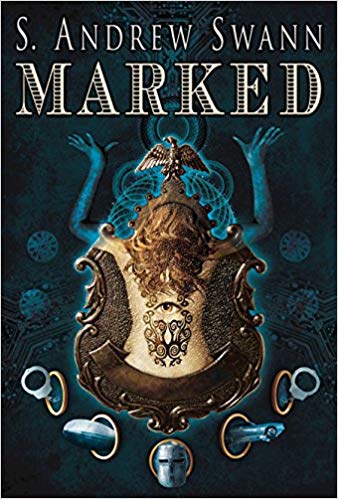
  1. Andrew Swann has been writing professionally for a quarter century. His latest book, Marked, has just been released by DAW. It’s written for fans of urban fantasy, time travel, zombies, airships, steampunk and Dodge Chargers.

    Marked is a fast-pasted, suspenseful urban fantasy-mystery. . . highly recommended.”—Midwest Book Review


“A great book. I’ve never read any stories with the premise…. A mix between Doctor Who and the Invisible Library series, with a dash of that old tv show Sliders mixed in as well.” —Slapdash + Sundry


Marked, by author S. Andrew Swann, is a genre-bending action and adventure free-for-all.” —Gizmo’s Reviews

Vignettes by Luke, Mary Catelli and ‘Nother Mike and Sunday Book Promo

books-3289689

Sunday Book Promo, the I Guess You Slackers Are Writing Again at Last (Like I Should Talk) Edition

*Note these are books sent to us by readers/frequenters of this blog.  Our bringing them to your attention does not imply that we’ve read them and/or endorse them, unless we specifically say so.  As with all such purchases, we recommend you download a sample and make sure it’s to your taste.  If you wish to send us books for next week’s promo, please email to bookpimping at outlook dot com.  One book per author per week. Amazon links only.-SAH*


51corvage3l

FROM DAVID DUBROW AND RAY RAY ZACEK:  Appalling Stories 3: Escape from Trumplandia.

“Trumplandia is like nothing I’ve read before – hilarious, dystopian porn!” – Patrick Courrielche, co-creator of Red Pilled AmericaWhat happens when the wokest folks you know go on a road trip through the reddest of Red States in search of the Promised Land?45’s election didn’t just upend every talking head’s political predictions, it shredded the very fabric of space-time. The United States of America have become the Disunited States of Trumplandia, plagued by bizarre cryptids, Cthulhu megaliths, and alternate reality wormholes, all crushed under the tiny orange fist of the President Who Must Not Be Named.Fed up with the Fanta-Faced Führer’s fascism, a caravan from the Unitarian Universalist Church of the Lightbringer seeks asylum in the Free Republic of California: a progressive paradise that waits with open arms for anyone brave enough to make the journey west…and survive.

These are their stories.

512c8w43sel

EDITED BY JAMES YOUNG (AND I’M ONE OF THE AUTHORS, WITH POSSIBLY THE WEIRDEST MIL ALTERNATE HISTORY EVER): Those in Peril (The Phases of Mars Book 1)

btw, I’ve been invited to the next one, and they’ll let me play with Richthofen.  So, you guys better make sure this one does well.

Throughout the human experience, historians have wondered, “What if?” What if Japan had been on the side of the U.S. in World War II? What if things had been just a little different in the Falklands? What if Russia had started World War Three?

Wonder no more, for these questions, along with many others, are answered within the pages of this book. Told by a variety of award-winning authors, like Sarah Hoyt, the 2018 Dragon Award Winner for Alternate History, and Kacey Ezell, the winner of the 2018 Baen Reader’s Choice Award, “Those in Peril,” deals with naval warfare that never happened in our world…but easily could have.

The first book in the exciting new “Phases of Mars” anthology series, there is something for everyone inside! From sailing ships, to steam, to today’s modern aircraft carriers, “Those in Peril” traces several centuries of naval warfare…that wasn’t. From adding a psychic…to making a different choice of friend or foe…to something insignificant toppling a kingdom, this book has it, so come aboard and find out “what if” all of these things had changed history…just a little. You’ll be glad you did!

Inside you’ll find:
Naked by Kacey Ezell
Captain Bellamy’s War by Stephen J. Simmons
A Safe Wartime Posting by Joelle Presby
Beatty’s Folly by Philip Wohlrab
Martha Coston and the Farragut Curse by Day Al-Mohamed
The Blue and the Red: Palmerston’s Ironclads by William Stroock
Far Better to Dare by Rob Howell
Off Long Island: 1928 by Doug Dandridge
For Want of a Pin by Sarah Hoyt
Nothing Can Be Said Sufficient to Describe It by Meriah Crawford
Corsairs and Tenzans by Philip S. Bolger
For a Few Camels More by Justin Watson
Per Mare Per Terram by Jan Niemczyk
Fate of the Falklands by James Young

51-gxfz7lol

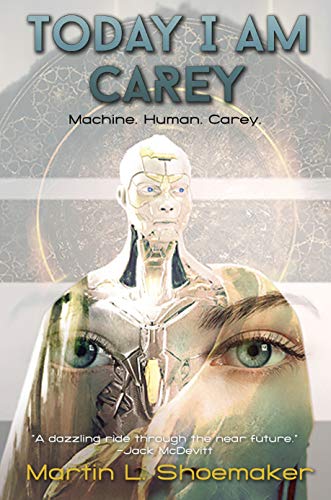
FROM MY FRIEND MARTIN L. SHOEMAKER:  Today I Am Carey.

REMARKABLE DEBUT NOVEL FROM CRITICALLY ACCLAIMED AUTHOR MARTIN L. SHOEMAKER. Shoemaker proves why he has consitently been praised as one of the best story writers in SF today with this touching, thoughtful, action-packed debut novel, based on his award-winning short story Today I am Paul.

TODAY

Mildred has Alzheimer’s. As memories fade, she acquires the aid of a full-time android to assist her in everyday life. Carey. Carey takes care of Mildred, but its true mission is to fill in the gaps in Mildred’s past. To bring yesterday into today by becoming a copy. But not merely a copy of a physical person. A copy from the inside out.

I AM

After Mildred passes, Carey must find a new purpose. For a time, that purpose is Mildred’s family. To keep them safe from harm. To be of service. There is Paul Owens, the overworked scientist and business leader. Susan Owens, the dedicated teacher. And Millie, a curious little girl who will grow up alongside her android best friend. And Carey will grow up with her. Carey cannot age. But Carey can change.

CAREY

Carey struggles. Carey seeks to understand life’s challenges. Carey makes its own path. Carey must learn to live. To grow. To care. To survive. To be.

Vignettes by Luke, Mary Catelli and ‘Nother Mike

So what’s a vignette? You might know them as flash fiction, or even just sketches. We will provide a prompt each Sunday that you can use directly (including it in your work) or just as an inspiration. You, in turn, will write about 50 words (yes, we are going for short shorts! Not even a Drabble 100 words, just half that!). Then post it! For an additional challenge, you can aim to make it exactly 50 words, if you like.

We recommend that if you have an original vignette, you post that as a new reply. If you are commenting on someone’s vignette, then post that as a reply to the vignette. Comments — this is writing practice, so comments should be aimed at helping someone be a better writer, not at crushing them. And since these are likely to be drafts, don’t jump up and down too hard on typos and grammar.

If you have questions, feel free to ask.

Your writing prompt this week is: rail.

I’m not doing a post

fantasy-2546204_1920


Yes, this is totally meta.  Normally I’d put a guest post up, but it’s Saturday and I don’t feel like it.  I have a house to clean.  (Bonus points to those who tell me where the quote “Fundamentally, we have a caldron to fill” comes from.)

I want to write after I clean.

So I’m not going to write a post.

The stomach flu seems to be done with me or vice the versa.

The pic at the top is to play with.  And here’s the unedited beginning of what I’m working on today:

Other Rhodes

Sarah A. Hoyt

There was someone in the airlock.

This wouldn’t have been alarming if Joe had been in, or if we were in some place that I knew and could trust. It wouldn’t even have been particularly alarming if we had been in one of our routine investigations: tracing dodgy money across several star systems, or finding out if a hot asteroid cowboy was married in three different concessions.

But we were in the most serious investigation of our career and possibly of Joe’s career. And our ship had landed in an out of the way world, out of all hubs of commerce and law.  And Joe had been gone for over twenty four hours.  Since we kept Earth-standard-day aboard our ship that meant he had been gone overnight.  And he never did that.

I realized there was someone in the airlock as I heard the door from it to the inside of our ship beep with loud and repeated alarm, indicating fumble-fingered attempts at entering the admission code.

I’m not an investigator, or an operative. Yes, I know I have an investigation license registered with the interplanetary Order of Private Investigators. I pay my dues, I’m up to date.

But we only got that so Joe could have me use the computer to look up the history of people he was investigating, or so that I could do similar no-stress, no-danger work.  He was the investigator. He had the training. He had the reputation.  I was only the fairly useless society girl he’d married.

Before I married Joe Aster my name was Lilly Gilden. You might have read about me on the various websites that keep track of what the very rich, very beautiful, very blue-blooded families in the galaxy did.  When I got married, my abilities consisted of smiling, looking good in holographs and dancing.

In fact Joe and I had met while dancing the tango, a recently revived ancient dance. I was in one of the clubs I frequented, and he was on a case.

We’d danced two tangos, our bodies moving perfectly in tune, his blue eyes smiling down at me, and I knew I wanted to marry him. It didn’t matter that he was from a family of no consequence, nor that he had no money but what he made as a private investigator.

Papa had said that if I married Joe, he’d cut me off and then I’d regret the penury and the need to work.

Joe and I had registered our marriage with the Galaxy archives that day.  And so far, two years in, I hadn’t regretted a single moment.

When he held me in his arms, and my head rested against his shoulder, I regretted nothing.

And if Joe ever regretted his largely useless and ornamental wife, he’d not let on.

We had, in fact, been living the perfect extended honeymoon, until this job.  And now I was alone in the ship, while someone tried to break in.

Joe had taught me what to do when something like this happened:

First, get the zap gun from the drawer in the compartment we used as an office. Joe wanted me to wear it all the time, but I was afraid I would accidentally fire it.

Second, turn on the com and ask who was in the airlock. Even if the person didn’t answer, I should be able to tell by the sounds how many people there were.

Third, call him, and tell him to get home and remove the intruder.  That is, assuming it was an intruder, and not just an inept client trying to hire us for something.  Which had already happened more than once, in the two years I’d been aboard, and hadn’t the old man who wanted us to determine whether his young wife was genmodded got the shock of his life, finding me pointing my little silver gun at him.

I got that same silver zap gun. Like most of our battery and energy storage technology, that gun owed its existence to the ruins of the civilization our archeologists called Kyrion.

We’d never met the aliens who created them, but what they did with energy was borderline magical to us, and it had allowed my father’s generation to create guns like this tiny little ovoid, nestled warm in my palm.  It could fire an intensely hot ray that would burn a precise hole in anything in its way.  And it had no kick, no misfires. Just point and click.

I clicked our security panel enough to allow for communication, fiddled with it until every sound in the airlock was a hundred times amplified, and shouted into it, “Who is there?”

The sounds coming from the airlock were clicks, thumps and a curious sound, as if metal dragging across metal. And something else, something that bothered me without my being able to say why.

“Who is there?” I repeated, despising the way my voice trembled on the words.

Click. Bump. Thump, and just as an hesitant, curiously mechanic voice said “Stella?” I realized what was disturbing me, putting a cold shiver up my spine and making the hair rise in the back of my neck.  There was no sound of breathing.  No sound of breathing at all.

I swallowed hard and took three steps back, involuntarily, holding my little zap gun tightly.

You see, we’d come here on a borging case.

What is borging? you’ll ask.  And well you might, if you are a decent citizen who gets his news through the official channels and has never come across the darker and seedier parts of human civilization.

Let’s just say that there are jobs so difficult and dangerous that no free human being will do them, and yes, that’s why slavery is outlawed in most planets and one of the most despicable crimes in the human repertoire.  But borging is worse than slavery. Slaves, however much they’re considered and might even consider themselves property, can be freed. They can dream of escape, they can one day be again autonomous individuals.

Borgs, that is Cyborgs, the result of the borgers activity are just the brains of humans encased in gleaming glassteel bodies. The body is fed by batteries, the brain is kept alive by transfusions of a special liquid which you could call synthetic blood, though it’s more than that.

It’s a process that has 80% failure rate. Most of the poor souls – it’s almost never done voluntarily – who get borged go insane, the brain never fully adapting to the loss of human senses, or to understanding the new electronic senses.  Most victims of borging die insane, locked inside a hard unresponsive body, blind, deaf, paralyzed and probably desperately trying to scream. They’re the lucky ones.