Amazon is exceptionally buggy today. In fact, the entire internet has been weird since last night. I have fought to put up the promo post for hours, but it does the weirdest things from refusing to let me copy and upload cover images, to refusing to give me associate’s link…. and I’m about to give up.
I will either post it late today or tomorrow afternoon. Sorry.
And I’ve spent so much time on this I can’t write a fun post now, so…. up for discussion: we know LLMs are just LLMs, not real AI but a sort of more sophisticated auto complete. (So their threatening humans is just all the bilge the liberals have put online coming back at us. It’s the idiots who polluted the internet, not the LLMs we should worry about.)
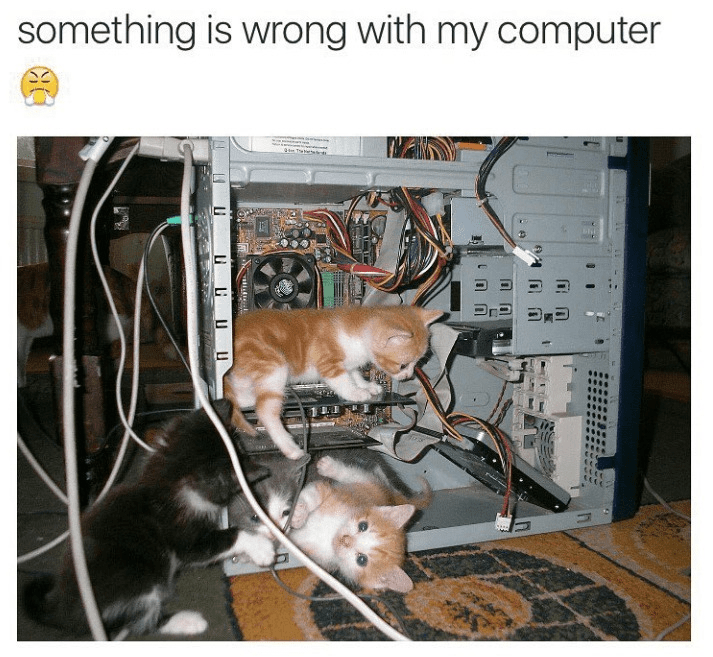
BUT we all know computers themselves are sentient. The question is, are they also malevolent, or merely impish?
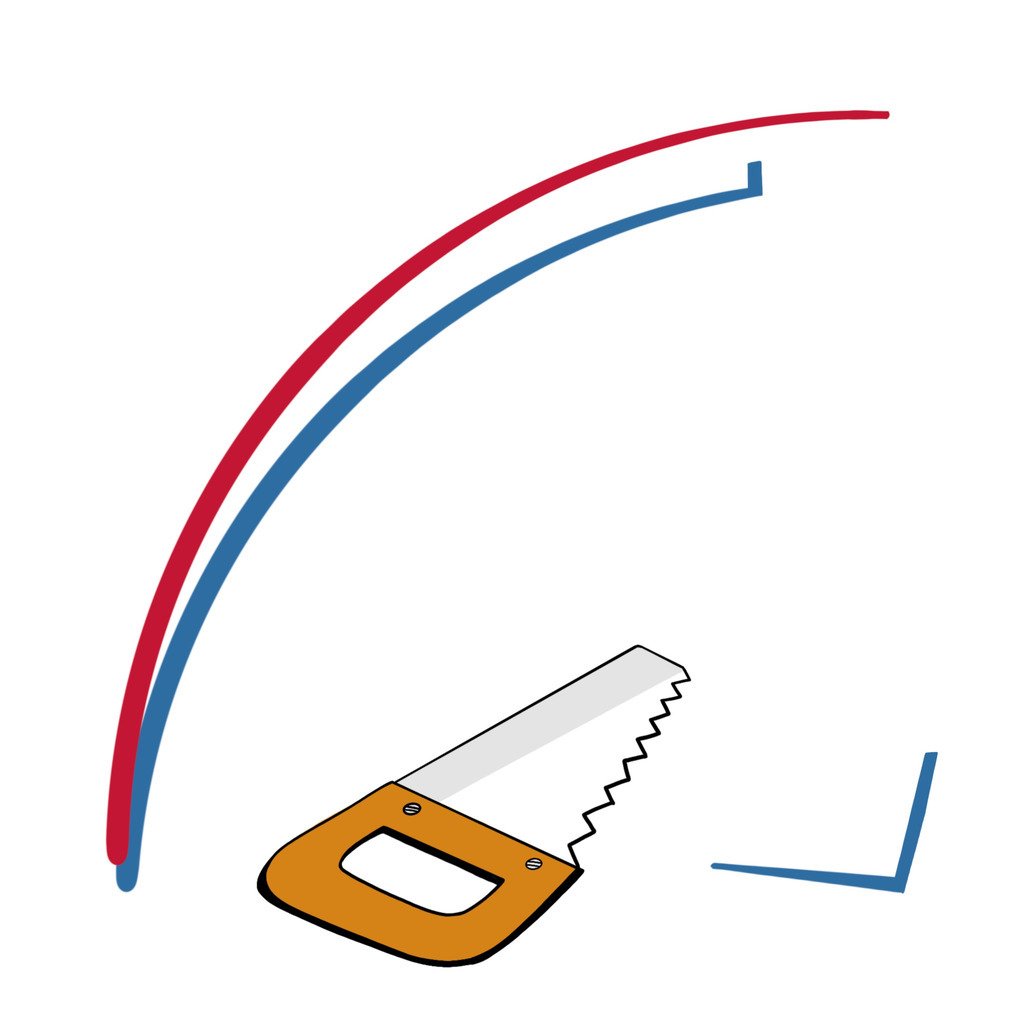
Most of the time we look at a landscape, particularly if we live in it, and we know exactly where the road or the walking path is. We know that if we set off from here, we’ll walk that way, and…
And then there’s snow storms in Colorado, where I lived most of my adult life.
Colorado is not, as most people who know it only from TV think, a place where it snows early in Fall, and it stays covered up till next Spring. That’s more a thing of Ohio or Pennsylvania. I mean, there are places in Colorado — the high ranges — where it’s definitely like that, but that’s not most of it. Most of it, you have sun and snow, and days that are completely dry, and then days you are buried. There is no guarantee what type of day you’ll have. Some days you’ll wake up to a beautiful sunny day, then find yourself buried in snow by nightfall. Once in Manitou Springs, it was sunny in front of our house, and snowing in the back.
And then there were the sudden snowstorms that covered everything. Once or twice they caught us on the road, and even WHERE the road was became a matter of opinion. Obvious (and dangerous) if one side goes down a deep ravine, but the other side? Yeah, you’re on your own. It’s uncharted flat white.
We find ourselves kind of like that in our current political landscape.
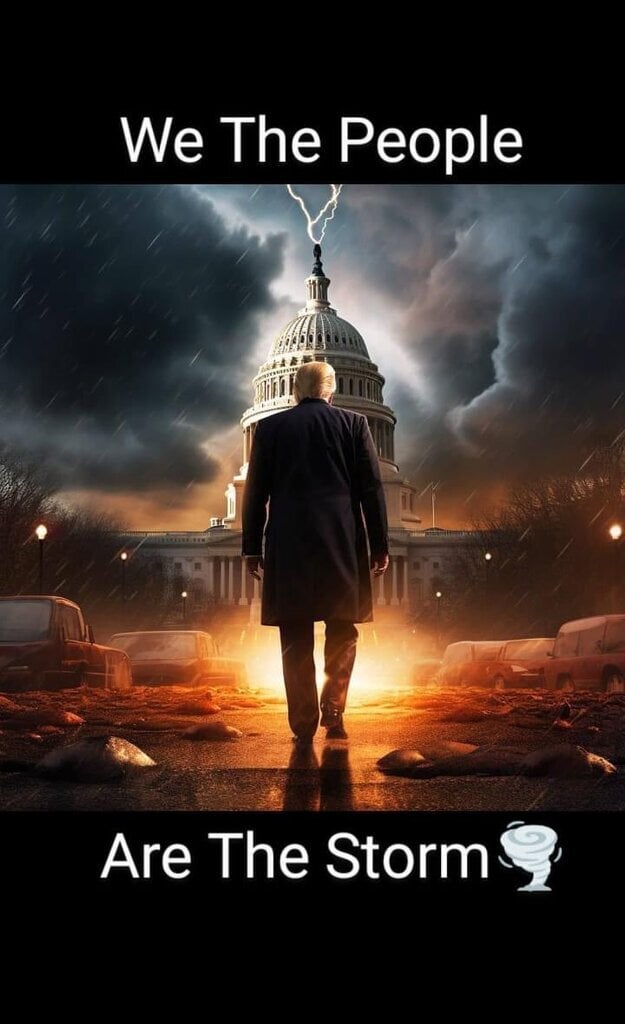
You see, there has been a storm, a bad one, and it flattened everything. But in its wake, we are left in a changed landscape, where the usual sign posts don’t apply — except for the ravines, of course. Those are still there and hellofdangerous.
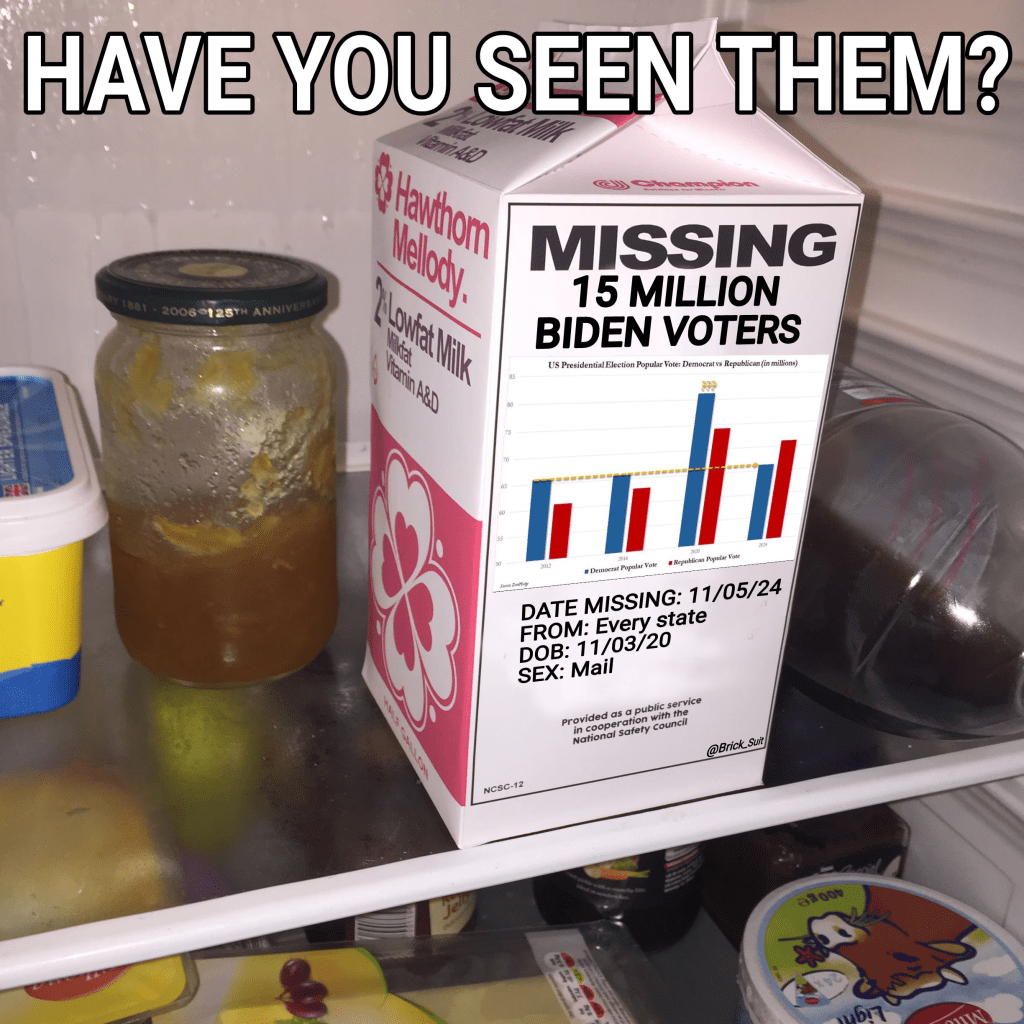
I probably don’t need to elaborate for this audience, but the storm was the stolen election, and its threat that we’d never again be free to choose our path, that — from now on — we were in the hands of the international oligarchs, and that at most we could carve our tiny little paces of semi-freedom, but we’d never be a free PEOPLE — or by extension, a free species (most of the species is. The West even is iffy. The US remains the last, best hope of mankind) — again.
Yes, I know, I expected differently. Because like with the Diamond Princess and the Covidiocy, I did the math. They can’t win. it’s impossible.
But even I expected a long period of darkness, or a blood bath in the way to our being free again. I prayed otherwise, but….
Well, on election day we got our miracle, a culmination of at least two previous miracles. And here we are.
And everything has changed. The problem is that the if you really look at it, the storm has been a succession of storms, starting about 100 years ago. And throughout it, it looked like there would be only one road, and only one way to move, and it would all end up in a prolonged darkness, which the sun of freedom might never penetrate.
But these things are never as they look, and beneath the snow cover, things were moving and the landscape was changing.
To be precise, the industry was changing, from one where large and central had all the benefits of being more economic and more profitable, to one where — not fully yet, but we can see it from here — distributed everything, and largely automated factories with minimal human labor are the future. And what a future it is. The same tech allows distributed communication, and it allows information to travel from those who have it to those who need it in almost no time. (Seriously. I once fixed my vaccum in no time by looking at a few you tube videos. You can also learn just about anything from those. From practical skills to languages, to history, to–). Even though there’s some resistance (including from Musk, sigh. It’s his reflexive liberal. It’s not fair to work from home, since not everyone can. Poppycock.) obviously distributed, from home, from your small town, a bit from everywhere working (and living) is the future. And it is a future that also allows women to work/pursue an avocation while looking after their own kids. This is leading to revolutions in teaching and in… well, just about everything else.
The world simply isn’t the same as when civilization started getting frosted over, and we assumed the future was the world of 1984 or Brave New World, and the most we could do was delay it a bit.
Paradoxically while that world seemed to be driving to a super state across the world (which FYI is inevitable tyranny) the fact we can communicate effortlessly across borders and across the world, perhaps by making us aware of cultural differences is fueling a drive towards nationalism. Which, contrary to what you’ve been taught in school is not fueling a drive for war, or Hitler like racial purges or whatever the crazy. WWI was caused by INTERNATIONALISM, i.e. by the royal families of Europe getting ambitious and trying to establish multi-continental empires. Being governed small and closer to home is always better for freedom. If those in power know you can come to their house and isekai protest them (like truck con protest them) they tend to behave a bit better. (Or, put up barricades if they’re Jarred Polis, whose conscience must be the deepest dark dingiest hell on Earth.)
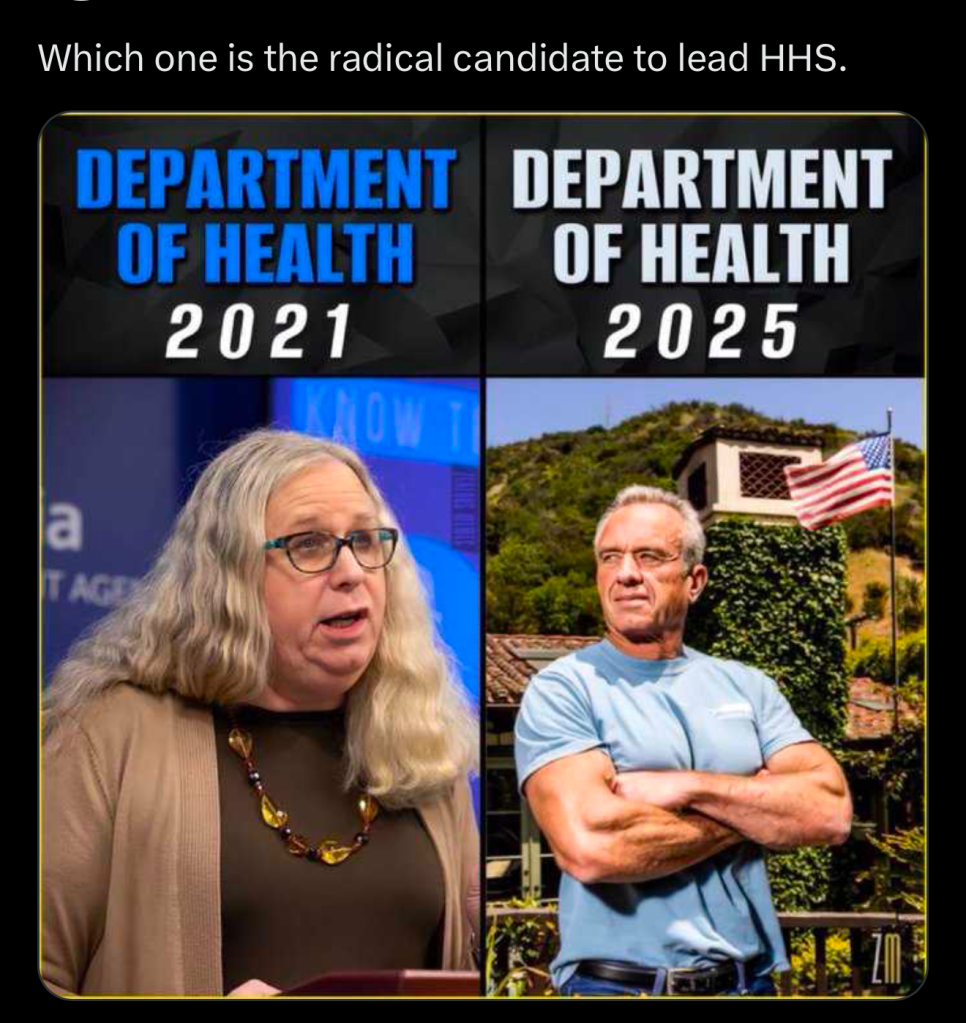
Anyway, in this new world, a few things become not clear. Like, sure, RFK is still a commie (well, his dad was one TBF) but is he a bad person to be in charge of the FDA? Consider what the FDA is and what it’s been up to. What we know for absolute sure it has done is bad enough. I’m sure there’s stuff we don’t even know about. As long as he doesn’t try to fill it up with stranger and more strict requirements for… everything, why should we mind?
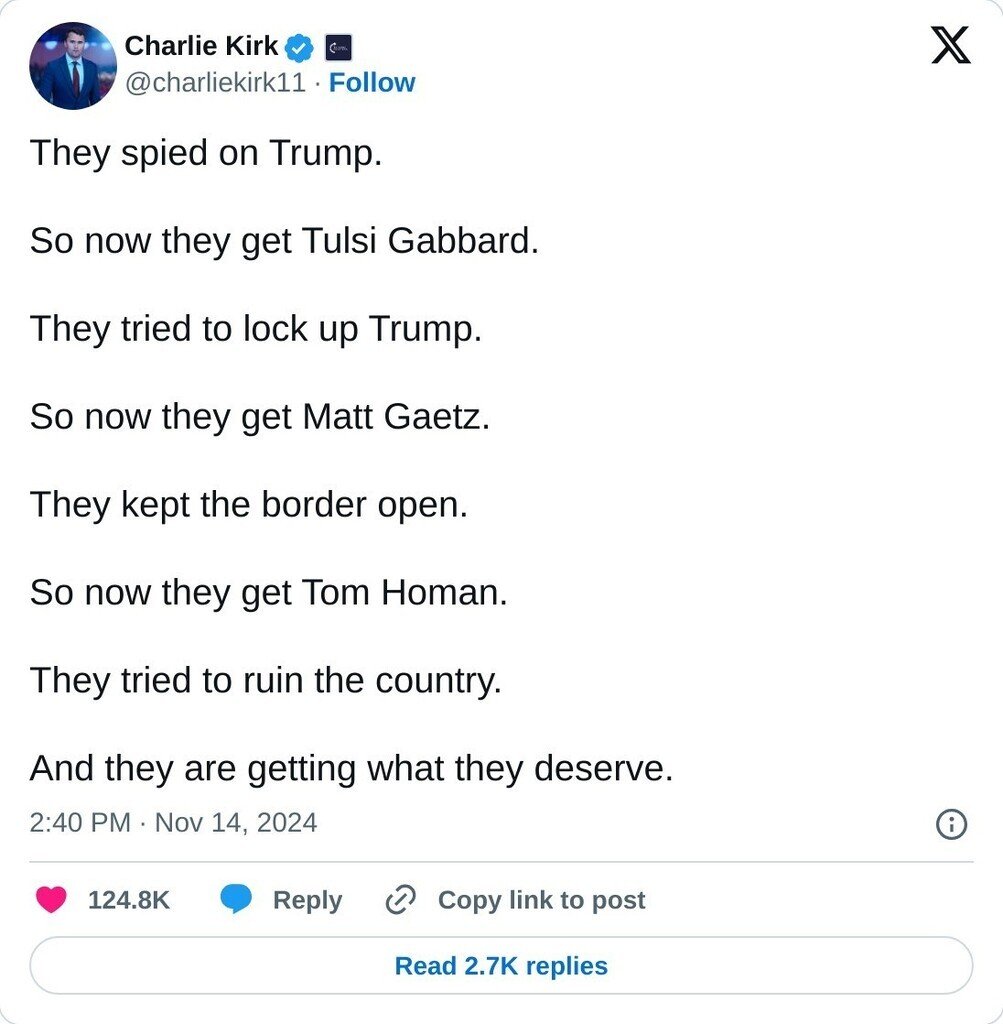
Tulsi Gabbard is still at the very least commie-adjacent, but she was victimized by the security apparatus by being put on a no fly list. Sure she might just reverse the polarity of the abuses. But she might also have seen the elephant and, in the light of the new day, seek to put the brakes on the overstepping. It’s worth a try.
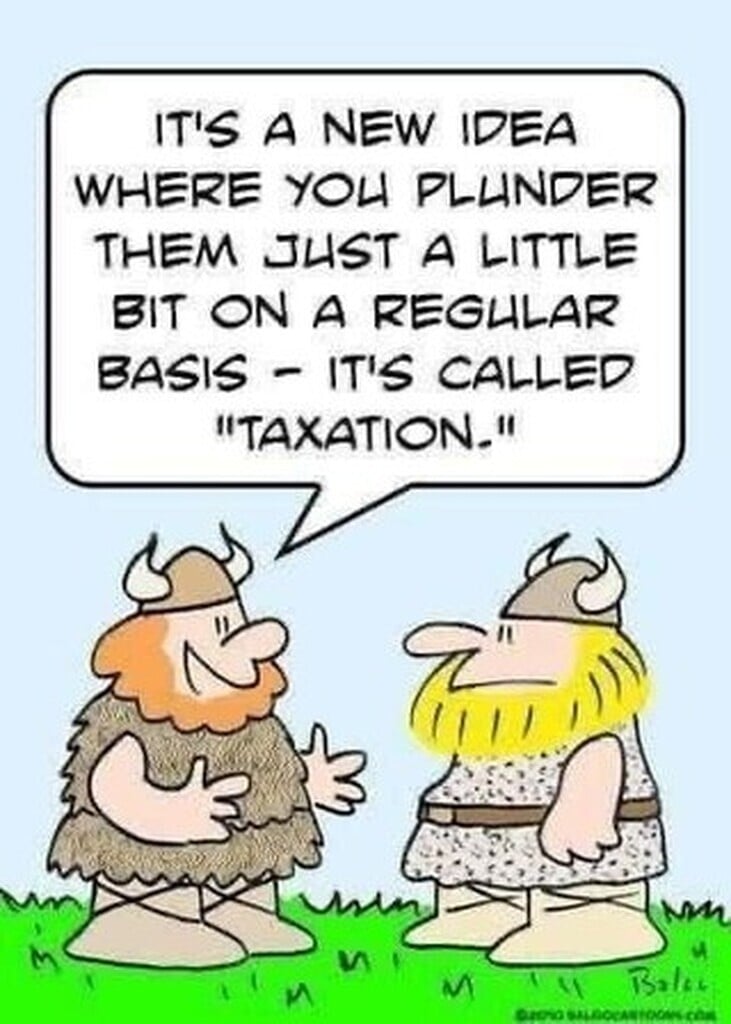
Things like tariffs…. well, I ain’t no fan of them, but you know? The president has to at least be able to threaten them convincingly, so I’m willing to leave his elbow free. And I don’t know. I don’t like tariffs, but I hate taxes, particularly since they eat months of my husband’s time in calculating what all my strange little businesses owe. Maybe, just maybe we can swap them for tariffs, or come up with a yet more creative solution to finance the essential functions of government.
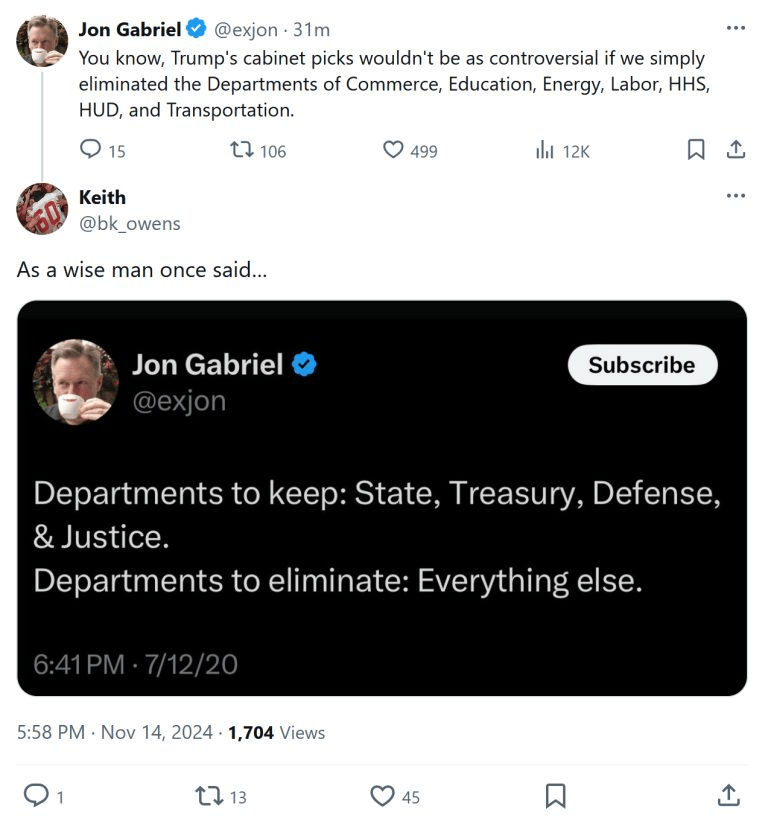
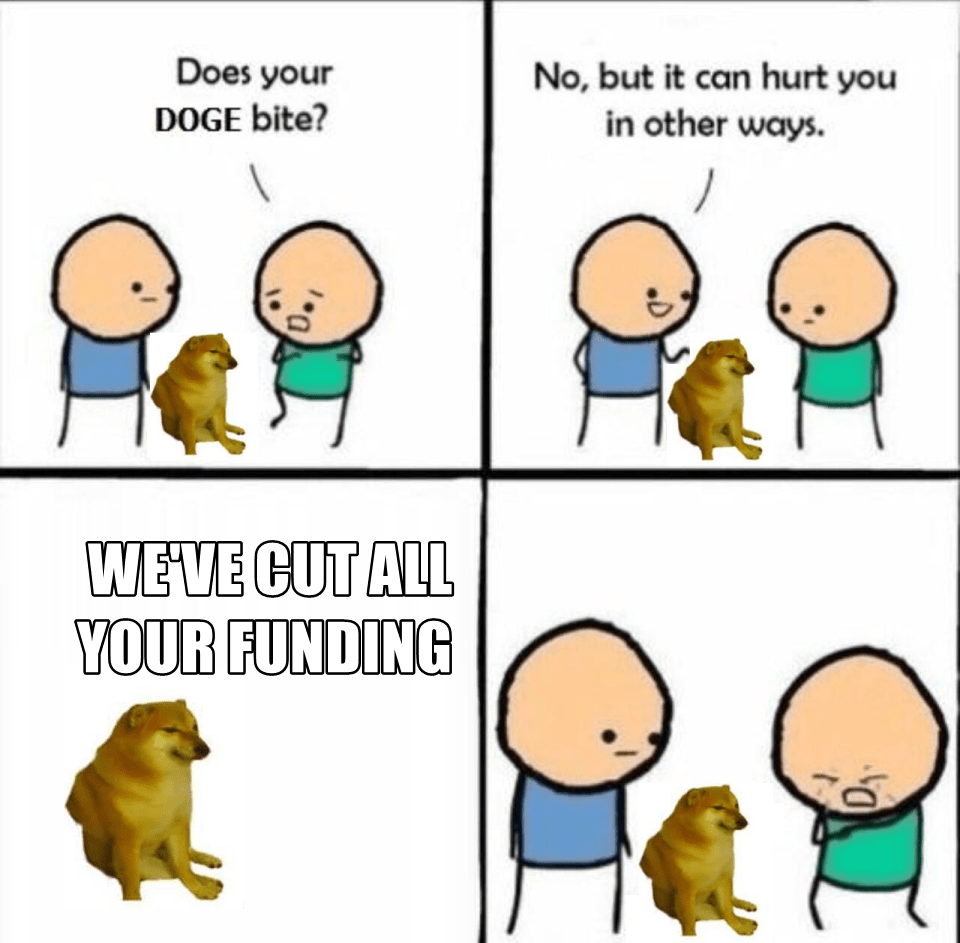
I’m open to what might come. I mean, today DOGE announced it’s hiring, but the job won’t be paid. Using American culture of voluntarism to cut the wasteful state? It’s amazing. It’s the most American thing ever. And think of all our retirees who just found a fun project for their golden years. (If I didn’t have books to write, I’d be volunteering myself. And if we had more money, my husband (and younger kid) would already be applying. Since they’re math geniuses, they probably could help.)
Meanwhile, yes, of course, the ravine stays. I will be watching very carefully and squawk at everything and anything that trespasses on the essential rules: The state should be small (we can start with smaller) and afraid of its people, not the people afraid of their state. And DON’T HURT PEOPLE AND DON’T TAKE THEIR STUFF.
Those are ravines indeed, and we’ve been driving with a wheel over that abyss for far too long. We might not know where the road is, but let’s get the heck out of the dangerous spot.
The rest? The rest is wide open.
Where a dark and dreary road the entire world was pushed into used to be, there is now a trackless wilderness. Into which we can cut paths, alleys, roads, delightful little gardens, and probably fly over it, or tunnel under too.
What is dawning is a day of great experimentation free of the “certainties” of the 20th century which, if we’re all lucky, is now dead and will soon be buried.
Let’s try to make stuff better. Some of it will even succeed. And let’s stop doing the stuff we already know doesn’t work. No, it won’t be different this time. Let 100 million eggs with no omelets be waste enough. Don’t add to it.
Go and create and figure out ways to do things: cheaper, better, with less hurting people and taking their stuff.
And take a deep breath of the crisp, cool air of the new world.
It is one of the ironies of the world that leftist persons have always been highly money motivated.
Wait, I’m not saying “always” as in history, but “Always” as in my experience with them. Though do you really want to bet that if we dug deeply into the movements behind, say, the Russian revolution or the Cuban leftist take over, we wouldn’t find people frantically stuffing their pockets with the spare valuables? Because I wouldn’t.
In fact, things like the destruction of Venezuela by avowed commies seems to have — ultimately — been in the name of enriching a small, deeply corrupt group of leftists. (Honestly “corrupt” and “leftist” are practically synonymous at least in the current world, and I’d make no bets as to the past. Because a philosophy based on envy fosters a certain type of person. Also there is something about a profoundly materialistic outlook — note not all atheists are materialistic and many prioritize friendships or human connection. Like my friends/adopted siblings who are atheist — that ends up reducing people to just trying to grab material goods as reassurance that their life matters or something like that.) I do know that the French revolution — who were Marxists before Marx (eh. Not really, but the philosophies were if not the same very similar) — was all about looting the old, inheritance-locked estates.
This should surprise nobody. A lot has been done in history where the idealistic and true believers were used as cannon fodder for the greedy and cynical. Most of it, in fact. (And sometimes the idealistic and true believers were even sovereigns.)
The thing about the current left, though…. and important as we face the years to come, is…. how much of the culture is left for pay and looney for money?
The indications, more and more, are “Most, if not all of it.”
I have before talked about the time my accounts were broken into, and where I only didn’t lose control of my online life, including this blog because by the grace of G-d — I’m not being facetious — I not only didn’t go to bed at my then normal time, but was screwing around on line, in a kind of desultory “I don’t even know why I’m doing this” and therefore saw the hack happen in real time, and had time to stop-gap the still-untaken accounts (here, discord, a dozen others) but also to continuously wrestle my email from them, until we could call the phone company and stop the replicant THEY’d allowed. (Long story.)
(Here I have to explain because every time I say stuff like this, some idiot of the “newly right” thinks I’m alluding to secret services. In this case, and almost certainly in the baiting me to attend the Jan 6th quixotic (on our side) get together in DC in 21, I’m not saying there was any official involvement. There might have been. But for what I watched, militant left of the Blac Block/BLM or such affiliated groups, or Polis’ Russian mob backers suffice and are enough.)
Yes, I do have reasons to think the highjacking of my phone account was ideologically motivated, a left operation. (The attempts to highjack my email continue, at an amazing rate, compared to my other similar accounts which have only the “normal” background, probably automated attempts. The only difference is that that account is the one I give here and to anyone involved in politics.) There were indications in the investigation my phone provider made, as in we were more or less told that it was something like that.
Anyway, the interesting part in all of this is that while it seemed to be a politically motivated operated by those annoyed by my denouncing of the left, they didn’t manage to take over my accounts partly because they allowed themselves to be delayed by …. looking for money. No, seriously. They must have made a search on the words “money” “dollars” and perhaps $.
First, that account is never used for financial anything. It’s not linked to any of my publishing contract/work stuff. Second, it’s remarkably free of monetary discussions, except for a negotiation of a writing contract that happened to take place there, because all the editor knew when he first contacted me was my public address, and friends who are indie discussing their take per book/monthly.
Note that these must not have been understood for what they were by whoever was doing a frantic search, because they also — then — took time to send highly insulting, bizarrely racist insults to anyone who mentioned money in their emails.
Both of these indicated a view of the right as one where we’re casually and for no reason racist, and in which…. we’re paid?
At the time I thought this was truly bizarre. “Do they think that being paid is the only reason we oppose them?” I mean, it wasn’t exactly a surprise. They continuously accuse us of “selling out.” (Hint, as I’ve said here before, and my reason to smack people who say things like “I’d never donate to x blogger, because they have enough.” EVEN THOSE OF US ON THE RIGHT WHO DO OKAY or, in come cases, spectacularly well (Alas not me, but I’m trying. I’m very very trying.) are making maybe half of what we would have if we were establishment left. (Maybe in some cases 1/10th.) This might be changing. But for now it is that.) Which would mean we’re all mentally disabled and “selling out” for less money. They also continuously claim we’re paid. And they drink their own ink. By the bucketful. They make up lies, then forget they are lies and swallow them, themselves. (Whoso diggeth a pit shall fall therein. I guess.)
But I’m starting to think it’s not just that. I’m more and more convinced that they, once more, accuse us of what they do.
Unless the FBI has lost its bloody mind — okay, but take a deep breath — and thinks crazy intimidation tactics will work on Trump, then what was this all about?
I think it was about finding money-corruption on the right, so they could smear Trump before he took power. (And if that’s what they’re doing, a lot of us are going to be at the pointy end again, of the leftist inanity brigade, as far as hacking, if not FBI raids, which I think are reserved for people worth millions or billions.)
I mean, suddenly their raid of the “My pillow” guy after he endorsed Trump makes perfect sense.
And apparently the reason they think everyone on the right is being paid is because… well, everyone on the left is.
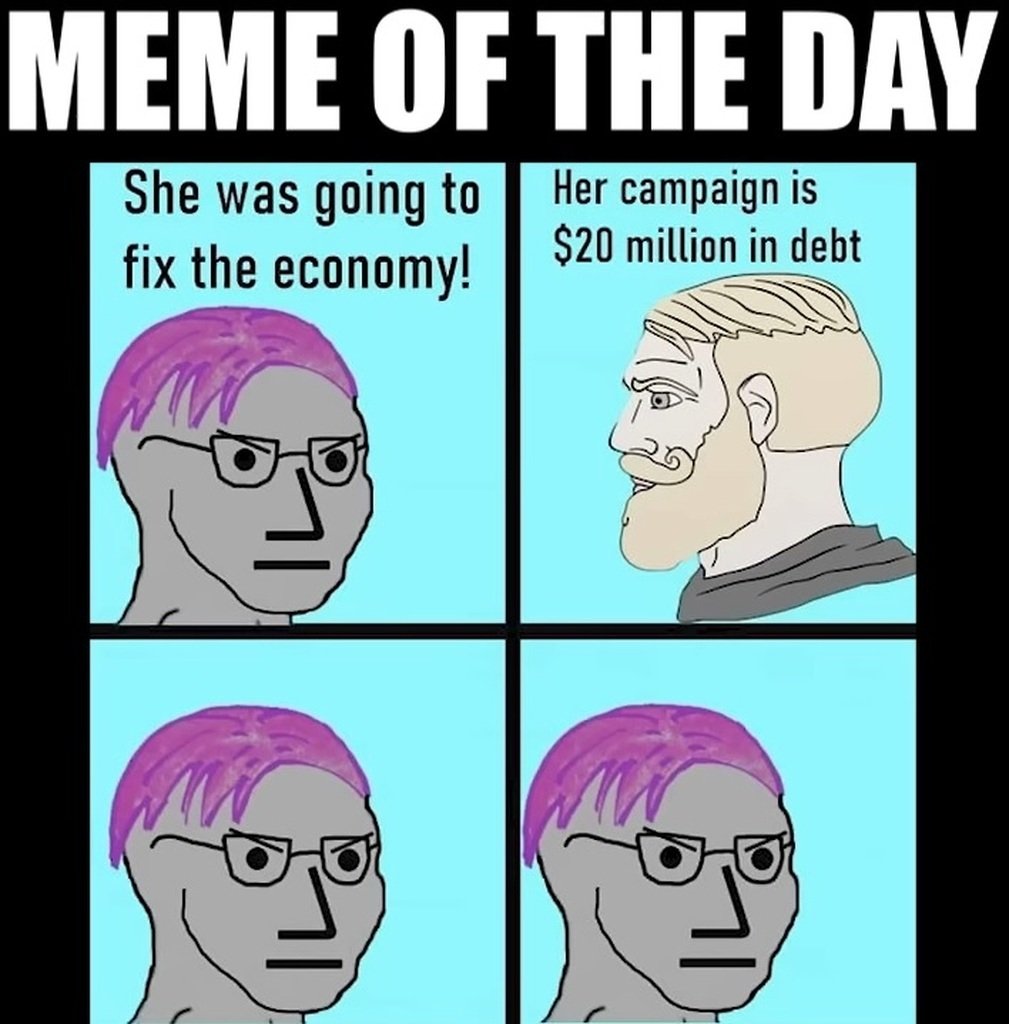
Like, a lot of us have suspected that in fact the reason we’re not seeing the ante-fa paid mobs burn and loot this time is because they can’t pay them, since Kamala is now … 20? million in debt.
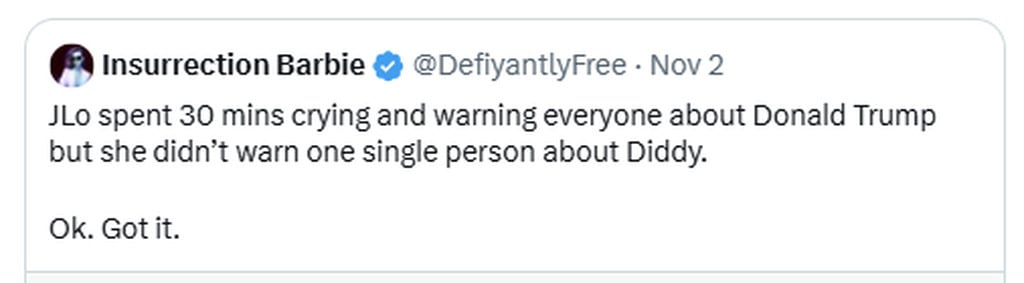
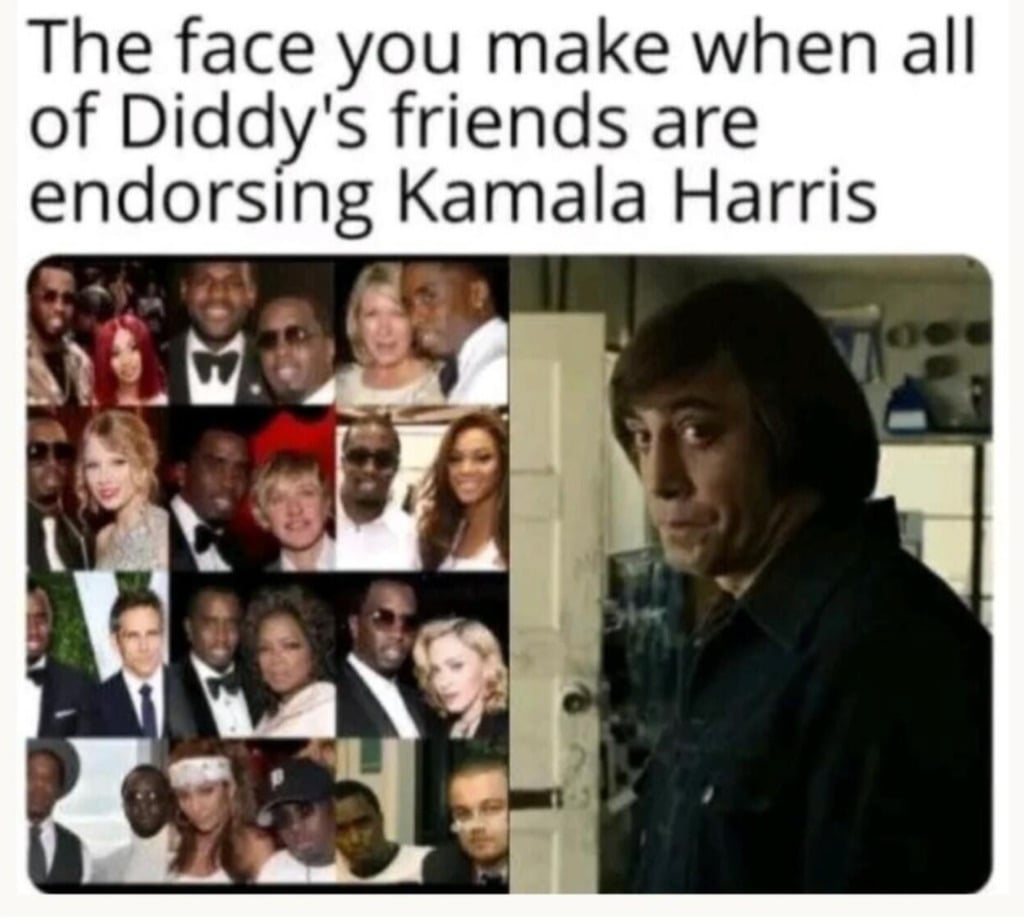
And apparently all the endorsements of Kamala, from Oprah to … Al Sharpton (really?) were pay for play. I wonder if those two are now looking at what she paid for stars (some of them mediocre) and wondering if they should have raised the price tag. Same for Taylor Swift. Is she upset she did it for free? (If she did it for free that is.)
Everywhere we look, all the “very sincere” Kamala boosters were being paid. And it makes you wonder about the past. It makes you wonder how much Obama paid for his “upsurge of support” and his semi-deification. (I mean, if I paid I’d want more than my pant crease praised, but whatevs.)
We do know for a fact that the “never trumper” “right” is raking it in as they never did when they were on the side of the right.
So, since the Soviet Union, and the demise of the true believers (heck, people older than I would say since the Hitler-Stalin pact and the demise of the true believers) I wonder how much international communism, including the ones flying under the flag of “Democrats” at home are really in it for the cash.
Well, if I’m right and most of the left is looney for pay it means that there will be a lot less lunacy this time around.
Sure, the pussy hatters were true believers (probably. At least the street level ones. Remembers her first sf convention after the 2016 win and winces) but the people spurring them on and driving them crazier sure as heck weren’t. Or at least I’d bet they weren’t.
If most of the left is in it for the money, what does it mean when they come to the end of cake money?
I can’t tell you. But I think we’re about to find out.
Yesterday I had friends over, for the first time since the elections. Actually, for the first time since we went to Portugal, a month that just melds in my life in illness and anxiety, in a soup of anxiety and grave illness, kind of an encapsulation of the last four years in a very short time.
Anyway, as we were sitting around the table, after a meal slightly hampered by my oven having gone out in our absence (we just got it finally repaired this morning) talking and drinking port wine, this sentence — heaven knows from where — ran through my head “It’s so nice to meet here on the other side of midnight.”
And other than my sense of relief and contentment I had no idea what it meant, until I thought further, on how for years — decades — now it felt like we were being herded down an increasingly narrow and dark path towards a future that more closely resembled 1984 than anything in the 21st century. And now? well, we’ll win some and we’ll lose some. It’s the nature of the beast, but the fact we defeated what looked like a complete lockdown on fraud that wouldn’t allow us to change anything… well. Over the horizon, far away, there is a hint of light. May it be a new day and maybe it be amazing.
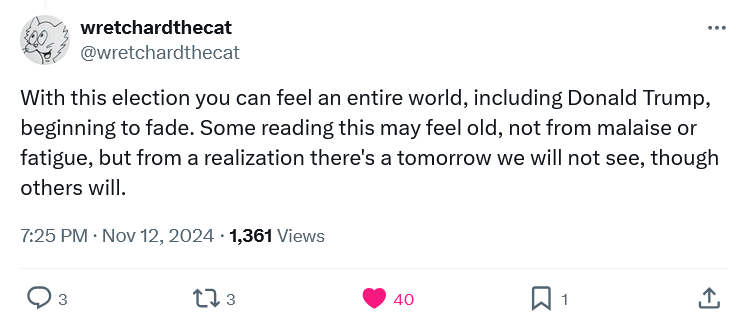
It ties in, I think with this post by Richard Fernandez, who often seems to be getting dispatches from the same unfathomable, and not very clear source:
His tweet, unclear to me at first, as unclear as that phrase — quote? — running through my head, was solidified in the comments as meaning now things will change.
And I think he’s right on that.
Let me clarify: I feel like the 20th century — that dark age of fighting between totalitarian ideas — has been unnaturally prolonged, partly because the totalitarianism we call left (objectively they’re both left), aka the international one, dominated every cultural institution and news reporting for so long that it could impose on us a narrative loop, in which “next time will be different” and somehow get to that magical land where the state withers away and everyone is equal and living costs nothing.
In fact, every one of its recursive loops, like heartburn on a scarred esophagus, got us closer and closer to the vision of the prophets George Orwell and Aldous Huxley. And the devotees of the cult were so blinkered they often seemed to think that was the utopia. And they were willing to do anything to get there. Mostly lie and cheat and steal. All of them in horrifying amounts.
So, to explain how we got there, the clashing totalitarianisms of the 20th century were the culmination of the philosophical flowering of the industrial revolution. Which yes fed and clothed the world, but brought with it the idea that bigger was better, centralized was less wasteful, and that the world ran more justly when ruled by “experts.” Both fascism and communism heralded themselves as “scientific” and rule by the “best” people and ultimately both thought the best were intellectuals and academics.
Since the eighteenth century centralization has been driven more and more, big government and experts given more power, etc. It was, after all, the way of the future, which — in the lefty view — would eventually culminate in a world government over a happy hive of human bees, none wanting more or different.
… The height of this was the seventies, when most people subscribed to that vision of the future, and saw it as inevitable.
Along the line, though, information contrary to the flow broke in. And America, the ultimate disrupter, elected Reagan who I suspect will be viewed as really tame and almost establishment in the future, but trust me, children, was a total break at the time. And showed us there was another way.
Other brilliant people — Rush Limbaugh — found a way to break the left’s hold on the culture with means of communication they didn’t see.
And then, perhaps in retaliation for being balked of space, the geeks created the internet and my generation — largely those born mid to late sixties — took to it like robot ducks to electronic water, even those of us who weren’t particularly techie.
There was a flowering in the US — the rest of the world doesn’t have it anywhere like us — of alternate opinion blogs and social media….
And we just saw the credibility of the old media crash and burn, leading to the change in governance which in turn — with some issues, mind because those are also there — has a chance, a bare chance, of turning into a new direction for the world.
I’m hopeful because as I’ve been saying for ages, the new tech leads to a world more suited to the vision of the founding fathers than anything since this nation was an agrarian backwater: a world of small and localized industry, where communication is easy and paradoxically worldwide, where an individual can not only create and make himself very wealthy on little investment, but also be heard and have his opinions disseminated with no gatekeeping and little expense.
It is a world that, freed of governmental shackles and bureaucratic fences, can and almost inevitably will, lead us to the stars, and…. well, and to a world unrecognizeable by anyone reading this blog, but likely with more liberty and justice for all than our poor minds can foresee.
Oh, there are stumbling stones on the way. And — sorry Elon — I wouldn’t buy your ticket to Mars just yet. But–
But it is possible. Before, particularly the last four years, it hasn’t seemed possible at all. all over the world — except Argentina, blessed Argentina — the forces of the twentieth century; the forces of “top down” “experts” were victorious, and the boots of the oligarchs stomped on the neck of those of us who just wanted to be left alone.
Now, the boot has lifted. We’re looking around, and we think there just might be a future. The future we intuited was being stopped by the forces that wanted to kill it.
There’s many a slip between the cup and the lip. There’s shoals between us and the great shores of prosperity now barely glimpsed over the far horizon.
I’m sixty two, from a long lived line but prone to very weird wobbles in my health. I probably won’t see the end of this. Most of us probably won’t.
But over that far distance our eyes won’t pierce, the day of humanity’s future is dawning.
With a new administration, there are always questions and speculation about the details of its policies. Additionally there is maneuvering by various factions attempting to influence and/or gain position in the incoming administration.
In that spirit, as well as the spirit of the long history of independent proposals for solving weighty political issues (ref. Swift, et all), I wish to propose a solution to the foreign policy difficulties which now plague America, in a way which I believe will satisfy the stated concerns of all sides.
The Unified Weapons Proliferation Treaty.
* Signatories to this treaty shall be required to liberalize their weapons laws to at minimum the level required by the Second Amendment. Loosening them beyond that is certainly encouraged, but not required.
* Signatories shall be required to contribute to the enforcement efforts detailed later.
* Signatories which fail to abide by their treaty obligations shall be subject to an escalating series of penalties, the exact sequence to be determined, culminating in invasion and replacement of the signatory government.
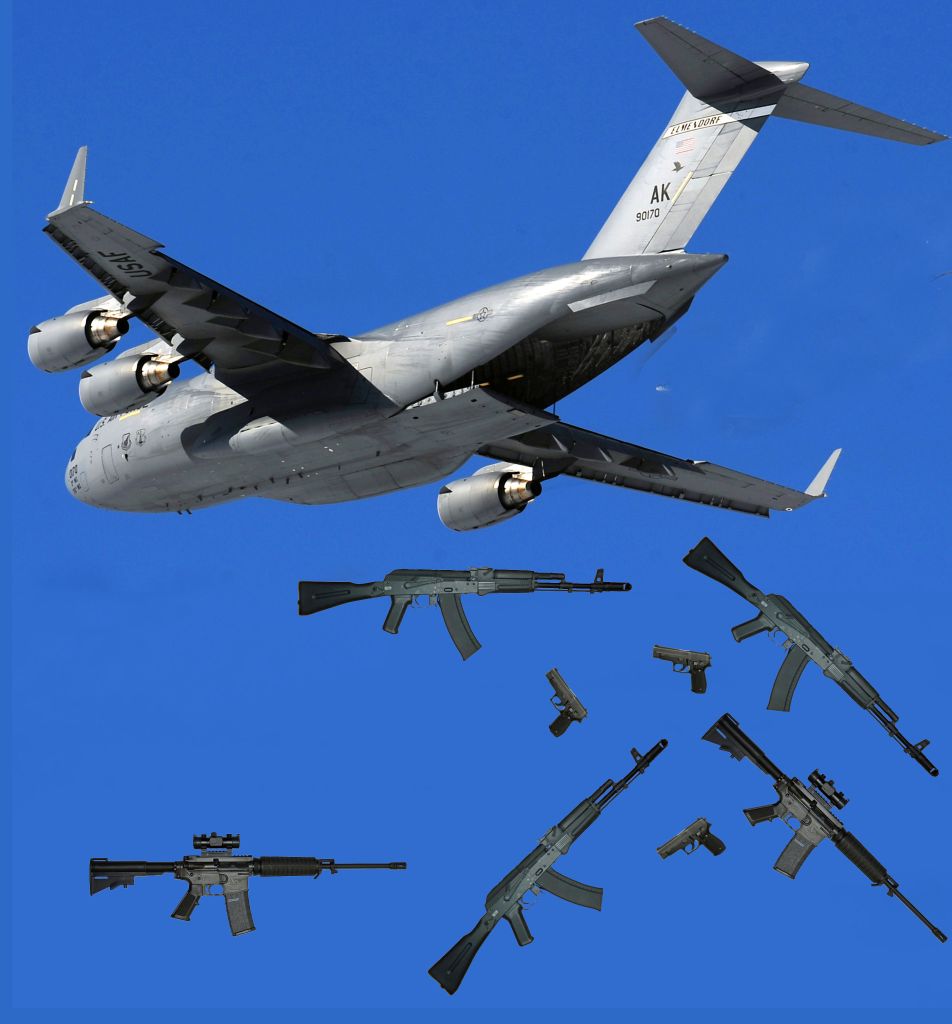
* The Signatory Nations shall execute a continuous smuggling operation to distribute small arms as widely as possible in all non-Signatory nations.
* Signatory Nations which are in possession of military air transport shall additionally be tasked with air-dropping caches of small arms geographically evenly across all non-Signatory Nations.
* Any attack on the transport aircraft shall be considered an act of war by the attacking nation.
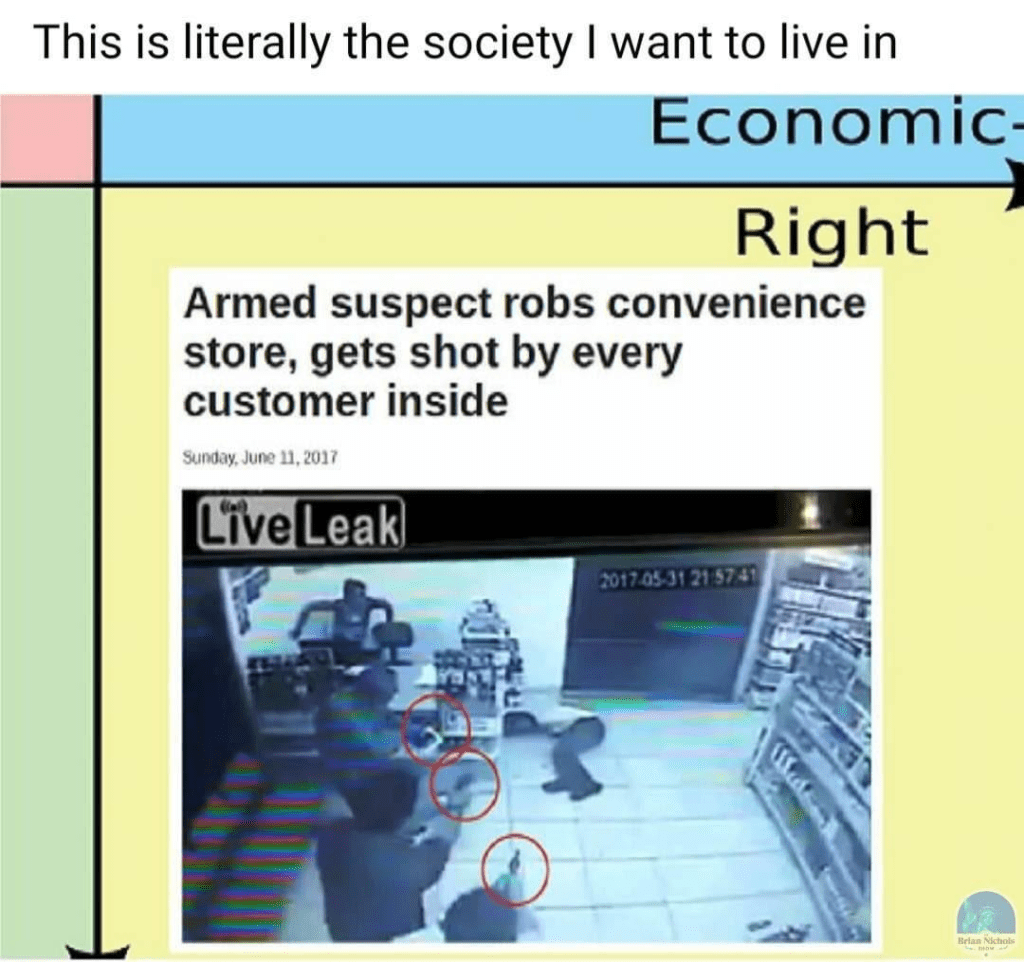
This treaty will solve nearly all geopolitical problems. First of all, it will dramatically increase the difficulty of an attempted invasion of any nation by any other, due to having an armed population. But the effects don’t stop there. Nations ruled by autocrats or dictators will have far less ability to play the game of a Short Victorious War to fix their internal problems by spilling over their neighbors, and will be facing an armed populace in any sort of crackdown.
Nations which try to play at faux-civilization on the other hand will be forced to step away from the overt tyranny which they have been dabbling in in recent years.
But the benefits don’t stop even there: nations which have internal issues distinct from normal politics can gain peace: in situations where a violent minority oppresses the general populace, that minority will quickly be brought to good behavior. Simultaneous with this, nations which have disfavored minorities benefit, as armed minorities don’t get genocided.
Admittedly there are some tragic situations which cannot be made peaceable. Some cultures are simply incapable of behaving in a civilized manner after all. In those cases ideally the culture turns in on itself with enough violence that it either disappears, or rapidly evolves towards more civilized behavior. Failing that if it tries to attack its neighbors, the difficulty of invasion applies.
As far as practically implementing this goes, the first step would be to bring all parts of the American polity in line with The Second, as they are supposed to be anyway. After that it is simply a matter of allowing the rest of the world to either choose to join voluntarily, or wait until the choice is made for them. The airdrops are meant to prevent issues of interception or uneven penetration of small arms into the non-signatory nation.
Fellow Americans, the Europeans are exerting their unearned superiority again.
They’re telling the Hi-La-Rious joke of “What borders on complete stupidity? Mexico and Canada.”
It never occurs to them that when a country the size of a continent makes these choices and they disagree it is POSSIBLY their lack of information, their lack of understanding of this utterly foreign country, their ignorance and smug stupidity.
No, it is always that we’ve disappointed them, and they’re very mad at us, because we’re stupid and ill informed, about our own lives and our own priorities.
And I wouldn’t understand it at all, I’d be even more disgusted with them, if I hadn’t just spent time in Europe before our election amid my largely (not every member but largely) conservative European family.
It’s hard to believe how utterly corrupted their information stream is. Take our entire mainstream media. No. Take the most lunatic fringe of MSNBC and assume they’re utterly right wing, then try to correct for it, and make the “news” right. That’s what their media is like.
Listening to my dad tell me that CNN international isn’t left wing (it’s more left than here) made my jaw drop, but it was nothing compared to the general idea that Biden is a nice, kindly, smart man, and that he only recently started losing it, which is why he, wisely stepped down. And none of it, none of it, compared to their idea that “no one is pushing transexuality in the schools in the US. It just happened organically.” and that “it’s neither a right nor a left issue.” One is afraid to ask about other things. They really honestly believe that a) our abortion laws are more restrictive than theirs (guys, throughout Europe pretty much abortion is capped at — I THINK — 14 weeks. Might be 16) b)religion is enforced in all our public life c)kids get shot in schools every day d) every shooter and terrorist here is “right wing.” e) white people are hunting black people on the streets and it’s legal. f) black people are actively discriminated against, and again, it’s legal.
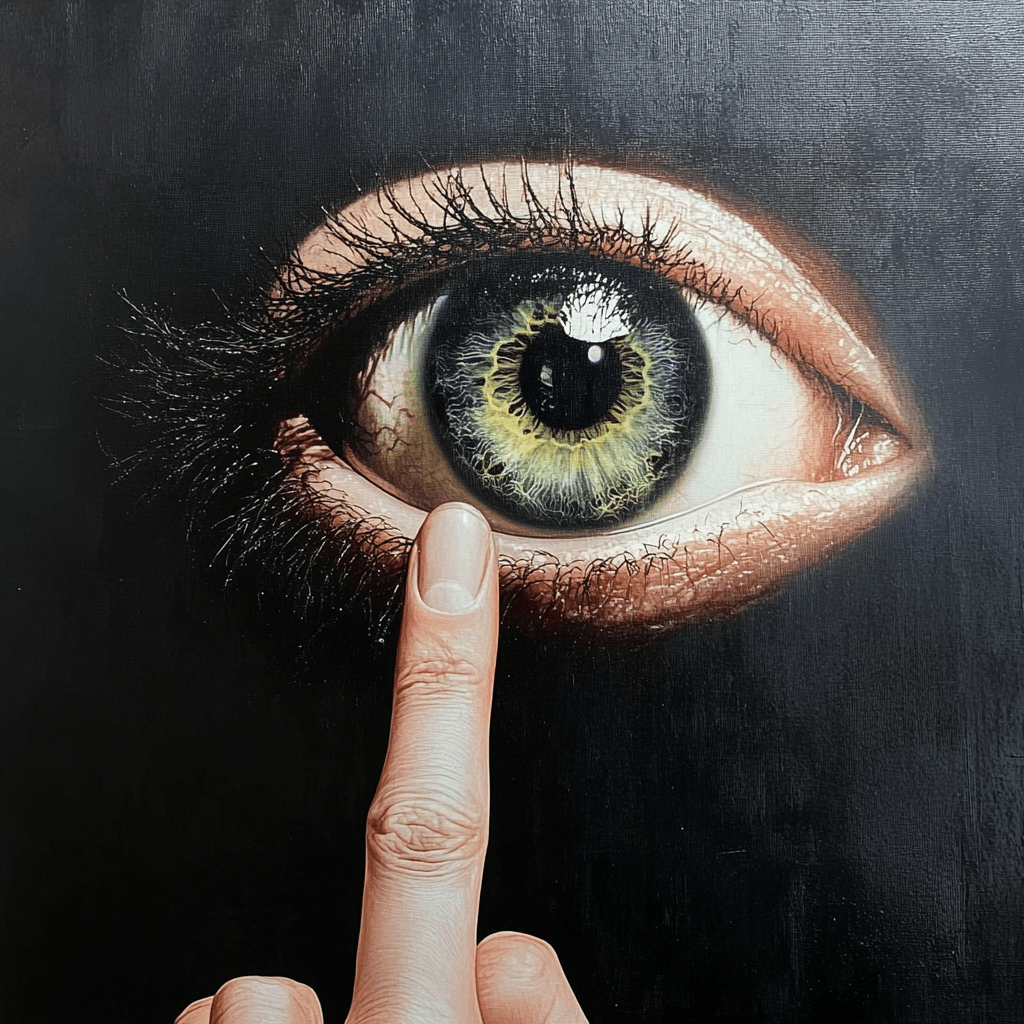
It goes on and on. It’s partly our bizarre Hollywood making movies about realities that don’t exist and haven’t existed for at least 60 years and frankly in many cases forever. And part of it is that our news are completely untainted by reality. And part of it is that EUROPEANS AREN’T HERE. … and part of it is that America is a finger in the eye of the world. More on that later.
This ultimately is the last most perfect example of why “World Government” doesn’t work (and in a smaller point why the electoral college is essential. Most of the idiots on twitter telling me I don’t think I just follow Trump have no clue who the Trump voters are, have no clue what rural areas are like, have no clue in general. They live in an urban bubble made extra bubbly by the fact anyone dissenting will be cancelled and knows it.)
Even if statistics and numbers are not corrupted, they can be spun. They are not a dispassionate witness. It is is easy to twist things, such as claiming more of the rural areas are on Welfare, because they count military expenditures are welfare and government handouts. It’s like truncating politician’s utterances, or massaging others to make them sound coherent.
If you’re not in the area, you don’t know what you don’t know. And main stream information stream — here and abroad — has become concentrated in cities, and within cities in the “intellectual class.” (Note I don’t say the high IQ or highly educated. There are very well educated people who are not part of those who consider themselves “intellectual class.” Part of my current fights on Twitter are the left thinking that any woman voting for Trump is “uneducated” or “unthinking” the intellectual class think they’re a special class and that their leftist politics make them “smart.”) Which means they report what they think they know, but they don’t know anything outside their specialty/area/region.
I’ve said before, and there will be a post on this soon, relating to millennials because even the right makes that mistake there, that the vision of the world the media — entertainment and news push at us are at best outdated — like 100 years out of date, like the idea of “granny” is my grandmother, not me who was born in the sixties and who, if I’d had kids earlier and my kids had married earlier could now have teen grandkids.) — and at worse imaginary, like everyone’s idea of “the fifties.”
They don’t know what they don’t know. And when they “know” all their professors and everyone educated thinks like them, it must mean other people are stupid, and not seeing a drastically different side of reality.
Unfortunately these are the idiots reporting the news and making the movies, which Europe then assumes are accurate and–
I understand. I really understand. Everything but the unbridled hubris of thinking EN MASSE they’re smarter than us.
It also frankly means they ignore their own people, those not expensively indoctrinated for decades in the theory factories by the Marxist morons. For a view of this, note everyone in mind professions in Portugal seems to buy the “global warming” bs unalloyed, while the working people not so far back removed the stop-oil parasites from the street, broke their signs and called them rude names then went about their day.
But there is more to it than that. In a way the US is a finger in the eye of the world. We’ve always been. We don’t believe the “upper crust” has something we don’t or knows something we don’t. By and large we don’t believe in experts. (Since FDR the media has worked hard at building respect for the “ex-spurts” and it all crumbled down with 2020. Thank heavens.) We believe in our lying eyes.
They, by and large don’t. Even their working people by and large don’t. There are centuries in those cultures of “respecting your betters.”
We confuse them and appall them by not recognizing betters. It is all summed in my mother, when I explained why I was NOT getting vaccinated screaming at me I thought I was smarter than everyone else. Oh, h*ll no. There are people much smarter than I. But I understand enough biology to know those “vaccines” were at best ineffective and at worst a bad, bad idea. And given my autoimmune issues, hell no. (I also know enough math to look at Diamond Princess and go “this is not an emergency.”) I am no longer Portuguese, you see. Maybe I never was.
They look at this and see “anarchy” and from that to “they’re just stupid” it’s a step. A short and very stupid step.
The problem is their own citizenry is up in arms and realizing the last 100 years weren’t good. The entire world is in revolt. And they still don’t get our own revolt.
It’s going to be an interesting few years. If they get poked in the eye a lot, maybe they’ll learn to blink.
Buckle down boys and girls. It’s going our way. Let’s show the world how a nation can work and create prosperity, and lead the world to the stars.
If you wish to send us books for next week’s promo,please email to bookpimping at outlook dot com. If you feel a need to re-promo the same book do so no more than once every six months(unless you’re me or my relative. Deal.) One book per author per week. Amazon links only. Oh, yeah, by clicking through and buying (anything, actually) through one of the links below, you will at no cost to you be giving a portion of your purchase to support ATH through our associates number. A COMMISSION IS EARNED FROM EACH PURCHASE.*Note that I haven’t read most of these books (my reading is eclectic and “craving led”,) and apply the usual cautions to buying. I reserve the right not to run any submission, if cover, blurb or anything else made me decide not to, at my sole discretion.– SAH
Wicked uncles, abductions, courage and romance… Her father lost at sea, under seemingly scandalous circumstances, Miss Cecily Winiard is brought to the northern Spa town of Harrogate, to make her come-out under the aegis of her great aunt. Her family are in dire straits, and she must make an advantageous marriage. Except… her great aunt’s ideas of an advantageous marriage and Cecily’s do not run in tandem. Her great aunt wants birth and breeding, and certainly no-one with an interest in vulgar commerce. Young Lord Coleford, is, as far as her great aunt is concerned, a vulgar Cit and entirely unworthy to even breathe the same air as a Winiard, let alone have further pretentions. It’s a trifle awkward that Cecily likes him. It’s even more awkward that she, on the instructions of great aunt, snubbed the eligible young man severely. That is not something he’s accustomed to. He’d come to Harrogate expecting to be bored, not to be treated like a hatstand. And stalking behind the gaiety and social whirl, there lurks the scandal of her father’s disappearance, and the plots that surround it.
Nic thought she’d found her place in this alternate ancient China. But as imperial succession looms, she realizes her greatest challenges lie ahead.
With General Lin Feng Guo, Nic must transform Shanmen fortress into a bastion of strength. Her knowledge of future technology could turn the tide—if she dares to use it.
But a rogue general’s ambition threatens to plunge the empire into civil war.
As armies gather and alliances shift, Nic faces impossible choices. Should she reveal the full extent of her otherworldly knowledge and risk everything? Or watch helplessly as this world she’s come to love descends into chaos?
In a land where barbarians are feared and demons whispered about in the dark, Nic must find a way to bridge two worlds. Can she forge a future for them all without losing herself in the process?
With enemies at the gates and treachery within, Nic’s fight for survival becomes a desperate battle to save her new home and the people she’s sworn to protect.
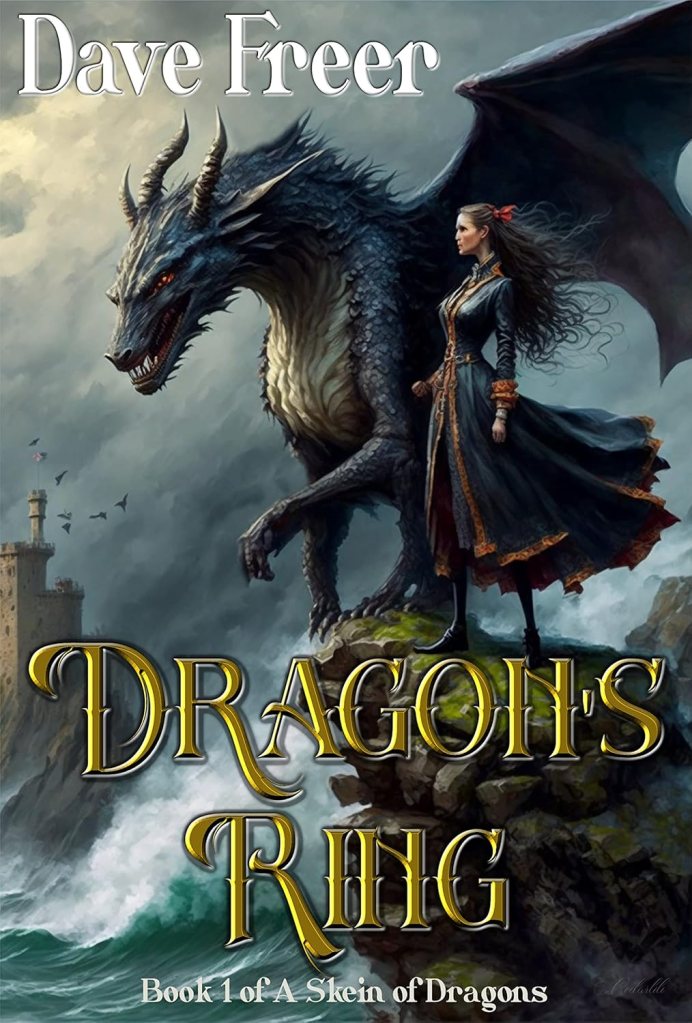
Tasmarin is a place of dragons, a plane cut off from all other worlds, where dragons can be dragons and humans can be dinner. It’s a place of islands, forests, mountains and wild oceans, filled with magical denizens. Fionn–the black dragon–calmly tells anyone who will listen that he’s going to destroy the place. Of course, he’s a joker, a troublemaker and a dragon of no fixed abode. No one ever believes him. He’s dead serious. Others strive to refresh the magics that built this place. To do so they need the combined magics of all the intelligent species, to renew the ancient balance and compact. There is just one problem. They need a human mage, and dragons systematically eliminated those centuries ago. Their augury has revealed that there is one, and they seek her desperately. Unfortunately, she’s fallen in with Fionn, who really doesn’t want them to succeed. He has his own reasons and dark designs. The part he hadn’t worked out is that she will affect his plans too. Chaos, roguery, heroism, theft, love, kidnapping, magic and war follow. And more chaos.
Adventure! Exploration! Martinus the m-dog! Lost cities and conspiracies! Strange creatures! And homework.
Shikhari, the most-distant human colony world, home to the Staré and Auriga “Rigi” Bernardi. While on school holiday, Rigi and her cousin Tomás Prananda discover a ruined city hidden in the forest. Their find strikes a spark that threatens to upend everything humans think they know about Shikhari’s past, and about the native Staré.
Meanwhile, back in school, Rigi’s determination to do well collides with the nastiest bully on the planet, Benin Shang Petrason. His father has the faculty and administrators under his thumb, allowing Benin to run rampant. If that wasn’t enough, Rigi’s big sister has discovered boys. If it weren’t for Martinus, Rigi’s new m-dog, Tomás, and their eccentric Uncle Ebenezer, Rigi wouldn’t know what to do.
But someone believes that Rigi and Tomás’s find is too dangerous to report. And that someone threatens the children, their families, and their uncle. That someone has just met their match.
Zara hasn’t seen her family in eleven years, but she doesn’t mind. They sent her to live in a neighboring kingdom when she was small, and she’s adopted her foster parents in their place. She lives the life of an aristocratic Garian girl- riding her horse, shooting her bow, exploring the castle with her friends- and she has nothing to wish for.
Until she’s summoned home, to a prospective marriage she doesn’t want, family she doesn’t remember, and a poisonous royal court that threatens everything she’s ever known. The East Morlans are nothing like Garia, and Zara struggles to find her place among the scheming Morlander aristocrats. Along the way, she makes new friends, meets enemies, and falls in love. But secrets abound in the glittering palace, and Zara must discover who she can trust as she fights for her life and freedom in a fragile, beautiful, kingdom of glass.
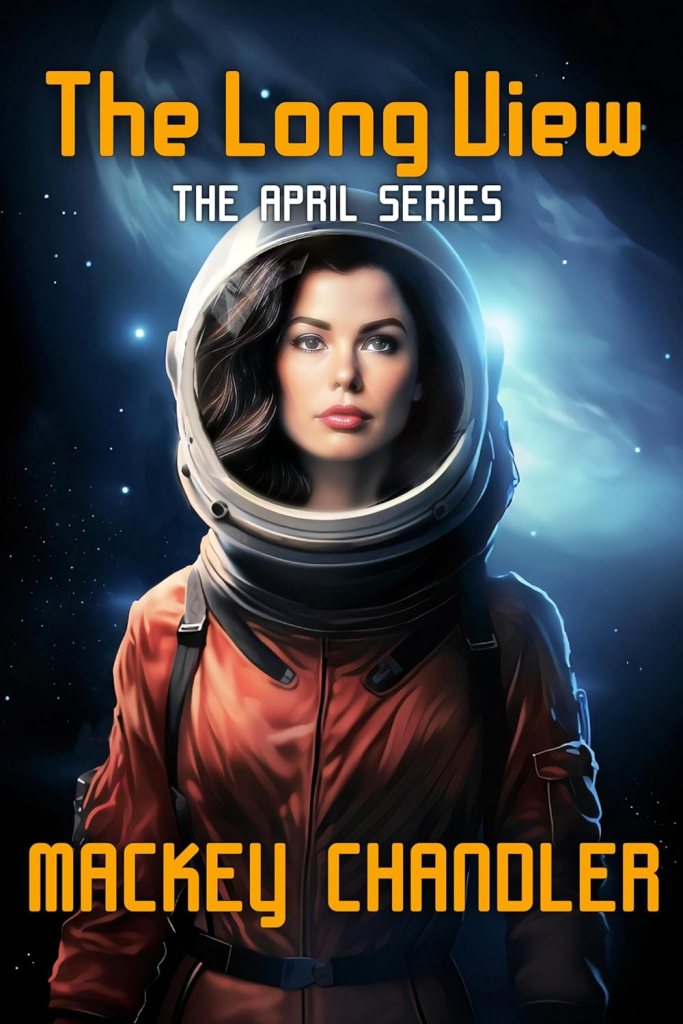
Despite their animosity, North America seems cowed into leaving Home and the Kingdom of Central alone for the moment. They are begrudgingly honoring the treaty Singh and Love hammered out in Hawaii and allowing free passage to Home. That doesn’t mean they’ve lifted the sanctions on Home trade. The European powers are as friendly as needed to do trade but have never apologized for the lies about the origin of the last flu pandemic. That’s already fading from short-lifer’s memories. They can’t understand why long-lifers just won’t let stuff go. It helps that North America has other problems like Texas aggressively nibbling away at their border. Quebec has always been patiently waiting for them to be too busy elsewhere to repress them, and Mexico is quietly slipping away to Texan influence without a shot being fired. China, never really homogenous is too fractured into competing regions and interests to be a threat for a while. Jeff may have tipped them over the edge to that but it wasn’t hard. In the relative peace holding for a moment in history, the habitats and the Moon are progressing past survival to making life comfortable. While many on Earth think the Spacers survive on Earth-grown food they’ve progressed to an abundance of essentials and are working away on the luxuries. They are acquiring extra-solar real estate beyond the Earthies reach. Heather and her peers, April, and Jeff, plan a Grand Ball to celebrate life, friends, and allies. If the timing doesn’t work for the Earthies that’s their problem. It’s time to enjoy what they’ve accomplished and make plans for the future long put off. Soon enough, short-lived politicians will be replaced by those who don’t remember what happens when you rile the Spacers up. But for now, they can enjoy the moment.
Avice’s dreams of settling at Clearwater are dashed. The lawsuit had ended, and the lands were made over to her, but a bone wizard lays a curse on the land, and blight begins to spread. All will die before the curse as it spreads.
Neither her family nor her king are willing to help. She is left alone with only the knowledge that the mysterious Book of Bone may have the lore that she needs — if only she can find it.
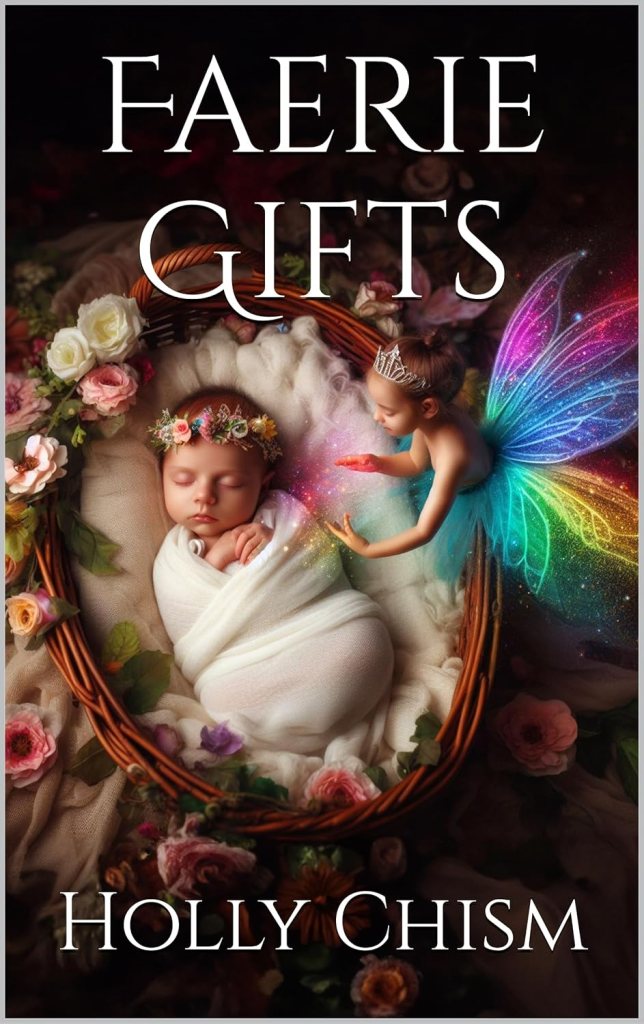
A collection of short stories about the intersection between over- and under-hill, between human and faerie.
Fortunate One–Is the ability to see the normally unseen a gift…or a curse? Steed–When you don’t fit anywhere, perhaps you should listen when the faerie horse says you belong elsewhere. Kintsugi–When your fiance is a faerie, they don’t want your mortality to get in the way of forever. Faerie Gifts–Sometimes, the faerie’s gift goes wrong…what’s a new mother to do when a faerie wants to bless her new babe? Mixed Blessings–A boon to a musician exchanges one addiction for another.. Bargains Struck–When the fairy grants your wish in exchange for your firstborn…what happens when you can’t have a child? Golden–When the geese aren’t killed, the eggs keep coming.
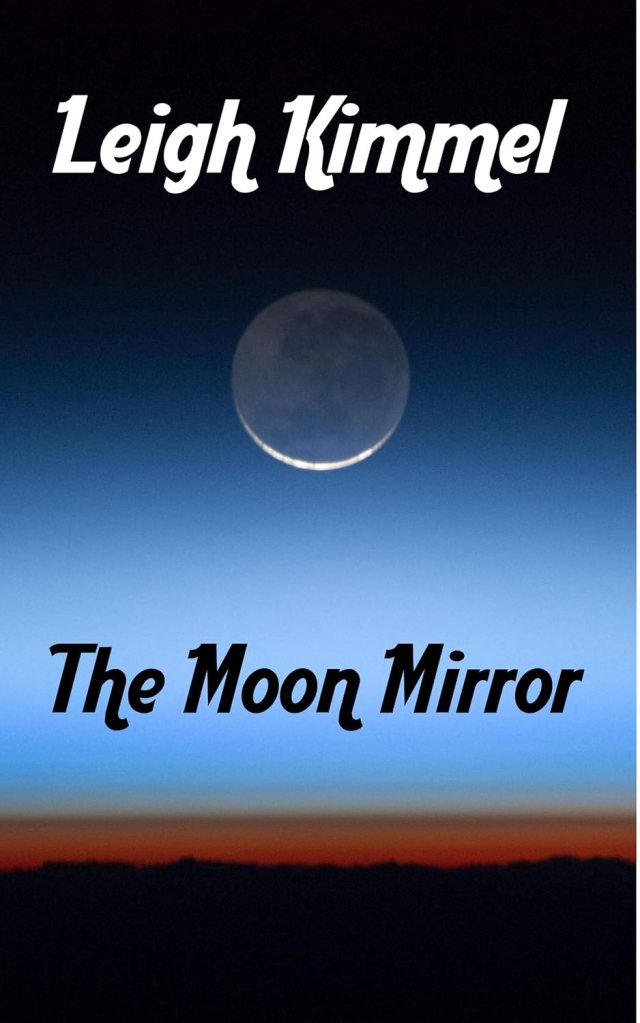
Chelsea Ayles dreamed of going to the Moon since she was a child. Now her dream job at NASA has turned into a nightmare, thanks to those many blood-sucking arachnids. Yeah, politics, as in a Senator accusing her of destroying America’s priceless heritage because she chose the moonrocks that were used to make a proof-of-concept mirror segment for a lunar telescope project. Now the mirror sits in her office like a bitter mockery of what might have been — until the day her reflection turns into a handsome stranger who calls himself the Man in the Moon and offers her visions of a world that might have been. Visions that ignite a longing of an intensity she hasn’t known since she was in grade school and watched videos of the Apollo lunar missions in science class.
Vignettes by Luke, Mary Catelli and ‘Nother Mike.
So what’s a vignette? You might know them as flash fiction, or even just sketches. We will provide a prompt each Sunday that you can use directly (including it in your work) or just as an inspiration. You, in turn, will write about 50 words (yes, we are going for short shorts! Not even a Drabble 100 words, just half that!). Then post it! For an additional challenge, you can aim to make it exactly 50 words, if you like.
We recommend that if you have an original vignette, you post that as a new reply. If you are commenting on someone’s vignette, then post that as a reply to the vignette. Comments — this is writing practice, so comments should be aimed at helping someone be a better writer, not at crushing them. And since these are likely to be drafts, don’t jump up and down too hard on typos and grammar.
Many years ago, a second cousin and his wife immigrated from Portugal to Brazil (I think. I was six years old when the following bit happened, so I don’t remember precisely) not permanently but till they could earn the money to dig themselves out of a hole, and get money to buy a house and start a business.
It took them longer than anticipated, but twenty years later they headed back to Portugal with enough money to pursue their dream.
Apparently he had been homesick the entire 20 years, and was really excited about being back.
He had a heart attack when he could glimpse the Portuguese coast out of his airplane window. He was dead by the time they landed.
Why am I telling you a grim story?
For the last two days a lot of my circle has been wondering why they feel panicked, distressed, whatever.
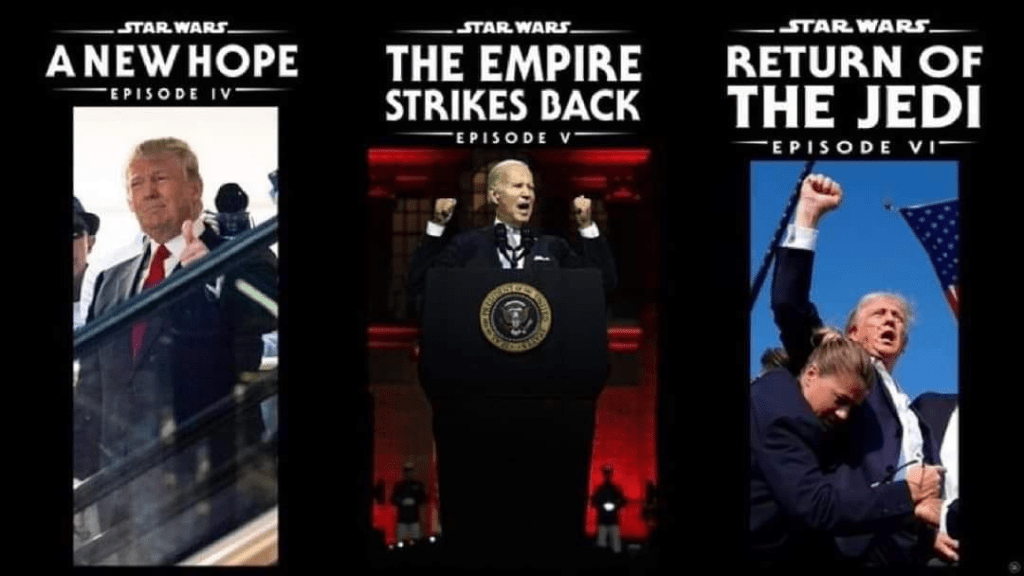
We dodged a bullet, as real as the one Trump dodged in Pennsylvania.
So why didn’t we go “Oh, well, that’s done, now life goes on” and return to our normal tasks?
Well, in my case because I have lingering asthma (or an asthma like syndrome, since one of you in the comments said that might be it) from the triple infection, things are weird and slow, and I still haven’t been able to concentrate to write. But what about the rest of you?
This is why I told the story above. Thing is, we weren’t sure, and even those who were fairly hopeful, well, the abyss on the other side was so deep, etc…
Joy is stress, just like grief is stress. A shock is a shock, and your nervous system is dumb. It goes all the way to the dinosaurs, and it has no clue if it’s a good shock o a bad shock. It just knows it’s a shock, so your peaceful life is disrupted, and next thing you know something will eat you.
It’s been a heck of a four years. And we’re not fully out of the woods. If you’re near a disputed house race, keep your eyes on it, and call attention to it. We need the House to turn this corner as we need to.
Meanwhile, yes, the election turned out well. Better than we could imagine.
But it was a shock to the system, and your system is being all irrational.
Take it easy, as if you’d been ill. Treat yourself kindly. Let you get used to this, and then you’ll be ready to fight again.
You’re not abnormal (no more than the rest of humanity.) It doesn’t mean anything hire. Your nervous system is just acting as if you were a startled dinosaur.
Be kind to the dinosaur, and give yourself time to get back to work again.